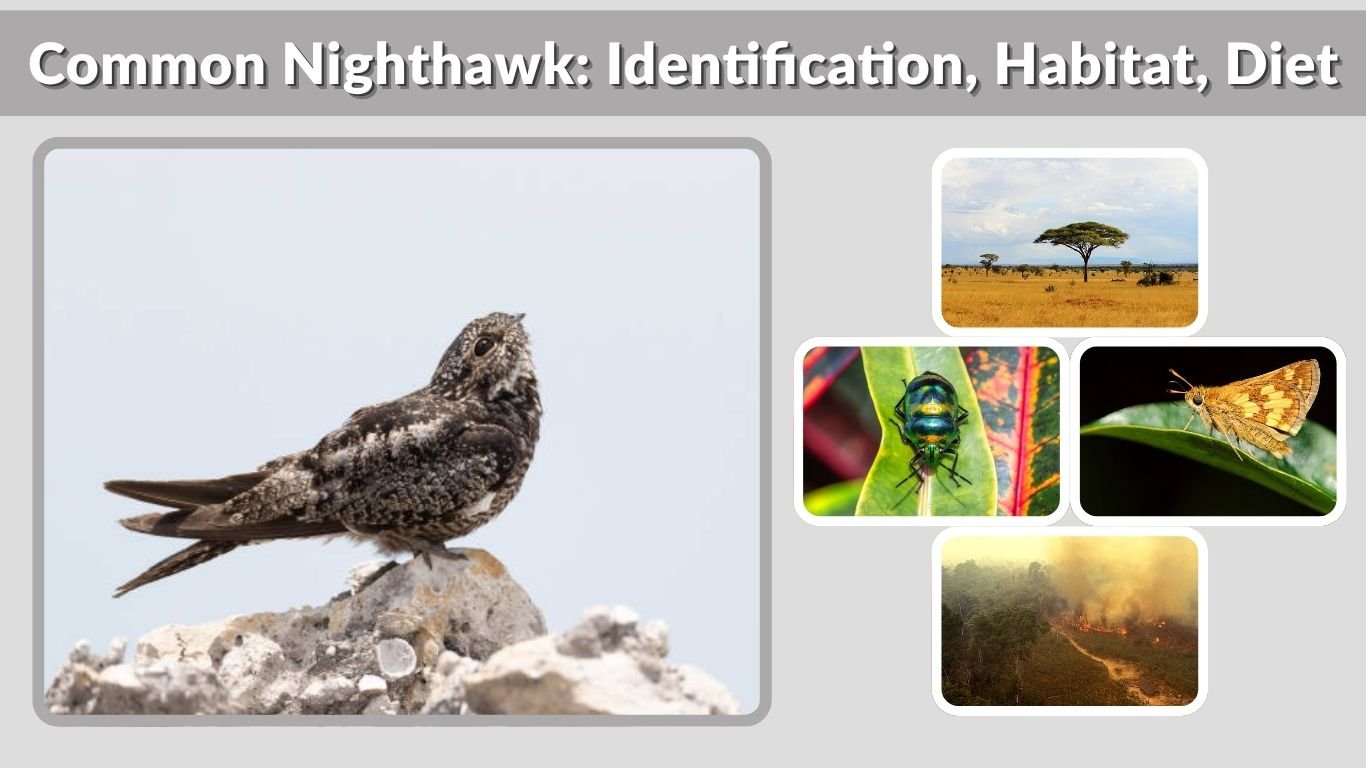
The Common Nighthawk is a fascinating bird known for its unique flight style and mysterious twilight activity. Despite its name, it is not a true hawk but belongs to a group of nocturnal and crepuscular birds. Often seen flying at dusk, the Common Nighthawk is famous for its sharp “peent” call and dramatic diving displays. Its excellent camouflage and aerial hunting skills make it one of the most intriguing insect-eating birds in North America.
What is a Common Nighthawk?
Scientific Classification
The Common Nighthawk (Chordeiles minor) belongs to the Caprimulgidae family, which includes nightjars and similar birds. These birds are adapted for low-light activity and are known for their quiet daytime behavior and active evenings.
Although called a “nighthawk,” this species is not closely related to hawks. The name comes from its hawk-like flight and nocturnal habits.
Physical Description
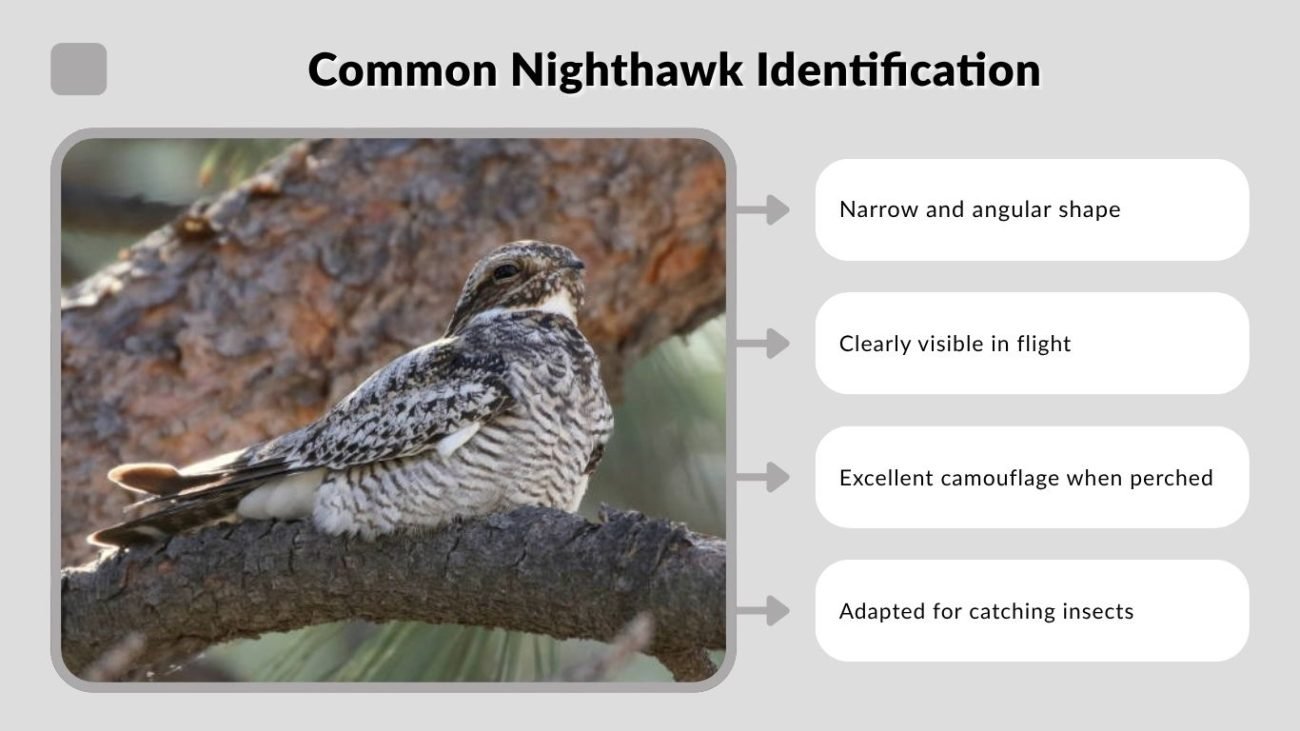
The Common Nighthawk has a mottled appearance, blending shades of brown, gray, black, and white. This coloration provides excellent camouflage against tree bark, rocks, and ground surfaces.
It typically measures about 22–24 cm in length, with a wingspan of around 50–60 cm. One of its most distinctive features is its long, pointed wings, which show a bold white bar visible during flight.
Its wide mouth, surrounded by bristle-like feathers, is perfectly adapted for catching insects in mid-air. The bird’s overall appearance may seem plain at rest, but it becomes striking and dynamic when in flight.
Common Nighthawk Identification
Key Identification Features
Identifying a Common Nighthawk is easiest when observing it in flight. Its unique wing shape and flight pattern make it stand out from most other birds.
- Long, pointed wings: Narrow and angular shape
- White wing bars: Clearly visible in flight
- Mottled plumage: Excellent camouflage when perched
- Wide mouth: Adapted for catching insects
- Erratic, bat-like flight: Sudden turns and glides
Male vs Female Differences
Male and female Common Nighthawks look similar, but there are subtle differences:
- Male: Brighter white patches on wings and tail
- Female: Slightly duller with less contrast
These differences are often easier to notice when the bird is in flight.
Juvenile Identification
Juvenile nighthawks resemble adults but tend to have softer and more blended patterns. Their markings may appear less sharp, and their overall coloration is slightly more muted.
Common Nighthawk Habitat
Where Do Common Nighthawks Live?
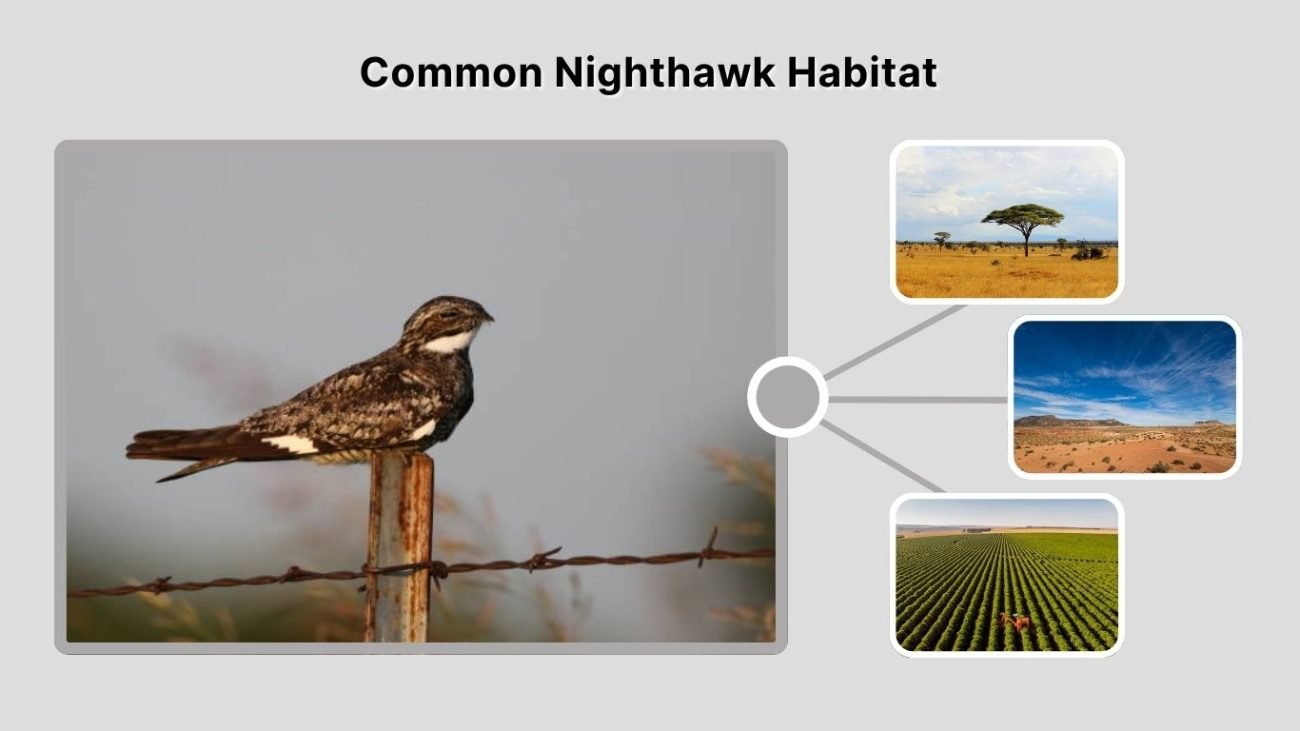
Common Nighthawks are widely distributed across North America during the breeding season. They can be found in the United States and Canada, especially in open and semi-open landscapes.
During winter, they migrate to Central and South America, traveling long distances to reach warmer climates with abundant food.
Preferred Habitat Types
These birds prefer open habitats where they can easily hunt flying insects. Common environments include grasslands, deserts, open woodlands, and agricultural areas.
Interestingly, Common Nighthawks have adapted well to urban environments and are often found nesting on flat gravel rooftops, which resemble their natural nesting grounds.
Common Nighthawk Diet
What Do They Eat?
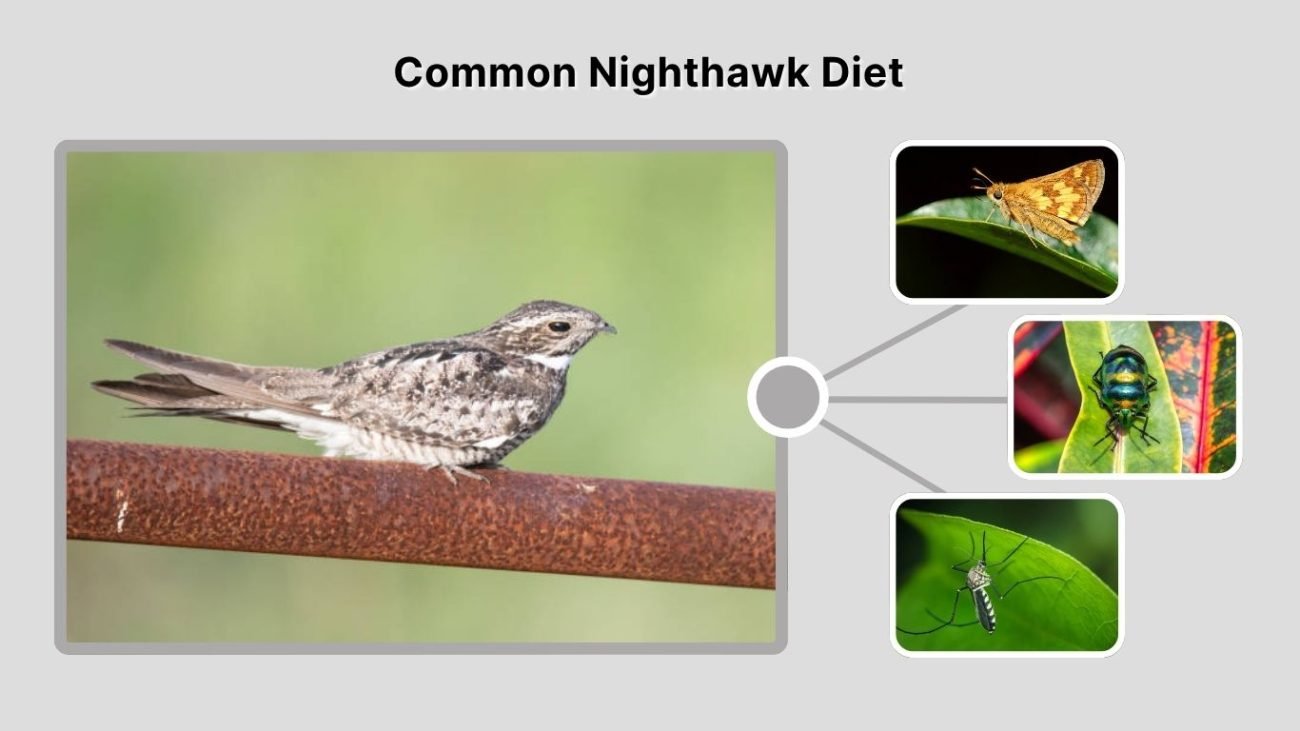
The Common Nighthawk primarily feeds on flying insects, making it an important species for controlling insect populations. Its diet includes moths, beetles, mosquitoes, ants, and other airborne insects.
This reliance on insects makes it highly dependent on healthy ecosystems where insect populations are stable.
Feeding Behavior
Common Nighthawks are aerial insectivores, meaning they catch their prey while flying. They are most active during dawn and dusk, when insect activity is highest.
Using their wide mouths, they scoop insects out of the air while flying gracefully. Their agile flight allows them to twist, turn, and glide as they pursue prey.
Common Nighthawk Behavior
Unique Flight Style
The Common Nighthawk is best known for its agile and erratic flight. It glides effortlessly through the air, often making sudden turns and dips while chasing insects. Its long, pointed wings allow it to stay airborne for extended periods with minimal effort.
This bat-like flight pattern makes it easy to distinguish from other birds, especially during the evening hours.
Booming Sound Display
One of the most fascinating behaviors of the Common Nighthawk is its dramatic diving display. During courtship or territorial displays, the bird will soar high into the air and then dive steeply toward the ground.
As air rushes through its wings during the dive, it produces a distinctive booming or “whooshing” sound. This display is both a visual and auditory signal used to attract mates and assert dominance.
Activity Patterns
Common Nighthawks are crepuscular, meaning they are most active during dawn and dusk. During the day, they rest quietly on the ground, tree branches, or flat surfaces, relying on their camouflage to remain hidden.
At nightfall, they become active, flying through open areas in search of insects.
Common Nighthawk Nesting
Nest Location
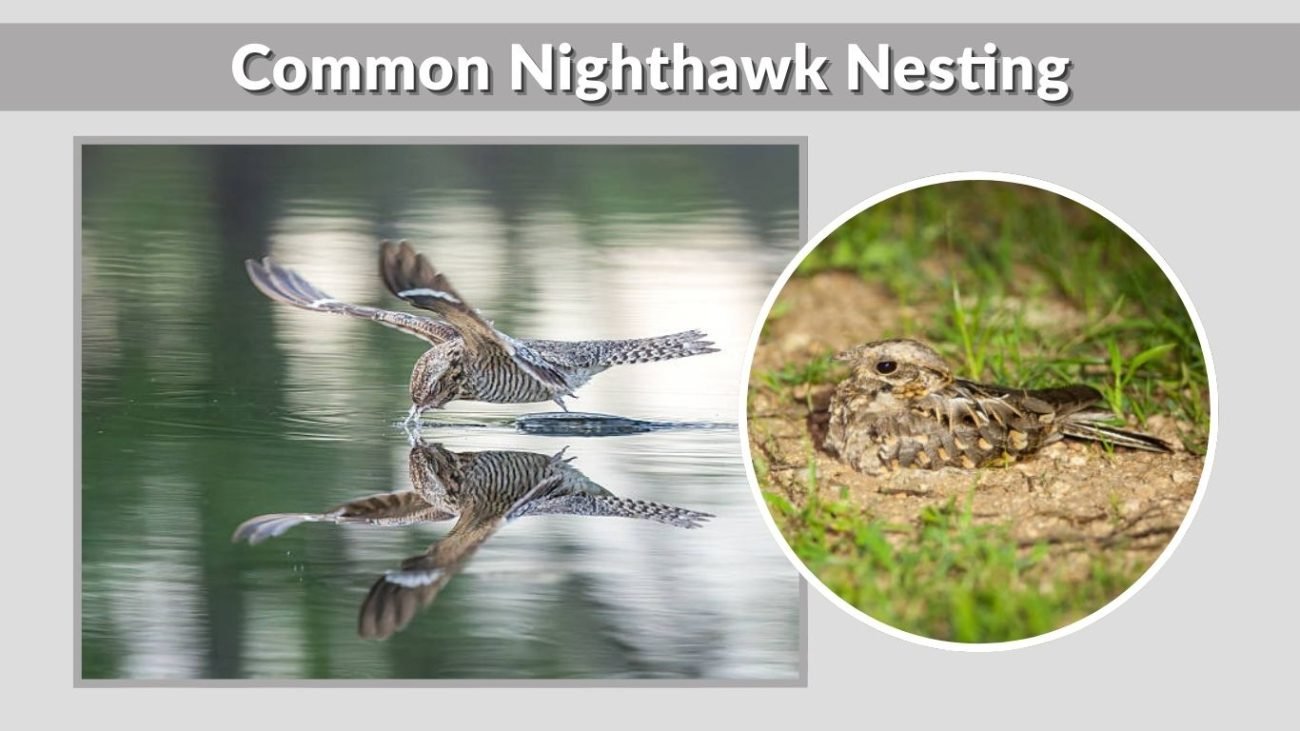
Unlike many birds, Common Nighthawks do not build traditional nests. Instead, they lay their eggs directly on bare ground, gravel surfaces, or flat rooftops.
Urban rooftops, especially those covered with gravel, closely resemble their natural nesting sites and are commonly used by these birds.
Nest Structure
There is essentially no constructed nest. The eggs are laid in a shallow depression or directly on the surface. The natural coloring of the eggs helps them blend into their surroundings, providing protection from predators.
Common Nighthawk Eggs
Egg Appearance
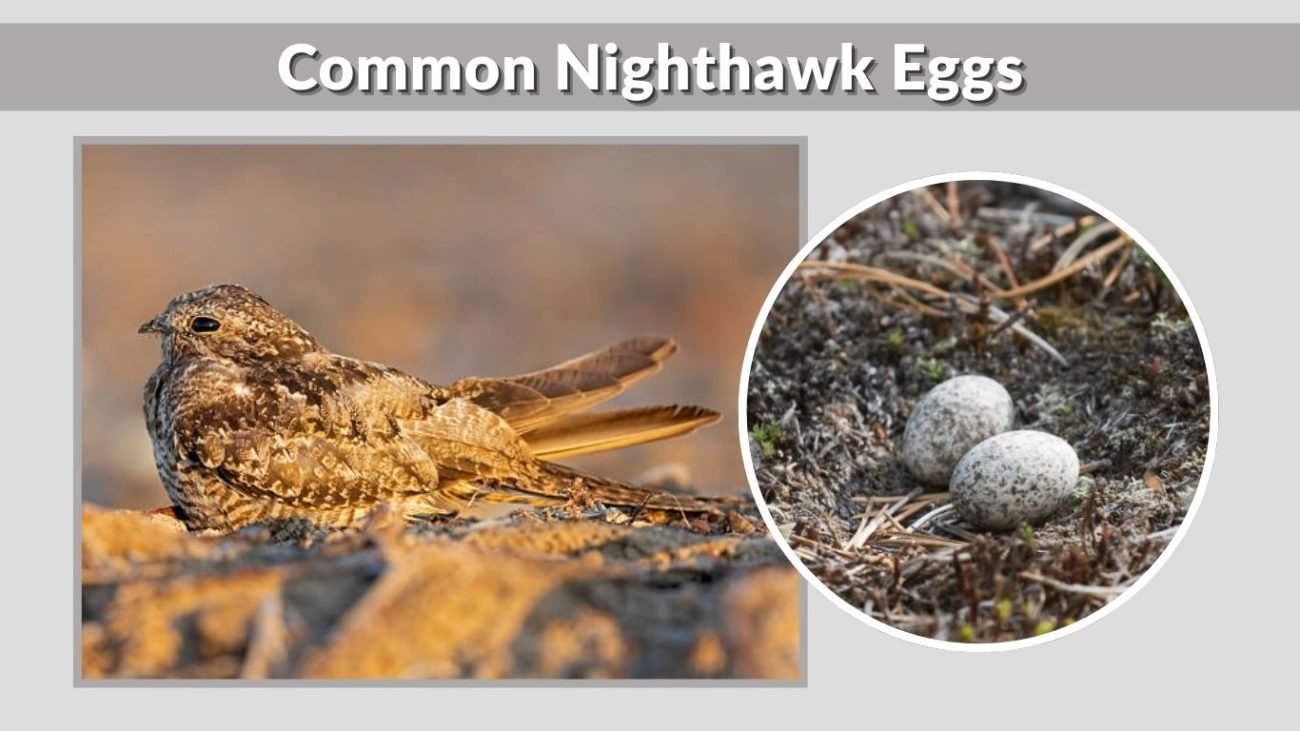
The eggs are typically gray or pale with dark brown or black speckles. This mottled appearance helps camouflage them against gravel or soil.
Clutch Size
Common Nighthawks usually lay 1 to 2 eggs per breeding season. This small clutch size is typical for birds that invest heavily in protecting and raising their young.
Common Nighthawk Life Cycle
Life Stages
The life cycle of the Common Nighthawk includes:
- Egg
- Chick
- Fledgling
- Adult
Each stage is adapted for survival in open and exposed environments.
Chick Development
After hatching, the chicks are covered in down and are well camouflaged. They remain motionless when threatened, blending into their surroundings to avoid predators.
The parents feed the chicks regurgitated insects, providing them with the nutrients needed for rapid growth. Within a few weeks, the young birds develop the ability to fly.
Behavior and Adaptations
Camouflage
The mottled coloration of the Common Nighthawk allows it to blend seamlessly into its environment. Whether resting on the ground or a rooftop, it is often nearly invisible to predators and observers.
Low-Light Adaptation
These birds are specially adapted for activity in low-light conditions. Their large eyes and sensitive vision help them detect insects at dusk and dawn.
Mouth Adaptation
The Common Nighthawk has a large gape, allowing it to catch multiple insects in a single pass. The bristle-like feathers around its mouth help funnel insects inward during flight.
Threats and Conservation Status
Population Status
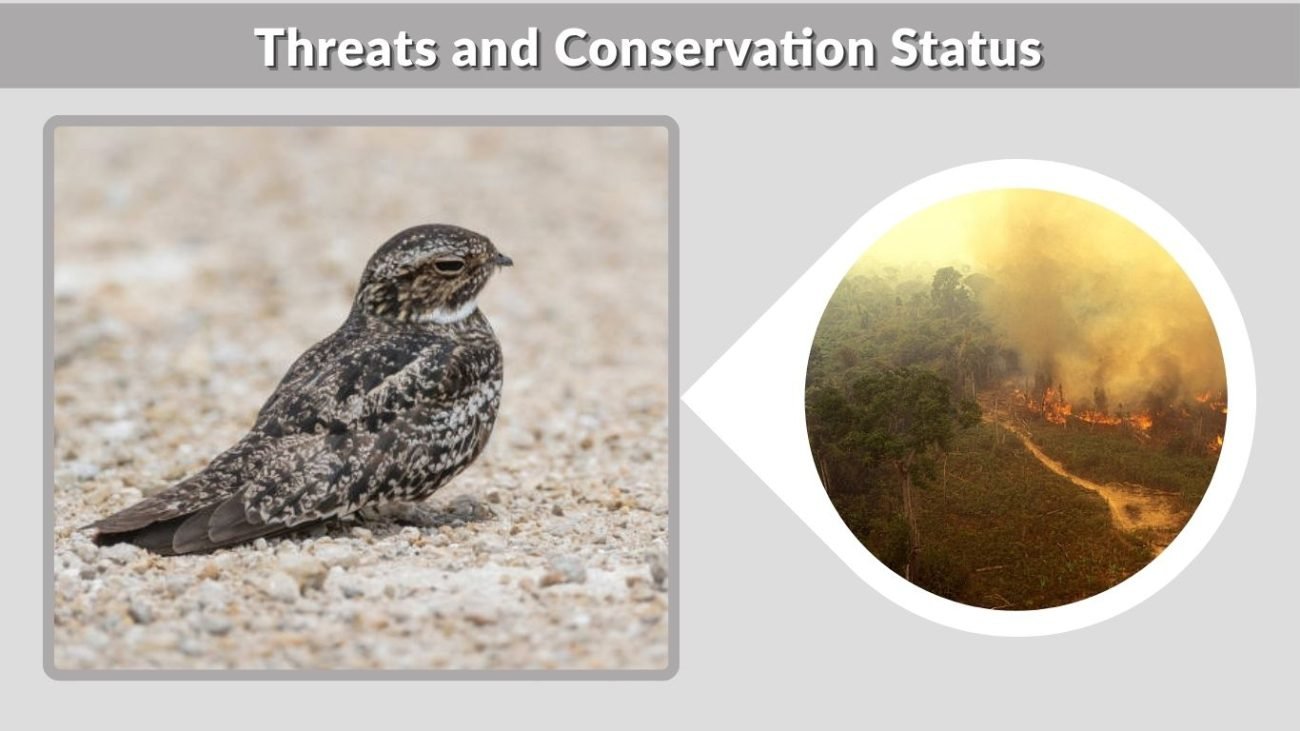
The Common Nighthawk is currently experiencing population declines in some areas. While still present across its range, its numbers have decreased over time.
Threats
Several factors contribute to this decline, including habitat loss, reduction in insect populations, and changes in urban environments.
Modern roofing materials, which differ from traditional gravel rooftops, have reduced suitable nesting sites in cities. Pesticide use also impacts the availability of insects, which are essential to their survival.
Interesting Facts About Common Nighthawk
- Despite its name, it is not a true hawk.
- It produces a distinctive “peent” call during flight.
- It can travel long distances during migration.
- It often nests on flat rooftops in urban areas.
- Its diving display creates a unique booming sound.
FAQs
Why is it called a nighthawk?
The name comes from its hawk-like flight and nocturnal habits, although it is not related to hawks.
Are Common Nighthawks nocturnal?
They are mostly crepuscular, meaning they are active at dawn and dusk rather than fully nocturnal.
What sound do Common Nighthawks make?
They produce a sharp “peent” call and a booming sound during diving displays.
Do Common Nighthawks nest on roofs?
Yes, they often use gravel rooftops as nesting sites because they resemble natural ground habitats.
Conclusion
The Common Nighthawk is a truly unique bird, known for its remarkable flight, camouflage, and aerial hunting skills. From its booming dive displays to its twilight activity, it offers a fascinating glimpse into the diversity of bird behavior. As an important insect predator, it plays a vital role in maintaining ecological balance. Protecting its habitat and food sources is essential to ensure that this extraordinary species continues to thrive.