











Few waterfowl are as striking as the wood duck (Aix sponsa), often called the “flying jewel” of North America. Their vivid colors and unique behaviors make them favorites among birdwatchers, hunters, and photographers. But telling males and females apart is not always easy. While drakes (males) stand out with brilliant plumage and bold features, hens (females) rely on subtle camouflage for survival. Understanding these differences is important not only for identification but also for appreciating how each plays a unique role in the species’ life cycle.
Identification and Physical Appearance
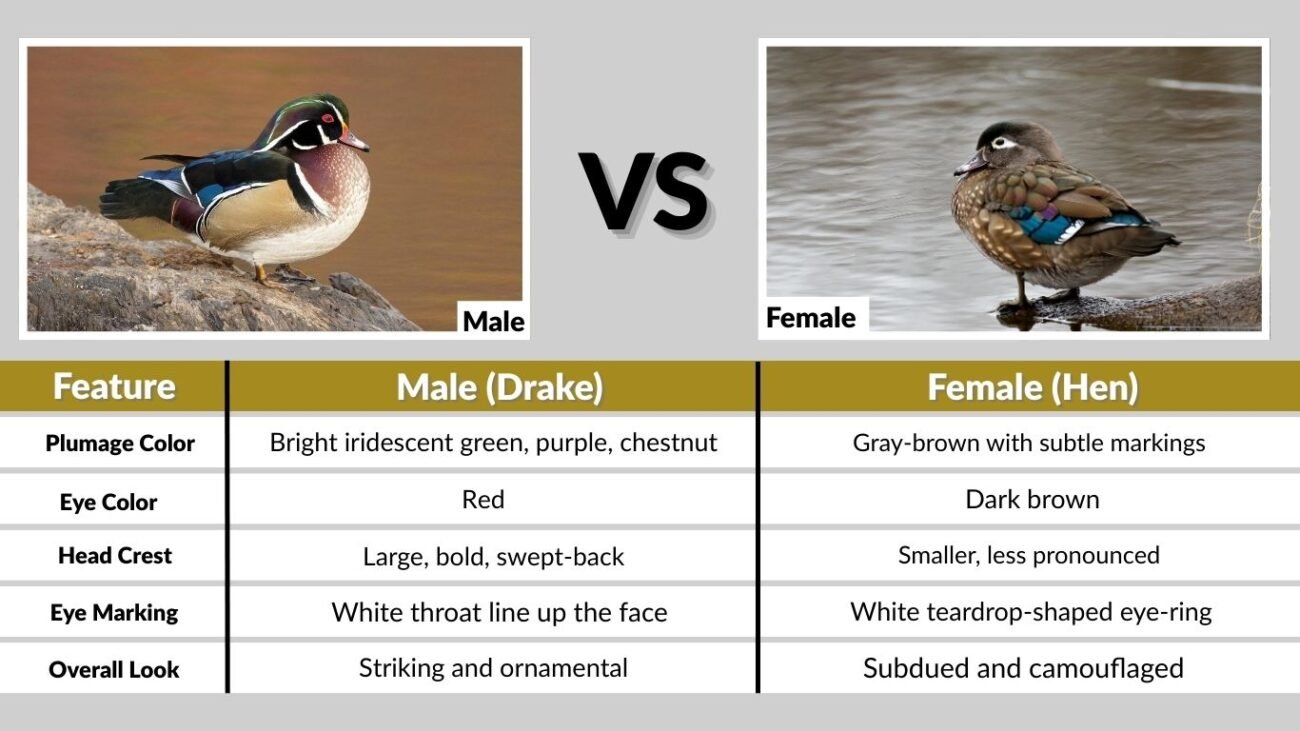
Wood ducks are among the most visually striking waterfowl, and the differences between males (drakes) and females (hens) are clear once you know what to look for.
Male (Drake)
- Bright, iridescent plumage with green, purple, and chestnut colors
- White throat patch that extends upward in a finger-like stripe along the face
- Distinctive red eyes and colorful bill
- Large, swept-back crest on the head
- Bold markings on the body, especially during breeding season
Female (Hen)
- More muted gray-brown plumage, which provides excellent camouflage
- Distinct white teardrop-shaped eye-ring
- Smaller crest compared to males
- Dull-colored bill and darker eyes
- Speckled breast and softer patterns across the body
Comparison Table: Male vs Female Wood Duck
| Feature | Male (Drake) | Female (Hen) |
| Plumage Color | Bright iridescent green, purple, chestnut | Gray-brown with subtle markings |
| Eye Color | Red | Dark brown |
| Head Crest | Large, bold, swept-back | Smaller, less pronounced |
| Eye Marking | White throat line up the face | White teardrop-shaped eye-ring |
| Overall Look | Striking and ornamental | Subdued and camouflaged |
These visual differences not only make males easier to identify but also reflect the roles each sex plays: males attract mates, while females stay concealed during nesting.
Size and Body Structure
While male and female wood ducks share a similar overall build, there are a few subtle differences in their size and proportions.
Male (Drake)
- Slightly larger than females, averaging 19–21 inches in length
- Weighs around 1.5–1.6 pounds
- Crest appears fuller, making the head look larger
- Longer tail and more upright posture, especially noticeable during displays
Female (Hen)
- Slightly smaller, averaging 18–19 inches in length
- Weighs around 1.3–1.5 pounds
- Crest is shorter and less obvious, giving a smoother head profile
- Posture is lower and more compact, especially when nesting or foraging
Body Shape Comparison
Both sexes have a slim, elegant body suited for fast, agile flight through wooded wetlands. The size difference is subtle, so visual cues like plumage and eye markings are usually more reliable for identification.
Although the male is marginally larger, the true differences in wood ducks lie more in plumage and behavior than size alone.
Plumage and Seasonal Changes
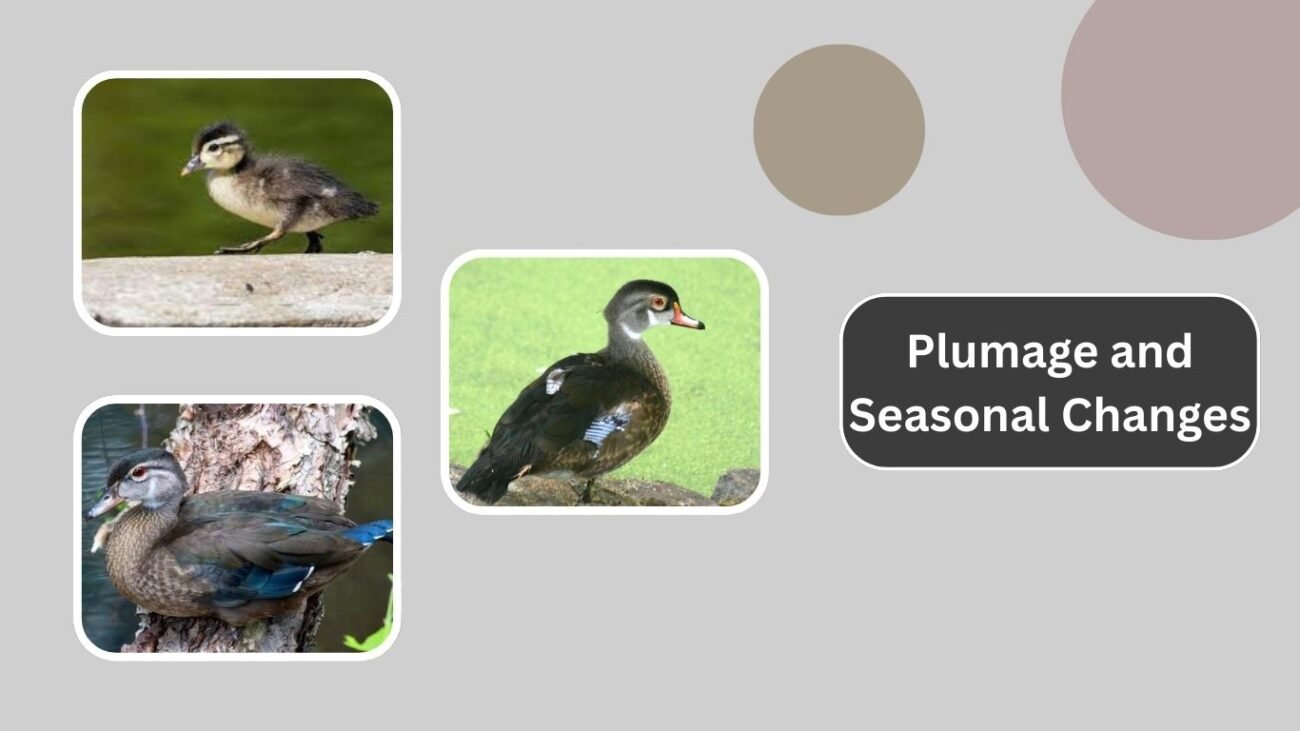
One of the most striking differences between male and female wood ducks is their plumage, and how it changes throughout the year.
Male (Drake)
- During the breeding season, males are at their brightest, displaying vivid green, purple, chestnut, and white patterns that make them one of the most colorful ducks in North America.
- After breeding, they enter eclipse plumage, where their feathers molt into a duller brown color, resembling females. This helps provide camouflage during late summer when they are most vulnerable.
- In fall, they gradually regain their bold colors in preparation for the next breeding season.
Female (Hen)
- Female plumage remains relatively consistent year-round.
- Always gray-brown with a white eye-ring and speckled chest, designed for camouflage while nesting and raising ducklings.
- This consistent pattern helps them stay hidden from predators, especially during incubation.
Key Difference
While males undergo dramatic seasonal changes to attract mates and then blend in, females maintain a steady, practical camouflage that supports their role in nesting and chick survival.
Behavior Differences
Male and female wood ducks not only look different but also play distinct roles in behavior, especially during the breeding season and while raising young.
Male (Drake)
- Courtship Displays: Males perform elaborate displays with wing flapping, head bobbing, and vocal calls to attract females.
- Territorial Nature: During breeding, drakes may become aggressive toward rival males to defend their mate and territory.
- Protective Role: While females incubate eggs, males often remain nearby to guard against predators and disturbances.
Female (Hen)
- Nesting and Incubation: Females are solely responsible for choosing a nest site, usually in tree cavities or nesting boxes, and incubating the eggs.
- Duckling Care: After hatching, the hen leads ducklings to water and protects them by issuing alarm calls or distracting predators.
- Camouflage Advantage: Females rely on their duller plumage to stay hidden during the vulnerable nesting period.
Key Takeaway
The drake’s bold displays help secure mates, while the hen’s nurturing behavior and protective instincts ensure the survival of the next generation.
Calls and Sounds
Vocalizations are another way to tell male and female wood ducks apart. Their calls serve different purposes, from attracting mates to warning of danger.
Male (Drake)
- Males produce a softer, high-pitched whistle, often described as a “zeet” or “peet-peet.”
- These calls are most common during courtship or when flying in groups.
- Their sounds are less frequent and more subtle compared to females.
Female (Hen)
- Females have a distinctive high-pitched “oo-eek, oo-eek” call, which serves as both an alarm and a contact call.
- This sharp call is often heard when they are startled or warning ducklings of danger.
- Females call more frequently, especially during nesting and brood care.
Key Difference
The drake’s whistle is softer and less urgent, while the hen’s call is louder and sharper, reflecting her role in communication and duckling protection.
Habitat Use and Nesting Roles
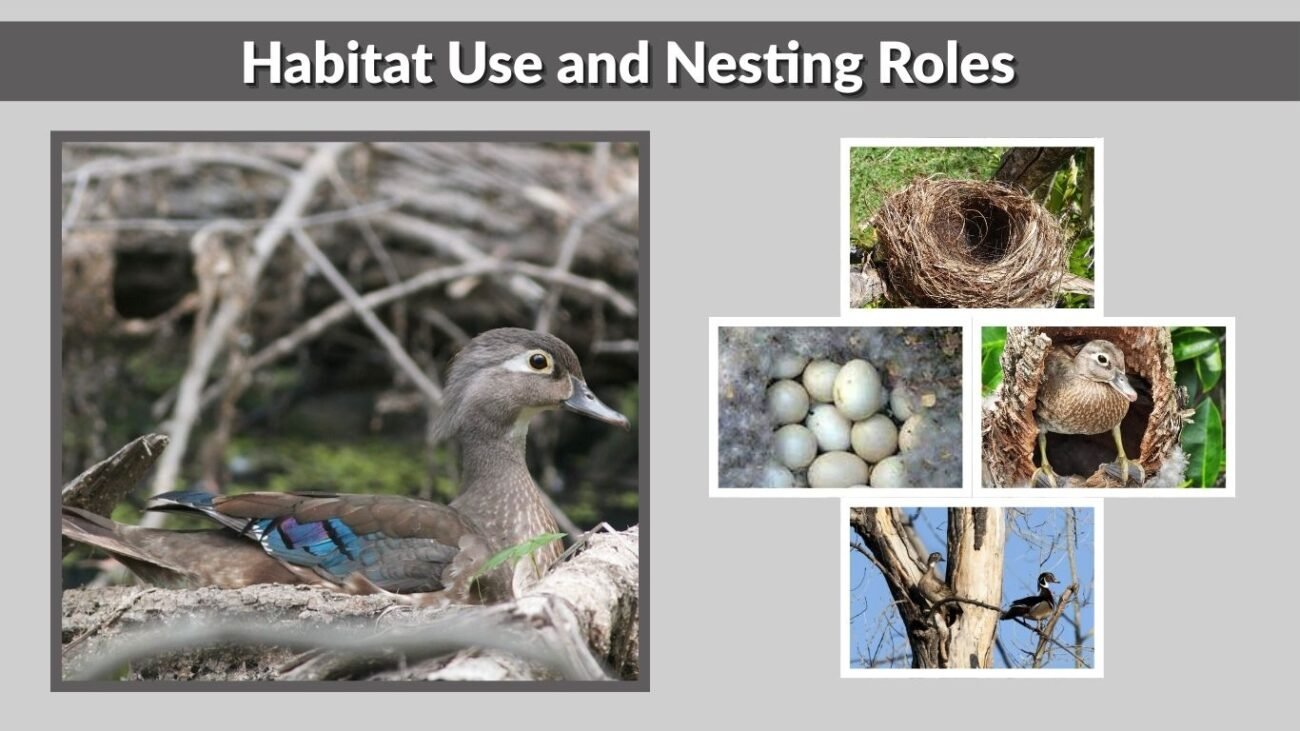
While both male and female wood ducks share the same habitats, their roles within those spaces differ, especially during the breeding season.
Shared Habitat
- Both sexes thrive in wooded swamps, creeks, ponds, and flooded timber.
- They prefer areas with plenty of vegetation, which provides food and cover.
- Wood ducks are also known to use nesting boxes when natural tree hollows are scarce.
Female (Hen)
- Responsible for choosing the nest site, often in tree cavities 10–50 feet above ground.
- Lays 8–15 eggs and incubates them for about a month.
- Leads the ducklings to water immediately after hatching, sometimes from impressive heights.
Male (Drake)
- Guards territory during the early nesting phase to deter predators or rival males.
- Once incubation begins, males often spend less time near the nest and may gather with other drakes.
- Plays a lesser role in raising ducklings compared to the female.
Key Difference
The female is the primary caregiver, handling nesting and brood rearing, while the male’s role is more about territorial defense and mate protection during the early stages.
Role in Family and Survival Strategies
Male and female wood ducks contribute differently to the survival of their offspring, with each playing a role that complements the other.
Male (Drake)
- Early Protection: During the nesting period, males stay nearby to guard the female and nesting site.
- Courtship and Pair Bonding: By displaying vivid colors and behaviors, they secure strong pair bonds that often last for multiple seasons.
- Post-Nesting Behavior: After incubation begins, drakes gradually distance themselves, joining groups of males and focusing on molting.
Female (Hen)
- Primary Caregiver: The female takes full responsibility for incubating the eggs and caring for ducklings.
- Guidance and Teaching: After hatching, she leads her brood to food-rich areas, teaching them foraging behaviors.
- Survival Tactics: Relies on her camouflaged plumage and alarm calls to protect ducklings, often distracting predators with diversion displays.
Key Survival Strategy
The division of roles ensures species survival: males provide security early on, while females focus on nesting and chick-rearing, maximizing the chances of the brood’s survival.
Importance of Differences in Identification
Recognizing the differences between male and female wood ducks is important for birdwatchers, hunters, and researchers alike. These distinctions go beyond appearance—they reflect the unique roles each sex plays in the species’ survival and ecology.
- For Birdwatchers: Helps in accurate field identification, especially since males lose their bright plumage during eclipse season.
- For Hunters: Ensures ethical harvest decisions and better understanding of population balance.
- For Researchers: Assists in tracking breeding behaviors, nesting success, and long-term conservation studies.
Male vs Female Wood Ducks – Quick Comparison
| Feature | Male (Drake) | Female (Hen) |
| Plumage | Bright, iridescent green, purple, chestnut | Subdued gray-brown, camouflaged |
| Eye Color | Red | Dark brown |
| Crest | Large, swept-back | Small, less pronounced |
| Calls | Soft, whistling notes | Sharp “oo-eek” alarm call |
| Role in Nesting | Guards territory, early protection | Builds nest, incubates eggs, raises brood |
| Seasonal Plumage | Shifts to dull eclipse plumage in summer | Stays consistent year-round |
| Behavior | Displays for mate attraction | Focused on duckling survival and defense |
By learning these differences, observers can gain a deeper appreciation of how sexual dimorphism shapes the life cycle and survival strategies of wood ducks.
FAQs
How can you tell a female wood duck from a male?
Males (drakes) are brightly colored with iridescent green, purple, and chestnut feathers, red eyes, and a bold white throat stripe. Females (hens) are gray-brown with a distinct white teardrop-shaped eye-ring and speckled breast. The drake’s colors stand out, while the hen’s subdued plumage provides camouflage during nesting.
Why are male wood ducks more colorful than females?
Male wood ducks use their vibrant plumage to attract mates during the breeding season. Their striking feathers play a role in courtship displays, signaling health and strength. Females, on the other hand, need to stay camouflaged while nesting, so their muted tones help them blend into their surroundings and avoid predators.
Do male wood ducks help raise ducklings?
Males provide protection during the early nesting phase, but once the female begins incubating, they usually leave to join other drakes. The female takes full responsibility for incubating the eggs and raising the ducklings. She leads them to water, teaches them how to forage, and defends them with alarm calls and distraction displays.
What sounds do female wood ducks make compared to males?
Female wood ducks have a sharp, high-pitched “oo-eek” call often used as an alarm or contact signal with ducklings. Males, by contrast, make softer, high-pitched whistles or “zeet” calls, mostly during courtship or flight. The hen’s call is louder and more urgent, reflecting her role in protecting and guiding ducklings.


