











Swans are among the most graceful waterfowl, admired worldwide for their beauty, elegance, and symbolism. Belonging to the genus Cygnus (except the Coscoroba Swan), these birds are found across Europe, Asia, the Americas, and Australia. Each species has its own distinct features, from the pure white plumage of the Mute Swan to the striking black feathers of the Black Swan.
In this guide, we’ll explore seven types of swans, covering their identification, habitats, behaviors, and breeding habits.
1. Mute Swan
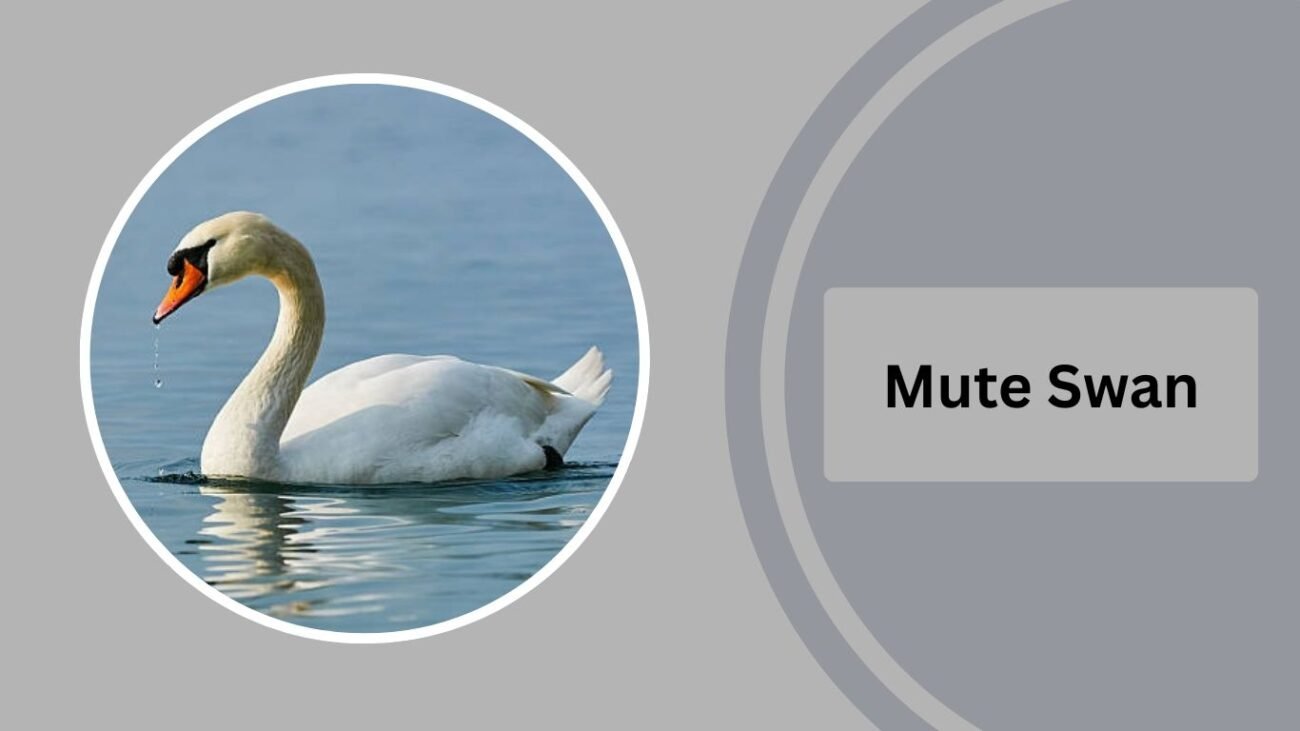
The Mute Swan (Cygnus olor) is one of the most iconic and elegant swans in the world, commonly seen gliding across lakes, ponds, and rivers in Europe and parts of Asia. Despite its name, it is not completely silent—it produces a variety of hissing and grunting sounds. Known for its graceful appearance and arched neck, it has also been introduced to North America, where it thrives in many wetlands.
Identification
- Large size, up to 125–170 cm (49–67 in) long.
- Pure white plumage with an orange bill bordered by a distinct black knob at the base.
- Long, curved neck often held in an elegant S-shape.
- Black legs and webbed feet.
- Males (cobs) slightly larger than females (pens).
Habitat and Distribution
Mute Swans prefer freshwater lakes, rivers, marshes, and coastal lagoons. They are widespread across Europe and Asia, and introduced populations are now established in North America, New Zealand, and parts of South Africa.
Behavior and Diet
These swans are primarily herbivores, feeding on aquatic plants, algae, and grasses. They are territorial during the breeding season and often aggressive when defending their nests. Outside breeding, they can be more social, sometimes forming flocks.
Breeding and Nesting
Mute Swans build large nests near water bodies using reeds and grasses. Females lay 4–7 eggs, and both parents guard the nest. The cygnets (young swans) are greyish-brown and gradually turn white as they mature.
2. Trumpeter Swan

The Trumpeter Swan (Cygnus buccinator) is the largest native waterfowl in North America and the heaviest living bird in the continent. Known for its deep, trumpet-like call, this swan was once near extinction but has made a strong comeback thanks to conservation efforts. Its size, grace, and loud calls make it one of the most striking swans to observe in the wild.
Identification
- Length ranges from 138–165 cm (54–65 in), making it larger than most other swans.
- Pure white plumage with a straight black bill that often has a pink line along the mouth.
- Black legs and feet.
- Long neck, usually held straight rather than curved like the Mute Swan.
- Both sexes look alike, though males are slightly larger.
Habitat and Distribution
Trumpeter Swans inhabit lakes, ponds, marshes, and slow rivers, particularly in Alaska, Canada, and parts of the northern United States. In winter, they migrate to ice-free wetlands in the Pacific Northwest and inland U.S. regions.
Behavior and Diet
These swans are strong fliers and spend much of their time foraging for aquatic vegetation, grasses, and tubers. They are less aggressive than Mute Swans but highly protective during the breeding season. Their distinctive trumpeting call can carry over long distances, helping pairs maintain communication.
Breeding and Nesting
Nests are usually built on small islands or marshy ground near water. The female lays 4–6 eggs, incubated for about a month. Cygnets are grey and fluffy, staying with their parents through the first winter before becoming independent.
3. Tundra Swan
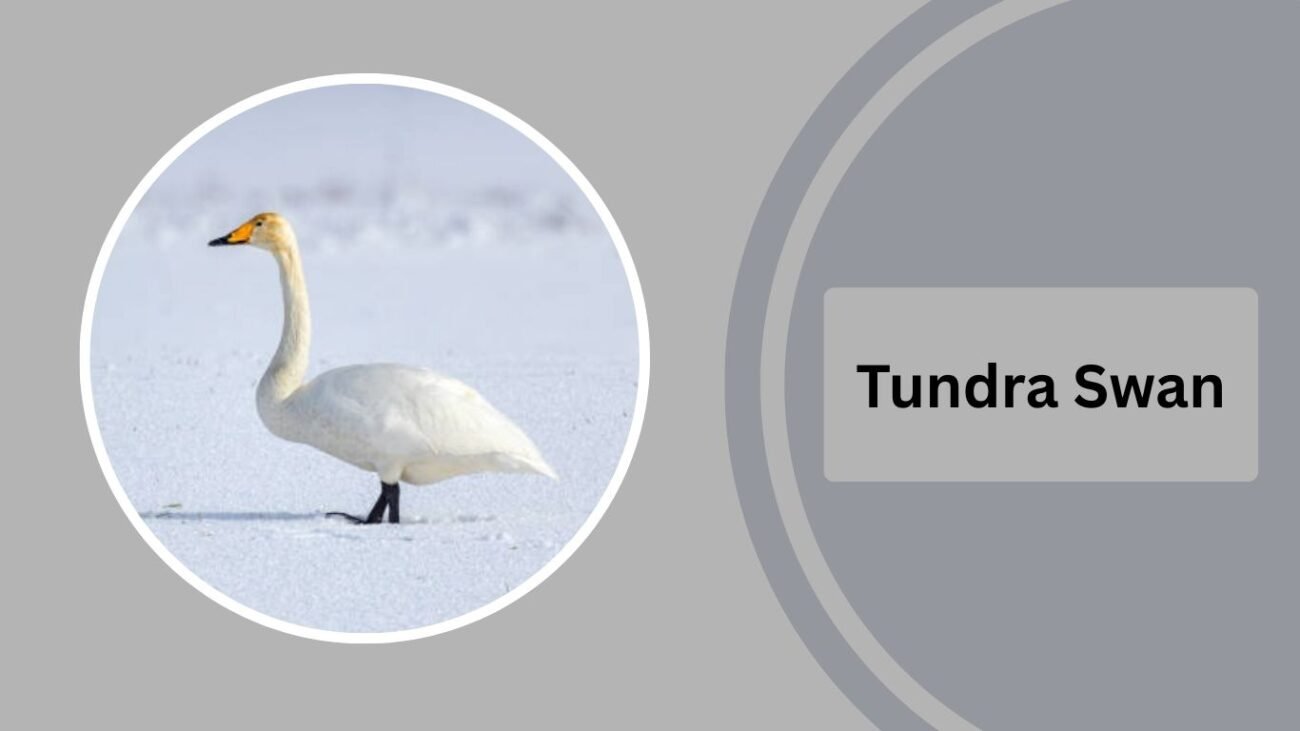
The Tundra Swan (Cygnus columbianus) is a migratory species that breeds in the Arctic tundra and travels long distances to wintering grounds in North America and parts of Eurasia. It is smaller than both the Trumpeter and Mute Swan but still elegant, with a distinct high-pitched call often described as a “who-whoop.”
Identification
- Medium-sized swan, about 115–150 cm (45–59 in) in length.
- White plumage with a black bill, sometimes showing a small yellow patch near the eyes.
- Long neck but shorter and slimmer than that of Trumpeter Swans.
- Black legs and feet.
- Slim, graceful appearance compared to larger swans.
Habitat and Distribution
Tundra Swans breed in Arctic tundra wetlands of Alaska, Canada, and Siberia. They migrate southward in winter to the U.S. Atlantic and Pacific coasts, as well as inland lakes and marshes. Large flocks are commonly seen in migration.
Behavior and Diet
These swans are highly vocal and social, often traveling in family groups or large flocks. They feed on aquatic plants, roots, grasses, and occasionally agricultural crops like corn and grain during migration and winter. Their high-pitched calls are a key feature distinguishing them from Trumpeter Swans.
Breeding and Nesting
Breeding occurs on Arctic tundra wetlands during the short summer. Nests are built near water using moss, grasses, and sedges. Females lay 4–5 eggs, and both parents protect the nest. Cygnets grow quickly to prepare for the long autumn migration.
4. Whooper Swan

The Whooper Swan (Cygnus cygnus) is a large, migratory swan native to Europe and Asia, easily recognized by its loud bugling calls and striking yellow-and-black bill. It is the national bird of Finland and is admired for its strong flight and graceful presence on lakes and wetlands.
Identification
- Large swan, about 140–165 cm (55–65 in) long.
- Pure white plumage with a long, straight neck.
- Distinctive bill: bright yellow at the base with a black tip, unlike the all-black bill of Trumpeter and Tundra Swans.
- Black legs and webbed feet.
- Heavier and bulkier compared to Tundra Swan.
Habitat and Distribution
Whooper Swans breed in northern Europe and Asia, particularly Iceland, Scandinavia, and Russia. During winter, they migrate to more temperate regions such as the British Isles, Central Europe, and East Asia, inhabiting lakes, rivers, and estuaries.
Behavior and Diet
They are strong fliers capable of long migrations and often seen in large, noisy flocks during the winter. Their diet consists of aquatic vegetation, grasses, and occasionally agricultural crops such as potatoes and grain. They are known for their loud “whooping” calls that carry across great distances.
Breeding and Nesting
Whooper Swans nest near freshwater lakes or marshes in northern breeding grounds. The female lays 4–7 eggs, and both parents share responsibilities in guarding and raising the cygnets. The young are strong swimmers soon after hatching and migrate south with their parents in autumn.
5. Black Swan
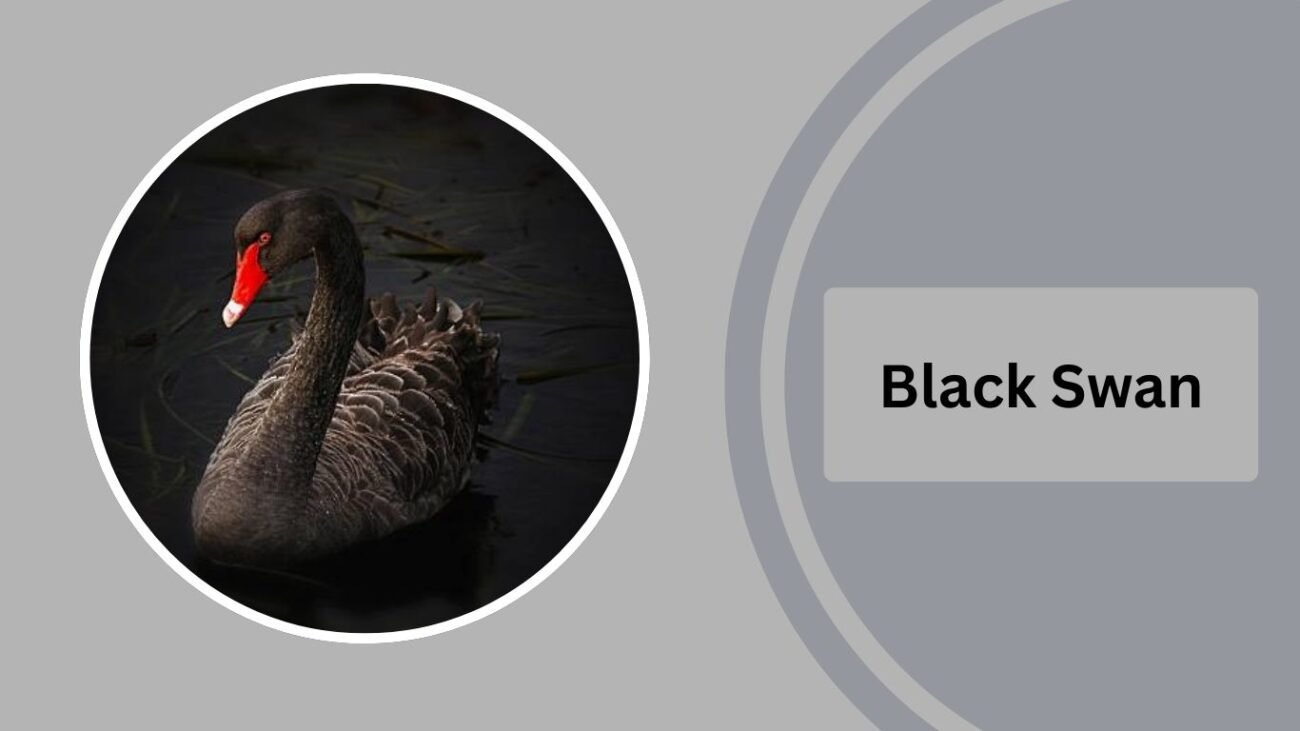
The Black Swan (Cygnus atratus) is a striking swan species native to Australia, instantly recognizable for its dark plumage and bright red bill. Unlike most swans, which are white, the Black Swan’s unique coloration makes it one of the most distinctive waterfowl in the world. It is also known for forming large flocks and being a symbol in both culture and literature.
Identification
- Medium to large swan, 110–140 cm (43–55 in) long.
- Black plumage with contrasting white flight feathers visible in flight.
- Bright red bill with a pale tip.
- Black legs and feet.
- Long, curved neck often held in an elegant S-shape.
Habitat and Distribution
The Black Swan is native to Australia and Tasmania, where it thrives in lakes, rivers, estuaries, and coastal lagoons. It has also been introduced to New Zealand and parts of Europe. These swans are highly adaptable and often seen in both natural and man-made water bodies.
Behavior and Diet
Unlike many migratory swans, Black Swans are mostly sedentary, though they may move locally in response to drought. They feed primarily on aquatic vegetation, algae, and grasses. They are social birds, often forming large flocks outside the breeding season.
Breeding and Nesting
Nests are built from reeds and vegetation in shallow waters or islands. The female lays 4–6 pale green eggs, incubated mainly by her while the male guards the nest. Cygnets are grey and fluffy, gradually darkening before their adult plumage develops.
6. Black-necked Swan
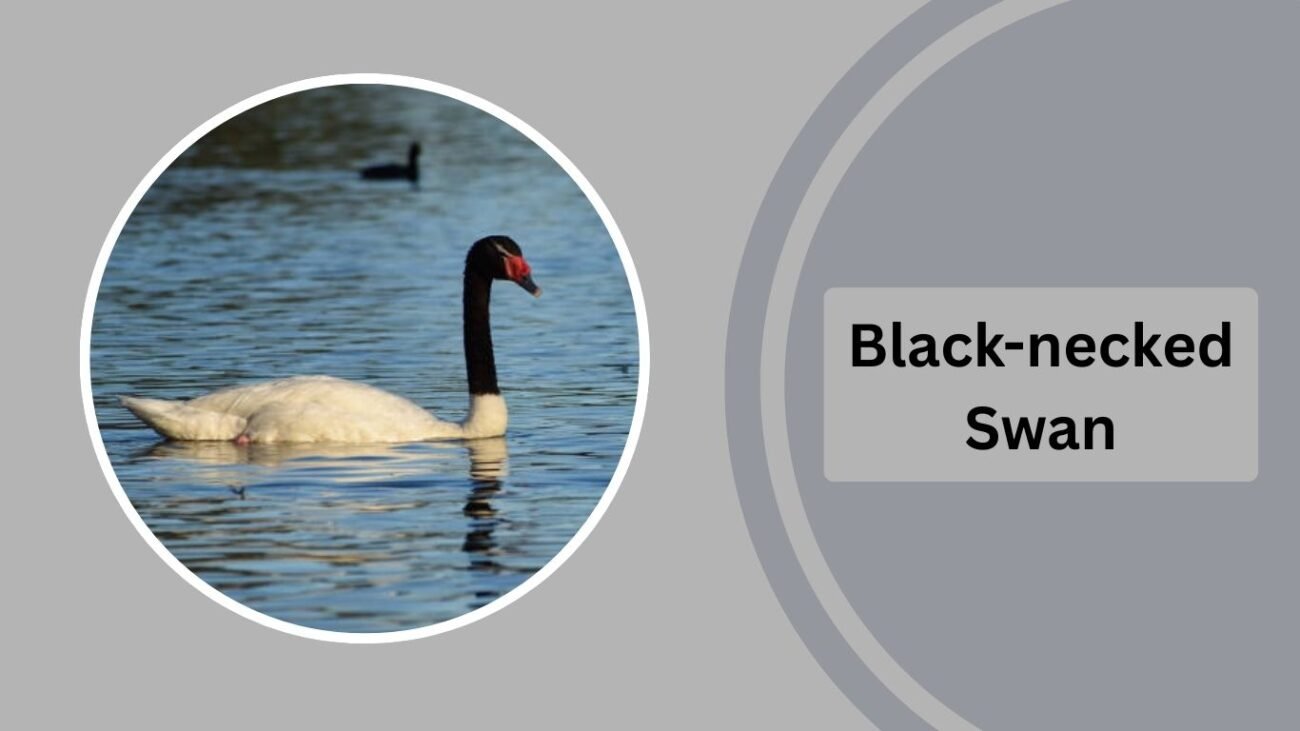
The Black-necked Swan (Cygnus melancoryphus) is the largest waterfowl native to South America and the only swan species with a contrasting black neck and white body. Its unique appearance and quiet nature distinguish it from other swans.
Identification
- Medium-sized swan, about 102–124 cm (40–49 in) long.
- White body with a black neck and head.
- Distinctive bright red knob at the base of the bill, with a bluish-gray bill.
- Black legs and feet.
- White eye-ring and small patches of white behind the eyes.
Habitat and Distribution
Black-necked Swans inhabit freshwater lakes, marshes, lagoons, and slow-moving rivers in southern South America, particularly Argentina, Chile, Uruguay, and southern Brazil. They are also found in the Falkland Islands.
Behavior and Diet
These swans are relatively quiet compared to other species, producing only soft whistles and grunts. They are strong swimmers and feed mainly on aquatic vegetation, algae, and small invertebrates. They are less aggressive than Mute or Whooper Swans, making them more peaceful in mixed flocks.
Breeding and Nesting
Nests are constructed from reeds and grasses on small islands or floating platforms in shallow water. The female lays 4–7 eggs, which are incubated for about a month. Cygnets are grayish and ride on the parents’ backs for protection when young.
7. Coscoroba Swan
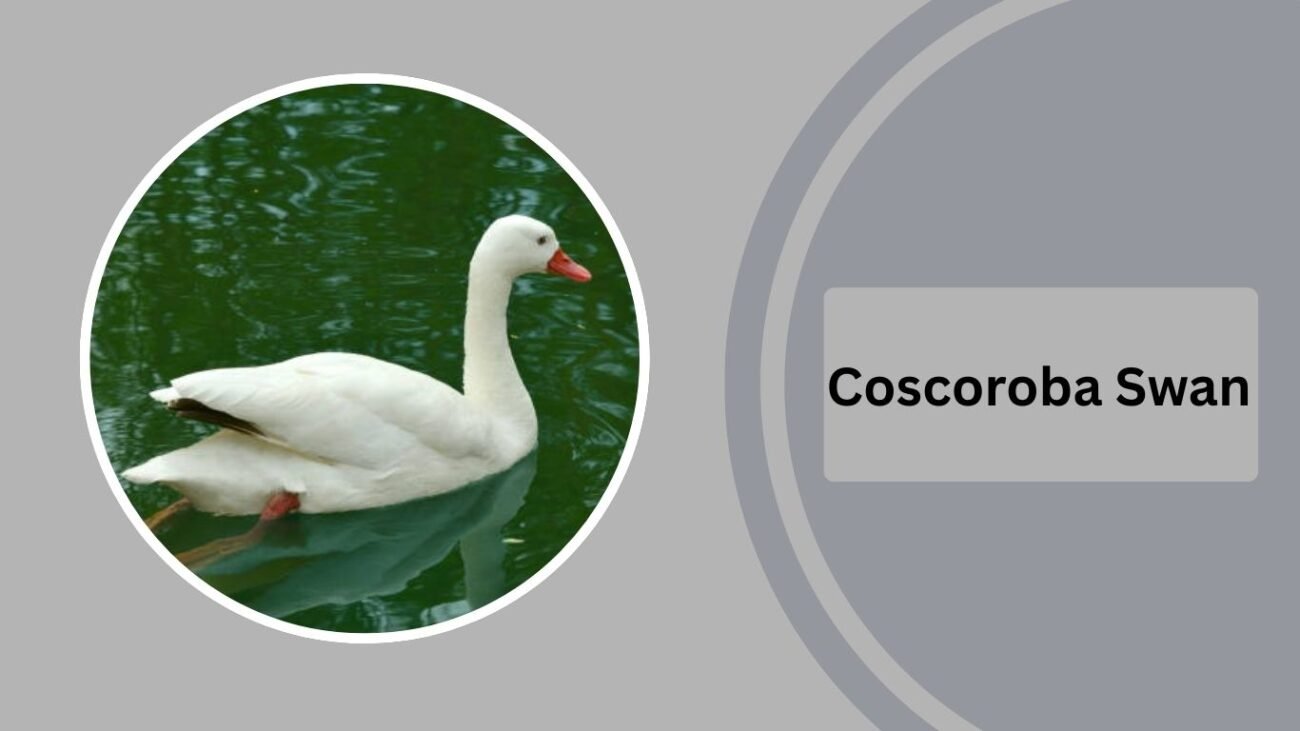
The Coscoroba Swan (Coscoroba coscoroba) is the smallest member of the swan family and is sometimes considered closer to geese due to its size and behavior. Despite this, it is classified among swans and is admired for its bright white plumage and distinct, flute-like calls.
Identification
- Smallest swan species, measuring about 90–115 cm (35–45 in) long.
- Entirely white plumage with a short, bright red bill.
- Red legs and feet, unlike the black legs of most other swans.
- Compact body and shorter neck compared to typical swans.
- Graceful in flight, often mistaken for large geese at a distance.
Habitat and Distribution
The Coscoroba Swan is native to South America, inhabiting wetlands, lagoons, marshes, and lakes in Argentina, Chile, Uruguay, Paraguay, and southern Brazil. It also migrates as far south as Tierra del Fuego.
Behavior and Diet
These swans are more active walkers than other species, often grazing on land. Their diet consists of aquatic plants, grasses, seeds, and small invertebrates. They are social and often seen in pairs or small groups, producing loud “cos-cor-oo” calls from which their name is derived.
Breeding and Nesting
Coscoroba Swans build nests from reeds and grasses on the ground near water. The female lays 4–6 eggs, incubated mainly by her while the male guards the territory. Cygnets are pale gray and stay with parents until they can fly.
FAQs
What is the largest swan species?
The Trumpeter Swan holds the title as the largest swan species, reaching up to 165 cm (65 in) in length and weighing around 11–13 kg. It is also North America’s heaviest native bird, making it significantly bigger than the Tundra or Mute Swan.
Which swan is completely black?
The Black Swan (Cygnus atratus) is the only swan with almost entirely black plumage. Native to Australia, it has white flight feathers visible in flight and a striking red bill, which makes it unique among swan species.
Do all swans migrate?
Not all swans migrate. Species like the Tundra Swan and Whooper Swan are long-distance migrants, breeding in the Arctic and flying south in winter. However, Black Swans in Australia and Black-necked Swans in South America are mostly sedentary, moving locally when needed.
How can you tell the difference between a Tundra Swan and a Trumpeter Swan?
The Trumpeter Swan is larger with a straight black bill that lacks a yellow spot, while the Tundra Swan is smaller and often shows a small yellow patch near the eyes. Their calls also differ—Trumpeters have a deep trumpet-like call, while Tundras make higher-pitched whooping sounds.
What do swans eat?
Swans are primarily herbivores, feeding on aquatic plants, grasses, roots, and algae. Some species also graze on land and may eat small invertebrates. In agricultural areas, they occasionally feed on crops like grain or potatoes during migration.


