











Wood ducks are among the most colorful and striking waterfowl in North America, admired not only for their beauty but also for their fascinating feeding habits. Unlike many birds that rely heavily on one food source, wood ducks are true omnivores, thriving on a balanced diet of plants, seeds, nuts, and small animals. Their diet changes with the seasons, adapting to what nature provides in wetlands, rivers, forests, and even nearby farmlands. Understanding what wood ducks eat gives us a closer look at how they survive, grow, and maintain their place in the ecosystem.
Understanding the Diet of Wood Ducks
Wood ducks are highly adaptable when it comes to food, which is one of the main reasons they thrive in such diverse habitats. Their diet reflects both their omnivorous nature and the seasonal changes in their environment. From plant-based foods like seeds and acorns to protein-rich insects and small aquatic animals, they take advantage of whatever is available in their surroundings.
Omnivorous Nature
As omnivores, wood ducks consume both plant and animal matter. This flexibility ensures they can meet their energy needs throughout the year. Plant foods provide carbohydrates and fats, while insects, larvae, and other invertebrates supply essential protein for growth and reproduction.
Seasonal Variations in Diet
The foods wood ducks eat vary with the seasons. In spring and summer, they rely heavily on insects, aquatic invertebrates, and green vegetation to support breeding and raising ducklings. During fall and winter, their diet shifts toward energy-dense foods like acorns, nuts, and agricultural grains to help them build fat reserves for colder months and migration.
14 Foods Wood Ducks Commonly Eat
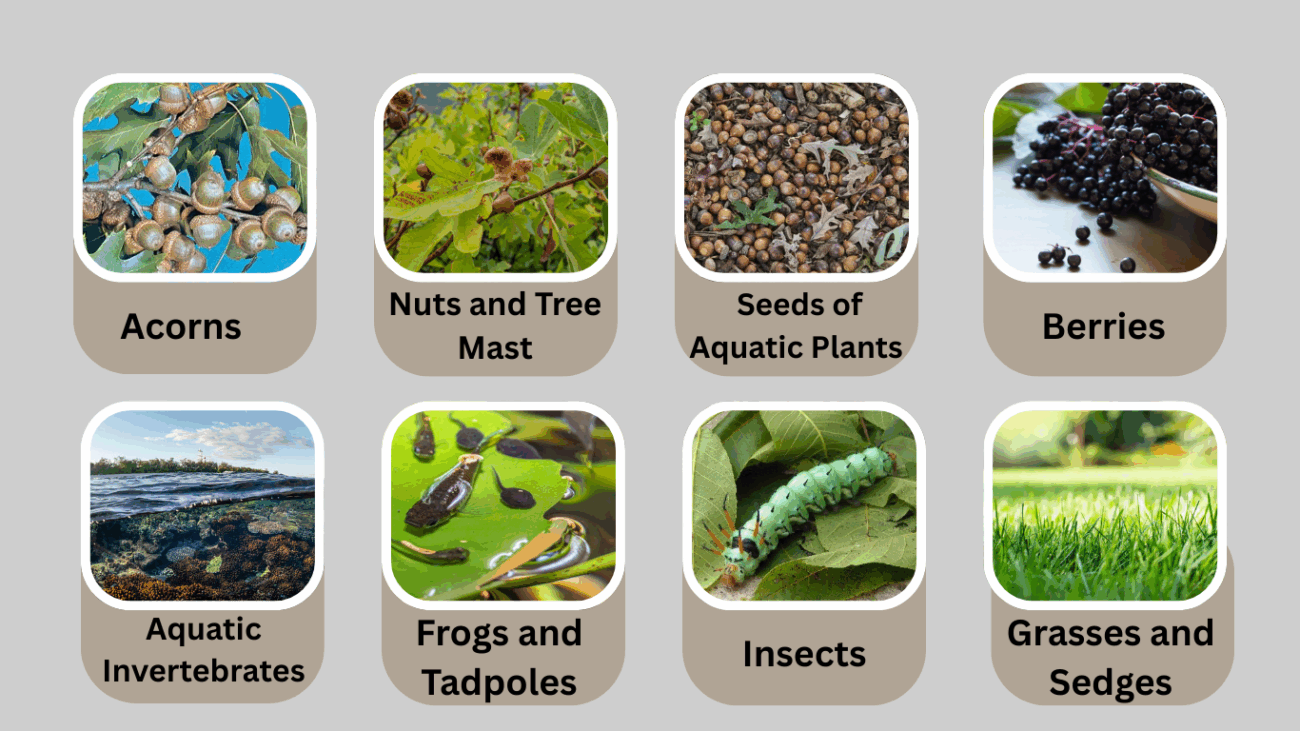
Wood ducks are opportunistic feeders, taking advantage of a wide range of natural foods. Below are 14 of the most common items in their diet, each playing a role in their nutrition and survival.
1. Acorns
Acorns are one of the most important foods for wood ducks, especially in autumn and winter. These nutrient-rich nuts provide essential fats and carbohydrates, helping the ducks build energy reserves. In forests near oak trees, wood ducks can often be seen foraging on the ground for fallen acorns.
2. Seeds of Aquatic Plants
Seeds from aquatic vegetation like smartweed, pondweed, and wild rice are staples for wood ducks. These seeds are abundant in marshes and shallow lakes, offering consistent food throughout much of the year. They also aid in digestion and provide fiber.
3. Nuts and Tree Mast
Beyond acorns, wood ducks consume a variety of nuts and mast from hickory, pecan, and beech trees. These foods are highly caloric and are especially valuable during migration or before winter when energy demands are high.
4. Berries
Wood ducks readily feed on wild berries such as blackberries, elderberries, mulberries, and wild grapes. Berries provide vitamins and natural sugars, making them a seasonal delicacy in summer and early fall.
5. Grasses and Sedges
In shallow wetlands, wood ducks forage on grasses and sedges. These plants are lower in calories but contribute to a balanced diet. They often supplement more nutrient-rich foods with vegetation, especially in spring when green growth is abundant.
6. Insects
Protein is vital during breeding and for ducklings, and insects provide this in abundance. Wood ducks feed on beetles, flies, and other small bugs found near water or in forested areas. This food source becomes particularly important in spring and summer.
7. Aquatic Invertebrates
Snails, small crustaceans, and insect larvae make up another key part of their animal diet. These invertebrates provide protein, calcium, and other nutrients that aid in feather growth and reproduction.
8. Frogs and Tadpoles
Although not their main food, wood ducks occasionally eat small frogs and tadpoles when available. This source of protein is opportunistic and usually more common in warm months when amphibians are active.
9. Small Fish
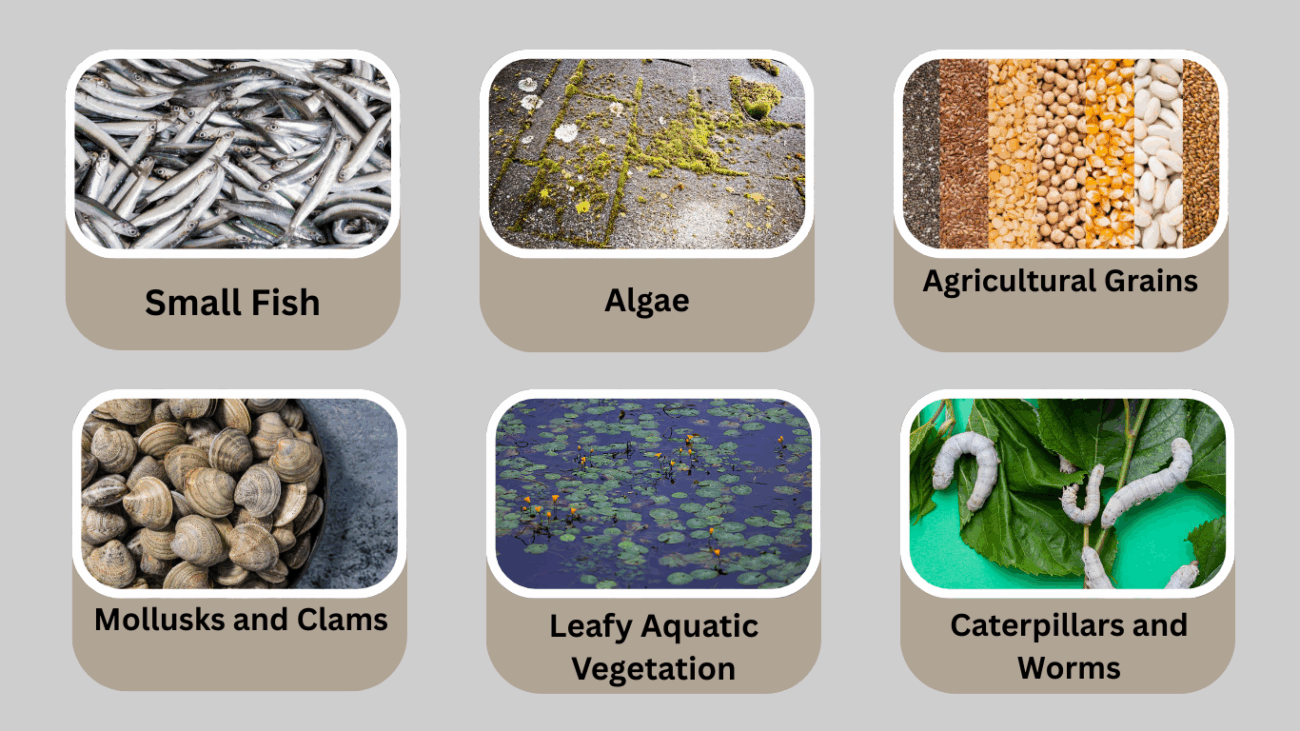
Fish are a rare but occasional addition to the wood duck’s diet. While they do not actively hunt fish like other waterfowl, they may eat small fish in shallow waters when foraging for other aquatic prey.
10. Algae
Algae often supplement the diet of wood ducks, particularly in still or slow-moving waters. While not nutrient-dense, algae provide minerals and are easily available in summer ponds and wetlands.
11. Agricultural Grains
When wood ducks live near farmlands, they take advantage of crops such as corn, wheat, and rice. These grains are rich in carbohydrates and fat, making them especially useful in the fall migration period.
12. Mollusks and Clams
Small mollusks and freshwater clams are sometimes consumed, though they are not a major food source. These provide protein and calcium, which supports strong bone and eggshell development.
13. Leafy Aquatic Vegetation
Plants like duckweed, water lilies, and pickerelweed are common foods. Wood ducks dabble in shallow waters to access these plants, which provide hydration and trace nutrients.
14. Caterpillars and Worms
Ducklings, in particular, rely heavily on caterpillars and worms. These protein-rich foods are easy for young ducks to catch and digest, supporting rapid growth during their first weeks of life.
How Wood Ducks Forage for Food
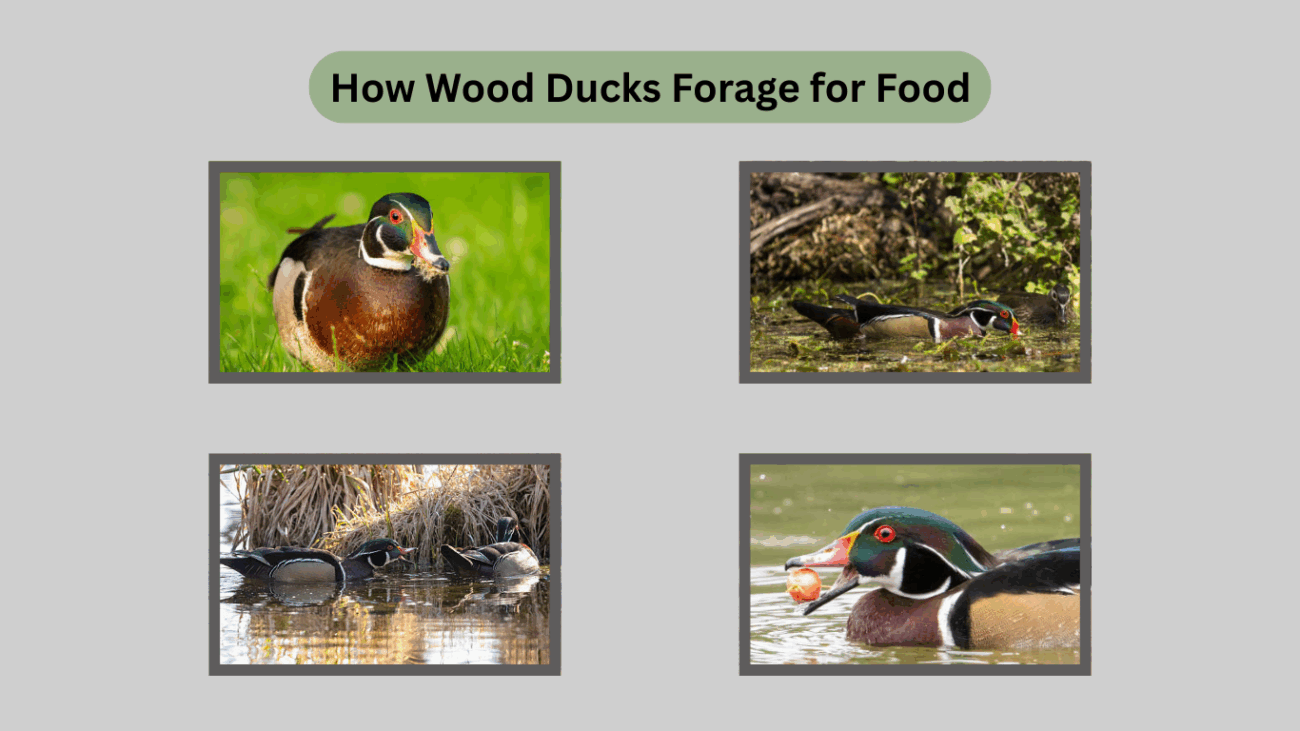
Wood ducks use several foraging techniques to access the wide variety of foods in their diet. Their behavior adapts to different habitats, ensuring they can take advantage of whatever food sources are available.
Dabbling and Diving
Wood ducks are classified as “dabbling ducks,” meaning they often tip forward in shallow water, feeding on seeds, aquatic plants, and small invertebrates just below the surface. While less common, they can also dive short distances to reach submerged vegetation and invertebrates.
Ground Foraging
In wooded areas, wood ducks forage on the forest floor for acorns, nuts, and fallen berries. During autumn, they are especially drawn to oak groves where acorns are plentiful. This mix of aquatic and terrestrial foraging makes them highly adaptable.
Importance of Diet for Survival and Reproduction
A diverse diet is not just about daily energy; it directly influences survival, breeding success, and migration.
Building Energy Reserves
High-calorie foods such as acorns and grains are vital in fall and winter. They allow wood ducks to store fat, which is crucial for long migrations and surviving colder months when other foods are scarce.
Protein for Growth
Protein from insects, worms, and aquatic invertebrates is essential for ducklings and breeding females. It helps with feather development, egg production, and maintaining overall health.
Diet Differences Between Adults and Ducklings
The diet of wood ducks changes with age. Ducklings rely heavily on insects, caterpillars, and worms because their growing bodies need more protein. As they mature, their diet expands to include seeds, nuts, and plant matter. Adult wood ducks maintain a balanced omnivorous diet, but their choices shift seasonally depending on availability.
Human Influence on Wood Duck Diet
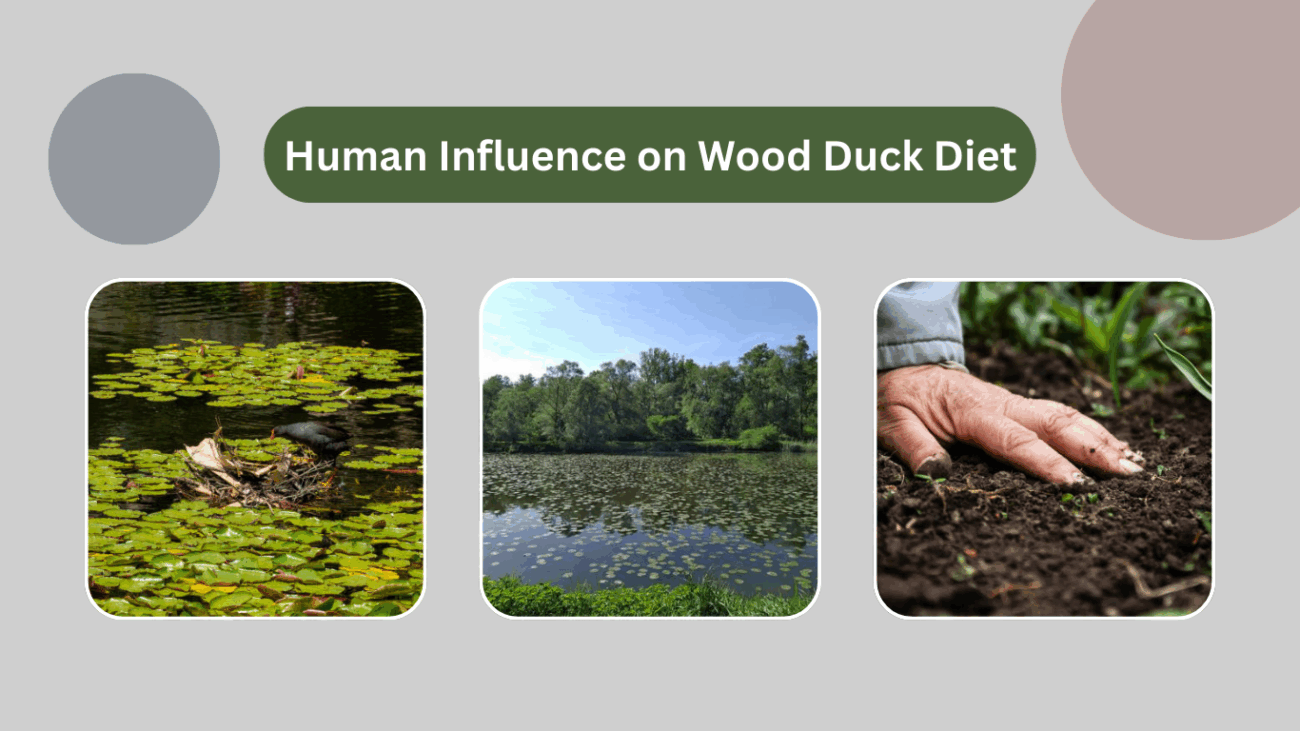
Human activities have shaped the modern diet of wood ducks in several ways.
Role of Agriculture
Wood ducks often feed on leftover grains in fields, such as corn and rice. While this provides a reliable energy source, it also brings them into closer contact with human activity.
Backyard Ponds and Wetlands
Man-made ponds, wetlands, and conservation areas give wood ducks access to aquatic vegetation and invertebrates. In some regions, these artificial habitats help sustain their populations year-round.
FAQs
Do wood ducks eat corn?
Yes, wood ducks eat corn, especially in areas near farmland. Corn is a carbohydrate-rich food that provides energy during migration and winter. However, it is not their primary food in the wild and usually supplements their natural diet of acorns, seeds, and aquatic vegetation.
What is the favorite food of wood ducks?
Acorns are considered the favorite food of wood ducks, particularly in autumn and winter. They are energy-dense and widely available in forests. Acorns help the ducks build fat reserves, which are essential for surviving colder weather and long flights during migration.
Do wood ducks eat fish?
While wood ducks are not active fish hunters, they may occasionally consume small fish when foraging in shallow waters. Their diet mainly consists of plants, seeds, and insects, so fish make up only a very small portion of what they eat.
What do baby wood ducks eat?
Baby wood ducks (ducklings) feed primarily on insects, caterpillars, and worms in their first weeks of life. These foods are protein-rich and easy to digest, supporting rapid growth. As they mature, their diet gradually includes seeds, aquatic vegetation, and small invertebrates.
Can humans feed wood ducks?
Feeding wood ducks is generally discouraged because it can disrupt their natural foraging habits. While they may accept corn, seeds, or grains, providing food regularly can create dependency and affect migration. It’s better to support them by preserving natural habitats and planting native vegetation.


