Fruit flies are among the most destructive pests affecting fruits and vegetables worldwide. With their ability to infest crops, spread rapidly, and cause significant economic losses, they pose a major challenge to agriculture. Each species varies in appearance, host preference, and distribution. In this guide, we explore 15 different types of fruit flies, highlighting their identification, habitat, behavior, diet, and lifecycle in detail.
1. Mediterranean Fruit Fly (Medfly)

The Mediterranean Fruit Fly, commonly called Medfly, is one of the most destructive agricultural pests worldwide. It infests a wide range of fruit and vegetable crops, causing severe economic losses. Its adaptability to different climates and rapid reproductive cycle make it a significant concern for farmers and quarantine authorities.
Identification
- Small fly, about 3–5 mm in length.
- Body is yellowish with black markings.
- Eyes are iridescent, often appearing greenish.
- Wings are patterned with brown bands.
- Females have a pointed ovipositor used for laying eggs inside fruit.
Habitat
The Medfly thrives in warm temperate, subtropical, and tropical regions. It is native to sub-Saharan Africa but has spread globally, including the Mediterranean, Central and South America, and parts of Australia.
Behavior
Medflies are highly invasive and capable of adapting to diverse environments. Adults are active during the day, especially in sunny conditions. Females puncture fruit skins to deposit eggs, often leading to secondary infections.
Diet
Larvae feed on the pulp of more than 200 different host fruits and vegetables, including citrus, peaches, apricots, apples, and tomatoes. Adults consume nectar, honeydew, and plant exudates for energy.
Lifecycle
The lifecycle of the Medfly consists of four stages: egg, larva, pupa, and adult. Eggs are deposited inside the fruit, where they hatch within a few days. The larvae feed on the fruit pulp, causing it to decay from the inside. Once mature, they exit the fruit and pupate in the soil. After one to two weeks, adults emerge, ready to begin the cycle again. Depending on temperature, the complete lifecycle may take just three to five weeks.
2. Mexican Fruit Fly
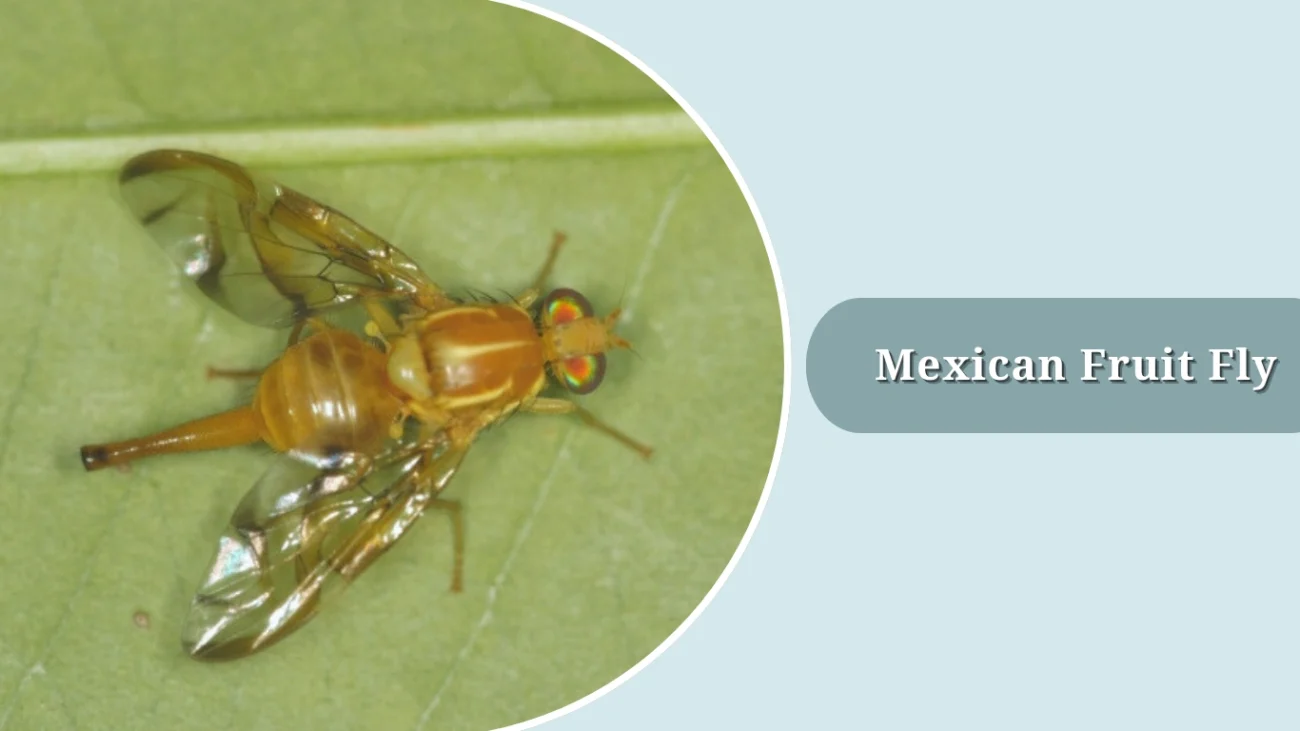
The Mexican Fruit Fly is a serious agricultural pest that primarily targets citrus crops but can infest a wide range of fruits. It poses a significant threat to commercial orchards and is closely monitored in international trade to prevent its spread. Native to Mexico and Central America, it has established populations in parts of the southern United States.
Identification
- Larger than many other fruit flies, measuring about 8–10 mm.
- Body is yellow-orange with darker markings.
- Transparent wings with a distinctive pattern of brown bands.
- Females have a long, slender ovipositor for egg-laying.
Habitat
This species is found mainly in Mexico, Central America, and the southern U.S., especially Texas. It thrives in warm, subtropical regions where citrus and other host fruits are abundant.
Behavior
Females puncture the skin of fruit to deposit eggs beneath the surface. The larvae then develop inside, making the fruit unmarketable. Adults are strong fliers and capable of dispersing long distances, which enhances their invasive potential.
Diet
Larvae feed on the internal tissues of fruits, particularly citrus varieties like grapefruit, oranges, and tangerines. Adults feed on nectar, honeydew, and plant juices to sustain their energy.
Lifecycle
The lifecycle includes egg, larva, pupa, and adult stages. Eggs hatch within a few days after being laid in fruit. Larvae consume the pulp, causing internal breakdown and premature fruit drop. Mature larvae leave the fruit to pupate in the soil. After pupation, adults emerge and continue the cycle. The entire process typically takes about a month, depending on climate conditions.
3. Olive Fruit Fly

The Olive Fruit Fly is a highly destructive pest that specifically targets olive trees. It is considered the most serious threat to olive production worldwide, capable of ruining both table olives and olive oil quality. Because of its narrow host range, it is closely linked to olive-growing regions across the Mediterranean and other producing areas.
Identification
- Small fly, about 4–5 mm in length.
- Body is light brown to yellow with darker markings.
- Transparent wings with a distinct dark spot near the tip.
- Eyes are bright green, giving a metallic sheen.
- Females possess a robust ovipositor for inserting eggs into olives.
Habitat
This species is primarily found in the Mediterranean Basin, parts of Africa, the Middle East, and California in the United States. It thrives in areas where olive trees are cultivated, particularly in warm, dry climates.
Behavior
Females puncture the skin of olives to deposit eggs, often causing visible dimples on the fruit. Larvae develop inside the olive, feeding on the pulp and sometimes reaching the seed. Infested olives often fall prematurely, and oil extracted from damaged fruit has reduced quality.
Diet
Larvae feed exclusively on olives, both cultivated and wild varieties. Adults feed on honeydew, nectar, and other plant exudates for energy and survival.
Lifecycle
The Olive Fruit Fly undergoes complete metamorphosis with four stages: egg, larva, pupa, and adult. Eggs are laid beneath the olive skin, where they hatch within a few days. The larvae tunnel through the pulp, leaving brown tracks and soft spots. When fully grown, they exit the fruit and pupate either inside the fruit or in the soil. Adults emerge and repeat the cycle. Depending on the temperature, multiple generations can occur in a single season.
4. Caribbean Fruit Fly

The Caribbean Fruit Fly is a tropical pest known for attacking a wide variety of fruits. It is of major concern to citrus growers and export markets, as its infestations can lead to strict quarantine regulations. Native to the Caribbean region, this species has expanded its range into Florida and other warm areas.
Identification
- Medium-sized fly, around 7–10 mm in length.
- Body is yellow to brown with darker bands.
- Wings display distinctive brown patterns with curved markings.
- Eyes are large and reddish.
- Females are equipped with a pointed ovipositor for egg-laying.
Habitat
The Caribbean Fruit Fly is widespread throughout the Caribbean islands, Central America, South America, and parts of the United States, particularly Florida. It thrives in tropical and subtropical environments where host fruits are abundant.
Behavior
This species is polyphagous, meaning it infests many different fruits. Females puncture fruit skins to deposit eggs, often targeting ripening fruit. Adults are active during warm, sunny days and can disperse across long distances, increasing their invasive potential.
Diet
Larvae feed on the pulp of numerous tropical and subtropical fruits such as guava, citrus, mango, papaya, and loquat. Adults sustain themselves with nectar, honeydew, and plant sap.
Lifecycle
The lifecycle begins when females lay eggs beneath the skin of host fruit. Within a few days, the eggs hatch into larvae that feed on the fruit’s soft tissues, causing internal damage and rot. Once fully grown, larvae leave the fruit and pupate in the soil. After pupation, adults emerge to repeat the cycle. Under favorable warm conditions, several generations can occur annually, making control difficult in heavily infested regions.
5. Natal Fruit Fly

The Natal Fruit Fly is an important pest species native to southern Africa. It infests a variety of commercial fruit crops, making it a major concern for farmers and exporters. Its adaptability and ability to spread through infested fruit have contributed to its recognition as a quarantine pest in several countries.
Identification
- Medium-sized fruit fly, measuring about 6–8 mm.
- Body coloration is yellowish-brown with black markings.
- Transparent wings with characteristic dark cross-bands.
- Eyes are iridescent, often green or reddish in appearance.
- Females have a sharp ovipositor used for piercing fruit skins.
Habitat
The Natal Fruit Fly is primarily found in southern Africa, particularly in countries like South Africa, Mozambique, and neighboring regions. It thrives in subtropical and tropical fruit-growing areas where host plants are abundant.
Behavior
Females insert their eggs into the skin of ripening fruit, creating small puncture marks. Larvae develop inside, consuming the pulp and causing premature fruit drop. Adults are strong fliers and can spread across orchards and farms, especially during warm months.
Diet
Larvae feed on a broad range of tropical and subtropical fruits, including mangoes, citrus, guava, and peaches. Adults survive on nectar, honeydew, and other plant-derived liquids.
Lifecycle
The lifecycle follows a complete metamorphosis of egg, larva, pupa, and adult. Eggs hatch within a few days after being laid inside fruit. Larvae feed and develop within the pulp, causing decay. When mature, larvae exit the fruit to pupate in the soil. After a short pupal stage, adults emerge and begin reproduction. The entire cycle usually lasts three to four weeks under favorable conditions, allowing multiple generations in a single growing season.
6. Queensland Fruit Fly

The Queensland Fruit Fly is one of the most destructive horticultural pests in Australia. It attacks a wide range of commercial fruit and vegetable crops, making it a serious concern for both local growers and export industries. Its rapid spread and high reproductive capacity have led to strict monitoring and quarantine measures.
Identification
- Medium-sized fly, approximately 6–8 mm long.
- Body is reddish-brown with yellow markings.
- Wings are clear with no distinct banding.
- Eyes are large and reddish, giving a bright appearance.
- Females possess a sharp ovipositor for laying eggs beneath fruit skin.
Habitat
The Queensland Fruit Fly is native to eastern Australia and is common in Queensland, New South Wales, and parts of Victoria. It thrives in subtropical and temperate regions, particularly where commercial orchards and backyard gardens are abundant.
Behavior
This species is highly invasive and disperses quickly in favorable conditions. Females lay eggs in ripening fruit, leaving small puncture marks. The infestation not only damages crops but also imposes severe trade restrictions, as international markets regulate imports from affected areas.
Diet
Larvae feed on the pulp of many fruits and vegetables, including peaches, nectarines, apricots, plums, mangoes, tomatoes, and capsicums. Adults rely on nectar, honeydew, and protein-rich food sources to maintain reproductive health.
Lifecycle
The lifecycle begins when females deposit eggs just beneath the fruit skin. Eggs hatch within a few days, and larvae tunnel into the pulp, causing internal breakdown. When mature, larvae exit the fruit and pupate in the soil. Adults emerge after a short pupal stage and are capable of reproducing within one to two weeks. Under warm conditions, the entire lifecycle can be completed in about a month, leading to multiple overlapping generations each year.
7. Peach Fruit Fly

The Peach Fruit Fly is a destructive pest native to Asia and Africa that infests a wide range of fruit crops. It is considered one of the most damaging members of the genus Bactrocera due to its wide host range and high reproductive capacity. Its presence in commercial orchards often results in strict quarantine measures to prevent its spread to new regions.
Identification
- Medium-sized fruit fly, about 6–8 mm long.
- Body is yellowish-brown with black stripes or markings.
- Transparent wings with subtle brown bands.
- Eyes are reddish with a metallic sheen.
- Females have a long ovipositor used for inserting eggs under fruit skin.
Habitat
The Peach Fruit Fly is commonly found in parts of sub-Saharan Africa, South Asia, and increasingly in other tropical and subtropical regions. It thrives in environments where peaches, mangoes, guavas, and other host fruits are widely cultivated.
Behavior
Females puncture the skin of ripening fruit to deposit eggs, leaving tiny scars that can serve as entry points for pathogens. Larval feeding causes fruit to soften, decay, and fall prematurely. Adults are strong fliers and capable of dispersing long distances, making infestations difficult to contain.
Diet
Larvae feed on the pulp of peaches, guavas, mangoes, papayas, and other tropical fruits. Adults sustain themselves with nectar, honeydew, and plant sap, which provide energy for reproduction and flight.
Lifecycle
The Peach Fruit Fly develops through four stages: egg, larva, pupa, and adult. Eggs hatch in a few days, and larvae feed on the fruit pulp, causing significant damage. Once mature, larvae exit the fruit and pupate in the soil. After a short pupal stage, adults emerge and are able to reproduce within a week. Under favorable conditions, the cycle can be completed in about a month, resulting in multiple overlapping generations each year.
8. Guava Fruit Fly
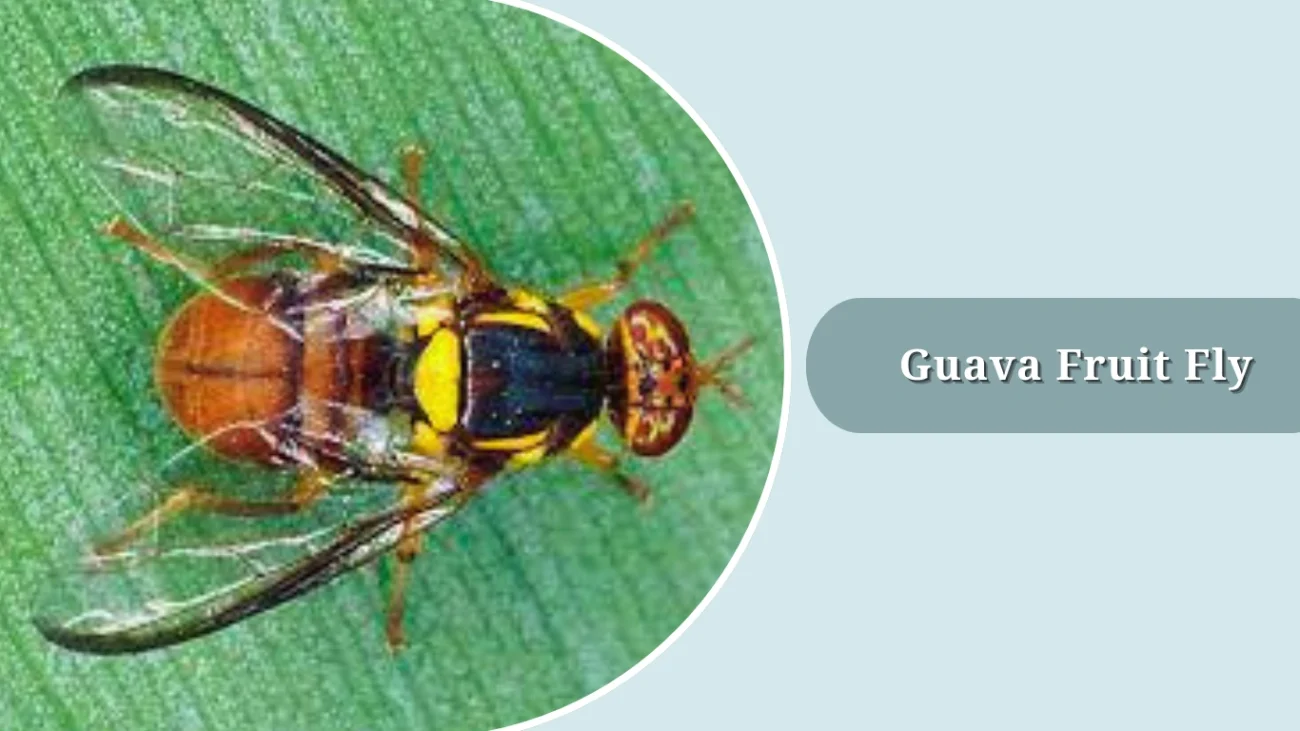
The Guava Fruit Fly is a significant pest of tropical and subtropical fruit crops, with guava being its primary host. It is known for causing severe economic losses in fruit production due to its high reproductive rate and ability to infest multiple fruit species.
Identification
- Medium-sized fly, measuring about 6–8 mm in length.
- Body is yellow-brown with dark stripes on the thorax.
- Wings are transparent with faint brownish patterns.
- Eyes are reddish with a metallic shine.
- Females possess a pointed ovipositor for laying eggs inside fruit.
Habitat
The Guava Fruit Fly is commonly found in South and Southeast Asia, particularly India, Bangladesh, and surrounding regions. It thrives in warm, humid environments where guava, mango, papaya, and other host fruits are abundant.
Behavior
Females pierce fruit skins to deposit eggs, often leaving puncture marks visible on the surface. Larval development inside the fruit causes it to soften, rot, and eventually fall from the tree. Adults are strong fliers and capable of spreading quickly between orchards and fruit markets.
Diet
Larvae primarily feed on guava pulp but also infest mangoes, papayas, peaches, and other tropical fruits. Adults consume nectar, honeydew, and plant juices to sustain energy for flight and reproduction.
Lifecycle
The lifecycle consists of egg, larva, pupa, and adult stages. Eggs hatch within a few days inside the fruit, and larvae feed on the pulp until fully grown. They then leave the fruit and pupate in the soil. Adults emerge after pupation and are ready to reproduce shortly after. The entire cycle can be completed in about three to four weeks under favorable conditions, allowing multiple generations per year.
9. Oriental Fruit Fly (Bactrocera dorsalis)
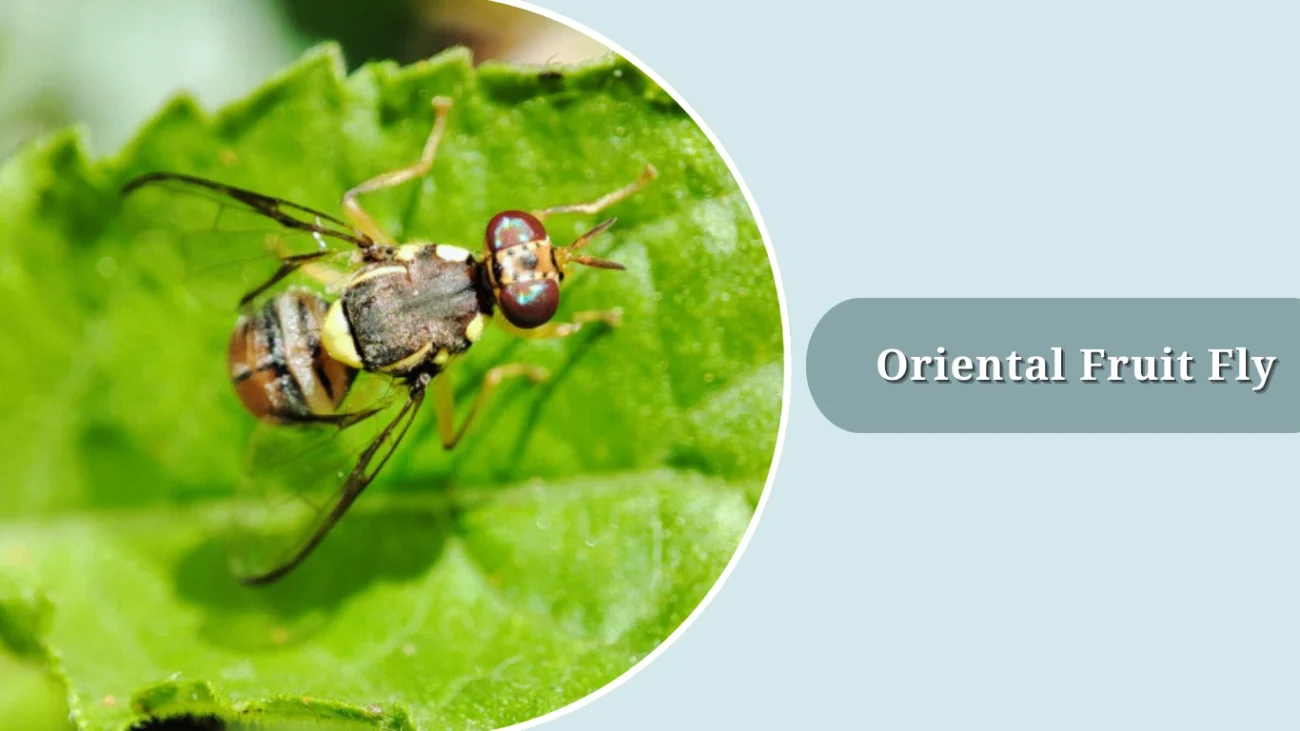
The Oriental Fruit Fly is one of the most invasive and destructive fruit fly species worldwide. It attacks a vast number of host plants and has spread rapidly from its native Asia to Africa, the Pacific, and beyond, posing serious threats to agriculture and international trade.
Identification
- Medium-sized fly, about 7–8 mm in length.
- Body is yellowish-brown with dark markings on the thorax.
- Wings are transparent with distinct brown bands.
- Eyes are reddish with a metallic greenish sheen.
- Females have a long ovipositor for egg deposition beneath fruit skin.
Habitat
Native to Southeast Asia, the Oriental Fruit Fly is now widespread across tropical and subtropical regions of Asia, Africa, and the Pacific Islands. It thrives in orchards, farmlands, and backyard gardens where fruit crops are abundant.
Behavior
Females puncture fruit skins to deposit eggs, which quickly hatch into larvae. Infested fruits decay rapidly and often drop prematurely. Adults are strong fliers and capable of traveling long distances, making them difficult to control. Their high adaptability has allowed them to colonize new environments successfully.
Diet
Larvae feed on the soft pulp of more than 300 species of fruits and vegetables, including mango, guava, papaya, banana, and citrus. Adults consume nectar, honeydew, and plant sap, which support their reproductive activity and long-distance flight.
Lifecycle
The lifecycle progresses through egg, larva, pupa, and adult stages. Eggs hatch within a few days, and larvae feed inside the fruit until maturity. Mature larvae leave the fruit and pupate in the soil, from which adults emerge after a short pupal stage. The cycle can be completed in about three to four weeks, with multiple overlapping generations occurring annually in warm climates.
10. Bactrocera correcta
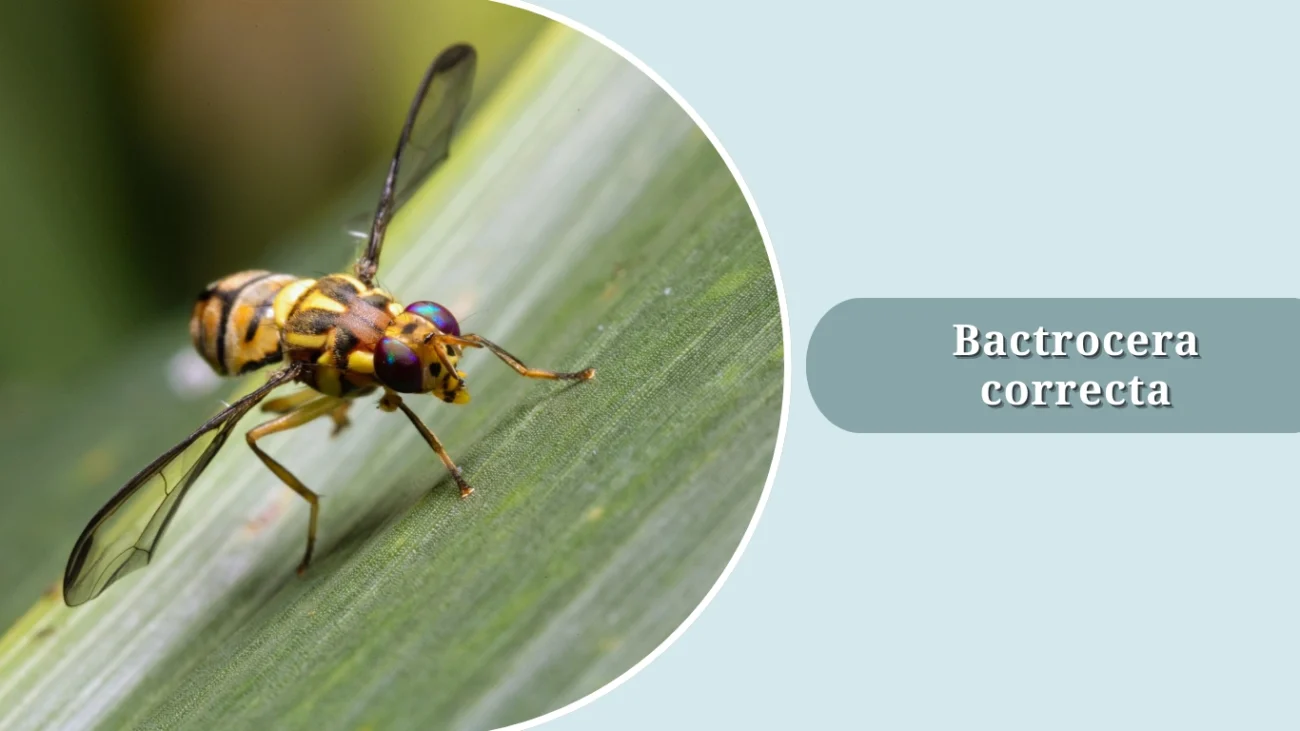
Bactrocera correcta, often called the Correct Fruit Fly, is a serious agricultural pest that infests a wide range of tropical and subtropical fruits. It is closely related to other Bactrocera species and is considered a quarantine pest in many countries due to its potential to damage fruit production and hinder exports.
Identification
- Medium-sized fly, about 6–8 mm in length.
- Body is yellow to brown with darker thoracic markings.
- Transparent wings with faint brown shading.
- Eyes are reddish with a metallic sheen.
- Females possess a pointed ovipositor for egg-laying under fruit skin.
Habitat
This species is mainly distributed in South and Southeast Asia, particularly in India, Sri Lanka, Thailand, and surrounding regions. It thrives in warm, humid climates where tropical fruit trees are cultivated.
Behavior
Females deposit eggs just beneath the skin of ripe or ripening fruit. The larvae develop inside, causing pulp breakdown and premature fruit drop. Adults are highly mobile and capable of dispersing over large areas, which makes infestations difficult to manage without strict monitoring.
Diet
Larvae feed on a wide variety of tropical fruits, including guava, mango, papaya, citrus, and sapodilla. Adults sustain themselves on nectar, honeydew, and plant-derived fluids that provide the energy needed for survival and reproduction.
Lifecycle
The lifecycle includes four stages: egg, larva, pupa, and adult. Eggs hatch within a few days, and larvae consume the fruit pulp, leading to spoilage. Once mature, larvae exit the fruit and pupate in the soil. Adults emerge after pupation, ready to mate and restart the cycle. Under favorable conditions, the entire cycle can be completed in three to four weeks, enabling several generations per year.
11. Bactrocera zonata

Bactrocera zonata, commonly known as the Peach Fruit Fly (different from the broader peach fruit fly group), is a highly destructive pest of fruit crops. It is considered a major threat to agriculture due to its wide host range and rapid reproduction, making it a significant quarantine pest in many regions.
Identification
- Medium-sized fly, about 6–8 mm long.
- Body is reddish-brown with yellow markings on the thorax.
- Transparent wings with light brown bands.
- Eyes are reddish with a metallic greenish reflection.
- Females have a strong ovipositor for egg-laying beneath fruit skin.
Habitat
This species is native to South and Southeast Asia but has spread to the Middle East, North Africa, and other warm regions. It thrives in orchards, gardens, and farmlands where fruit crops are abundant.
Behavior
Females pierce ripening fruits with their ovipositor to deposit eggs, leaving puncture marks on the surface. Larvae cause fruit decay, making it unsuitable for consumption or market sale. Adults are capable of dispersing long distances and establishing populations quickly, which contributes to their invasive success.
Diet
Larvae infest a variety of fruits including peaches, guavas, mangoes, apricots, figs, and citrus. Adults feed on nectar, honeydew, and plant sap for sustenance and reproductive activity.
Lifecycle
The lifecycle begins with eggs laid inside ripening fruit. Within a few days, the eggs hatch into larvae that feed on the pulp, causing internal damage and premature fruit drop. Mature larvae exit the fruit to pupate in the soil. After pupation, adults emerge and soon begin reproduction. The full cycle typically takes three to four weeks, depending on environmental conditions, allowing multiple generations each year.
12. Bactrocera cucurbitae (Melon Fly)
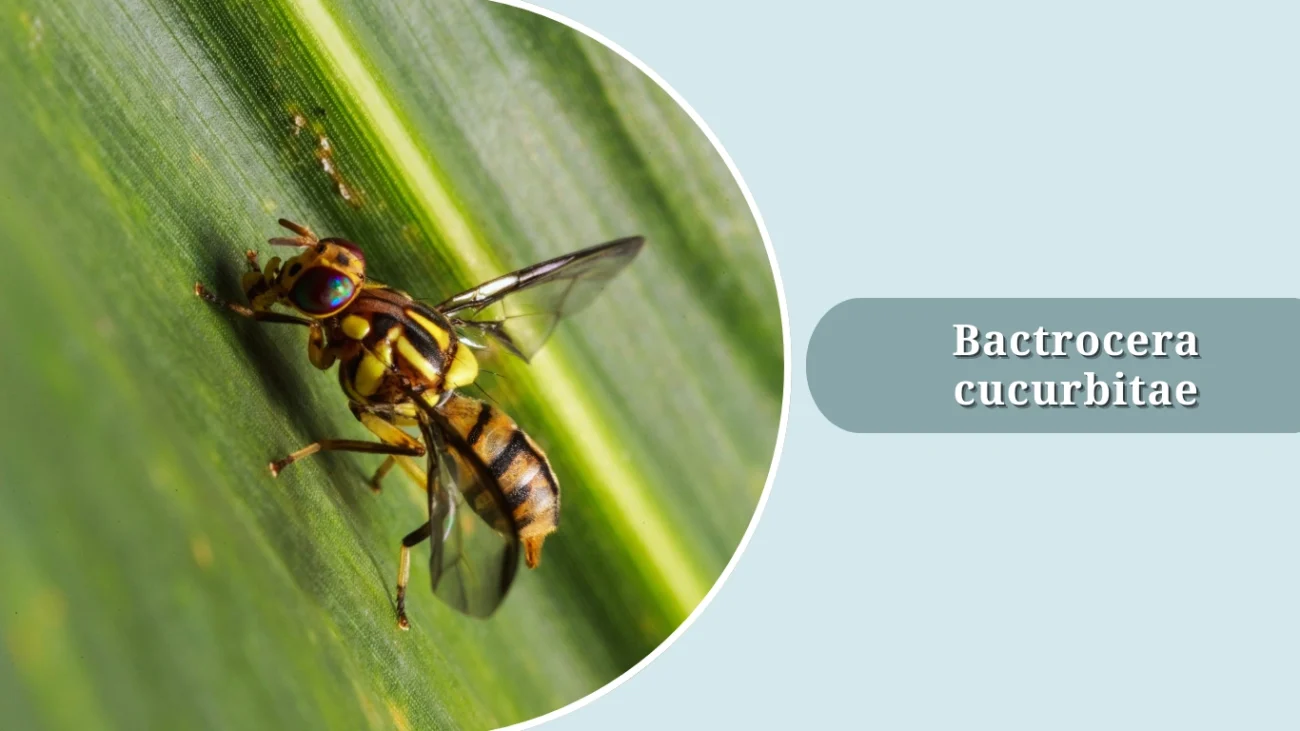
The Melon Fly is a highly destructive pest that primarily attacks cucurbit crops such as melons, cucumbers, pumpkins, and gourds. It is one of the most economically damaging fruit flies in Asia and the Pacific, and its spread poses a constant threat to global horticulture.
Identification
- Slightly larger than many fruit flies, about 6–9 mm in length.
- Body is orange-brown with black spots and markings.
- Transparent wings with distinctive brown patches.
- Eyes are reddish with a metallic sheen.
- Females have a sharp, elongated ovipositor for piercing fruit skins.
Habitat
This species is native to the Indian subcontinent but is now widespread across South and Southeast Asia, Africa, and the Pacific Islands. It thrives in tropical and subtropical regions where cucurbit crops are widely cultivated.
Behavior
Females deposit eggs in soft tissues of cucurbit fruits, and larvae cause internal damage that makes produce unmarketable. Infestations often result in premature fruit drop and secondary fungal infections. Adults are strong fliers and spread quickly within and between agricultural fields.
Diet
Larvae feed on cucurbit fruits such as cucumbers, melons, pumpkins, gourds, and squash. Adults consume nectar, honeydew, and other sugary plant fluids to sustain energy and reproduction.
Lifecycle
The lifecycle consists of egg, larva, pupa, and adult stages. Eggs hatch within two to three days, and larvae tunnel through fruit pulp, causing decay. Mature larvae exit the fruit and pupate in the soil. After a short pupal period, adults emerge and soon begin reproduction. Depending on environmental conditions, the entire lifecycle may be completed in less than a month, allowing rapid population buildup and multiple generations each year.
13. Bactrocera tryoni
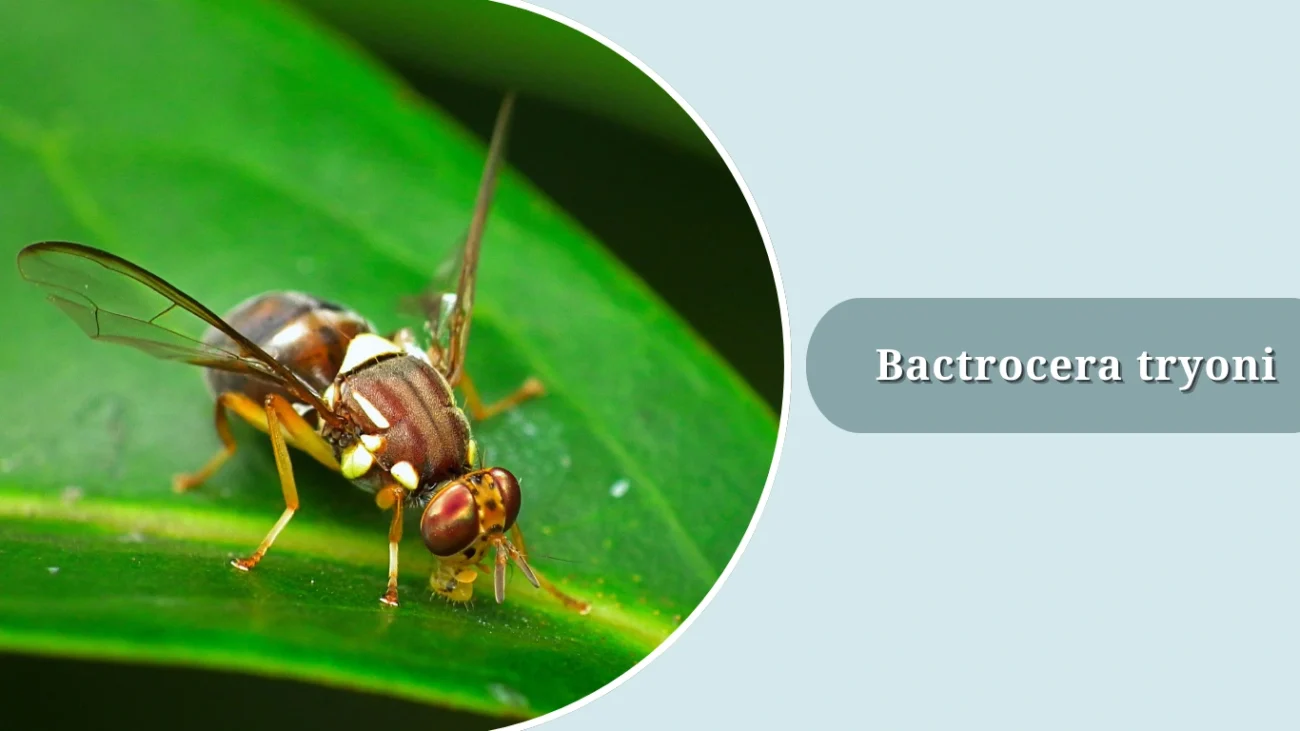
Bactrocera tryoni, commonly known as the Queensland Fruit Fly, is one of the most notorious and damaging pests in Australia. It infests a broad range of fruit and vegetable crops and has had a significant impact on horticultural production and trade in the region.
Identification
- Medium-sized fruit fly, about 6–8 mm long.
- Body is reddish-brown with yellow markings on the thorax.
- Clear wings without strong banding.
- Eyes are reddish with a metallic reflection.
- Females have a strong, pointed ovipositor for egg-laying.
Habitat
This species is native to Australia and is especially common in Queensland, New South Wales, and parts of Victoria. It thrives in temperate and subtropical environments where fruit crops are cultivated.
Behavior
Females insert eggs beneath the skin of ripening fruit, causing visible puncture marks. Larval feeding destroys the pulp, leading to rot and fruit drop. Adults are strong fliers and can disperse over wide areas, contributing to the rapid spread of infestations.
Diet
Larvae infest a wide variety of host plants, including stone fruits (peaches, nectarines, plums), citrus, mangoes, tomatoes, and capsicums. Adults feed on nectar, honeydew, and other sugary substances to fuel their energy needs.
Lifecycle
The lifecycle proceeds through egg, larva, pupa, and adult stages. Eggs hatch within a few days inside fruit, and larvae feed extensively on the pulp. When fully developed, larvae leave the fruit and pupate in the soil. After pupation, adults emerge and begin reproducing shortly afterward. Under warm conditions, the cycle is completed within three to four weeks, enabling multiple overlapping generations each year.
14. Drosophila suzukii (Spotted Wing Drosophila)
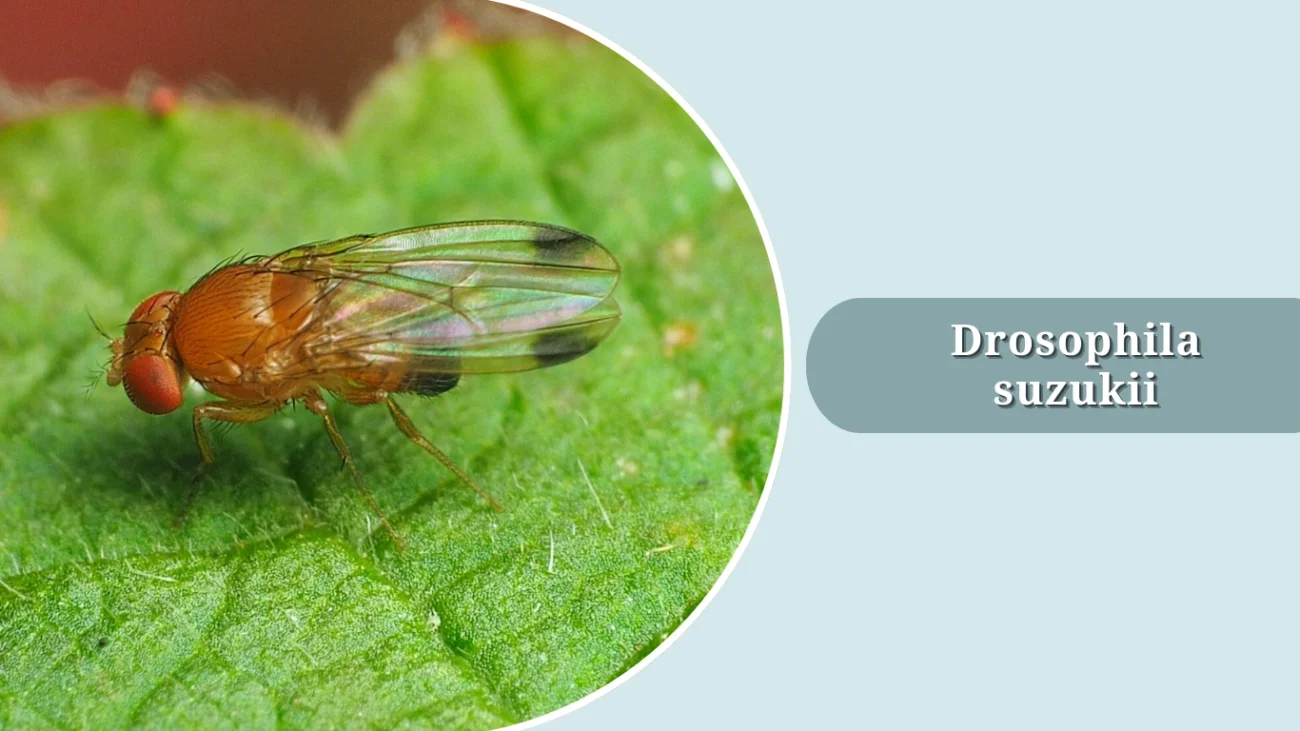
Drosophila suzukii, commonly called the Spotted Wing Drosophila (SWD), is a highly invasive fruit fly species native to East Asia. Unlike most other Drosophila species that infest overripe or decaying fruit, SWD attacks fresh, ripening fruit, making it a severe threat to soft fruit crops worldwide.
Identification
- Small fly, about 2–3 mm in length.
- Body is pale brown with darker bands across the abdomen.
- Transparent wings with a distinctive dark spot near the tip (males only).
- Eyes are bright red.
- Females possess a serrated ovipositor, allowing them to pierce intact fruit skins.
Habitat
This species is native to East Asia but has spread rapidly across North America, Europe, and other regions. It thrives in temperate and subtropical environments, particularly in areas where berries and other soft fruits are cultivated.
Behavior
Unlike most fruit flies, SWD females lay eggs in fresh, ripening fruit rather than rotting ones. This unique behavior makes it especially destructive, as infested fruit becomes unmarketable even before harvest. Adults are active during cooler parts of the day and are capable of multiple generations per growing season.
Diet
Larvae infest soft-skinned fruits such as cherries, strawberries, raspberries, blueberries, and grapes. Adults consume nectar, honeydew, and plant juices to maintain energy and reproduction.
Lifecycle
The lifecycle includes egg, larva, pupa, and adult stages. Eggs hatch within a few days, and larvae feed inside the fruit, causing it to soften and collapse. Mature larvae exit the fruit to pupate, either inside the fruit or in the surrounding soil. Adults emerge within days, ready to reproduce. Under favorable conditions, the entire cycle may be completed in one to two weeks, leading to rapid population explosions during harvest seasons.
15. Ceratitis capitata (Mediterranean Fruit Fly)
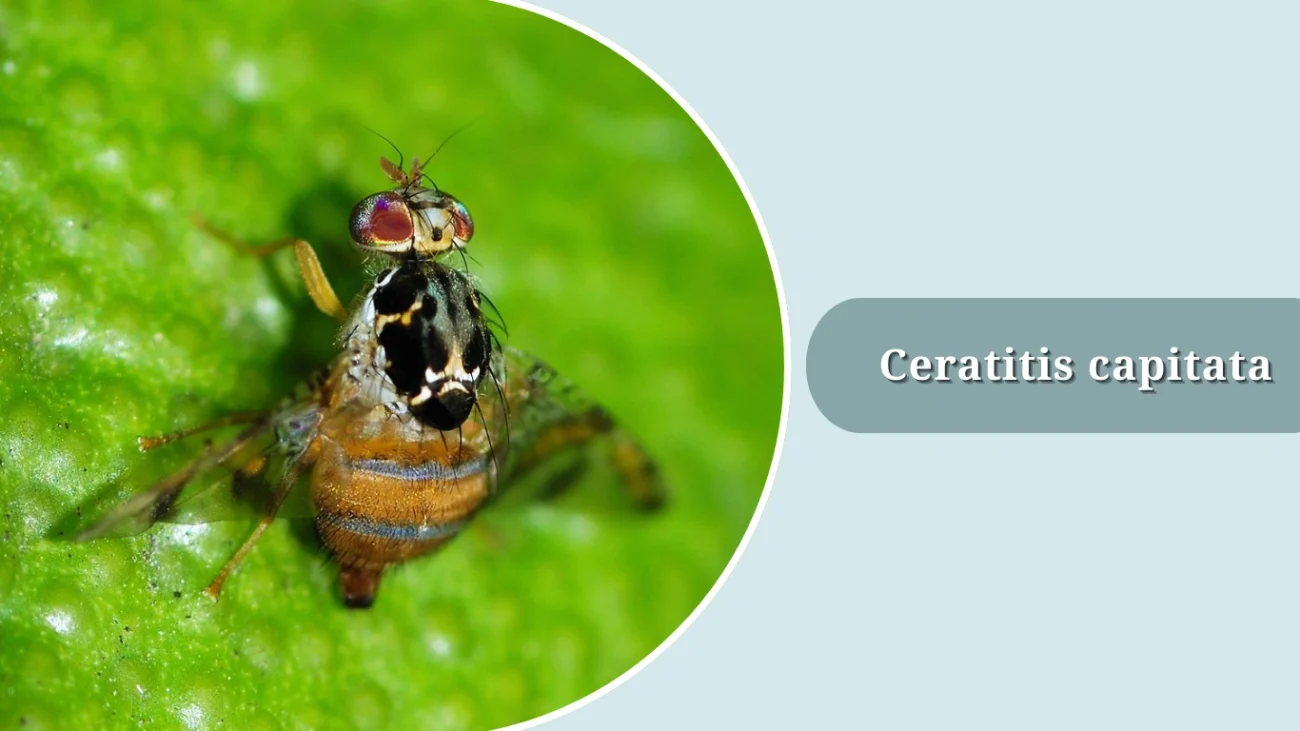
Ceratitis capitata, commonly known as the Mediterranean Fruit Fly or Medfly, is one of the world’s most notorious and destructive fruit fly species. It has a broad host range, infesting hundreds of fruit and vegetable species, and is a major concern for global agricultural trade.
Identification
- Small fly, about 3–5 mm long.
- Body is yellowish with black markings on the thorax.
- Transparent wings with distinctive brown bands.
- Eyes are iridescent, often greenish in color.
- Females have a pointed ovipositor for depositing eggs beneath fruit skins.
Habitat
The Medfly is native to sub-Saharan Africa but has spread worldwide, including Europe, the Middle East, Central and South America, and parts of Australia. It thrives in warm temperate, subtropical, and tropical regions, especially in fruit-producing areas.
Behavior
Females puncture fruit to lay eggs beneath the skin, creating visible marks that make fruit less marketable. Larvae feed internally, causing fruit to rot and drop prematurely. Adults are strong fliers, highly invasive, and capable of colonizing new areas rapidly.
Diet
Larvae attack the pulp of more than 200 host plants, including citrus, apples, peaches, apricots, mangoes, and tomatoes. Adults feed on nectar, honeydew, and other sugary plant fluids for energy.
Lifecycle
The lifecycle includes egg, larva, pupa, and adult stages. Eggs hatch within a few days, and larvae tunnel through the pulp, causing decay. Mature larvae leave the fruit to pupate in the soil, after which adults emerge to repeat the cycle. The full lifecycle takes around three to five weeks, with multiple overlapping generations possible each year in warm climates.