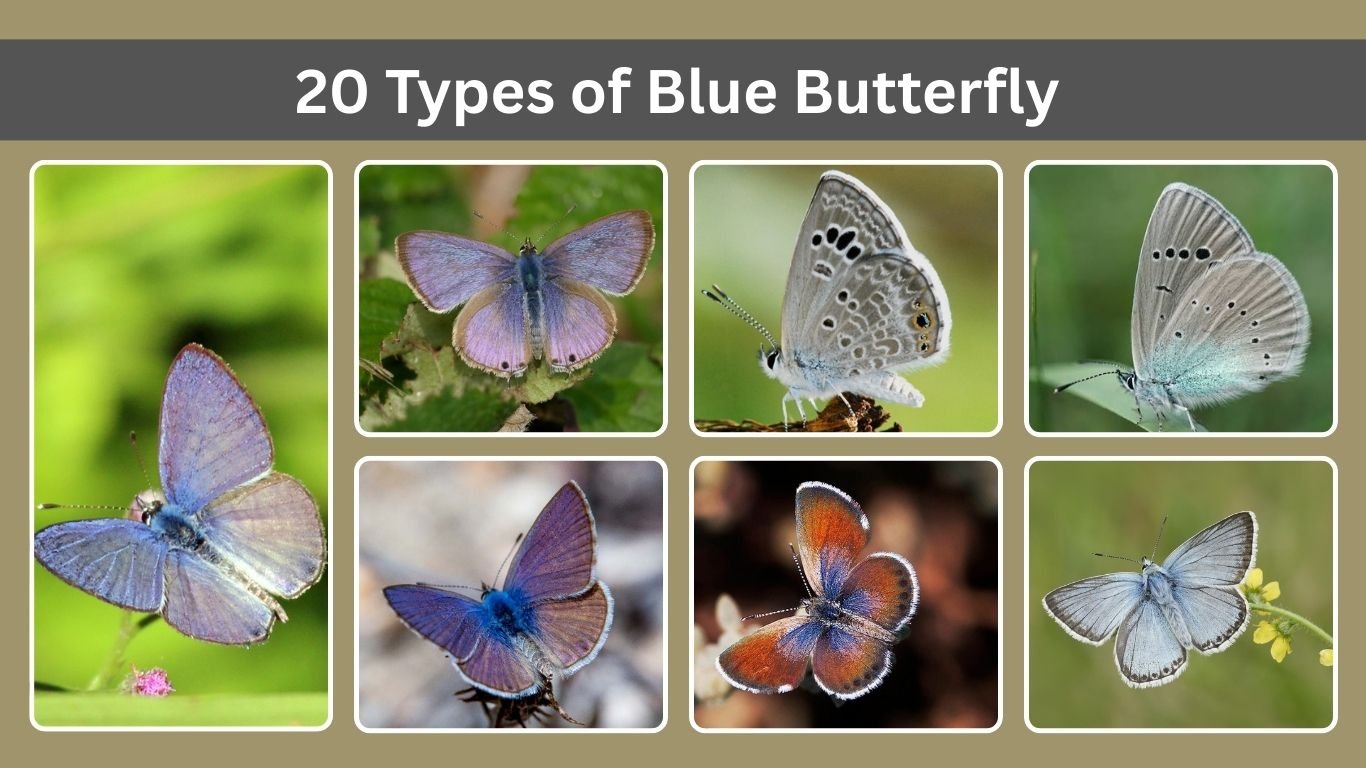
Blue butterflies are among the most captivating insects in the natural world, admired for their vivid hues and delicate forms. Found across diverse habitats, they play important ecological roles as pollinators and indicators of healthy ecosystems. This guide explores 20 fascinating species of blue butterflies, highlighting their identification, habitat, behavior, diet, and lifecycle to better understand their beauty and significance in nature.
1. Blue Morpho (Morpho peleides)

The Blue Morpho is one of the most iconic and striking butterflies in the world, admired for its vivid iridescent blue wings. Found mainly in Central and South America, it is a large forest butterfly that plays a vital role in tropical ecosystems.
Identification
- Wingspan: 5–6 inches (12–15 cm)
- Upper wings: Brilliant, iridescent blue with black edges
- Underside: Brown with eye spots, providing camouflage
- Body: Dark brown, relatively robust
Habitat
The Blue Morpho thrives in tropical rainforests, especially in lowland and montane forests of Central and South America, from Mexico to Brazil. It prefers dense, humid areas near rivers and streams.
Behavior
These butterflies are known for their slow, graceful flight through the forest understory. Their bright blue wings flash as they fly, confusing predators. When at rest, they close their wings to blend with surroundings using the brown underside.
Diet
Adult Blue Morphos primarily feed on fermenting fruit, tree sap, and fungi. They are also known to sip juices from rotting plants and decomposing animals. Caterpillars feed on leaves of leguminous plants.
Lifecycle
The lifecycle includes egg, caterpillar, chrysalis, and adult stages. Females lay pale green eggs on host plant leaves. Caterpillars are reddish-brown with patches of green and are covered in hairs. After pupation, the butterfly emerges as the radiant Blue Morpho, living for about 115 days.
2. Common Blue (Polyommatus icarus)

The Common Blue is one of the most widespread blue butterflies in Europe and parts of Asia. Known for its delicate beauty and adaptability, it is a familiar sight in grasslands, meadows, and roadside verges.
Identification
- Wingspan: 1–1.5 inches (2.5–4 cm)
- Male: Bright blue upper wings with thin black margins and white fringe
- Female: Brown upper wings, often with a dusting of blue near the base
- Underside: Pale beige-gray with black spots and orange crescents along the edges
Habitat
The Common Blue inhabits a wide range of open, sunny areas such as meadows, pastures, grasslands, heaths, and even gardens. It is found across Europe, North Africa, and temperate Asia.
Behavior
This butterfly is highly active and can be seen flying low over vegetation. Males are territorial and patrol areas in search of females, while females are more secretive, often resting near host plants.
Diet
Adults feed on nectar from various wildflowers, including clover, bird’s-foot trefoil, and knapweed. Caterpillars feed mainly on legumes such as bird’s-foot trefoil, clovers, and medicks.
Lifecycle
The Common Blue produces two or more broods each year, depending on the climate. Eggs are laid singly on host plant leaves. Caterpillars are small, green, and flattened, often attended by ants that protect them in exchange for sugary secretions. Pupation occurs in leaf litter, and adults emerge in spring and summer.
3. Adonis Blue (Polyommatus bellargus)

The Adonis Blue is a dazzling butterfly of chalk and limestone grasslands in Europe. It is well known for the male’s intense sky-blue wings that stand out vividly against its habitat.
Identification
- Wingspan: 1.4–1.6 inches (3.5–4 cm)
- Male: Brilliant sky-blue upper wings with thin black borders and white fringe
- Female: Brown upper wings with orange crescents and sometimes a blue dusting
- Underside: Pale grayish-brown with black spots and orange crescents near edges
Habitat
This species thrives in warm, dry chalk or limestone grasslands with short turf. It is especially common in southern England and other parts of Europe with calcareous soils.
Behavior
Adonis Blues are sun-loving and most active during warm, bright days. Males patrol territories and are frequently seen basking with wings open. Females are more secretive, often remaining near host plants to lay eggs.
Diet
Adults feed on nectar from a variety of flowers, such as horseshoe vetch, thyme, and marjoram. Caterpillars feed almost exclusively on horseshoe vetch (Hippocrepis comosa).
Lifecycle
The Adonis Blue has two broods per year (spring and late summer). Eggs are laid singly on the leaves of horseshoe vetch. The green caterpillars are attended by ants, which protect them in exchange for sugary secretions. Pupation occurs on the ground, and adults emerge after a few weeks.
4. Holly Blue (Celastrina argiolus)

The Holly Blue is a delicate and widespread butterfly often seen in gardens, parks, and woodland edges. Unlike many other blue butterflies, it often flies high around shrubs and trees.
Identification
- Wingspan: 1.2–1.6 inches (3–4 cm)
- Male: Bright pale blue upper wings with narrow black margins
- Female: Blue upper wings with broad black borders at the tips of the forewings
- Underside: Pale silvery-blue with small black dots, lacking orange crescents found in many other blues
Habitat
The Holly Blue inhabits woodlands, hedgerows, parks, and gardens. It is often associated with holly and ivy in Europe but also uses other shrubs depending on the season.
Behavior
This butterfly is an early flyer, often one of the first blue butterflies to appear in spring. It flies higher than most other blues, frequently fluttering around shrubs and treetops. Males patrol territories in search of females, while females focus on locating suitable egg-laying plants.
Diet
Adults feed on nectar from flowers such as holly, ivy, bramble, and dogwood. Caterpillars feed on holly in the spring generation and on ivy in the summer generation, as well as other shrubs depending on local availability.
Lifecycle
The Holly Blue usually has two broods per year. Eggs are laid singly on flower buds or young leaves of holly in spring, and ivy in summer. The green caterpillars blend with foliage and are tended by ants. Pupation occurs in leaf litter, where the chrysalis overwinters until the following spring.
5. Karner Blue (Lycaeides melissa samuelis)

The Karner Blue is a small but striking butterfly native to North America. It is highly localized and endangered, relying on a single host plant for survival.
Identification
- Wingspan: 0.9–1.3 inches (2.2–3.3 cm)
- Male: Deep silvery-blue upper wings with narrow black margins and white fringes
- Female: Darker, more purplish-blue with orange crescents near the edges
- Underside: Grayish with black spots and orange crescents along the hindwings
Habitat
The Karner Blue is found in sandy pine barrens, oak savannas, and open meadows in the northeastern and midwestern United States. It depends heavily on areas where wild lupine grows.
Behavior
These butterflies are weak fliers and usually stay close to the ground near their host plants. Males actively patrol for females, while females remain nearer to lupine patches for egg-laying.
Diet
Adult Karner Blues feed on nectar from a variety of flowers such as butterfly weed, wild indigo, and New Jersey tea. Caterpillars feed exclusively on the leaves of wild lupine (Lupinus perennis).
Lifecycle
The Karner Blue has two generations per year. Eggs are laid on lupine leaves or stems. Caterpillars are small, green, and flattened, often attended by ants that provide protection in exchange for sugary secretions. The second generation overwinters in the egg stage, hatching in spring when lupine begins to grow.
6. Ulysses Butterfly (Papilio ulysses)
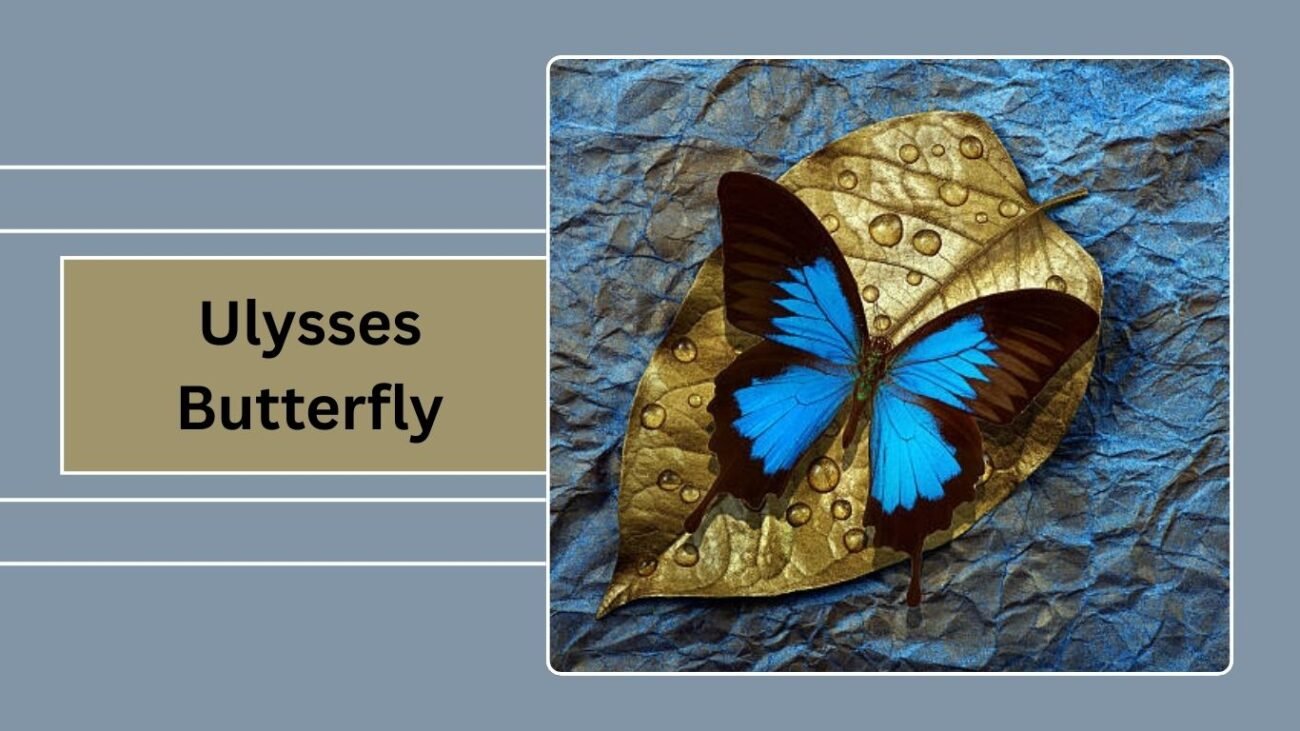
The Ulysses Butterfly, also called the Blue Mountain Butterfly, is one of the most iconic butterflies of Australia and nearby regions. Its vivid electric-blue wings make it a popular symbol in Queensland.
Identification
- Wingspan: 4.7–5.5 inches (12–14 cm)
- Upper wings: Striking, iridescent electric blue with black borders
- Underside: Dark brown to black, providing camouflage when wings are closed
- Body: Large, dark, and slender with strong flight capability
Habitat
The Ulysses Butterfly inhabits tropical rainforests, coastal woodlands, and suburban gardens in northeastern Australia, Papua New Guinea, and the Solomon Islands. It is often associated with areas rich in flowering plants.
Behavior
This butterfly is a fast and powerful flyer, often seen darting among treetops and flowers. Males are especially attracted to blue objects, mistaking them for potential mates. It is known for its constant, restless flight.
Diet
Adult Ulysses Butterflies feed on nectar from brightly colored flowers such as lantana, hibiscus, and bougainvillea. Caterpillars feed primarily on the leaves of host plants like kerosene wood (Melicope elleryana) and other Rutaceae species.
Lifecycle
Females lay small eggs on the leaves of host trees. Caterpillars are green with small spines, providing camouflage among foliage. The chrysalis stage is brownish and well-hidden, from which the brilliant blue adult emerges. There can be several broods per year in favorable climates.
7. Mexican Bluewing (Myscelia ethusa)
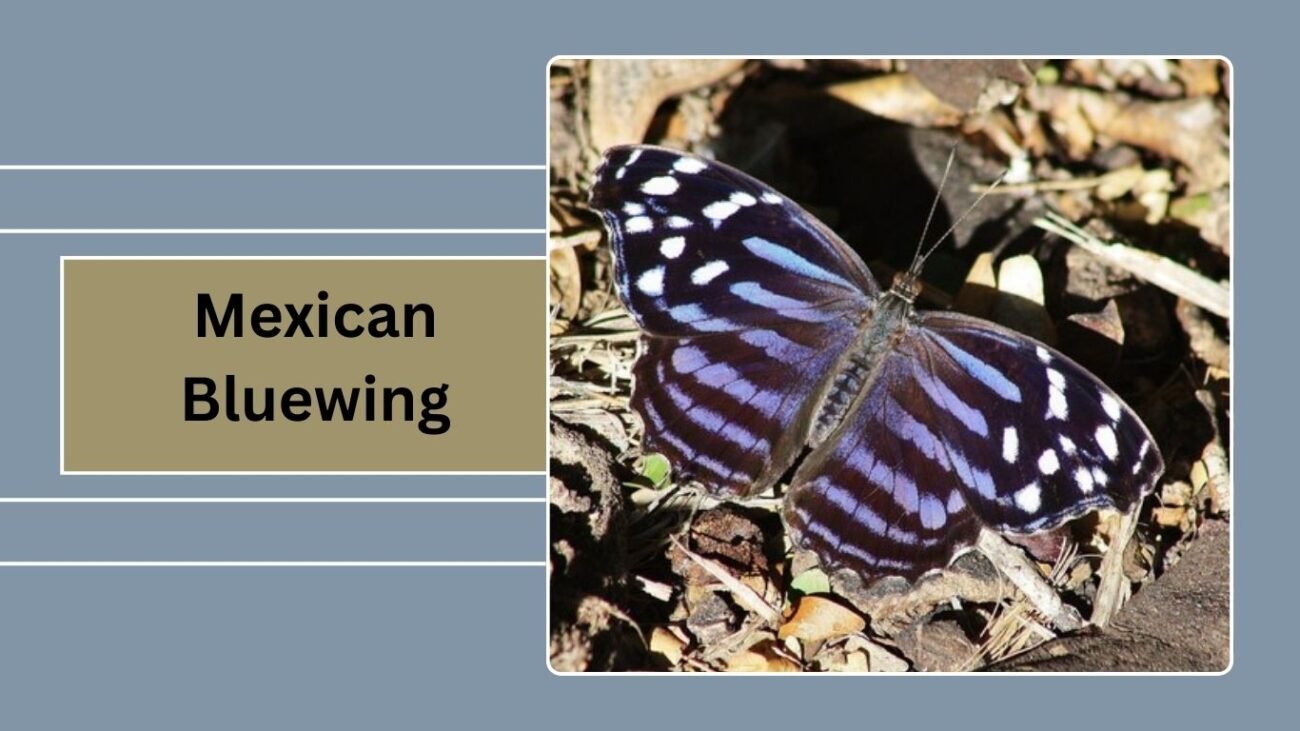
The Mexican Bluewing is a striking butterfly found in Central America and occasionally extending into the southern United States. Its vibrant wings resemble a stained-glass pattern, making it stand out among forest butterflies.
Identification
- Wingspan: 2.7–3.1 inches (7–8 cm)
- Upper wings: Iridescent blue with bold black bands and spots
- Underside: Brown and tan with cryptic patterns, providing camouflage when at rest
- Body: Slender and dark, aiding in quick flight through dense vegetation
Habitat
This butterfly inhabits tropical and subtropical forests, forest edges, and clearings. In the U.S., it is most often seen in Texas, close to the Mexican border.
Behavior
The Mexican Bluewing is a strong but erratic flyer, often fluttering through shady forest areas. When disturbed, it quickly closes its wings, blending into the environment with its brown underside.
Diet
Adults primarily feed on rotting fruit, tree sap, and sometimes flower nectar. Caterpillars feed on plants of the Acanthaceae family, particularly species of Ruellia.
Lifecycle
Eggs are laid singly on host plants. Caterpillars are green with small spines, camouflaging well among leaves. The chrysalis is mottled and cryptic, blending with stems and foliage. Adults typically emerge during warm months and may produce multiple broods per year.
8. Large Blue (Phengaris arion)

The Large Blue is a rare and fascinating butterfly native to Europe and parts of Asia. It is famous for its unusual lifecycle, which involves a parasitic relationship with ants.
Identification
- Wingspan: 1.6–2 inches (4–5 cm)
- Male & Female: Blue upper wings with a grayish tint, black spots, and broad dark borders
- Underside: Pale gray-brown with black spots and faint orange crescents
- Body: Slender with bluish tones on the thorax
Habitat
The Large Blue inhabits warm, unimproved grasslands, heaths, and meadows where its host plants and specific ant species coexist. It prefers short turf with abundant thyme or marjoram.
Behavior
This butterfly is relatively elusive, spending much of its time close to the ground. Adults are strong but low fliers, often basking on bare patches of earth. They are most active in warm weather.
Diet
Adult butterflies feed on nectar from wildflowers such as thyme, marjoram, and wild oregano. Caterpillars initially feed on the flowers of wild thyme (Thymus) or marjoram (Origanum).
Lifecycle
The lifecycle is highly specialized. After feeding briefly on thyme or marjoram, caterpillars drop to the ground and are adopted by red ants (Myrmica species). Inside the ant nest, they feed parasitically on ant broods until pupation. The butterfly emerges the following summer, making the species dependent on both its host plants and ant colonies.
9. Silvery Blue (Glaucopsyche lygdamus)

The Silvery Blue is a small and delicate butterfly native to North America. It is admired for its soft blue coloration and adaptability across diverse habitats.
Identification
- Wingspan: 0.9–1.3 inches (2.3–3.3 cm)
- Male: Bright silvery-blue upper wings with narrow dark borders
- Female: Duller blue or grayish-brown with faint blue dusting
- Underside: Pale gray with black spots rimmed in white, sometimes with faint orange near edges
Habitat
Silvery Blues are found in open woodlands, meadows, prairies, roadsides, and clearings throughout much of North America, from Canada to the northern United States.
Behavior
These butterflies fly low and close to vegetation, often resting with wings closed. Males patrol open spaces in search of females, while females remain nearer to host plants for egg-laying.
Diet
Adults feed on nectar from a wide range of wildflowers, including lupine, clover, and vetch. Caterpillars primarily feed on legumes such as lupine, vetch, and Astragalus species.
Lifecycle
The Silvery Blue generally has one generation per year in northern regions and may have more in warmer areas. Eggs are laid on flower buds of host plants. Caterpillars are green, slug-like, and sometimes attended by ants. Pupation occurs near the ground, and adults emerge in spring and early summer.
10. Eastern Tailed-Blue (Cupido comyntas)

The Eastern Tailed-Blue is a widespread and adaptable butterfly found throughout North America. Its distinctive tail-like extensions on the hindwings make it easily recognizable.
Identification
- Wingspan: 0.8–1.1 inches (2–2.8 cm)
- Male: Bright blue upper wings with thin black margins and white fringes
- Female: Variable — brown to bluish, often with orange crescents near hindwing edges
- Hindwings: Small but distinct tail-like extensions with black and orange spots near the base
- Underside: Grayish with black spots and two orange crescents near the tails
Habitat
This butterfly thrives in open fields, roadsides, gardens, meadows, and disturbed habitats. It is highly adaptable and occurs across most of North America.
Behavior
Eastern Tailed-Blues are active and fast fliers, usually close to the ground. Males patrol low vegetation in search of females, while females are more secretive, staying near host plants.
Diet
Adults feed on nectar from small wildflowers, including clover, alfalfa, and self-heal. Caterpillars feed on legumes such as clovers, alfalfa, vetch, and tick-trefoils.
Lifecycle
Multiple generations occur each year, especially in warmer regions. Eggs are laid on flower buds or leaves of host plants. Caterpillars are green with fine hairs, blending with vegetation, and may be tended by ants. Pupation occurs in leaf litter, with overwintering in the chrysalis stage.
11. Green-Underside Blue (Glaucopsyche alexis)
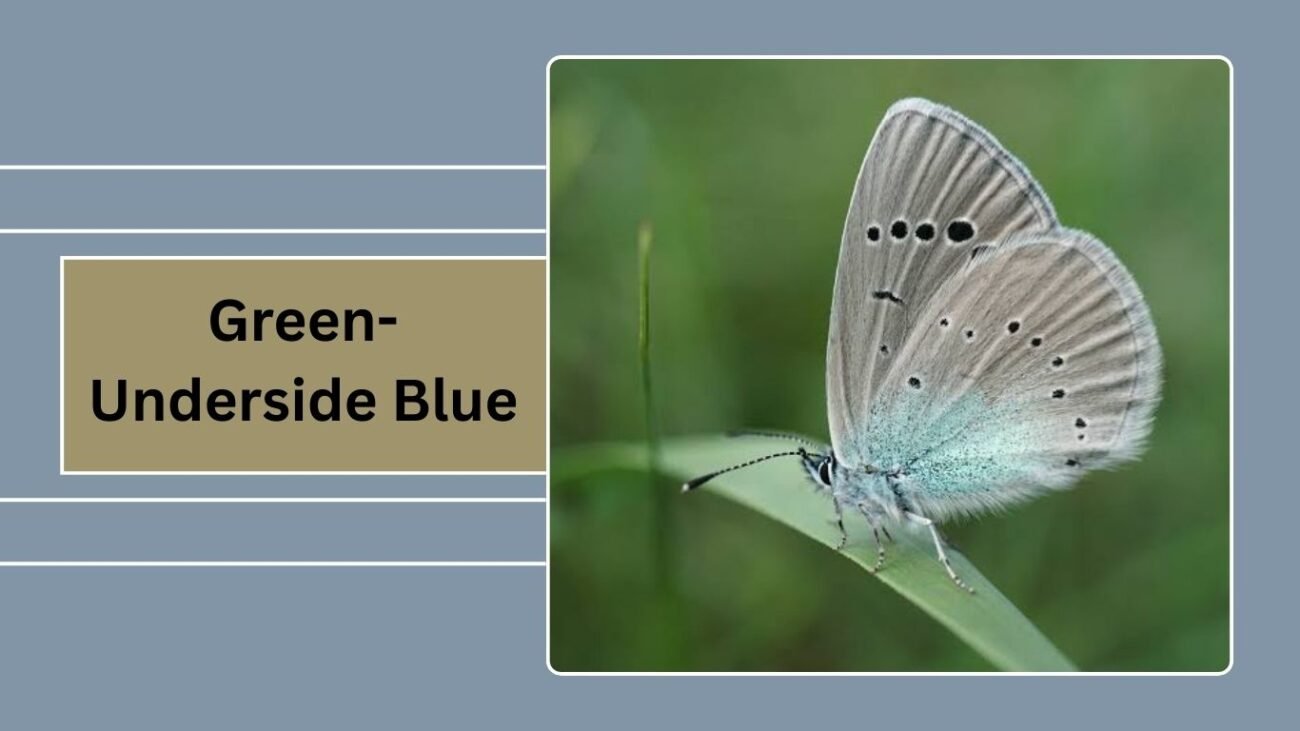
The Green-Underside Blue is a beautiful butterfly of Europe and western Asia, best known for the distinctive green coloration on the underside of its wings.
Identification
- Wingspan: 1–1.3 inches (2.5–3.5 cm)
- Male: Bright blue upper wings with narrow black borders
- Female: Brown to bluish with darker borders, sometimes with faint orange crescents
- Underside: Pale greenish with black spots encircled by white, a key identification feature
Habitat
This butterfly favors warm, dry habitats such as grasslands, meadows, steppe regions, and open woodland clearings. It is often associated with areas rich in leguminous plants.
Behavior
The Green-Underside Blue is a low, gentle flier. Males patrol sunny patches in search of females, while females remain near host plants for egg-laying. They are often observed basking with partially open wings.
Diet
Adults feed on nectar from wildflowers including clovers, vetches, and other legumes. Caterpillars feed mainly on legumes, such as sainfoin (Onobrychis), crown vetch, and other Fabaceae species.
Lifecycle
Typically, the species produces one generation per year. Eggs are laid singly on flower buds of host plants. Caterpillars are green and slug-shaped, often tended by ants for protection. Pupation occurs close to the ground, and the species overwinters in the pupal stage.
12. Silver-studded Blue (Plebejus argus)
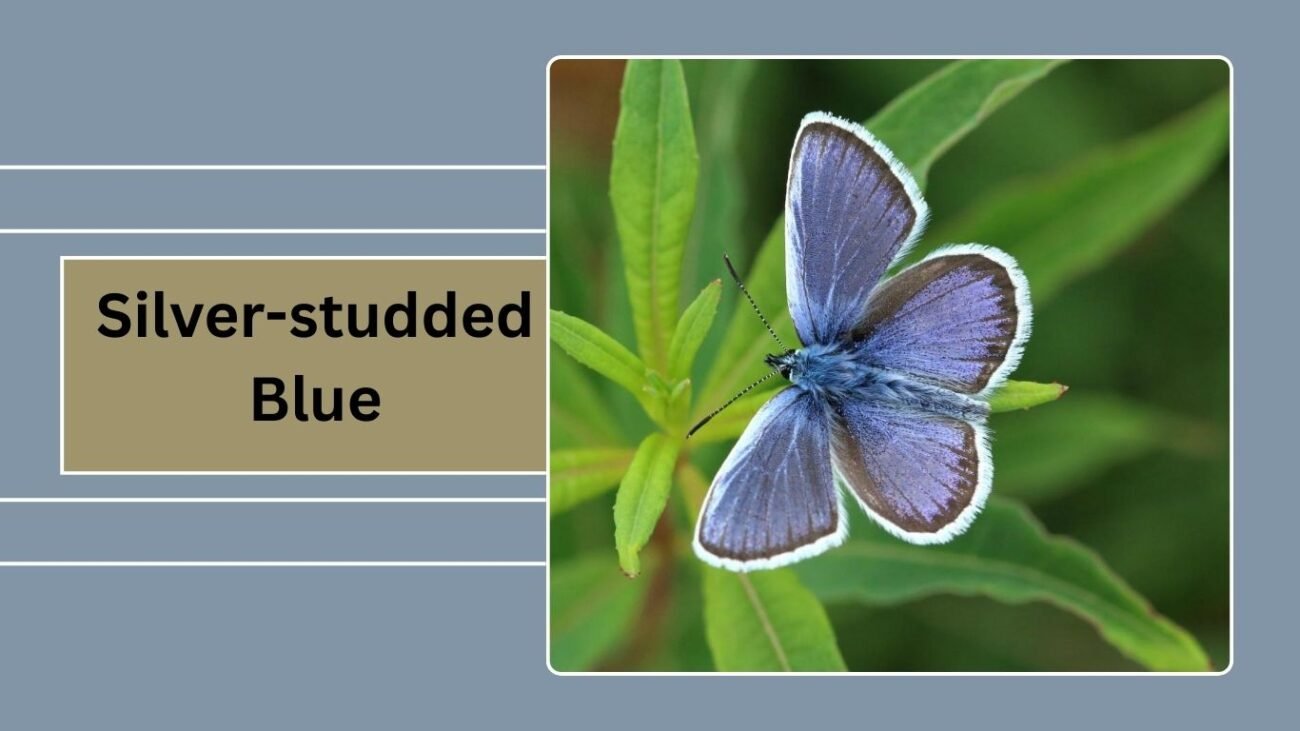
The Silver-studded Blue is a small but striking butterfly found across Europe and parts of Asia. It is named for the distinctive silver spots seen on the underside of its wings.
Identification
- Wingspan: 1–1.2 inches (2.5–3 cm)
- Male: Bright blue upper wings with narrow black margins and white fringes
- Female: Brown upper wings, sometimes with a dusting of blue near the base and orange crescents along edges
- Underside: Grayish with black spots and rows of metallic silver-blue scales (“studs”) near the hindwing margin
Habitat
This butterfly thrives in heathlands, grasslands, and coastal dunes. It prefers poor, acidic soils with short vegetation and is often linked with areas where ants are present.
Behavior
The Silver-studded Blue flies low over vegetation and often rests with wings closed, showing its silvery underside. Males are territorial and patrol for females, while females stay close to larval food plants.
Diet
Adults feed on nectar from flowers such as bell heather, bird’s-foot trefoil, and thyme. Caterpillars feed on a range of leguminous plants, including gorse, broom, and heaters.
Lifecycle
The butterfly has one generation per year, flying mainly in summer. Eggs are laid on host plants. Caterpillars are greenish and often tended by ants, which protect them in exchange for sugary secretions. Pupation takes place near or inside ant nests, and the species overwinters as a chrysalis.
13. Brown Argus (Aricia agestis)
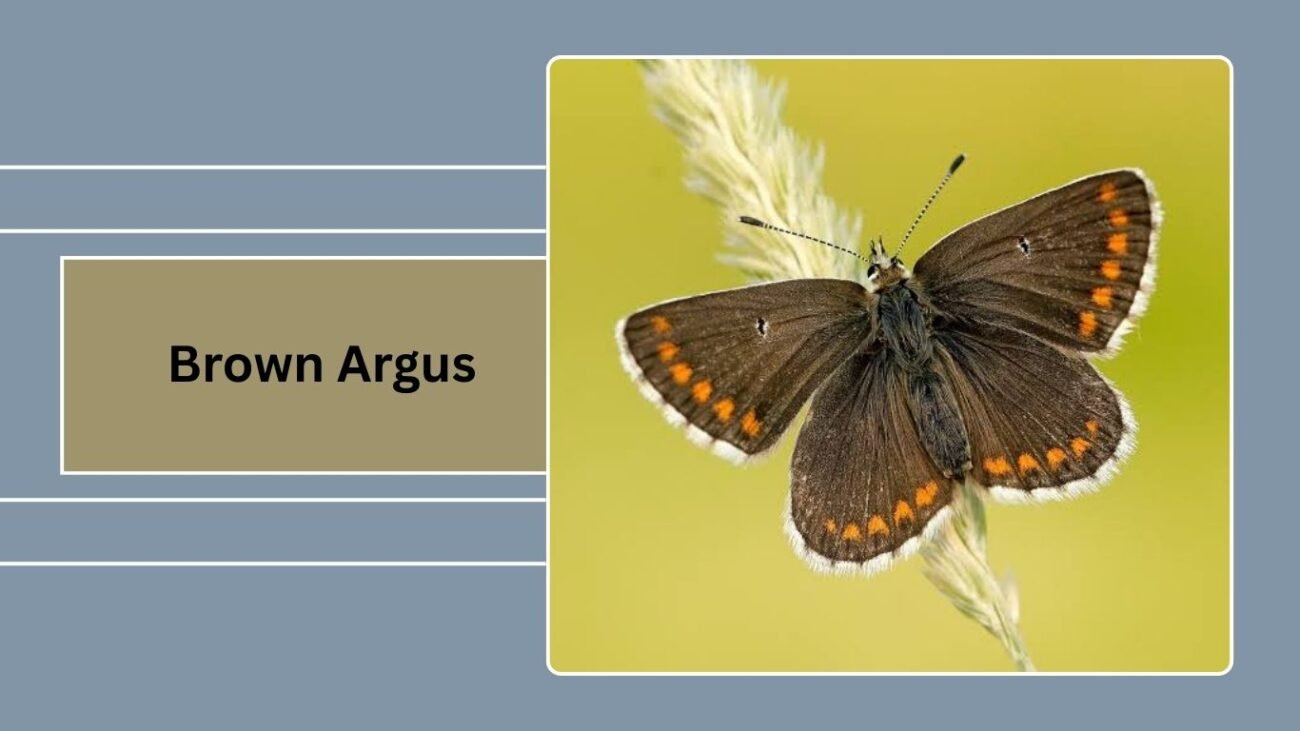
The Brown Argus is a small and elegant butterfly widely distributed across Europe. Despite its name, some males may show a faint bluish tint, though it is generally known for its warm brown coloration with subtle markings.
Identification
- Wingspan: 1–1.3 inches (2.5–3.5 cm)
- Male & Female: Chocolate-brown upper wings with orange crescents along the edges and a thin white fringe
- Underside: Pale grayish-brown with black spots and orange crescents near wing edges
- Distinguishing feature: Lacks blue scaling typical of many other blues, though slight bluish dusting may occur in some individuals
Habitat
The Brown Argus favors open habitats such as chalk grasslands, meadows, heaths, and roadside verges. It is especially associated with areas rich in its larval food plants.
Behavior
This butterfly is a low and fast flier, often seen basking with wings wide open. Males are territorial and chase intruders, while females spend more time searching for egg-laying sites.
Diet
Adults feed on nectar from flowers like rockrose, marjoram, and thyme. Caterpillars feed mainly on common rockrose (Helianthemum nummularium) and other geranium species.
Lifecycle
The Brown Argus usually has two broods per year, with adults flying in spring and late summer. Eggs are laid on host plants, often near ground level. Caterpillars are green and slug-like, sometimes tended by ants. Pupation occurs close to the ground, and the chrysalis overwinters to complete the cycle.
14. Short-tailed Blue (Cupido argiades)

The Short-tailed Blue is a small butterfly found across Europe, Asia, and parts of North Africa. It is named for the tiny tail-like extensions on its hindwings, similar to those of the Eastern Tailed-Blue.
Identification
- Wingspan: 0.9–1.2 inches (2.2–3 cm)
- Male: Violet-blue upper wings with narrow black borders and white fringes
- Female: Brownish upper wings, sometimes dusted with blue, and with small orange crescents on hindwings
- Hindwings: Short tails with black-and-orange spots near the base
- Underside: Pale gray with black spots and orange crescents near tails
Habitat
This butterfly inhabits meadows, woodland clearings, grasslands, marshes, and riverbanks. It is widely distributed from Europe through temperate Asia to Japan.
Behavior
The Short-tailed Blue is a low and fast flier, often seen fluttering among grasses and flowers. Males patrol open areas for females, while females prefer to stay closer to host plants for egg-laying.
Diet
Adults feed on nectar from a variety of small wildflowers, particularly legumes. Caterpillars feed on plants of the Fabaceae family, including clovers, vetches, and peas.
Lifecycle
The species typically has two or more broods per year, depending on climate. Eggs are laid singly on flower buds of host plants. Caterpillars are green and may be tended by ants, which protect them in exchange for sugary secretions. Pupation occurs at ground level, and overwintering takes place in the chrysalis stage.
15. Chalkhill Blue (Polyommatus coridon)
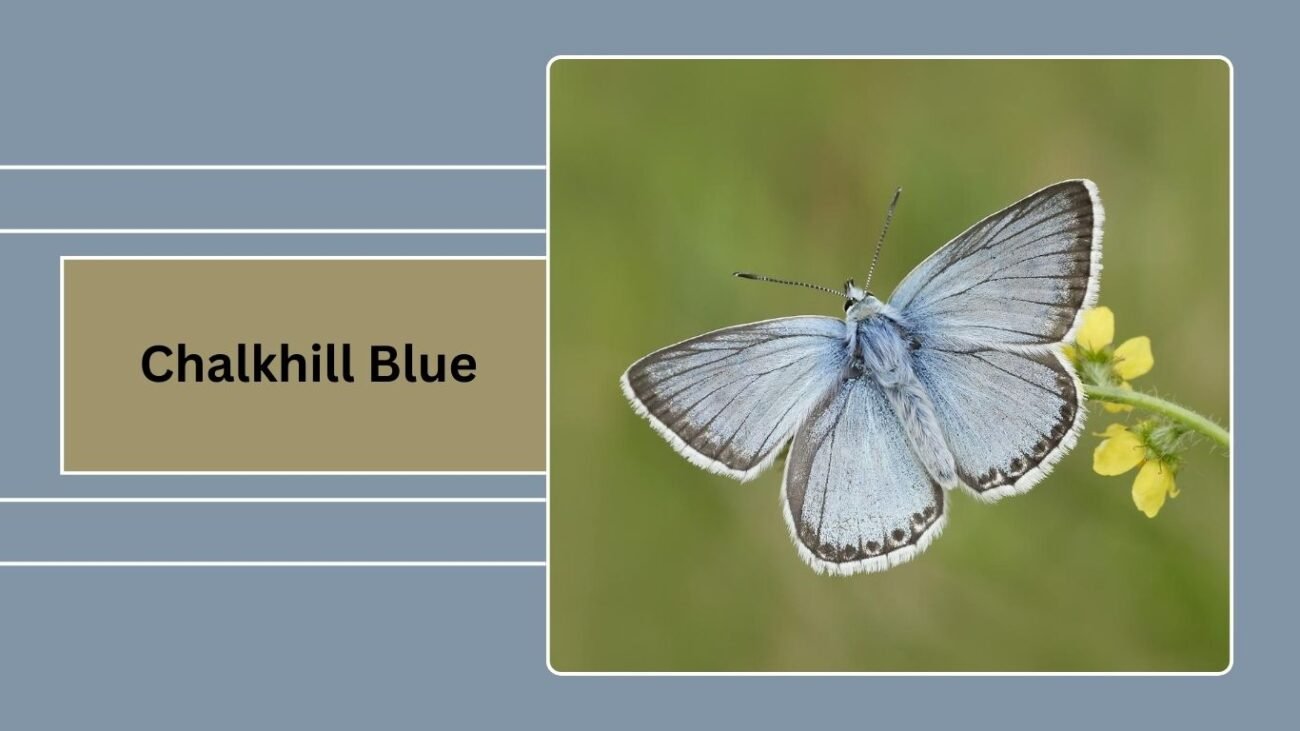
The Chalkhill Blue is a medium-sized butterfly strongly associated with chalk and limestone grasslands. Its soft blue coloration and preference for calcareous soils make it a distinctive species in Europe.
Identification
- Wingspan: 1.4–1.6 inches (3.5–4 cm)
- Male: Pale silvery-blue upper wings with broad dark borders and white fringes
- Female: Brown upper wings with orange crescents and sometimes a bluish dusting near the base
- Underside: Grayish with black spots and orange crescents along the edges
Habitat
This butterfly is restricted to chalk and limestone grasslands in southern and central Europe. It thrives in open, sunny areas with short turf and abundant wildflowers.
Behavior
Chalkhill Blues are gregarious, often forming colonies with large numbers of individuals. Males patrol low over vegetation in search of females, while females stay closer to host plants for egg-laying.
Diet
Adults feed on nectar from flowers such as marjoram, thyme, knapweed, and scabious. Caterpillars feed mainly on horseshoe vetch (Hippocrepis comosa), which is essential for their survival.
Lifecycle
The Chalkhill Blue produces one generation per year. Eggs are laid singly on the leaves of host plants. Caterpillars are green and slug-like, often attended by ants. Pupation occurs close to the ground, with the chrysalis sometimes guarded by ants until adults emerge in summer.
16. Western Pygmy Blue (Brephidium exilis)

The Western Pygmy Blue is the smallest butterfly in North America and one of the tiniest in the world. Despite its size, it is widespread and highly adaptable.
Identification
- Wingspan: 0.5–0.8 inches (1.2–2 cm)
- Male & Female: Copper-brown upper wings with bluish scales near the base
- Underside: Pale grayish with brown bands and small white-rimmed black spots
- Distinguishing feature: Minute size, making it unmistakable among butterflies
Habitat
This species thrives in arid and semi-arid habitats, including deserts, salt marshes, dunes, and disturbed areas. It is widespread across the southwestern United States, Mexico, and into Central America.
Behavior
Western Pygmy Blues are weak but busy fliers, staying close to the ground. They often congregate in large numbers where host plants are abundant.
Diet
Adults feed on nectar from small flowers and also sip moisture from damp soil. Caterpillars feed on leaves and flowers of saltbushes (Atriplex) and pigweeds (Chenopodium).
Lifecycle
This butterfly can produce many generations per year in warm climates. Eggs are laid singly on host plants. Caterpillars are tiny, greenish, and slug-like. The chrysalis is well-camouflaged, and adults emerge quickly, allowing rapid population growth in favorable conditions.
17. Cassius Blue (Leptotes cassius)
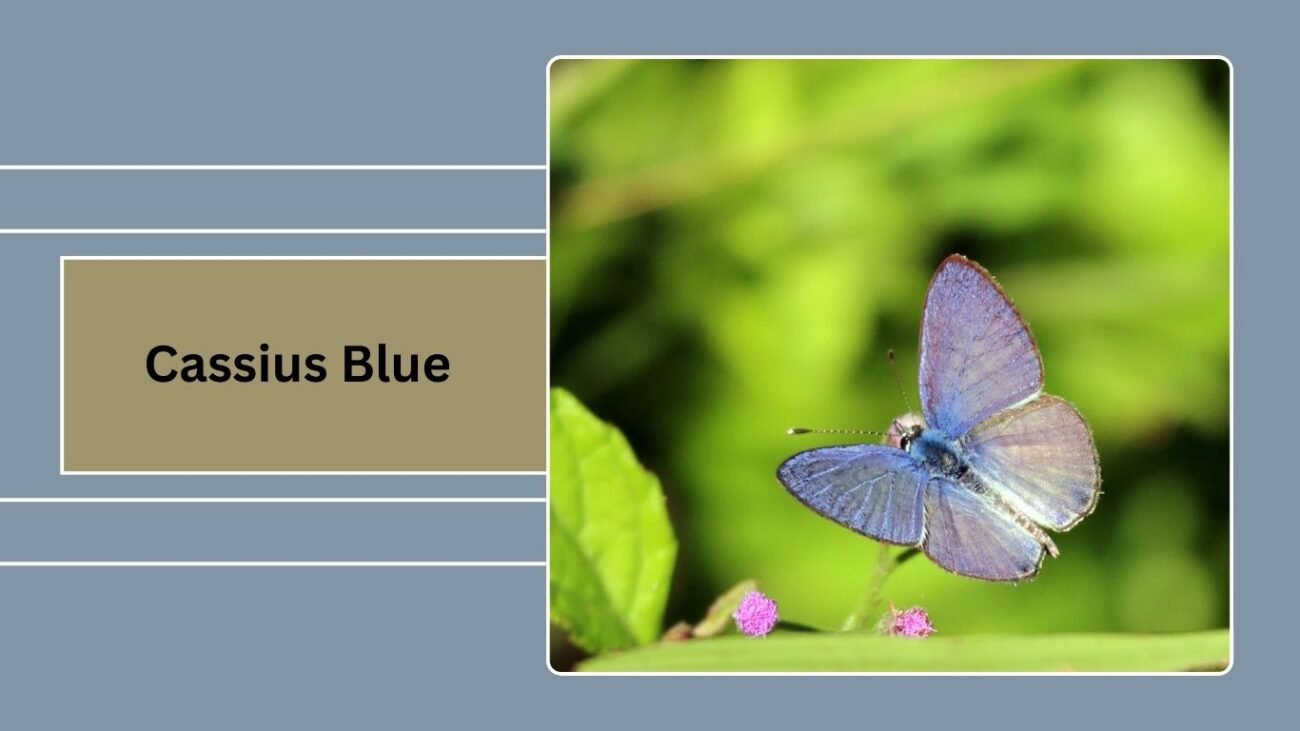
The Cassius Blue is a small and widespread butterfly of the Americas, known for its pale blue wings and distinctive striped underside. It is common in open, sunny habitats.
Identification
- Wingspan: 0.8–1.2 inches (2–3 cm)
- Male: Pale sky-blue upper wings with thin dark borders
- Female: Bluish-white upper wings with wider black margins
- Underside: White to pale gray with dark zigzagging stripes and two black spots with orange accents near hindwing tails
Habitat
The Cassius Blue inhabits open areas such as gardens, fields, roadsides, parks, and coastal regions. It is common in Florida, the Caribbean, Central America, and parts of South America.
Behavior
This butterfly is highly active and often flies in quick, darting movements close to flowers and host plants. Males are territorial, while females focus on locating food plants for egg-laying.
Diet
Adults feed on nectar from a wide range of flowers, especially small blooms such as shepherd’s needle, Spanish needle, and lantana. Caterpillars feed on legumes including various pea and bean plants.
Lifecycle
The Cassius Blue produces multiple generations per year. Eggs are laid singly on buds, flowers, or young leaves of host plants. Caterpillars are green with fine hairs, blending with the vegetation. Pupation occurs near the host plant, and adults emerge within a few weeks.
18. Marine Blue (Leptotes marina)
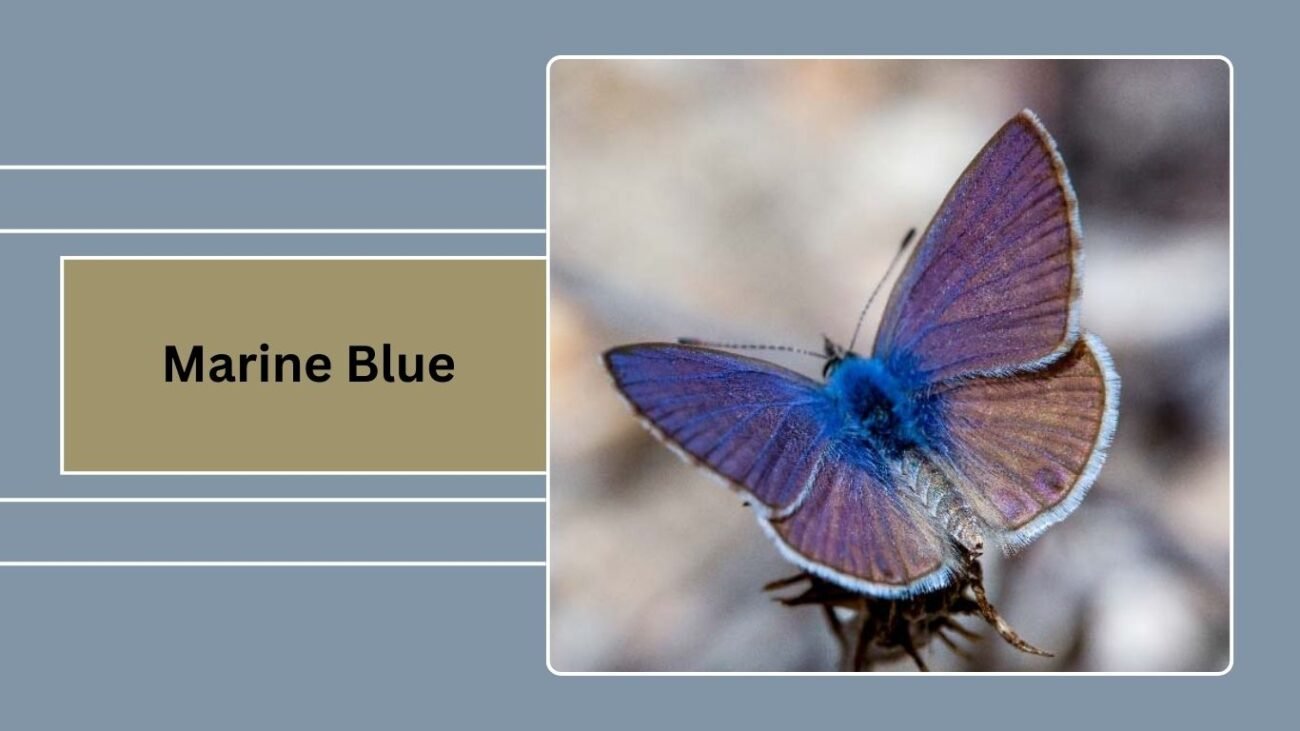
The Marine Blue is a small and delicate butterfly widespread in North and Central America. Its striped wings and adaptability make it a familiar species in gardens and disturbed habitats.
Identification
- Wingspan: 0.8–1.2 inches (2–3 cm)
- Male: Violet-blue upper wings with narrow dark margins
- Female: Duller, brownish upper wings with bluish scales near the base
- Underside: Pale gray with distinct dark brown stripes and two black spots with orange near hindwing tails
Habitat
The Marine Blue thrives in open, sunny environments such as gardens, fields, roadsides, deserts, and scrublands. It is found from southern Canada through the United States, Mexico, and into Central America.
Behavior
Marine Blues are fast, darting fliers that stay close to vegetation. They are often seen around flowering plants and are quick to settle with wings closed, showing their striped undersides.
Diet
Adults feed on nectar from small flowers like alfalfa, clover, and lantana. Caterpillars feed on various legumes, including mesquite, alfalfa, and vetch.
Lifecycle
This butterfly produces several generations per year, especially in warmer regions. Eggs are laid singly on flower buds and young leaves of host plants. Caterpillars are green and well-camouflaged, sometimes attended by ants. Pupation occurs near the host, with adults emerging within weeks.
19. Reakirt’s Blue (Echinargus isola)
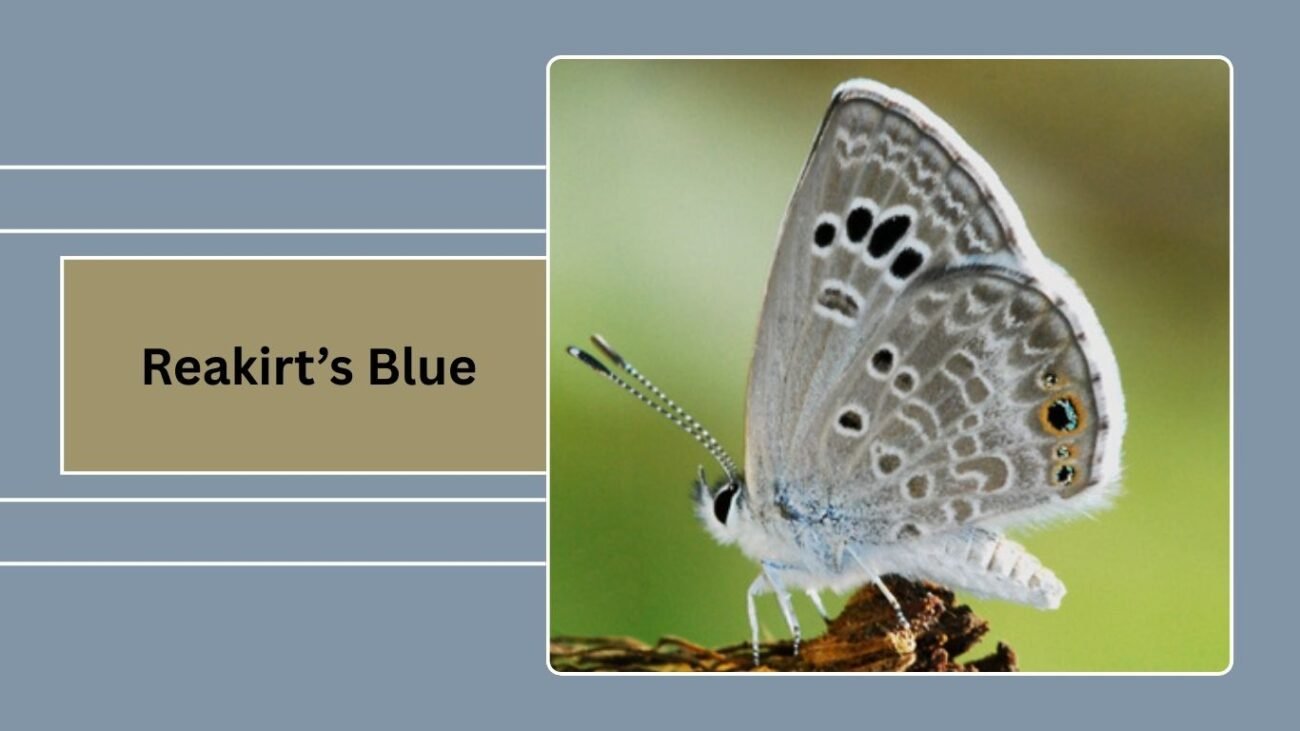
Reakirt’s Blue is a small and widespread butterfly found throughout much of North and Central America. It is well adapted to dry, open habitats and is often overlooked due to its subtle size and coloring.
Identification
- Wingspan: 0.8–1.1 inches (2–2.8 cm)
- Male: Pale blue upper wings with thin dark margins
- Female: Brownish upper wings, sometimes with bluish scaling near the base
- Underside: Grayish with rows of small black spots and a pair of orange-crowned black spots near the hindwing edge
Habitat
This butterfly inhabits deserts, grasslands, open fields, roadsides, and disturbed areas. It thrives in warm, dry regions from the southern United States through Mexico and Central America.
Behavior
Reakirt’s Blue is an active and low-flying butterfly, often seen close to the ground. It flutters rapidly from flower to flower, pausing frequently to feed or rest.
Diet
Adults feed on nectar from many small flowers, especially legumes, shepherd’s needle, and clover. Caterpillars feed primarily on various Fabaceae plants, including mesquite, vetches, and beans.
Lifecycle
Multiple generations occur annually in warmer climates. Eggs are laid singly on flower buds of host plants. Caterpillars are small, green, and somewhat flattened, sometimes attended by ants. Pupation takes place near the ground, with adults emerging quickly in favorable weather.
20. Long-tailed Blue (Lampides boeticus)
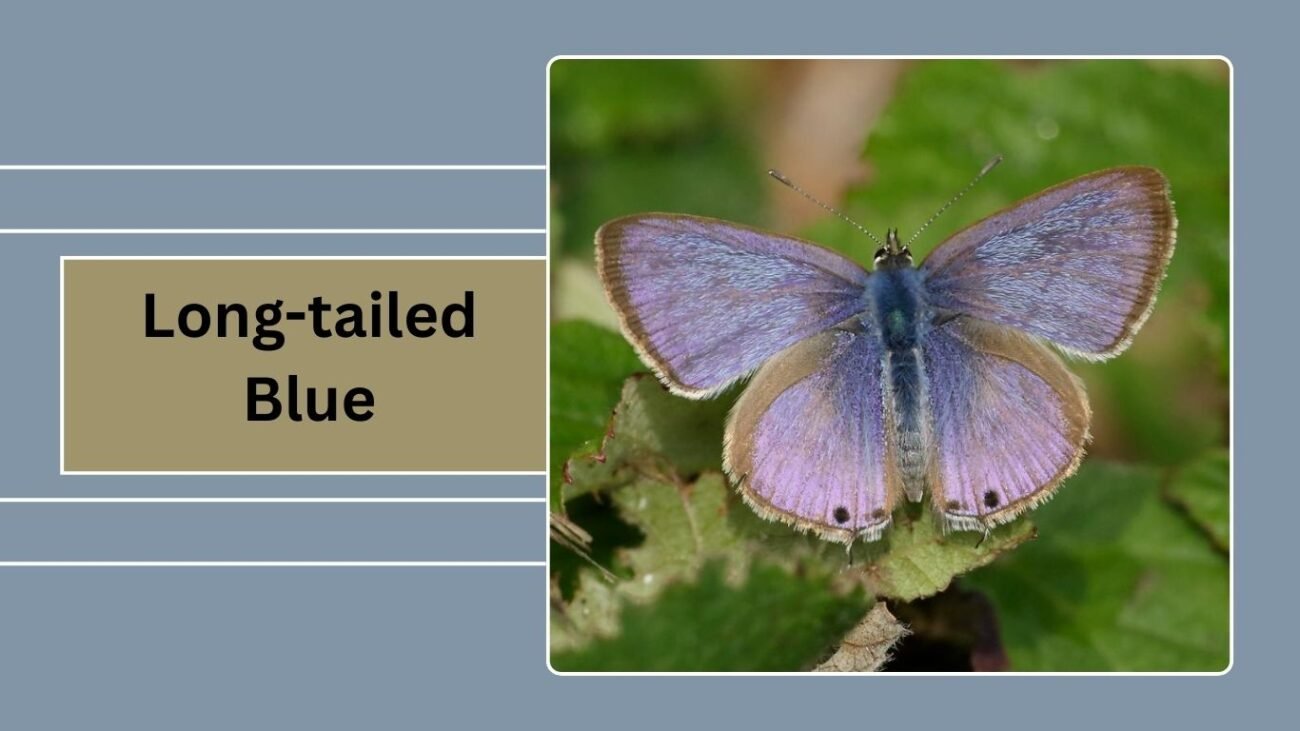
The Long-tailed Blue is a widespread and migratory butterfly found across Europe, Africa, Asia, and Australia. It is easily recognized by its delicate tails and elegant markings.
Identification
- Wingspan: 1–1.4 inches (2.5–3.5 cm)
- Male: Violet-blue upper wings with narrow dark margins and white fringes
- Female: Brown upper wings with bluish bases and orange crescents near hindwing edges
- Hindwings: Distinct tail-like extensions with black-and-orange eye spots at the base
- Underside: Pale grayish-brown with wavy white streaks and orange-black spots near the tails
Habitat
This butterfly inhabits open, sunny habitats including grasslands, meadows, gardens, scrublands, and agricultural areas. It is especially common in regions where leguminous plants are abundant.
Behavior
The Long-tailed Blue is a strong and fast flyer, often seen darting between flowers. It is also a migratory species, capable of traveling long distances. Males patrol territories, while females stay closer to host plants.
Diet
Adults feed on nectar from a wide variety of flowers, particularly legumes and garden plants. Caterpillars feed on the flower buds and pods of legumes, including beans, peas, clovers, and vetches.
Lifecycle
The species can have several generations per year, especially in warmer climates. Eggs are laid singly on flower buds. Caterpillars are green or pinkish, blending with host plants and sometimes attended by ants. Pupation occurs among plant debris, and adults emerge quickly, continuing their migratory spread.