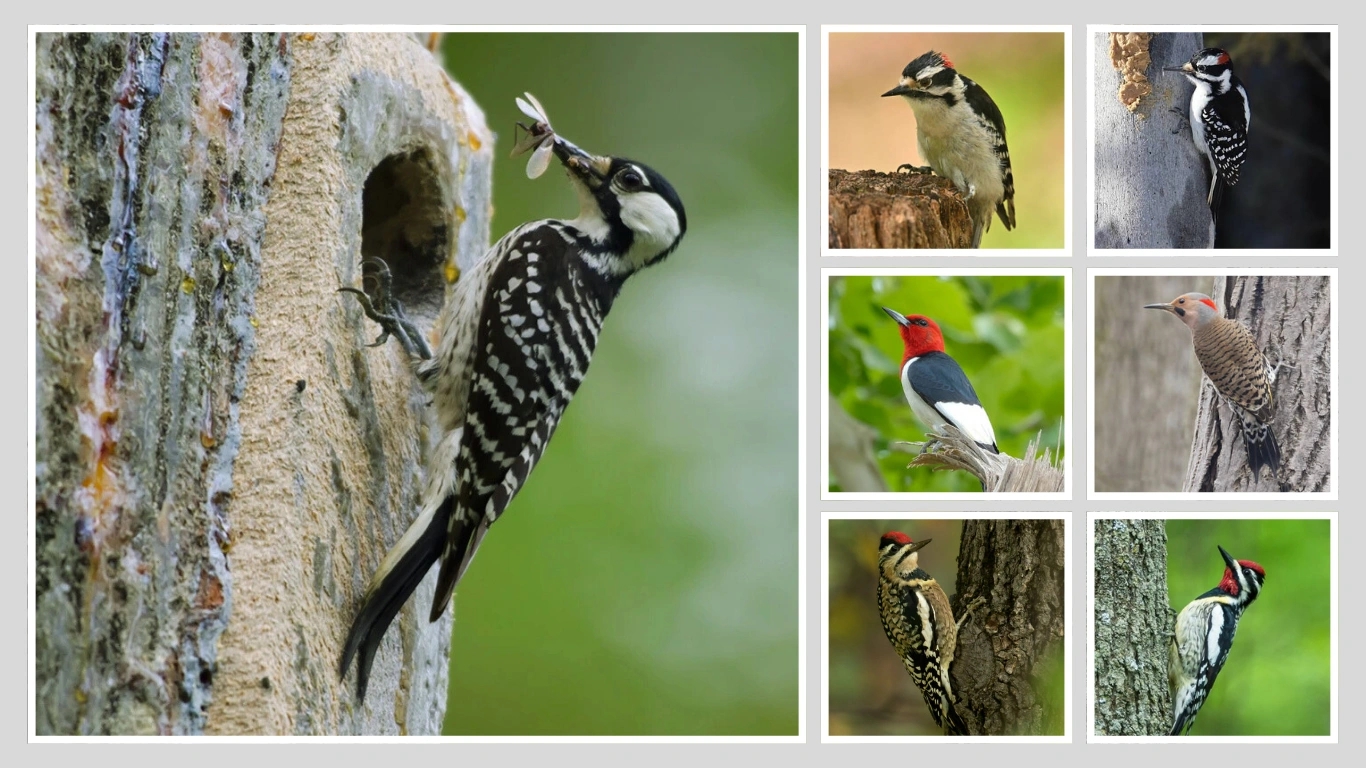
North Carolina’s rich mix of mountain forests, coastal plains, and pine savannas makes it home to a diverse variety of woodpecker species. From the tiny Downy Woodpecker to the elusive and endangered Red-cockaded, these birds thrive in both wild and suburban landscapes. This guide covers 9 woodpeckers found across the state, detailing how to identify them, where they’re found, their habitats, and how long they typically live in the wild.
1. Downy Woodpecker
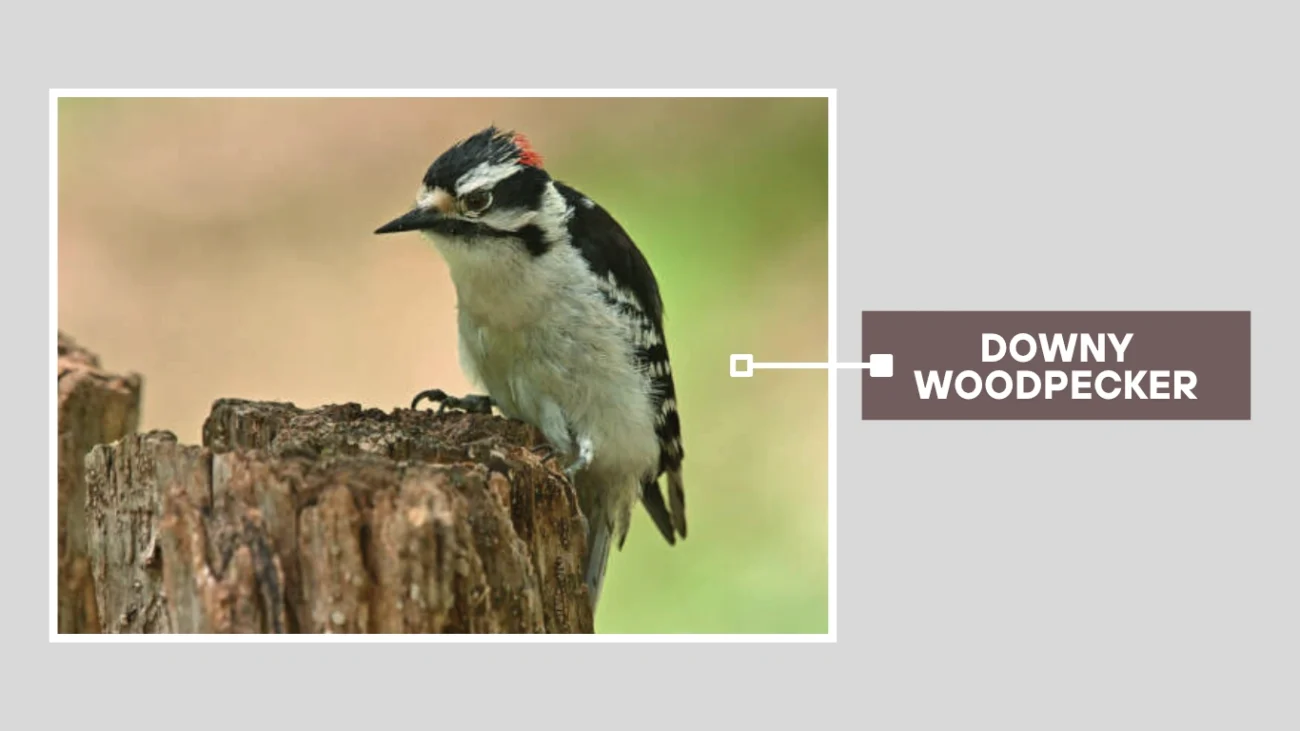
The Downy Woodpecker (Dryobates pubescens) is the smallest and one of the most commonly observed woodpeckers in North Carolina. Its friendly nature and adaptability make it a frequent visitor to feeders and wooded yards.
Identification
- Size: 5.5 to 7 inches long
- Wingspan: 10 to 12 inches
- Plumage: Black wings with white spots, white belly, black-and-white striped head
- Head: Males have a small red patch on the back of the head; females do not
- Bill: Short and stubby
- Behavior: Agile and active; often seen tapping along small branches and tree trunks
Where Found in North Carolina
Found year-round across the entire state—from the mountains and Piedmont to the coastal plains. Very common in both rural and suburban settings.
Habitat
Thrives in deciduous forests, mixed woodlands, parks, gardens, and suburban neighborhoods. Prefers areas with deadwood for foraging and nesting.
Lifespan
Lives 4 to 6 years on average, though some may reach up to 11 years. Readily adapts to backyard feeders and human-altered environments.
2. Hairy Woodpecker
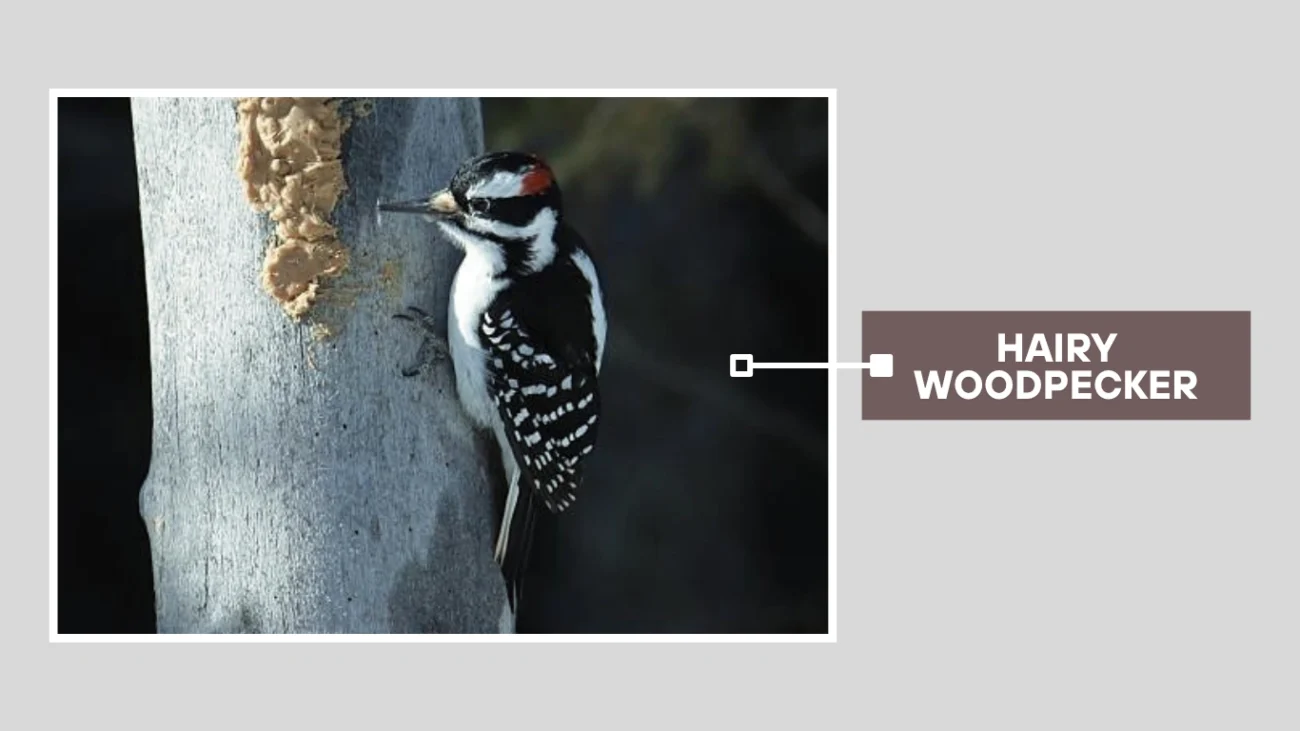
The Hairy Woodpecker (Dryobates villosus) is a medium-sized woodpecker that resembles the Downy but is larger with a longer bill. It’s a more forest-dependent species and tends to be a bit more elusive.
Identification
- Size: 9 to 10 inches long
- Wingspan: 13 to 16 inches
- Plumage: Black-and-white body, white underparts, white back stripe
- Head: Males have a red patch on the rear crown
- Bill: Long and sturdy, nearly the same length as the head
- Behavior: Strong drumming and deep tapping sounds; often forages on larger limbs and trunks
Where Found in North Carolina
Found year-round across the state, particularly in larger tracts of forest. More common in wooded foothills and mountain regions, but also seen in coastal areas with mature trees.
Habitat
Prefers mature forests, including hardwood, mixed, and pine forests. Also seen in well-wooded parks and preserves. Nests in dead trees or snags with suitable cavity space.
Lifespan
Typically lives 5 to 15 years in the wild. Its strong drilling capabilities help it access deep-burrowing insects, offering an advantage in mature forests.
5. Red-headed Woodpecker
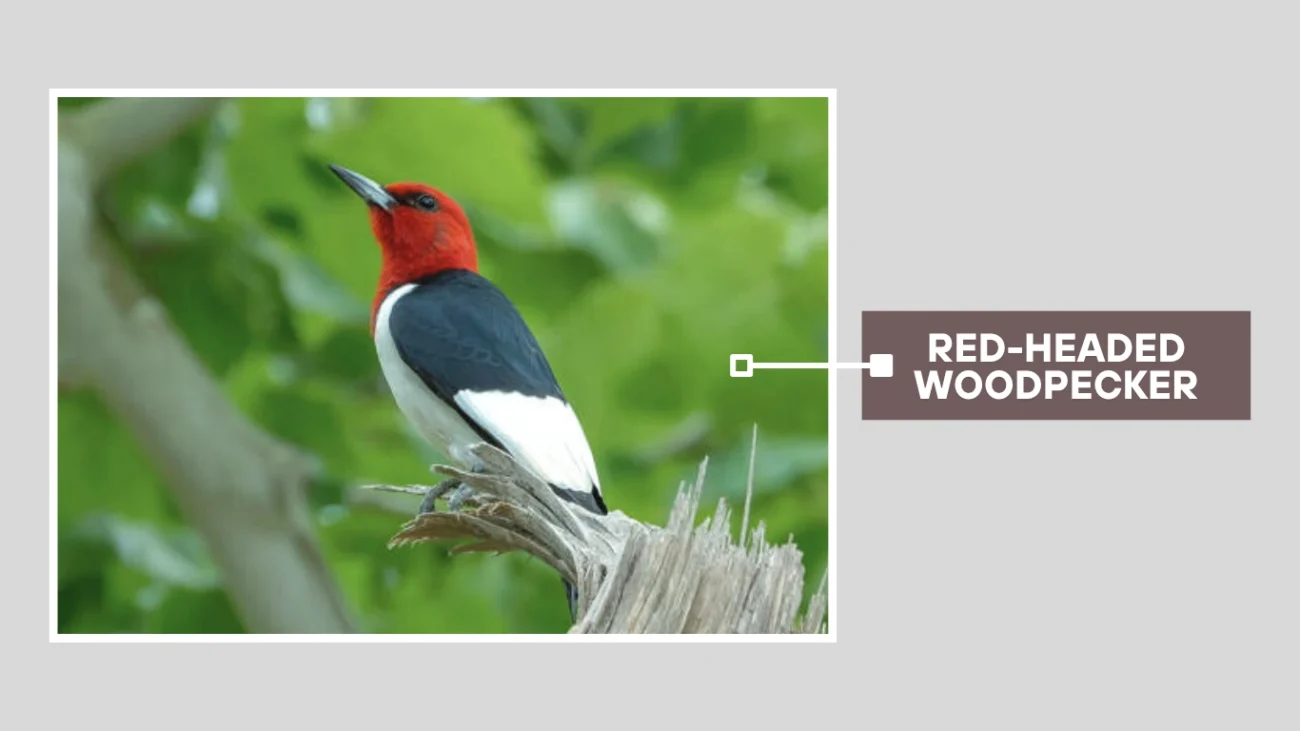
The Red-headed Woodpecker (Melanerpes erythrocephalus) is one of North Carolina’s most vividly colored woodpeckers. Its brilliant red head and sharply contrasting black and white plumage make it unmistakable in flight or perched.
Identification
- Size: 7.5 to 9 inches long
- Wingspan: 16 to 17 inches
- Plumage: Entire head is deep red; body features white underparts, black back, and large white wing patches
- Bill: Strong and straight
- Behavior: Caches food in bark and trees, and often catches flying insects in the air
Where Found in North Carolina
Present year-round but more common in the Piedmont and Sandhills regions. Less frequent in dense mountain forests but regularly seen in open woodlands and farmland.
Habitat
Prefers open oak woodlands, pine savannas, orchards, and groves with scattered dead trees. Needs open areas with snags or utility poles for nesting cavities and food storage.
Lifespan
Lives 9 to 12 years in the wild. Population stability depends on the presence of standing dead trees and fire-maintained open habitats.
6. Northern Flicker
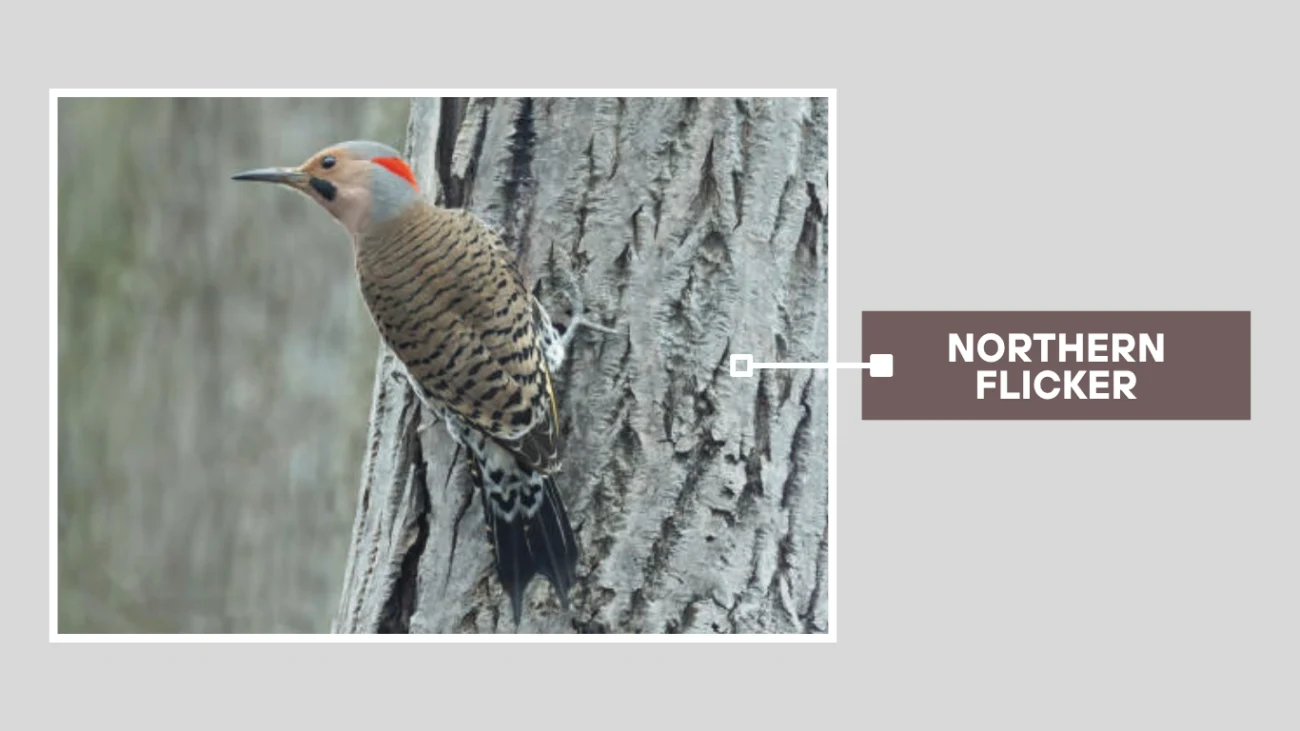
The Northern Flicker (Colaptes auratus) is a large, ground-feeding woodpecker known for its distinctive spotted plumage and bright yellow underwings. In North Carolina, the yellow-shafted variety is most common.
Identification
- Size: 11 to 12 inches long
- Wingspan: 16 to 20 inches
- Plumage: Brownish-gray body with black spots, black crescent on the chest
- Head: Males have a black mustache stripe; yellow-shafted form has a red patch on the nape
- Tail/Wings: Bright yellow shafts, visible in flight
- Behavior: Frequently forages on the ground for ants and beetles
Where Found in North Carolina
Found statewide, year-round. More abundant during spring and fall migration. May move to lower elevations and open areas during the winter.
Habitat
Inhabits open woodlands, forest edges, fields, suburban lawns, and even golf courses. Nests in tree cavities and is often seen on the ground—unusual behavior for a woodpecker.
Lifespan
Typically lives 6 to 9 years. Declines in ground-feeding insect populations and competition for nesting sites can impact local populations.
7. Yellow-bellied Sapsucker
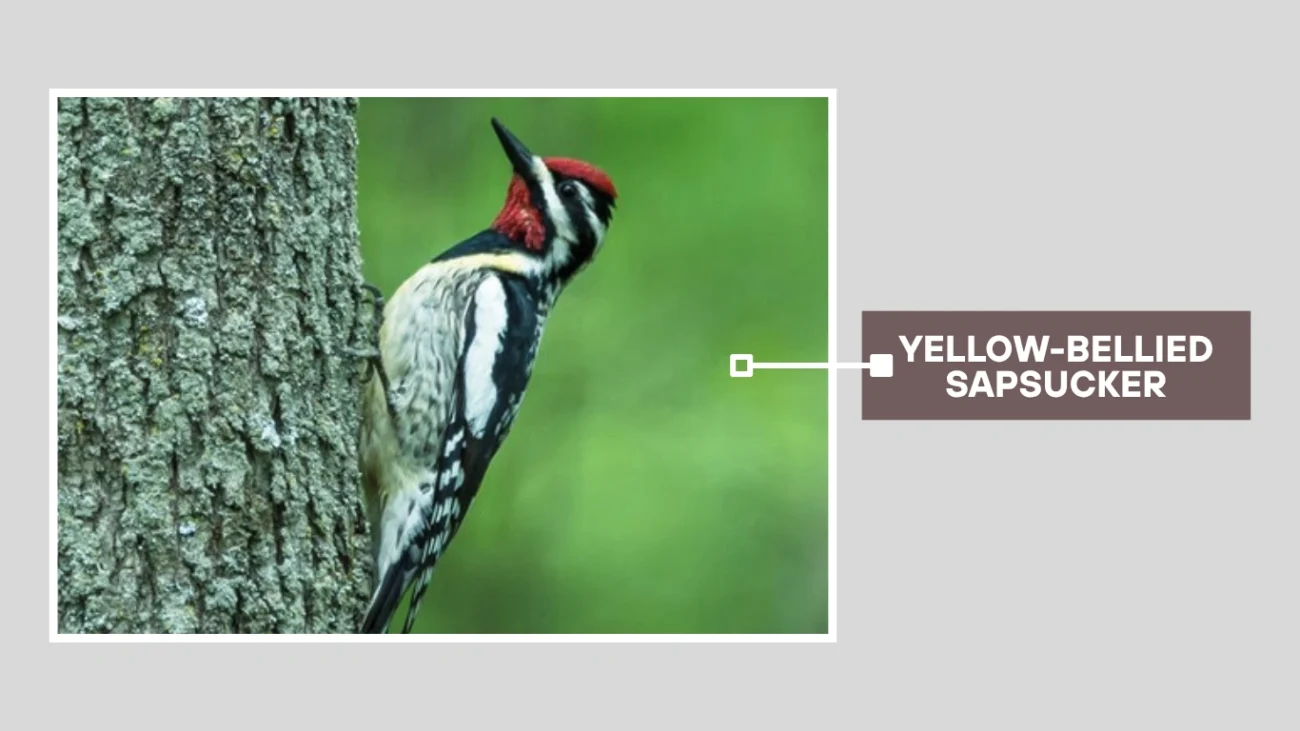
The Yellow-bellied Sapsucker (Sphyrapicus varius) is a migratory woodpecker that spends the winter months in North Carolina. It’s known for drilling tidy rows of holes in tree bark to feed on sap and the insects it attracts.
Identification
- Size: 7 to 8.5 inches long
- Wingspan: 13 to 16 inches
- Plumage: Black-and-white body, pale yellow belly, red crown; males also have a red throat
- Bill: Medium-length and slightly pointed
- Behavior: Drills horizontal rows of sap wells and returns frequently to feed
Where Found in North Carolina
Occurs statewide during fall and winter, from the Appalachian Mountains to the coastal plains. Most common between October and April.
Habitat
Uses a variety of habitats during winter, including hardwood forests, wooded parks, orchards, and even residential yards with sap-producing trees like maple, birch, and hickory.
Lifespan
Lives 5 to 7 years on average. Migratory behavior exposes it to risks during travel, but sap wells benefit multiple species and contribute to forest ecosystem health.
8. Red-cockaded Woodpecker
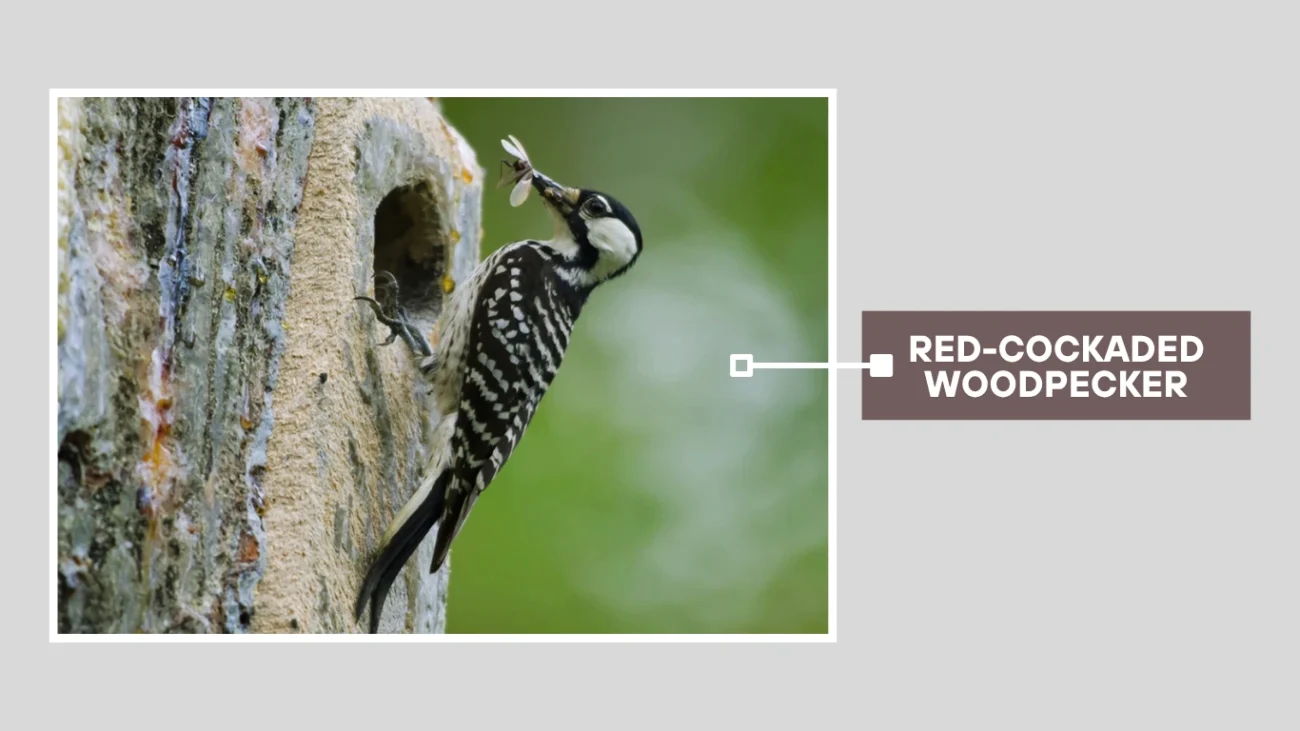
The Red-cockaded Woodpecker (Dryobates borealis) is a small, endangered woodpecker that is native to North Carolina’s longleaf pine ecosystems. It is unique for nesting exclusively in live pine trees and living in cooperative family groups.
Identification
- Size: 7.5 to 9 inches long
- Wingspan: 14 to 16 inches
- Plumage: Black-and-white barred back, white cheeks, black crown
- Head: Males have a small red streak (“cockade”) behind the eye, often hidden
- Bill: Small and straight
- Behavior: Highly social; excavates cavities in living pines infected with heart rot
Where Found in North Carolina
Found in the Sandhills and coastal plain regions, especially in protected areas like Weymouth Woods, Fort Bragg, and Croatan National Forest. Present year-round.
Habitat
Strictly inhabits mature longleaf pine forests with open understory. Requires extensive management such as prescribed burns to maintain habitat quality. Avoids hardwoods and dense vegetation.
Lifespan
Typically lives 6 to 12 years. Conservation efforts in North Carolina have been crucial to the species’ recovery, including artificial cavity installation and habitat restoration.
9. Ivory-billed Woodpecker (Presumed Extinct)
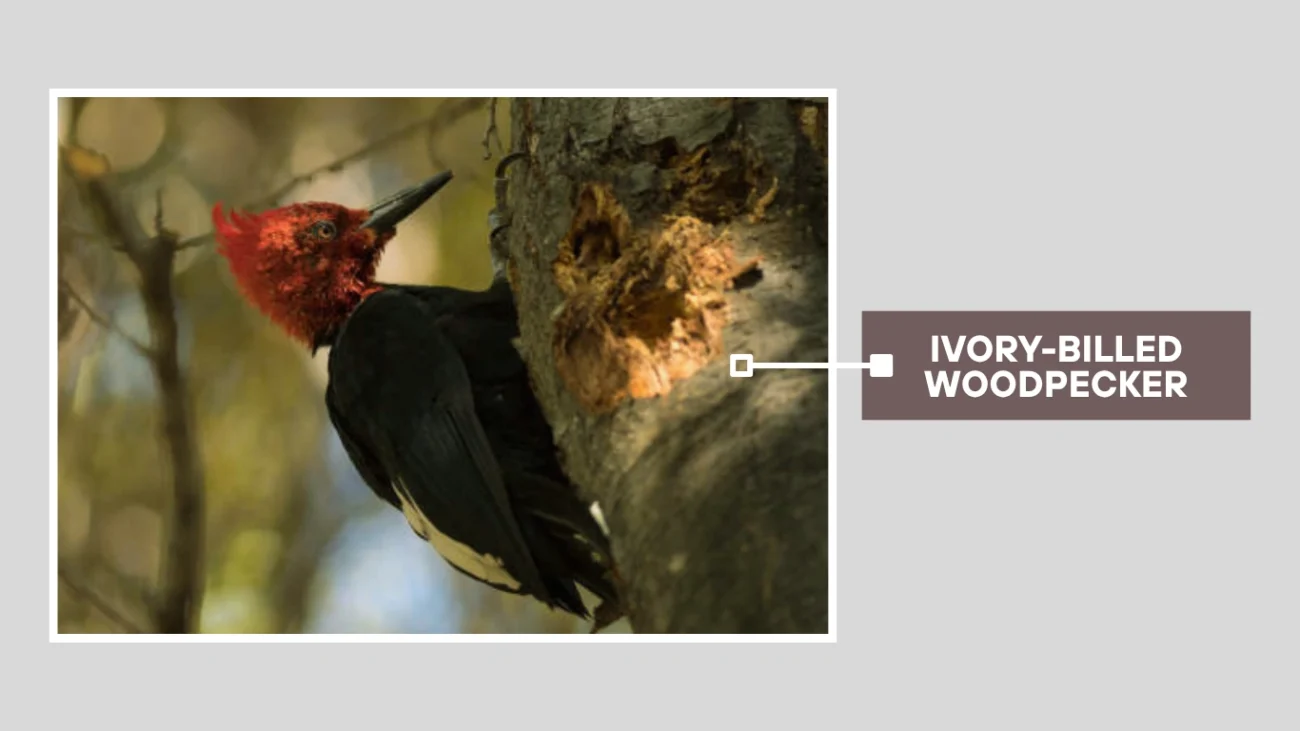
The Ivory-billed Woodpecker (Campephilus principalis) is a legendary species that once inhabited the swampy bottomland forests of the southeastern United States, including parts of eastern North Carolina. Though long presumed extinct, occasional unconfirmed sightings keep hope alive among some birders and researchers.
Identification
- Size: 18 to 20 inches long
- Wingspan: About 30 inches
- Plumage: Glossy black with large white wing patches and white stripes down the neck
- Head: Males had a bright red crest; females had a black crest
- Bill: Long, straight, and ivory-colored
- Behavior: Created large rectangular holes in trees; known for powerful, double-rap drumming
Where Found in North Carolina
Historically recorded in the coastal plain, especially in mature swamp forests and bottomlands. No verified sightings in decades, though the species is still included in some historical checklists.
Habitat
Preferred vast, undisturbed bottomland hardwood forests with abundant dead and dying trees. Habitats once included cypress-tupelo swamps and remote river floodplains.
Lifespan
Unknown in the wild, but likely lived 10 to 15 years. If any individuals still exist, their population would be critically low and highly vulnerable to habitat loss and disturbance.
FAQs
What is the most common woodpecker in North Carolina?
The Downy Woodpecker is the most common and widespread species across North Carolina. It’s found year-round in forests, parks, and even residential neighborhoods.
Are there any endangered woodpeckers in North Carolina?
Yes, the Red-cockaded Woodpecker is federally endangered and found in the Sandhills and coastal plain regions. It relies on mature longleaf pine forests and is the focus of active conservation efforts.
Do woodpeckers cause damage to homes in North Carolina?
Some woodpeckers, especially Northern Flickers and Red-bellied Woodpeckers, may drum on siding or metal surfaces during mating season. This is more of a nuisance than a structural threat and usually temporary.
Which woodpeckers migrate in and out of North Carolina?
The Yellow-bellied Sapsucker is the main migratory woodpecker in the state. It winters in North Carolina but breeds farther north. Most other woodpeckers are permanent residents.
Can I attract woodpeckers to my backyard in North Carolina?
Yes. Suet feeders, dead trees (snags), and native trees like oaks or pines attract many species. Red-bellied, Downy, and Hairy Woodpeckers are especially responsive to suet and nut offerings.