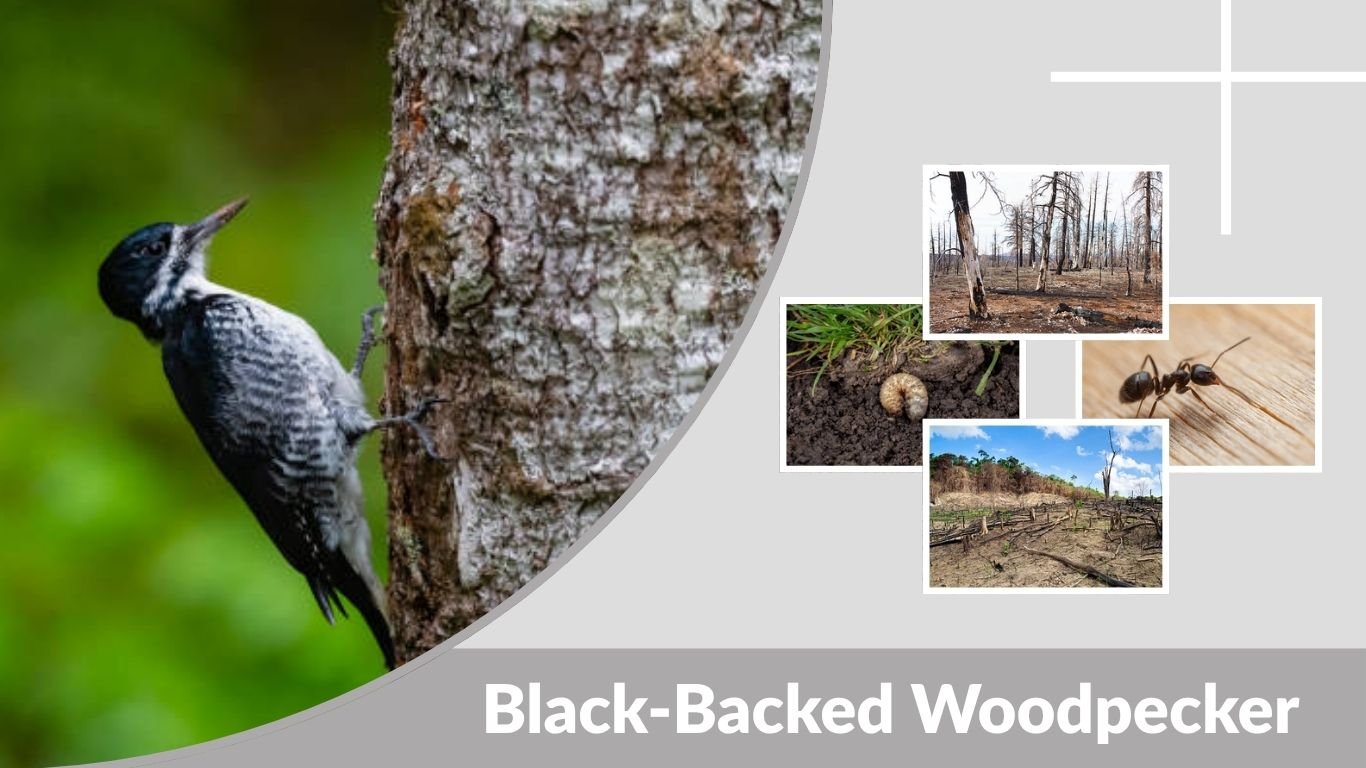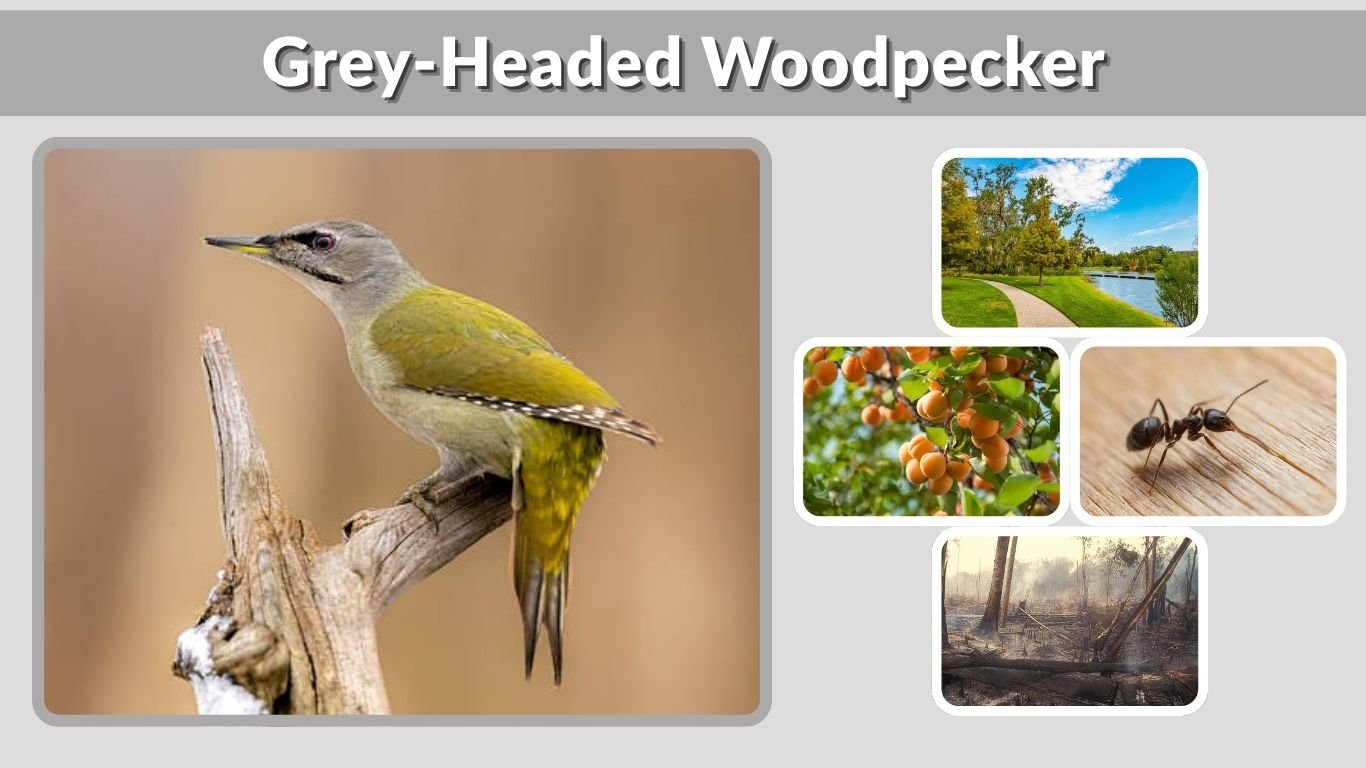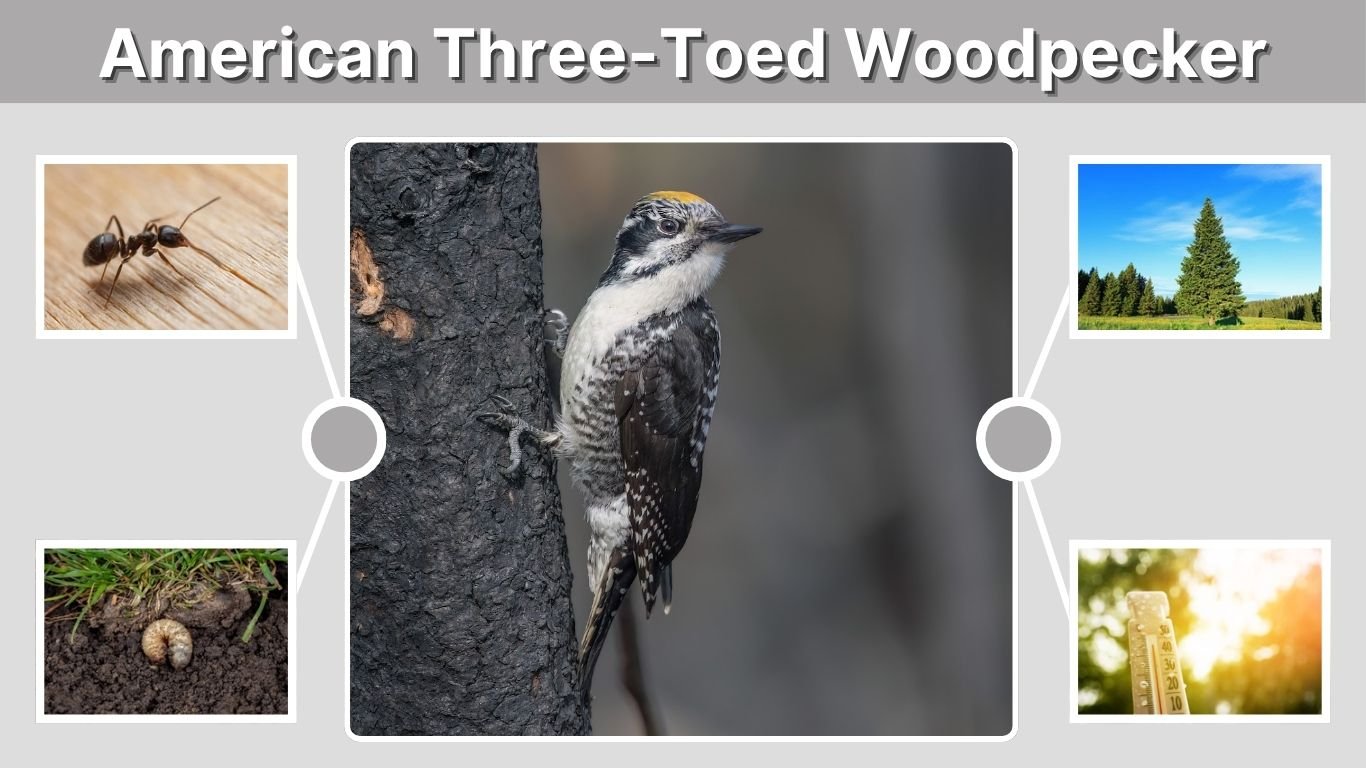
The American Three-Toed Woodpecker is a fascinating bird uniquely adapted to life in cold, northern forests. Found primarily across Canada, Alaska, and parts of the northern United States, this species stands out for its unusual three-toed feet and specialized feeding habits. Unlike many other woodpeckers, it thrives in areas with dead or dying trees, where it plays an important role in controlling insect populations. Its quiet behavior and remote habitat make it less commonly seen, but it remains an essential part of forest ecosystems.
Physical Identification
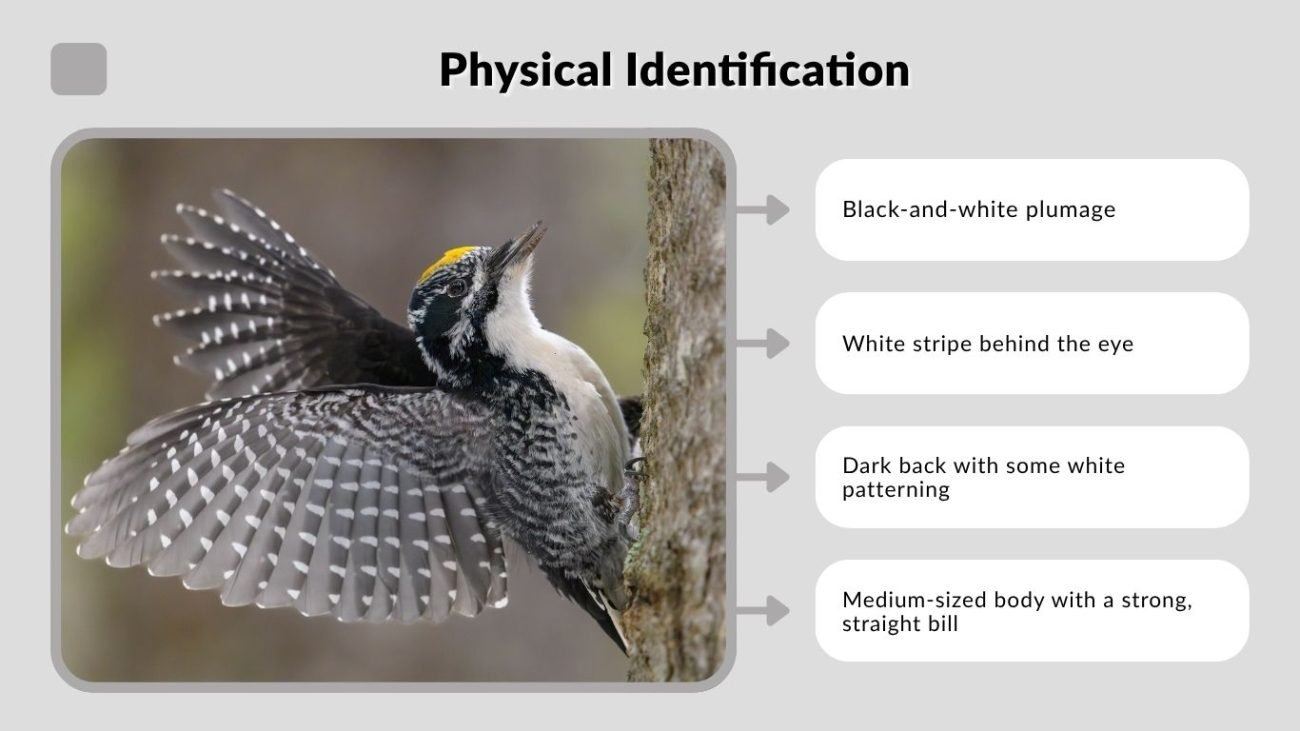
The American Three-Toed Woodpecker has a distinctive appearance that helps birdwatchers identify it, especially when compared to similar species.
Key Identification Features
- Black-and-white plumage with fine barring along the sides
- White stripe behind the eye that contrasts with the darker head
- Dark back with some white patterning, unlike completely solid black species
- Medium-sized body with a strong, straight bill
Male vs Female Differences
Males can be identified by a bright yellow patch on the crown, which stands out clearly against their otherwise dark head. Females lack this marking and have a fully black head. This difference is the most reliable way to distinguish between the sexes in the field.
Unique Trait: Three Toes
One of the most notable features of this species is its three-toed foot structure. Most woodpeckers have four toes, but this species has only three. This adaptation improves its grip on tree bark, allowing it to cling more efficiently while foraging for insects.
Size and Measurements
The American Three-Toed Woodpecker is a medium-sized bird with proportions suited for climbing and drilling.
- Length: Approximately 21–24 cm from head to tail
- Wingspan: Around 38–42 cm
- Weight: Moderate compared to other woodpeckers of similar size
- Body Structure: Compact body with strong neck muscles for powerful pecking
Habitat and Distribution
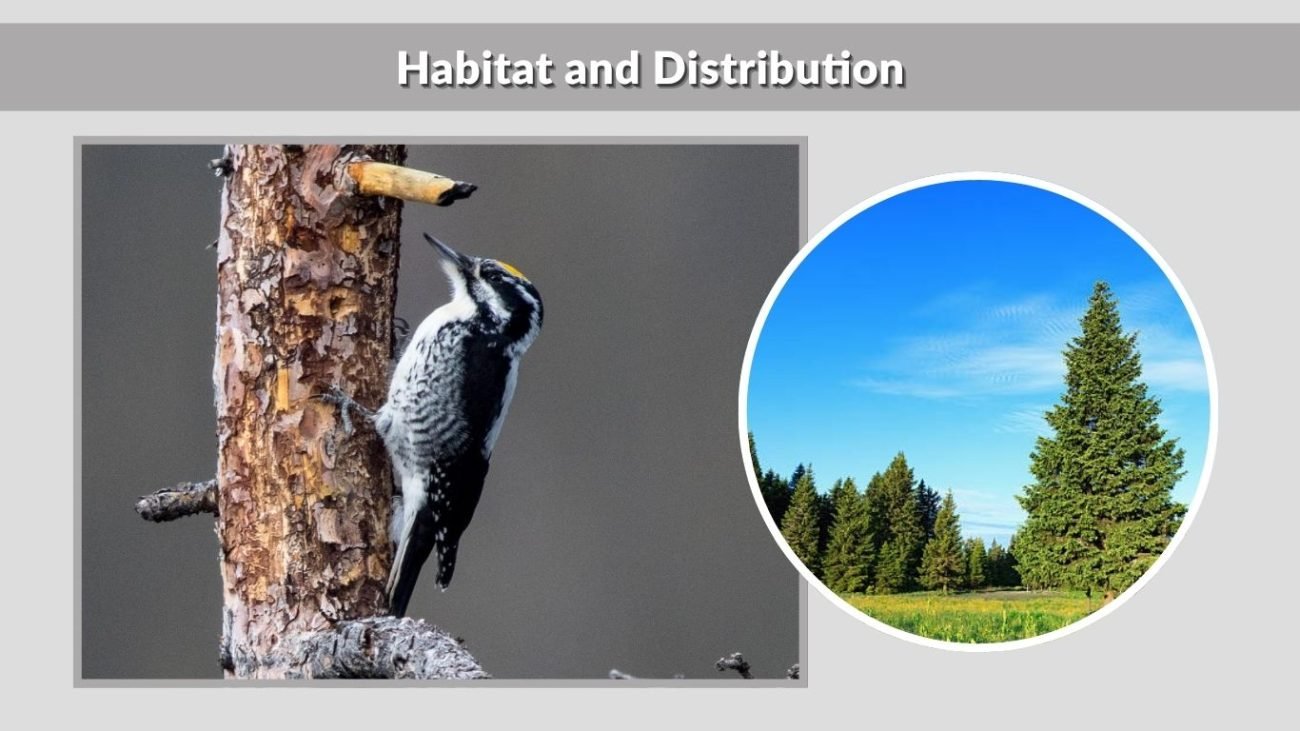
This species is closely tied to northern forest ecosystems, where it finds both food and nesting opportunities.
Geographic Range
The American Three-Toed Woodpecker is widely distributed across boreal regions of North America. It is commonly found in Canada and Alaska, with its range extending into the northern United States in certain areas.
Preferred Habitat
It prefers coniferous and boreal forests, especially those dominated by spruce and pine trees. These environments often contain dead or dying trees, which are ideal for feeding and nesting. It is also frequently found in areas affected by insect outbreaks or natural disturbances.
Range and Movement
Unlike many migratory birds, this species is mostly resident within its range. It may move locally in response to food availability, particularly when insect populations fluctuate, but it generally remains within northern forest regions throughout the year.
Behavior and Lifestyle
The behavior of the American Three-Toed Woodpecker reflects its specialization for life in cold, forested environments.
Adaptation to Cold Environments
This woodpecker is well adapted to harsh northern climates. Its thick plumage provides insulation, while its ability to find food in dead trees allows it to survive even during long winters when other food sources are scarce.
Feeding Behavior
Rather than drilling deeply into wood, it often uses a technique called bark scaling. This involves peeling away sections of bark to expose insects underneath. This method is highly effective for locating beetle larvae hidden just beneath the surface.
Territorial Nature
The American Three-Toed Woodpecker is generally solitary and territorial. It defends feeding areas, especially when food is abundant, ensuring it has enough resources to survive and reproduce.
Diet and Feeding Habits
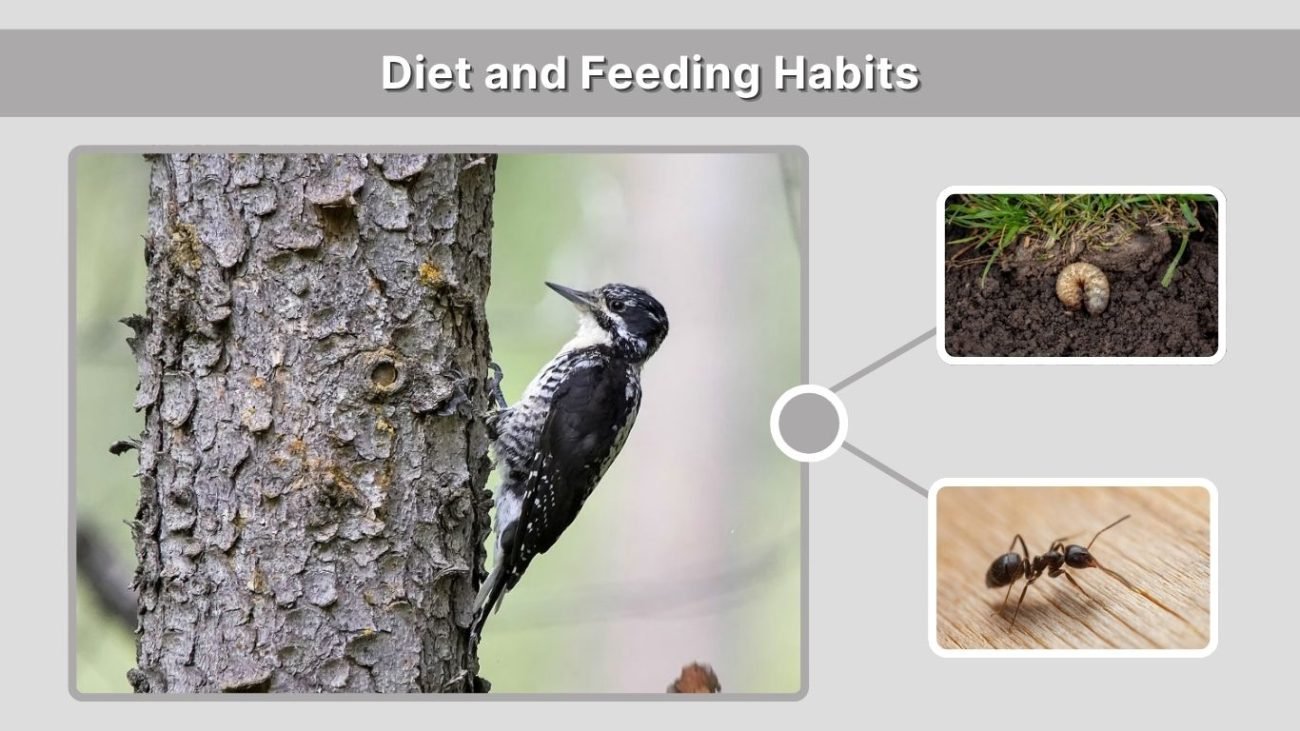
The diet of this species is specialized and closely linked to forest health and insect activity.
- Primary Diet: Bark beetle larvae and other wood-boring insects found under tree bark
- Other Foods: Ants and small invertebrates
- Feeding Technique: Bark scaling rather than deep drilling
- Specialization: Focus on dead, dying, or insect-infested trees
Breeding and Nesting
The breeding habits of the American Three-Toed Woodpecker are closely tied to the availability of suitable trees for nesting.
Courtship Behavior
During the breeding season, males use drumming and calls to attract females and establish territory. These signals help demonstrate strength and readiness to mate, while also warning other birds to stay away.
Nesting Habits
Both males and females take part in excavating a nesting cavity, usually in a dead or weakened tree. These trees are easier to carve and provide a safer environment for raising young. The nest is typically located at a height that offers protection from predators.
Egg Laying and Care
The female lays a clutch of eggs inside the cavity. Both parents share the duties of incubation and feeding. After hatching, the chicks depend entirely on their parents for food and protection until they are ready to leave the nest.
Lifecycle and Development
The lifecycle of the American Three-Toed Woodpecker is closely connected to forest conditions, especially the availability of insect-rich trees.
- Incubation Period: Eggs usually hatch after about 12–14 days of incubation
- Nestling Stage: Chicks stay in the nest for around 3–4 weeks, fully dependent on parents
- Fledging Stage: Young birds leave the nest and begin flying but still rely on parental care
- Maturity: Juveniles develop adult plumage and reach breeding age within one year
- Lifespan: Typically lives several years in the wild depending on habitat conditions
American Three-Toed Woodpecker vs Black-Backed Woodpecker
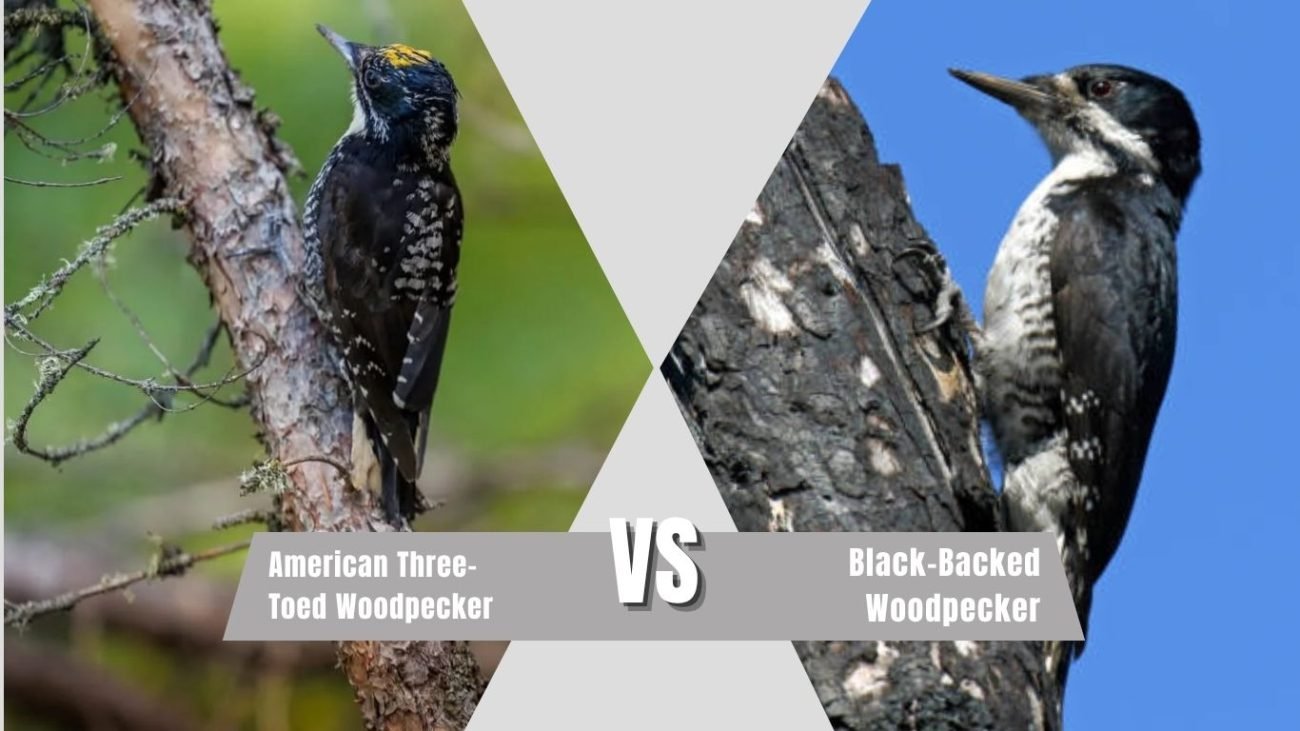
This comparison helps distinguish two very similar species often found in overlapping habitats.
| Feature | American Three-Toed Woodpecker | Black-Backed Woodpecker |
| Toes | Three | Four |
| Back Color | Black with white barring | Solid black |
| Male Marking | Yellow crown | Yellow crown |
| Habitat | Boreal forests | Burned forests |
| Feeding Style | Bark scaling | Deep drilling |
Role in the Ecosystem
The American Three-Toed Woodpecker plays a vital role in maintaining healthy forest ecosystems. By feeding on bark beetle larvae and other wood-boring insects, it helps control pest populations that can damage large areas of forest. This natural control is especially important during insect outbreaks.
In addition, the nesting cavities it creates are often reused by other birds and small mammals. These secondary users depend on such spaces for shelter and breeding, making the woodpecker an important contributor to biodiversity in boreal forests.
Threats and Conservation
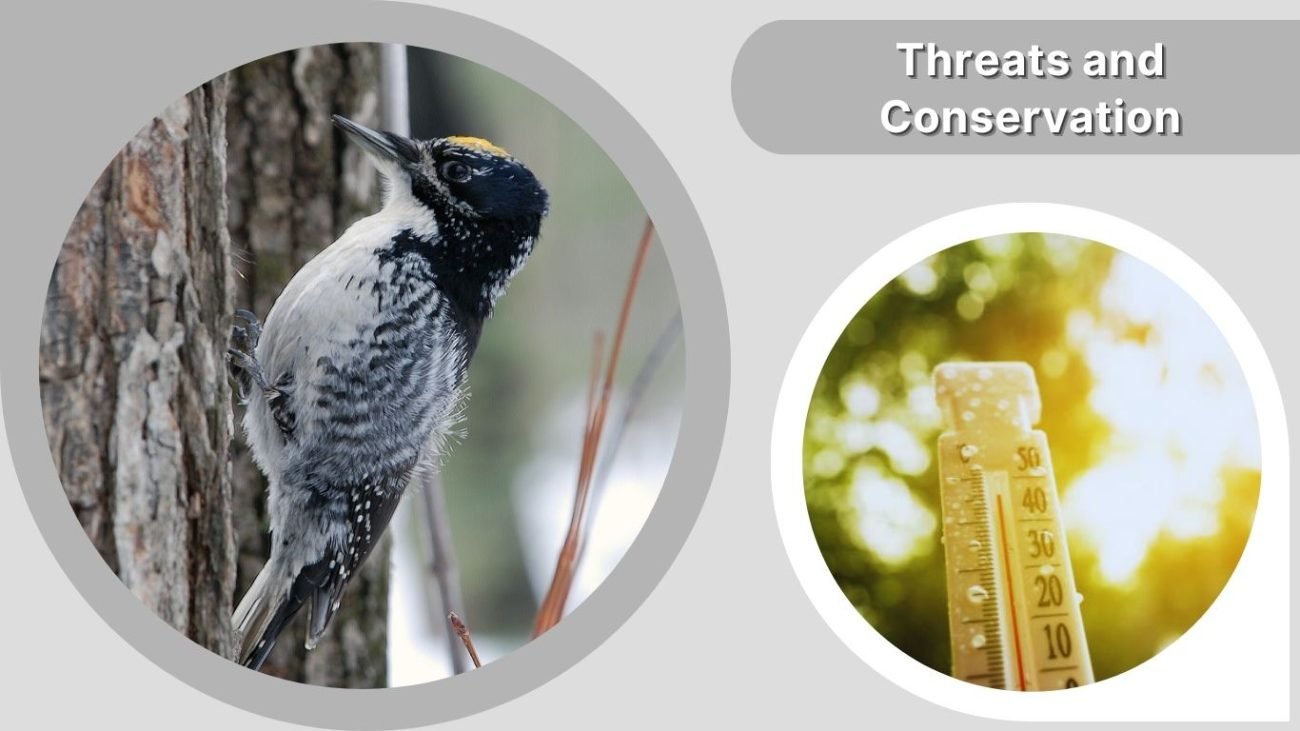
Although this species is well adapted to its environment, it still faces several challenges.
- Habitat Loss: Logging and deforestation reduce the number of suitable trees
- Climate Change: Alters boreal forest ecosystems and insect populations
- Forest Management: Removal of dead or dying trees limits food and nesting sites
- Conservation Efforts: Protecting natural forests and allowing ecological processes to continue
Interesting Facts
The American Three-Toed Woodpecker has several unique traits that make it stand out among woodpeckers.
- One of the few woodpeckers with only three toes
- Highly specialized for feeding on bark beetles
- Often found in areas with insect infestations
- Plays an important role in forest health and regeneration
FAQs
Why does the American Three-Toed Woodpecker have three toes?
It has three toes instead of four to improve its grip on tree bark. This adaptation allows it to cling more efficiently to vertical surfaces while searching for insects beneath the bark.
Where can you find this woodpecker?
It is mainly found in boreal forests across Canada and Alaska, as well as parts of the northern United States. It prefers areas with dead or insect-infested trees.
What does the American Three-Toed Woodpecker eat?
Its diet mainly consists of bark beetle larvae and other insects found under tree bark. It also consumes ants and small invertebrates.
How is it different from the Black-Backed Woodpecker?
The main differences are the number of toes and back pattern. The American Three-Toed Woodpecker has three toes and a barred back, while the Black-Backed Woodpecker has four toes and a solid black back.