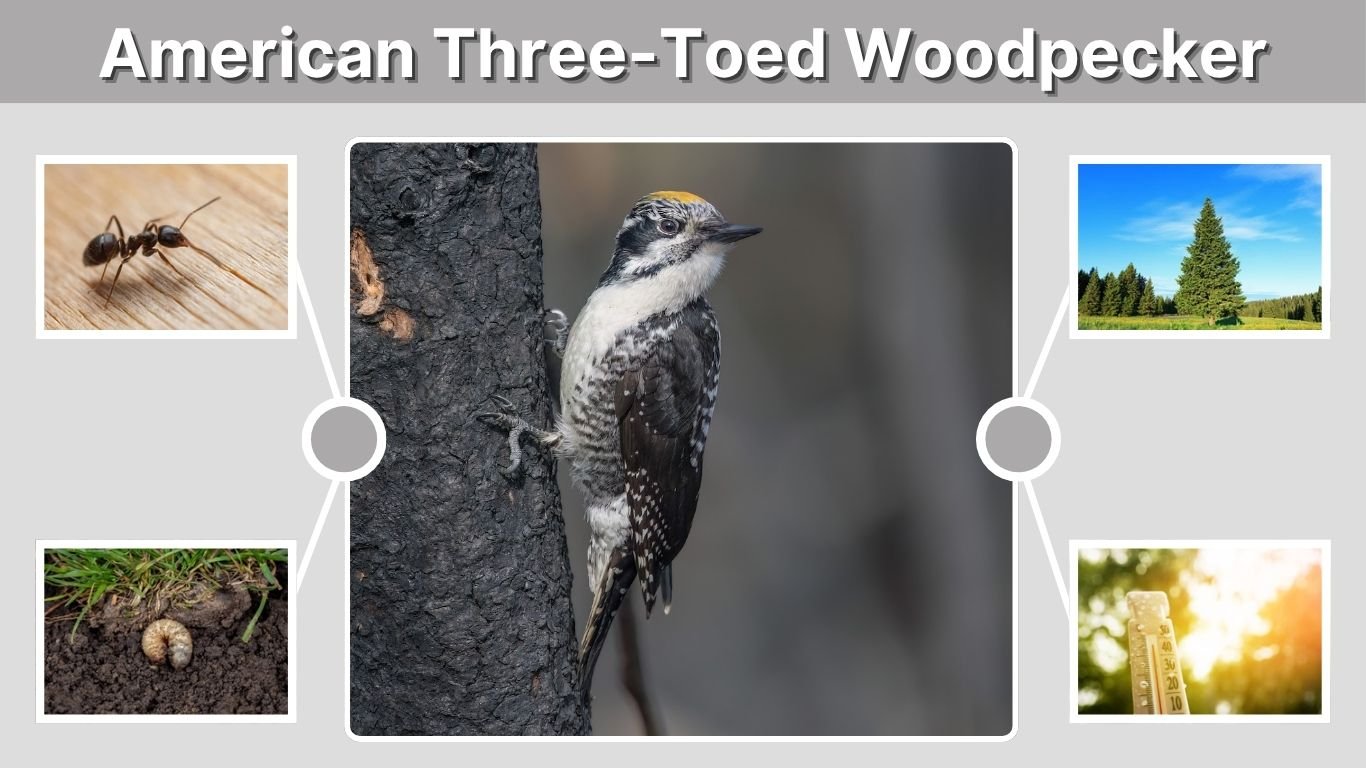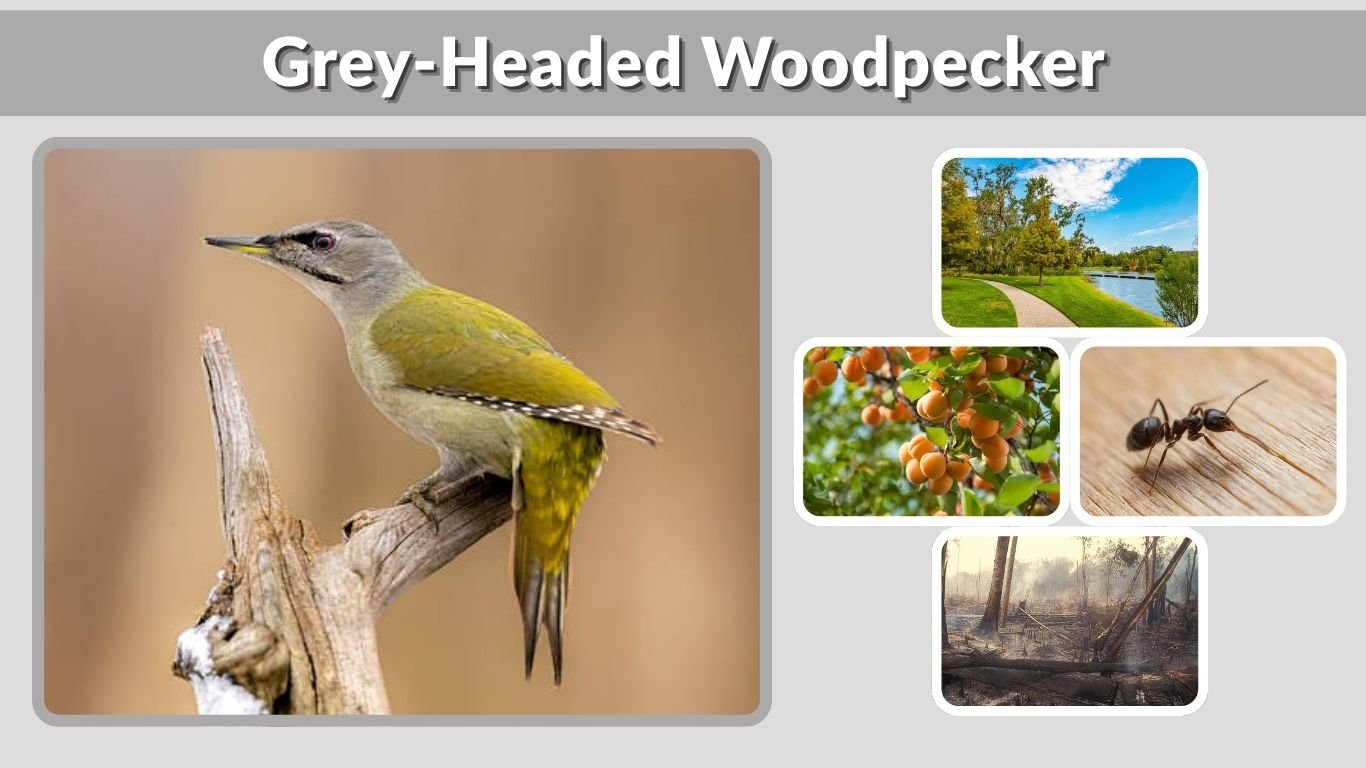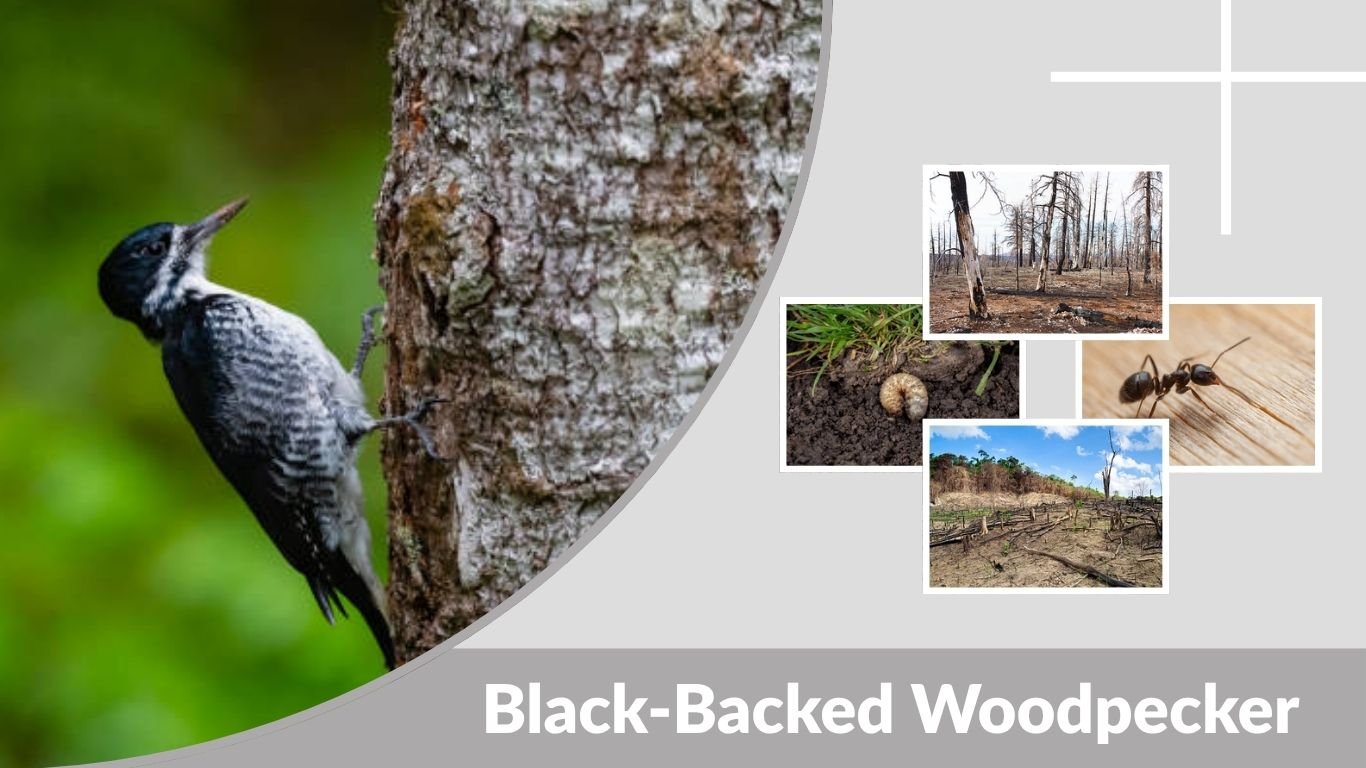
The Black-Backed Woodpecker is a unique and highly specialized bird found primarily in North America. Unlike many other woodpeckers, it thrives in recently burned forests, where it finds an abundance of food and nesting opportunities. Its solid black back, combined with its adaptability to fire-affected environments, makes it one of the most distinctive and ecologically important woodpecker species. Understanding its features, habitat, and behavior reveals how well it is adapted to a changing landscape.
Physical Identification
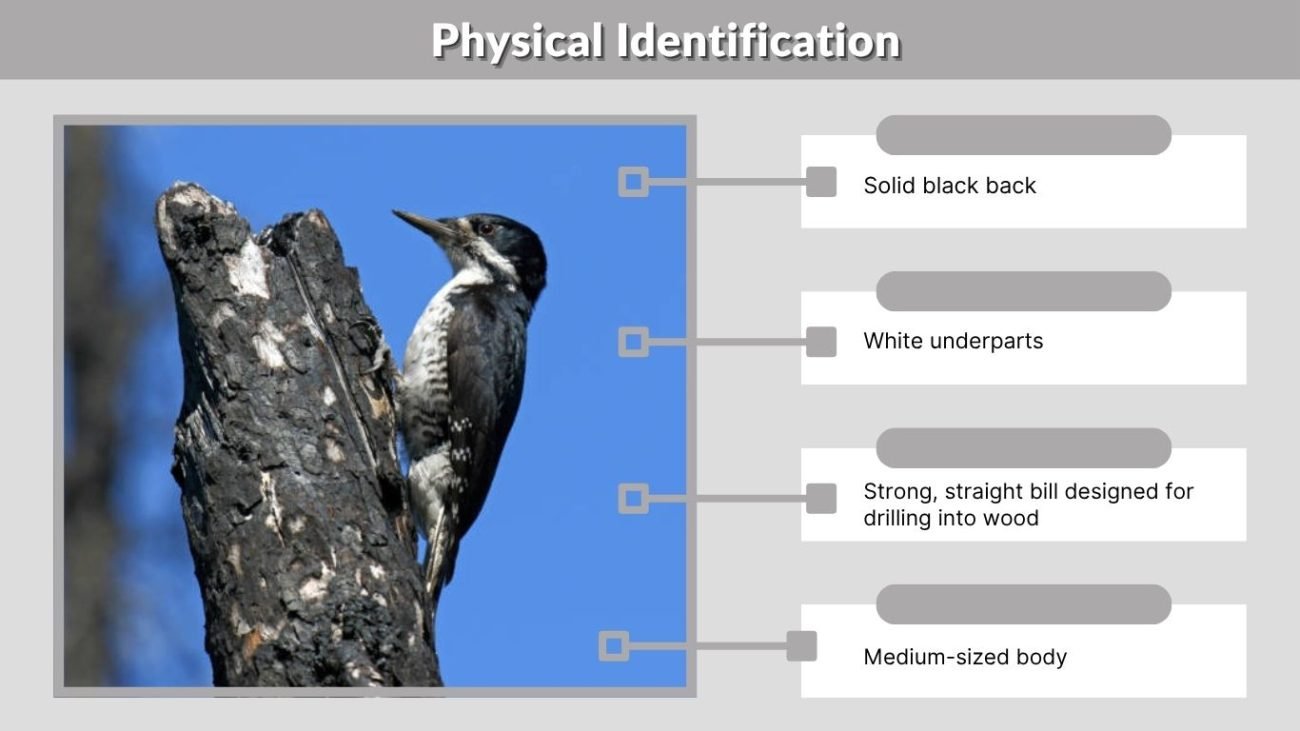
The Black-Backed Woodpecker is easy to identify once you know what to look for, especially due to its bold and simple coloration.
Key Identification Features
- Solid black back, which is its most defining characteristic
- White underparts with black barring along the sides
- Strong, straight bill designed for drilling into wood
- Medium-sized body with a sturdy build
Male vs Female Differences
Males and females can be distinguished by the presence of a yellow patch on the crown. Males have a bright yellow marking on the top of their head, while females lack this feature and have an entirely black head. This difference is often the easiest way to tell them apart in the field.
Juvenile Appearance
Juvenile Black-Backed Woodpeckers tend to have a duller appearance compared to adults. Their markings may appear less defined, and young males may show a less noticeable yellow crown. As they mature, their plumage becomes clearer and more distinct.
Size and Measurements
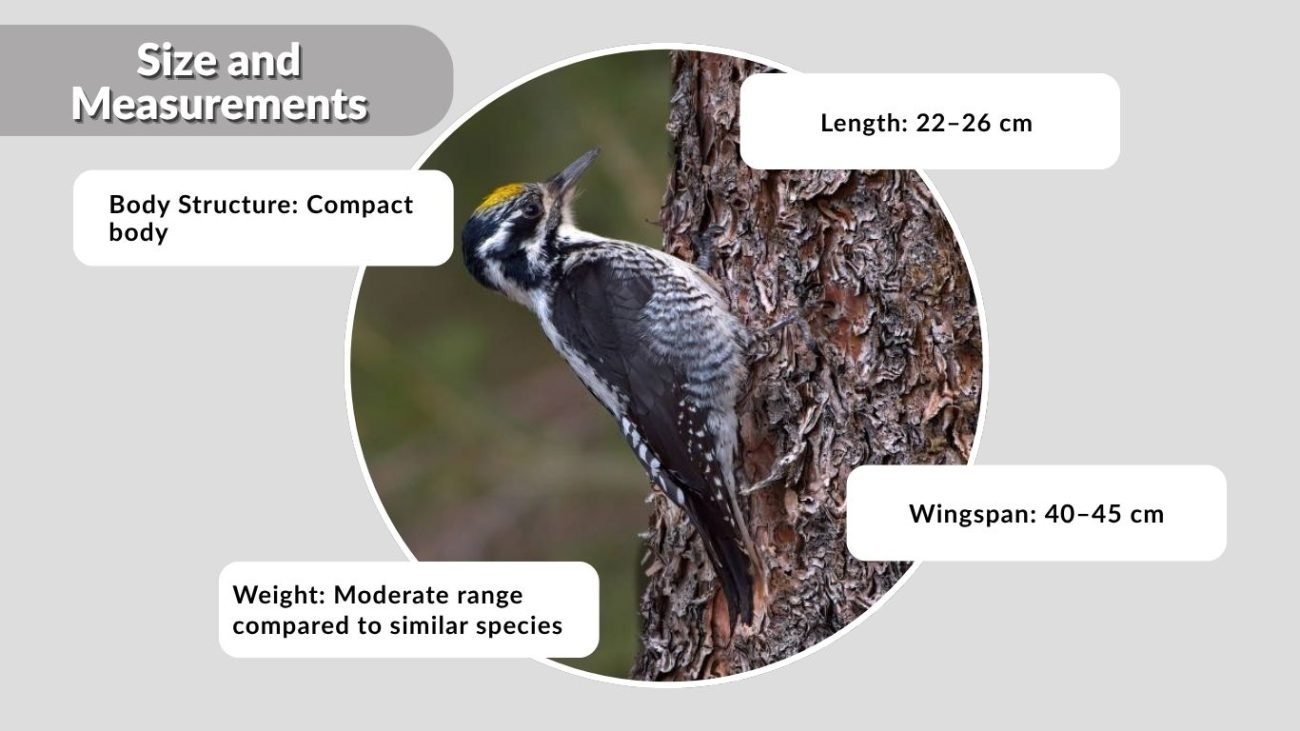
The Black-Backed Woodpecker is considered a medium-sized woodpecker, with proportions that support its powerful drilling behavior.
- Length: Approximately 22–26 cm from head to tail
- Wingspan: Around 40–45 cm
- Weight: Falls within a moderate range compared to similar species
- Body Structure: Compact body with strong neck muscles adapted for pecking
Habitat and Distribution
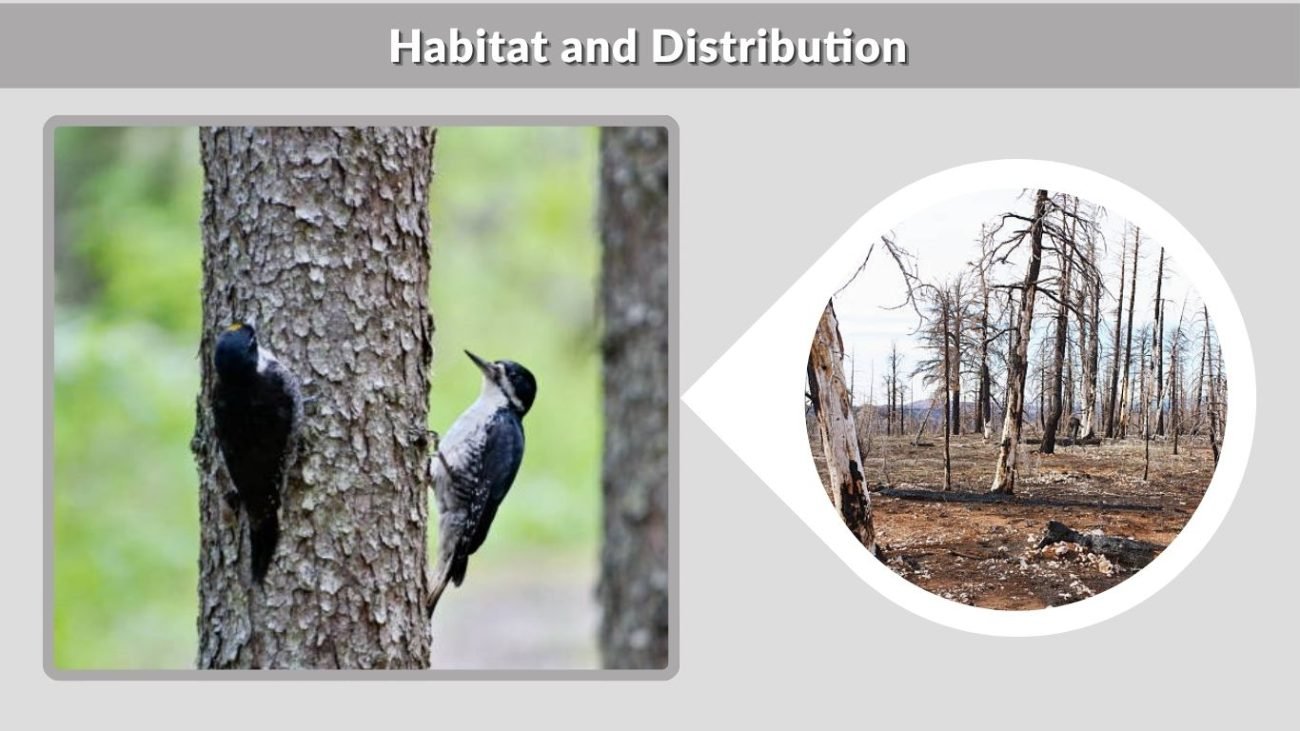
The Black-Backed Woodpecker has a specialized habitat preference that sets it apart from many other birds.
Geographic Range
This species is found across Canada and parts of the northern United States. Its range is closely tied to forested regions, particularly those affected by fire.
Preferred Habitat
It strongly prefers burned forests, especially areas with recently dead trees. These environments provide both food and nesting sites. It is also found in coniferous forests where suitable conditions exist, even without recent fires.
Range and Movement
The Black-Backed Woodpecker is mostly non-migratory, remaining within its range year-round. However, it may move locally depending on the availability of burned areas and food resources.
Behavior and Lifestyle
The behavior of the Black-Backed Woodpecker is closely linked to its environment and food sources.
Adaptation to Burned Forests
This species is uniquely adapted to post-fire landscapes. After a forest fire, dead trees attract wood-boring insects, which become a primary food source. The woodpecker quickly moves into these areas, taking advantage of the increased availability of prey.
Feeding Behavior
It spends much of its time on tree trunks, peeling away bark to expose insects hidden beneath. Its strong bill allows it to dig deeper than many other woodpeckers, making it highly efficient at locating food.
Territorial Nature
Black-Backed Woodpeckers are territorial, especially in areas with abundant food. They defend feeding and nesting sites from other birds to ensure access to resources.
Diet and Hunting Habits
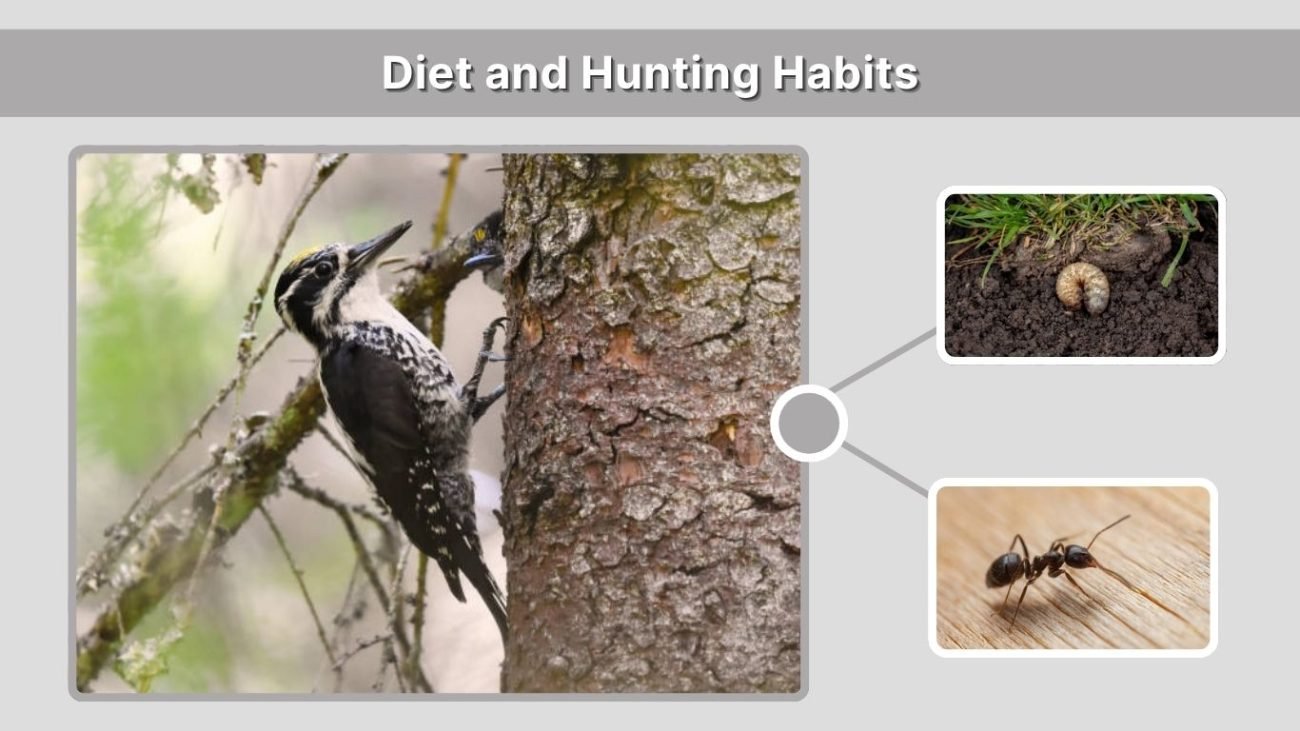
The diet of the Black-Backed Woodpecker is highly specialized, allowing it to thrive in environments where other birds may struggle.
- Primary Diet: Wood-boring beetle larvae found under the bark of dead trees
- Other Food Sources: Ants and various insects living within tree bark
- Hunting Technique: Peeling bark and drilling deeply into wood to reach hidden prey
- Specialization: Strong preference for insects in burned or recently dead trees
Breeding and Nesting
The breeding cycle of the Black-Backed Woodpecker is closely tied to the availability of suitable habitat, particularly areas with dead or burned trees.
Courtship Behavior
During the breeding season, males attract females through drumming and calls. These signals help establish territory and demonstrate strength. Drumming on tree trunks produces a loud, rhythmic sound that can travel over long distances.
Nesting Habits
Both males and females take part in excavating a nesting cavity, usually in a dead or fire-damaged tree. These trees are softer, making them easier to carve and safer for raising young. The nesting site is carefully chosen to provide protection from predators and harsh weather.
Egg Laying and Care
The female typically lays a clutch of eggs inside the cavity. Both parents share the responsibility of incubation and feeding the chicks after they hatch. The young remain in the nest until they are strong enough to leave, relying on their parents for food and protection during early development.
Lifecycle and Development
The lifecycle of the Black-Backed Woodpecker is closely connected to its environment, especially the availability of burned forests that provide both food and shelter.
- Incubation Period: Eggs typically hatch after about 12–14 days of incubation.
- Nestling Stage: Chicks remain in the nest for approximately 3–4 weeks, fully dependent on their parents.
- Fledging Stage: After leaving the nest, young birds begin to fly but continue to rely on parental feeding for a short time.
- Maturity: Juveniles develop adult plumage and reach breeding age within one year.
- Lifespan: In the wild, they can live several years depending on habitat conditions.
Black-Backed Woodpecker vs Other Woodpeckers
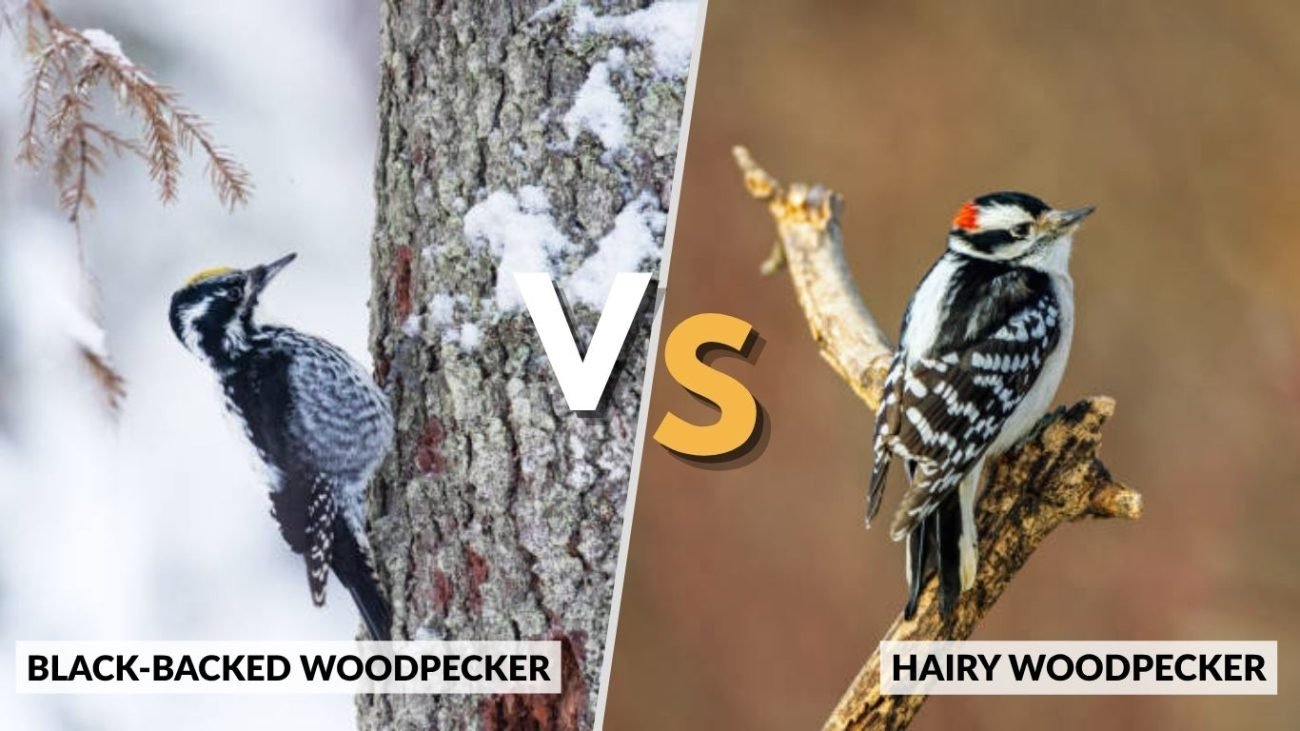
Understanding how this species compares to others helps with accurate identification in the field.
| Feature | Black-Backed Woodpecker | Hairy Woodpecker | Downy Woodpecker |
| Back Color | Solid black | Black & white | Black & white |
| Male Marking | Yellow crown | Red patch | Red patch |
| Habitat | Burned forests | Mature forests | Woodlands, parks |
| Feeding Style | Bark peeling | Drilling | Light pecking |
| Special Adaptation | Fire-adapted species | Generalist | Generalist |
Role in the Ecosystem
The Black-Backed Woodpecker plays a crucial role in forest ecosystems, particularly after wildfires. By feeding on wood-boring beetle larvae, it helps control insect populations that could otherwise damage recovering forests. This natural pest control supports the health and regeneration of trees.
Additionally, the cavities it creates for nesting are later used by other birds and small mammals. These secondary users depend on such spaces for shelter and breeding, making the woodpecker an important contributor to biodiversity in forest habitats.
Threats and Conservation
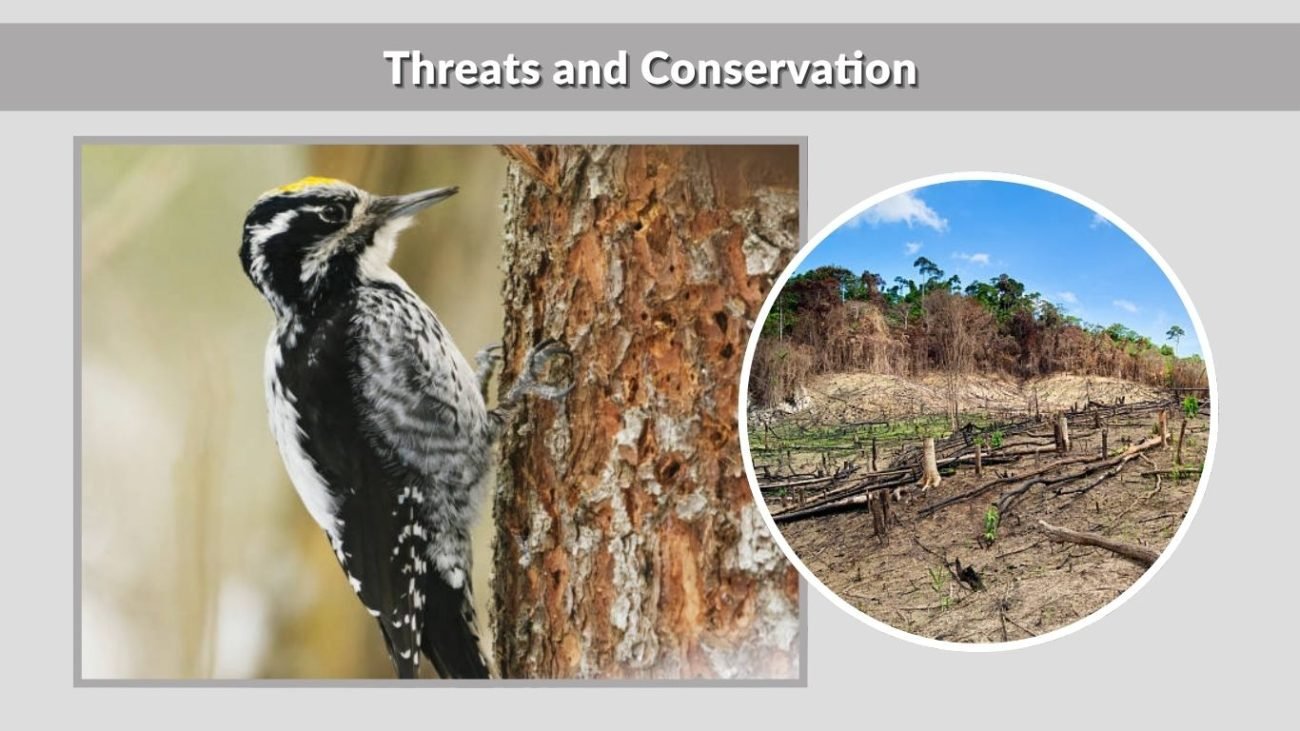
Despite its specialized adaptations, the Black-Backed Woodpecker faces several environmental challenges.
- Habitat Loss: Reduction of burned forest areas limits its preferred habitat
- Fire Suppression: Modern fire control practices reduce the number of natural post-fire environments
- Logging Practices: Removal of dead trees eliminates nesting and feeding sites
- Conservation Efforts: Protecting post-fire habitats and allowing natural forest cycles can support population stability
Interesting Facts
The Black-Backed Woodpecker has several fascinating traits that highlight its uniqueness among birds.
- One of the few bird species that depends heavily on burned forests
- Can locate insect larvae deep beneath tree bark
- Often arrives quickly in newly burned areas to take advantage of food sources
- Plays a vital role in forest recovery after wildfires
FAQs
What makes the Black-Backed Woodpecker unique?
It is highly specialized for living in burned forests, where it feeds on insects found in dead trees. Its solid black back and the yellow crown on males make it easy to distinguish from other woodpeckers.
Where can you find the Black-Backed Woodpecker?
This species is found mainly in Canada and the northern United States. It is most commonly seen in recently burned forests and coniferous woodland areas.
What does the Black-Backed Woodpecker eat?
Its primary food source is wood-boring beetle larvae found under the bark of dead trees. It also consumes ants and other insects living within tree trunks.
Why is it important for forest ecosystems?
It helps control insect populations and supports forest regeneration after fires. Its nesting cavities also provide shelter for other species, contributing to overall biodiversity.