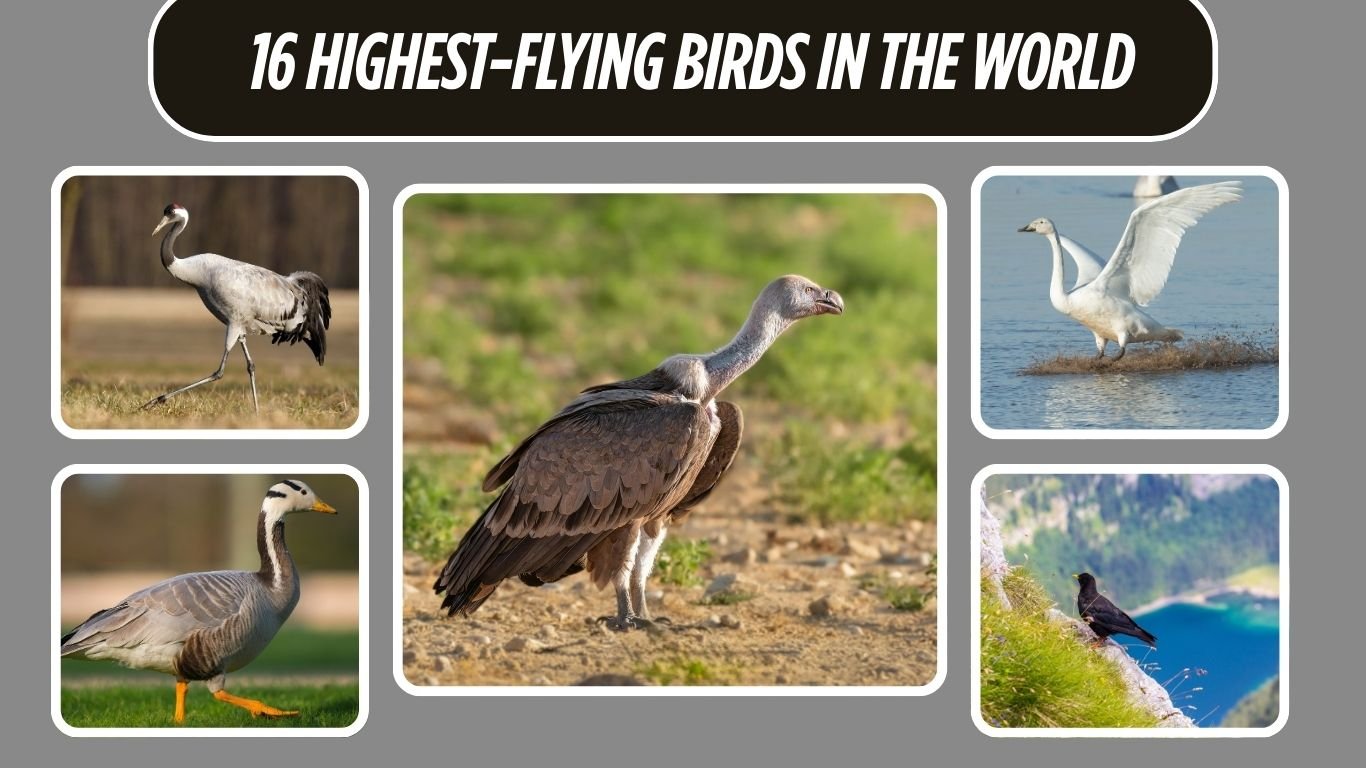
Some birds don’t just fly — they soar to unbelievable heights. From vultures gliding above mountain peaks to geese crossing the Himalayas, these high-flyers are built for extreme altitudes. With powerful lungs and wings made for endurance, they can glide where the air is thin and the view is endless. Here are 16 amazing birds that have reached the highest altitudes ever recorded.
1. Rüppell’s Griffon Vulture
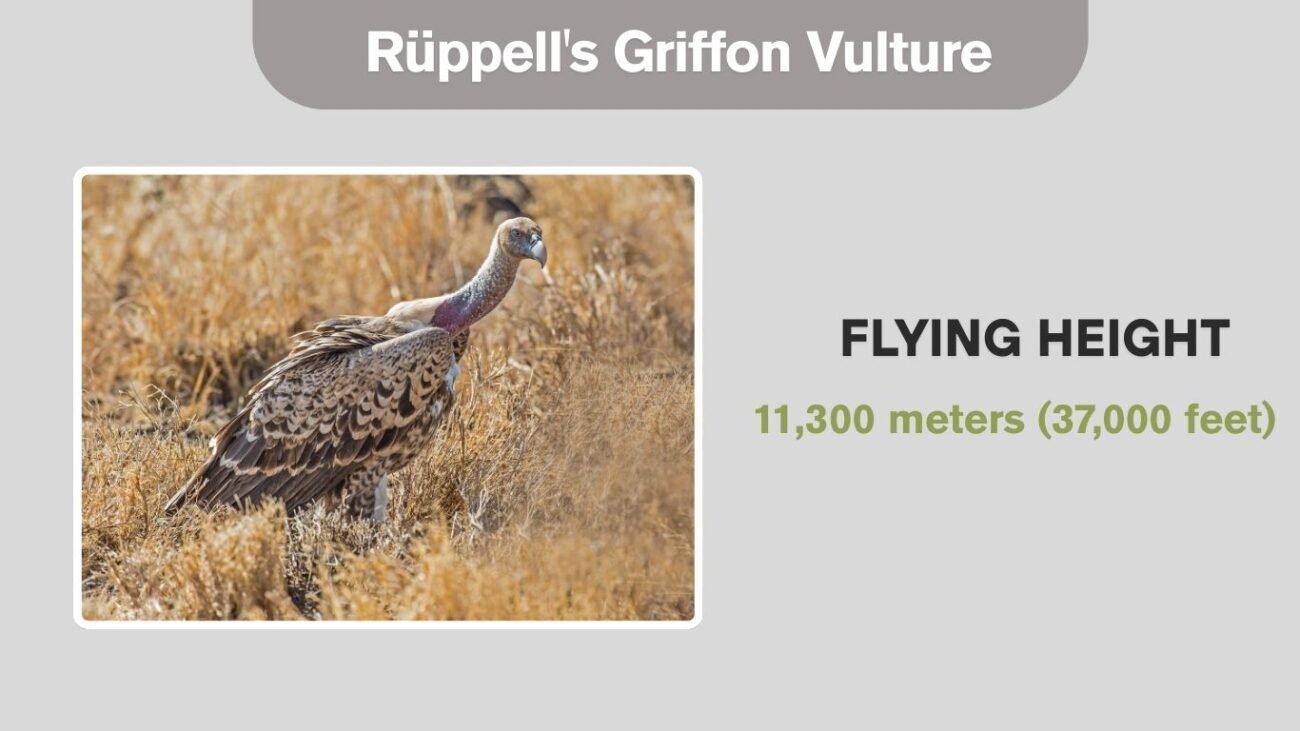
Rüppell’s Griffon Vulture holds the world record for the highest bird flight ever recorded. It once collided with a commercial aircraft at an altitude of 37,000 feet (11,278 meters) over West Africa.
Identification
- Wingspan: Up to 8.5 feet (2.6 meters)
- Body Length: About 1 meter
- Color: Brown body with pale head and neck ruff
- Beak: Hooked and strong for tearing flesh
- Habitat: Sahel region of central Africa
Why It Flies So High
This vulture rides powerful thermal updrafts while searching for carrion, allowing it to soar to extreme altitudes with minimal effort.
Special Adaptations
It has hemoglobin with an exceptionally high affinity for oxygen, helping it breathe even in thin air at high elevations.
Notable Record
Recognized by aviation authorities for reaching altitudes equivalent to a commercial jetliner — the highest known bird flight.
2. Common Crane

The Common Crane is a powerful long-distance flyer known for its high-altitude migration across mountains and continents.
Identification
- Wingspan: Up to 7.5 feet (2.3 meters)
- Body Length: Around 1.2 meters
- Color: Slate gray with black and white markings on the head and neck
- Beak: Long and pointed
- Habitat: Wetlands, meadows, and open landscapes across Europe and Asia
High-Altitude Flight
They can reach heights of 33,000 feet (10,000 meters) during migration, especially when crossing mountain ranges like the Himalayas.
Migratory Power
Their large wings and powerful muscles allow them to travel thousands of kilometers between breeding and wintering grounds.
Flight Formation
They often fly in V-shaped flocks, reducing air resistance and enabling higher, longer flights.
3. Bar-headed Goose
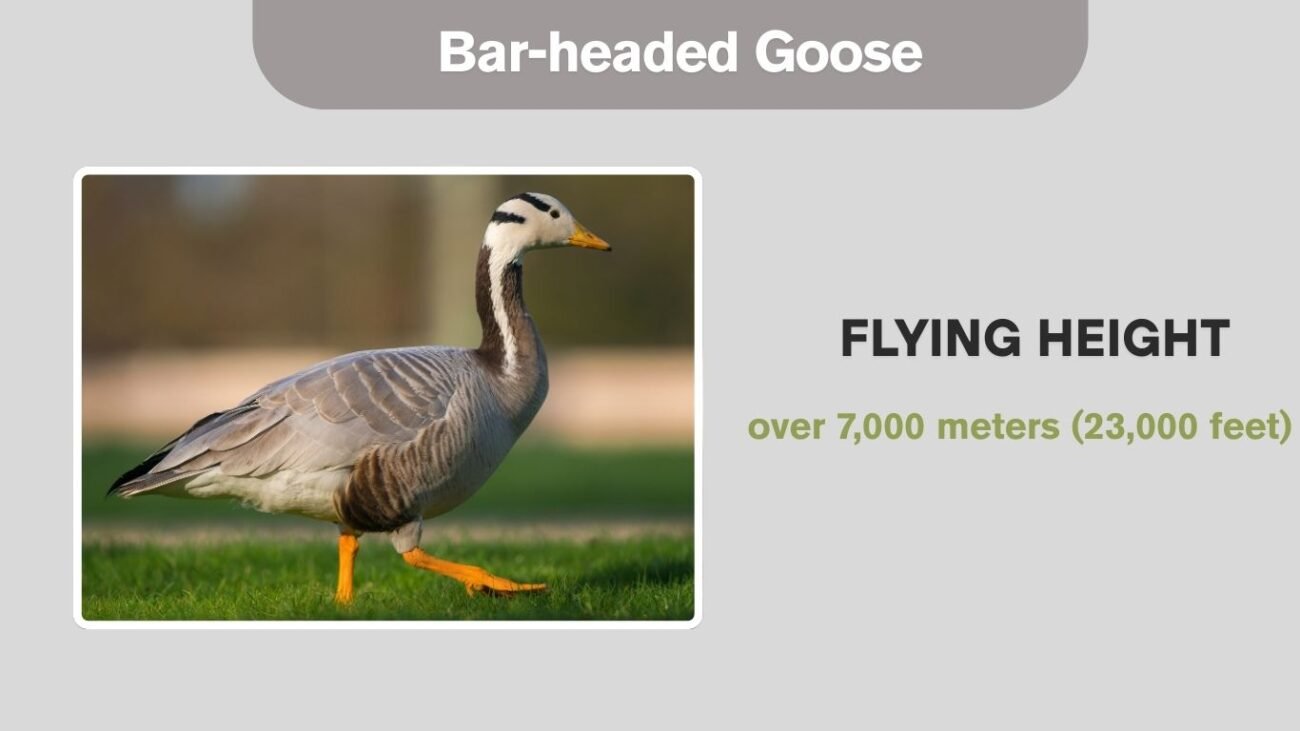
The Bar-headed Goose is famous for its ability to cross the Himalayas during migration — one of the most extreme and high-altitude flights in the bird world.
Identification
- Wingspan: Up to 5.9 feet (1.8 meters)
- Body Length: Around 0.7 to 0.8 meters
- Color: Light gray with two bold black bars on the head
- Beak: Orange-yellow, short and strong
- Habitat: Central Asia — lakes, wetlands, and high-altitude plateaus
High-Altitude Master
Bar-headed Geese regularly fly at 29,000 feet (8,800 meters) — nearly the same altitude as Mount Everest — while migrating between India and China.
Adaptations for Extreme Flight
They have larger lungs, more efficient hemoglobin, and strong hearts that allow oxygen delivery even in thin air.
Flight Behavior
They usually migrate at night or early morning to take advantage of colder, denser air for better lift.
4. Whooper Swan
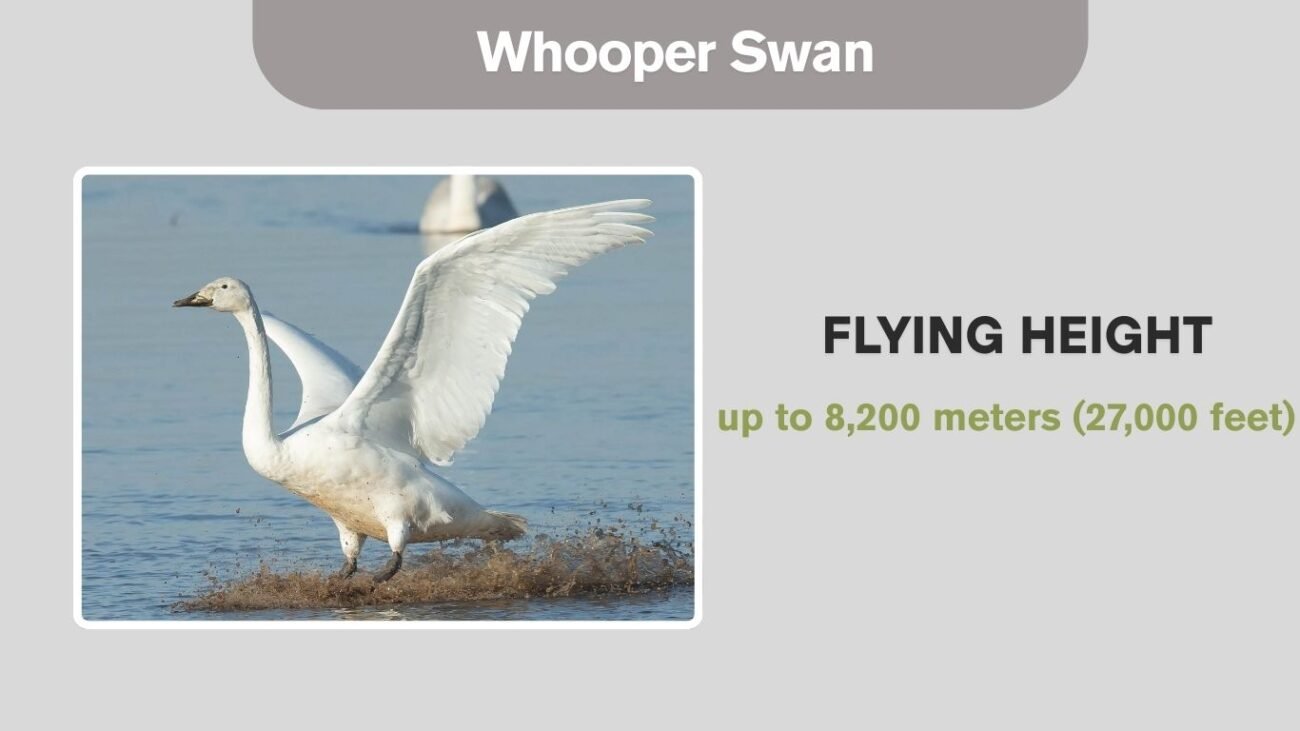
The Whooper Swan is not only elegant on water but also a powerful flier capable of reaching extreme altitudes during migration.
Identification
- Wingspan: Up to 9.2 feet (2.8 meters)
- Body Length: Around 1.4 to 1.6 meters
- Color: Pure white with a black and yellow bill
- Beak: Straight, bright yellow at the base
- Habitat: Northern Europe and Asia — tundras, wetlands, lakes
Altitude Capability
Known to fly as high as 27,000 feet (8,200 meters) while migrating between Arctic breeding grounds and more temperate wintering areas.
Energy-Efficient Flight
With slow, steady wingbeats, they conserve energy and maintain control even in high-altitude air currents.
Family-Based Migration
Often migrate in small family groups using strong thermal lift and instinctive navigation over long distances.
5. Alpine Chough
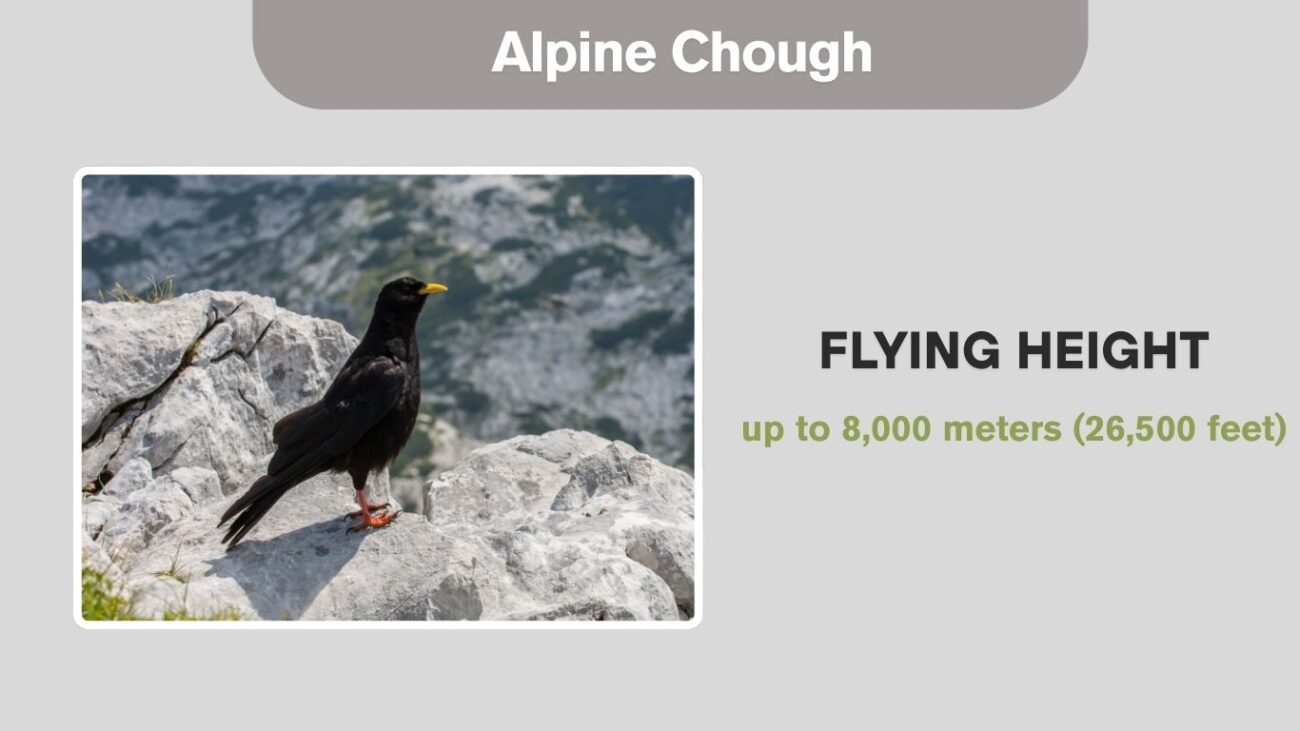
The Alpine Chough, also known as the Yellow-billed Chough, is a mountain-dwelling bird that thrives at altitudes where few others can survive — including areas close to the summit of Mount Everest.
Identification
- Wingspan: Around 2.8 feet (85 cm)
- Body Length: About 14–16 inches (36–41 cm)
- Color: Glossy black plumage
- Beak: Slender, bright yellow
- Habitat: High-altitude mountainous regions of Europe, North Africa, and Central Asia
Flight Altitude
These birds have been recorded flying at 26,500 feet (8,000 meters) in the Himalayas, making them one of the highest-flying passerines (perching birds).
Adaptation to Thin Air
Alpine Choughs have excellent lung function and hemoglobin efficiency, allowing them to remain active even in low-oxygen environments.
Behavior and Nesting
They often nest on cliff faces at high elevations and can be seen gliding gracefully along ridges, riding thermals and mountain winds.
6. Bearded Vulture
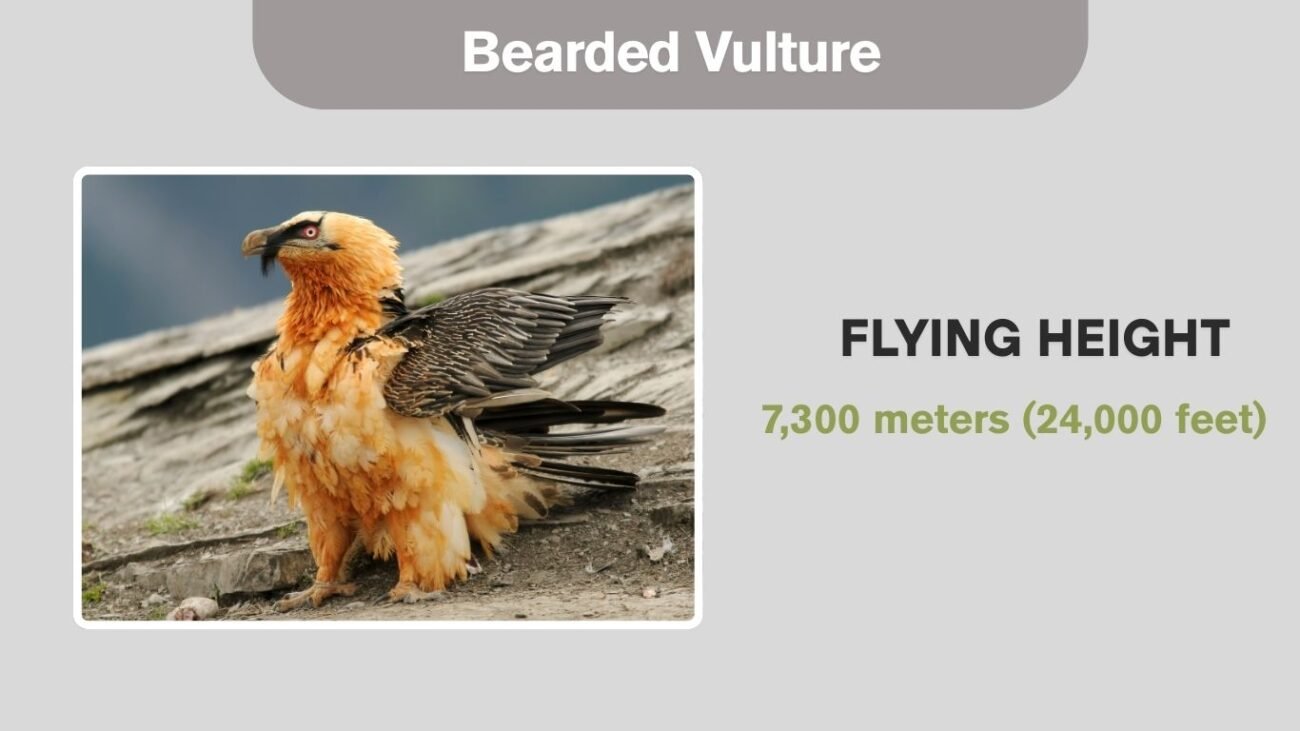
The Bearded Vulture, also known as the Lammergeier, is a stunning high-altitude specialist found across the mountainous regions of Europe, Asia, and Africa.
Identification
- Wingspan: Up to 9.3 feet (2.8 meters)
- Body Length: Around 0.9 to 1.2 meters
- Color: Rusty orange and white body with dark wings and facial markings
- Beak: Curved and strong, adapted for bone-cracking
- Habitat: High mountain ranges such as the Alps, Himalayas, and Ethiopian Highlands
Flight Altitude
They are known to soar up to 24,000 feet (7,300 meters) in mountainous regions while searching for bones and carcasses.
Unique Flight Behavior
Bearded Vultures use their wide wings to ride mountain thermals and are often seen hovering near cliffs, sometimes dropping bones to shatter them and access marrow.
Survival at Altitude
Their large wings and lightweight body structure give them the lift they need to stay aloft for hours in high elevations, often in rugged and snow-covered terrain.
7. Mallard
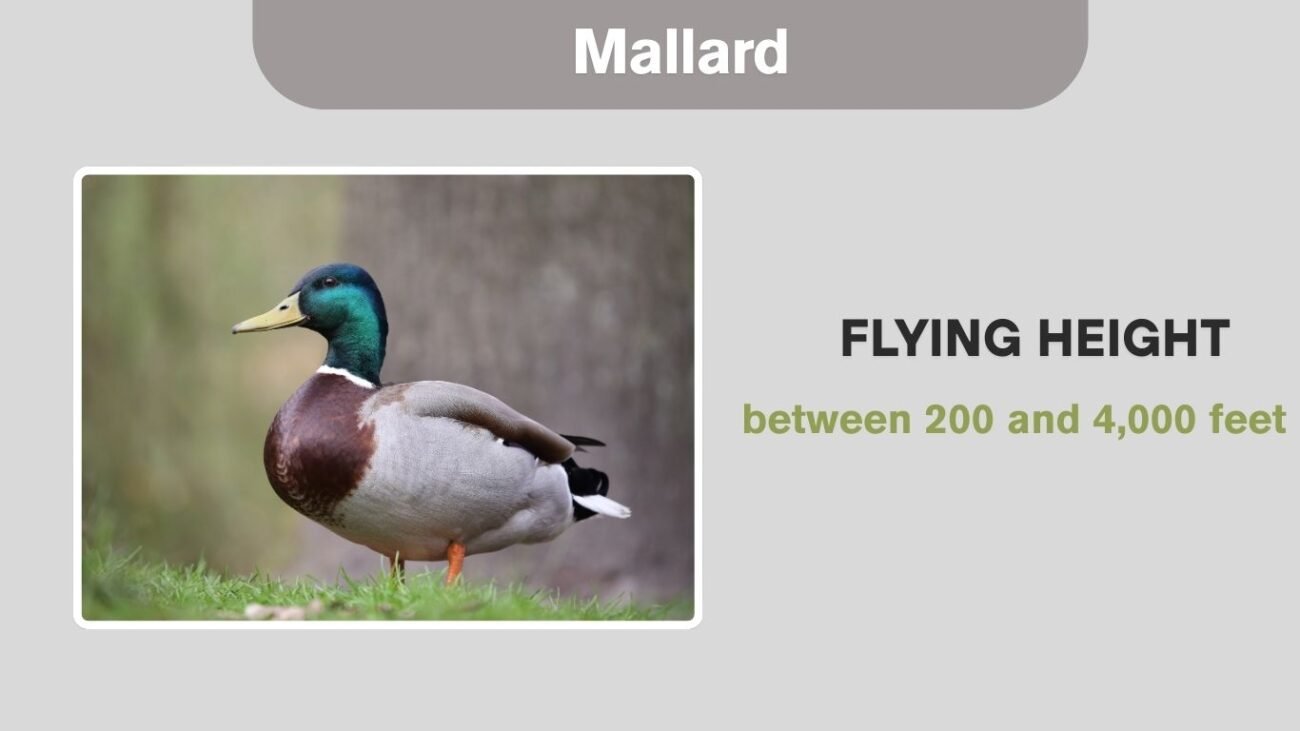
The Mallard might be a common duck, but it’s surprisingly capable of flying at high altitudes, especially during migration over mountainous regions.
Identification
- Wingspan: Around 3 feet (0.9 meters)
- Body Length: About 50–65 cm
- Color: Males have glossy green heads; females are mottled brown
- Beak: Yellow in males, orange-brown in females
- Habitat: Wetlands, lakes, rivers, ponds across Europe, Asia, and North America
High-Altitude Record
A Mallard has been recorded flying at 21,000 feet (6,400 meters) — likely during migration over the Himalayas.
Flight Capability
Mallards are strong migratory flyers. Though not specialized for extreme altitudes, their sturdy wings and powerful flight allow occasional high-elevation travel.
Seasonal Migration
They migrate long distances between breeding and wintering grounds, sometimes crossing major mountain ranges.
8. Andean Condor
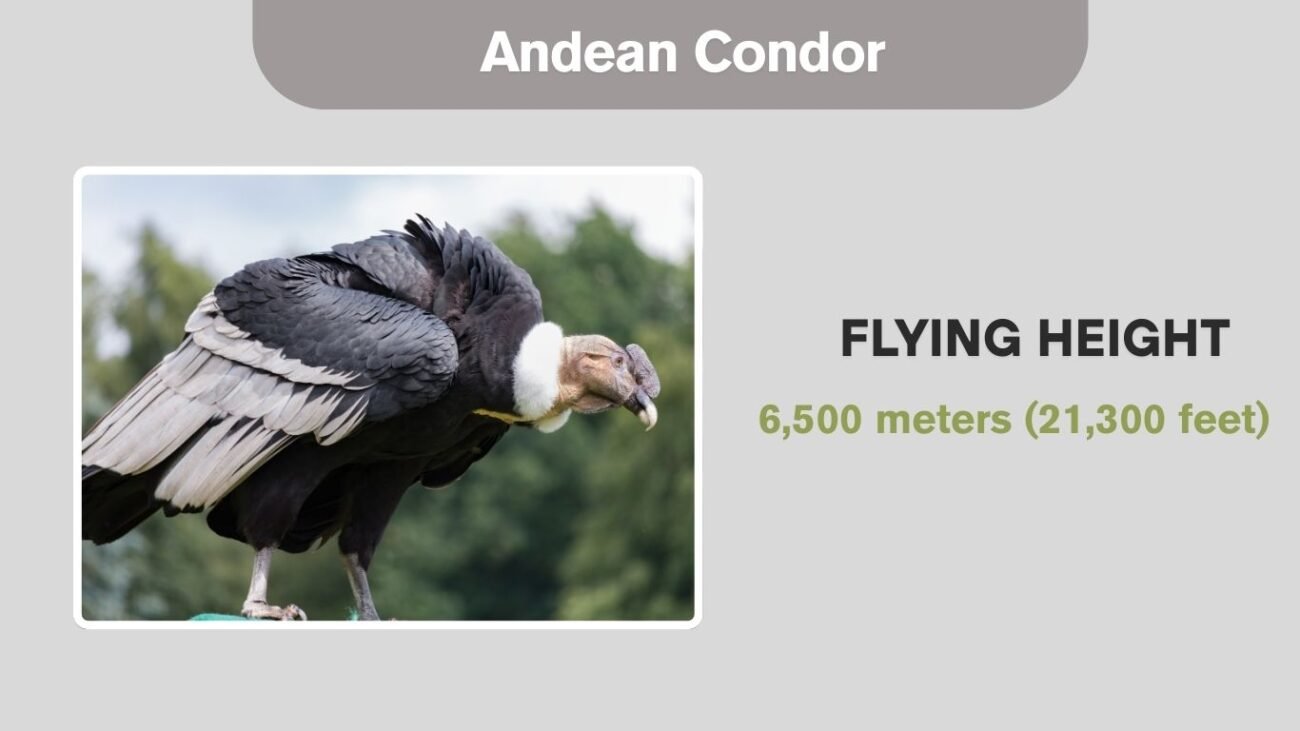
The Andean Condor is one of the world’s largest flying birds by wingspan and body size, perfectly suited for soaring in thin air over the Andes Mountains.
Identification
- Wingspan: Up to 10.5 feet (3.2 meters)
- Body Length: Around 1.2 meters
- Color: Black with white patches on wings and a white ruff around the neck
- Beak: Hooked, strong, ideal for tearing flesh
- Habitat: Andes Mountains and South American coasts
Altitude Range
They can soar up to 21,300 feet (6,500 meters) while scanning for carrion in mountainous terrain.
Soaring Efficiency
With their massive wings, they use thermals and ridge lifts to glide for hours without flapping, conserving energy in thin air.
Cultural Symbol
The Andean Condor is a national symbol in several South American countries, revered for its strength and altitude mastery.
9. White Stork
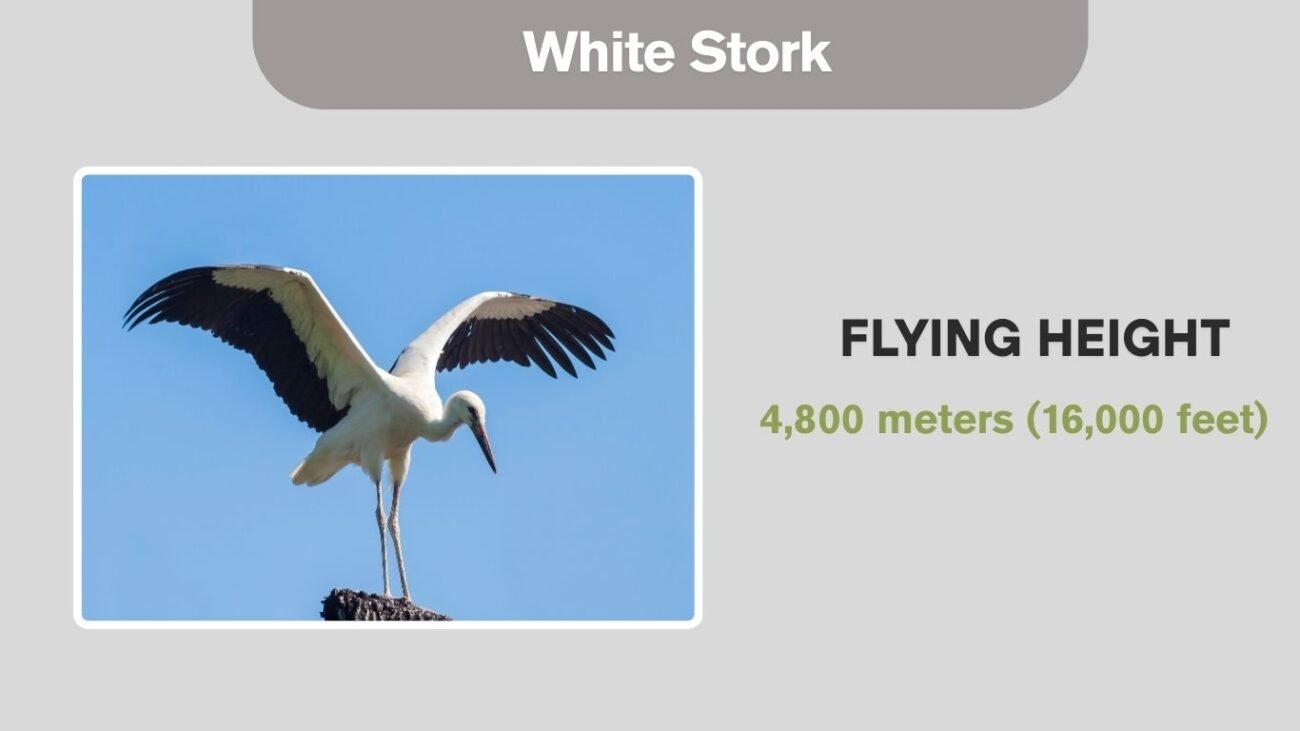
The White Stork is a graceful migratory bird best known for its long-distance flights between Europe and Africa. Though not typically associated with extreme heights like vultures or geese, it can reach considerable altitudes during migration, especially when using thermals over deserts and mountain ranges.
Identification
- Wingspan: Up to 7.5 feet (2.3 meters)
- Body Length: Around 1–1.15 meters
- Color: White body with black wing feathers
- Beak: Long, straight, and reddish-orange
- Habitat: Wetlands, meadows, fields, and rooftops across Europe, Asia, and Africa
Flight Altitude
White Storks have been recorded flying as high as 16,000 feet (4,900 meters), particularly while migrating over regions like the Himalayas and Sahara Desert.
Migration Strategy
They use thermal updrafts to soar in large flocks called “kettles,” reducing energy use over long distances. Unlike some birds that fly over open water, storks avoid large seas and instead follow land routes, taking advantage of rising warm air.
Navigation and Behavior
They are highly social in flight, often migrating in large groups, and their V-shaped formations help conserve energy. Their long-distance travel and ability to gain altitude make them one of the more capable high-flyers among wading birds.
10. Demoiselle Crane
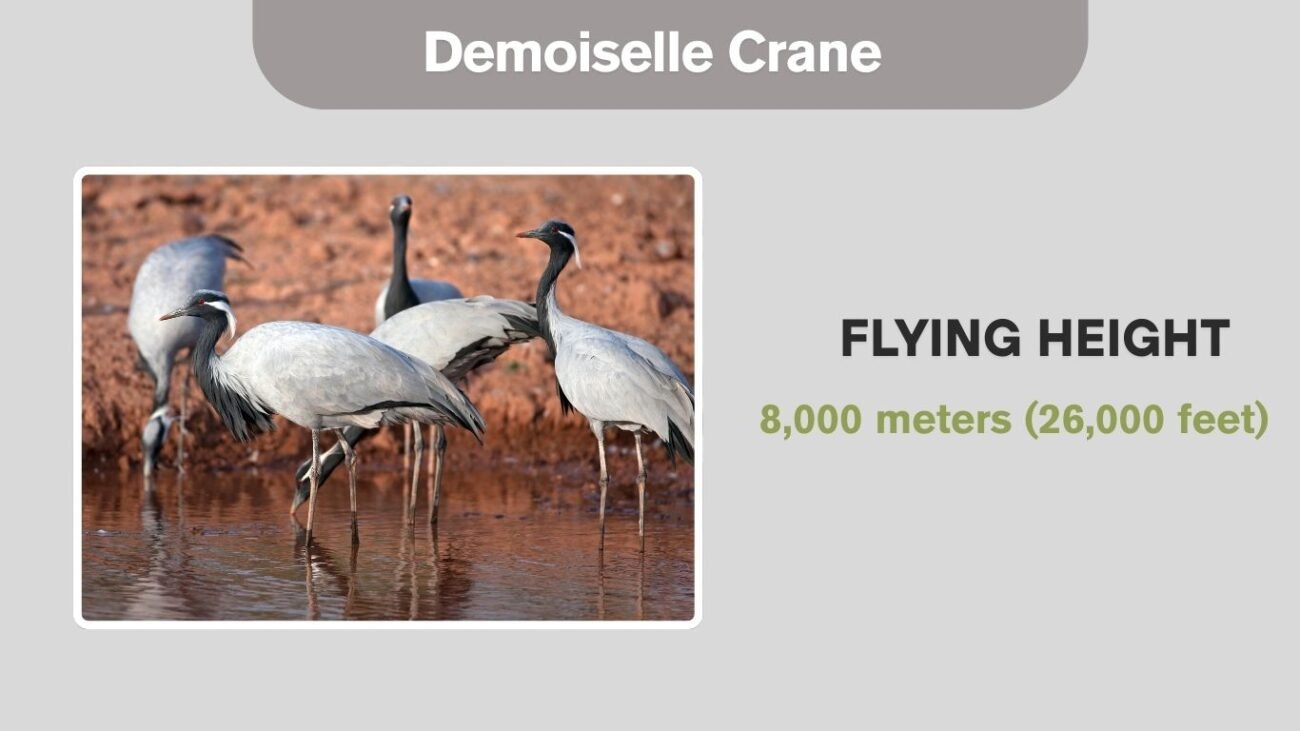
The Demoiselle Crane is a remarkably elegant bird that performs one of the most challenging migrations of any crane species, flying directly over the Himalayas to reach its wintering grounds. Despite its relatively light build, it can withstand high altitudes and freezing temperatures.
Identification
- Wingspan: Around 5.5 feet (1.7 meters)
- Body Length: About 85–100 cm
- Color: Bluish-grey body with white ear tufts and black chest plumes
- Beak: Short and straight, yellowish
- Habitat: Central Asia for breeding; migrates to India and Africa in winter
Flight Altitude
These cranes fly at altitudes of up to 26,000 feet (8,000 meters) during migration — among the highest for any bird species — often navigating the harsh terrain of the Himalayas.
Endurance and Coordination
They fly in tightly coordinated flocks, taking advantage of updrafts and favorable winds. Their slender bodies and long wings help minimize turbulence and energy expenditure.
Cultural Importance
In Indian culture, Demoiselle Cranes are revered and often fed by local communities during winter. Their epic high-altitude journey across continents adds to their legendary status in both biology and folklore.
11. Greylag Goose
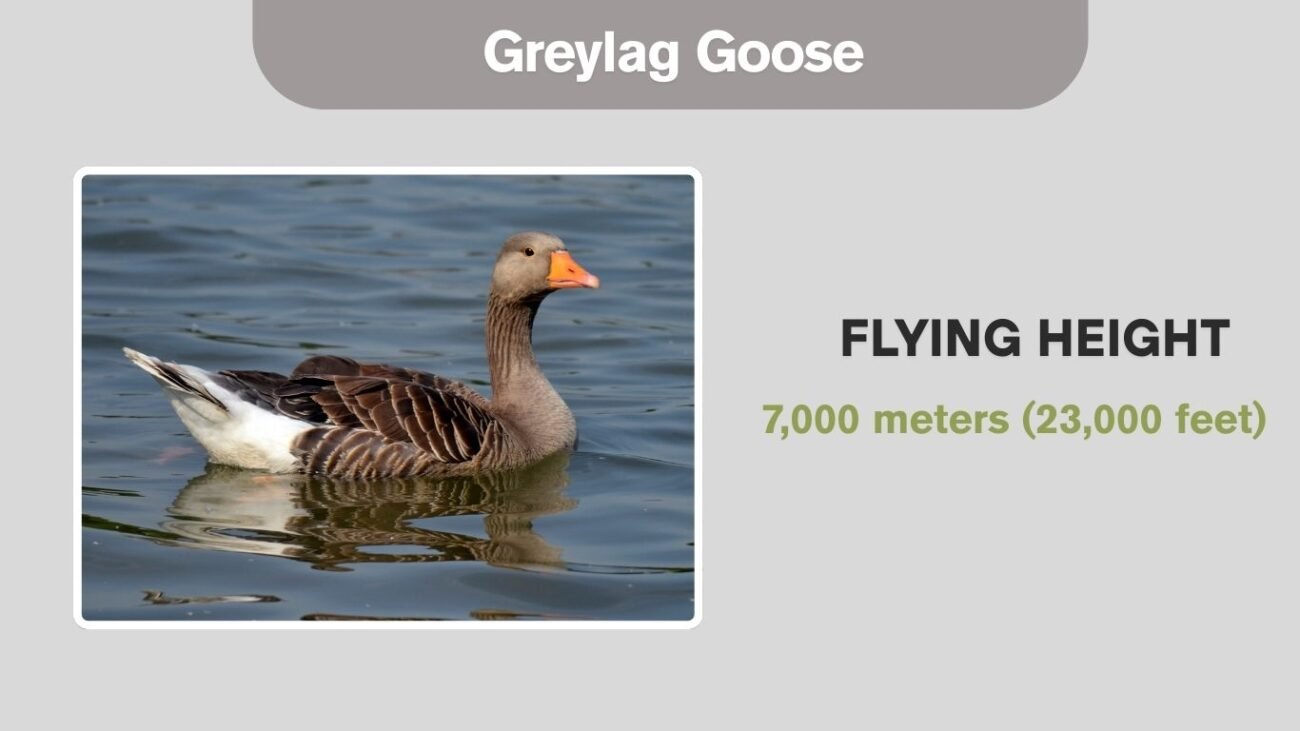
The Greylag Goose is a powerful flier and one of the ancestors of most domesticated geese. During migration, it’s capable of flying at very high altitudes, especially when crossing mountain ranges between breeding and wintering grounds.
Identification
- Wingspan: Up to 5.6 feet (1.7 meters)
- Body Length: About 75–90 cm
- Color: Grayish-brown body with paler underside and orange or pink beak
- Beak: Thick and straight
- Habitat: Wetlands, grasslands, and agricultural fields across Europe and Asia
Flight Altitude
Greylag Geese have been recorded flying as high as 29,000 feet (8,800 meters), often during migration over the Himalayas, although their average migration altitude is lower.
Migration and Strategy
They migrate in well-organized V-shaped flocks, taking advantage of the slipstream created by the lead bird to conserve energy. They fly long distances between their northern breeding areas and southern wintering sites in India, North Africa, and the Middle East.
Physical Adaptations
Their large lungs, high-capacity heart, and blood rich in oxygen-binding hemoglobin support high-altitude endurance. Their strong, steady wingbeats help them maintain flight even in thin, cold air.
12. Bald Eagle
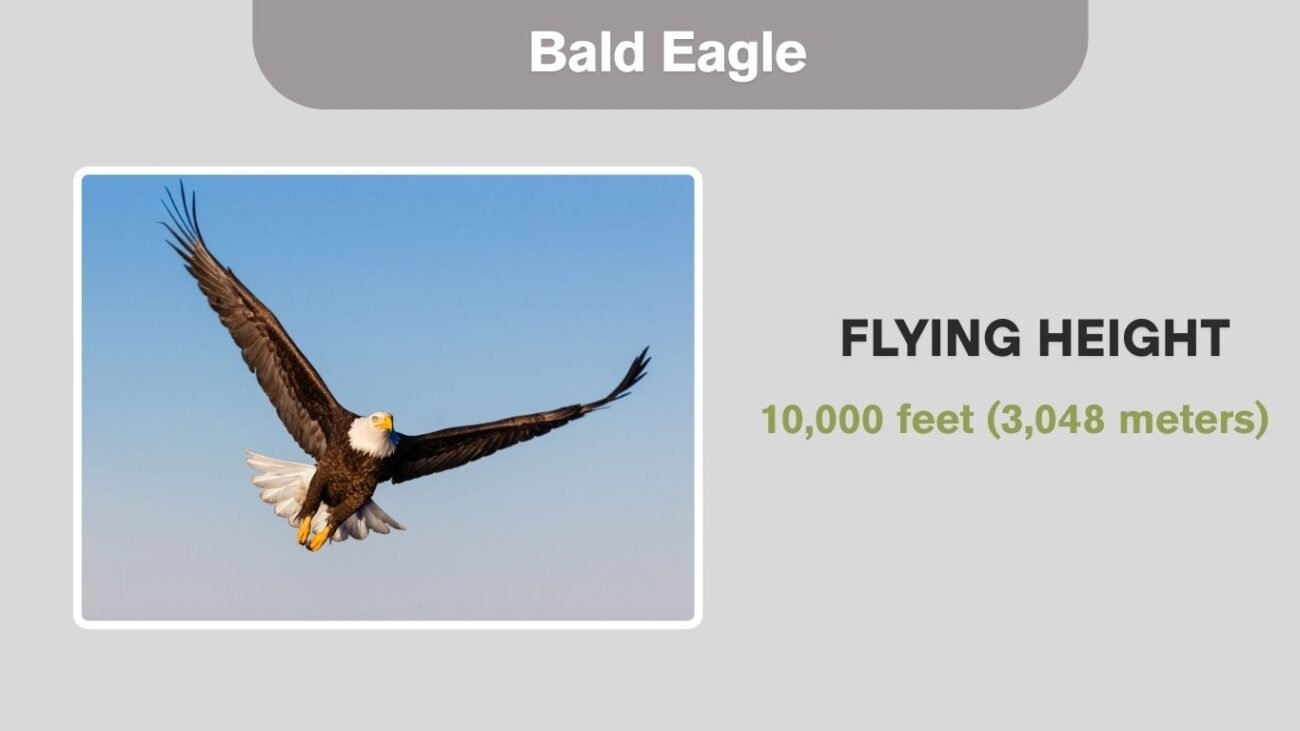
The Bald Eagle, a symbol of strength and freedom in North America, is not only known for its powerful build and sharp vision but also for its ability to soar at remarkable altitudes when gliding or hunting.
Identification
- Wingspan: Up to 8 feet (2.4 meters)
- Body Length: About 0.7 to 1 meter
- Color: Dark brown body with a white head and tail in adults
- Beak: Large, hooked, and bright yellow
- Habitat: Lakes, rivers, and coastal regions across North America
Flight Altitude
Bald Eagles can soar up to 10,000 feet (3,000 meters), especially when using thermals to survey large areas while hunting or migrating.
Soaring Behavior
They are skilled gliders, using rising air currents to stay aloft for extended periods without flapping. Their large wings and light bones allow for effortless cruising over open landscapes and bodies of water.
Hunting Advantage
From high elevations, Bald Eagles spot fish, waterfowl, and carrion with their exceptional eyesight. They dive with incredible speed and precision, aided by their high vantage points.
Symbolic Presence
As the national bird of the United States, their majestic high-altitude flights embody power, grace, and independence.
13. Eurasian Crane
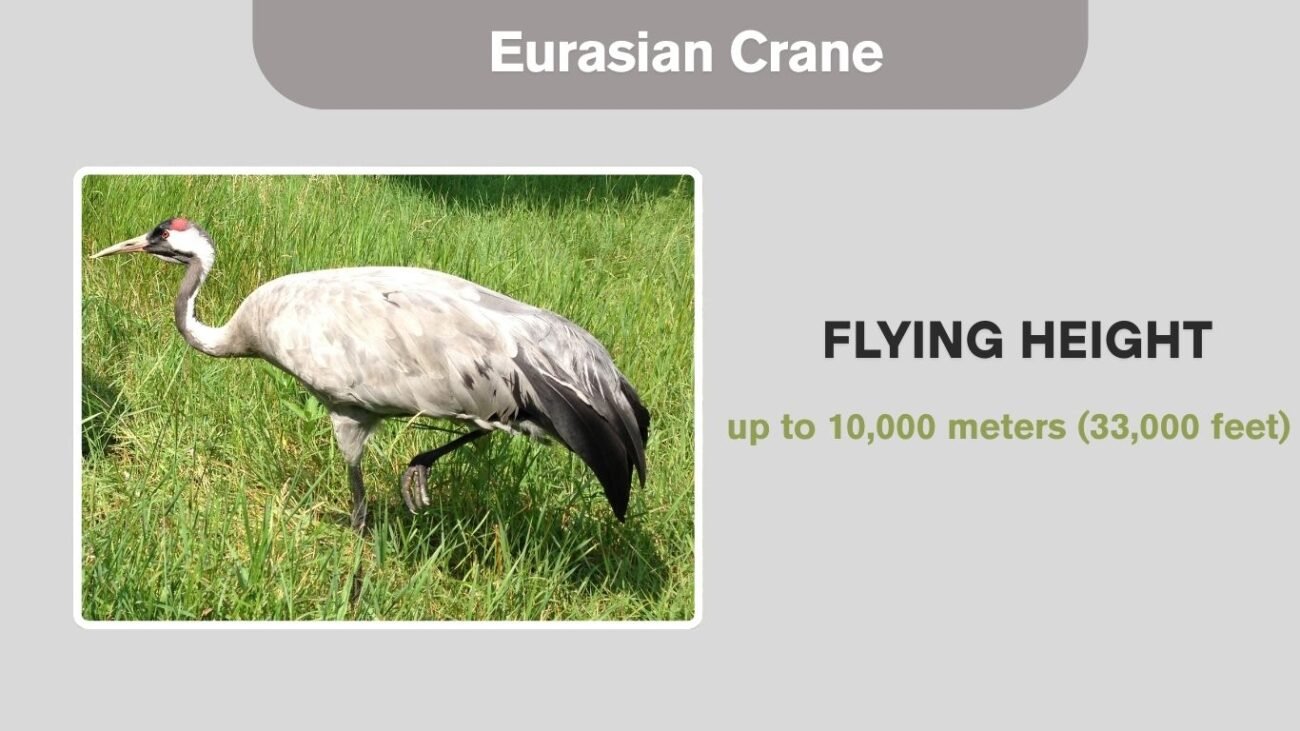
The Eurasian Crane is a graceful and powerful migratory bird that performs one of the longest and highest flights of any crane species. Known for their trumpeting calls and elegant posture, these cranes can reach impressive heights during their seasonal journeys.
Identification
- Wingspan: Up to 7.5 feet (2.3 meters)
- Body Length: About 1.0 to 1.3 meters
- Color: Slate gray body with black wingtips and red crown
- Beak: Long, pointed, and straight
- Habitat: Wetlands, marshes, and grasslands across northern Europe and Asia
Flight Altitude
Eurasian Cranes can fly at altitudes of 26,000 feet (8,000 meters) during migration, particularly when crossing mountain ranges or navigating turbulent weather systems.
Migration Behavior
They migrate in large, noisy flocks, often flying in V-shaped formations. This not only aids in energy conservation but also helps them stay oriented during long journeys across continents.
Altitude Adaptations
With strong flight muscles, deep lungs, and the ability to thermoregulate in cold, thin air, they can sustain high-altitude travel during multi-day migrations.
14. Himalayan Vulture
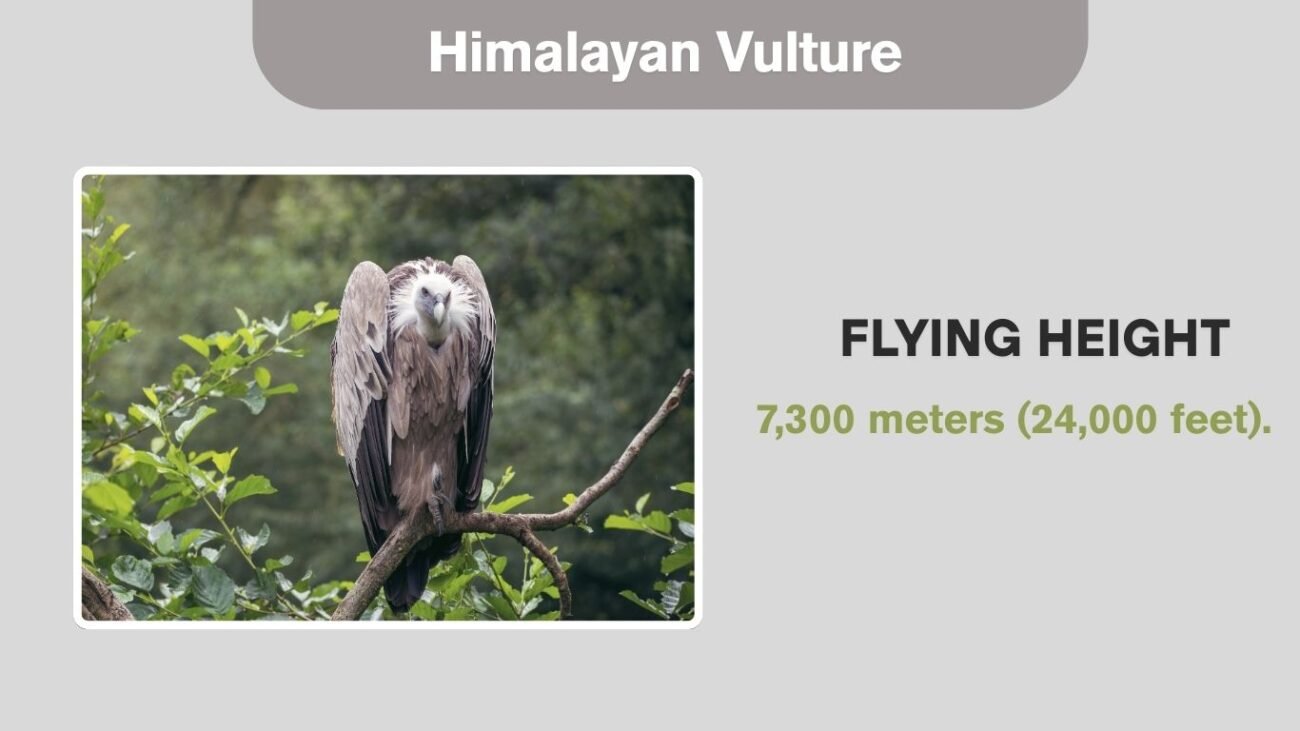
The Himalayan Vulture, also called the Himalayan Griffon, is one of the highest-flying birds on Earth, perfectly adapted to the harsh conditions of the world’s tallest mountain range.
Identification
- Wingspan: Up to 10 feet (3.05 meters)
- Body Length: Around 1.1 to 1.2 meters
- Color: Pale brown body with darker flight feathers and a bald head
- Beak: Strong, hooked, and ideal for scavenging
- Habitat: Himalayan highlands, Tibetan Plateau, and surrounding areas
Flight Altitude
This vulture has been recorded flying as high as 24,000 feet (7,300 meters) — well above the cloud line — while scanning for carcasses along high mountain trails.
Soaring Power
It relies on powerful thermals and ridge updrafts to stay aloft for hours with minimal effort. Its massive wings and light skeleton are optimized for gliding in thin air.
Scavenging at Altitude
Himalayan Vultures feed on the remains of animals and are crucial to mountain ecosystems where few scavengers can survive. Their ability to fly and feed at such heights gives them a unique ecological role.
15. Canada Goose
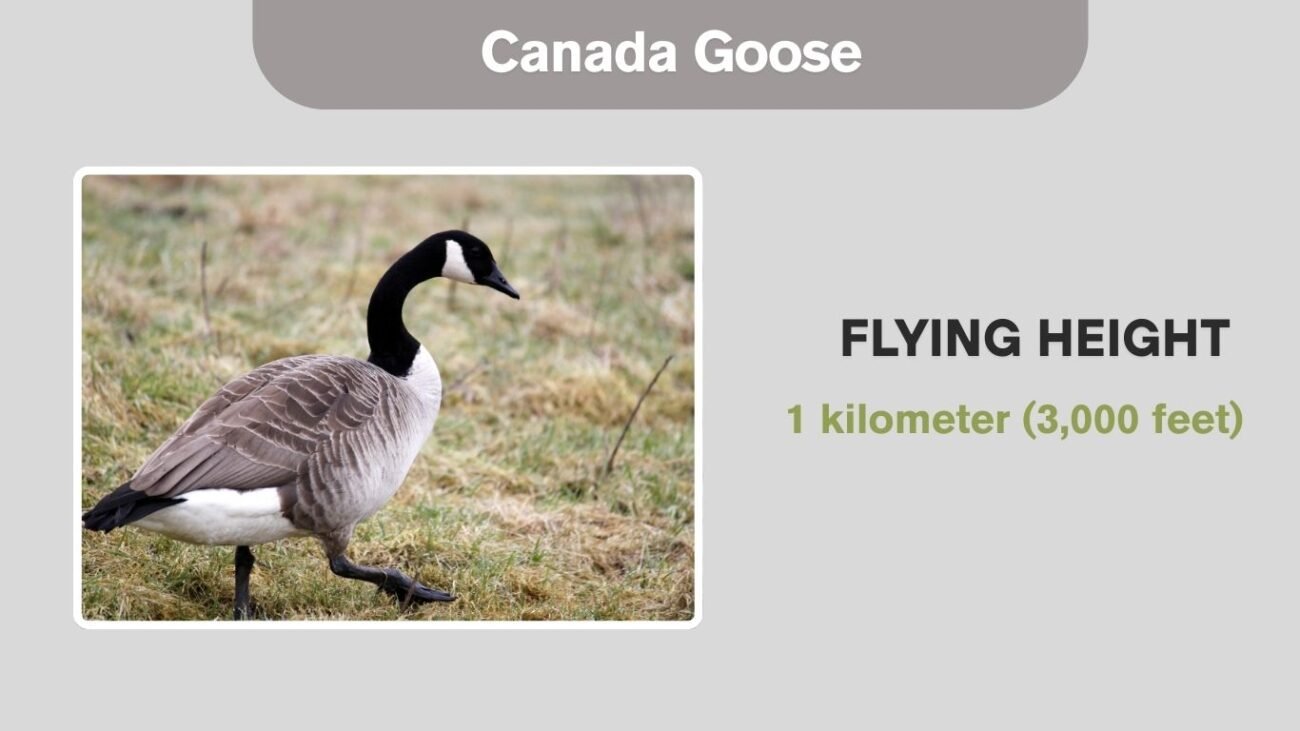
The Canada Goose is a familiar sight across North America, recognized for its distinctive honking call and graceful V-formation flights. While they are common, they are also powerful high-altitude migrants.
Identification
- Wingspan: Up to 6 feet (1.8 meters)
- Body Length: About 0.75 to 1 meter
- Color: Brown body with black neck and head, and white cheek patches
- Beak: Short, black, and slightly pointed
- Habitat: Lakes, rivers, wetlands, and open fields across North America
Flight Altitude
Canada Geese have been recorded flying as high as 29,000 feet (8,800 meters) during migration, especially when crossing mountain ranges like the Rockies.
Migration and Navigation
They migrate in large flocks, flying in V-shaped formations to reduce wind resistance. Their teamwork and vocal communication help them maintain order during long flights.
Physical Endurance
Their muscular build, large lungs, and excellent oxygen uptake allow them to thrive at high elevations. This makes them one of the most resilient migratory species in North America.
16. Black Kite
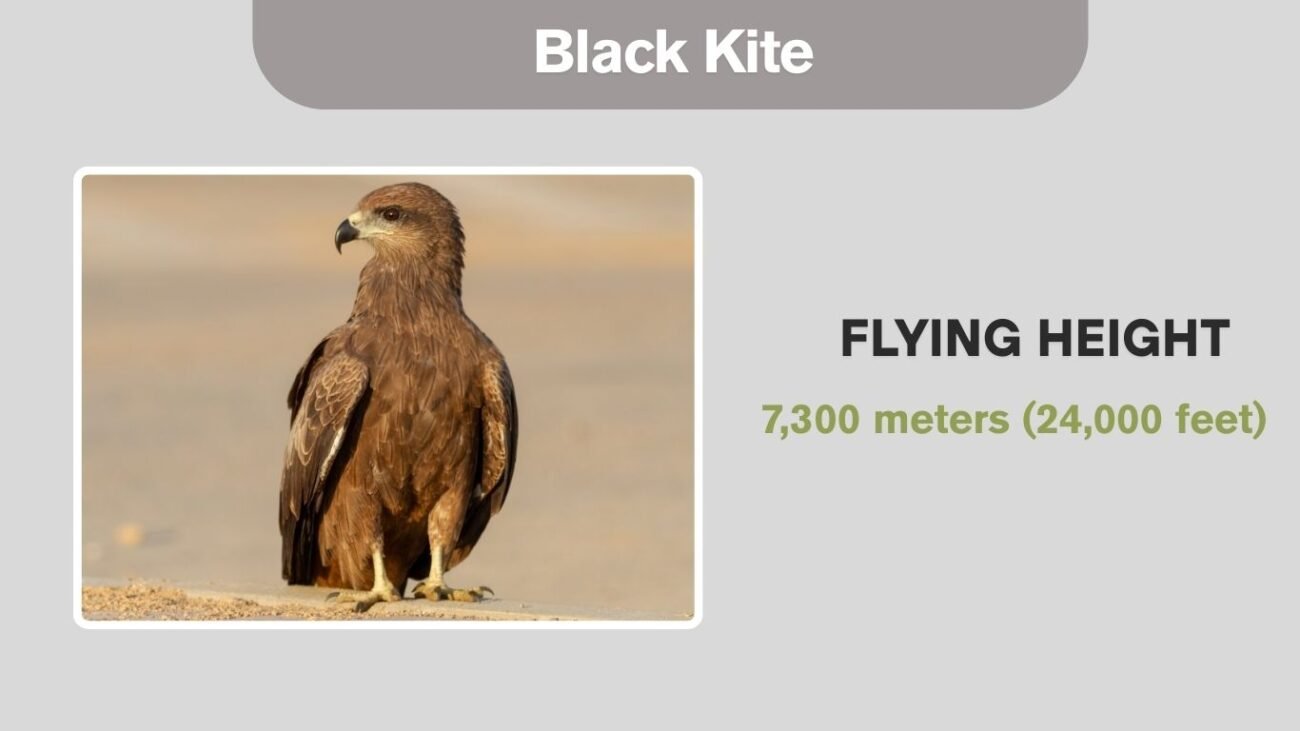
The Black Kite is a widely distributed raptor found across Europe, Asia, Africa, and Australia. Known for its forked tail and agile flight, it’s a bird that frequently soars to impressive heights in search of food or during migration.
Identification
- Wingspan: Around 5.5 feet (1.7 meters)
- Body Length: About 50–66 cm
- Color: Dark brown body with lighter head and underparts
- Beak: Hooked, dark-colored, built for tearing flesh
- Habitat: Varied — including forests, savannas, wetlands, and even urban areas
Flight Altitude
Black Kites have been observed soaring at altitudes of 13,000–16,000 feet (4,000–5,000 meters), especially during migration or while gliding over mountainous terrain.
Soaring Ability
They make excellent use of thermals and wind currents, allowing them to stay aloft for hours with minimal wing movement.
Versatile Lifestyle
Highly adaptable, Black Kites scavenge near human settlements, hunt small animals, and migrate over long distances — often traveling across continents at high altitudes.