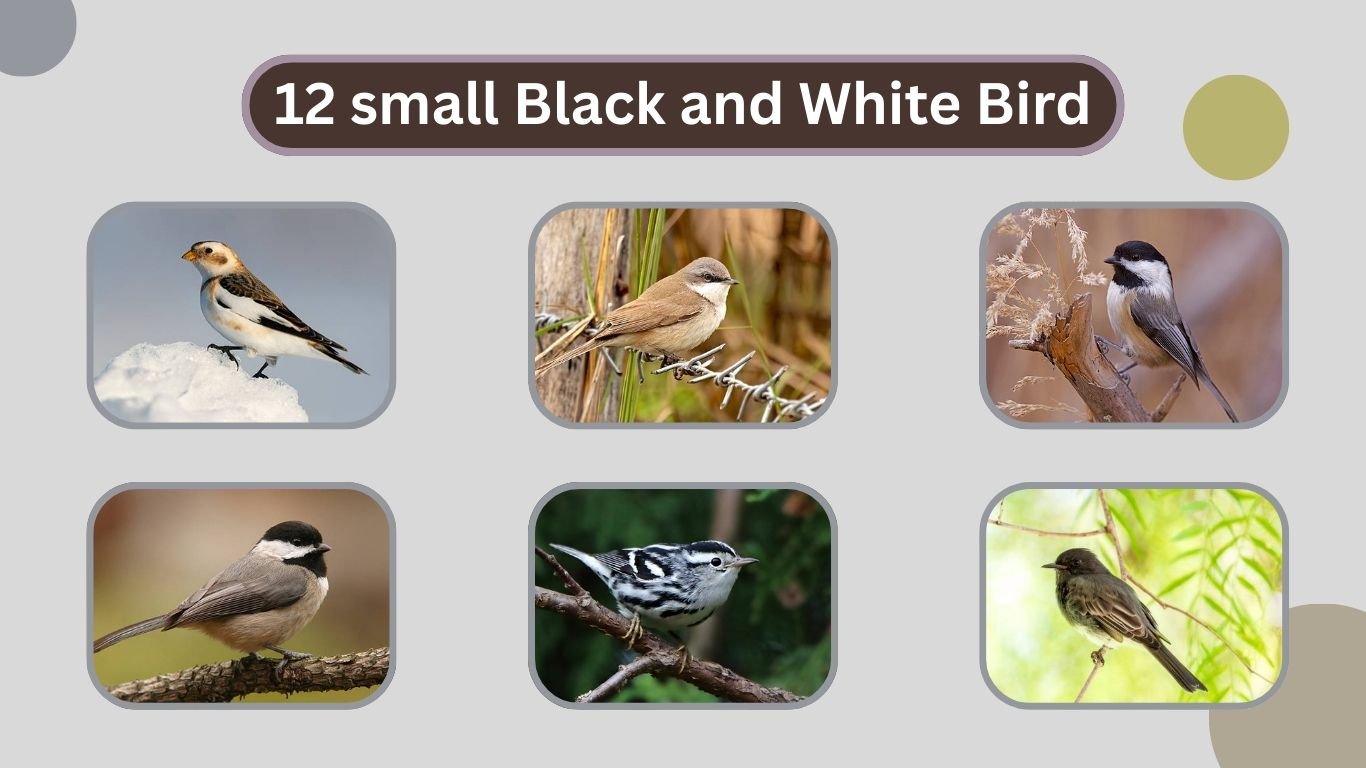
Black and white birds may seem simply colored, but their crisp contrast makes them some of the most striking and easy-to-recognize species in the avian world. From tiny, energetic songbirds to agile insect hunters, these monochrome beauties inhabit a wide range of habitats worldwide. This guide introduces 12 fascinating small black and white birds, covering their unique identification traits, habitats, behaviors, and calls so you can spot and enjoy them in the wild.
1. Black-capped Chickadee
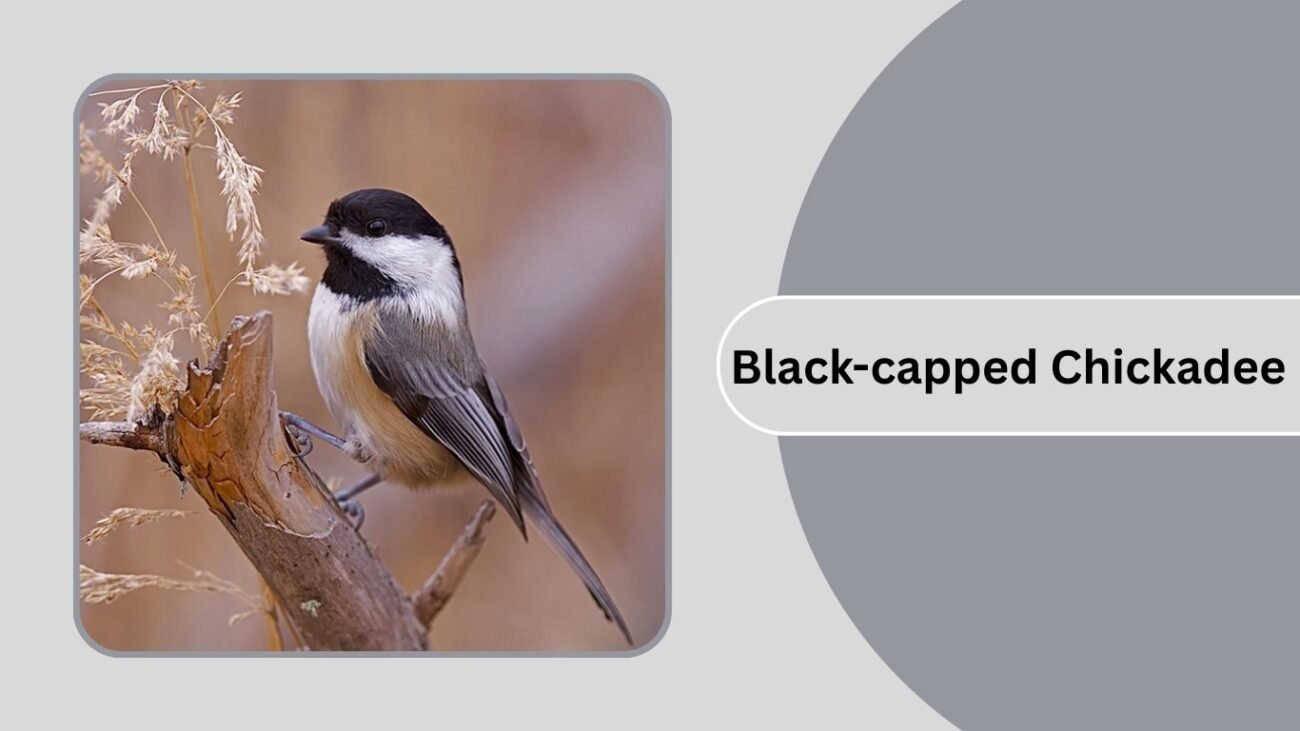
The Black-capped Chickadee (Poecile atricapillus) is a small, lively songbird well-known for its distinctive “chick-a-dee-dee-dee” call and bold, curious behavior. Common in forests, parks, and backyards across much of North America, this bird is a year-round resident that often visits feeders and can become surprisingly tame around humans.
Identification
- Size: 12–15 cm (4.7–5.9 in) in length
- Head: Black cap and bib with bright white cheeks
- Body: Soft gray back and wings, whitish underparts with buff flanks
- Bill: Short, black, and pointed
- Tail: Long, narrow, and rounded at the tip
- Eyes: Dark, blending with the black cap
Habitat & Distribution
Black-capped Chickadees are found in mixed and deciduous forests, woodlots, suburban areas, and parks across the northern United States and much of Canada. They remain in their range year-round, even enduring harsh winter conditions.
Behavior & Diet
They are active, acrobatic foragers, often hanging upside-down to glean insects, spiders, and seeds from twigs and branches. In winter, they frequently visit feeders for sunflower seeds, suet, and peanuts. Known for their food caching behavior, they hide seeds to eat later.
Vocalizations
Their well-known call is a clear “chick-a-dee-dee-dee,” used for communication and alarm, with more “dee” notes indicating greater threat. Their song is a clear, whistled “fee-bee” or “hey-sweetie” often heard in spring.
2. Downy Woodpecker

The Downy Woodpecker (Dryobates pubescens) is the smallest woodpecker in North America and a familiar visitor to backyards, parks, and woodlands. Despite its small size, it is a hardy year-round resident known for its energetic tapping and acrobatic foraging among tree branches.
Identification
- Size: 14–17 cm (5.5–6.7 in) in length
- Male: Black and white plumage with a small red patch on the back of the head
- Female: Similar to male but lacks the red patch
- Body: White underparts, black wings with white spots, black-and-white striped head
- Bill: Short and chisel-shaped, proportionally smaller than other woodpeckers
- Tail: Black with white outer feathers
Habitat & Distribution
Found across most of North America, Downy Woodpeckers live in deciduous forests, mixed woodlands, orchards, parks, and suburban backyards. They are non-migratory and remain in their territories year-round.
Behavior & Diet
Feeds on insects such as beetle larvae, ants, and caterpillars, often gleaning from bark or drilling into wood. Also eats seeds, berries, and suet from feeders. Known to join mixed-species foraging flocks in winter for added protection and feeding opportunities.
Vocalizations
Their calls include a sharp “pik” note and a short, descending whinny. Drumming on trees and branches is used to communicate territory and attract mates.
3. White-breasted Nuthatch
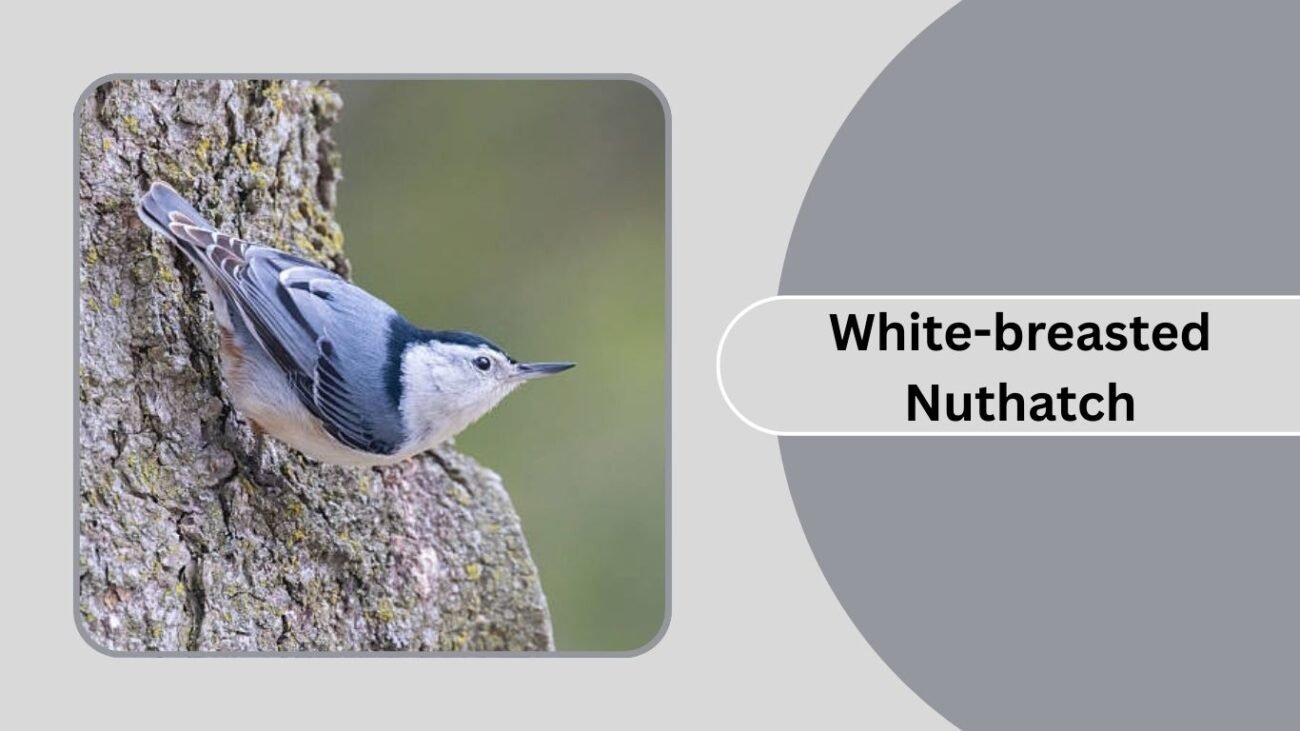
The White-breasted Nuthatch (Sitta carolinensis) is a compact, agile songbird known for its habit of creeping headfirst down tree trunks in search of food. With its bold black, white, and gray plumage, it is a familiar visitor to backyard feeders and woodlands year-round.
Identification
- Size: 13–15 cm (5.1–5.9 in) in length
- Head: Black cap and nape contrasting with white face and underparts
- Body: Blue-gray back and wings, white belly with rusty wash on flanks
- Bill: Straight, slender, and slightly upturned; dark in color
- Tail: Short with black and white patterning
- Wings: Blue-gray with darker flight feathers
Habitat & Distribution
Common throughout North America, the White-breasted Nuthatch inhabits deciduous and mixed forests, as well as parks and suburban areas with mature trees. It remains in its territory year-round, even during harsh winters.
Behavior & Diet
Feeds mainly on insects, seeds, and nuts, often wedging seeds into bark crevices and hammering them open. Famous for its ability to forage upside-down, it searches bark, branches, and trunks with acrobatic ease. Frequently visits feeders for sunflower seeds, suet, and peanuts.
Vocalizations
The call is a loud, nasal “yank-yank” or “hank-hank,” often repeated several times. Its song is a series of slower, more deliberate notes, used primarily during breeding season to establish territory.
4. Black-and-white Warbler
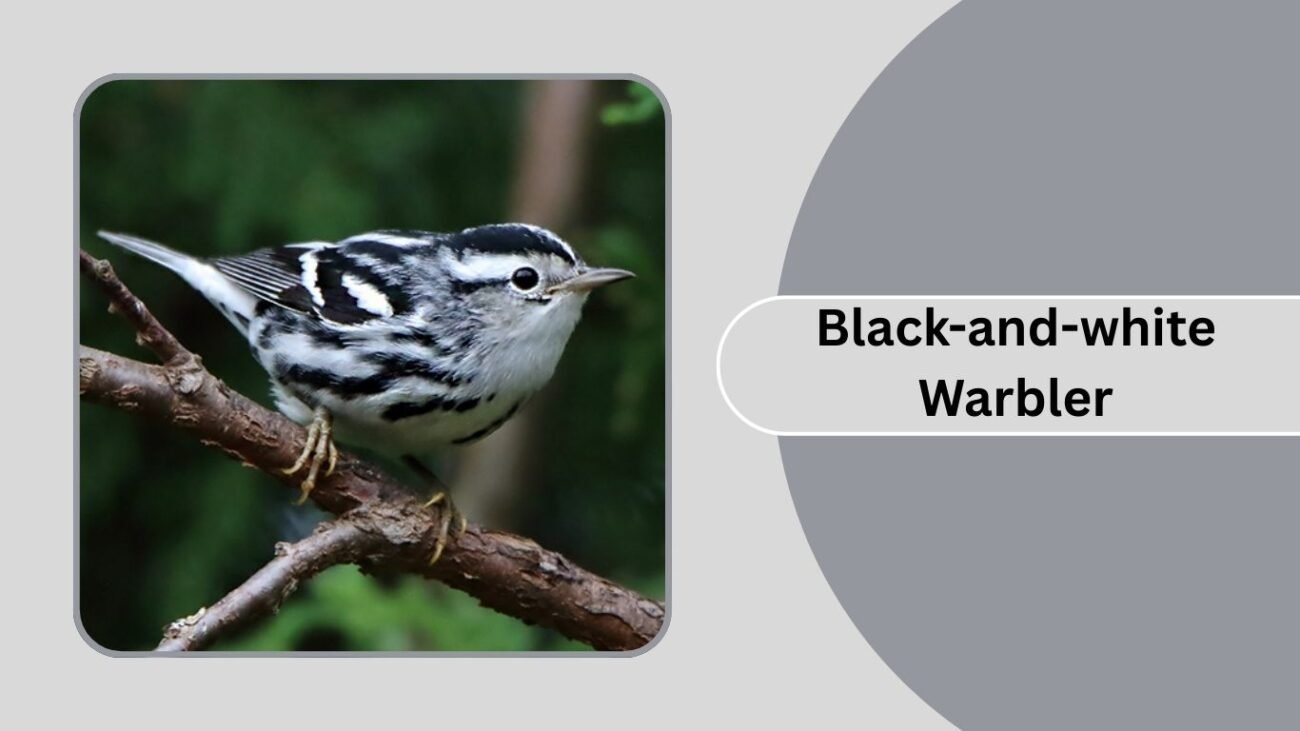
The Black-and-white Warbler (Mniotilta varia) is a small, energetic songbird easily recognized by its bold zebra-like stripes. Uniquely among warblers, it forages like a nuthatch, creeping along trunks and branches in search of insects.
Identification
- Size: 11–13 cm (4.3–5.1 in) in length
- Male: Striking black-and-white streaked plumage with a bold black throat and cheek
- Female: Similar pattern but with grayer cheeks and less intense black markings
- Bill: Thin, slightly curved, and dark, adapted for probing bark crevices
- Tail: Medium length, edged with white
- Wings: Black with white streaks and wing bars
Habitat & Distribution
Breeds in mixed and deciduous forests across most of eastern North America and parts of Canada. Winters from the southeastern United States through Central America and the Caribbean into northern South America, where it inhabits forests, mangroves, and plantations.
Behavior & Diet
Feeds mainly on insects, spiders, and other small arthropods, gleaning them from bark and branches. Unlike most warblers, it often moves headfirst down trunks or sideways along branches. Forages alone or in mixed-species flocks during migration and winter.
Vocalizations
Its song is a high, thin, repetitive “wee-see, wee-see, wee-see,” while its call is a sharp “tick” note, often given while foraging.
5. Dark-eyed Junco (Slate-colored)
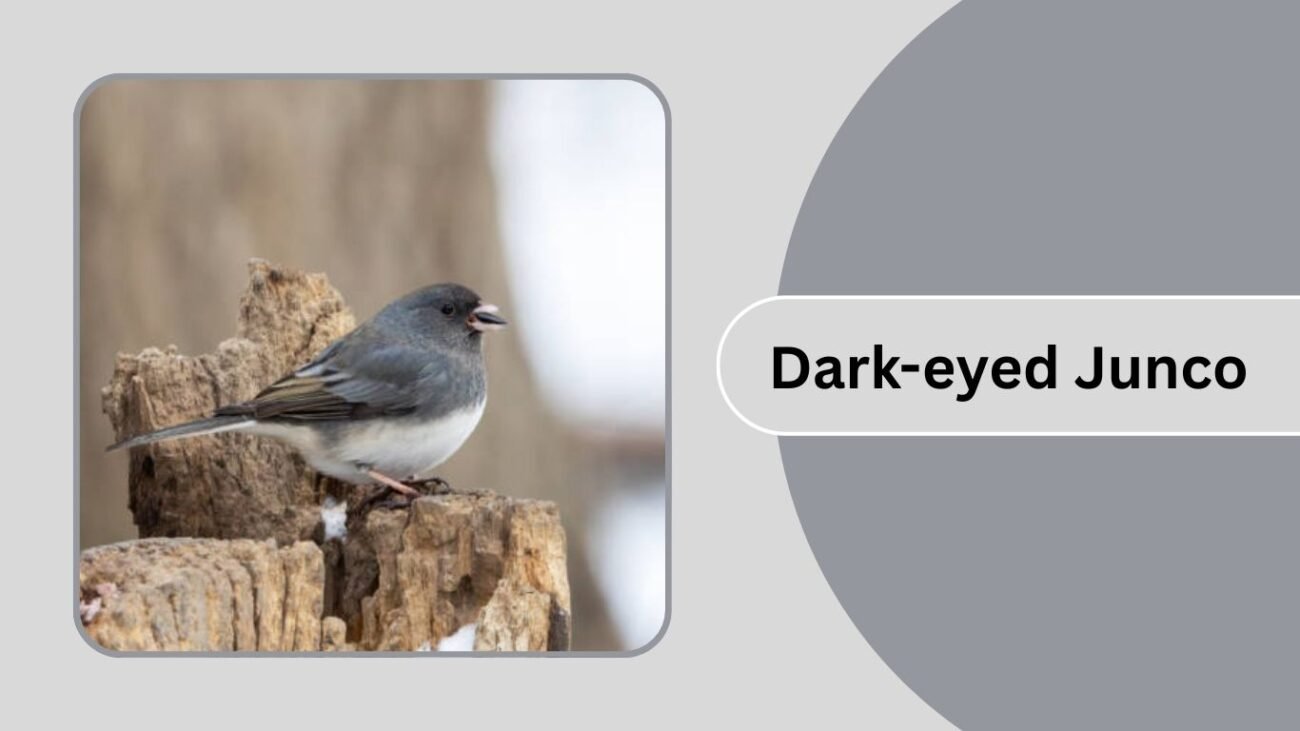
The Dark-eyed Junco (Junco hyemalis) in its Slate-colored form is a small, tidy sparrow-like bird with crisp black, white, and gray plumage. It is one of the most familiar winter birds in North America, often called the “snowbird” due to its abundance in colder months.
Identification
- Size: 13–16 cm (5.1–6.3 in) in length
- Plumage (Slate-colored form): Uniform dark gray head, chest, and back with clean white belly
- Bill: Small, conical, and pinkish in color
- Tail: Dark with distinct white outer tail feathers that flash in flight
- Eyes: Dark and round, blending into the gray head
Habitat & Distribution
Breeds in coniferous and mixed forests across Canada, Alaska, and the northern United States, often in mountainous regions. In winter, it migrates southward, becoming common in backyards, gardens, fields, and parks across much of the U.S.
Behavior & Diet
Feeds primarily on seeds and insects, foraging on the ground by hopping and scratching at leaf litter. In winter, frequently visits feeders for millet, cracked corn, and sunflower seeds. Known for its quick, darting movements and tendency to feed in small flocks.
Vocalizations
The song is a simple, musical trill, similar to that of the Chipping Sparrow but more even-toned. Calls include sharp “tsip” or “tut” notes, often heard when birds flush into nearby cover.
6. Pied Wagtail
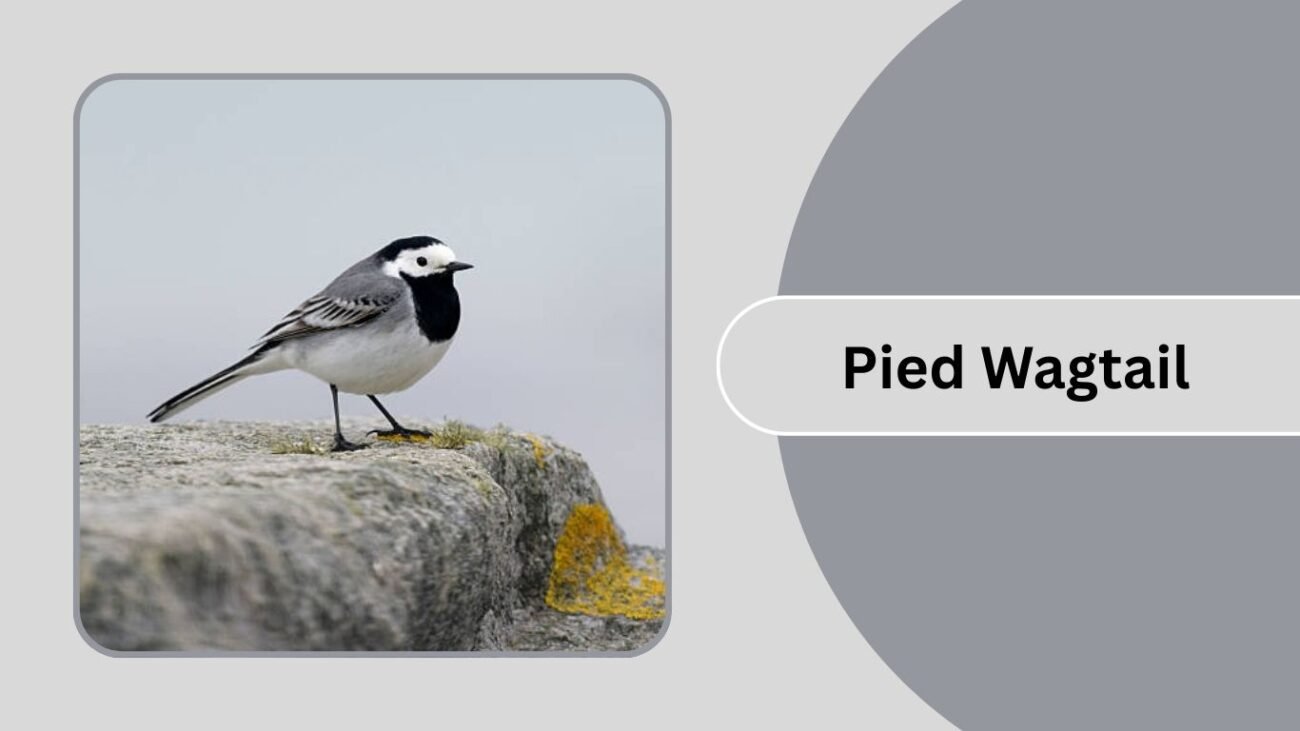
The Pied Wagtail (Motacilla alba yarrellii) is a slender, energetic bird easily recognized by its black, white, and gray plumage and constant tail-wagging behavior. It is a subspecies of the White Wagtail and is common across much of the British Isles and parts of western Europe.
Identification
- Size: 16–18 cm (6.3–7.1 in) in length
- Male (breeding): Black crown, nape, and back; bright white face; black bib; white belly; long black tail with white edges
- Female & Winter Plumage: Grayer upperparts with less intense black markings, but still with a contrasting white face
- Bill: Thin, pointed, and black
- Wings: Black with white wing bars and edging
- Tail: Long, narrow, and constantly wagged up and down
Habitat & Distribution
Found in a variety of open habitats, including farmland, riverbanks, lakeshores, urban parks, and coastal areas. In the UK, it is a year-round resident, while northern populations migrate south for winter.
Behavior & Diet
Feeds mainly on insects such as flies, beetles, and larvae, often chasing them on the ground or catching them in short flights. Known for its almost continuous tail-wagging and quick, darting movements while foraging.
Vocalizations
Its call is a sharp, ringing “chissick” or “tsweep,” often given in flight. The song is a series of short, twittering notes used primarily during the breeding season.
7. Black Phoebe
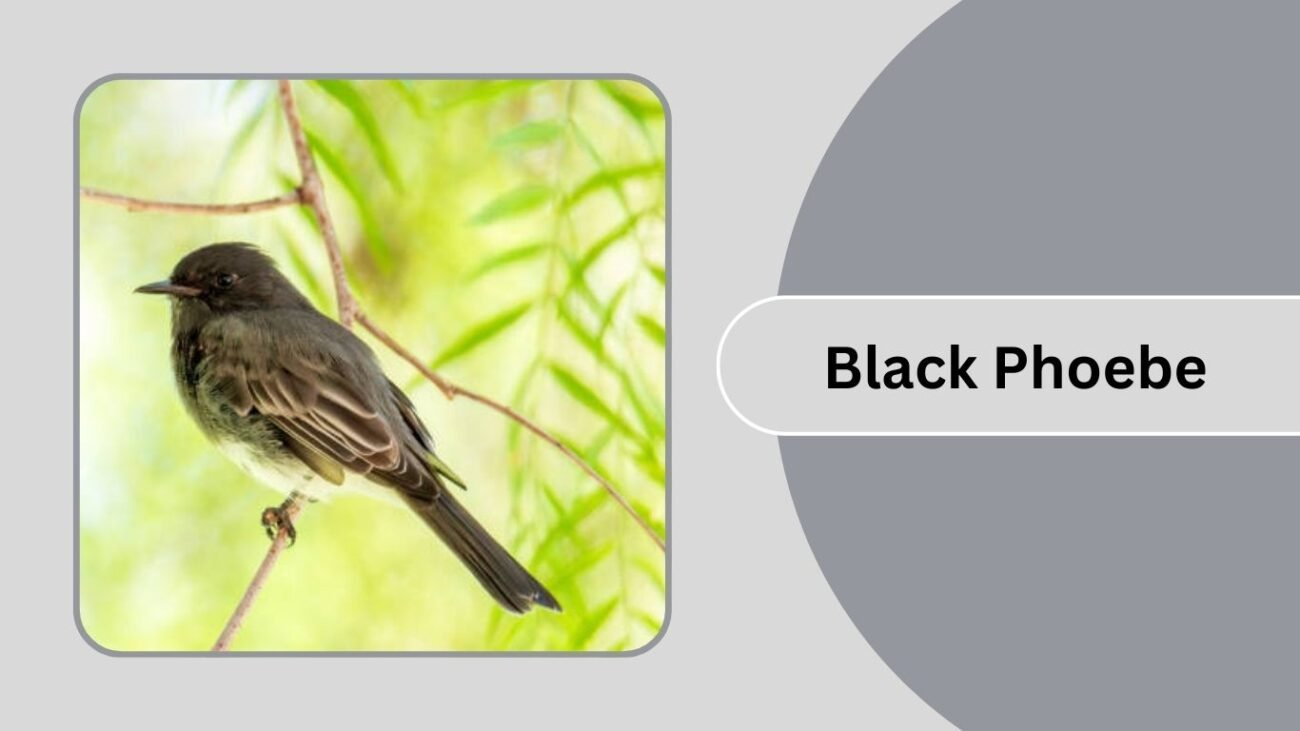
The Black Phoebe (Sayornis nigricans) is a small, elegant flycatcher easily recognized by its crisp black-and-white coloring and habit of perching near water. Known for its tail-pumping behavior, it is a familiar sight in the western and southwestern United States, Mexico, and parts of Central America.
Identification
- Size: 16 cm (6.3 in) in length
- Plumage: Sooty black head, back, and breast sharply contrasting with bright white belly and undertail coverts
- Bill: Short, thin, and black, suited for catching insects midair
- Tail: Long, dark, and constantly wagged up and down
- Wings: Dark with subtle edging, no wing bars
Habitat & Distribution
Favors habitats near water, including streams, lakes, ponds, coastal areas, and even urban parks with fountains or wetlands. Its range extends from the western U.S. and southwestern deserts down through Mexico and into Central America.
Behavior & Diet
Feeds mainly on flying insects such as flies, beetles, and wasps, captured by sallying from low perches. Also occasionally eats small fish or aquatic insects. Often returns to the same perch between hunting flights.
Vocalizations
The call is a sharp, whistled “tsip” or “pee-wee,” repeated frequently. The song consists of short, clear whistles and chips, usually delivered from a prominent perch.
8. Carolina Chickadee
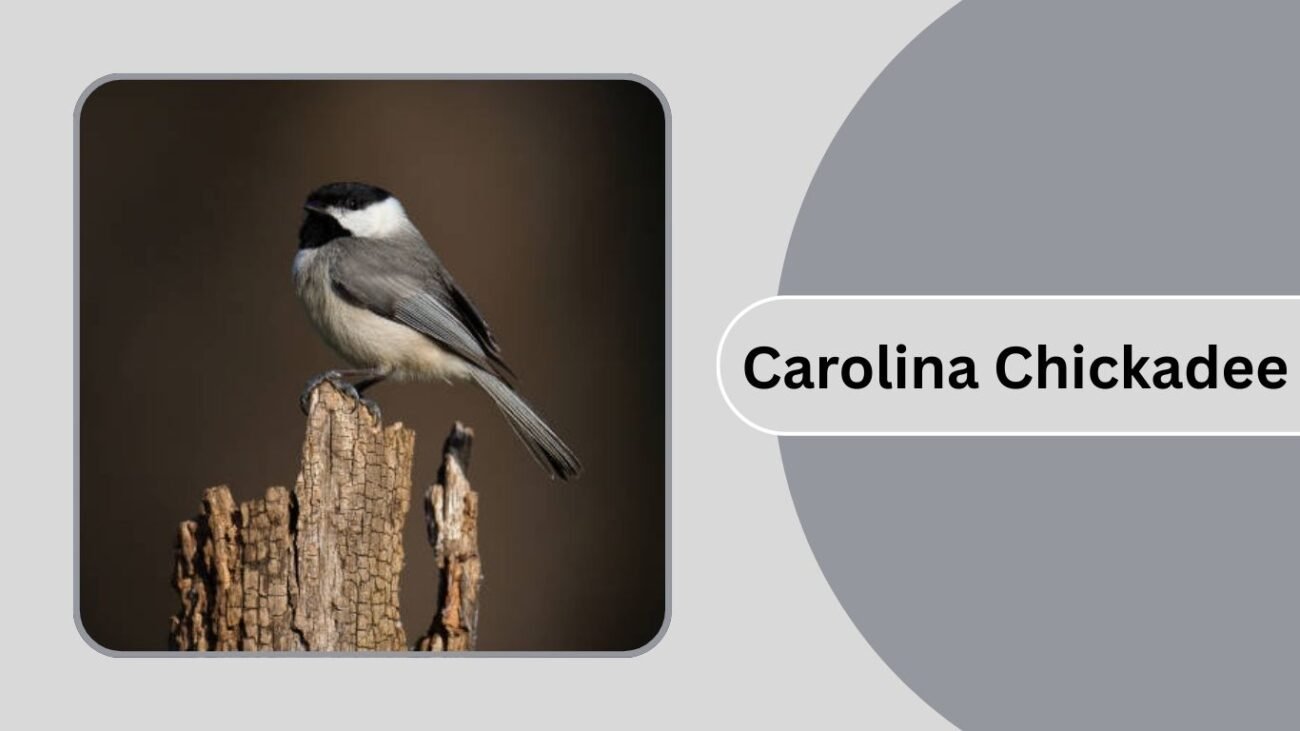
The Carolina Chickadee (Poecile carolinensis) is a tiny, energetic songbird closely related to the Black-capped Chickadee but found in the southeastern United States. Its quick movements, bold personality, and distinctive calls make it a favorite among backyard birdwatchers.
Identification
- Size: 11–12 cm (4.3–4.7 in) in length
- Head: Black cap and bib with bright white cheeks
- Body: Soft gray back, wings, and tail; whitish underparts with slight buff on flanks
- Bill: Small, short, and black
- Tail: Medium length, slightly rounded
- Eyes: Dark, blending with the black head pattern
Habitat & Distribution
Carolina Chickadees are found in deciduous and mixed forests, parks, gardens, and suburban areas across the southeastern United States. They are non-migratory, staying in their territories year-round.
Behavior & Diet
Feeds on insects, spiders, seeds, and berries. Frequently visits feeders for sunflower seeds, peanuts, and suet. Known for caching food in bark crevices for later use and for foraging acrobatically, often hanging upside down on branches.
Vocalizations
The song is a four-note whistle often described as “fee-bee-fee-bay,” while the familiar “chick-a-dee-dee-dee” call is used for communication and alarm, with more “dee” notes indicating greater threat levels.
9. Black-throated Gray Warbler
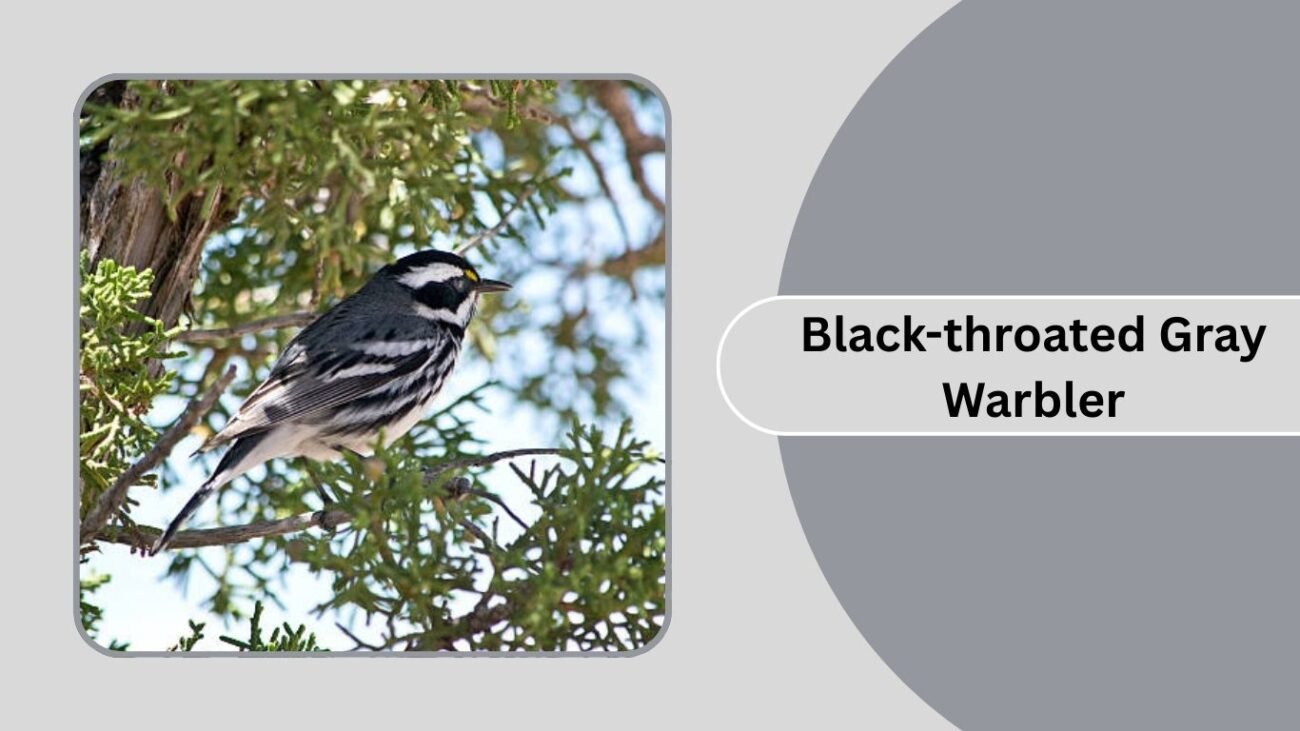
The Black-throated Gray Warbler (Setophaga nigrescens) is a small, striking songbird that blends bold black, white, and gray plumage with subtle yellow accents. It is a common sight in western North America during breeding and migration, often foraging methodically among tree branches.
Identification
- Size: 12–13 cm (4.7–5.1 in) in length
- Male: Black throat, white underparts, gray back, black-and-white striped head with a distinctive yellow spot in front of the eye
- Female: Similar but with paler black markings and sometimes a gray throat
- Bill: Thin, sharp, and dark, adapted for insect hunting
- Wings/Tail: Gray wings with white wing bars; tail dark with white outer feathers
Habitat & Distribution
Breeds in open woodlands, pine-oak forests, and scrub habitats across the western United States, southwestern Canada, and parts of Mexico. Winters in Mexico and Central America, often in mixed forest and edge habitats.
Behavior & Diet
Feeds primarily on insects such as caterpillars, beetles, and spiders, gleaning them from leaves and twigs. Often forages methodically, moving branch to branch, and sometimes joins mixed-species flocks during migration and winter.
Vocalizations
The song is a series of short, buzzy notes, sometimes described as “zee zee zee zoo zee,” while the call is a sharp “chip” often given in flight or while foraging.
10. Snow Bunting
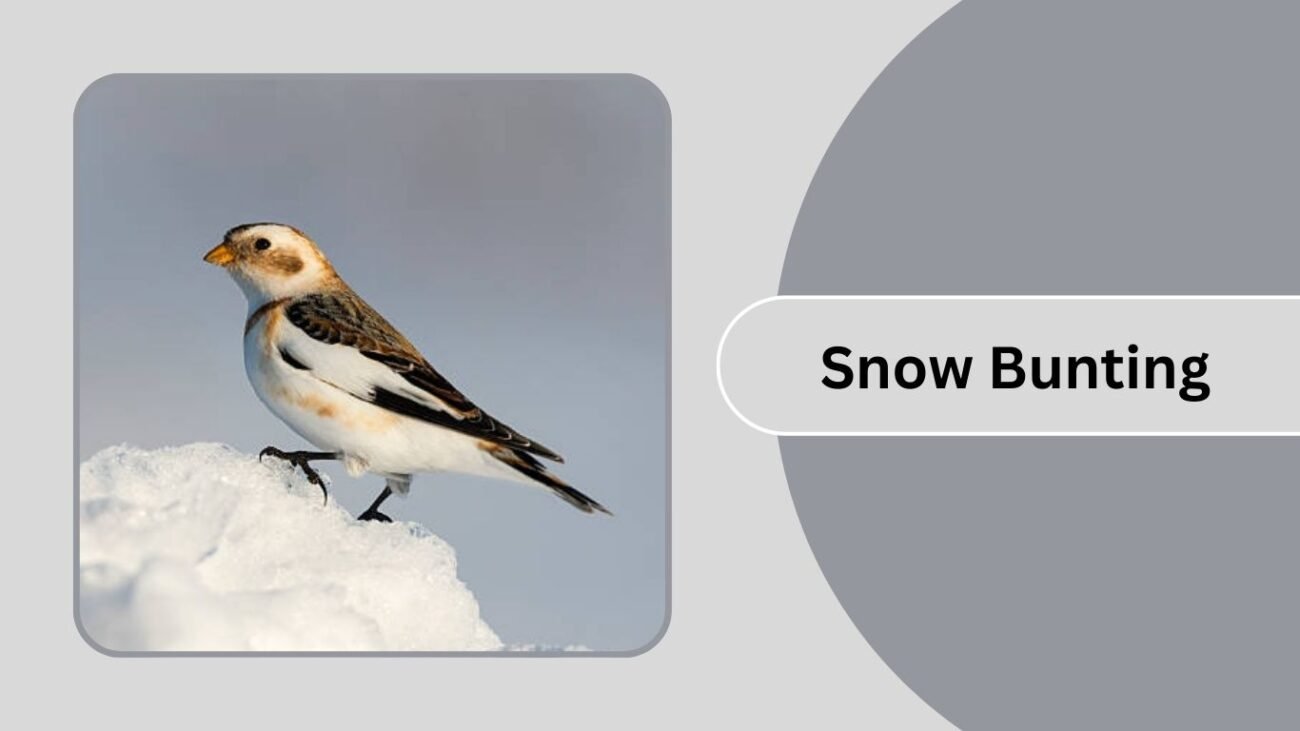
The Snow Bunting (Plectrophenax nivalis) is a hardy, small songbird built for life in the Arctic. Known for its striking black-and-white winter plumage and graceful flight, it is a rare but welcome sight for many birdwatchers during its winter migrations to lower latitudes.
Identification
- Size: 15–18 cm (5.9–7.1 in) in length
- Male (breeding): Bright white head, underparts, and wings with contrasting black back and wing tips
- Male (nonbreeding): White with buffy tones on head and back; black areas replaced by brownish wash
- Female: Similar pattern but generally duller with more brown tones
- Bill: Short, conical, and yellowish in winter (dark in summer)
- Tail: White with black central feathers
Habitat & Distribution
Breeds in the high Arctic tundra of North America, Europe, and Asia. In winter, migrates south to open fields, coastal areas, and farmlands across Canada, the northern United States, and parts of Eurasia.
Behavior & Diet
Feeds mainly on seeds and insects, foraging on the ground in flocks. Known for its strong, bounding flight and tendency to gather in large, swirling groups during migration and winter.
Vocalizations
The song is a sweet, warbling series of notes, while calls are soft, musical “tew” or “chew” sounds often given in flight.
11. Magpie-lark
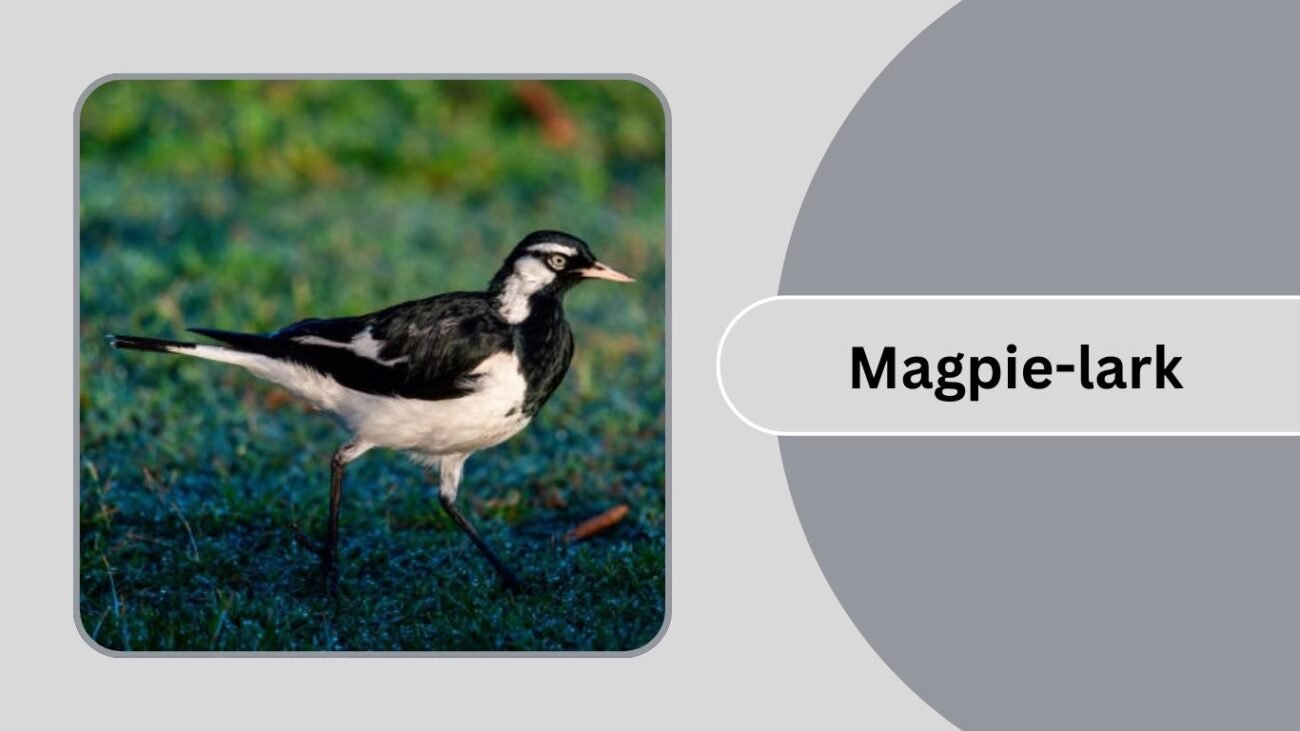
The Magpie-lark (Grallina cyanoleuca), also known as the Peewee or Mudlark, is a small, boldly patterned bird native to Australia and parts of New Guinea. Its crisp black-and-white plumage and loud, melodious calls make it a familiar sight in urban areas, wetlands, and open woodlands.
Identification
- Size: 25–30 cm (9.8–11.8 in) in length (slightly larger than many small songbirds but still lightweight)
- Male: Glossy black head, back, and throat with bright white underparts and wing patches; white eyebrow and face markings vary with sex
- Female: Similar but with a white forehead and throat instead of black
- Bill: Short, straight, and pale-colored
- Tail: Black with white outer feathers
- Wings: Black with broad white shoulder patches visible in flight
Habitat & Distribution
Found throughout most of Australia and parts of southern New Guinea, the Magpie-lark thrives in a variety of habitats including open woodlands, farmland, parks, gardens, wetlands, and urban areas. They often live near water sources.
Behavior & Diet
Feeds on insects, spiders, worms, and other small invertebrates, foraging on the ground with a distinctive strut. Builds mud nests on horizontal branches or man-made structures, often reusing and repairing them.
Vocalizations
Known for its loud, melodious, antiphonal duet between male and female—one bird calls and the other responds instantly, producing a seamless “pee-wee” or “pee-o-wit” phrase. This duet is used for territory defense and pair bonding.
12. Lesser Whitethroat
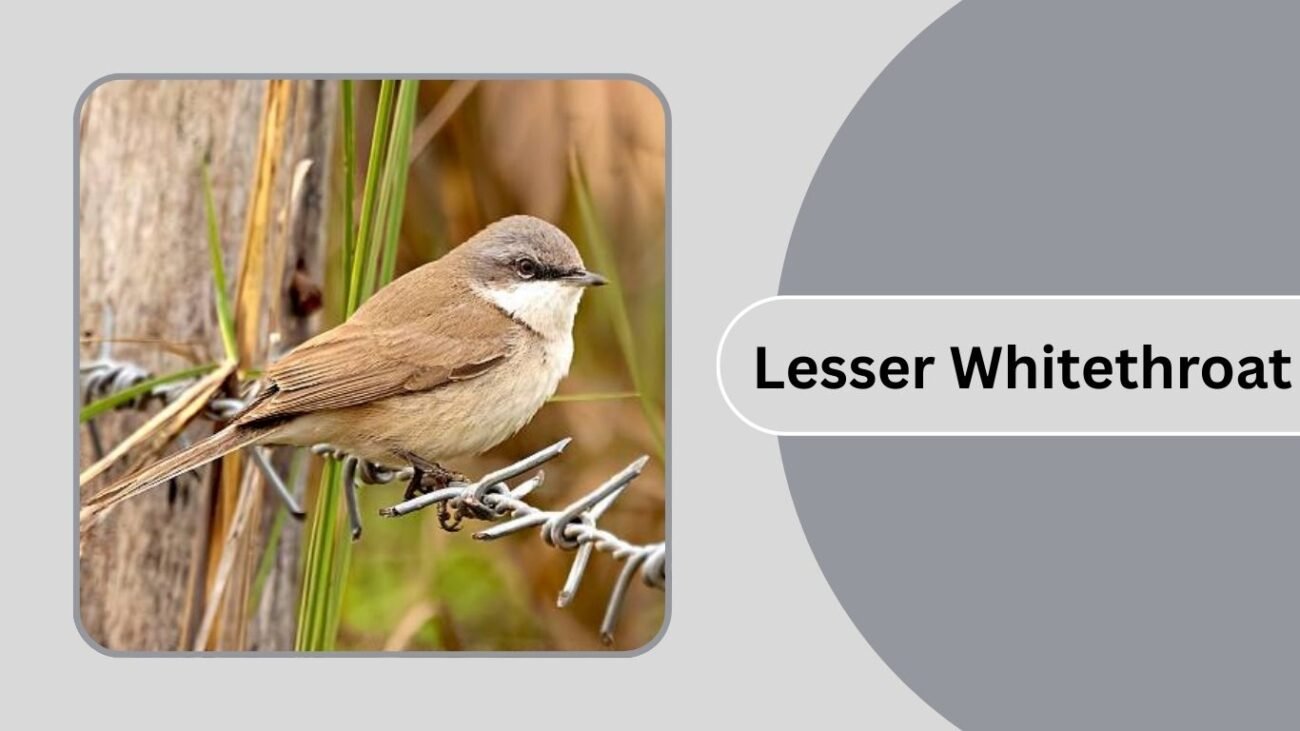
The Lesser Whitethroat (Curruca curruca) is a small, active songbird with crisp gray, white, and black plumage. Shy and quick-moving, it often stays hidden in shrubs and thickets, revealing itself mainly through its distinctive rattling song.
Identification
- Size: 12–14 cm (4.7–5.5 in) in length
- Head: Gray crown and nape, darker mask through the eye
- Body: White throat and underparts, gray-brown back and wings
- Bill: Short, thin, and dark, suited for insect catching
- Tail: Dark with white outer feathers, often flicked while foraging
- Wings: Brownish-gray with subtle edging
Habitat & Distribution
Breeds across Europe and parts of western and central Asia, favoring scrub, hedgerows, forest edges, and overgrown grasslands. Migrates to northeastern Africa, the Middle East, and the Indian subcontinent for the winter.
Behavior & Diet
Feeds mainly on insects and other small invertebrates during the breeding season, switching to berries and fruits in late summer and autumn. Moves quickly through dense foliage, making it easier to hear than to see.
Vocalizations
The song is a short, fast rattling trill, often given from a concealed perch. Calls include a dry “tack” note used for alarm or contact.