Black and yellow birds are among the most eye-catching species in the avian world, combining bold contrast with vibrant energy. From tiny, quick-moving warblers to striking orioles and tanagers, these birds brighten forests, wetlands, and gardens across the globe. This guide features 13 fascinating small black and yellow birds, describing their key identification traits, habitats, behaviors, and songs so you can spot and appreciate them in their natural environments.
1. American Goldfinch
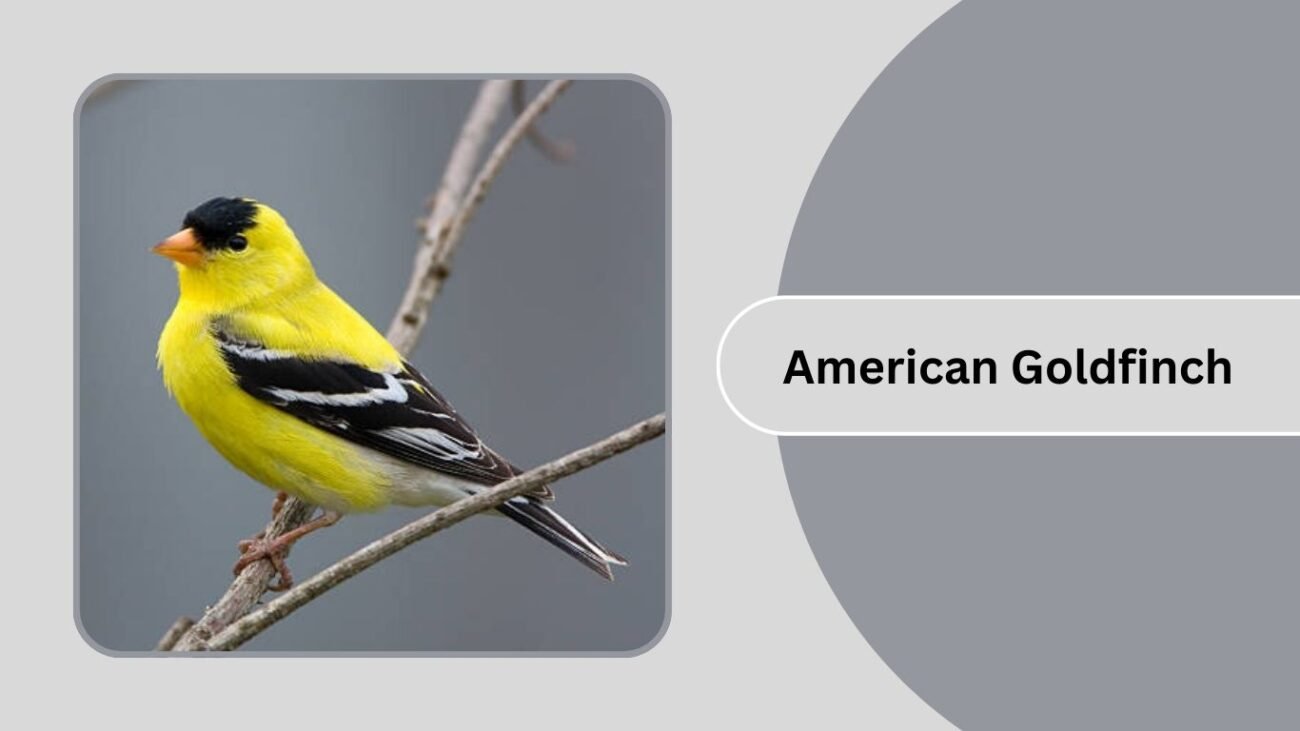
The American Goldfinch (Spinus tristis) is a small, vibrant songbird celebrated for its bright breeding plumage and cheerful, bouncing flight. Males in summer wear striking black-and-yellow colors that make them easy to spot, while females and winter birds display softer tones for camouflage. This adaptable species is a common visitor to backyard feeders across much of North America.
Identification
- Size: 11–13 cm (4.3–5.1 in) in length
- Male (breeding): Brilliant lemon-yellow body, black forehead, black wings with white wing bars, and white undertail
- Male (nonbreeding): Olive-brown upperparts, muted yellow underparts, faint or no black cap
- Female: Olive above, pale yellow below, no black forehead
- Bill: Short, conical, pink to orange in color
- Flight: Undulating pattern with distinctive “po-ta-to-chip” calls
Habitat & Distribution
American Goldfinches thrive in weedy fields, meadows, orchards, and suburban gardens, often near thistle and sunflower patches. They range widely across North America, with northern populations migrating south in winter while southern ones remain year-round.
Behavior & Diet
Primarily seed eaters, they feed on thistle, sunflower, and other composite plant seeds, often clinging acrobatically to seed heads or feeders. They breed later than most songbirds, nesting in midsummer to coincide with peak seed availability.
Vocalizations
Their song is a lively, sweet warble, and their flight call — “po-ta-to-chip” — is given in rhythm with their bouncy flight.
2. Common Yellowthroat (Male)
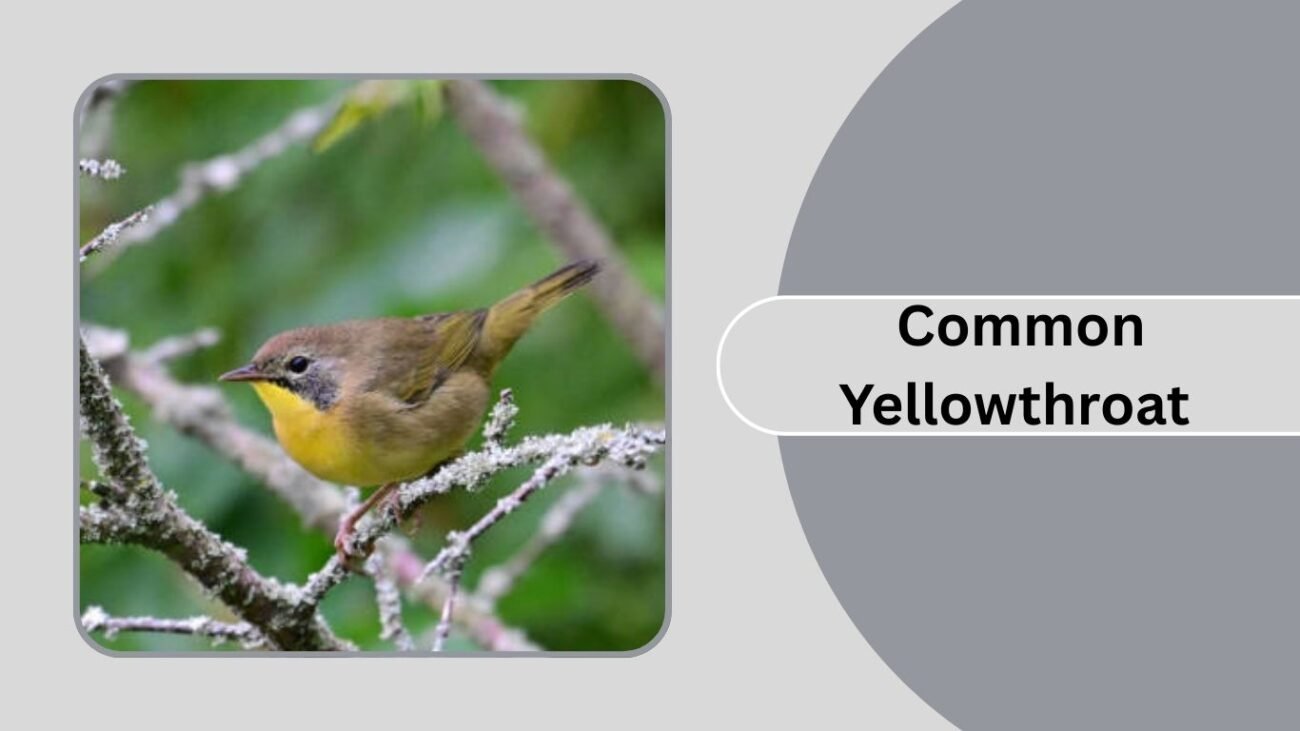
The male Common Yellowthroat (Geothlypis trichas) is a small, lively warbler instantly recognizable by its bright yellow throat and bold black facial mask. This striking black-and-yellow combination makes it one of the most visually distinctive warblers in North America, particularly in dense wetland habitats.
Identification
- Size: 11–14 cm (4.3–5.5 in) in length
- Male: Bright yellow throat and breast, olive-brown upperparts, bold black mask bordered by white or gray above
- Female: Lacks black mask, has a yellow throat and breast with olive-brown back
- Bill: Short, thin, and dark, suited for catching insects
- Tail: Rounded and often flicked while foraging
Habitat & Distribution
Common Yellowthroats breed across most of North America, favoring wetlands, marsh edges, overgrown fields, and shrubby thickets. They migrate to the southern U.S., Mexico, Central America, and the Caribbean for the winter, remaining in dense cover.
Behavior & Diet
Primarily insectivorous, they feed on caterpillars, beetles, flies, and spiders, gleaning them from low foliage or making short flights to catch prey. Males often sing from hidden perches within dense vegetation.
Vocalizations
The song is a rolling “witchety-witchety-witchety,” repeated clearly and energetically. Calls are sharp “chack” or “tchup” notes, often given when alarmed or during close contact with mates.
3. Black-and-yellow Tanager
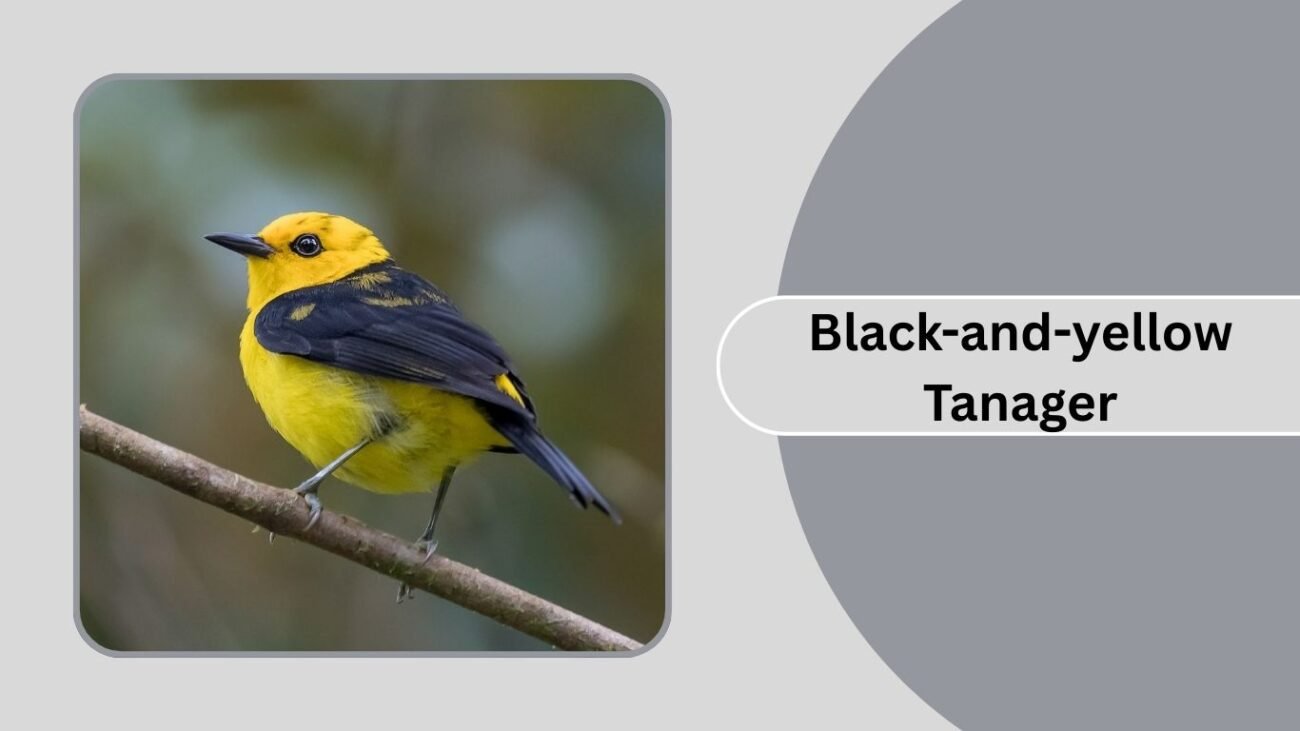
The Black-and-yellow Tanager (Chrysothlypis chrysomelas) is a small, vividly colored songbird found primarily in the humid forests of Central America. Its rich yellow plumage contrasted with glossy black markings makes it a striking sight as it moves through the canopy in small flocks.
Identification
- Size: 10–11 cm (3.9–4.3 in) in length
- Male: Bright golden-yellow body, black head, throat, back, wings, and tail
- Female: Yellow overall with olive-green back and wings, lacking the male’s solid black areas
- Bill: Short, pointed, and black
- Tail: Medium length, black with yellow undertail coverts
Habitat & Distribution
Inhabits lowland and foothill forests from Honduras to Panama, often in the mid to upper canopy. Favors edges, clearings, and secondary growth near mature forests.
Behavior & Diet
Feeds on insects, spiders, and small fruits, often joining mixed-species flocks that move rapidly through treetops. Forages actively, gleaning from foliage and occasionally making short sallies for flying prey.
Vocalizations
Has a high, thin, slightly buzzy call, often given in short sequences, and a faint song composed of soft, rapid notes.
4. Evening Grosbeak
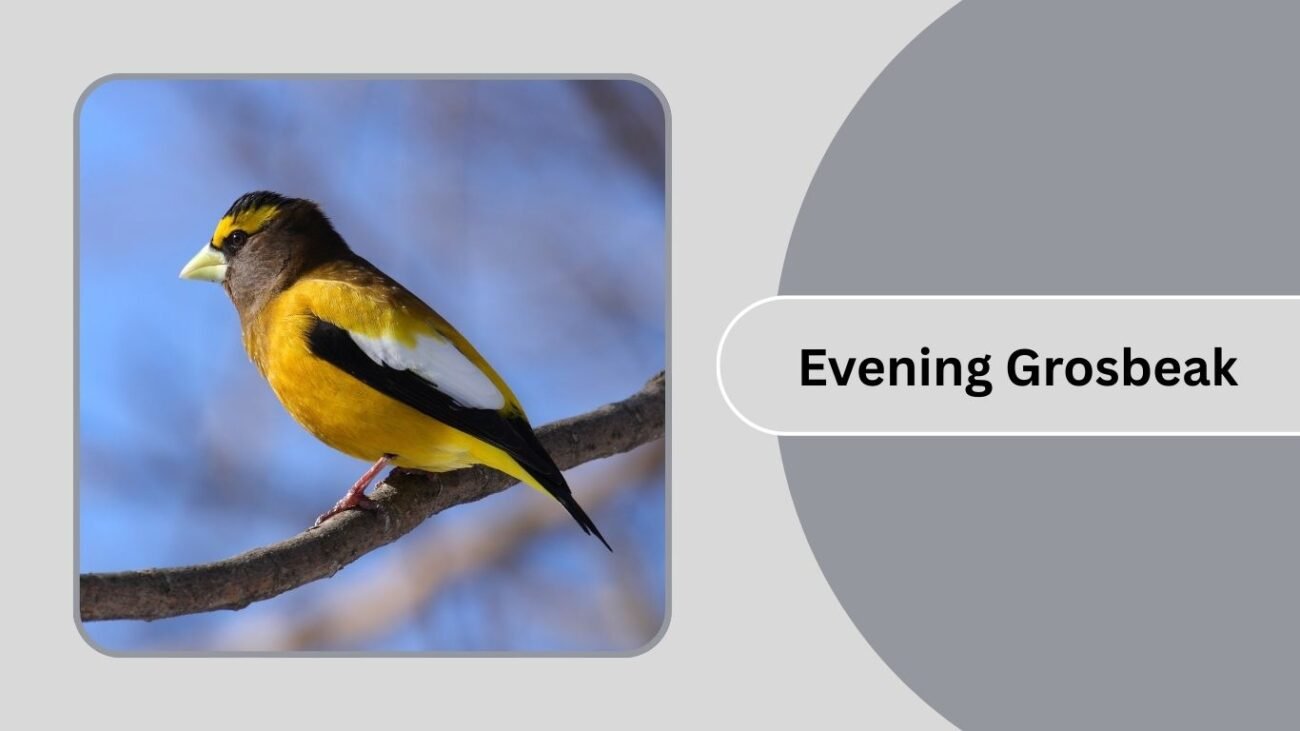
The Evening Grosbeak (Hesperiphona vespertina) is a stocky, powerful-billed finch known for its striking black, yellow, and white plumage. These birds often travel in noisy flocks, especially in winter, visiting feeders and tree canopies in search of seeds.
Identification
- Size: 16–20 cm (6.3–7.9 in) in length
- Male: Bright yellow body, black head and wings, large white wing patches, thick pale bill
- Female: Grayish overall with yellow highlights and smaller white wing patches
- Bill: Large, conical, pale ivory to greenish, ideal for cracking seeds
- Tail: Short, black, and squared at the tip
Habitat & Distribution
Breeds in coniferous and mixed forests across Canada, the northern United States, and mountainous regions of the West. In winter, may irrupt southward, visiting feeders in large flocks.
Behavior & Diet
Feeds mainly on seeds, buds, and fruits, as well as insects during summer. Strong bill enables them to crack even the hardest seeds. Often seen high in trees or descending to feeders in groups.
Vocalizations
Call is a distinctive, high-pitched “clee-ip” or “chirp” given in flight or while feeding. Song is less musical, consisting of short, warbling notes.
5. Black-hooded Oriole
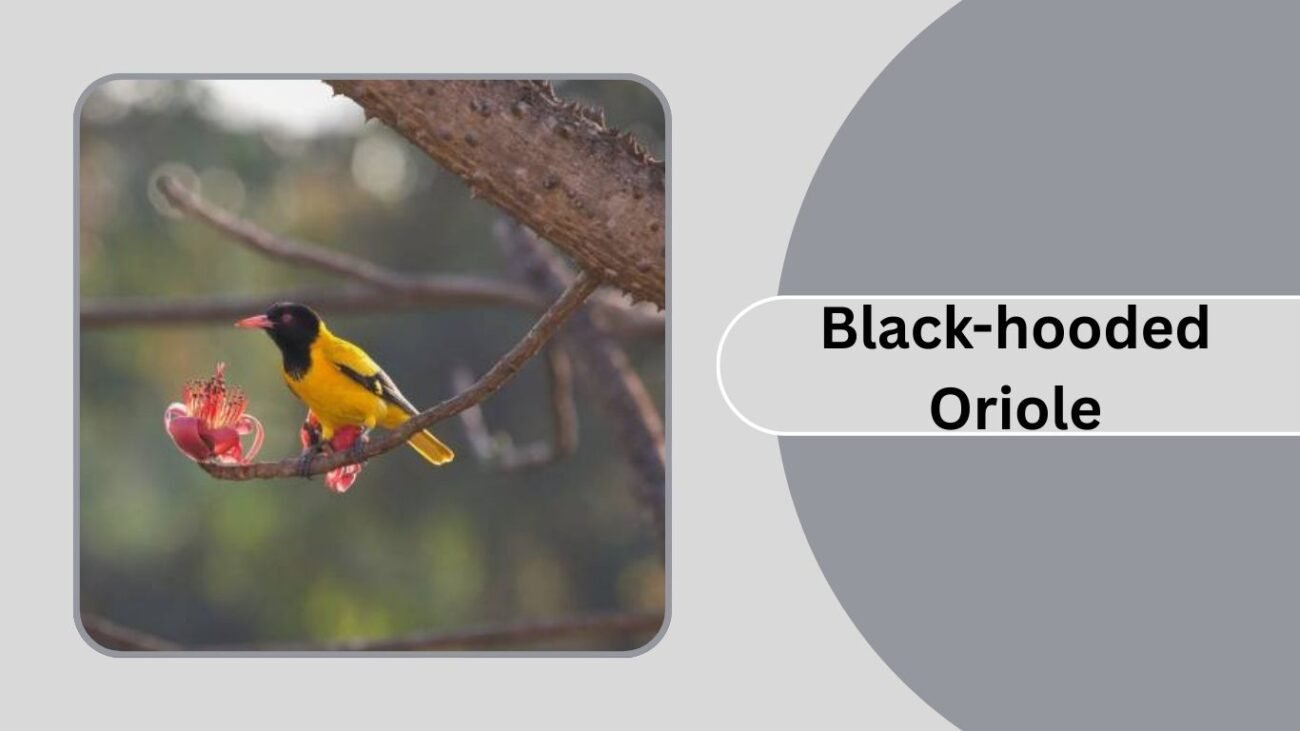
The Black-hooded Oriole (Oriolus xanthornus) is a striking, medium-small bird easily recognized by its bright golden-yellow body contrasted with a jet-black head, throat, and upper breast. Its vivid colors and melodious song make it a favorite among bird enthusiasts in its native range.
Identification
- Size: 23–25 cm (9–9.8 in) in length
- Male: Bright yellow body, black hood covering head, throat, and upper chest, black wings with yellow shoulder patch, black tail with yellow edges
- Female: Similar but slightly duller in color
- Bill: Long, slightly curved, and reddish-pink
- Eyes: Dark, contrasting with the black head
Habitat & Distribution
Found across South and Southeast Asia, including India, Sri Lanka, Bangladesh, and parts of Indonesia. Prefers open woodlands, forest edges, orchards, and gardens with large leafy trees.
Behavior & Diet
Feeds on fruits, berries, nectar, and insects. Known for its agile movements among tree canopies, often hopping and fluttering between branches in search of food.
Vocalizations
Has a rich, fluty song with clear, melodious whistles and a variety of liquid notes, often used to communicate with mates or declare territory.
6. Hooded Warbler (Male)
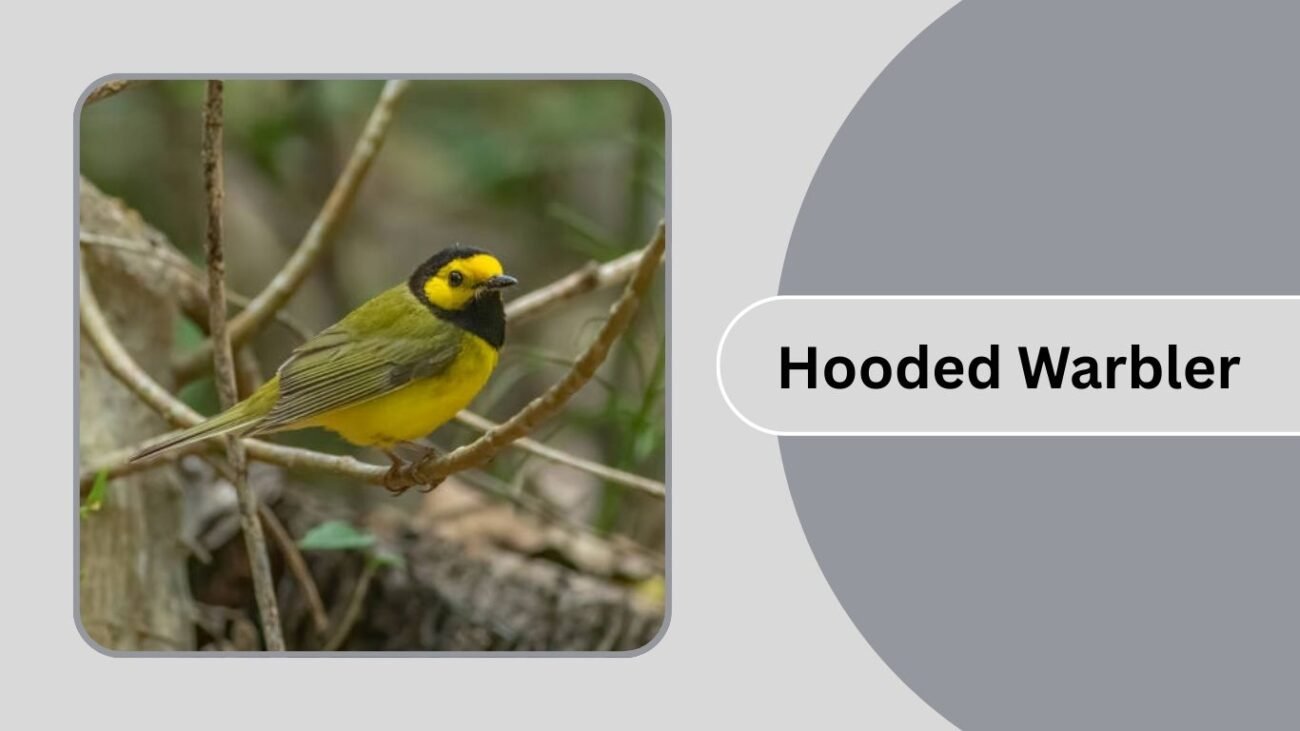
The male Hooded Warbler (Setophaga citrina) is a small, striking black-and-yellow songbird whose bold facial pattern sets it apart from other warblers. Its bright yellow face and underparts framed by a black hood give it a sharp, masked appearance that’s easy to recognize in the field.
Identification
- Size: 12–14 cm (4.7–5.5 in) in length
- Male: Bright yellow face and underparts, black hood covering head and throat, olive-green back and wings, tail with large white outer patches
- Female: Lacks a full black hood, showing only faint or partial markings; similar yellow face and underparts
- Bill: Thin, sharp, and dark, ideal for insect hunting
- Eyes: Large and dark, standing out against the yellow face
Habitat & Distribution
Breeds in the eastern United States, especially in mature forests with dense undergrowth near streams or wetlands. Winters in Central America, the Caribbean, and northern South America, where it inhabits tropical forests and thickets.
Behavior & Diet
Feeds primarily on insects and spiders, often flitting through dense foliage and flashing the white in its tail to startle prey. Agile and quick, it forages from the understory to mid-levels of forests.
Vocalizations
The male’s song is a clear, ringing series of notes, often phrased as “ta-wit ta-wit ta-wit tee-yo.” Calls include a sharp “chip,” commonly heard while foraging or when alarmed.
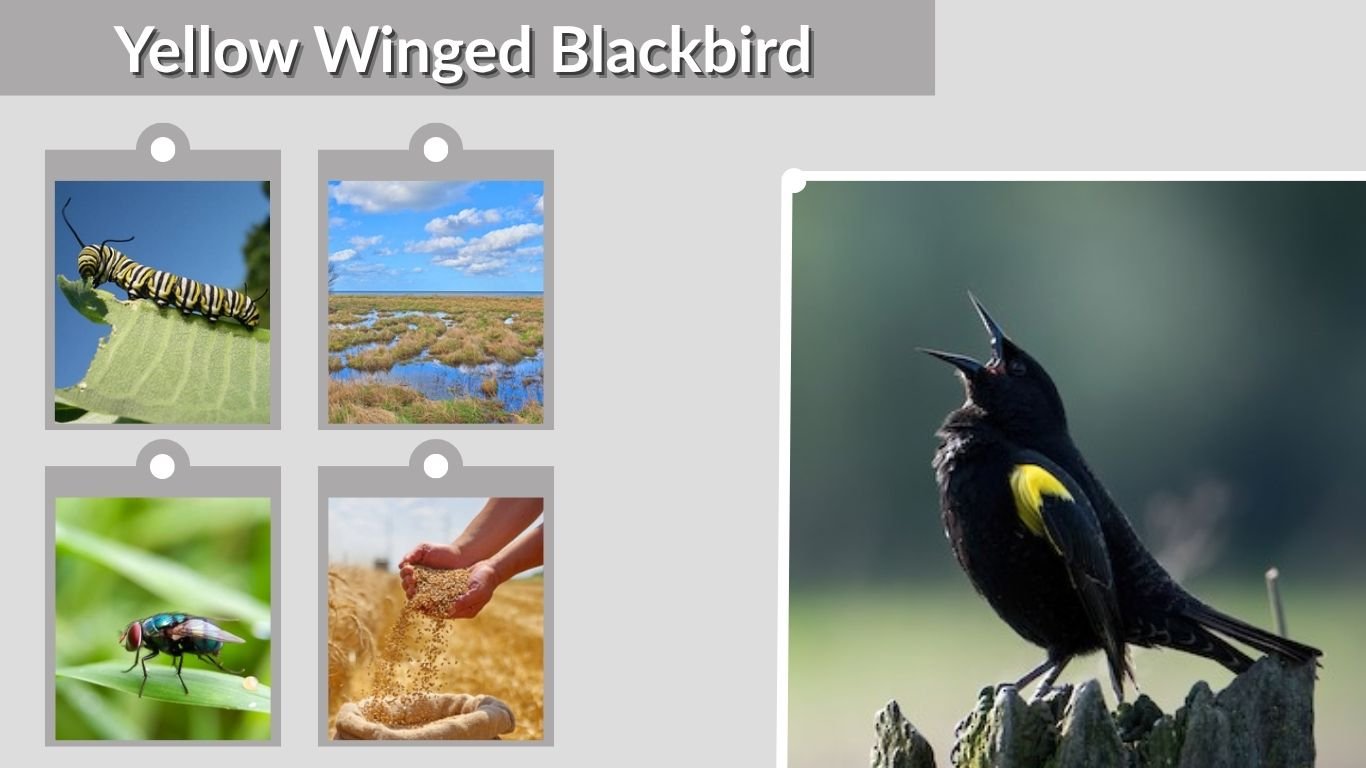
7. Yellow-headed Blackbird
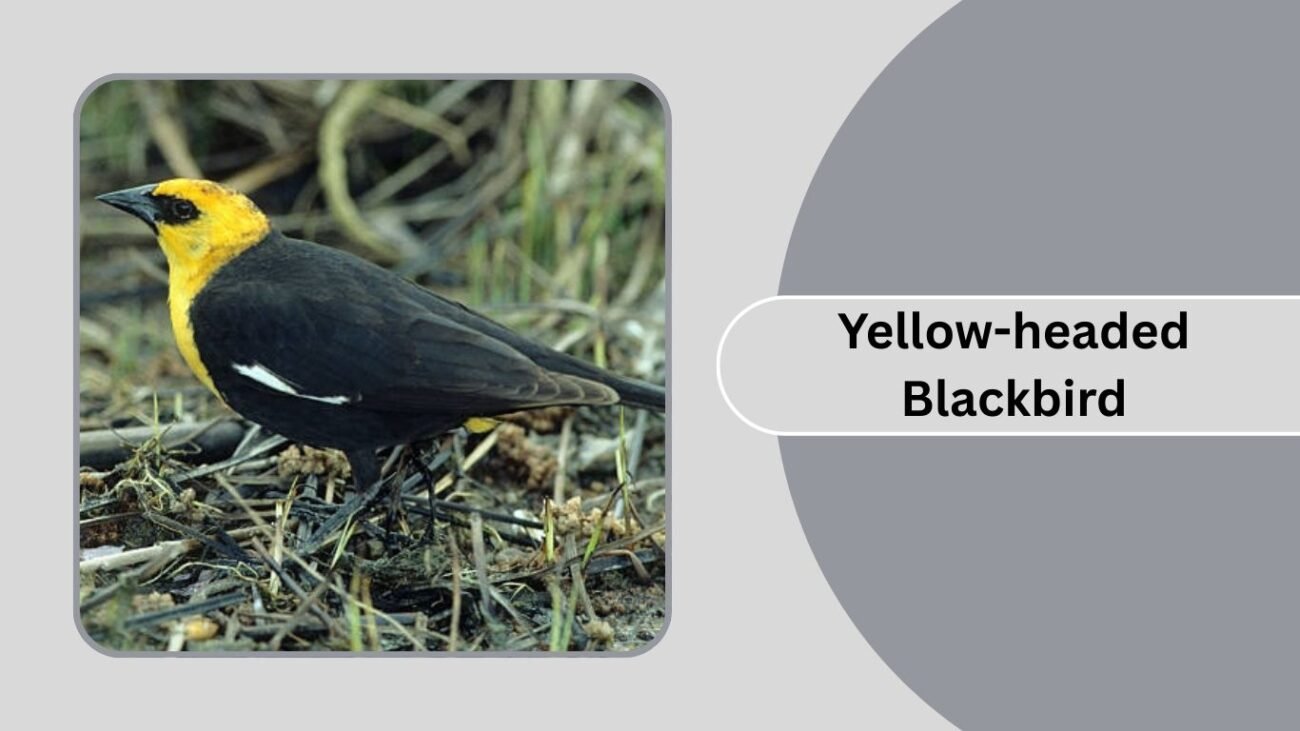
The Yellow-headed Blackbird (Xanthocephalus xanthocephalus) is a bold and unmistakable bird, instantly recognized by its vivid golden-yellow head and contrasting black body. Its striking appearance and loud, raspy calls make it a standout resident of marshes and wetlands in North America.
Identification
- Size: 21–26 cm (8.3–10.2 in) in length
- Male: Bright yellow head and chest, black body, large white wing patches visible in flight
- Female: Brown overall with dull yellow on throat and chest, smaller white wing markings
- Bill: Strong, conical, and black
- Tail: Medium length, black, squared at tip
Habitat & Distribution
Breeds in marshes with tall vegetation such as cattails and bulrushes across western and central North America. Winters in the southwestern United States, Mexico, and Central America, often foraging in agricultural fields and open grasslands.
Behavior & Diet
Feeds on insects during the breeding season—especially aquatic larvae and beetles—and switches to seeds and grains in winter. Males often perch conspicuously on tall reeds, singing to defend territory.
Vocalizations
Song is a harsh, creaky series of notes, often likened to the sound of a rusty gate. Calls are sharp and chattering, especially in social flocks.
8. Golden-cheeked Warbler
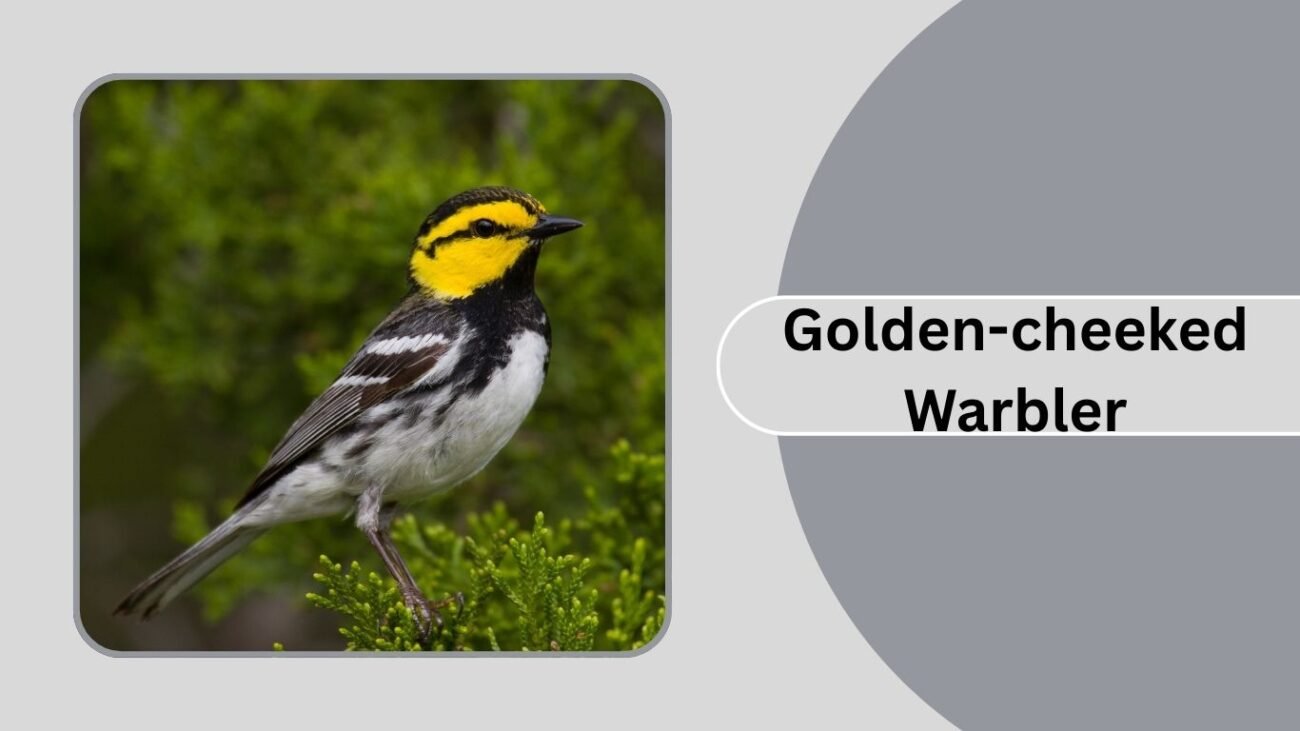
The Golden-cheeked Warbler (Setophaga chrysoparia) is a rare and endangered songbird with a striking black, yellow, and white pattern. Its vivid golden-yellow face and contrasting black crown make it one of the most distinctive warblers in North America.
Identification
- Size: 12–13 cm (4.7–5.1 in) in length
- Male: Bright golden-yellow face, black crown, nape, and throat; black back with white wing bars; white underparts with black streaking on sides
- Female: Similar but with duller black and less vibrant yellow
- Bill: Thin, pointed, and dark, ideal for insect hunting
- Tail: Medium length, black with white outer feathers
Habitat & Distribution
Breeds exclusively in central Texas, in mature juniper-oak woodlands. Winters in pine-oak and evergreen forests from southern Mexico to Central America. This narrow breeding range makes the species highly vulnerable to habitat loss.
Behavior & Diet
Feeds mainly on insects and spiders, gleaning them from foliage and bark. Often forages in the canopy, moving quickly among branches. Males are territorial during the breeding season and actively defend their nesting sites.
Vocalizations
The song is a high, buzzy, rising series of notes, often described as “zee-zee-zee-zee-zoo-zee,” given from exposed perches. Calls include sharp “chip” sounds used for communication and alarm.
9. Scott’s Oriole
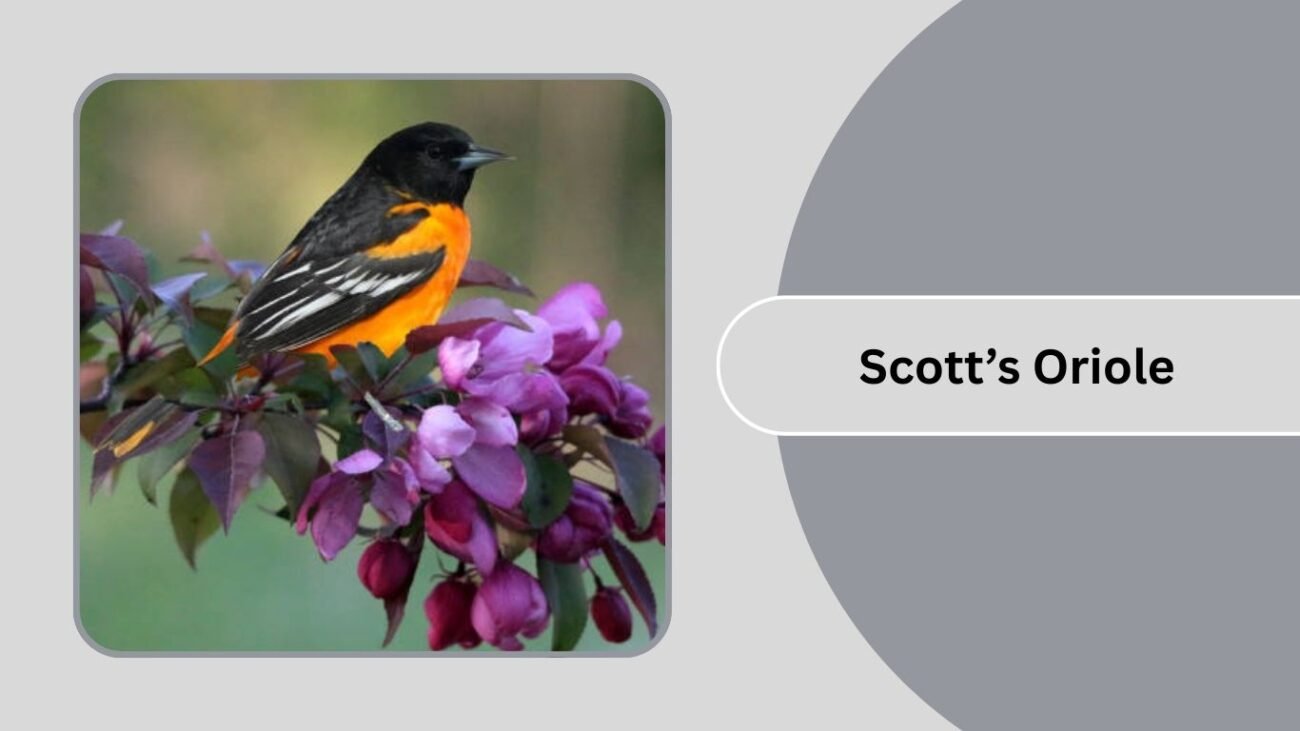
Scott’s Oriole (Icterus parisorum) is a handsome, medium-small songbird known for its bold black-and-yellow plumage and melodious whistling song. Found mainly in the arid landscapes of the southwestern United States and Mexico, it is a striking sight against desert backdrops.
Identification
- Size: 23–25 cm (9–9.8 in) in length
- Male: Black head, breast, back, wings, and tail; bright lemon-yellow belly, rump, and shoulders; white wing bars
- Female: Olive-yellow underparts, olive-brown upperparts, and less contrasting markings
- Bill: Long, slightly curved, and black
- Tail: Long, black with yellow base, slightly rounded
Habitat & Distribution
Inhabits arid and semi-arid regions, especially desert grasslands, yucca stands, and open woodlands in the southwestern U.S. and Mexico. Prefers areas with yucca plants, as they often nest among the leaves.
Behavior & Diet
Feeds on insects, nectar, and fruit. Often forages among yucca flowers and other desert vegetation, using its bill to probe for nectar and hunt insects. Males frequently sing from exposed perches.
Vocalizations
Has a rich, clear, flute-like song composed of slow, whistled phrases. Calls are sharp and metallic, often used to communicate between mates or in territorial defense.
10. Lesser Goldfinch (Male)
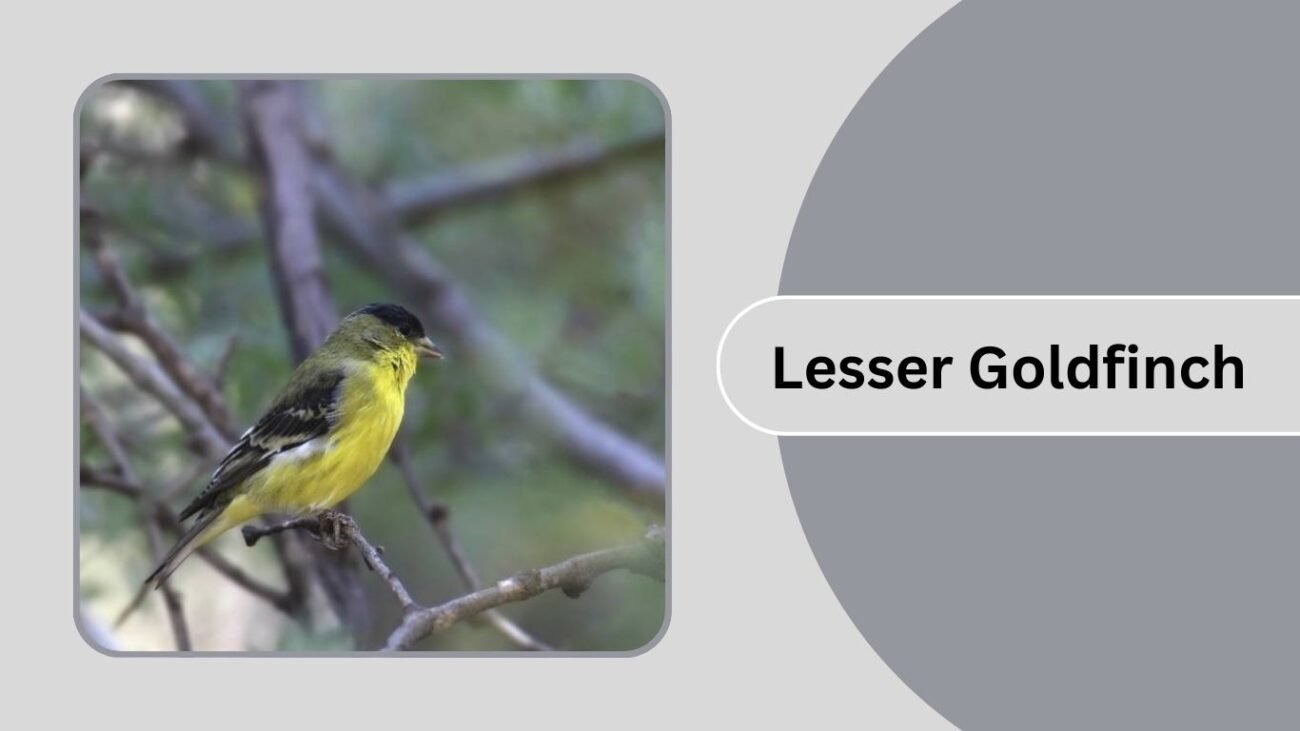
The male Lesser Goldfinch (Spinus psaltria) is a small, vibrant finch that combines glossy black upperparts with bright yellow underparts, creating a bold and eye-catching contrast. Known for its cheerful song and adaptability, it is a common sight in open habitats and gardens of the American Southwest and beyond.
Identification
- Size: 10–11 cm (3.9–4.3 in) in length
- Male: Black cap and back (in eastern populations; western males may have green backs), bright yellow underparts, black wings with white wing bars, black tail with white patches
- Female: Olive-green above, dull yellow below, lacks black cap
- Bill: Small, conical, and pale in color
- Tail: Short and notched
Habitat & Distribution
Found from the western United States through Mexico, Central America, and into parts of South America. Prefers open woodlands, scrublands, gardens, and urban areas with seed-bearing plants.
Behavior & Diet
Feeds primarily on seeds from sunflowers, thistles, and other composite plants, as well as some insects during breeding. Often forages in small flocks, sometimes with other finch species, and frequently visits feeders.
Vocalizations
Has a sweet, twittering song composed of high-pitched notes and trills, often given while perched or in undulating flight. Calls include short, sharp “tee” or “twee” notes.
11. Magnolia Warbler (Male)
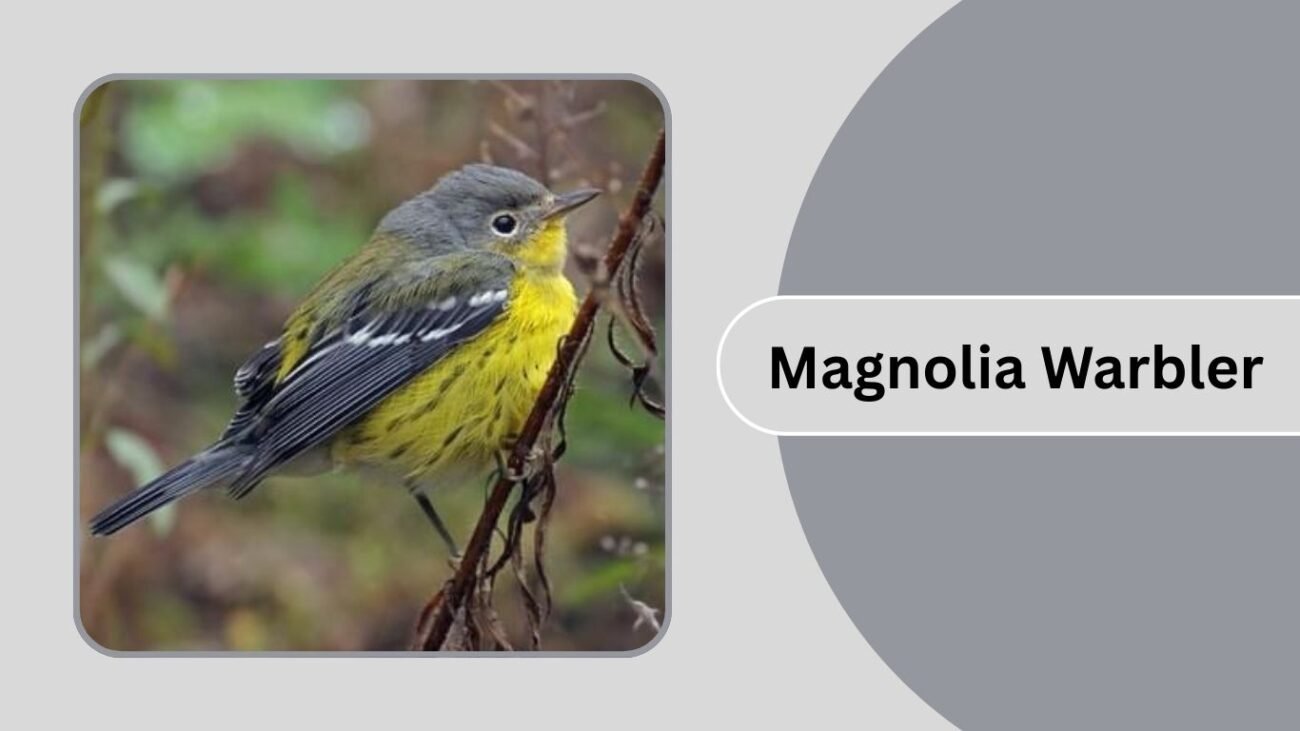
The male Magnolia Warbler (Setophaga magnolia) is a small, vividly patterned warbler with a bold mix of black, yellow, and white. Its bright underparts and striking facial markings make it a standout during migration and breeding seasons.
Identification
- Size: 11–13 cm (4.3–5.1 in) in length
- Male (breeding): Bright yellow underparts with bold black streaking, black mask bordered with white, gray back, and white wing patch
- Female: Paler yellow with faint streaking, lacks bold mask
- Bill: Short, thin, and dark, ideal for catching insects
- Tail: Dark with large white patches on the underside, very noticeable in flight
Habitat & Distribution
Breeds in dense coniferous or mixed forests across Canada and the northern United States, especially in spruce and fir stands. Winters in the Caribbean, Central America, and northern South America, where it frequents forests, edges, and gardens.
Behavior & Diet
Feeds primarily on insects, such as caterpillars, beetles, and flies, gleaning them from foliage or making short flights to capture prey. Often flicks its tail, showing bold white markings.
Vocalizations
The song is a short, rising series of notes often described as “weeta-weeta-weetsee.” Calls are sharp “tsip” sounds used while foraging or in flight.
12. Western Tanager (Male)
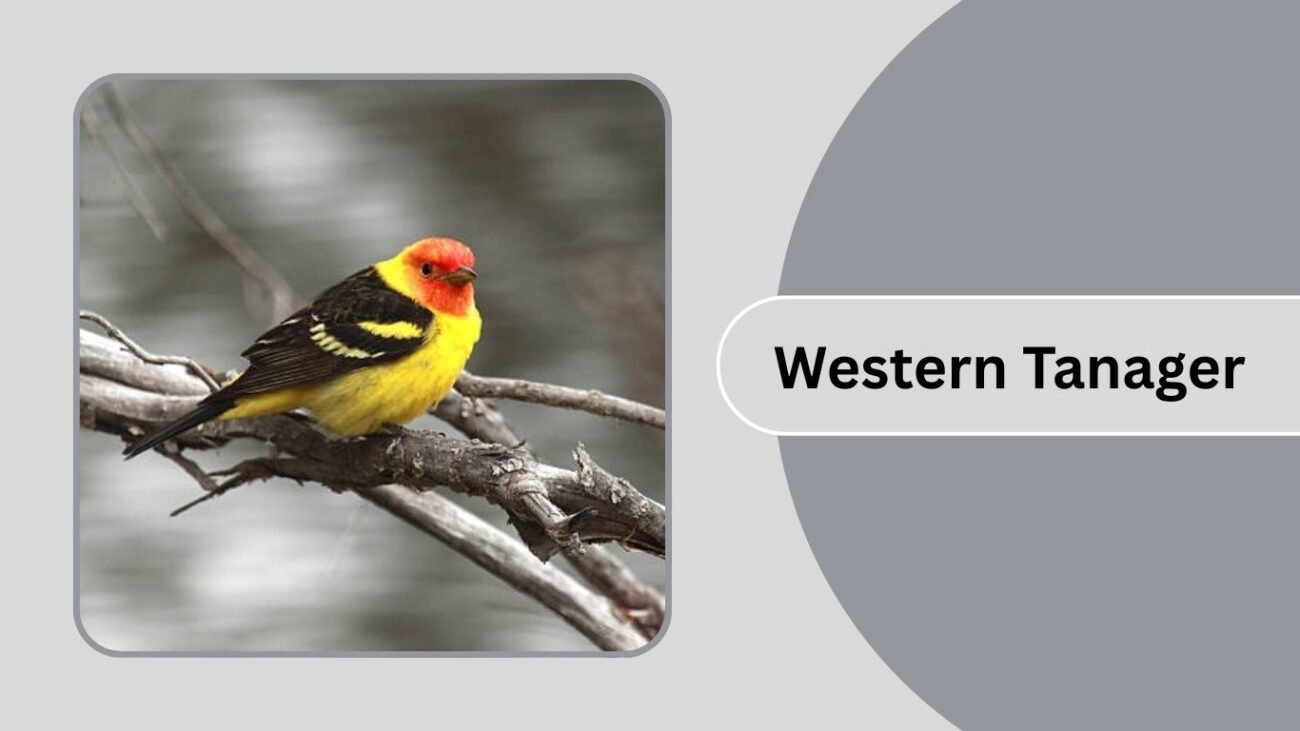
The male Western Tanager (Piranga ludoviciana) is a brilliant songbird with a fiery red head and bold black-and-yellow body, making it one of the most colorful birds in western North America. Its striking plumage contrasts beautifully with the coniferous forests it inhabits.
Identification
- Size: 16–18 cm (6.3–7.1 in) in length
- Male: Bright red head, black back, yellow underparts, yellow shoulders, and black wings with white wing bars
- Female: Olive-yellow body, grayish wings, and no red on the head
- Bill: Thick, pointed, and pale yellowish, suited for both insect and fruit eating
- Tail: Medium length, black with yellow edges
Habitat & Distribution
Breeds in coniferous and mixed forests across western North America, from Alaska and Canada south through the western United States. Winters in Mexico and Central America, often in open woodlands and forest edges.
Behavior & Diet
Feeds on insects, fruits, and berries. Catches insects in midair or gleans them from foliage, and also forages on berries during migration and winter. Males often sing from treetops during the breeding season.
Vocalizations
The song is a series of short, hoarse whistles, somewhat similar to an American Robin but less fluid. Calls include a sharp “pit” or “pik” often heard while foraging or in flight.
13. Eurasian Siskin
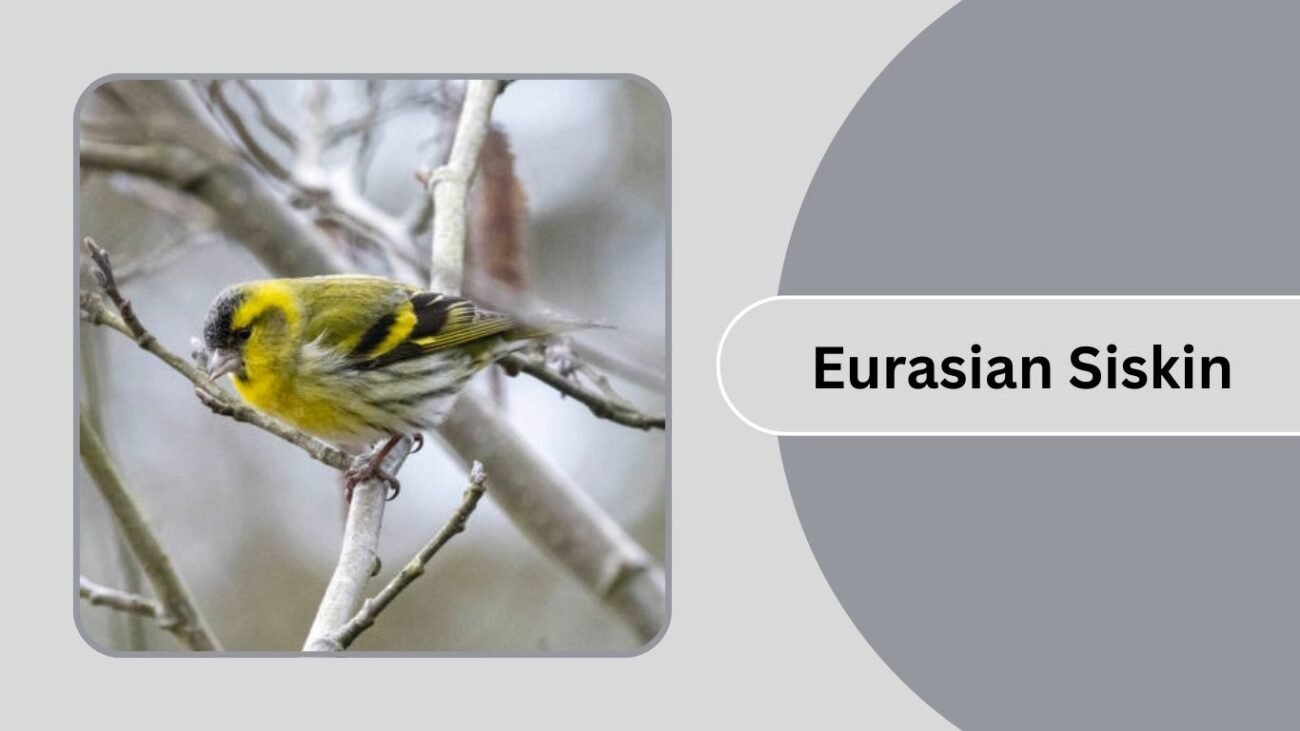
The Eurasian Siskin (Spinus spinus) is a small, lively finch with bright yellow highlights and contrasting black markings. Often found in flocks, especially in winter, it is an active and vocal presence in woodlands and gardens across much of Europe and Asia.
Identification
- Size: 11–12.5 cm (4.3–4.9 in) in length
- Male: Bright yellow-green body, black cap and bib, black wings with bold yellow wing bars, yellow rump, and black tail with yellow edges
- Female: Duller overall, with streaked underparts and lacking black cap
- Bill: Small, conical, and pale grayish, suited for seed eating
- Tail: Short and notched
Habitat & Distribution
Breeds in coniferous and mixed forests across Europe and Asia, especially favoring spruce and alder stands. In winter, moves into gardens, parks, and farmland, often forming large flocks and mixing with other finch species.
Behavior & Diet
Feeds primarily on seeds from alder, birch, and conifers, as well as insects during breeding season. Agile and acrobatic, it often hangs upside down to reach seed cones and visits garden feeders for sunflower seeds and nyjer.
Vocalizations
Song is a fast, twittering mix of trills and whistles. Calls include a sharp, rising “twee-ee” often given in flight, helping flocks stay together.