











Few waterfowl in North America capture attention quite like the drake wood duck (Aix sponsa). Known as one of the most colorful ducks in the world, this bird is a true symbol of beauty and resilience. From its brilliant plumage to its unique behavior in wooded wetlands, the drake wood duck has fascinated hunters, birdwatchers, and researchers alike.
In this article, we’ll take an in-depth look at everything that defines the male wood duck—covering identification, habitat, behavior, diet, and fascinating facts.
What is a Drake Wood Duck?
The drake wood duck is the male of the species Aix sponsa, native to North America. While females are camouflaged for nesting survival, drakes are known for their bright, iridescent feathers and striking features. They are medium-sized ducks, measuring about 19–21 inches long and weighing 1.5–1.6 pounds.
Unlike many ducks that thrive in open wetlands or coastal marshes, drake wood ducks prefer wooded swamps, flooded timber, and shaded ponds. Their ability to maneuver through trees at high speeds makes them one of the most unique and agile fliers among waterfowl.
Scientific Classification
- Kingdom: Animalia
- Phylum: Chordata
- Class: Aves
- Order: Anseriformes
- Family: Anatidae
- Genus: Aix
- Species: A. sponsa
The wood duck is closely related to the mandarin duck (Aix galericulata) of East Asia, another bird famous for its spectacular male plumage.
Identification: How to Recognize a Drake Wood Duck
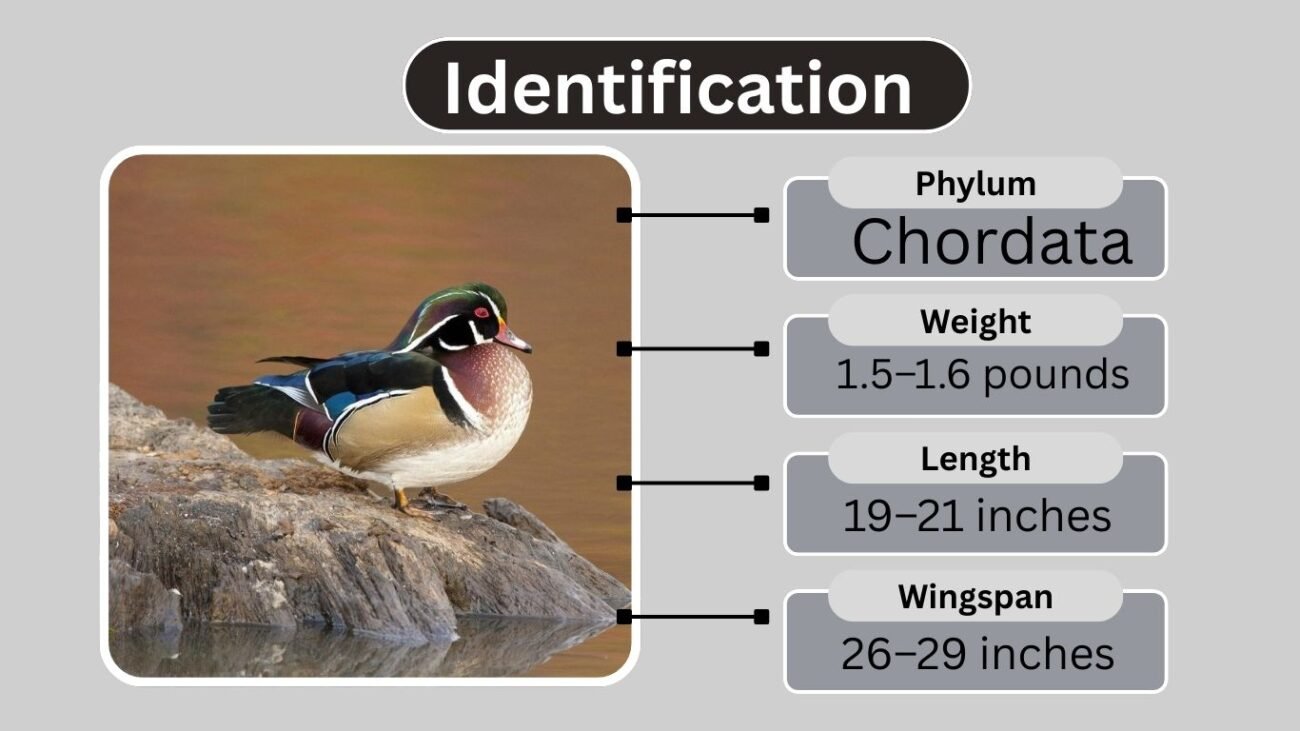
The drake wood duck is one of the most recognizable ducks in North America thanks to its ornate plumage.
Key Features
- Head and Crest: Iridescent green and purple head with a large, swept-back crest.
- Eyes: Bright red eyes that stand out against the dark head.
- Bill: Red with a yellow base and black tip.
- Body: Rich chestnut breast speckled with white spots; sides are buff with bold black and white markings.
- Throat: White chin and throat stripe that extends upward in a finger-like curve.
- Wings: Glossy blue-black with white edging, especially noticeable in flight.
This combination of vivid colors and patterns makes the drake one of the most striking waterfowl in the world—often nicknamed the “flying jewel.”
Size and Body Structure
- Length: 19–21 inches
- Wingspan: 26–29 inches
- Weight: 1.5–1.6 pounds
Drakes are slightly larger than hens, with fuller crests and longer tails. Their slim body shape allows them to dart swiftly through trees, a skill uncommon among many other duck species.
Plumage and Seasonal Changes
One of the most fascinating aspects of the drake wood duck is its plumage cycle.
- Breeding Season: During spring and early summer, males are at their brightest, flaunting iridescent colors to attract mates.
- Eclipse Plumage: After breeding, drakes molt into a dull brown color that resembles the female’s plumage. This eclipse phase provides camouflage during late summer when they are molting and vulnerable to predators.
- Fall Transition: By early fall, males gradually regain their brilliant feathers, preparing once again for the next breeding season.
This seasonal change makes wood ducks an excellent example of how evolution balances attractiveness and survival.
Behavior and Courtship
Drake wood ducks are known for their elaborate courtship displays. During the breeding season, they perform a variety of visual and vocal displays to attract females.
- Displays: Wing flapping, head bobbing, and crest raising are common behaviors.
- Calls: Males produce soft, high-pitched whistles or “zeet” sounds during displays.
- Pair Bonding: Once a pair forms, the bond can last for a season, with the male providing protection during early nesting stages.
Drakes also play a territorial role during breeding season, often defending their mate and nesting area from rival males.
Habitat and Distribution
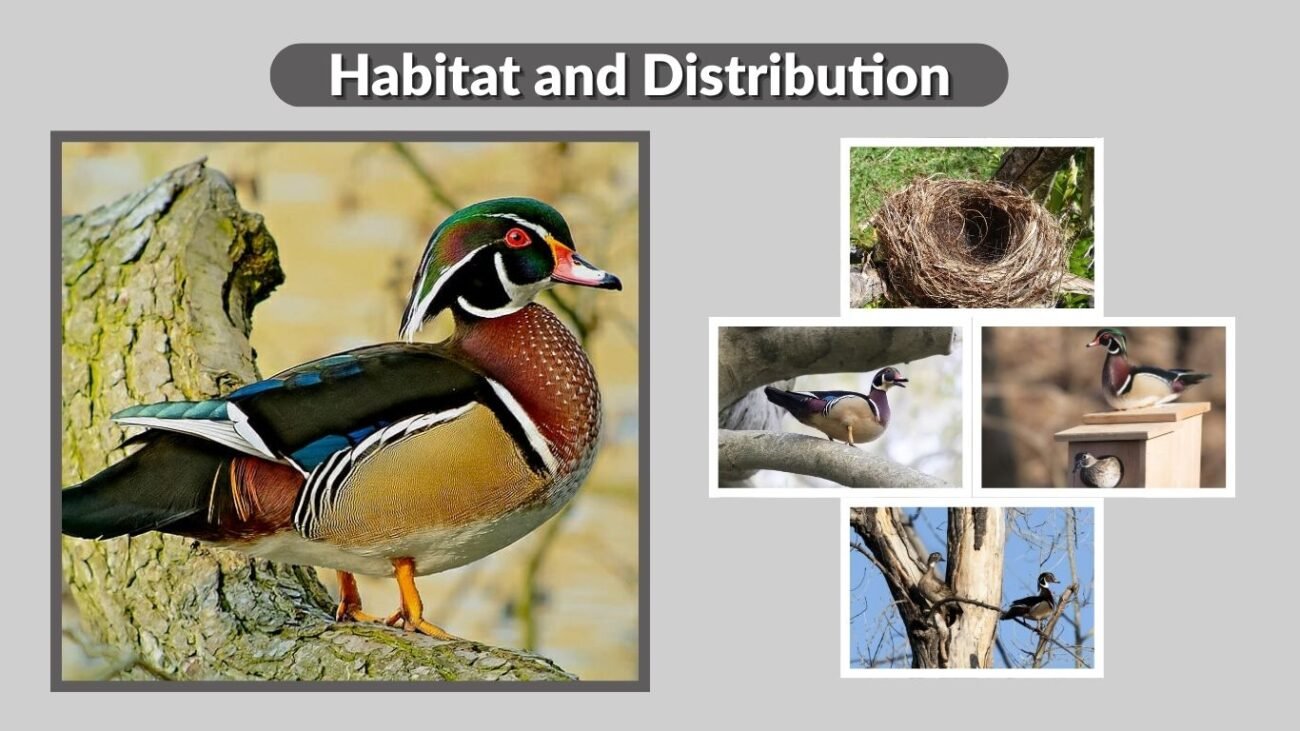
Drake wood ducks are found across much of North America, especially in wooded wetlands.
- United States: Common throughout the eastern U.S., Great Lakes, and Pacific Northwest.
- Canada: Found in southern regions, particularly Ontario and British Columbia.
- Winter Range: Many migrate south to the Gulf Coast and Mexico during colder months.
Their preferred habitats include:
- Flooded timber and swamps
- Ponds and small lakes surrounded by forests
- Slow-moving creeks and rivers
The male’s striking plumage stands out beautifully in these shaded, watery environments, making them a favorite among birdwatchers and photographers.
Diet and Feeding Habits
The diet of the drake wood duck mirrors that of the species as a whole, though males often forage alongside females and ducklings.
Natural Diet
- Seeds, acorns, and nuts
- Aquatic plants and seeds
- Berries and fruits (like wild grapes and dogwood berries)
- Insects and aquatic invertebrates, especially during breeding
Feeding Behavior
- Primarily dabbling feeders, tipping forward in shallow water to graze on plants and seeds.
- Frequently feed in flooded timber and forest edges, taking advantage of fallen acorns and seeds.
- Their varied diet helps them adapt to different habitats, from swamps to farmland ponds.
This omnivorous diet contributes to their resilience and wide distribution across North America.
Nesting Roles and Family Life

When it comes to reproduction, the drake wood duck plays a supporting but important role. Courtship begins in late winter or early spring when males display their vibrant plumage to attract females. Once paired, the male follows the female closely, defending her from rivals and predators.
Nesting, however, is almost entirely the female’s responsibility. She selects a site, often a tree hollow 10 to 50 feet above ground or a man-made nesting box. Drakes remain nearby during the early stages of incubation, keeping watch and alerting to potential threats. But once the female commits fully to incubating her clutch of 8 to 15 eggs, the male gradually distances himself. By the time the ducklings hatch, the drake is often gone, having joined other males in groups to molt and prepare for migration.
The female then leads the brood to water, sometimes in dramatic fashion as ducklings leap from tree hollows to the ground below. From this point onward, the mother takes full responsibility for raising and protecting her young. The drake’s earlier role in territory defense and mate protection, however, remains crucial for ensuring the nesting period begins safely.
Conservation and Population Recovery
The story of the drake wood duck cannot be told without mentioning its near disappearance in the early 20th century. Overhunting and habitat destruction pushed wood ducks to the brink of extinction. By the 1920s, populations had dropped alarmingly low.
Conservation efforts changed everything. The Migratory Bird Treaty Act of 1918 gave legal protection, while hunters and conservationists later introduced nesting box programs that offered secure breeding sites. These boxes proved critical, as wood ducks rely heavily on tree cavities, which were becoming scarce due to logging.
Today, wood ducks are considered a conservation success story. Their populations are healthy, and they are now one of the most abundant duck species in North America. For drakes, this means the continuation of their vibrant displays and strong presence in wooded wetlands across the continent.
The Drake Wood Duck in Hunting Tradition
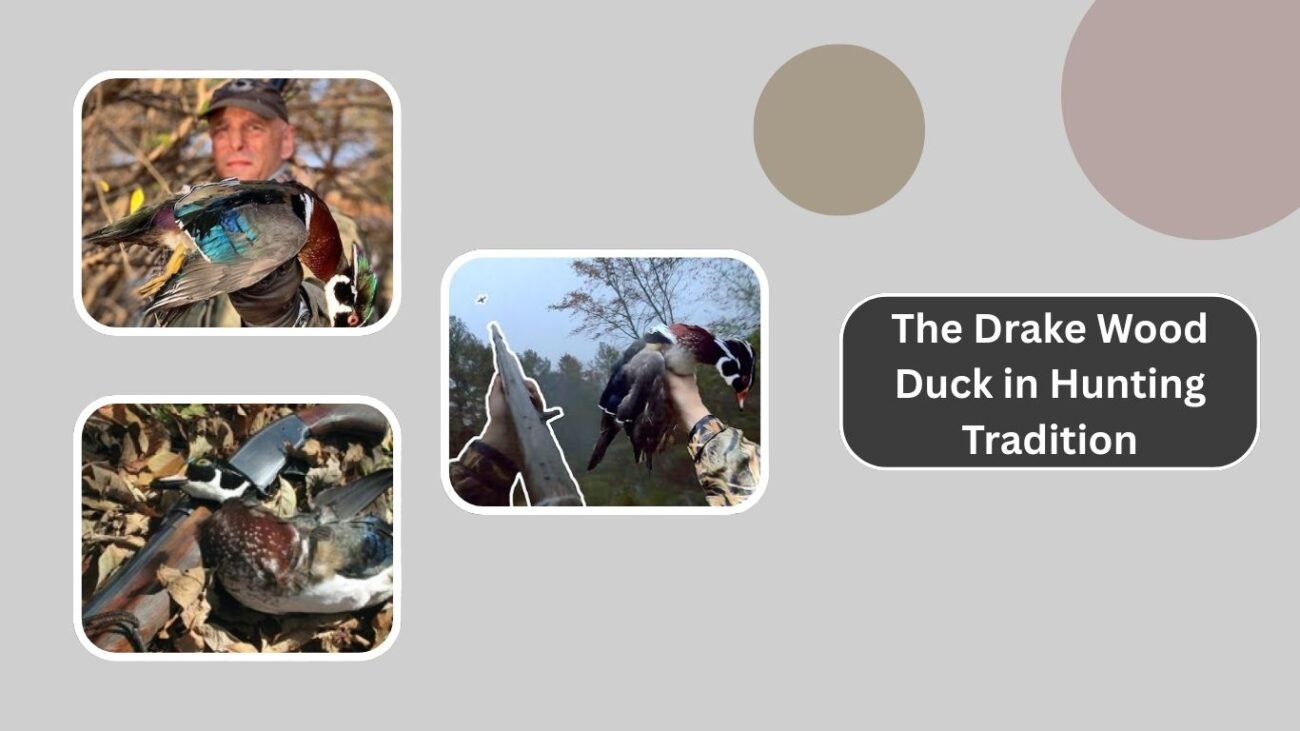
For waterfowl hunters, the drake wood duck is a prize both for its challenge and its beauty. Known for their swift, darting flight through trees, wood ducks are considered some of the most difficult ducks to hunt. Hunters often target them in flooded timber or along narrow creeks at dawn when they leave their roosts.
Drakes, with their bright plumage, are particularly valued by hunters who also engage in taxidermy. A mounted drake wood duck, with its iridescent feathers and striking head crest, is seen as a trophy piece symbolizing both beauty and skill in the hunt. However, hunting is tightly regulated to maintain population stability, with bag limits and season restrictions ensuring sustainability.
For many hunters, the drake wood duck represents not only a challenge in the field but also a reminder of how conservation and responsible practices have allowed this species to thrive once again.
FAQs
Why are drake wood ducks so colorful?
The bright plumage of drake wood ducks is used to attract females during courtship. The iridescent greens, purples, and chestnut colors act as signals of health and genetic strength. Outside of the breeding season, males lose this brightness and molt into duller plumage for camouflage, showing how their appearance is tied to both survival and reproduction.
Do drake wood ducks stay with their families?
Drakes play a protective role early in the nesting phase but usually leave once the female begins incubation. From then on, the hen raises the ducklings alone. This division of roles allows males to conserve energy for molting and migration while females focus entirely on brood care and survival.
How fast can a drake wood duck fly?
Drake wood ducks are exceptionally fast and agile flyers, capable of reaching speeds of around 30 miles per hour. Their ability to twist and dart through wooded swamps makes them one of the most challenging ducks to observe and hunt, adding to their reputation as elusive and spectacular birds.


