Pelicans are among the most remarkable waterbirds, instantly recognizable by their enormous bills and expandable throat pouches used to scoop up fish. Found across every continent except Antarctica, these social birds thrive in lakes, rivers, wetlands, and coastal regions. While some species, like the Brown Pelican, are famous for dramatic plunge-diving, others such as the Great White Pelican prefer cooperative group fishing.
In this guide, we’ll explore 8 types of pelicans, highlighting their unique features, habitats, and nesting behaviors.
1. Great White Pelican

The Great White Pelican (Pelecanus onocrotalus) is one of the largest and most widespread pelican species, admired for its impressive wingspan and cooperative feeding behavior. It is easily recognized by its bright white plumage and massive bill with a large throat pouch.
Identification
- Very large bird, 140–180 cm (55–71 in) long, wingspan up to 360 cm (12 ft).
- Predominantly white plumage with black flight feathers visible in flight.
- Immature birds are grayish-brown before turning white.
- Long yellow bill with a pinkish pouch.
- Short legs and strong webbed feet for swimming.
Habitat and Distribution
Found across southeastern Europe, Africa, and Asia. It inhabits large freshwater lakes, deltas, marshes, and sometimes coastal lagoons. Huge colonies are often formed in wetlands.
Behavior and Diet
Known for cooperative fishing, where groups of pelicans swim together to herd fish into shallow waters before scooping them up in their pouches. Diet consists mainly of fish, but occasionally amphibians and small invertebrates.
Breeding and Nesting
Nests in colonies on islands or reed beds near water. Females usually lay 2 eggs, incubated by both parents. Chicks are fed by regurgitation and grow rapidly, often joining crèches with other young pelicans.
2. Dalmatian Pelican

The Dalmatian Pelican (Pelecanus crispus) is the largest member of the pelican family and one of the heaviest flying birds in the world. Its curly nape feathers and massive wingspan make it a truly majestic sight.
Identification
- Enormous bird, 160–183 cm (63–72 in) long, wingspan up to 345 cm (11 ft).
- Plumage silvery-white with a distinctive curly crest of feathers on the nape.
- In breeding season, the bill pouch turns bright orange-red.
- Gray legs and pale yellow eyes.
- Immatures are gray-brown before attaining adult colors.
Habitat and Distribution
Found from southeastern Europe to central Asia, including Greece, Russia, Mongolia, and China. Prefers large lakes, deltas, and slow-moving rivers with abundant fish.
Behavior and Diet
Feeds mostly on fish, captured by scooping them from the water while swimming. Unlike some pelicans, it often fishes alone or in small groups. It is strong in flight despite its massive size, soaring gracefully on thermals.
Breeding and Nesting
Breeds in colonies on islands or dense reed beds. The female lays 2–3 eggs, with both parents sharing incubation and feeding duties. Chicks are raised in crèches until they fledge.
3. American White Pelican

The American White Pelican (Pelecanus erythrorhynchos) is one of the largest birds in North America, known for its brilliant white plumage and cooperative foraging. Unlike the Brown Pelican, it catches fish while swimming rather than plunge-diving.
Identification
- Large bird, 130–180 cm (50–70 in) long, wingspan up to 300 cm (10 ft).
- White body with black wing tips visible in flight.
- Long orange bill with a flat horn-like plate that develops in breeding season.
- Orange legs and webbed feet.
- Juveniles duller, with grayish markings.
Habitat and Distribution
Breeds in inland lakes of Canada and the northern United States. Winters along coastal waters of the southern U.S., Mexico, and Central America. Prefers freshwater lakes, reservoirs, and estuaries.
Behavior and Diet
Feeds mainly on fish, often working in coordinated groups to drive schools toward shallow water before scooping them up. Unlike the Brown Pelican, it does not dive from the air.
Breeding and Nesting
Breeds in large colonies on remote islands. Females lay 2–3 eggs, incubated by both parents. Chicks are fed by regurgitation and grow quickly, forming groups with other young birds.
4. Brown Pelican

The Brown Pelican (Pelecanus occidentalis) is the smallest pelican species and the only one that regularly plunge-dives from the air to catch fish. It is a coastal bird commonly seen along the shores of the Americas.
Identification
- Medium-sized pelican, 100–137 cm (39–54 in) long, wingspan up to 230 cm (7.5 ft).
- Body gray-brown with white head and neck, which may turn yellowish in breeding season.
- Long gray bill with expandable pouch.
- Juveniles are uniformly brown above with paler underparts.
- Distinctive silhouette when gliding low over the ocean.
Habitat and Distribution
Inhabits coastal regions of North and South America, from the southern United States and the Caribbean to northern South America. Common along beaches, bays, and estuaries.
Behavior and Diet
Unique among pelicans for its plunge-diving technique—dives from heights of 10–20 meters to catch fish with its bill pouch. Feeds mainly on small schooling fish like sardines and anchovies. Often seen flying in V-formations or gliding close to waves.
Breeding and Nesting
Breeds in colonies on coastal islands. Builds nests from sticks and vegetation. Females lay 2–3 eggs, incubated by both parents. Chicks are fed by regurgitated fish.
5. Peruvian Pelican
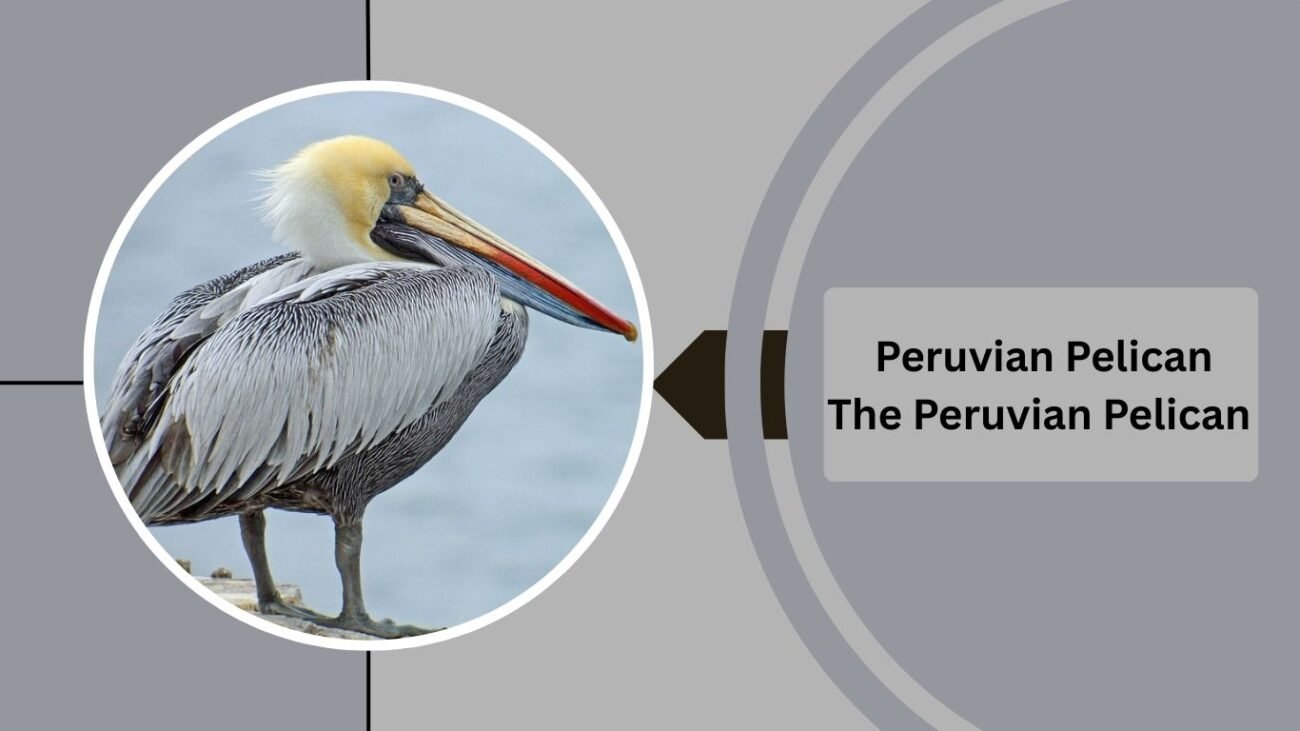
The Peruvian Pelican (Pelecanus thagus) is a large pelican native to the Pacific coast of South America. Closely related to the Brown Pelican, it is larger and more striking in appearance, especially during breeding season.
Identification
- Large bird, 137–152 cm (54–60 in) long, wingspan up to 260 cm (8.5 ft).
- Dark brownish body with white neck stripe and pale head.
- Long gray bill with colorful pouch—bluish and reddish during breeding season.
- Larger and heavier than the Brown Pelican.
- Juveniles are browner with less distinct markings.
Habitat and Distribution
Restricted to the Pacific coasts of Peru and Chile. Found in bays, rocky shores, and coastal islands, often near the cold Humboldt Current.
Behavior and Diet
Feeds mainly on anchovies and other schooling fish, often plunge-diving like the Brown Pelican but with less frequency. Can be seen resting in large flocks on rocky outcrops.
Breeding and Nesting
Breeds on rocky coastal islands, forming large colonies. Nests are shallow scrapes lined with feathers and vegetation. Females lay 2–3 eggs, with both parents caring for the young.
6. Spot-billed Pelican
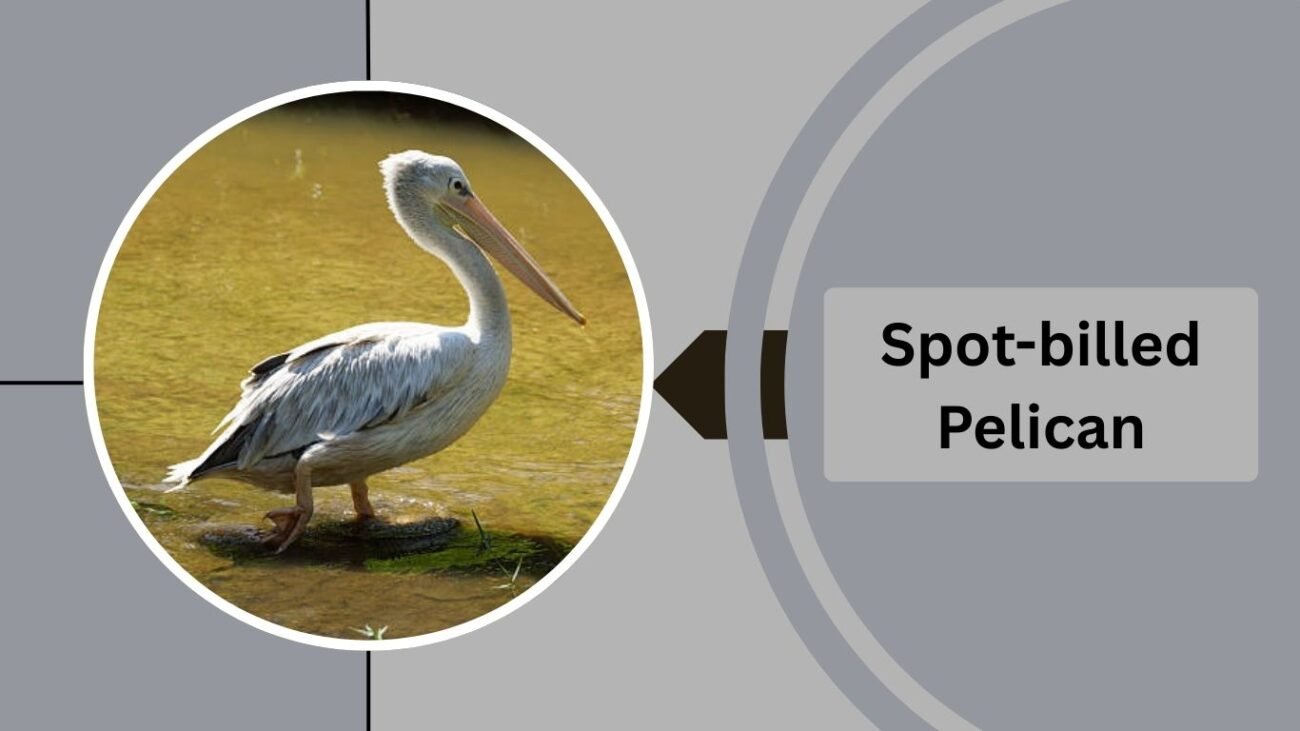
The Spot-billed Pelican (Pelecanus philippensis), also called the Grey Pelican, is a medium-sized pelican found mainly in southern Asia. It is less colorful than some species but easily recognized by the spots on its bill.
Identification
- Medium-sized pelican, 125–152 cm (49–60 in) long, wingspan about 210–250 cm (7–8 ft).
- Grayish-white plumage with darker wings.
- Bill is pale pinkish with distinctive dark spots along the upper mandible.
- Throat pouch is pale, sometimes slightly yellowish.
- Juveniles are browner with duller bills.
Habitat and Distribution
Occurs in freshwater lakes, rivers, marshes, and coastal lagoons of India, Sri Lanka, Cambodia, and southern parts of Southeast Asia.
Behavior and Diet
Feeds mainly on fish, caught by scooping while swimming. Often forages in small groups, sometimes in coordination to drive fish into shallows. Unlike Brown Pelicans, it does not plunge-dive.
Breeding and Nesting
Breeds colonially, often in trees near wetlands. Females lay 3–4 eggs, with both parents incubating and feeding the chicks.
7. Pink-backed Pelican
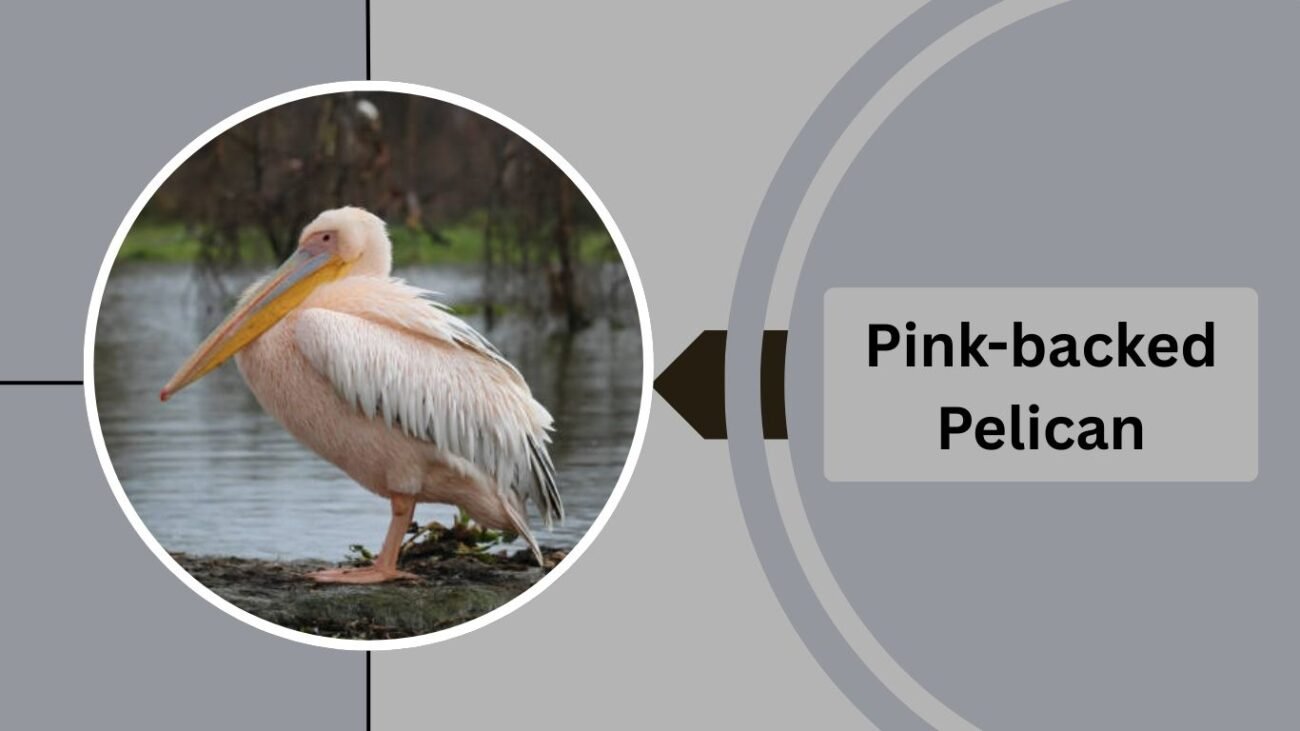
The Pink-backed Pelican (Pelecanus rufescens) is a smaller pelican species native to Africa and parts of the Arabian Peninsula. It is named for the faint pink tinge on its back, most visible in sunlight.
Identification
- Relatively small pelican, 125–155 cm (49–61 in) long, wingspan up to 270 cm (8.8 ft).
- Pale grayish-white plumage with a subtle pink wash on the back.
- Bill grayish with a pale yellow pouch.
- Smaller and more delicate-looking than larger pelicans.
- Juveniles are browner overall.
Habitat and Distribution
Widespread across sub-Saharan Africa, Madagascar, and southern Arabia. Found in shallow lakes, rivers, swamps, and coastal lagoons.
Behavior and Diet
Feeds primarily on fish, often hunting in small flocks. Known for cooperative foraging, where groups circle fish into shallower water before scooping them up.
Breeding and Nesting
Breeds colonially, nesting in trees, reed beds, or rocky islets near water. Lays 2–3 eggs, incubated by both parents. Young are cared for in crèches once they leave the nest.
8. Australian Pelican
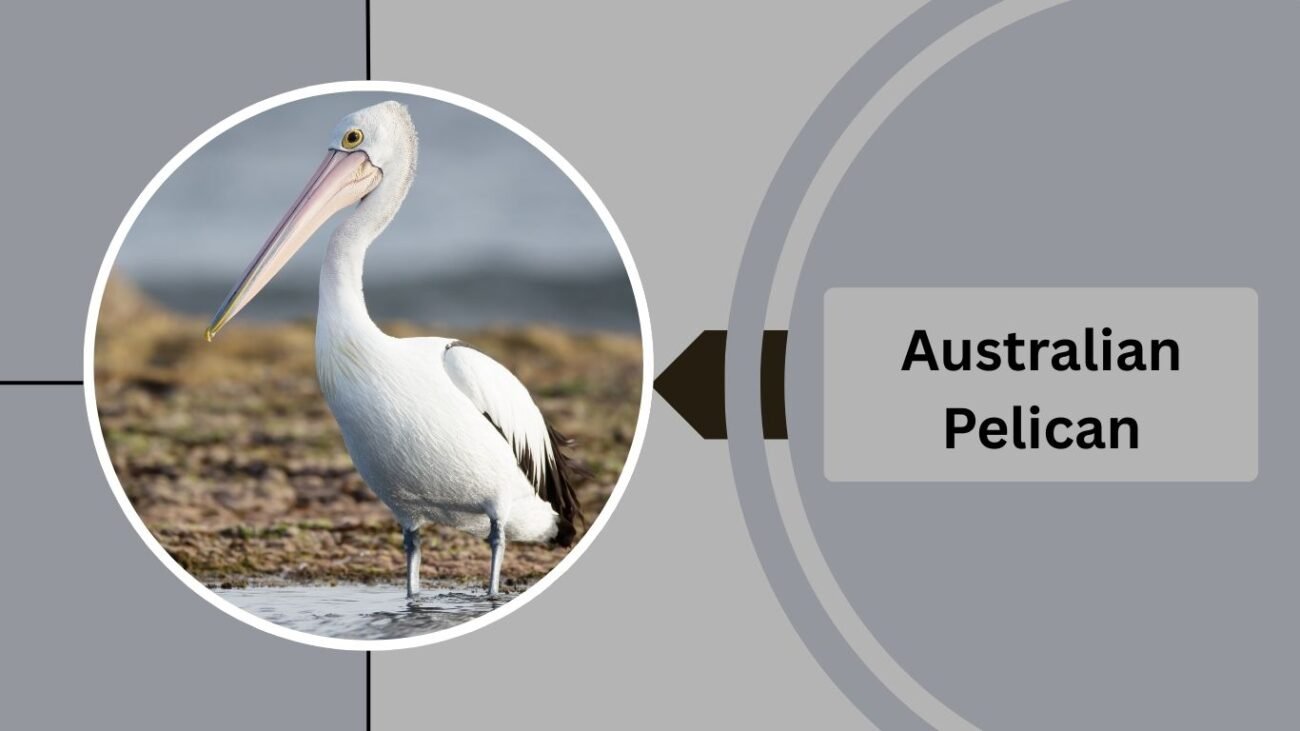
The Australian Pelican (Pelecanus conspicillatus) is famous for having the longest bill of any living bird, making it one of the most striking pelican species. It is a highly adaptable bird found across Australia and nearby regions.
Identification
- Large pelican, 152–188 cm (60–74 in) long, wingspan up to 280–340 cm (9–11 ft).
- White plumage with black wings and a pinkish bill.
- Immature birds are grayish-brown with duller markings.
- Enormous bill can reach up to 50 cm (20 in) long, with a pink pouch.
- Yellow eyes outlined by bare blue skin.
Habitat and Distribution
Found throughout Australia, New Guinea, and parts of Indonesia. Inhabits freshwater lakes, rivers, swamps, estuaries, and coastal lagoons. Highly nomadic, moving in response to water availability.
Behavior and Diet
Feeds mainly on fish, captured by scooping with its bill. Also consumes crustaceans, tadpoles, and occasionally small birds. Known for cooperative feeding, where flocks encircle fish before catching them.
Breeding and Nesting
Breeds in large colonies, often in inland wetlands during periods of high rainfall. Nests are simple scrapes on the ground, lined with vegetation. Females lay 1–3 eggs, incubated by both parents. Chicks are raised communally in crèches.
FAQs
What is the largest pelican species?
The Dalmatian Pelican is the largest, measuring up to 183 cm (6 ft) long with a wingspan of around 345 cm (11 ft). It is also one of the heaviest flying birds in the world, weighing up to 15 kg.
Which pelican has the longest bill?
The Australian Pelican holds the record with a bill reaching up to 50 cm (20 in) long. Its enormous throat pouch can hold several liters of water and fish, making it highly efficient at catching prey.
Do all pelicans dive to catch fish?
No, not all pelicans dive. The Brown Pelican and Peruvian Pelican are plunge-divers, dropping from the air into the water to snatch fish. Other species, like the Great White Pelican and Spot-billed Pelican, scoop fish while swimming on the surface.
Where do pelicans usually live?
Pelicans are found worldwide near water, inhabiting lakes, rivers, marshes, estuaries, and coastal lagoons. Different species adapt to regions ranging from Africa and Asia to the Americas and Australia.
How do pelicans care for their chicks?
Pelicans usually lay 1–3 eggs. Both parents take turns incubating the eggs and later feed the chicks by regurgitating fish. In many species, chicks gather in groups called crèches, where they grow together until fledging.