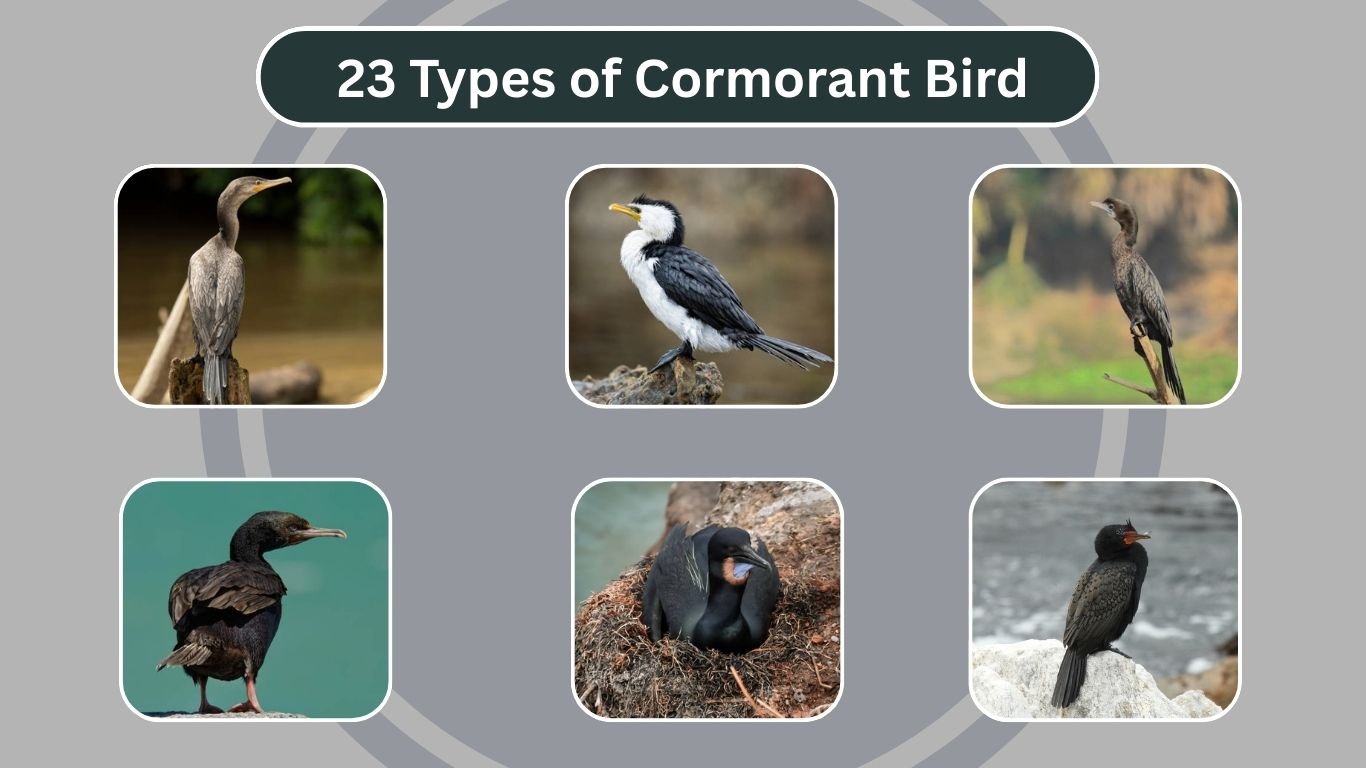
Cormorants are fascinating waterbirds known for their sleek bodies, strong diving skills, and unique habit of spreading their wings to dry after fishing. Found across every continent except Antarctica, these birds thrive in lakes, rivers, wetlands, and coastal waters. With 23 recognized types, each species displays distinct traits in size, plumage, and range. This article explores all 23 types of cormorant birds, providing detailed identification, habitats, and behaviors for birdwatchers and nature enthusiasts alike.
1. Great Cormorant

The Great Cormorant (Phalacrocorax carbo) is one of the most widespread and recognizable cormorant species, found across Europe, Asia, Africa, and parts of Australia. It thrives in both freshwater and coastal habitats, making it a highly adaptable bird. Known for its fishing skills, this species often perches with wings spread wide to dry after diving. Its versatility and striking appearance make it a key representative of the cormorant family.
Identification
- Family: Phalacrocoracidae
- Length: 80–100 cm
- Wingspan: 130–160 cm
- Plumage: Glossy black with a greenish or bluish sheen, white patches on face and thighs during breeding
- Bill: Long, hooked, and yellowish at the base
- Eye: Bright green to turquoise, giving a piercing gaze
Habitat and Distribution
Great Cormorants are found across a wide range of habitats, including coastal cliffs, estuaries, lakes, and rivers. They are highly adaptable and can live in both freshwater and saltwater environments. Their distribution covers much of Europe, Asia, Africa, and extends to parts of Australia and New Zealand.
Behavior and Diet
These birds are expert divers, capable of pursuing fish underwater with great agility. They primarily feed on fish but may also take crustaceans and amphibians. Great Cormorants often hunt cooperatively in groups, driving fish into shallow waters. After feeding, they are frequently seen perched with wings outstretched to dry.
2. Double-crested Cormorant

The Double-crested Cormorant (Nannopterum auritum) is one of the most widespread cormorant species in North America. Known for its distinctive double crest of feathers during the breeding season, it thrives in both freshwater and coastal environments. These birds are skilled divers and are often seen perched on rocks or docks with wings spread wide to dry. They play an important ecological role as fish predators and indicators of healthy aquatic systems.
Identification
- Family: Phalacrocoracidae
- Length: 70–90 cm
- Wingspan: 114–123 cm
- Plumage: Mostly black with a slight bronze sheen
- Bill: Long, hooked, grayish with a yellow-orange gular pouch
- Crest: Distinctive double crest of black or white feathers during breeding
- Eye: Bright turquoise-blue
Habitat and Distribution
Double-crested Cormorants inhabit lakes, rivers, estuaries, and coastlines across North America, from Alaska and Canada down through Mexico and the Caribbean. They are highly adaptable, nesting on islands, trees, cliffs, or even man-made structures. In winter, they migrate southward to warmer coastal areas.
Behavior and Diet
This species feeds primarily on fish, diving efficiently underwater to catch prey. They are opportunistic and will also eat amphibians and crustaceans. Double-crested Cormorants often forage in groups, driving fish into tight schools for easier capture. After feeding, they characteristically spread their wings to dry, as their feathers lack complete waterproofing.
3. Brandt’s Cormorant
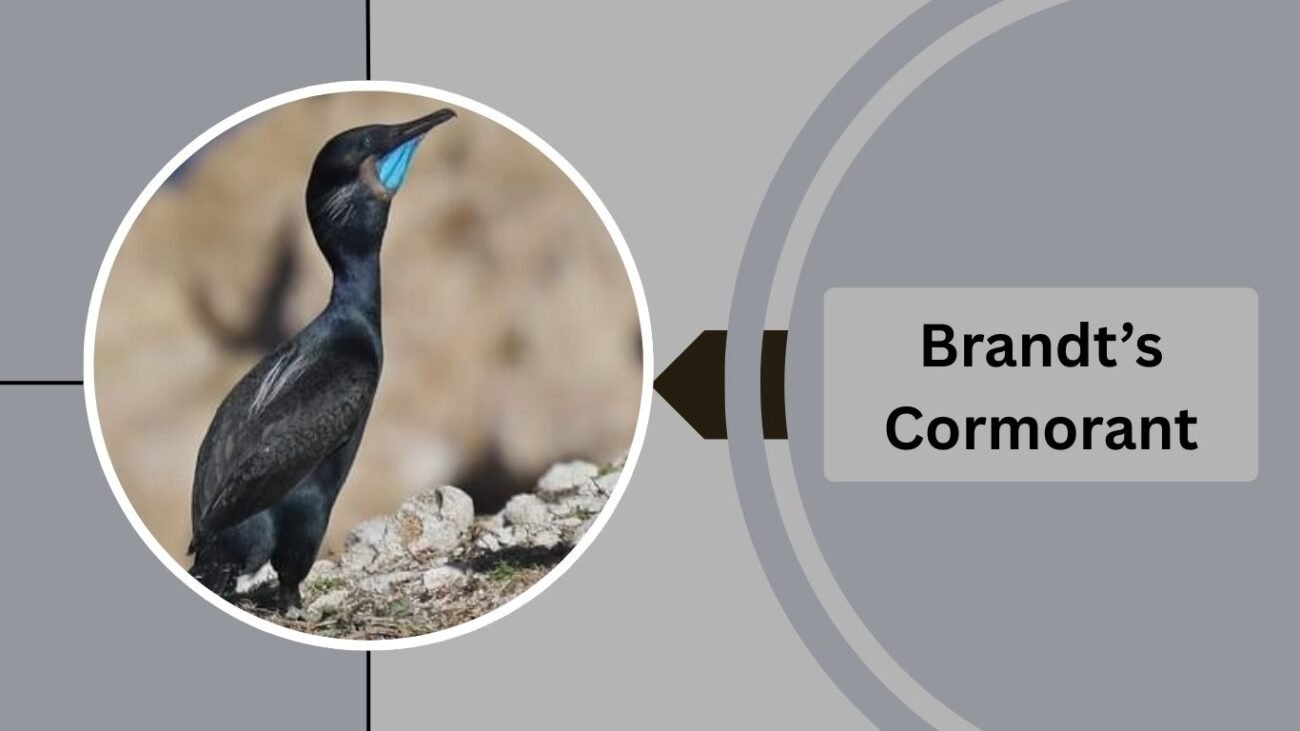
Brandt’s Cormorant (Urile penicillatus) is a striking seabird found along the Pacific Coast of North America, from Alaska to Baja California. This species is especially known for its brilliant cobalt-blue throat patch and white plumes during breeding, making it one of the most colorful cormorants. Highly marine-oriented, it rarely ventures inland, preferring rocky coastlines, kelp forests, and offshore islands where fish are abundant.
Identification
- Family: Phalacrocoracidae
- Length: 80–89 cm
- Wingspan: 130–160 cm
- Plumage: Glossy black overall, with bronze-brown tones visible in sunlight
- Bill: Long, black, and hooked at the tip
- Breeding Features: Bright cobalt-blue throat pouch and thin white plumes on the head and neck
- Eye: Emerald to turquoise blue
Habitat and Distribution
Brandt’s Cormorant is strictly coastal, inhabiting rocky shorelines, offshore islands, and marine cliffs. They are most commonly found along the Pacific coast, especially in California, where large breeding colonies form on rocky outcrops. They forage close to shore, often diving in kelp beds where small schooling fish are abundant.
Behavior and Diet
This species is a powerful diver, capable of reaching depths of up to 40 meters in pursuit of fish. They mainly consume anchovies, sardines, and other small schooling fish, along with occasional crustaceans. Brandt’s Cormorants are often seen perched on rocks or piers, wings spread to dry. During breeding season, they gather in large colonies, with males performing dramatic displays to attract mates.
4. Pelagic Cormorant
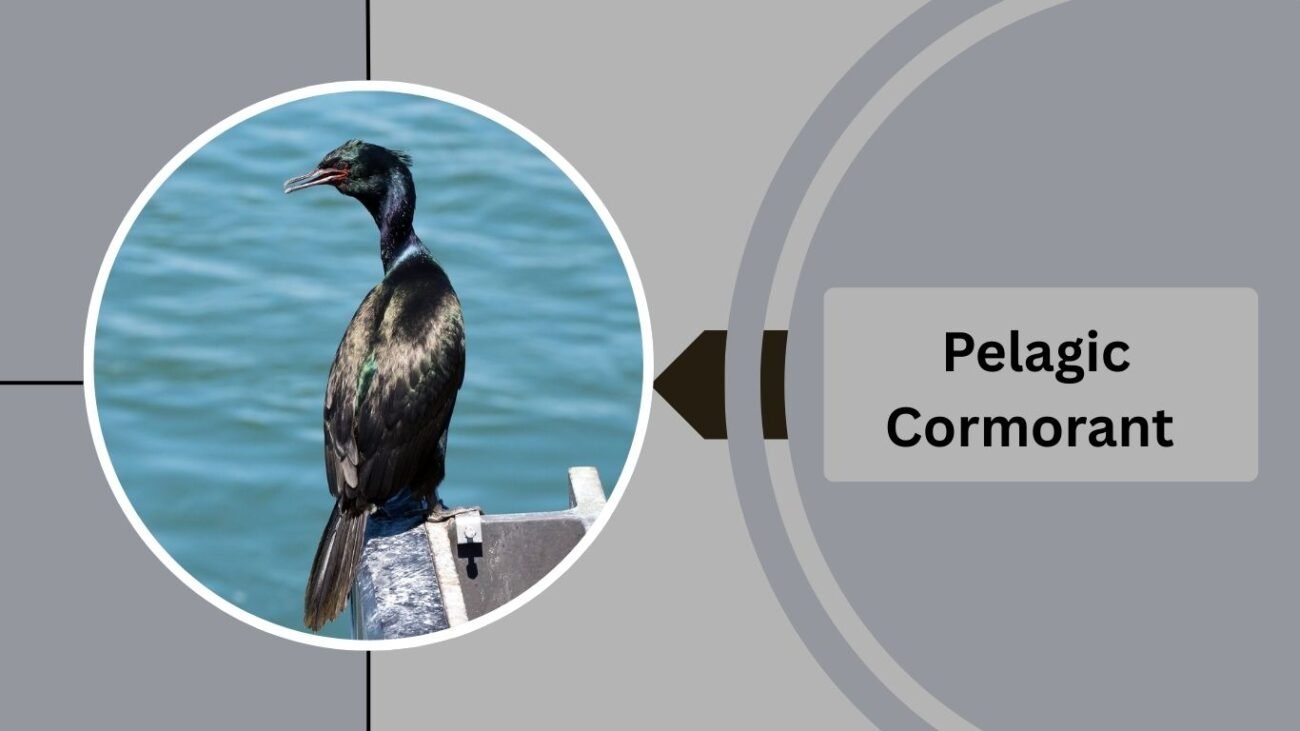
The Pelagic Cormorant (Urile pelagicus) is the smallest and most slender cormorant in North America. True to its name, it is highly marine and almost never found inland. It favors rugged coastlines, cliffs, and offshore waters where it can dive deeply for food. During the breeding season, it displays striking plumage details that make it one of the more beautiful but less conspicuous members of the cormorant family.
Identification
- Family: Phalacrocoracidae
- Length: 65–75 cm
- Wingspan: 90–100 cm
- Plumage: Glossy black with a greenish or purplish sheen in sunlight
- Bill: Thin, dark, slightly hooked tip
- Breeding Features: White flank patches, iridescent plumage, and short white filoplumes on head and neck
- Eye: Shining emerald-green
Habitat and Distribution
Pelagic Cormorants inhabit the rocky Pacific coasts of North America and Asia. In North America, they range from Alaska down to Baja California. Unlike other species, they nest on narrow cliff ledges and rugged rock outcrops close to the ocean. They are often seen flying low over the water with quick wingbeats.
Behavior and Diet
This species is an agile diver, capable of reaching depths beyond 50 meters to capture small fish, crustaceans, and marine invertebrates. They usually forage alone or in pairs rather than in large flocks. After feeding, Pelagic Cormorants perch on rocks or ledges, spreading their wings to dry in the sea breeze. Their solitary nature and cliff-nesting habits make them less conspicuous compared to Double-crested or Brandt’s Cormorants.
5. Red-faced Cormorant
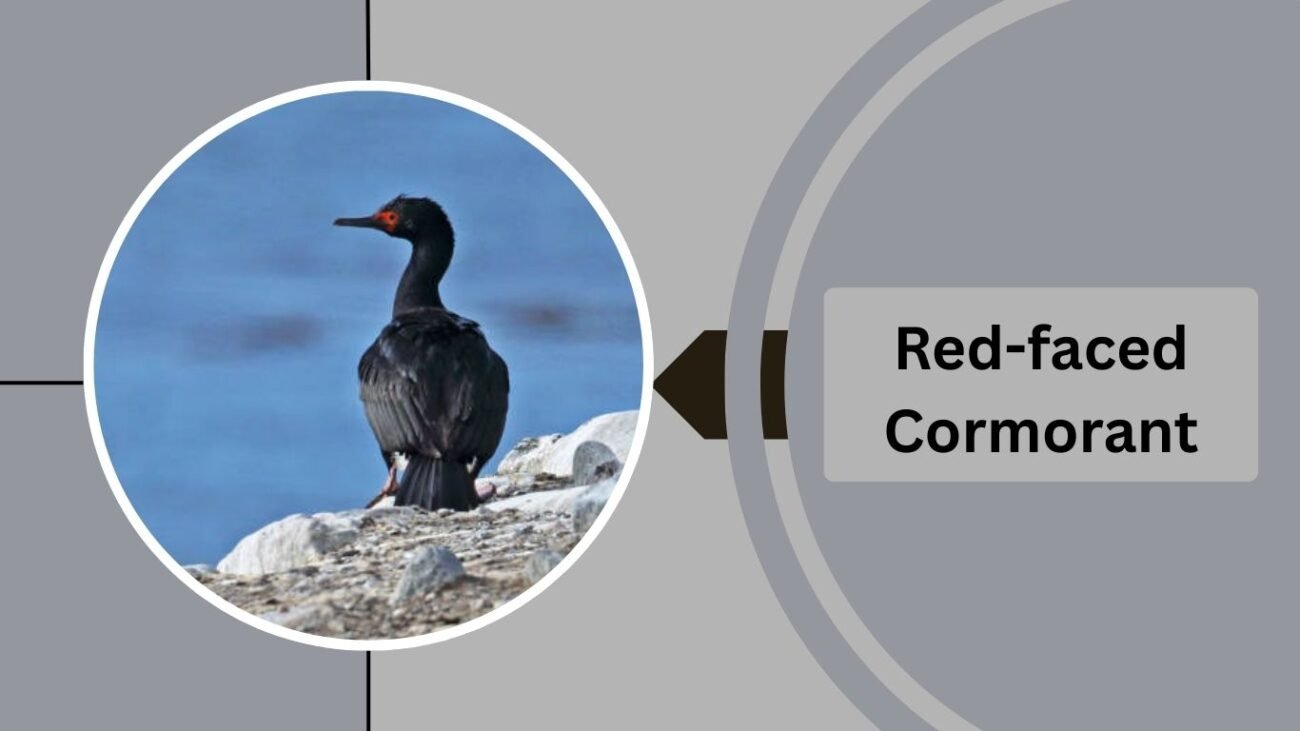
The Red-faced Cormorant (Urile urile) is a striking seabird of the North Pacific, especially known for its vivid facial skin that becomes bright red during the breeding season. This species is less widespread than others, being mostly restricted to the Aleutian Islands, Bering Sea, and coastal regions of eastern Russia. Its unique appearance and isolated range make it one of the most distinctive cormorants in the world.
Identification
- Family: Phalacrocoracidae
- Length: 70–80 cm
- Wingspan: 110–120 cm
- Plumage: Shiny black with iridescent green and purple sheen
- Bill: Dark, thin, and slightly hooked at the tip
- Breeding Features: Bright red facial skin, white flank patches, and filamentous head plumes
- Eye: Clear greenish-blue
Habitat and Distribution
The Red-faced Cormorant is primarily found in the Aleutian Islands, Alaska Peninsula, Bering Sea, Kamchatka, and parts of the Kuril Islands. They nest on remote rocky cliffs, offshore islands, and coastal ledges, often forming mixed colonies with murres, puffins, and gulls. Their range is limited compared to other cormorants, making sightings special.
Behavior and Diet
This species is an adept underwater hunter, diving to great depths to feed mainly on fish such as sand lance, sculpins, and greenlings, as well as some crustaceans. Unlike the more gregarious Double-crested Cormorant, Red-faced Cormorants are less social and often forage alone or in small groups. Their brilliant breeding coloration and cliffside nests add dramatic beauty to the rugged northern coasts they inhabit.
6. Pelagic Shag
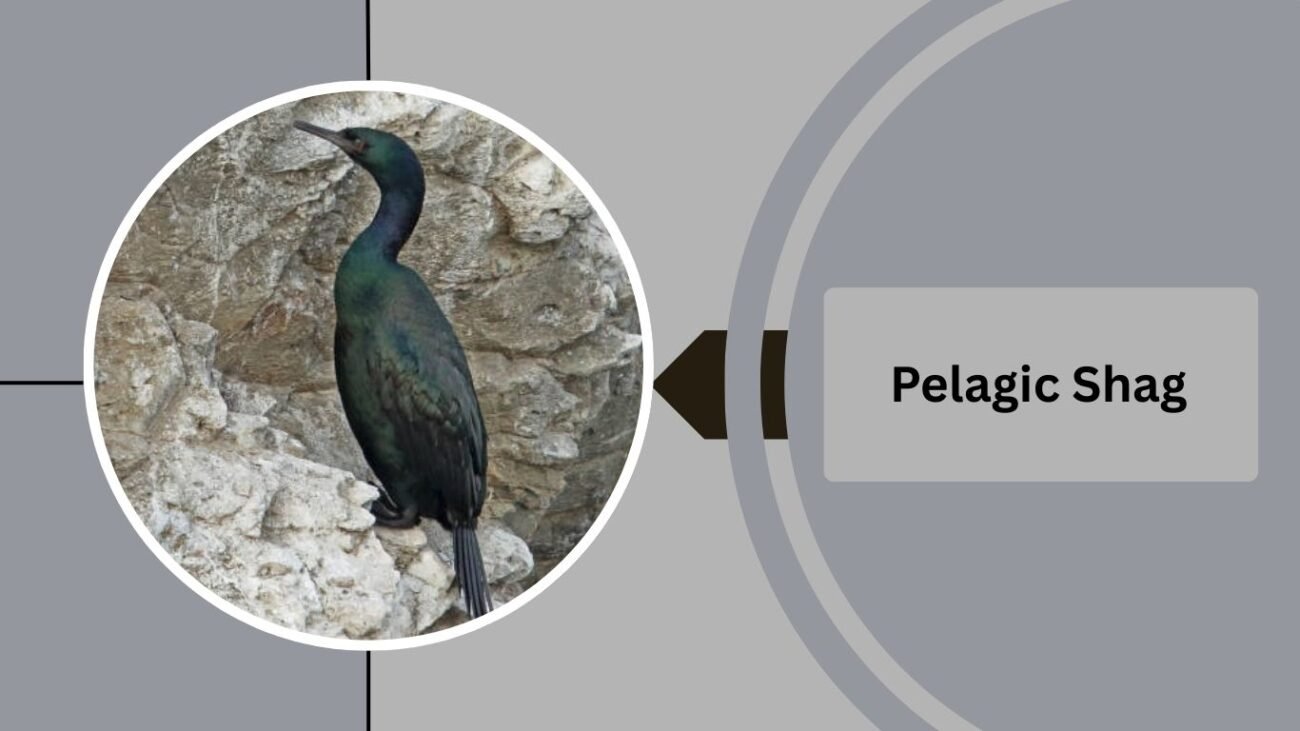
The Pelagic Shag (Phalacrocorax pelagicus) is often confused with its close relatives, but it is a unique seabird adapted to life along northern coastal waters. Known also as the Pelagic Shag or Violet Shag in some regions, this bird is recognized for its slender body and glossy plumage. Its lifestyle is closely tied to rugged shorelines and rocky cliffs where it breeds and roosts.
Identification
- Family: Phalacrocoracidae
- Length: 65–75 cm
- Wingspan: 100–120 cm
- Plumage: Glossy black with a violet or green sheen in good light
- Bill: Thin, dark, with a hooked tip
- Breeding Features: White patches on flanks, filamentous plumes on head and neck
- Eye: Emerald-green
Habitat and Distribution
Pelagic Shags are distributed across the North Pacific, including coastal Russia, the Kuril Islands, Kamchatka, Japan, and parts of Alaska. They prefer steep cliffs, offshore stacks, and rocky coastlines where they nest in colonies. Their name reflects their highly marine lifestyle, as they rarely venture inland and are almost always tied to ocean habitats.
Behavior and Diet
This species is an agile diver and primarily feeds on fish and marine invertebrates. It forages close to shore or in offshore waters, diving deeply with strong propulsion from its webbed feet. After hunting, it typically perches on exposed rocks or cliff ledges, spreading its wings to dry in the wind. Pelagic Shags are generally less gregarious than some other cormorants, often nesting in smaller groups.
7. Indian Cormorant
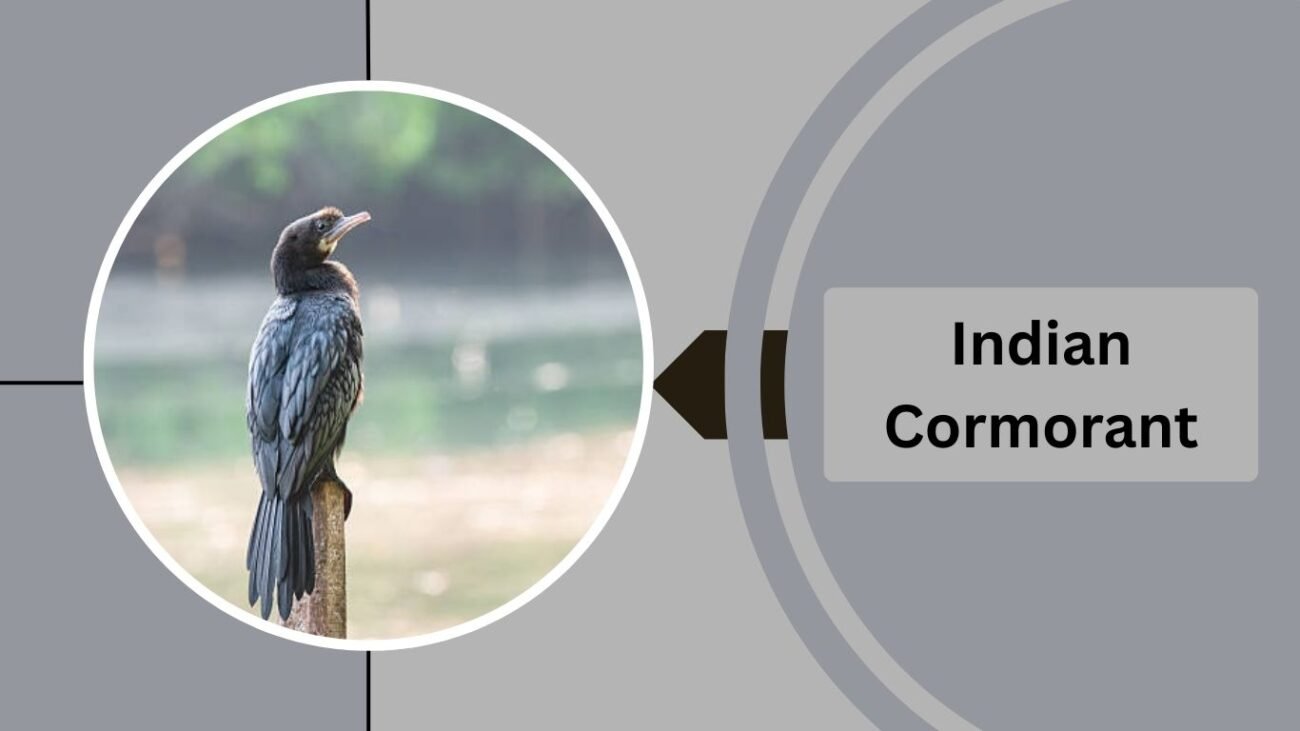
The Indian Cormorant (Phalacrocorax fuscicollis) is a medium-sized freshwater cormorant found widely across South Asia. Known for its slender build and distinctive facial features, this species is commonly seen around rivers, lakes, and wetlands rather than open coasts. It often forages in groups and is a familiar sight for birdwatchers throughout India, Sri Lanka, and neighboring countries.
Identification
- Family: Phalacrocoracidae
- Length: 60–65 cm
- Wingspan: 100–105 cm
- Plumage: Dark brownish-black overall, lighter brown on the head and neck
- Bill: Slender, slightly curved with a yellowish or pale tip
- Facial Features: Long, narrow face with a bluish eye-ring, giving a striking look
- Eye: Bright blue to turquoise
Habitat and Distribution
The Indian Cormorant thrives in inland freshwater bodies such as lakes, reservoirs, large rivers, and marshes. It is widely distributed across the Indian subcontinent, Sri Lanka, and parts of Myanmar. Unlike many cormorants, it is less tied to marine coasts and prefers still or slow-moving water with abundant fish populations.
Behavior and Diet
Highly social, the Indian Cormorant is often seen foraging in flocks, diving in coordinated groups to herd fish. It primarily feeds on small to medium-sized fish, along with some aquatic invertebrates. After feeding, it perches on trees or posts, spreading its wings to dry. Their colonial nesting habits often bring large flocks together in wetlands, sometimes alongside herons, storks, and egrets.
8. Little Cormorant
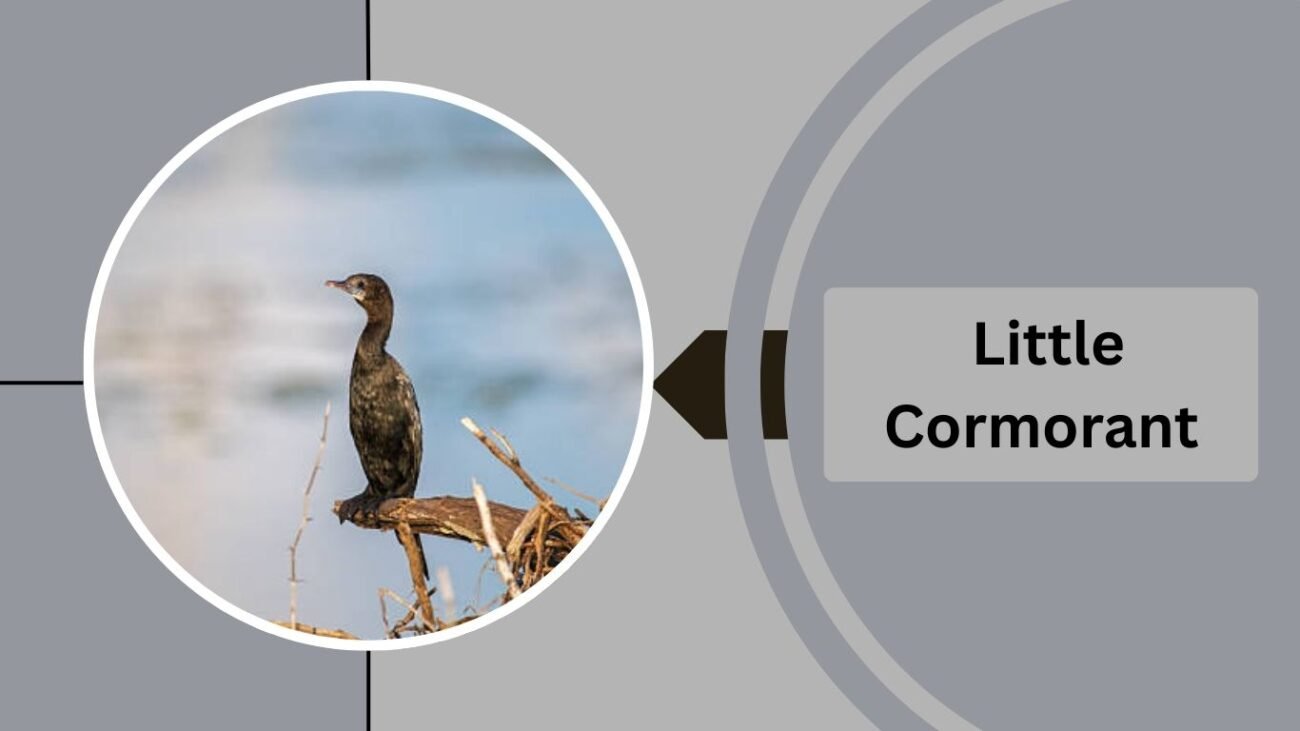
The Little Cormorant (Microcarbo niger) is one of the most widespread and easily recognized cormorant species in South Asia. Smaller than most of its relatives, this bird thrives in freshwater habitats and is often spotted perched on branches or posts near ponds, rivers, and marshes. Despite its modest size, it is an efficient diver and a highly social bird, frequently seen in flocks.
Identification
- Family: Phalacrocoracidae
- Length: 50–55 cm
- Wingspan: Around 85–90 cm
- Plumage: Glossy black during breeding, duller brownish-black in non-breeding season
- Bill: Short, dark, with a slight downward curve
- Facial Features: Lacks colorful markings, giving it a plain yet distinctive look
- Eye: Dark brown
Habitat and Distribution
The Little Cormorant inhabits wetlands, lakes, rivers, and village ponds across India, Bangladesh, Sri Lanka, Myanmar, and parts of Southeast Asia. It avoids strong coastal waters, preferring calm freshwater habitats. Because of its adaptability, it often lives close to human settlements, where fishing opportunities are abundant.
Behavior and Diet
Little Cormorants hunt mainly in shallow waters, diving to catch fish, frogs, and aquatic invertebrates. They often fish in groups, coordinating to drive prey into tighter shoals. After foraging, they perch with wings spread wide to dry. Nesting occurs in colonies, usually in tall trees near water, often alongside herons and storks. Their loud, harsh calls are a common feature of wetland colonies.
9. Reed Cormorant
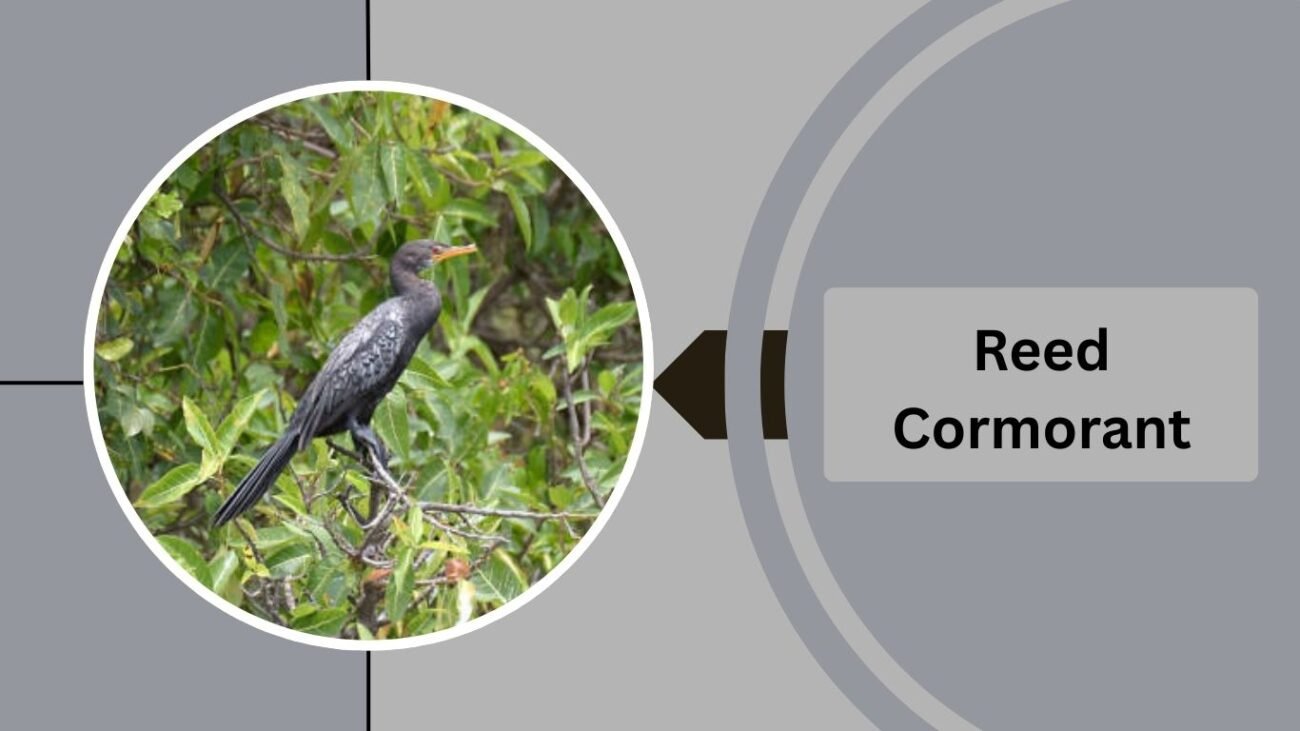
The Reed Cormorant (Microcarbo africanus), also called the Long-tailed Cormorant, is a small, slender waterbird widely found across sub-Saharan Africa and parts of Madagascar. It is closely related to the Little Cormorant but can be distinguished by its longer tail and more streamlined appearance. Frequently seen in inland wetlands, this bird is known for its agile diving skills and preference for reed-fringed waters.
Identification
- Family: Phalacrocoracidae
- Length: 50–55 cm
- Wingspan: 80–90 cm
- Plumage: Glossy black with a bronze or green sheen during breeding; brownish-black in non-breeding season
- Bill: Thin, sharp, with a yellow base near the gape
- Tail: Longer than most small cormorants, giving it a distinctive look
- Eye: Bright red during breeding, brown otherwise
Habitat and Distribution
The Reed Cormorant inhabits freshwater lakes, rivers, marshes, and swamps, particularly those with dense reedbeds. It avoids large open coasts, instead thriving in inland wetlands. Its distribution extends widely across Africa south of the Sahara and into Madagascar. Because of its preference for freshwater habitats, it is one of the most familiar cormorants in the region.
Behavior and Diet
This species is an adept diver, feeding mainly on small fish, crustaceans, and aquatic insects. It often forages alone or in small groups, diving repeatedly to chase prey underwater. After feeding, it perches on low branches or reed stems, spreading its wings to dry. Nesting takes place in colonies, usually in reedbeds or trees near water, where it builds a compact nest of sticks and reeds.
10. Crowned Cormorant
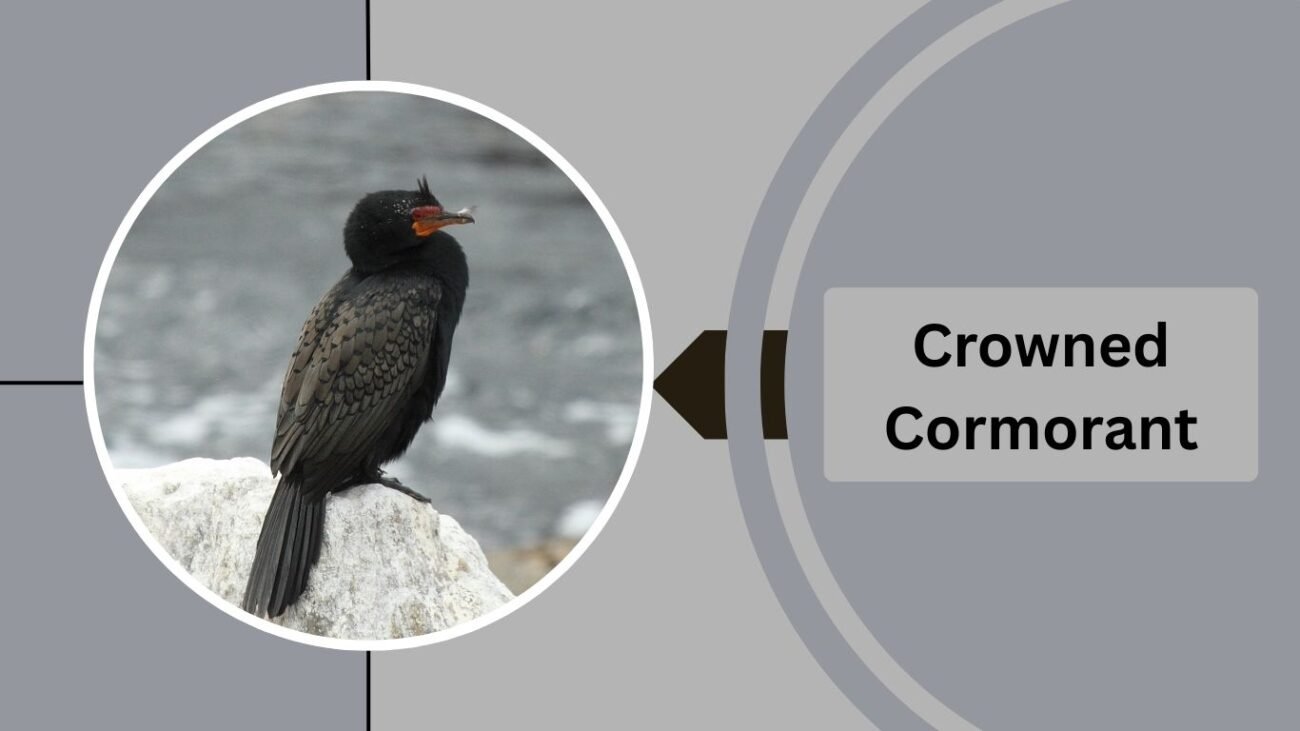
The Crowned Cormorant (Microcarbo coronatus) is a small coastal cormorant native to southern Africa. Unlike many other species that prefer freshwater or wide coastal ranges, the Crowned Cormorant is highly localized, often found along rocky shorelines and inshore waters. Its distinctive small crest during breeding gives it the name “Crowned,” making it one of the more easily recognized cormorants in its region.
Identification
- Family: Phalacrocoracidae
- Length: 50–55 cm
- Wingspan: 85–90 cm
- Plumage: Glossy black with a bronze sheen, sometimes with a faint crest on the head
- Bill: Slender and slightly curved, pale yellow to horn-colored
- Tail: Proportionally long for its body size
- Eye: Greenish-blue, adding a striking detail to its face
Habitat and Distribution
This species is restricted to the coasts of Namibia and South Africa, rarely straying far inland. It prefers rocky shores, islands, and sheltered coastal waters. Because of its limited range, it is considered near-threatened, with populations affected by habitat disturbance and competition with larger seabirds.
Behavior and Diet
The Crowned Cormorant primarily feeds on small fish and invertebrates, diving in shallow coastal waters close to reefs and kelp beds. Unlike many other cormorants, it often forages close to the shore rather than in open water. Breeding colonies are typically found on rocky islands or cliffs, where pairs build nests out of seaweed and sticks. Though less gregarious than other species, they may gather in small groups when roosting.
11. Red-faced Cormorant
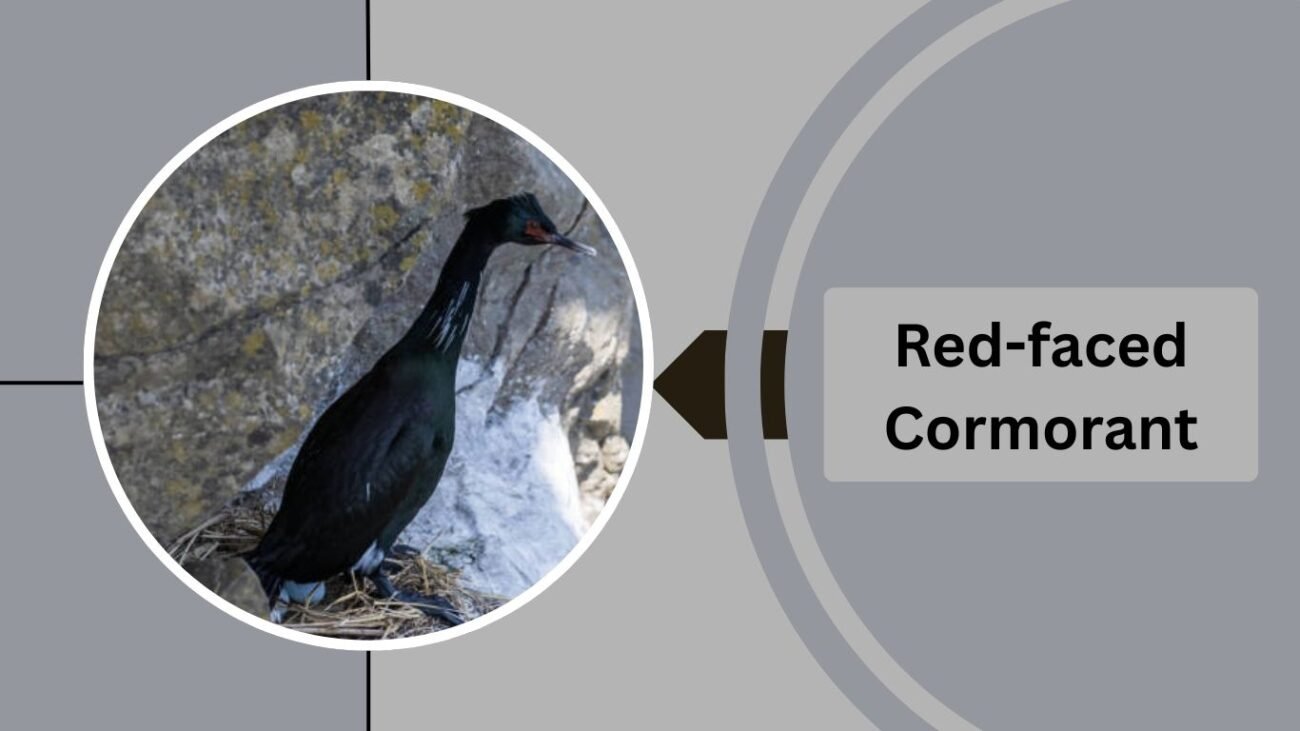
The Red-faced Cormorant (Urile urile), also known as the Violet Shag, is a striking seabird native to the North Pacific. It is instantly recognizable by its vivid red facial skin and glossy plumage. This medium-sized cormorant is less common than many of its relatives and is considered more localized, breeding along remote coasts and islands in Alaska, Russia, and parts of Northeast Asia.
Identification
- Family: Phalacrocoracidae
- Length: 70–75 cm
- Wingspan: 100–120 cm
- Plumage: Shiny black with violet and green iridescence, especially noticeable in sunlight
- Facial Skin: Distinct bright red patch around the base of the bill and eyes during breeding season
- Bill: Dark, slightly hooked with a pale tip
- Eye: Emerald green, giving a vivid contrast to the red face
- Crest: Small tuft present in breeding plumage
Habitat and Distribution
This species breeds on rocky islands, sea cliffs, and coastal areas of the Aleutian Islands, Bering Sea, Kamchatka Peninsula, and parts of Japan. It favors cold, nutrient-rich waters where fish are abundant. Outside the breeding season, it disperses along rocky coastlines but rarely ventures inland, keeping a strong marine association.
Behavior and Diet
Red-faced Cormorants feed mainly on fish such as sand lance, sculpins, and flatfish, as well as crustaceans. They dive expertly, often submerging in deeper waters than some smaller species. Breeding colonies are usually mixed with other seabirds but remain relatively isolated. Nests are made of seaweed, grasses, and guano cemented on cliff ledges. This species is considered uncommon and vulnerable to population declines due to oil spills, fisheries competition, and climate change.
12. Pelagic Cormorant
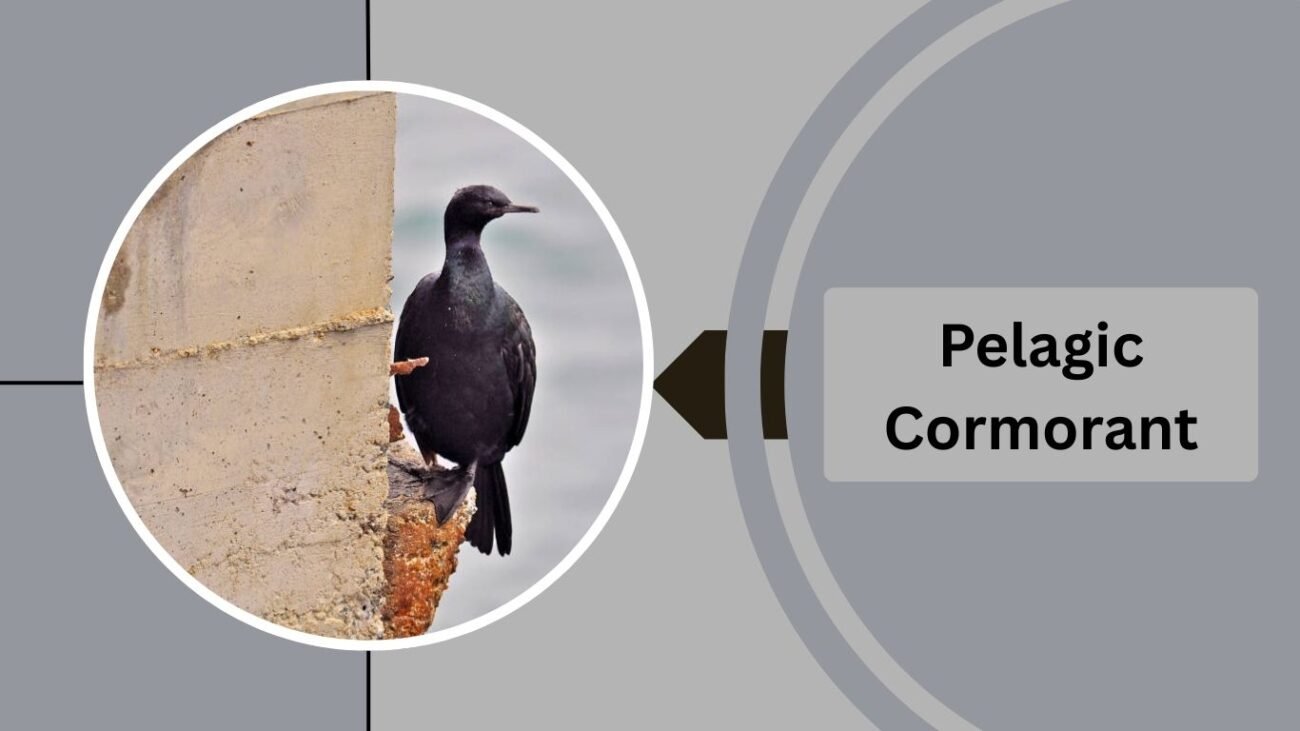
The Pelagic Cormorant (Urile pelagicus) is a slender, graceful seabird found along the North Pacific coasts. True to its name, it is strongly marine-oriented, rarely venturing inland. It is among the smallest of the North Pacific cormorants but is easily recognized by its shimmering plumage and elongated body. Despite its size, it is a powerful diver, adapted to forage in deep, cold waters.
Identification
- Family: Phalacrocoracidae
- Length: 70–80 cm
- Wingspan: 90–100 cm
- Plumage: Glossy black with iridescent green and purple tones, especially during the breeding season
- Facial Skin: Reddish patches near the bill in breeding plumage
- Bill: Thin, dark, and slightly hooked
- Tail: Long and wedge-shaped, often fanned while perched
- Other Feature: Small white flank patches appear during breeding season
Habitat and Distribution
This species inhabits rocky coasts, cliffs, and offshore islands from the coasts of California and Alaska across to eastern Russia, Japan, and Korea. It prefers exposed, wave-battered shorelines and rarely moves inland. During winter, it disperses along coastlines but remains marine-bound, staying close to its ocean habitat.
Behavior and Diet
Pelagic Cormorants dive to impressive depths, often exceeding 40 meters, hunting fish such as sculpins, greenlings, and gunnels. They also feed on crustaceans and other small marine organisms. Breeding colonies are formed on steep cliffs and rocky ledges where they construct nests out of seaweed and guano. Unlike some other cormorants, they are more solitary in nature, often seen diving alone or in pairs rather than in large groups.
13. Bronze Cormorant
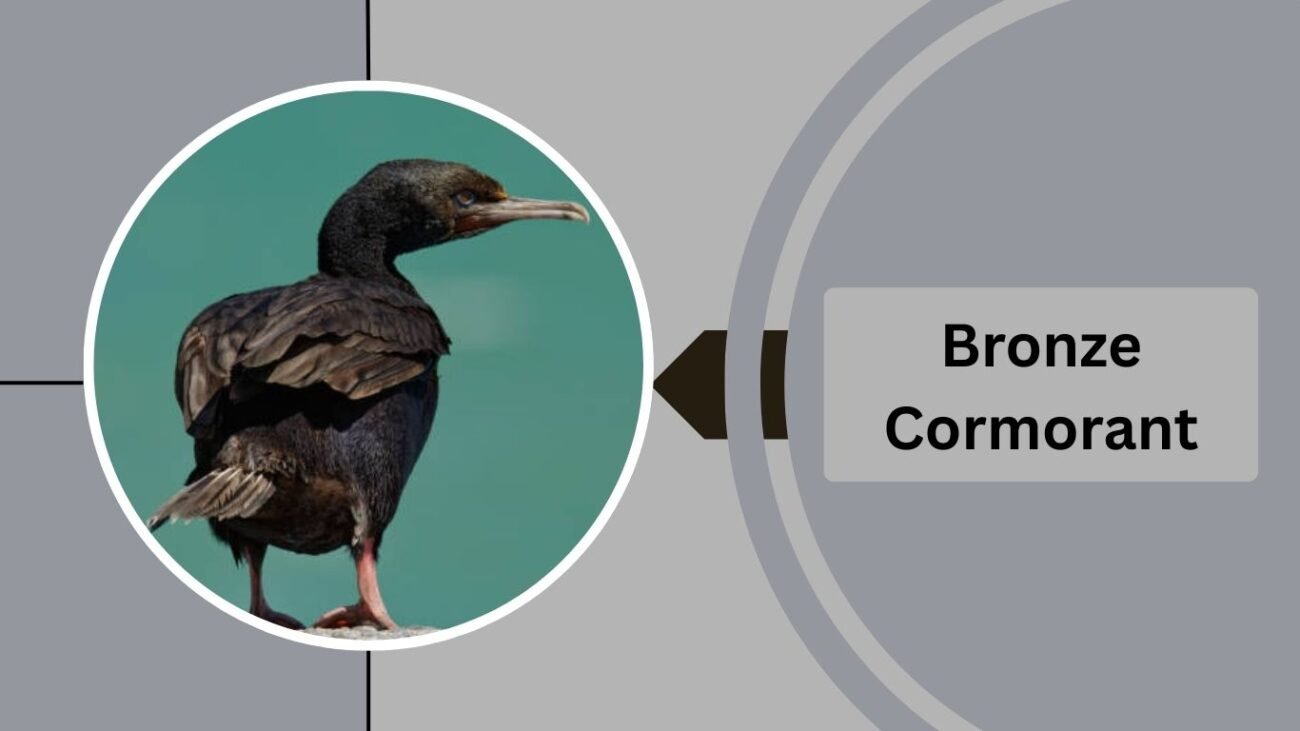
The Bronze Cormorant (Phalacrocorax brunneus), also known as the Indian Cormorant, is a medium-sized waterbird widely distributed across South and Southeast Asia. It is distinguished by its darker plumage, often tinged with a bronze or greenish sheen, giving the species its common name. Adapted to freshwater environments, this bird is a common sight along rivers, lakes, and reservoirs, where it thrives as a skilled fish hunter.
Identification
- Family: Phalacrocoracidae
- Length: 60–65 cm
- Wingspan: 100–110 cm
- Plumage: Glossy black with bronze or green iridescence, particularly noticeable in sunlight
- Bill: Slender, medium-length, and slightly hooked at the tip
- Eye: Pale greenish-blue
- Neck: Relatively thin compared to larger cormorants
- Other Feature: Juveniles show duller brown plumage
Habitat and Distribution
The Bronze Cormorant is native to the Indian subcontinent and extends east into Myanmar, Thailand, and parts of Indonesia. Unlike many coastal cormorants, it primarily inhabits inland waters—slow-moving rivers, wetlands, rice paddies, lakes, and ponds. It adapts well to human-altered environments, often seen near villages and fishing areas.
Behavior and Diet
This species feeds primarily on small fish, caught through agile underwater dives. They are also known to eat amphibians and aquatic invertebrates when available. Bronze Cormorants often perch on trees, posts, or rocks with wings spread wide to dry after diving, a classic cormorant behavior. Breeding colonies are established in trees near water, where they nest in groups, often alongside herons and egrets.
14. Indian Cormorant
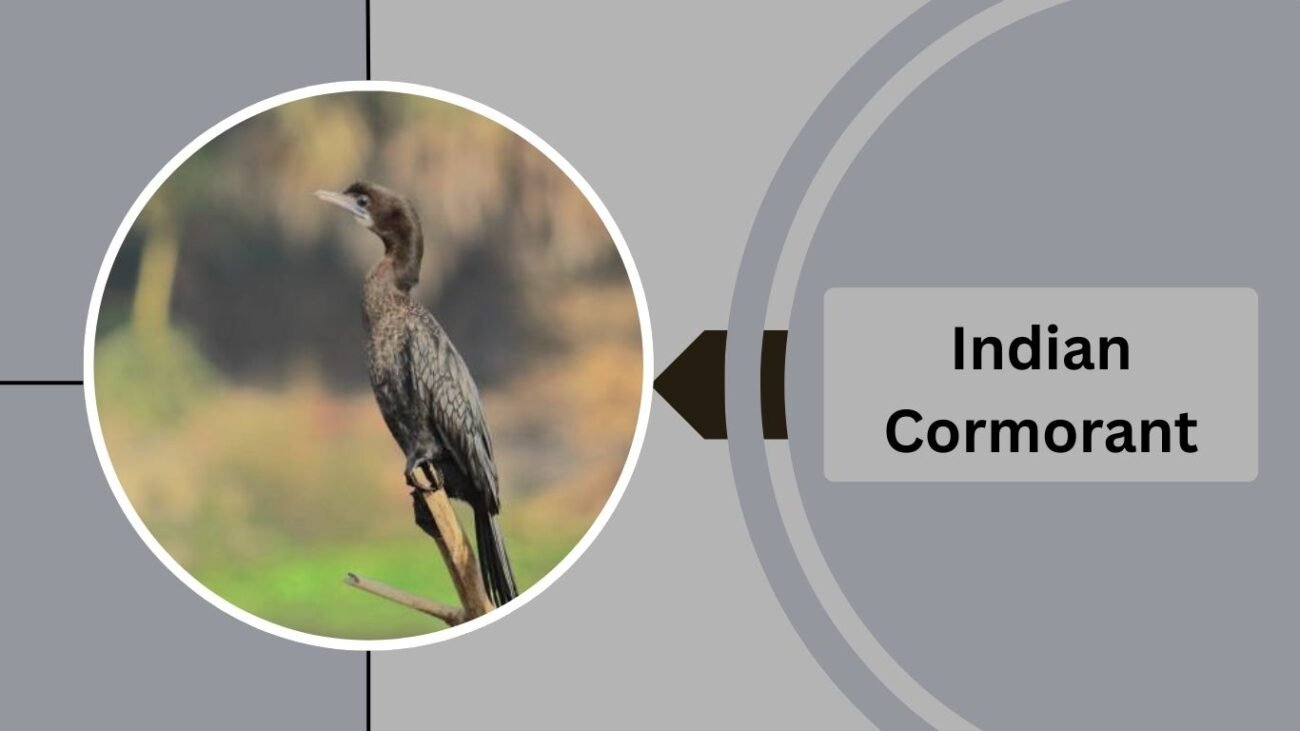
The Indian Cormorant (Phalacrocorax fuscicollis) is a medium-sized species commonly found across South Asia. It is closely related to the Bronze Cormorant but can be distinguished by its slender build and distinct facial features. Known for forming large colonies, it is a familiar sight in wetlands, rivers, and reservoirs, where its synchronized diving flocks create a remarkable spectacle.
Identification
- Family: Phalacrocoracidae
- Length: 60–65 cm
- Wingspan: 90–100 cm
- Plumage: Dark brown to black with a slightly glossy sheen
- Head & Neck: Narrow with a long, thin neck compared to other cormorants
- Bill: Long, slender, strongly hooked at the tip, with yellowish base
- Eye: Striking blue-green, especially noticeable in breeding adults
- Other Feature: Lacks the heavy, thick-set body of larger cormorants
Habitat and Distribution
This species is widely distributed across India, Sri Lanka, Bangladesh, Myanmar, and Thailand. It thrives in inland water bodies, preferring lakes, rivers, swamps, and wetlands with plenty of fish. Unlike coastal cormorants, it rarely ventures into marine environments.
Behavior and Diet
The Indian Cormorant is highly social, often seen in large flocks perched together or diving in unison. It feeds mainly on small to medium-sized fish, but also consumes aquatic invertebrates and amphibians. Their diving technique is precise, and after foraging, they can often be spotted perched with wings spread wide to dry. Breeding occurs in colonies, often alongside herons and storks, with stick nests built in trees close to water.
15. Little Cormorant
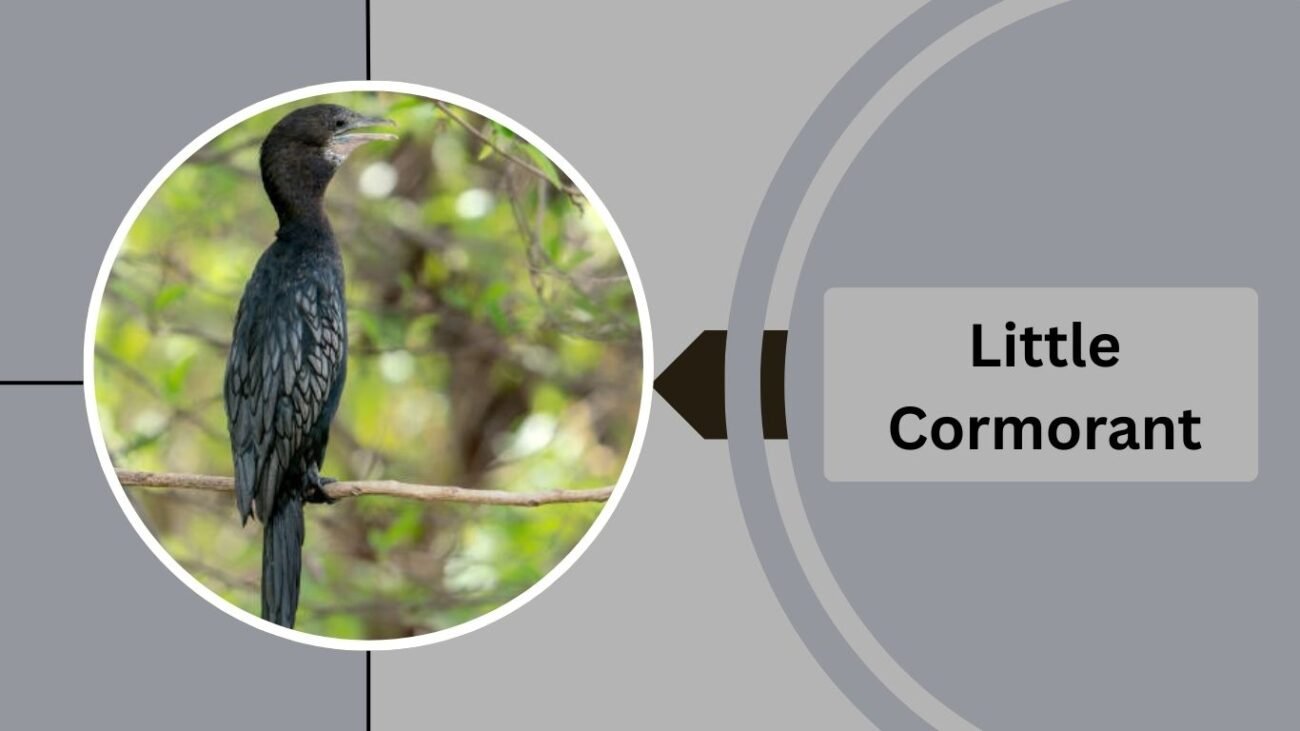
The Little Cormorant (Microcarbo niger) is one of the smallest members of the cormorant family and is widely distributed across South and Southeast Asia. Despite its size, it is a highly efficient fisher and is frequently seen in ponds, lakes, rivers, and wetlands. Its adaptability to both wild and human-dominated landscapes has made it one of the most common cormorants in its range.
Identification
- Family: Phalacrocoracidae
- Length: 50–55 cm
- Wingspan: 80–90 cm
- Plumage: Entirely black in breeding season; duller brownish-black in non-breeding
- Bill: Short, thick, slightly hooked at the tip, often dark in color
- Neck: Short and stocky compared to other cormorants
- Eye: Dark green to bluish, giving a striking look in bright light
- Other Feature: Smaller and more compact body than the Indian or Great Cormorant
Habitat and Distribution
The Little Cormorant is native to India, Nepal, Bangladesh, Sri Lanka, Myanmar, Thailand, and extending to Indonesia. It thrives in freshwater wetlands, rice paddies, canals, reservoirs, and village ponds. Unlike larger species, it rarely inhabits coastal waters, preferring inland habitats where small fish are abundant.
Behavior and Diet
This species is a skilled diver, feeding mainly on small fish, but also consuming tadpoles and aquatic invertebrates. It often hunts alone or in small groups, unlike larger cormorants that form big fishing flocks. After fishing, the Little Cormorant can be seen perching on sticks or trees with wings spread wide for drying. Breeding occurs in colonies, often mixed with herons and other waterbirds, with nests built in low trees near water.
16. Little Pied Cormorant
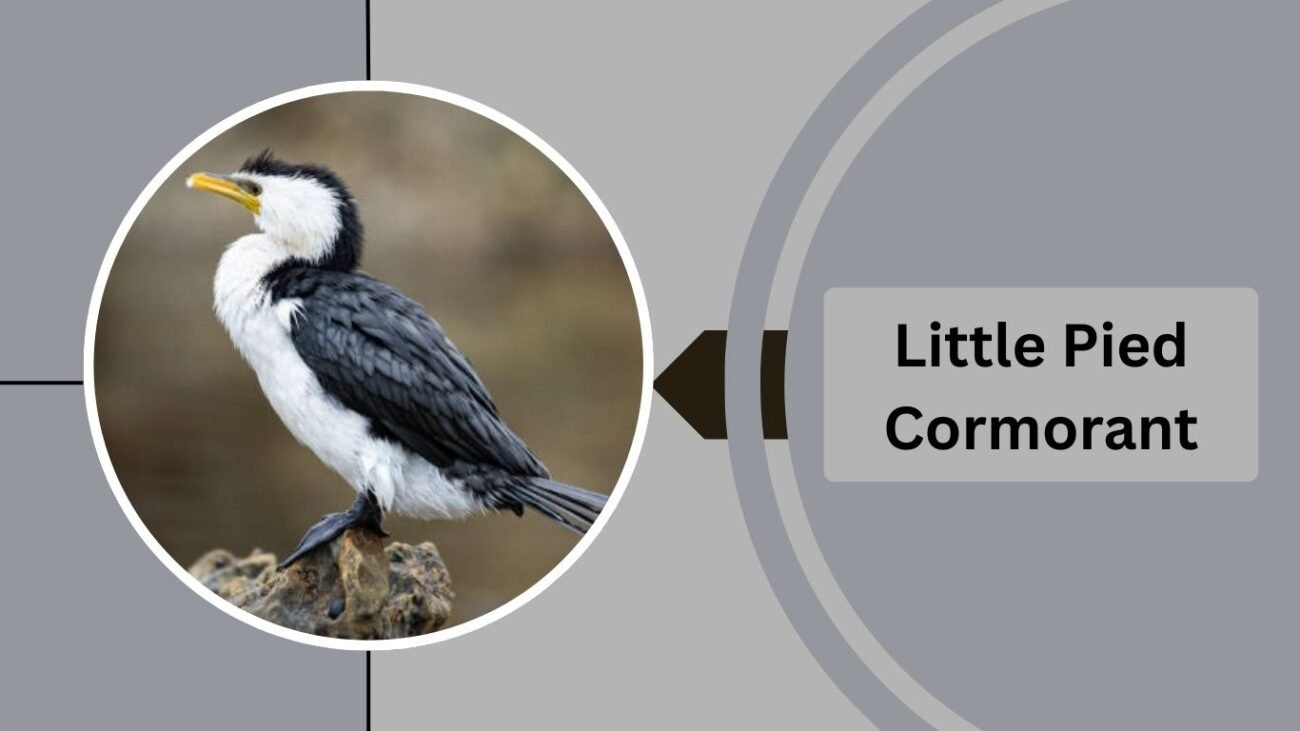
The Little Pied Cormorant (Microcarbo melanoleucos) is a striking small species known for its contrasting black-and-white plumage. Found widely across Australia, New Zealand, and parts of Southeast Asia, it is one of the most recognizable cormorants due to its distinctive coloring. Unlike larger cormorants, it often inhabits smaller freshwater habitats, making it a familiar bird around lakes, rivers, and even urban wetlands.
Identification
- Family: Phalacrocoracidae
- Length: 55–65 cm
- Wingspan: 90–100 cm
- Plumage: Black back, wings, and tail with a white face, throat, and underparts
- Bill: Short, slender, slightly hooked, pale yellow to cream-colored
- Neck: White with a sharp contrast against the dark back
- Eye: Greenish-blue with a pale eye ring
- Other Feature: Stout and compact body with a rounded head, making it look different from sleeker cormorants
Habitat and Distribution
The Little Pied Cormorant is found extensively across Australia, Tasmania, New Zealand, Indonesia, Papua New Guinea, and surrounding islands. It prefers freshwater lakes, ponds, rivers, and reservoirs but can also be seen in coastal lagoons and estuaries. Its adaptability allows it to thrive even in man-made habitats.
Behavior and Diet
This species mainly feeds on small fish but is also known to consume crustaceans, frogs, and aquatic insects. It hunts underwater, using quick dives and pursuit swimming. After feeding, it perches on low branches or rocks, spreading its wings to dry. Unlike larger species, the Little Pied Cormorant often hunts alone or in small groups, though it may join mixed colonies with herons and ibises during the breeding season.
17. Neotropic Cormorant
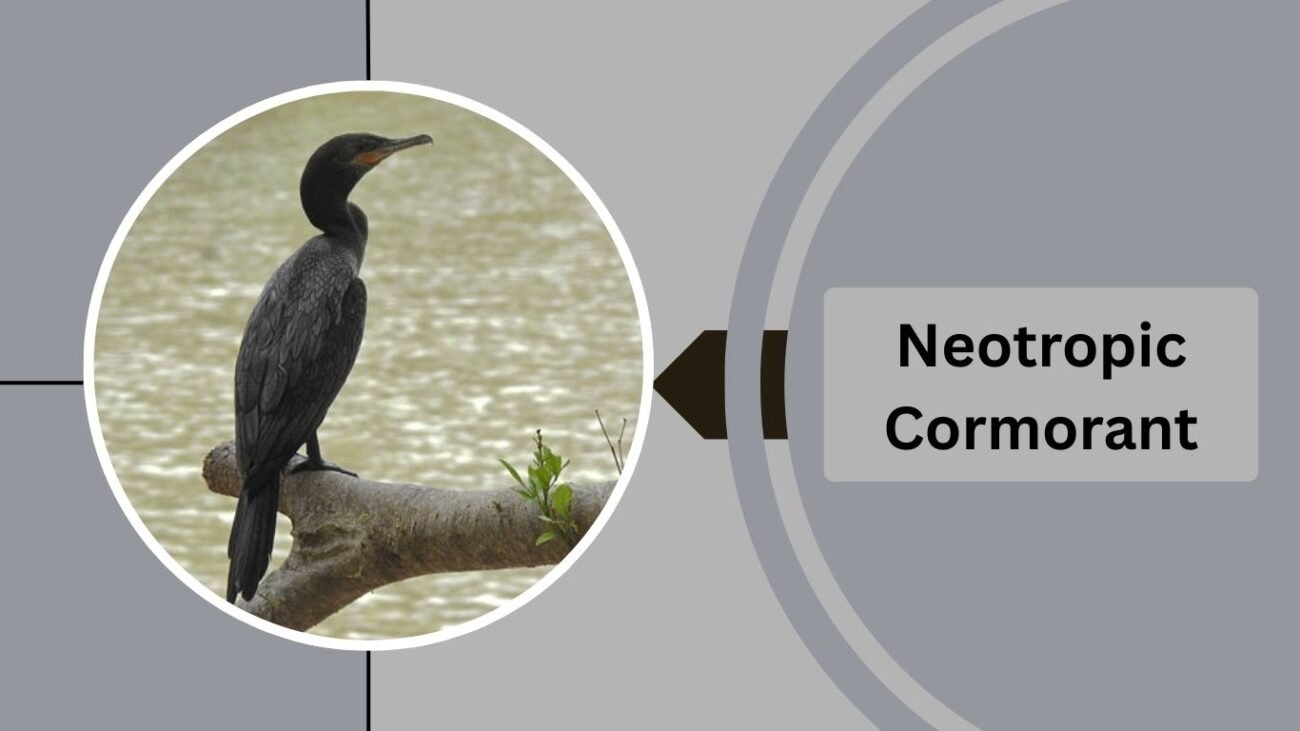
The Neotropic Cormorant (Nannopterum brasilianus), also known as the Olivaceous Cormorant, is a medium-sized waterbird common in the Americas. It is one of the few cormorant species that thrives in both freshwater and coastal habitats, often seen perched with wings spread or diving for fish. Its adaptability has allowed it to expand across regions from the southern United States to South America.
Identification
- Family: Phalacrocoracidae
- Length: 63–74 cm
- Wingspan: 100–125 cm
- Plumage: Dark brownish-black body with a slightly glossy sheen; throat patch often pale or whitish
- Bill: Long, slender, with a hooked tip, typically yellowish at the base
- Neck: Long and thin, giving a graceful profile compared to stouter cormorants
- Eye: Striking turquoise or greenish-blue during breeding season
- Other Feature: Smaller and more lightweight than the Double-crested Cormorant, often with a longer tail
Habitat and Distribution
The Neotropic Cormorant is widely distributed across the Americas, ranging from the southern United States through Mexico, Central America, the Caribbean, and most of South America. It inhabits lakes, rivers, lagoons, reservoirs, estuaries, and coastal shorelines. This bird is highly versatile, equally at home in inland freshwater as well as saltwater environments.
Behavior and Diet
Like other cormorants, this species is an expert diver, preying mainly on fish but also eating shrimp, amphibians, and aquatic insects. It often forages alone but can be seen in small groups, especially near abundant fish schools. After hunting, it frequently perches on posts, branches, or shorelines with wings spread to dry. Breeding occurs in colonies, sometimes alongside herons and ibises, with nests built in trees or reed beds near water.
18. Pelagic Cormorant
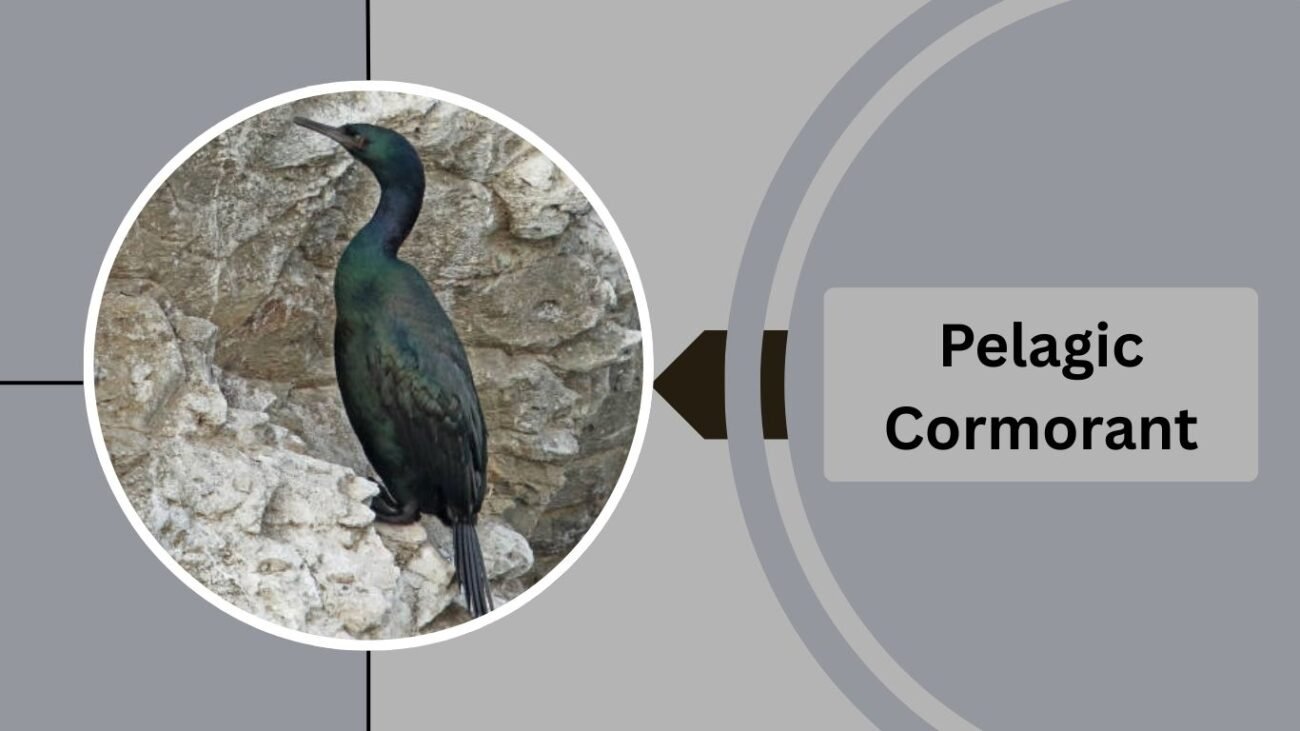
The Pelagic Cormorant (Urile pelagicus) is a slender, medium-sized seabird that inhabits the rocky coasts of the North Pacific. Unlike some larger cormorants, it tends to stay close to the shoreline, where it dives into kelp beds and rocky waters in search of food. Its shimmering plumage and streamlined body make it a distinctive member of the cormorant family.
Identification
- Family: Phalacrocoracidae
- Length: 70–90 cm
- Wingspan: 100–130 cm
- Plumage: Glossy black with green and purple iridescence; white flank patches visible during breeding season
- Bill: Long, thin, and dark with a slight hook at the tip
- Neck: Slim and elongated, often giving a snake-like appearance when swimming
- Eye: Brilliant emerald-green, especially striking in breeding adults
- Other Feature: Distinctively small head and thin body compared to bulkier cormorants
Habitat and Distribution
Pelagic Cormorants are found along the North Pacific coasts, from Japan and eastern Russia across Alaska and Canada down to California. They strongly favor marine environments, particularly rocky shorelines, cliffs, and islands. Unlike some other species, they rarely enter inland freshwater habitats, preferring the rough coastal zones and open seas.
Behavior and Diet
This species feeds mainly on small fish, crustaceans, and invertebrates caught during deep dives. It can dive to impressive depths, maneuvering skillfully among kelp forests and rocky seabeds. Pelagic Cormorants usually forage alone but may roost in small groups on rocky cliffs. During breeding, they nest on steep cliff ledges, often creating large colonies where their chalky white droppings coat the surrounding rock.
19. Red-faced Cormorant
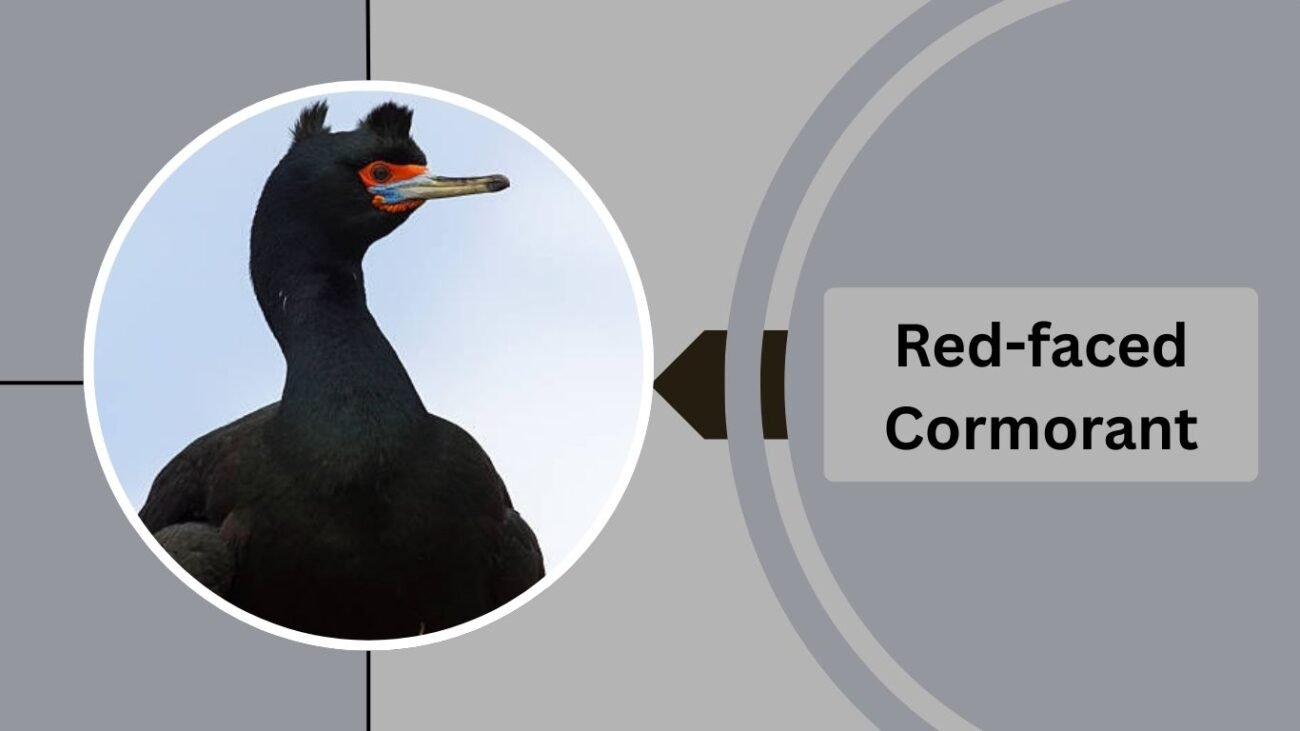
The Red-faced Cormorant (Urile urile) is a striking seabird of the North Pacific, recognized for its vivid facial skin during breeding season. It is less widespread than other cormorants and is mostly confined to coastal waters of Alaska and far eastern Russia. Its dazzling colors and cliffside colonies make it one of the most distinctive cormorants of northern seas.
Identification
- Family: Phalacrocoracidae
- Length: 70–80 cm
- Wingspan: 110–130 cm
- Plumage: Glossy black with blue and green iridescence; white flanks often visible during breeding season
- Bill: Slender, dark, and hooked at the tip
- Face: Bright red bare skin around the bill and eyes, most vibrant during breeding
- Eye: Emerald-green, contrasting sharply with the red face
- Other Feature: During courtship, ornamental white filoplumes appear on the head and neck
Habitat and Distribution
The Red-faced Cormorant is restricted to the northern Pacific Rim. Its range includes the Aleutian Islands, southern Alaska, the Kuril Islands, and Kamchatka. It is strictly marine, choosing rocky coastal cliffs and offshore islands for breeding. Unlike some other species, it rarely ventures far inland.
Behavior and Diet
This bird is a skilled diver, feeding on fish, crustaceans, and mollusks, which it catches in nearshore waters and kelp forests. It typically forages alone but nests in dense cliffside colonies, often with murres and gulls. Courtship involves elaborate displays, including head-shaking and wing-spreading to highlight its bright red facial skin.
20. Brandt’s Cormorant
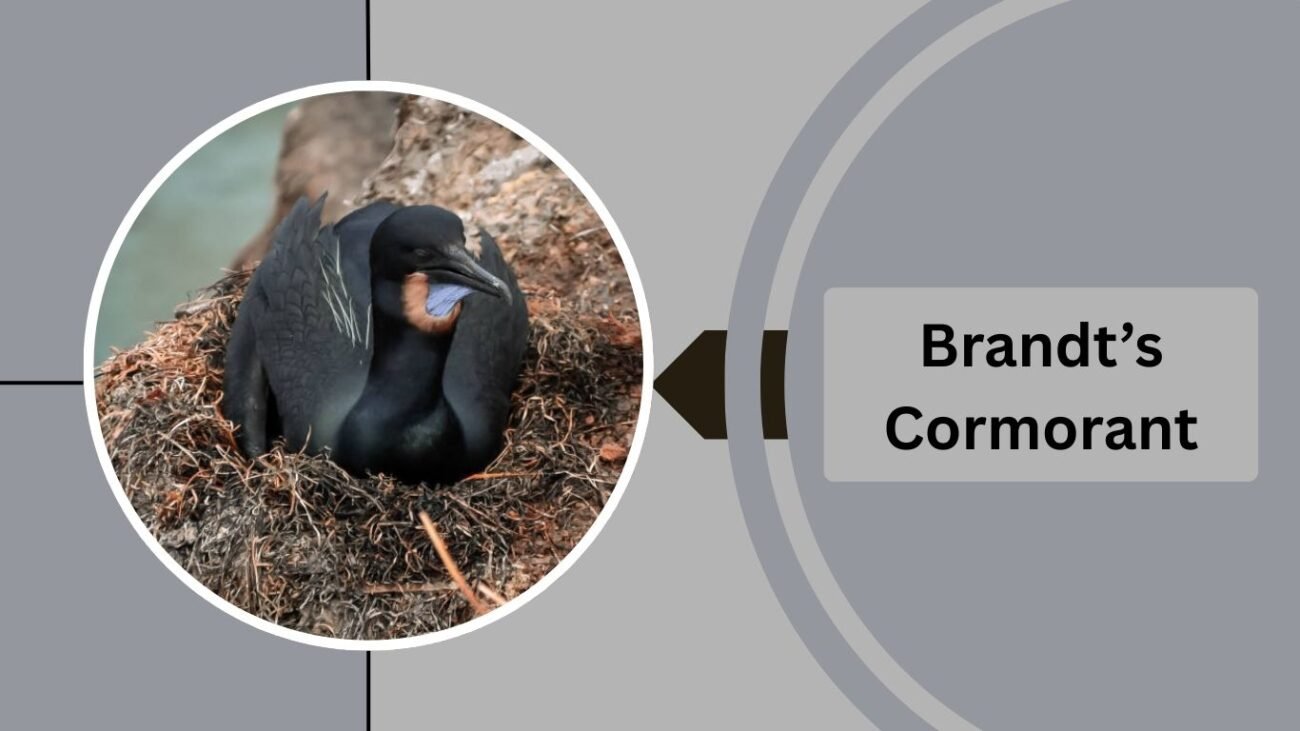
Brandt’s Cormorant (Urile penicillatus) is a coastal seabird found along the Pacific Coast of North America. Known for its glossy black plumage and bright blue throat patch during breeding season, it is a familiar sight on rocky shores and islands. This species often nests in large colonies, making dramatic coastal cliffs and sea stacks come alive with activity.
Identification
- Family: Phalacrocoracidae
- Length: 80–90 cm
- Wingspan: 120–130 cm
- Plumage: Glossy black overall; breeding adults show a vivid cobalt-blue throat patch
- Bill: Heavy, black, and hooked at the tip
- Eye: Turquoise-blue, often striking in contrast with dark plumage
- Other Feature: White filoplumes on head, neck, and back visible during the breeding season
Habitat and Distribution
Brandt’s Cormorant is strictly marine, ranging from Alaska to Baja California. It is commonly seen on rocky coasts, offshore islands, and coastal cliffs. This bird rarely enters freshwater habitats, preferring productive marine zones where upwelling brings nutrient-rich waters. Large colonies are typical on inaccessible cliffs or isolated rocks.
Behavior and Diet
Its diet consists mainly of schooling fish such as anchovies, sardines, and herring, along with crustaceans. Brandt’s Cormorants are skilled divers, often plunging deep beneath the surface to chase fish. They usually forage in groups, sometimes alongside sea lions or pelicans. During breeding, they construct nests of seaweed and guano on cliffs, often in dense colonies.
21. Neotropic Cormorant
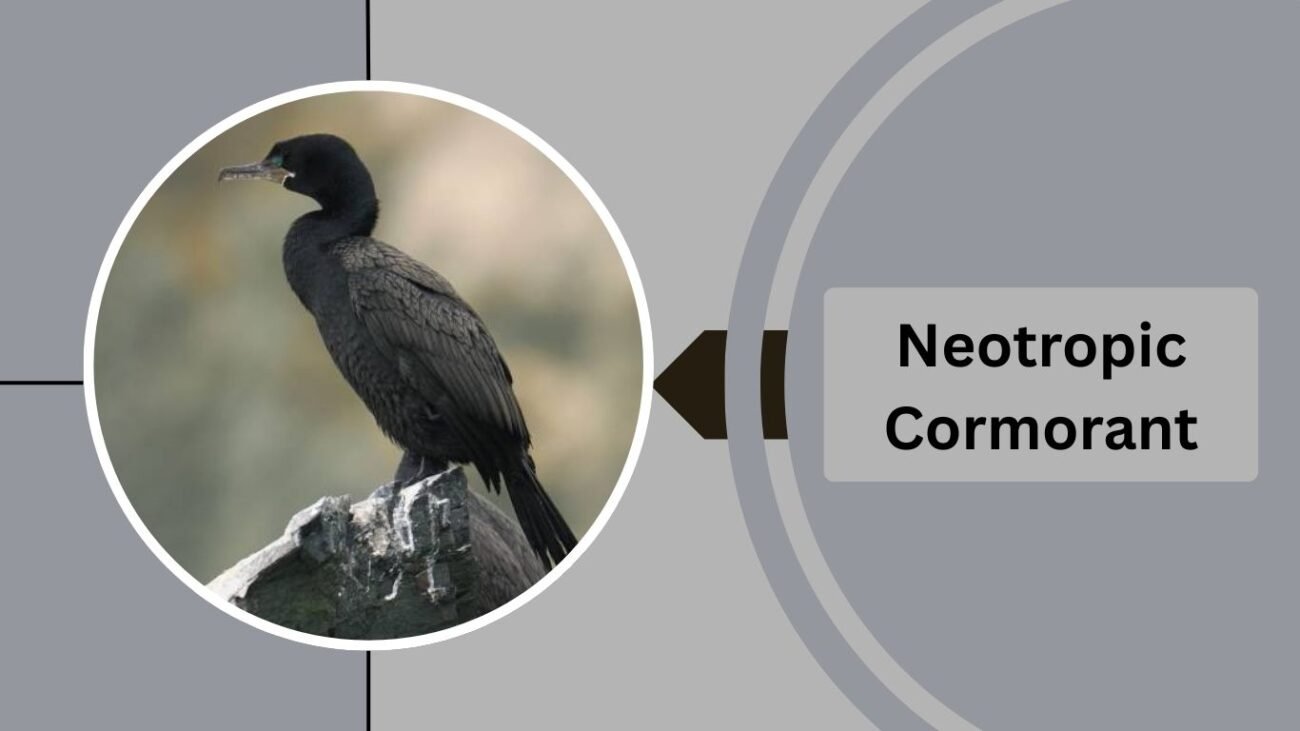
The Neotropic Cormorant (Nannopterum brasilianum) is a widely distributed species found across the Americas. It is smaller and slimmer than most other cormorants, making it well-suited for both freshwater and coastal habitats. Unlike some strictly marine cormorants, this species is highly adaptable, thriving in rivers, lakes, lagoons, and coastal lagoons from the southern United States to South America.
Identification
- Family: Phalacrocoracidae
- Length: 65–75 cm
- Wingspan: 100–110 cm
- Plumage: Dark brown to black overall; throat often paler with white edging
- Bill: Slender, with a hooked tip; base often pale or yellowish
- Eye: Emerald-green, noticeable in good light
- Other Feature: Tail is relatively long compared to body size, aiding in flight stability
Habitat and Distribution
This species has the broadest range of any cormorant in the Americas. It inhabits both inland and coastal wetlands, from Texas and Mexico down to Patagonia. It is particularly abundant in South America, where it thrives in both freshwater and brackish ecosystems. Its ability to adapt allows it to coexist with human-altered environments such as reservoirs and aquaculture ponds.
Behavior and Diet
The Neotropic Cormorant hunts primarily by diving underwater to catch small fish, crustaceans, and amphibians. It is often seen perching on posts, trees, or rocks, spreading its wings to dry after diving. This species sometimes engages in cooperative hunting, forming lines to drive fish into shallower waters. Colonies often nest in trees or on islands, making them highly visible in wetlands.
22. Olivaceous Cormorant
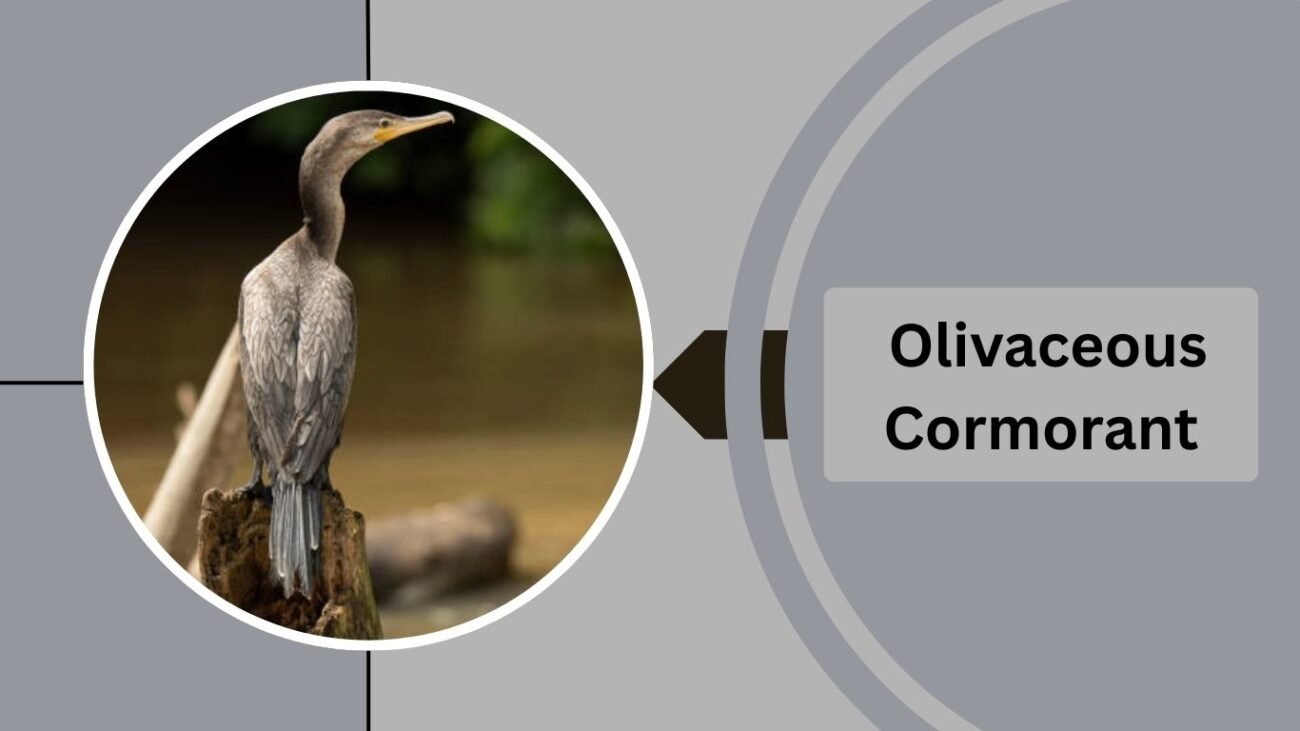
The Olivaceous Cormorant (Phalacrocorax olivaceus) is a slender, medium-sized waterbird primarily distributed across Central and South America. Closely related to the Neotropic Cormorant, it is sometimes treated as a subspecies but is often recognized as a distinct type due to regional variations in plumage and habitat preferences. This bird is known for its adaptability, thriving in both freshwater and coastal ecosystems.
Identification
- Family: Phalacrocoracidae
- Length: 60–70 cm
- Wingspan: 100–110 cm
- Plumage: Dark brownish-black with a slight olive sheen, giving the species its name
- Bill: Slender, yellowish base with a hooked black tip
- Eye: Greenish-blue, noticeable in sunlight
- Other Feature: Tail relatively long, assisting in maneuverability in flight
Habitat and Distribution
The Olivaceous Cormorant is commonly found in wetlands, lagoons, estuaries, rivers, and lakes across much of South America. Its range extends through the Amazon basin, the Andes foothills, and coastal regions, where it often shares territory with other cormorant species. It prefers shallow waters where small fish are abundant and often roosts in colonies near water bodies.
Behavior and Diet
This species primarily feeds on fish, amphibians, and aquatic invertebrates. It dives skillfully, using its strong legs to chase prey underwater. After hunting, it is frequently seen perched with wings spread, drying its plumage in the sun. Colonies are formed in trees, reeds, or rocky islands, and their noisy gatherings can be spotted from a distance.
23. Little Black Cormorant
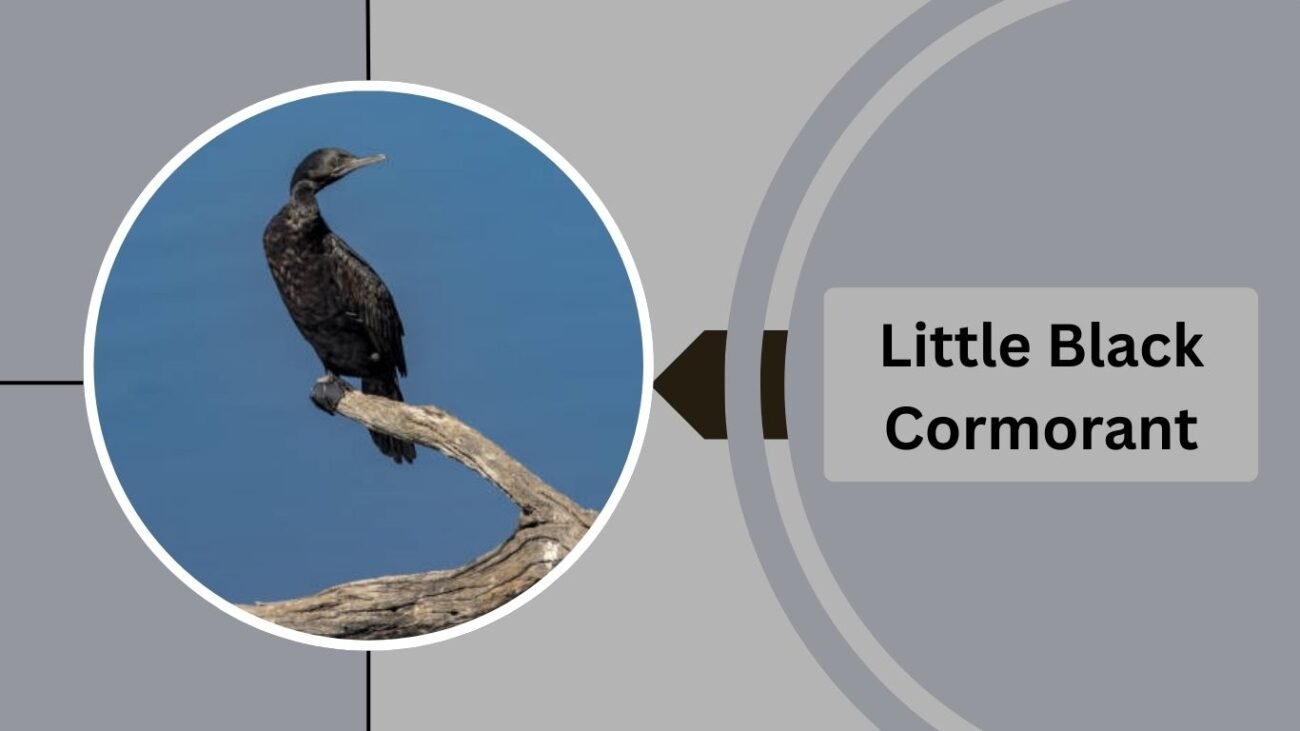
The Little Black Cormorant (Phalacrocorax sulcirostris) is a small, glossy-black waterbird commonly found across Australia, New Zealand, Indonesia, and nearby regions. It is one of the most social of all cormorants, often seen in large flocks that dive and feed together. Its slim build and dark plumage distinguish it from larger cormorants, making it highly recognizable in its range.
Identification
- Family: Phalacrocoracidae
- Length: 60–65 cm
- Wingspan: Around 100 cm
- Plumage: Glossy black overall, with a greenish sheen in bright light
- Bill: Long, slender, and dark gray with a hooked tip
- Eye: Striking turquoise-green, especially visible during breeding season
- Other Feature: Slender body and long neck, well adapted for underwater pursuit of prey
Habitat and Distribution
This species inhabits freshwater rivers, lakes, wetlands, and coastal lagoons. It is especially abundant in Australia, where it forms huge flocks in inland wetlands after flooding events. The Little Black Cormorant is also found across Southeast Asia and parts of New Zealand, preferring shallow, fish-rich waters.
Behavior and Diet
The Little Black Cormorant is known for its cooperative feeding behavior. Large groups dive together, herding fish into tight schools for easier capture. Its diet consists mainly of small fish, aquatic insects, and crustaceans. Like other cormorants, it often perches with wings outstretched to dry after diving. Colonies are typically formed in trees or reed beds near water, where hundreds of individuals may gather.