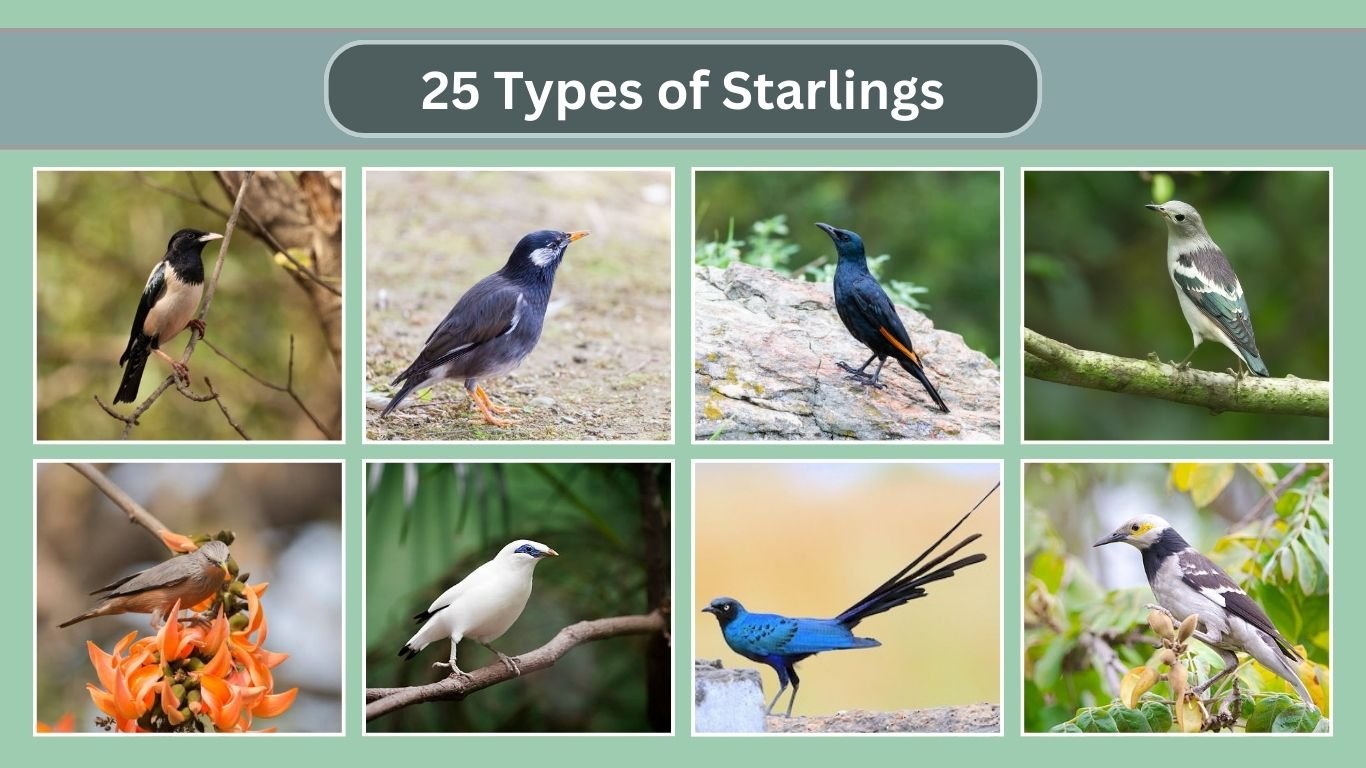
Starlings are a diverse group of birds admired for their glossy plumage, adaptability, and fascinating behaviors. Found across Asia, Africa, and Europe, these birds range from the common starling to rare species like the Bali Myna. Many are celebrated for their vibrant colors, while others stand out for their songs or flocking displays. In this article, you’ll discover 25 unique types of starlings, their traits, habitats, and ecological importance.
1. Common Starling
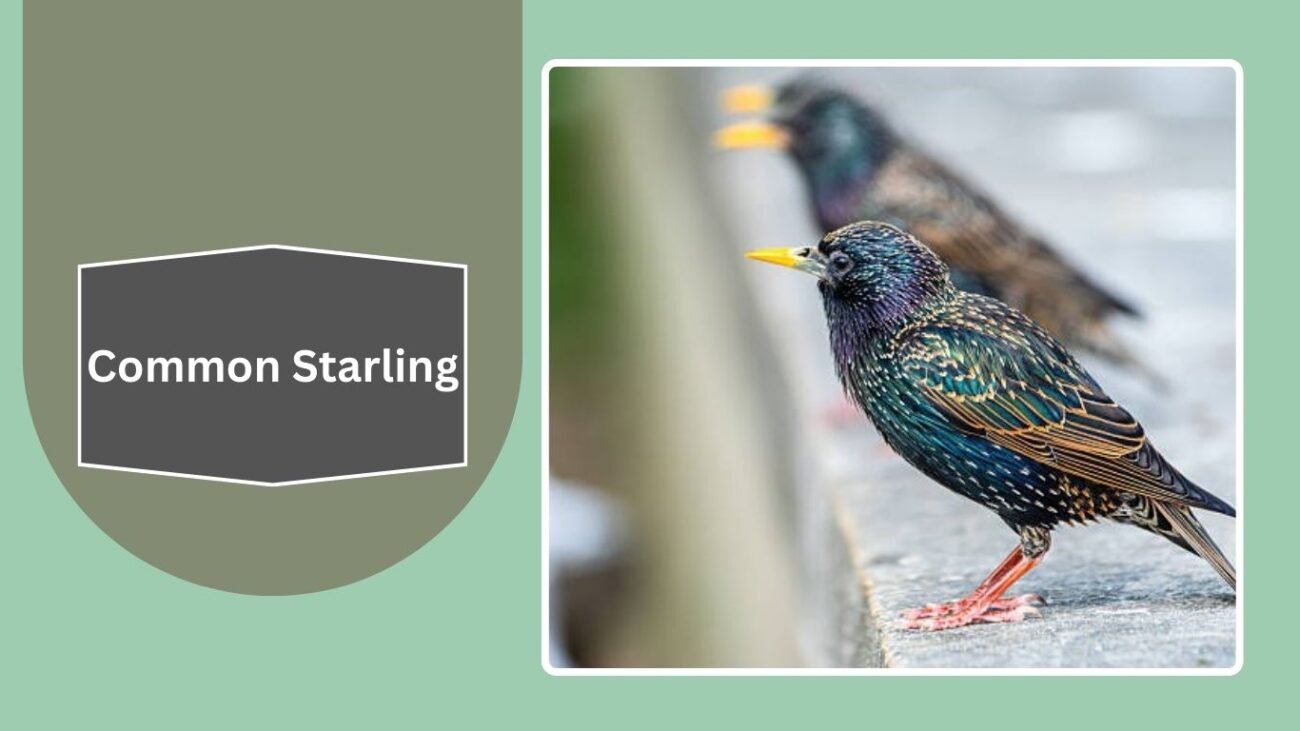
The Common Starling (Sturnus vulgaris) is one of the most widespread and recognizable starling species. Known for its adaptability, it thrives in urban areas, farmlands, and woodlands. With iridescent plumage that glistens in the sunlight and its famous ability to mimic sounds, this bird has captured attention worldwide.
Identification
- Medium-sized bird, about 20 cm (8 in) long
- Glossy black plumage with iridescent purple and green sheen
- Speckled with white spots in winter
- Yellow bill in summer, dark in winter
- Short tail and pointed wings
Behavior
Common Starlings are highly social and often form large flocks, especially during roosting or migration. They are excellent mimics, imitating calls of other birds and even human-made sounds. Their synchronized aerial displays, known as murmurations, are among the most spectacular sights in the bird world.
Habitat
They are found across Europe, Asia, and introduced populations in North America, Australia, and New Zealand. Common Starlings adapt well to different environments, ranging from city parks to agricultural lands.
Importance
This bird plays a role in insect control, feeding on pests such as beetles, caterpillars, and flies. However, it is also considered invasive in some regions, where it competes with native species for nesting sites and food.
2. Superb Starling
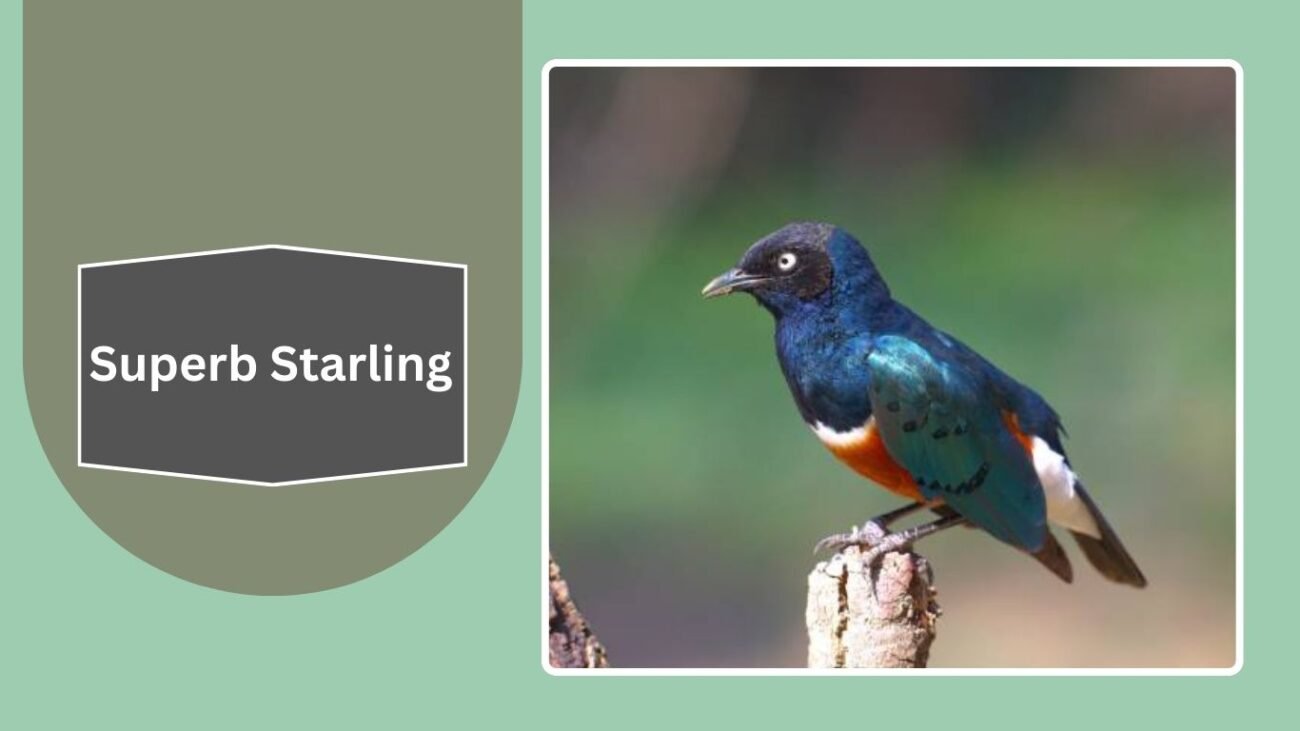
The Superb Starling (Lamprotornis superbus) is admired for its dazzling colors and striking appearance. Native to East Africa, it is often seen in open grasslands and savannas where its vivid plumage shines under the sun. Its cooperative nature and beauty make it one of the most popular starlings to observe in the wild.
Identification
- Medium-sized starling, about 18–19 cm (7 in) long
- Bright blue head, back, and wings with a metallic sheen
- Distinct orange-red belly separated by a white breast band
- Black mask around the eyes
- Short tail and strong legs
Behavior
Superb Starlings are highly social and live in small flocks. They are known for their cooperative breeding, where multiple members of the group help raise chicks. Their melodious calls and constant chatter are a familiar sound across their range.
Habitat
This species thrives in savannas, grasslands, and areas with scattered shrubs across Kenya, Ethiopia, Somalia, Uganda, and Tanzania. They are also common near villages, where they feed on food scraps.
Importance
They are important seed dispersers and help control insects in their environment. Culturally, they are appreciated for their beauty and are a favorite subject for birdwatchers and photographers visiting East Africa.
3. Violet-backed Starling
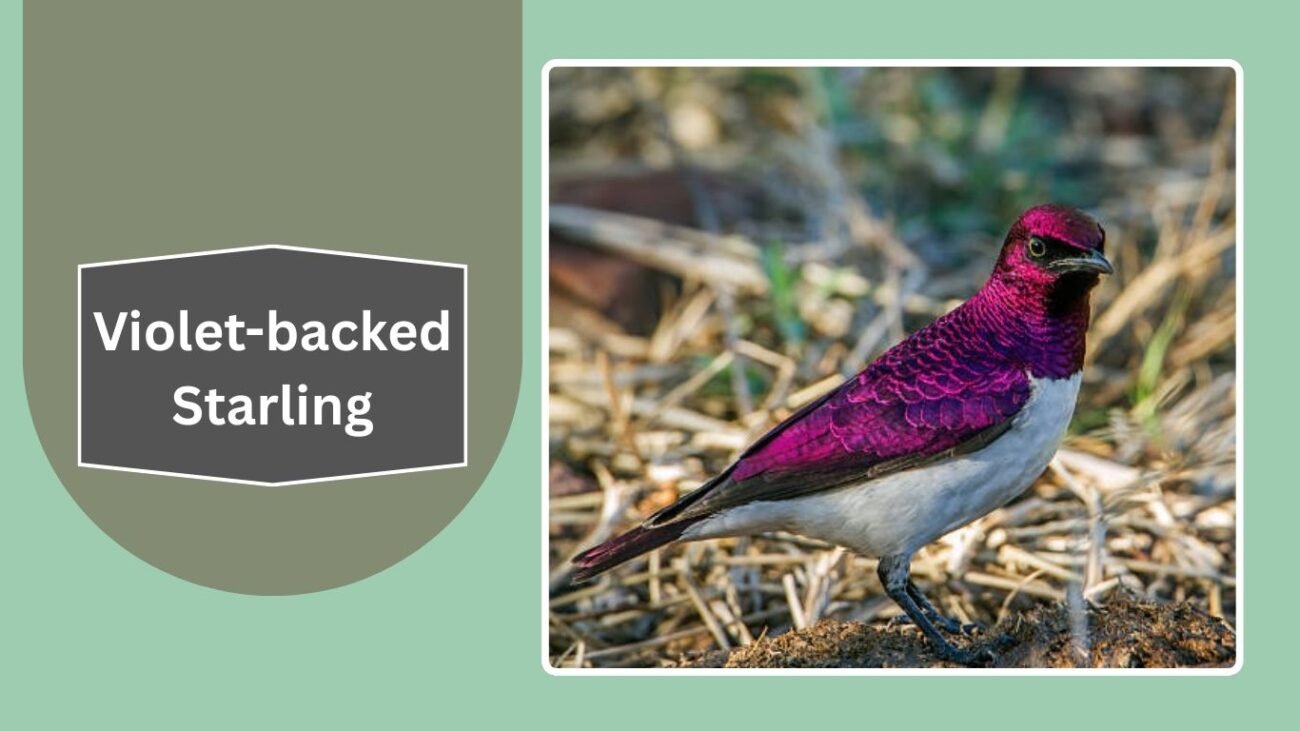
The Violet-backed Starling (Cinnyricinclus leucogaster), also known as the plum-colored starling, is one of the most striking starlings due to its vibrant plumage. It is a small but eye-catching bird found in sub-Saharan Africa, often inhabiting open woodlands and forest edges.
Identification
- Small-sized starling, about 17 cm (6.7 in) long
- Males: shimmering violet-purple back and head with pure white underparts
- Females: brown-streaked plumage for camouflage
- Short tail and pointed beak
- Sexually dimorphic, with males being far more colorful
Behavior
Violet-backed Starlings are typically seen in pairs or small flocks. Males often perch conspicuously to display their vibrant colors, while females remain more hidden. They have a soft, whistling call and are known for aerial acrobatics while catching insects.
Habitat
They are widely distributed across sub-Saharan Africa, preferring open woodlands, forest edges, and savannas. They are also found in cultivated areas with scattered trees.
Importance
This starling plays a role in insect population control and also disperses seeds of fruiting trees. Their sexual dimorphism makes them a good example of natural selection for both camouflage and display.
4. Chestnut-bellied Starling
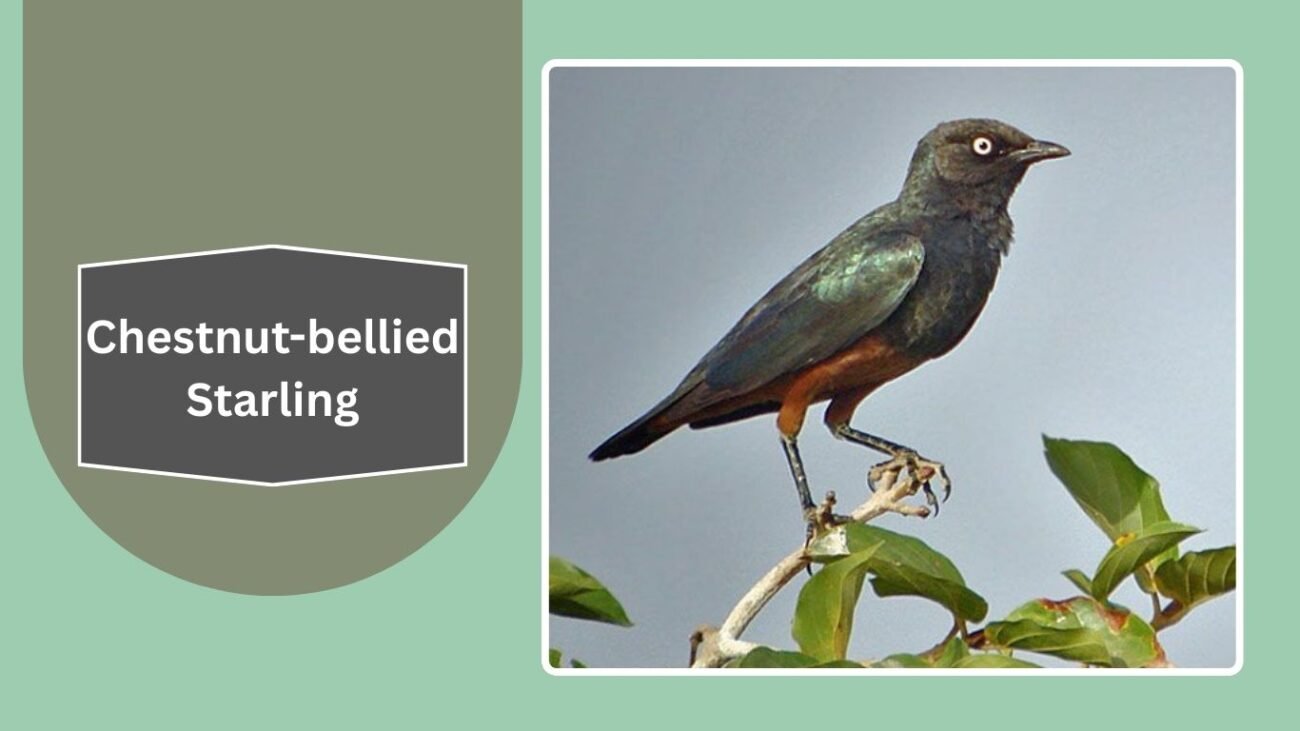
The Chestnut-bellied Starling (Lamprotornis pulcher) is a medium-sized starling native to the Sahel region of Africa. Known for its glossy plumage and distinct chestnut underparts, it often gathers in small flocks and is commonly seen around wooded savannas and open scrublands.
Identification
- Length about 20–22 cm (8–9 in)
- Glossy greenish-blue head, wings, and back
- Rich chestnut-brown belly and flanks
- Pale yellow eyes
- Strong legs and slightly rounded tail
Behavior
Chestnut-bellied Starlings are lively and noisy birds, often seen foraging in groups. They feed mainly on insects and fruits, sometimes joining mixed flocks with other starling species. Their calls are varied, including whistles and chattering notes.
Habitat
They inhabit dry savannas, thorn scrub, and semi-arid regions across West and Central Africa, from Senegal and Mali eastward to Sudan. They are also frequently spotted near villages and farmlands.
Importance
These starlings help maintain ecological balance by feeding on insects and dispersing seeds. They are also culturally valued in parts of Africa, where their presence is associated with open, healthy landscapes.
5. Hildebrandt’s Starling
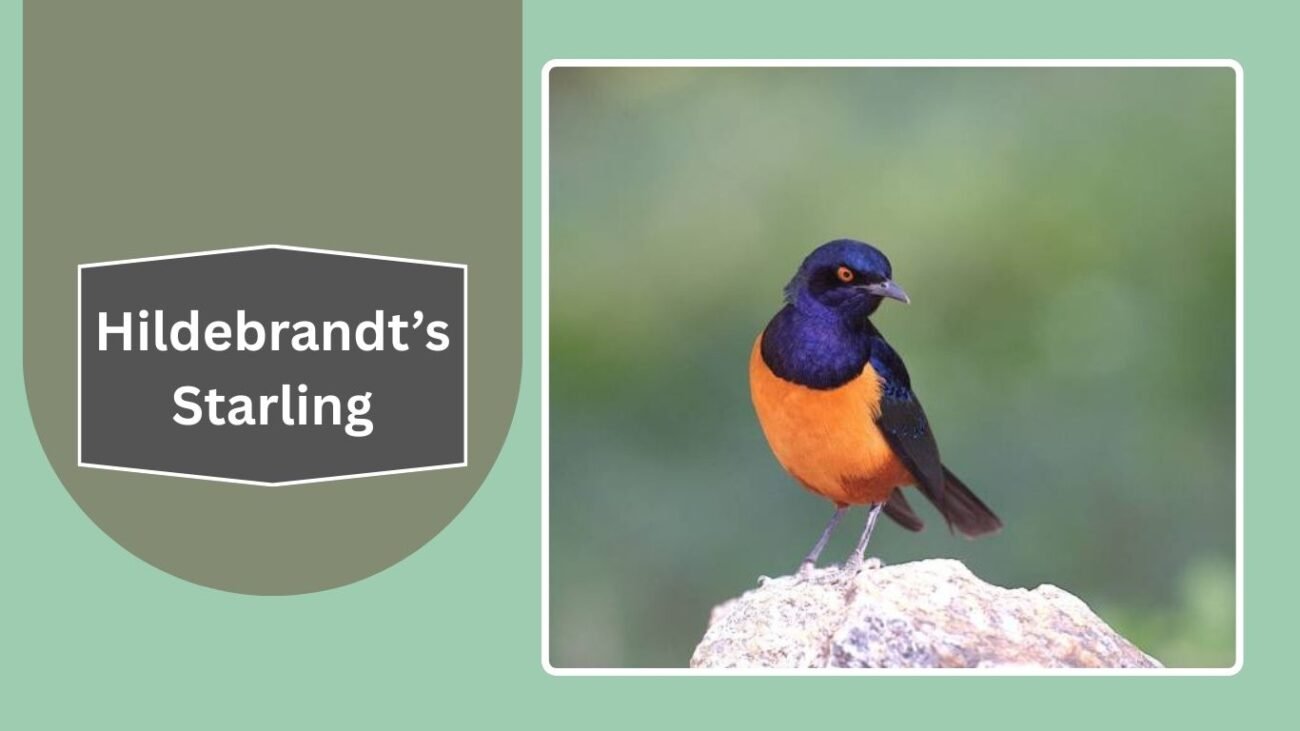
Hildebrandt’s Starling (Lamprotornis hildebrandti) is a colorful starling native to East Africa. It is admired for its metallic plumage and striking reddish-orange eyes, making it one of the most beautiful starlings to spot on safari trips. Though less common than other starling species, its vivid appearance makes it easily recognizable.
Identification
- Medium-sized bird, about 18–20 cm (7–8 in) long
- Shiny blue head, back, and wings with a glossy sheen
- Bright orange-red belly and breast
- Reddish-orange eyes (a unique feature among starlings)
- Short, squared tail and sturdy legs
Behavior
Hildebrandt’s Starlings are often seen in pairs or small family groups. They feed mainly on insects and fruits, catching prey both on the ground and in trees. They are also cooperative breeders, with family members helping in raising chicks.
Habitat
They are native to Kenya and Tanzania, inhabiting dry savannas, shrublands, and open woodland areas. They are often found near acacia trees and may be seen foraging close to human settlements.
Importance
This starling contributes to insect control and seed dispersal in its ecosystem. It is also of interest to birdwatchers and nature photographers, adding ecological and tourism value to East African landscapes.
6. Rüppell’s Starling
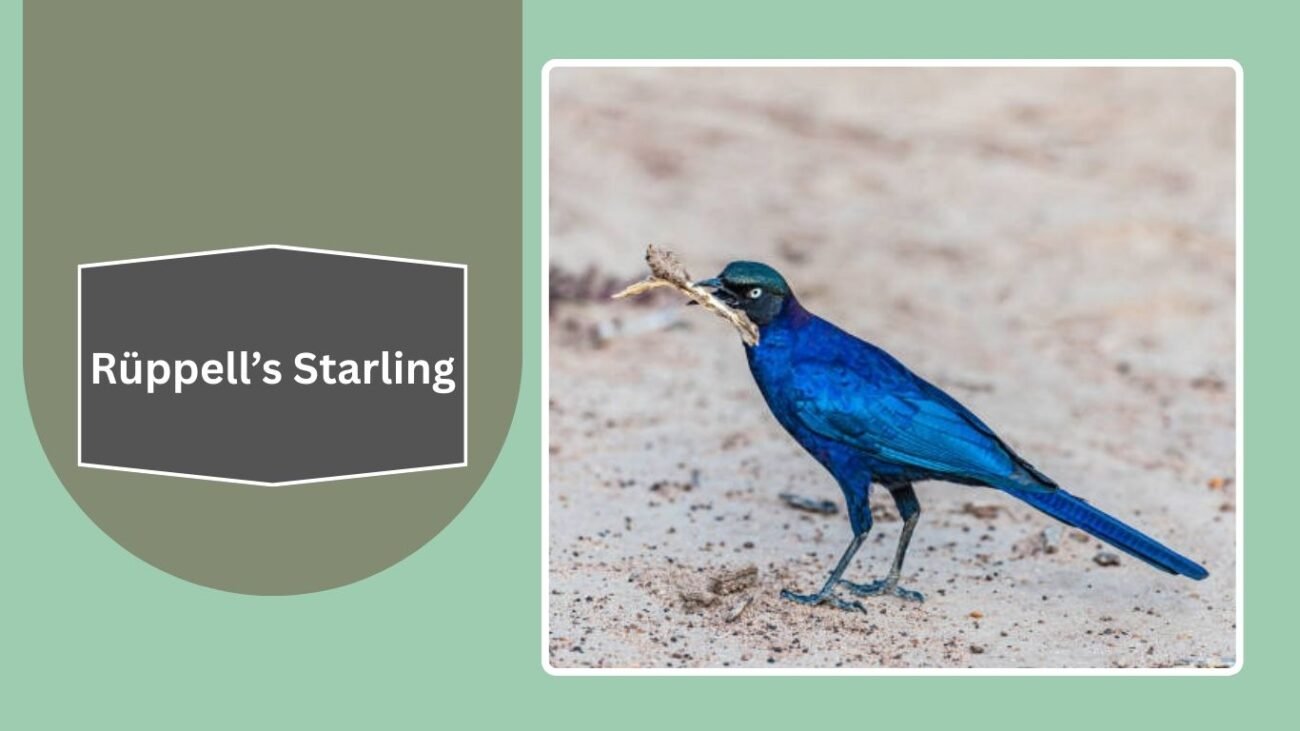
Rüppell’s Starling (Lamprotornis purpuroptera) is a striking African starling named after the German explorer Eduard Rüppell. Known for its glossy purple and blue plumage, this bird is a common sight in East Africa, where it thrives in dry open habitats.
Identification
- Medium-sized starling, around 20–22 cm (8–9 in) long
- Glossy violet-purple head, back, and breast
- Iridescent blue wings and tail
- Bright yellow eyes contrasting with dark feathers
- Slim body with a slightly rounded tail
Behavior
Rüppell’s Starlings are active, social, and noisy birds, often moving in small groups. They feed on insects, fruits, and seeds, foraging both on the ground and in trees. They are also known for their sharp, metallic calls and chatter.
Habitat
They are found across East Africa, especially in Ethiopia, Kenya, Uganda, and Tanzania. Their preferred habitats include savannas, dry woodlands, and semi-arid shrublands, but they are also seen near agricultural lands and villages.
Importance
Rüppell’s Starlings play an ecological role as insect predators and seed dispersers. Their vibrant colors also make them a favorite among birdwatchers and a symbol of East African biodiversity.
7. Golden-breasted Starling
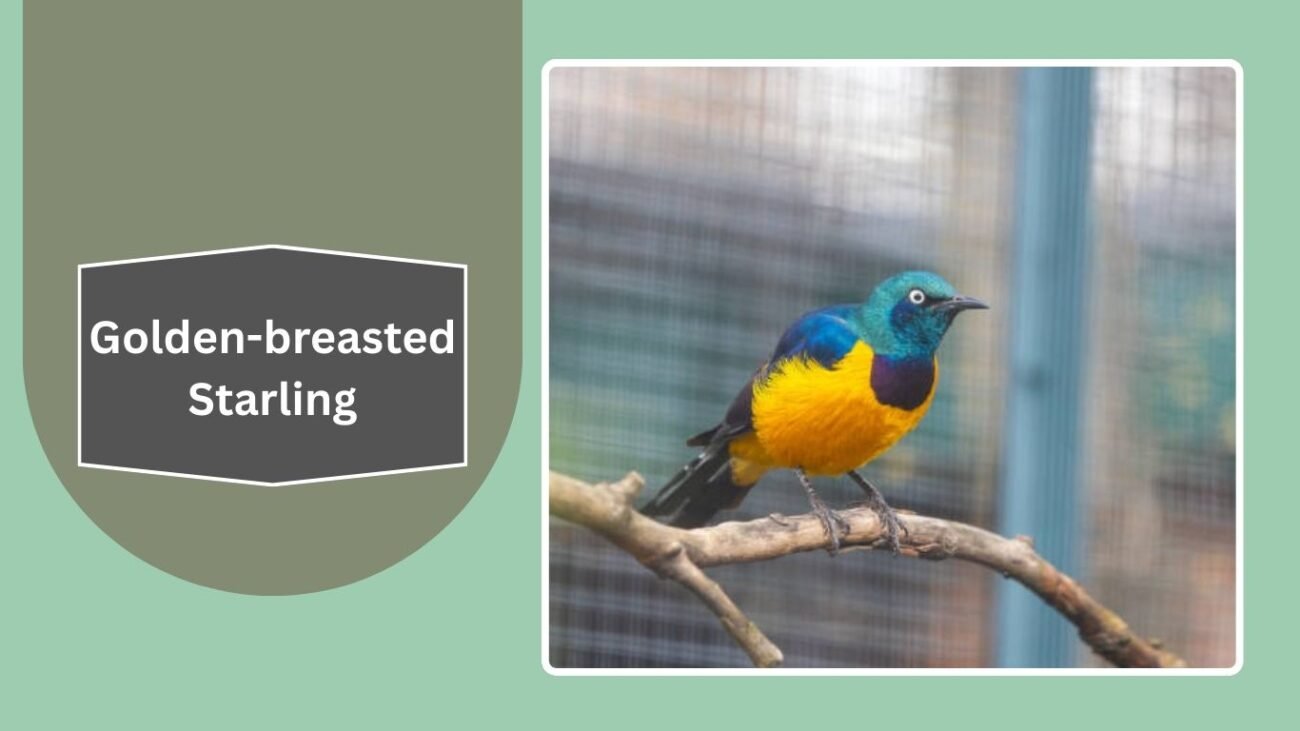
The Golden-breasted Starling (Lamprotornis regius), also known as the royal starling, is one of the most spectacularly colored starlings. With its shimmering golden underparts and iridescent plumage, it is often considered a jewel of the savanna. This bird is admired for both its beauty and lively behavior.
Identification
- Medium-sized starling, about 30–35 cm (12–14 in) long including the long tail
- Brilliant golden-yellow breast and belly
- Iridescent green back and wings with a metallic sheen
- Bright violet-blue head and upper chest
- Long, narrow tail feathers
Behavior
Golden-breasted Starlings are highly social and often seen in family groups or small flocks. They are active foragers, feeding on insects, fruits, and nectar. Known for their constant movement and striking displays, they also show cooperative breeding behavior.
Habitat
They inhabit savannas, acacia woodlands, and shrublands of East Africa, particularly in Somalia, Ethiopia, Kenya, and northern Tanzania. They prefer open areas with scattered trees and thornbushes.
Importance
This starling is ecologically valuable as an insect eater and seed disperser. Its dazzling beauty makes it a highlight for birdwatchers, and in some regions, it is also a cultural symbol of richness and vitality.
8. Purple Starling
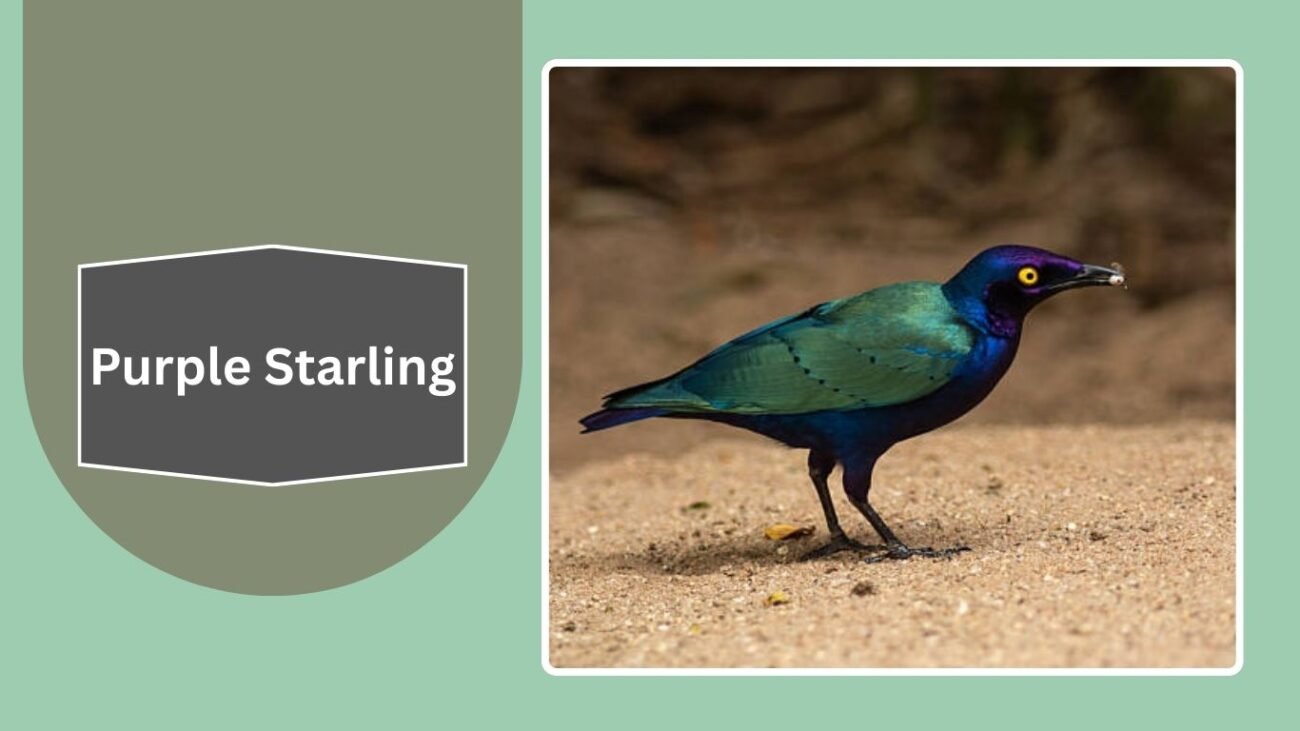
The Purple Starling (Lamprotornis purpureus), also called the purple glossy starling, is a large and striking bird found in West and Central Africa. Its deep iridescent colors and piercing eyes make it stand out among other starling species.
Identification
- Large starling, about 22–23 cm (9 in) long
- Glossy deep purple body with metallic sheen
- Bright yellow eyes contrasting with dark feathers
- Short tail and strong black beak
- Both sexes look alike, though females may appear slightly duller
Behavior
Purple Starlings are active and noisy, often traveling in flocks. They forage mainly on fruits and insects, using both trees and the ground. Their calls are harsh and chattering, and they are often mixed with other starling species during feeding.
Habitat
They inhabit savannas, forest edges, and open woodlands throughout West and Central Africa, including countries like Senegal, Nigeria, Cameroon, and the Democratic Republic of Congo. They are also common near villages and cultivated fields.
Importance
This species contributes to seed dispersal and insect control. Its brilliant appearance makes it a popular subject for birdwatchers and a symbol of African avian diversity.
9. Long-tailed Glossy Starling
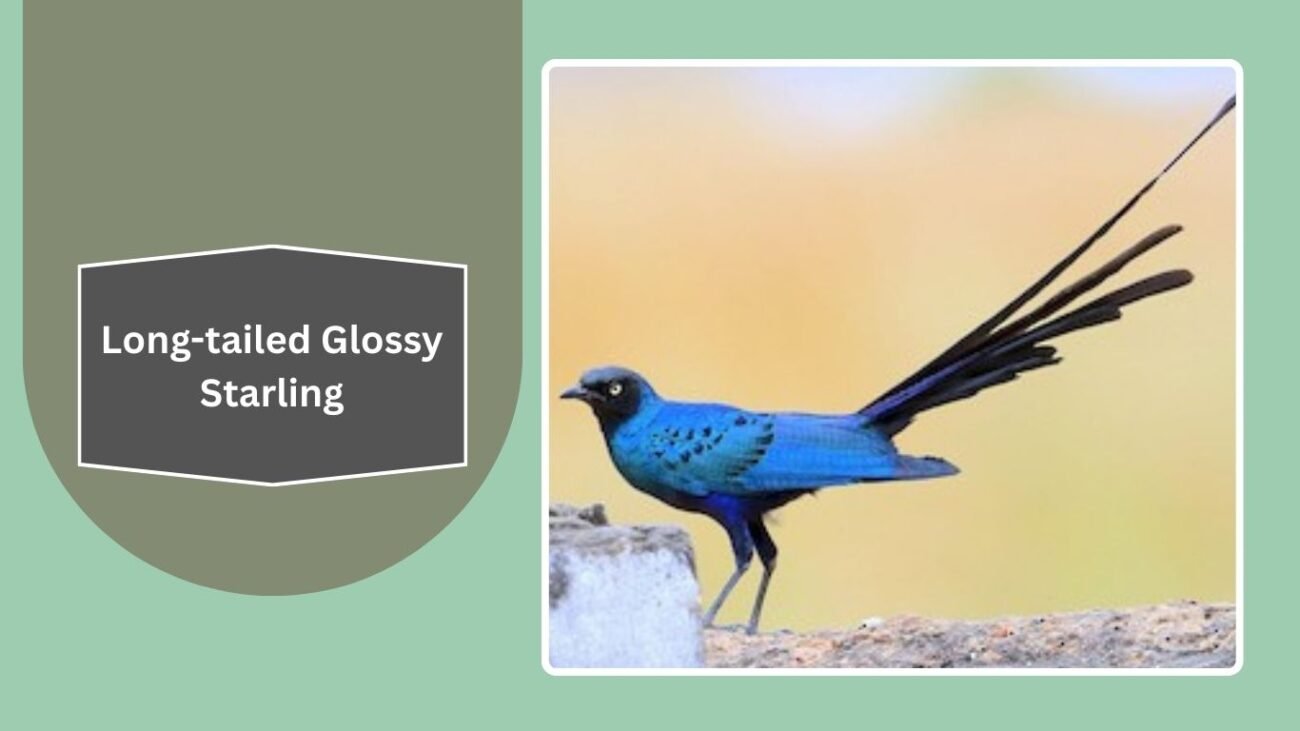
The Long-tailed Glossy Starling (Lamprotornis caudatus) is one of the most elegant members of the starling family, recognized for its shimmering plumage and exceptionally long tail feathers. It is a bird of West Africa, often admired for its grace and beauty.
Identification
- Large starling, around 36–42 cm (14–16 in) long including tail
- Metallic green and blue body with glossy sheen
- Extremely long, flowing tail feathers
- Bright yellow eyes contrasting with dark head
- Both sexes look similar, though males may have slightly longer tails
Behavior
These starlings are social and usually found in pairs or small flocks. They feed on insects, fruits, and seeds, often foraging both in trees and on the ground. Their flight is strong and direct, enhanced by their long tails.
Habitat
They are found in wooded savannas, forest edges, and cultivated lands across West Africa, particularly from Senegal to Nigeria and into Sudan. They are often spotted near human settlements as well.
Importance
The Long-tailed Glossy Starling plays an ecological role in insect control and seed dispersal. Its beauty also makes it a favorite among bird enthusiasts and a striking representative of African birdlife.
10. Greater Blue-eared Starling
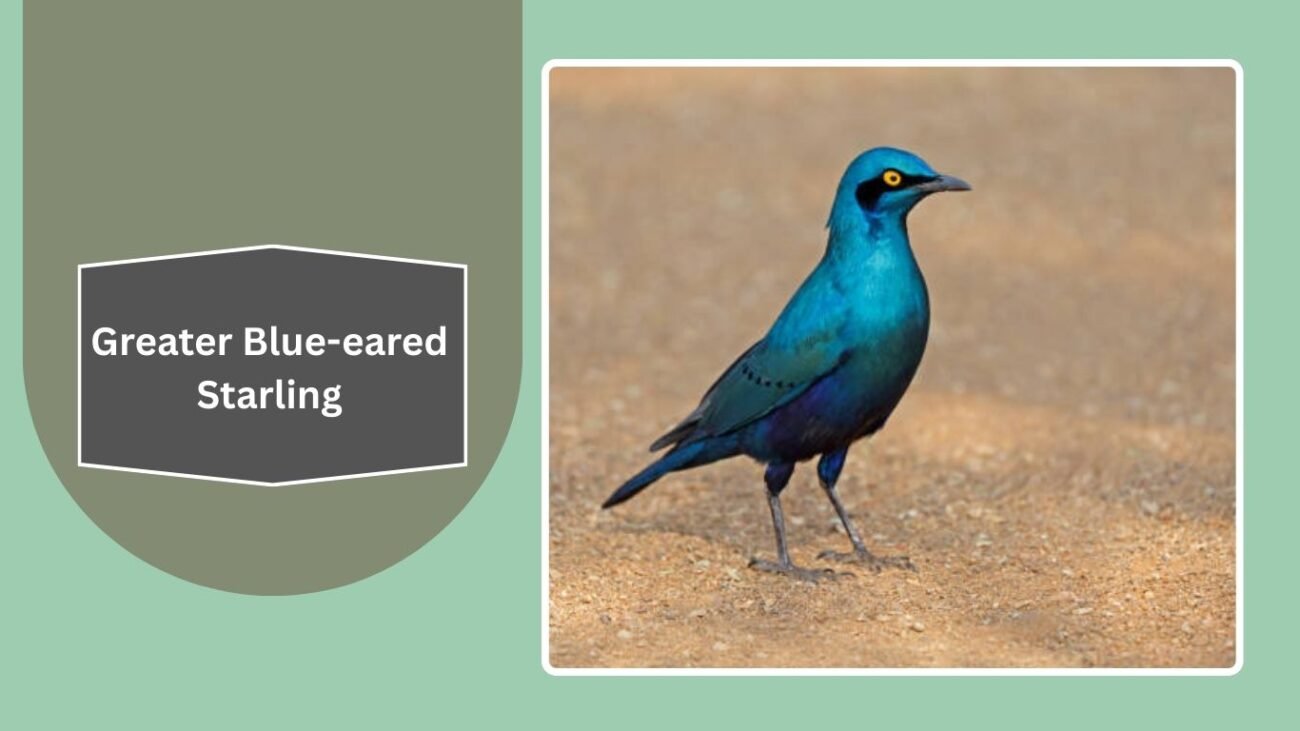
The Greater Blue-eared Starling (Lamprotornis chalybaeus) is a widespread African starling known for its vivid iridescent plumage and piercing eyes. Its adaptability and striking looks make it one of the most commonly recognized glossy starlings.
Identification
- Medium-sized starling, about 22 cm (8.5 in) long
- Shiny metallic blue-green body with purple-blue sheen on the back and wings
- Bright orange to yellow eyes
- Short tail compared to other glossy starlings
- Both sexes look alike, though females may appear slightly duller
Behavior
Greater Blue-eared Starlings are highly social and active, often seen in large flocks. They forage both on the ground and in trees, feeding on insects, seeds, and fruits. Their calls are varied, ranging from harsh chattering to melodic whistles.
Habitat
They are found across a wide range of sub-Saharan Africa, thriving in savannas, open woodlands, and cultivated lands. They are also common near villages and farmlands, often feeding alongside other starling species.
Importance
This starling is important for controlling insect populations and dispersing seeds. Its adaptability and bold presence make it an iconic bird of the African landscape, and a regular subject for birdwatchers.
11. Lesser Blue-eared Starling
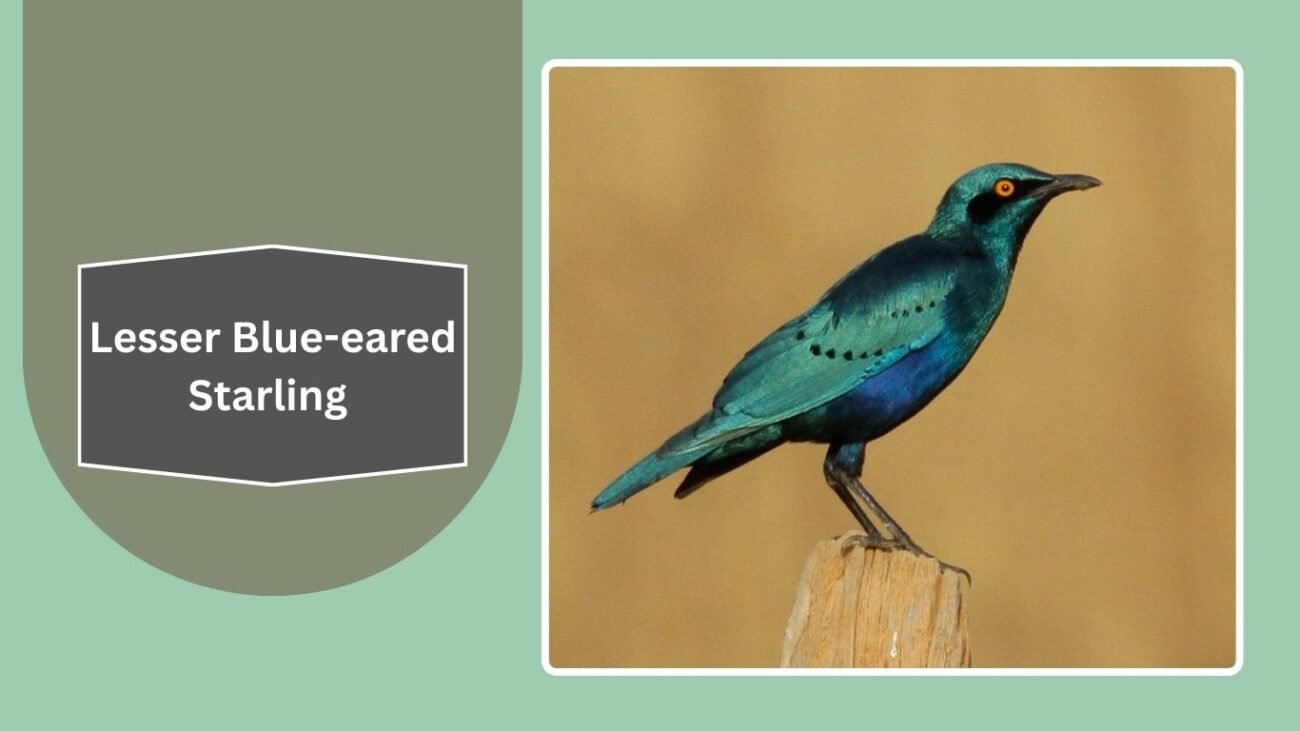
The Lesser Blue-eared Starling (Lamprotornis chloropterus) is a glossy and vibrant bird that closely resembles the Greater Blue-eared Starling but is slightly smaller. It is a widespread species across sub-Saharan Africa and is admired for its shimmering plumage and energetic behavior.
Identification
- Medium-sized bird, about 20–21 cm (8 in) long
- Metallic blue-green plumage with purplish gloss on the wings and back
- Bright yellow to orange eyes
- Slightly smaller and slimmer than the Greater Blue-eared Starling
- Short tail and strong legs
Behavior
These starlings are gregarious and often found in flocks, sometimes mixed with other starling species. They feed on insects, fruits, and grains, foraging actively on the ground and in trees. Their vocalizations include harsh chatters and whistles.
Habitat
The Lesser Blue-eared Starling inhabits open savannas, grasslands, and agricultural areas throughout West, Central, and parts of East Africa. They adapt well to human-modified landscapes and are frequently seen near villages.
Importance
They play a key ecological role in seed dispersal and insect control. Their adaptability and brilliant coloration make them a familiar and beautiful presence in many African habitats.
12. Splendid Starling
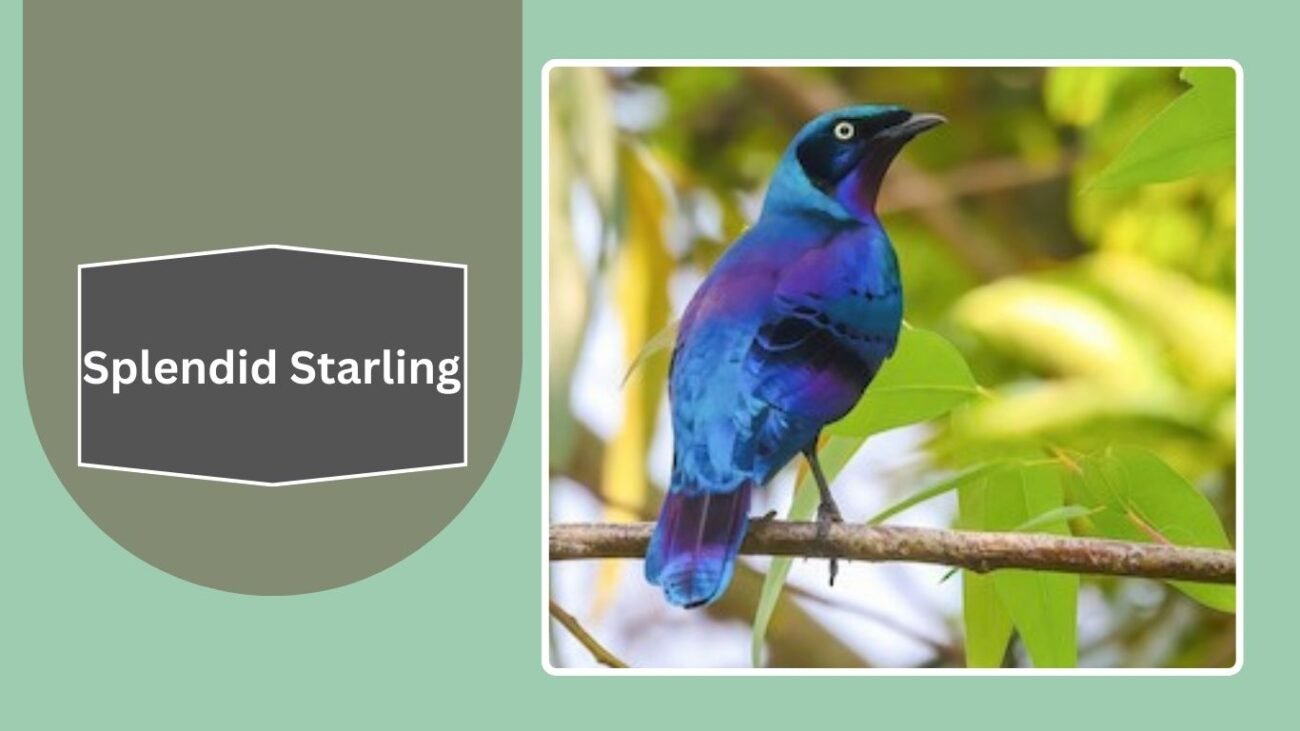
The Splendid Starling (Lamprotornis splendidus) is a vibrant and eye-catching bird, well-known for its shimmering plumage and active nature. True to its name, it stands out as one of the most colorful starlings across tropical Africa.
Identification
- Medium-sized bird, about 22–24 cm (9–9.5 in) long
- Iridescent green-blue head, back, and wings with metallic shine
- Bright reddish-orange underparts
- Pale yellow eyes
- Short tail and slightly curved bill
Behavior
Splendid Starlings are social and energetic, usually moving in flocks. They feed on insects, fruits, and nectar, often foraging both on the ground and in trees. Their calls are varied, with whistles, chatters, and sharp notes, making them quite noisy.
Habitat
They are found across tropical West and Central Africa, inhabiting woodlands, forest edges, savannas, and cultivated areas. They are also common near human settlements.
Importance
This starling helps in insect population control and seed dispersal. Its dazzling plumage also makes it a popular attraction for birdwatchers and a highlight of African biodiversity.
13. Wattled Starling
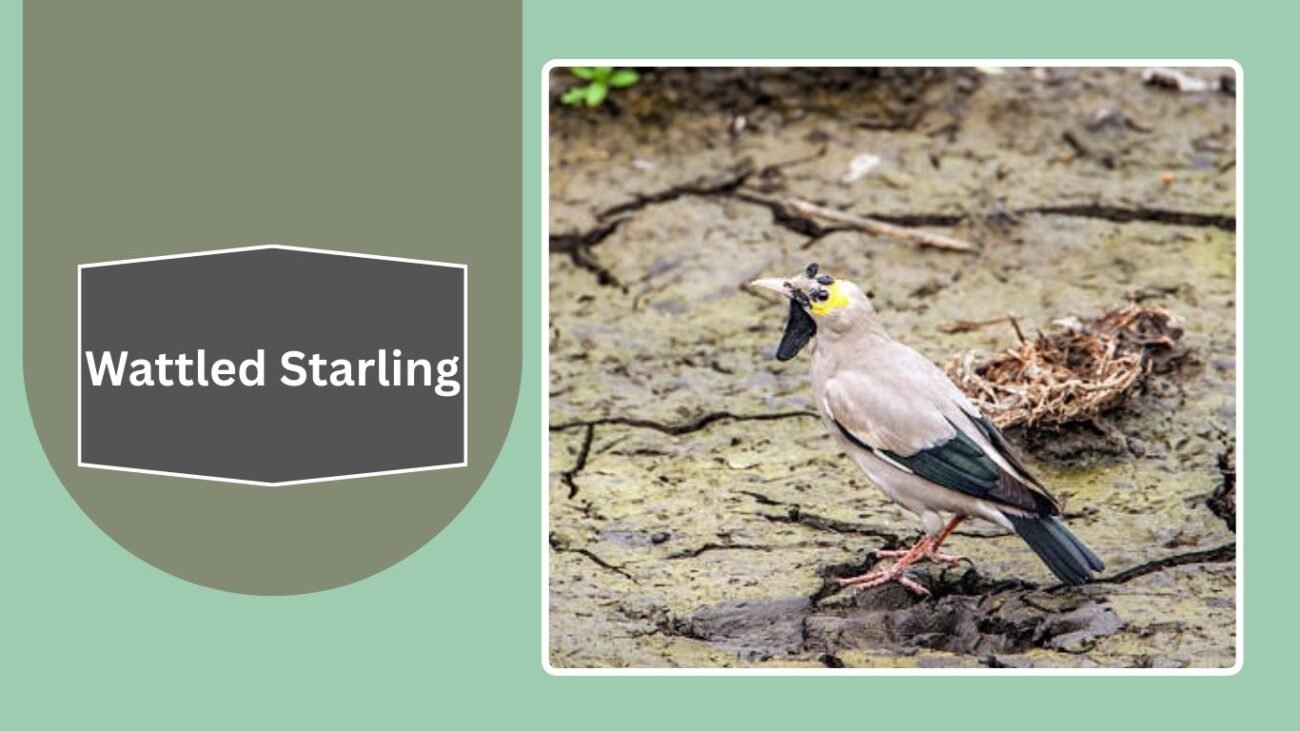
The Wattled Starling (Creatophora cinerea) is a unique species among starlings, easily recognized by the wattles that appear on the faces of breeding males. It is widespread across sub-Saharan Africa and is notable for its nomadic habits, often moving in large flocks in response to food availability.
Identification
- Medium-sized bird, about 21 cm (8 in) long
- Non-breeding plumage: grayish-brown body with paler underparts
- Breeding males: bare yellow skin with black wattles on the face and throat
- Pale yellow eyes
- Short tail and strong beak
Behavior
Wattled Starlings are highly gregarious and often form massive flocks, sometimes with other bird species. They feed on insects, especially locusts and grasshoppers, as well as seeds and fruits. During breeding, males develop prominent facial wattles and gather in colonies.
Habitat
They occur widely across open savannas, grasslands, and agricultural lands in sub-Saharan Africa. Their nomadic nature makes them appear in large numbers in areas with abundant food, then move elsewhere when resources decline.
Importance
They are significant for controlling locusts and other crop pests, which makes them beneficial to agriculture. Their large breeding colonies also make them a fascinating species for birdwatchers.
14. Red-winged Starling
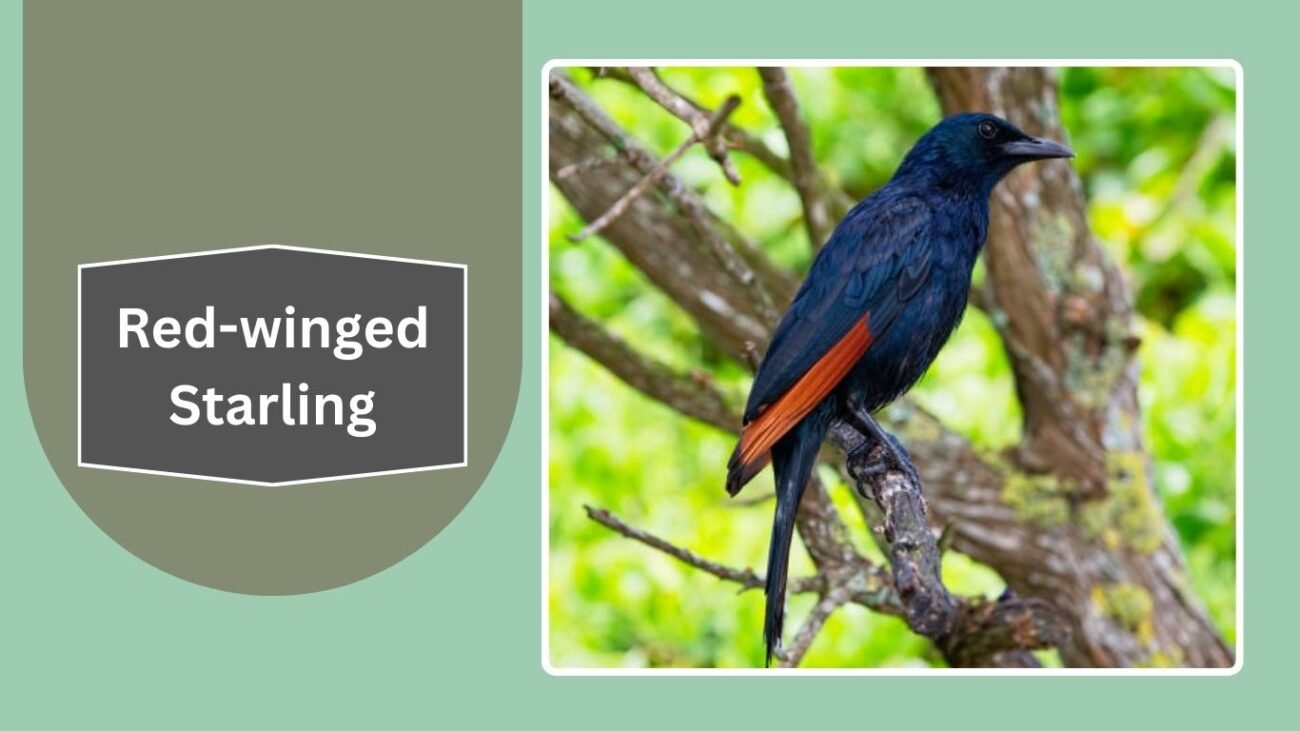
The Red-winged Starling (Onychognathus morio) is a striking and easily recognized starling found in eastern and southern Africa. Its glossy dark body combined with vivid chestnut-red wing panels makes it stand out both in flight and at rest.
Identification
- Large starling, about 27–28 cm (11 in) long
- Glossy black body with a bluish sheen
- Distinctive chestnut-red wing panels visible in flight and at rest
- Males have entirely black plumage, while females have a gray head and neck
- Dark eyes and a long tail
Behavior
Red-winged Starlings are social, often seen in pairs or small groups. They are opportunistic feeders, eating fruits, seeds, and insects. Around urban areas, they readily take scraps and adapt well to human presence. Their calls are loud and harsh, often echoing across cliffs and buildings.
Habitat
They inhabit rocky cliffs, mountains, savannas, and urban areas throughout eastern and southern Africa, including South Africa, Kenya, and Tanzania. They are also common in city environments where tall buildings mimic their natural cliff habitats.
Importance
This starling is an important seed disperser and insect predator. In addition, its adaptability to human-modified environments highlights its resilience and ecological flexibility.
15. Slender-billed Starling
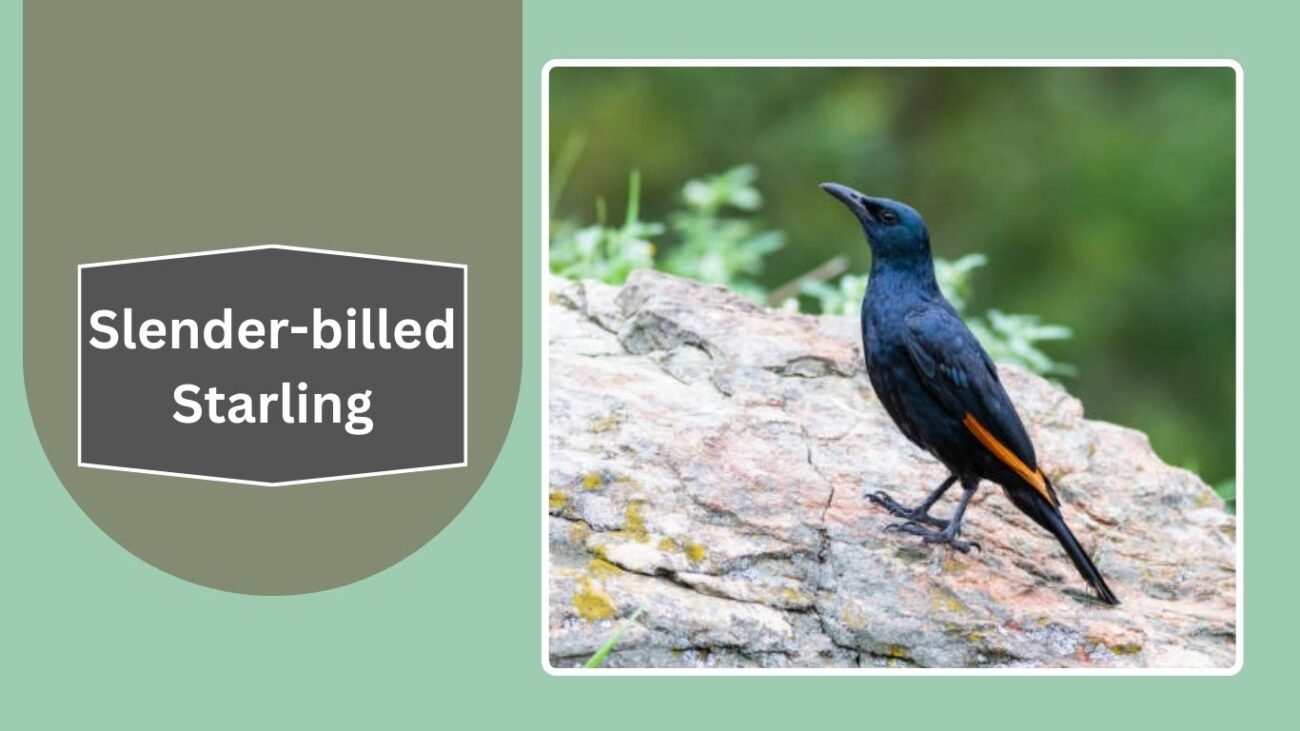
The Slender-billed Starling (Onychognathus tenuirostris) is a highland species found in East Africa. Its long, narrow bill sets it apart from most other starlings, making it well adapted for feeding on fruits and insects in mountain habitats.
Identification
- Medium to large starling, about 25–27 cm (10–11 in) long
- Glossy black plumage with a metallic bluish-purple sheen
- Long, slender, and slightly curved bill
- Reddish-brown wings that stand out during flight
- Both sexes look similar, though females may be slightly duller
Behavior
Slender-billed Starlings are typically seen in small flocks or pairs. They feed primarily on fruits and insects, often foraging in highland forests and open woodlands. Their calls are sharp and metallic, typical of many glossy starlings.
Habitat
They inhabit montane forests, moorlands, and high-altitude woodlands of East Africa, especially in Ethiopia, Kenya, Tanzania, and Uganda. They are often seen around fruiting trees and forest edges.
Importance
This species plays a vital role in highland ecosystems as a seed disperser and insect controller. Its presence in mountain habitats makes it a key component of East African biodiversity.
16. Sharpe’s Starling
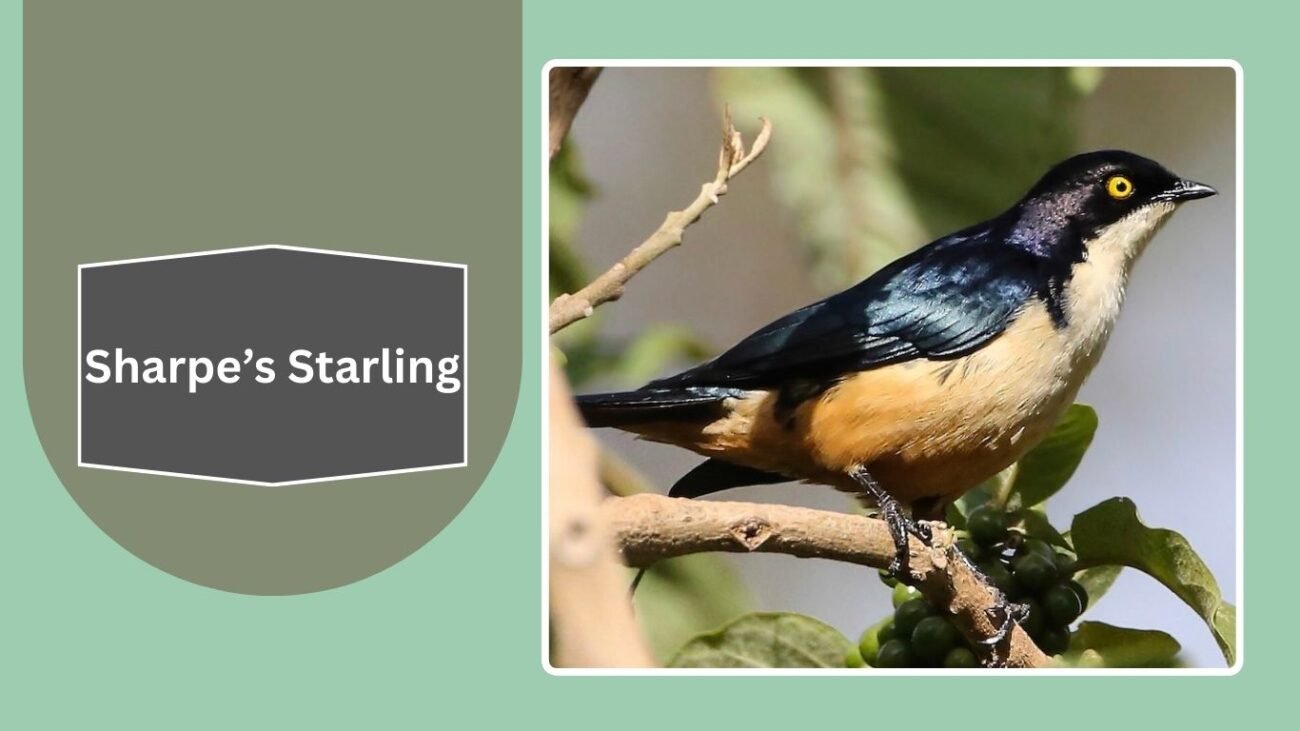
Sharpe’s Starling (Pholia sharpii) is a lesser-known but fascinating starling found in the highland forests of East and Central Africa. Unlike many glossy starlings, this species has a more subdued plumage, adapted for life in dense forests. Its elusive nature makes it harder to spot compared to the brightly colored savanna starlings.
Identification
- Medium-sized starling, about 20–22 cm (8–9 in) long
- Plumage mostly dark gray to blackish with a subtle gloss
- Short tail and strong legs suited for forest movement
- Dark bill with a slightly curved shape
- Both males and females look similar, showing little sexual dimorphism
Behavior
Sharpe’s Starlings are shy and usually seen in pairs or small family groups. They are canopy dwellers, moving swiftly among treetops while foraging. Their diet consists of insects, berries, and fruits, which they pluck directly from branches. Unlike other starling species, they are less noisy and more discreet, with soft whistles and calls.
Habitat
They inhabit montane forests and forest edges in regions such as Kenya, Uganda, Rwanda, and the Democratic Republic of Congo. They prefer higher elevations, often above 1,800 meters (5,900 ft), where dense vegetation provides food and cover.
Importance
Sharpe’s Starlings play a significant ecological role by dispersing seeds of forest plants and controlling insect populations. Their presence indicates healthy montane ecosystems, making them an important part of forest biodiversity.
17. Abbott’s Starling
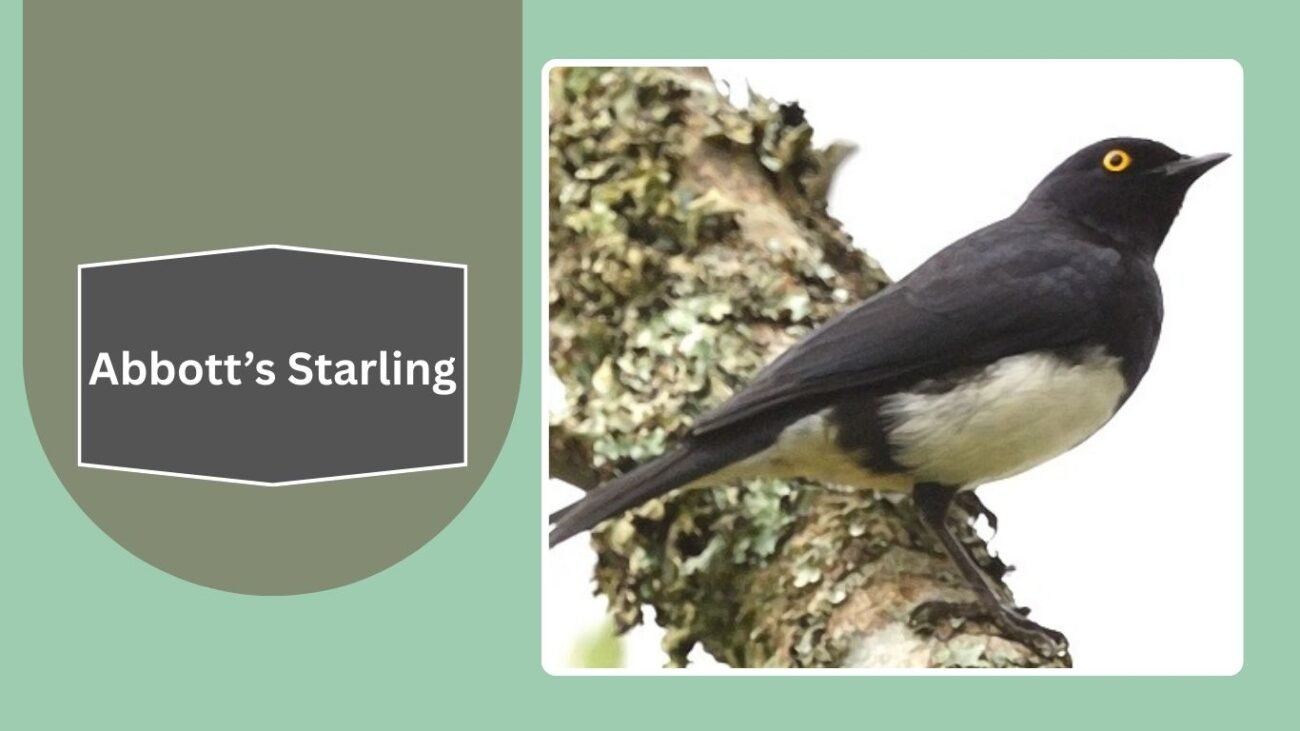
Abbott’s Starling (Poeoptera femoralis) is a rare and little-studied starling native to the montane forests of East Africa. Named after the American naturalist William Louis Abbott, it is considered a vulnerable species due to habitat loss and its restricted range. Its secretive behavior makes it a prized sighting for birdwatchers.
Identification
- Medium-sized starling, about 20–22 cm (8–9 in) long
- Dark, glossy plumage with a purplish-blue sheen on the head and back
- Blackish underparts with a faint gloss
- Distinct reddish-brown thighs (“femoralis” refers to the thighs)
- Short tail and a straight, strong bill
Behavior
Abbott’s Starlings are elusive and usually seen singly, in pairs, or in very small groups. They spend much of their time in the canopy, feeding quietly on fruits, berries, and insects. Their calls are not well documented but are believed to be soft whistles and chatters.
Habitat
They inhabit montane forests of Kenya and Tanzania, typically at elevations between 1,800 and 2,800 meters (5,900–9,200 ft). They are most often seen in mature forest with dense canopies, which provide both food and cover.
Importance
This species is important for seed dispersal within highland forests. Because of its rarity and vulnerability, Abbott’s Starling highlights the importance of conserving East Africa’s montane forests, which are under threat from logging and agricultural expansion.
18. Bali Myna (Bali Starling)
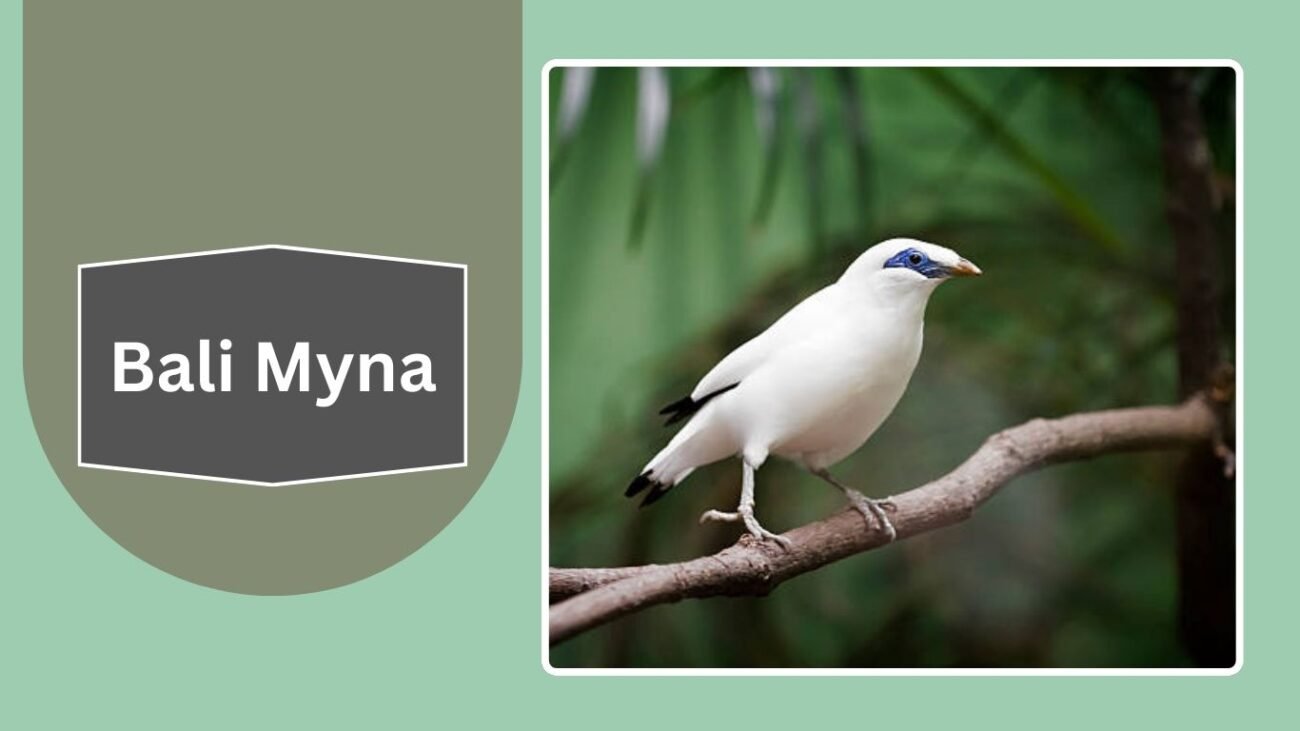
The Bali Myna (Leucopsar rothschildi), also called the Bali Starling or Rothschild’s Myna, is one of the rarest and most endangered starlings in the world. Endemic to the island of Bali, Indonesia, it is highly prized for its stunning white plumage and blue facial skin. Conservation efforts have made it a global symbol of bird protection.
Identification
- Medium-sized starling, about 25 cm (10 in) long
- Pure white plumage with a silky sheen
- Black wing tips and tail edges
- Striking bare blue skin around the eyes
- Yellow bill and grayish legs
- Both sexes look alike, with little sexual dimorphism
Behavior
Bali Mynas are generally quiet but produce a range of calls, including whistles, squawks, and chattering notes. They are usually seen in pairs or small groups. Their diet consists of fruits, seeds, and insects, making them versatile feeders. In the wild, they nest in tree cavities, often at forest edges.
Habitat
They are found only in Bali, primarily in the Bali Barat National Park and nearby areas. Their preferred habitats are monsoon forests, savannas, and open woodland areas with tall trees suitable for nesting.
Importance
The Bali Myna is critically endangered due to habitat destruction and illegal trapping for the pet trade. International breeding and reintroduction programs have been crucial in keeping the species alive. It is now a national symbol of Bali and a flagship species for global bird conservation.
19. Asian Glossy Starling
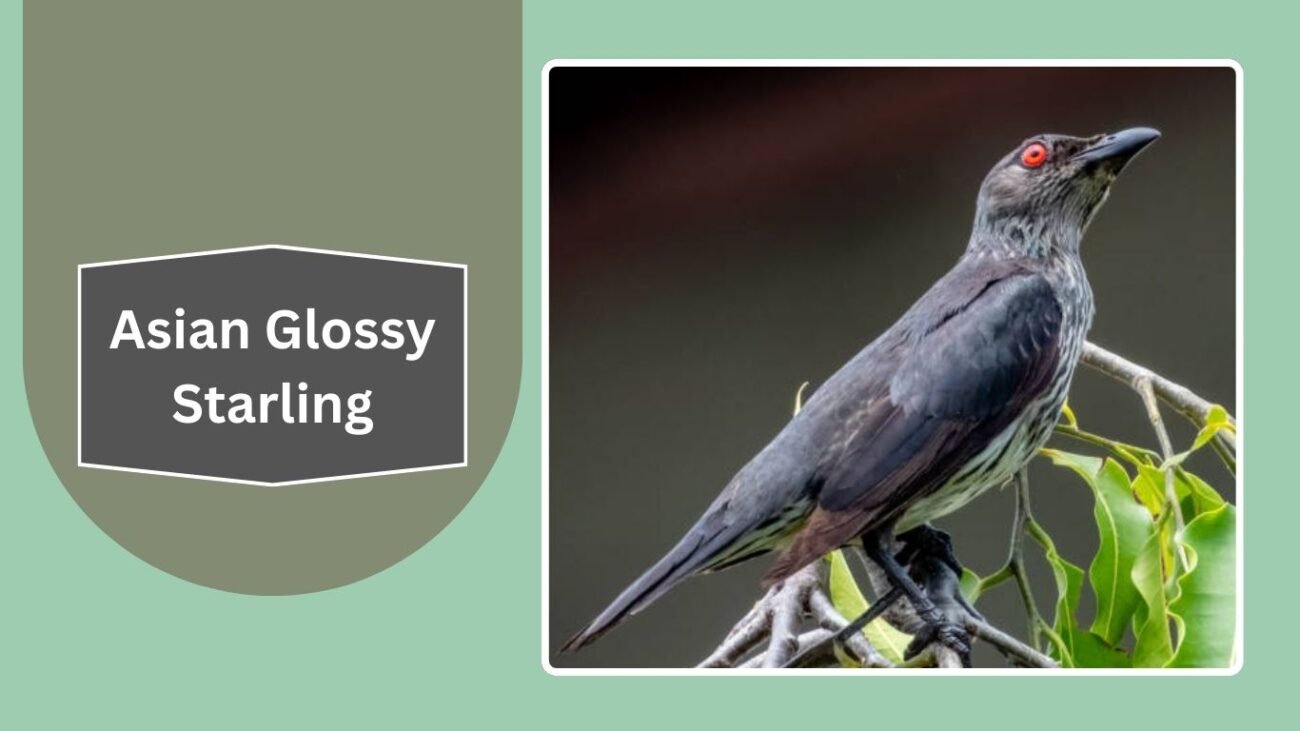
The Asian Glossy Starling (Aplonis panayensis) is a widespread and highly adaptable starling found throughout South and Southeast Asia. Its glossy black-green plumage and striking red eyes make it easy to identify, especially in urban and village settings where it is commonly seen.
Identification
- Medium-sized starling, about 20–22 cm (8–9 in) long
- Glossy blackish-green plumage with metallic sheen
- Bright crimson-red eyes, a key distinguishing feature
- Longish tail and slender black bill
- Both sexes look similar, with little variation in plumage
Behavior
Asian Glossy Starlings are social and often seen in large, noisy flocks. They feed on fruits, berries, nectar, and insects, often foraging in trees or swooping down to the ground. Their calls are sharp and varied, making them one of the louder starling species. They adapt well to urban environments, nesting in building crevices and rooftops.
Habitat
This species ranges across India, the Philippines, Malaysia, Thailand, and Indonesia. It thrives in forests, gardens, plantations, and city areas, showing remarkable adaptability to human presence.
Importance
The Asian Glossy Starling plays a key role in seed dispersal, helping maintain forest and garden ecosystems. Its ability to live in urban settings highlights its resilience, making it one of the most successful and widespread starling species in Asia.
20. White-shouldered Starling
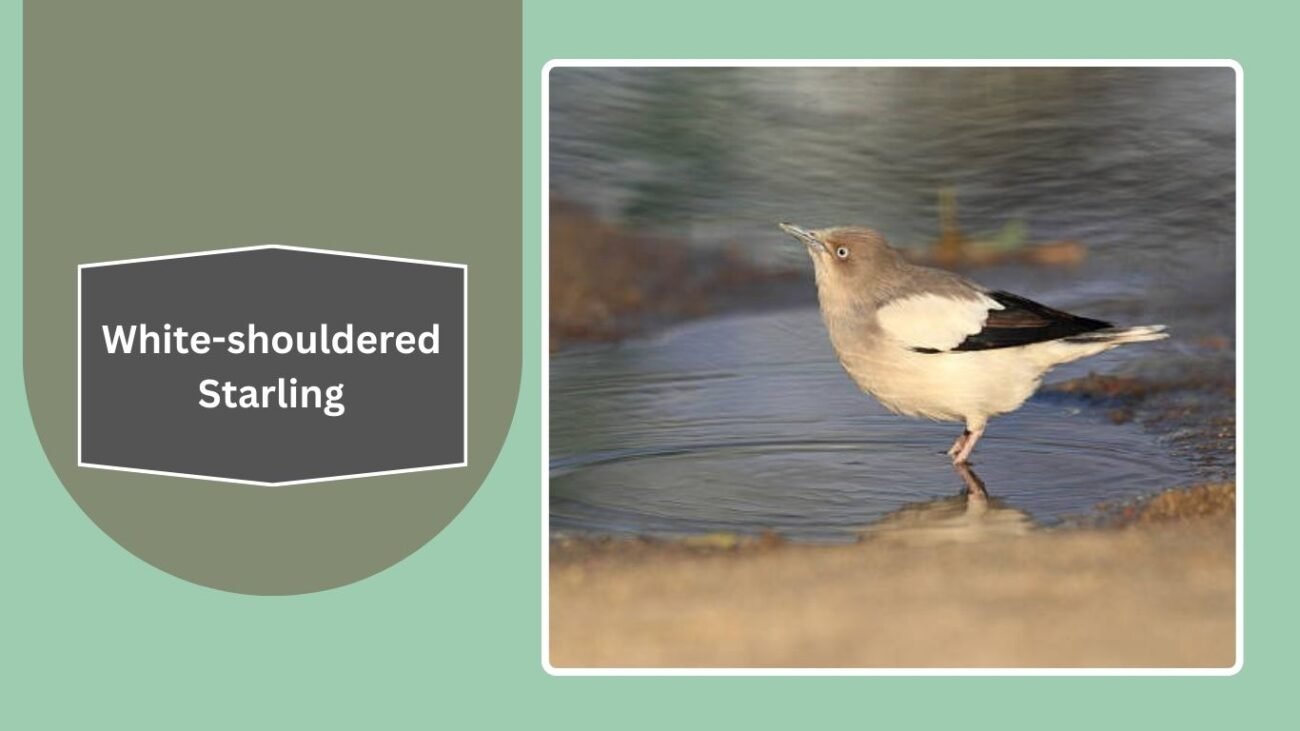
The White-shouldered Starling (Sturnia sinensis) is a migratory starling species found in East and Southeast Asia. It is well known for the distinctive white patches on its wings and shoulders, which give it its name. This species often forms large flocks, especially outside the breeding season.
Identification
- Medium-sized starling, about 20–21 cm (8 in) long
- Glossy blackish plumage with green and purple sheen on head and back
- White shoulder patches and wing coverts, visible in flight and at rest
- Pale whitish-gray underparts
- Yellow bill with a darker tip; legs yellowish
- Both sexes similar, though females may appear slightly duller
Behavior
White-shouldered Starlings are highly gregarious, often gathering in noisy flocks. They feed on insects, fruits, and seeds, foraging both on the ground and in trees. During migration, they are often seen in large numbers, roosting together in reed beds or trees.
Habitat
They breed in southeastern China and migrate across Southeast Asia, reaching countries like Thailand, Cambodia, Vietnam, and Malaysia. Their habitats include farmland, open woodland, grasslands, and areas near human settlements.
Importance
This species is important for controlling insect populations and dispersing seeds. Its seasonal migrations also make it a key indicator of ecological changes in Asia’s farmlands and open landscapes.
21. White-cheeked Starling
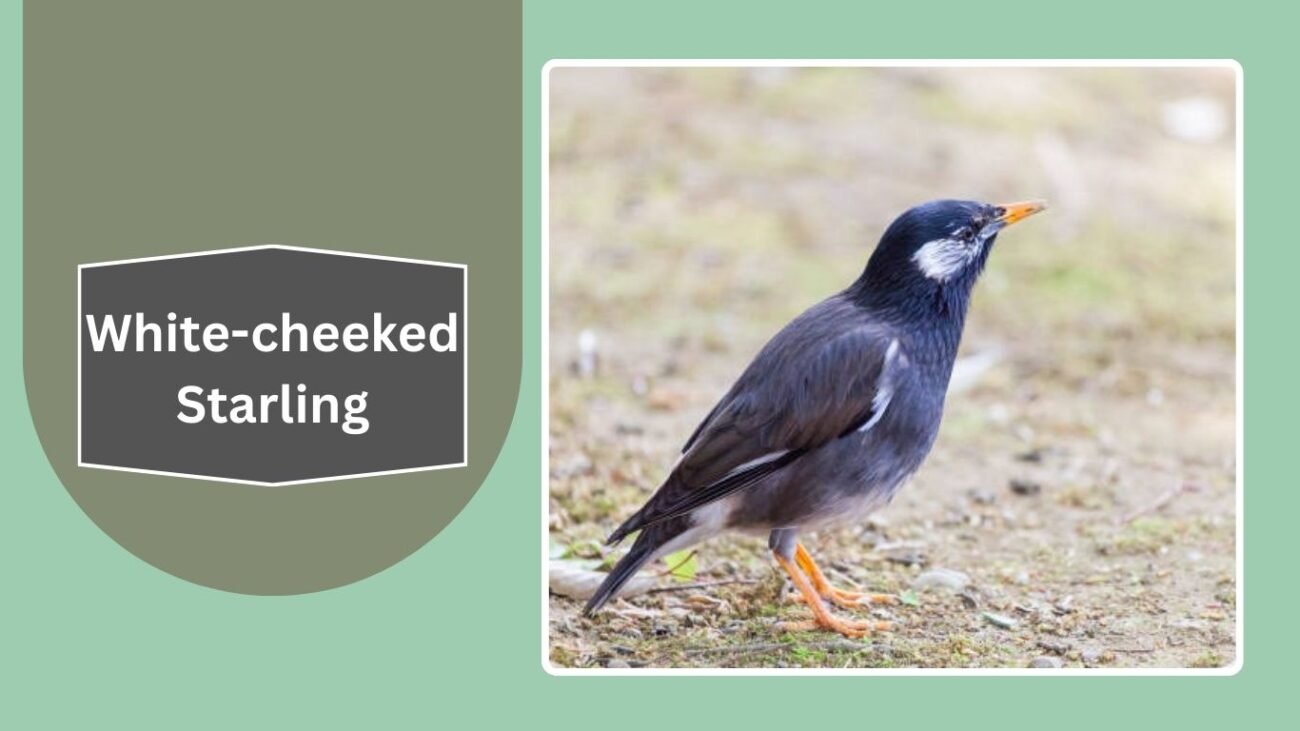
The White-cheeked Starling (Spodiopsar cineraceus) is a common starling species of East Asia, easily recognized by the contrasting white patches on its cheeks. It is widespread in urban and rural landscapes, often foraging in open areas and roosting in large groups.
Identification
- Medium-sized starling, about 24 cm (9.5 in) long
- Grayish-brown body with darker wings and tail
- Distinct white cheek patches and a pale forehead
- Orange-yellow bill with a dark base
- Legs orange; both sexes look similar, though females are slightly duller
Behavior
White-cheeked Starlings are social and noisy, often forming flocks outside the breeding season. They feed on insects, earthworms, berries, and grains, foraging mostly on the ground. They nest in tree holes, building cavities, and sometimes man-made structures, showing adaptability to human presence.
Habitat
They are native to East Asia, especially Japan, Korea, China, and eastern Russia. They thrive in open farmlands, grasslands, parks, and cities, often seen perched on wires and rooftops.
Importance
The White-cheeked Starling helps in pest control by consuming insects and also plays a role in seed dispersal. Its adaptability makes it a successful urban-dwelling bird, commonly observed in human-dominated environments.
22. Black-collared Starling
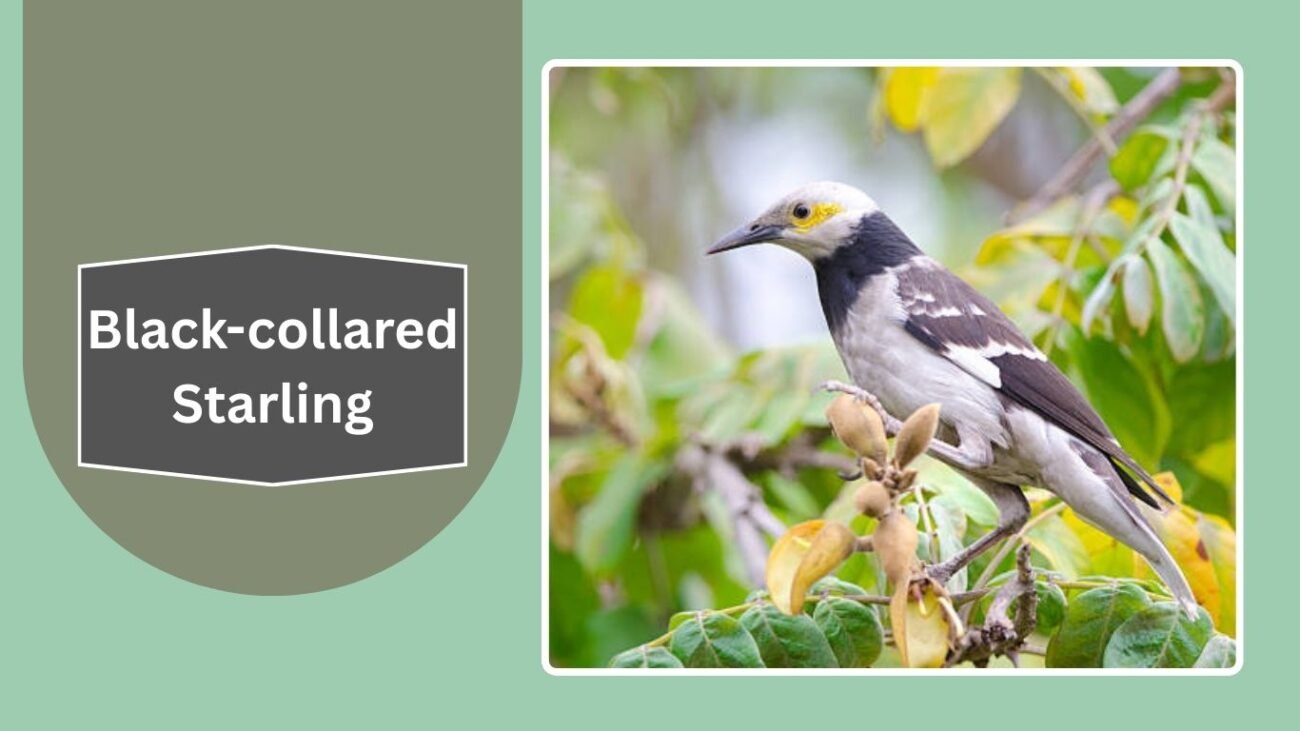
The Black-collared Starling (Gracupica nigricollis) is a striking and vocal starling native to Southeast Asia. Its bold black-and-white plumage and loud calls make it one of the most noticeable starlings in its range, especially in open countryside and farmland.
Identification
- Large starling, about 26–29 cm (10–11 in) long
- White body with contrasting black collar around the throat and upper chest
- Black crown, wings, and tail with white wing patches
- Bright yellow bare skin around the eyes
- Strong yellow bill and sturdy legs
Behavior
Black-collared Starlings are highly social, often seen in pairs or small flocks. They are noisy birds with a wide range of calls, including whistles, chatters, and harsh notes. Their diet is varied, including insects, earthworms, grains, and fruits. They nest in tree holes or cavities, sometimes adapting to human structures.
Habitat
They are widely distributed across Southeast Asia, including Thailand, Vietnam, Cambodia, Laos, southern China, and Myanmar. They prefer farmlands, grasslands, open woodlands, and areas near villages.
Importance
This species is important for pest control in agricultural areas and also contributes to seed dispersal. Its adaptability and bold behavior make it a familiar bird in rural landscapes and an integral part of Southeast Asia’s avian biodiversity.
23. Daurian Starling
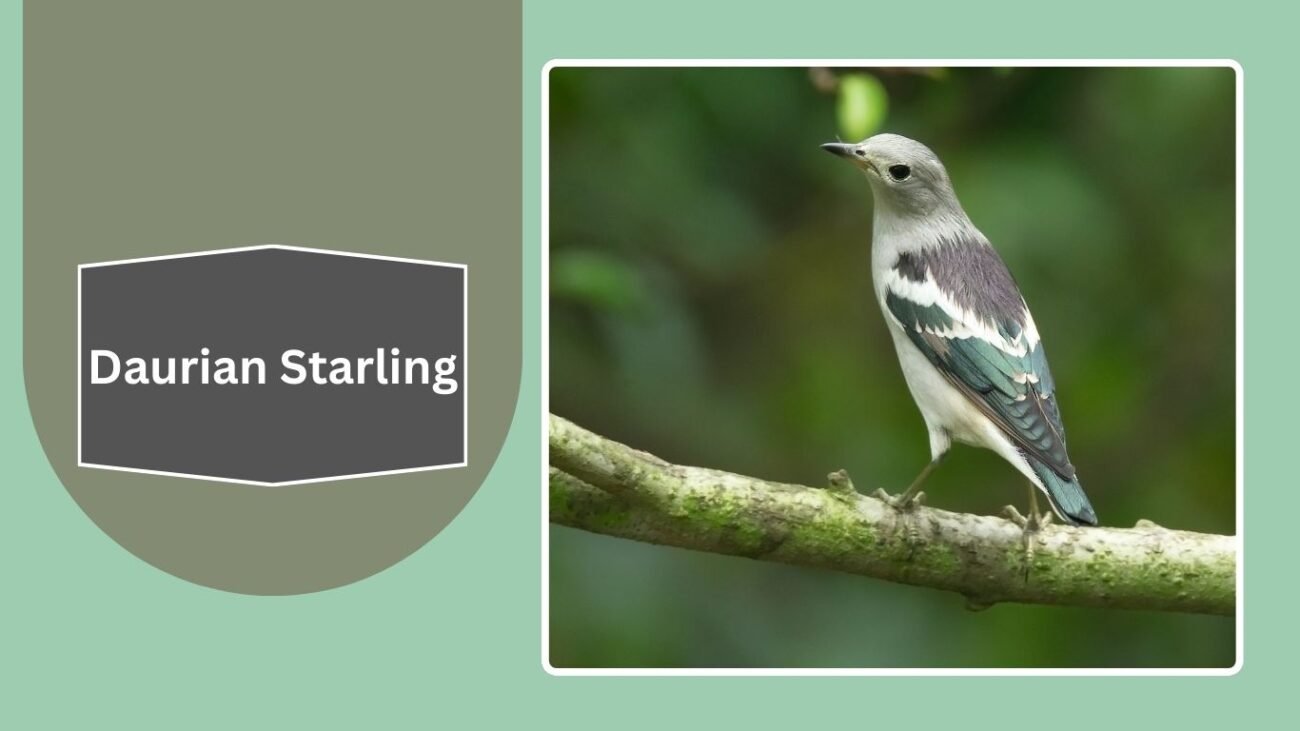
The Daurian Starling (Agropsar sturninus) is a migratory starling found across East Asia, known for its attractive plumage and seasonal movements. During breeding, it is commonly seen in temperate forests, while in winter it migrates southward in large flocks.
Identification
- Medium-sized starling, about 19–20 cm (7.5–8 in) long
- Males: pale gray head and underparts with darker wings and back
- Females: more brownish overall with less contrast
- Short tail and strong bill
- Both sexes show seasonal plumage changes, appearing brighter in breeding season
Behavior
Daurian Starlings are highly social, forming flocks especially during migration and winter. They feed on insects, fruits, and seeds, often foraging on the ground or among trees. Their calls are varied, including whistles and harsh notes.
Habitat
They breed in northeastern Asia, particularly in Mongolia, Russia, Korea, and northeastern China. In winter, they migrate southward to Southeast Asia, reaching Thailand, Vietnam, and the Philippines. Their habitats include open forests, grasslands, agricultural lands, and city parks.
Importance
This species plays an ecological role as both an insect predator and seed disperser. Its migratory habits also make it an important part of the seasonal ecosystem cycle in Asia.
24. Chestnut-tailed Starling
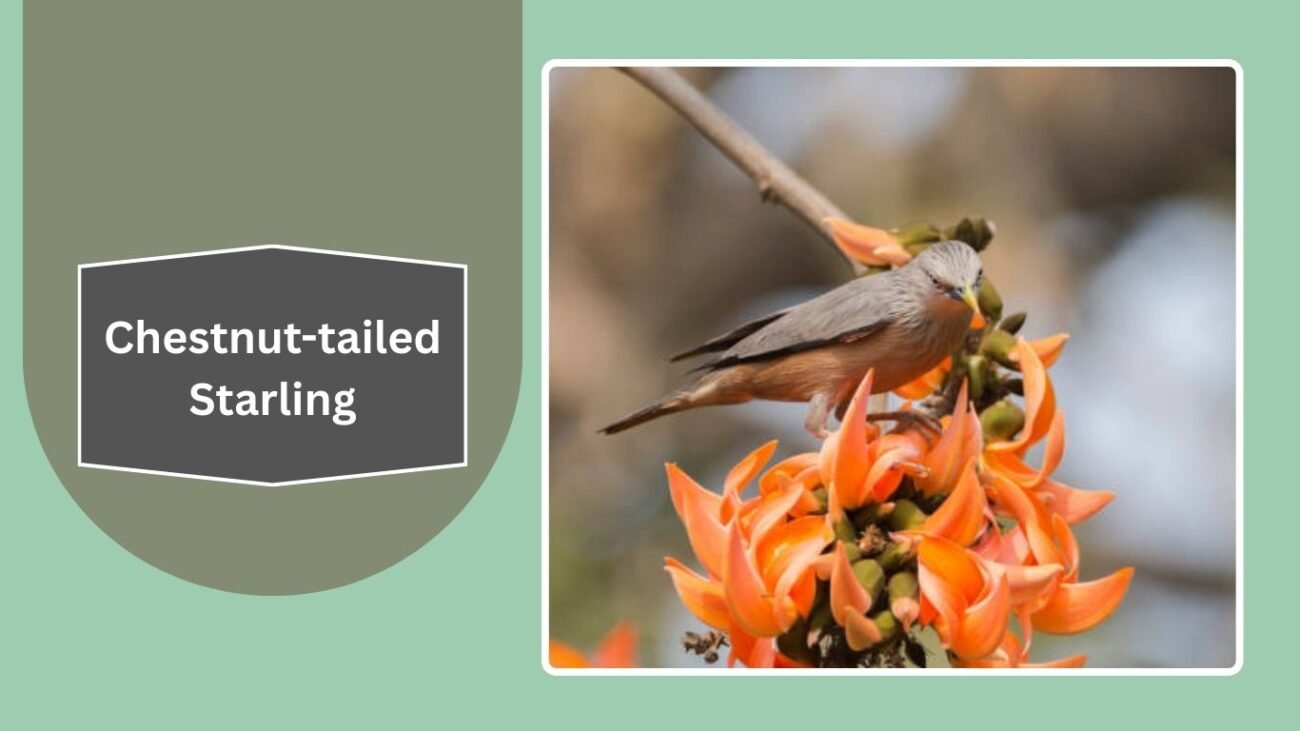
The Chestnut-tailed Starling (Sturnia malabarica), also known as the Grey-headed Myna, is a small and attractive starling found across South and Southeast Asia. It is admired for its soft coloration and sweet, melodious calls.
Identification
- Small starling, about 19–20 cm (7.5–8 in) long
- Pale gray head and neck with a glossy sheen
- Whitish underparts
- Distinct chestnut-brown tail and rump
- Yellow bill with bluish base; legs pale yellow
- Both sexes similar, though males may be slightly brighter
Behavior
Chestnut-tailed Starlings are gregarious and often seen in flocks, especially outside the breeding season. They feed on fruits, nectar, and insects, frequently visiting flowering trees. Their song is pleasant, with whistling and chattering notes. They are cavity nesters, often occupying old woodpecker or barbet holes.
Habitat
They are distributed widely across India, Nepal, Bangladesh, Myanmar, Thailand, and surrounding regions. They inhabit forests, gardens, plantations, and urban areas, showing adaptability to human presence.
Importance
This species contributes to pollination while feeding on nectar and also helps disperse seeds. Its gentle song and attractive appearance make it a favorite among bird enthusiasts in Asia.
25. Rosy Starling
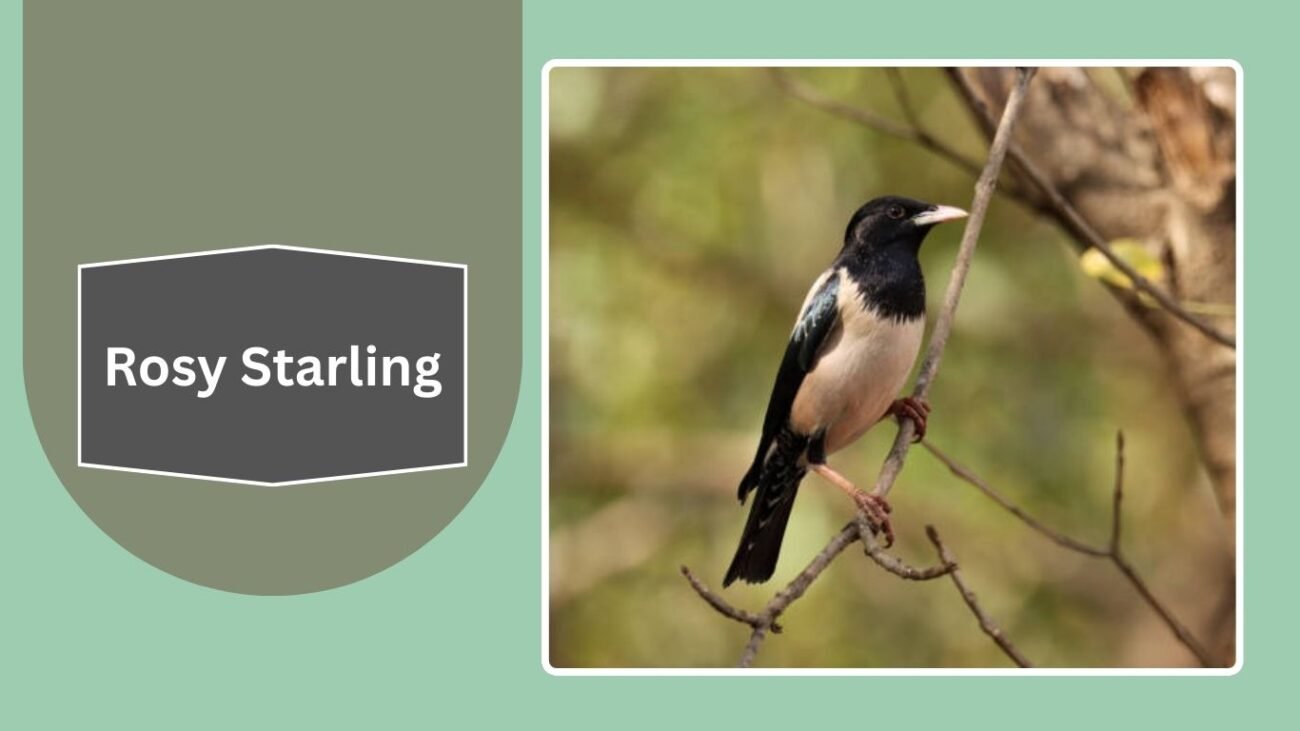
The Rosy Starling (Pastor roseus), also called the Rose-colored Starling, is a striking migratory bird distinguished by its unique pink-and-black plumage. It travels in large flocks, often covering vast distances between its breeding and wintering grounds.
Identification
- Medium-sized starling, about 20–22 cm (8–9 in) long
- Breeding males: pale pink body with glossy black head, wings, and tail
- Females and non-breeding birds: duller with more brownish-black tones
- Sharp, pointed bill that is pale yellow to horn-colored
- Both sexes have strong legs suited for ground foraging
Behavior
Rosy Starlings are highly gregarious, moving in large flocks that can number in the thousands. They feed mainly on insects—especially locusts and grasshoppers—as well as fruits and seeds. Their flight is swift and direct, and their calls are harsh and chattering.
Habitat
They breed in southeastern Europe and Central Asia, nesting in colonies on cliffs, rocky outcrops, and buildings. In winter, they migrate to India, Sri Lanka, and surrounding regions, where they are often seen in open fields and farmlands.
Importance
Rosy Starlings are significant for pest control, especially during locust outbreaks, when they consume vast numbers of insects. Their striking coloration and massive flocking behavior also make them a spectacular sight in both breeding and wintering areas.