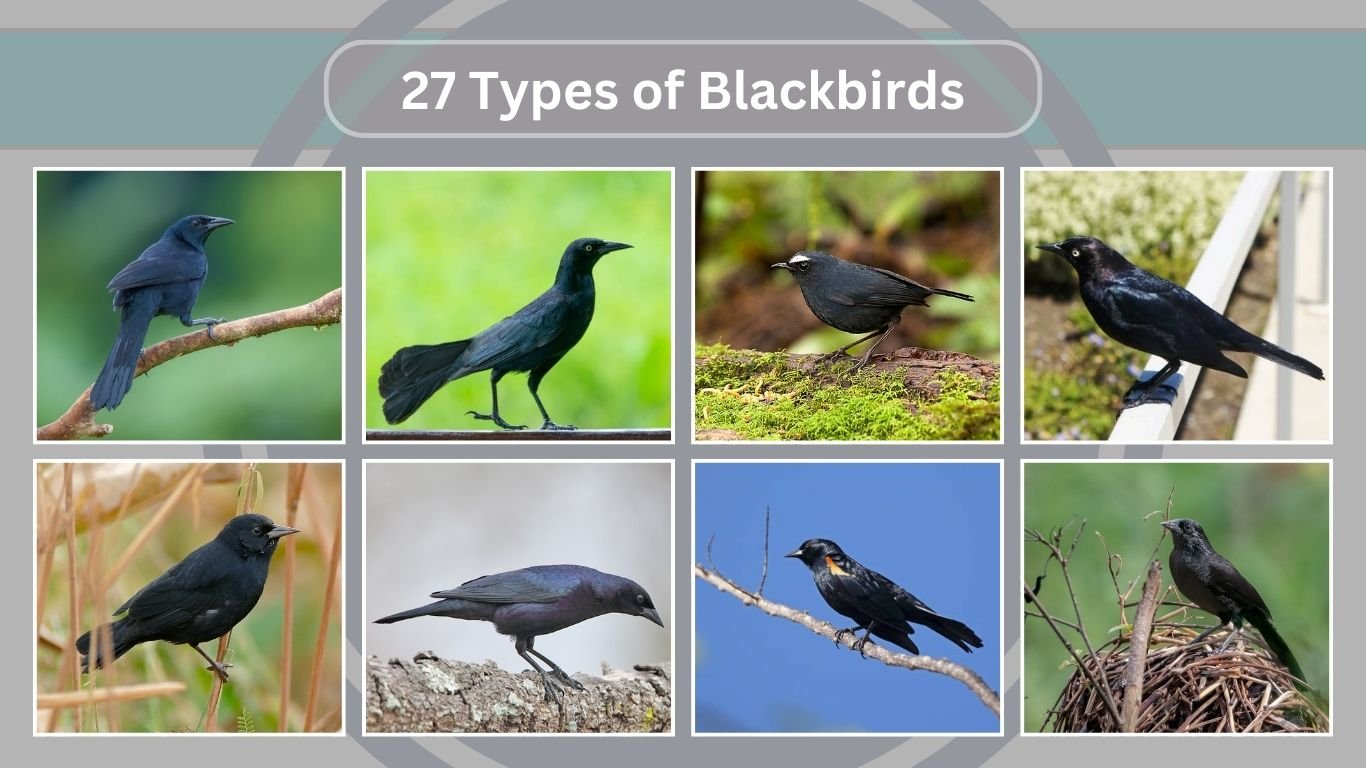
Blackbirds are a varied group of songbirds within the Icteridae family, known for their striking plumage, bold behaviors, and adaptability to many habitats. From the familiar Red-winged Blackbird perched on cattails to the exotic Velvet-fronted Grackle of South America, these birds display a remarkable range of colors, calls, and lifestyles. Some, like cowbirds, are notorious for brood parasitism, while others, such as meadowlarks and orioles, are admired for their songs and nesting habits. In this guide, we’ll explore 27 types of blackbirds found across the Americas and beyond, highlighting their identification, diets, behaviors, and habitats.
1. Red-winged Blackbird
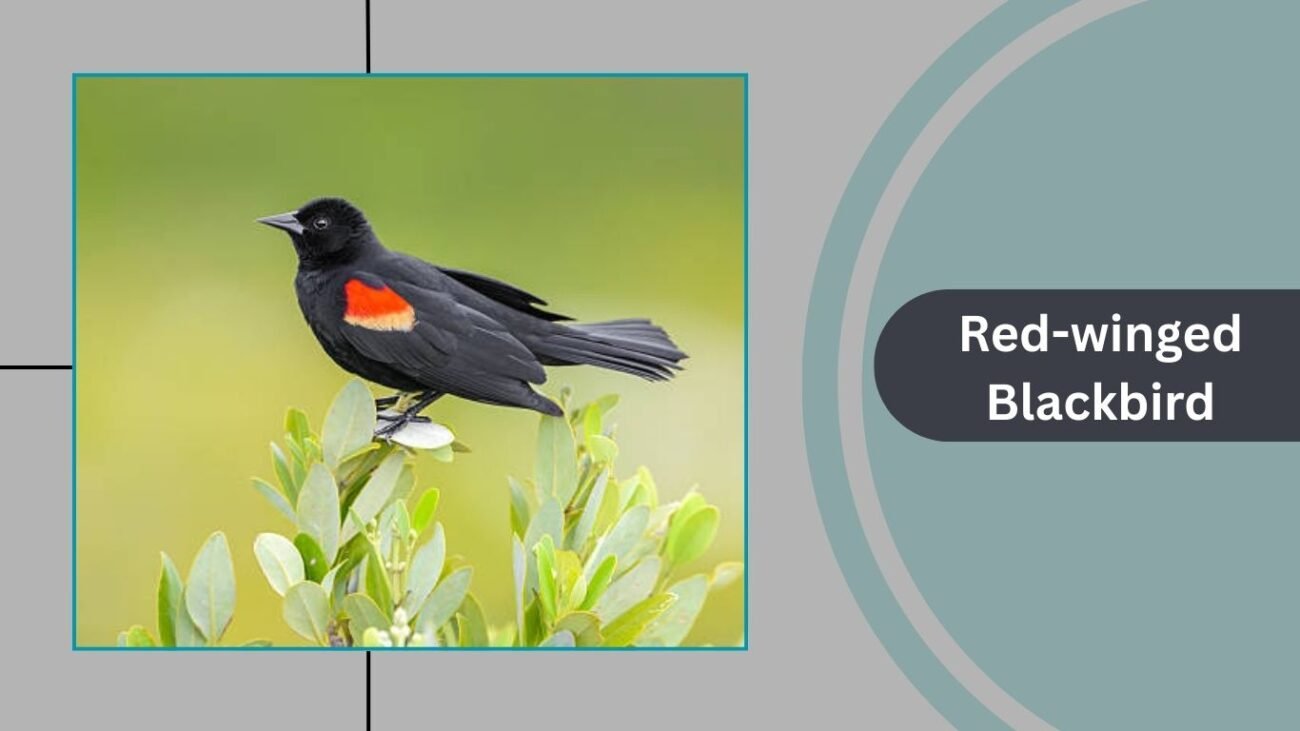
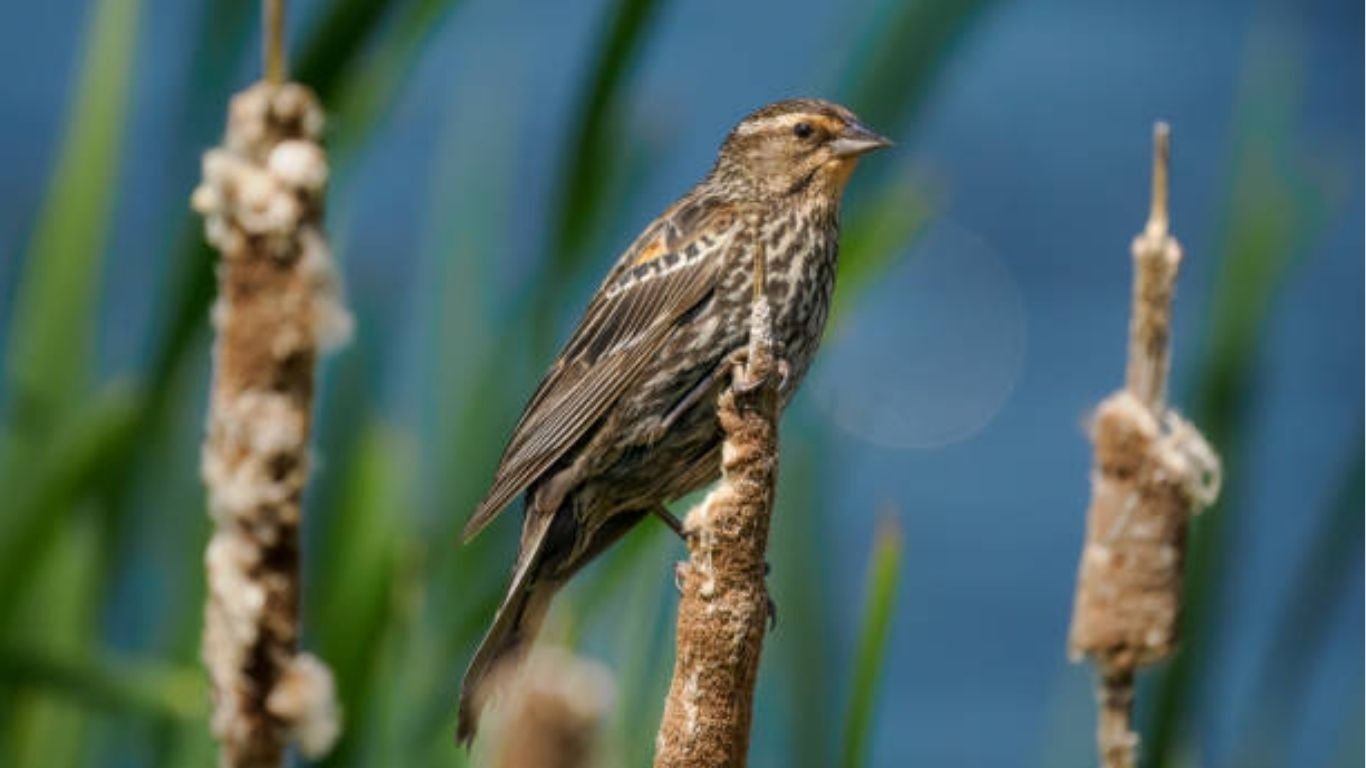
The Red-winged Blackbird is one of the most widespread and recognizable birds in North America. Males are famous for their glossy black plumage and bold red-and-yellow shoulder patches, known as epaulets, which they display prominently during the breeding season. Females, on the other hand, look very different, with heavily streaked brown plumage that helps them blend into their nesting habitats.
Identification
- Male: Jet-black body with bright red shoulder patches bordered by yellow
- Female: Brown, streaked overall with pale eyebrow line and lighter underparts
- Size: Around 7–9 inches long
- Bill: Sharp, conical, and black
Diet
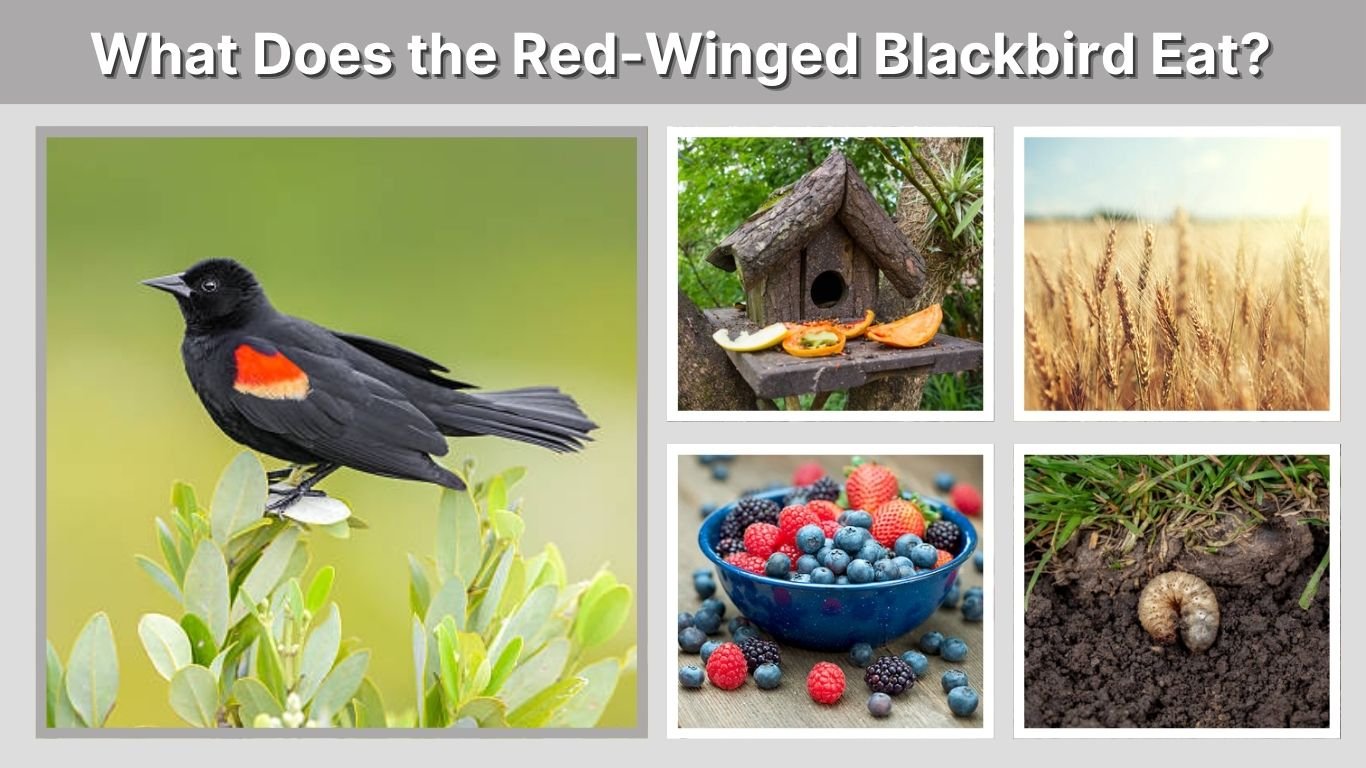
Feeds on seeds, grains, and insects. During summer, they consume beetles, caterpillars, grasshoppers, and spiders, while in fall and winter they shift to seeds from grasses, weeds, and crops.
Behavior
Highly territorial during breeding, with males fiercely defending nesting areas by singing and displaying their epaulets. Known for large winter roosts where thousands may gather together.
Habitat
Common in wetlands, marshes, meadows, and agricultural fields. They prefer areas near water and are often seen perched on cattails, reeds, and fences.
2. Brewer’s Blackbird
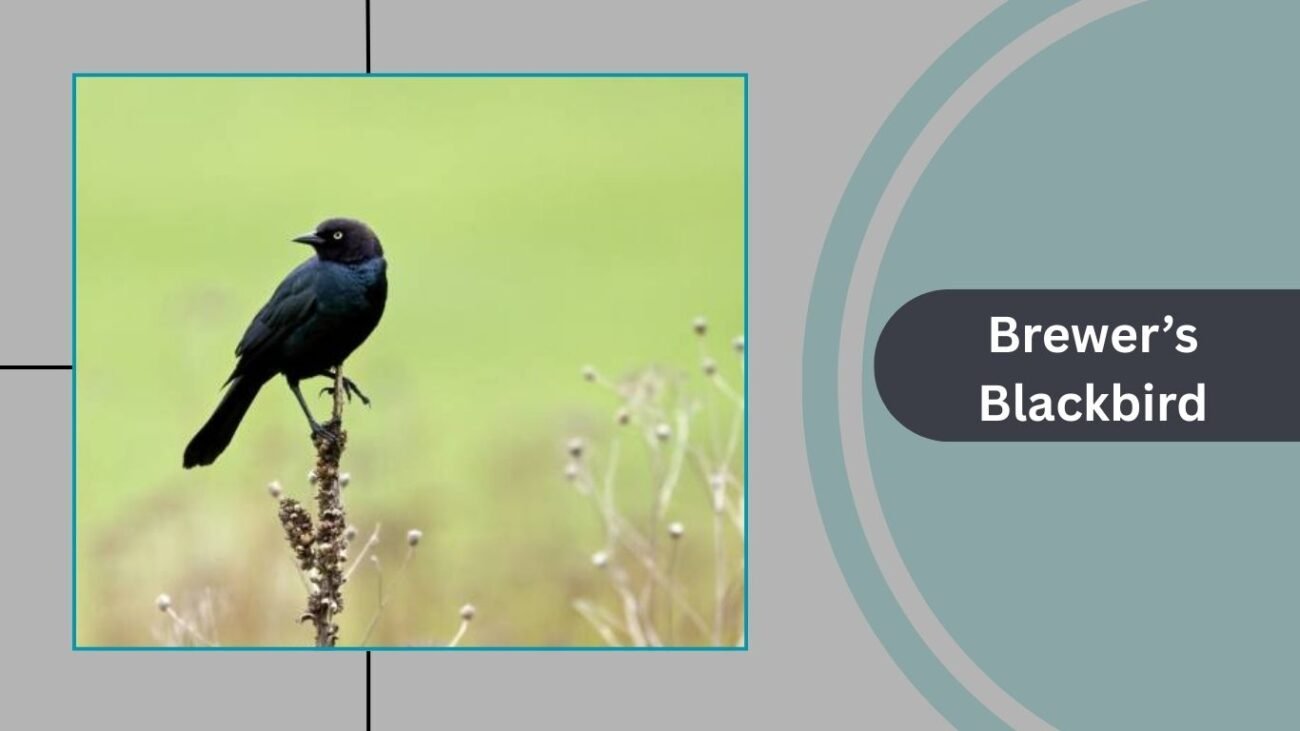
The Brewer’s Blackbird is a sleek, medium-sized blackbird commonly found across open landscapes of western and central North America. Its glossy appearance and adaptability to human-altered environments make it a familiar sight in fields, parking lots, and farmlands.
Identification
- Male: Shiny black body with iridescent purple head and striking yellow eyes
- Female: Plain brownish-gray overall with dark eyes
- Size: Around 8–10 inches long
- Bill: Straight, slender, and black
Diet
Eats a wide variety of insects, including grasshoppers, beetles, and caterpillars during summer. In fall and winter, they switch to grains, weed seeds, and berries.
Behavior
Often forages in flocks, walking on the ground and probing soil or short grass. Males sing a harsh, squeaky song and display during breeding to attract females.
Habitat
Found in open fields, grasslands, agricultural areas, and suburban landscapes. They are highly adaptable and thrive in disturbed areas.
3. Rusty Blackbird
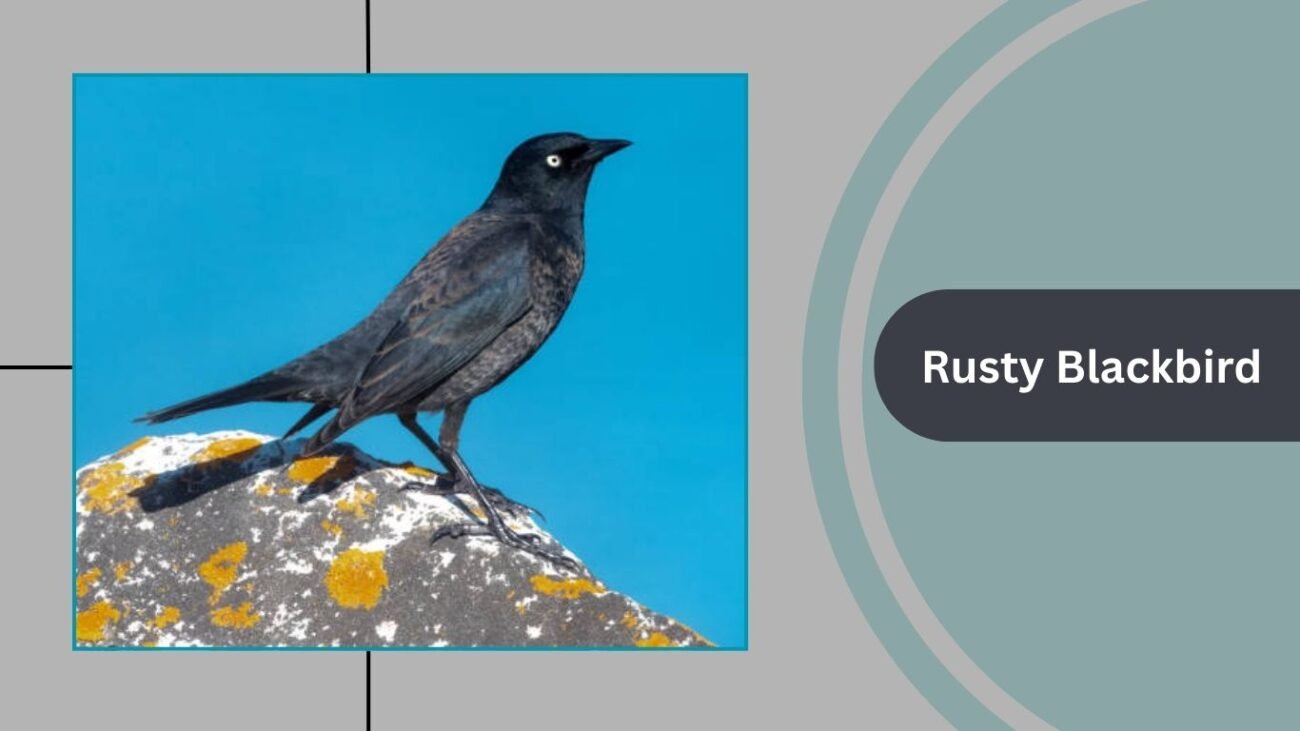
The Rusty Blackbird is a northern breeder that spends summers in boreal wetlands and winters farther south. Unfortunately, it is one of the most rapidly declining songbirds in North America, making sightings increasingly rare.
Identification
- Male (breeding): Glossy black with greenish sheen
- Male (non-breeding): Rust-brown edges on feathers, giving a “rusty” look
- Female: Brownish-gray overall with pale eyebrow
- Size: About 9 inches long
- Bill: Thin, slightly curved, and dark
Diet
Feeds mainly on insects, aquatic invertebrates, and small fish. They also eat seeds, grains, and berries, especially in winter.
Behavior
Often forages along wet, muddy edges, probing in shallow water for prey. They may form flocks in migration and winter, sometimes mixed with other blackbirds.
Habitat
Breeds in boreal wetlands, bogs, and swampy forests. Winters in wet fields, bottomlands, and wooded swamps across the southeastern U.S.
4. Tricolored Blackbird
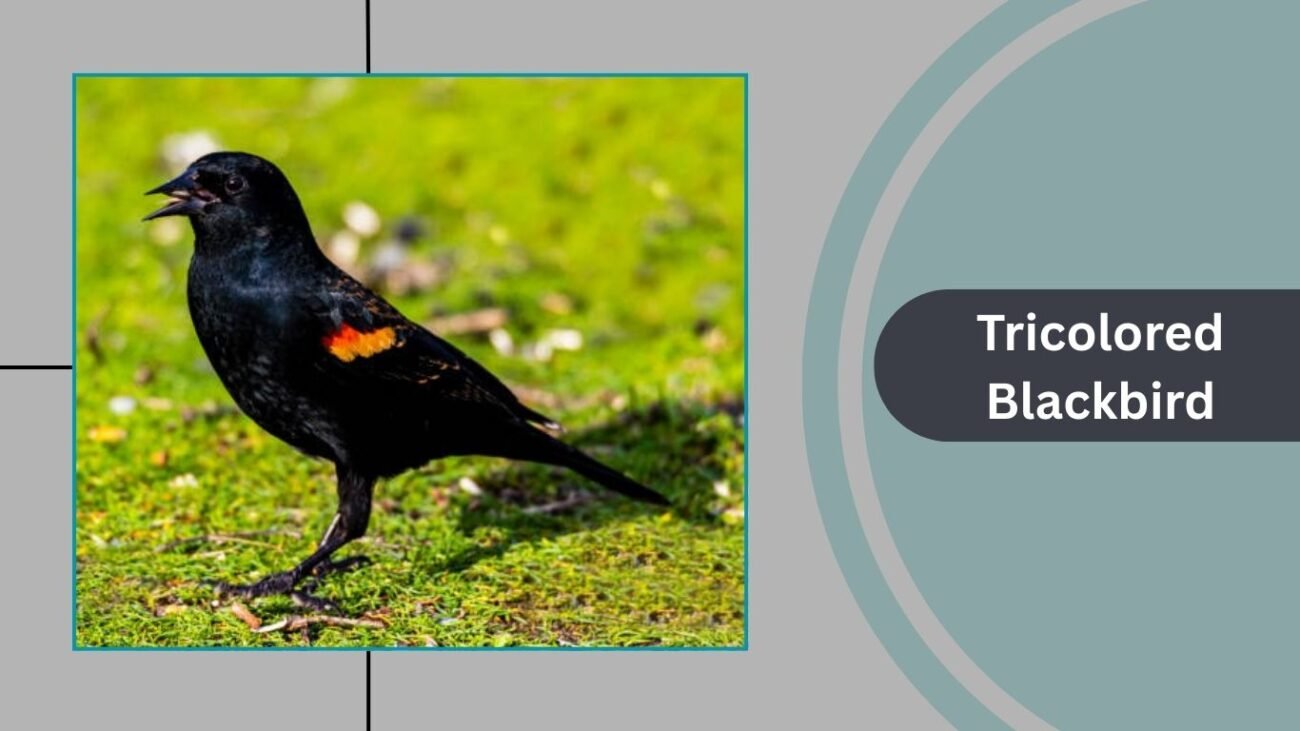
The Tricolored Blackbird is a close relative of the Red-winged Blackbird but is far less common, with its population centered in California’s Central Valley. It is known for its large nesting colonies and striking plumage differences.
Identification
- Male: Glossy black body with a bold white bar beneath the bright red shoulder patch
- Female: Dark gray-brown overall with streaks and a pale eyebrow line
- Size: Around 8.5–9.5 inches long
- Bill: Long, sharp, and black
Diet
Primarily eats insects during the breeding season, including grasshoppers, caterpillars, and beetles. In fall and winter, they switch to seeds and grains, often feeding in agricultural fields.
Behavior
Breeds in huge colonies, sometimes numbering tens of thousands of birds in a single wetland or field. Males display and sing to defend territories within the colony.
Habitat
Historically favored wetlands with cattails and bulrushes, but now also nests in agricultural fields like alfalfa and grain crops. Winters in grasslands, pastures, and marshes of California and nearby states.
5. Common Blackbird (Eurasian Blackbird)
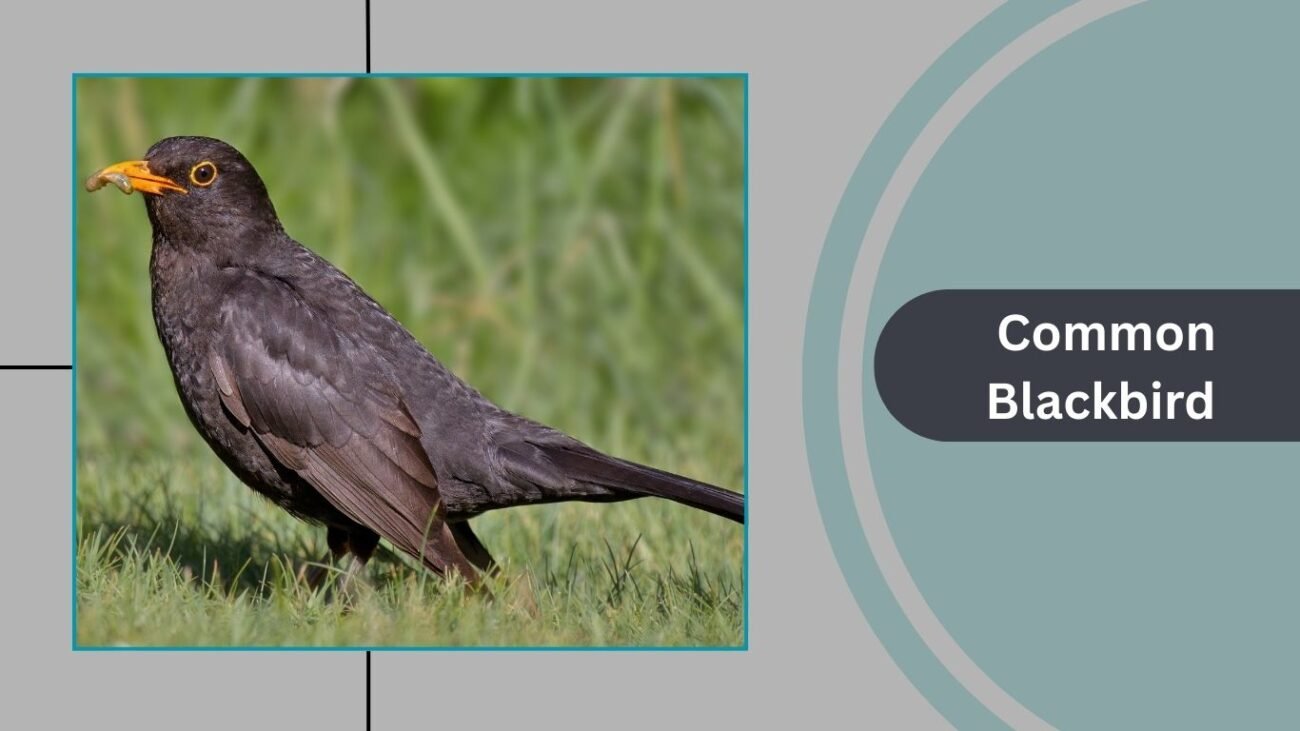
The Common Blackbird, also known simply as the “Blackbird” in Europe, is a familiar species across Europe, Asia, and North Africa. Unlike North American blackbirds, it belongs to the thrush family and is famous for its melodious song.
Identification
- Male: Entirely black plumage with bright yellow-orange bill and eye ring
- Female: Dark brown with lighter, streaked throat and breast
- Size: About 9–11 inches long
- Bill: Strong, slightly curved, and yellow (male) or dark (female)
Diet
Feeds on insects, earthworms, and snails, especially during breeding. Also consumes berries, fruits, and seeds throughout the year.
Behavior
Often forages on the ground, hopping and flicking leaves to uncover prey. Males sing rich, flute-like songs from treetops, especially at dawn and dusk.
Habitat
Common in woodlands, gardens, parks, and hedgerows. Readily adapts to urban areas and is among the most familiar backyard birds across Europe.
6. Yellow-headed Blackbird
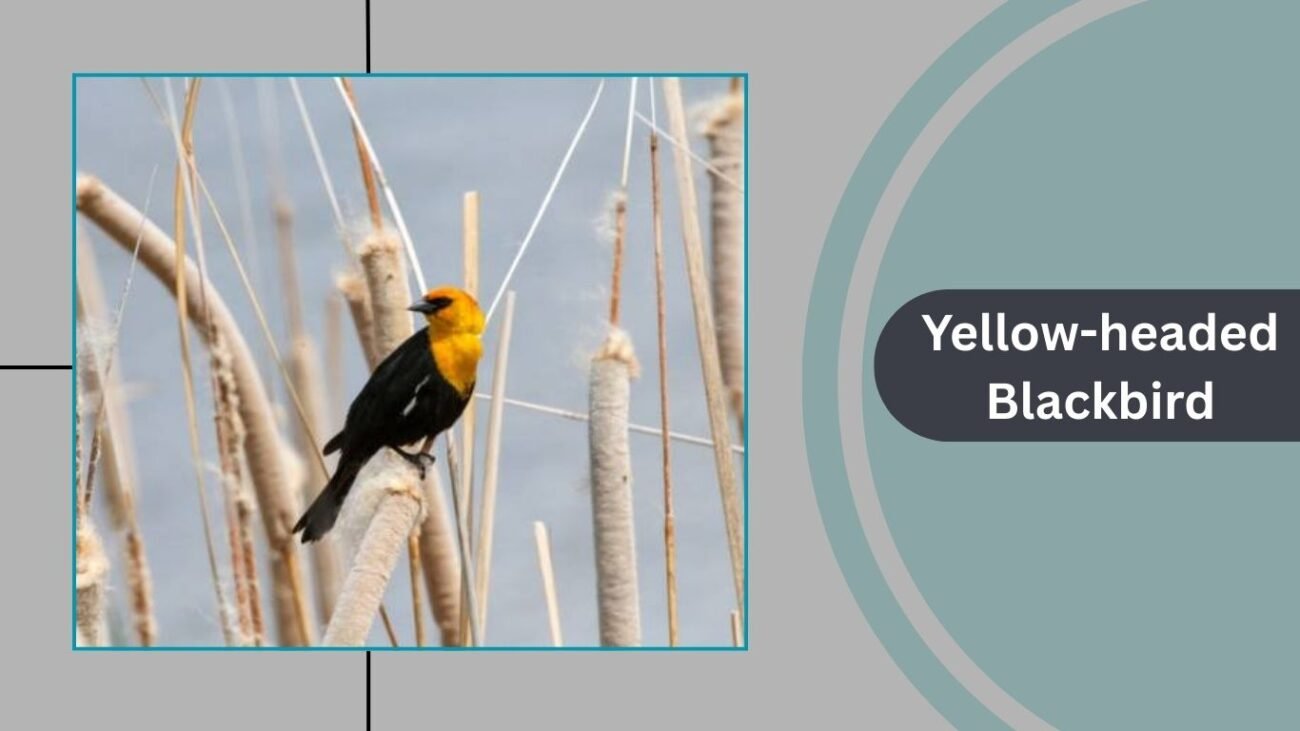
The Yellow-headed Blackbird is a striking species of the western and central U.S., easily recognized by its vivid yellow head and chest contrasted against a jet-black body. During summer, these birds are often seen in large breeding colonies in wetlands.
Identification
- Male: Bright yellow head and chest with glossy black body and white wing patches
- Female: Brown body with duller yellow throat and chest
- Size: About 8–10 inches long
- Bill: Sharp, black, and slightly conical
Diet
Feeds mainly on insects during breeding, including beetles, caterpillars, and aquatic invertebrates. In fall and winter, switches heavily to seeds and grains, often foraging in agricultural fields.
Behavior
Highly social, forming large flocks outside the breeding season. Males sing a harsh, raspy song, often described as a “croak,” from prominent perches.
Habitat
Prefers wetlands with dense cattails and reeds for nesting. During winter, found in open fields, pastures, and farmlands, often mixing with Red-winged Blackbirds and grackles.
7. Great-tailed Grackle
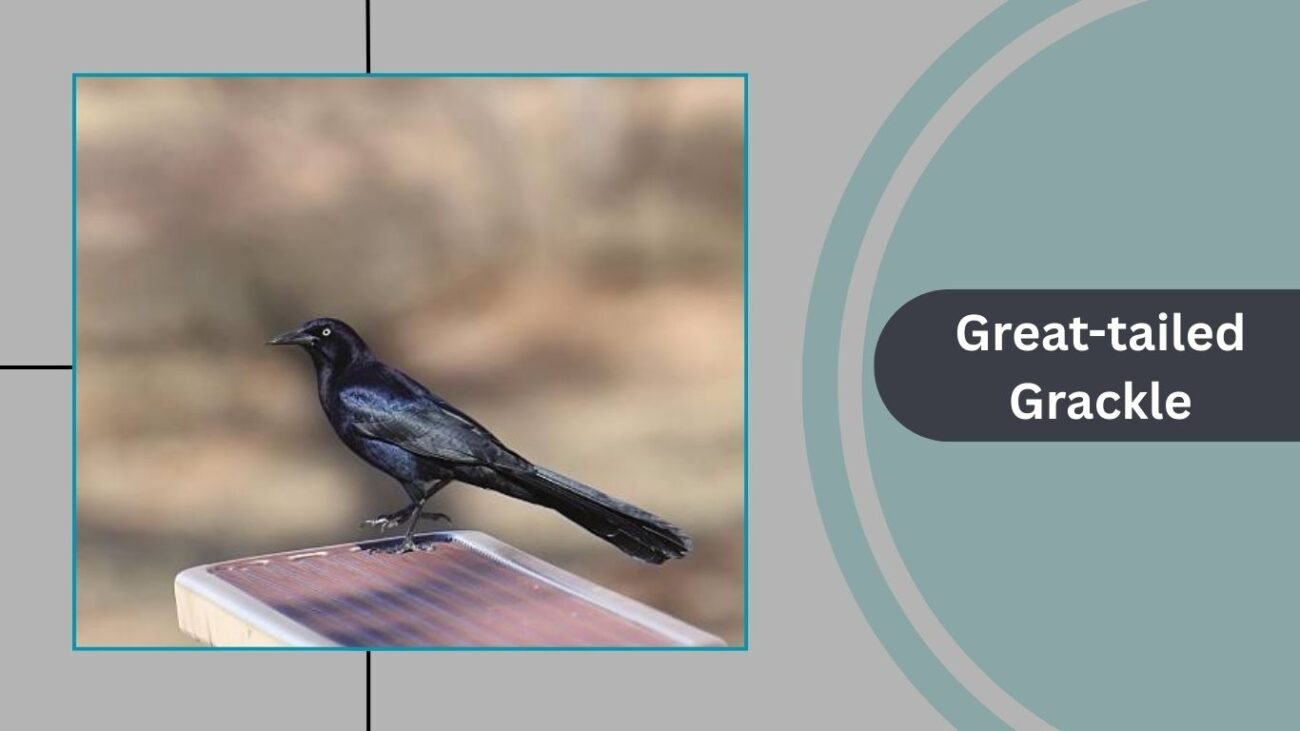
The Great-tailed Grackle is a bold and adaptable member of the blackbird family, expanding its range rapidly across North and Central America. Known for its loud calls and social flocks, it is a common sight in both cities and farmlands.
Identification
- Male: Large, glossy black body with purple-blue iridescence and extremely long tail
- Female: Smaller, brown overall with lighter underparts and shorter tail
- Size: Male up to 18 inches long (much larger than most blackbirds), female about 14 inches
- Bill: Long, pointed, and black
Diet
Omnivorous—eats insects, small vertebrates, fruits, seeds, and human food scraps. They are opportunistic feeders often seen raiding trash bins or food left outdoors.
Behavior
Highly social, often forming noisy flocks. Males display by fanning tails and spreading wings while calling. They are aggressive at feeders and may dominate other birds.
Habitat
Found in wetlands, farmlands, cities, and suburban areas. Thrives near human settlements and is especially abundant in the southern U.S., Mexico, and Central America.
8. Boat-tailed Grackle
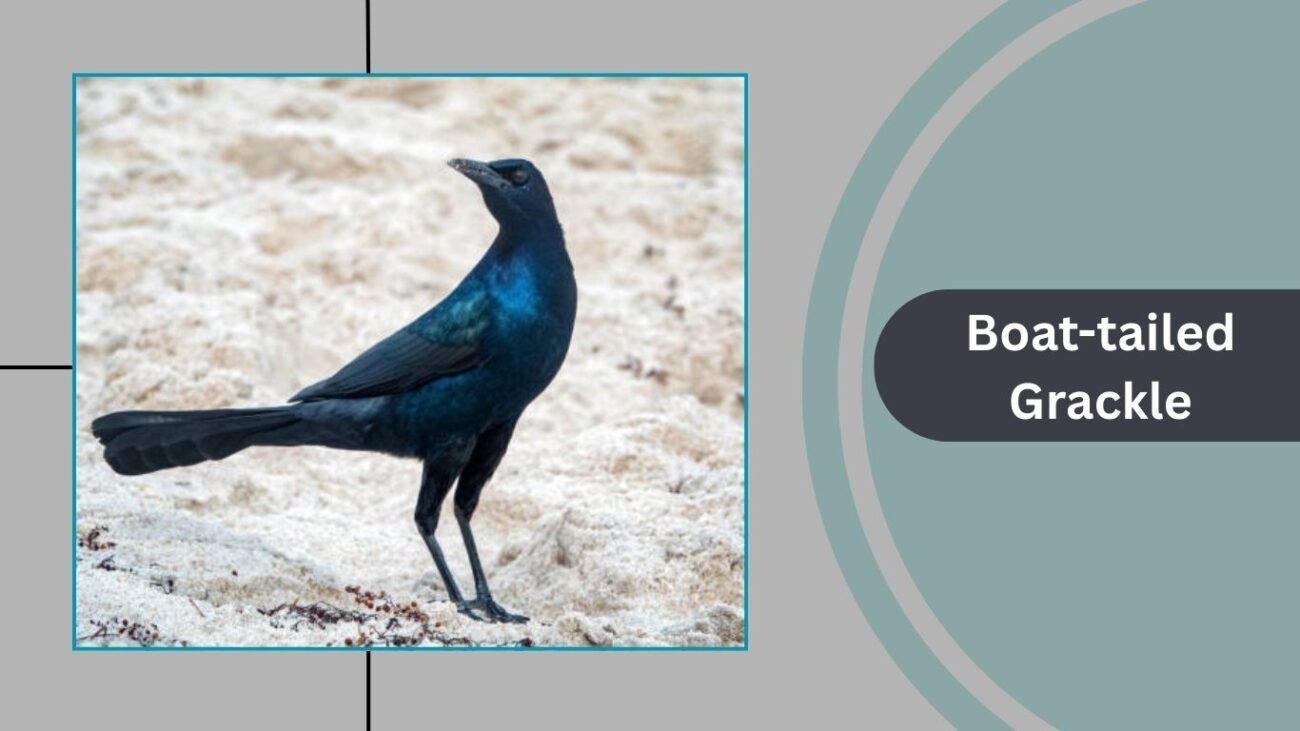
The Boat-tailed Grackle is a large and charismatic blackbird commonly found along the Atlantic and Gulf coasts of the United States. Its name comes from the male’s long, keel-shaped tail, which it often holds in a boat-like curve.
Identification
- Male: Glossy black with purplish-blue sheen, long keel-shaped tail, and pale yellow eyes
- Female: Rich brown above and orange-buff below with a slimmer build and shorter tail
- Size: Male up to 16 inches long, female around 13 inches
- Bill: Long, heavy, and sharply pointed
Diet
Omnivorous, eating insects, frogs, small fish, crustaceans, eggs, grains, and seeds. They readily forage around docks, fields, and picnic areas for scraps.
Behavior
Highly vocal with a wide range of squeaks, whistles, and harsh calls. Males display by puffing feathers, spreading wings, and calling loudly. They form large flocks outside the breeding season.
Habitat
Primarily found in coastal marshes, wetlands, and urban areas near the shoreline. They are strongly tied to brackish and saltwater environments.
9. Shiny Cowbird
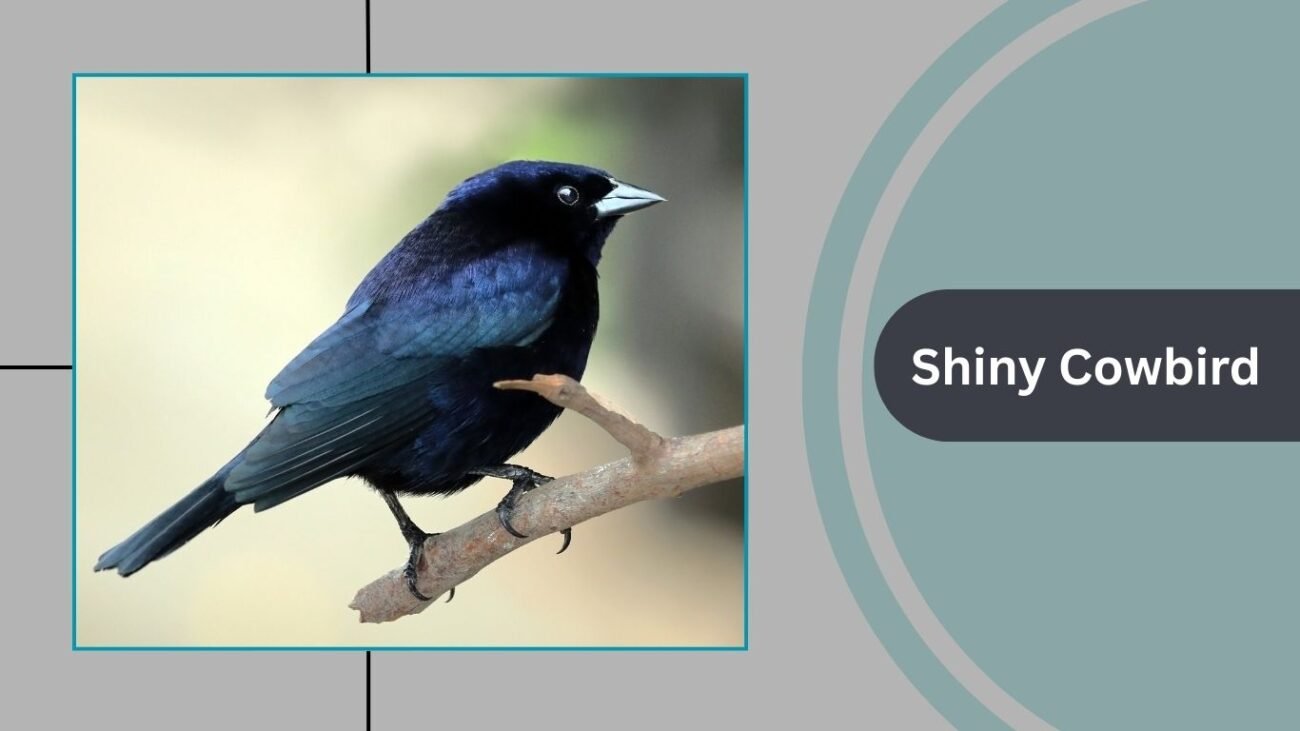
The Shiny Cowbird is a glossy, iridescent member of the blackbird family, best known for its brood-parasitic behavior. Instead of building their own nests, females lay eggs in the nests of other bird species, leaving the host to raise their young.
Identification
- Male: Glossy purple-black overall with a smooth sheen
- Female: Brownish-gray overall, smaller and less glossy
- Size: Around 7–8 inches long
- Bill: Short, conical, and black
Diet
Feeds on seeds, grains, fruits, and insects. Often forages on the ground in fields or pastures.
Behavior
Brood parasite, laying eggs in nests of over 250 bird species. The cowbird chick often outcompetes the host’s young. Outside breeding season, they gather in flocks and forage socially.
Habitat
Native to South America but has spread through the Caribbean and into parts of North America. Found in grasslands, agricultural areas, and urban environments.
10. Bronzed Cowbird
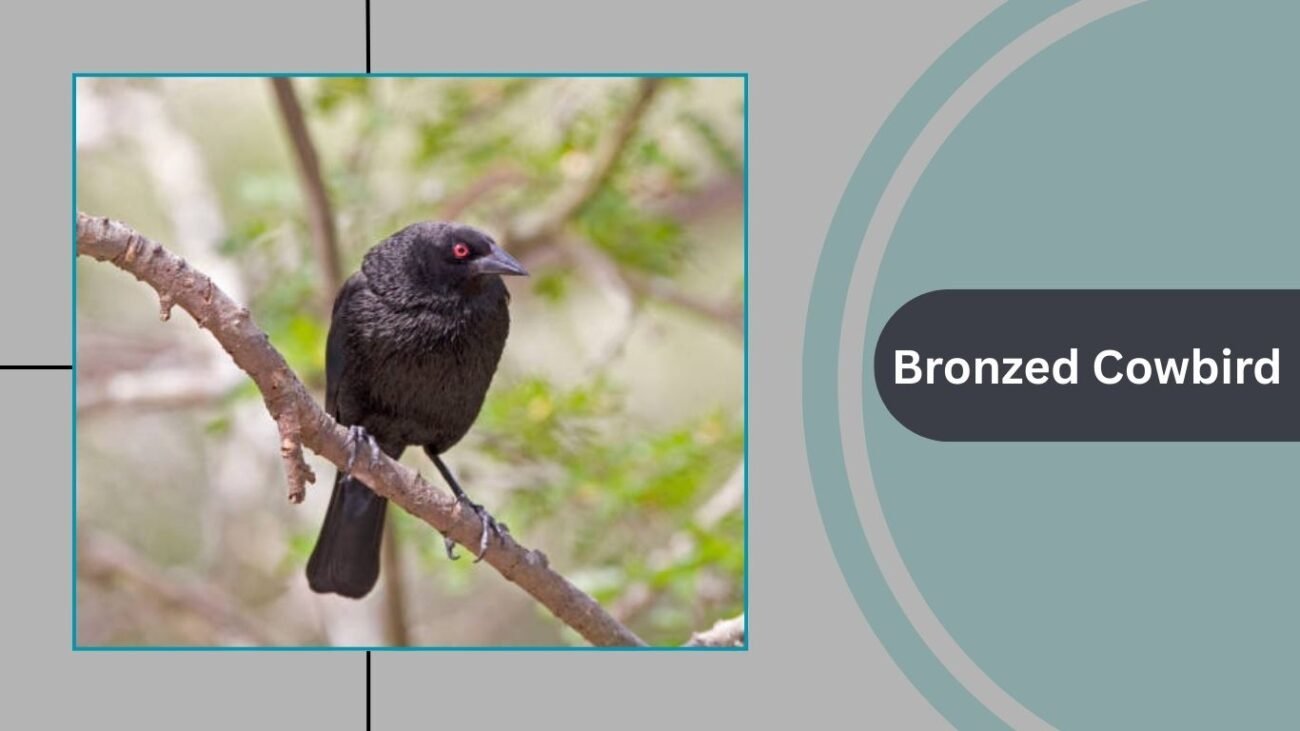
The Bronzed Cowbird is another brood-parasitic member of the blackbird family, common in the southern United States, Mexico, and Central America. Males are recognized for their glossy plumage and unusual red eyes.
Identification
- Male: Shiny black with bronze-purple sheen and striking red eyes
- Female: Dull brown overall with faint streaks and dark eyes
- Size: About 7.5–8.5 inches long
- Bill: Thick, conical, and black
Diet
Eats seeds, grains, and insects. Often forages in agricultural fields for spilled grain and also consumes beetles, grasshoppers, and caterpillars during summer.
Behavior
A brood parasite like the Shiny Cowbird, laying eggs in the nests of other birds. Males display by fluffing their feathers, spreading wings, and performing hovering flights above females.
Habitat
Found in grasslands, farmlands, open woodlands, and suburban areas. Commonly seen in mixed flocks with other blackbirds and cowbirds.
11. Brown-headed Cowbird
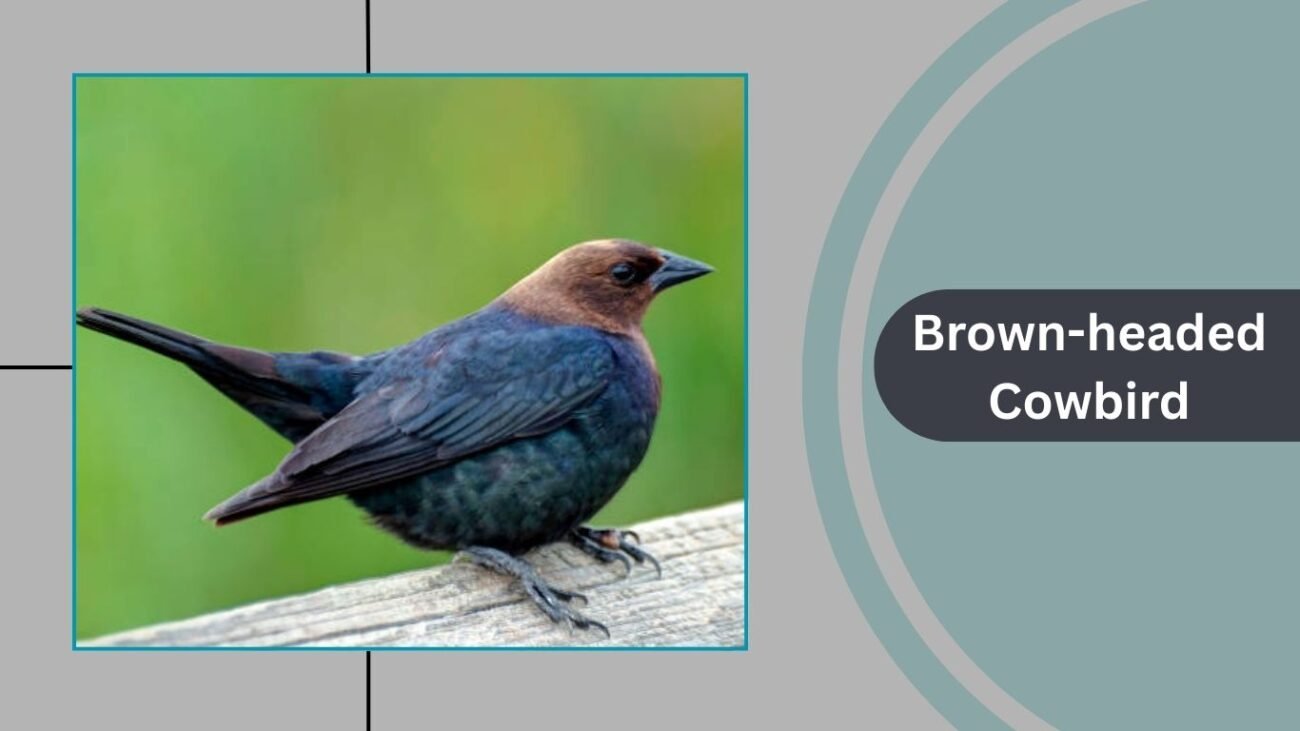
The Brown-headed Cowbird is one of the most widespread blackbirds in North America. Like its relatives, it is a brood parasite, laying eggs in other birds’ nests and relying on them to raise its chicks.
Identification
- Male: Glossy black body with contrasting chocolate-brown head and short tail
- Female: Plain brown overall with faint streaking on belly
- Size: Around 7.5 inches long
- Bill: Thick, short, and conical
Diet
Feeds on grass seeds, grains, and insects. Historically followed bison herds to feed on insects stirred up by their movement; now often found around livestock.
Behavior
Males sing a distinctive gurgling, bubbling song. During breeding, they display by puffing up, spreading wings, and bowing. Known for laying eggs in over 200 species’ nests, often reducing the survival of the host’s chicks.
Habitat
Common in grasslands, pastures, agricultural fields, forest edges, and suburban landscapes. They adapt well to human-altered environments and are often seen near livestock or bird feeders.
12. Giant Cowbird
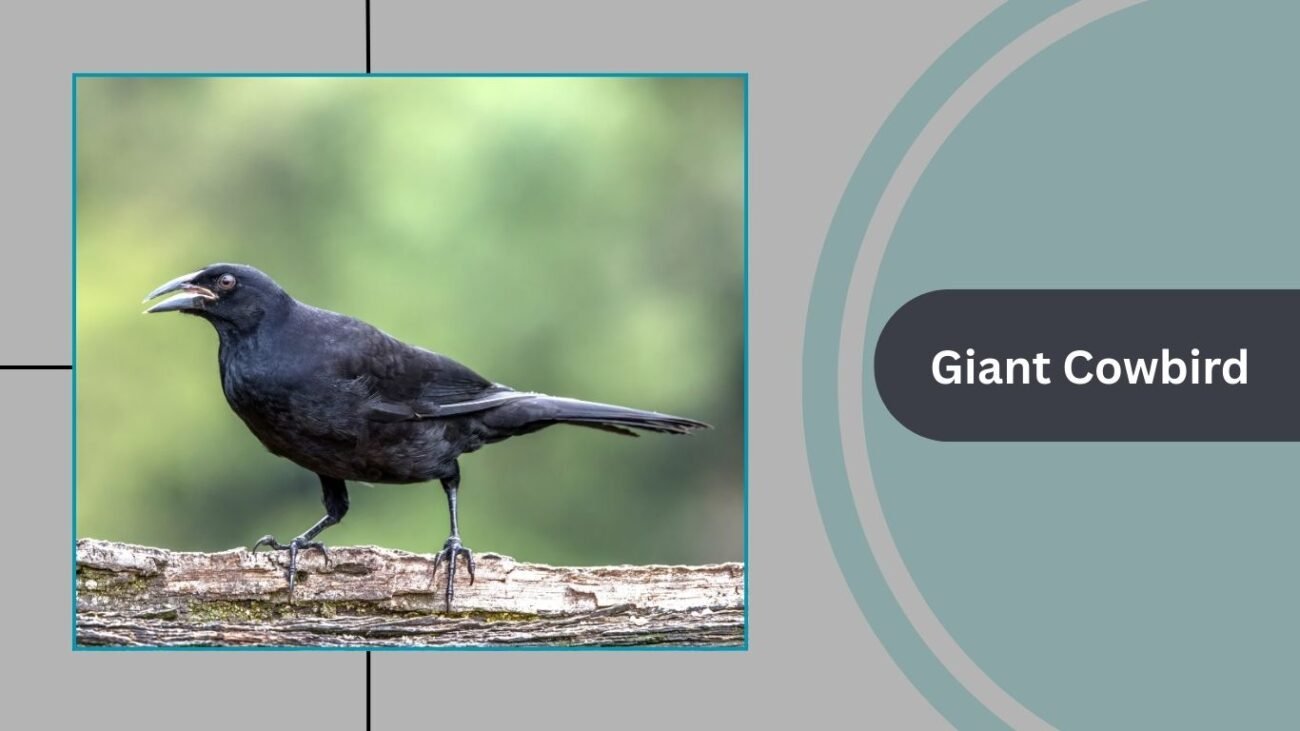
The Giant Cowbird is the largest of the cowbirds and ranges from Mexico through Central America to much of South America. Like its relatives, it practices brood parasitism, often targeting large birds such as oropendolas and caciques.
Identification
- Male: Glossy black with a slight purple sheen, long tail, and thick bill
- Female: Slightly smaller, duller black overall
- Size: About 12–14 inches long, making it much larger than most cowbirds
- Bill: Thick, heavy, and dark
Diet
Feeds on insects, fruits, and grains. They often forage in flocks, sometimes following livestock or large mammals to pick up insects.
Behavior
Brood parasite, primarily laying eggs in the nests of colonial species like oropendolas and jays. Unlike smaller cowbirds, their chicks often coexist with host chicks rather than ejecting them.
Habitat
Prefers open woodlands, agricultural fields, river edges, and savannas. Common in lowland tropical regions but avoids dense forest interiors.
13. Screaming Cowbird
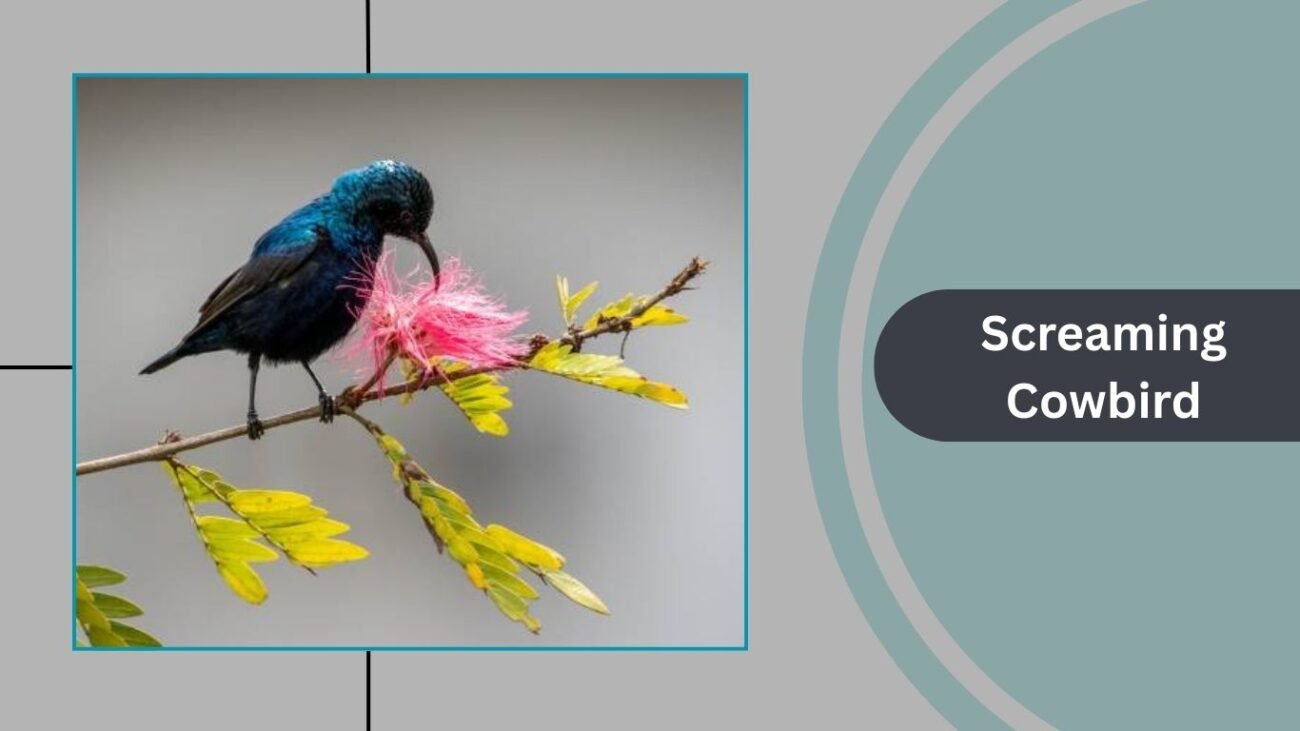
The Screaming Cowbird is a South American brood parasite closely related to the Shiny Cowbird. It is named for its harsh, screaming call, which sets it apart from other blackbirds.
Identification
- Male: Uniform glossy black with a purplish sheen
- Female: Brownish-gray overall with less sheen
- Size: Around 8 inches long
- Bill: Thick, conical, and black
Diet
Consumes seeds, grains, and insects. Often feeds on the ground in open fields and pastures, especially near livestock.
Behavior
Brood parasite, laying eggs primarily in the nests of the Bay-winged Cowbird. Their young often mimic the host chicks in behavior and calls. Outside of breeding season, they gather in large, noisy flocks.
Habitat
Found in open country, savannas, grasslands, and farmlands across Argentina, Brazil, Paraguay, and Uruguay. Adaptable to human-altered habitats.
14. Melodious Blackbird
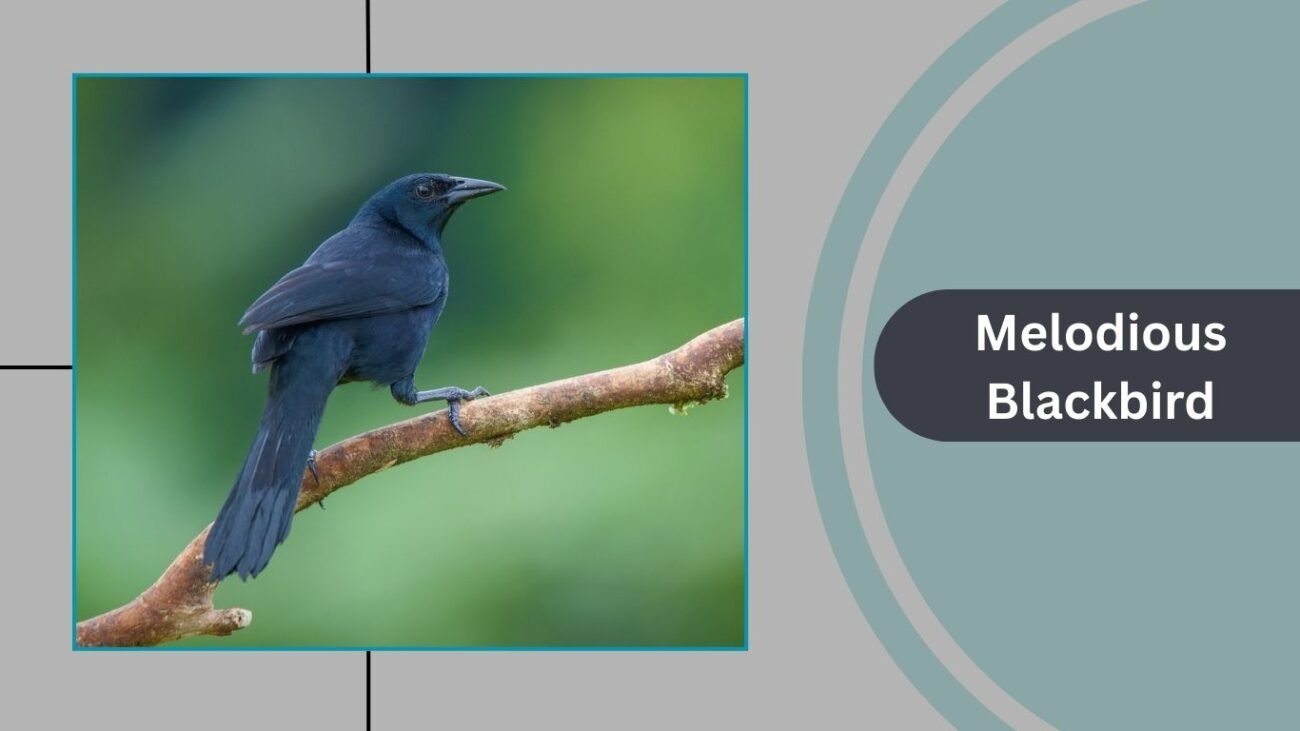
The Melodious Blackbird is a medium-sized songbird found in Central America, named for its clear and musical song. Unlike many other blackbirds, it is not sexually dimorphic—males and females look alike.
Identification
- Male & Female: Entirely black plumage with a slight sheen and dark eyes
- Size: About 9–10 inches long
- Bill: Long, slightly curved, and black
Diet
Feeds on insects, spiders, seeds, and fruits. They often forage on the ground or in low vegetation, sometimes visiting gardens for food scraps.
Behavior
Pairs remain together year-round and are highly territorial. Their melodious whistling song, often sung in duets, is used to mark territory.
Habitat
Found in open woodlands, forest edges, pastures, and gardens from Mexico to Panama. They adapt well to human-modified landscapes.
15. Cuban Blackbird
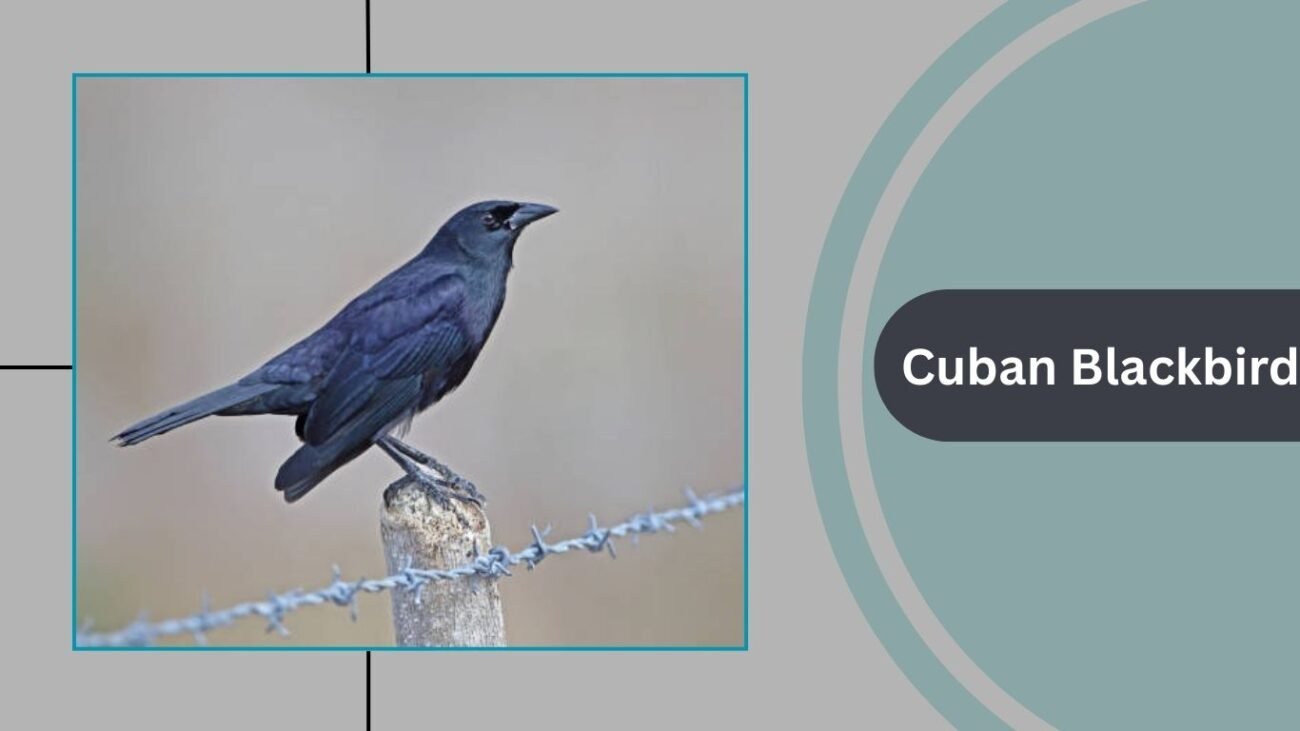
The Cuban Blackbird is endemic to Cuba, making it one of the most localized blackbird species. It is highly social and often seen in flocks moving noisily through trees and fields.
Identification
- Male & Female: Glossy black plumage with purplish or bluish sheen; yellowish-brown eyes
- Size: Around 10 inches long
- Bill: Strong, slightly curved, and black
Diet
Feeds on fruits, seeds, and insects. They forage both in trees and on the ground, sometimes raiding crops for grains or fruits.
Behavior
Noisy and social, often forming flocks. They produce a wide variety of calls, including harsh notes and whistles.
Habitat
Common across Cuba in forests, plantations, agricultural fields, and urban parks. Highly adaptable and frequently seen around human settlements.
16. Red-breasted Blackbird
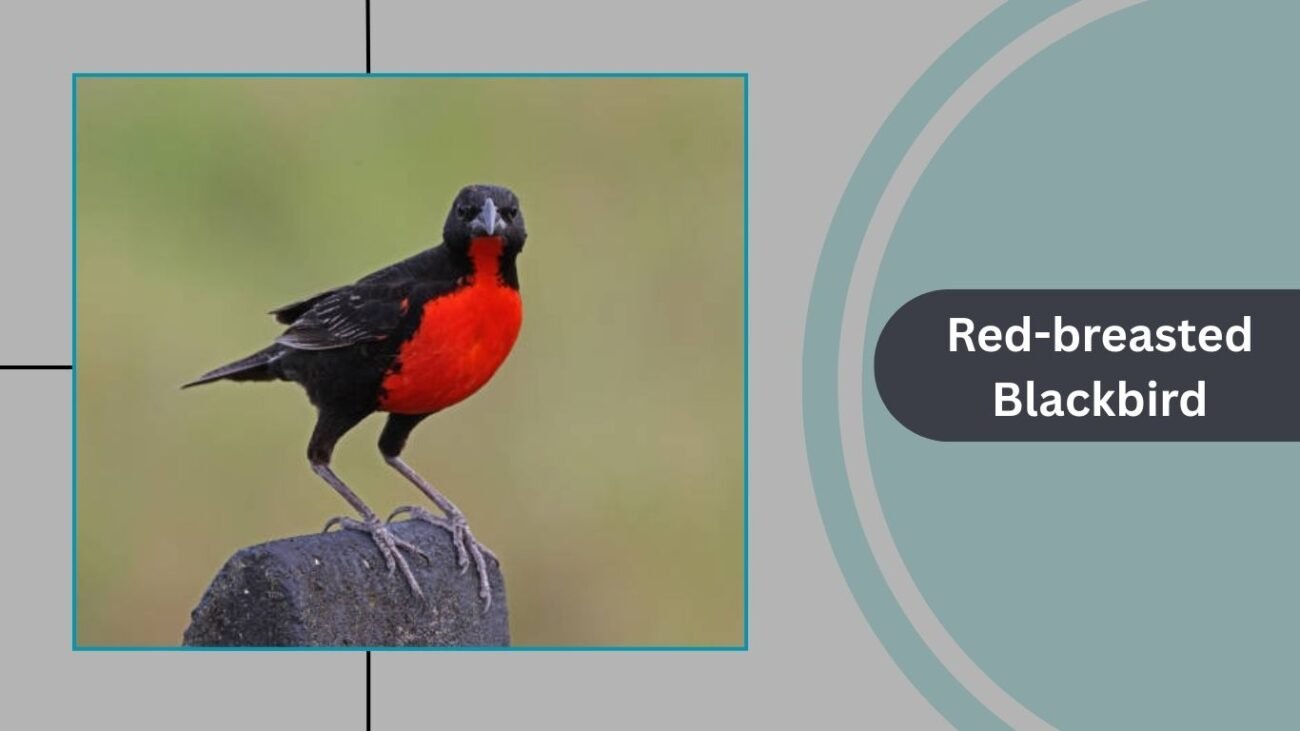
The Red-breasted Blackbird is a colorful grassland bird native to South America, often compared to meadowlarks because of its shape and behavior. Its vivid chest markings make it stand out among other blackbirds.
Identification
- Male: Striking bright red throat and chest with contrasting black body and wings
- Female: Brown, streaked overall with a faint reddish wash on throat
- Size: Around 7.5–8.5 inches long
- Bill: Sharp, pointed, and dark
Diet
Feeds on insects such as grasshoppers, beetles, and caterpillars during breeding. Also consumes seeds and grains, especially outside the breeding season.
Behavior
Often perches on fence posts or tall grasses while singing loud, clear whistles. Forages mostly on the ground in grasslands.
Habitat
Found in open savannas, pastures, and agricultural fields across northern and central South America. They avoid dense forests, preferring wide open areas.
17. Tawny-shouldered Blackbird
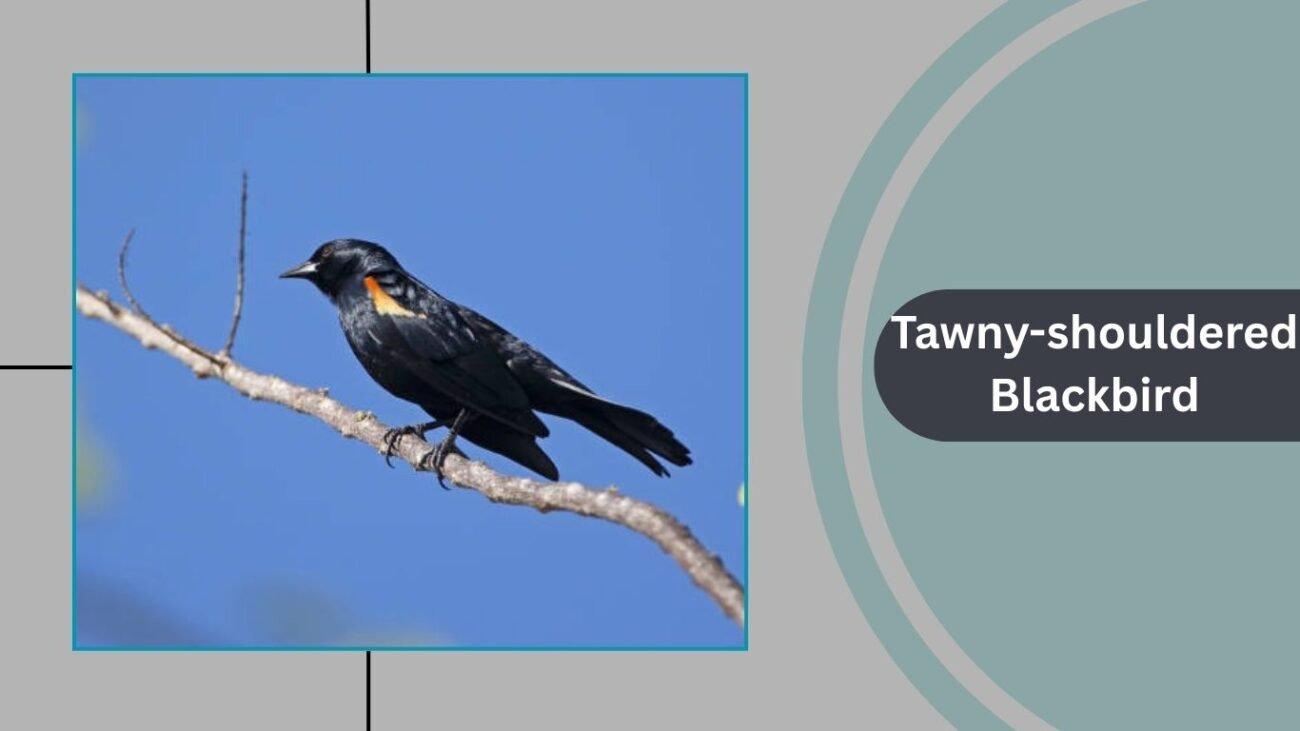
The Tawny-shouldered Blackbird is a Cuban and Hispaniolan endemic, known for its distinctive rusty shoulder patches. Though not as widely distributed as other blackbirds, it is locally common in its range.
Identification
- Male & Female: Glossy black body with prominent rusty-brown shoulder patch
- Size: About 9 inches long
- Bill: Medium-sized, pointed, and black
Diet
Eats insects, fruits, and seeds. They forage in flocks, often on the ground or in low vegetation.
Behavior
Highly social, frequently found in small flocks. They are vocal birds with a series of squeaks and whistles.
Habitat
Common in agricultural areas, grasslands, and forest edges. Strongly associated with farmlands and plantations in Cuba and Hispaniola.
18. Rusty-margined Blackbird
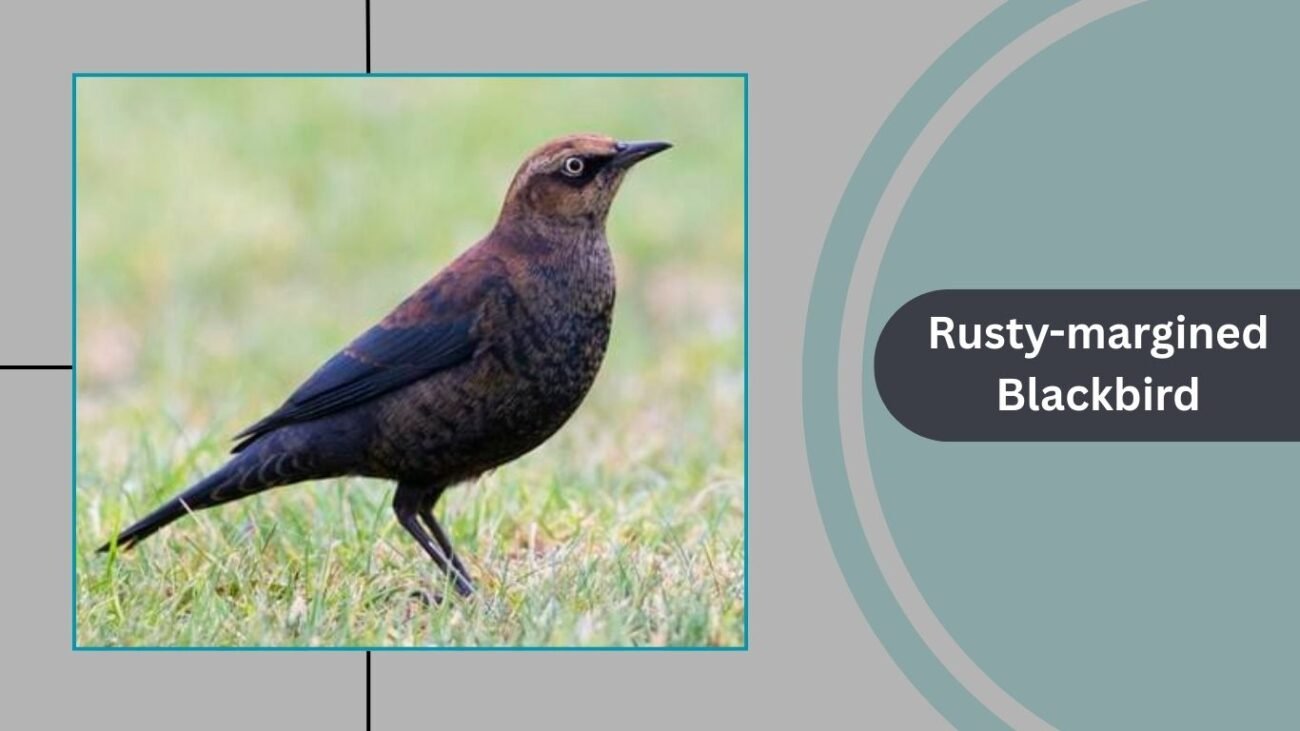
The Rusty-margined Blackbird is a South American species that stands out with its reddish-brown feather edging, giving it a slightly “rusty” appearance. Though not as well-known as some of its relatives, it is widespread in its range.
Identification
- Male: Glossy black overall with faint rusty-brown edging on wing feathers
- Female: Dark brownish-black with more noticeable rusty margins
- Size: Around 8 inches long
- Bill: Medium-length, conical, and black
Diet
Feeds mainly on insects, including beetles, grasshoppers, and caterpillars, but also consumes seeds and fruits.
Behavior
Often seen in pairs or small groups, perching on shrubs, reeds, or fences while foraging. Males produce metallic calls during breeding season.
Habitat
Common in marshes, grasslands, savannas, and agricultural areas across northern and central South America.
19. White-browed Blackbird
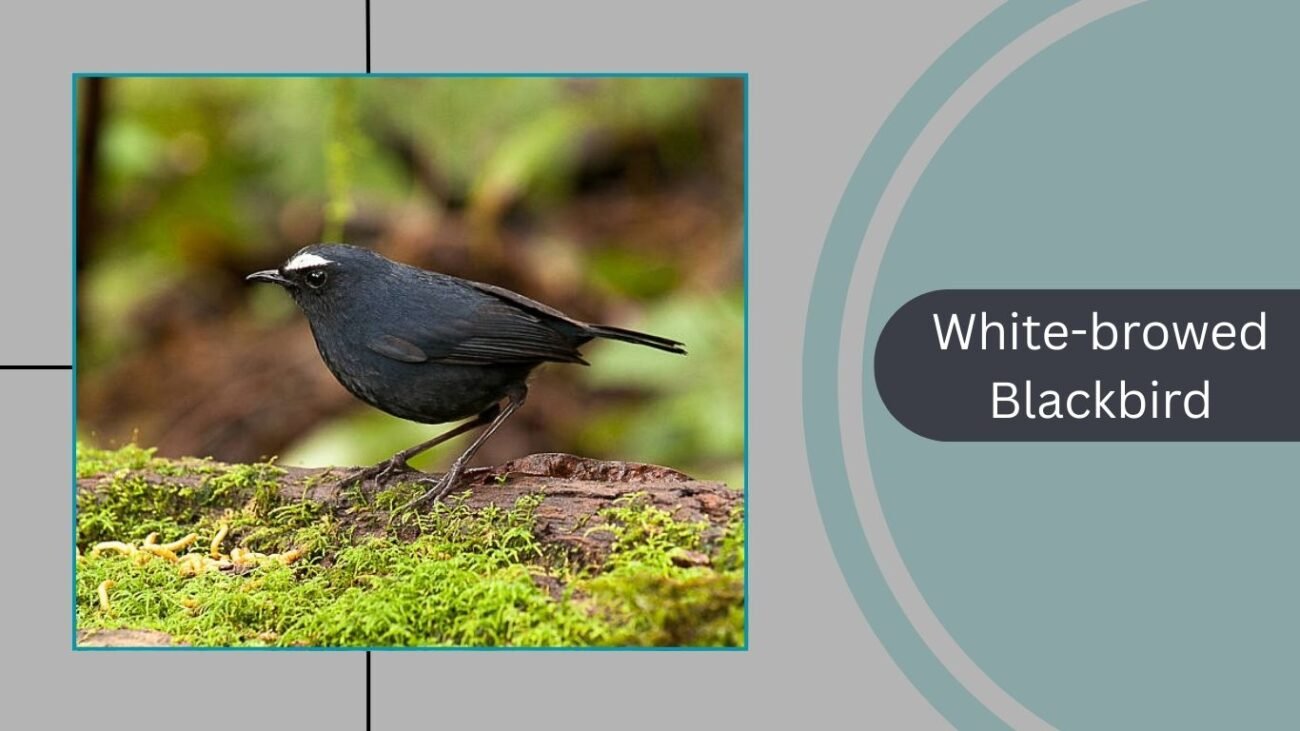
The White-browed Blackbird is a beautiful South American species, easily identified by the striking white stripe above its eye and its bold red chest patch.
Identification
- Male: Black body with vivid red throat and chest, plus a bright white eyebrow
- Female: Brown overall with streaks and faint eyebrow line
- Size: About 8 inches long
- Bill: Pointed, strong, and black
Diet
Feeds on insects like grasshoppers, beetles, and caterpillars during breeding. In winter, shifts diet toward seeds and grains.
Behavior
Perches prominently while singing loud, flute-like whistles. Forages mostly on the ground in open areas.
Habitat
Found in savannas, grasslands, pastures, and agricultural regions across Argentina, Uruguay, Brazil, and Paraguay.
20. Yellow-shouldered Blackbird
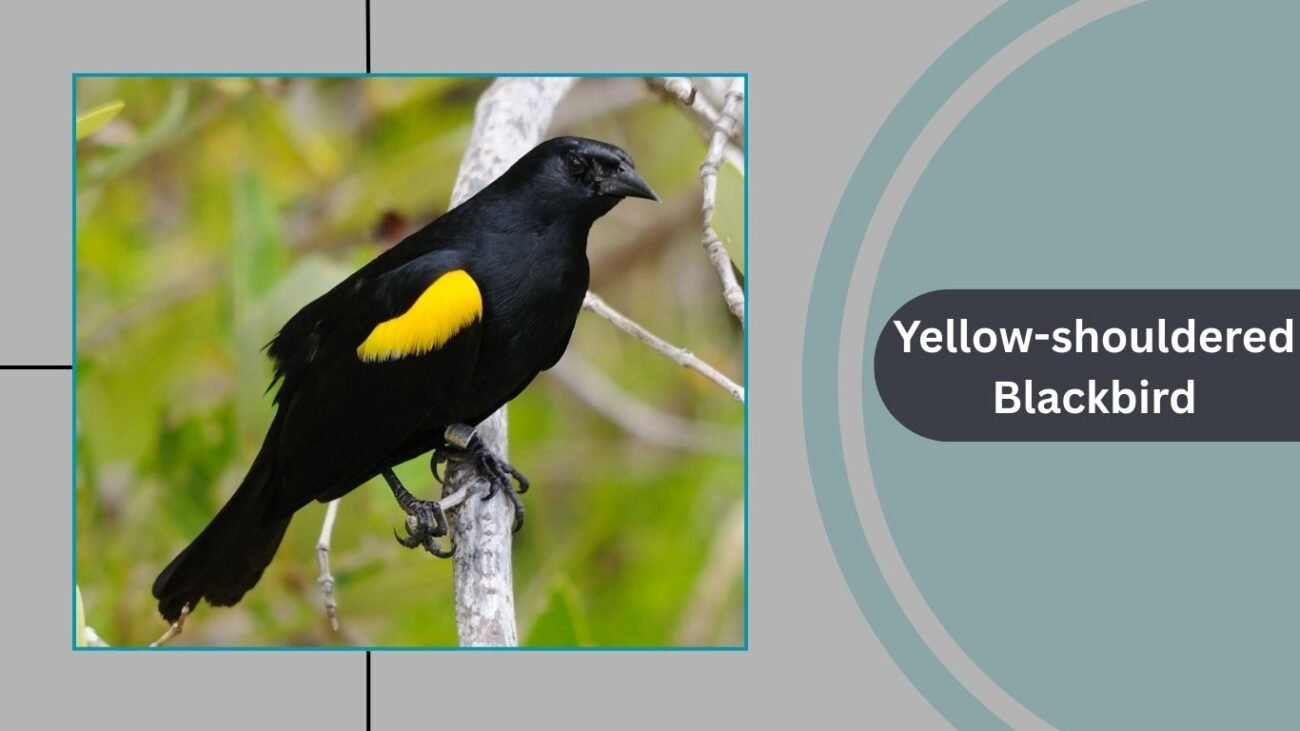
The Yellow-shouldered Blackbird is a rare and endangered species endemic to Puerto Rico. Its population has declined due to habitat loss and nest parasitism by cowbirds, making conservation efforts critical for its survival.
Identification
- Male & Female: Glossy black plumage with a distinct yellow shoulder patch
- Size: Around 8.5–9 inches long
- Bill: Medium-length, conical, and black
Diet
Feeds on insects, fruits, seeds, and nectar. They also forage on the ground for grains and occasionally consume small invertebrates.
Behavior
Social and noisy, often forming flocks outside the breeding season. Known for producing a mix of whistles, harsh calls, and chatters.
Habitat
Restricted to coastal mangroves, dry forests, and agricultural areas in Puerto Rico. Conservation programs focus on protecting their remaining breeding habitats.
21. Carib Grackle
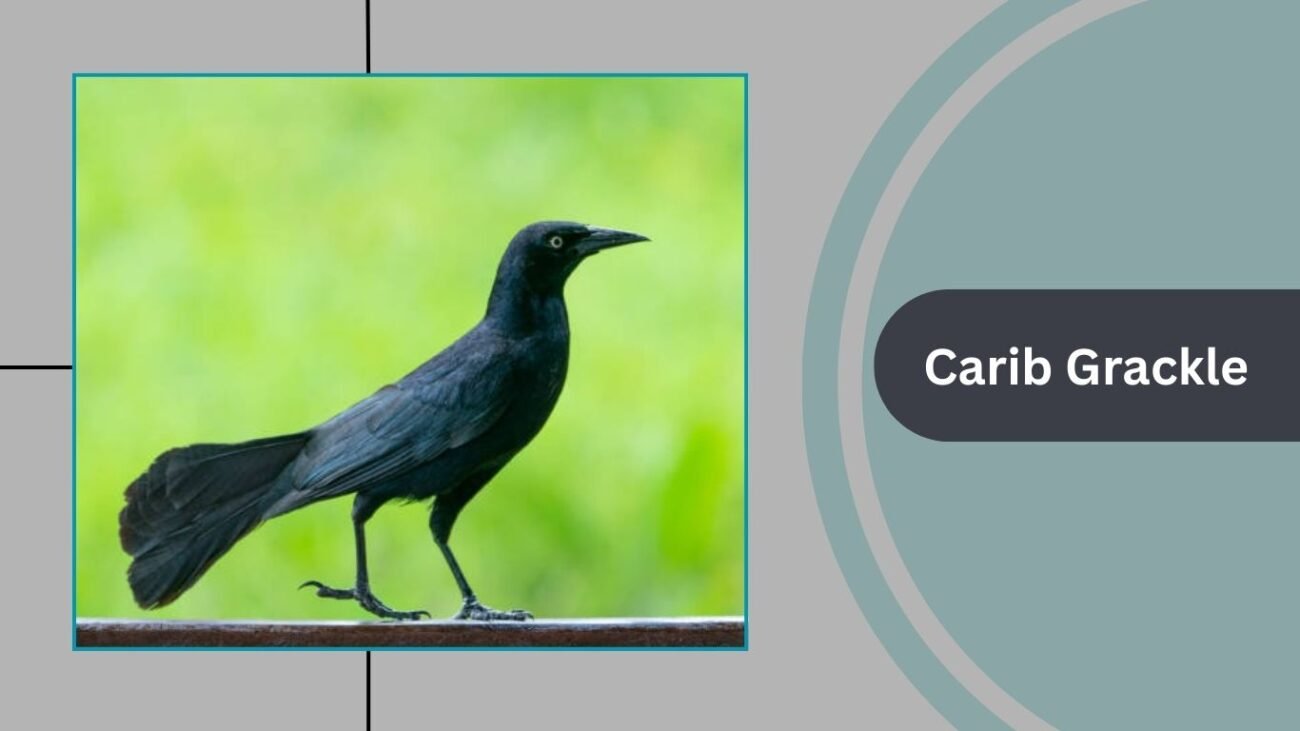
The Carib Grackle is a bold and adaptable blackbird species native to the Caribbean islands. Known for its cheeky behavior, it often thrives near human settlements.
Identification
- Male: Glossy black with purple sheen and bright yellow eyes
- Female: Smaller and brown overall with dark eyes
- Size: Around 10 inches long
- Bill: Long, sharp, and slightly curved
Diet
Omnivorous—feeds on insects, fruits, seeds, and scraps. Frequently raids food from outdoor tables, markets, and even other birds.
Behavior
Highly social and aggressive, often seen in noisy flocks. Males display with raised wings, flared tails, and loud calls.
Habitat
Found across the Caribbean in gardens, coastal areas, grasslands, and urban parks. Very common around villages and towns.
22. Velvet-fronted Grackle
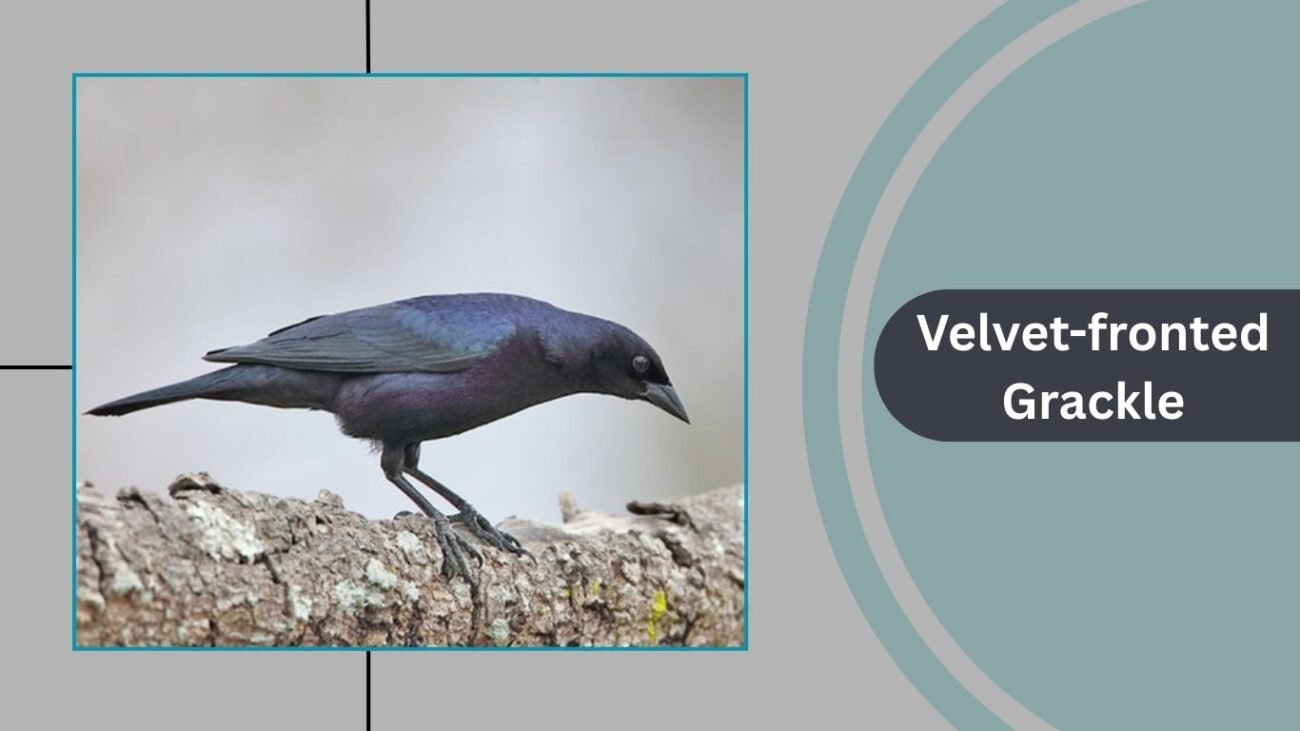
The Velvet-fronted Grackle is a sleek and distinctive blackbird found in South America. It is best recognized by the unique velvety texture on its forehead and its elegant, long tail.
Identification
- Male: Glossy black body with a velvety patch on the forehead and long, flowing tail
- Female: Smaller and duller black with shorter tail
- Size: Around 9–10 inches long
- Bill: Long, slender, and black
Diet
Feeds on fruits, seeds, and insects. They often forage in groups, hopping on the ground or feeding in trees.
Behavior
Social and active, moving in flocks and producing a range of squeaky and metallic calls. Males display during breeding with tail fanning and wing spreading.
Habitat
Found in grasslands, marshes, and forest edges across northern South America, especially near rivers and wetlands.
23. Pale-eyed Blackbird
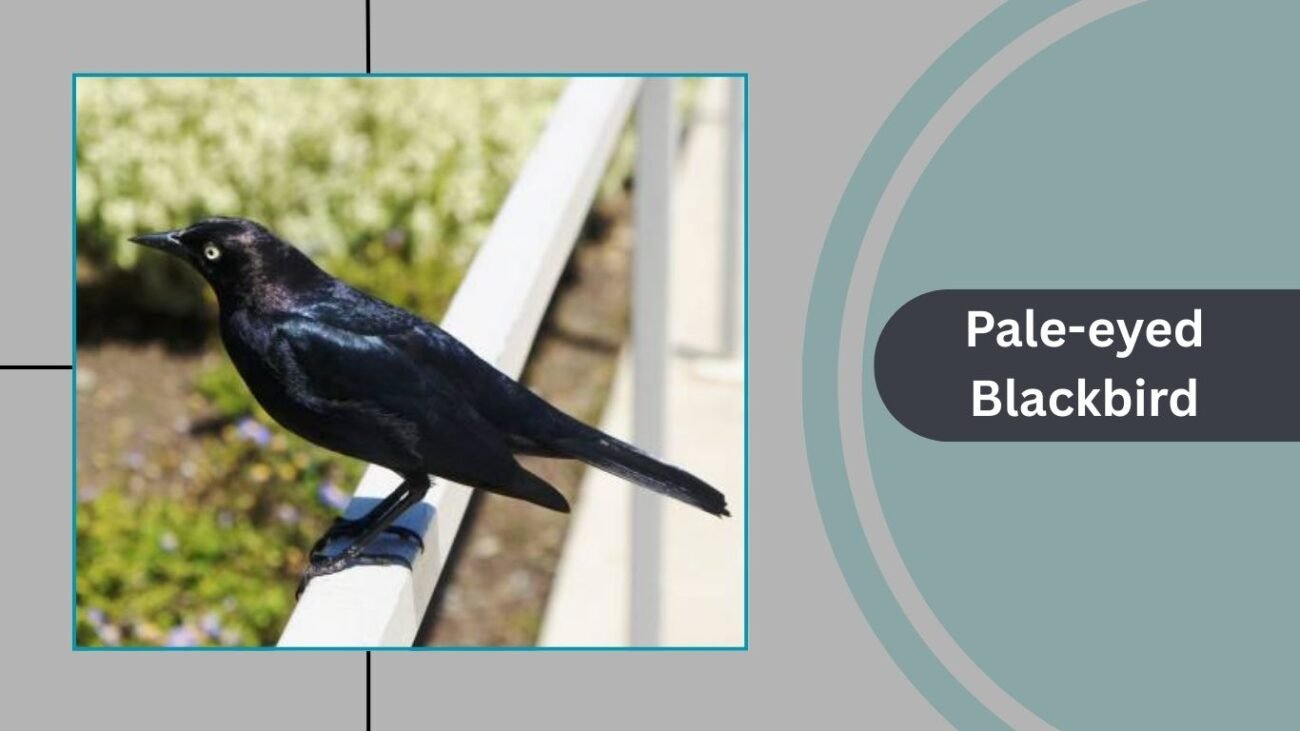
The Pale-eyed Blackbird is a rare and localized species found only in parts of Peru. Its piercing pale eyes make it stand out from other blackbirds.
Identification
- Male & Female: Entirely glossy black plumage with striking whitish or pale-yellow eyes
- Size: About 9 inches long
- Bill: Thick, short, and black
Diet
Feeds mostly on insects, small invertebrates, and fruits. They forage in shrubs and trees, sometimes moving into open fields for food.
Behavior
Secretive and often solitary, though sometimes seen in pairs. Their calls are sharp and harsh, used for communication in dense vegetation.
Habitat
Endemic to swampy areas and marshes in northern Peru, particularly in wetland habitats with thick vegetation.
24. Forbes’s Blackbird
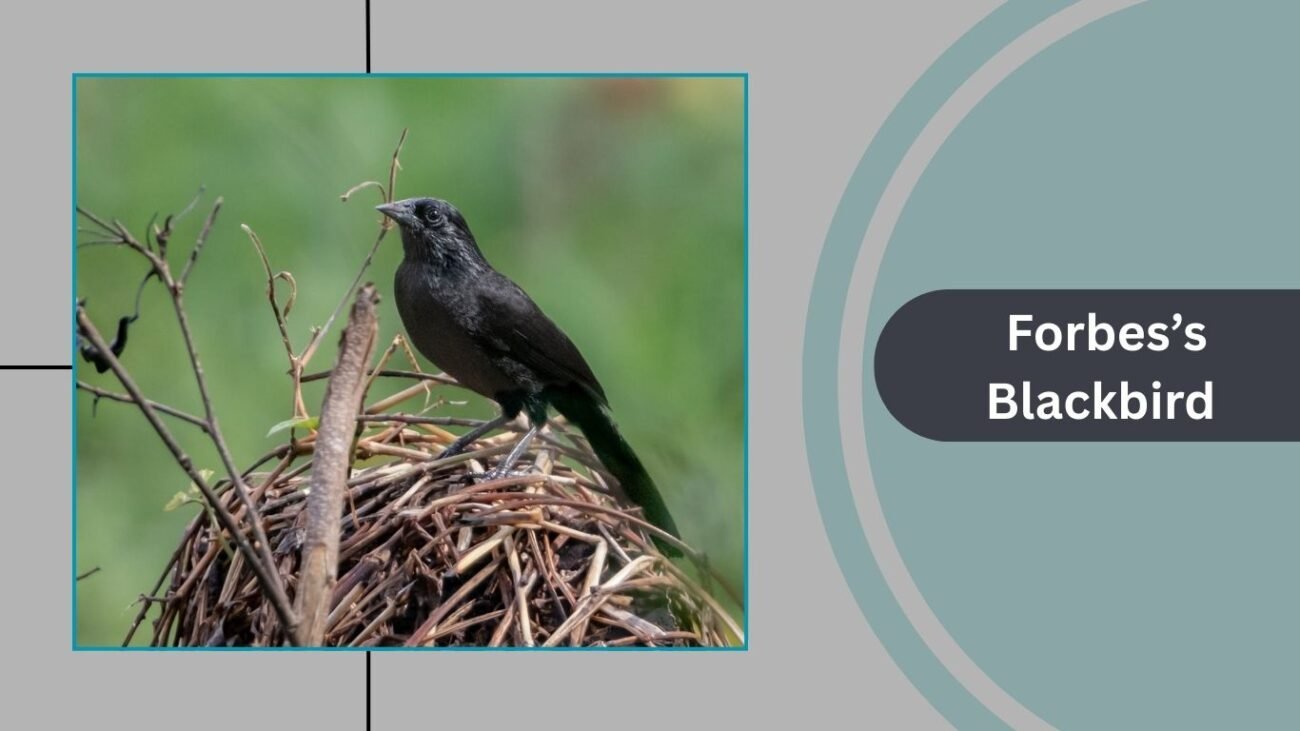
Forbes’s Blackbird is a rare and endangered species native to northeastern Brazil. Habitat loss and brood parasitism by cowbirds threaten its survival, making conservation efforts crucial.
Identification
- Male & Female: Entirely glossy black with no distinguishing color patches
- Size: About 8–9 inches long
- Bill: Medium-sized, sharp, and black
Diet
Primarily feeds on insects such as beetles, grasshoppers, and caterpillars. They also eat seeds and fruits when available.
Behavior
Often found in small groups, foraging quietly in low shrubs and grass. Their song is a series of simple whistles and short notes.
Habitat
Restricted to lowland forests, wetlands, and sugarcane fields of northeastern Brazil. Their limited range makes them vulnerable to habitat destruction.
25. Unicolored Blackbird
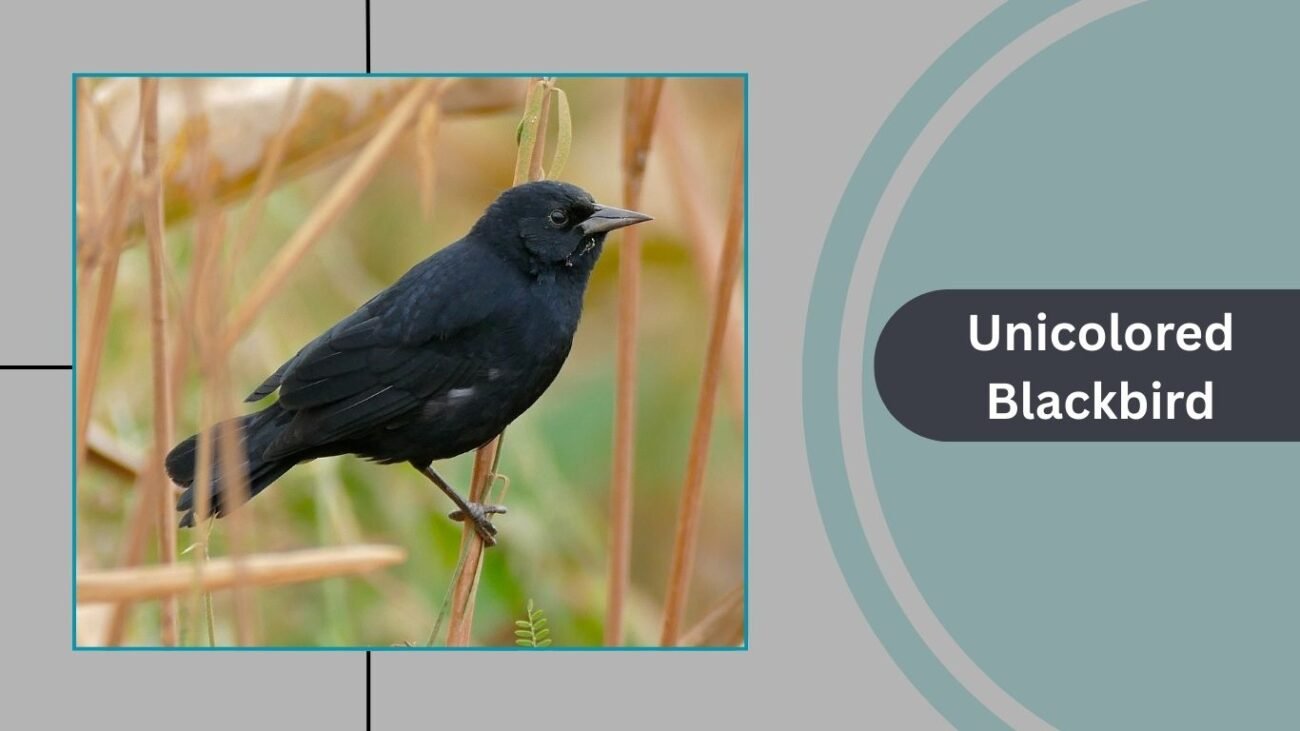
The Unicolored Blackbird is a South American species with a simple but elegant all-black appearance. Though visually plain, its ecology and behavior are fascinating.
Identification
- Male & Female: Uniform glossy black with no distinct markings
- Size: Around 9 inches long
- Bill: Sharp, conical, and black
Diet
Eats insects, seeds, and fruits. They often forage on the ground in open habitats, picking food from grasses and shrubs.
Behavior
Usually found in pairs or small flocks, often singing from exposed perches. Their song is a harsh, metallic series of notes.
Habitat
Native to Argentina, Uruguay, Paraguay, and southern Brazil. Found in marshes, grasslands, agricultural lands, and forest edges.
26. Orchard Oriole
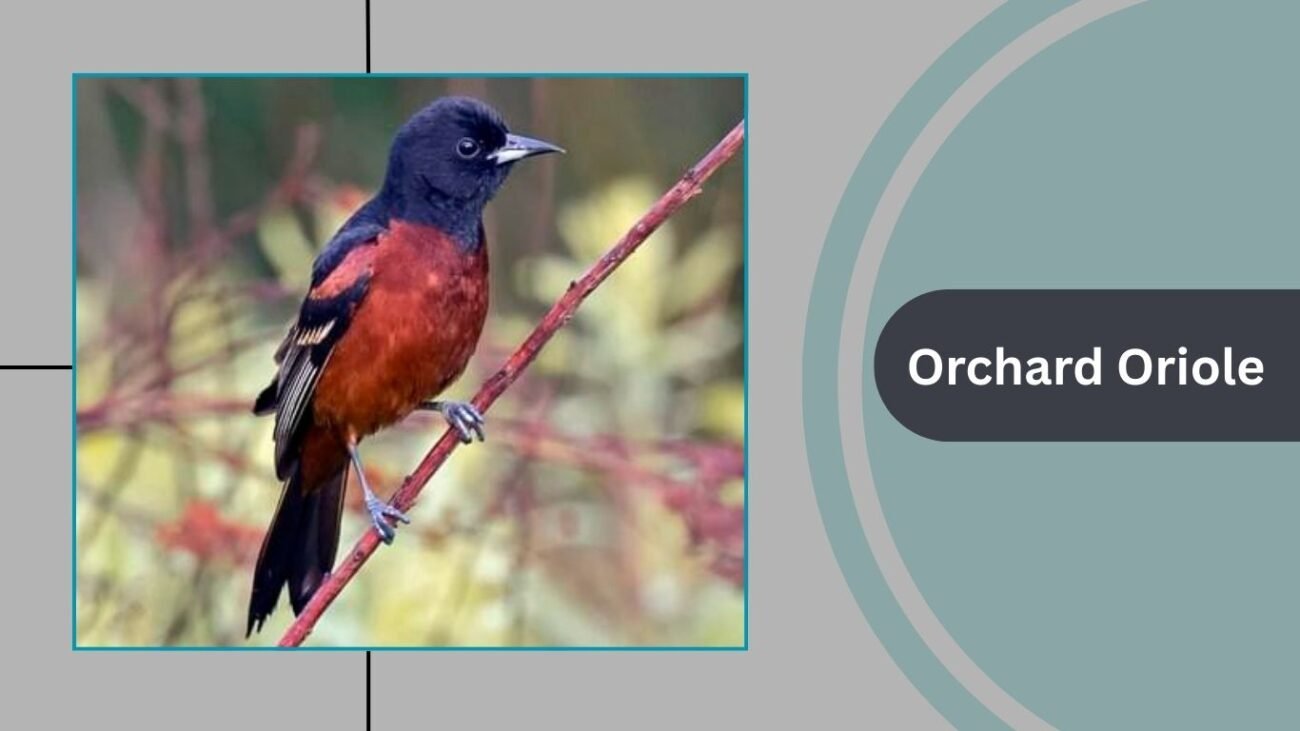
The Orchard Oriole is the smallest oriole in North America and is often grouped with blackbirds since it belongs to the same Icteridae family. Its chestnut-and-black plumage sets it apart from other species in the group.
Identification
- Male: Chestnut-red underparts and shoulders with black head, back, and tail
- Female: Yellow-green overall with paler underparts and grayish wings
- Size: About 6–7 inches long
- Bill: Slender, slightly curved, and dark
Diet
Feeds on insects such as beetles, caterpillars, and grasshoppers during summer. Also eats berries, nectar, and fruits, making them occasional visitors to gardens with feeders.
Behavior
Active and agile, often foraging among tree foliage and flowers. Known for weaving hanging, basket-like nests in trees.
Habitat
Breeds in open woodlands, orchards, and forest edges across eastern and central North America. Winters in Mexico, Central America, and northern South America.
27. Eastern Meadowlark
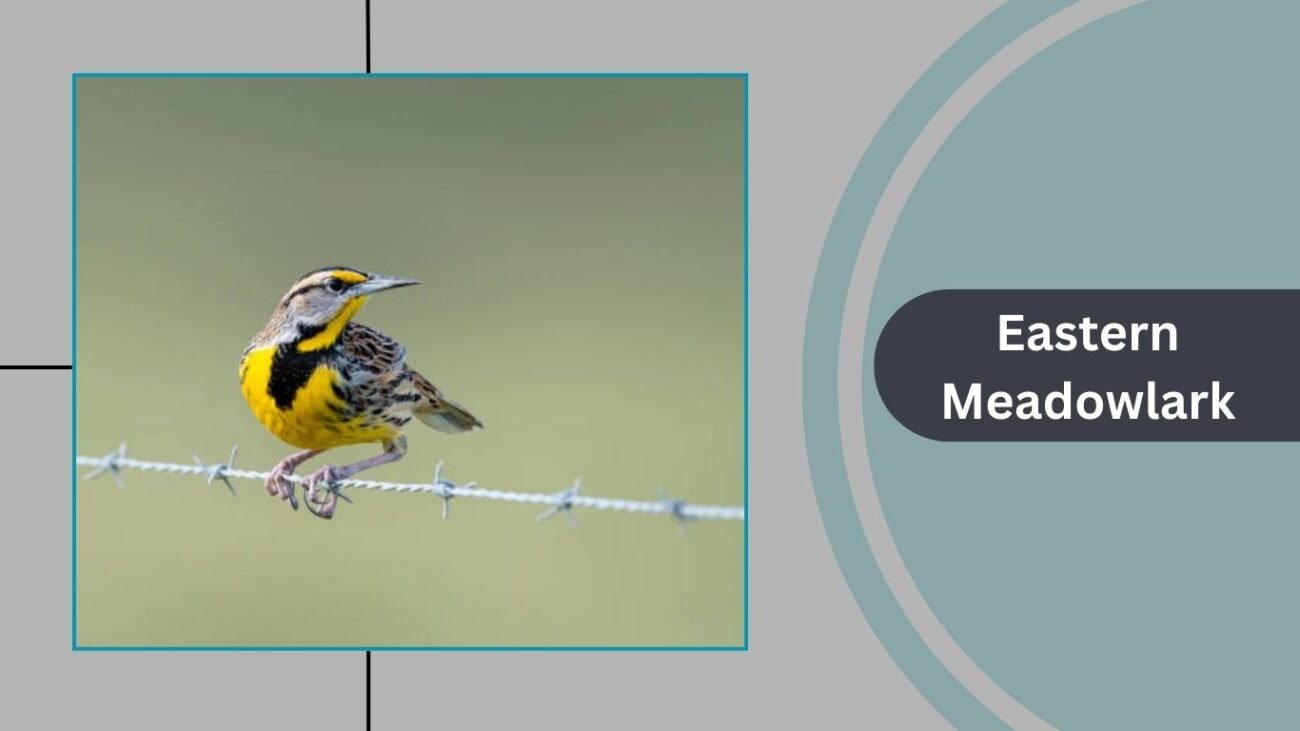
The Eastern Meadowlark is not a true blackbird in appearance but is part of the same Icteridae family. Known for its cheerful song and striking chest markings, it is often seen perched on fence posts in grasslands.
Identification
- Male & Female: Brown-streaked back, bright yellow underparts with a bold black “V” on the chest, and white outer tail feathers
- Size: Around 9–11 inches long
- Bill: Long, sharp, and slightly curved
Diet
Primarily feeds on insects such as grasshoppers, crickets, and beetles. Also eats seeds and grains, especially in winter.
Behavior
Ground foragers, walking through grass rather than hopping. Their flute-like whistle, “spring-of-the-year,” is a familiar sound in farmlands and meadows.
Habitat
Found in grasslands, prairies, pastures, and hayfields throughout eastern and central North America. Winters in the southern U.S. and Mexico, staying in open fields.