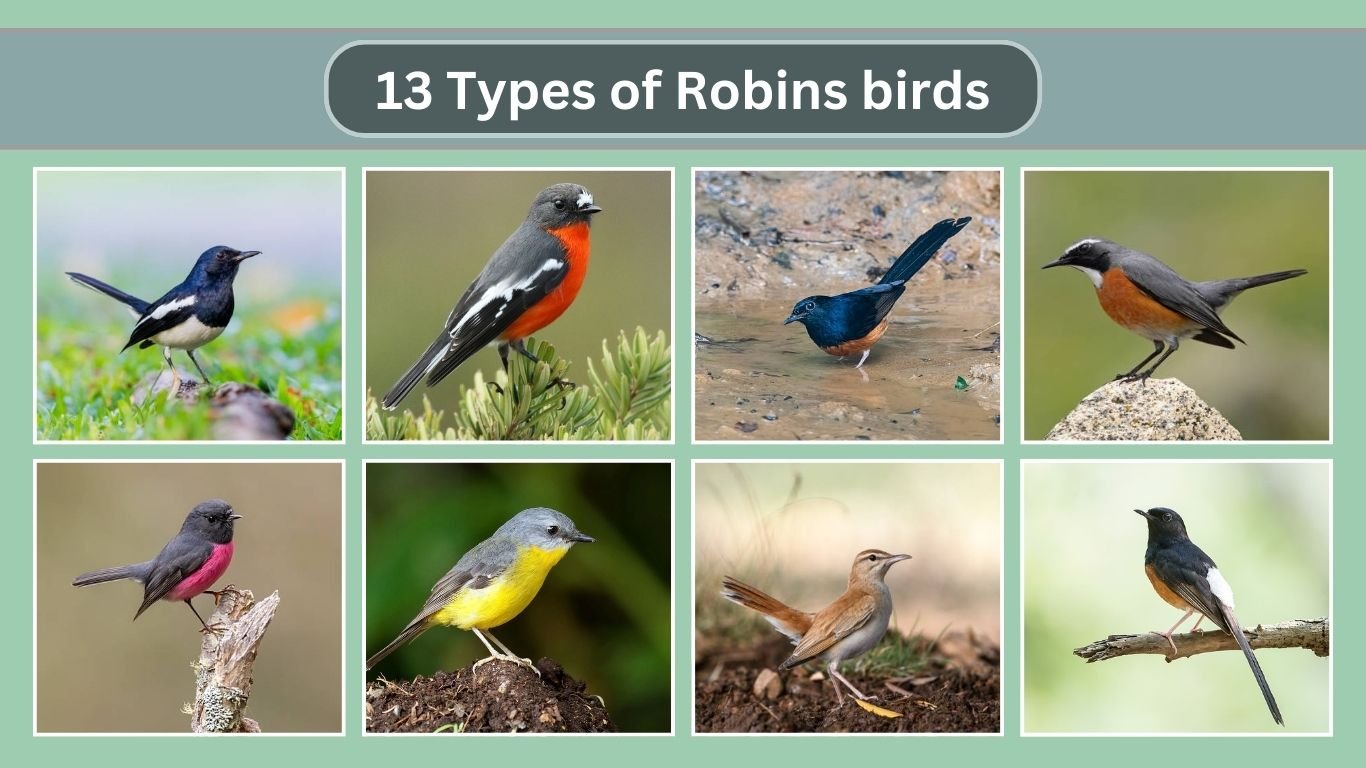
Robins are among the most beloved songbirds worldwide, admired for their cheerful songs, striking colors, and adaptable nature. From the familiar American Robin in North America to the vibrant Pink Robin of Australia, each species carries unique traits and cultural significance. These birds thrive across forests, gardens, and open landscapes, playing vital roles in insect control and seed dispersal while bringing beauty and charm to the environments they inhabit.
1. American Robin

The American Robin (Turdus migratorius) is one of the most familiar and widespread songbirds in North America. Known for its cheerful song and striking red-orange breast, it is often considered a harbinger of spring. This adaptable bird thrives in a wide variety of habitats, from forests to suburban backyards.
Identification
- Medium-sized bird, about 25 cm (10 in) long
- Bright reddish-orange breast and belly
- Dark gray to black upperparts with a white throat streaked with black
- Yellow bill and white eye ring
- Long legs and upright posture
Behavior
American Robins are active foragers, often seen hopping across lawns in search of earthworms. They are also known for their melodious song, which is most prominent at dawn and dusk. During migration and winter, they gather in large flocks, sometimes numbering in the thousands.
Habitat
They inhabit woodlands, gardens, parks, and urban areas throughout North America. While many migrate south in winter, some populations remain year-round in milder climates.
Importance
As a seed disperser and insect predator, the American Robin plays a vital role in its ecosystem. It is also culturally significant, often symbolizing renewal, joy, and the arrival of spring.
2. European Robin
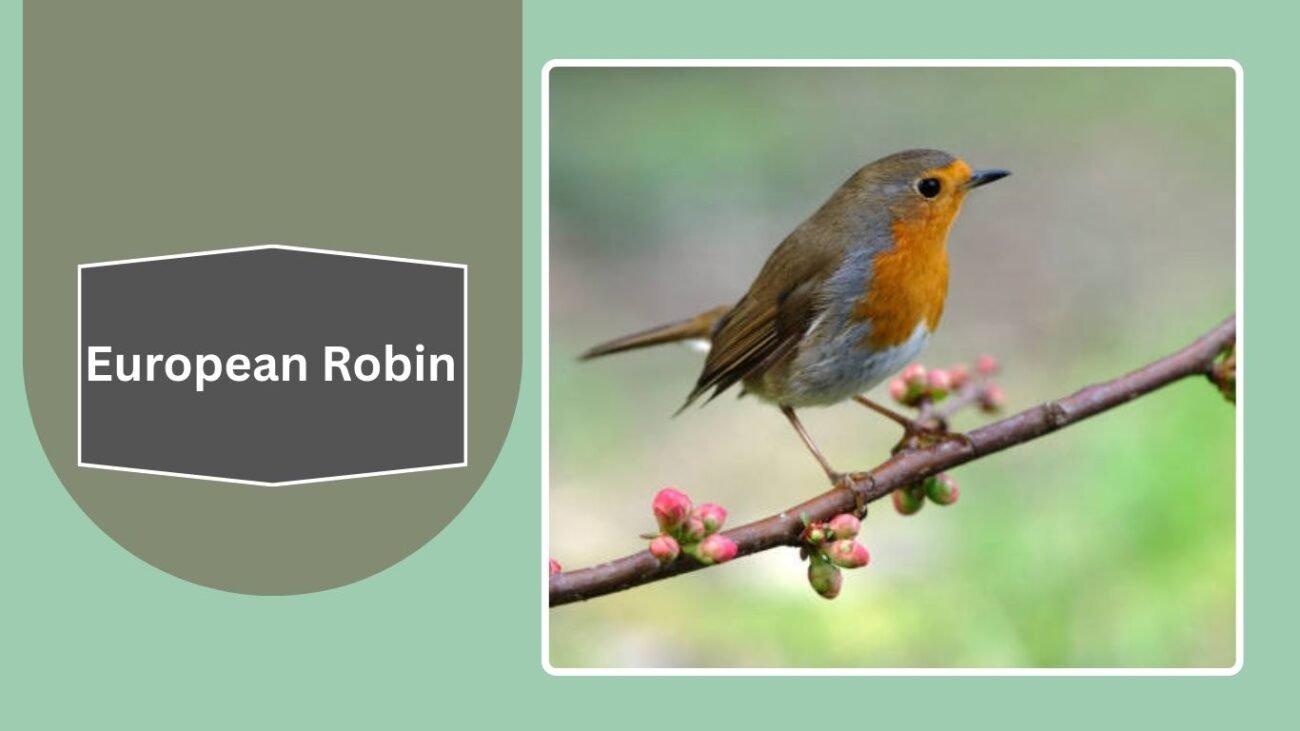
The European Robin (Erithacus rubecula) is a small, charming bird well-loved across Europe for its tameness and cheerful song. Often seen in gardens and woodlands, it is easily recognized by its bright red face and breast, making it a favorite among bird enthusiasts.
Identification
- Small bird, about 12.5–14 cm (5–5.5 in) long
- Distinct orange-red breast and face
- Brownish upperparts with a white to gray belly
- Large, dark eyes giving a gentle expression
- Thin, pointed bill suited for insect foraging
Behavior
European Robins are territorial and can be surprisingly bold, often following gardeners to snatch up insects. Their song is melodious and can be heard throughout the year, even during winter. Males and females both sing, which is rare among songbirds.
Habitat
They are found throughout Europe, parts of North Africa, and western Asia. Common in woodlands, hedgerows, and urban gardens, they are adaptable and often live close to humans.
Importance
The European Robin is a cultural icon, appearing in folklore, literature, and as a symbol of Christmas. Ecologically, it helps control insect populations and contributes to seed dispersal.
3. Oriental Magpie-Robin
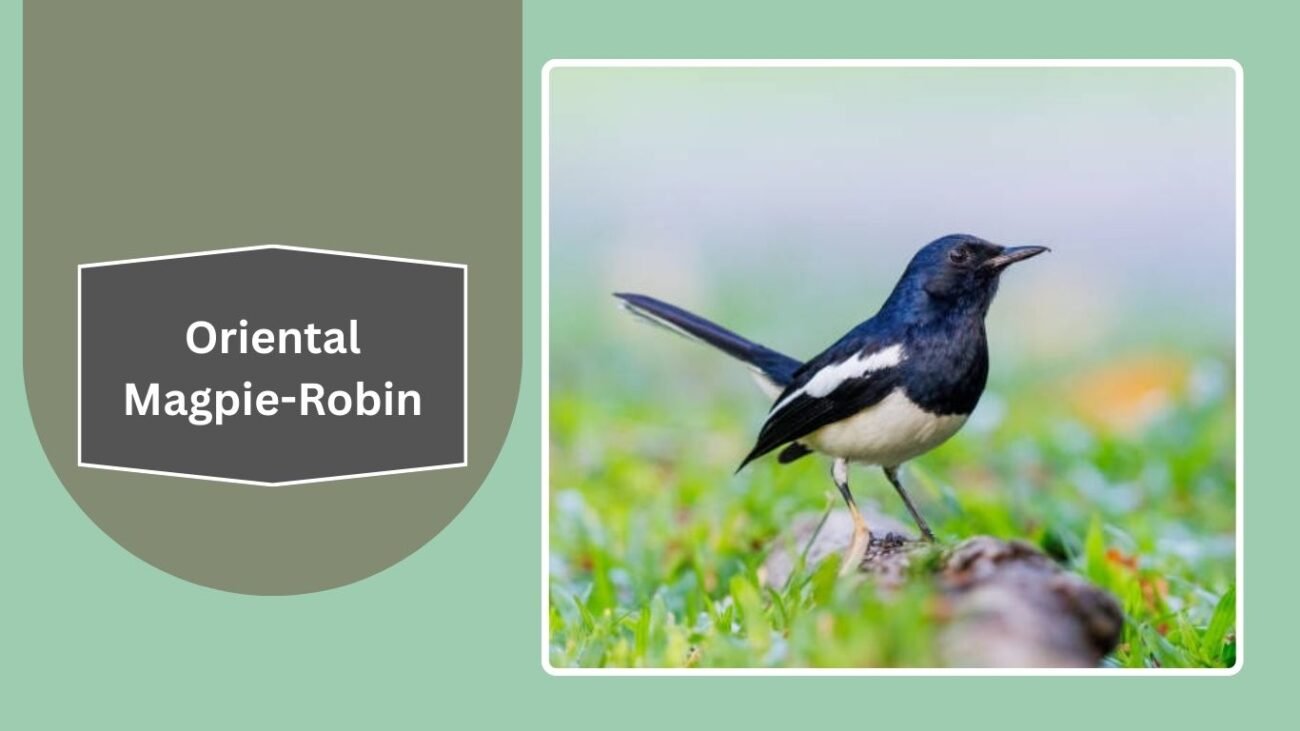
The Oriental Magpie-Robin (Copsychus saularis) is a striking black-and-white bird widely distributed across South and Southeast Asia. Known for its beautiful song, it is one of the region’s most familiar garden and woodland birds.
Identification
- Small bird, about 19–21 cm (7.5–8 in) long
- Males: glossy black upperparts, head, and throat with white belly and wing patches
- Females: grayish upperparts with duller black and white contrast
- Long black tail often held upright
- Strong bill and slender legs
Behavior
Oriental Magpie-Robins are excellent singers, with males producing a wide variety of melodious notes, especially during breeding season. They are active and restless, often seen hopping on the ground or perching prominently while singing.
Habitat
They are common in forests, gardens, parks, and farmlands across India, Bangladesh, Myanmar, Thailand, Malaysia, and beyond. They are also comfortable around human settlements.
Importance
This species is ecologically important for insect control and seed dispersal. It also holds cultural significance, being the national bird of Bangladesh, admired for its song and elegance.
4. Indian Robin
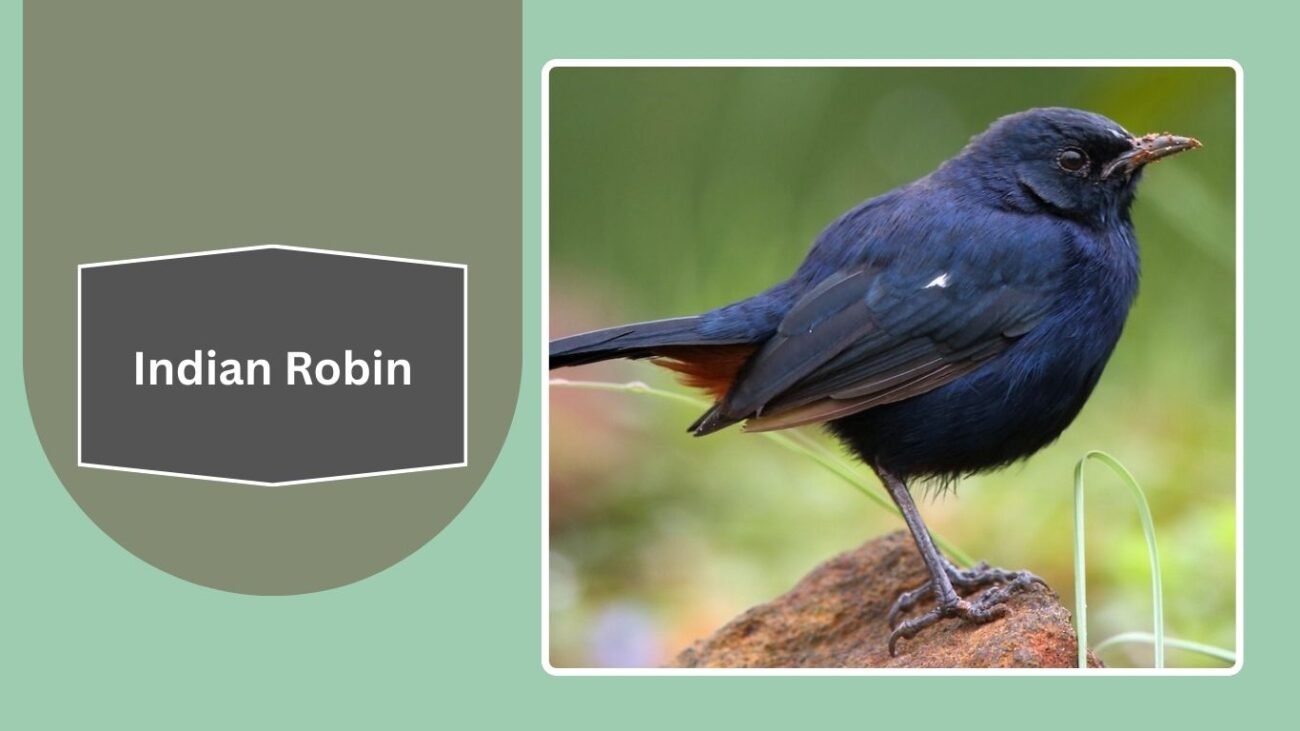
The Indian Robin (Copsychus fulicatus) is a small passerine bird commonly found across the Indian subcontinent. Known for its upright tail and rich songs, it is often seen perched on walls, shrubs, or rocks in open landscapes.
Identification
- Small bird, about 15–17 cm (6–6.5 in) long
- Males: glossy black or dark brown body with a distinctive white shoulder patch and chestnut undertail coverts
- Females: dull brown overall with lighter underparts
- Upright tail, often flicked while perched
- Slender black bill and long legs
Behavior
Indian Robins are active and territorial, often performing tail-flicking displays. Males sing prominently from perches during the breeding season to defend territory and attract mates. They primarily feed on insects and small invertebrates.
Habitat
They thrive in scrublands, farmlands, open countryside, and urban edges throughout India, Pakistan, Nepal, and Sri Lanka. They are also seen in semi-arid zones and rocky areas.
Importance
This species helps control insect populations and is a familiar sight in rural and urban landscapes, often considered a symbol of simplicity and resilience in Indian culture.
5. White-rumped Shama (Shama Robin)
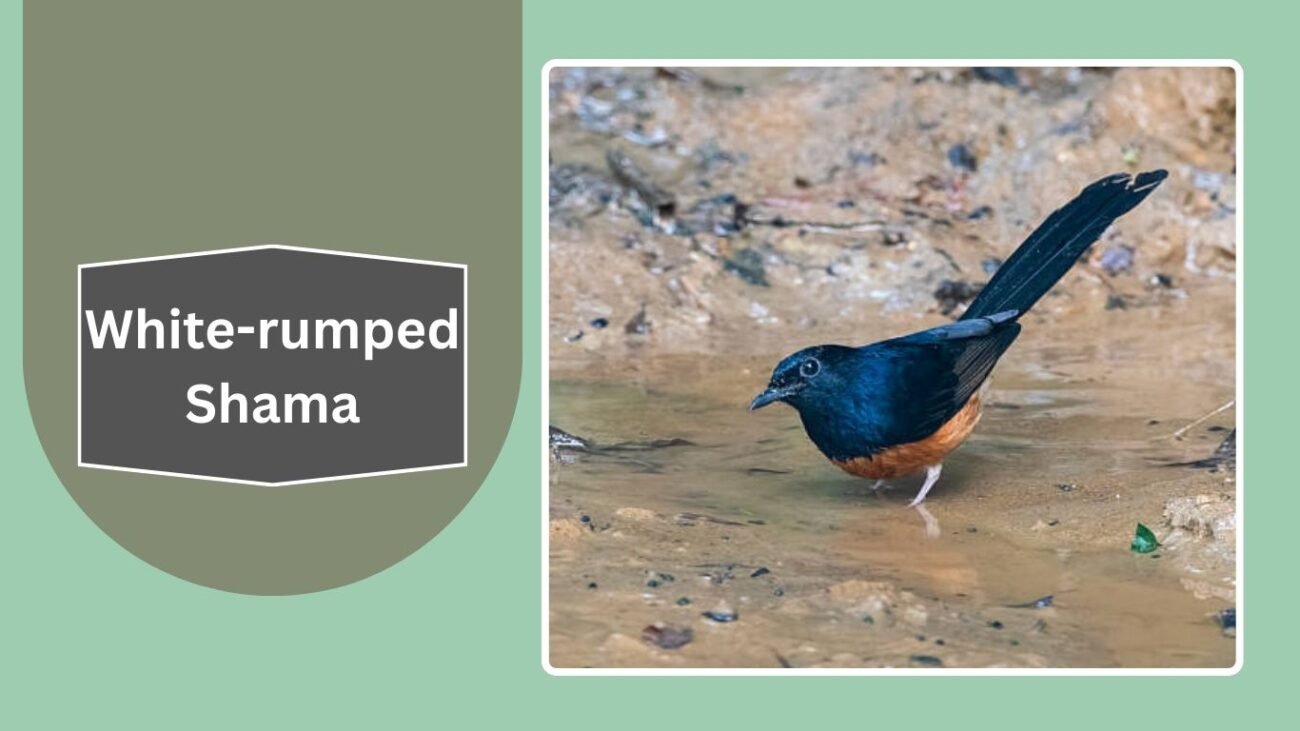
The White-rumped Shama (Copsychus malabaricus), often called the Shama Robin, is renowned for its sweet, flute-like song. Native to South and Southeast Asia, it is highly admired as a songbird and has even been kept in aviaries for centuries.
Identification
- Medium-sized robin, about 23–28 cm (9–11 in) long
- Males: glossy black head, back, and wings with rich chestnut belly and white rump
- Females: grayish-brown with duller chestnut belly
- Long, graceful black tail
- Slender legs and strong voice
Behavior
Shamas are excellent singers, capable of mimicking other birds and producing a variety of melodious notes. Males sing most actively during dawn and dusk. They are shy and secretive, often staying hidden in dense foliage but revealing themselves during song displays.
Habitat
They are found in forests, bamboo thickets, and gardens across India, Thailand, Malaysia, Indonesia, and the Philippines. They prefer dense undergrowth near streams and shaded areas.
Importance
The White-rumped Shama is an important insect predator and plays a role in seed dispersal. Its enchanting song has made it a cultural symbol of beauty and inspiration throughout Asia.
6. Cape Robin-Chat
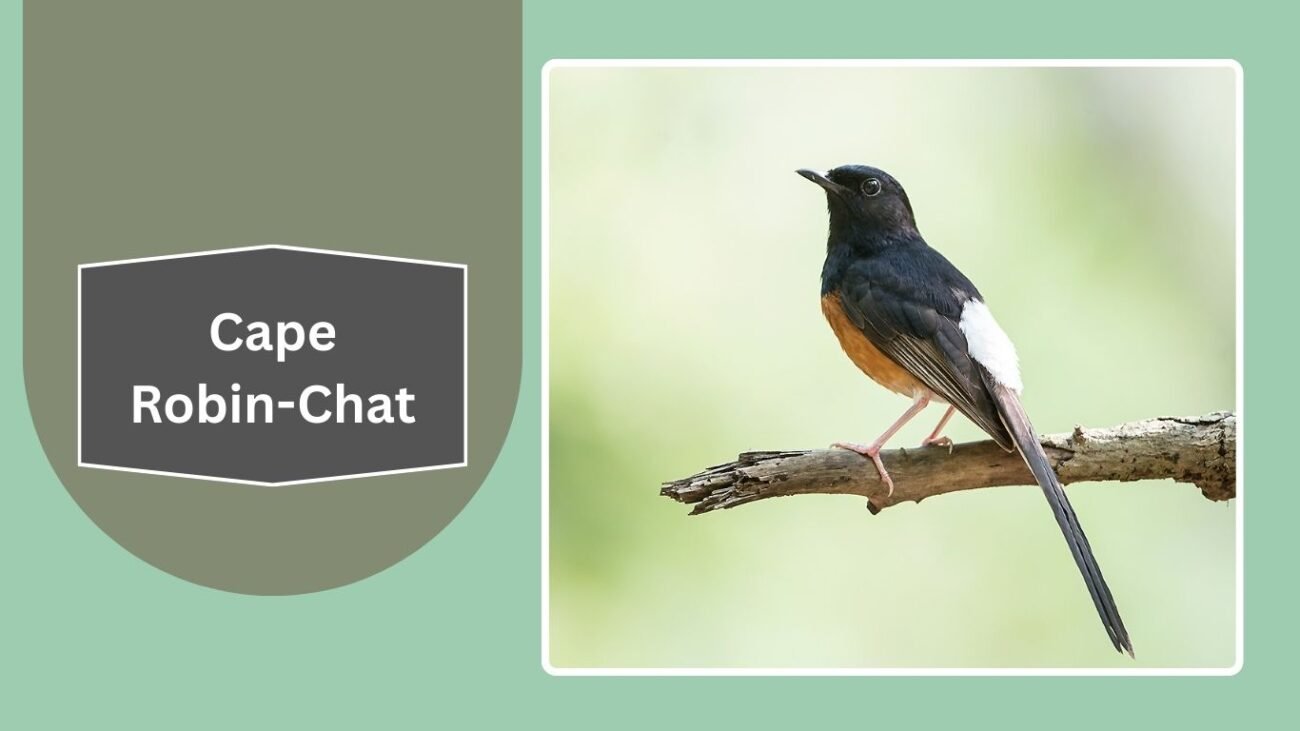
The Cape Robin-Chat (Cossypha caffra) is a charming bird native to southern Africa, well-known for its melodious dawn chorus. It is a shy but curious species often spotted in gardens, thickets, and forest edges, where its bright orange throat stands out.
Identification
- Medium-sized bird, about 16–17 cm (6–7 in) long
- Grayish-brown upperparts with a striking orange throat and breast
- White line above the eye (supercilium)
- Dark bill and legs with a long tail often flicked while moving
- Sexes look alike, with little visible difference
Behavior
Cape Robin-Chats are territorial and often sing from concealed perches. Their song is rich and varied, usually delivered at dawn. They are insectivorous, feeding on beetles, caterpillars, and other small invertebrates, occasionally taking berries.
Habitat
They occur throughout South Africa, Lesotho, Eswatini, and parts of Zimbabwe and Mozambique, favoring forest edges, gardens, and scrubby habitats. They are often associated with human settlements.
Importance
These birds help control insect populations and add to the charm of suburban gardens with their beautiful songs. They are also a cultural favorite among bird lovers in southern Africa.
7. Forest Robin
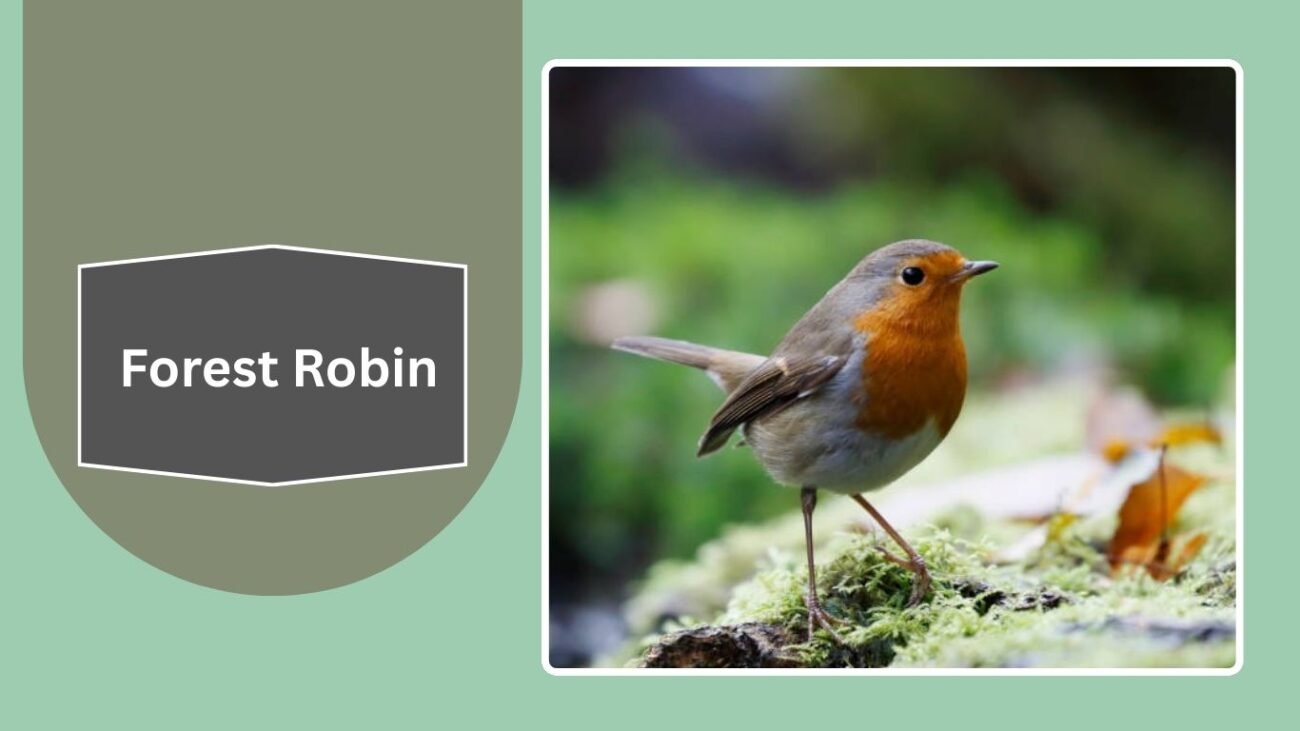
The Forest Robin (Stiphrornis erythrothorax) is a shy, brightly colored robin of Central and West Africa. Its secretive behavior makes it difficult to observe, but its vivid plumage and song are unmistakable in dense forest habitats.
Identification
- Small robin, about 12 cm (4.7 in) long
- Bright orange breast and throat contrasting with olive-green upperparts
- White belly and undertail
- Dark bill and legs
- Subtle sexual dimorphism, with males often brighter than females
Behavior
Forest Robins are solitary and secretive, preferring the shaded understory of forests. They feed mainly on insects, spiders, and small invertebrates, foraging quietly close to the ground. Their soft, whistling song carries well through the forest.
Habitat
They inhabit tropical rainforests across Central and West Africa, including Gabon, Cameroon, and the Congo Basin. They are rarely seen outside dense vegetation.
Importance
These robins are valuable indicators of healthy forest ecosystems. Their reliance on intact habitats highlights the need for rainforest conservation.
8. White-throated Robin
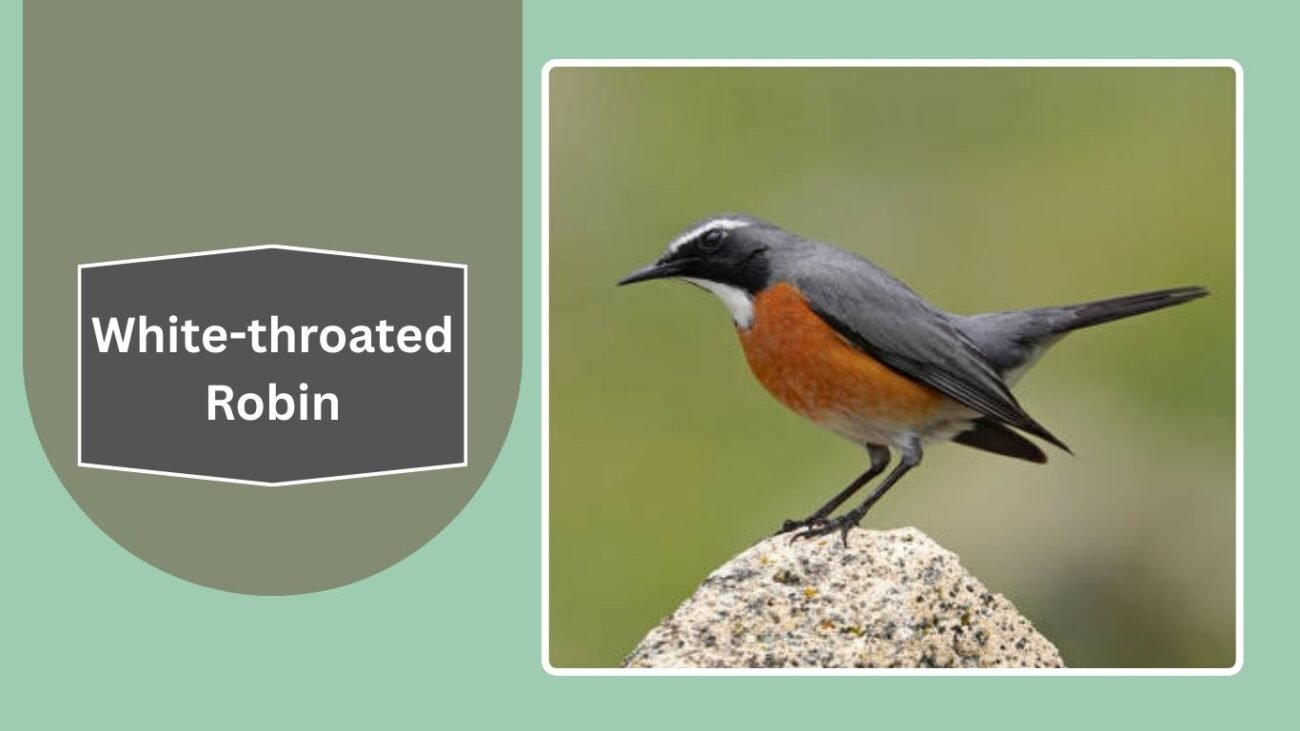
The White-throated Robin (Irania gutturalis) is a striking migratory bird found in parts of the Middle East, Central Asia, and East Africa. Known for its distinctive white throat and bright orange chest, it stands out among the robins and chats of its range.
Identification
- Medium-sized bird, about 14–15 cm (5.5–6 in) long
- Males: slate-blue upperparts, white throat, and vivid orange breast
- Females: duller brown with less distinct markings
- Both sexes show a long tail with white outer feathers
- Strong bill suited for insect feeding
Behavior
White-throated Robins are active and agile, often flicking their tails while foraging. They feed mainly on insects and small berries. Males sing melodious songs during the breeding season to defend territory and attract mates.
Habitat
They breed in rocky hillsides, scrublands, and open woodlands in parts of Turkey, Iran, and Central Asia. During winter, they migrate to East Africa, where they inhabit savannas and bushlands.
Importance
As migratory birds, they play a role in seed dispersal and insect control across different ecosystems. Their seasonal movements also make them important indicators of climate and habitat changes.
9. Siberian Blue Robin
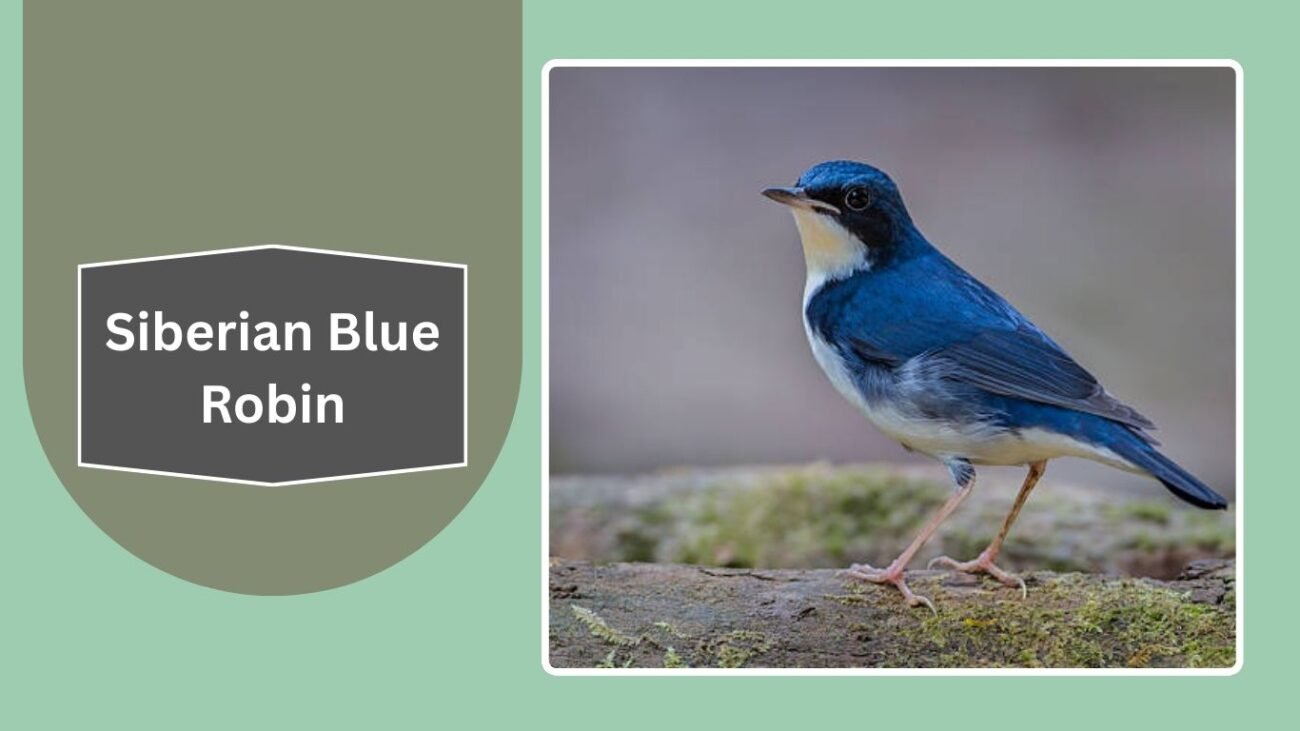
The Siberian Blue Robin (Larvivora cyane) is a small migratory songbird admired for its deep blue plumage in males. Found across Asia, it breeds in dense forests of Siberia and migrates to Southeast Asia for the winter. Its shy and secretive nature makes it a challenging bird to spot.
Identification
- Small bird, about 13–14 cm (5–5.5 in) long
- Males: brilliant cobalt-blue upperparts with white underparts
- Females: olive-brown upperparts with lighter buff underparts
- Slender bill and long legs suited for ground foraging
- Dark eyes that enhance its alert appearance
Behavior
Siberian Blue Robins are elusive, preferring to forage close to the ground in dense undergrowth. They feed mainly on insects, worms, and other small invertebrates. During the breeding season, males sing a sweet and musical song to defend their territories.
Habitat
They breed in moist, shady forests of Siberia, northeastern China, and Japan. In winter, they migrate to Southeast Asia, including Thailand, Malaysia, and Indonesia, where they inhabit lowland forests and thickets.
Importance
As insectivores, these robins help maintain ecological balance in forest ecosystems. Their long migratory journeys also make them an important species for studying migration patterns and habitat connectivity.
10. Rufous-tailed Scrub Robin
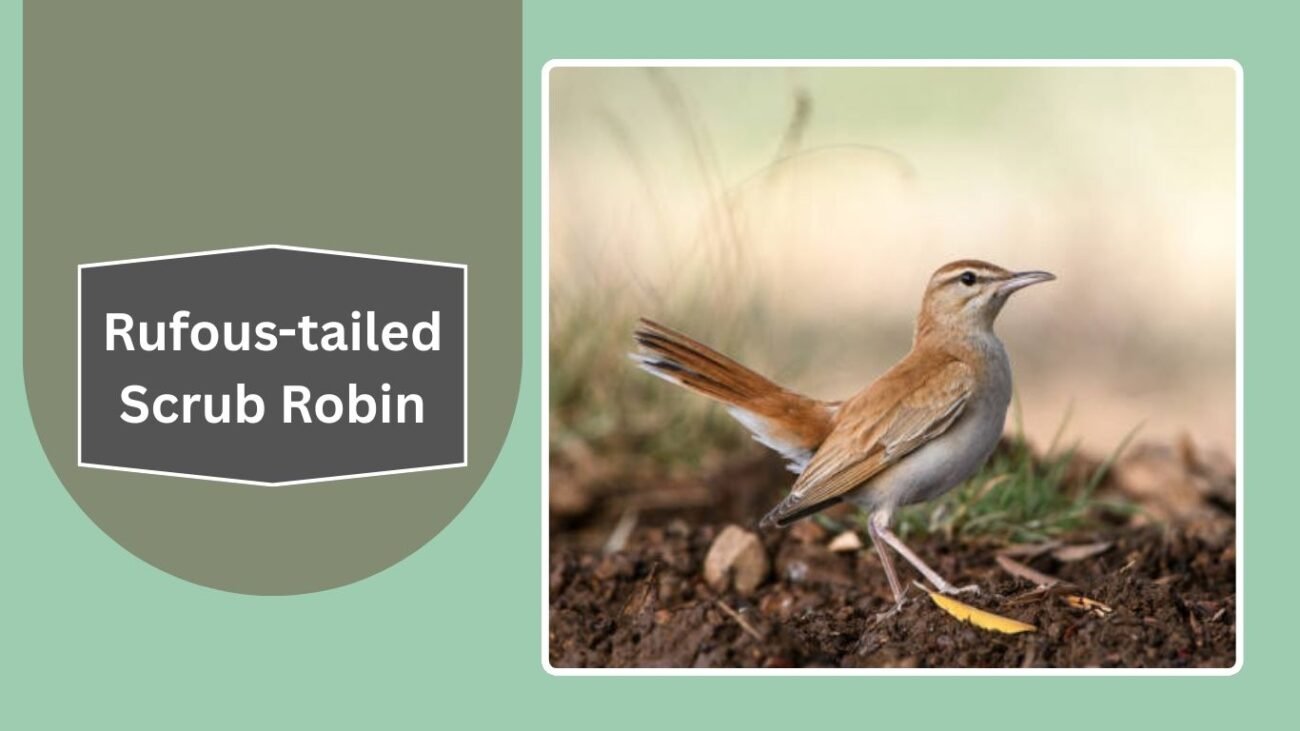
The Rufous-tailed Scrub Robin (Cercotrichas galactotes) is a lively bird known for its long rufous tail and energetic movements. Found across southern Europe, North Africa, and parts of the Middle East, it thrives in scrublands and semi-arid habitats.
Identification
- Medium-sized bird, about 16–18 cm (6–7 in) long
- Brownish upperparts with pale underparts
- Long, rufous tail often flicked upward and fanned
- White eyebrow stripe (supercilium) giving a striking face pattern
- Strong legs adapted for ground foraging
Behavior
This robin is restless and active, often flicking its tail and wings while moving through scrub. It feeds mainly on insects and small invertebrates, sometimes catching prey in short flights. Its melodious, varied song is delivered from exposed perches.
Habitat
It inhabits dry scrublands, orchards, olive groves, and semi-arid regions across Spain, North Africa, and the Middle East. Some populations migrate to sub-Saharan Africa in winter.
Importance
The Rufous-tailed Scrub Robin plays a role in insect control and is an important cultural symbol in Mediterranean folklore due to its song and lively nature.
11. Flame-breasted Robin
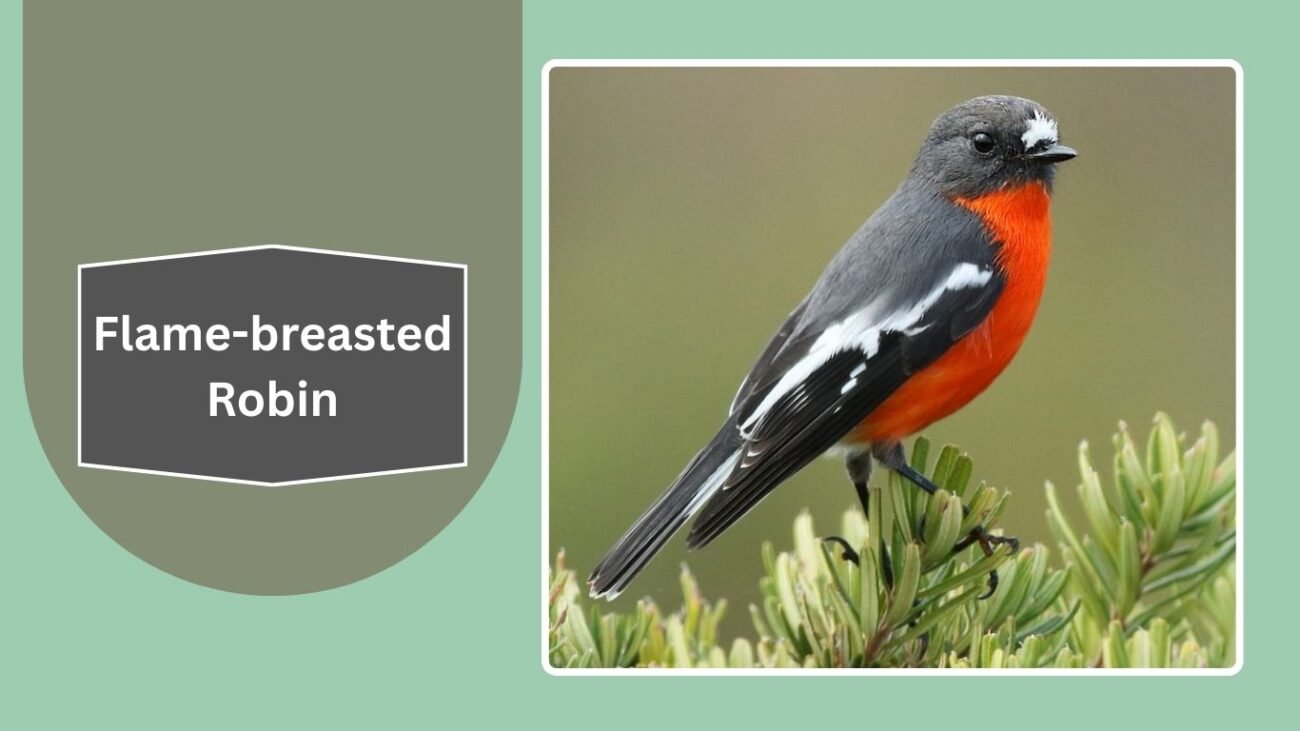
The Flame-breasted Robin (Petroica phoenicea) is a striking bird endemic to Tasmania, known for its fiery red-orange chest that gives it its name. It is one of the most vividly colored of the Australasian robins.
Identification
- Small bird, about 12–13.5 cm (5 in) long
- Males: brilliant flame-red breast and belly with black upperparts and white forehead spot
- Females: brownish-gray with pale underparts and faint reddish wash
- Fine black bill and medium-length tail
- Compact body with upright stance
Behavior
Flame-breasted Robins are insectivores, perching on low branches or posts before darting to the ground to catch prey. Males are highly territorial during the breeding season, displaying their bright colors while singing to defend their space.
Habitat
They are found primarily in forests, woodlands, and open country across Tasmania and nearby islands. During the cooler months, some move to lower elevations and coastal regions.
Importance
This robin helps maintain insect balance in its habitats and is a key species in Tasmanian ecosystems. Its vivid beauty also makes it a favorite among birdwatchers and photographers.
12. Pink Robin
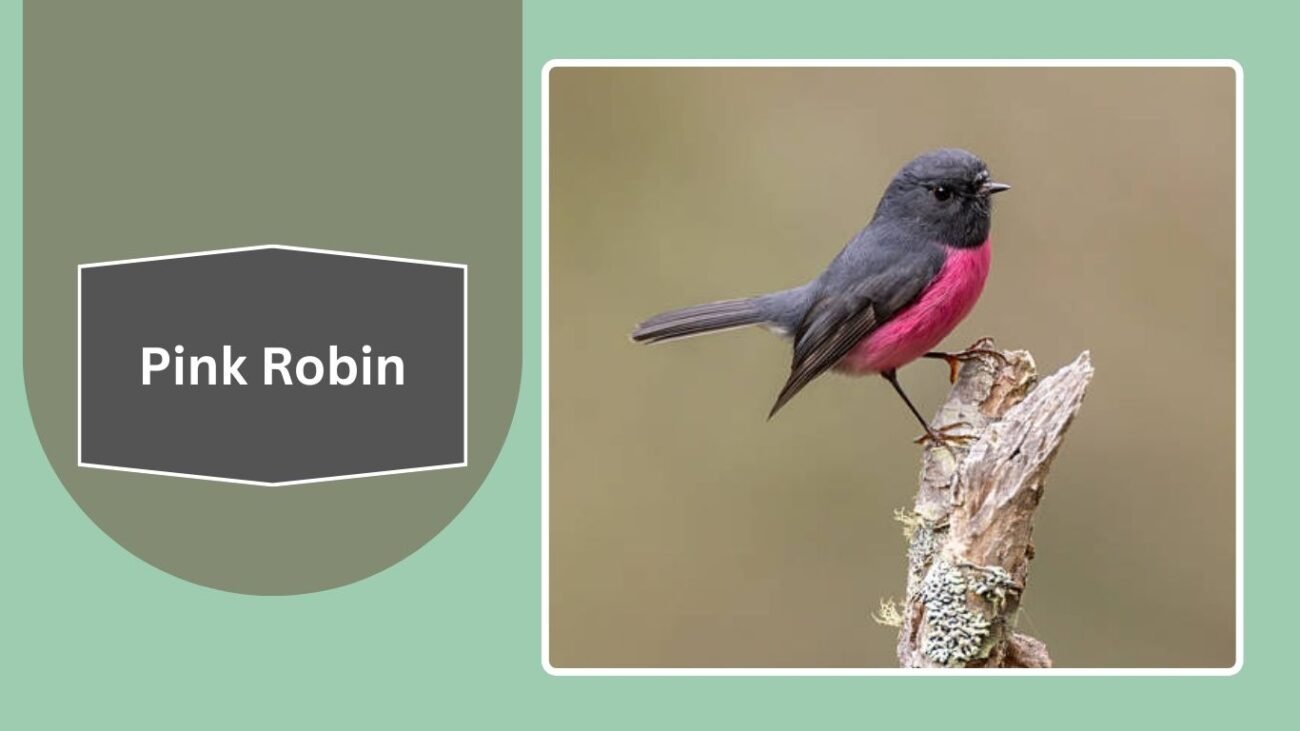
The Pink Robin (Petroica rodinogaster) is a delicate and colorful species native to southeastern Australia, particularly in Tasmania and Victoria. Its soft pink plumage makes it one of the most beautiful robins in the region.
Identification
- Small bird, about 13.5 cm (5.3 in) long
- Males: striking rose-pink breast and belly with dark gray-black upperparts
- Females: olive-brown with pale underparts, lacking pink coloration
- Short, fine bill and rounded body
- Often perches quietly in shaded areas
Behavior
Pink Robins are shy and often remain in dense forest undergrowth. They primarily feed on insects, spiders, and small invertebrates, catching prey by hopping along the forest floor. Males sing a soft, high-pitched song, especially during the breeding season.
Habitat
They are found in temperate rainforests, wet gullies, and dense woodlands of southeastern Australia, including Tasmania. Their preference for thick vegetation makes them less conspicuous than other robins.
Importance
Pink Robins contribute to insect control in forest ecosystems and are valued by birdwatchers for their rare beauty. Their sensitivity to habitat changes also makes them important indicators of forest health.
13. Yellow-breasted Robin
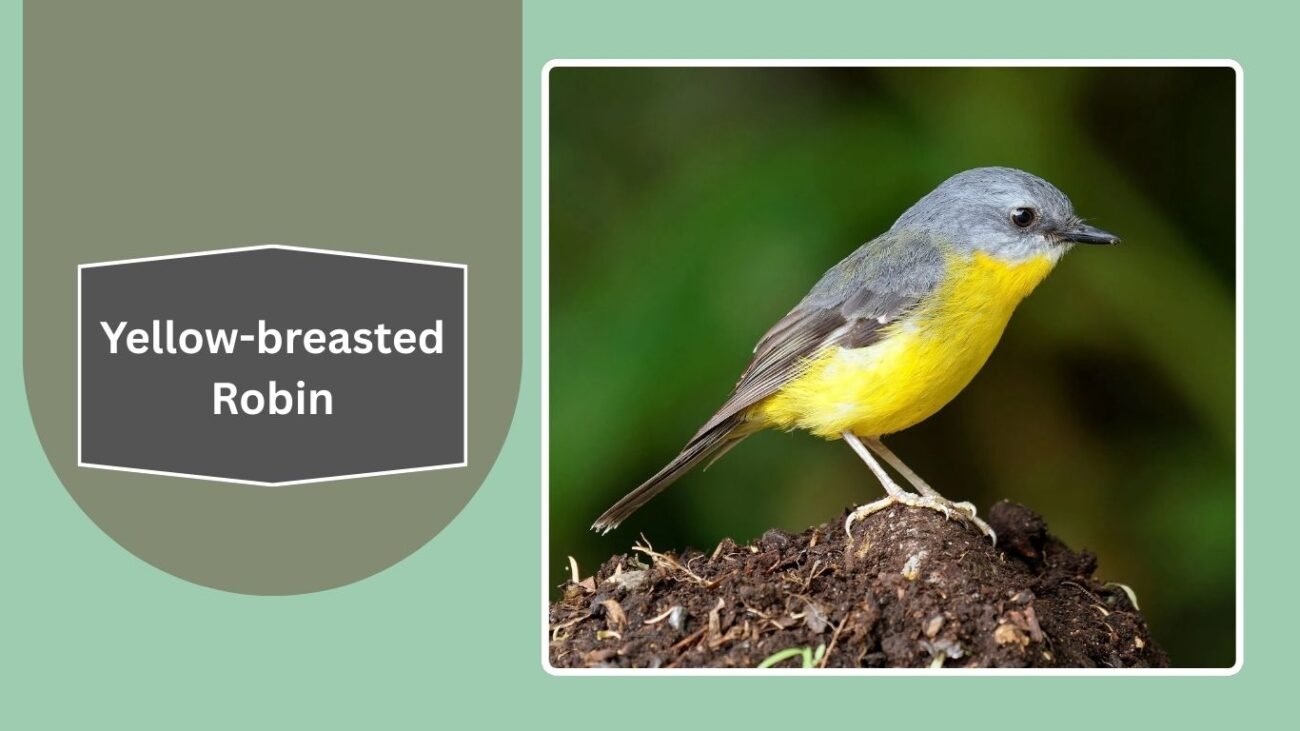
The Yellow-breasted Robin (Eopsaltria australis), also known as the Eastern Yellow Robin, is a familiar bird in eastern and southeastern Australia. Its cheerful yellow belly and soft calls make it a favorite in forests and gardens alike.
Identification
- Medium-sized bird, about 15–16 cm (6–6.3 in) long
- Bright yellow breast and belly with gray head and back
- White throat and faint olive wash on wings
- Strong legs for ground foraging
- Both sexes look similar, with little variation
Behavior
Yellow-breasted Robins are calm and approachable, often perching low on tree trunks or posts before swooping to the ground to catch insects. They have a sweet, piping call and remain active year-round.
Habitat
They live in open forests, woodlands, and gardens across eastern Australia, from Queensland down to Victoria and Tasmania. They adapt well to human-altered landscapes as long as trees remain available.
Importance
These robins are key insect predators and an integral part of Australian birdlife. Their approachable nature and bright appearance make them popular among nature enthusiasts.