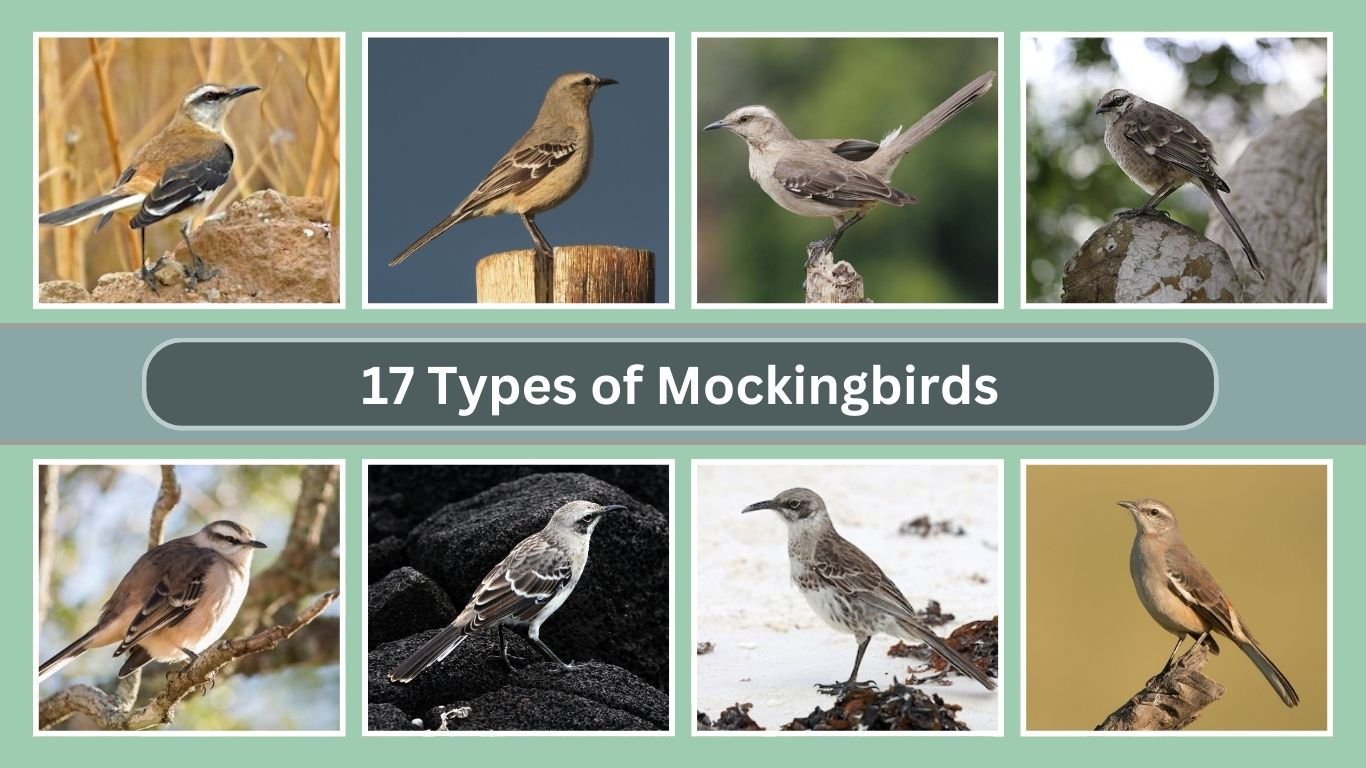
Mockingbirds are fascinating songbirds known for their melodious voices, mimicry skills, and adaptability across diverse habitats. Found in North and South America, as well as the Galápagos Islands, these birds vary in size, behavior, and appearance. From the bold Northern Mockingbird to the rare Socorro and Floreana species, each has unique traits that make it special. This article explores 17 types of mockingbirds with key details about each.
1. Northern Mockingbird

The Northern Mockingbird (Mimus polyglottos) is the most widespread and familiar mockingbird species in North America. Famous for its extraordinary vocal ability, it can mimic hundreds of bird calls, animal sounds, and even mechanical noises. This bird is admired for its intelligence, adaptability, and bold territorial defense, often seen in suburban yards, gardens, and parks.
Identification
- Length: 8–10 inches (20–25 cm)
- Wingspan: 12–14 inches
- Gray upperparts with whitish underparts
- White wing patches and tail edges, very visible in flight
- Long, slender tail often flicked up and down
- Thin, slightly curved black bill
Habitat
Northern Mockingbirds are highly adaptable, found in open country, forest edges, grasslands, and residential areas. They thrive in environments where shrubs and small trees provide perching and nesting areas while open spaces allow for easy foraging. Unlike many songbirds, they do not migrate far, remaining in their territories year-round.
Behavior
These birds are highly territorial, especially during spring and summer. They are fearless defenders of their space, attacking much larger animals such as hawks, crows, and even domestic cats. Males sing loudly from prominent perches, repeating each phrase several times before moving to another song. Their mimicry makes them stand out among North American birds, with songs often continuing into the night, particularly in bright moonlight.
Diet
Northern Mockingbirds are omnivores. Insects like grasshoppers, beetles, ants, and caterpillars dominate their summer diet, while berries, seeds, and fruits (such as holly, mulberry, and juniper) become more important in winter. This flexibility allows them to survive in a variety of climates and habitats.
2. Tropical Mockingbird
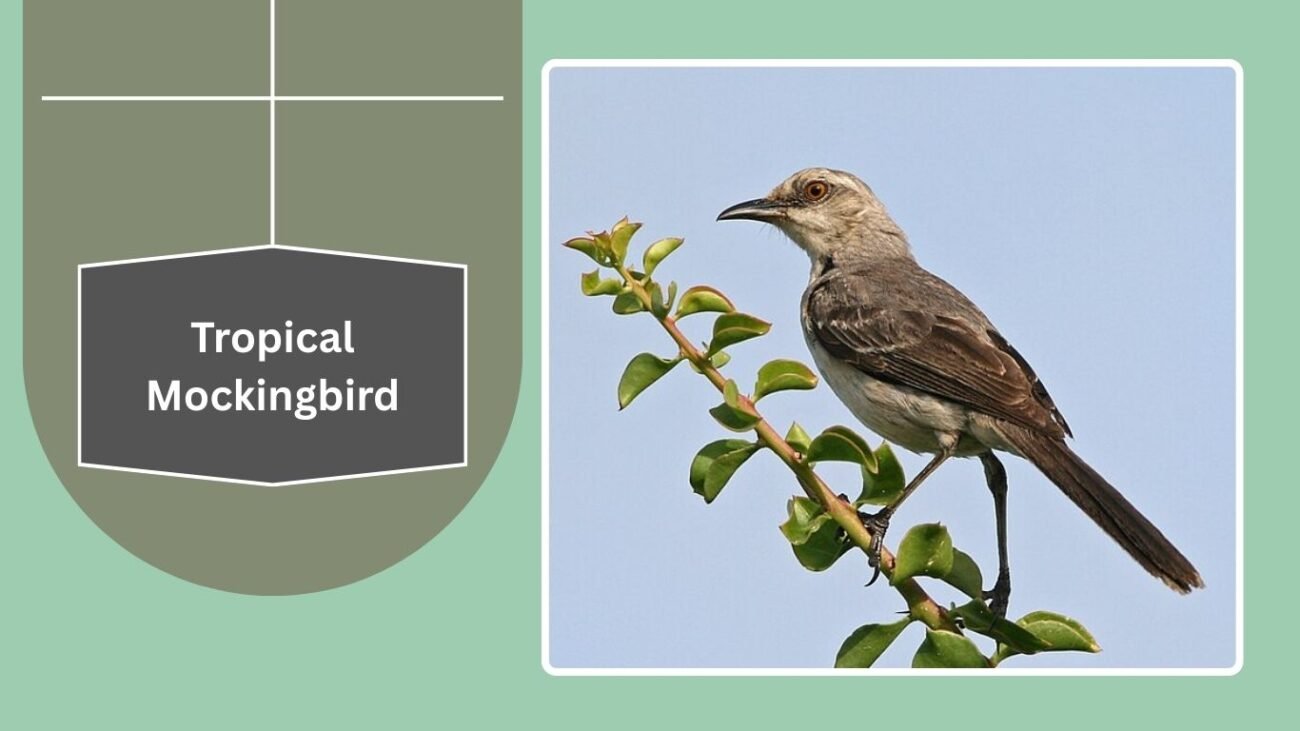
The Tropical Mockingbird (Mimus gilvus) is a widespread species across Central and South America, extending into the Caribbean. It is closely related to the Northern Mockingbird but has distinct vocal and physical traits. Known for its loud, melodious songs, this bird is often seen perched high on trees, fences, or power lines, displaying confidence and alertness.
Identification
- Size: Around 9–10 inches (23–25 cm) long
- Plumage: Gray upperparts, pale whitish underparts
- Less prominent white wing patches compared to the Northern Mockingbird
- Long tail with white edges
- Dark eyes and a slender, slightly curved bill
Habitat
The Tropical Mockingbird thrives in open areas such as savannas, scrublands, agricultural lands, and urban gardens. Unlike its northern cousin, it is rarely found in dense forests. Its ability to adapt to human presence makes it common in villages and towns across its range.
Behavior
This species is bold and territorial. It frequently sings from elevated perches, repeating phrases several times in succession. Unlike the Northern Mockingbird, it does not mimic as many other species but has a rich, melodious voice of its own. It often forms pairs that defend their feeding and nesting territories aggressively.
Diet
The Tropical Mockingbird feeds on insects, spiders, and small invertebrates, supplemented with fruits and berries. In agricultural regions, it may also feed on cultivated crops, sometimes leading to conflict with farmers. Its diet flexibility supports its wide distribution.
3. Bahama Mockingbird

The Bahama Mockingbird (Mimus gundlachii) is a regional species mainly found in the Bahamas, Cuba, Jamaica, and parts of the Turks and Caicos Islands. It is more secretive than the Northern Mockingbird but equally talented in singing, with a rich and varied voice.
Identification
- Length: 9–11 inches (23–28 cm)
- Duller gray-brown plumage compared to the Northern Mockingbird
- Heavier, slightly curved bill
- Faint streaking on the chest and flanks
- Narrow white wing patches and long tail with white outer feathers
Habitat
This bird prefers scrubby areas, dry forests, coastal thickets, and open woodlands. It is well adapted to the island environment and is more commonly found in drier, less urbanized habitats compared to the Northern Mockingbird.
Behavior
Bahama Mockingbirds are territorial and aggressive when defending their space. Males sing persistently during the breeding season, producing a complex range of sounds. Unlike many other mockingbirds, they are known to mimic other species less often, focusing instead on their distinctive whistles and chattering calls.
Diet
Their diet includes insects, lizards, and fruits. The inclusion of small vertebrates like lizards makes them unique among mockingbirds, giving them a more opportunistic feeding strategy suited to island life.
4. Socorro Mockingbird

The Socorro Mockingbird (Mimus graysoni) is a rare and critically endangered species, found only on Socorro Island, off the Pacific coast of Mexico. With a very limited range, its population has been severely impacted by habitat loss and introduced predators. Despite its rarity, it remains one of the most remarkable mockingbirds, known for its strong voice and distinctive appearance.
Identification
- Size: Around 10–11 inches (25–28 cm)
- Plumage: Brownish-gray upperparts, paler underparts with streaks
- Thicker bill compared to most mockingbirds
- Dark eyes with a bold facial expression
- Longer legs and strong stance, adapted for its rugged island habitat
Habitat
The Socorro Mockingbird is restricted to the forests and shrublands of Socorro Island. It inhabits highland areas with dense vegetation, preferring juniper and oak forests. Its limited habitat makes it extremely vulnerable to environmental changes.
Behavior
This species is more secretive than many other mockingbirds. It sings powerfully but is less of a mimic, relying mostly on its own vocal range. It tends to forage closer to the ground and is less likely to be seen in urban or open environments, unlike its mainland relatives.
Diet
The Socorro Mockingbird feeds on insects, berries, and fruits. It may also consume seeds and small invertebrates. Its feeding habits are closely tied to the native vegetation of the island.
5. Galápagos Mockingbird
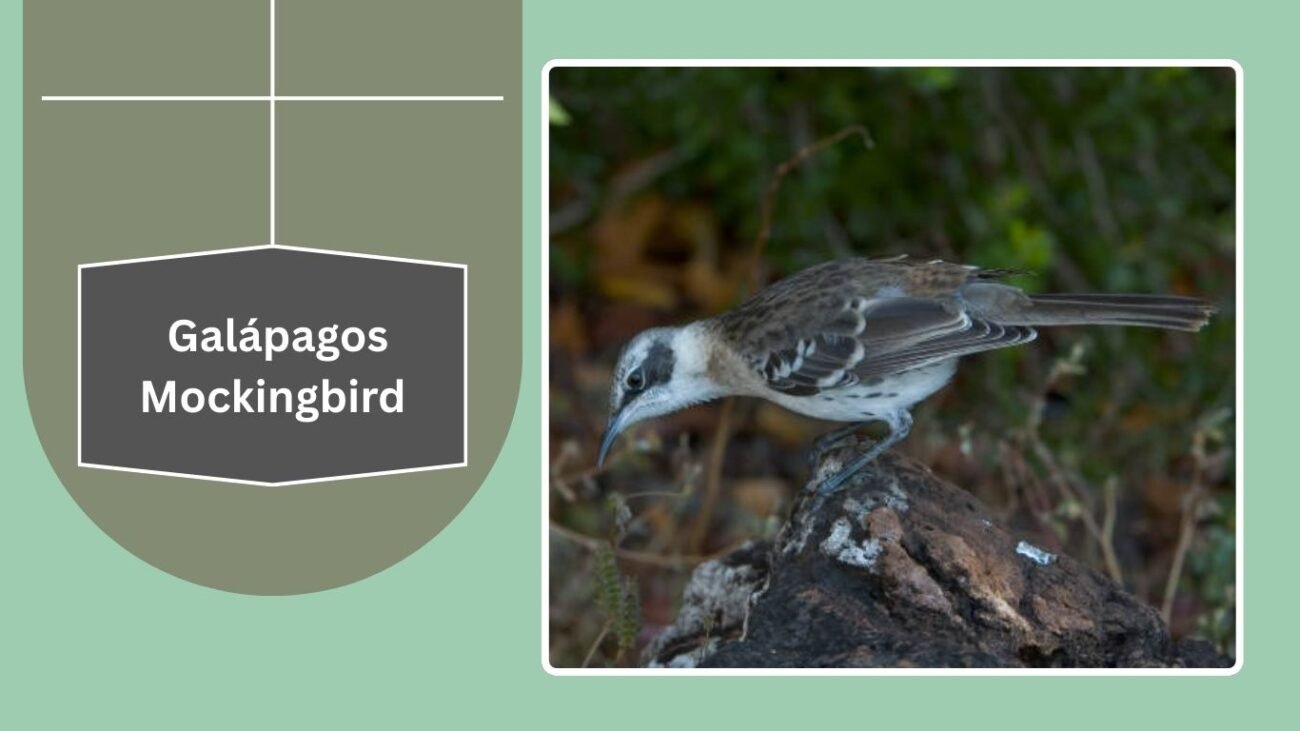
The Galápagos Mockingbird (Mimus parvulus) is one of the most widespread mockingbirds in the Galápagos Islands. It is famous for its role in Charles Darwin’s observations, which contributed to the development of his theory of evolution. Bold and inquisitive, this species often approaches humans without fear.
Identification
- Length: About 10 inches (25 cm)
- Plumage: Brownish-gray upperparts, paler underparts
- Streaking on chest and flanks
- Long tail with white edges
- Slightly curved bill, well-suited for probing food sources
Habitat
This species inhabits dry scrublands, coastal areas, and open woodlands across multiple islands in the Galápagos. It adapts well to arid conditions, often seen foraging in sandy or rocky areas.
Behavior
Galápagos Mockingbirds are highly social, often moving in family groups. They are bold around humans and have even been observed attempting to drink from water bottles or cups. Unlike some mockingbirds, they rely less on mimicry and more on their own harsh calls and whistles.
Diet
Their diet is highly opportunistic. They feed on insects, seeds, fruits, and small animals. In extreme dry conditions, they are known to consume seabird eggs or even scavenge carrion, making them more versatile than many other mockingbirds.
6. Floreana Mockingbird

The Floreana Mockingbird (Mimus trifasciatus) is a critically endangered species, once widespread on Floreana Island in the Galápagos but now restricted to small offshore islets due to habitat destruction and introduced predators. It is one of the rarest mockingbirds, with a small but carefully protected population.
Identification
- Length: About 10–11 inches (25–28 cm)
- Brownish-gray upperparts with streaked underparts
- Distinctive dark eye line and pale eyebrow
- Long tail with white-edged feathers
- Slightly heavier bill compared to other Galápagos mockingbirds
Habitat
Currently, this species survives on two small islets, Champion and Gardner-near-Floreana, where it inhabits dry scrubland and rocky terrain. Conservation projects are ongoing to restore its original habitat on Floreana Island.
Behavior
The Floreana Mockingbird is social, often living in small groups. It is less aggressive than other mockingbird species but highly vocal, using calls to coordinate within its group. It is also inquisitive and, like other Galápagos mockingbirds, shows little fear of humans.
Diet
Its diet includes insects, small invertebrates, fruits, and seeds. Opportunistically, it may also consume seabird eggs, giving it a diverse feeding strategy in its limited environment.
7. Hood Mockingbird

The Hood Mockingbird (Mimus macdonaldi), found only on Española (Hood) Island in the Galápagos, is well known for its boldness and aggressive behavior. It is one of the most fearless birds in the archipelago and has a reputation for approaching humans very closely.
Identification
- Size: 10–11 inches (25–28 cm)
- Brown-gray plumage with streaked chest and underparts
- Long, slightly decurved bill
- Strong legs and a confident posture
- Long tail with contrasting pale edges
Habitat
The Hood Mockingbird lives in the arid scrublands and rocky terrain of Española Island. It is adapted to the dry, harsh climate and is often seen moving across the ground in search of food.
Behavior
Known as the most aggressive of the Galápagos mockingbirds, it often steals food and water from other animals and even investigates humans closely. It is highly territorial and vocal, producing a variety of harsh calls and chattering sounds.
Diet
This mockingbird has one of the most opportunistic diets among its relatives. It eats insects, fruits, and seeds, but also scavenges carrion and drinks blood from wounded seabirds, making it one of the more unusual members of the mockingbird family.
8. Española Mockingbird
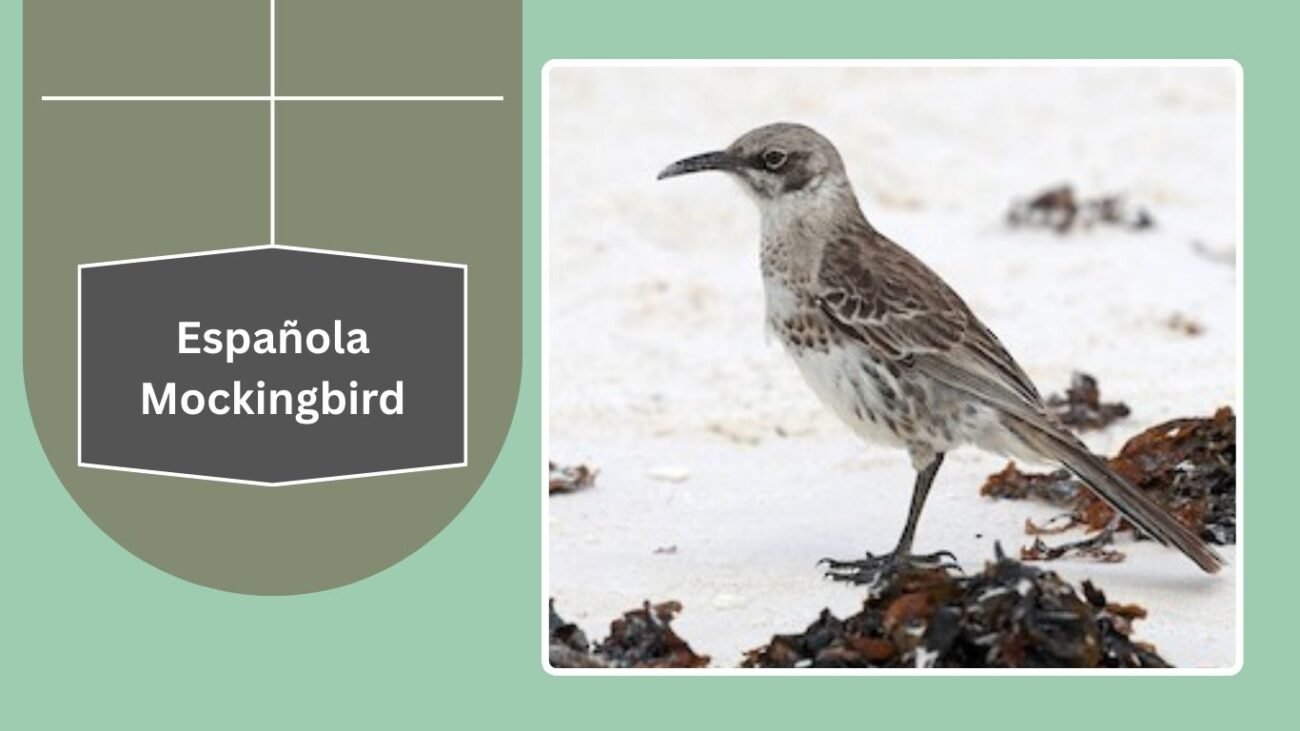
The Española Mockingbird (Mimus macdonaldi) is an island-endemic bird found only on Española Island in the Galápagos. It is often confused with the “Hood Mockingbird” since both names are used interchangeably. Bold and opportunistic, this bird is one of the most fascinating mockingbirds due to its unusual feeding behavior and fearless attitude toward humans.
Identification
- Length: 10–11 inches (25–28 cm)
- Plumage: Brownish-gray with streaks on chest and flanks
- Long, slightly curved bill, darker in color
- Long legs and tail, suited for ground foraging
- Distinct facial markings with pale eyebrow and darker eye stripe
Habitat
The Española Mockingbird inhabits dry scrublands, rocky coasts, and arid open areas of Española Island. It is well adapted to the hot and dry conditions of the island, making use of limited food and water sources.
Behavior
This mockingbird is exceptionally bold and highly social, often seen in groups. It is known to approach humans without hesitation, sometimes attempting to drink water from bottles or unattended containers. It is also aggressive toward other birds when competing for food.
Diet
The Española Mockingbird is omnivorous and opportunistic. It eats insects, fruits, and seeds, but also scavenges carrion and is known to drink blood from wounded seabirds. This unusual feeding behavior sets it apart from many other mockingbird species.
9. San Cristóbal Mockingbird
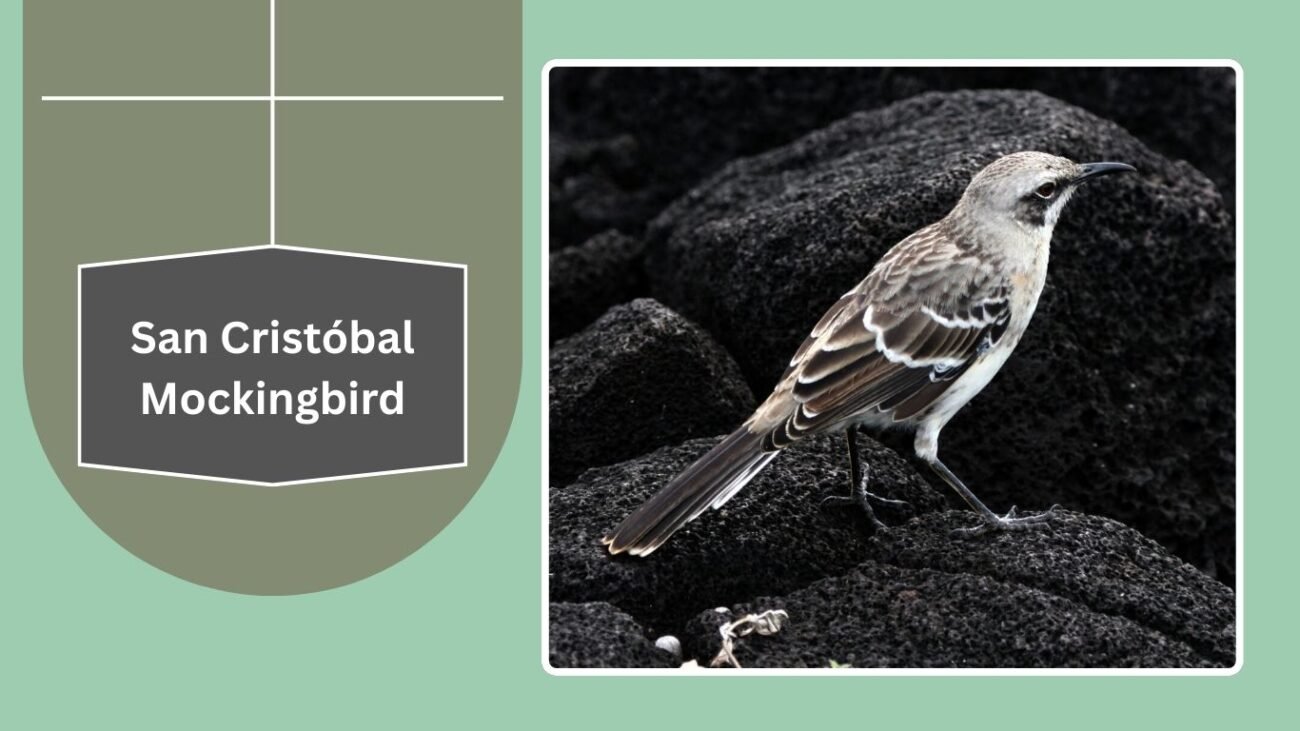
The San Cristóbal Mockingbird (Mimus melanotis) is another island-endemic species of the Galápagos, restricted to San Cristóbal Island. It is less aggressive than the Española Mockingbird but still shares the bold and curious traits common among Galápagos mockingbirds.
Identification
- Length: Around 10 inches (25 cm)
- Brownish-gray plumage with streaked underparts
- Prominent dark mask across the eyes, giving it the name melanotis (“black-eared”)
- Long, slightly curved bill adapted for probing
- Long tail with white outer feathers, visible in flight
Habitat
This species prefers dry scrublands, rocky coasts, and arid lowland areas of San Cristóbal Island. It is often found near human settlements as well, showing little fear of people.
Behavior
The San Cristóbal Mockingbird is inquisitive and social, often moving in small groups. It is territorial when feeding but less aggressive compared to the Española Mockingbird. Its calls are harsh and repetitive, and though it can mimic, it relies more on its natural vocalizations.
Diet
Its diet includes insects, small invertebrates, fruits, and seeds. Like other Galápagos mockingbirds, it is opportunistic and may scavenge carrion or peck at seabird eggs when resources are scarce.
10. Patagonian Mockingbird

The Patagonian Mockingbird (Mimus patagonicus) is a South American species found mainly in Argentina and parts of Chile. It is well adapted to arid and semi-arid regions, where it is often seen perched on shrubs or fences, delivering its rich and varied songs.
Identification
- Length: About 9–10 inches (23–25 cm)
- Plumage: Grayish-brown upperparts with lighter underparts
- Faint streaking on chest and flanks
- Long tail with white outer feathers
- Slim, slightly curved bill suited for insect and fruit foraging
Habitat
The Patagonian Mockingbird thrives in open scrublands, dry grasslands, and desert-like habitats. It is often spotted in rural areas, near farmlands, and along roadsides. Its tolerance of arid environments makes it one of the hardiest mockingbird species.
Behavior
This species is a skilled singer, capable of producing a wide range of notes. While it mimics less than the Northern Mockingbird, it is still admired for its melodious voice. It is territorial during breeding and perches prominently while singing to mark its space.
Diet
The Patagonian Mockingbird feeds on insects, spiders, and small invertebrates, along with berries and fruits. In drier months, it relies more heavily on fruits and seeds to compensate for reduced insect availability.
11. Chilean Mockingbird

The Chilean Mockingbird (Mimus thenca) is native to central Chile and is the country’s national bird. It is well-known for its cheerful and melodious singing, often heard in both rural and urban settings. Unlike some other mockingbird species, it has a strong cultural presence in Chilean folklore and traditions.
Identification
- Length: About 11 inches (28 cm), slightly larger than most mockingbirds
- Plumage: Brownish-gray upperparts with paler underparts
- Streaks on the breast and sides
- Long tail with white outer feathers
- Sturdy, slightly curved bill and strong legs
Habitat
This species inhabits scrublands, open woodlands, gardens, and farmlands throughout central Chile. It is common in both wild and human-modified landscapes, thriving in areas where shrubs and low trees provide cover and singing perches.
Behavior
The Chilean Mockingbird is an active and social bird, often found in pairs or small family groups. It is an excellent singer, producing clear, melodious notes that are often repeated. While it does not mimic as much as the Northern Mockingbird, its natural song is considered more musical and pleasing.
Diet
Its diet includes insects, larvae, spiders, fruits, and berries. During the dry season, it depends more on fruits and seeds, making it important for seed dispersal in its ecosystem.
12. White-banded Mockingbird

The White-banded Mockingbird (Mimus triurus) is a striking South American species, found mainly in Argentina, Bolivia, Uruguay, and southern Brazil. It stands out among mockingbirds because of the bold white bands on its wings and tail, which make it highly noticeable in flight.
Identification
- Length: About 10–11 inches (25–28 cm)
- Distinctive broad white wing band and white-tipped tail feathers
- Grayish-brown upperparts with lighter underparts
- Slender, slightly curved black bill
- Upright stance, often perching on shrubs and fence posts
Habitat
The White-banded Mockingbird is usually seen in open country, savannas, shrublands, and agricultural landscapes. It prefers semi-arid areas but adapts well to farmland edges and suburban gardens with scattered trees and bushes.
Behavior
This mockingbird is an energetic and restless bird. It frequently perches in exposed locations, flicking its wings to display the bold white patches. Its song is varied and musical, though it is not as much of a mimic as the Northern Mockingbird. Males often sing from high perches to defend territory and attract mates.
Diet
The White-banded Mockingbird feeds mainly on insects, small invertebrates, and spiders. It also consumes berries, seeds, and fruits, making it both an insect controller and a seed disperser in its ecosystem.
13. Chalk-browed Mockingbird
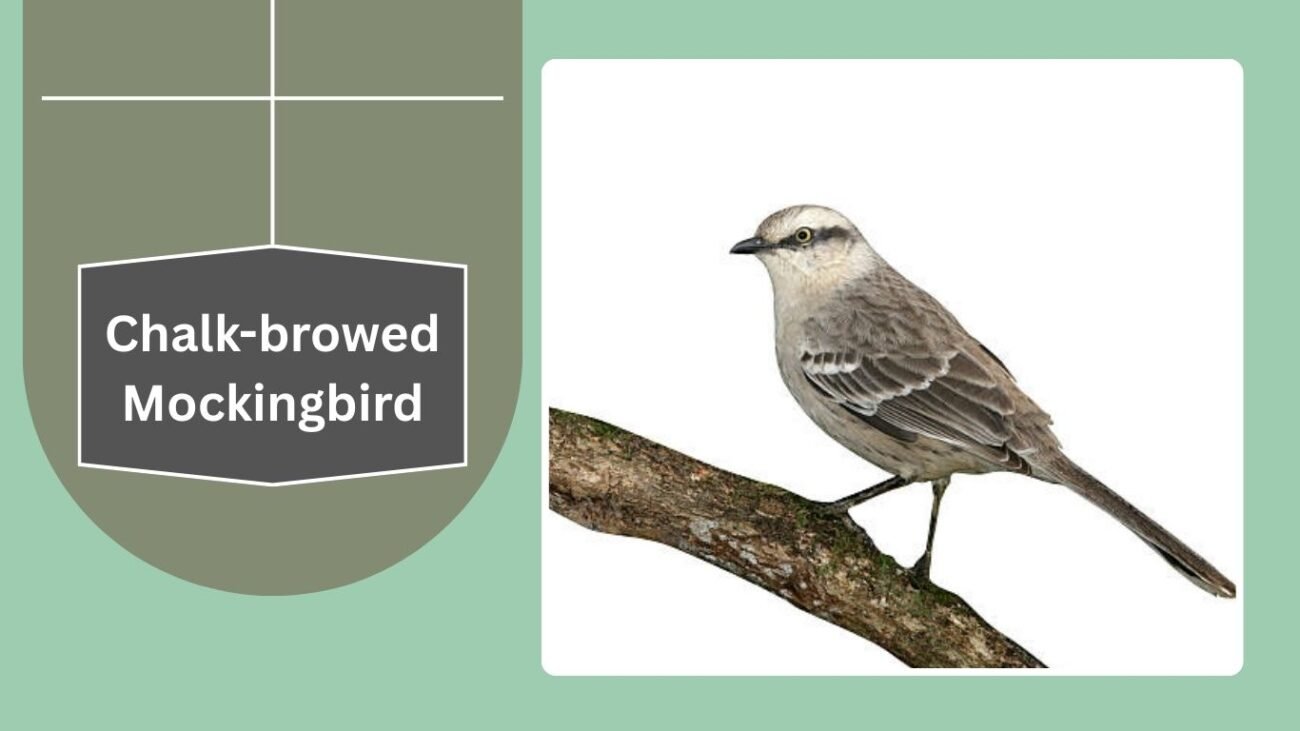
The Chalk-browed Mockingbird (Mimus saturninus) is one of the most widespread mockingbirds in South America, ranging across Brazil, Argentina, Paraguay, Bolivia, and Uruguay. Recognizable by its pale “chalky” eyebrow, it is a familiar sight in open habitats and urban areas.
Identification
- Length: About 10–11 inches (25–28 cm)
- Gray-brown upperparts with buffy underparts
- Distinct pale eyebrow stripe (the “chalk brow”)
- Long tail with white outer feathers
- Slim, slightly curved bill and dark legs
Habitat
This species is highly adaptable, found in grasslands, savannas, scrublands, farmland, and suburban gardens. It thrives in both wild and human-modified environments, often nesting in hedges, small trees, and shrubs near houses.
Behavior
Chalk-browed Mockingbirds are social birds, often living in family groups that cooperate in raising young. They are known for their loud, varied songs, which consist of whistles, chatters, and repeated phrases. Though not as skilled in mimicry as some relatives, they have a distinctive voice that carries well.
Diet
Their diet includes insects, spiders, small invertebrates, and a variety of fruits and berries. They also feed on seeds, making them versatile foragers in both natural and urban settings.
14. Long-tailed Mockingbird

The Long-tailed Mockingbird (Mimus longicaudatus) is a South American species primarily found along the Pacific coasts of Ecuador and Peru. It is easily recognized by its elongated tail and loud, persistent calls. This bird is one of the most distinctive mockingbirds of the region.
Identification
- Length: 11–12 inches (28–30 cm), noticeably larger than many mockingbirds
- Very long tail with bold white outer feathers
- Grayish-brown upperparts and whitish underparts
- Prominent dark eye stripe contrasting with pale eyebrow
- Slender, slightly decurved bill
Habitat
The Long-tailed Mockingbird thrives in dry scrublands, coastal deserts, thorn forests, and urban edges. It is often seen in open, arid regions where it perches prominently on shrubs, fences, or power lines.
Behavior
This species is loud, confident, and highly territorial. Males sing from exposed perches, producing strong, repetitive calls. While it does not mimic extensively, its vocalizations are rich and varied. It is also aggressive in defending its nesting territory against intruders.
Diet
Its diet is mixed, including insects, spiders, berries, fruits, and seeds. In drier regions, fruits play a crucial role in providing hydration, making it well adapted to arid climates.
15. Brown-backed Mockingbird

The Brown-backed Mockingbird (Mimus dorsalis) is a lesser-known species native to the Andean regions of Bolivia, northern Chile, and northwestern Argentina. Its name comes from its distinct brown-toned upperparts, which set it apart from many grayish relatives.
Identification
- Length: About 9–10 inches (23–25 cm)
- Warm brown upperparts with lighter underparts
- Subtle streaking on chest and flanks
- Long tail with pale outer feathers
- Slim, slightly curved bill adapted for insect foraging
Habitat
This species inhabits dry valleys, scrublands, and rocky slopes of the Andes. It prefers semi-arid regions with scattered shrubs and cacti, thriving in higher elevation habitats compared to many other mockingbirds.
Behavior
The Brown-backed Mockingbird is less bold than island-dwelling species but still highly vocal. It delivers a series of whistles and chatters, often repeating phrases. While it is capable of mimicry, its song is more limited than that of the Northern Mockingbird.
Diet
Its diet consists of insects, small invertebrates, seeds, and berries. Seasonal fruits from cacti and shrubs are especially important in its arid environment, making it an important seed disperser.
16. White-browed Mockingbird
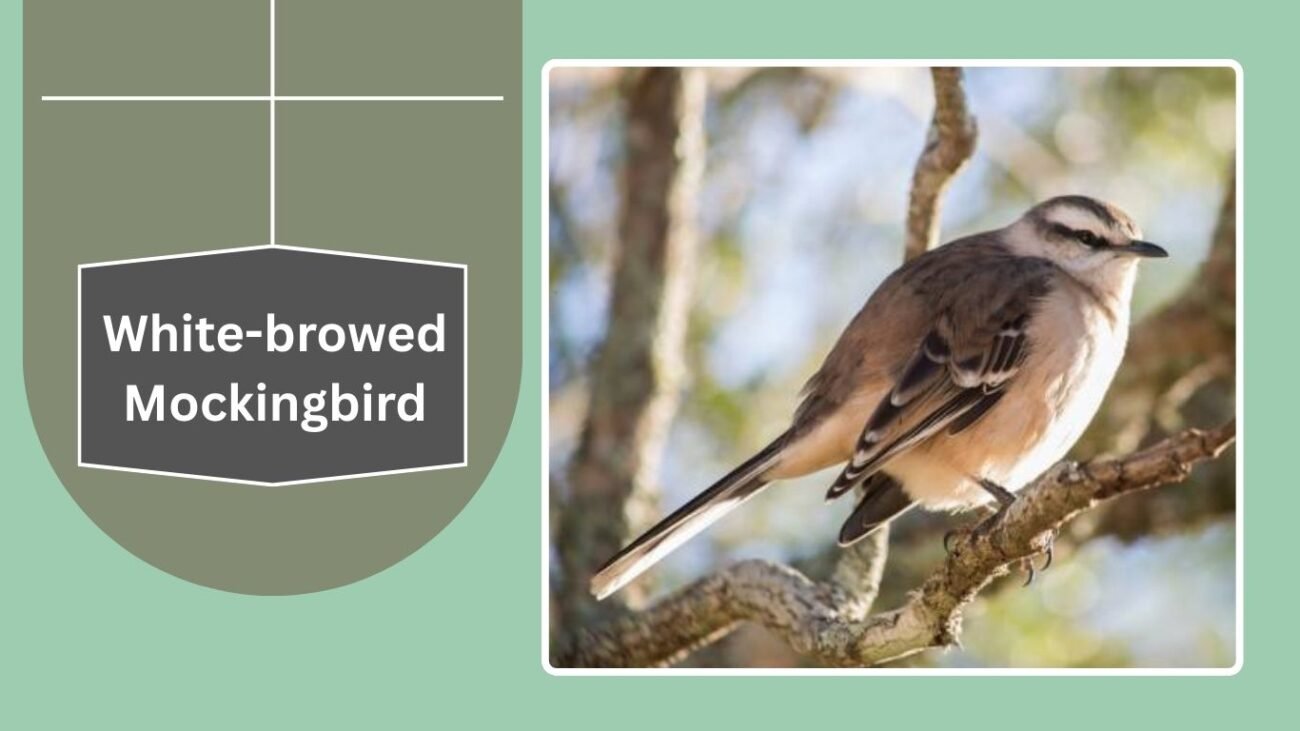
The White-browed Mockingbird (Mimus triurus – sometimes treated as distinct from the White-banded) is a South American species found mainly in Brazil, Argentina, Paraguay, and Uruguay. It is named for its striking pale eyebrow line that gives it a sharp, contrasting facial pattern.
Identification
- Length: About 10–11 inches (25–28 cm)
- Prominent white eyebrow stripe above the eye
- Grayish-brown back with lighter underparts
- Long tail with white outer feathers
- Slender, slightly curved black bill
Habitat
This species inhabits open grasslands, savannas, shrublands, and agricultural areas. It is also frequently seen near human settlements, where hedges, gardens, and open fields provide ideal foraging grounds.
Behavior
The White-browed Mockingbird is territorial, often perched in exposed places while singing. Its vocalizations are loud and melodious, though it is not a strong mimic like the Northern Mockingbird. It frequently flicks its wings while perched, displaying its contrasting plumage.
Diet
It feeds on insects, spiders, and other small invertebrates, supplemented with berries, fruits, and seeds. Its flexible diet helps it thrive in both natural and modified environments.
17. White-necked Mockingbird
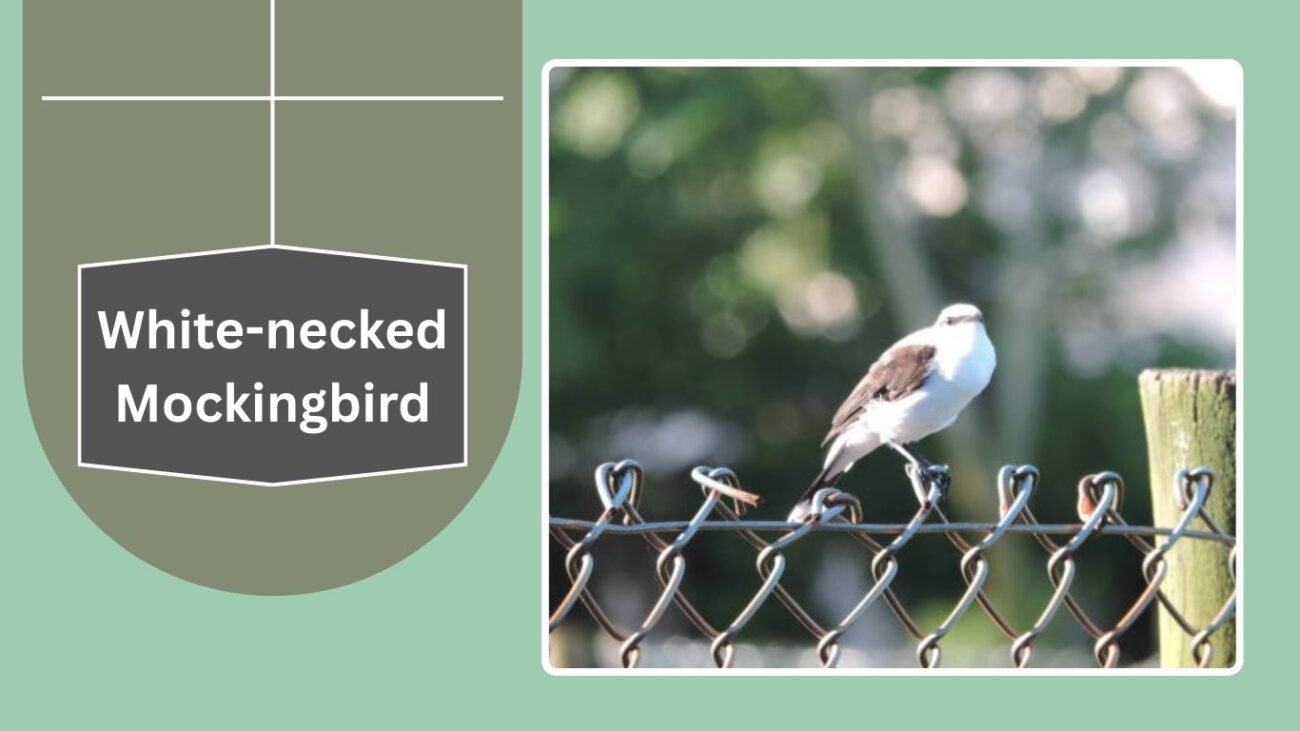
The White-necked Mockingbird (Mimus triurus albogularis or sometimes Mimus albogularis) is one of the rarest mockingbirds, historically found in parts of Venezuela and Brazil. It is distinguished by its pale throat and neck area, which give it its common name. Sadly, this species has faced severe population decline and is considered very uncommon in the wild.
Identification
- Length: Around 10–11 inches (25–28 cm)
- Whitish throat and neck contrasting with darker upperparts
- Grayish-brown back and wings with lighter underparts
- Long tail with white-edged feathers
- Slender, slightly curved bill and dark legs
Habitat
The White-necked Mockingbird inhabits dry scrublands, savannas, and semi-arid regions with scattered shrubs and small trees. Its range is very restricted, and habitat destruction has further limited its population.
Behavior
This species is secretive compared to other mockingbirds, often staying low in shrubs and bushes. It has a melodic song but is less of a mimic than relatives like the Northern Mockingbird. Territoriality is present but less aggressively displayed than in island species.
Diet
Its diet includes insects, spiders, and small invertebrates, along with seasonal berries and fruits. As with other mockingbirds, its omnivorous feeding habits help it adapt to different food availability.