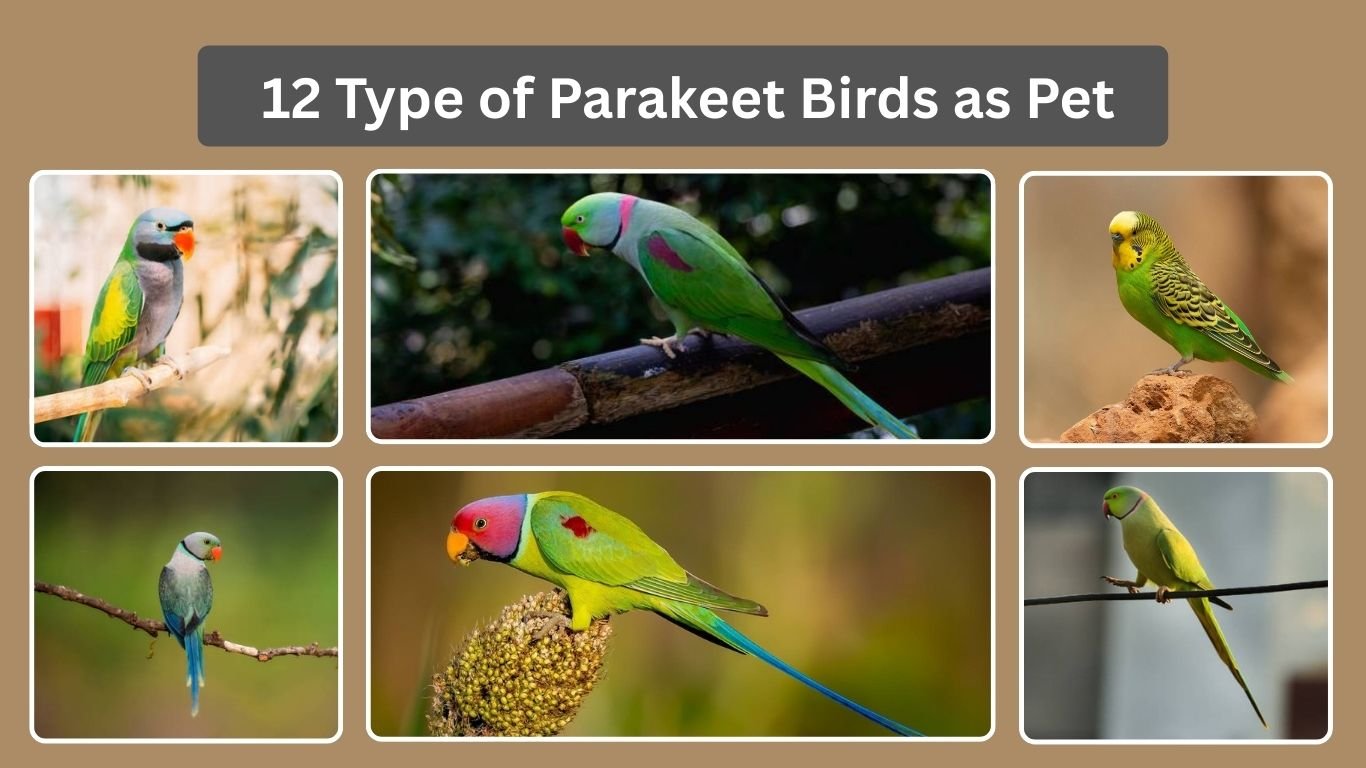
Parakeets are colorful, intelligent, and playful birds that make excellent pets for both beginners and experienced bird lovers. With a variety of species available, each parakeet has unique traits, behaviors, and care requirements. Understanding their identification, diet, and proper care ensures they thrive in a home environment. This guide introduces 12 popular parakeet species, helping you choose the perfect companion for your home and lifestyle.
1. Budgerigar (Budgie)
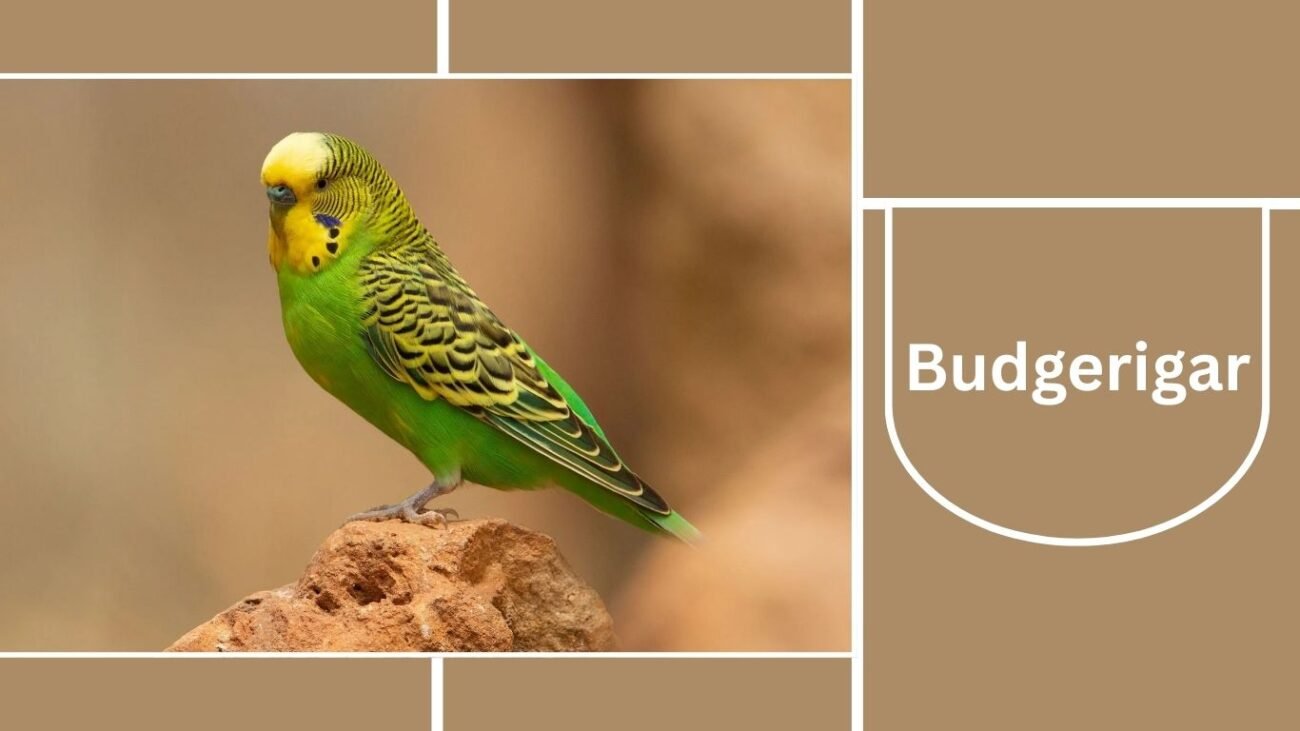
The Budgerigar, often called a Budgie, is one of the most popular parakeets kept as a pet. Known for its small size, cheerful personality, and vibrant colors, this bird is an excellent choice for beginners and families. It is easy to care for, highly social, and can even learn to mimic words with training.
Identification
- Small parakeet, about 7 inches long
- Slim body with long tail feathers
- Green and yellow are common, but many color mutations exist (blue, white, grey, etc.)
- Wavy black markings on wings and back
- Males usually have a blue cere (area above the beak), females have brown or beige
Behavior
Budgies are playful, active, and friendly. They enjoy interaction with their owners and thrive in pairs or small groups. These birds love climbing, exploring, and chirping, which makes them very entertaining companions.
Diet
Their diet should consist of high-quality pellets or seeds, fresh vegetables, leafy greens, and occasional fruits. Millet sprays are a favorite treat but should be given in moderation.
Care
Budgies require a medium-sized cage with toys, swings, and perches to stay active. Daily interaction and out-of-cage time help them remain healthy and happy. They also need clean water and regular cage cleaning.
Lifespan
With proper care, Budgerigars can live 8–12 years, though some may reach up to 15 years in captivity.
2. Alexandrine Parakeet
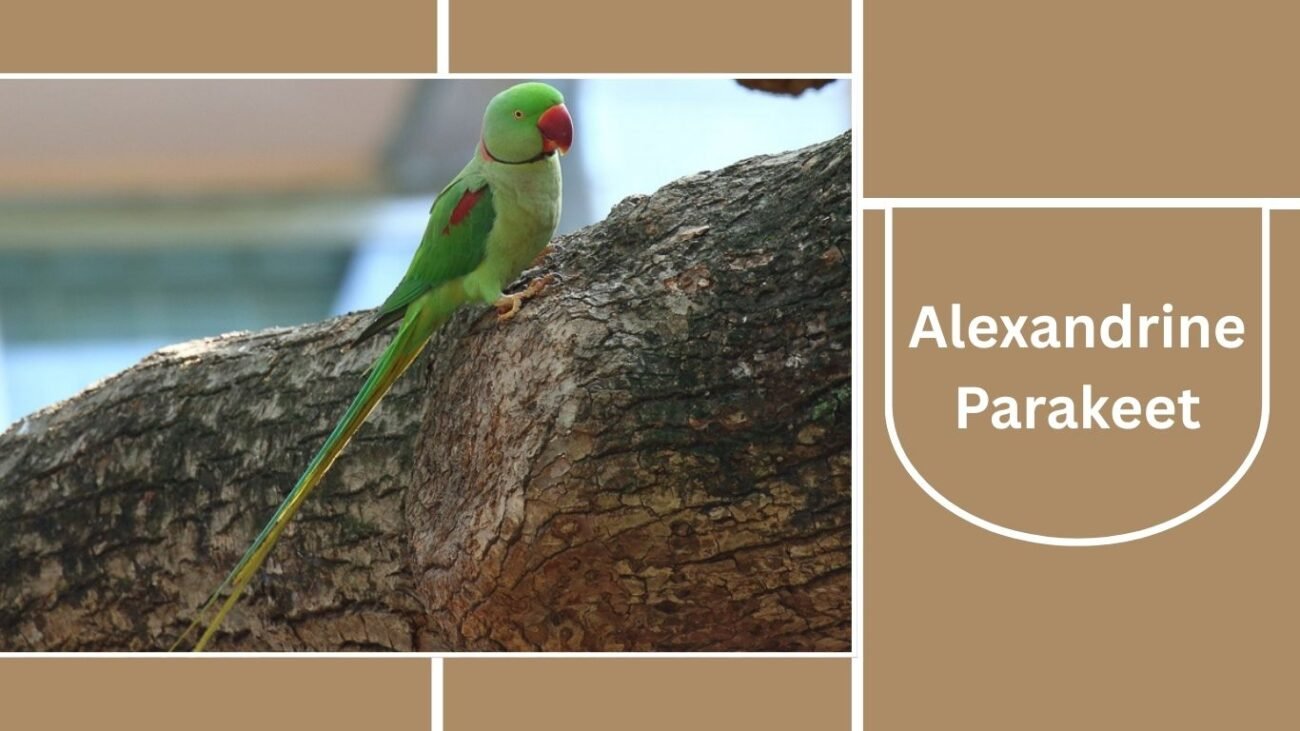
The Alexandrine Parakeet is one of the largest parakeet species and is admired for its striking colors and gentle nature. Named after Alexander the Great, who is believed to have introduced them to Europe, this bird is a popular companion among bird enthusiasts due to its intelligence and affectionate behavior.
Identification
- Large parakeet, around 22–24 inches long (including tail)
- Bright green plumage with a blue-grey sheen on the cheeks
- Red patch on the shoulders (wing coverts)
- Long maroon tail feathers with yellow tips
- Males often develop a black and pink ring around the neck
Behavior
Alexandrine Parakeets are social, curious, and enjoy human interaction. They can be shy at first but become affectionate with consistent handling. They are playful and require plenty of mental stimulation to prevent boredom.
Diet
Their diet should include pellets, fresh vegetables, fruits, leafy greens, and occasional seeds or nuts. Foods rich in vitamin A, like carrots and sweet potatoes, are especially beneficial.
Care
They need a large, sturdy cage with space to spread their wings and exercise. Providing chewable toys and climbing structures is important, as they have strong beaks and love to gnaw. Daily social interaction is essential for their well-being.
Lifespan
With proper diet and care, Alexandrine Parakeets can live 25–30 years, making them a long-term companion for dedicated owners.
3. Indian Ringneck Parakeet
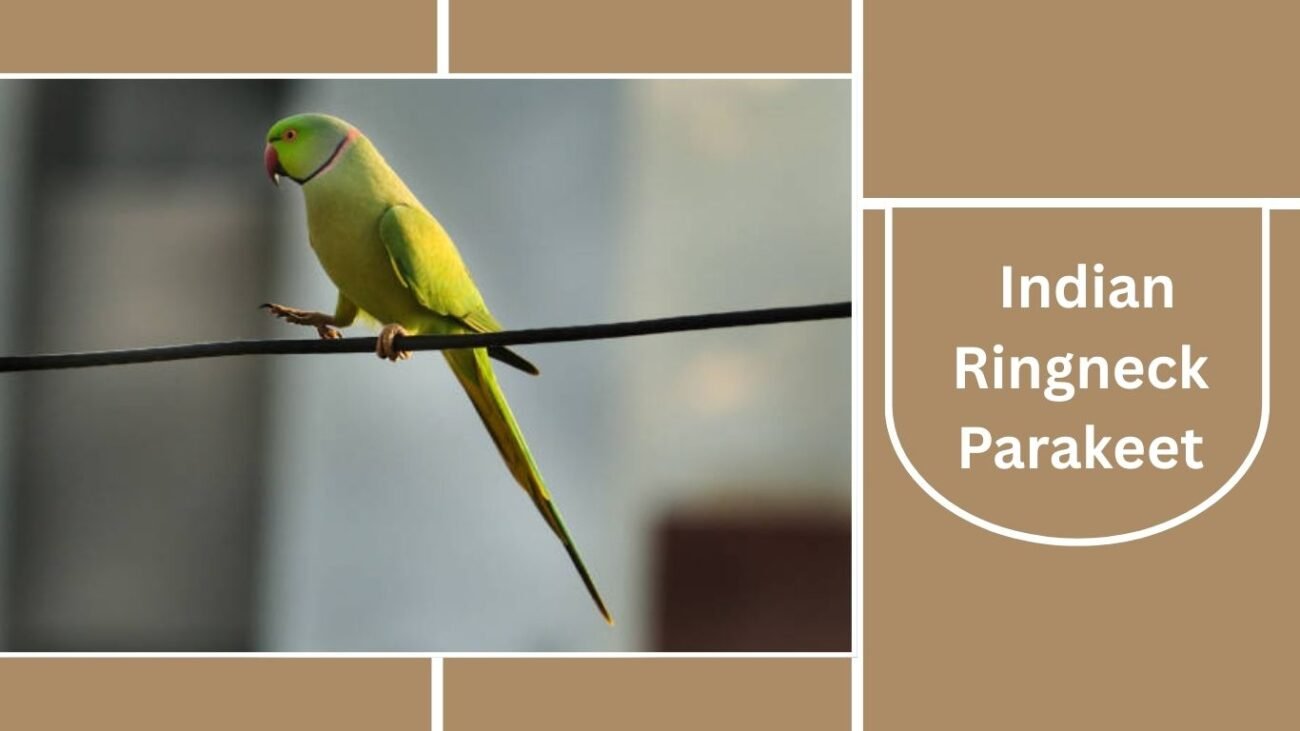
The Indian Ringneck Parakeet is a medium-sized parrot known for its striking appearance and remarkable intelligence. These birds are famous for their playful personality, long tail feathers, and ability to learn speech, which makes them highly popular as pets.
Identification
- Medium-sized parakeet, about 14–17 inches long
- Bright green body with a bluish sheen
- Long, slender tail feathers
- Distinctive black and rose-colored ring around the male’s neck
- Red-orange curved beak
Behavior
Indian Ringnecks are energetic, curious, and independent. While they enjoy human interaction, they can sometimes display a strong-willed personality. With regular handling, they become affectionate and bond well with their owners.
Diet
Their diet should be based on high-quality pellets, supplemented with fresh fruits (apples, bananas, berries), vegetables (spinach, broccoli, carrots), and occasional seeds or nuts. Avoid avocado and chocolate, as these are toxic to them.
Care
They need a spacious cage with perches, ladders, and toys to stay mentally and physically active. Daily playtime outside the cage is recommended. These birds require consistent training and attention to maintain their social behavior.
Lifespan
Indian Ringneck Parakeets can live 25–30 years with proper care, diet, and regular social interaction, making them a long-term commitment.
4. Monk Parakeet (Quaker Parrot)
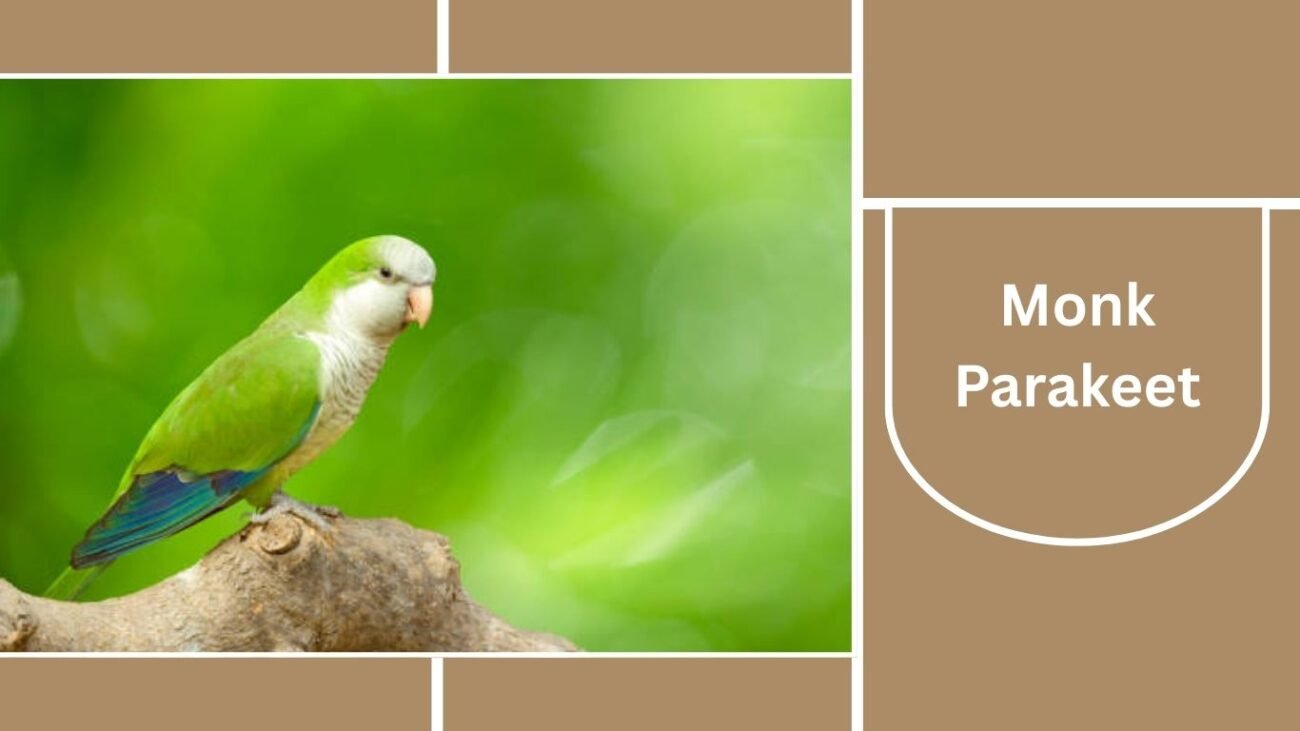
The Monk Parakeet, also known as the Quaker Parrot, is a small yet highly social bird loved for its playful nature and strong personality. Unlike most parrots, it is unique for building large stick nests in the wild, often forming colonies. As pets, they are affectionate, talkative, and enjoy being part of family activities.
Identification
- Small to medium-sized parakeet, about 11–12 inches long
- Bright green body with light grey forehead, cheeks, and chest
- Long, tapering green tail with blue flight feathers
- Pinkish beak and expressive dark eyes
- Stocky body compared to other parakeets
Behavior
Monk Parakeets are lively, social, and love attention. They often mimic sounds and can learn to say words and short phrases. They thrive in busy households where they can interact frequently with people.
Diet
Their diet should include high-quality pellets, fresh vegetables (like leafy greens, peas, and corn), fruits (apples, berries, grapes), and small amounts of seeds or nuts. Fresh, clean water is essential daily.
Care
These birds require a medium to large cage with plenty of climbing toys, swings, and chewable items. They need daily out-of-cage time and regular interaction to stay happy and avoid destructive behaviors.
Lifespan
With proper care, Monk Parakeets can live 20–30 years, making them a long-term and loyal companion.
5. Plum-Headed Parakeet
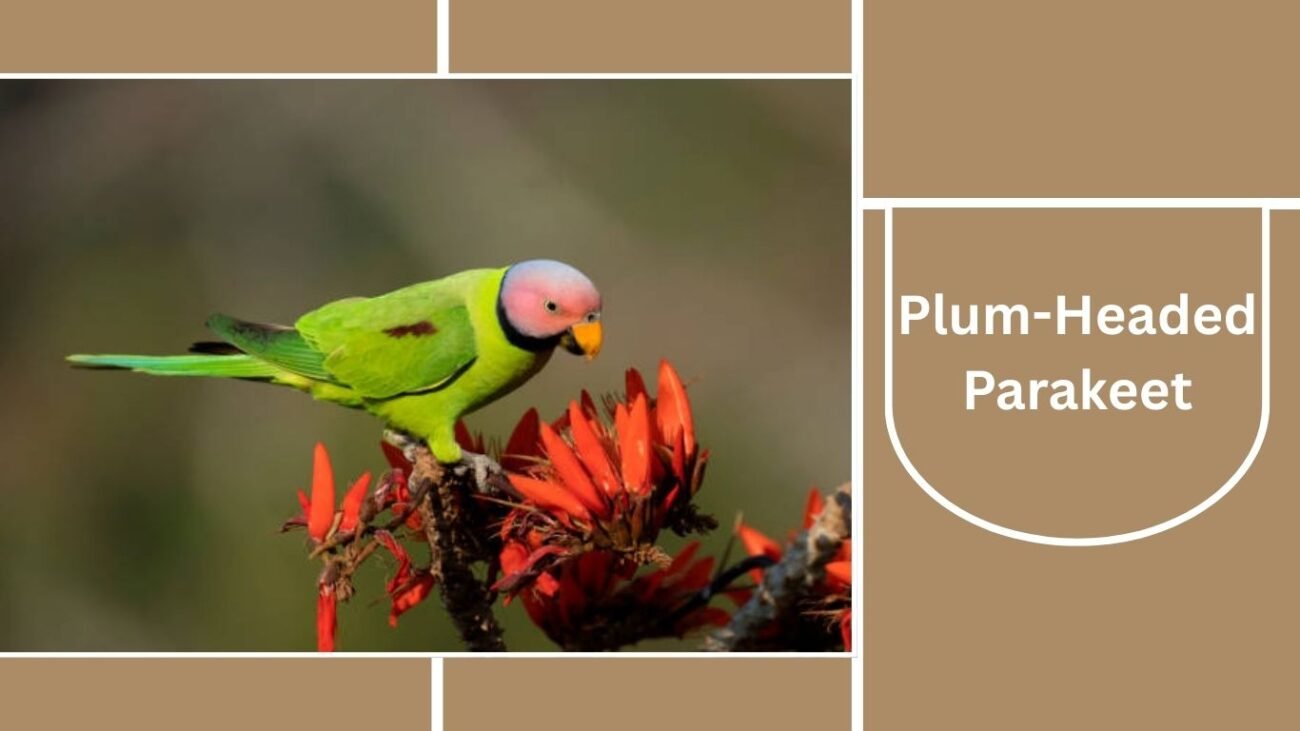
The Plum-Headed Parakeet is a charming and colorful bird native to the Indian subcontinent. Known for its striking plum-colored head and gentle temperament, this parakeet is less demanding than some larger species, making it a wonderful pet for bird lovers who want a calm yet engaging companion.
Identification
- Medium-sized parakeet, about 13 inches long
- Males have a distinctive plum-colored (purplish-red) head
- Females have a bluish-gray head instead of plum
- Green body with a bluish sheen on the wings and tail
- Long tapering tail feathers with a yellow tip
Behavior
Plum-Headed Parakeets are generally calm, affectionate, and social when handled regularly. They are less noisy than many other parakeets, preferring soft chirps. They enjoy human companionship but also value independent playtime.
Diet
Their diet should include quality pellets, fresh vegetables (like carrots, spinach, and beans), fruits (papaya, guava, and apples), and occasional seeds or nuts. A balanced diet helps keep their plumage vibrant and their health strong.
Care
They require a medium-sized cage with toys, perches, and enough room for exercise. These parakeets enjoy chewing, so safe wooden toys or branches are ideal. Daily social interaction keeps them happy and prevents boredom.
Lifespan
Plum-Headed Parakeets usually live 15–20 years in captivity, though with excellent care, they can sometimes live longer.
6. Blossom-Headed Parakeet
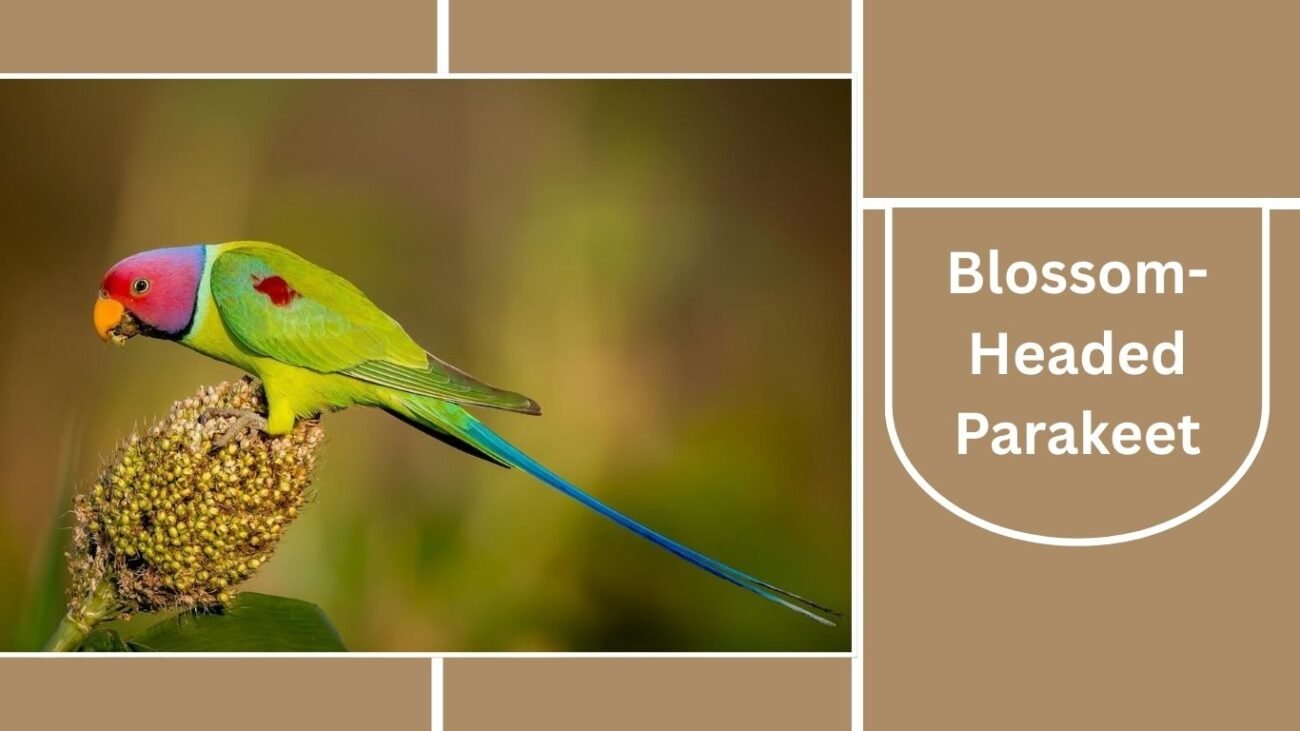
The Blossom-Headed Parakeet is a graceful and colorful bird found mainly in Southeast Asia. Known for its beautiful head coloration and slender build, this species is admired both for its appearance and its gentle nature. It is a quiet parakeet compared to others, making it suitable for people who prefer less noisy pets.
Identification
- Medium-sized parakeet, about 12–14 inches long
- Males have a pinkish-red “blossom” colored head
- Females have a duller grey-blue head
- Bright green body with bluish wings
- Long tapering tail with a yellow tip
Behavior
Blossom-Headed Parakeets are calm, gentle, and less demanding than many other parakeets. They enjoy companionship but are not overly clingy. They are playful, curious, and often do well in aviaries with other birds.
Diet
Their diet should include pellets, fresh fruits (guava, bananas, apples), leafy greens (spinach, kale), vegetables (peas, carrots, corn), and occasional seeds or nuts. Providing a varied diet helps maintain their bright plumage.
Care
They need a medium to large cage or aviary with toys, swings, and perches. Since they enjoy flying, providing free-flight time in a safe area is highly beneficial. They also appreciate chewable toys for beak exercise.
Lifespan
Blossom-Headed Parakeets can live 15–20 years in captivity with proper care, diet, and regular interaction.
7. Mustache Parakeet
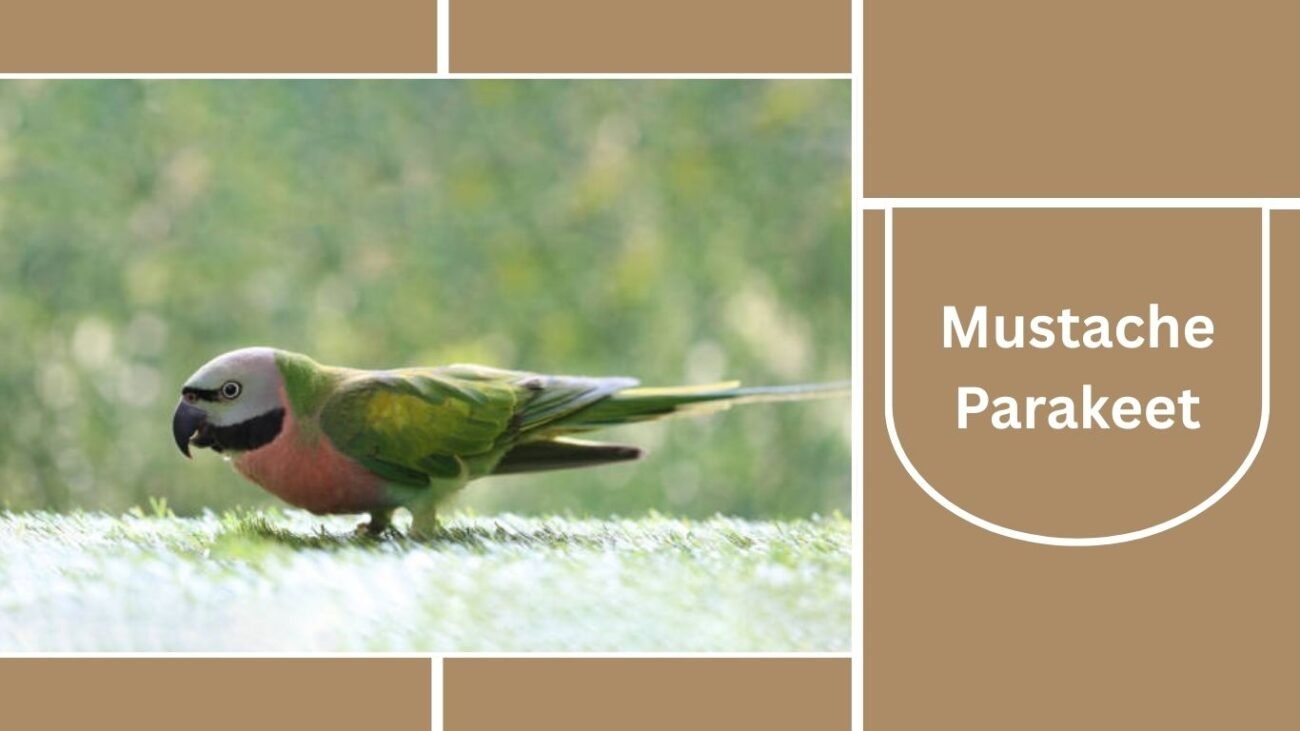
The Mustache Parakeet, also called the Red-Breasted Parakeet, is a striking bird named for the dark feather line that looks like a mustache across its face. Intelligent, playful, and affectionate, this species makes an engaging pet for those who can give it time and attention.
Identification
- Medium-sized parakeet, about 13–16 inches long
- Green body with blue tinges on the wings
- Light grey head with a distinct black “mustache” line across the face
- Pinkish-red breast and throat
- Long tail feathers with a bluish hue
Behavior
Mustache Parakeets are active, curious, and social. They enjoy playing with toys, climbing, and interacting with people. They can be slightly mischievous at times but are generally affectionate and bond closely with their owners when handled regularly.
Diet
Their diet should include a pellet-based mix, fresh vegetables (broccoli, carrots, beans), leafy greens (spinach, kale), fruits (mango, papaya, apples), and occasional nuts or seeds. A well-balanced diet supports their bright plumage and strong health.
Care
They require a large cage with ample space to climb and exercise. Enrichment such as chewable toys, ropes, and swings is essential to keep them mentally engaged. Daily social interaction helps prevent boredom and destructive behavior.
Lifespan
Mustache Parakeets can live 20–25 years in captivity, making them a long-term commitment for bird owners.
8. Slaty-Headed Parakeet
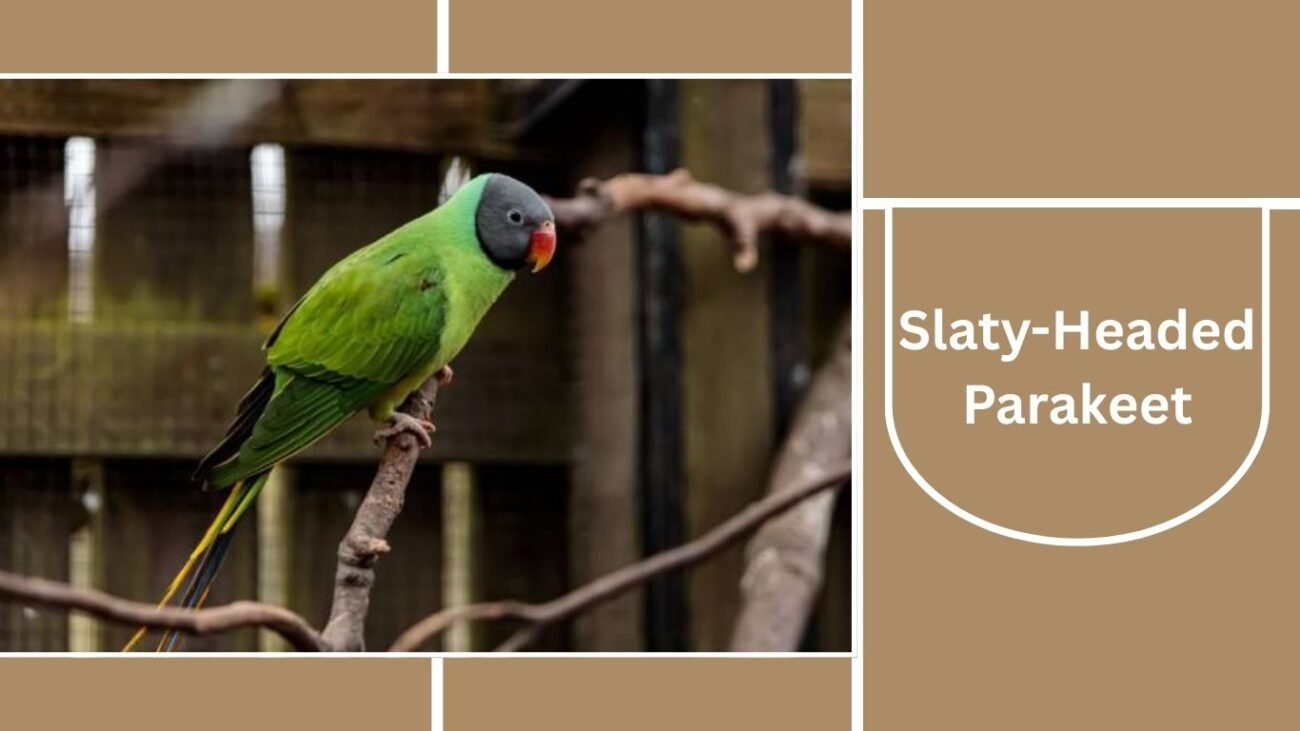
The Slaty-Headed Parakeet is a beautiful parrot species native to the Himalayan regions. Known for its distinctive slate-grey head and peaceful temperament, it is admired as both an aviary bird and a pet. These parakeets are hardy, adaptable, and thrive in cooler climates compared to many other parakeet species.
Identification
- Medium-sized parakeet, about 15 inches long
- Distinctive slate-grey head (darker in males)
- Bright green body with bluish shades on the wings
- Long tail feathers with a mix of green and bluish hues
- Males often have a narrow black and pink neck ring
Behavior
Slaty-Headed Parakeets are calm, friendly, and social birds. They are less noisy than many other parakeets and enjoy being part of a flock. With proper handling, they can become affectionate and bond well with their owners.
Diet
Their diet should consist of high-quality pellets, fresh vegetables (peas, spinach, carrots), fruits (apples, pears, bananas), and small amounts of seeds or nuts. Providing a varied diet helps maintain their health and feather condition.
Care
They require a medium to large cage or an aviary with perches, swings, and toys. These birds enjoy flying and climbing, so daily exercise outside the cage is highly recommended.
Lifespan
Slaty-Headed Parakeets can live 15–20 years in captivity when given proper care, a nutritious diet, and regular interaction.
9. Derbyan Parakeet
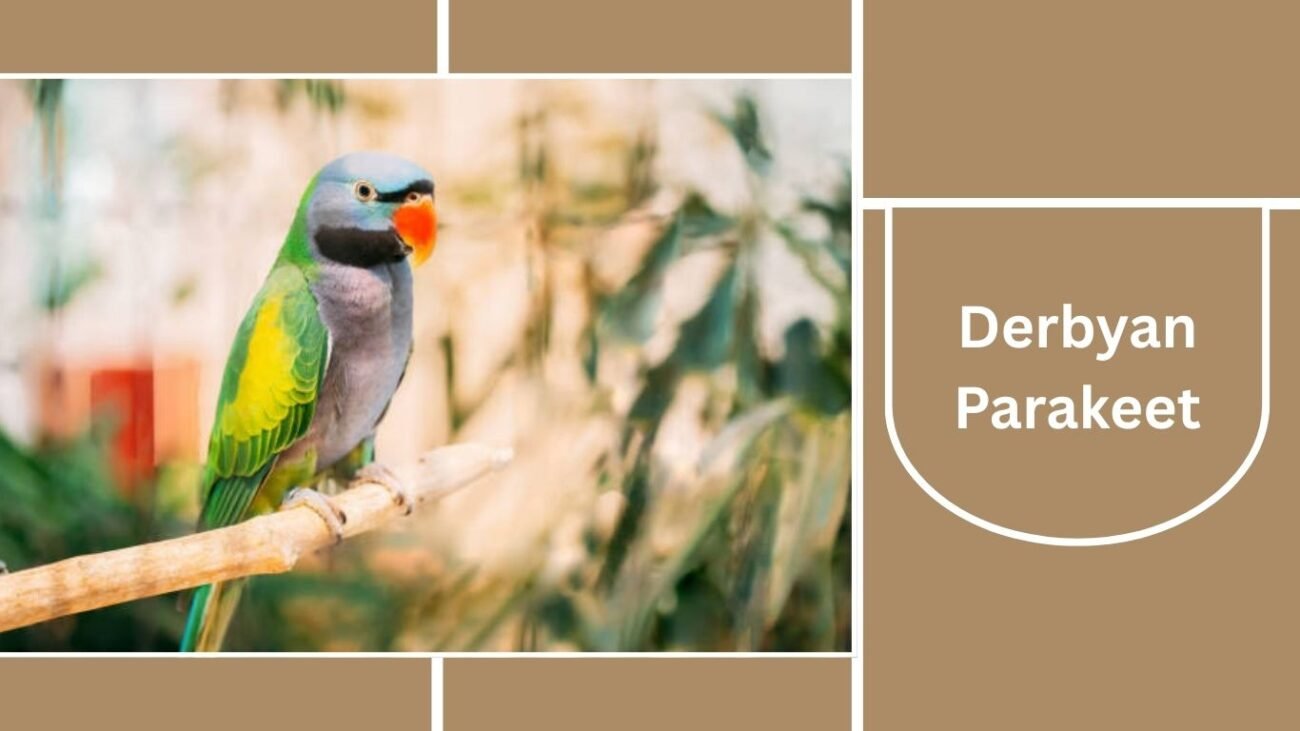
The Derbyan Parakeet, also known as the Lord Derby’s Parakeet, is a large and striking bird native to the Himalayan forests and parts of Southeast Asia. It is admired for its bold colors, calm personality, and strong presence, making it a favorite among parrot enthusiasts.
Identification
- Large parakeet, about 20–22 inches long
- Distinctive violet-blue chest and underparts
- Green wings and back with a bluish sheen
- Greyish-blue head with a black stripe across the lower face
- Bright red upper beak and yellow lower beak in males (females have all-black beaks)
Behavior
Derbyan Parakeets are intelligent, social, and relatively quiet compared to other large parakeets. They are affectionate with their owners but can be independent at times. They enjoy climbing, exploring, and require regular mental stimulation.
Diet
Their diet should include a pellet-based mix, fresh fruits (apples, bananas, grapes), vegetables (carrots, broccoli, peas), leafy greens (spinach, kale), and occasional seeds or nuts. A varied diet ensures their vibrant plumage and good health.
Care
They require a spacious and sturdy cage due to their size and strength. Providing climbing structures, chewable toys, and regular out-of-cage time is essential to keep them active and engaged.
Lifespan
Derbyan Parakeets can live 25–30 years in captivity, making them a long-term and rewarding pet for experienced bird owners.
10. Malabar Parakeet
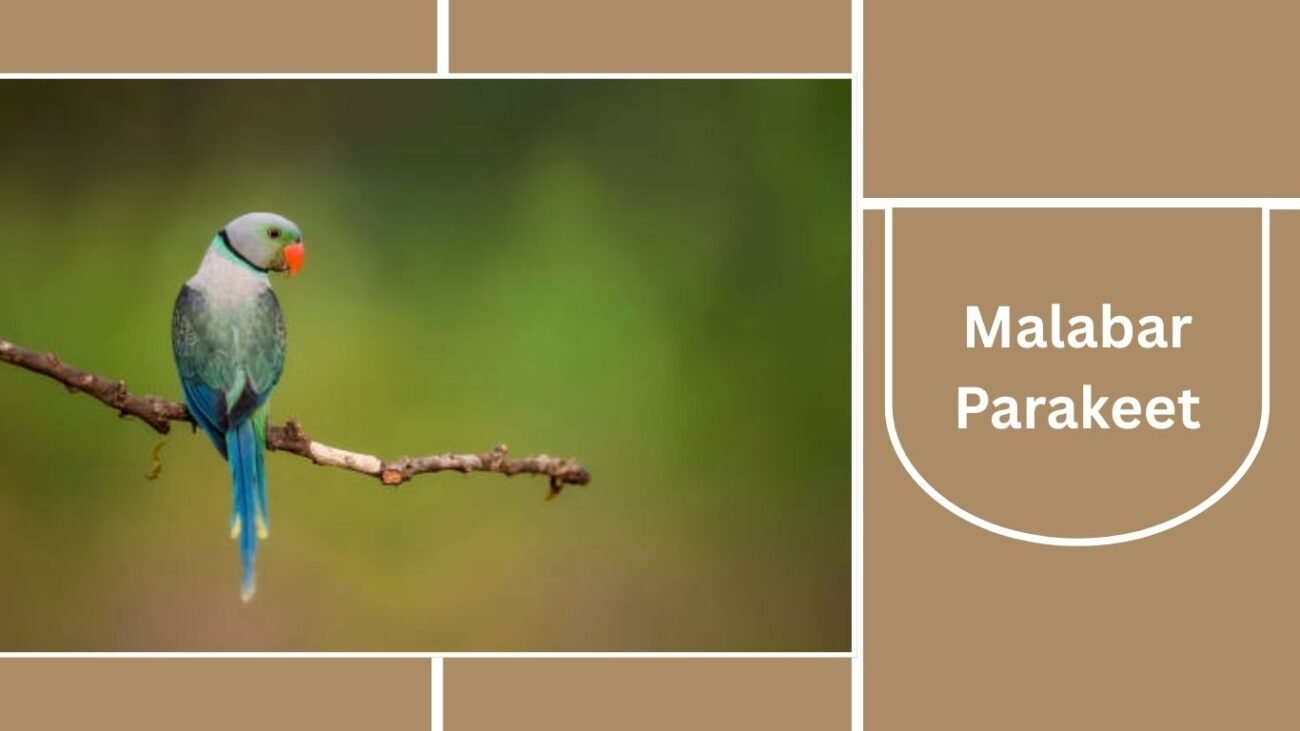
The Malabar Parakeet, also known as the Blue-Breasted Parakeet, is a vibrant and moderately sized parrot native to the Western Ghats of India. It is admired for its colorful plumage, calm demeanor, and suitability as a pet for those seeking a less demanding parakeet.
Identification
- Medium-sized parakeet, about 14–16 inches long
- Slate-grey head with a slight bluish tint
- Bright blue chest and underparts
- Green back and wings with subtle blue highlights
- Red upper beak and dark eyes
Behavior
Malabar Parakeets are relatively quiet, gentle, and social. They enjoy interaction with humans and can form strong bonds if handled regularly. They are playful and curious but are not overly noisy, making them ideal for indoor aviaries or homes.
Diet
Their diet should include high-quality pellets, fresh fruits (mango, guava, papaya), vegetables (carrots, peas, leafy greens), and small amounts of seeds or nuts. A balanced diet supports their bright plumage and overall health.
Care
They require a medium-sized cage with perches, swings, and toys for mental stimulation. Regular out-of-cage time for flying and exercise is recommended. Providing chewable toys helps maintain beak health.
Lifespan
Malabar Parakeets can live 15–20 years in captivity when given proper care, a nutritious diet, and social interaction.
11. Plum-Headed Parakeet
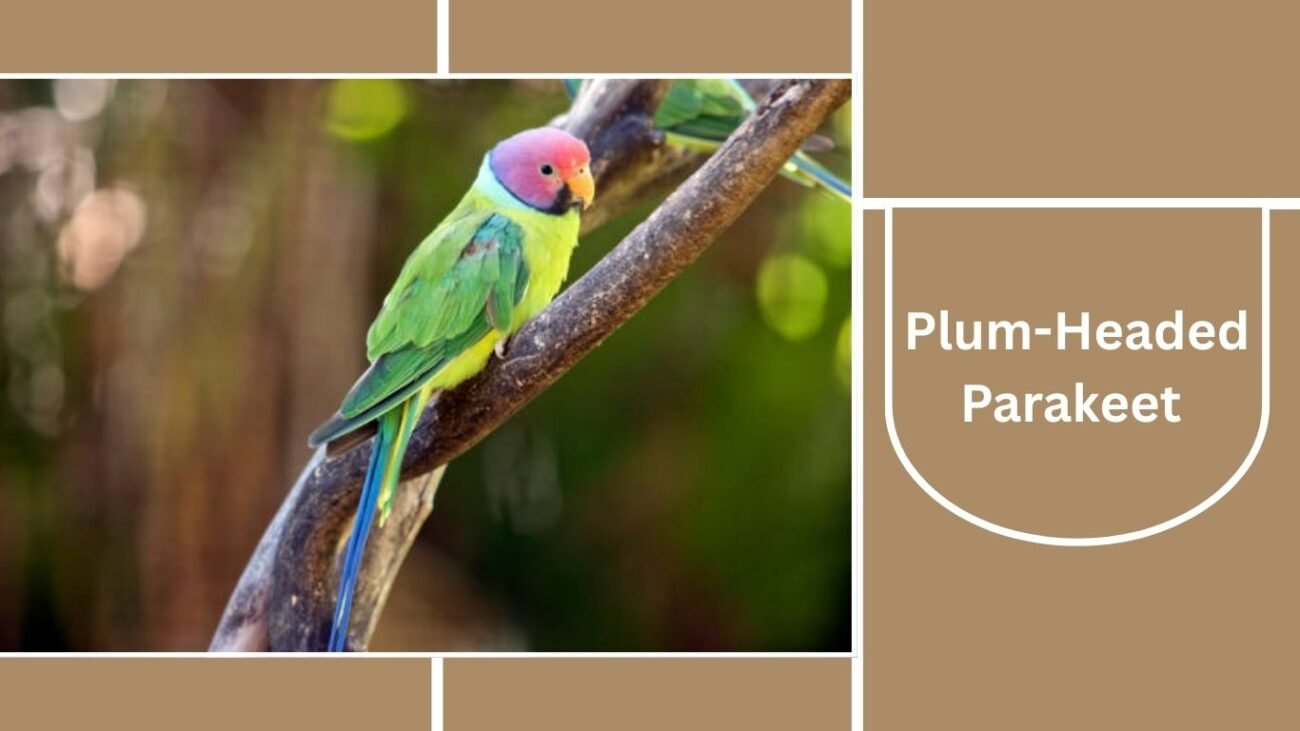
The Plum-Headed Parakeet is a colorful and medium-sized bird native to the Indian subcontinent. Known for its striking plum-colored head and playful personality, it is a popular choice among parakeet enthusiasts seeking an active and engaging pet.
Identification
- Medium-sized parakeet, about 14–16 inches long
- Males have a bright plum-colored head, while females have a bluish-grey head
- Green body with blue-tinged wings
- Long tail feathers with bluish and green shades
- Red upper beak and dark eyes
Behavior
Plum-Headed Parakeets are social, playful, and intelligent birds. They enjoy interacting with humans, climbing, and exploring their environment. With regular attention, they can be affectionate and responsive, although they may be slightly noisy at times.
Diet
Their diet should include a pellet-based mix, fresh fruits (apple, papaya, mango), vegetables (peas, carrots, leafy greens), and occasional seeds or nuts. A varied diet helps maintain their vibrant plumage and overall well-being.
Care
A medium to large cage with perches, swings, and toys is essential. Daily interaction and out-of-cage exercise keep them mentally and physically healthy. Chewable toys are recommended to prevent boredom.
Lifespan
Plum-Headed Parakeets can live 15–20 years in captivity when provided with proper care, nutrition, and social interaction.
12. Alexandrine Parakeet
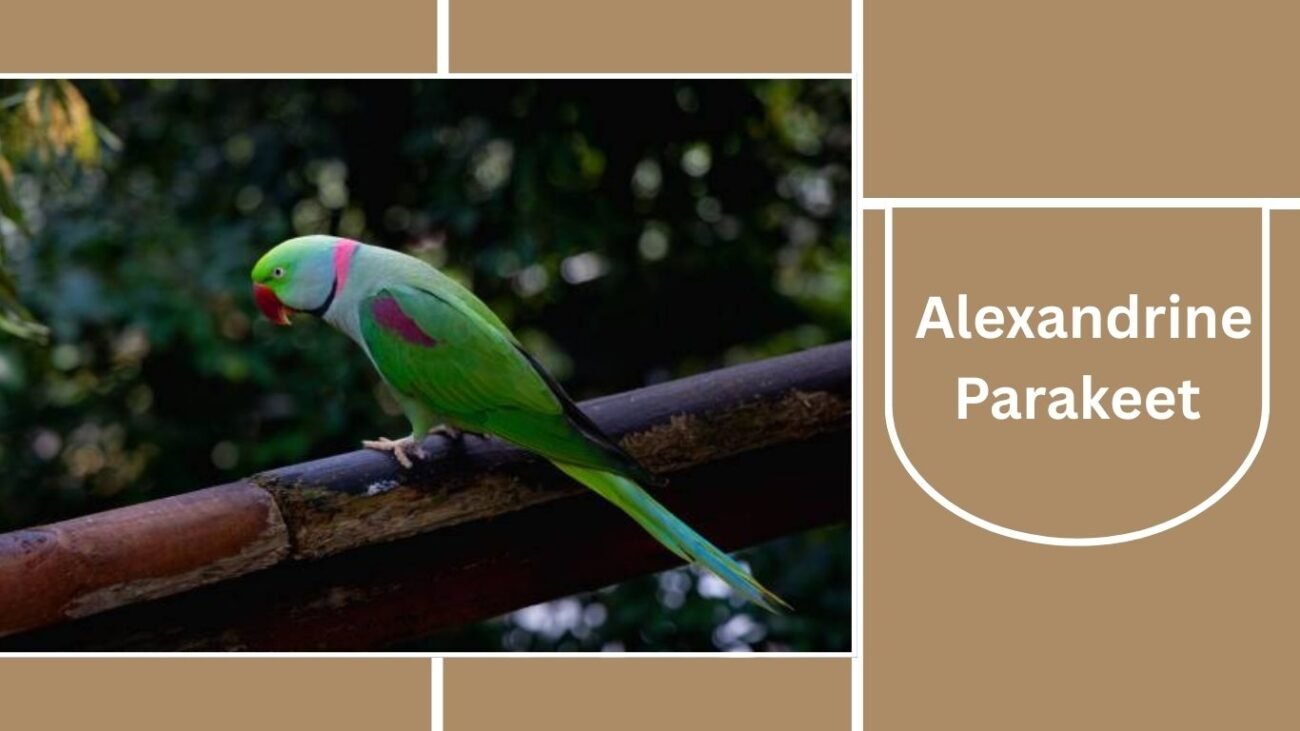
The Alexandrine Parakeet is a large and impressive parrot species native to South and Southeast Asia. It is named after Alexander the Great and is known for its striking green plumage, large size, and intelligent, social nature, making it a favorite among experienced parrot owners.
Identification
- Large parakeet, about 23–27 inches long
- Bright green body with bluish tinge on wings
- Males have a distinctive maroon patch on the shoulders and a black neck ring, females lack the neck ring
- Long tail feathers with red tips
- Strong, curved red beak and dark eyes
Behavior
Alexandrine Parakeets are intelligent, social, and can learn a variety of sounds and phrases. They are active, enjoy climbing, and need daily mental stimulation. With proper interaction, they can form strong bonds with their owners but may require patience due to their independent streak.
Diet
Their diet should include high-quality pellets, a mix of fresh fruits (apple, banana, grapes), vegetables (carrots, peas, leafy greens), and occasional seeds or nuts. A varied diet supports their health, plumage, and energy levels.
Care
They require a spacious and sturdy cage or aviary due to their size and strength. Providing climbing structures, chewable toys, and daily out-of-cage time is essential for their mental and physical well-being.
Lifespan
Alexandrine Parakeets can live 25–30 years in captivity, making them a long-term commitment for dedicated owners.