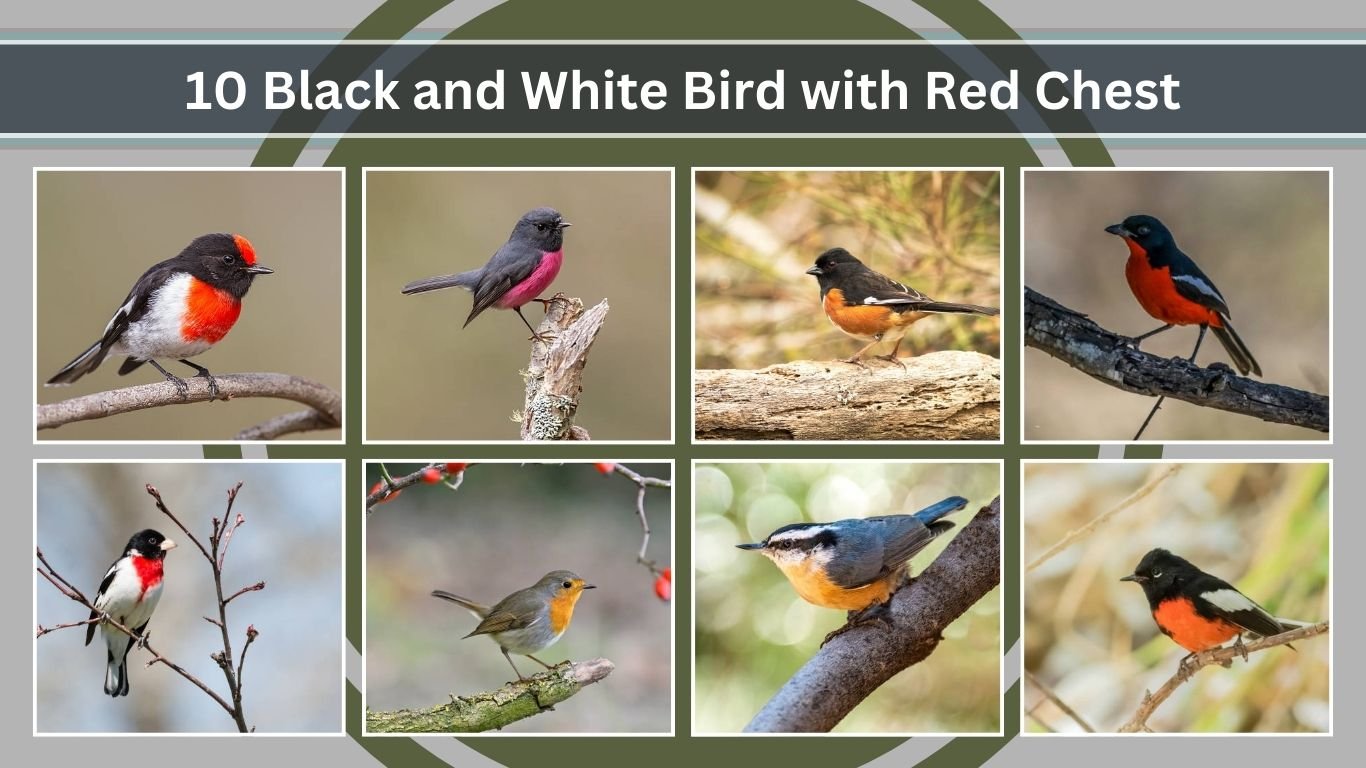
Birds with striking contrasts of black, white, and red are among the most eye-catching species in the wild. Their bold patterns and vibrant chest markings make them easy to spot and fascinating to study. From forest-dwelling robins to energetic warblers, these birds showcase nature’s incredible variety. In this guide, you’ll discover ten beautiful black and white birds with red chests, along with their unique traits and habitats.
1. Rose-breasted Grosbeak
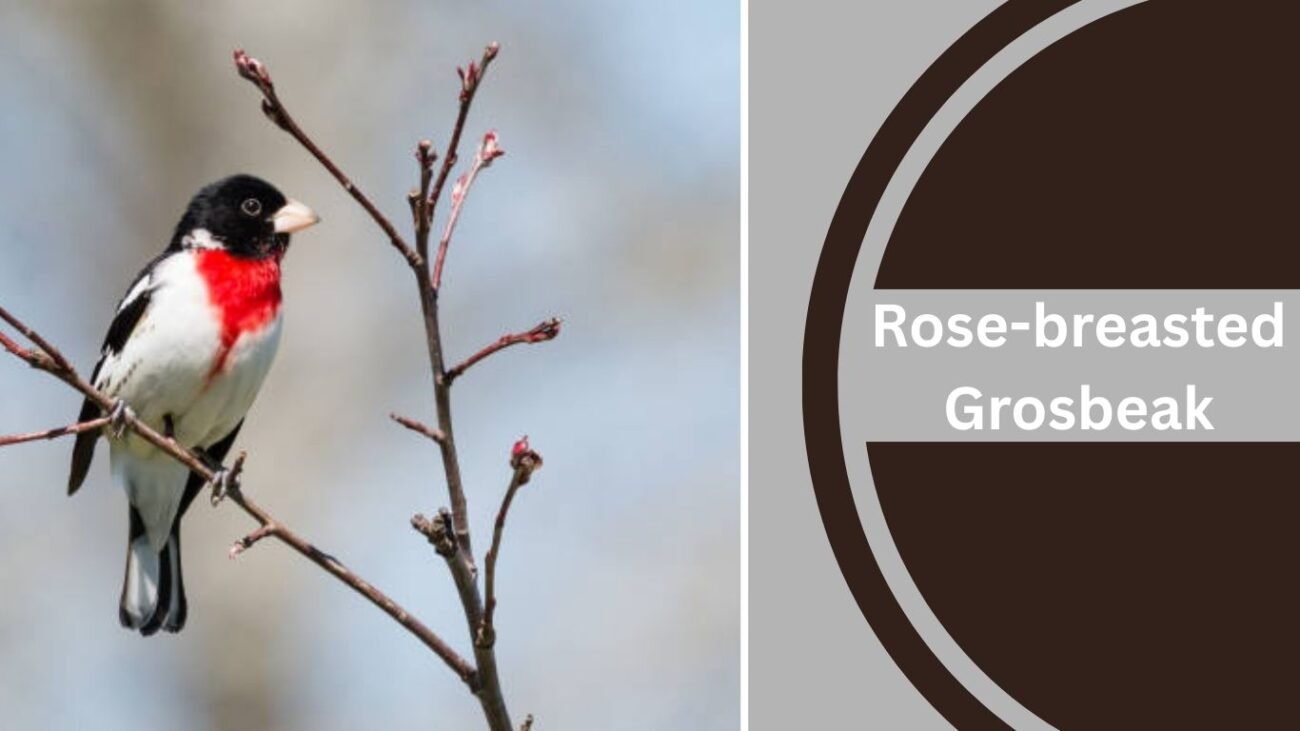
The Rose-breasted Grosbeak is a striking songbird admired for its bold black and white plumage and vivid red chest patch. Found mainly in North America, these birds are often seen in woodlands, gardens, and orchards, where their bright appearance and melodic songs capture attention.
Identification
- Size: About 7–8 inches long
- Color: Black head, back, and wings with white wing patches
- Chest: Bright rose-red triangular patch extending down the breast
- Underparts: White belly and sides
- Bill: Large, pale, cone-shaped beak
Habitat
They prefer deciduous forests, woodland edges, and suburban gardens. During migration, they are also spotted in orchards and shrubby areas.
Behavior
Males often perch prominently to sing their sweet, robin-like songs. They are territorial during the breeding season but join mixed flocks while migrating.
Diet
Their diet includes insects, seeds, fruits, and buds. They are frequent visitors to feeders offering sunflower seeds.
2. Scarlet Robin
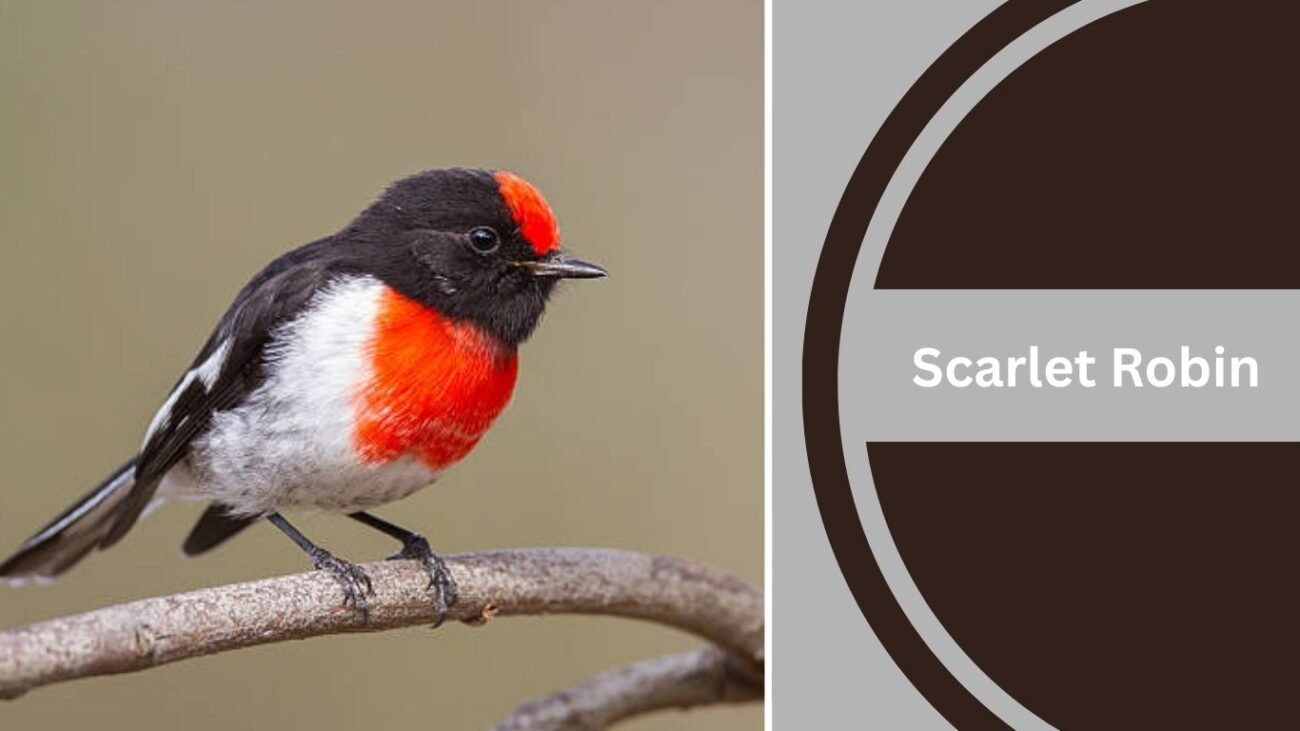
The Scarlet Robin is a small, eye-catching bird native to Australia. Males are especially notable for their jet-black upperparts contrasted with a vivid scarlet chest, making them one of the most beautiful forest birds in the region. They are often seen perched on low branches or fences, scanning for insects.
Identification
- Size: About 4.7–5.5 inches long
- Color: Black head, back, and wings with white wing bars
- Chest: Bright scarlet red extending to the upper belly
- Underparts: White lower belly and vent
- Female: More subdued, with brownish-gray plumage and a faint reddish wash on the breast
Habitat
Scarlet Robins are found in open forests, woodlands, and along forest edges. They also frequent gardens and pastures with scattered trees.
Behavior
They hunt by perching quietly and then swooping down to catch insects on the ground. During the breeding season, males defend territories with song and displays.
Diet
Their diet consists mainly of insects and other small invertebrates, which they catch both on the ground and mid-air.
3. Eastern Towhee
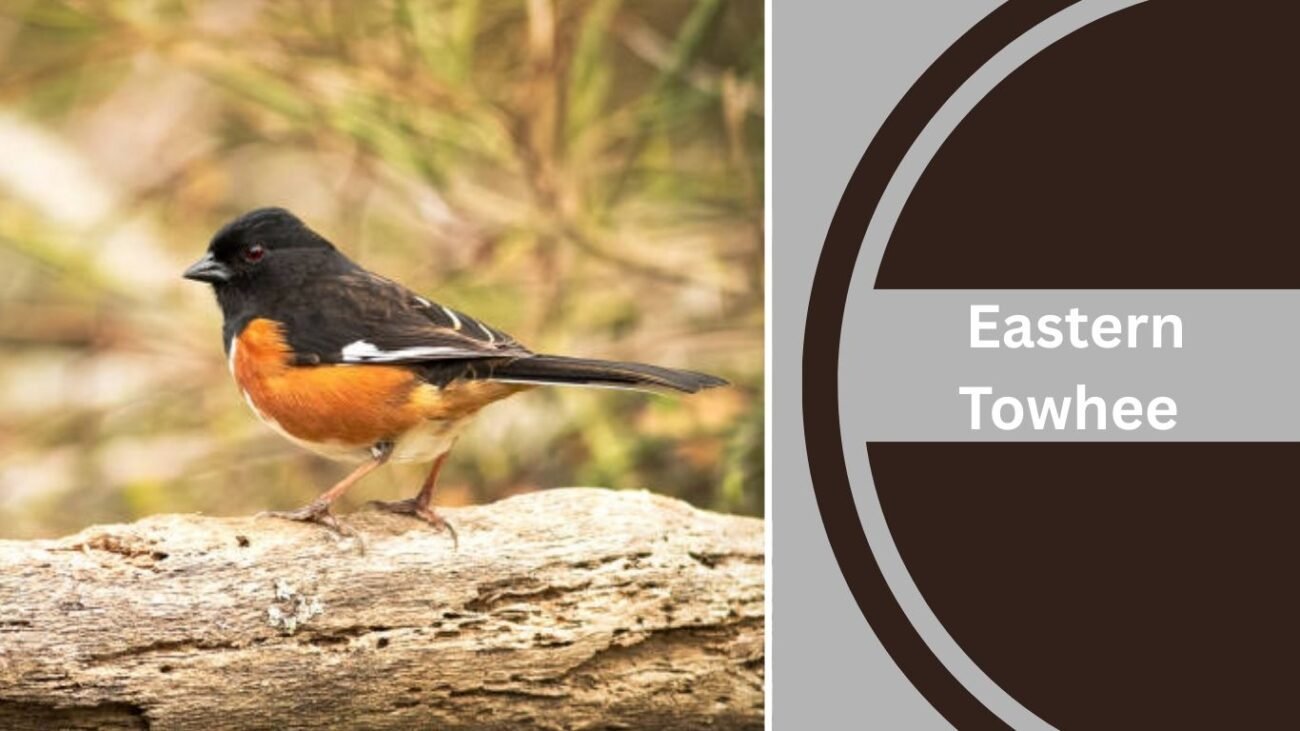
The Eastern Towhee is a striking bird often heard before it’s seen, thanks to its loud “drink-your-tea” song. Males are especially eye-catching, with bold black and white plumage accented by reddish-brown flanks that give the chest a rich red appearance. These birds are common in eastern North America, particularly in shrubby habitats.
Identification
- Size: About 6.8–8.2 inches long
- Color: Black head, back, and wings with white belly
- Chest/Flanks: Deep reddish-rufous sides creating a red-chested look
- Female: Similar but brown replaces black
- Tail: Long with white outer feathers visible in flight
Habitat
Eastern Towhees favor brushy fields, forest edges, and overgrown clearings. They are also found in suburban areas with dense shrubbery.
Behavior
They spend much of their time scratching in leaf litter with both feet to uncover insects and seeds. Males are territorial and often sing from exposed perches.
Diet
Their diet includes insects, seeds, and fruits. They especially enjoy beetles, caterpillars, berries, and acorns.
4. Painted Redstart
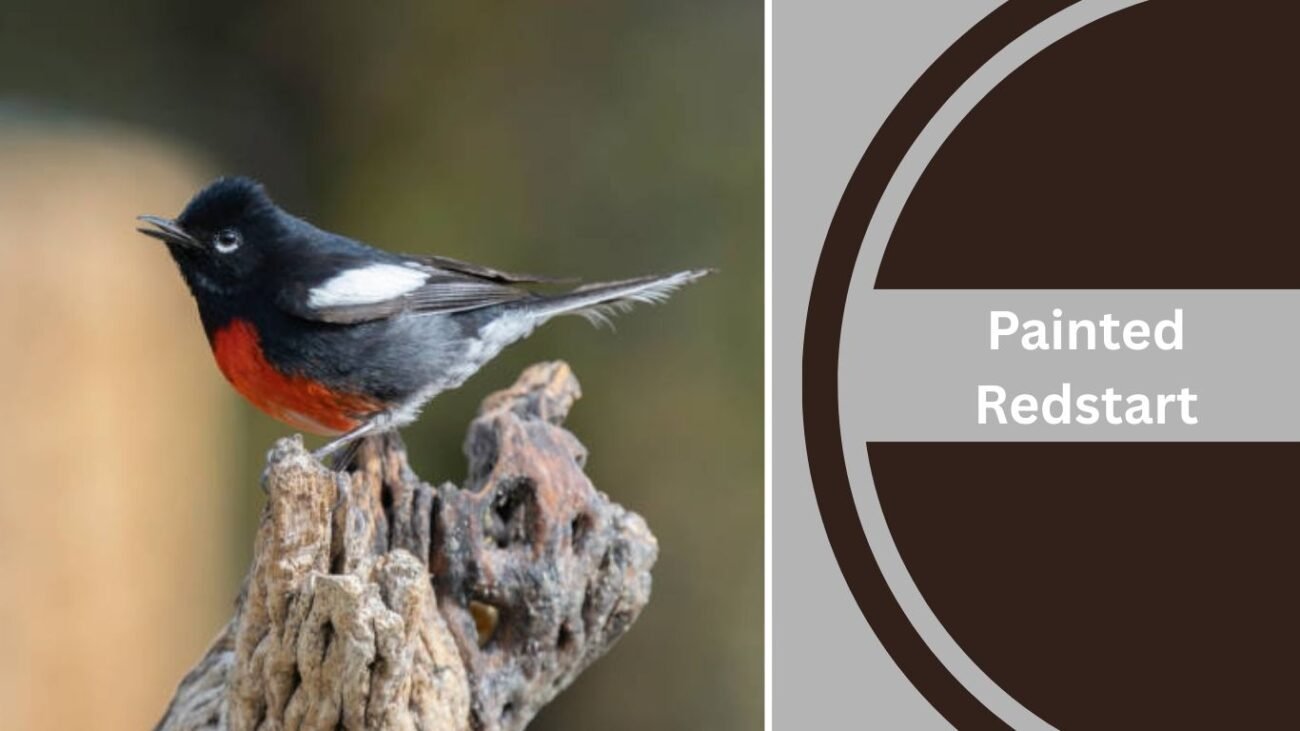
The Painted Redstart is a vibrant warbler native to the southwestern United States, Mexico, and Central America. Known for its bold black, white, and crimson plumage, it is one of the most striking small birds in its range. These active birds are often seen flitting through woodlands, flashing their wings and tail to startle insects.
Identification
- Size: About 5.1–5.9 inches long
- Color: Black head, back, and wings with prominent white wing patches
- Chest/Belly: Bright crimson red extending from chest to lower belly
- Tail: Long black tail with white outer edges, often fanned in displays
- Bill: Slender and dark, suited for catching insects
Habitat
They inhabit pine-oak forests, canyons, and mountain woodlands, often near streams or moist areas.
Behavior
Painted Redstarts are agile and energetic. They frequently fan their tails and spread their wings to flush out prey, making them easy to spot in dense foliage.
Diet
Their diet consists mainly of insects and spiders, which they capture by sallying out from branches or gleaning leaves.
5. Crimson-breasted Shrike

The Crimson-breasted Shrike is a dazzling bird native to southern Africa, admired for its bold black-and-white markings and vivid crimson chest. Its striking colors make it unmistakable, and its melodious calls often brighten up savanna and woodland areas where it lives.
Identification
- Size: About 8.7–9.8 inches long
- Color: Jet-black head, back, wings, and tail with contrasting white wing patches
- Chest/Belly: Bright crimson red from throat to belly
- Bill: Strong, slightly hooked, adapted for catching insects
- Female: Similar in appearance but may have slightly duller tones
Habitat
They inhabit dry savannas, open woodlands, and scrublands. They are also commonly found near riverine vegetation and gardens in rural areas.
Behavior
Crimson-breasted Shrikes are territorial and often found in pairs. They are vocal, producing a variety of whistles and melodious calls, sometimes mimicking other species.
Diet
Their diet mainly includes insects, spiders, and small invertebrates. Occasionally, they feed on fruits and small vertebrates.
6. Pink Robin
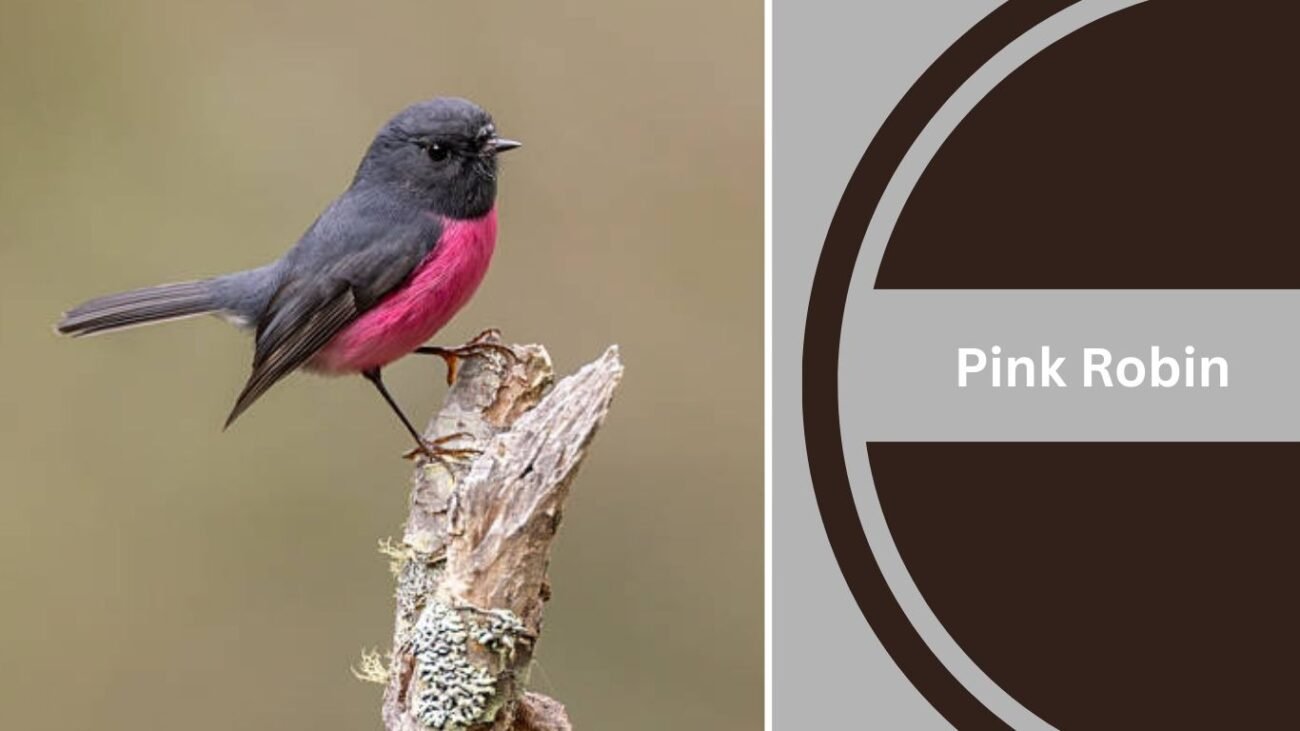
The Pink Robin is a small, beautifully colored bird native to the forests of southeastern Australia and Tasmania. Males are especially striking, with their velvety black upperparts contrasted by a soft pink chest that makes them stand out in the shaded understory.
Identification
- Size: About 5 inches long
- Color: Black head, back, and wings with a white spot above the bill
- Chest/Belly: Soft pink breast blending into grayish-white lower belly
- Female: Brownish-gray with a faint pinkish wash on the chest
- Bill: Short and fine, suited for insect hunting
Habitat
Pink Robins thrive in cool, dense, wet forests, often near streams and gullies. They prefer shaded understory areas with thick vegetation.
Behavior
These birds are shy and often forage close to the ground, making quick, darting movements as they search for prey. They are more often heard than seen.
Diet
Their diet consists mainly of insects and small invertebrates, including caterpillars, beetles, and spiders, which they pick from foliage and forest floor.
7. Red-breasted Nuthatch
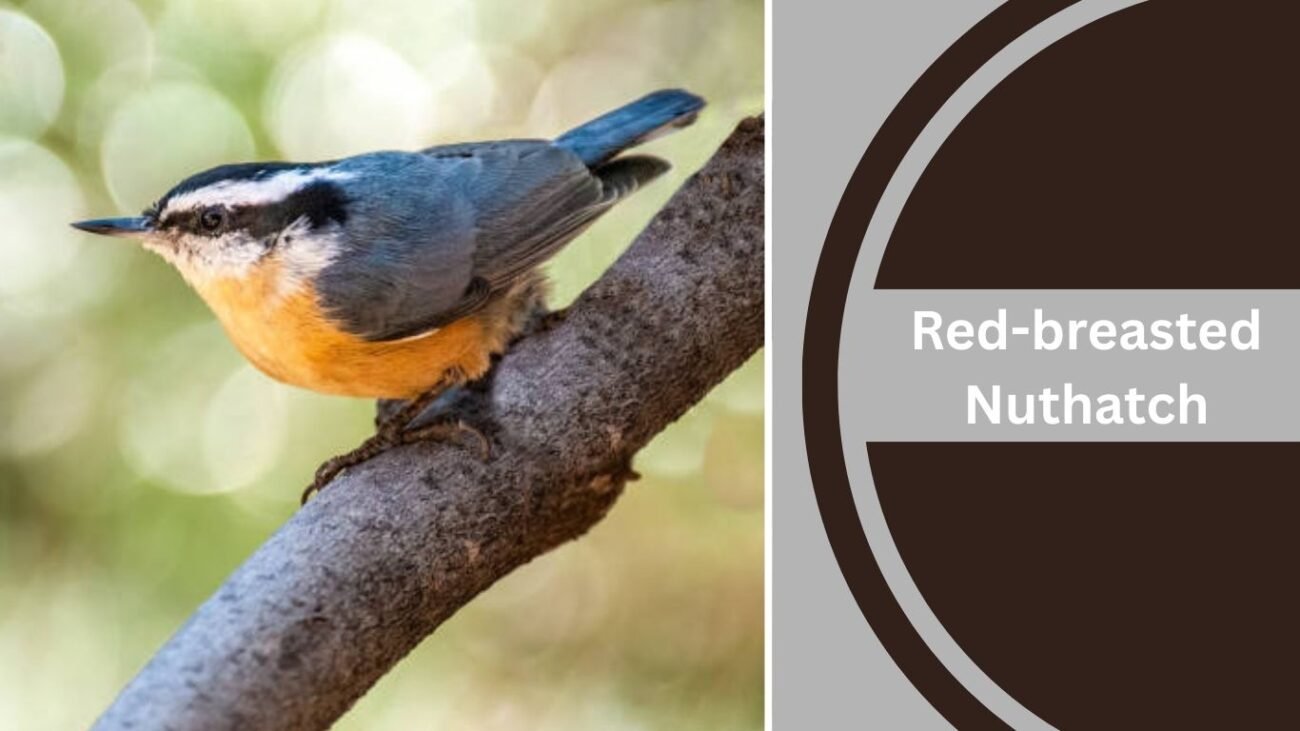
The Red-breasted Nuthatch is a small, energetic bird found across North America, especially in coniferous forests. Recognized for its bold black-and-white head stripes and rusty-red chest, it is a favorite among bird enthusiasts for its fearless nature and distinctive “yank-yank” call.
Identification
- Size: About 4.3–4.7 inches long
- Color: Blue-gray back and wings with black-and-white striped head
- Chest/Belly: Rusty-red to orange breast and underparts
- Bill: Straight, pointed, perfect for probing bark
- Tail: Short with dark feathers tipped in white
Habitat
They are primarily found in coniferous forests, though they also visit mixed woods and suburban feeders, especially during winter.
Behavior
Red-breasted Nuthatches are agile climbers, moving headfirst down tree trunks while searching for food. They are bold around feeders and may even chase off larger birds.
Diet
Their diet includes insects, seeds, and conifer seeds such as pine and spruce. At feeders, they particularly enjoy sunflower seeds, peanuts, and suet.
8. European Stonechat
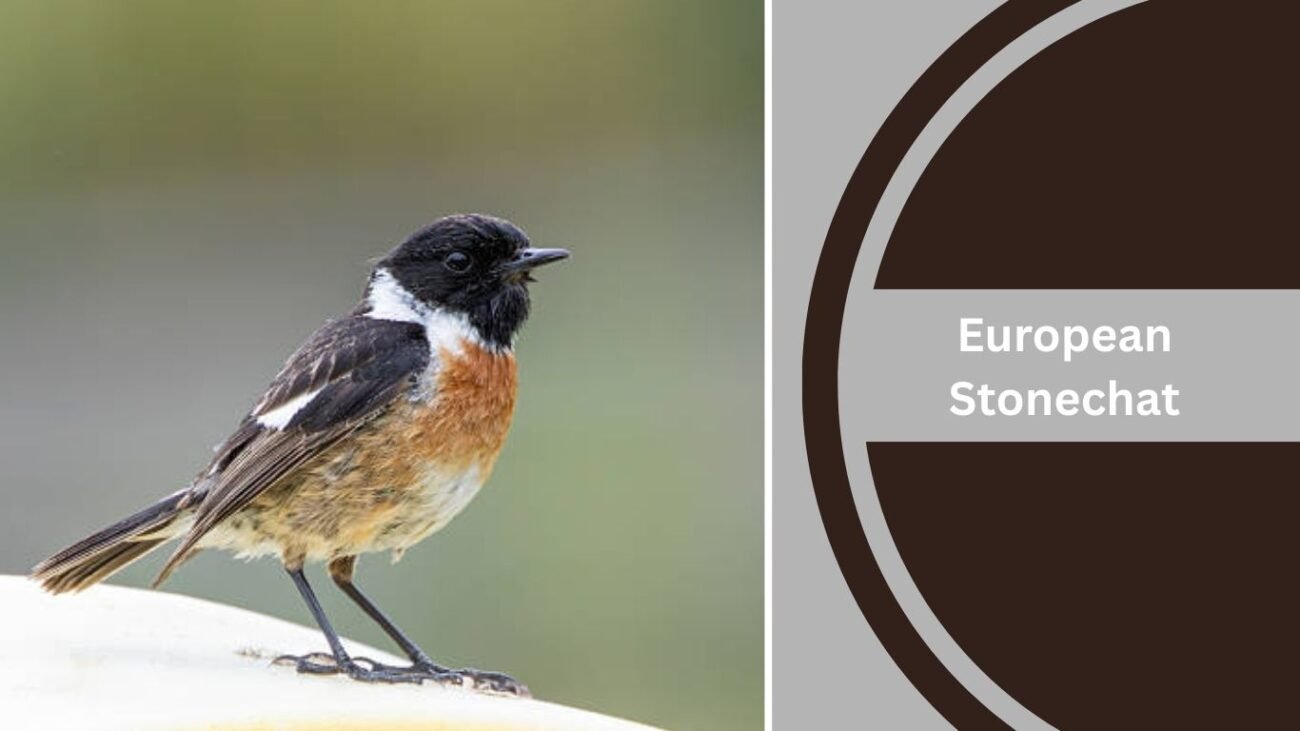
The European Stonechat is a small, striking bird found across Europe, North Africa, and parts of Asia. Males are especially eye-catching, with their black head, white collar, and vivid reddish-orange chest that gives them a bold appearance in open landscapes.
Identification
- Size: About 4.7–5.1 inches long
- Color: Black head and back with a distinct white collar and wing patches
- Chest/Belly: Bright reddish-orange chest fading into pale underparts
- Female: More subdued, with brownish tones and a lighter, orange-tinted chest
- Bill: Short and dark, adapted for insect feeding
Habitat
European Stonechats prefer open fields, heathlands, and shrublands. They are often seen perched on fence posts, bushes, or tall grasses.
Behavior
They frequently perch in visible spots, making short flights to catch insects. Their call is a sharp “chat” sound, similar to stones clinking together.
Diet
Their diet includes insects, spiders, and small invertebrates, supplemented with seeds and berries, especially in winter.
9. American Redstart
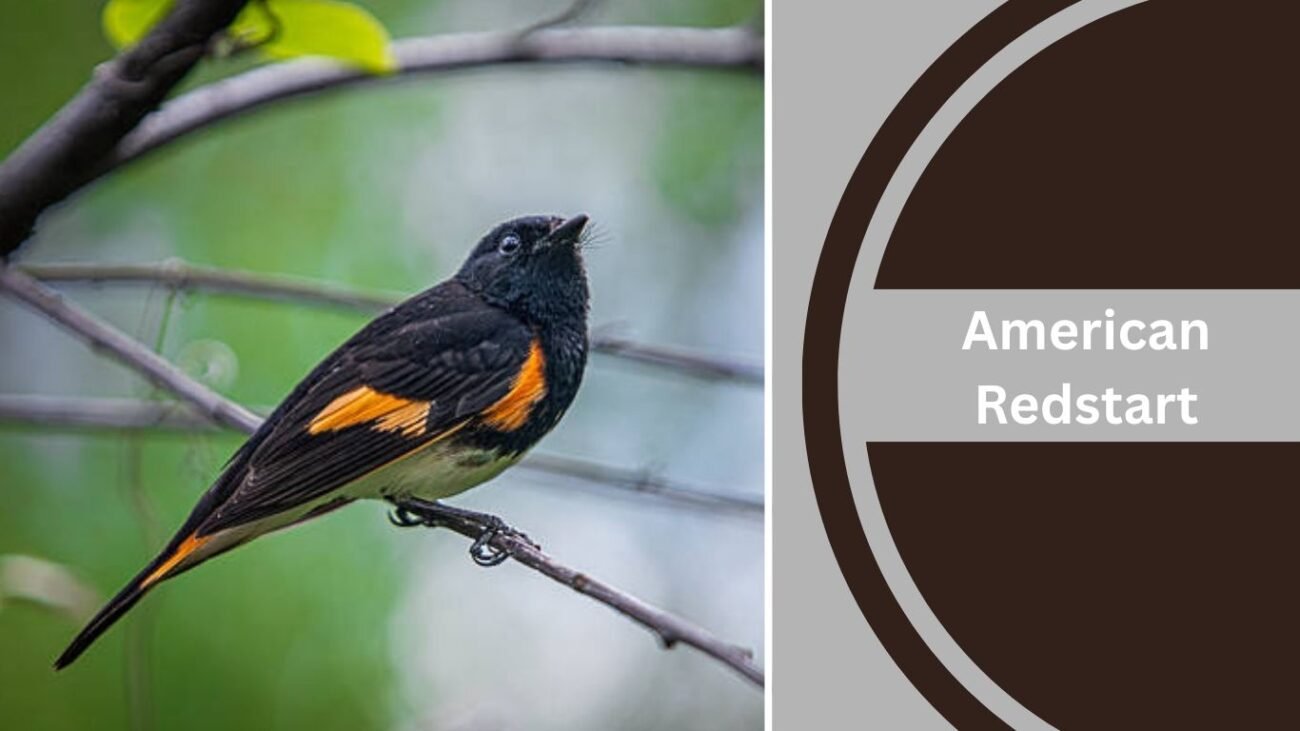
The American Redstart is a lively warbler found across North and Central America, admired for its bold black, white, and orange-red markings. Males are especially showy, flashing their bright patches as they dart through trees and shrubs in search of insects.
Identification
- Size: About 4.3–5.1 inches long
- Color: Black head, back, and tail with contrasting white underparts
- Chest/Flanks: Fiery reddish-orange patches on the chest, wings, and tail
- Female: Olive-gray upperparts with yellowish patches instead of red
- Tail: Frequently fanned to display bright color spots
Habitat
They are commonly found in deciduous forests, woodland edges, and thickets. During migration, they can also be spotted in parks and gardens.
Behavior
American Redstarts are very active, often flicking their tails and wings to flush insects from foliage. They are territorial during breeding and sing a sweet, variable song.
Diet
Their diet consists mainly of insects such as flies, moths, and caterpillars, with berries and fruits supplementing their food, especially during migration.
10. Rose Robin
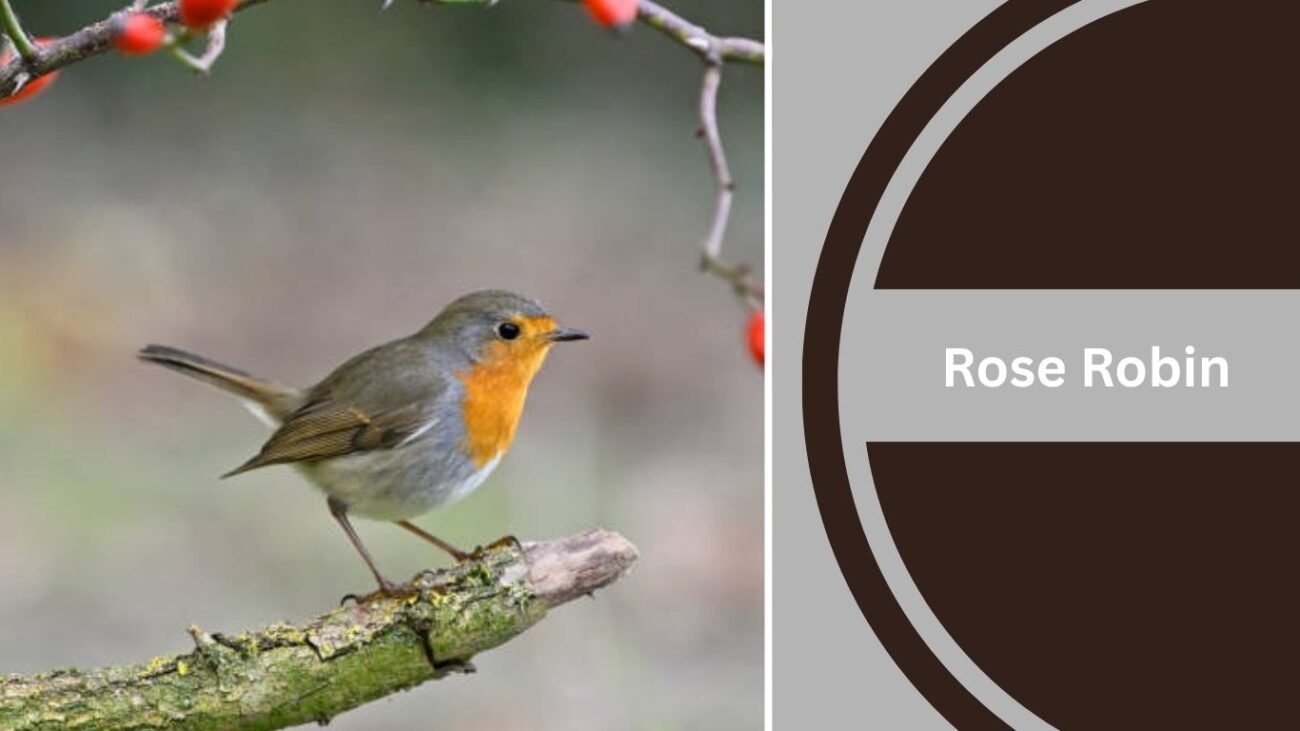
The Rose Robin is a delicate and charming bird native to southeastern Australia. Males are instantly recognizable by their soft gray upperparts contrasted with a gentle rose-pink chest, making them one of the most attractive robins in the region.
Identification
- Size: About 4.7–5.1 inches long
- Color: Slate-gray head, back, and wings with a small white spot above the bill
- Chest/Belly: Distinct rose-pink breast blending into pale whitish underparts
- Female: Brownish-gray with a faint wash of pink on the chest
- Bill: Small, thin, and black, suited for catching insects
Habitat
Rose Robins inhabit wet sclerophyll forests, rainforests, and dense woodlands. They prefer shaded areas with thick understory vegetation.
Behavior
These birds are shy and often stay low in the foliage, quietly foraging for insects. Males sing soft, high-pitched calls during the breeding season to defend their territory.
Diet
Their diet mainly includes insects and small invertebrates such as beetles, caterpillars, and spiders, which they pick from leaves and branches.