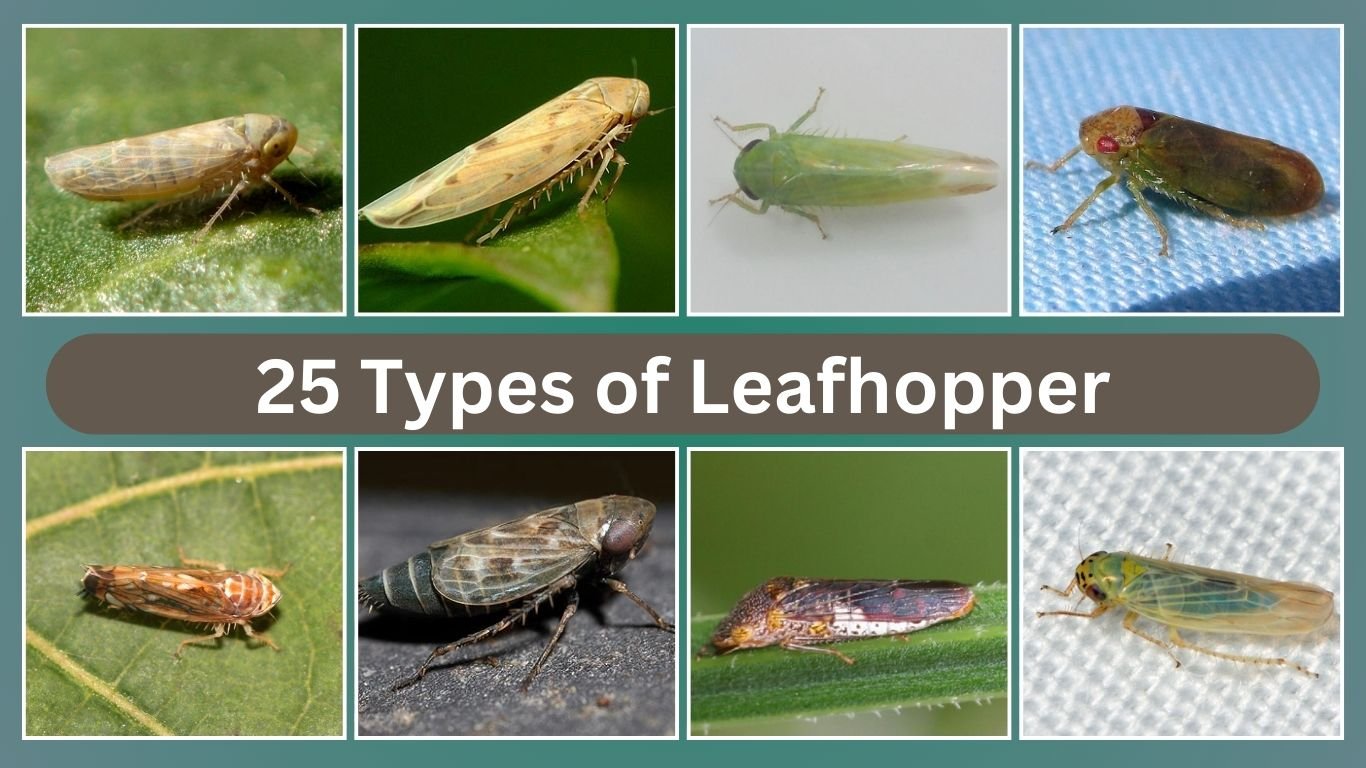
Leafhoppers (family Cicadellidae) are small, wedge-shaped insects found across the globe. They feed on plant sap and play both beneficial and harmful roles in ecosystems. While some are minor plant feeders, others are serious agricultural pests due to their ability to transmit plant diseases. This guide explores 25 different leafhopper species, detailing their identification, habitat, behavior, diet, and lifecycle to provide a comprehensive understanding of these diverse insects.
1. Graphocephala coccinea

Graphocephala coccinea, commonly called the Red-banded Leafhopper, is a brightly colored insect known for its striking red and blue-green stripes across the wings. It is a common leafhopper species found in North America and is often seen on various plants, including ornamentals and agricultural crops.
Identification
- Slender, wedge-shaped body about 6–8 mm long.
- Bright red transverse bands across green to blue wings.
- Large compound eyes located on the sides of the head.
- Hind legs adapted for jumping.
Habitat
This species is widespread across gardens, fields, meadows, and forest edges in North America. It prefers areas with abundant vegetation where it can feed on plant sap.
Behavior
Graphocephala coccinea is active during warm months and is known for its fast, erratic jumping when disturbed. It uses piercing-sucking mouthparts to feed on sap and can transmit plant pathogens while feeding.
Diet
The red-banded leafhopper feeds primarily on the sap of herbaceous plants and shrubs. It is not highly host-specific and can feed on a wide range of plant species, making it adaptable in various environments.
Lifecycle
The species undergoes incomplete metamorphosis. Eggs are laid inside plant tissue, hatching into wingless nymphs that resemble smaller versions of adults. Nymphs go through five instar stages before developing into fully winged adults. Multiple generations can occur within a single year, depending on climate conditions.
2. Graphocephala versuta
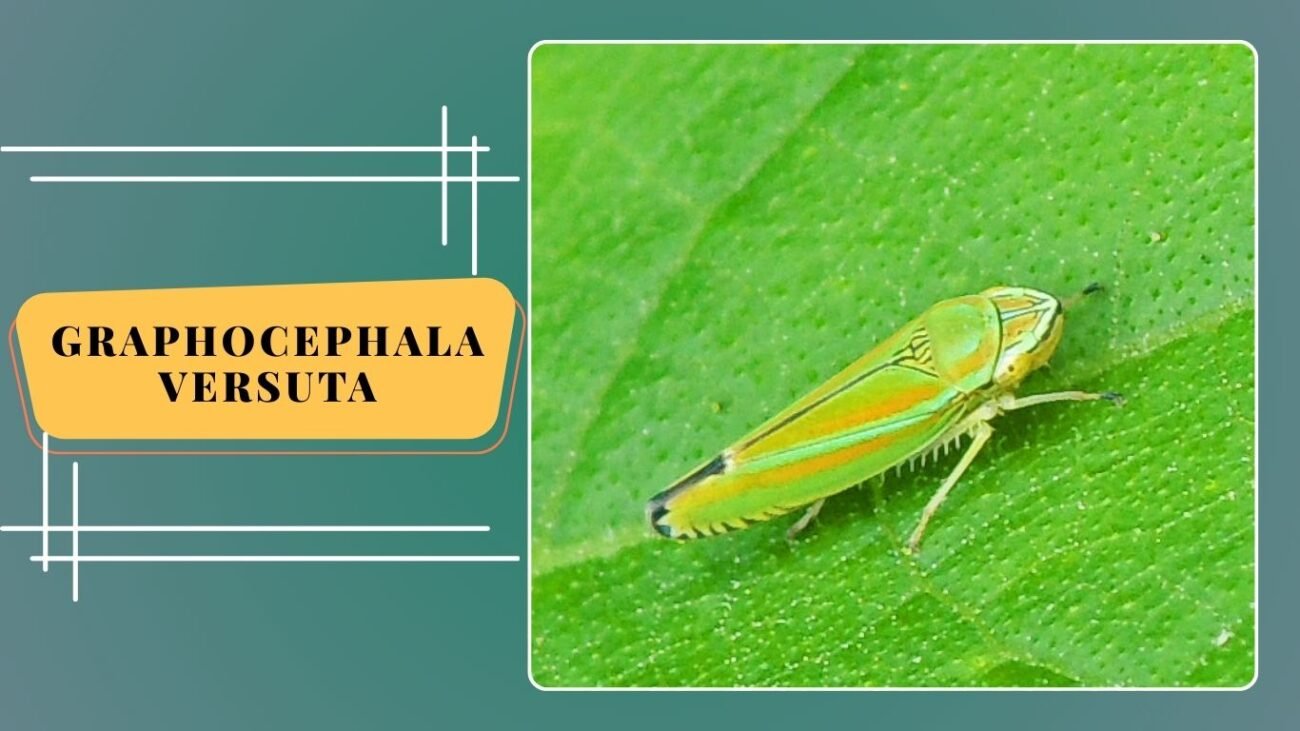
Graphocephala versuta is a vividly patterned leafhopper species closely related to Graphocephala coccinea. It is recognized for its striking coloration and frequent presence on ornamental plants and shrubs.
Identification
- Body length around 6–8 mm.
- Bright green wings with red or orange longitudinal stripes.
- Distinct wedge-shaped body with strong jumping hind legs.
- Large, dark compound eyes on the sides of the head.
Habitat
This species inhabits gardens, fields, and forested edges, particularly in regions of North America. It is often found on shrubs and herbaceous plants where it can easily access plant sap.
Behavior
Graphocephala versuta is an agile insect, capable of quick jumps and short flights when disturbed. Like other leafhoppers, it forms feeding groups on leaves and stems. Its feeding activity can sometimes cause minor damage to host plants.
Diet
The species feeds on the sap of a wide variety of plants using its piercing-sucking mouthparts. While generally not highly destructive, it may weaken plants if populations grow large.
Lifecycle
The lifecycle follows incomplete metamorphosis. Females deposit eggs in plant tissue, from which nymphs emerge. Nymphs undergo several molts before becoming winged adults. Multiple generations can occur annually, particularly in warmer climates.
3. Graphocephala fennahi (Rhododendron Leafhopper)
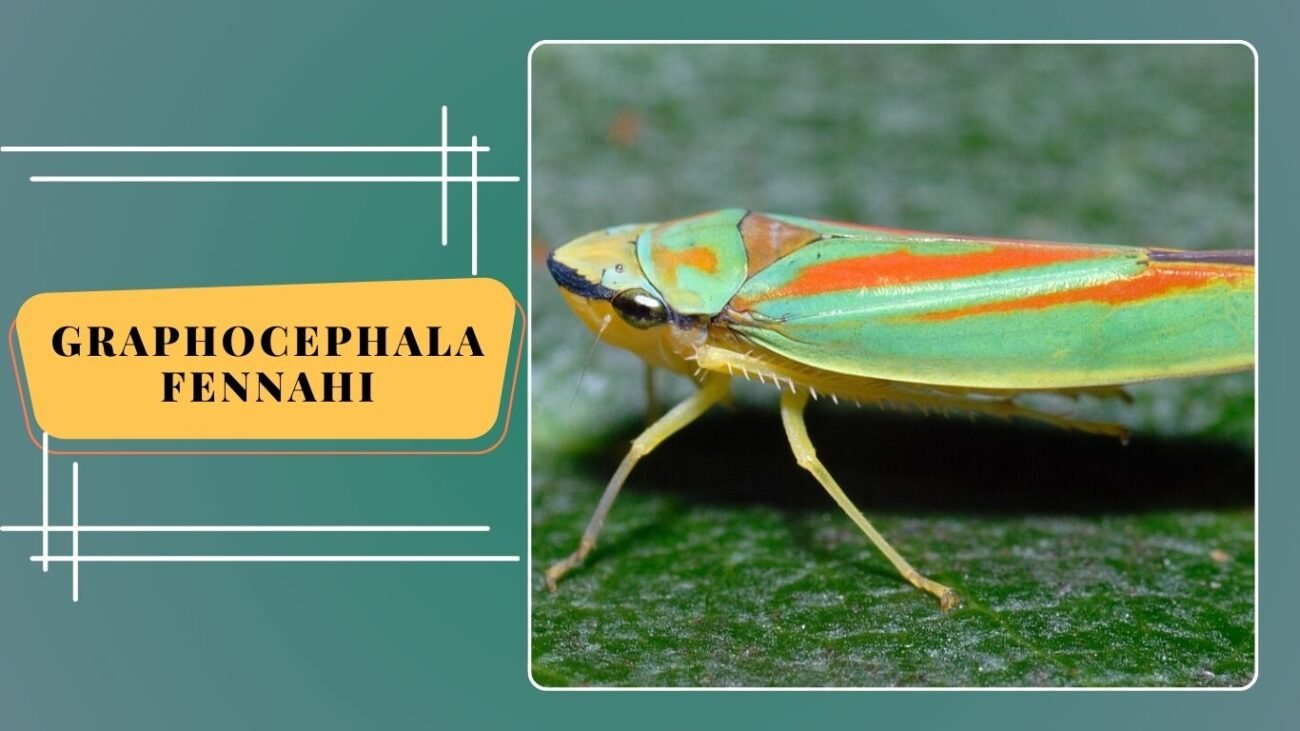
Graphocephala fennahi, commonly known as the Rhododendron Leafhopper, is a striking species originally native to North America but now also widespread in Europe. It is particularly known for its association with rhododendrons, where it feeds and sometimes contributes to the spread of plant diseases.
Identification
- Body length typically 8–9 mm.
- Bright green wings with bold red stripes along the length.
- Slender, wedge-shaped body typical of leafhoppers.
- Large, reddish-brown compound eyes.
Habitat
This species is strongly associated with rhododendron plants, though it may occasionally be found on other shrubs. It is common in gardens, parks, and ornamental landscapes, especially where rhododendrons are cultivated.
Behavior
Graphocephala fennahi is most active from late spring through autumn. Adults are fast-moving and readily jump when disturbed. This species is also known for aiding in the spread of rhododendron bud blast, a fungal disease caused by Seifertia azaleae, by transmitting spores between plants.
Diet
Like other leafhoppers, it feeds on plant sap using piercing-sucking mouthparts. Its preferred food source is the sap of rhododendron leaves and stems, which provides the nutrients it needs to survive and reproduce.
Lifecycle
The lifecycle consists of eggs, nymphs, and adults, undergoing incomplete metamorphosis. Eggs are laid in rhododendron tissue, often in late summer. Nymphs hatch in the following spring and develop through several stages before becoming winged adults. There is usually one generation per year in temperate climates.
4. Empoasca fabae (Potato Leafhopper)
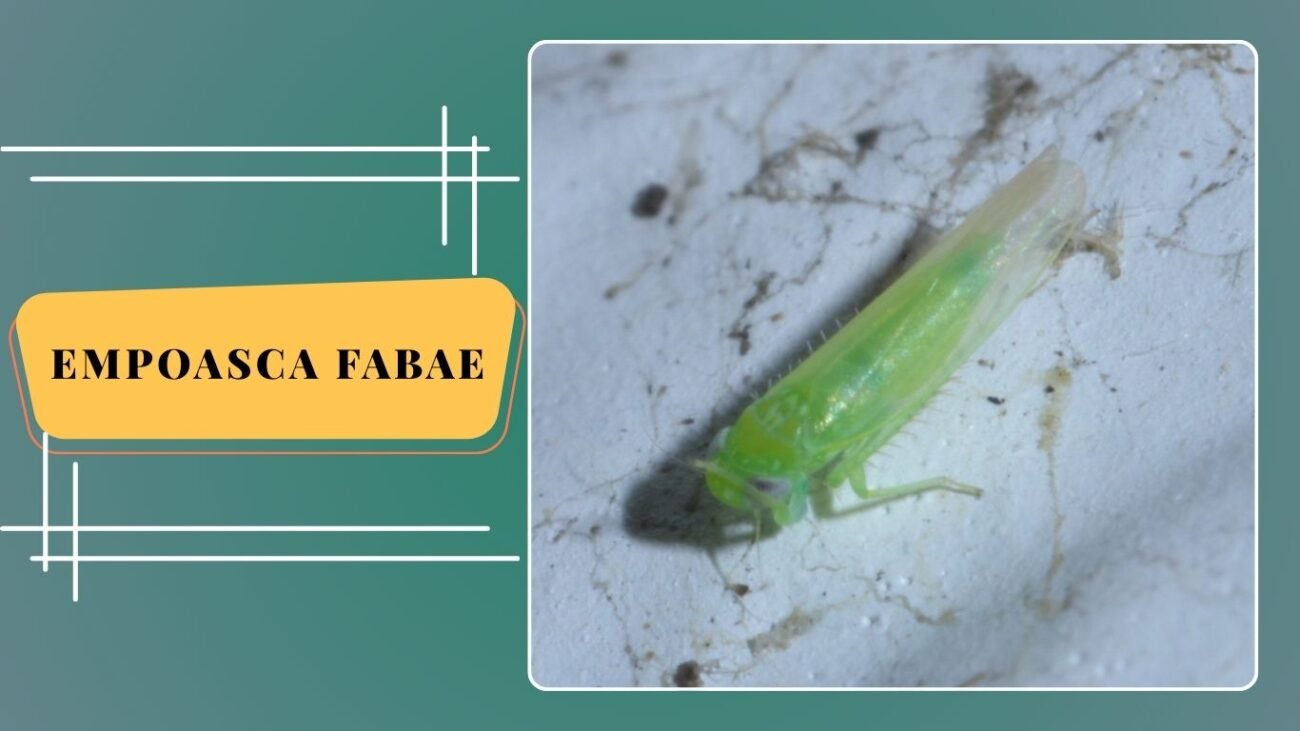
Empoasca fabae, commonly known as the Potato Leafhopper, is a small but economically significant insect pest in North America. It causes damage to a wide variety of crops through its feeding activity, which leads to a condition known as “hopperburn.”
Identification
- Small, slender body about 3 mm long.
- Light green color, blending well with foliage.
- Wings held roof-like over the body when at rest.
- Hind legs adapted for rapid jumping.
Habitat
This species is widely distributed across North America, especially in agricultural areas. It is commonly found on potatoes, beans, alfalfa, and many other crops, preferring warm and humid environments during the growing season.
Behavior
Empoasca fabae is highly mobile and migrates long distances each spring from southern overwintering regions to northern agricultural fields. It is active both day and night, moving frequently between plants. Its feeding causes leaf curling, yellowing, and necrosis, collectively known as “hopperburn.”
Diet
The potato leafhopper feeds on the phloem sap of a wide range of host plants, including potatoes, beans, clover, apples, and alfalfa. This makes it a highly polyphagous pest.
Lifecycle
The lifecycle follows incomplete metamorphosis. Females lay eggs within plant tissue, which hatch into nymphs after about a week. Nymphs pass through five instar stages before becoming adults in roughly two weeks. Multiple generations occur per season, leading to significant crop infestations.
5. Empoasca vitis (Grape Leafhopper)

Empoasca vitis, commonly called the Grape Leafhopper, is a small but important pest in vineyards. It affects grapevines by feeding on their sap, causing stress that reduces yield and fruit quality.
Identification
- Small body, about 3–4 mm long.
- Pale yellow to greenish color, often blending with grape leaves.
- Transparent wings folded roof-like over the back.
- Hind legs specialized for quick jumps.
Habitat
This species is strongly associated with vineyards and grape-growing regions across North America and Europe. It thrives in warm climates where grapevines are cultivated.
Behavior
Empoasca vitis is an active and fast-moving insect. Adults and nymphs congregate on the underside of grape leaves. Feeding leads to stippling, yellowing, and leaf curling, which can reduce photosynthesis and weaken vines. Infestations are especially problematic during dry summers.
Diet
The grape leafhopper feeds primarily on the sap of grapevines (Vitis vinifera and related species). Occasionally, it may also feed on other plants if grapes are unavailable, but it shows a strong preference for vineyard environments.
Lifecycle
The lifecycle involves incomplete metamorphosis. Eggs are laid within grapevine tissues and hatch into nymphs after about a week. Nymphs undergo five instars before maturing into adults. Depending on climate, two to three generations per year are common, with adults overwintering in leaf litter or nearby vegetation.
6. Cicadella viridis (Green Leafhopper)
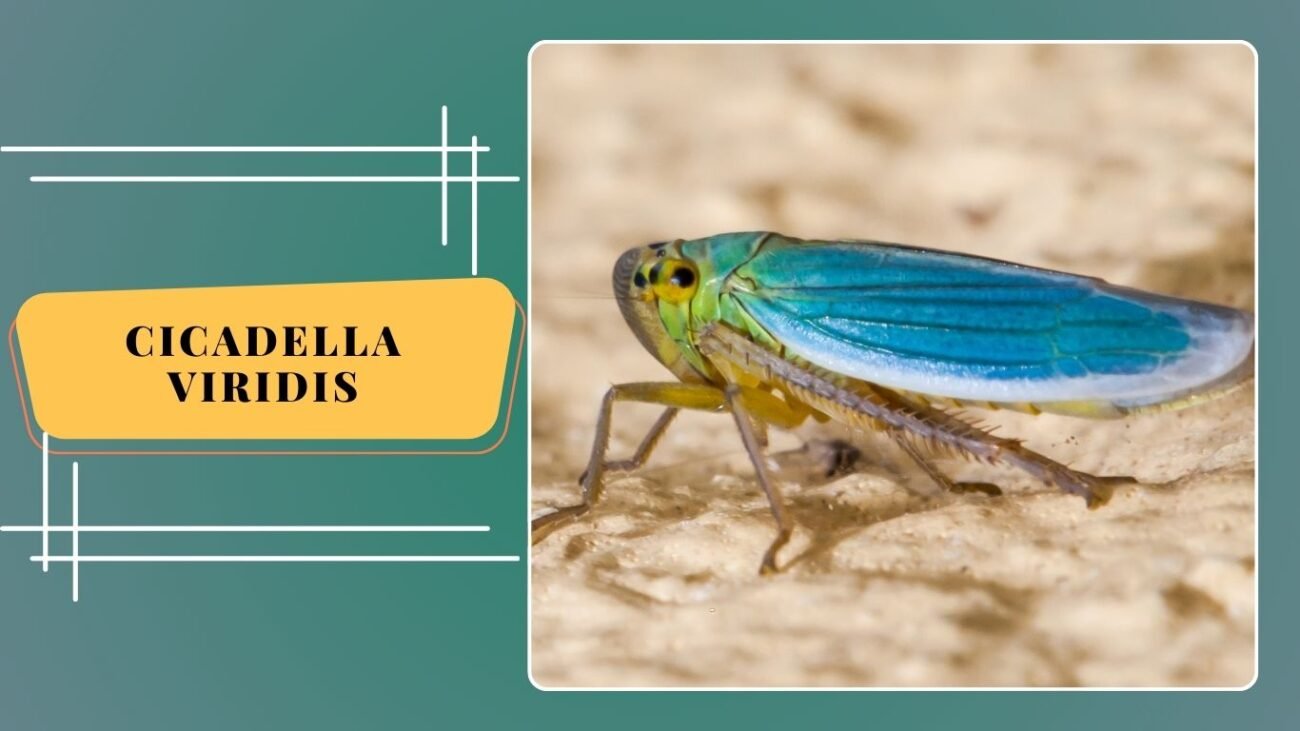
Cicadella viridis, widely known as the Green Leafhopper, is a vividly colored species common across Europe and parts of Asia. It is one of the most recognizable leafhoppers due to its bright green body and contrasting markings.
Identification
- Medium-sized, about 8–10 mm long.
- Bright green body with a yellowish underside.
- Wings with subtle bluish or yellowish tinges.
- Eyes are prominent and usually reddish-brown.
- Hind legs well-developed for jumping.
Habitat
Cicadella viridis inhabits meadows, grasslands, marshes, and areas with tall vegetation. It prefers moist environments and is commonly found on grasses, sedges, and other low-growing plants.
Behavior
This species is highly active and jumps quickly when disturbed. It is often seen resting on grass blades or flying short distances between plants. While not considered a major pest, large populations can cause stress to host plants.
Diet
The green leafhopper feeds on plant sap, primarily from grasses, sedges, and herbaceous plants. It extracts phloem fluids using its piercing-sucking mouthparts.
Lifecycle
The lifecycle includes incomplete metamorphosis. Eggs are laid in plant tissue, particularly within stems of grasses. Nymphs hatch in spring, pass through several instars, and reach adulthood by summer. There is usually one generation per year in temperate climates, with eggs overwintering in plant material.
7. Oncometopia alpha (Sharpshooter Leafhopper)
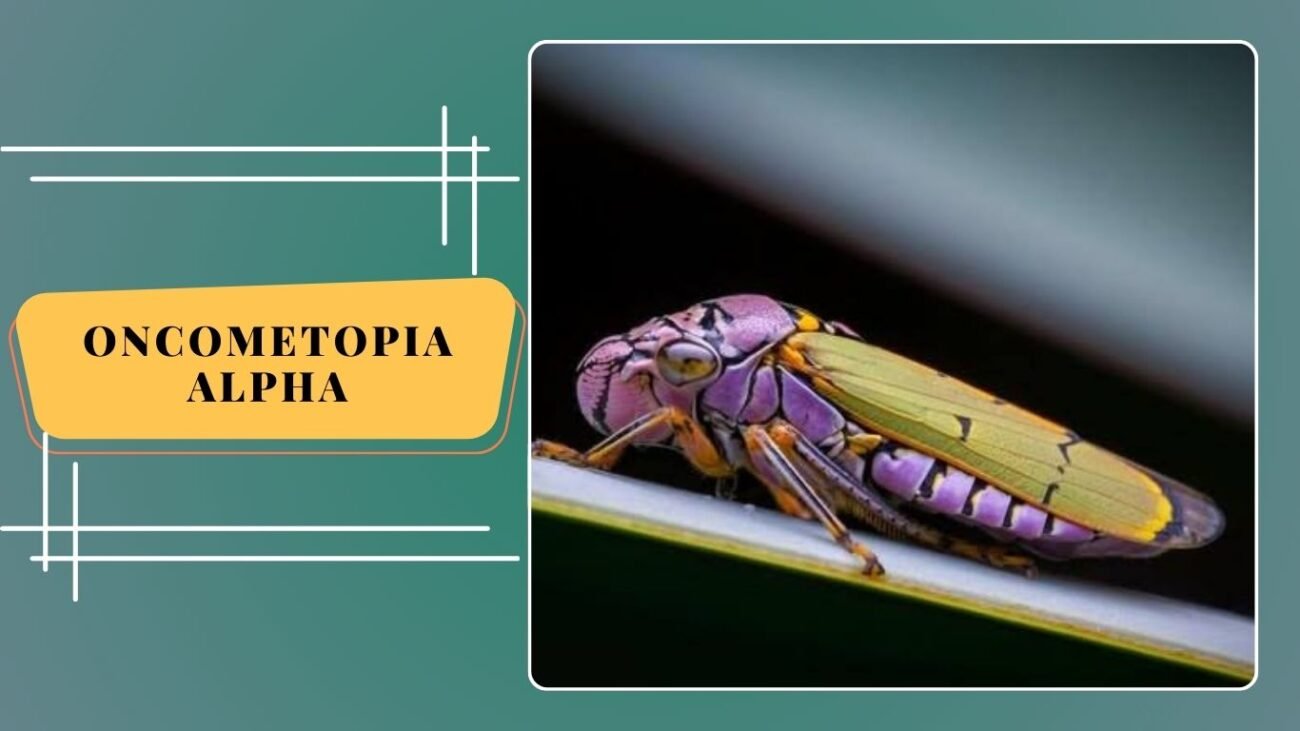
Oncometopia alpha, a type of sharpshooter leafhopper, is a large, vividly colored species known for its strong flight and role as a vector of plant pathogens. Like other sharpshooters, it is considered important in agriculture because of its feeding habits.
Identification
- Relatively large for a leafhopper, measuring 9–12 mm in length.
- Elongated, wedge-shaped body.
- Distinctive dark blue to purplish coloration with lighter markings.
- Transparent wings held roof-like over the abdomen.
- Powerful hind legs adapted for both jumping and climbing.
Habitat
Oncometopia alpha is native to the Americas, especially Central and South America. It thrives in agricultural regions, orchards, and gardens, often on citrus, coffee, and other crops.
Behavior
This species is an active flier and can travel significant distances between host plants. It spends much of its time feeding on xylem sap and can be a vector for plant diseases. Sharpshooters are especially notorious for transmitting Xylella fastidiosa, a bacterium that causes serious crop diseases.
Diet
Unlike many smaller leafhoppers that prefer phloem sap, Oncometopia alpha primarily feeds on xylem sap. This requires strong pumping mechanisms in its mouthparts, as xylem fluid is under negative pressure and nutritionally poor.
Lifecycle
The lifecycle follows incomplete metamorphosis. Eggs are laid in clusters on plant tissue, and nymphs develop through five instars before becoming adults. Depending on the environment, multiple generations can occur annually. Adults are hardy and can live for several months.
8. Oncometopia nigricans
Oncometopia nigricans is another species of sharpshooter leafhopper, closely related to Oncometopia alpha. It is widely distributed in the Americas and is particularly noted for its role in transmitting plant diseases that affect economically important crops.
Identification
- Large body size, typically 10–13 mm long.
- Glossy black to dark brown coloration, sometimes with faint bluish reflections.
- Elongated, wedge-shaped form typical of sharpshooters.
- Transparent wings held roof-like over the abdomen.
- Strong hind legs for jumping and clinging to plants.
Habitat
This species inhabits agricultural areas, gardens, and forests across Central and South America, as well as parts of North America. It is often found on woody plants, citrus orchards, coffee plantations, and other crop systems.
Behavior
Oncometopia nigricans is a strong flier, capable of moving between plants and spreading pathogens over large areas. It is considered an important vector of Xylella fastidiosa, the bacterium responsible for several plant diseases, including citrus variegated chlorosis and Pierce’s disease in grapes.
Diet
Like other sharpshooters, this species feeds on xylem sap, which is nutrient-poor. To compensate, it consumes large volumes and excretes excess water as droplets, sometimes visible on leaves beneath feeding sites.
Lifecycle
The lifecycle includes incomplete metamorphosis. Eggs are deposited in host plant tissue, with nymphs emerging and progressing through five instar stages before reaching adulthood. Several generations can occur each year, particularly in tropical climates where conditions remain favorable year-round.
9. Homalodisca vitripennis (Glassy-winged Sharpshooter)

Homalodisca vitripennis, commonly known as the Glassy-winged Sharpshooter, is one of the most notorious sharpshooters due to its role in spreading serious plant diseases. It is native to the southeastern United States but has become invasive in other regions, including California.
Identification
- Large leafhopper, measuring 12–14 mm in length.
- Dark brown to black body with a somewhat glossy appearance.
- Transparent wings with glassy reflections (hence the name).
- Yellowish to reddish speckling on the head and thorax.
- Hind legs strong, equipped with spines for jumping and climbing.
Habitat
This species inhabits orchards, vineyards, citrus groves, and ornamental landscapes. It thrives in warm climates and is well adapted to both wild and cultivated environments. In invaded regions, it is considered a major agricultural threat.
Behavior
The glassy-winged sharpshooter is a strong flier, capable of traveling long distances between host plants. It is a highly efficient vector of Xylella fastidiosa, a bacterium responsible for Pierce’s disease in grapes, citrus variegated chlorosis, and other lethal plant diseases. Its rapid spread has led to severe agricultural losses in affected areas.
Diet
Unlike many smaller leafhoppers that feed on phloem, Homalodisca vitripennis feeds on xylem sap. Because xylem is nutrient-poor, the insect consumes large quantities, excreting excess water as droplets (often visible as “leafhopper rain”).
Lifecycle
The lifecycle follows incomplete metamorphosis. Eggs are laid in clusters beneath the surface of leaves. Nymphs emerge, passing through five instar stages before reaching adulthood. In warm climates, multiple generations occur per year, making populations difficult to control. Adults can live for several months, maintaining a continuous risk of disease transmission.
10. Homalodisca insolita
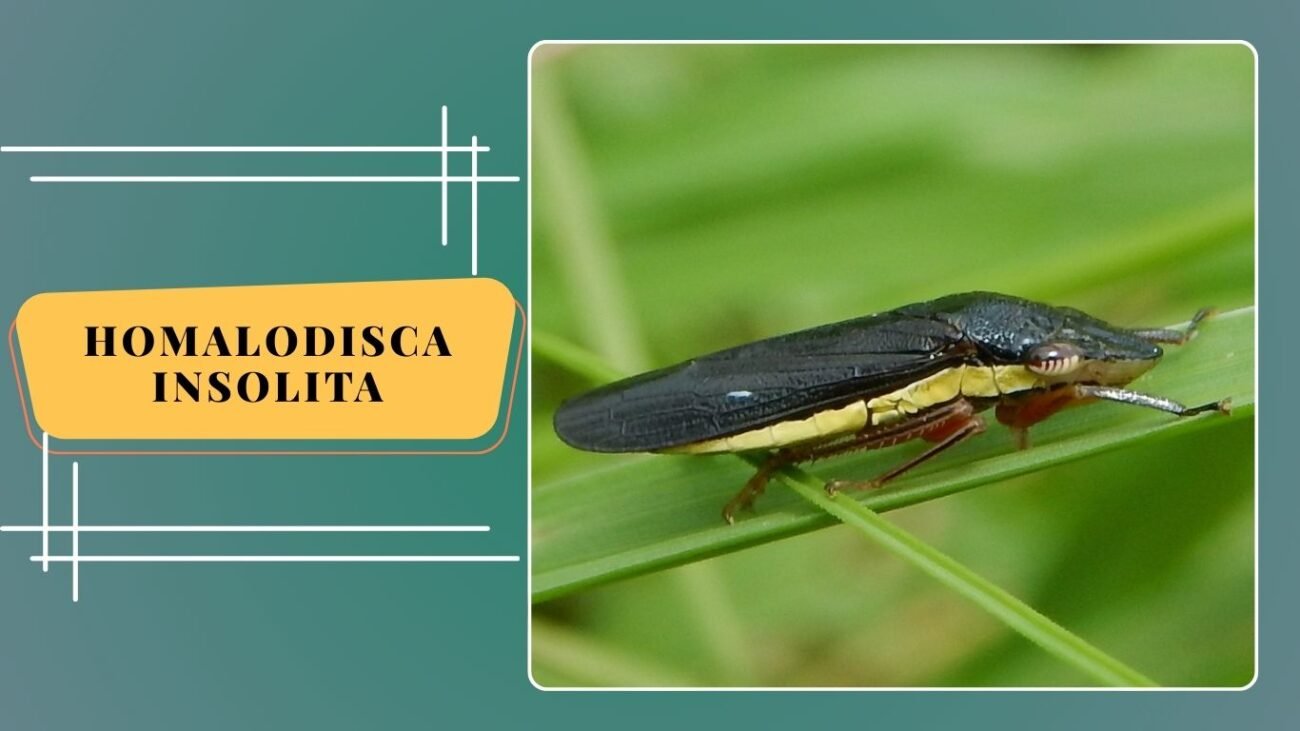
Homalodisca insolita is a lesser-known member of the sharpshooter group within the Cicadellidae family. Closely related to the glassy-winged sharpshooter (Homalodisca vitripennis), it shares many characteristics but is less widespread and less studied.
Identification
- Medium to large size, typically 11–13 mm long.
- Dark brown to black body, sometimes with faint mottling.
- Wings semi-transparent with a subtle glassy sheen.
- Elongated wedge-shaped body form.
- Strong hind legs with rows of spines, adapted for jumping.
Habitat
This species is primarily found in the southern United States, Mexico, and parts of Central America. It inhabits orchards, agricultural fields, and wild vegetation, particularly where woody plants are abundant.
Behavior
Like other sharpshooters, Homalodisca insolita is a strong flier, moving frequently between plants. It is believed to be a potential vector of Xylella fastidiosa, though it is not as notorious or well-documented as Homalodisca vitripennis.
Diet
It feeds on xylem sap from a wide range of plants, including fruit trees, grapevines, and ornamentals. Due to the low nutritional value of xylem fluid, it consumes large amounts and expels excess liquid as droplets.
Lifecycle
The lifecycle follows incomplete metamorphosis. Eggs are laid within plant tissues, and nymphs emerge to feed on xylem until they develop into adults. Multiple generations per year are possible in warm regions, allowing populations to build up quickly.
11. Homalodisca liturata
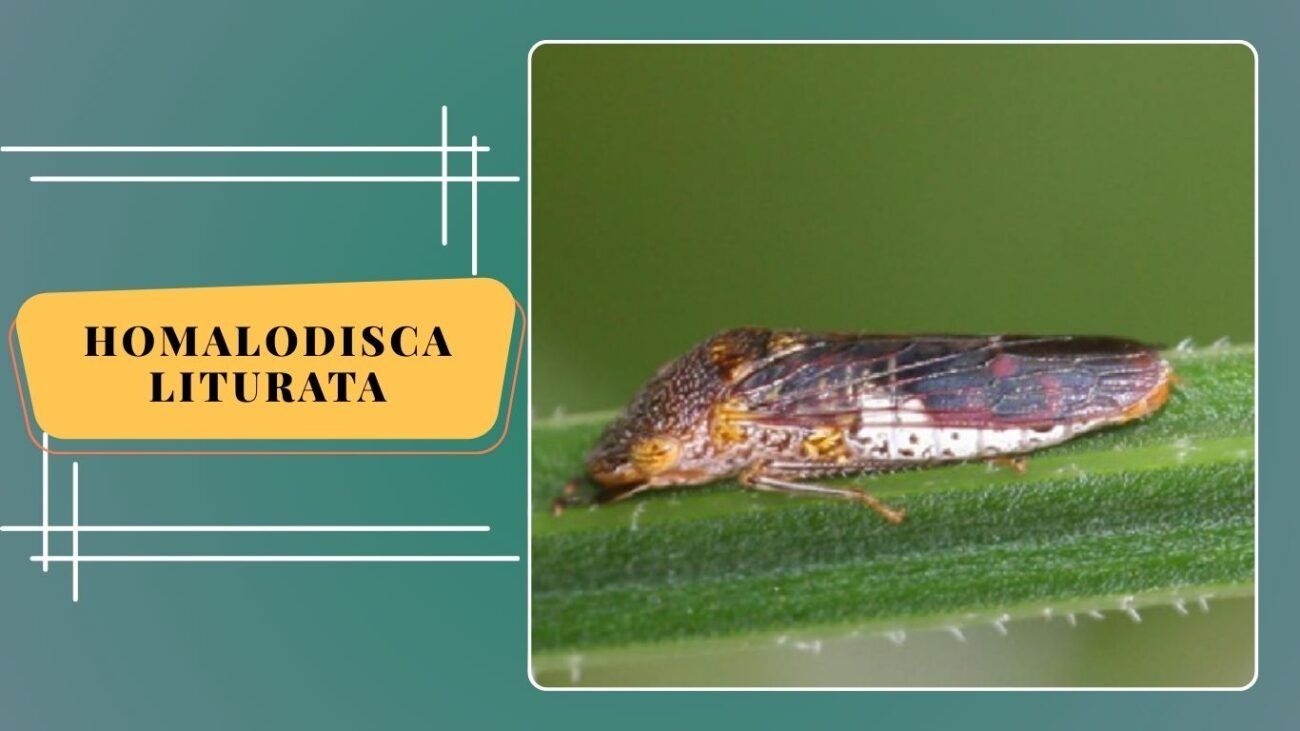
Homalodisca liturata is a species of sharpshooter leafhopper belonging to the Cicadellidae family. It is closely related to other Homalodisca species and is recognized for its feeding on xylem sap and potential role in plant disease transmission.
Identification
- Medium to large, about 11–13 mm in length.
- Dark brown to black body with lighter mottled markings.
- Semi-transparent wings with faint glassy reflections.
- Elongated wedge-shaped profile typical of sharpshooters.
- Robust hind legs with spines for leaping and clinging.
Habitat
This species occurs mainly in Mexico, Central America, and parts of the southern United States. It favors habitats with abundant woody plants, orchards, citrus groves, vineyards, and ornamental landscapes.
Behavior
Homalodisca liturata is an active flier, often moving between different host plants. Like other sharpshooters, it can act as a vector of Xylella fastidiosa, though its epidemiological significance is less studied compared to the glassy-winged sharpshooter.
Diet
This species feeds exclusively on xylem sap, requiring it to ingest large volumes to meet nutritional needs. Excess water is expelled as droplets, which can sometimes be seen on leaves beneath feeding sites.
Lifecycle
The lifecycle involves incomplete metamorphosis. Eggs are deposited in plant tissues, nymphs hatch and undergo five instar stages before becoming adults. Multiple generations may occur each year in warm climates, supporting continuous population growth.
12. Agallia constricta
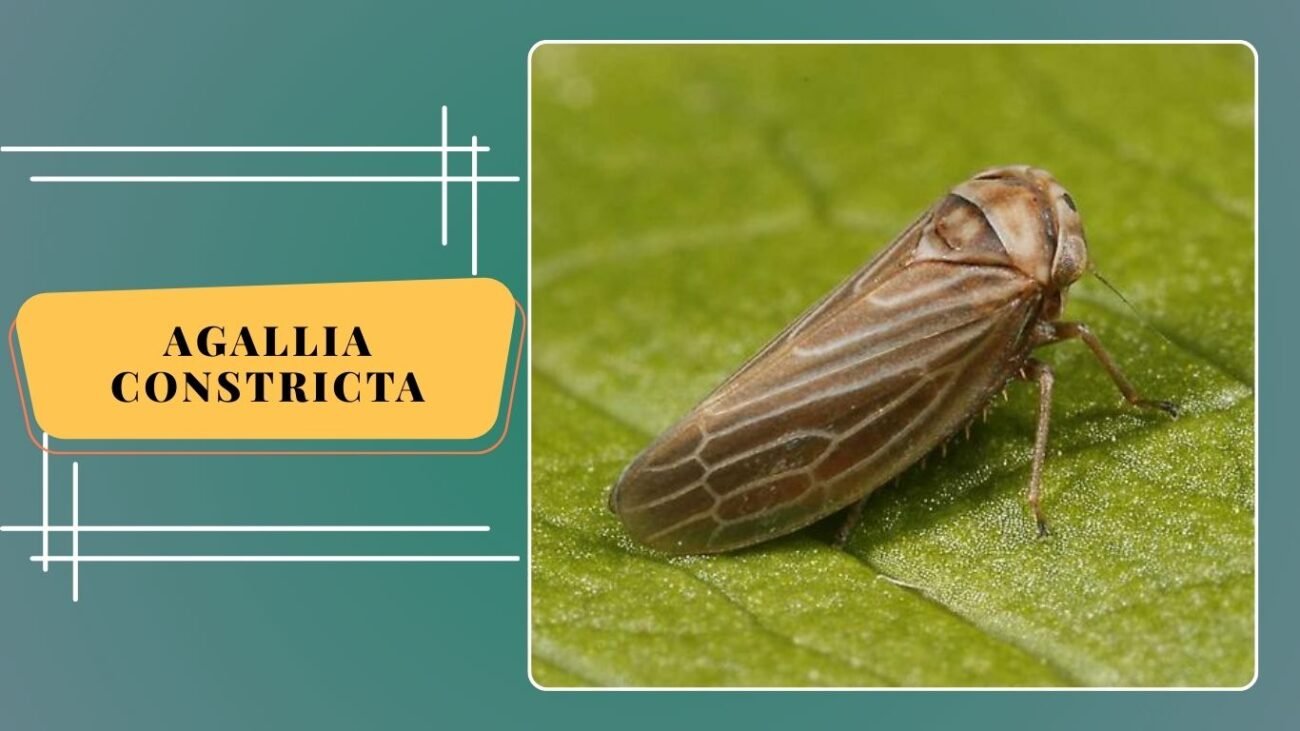
Agallia constricta is a small species of leafhopper that belongs to the subfamily Agalliinae. While not as visually striking as sharpshooters, it is common in grassy and agricultural habitats and can play a role in transmitting plant pathogens.
Identification
- Small body size, typically 3–4 mm long.
- Brown to yellowish coloration, often with darker mottled markings.
- Short, wedge-shaped body typical of leafhoppers.
- Forewings leathery with subtle venation patterns.
- Hind legs adapted for strong jumping.
Habitat
This species is widely distributed across North America, inhabiting fields, pastures, gardens, and grassy areas. It thrives in places with abundant low vegetation, including agricultural crops and wild grasses.
Behavior
Agallia constricta is highly mobile, moving between grasses and crops. It is capable of transmitting plant diseases, including phytoplasmas, though it is not considered as economically significant as larger sharpshooters.
Diet
The species feeds on phloem and xylem sap from grasses, legumes, and other herbaceous plants. Its generalist feeding habits allow it to survive in a variety of habitats.
Lifecycle
Like other leafhoppers, it undergoes incomplete metamorphosis. Eggs are laid within plant tissue, hatching into nymphs that progress through several instars before reaching adulthood. Multiple generations may occur annually, especially in warmer climates.
13. Agallia quadripunctata
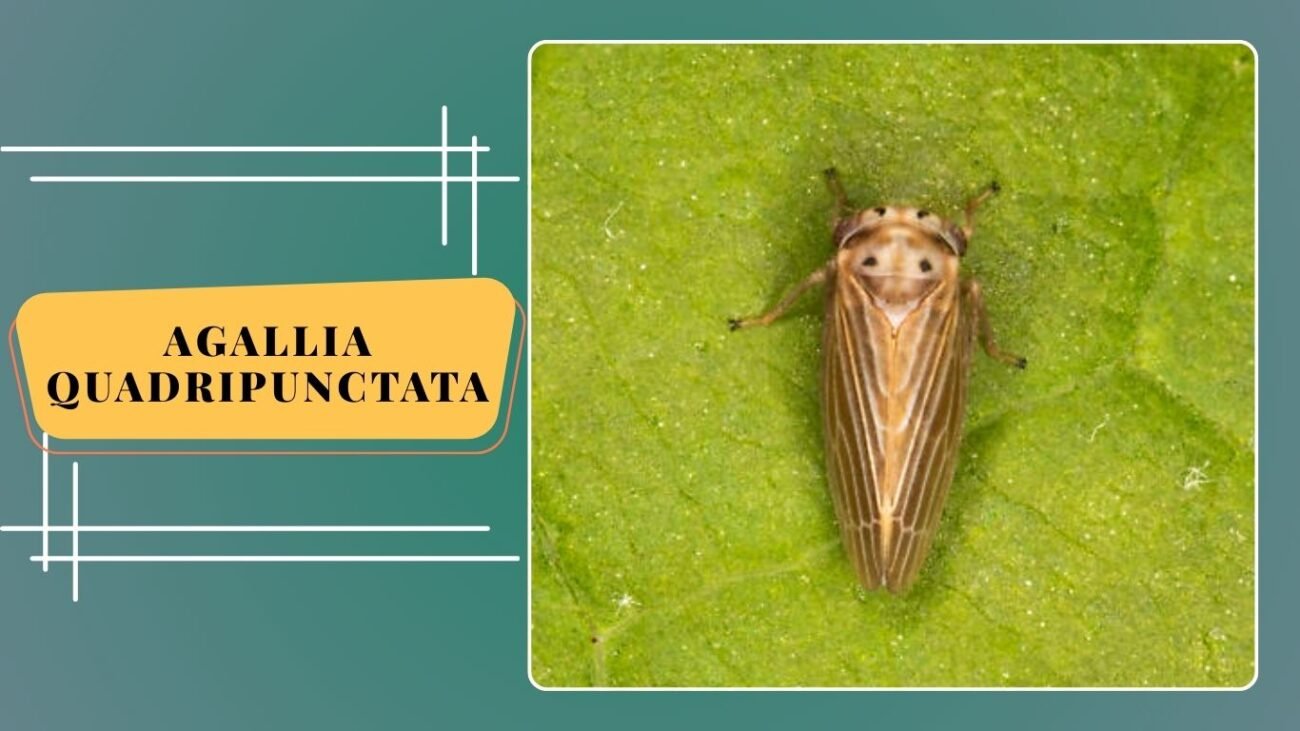
Agallia quadripunctata is a small, widespread leafhopper species that belongs to the subfamily Agalliinae. It is often associated with agricultural fields and grassy habitats and can act as a vector of plant pathogens.
Identification
- Small, about 3–4 mm long.
- Brownish to yellow body with darker mottled spots.
- Characteristic four distinct black spots on the forewings (hence the name “quadripunctata”).
- Wedge-shaped body, short and compact.
- Hind legs equipped for rapid jumping.
Habitat
This species is common in North America, especially in grassy habitats, meadows, and agricultural fields. It thrives in areas with legumes, grains, and wild grasses, often moving between crops and weeds.
Behavior
Agallia quadripunctata is highly active, often jumping when disturbed. It feeds and breeds in large numbers under favorable conditions. It has been noted as a potential vector for phytoplasma diseases, although its economic impact is generally moderate compared to major pest species.
Diet
It feeds on sap from a wide range of herbaceous plants, especially legumes, clover, and grasses. Its broad host range allows it to persist in diverse environments.
Lifecycle
The lifecycle includes incomplete metamorphosis. Eggs are inserted into plant tissue, where they hatch into nymphs. Nymphs undergo five instar stages before reaching adulthood. Multiple generations occur per year, particularly in warmer regions.
14. Exitianus exitiosus (Gray Lawn Leafhopper)
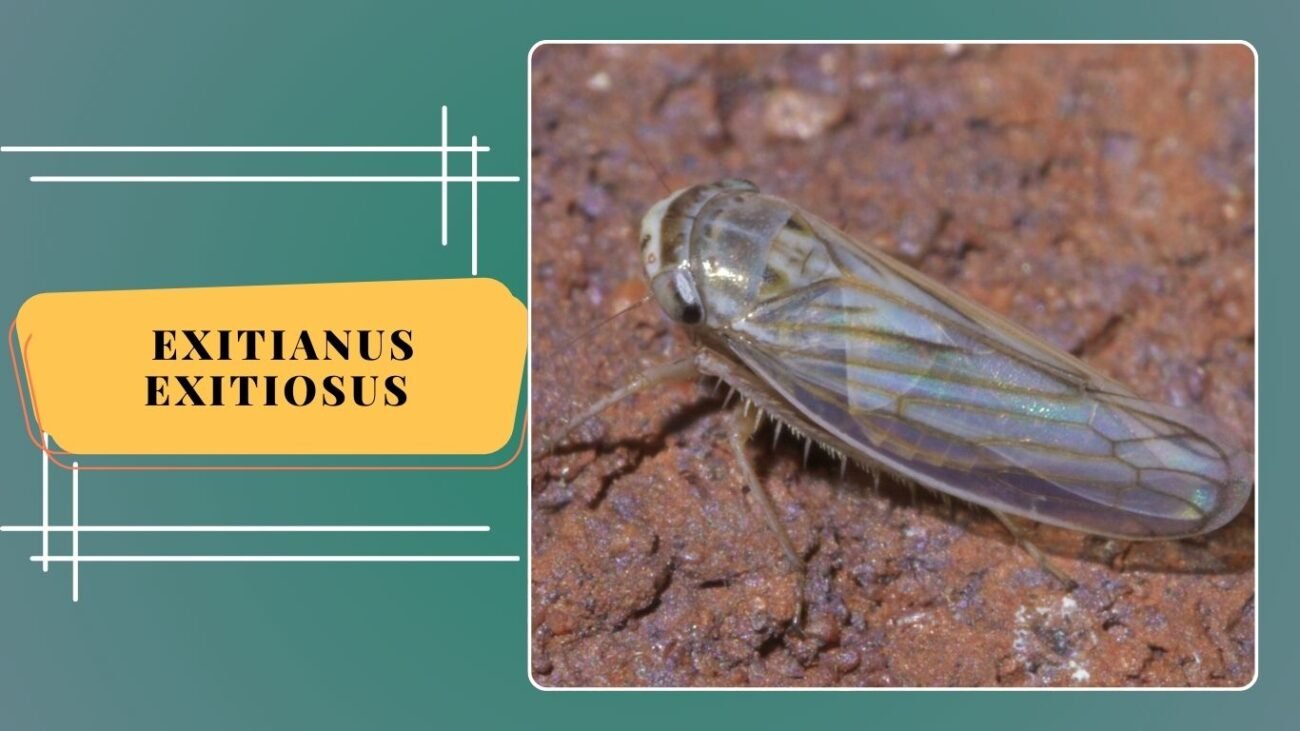
Exitianus exitiosus, commonly known as the Gray Lawn Leafhopper, is a widespread North American species frequently encountered in lawns, pastures, and agricultural fields. It is a common grass-feeding insect but can occasionally impact crops.
Identification
- Medium-sized leafhopper, about 4–5 mm long.
- Grayish-brown body with mottled patterns for camouflage.
- Distinct wedge-shaped form typical of leafhoppers.
- Two small dark spots often visible near the top of the wings.
- Hind legs well-developed for jumping.
Habitat
This species is abundant in lawns, grasslands, and pastures, as well as in agricultural fields where cereals and forage crops are grown. It thrives in open, sunny environments with plenty of grasses.
Behavior
The gray lawn leafhopper is highly active and quick to leap when disturbed. It often forms dense populations in lawns and turf. While not usually a severe pest, in large numbers it can cause stress to grasses and may occasionally transmit plant pathogens.
Diet
Exitianus exitiosus primarily feeds on the sap of grasses and cereal crops, including turfgrass, wheat, corn, and oats. It is a generalist feeder within grass-dominated habitats.
Lifecycle
This species undergoes incomplete metamorphosis. Eggs are laid in grass stems, and nymphs hatch to feed on sap. After passing through several instar stages, they develop into adults. Multiple generations occur per year, especially in warm climates, which can lead to rapid population buildup.
15. Exitianus obscurinervis
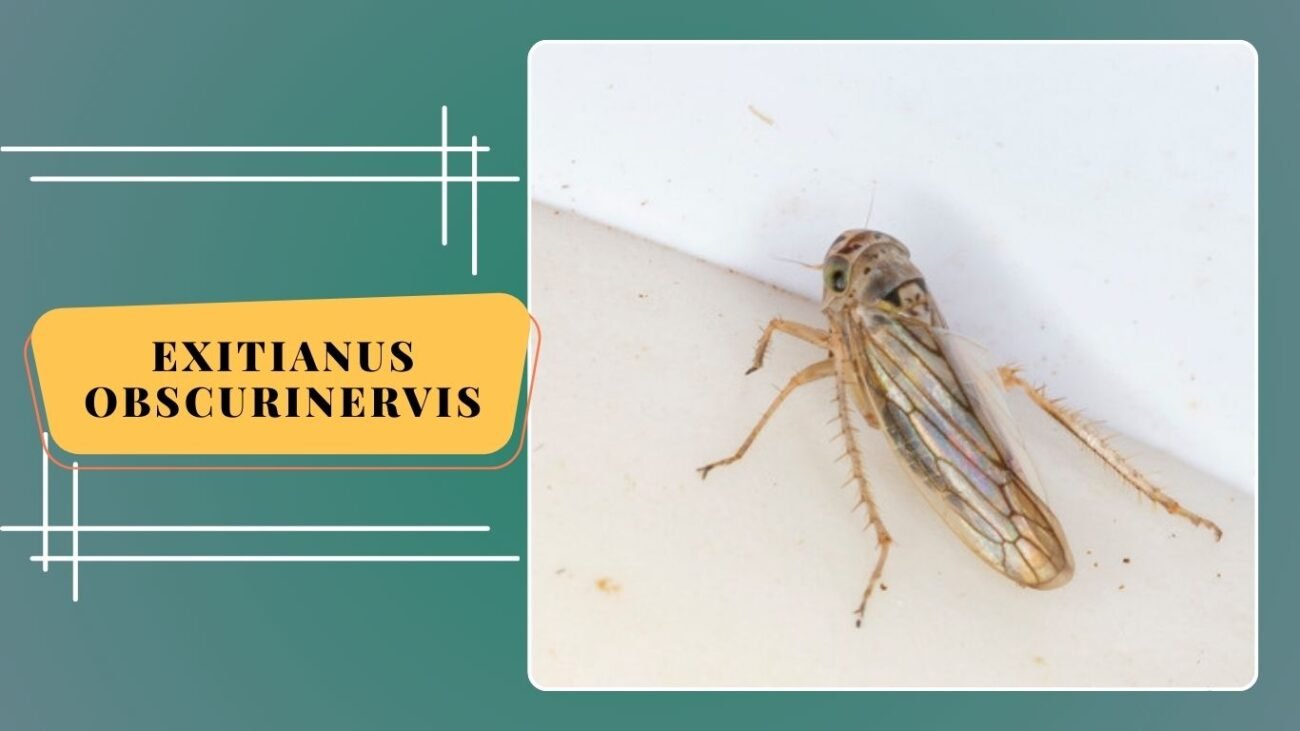
Exitianus obscurinervis is a grass-feeding leafhopper commonly found in fields, pastures, and meadows. It belongs to the Cicadellidae family and is closely related to Exitianus exitiosus. While not a major pest, it contributes to the diversity of grassland ecosystems.
Identification
- Medium-sized, about 4–5 mm in length.
- Brownish-gray coloration with faint mottled wing patterns.
- Subtle darker veins visible on the forewings (hence the name obscurinervis).
- Slender wedge-shaped body with strong hind legs for jumping.
Habitat
This species inhabits grasslands, agricultural fields, and open meadows. It prefers areas dominated by grasses and cereal crops and is widespread across North America and other temperate regions.
Behavior
Exitianus obscurinervis is an active jumper, moving quickly among grasses when disturbed. It typically lives in groups and can survive in disturbed habitats, such as lawns and pastures. Although not a primary vector, it may play a minor role in transmitting plant pathogens among grasses.
Diet
This leafhopper feeds on the sap of grasses and cereal crops, including wheat, corn, and oats. It is adapted to a generalist grass diet, which allows it to thrive in a variety of ecosystems.
Lifecycle
The lifecycle follows incomplete metamorphosis. Eggs are laid in grass stems or leaf sheaths, with nymphs hatching in spring. They pass through five instars before developing into adults. In warmer climates, multiple generations per year occur, ensuring steady populations.
16. Balclutha punctata
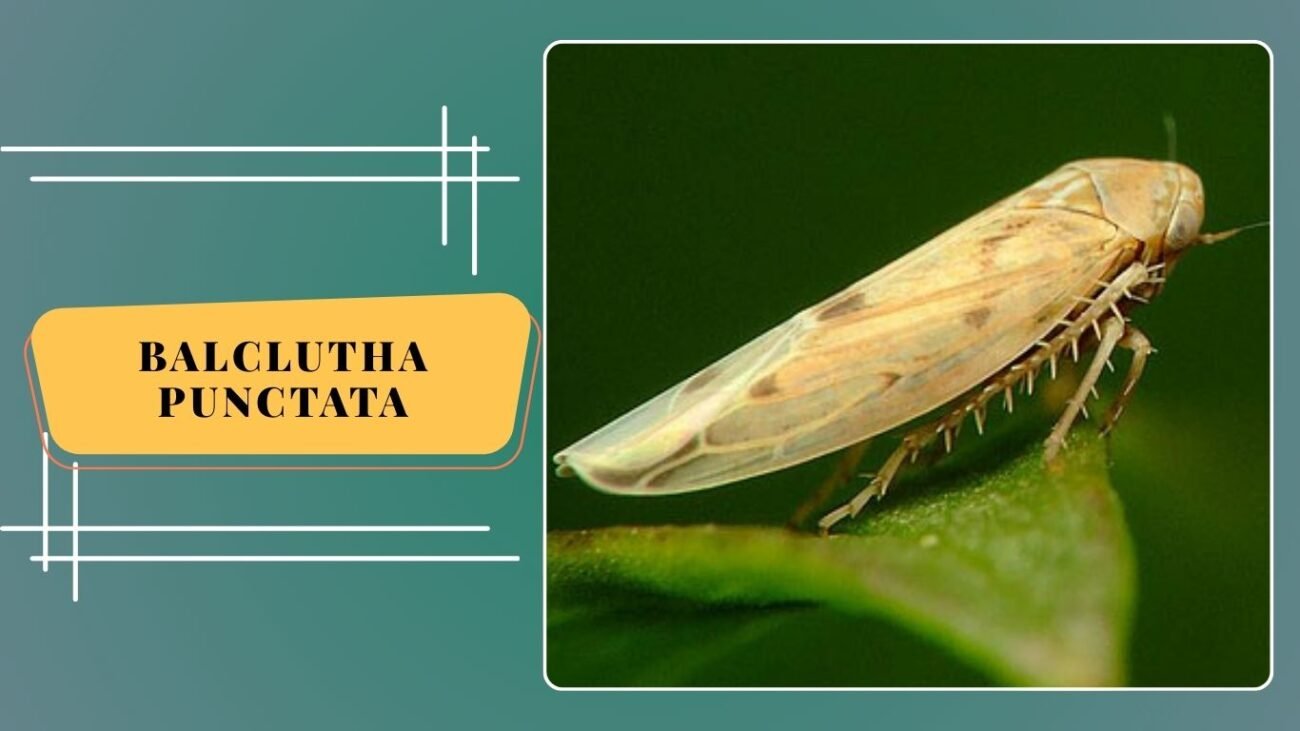
Balclutha punctata is a small leafhopper species belonging to the subfamily Deltocephalinae. It is often found in grassy habitats and is widespread in temperate and subtropical regions.
Identification
- Small size, about 3–4 mm long.
- Pale yellowish to green body.
- Distinctive small dark punctate spots on the wings (name punctata refers to this).
- Narrow, wedge-shaped body typical of leafhoppers.
- Hind legs adapted for quick jumping.
Habitat
This species inhabits grasslands, meadows, agricultural fields, and pastures, particularly areas with abundant grasses. It is widely distributed in temperate regions of North America, Europe, and Asia.
Behavior
Balclutha punctata is highly active, frequently moving between grasses and jumping when disturbed. It is considered a common but minor leafhopper species in grass-dominated ecosystems. It may occasionally contribute to the transmission of plant pathogens.
Diet
It primarily feeds on the sap of grasses and cereal crops, including wheat, barley, oats, and wild grasses. Its generalist grass diet supports survival across diverse environments.
Lifecycle
The lifecycle follows incomplete metamorphosis. Eggs are deposited in grass stems, with nymphs hatching in spring or early summer. Nymphs develop through five instar stages before becoming adults. Several generations per year are possible in warmer climates, allowing populations to persist throughout the growing season.
17. Balclutha incisa
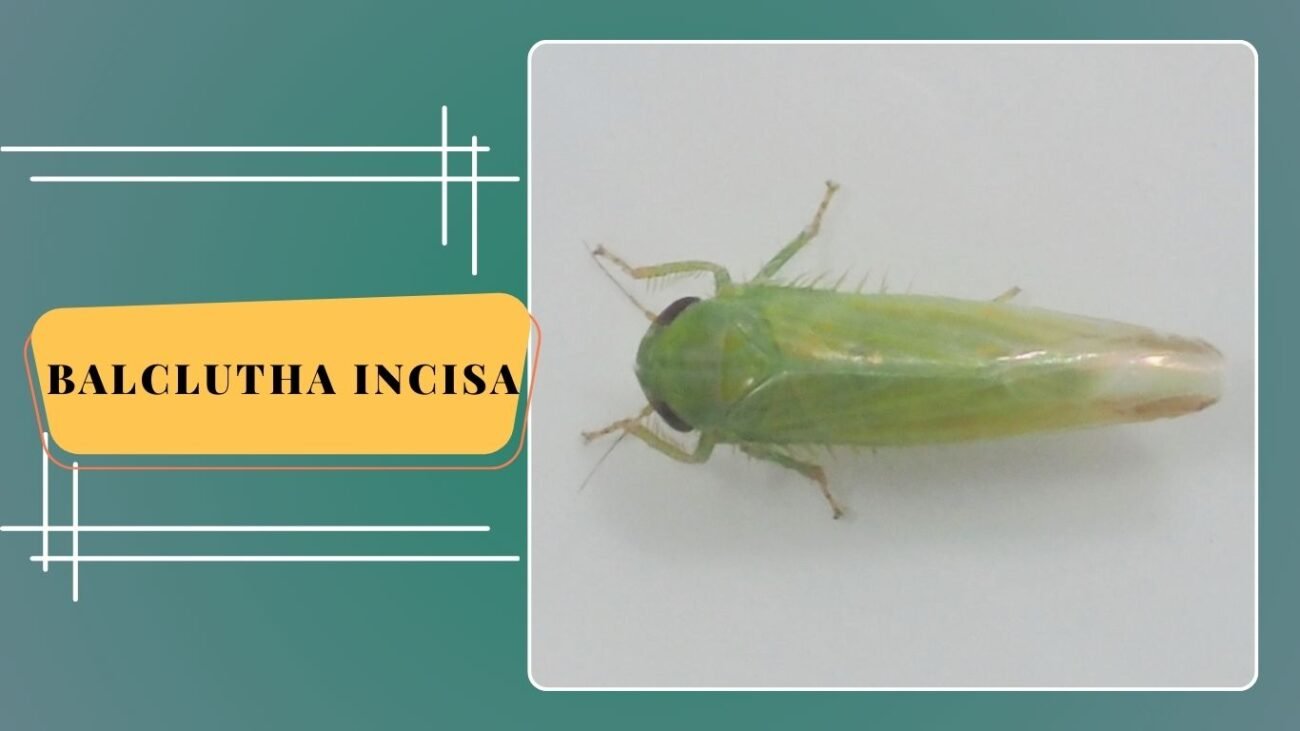
Balclutha incisa is a small grass-feeding leafhopper species within the subfamily Deltocephalinae. It is often overlooked due to its size but is widespread in grassy habitats, especially in agricultural landscapes.
Identification
- Very small, about 3–4 mm long.
- Pale green to yellowish body, sometimes with faint mottling.
- Narrow wedge-shaped form typical of Balclutha species.
- Forewings transparent with fine venation.
- Hind legs slender but strong, suited for leaping.
Habitat
This species is common in grasslands, meadows, pastures, and cereal crop fields. It is widely distributed in North America and also recorded in parts of Europe and Asia where grasses dominate the vegetation.
Behavior
Balclutha incisa is agile and quick to jump when disturbed. It is most active during warmer months and often found in clusters on grasses. While not considered a serious pest, it may occasionally be involved in the spread of plant pathogens among cereal crops.
Diet
It primarily feeds on the sap of grasses and small cereal crops, including wheat, barley, and oats. Like many leafhoppers, it uses piercing-sucking mouthparts to access plant fluids.
Lifecycle
The species undergoes incomplete metamorphosis. Eggs are inserted into grass stems, where they remain until hatching. Nymphs emerge, progressing through five instars before becoming adults. Several generations may occur annually, particularly in warm and humid regions.
18. Macrosteles quadrilineatus (Aster Leafhopper)
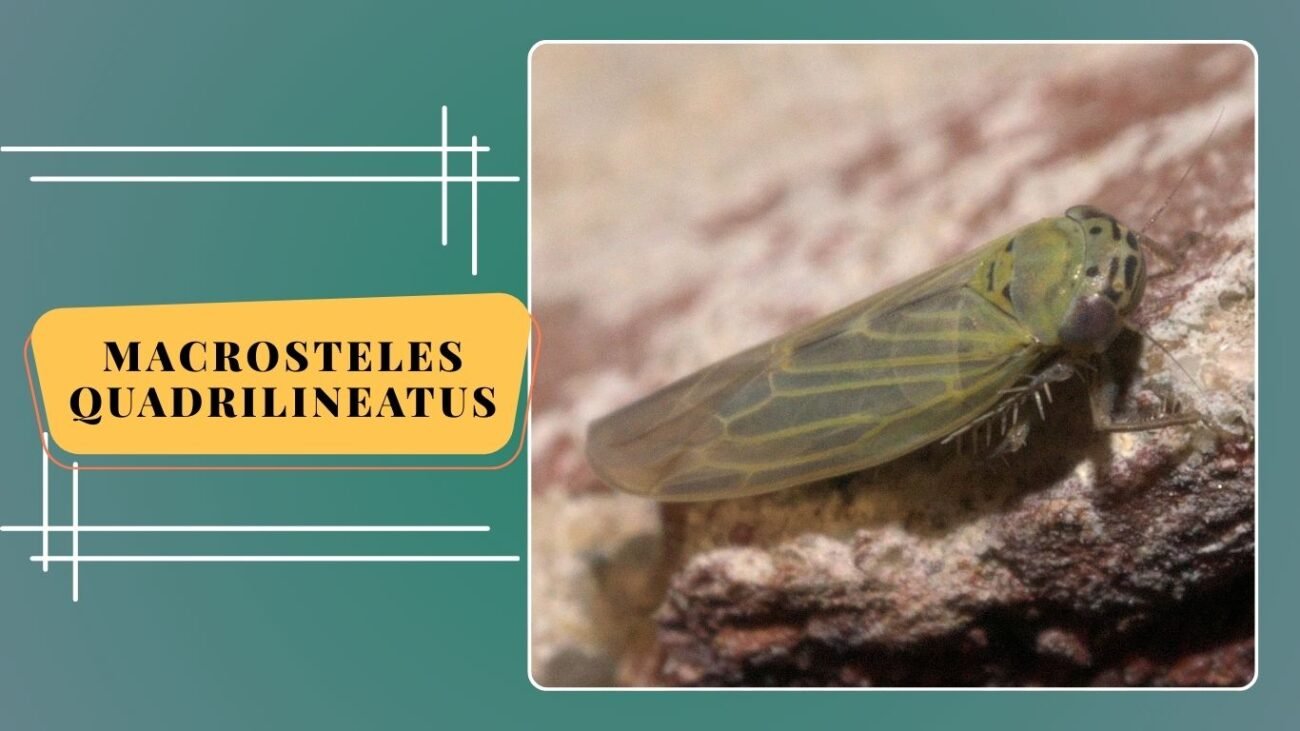
Macrosteles quadrilineatus, widely known as the Aster Leafhopper, is an important agricultural pest in North America. It is especially significant because it transmits the aster yellows phytoplasma, a disease that affects a wide variety of crops and ornamentals.
Identification
- Small, slender insect about 3–4 mm long.
- Pale green to yellowish body.
- Four distinct dark longitudinal lines running along the back (inspired the name quadrilineatus).
- Transparent wings held roof-like over the abdomen.
- Hind legs thin but powerful, adapted for quick jumps.
Habitat
This species is found throughout North America, particularly in agricultural regions. It thrives in fields, meadows, and gardens, where it feeds on many different herbaceous plants, including vegetables and ornamentals.
Behavior
The aster leafhopper is highly mobile and capable of long-distance migration. Each year, populations overwinter in the southern U.S. and move northward in spring. It is notorious for spreading the aster yellows phytoplasma, which causes stunting, yellowing, and deformation in crops.
Diet
Macrosteles quadrilineatus feeds on phloem sap from a wide range of plants, including carrots, lettuce, celery, onions, wheat, and ornamentals. Its broad host range makes it particularly damaging to agriculture.
Lifecycle
The lifecycle follows incomplete metamorphosis. Eggs are deposited within plant tissue, hatching into nymphs that undergo five instar stages before becoming adults. Depending on climate, several generations per year are possible, allowing populations to build rapidly.
19. Macrosteles fascifrons
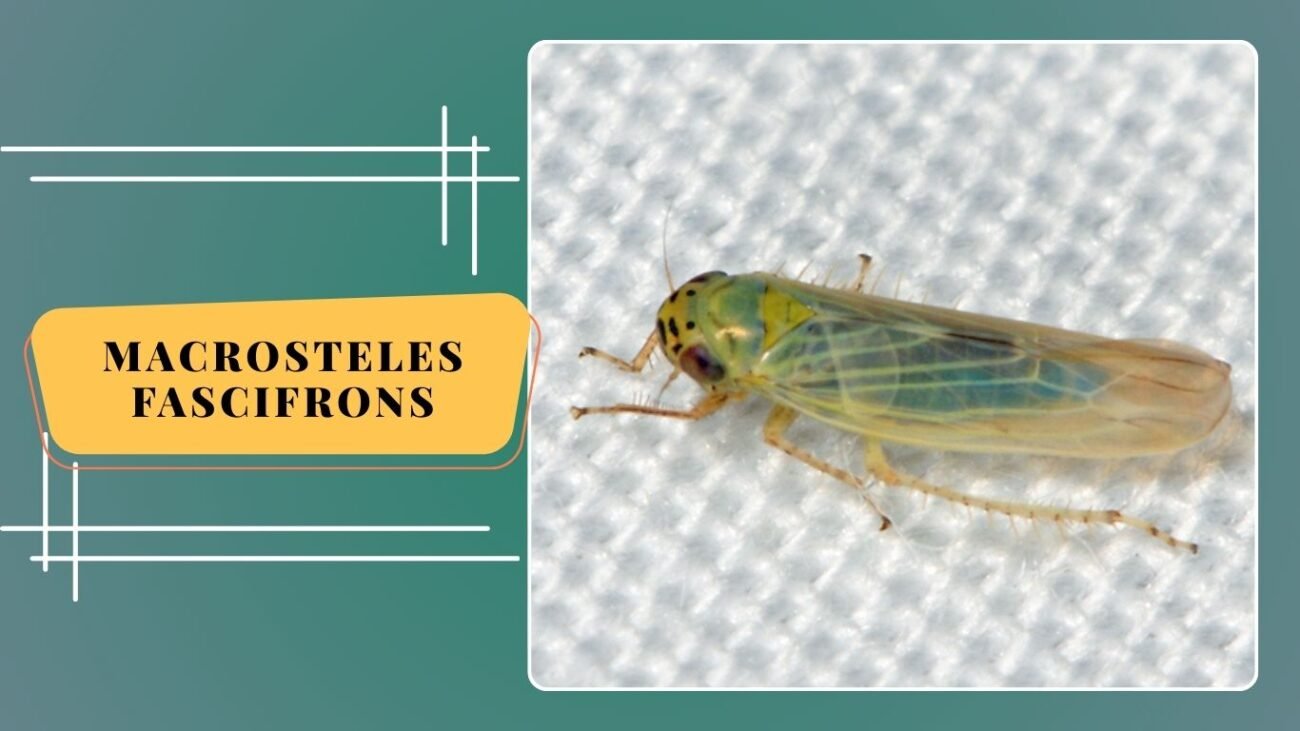
Macrosteles fascifrons is a small leafhopper species closely related to Macrosteles quadrilineatus. Like other members of its genus, it is recognized for its role in transmitting plant pathogens, particularly phytoplasmas, that affect a wide range of crops.
Identification
- Small size, typically 3–4 mm long.
- Pale green to yellowish body coloration.
- Subtle longitudinal stripes on the dorsal surface, though less distinct than in M. quadrilineatus.
- Transparent wings with delicate venation, held roof-like over the abdomen.
- Hind legs long and adapted for rapid jumping.
Habitat
This species is found across North America, especially in agricultural and grassy habitats. It thrives in fields, gardens, and meadows, where host plants such as cereals and vegetables are abundant.
Behavior
Macrosteles fascifrons is active and quick-moving, often migrating between host plants. It has been studied as a potential vector of aster yellows phytoplasma, though it is not as widespread or destructive as M. quadrilineatus.
Diet
It feeds on the phloem sap of a wide range of herbaceous plants, including grasses, cereals, and vegetable crops. Its generalist feeding behavior allows it to adapt to diverse habitats.
Lifecycle
The species undergoes incomplete metamorphosis. Eggs are laid in plant tissue, nymphs hatch, and then develop through five instar stages before reaching adulthood. Multiple generations can occur each year, with population growth influenced by temperature and host availability.
20. Deltocephalus pulicaris
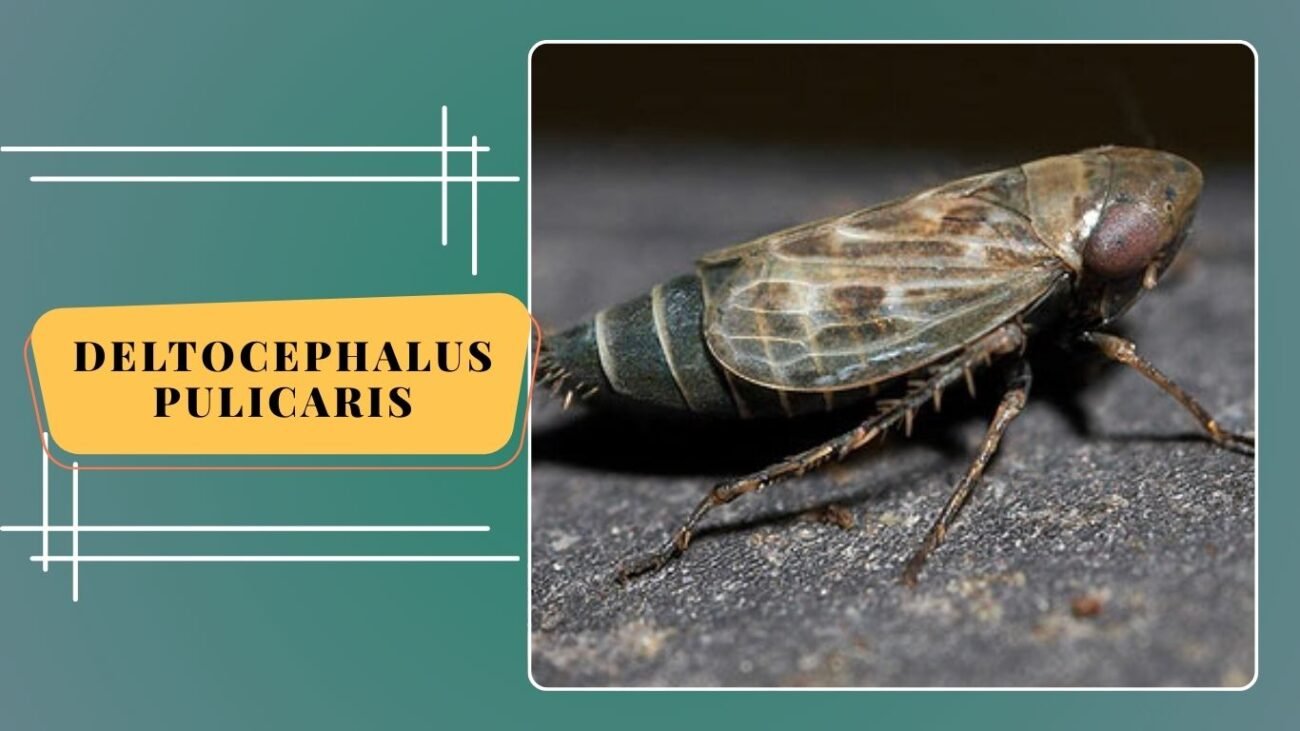
Deltocephalus pulicaris is a small leafhopper belonging to the subfamily Deltocephalinae. It is commonly found in grasslands and agricultural areas across Europe and parts of Asia.
Identification
- Small, about 3–4 mm in length.
- Brownish to yellowish coloration with darker mottled patterns.
- Distinct wedge-shaped body typical of Deltocephalus species.
- Wings usually transparent with fine venation.
- Hind legs slender, equipped for quick and strong jumps.
Habitat
This species is found in meadows, pastures, and cereal crop fields, often in temperate regions. It thrives in grassy ecosystems and is closely associated with cultivated grains.
Behavior
Deltocephalus pulicaris is highly mobile, frequently moving between grasses and jumping when disturbed. It is not considered a major pest, but it can contribute to the transmission of plant diseases under certain conditions.
Diet
It feeds on the sap of grasses and cereal crops, including wheat, barley, oats, and wild grasses. Its generalist grass-feeding habits allow it to survive in varied habitats.
Lifecycle
The lifecycle follows incomplete metamorphosis. Eggs are laid in the stems of grasses and cereals. Nymphs hatch in spring, progress through several instar stages, and develop into adults by early summer. In favorable climates, multiple generations per year can occur.
21. Deltocephalus flavicosta
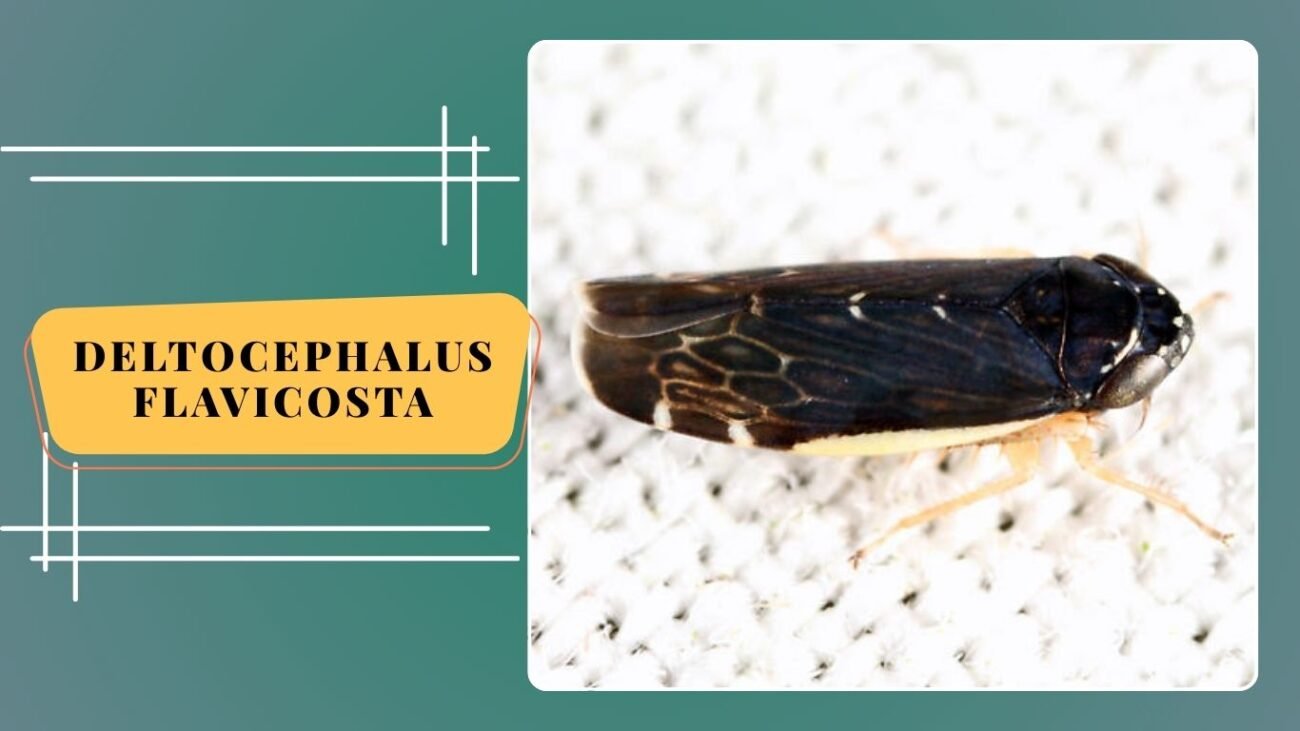
Deltocephalus flavicosta is a small grass-feeding leafhopper belonging to the Deltocephalinae subfamily. It is found in grassy habitats and agricultural ecosystems, where it plays a minor but notable role in the leafhopper community.
Identification
- Small, about 3–4 mm long.
- Brown to yellowish body with darker mottling.
- Characteristic yellowish costal margin (outer edge of the forewing), giving the species its name flavicosta.
- Slender wedge-shaped body.
- Hind legs well-adapted for jumping.
Habitat
This species is associated with grasslands, meadows, and crop fields, particularly areas rich in cereals and wild grasses. It is distributed in temperate regions and is often collected alongside other Deltocephalus species.
Behavior
Deltocephalus flavicosta is quick to leap when disturbed and is usually observed in low vegetation. It is not considered a major pest but may occasionally transmit plant pathogens within grass ecosystems.
Diet
It feeds on sap from grasses and cereal crops, including wheat, barley, and oats. Its preference for grasses makes it most common in fields and pastures.
Lifecycle
The lifecycle involves incomplete metamorphosis. Eggs are laid in grass stems, and nymphs hatch in spring or early summer. After progressing through several instars, they become adults. In warmer climates, two or more generations per year can occur, while in cooler regions it may be limited to a single generation.
22. Scaphoideus titanus (Grape Leafhopper / Vector of Flavescence Dorée)
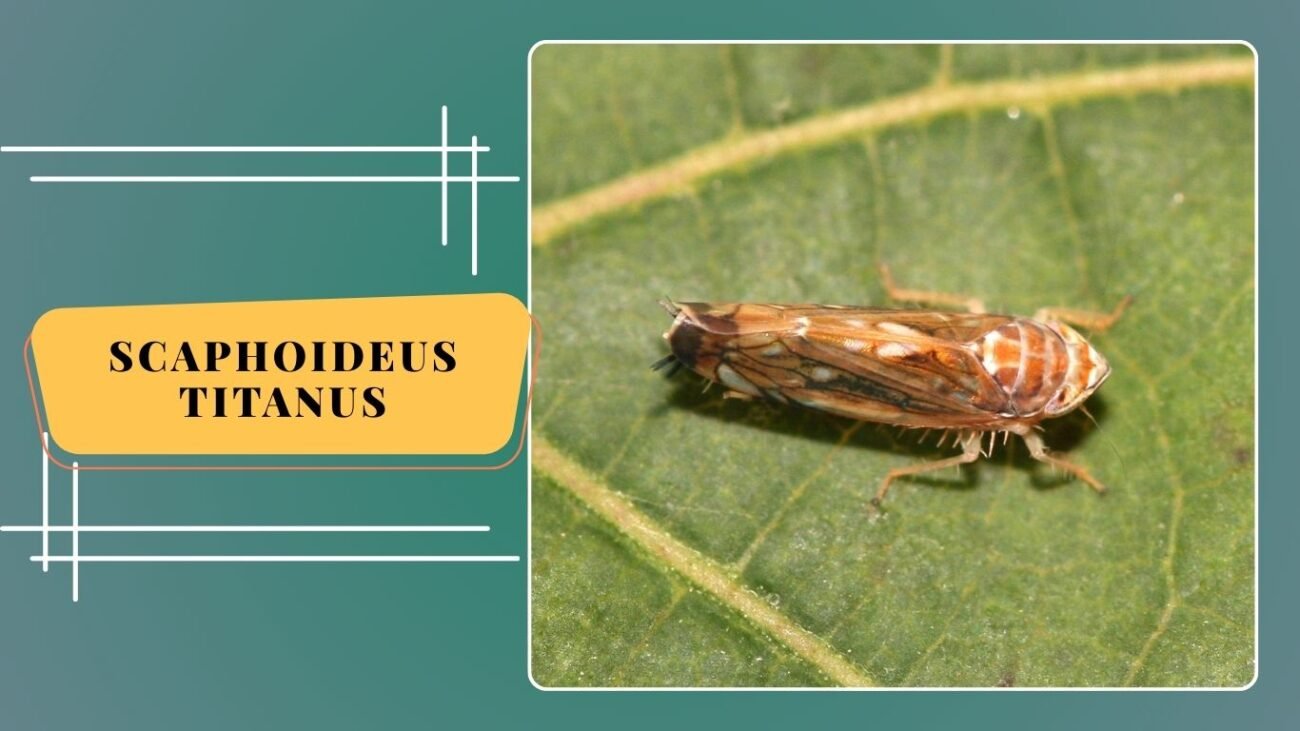
Scaphoideus titanus is a grapevine-specialist leafhopper, notorious as the primary vector of flavescence dorée, a serious phytoplasma disease that affects vineyards across Europe and North America. Its economic impact on viticulture is significant.
Identification
- Small, about 5–6 mm in length.
- Light brown to yellowish body with darker mottling.
- Forewings semi-transparent with distinct venation.
- Wedge-shaped body typical of leafhoppers.
- Hind legs strong, enabling fast jumps.
Habitat
This species is strongly associated with vineyards, particularly grapevines (Vitis vinifera). Native to North America, it was introduced to Europe, where it became a major pest in wine-producing regions.
Behavior
Scaphoideus titanus spends nearly its entire lifecycle on grapevines, making it highly efficient in spreading flavescence dorée phytoplasma. Nymphs and adults are active feeders, and their movement from plant to plant increases the spread of disease.
Diet
The grape leafhopper feeds exclusively on the phloem sap of grapevines, extracting nutrients and weakening the plant over time. While feeding alone causes some stress, its role in disease transmission is far more damaging.
Lifecycle
The lifecycle follows incomplete metamorphosis. Eggs are laid under the bark of grapevines in autumn and overwinter until spring. Nymphs hatch in late spring and develop through five instars before becoming adults in early summer. Typically, there is one generation per year, although in warmer regions two may occur.
23. Scaphoideus luteolus
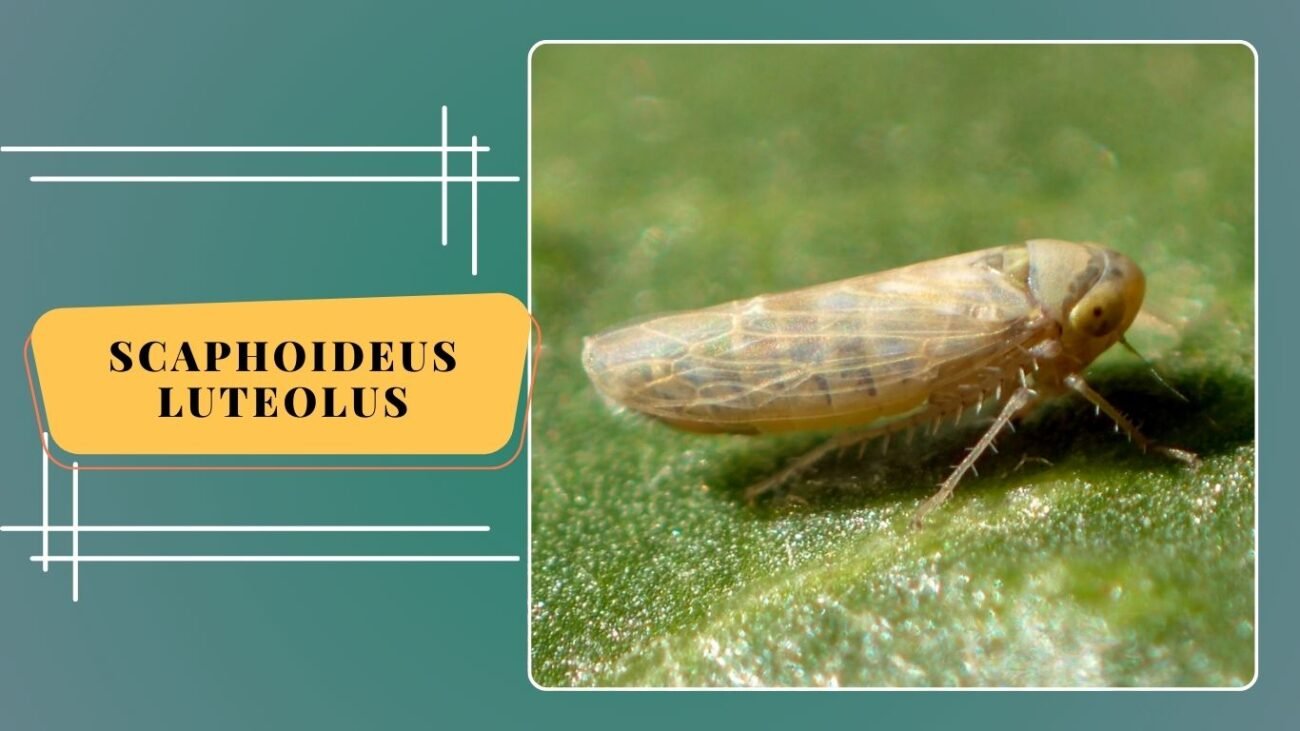
Scaphoideus luteolus is a leafhopper species in the Cicadellidae family. While less notorious than Scaphoideus titanus, it is still important in agriculture because of its potential to transmit phytoplasmas that affect crops and trees.
Identification
- Small, about 4–5 mm long.
- Pale yellowish to light brown body.
- Wings translucent with faint venation.
- Compact, wedge-shaped form.
- Hind legs well-developed for jumping.
Habitat
This species is found in North America, inhabiting deciduous forests, orchards, and agricultural areas. It is especially associated with trees such as elm and sometimes with orchard crops.
Behavior
Scaphoideus luteolus is an active, fast-moving leafhopper. It can disperse easily between plants and plays a role in spreading plant diseases, particularly elm yellows phytoplasma, which severely affects elm populations.
Diet
It feeds on the phloem sap of trees and shrubs, primarily elms, but can also feed on other woody plants. Its feeding can weaken host plants, though the greatest threat is disease transmission.
Lifecycle
The lifecycle includes incomplete metamorphosis. Eggs are laid in tree bark or woody tissue and overwinter until spring. Nymphs emerge, feeding and developing through five instars before becoming adults. Typically, one generation per year occurs, though in warmer areas, partial second generations may appear.
24. Jassus indicus
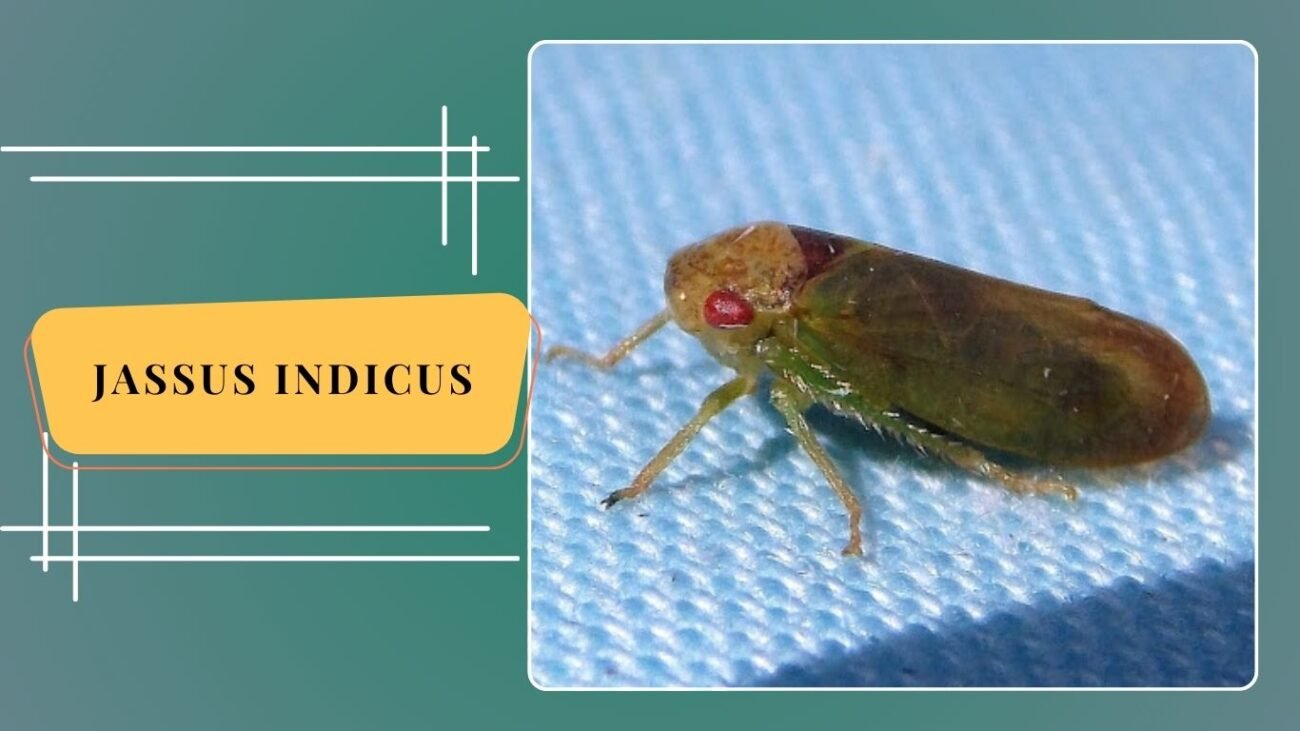
Jassus indicus is a leafhopper species primarily found in Asia. It belongs to the Cicadellidae family and is known for feeding on agricultural crops and grasses, sometimes contributing to crop stress through sap-feeding.
Identification
- Medium-sized, about 4–5 mm in length.
- Greenish body, often with yellow or brown tinges.
- Wedge-shaped body typical of Jassus species.
- Wings transparent with fine venation, held roof-like over the body.
- Hind legs well-built for rapid jumping.
Habitat
This species is native to South Asia, especially India and surrounding regions. It thrives in agricultural fields, grasslands, and areas with abundant cereal crops and legumes.
Behavior
Jassus indicus is an active jumper, dispersing quickly when disturbed. It is often found in groups on crop plants. While not as destructive as some sharpshooters, it may contribute to reduced plant vigor if populations are large.
Diet
It feeds on the phloem sap of grasses, legumes, and crop plants, including rice, wheat, and pulses. Its broad host range allows it to persist in cultivated and wild habitats.
Lifecycle
The species undergoes incomplete metamorphosis. Eggs are laid in plant tissue, typically in stems or leaf sheaths. Nymphs emerge, feeding and passing through several instar stages before becoming adults. In warmer climates, multiple generations per year are common, supporting continuous field presence.
25. Erythroneura variabilis
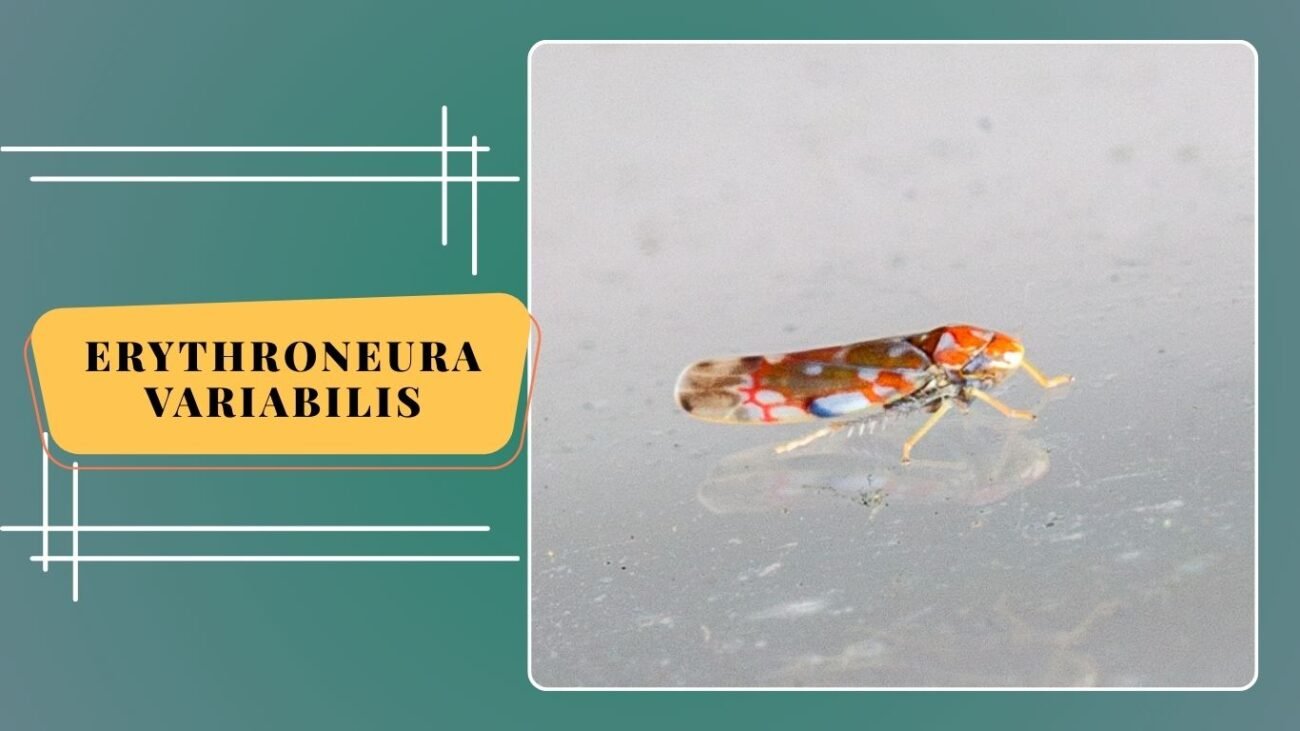
Erythroneura variabilis is a small leafhopper species within the Cicadellidae family, commonly found on grapevines and related plants. Like other Erythroneura species, it is significant in viticulture due to its feeding behavior and potential to reduce plant vigor.
Identification
- Very small, about 3 mm long.
- Pale yellow to whitish body with distinct reddish or orange markings.
- Patterning on the wings varies, hence the name variabilis.
- Slender wedge-shaped body.
- Hind legs adapted for quick jumps.
Habitat
This species is primarily associated with vineyards but can also be found on wild plants and shrubs in North America. It favors warm, dry environments where grapevines are abundant.
Behavior
Erythroneura variabilis is highly mobile and often found on the undersides of grapevine leaves. Its feeding causes stippling (tiny white or yellow spots on leaves), which reduces photosynthesis and weakens vines. Infestations can build rapidly if left unmanaged.
Diet
The species feeds on the phloem sap of grapevines, extracting nutrients and causing visible foliar damage. While grapevines are the preferred host, it may occasionally use related plants.
Lifecycle
The lifecycle follows incomplete metamorphosis. Eggs are laid within grapevine leaf tissue, and nymphs hatch after several days. Nymphs develop through five instar stages before becoming adults. In warmer climates, two or more generations per year may occur, leading to recurring vineyard infestations.