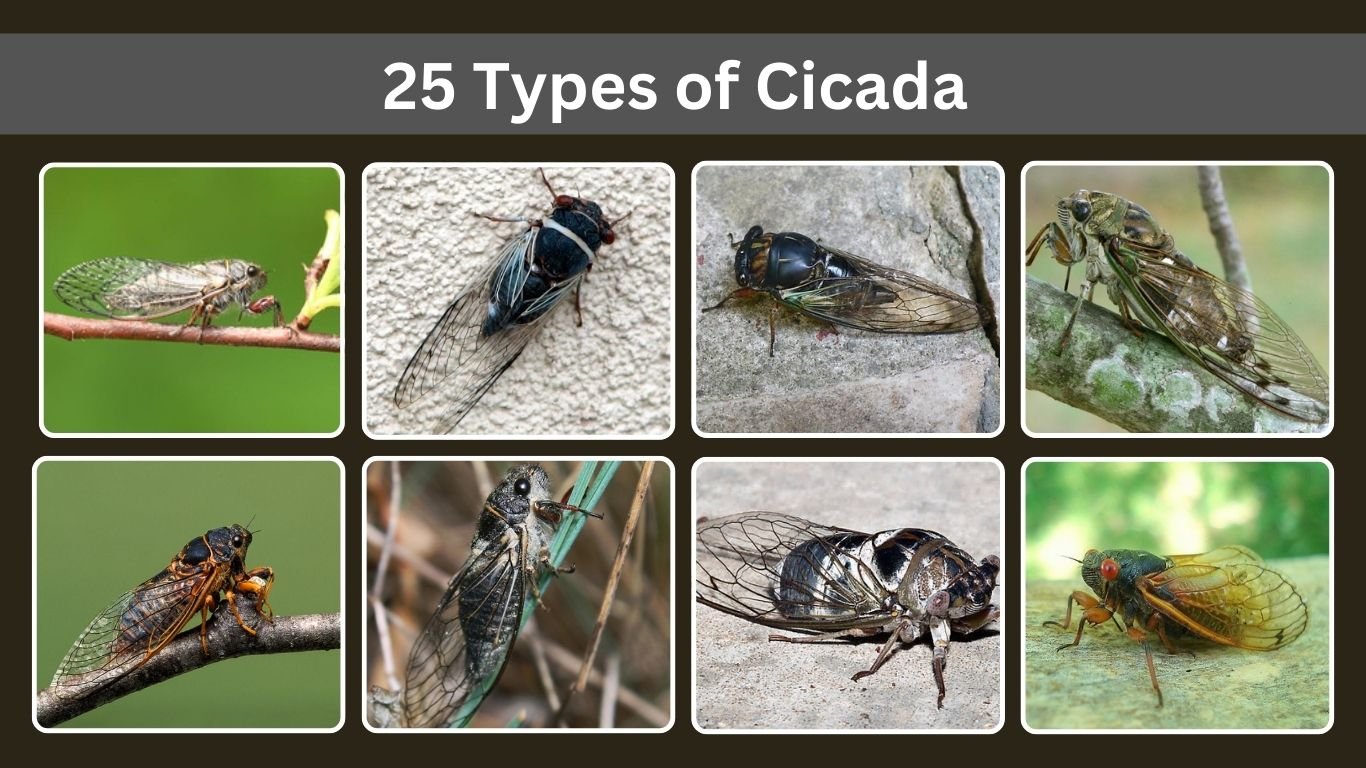
Cicadas are fascinating insects known for their loud, distinctive songs that define the soundscape of summer. With lifecycles ranging from a few years to over a decade, cicadas display remarkable diversity across regions. This guide introduces 25 different cicada species, detailing their identification, habitats, behaviors, diets, and lifecycles. From the famous periodical Magicicada to the giant Quesada gigas, these species showcase the variety and adaptability of cicadas worldwide.
1. Magicicada septendecim

Magicicada septendecim is one of the most famous periodical cicadas, emerging every 17 years in massive synchronized broods. These insects are known for their loud, distinctive songs produced by males to attract females. They play an important role in forest ecosystems, influencing soil nutrients, predator populations, and even plant cycles during their mass emergencies.
Identification
- Medium-to-large size cicada (about 2.5–3.2 cm)
- Black body with bright orange wing veins
- Red eyes, a key feature of periodical cicadas
- Transparent wings with a slightly smoky tint
- Males produce a distinct “Pharaoh” call, often described as a drawn-out buzz
Habitat
This species is native to eastern North America. They inhabit deciduous forests, orchards, and suburban wooded areas. For most of their lives, they remain underground, feeding on the xylem sap of tree roots. When they emerge, they are most abundant in areas with dense hardwood trees.
Behavior
Magicicada septendecim exhibits synchronized mass emergencies that overwhelm predators, ensuring survival through sheer numbers. Males gather in chorus centers, singing loudly to attract females. After mating, females lay eggs in tree branches. Adults live only for 4–6 weeks above ground before dying, completing their dramatic but short-lived surface phase.
Diet
Nymphs feed on tree root xylem underground for 17 years. Adults feed sparingly, if at all, on plant fluids from twigs and branches, since their primary focus above ground is reproduction.
Lifecycle
The lifecycle spans 17 years underground as immature nymphs. After this period, they emerge in synchrony, molt into winged adults, and reproduce. Eggs hatch into tiny nymphs that fall to the soil, burrow underground, and restart the cycle. This precise timing is thought to be an evolutionary strategy to evade predators through periodicity.
2. Magicicada cassini

Magicicada cassini is another periodical cicada species with a 17-year life cycle. Unlike M. septendecim, this species is known for its synchronized choruses and sudden silences, making their collective songs sound like waves. They are often found alongside other periodical cicadas during mass emergencies but can be distinguished by their unique calls and behavior.
Identification
- Smaller than M. septendecim, averaging 2–2.5 cm in length
- Black body with reddish-orange wing veins
- Distinct red eyes
- Transparent wings held tent-like over the body
- Male call is a sharp, buzzing “tick-tick-tick” that builds into a continuous chorus
Habitat
M. cassini inhabits the eastern United States, particularly in hardwood forests, groves, and semi-wooded suburban areas. They prefer regions with abundant deciduous trees, where their nymphs can feed underground for many years before emerging.
Behavior
These cicadas are highly social and gather in massive chorus centers. Their unique behavior involves synchronized calling: thousands of males sing together and then suddenly stop, creating a wave-like sound effect. They exhibit predator satiation strategies during emergence, overwhelming natural predators with sheer numbers.
Diet
Nymphs spend 17 years feeding underground on xylem fluids from tree roots. Adults may sip fluids from branches but generally do not feed extensively, as their short lifespan above ground is dedicated to reproduction.
Lifecycle
The lifecycle follows the classic 17-year underground development. After emerging, nymphs molt into adults, mate, and die within 4–6 weeks. Females lay eggs in slits in tree branches, and once hatched, the new nymphs drop to the soil, burrowing underground to begin another long cycle.
3. Magicicada septendecula

Magicicada septendecula is one of the rarer species among the 17-year periodical cicadas. It often emerges alongside M. septendecim and M. cassini but is less abundant and harder to spot. This species is distinguished by its more subtle song and smaller body size, making it less conspicuous during mass emergencies.
Identification
- Smaller than both M. septendecim and M. cassini (about 2 cm)
- Black body with reddish-orange wing veins
- Red eyes, though sometimes darker than other species
- More slender build compared to other periodical cicadas
- Male call is softer and less continuous, often described as a brief buzz
Habitat
This species inhabits deciduous forests and woodlands across the eastern United States. It is less common and often localized in distribution, favoring areas with mixed hardwoods where its nymphs can thrive underground.
Behavior
M. septendecula is less gregarious than its relatives, forming smaller chorus centers. Males sing in scattered groups, and their calls are less synchronized. Like other periodical cicadas, they rely on predator satiation by emerging in overwhelming numbers, but their smaller populations make them more vulnerable to predation.
Diet
Nymphs feed underground on tree root xylem for 17 years. Adults feed very little, occasionally drawing sap from twigs, but their main function above ground is reproduction.
Lifecycle
The species follows the 17-year developmental cycle underground. After emergence, nymphs molt into adults, and the brief adult phase lasts about 4–6 weeks. Females lay eggs in tree branches, and once the eggs hatch, the nymphs fall to the soil to begin their long subterranean development.
4. Magicicada tredecim

Magicicada tredecim is one of the 13-year periodical cicadas, primarily found in the southern United States. Unlike the 17-year species, these cicadas emerge in synchronized broods every 13 years, forming massive swarms that dominate the landscape with their loud songs. They are among the most abundant and noticeable cicadas during their emergence years.
Identification
- Medium-to-large size (about 2.6–3.2 cm)
- Black body with bright orange wing veins
- Distinct red eyes, sometimes darker in southern populations
- Broader abdomen compared to other Magicicada species
- Male call is a drawn-out, resonant “weeeee-whoa,” distinct from the 17-year species
Habitat
This species is distributed mainly across the southern and midwestern United States. It inhabits deciduous forests, mixed woodlands, and sometimes suburban areas with plenty of hardwood trees. Its underground nymphs prefer soils with stable moisture and tree root systems for long-term feeding.
Behavior
M. tredecim emerges in overwhelming numbers, saturating predators and ensuring survival through sheer abundance. Males form large chorus centers, where they sing loudly to attract females. These gatherings can be deafening, often exceeding 90 decibels. Adults are active during the day and show strong site fidelity, remaining near emergence trees.
Diet
Nymphs feed on xylem sap from tree roots for 13 years underground. Adults occasionally feed on fluids from twigs and branches but invest most of their energy in reproduction rather than foraging.
Lifecycle
The lifecycle spans 13 years underground. After emergence, nymphs climb nearby vegetation, molt into adults, and begin mating. Females cut slits into tree branches to deposit eggs. Once hatched, the tiny nymphs drop to the ground, burrow into the soil, and begin the lengthy subterranean phase that defines their unique rhythm.
5. Magicicada tredecassini
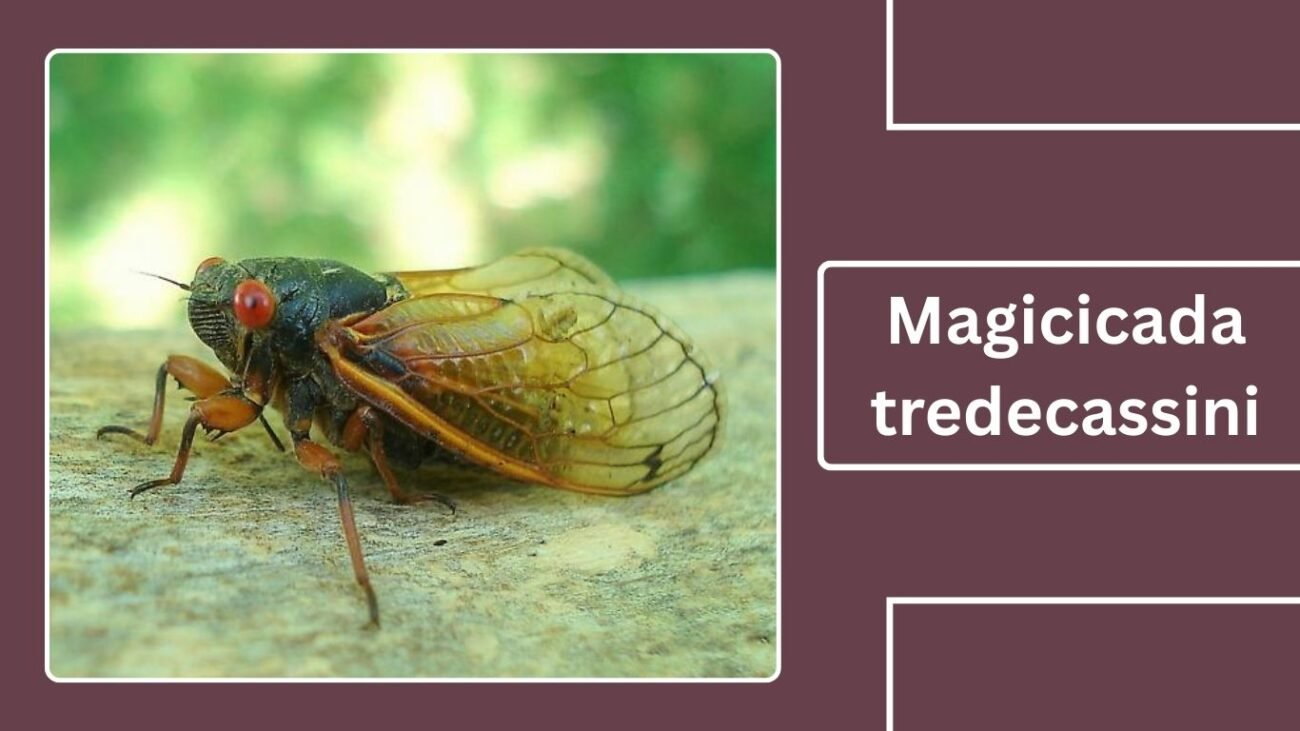
Magicicada tredecassini is a 13-year periodical cicada species, closely related to M. cassini, but with a shorter life cycle. It is recognized for its synchronized calling behavior, where thousands of males produce a collective buzz that rises and falls in waves. This species often emerges in enormous numbers, making it one of the most noticeable 13-year cicadas.
Identification
- Smaller size compared to M. tredecim (about 2–2.5 cm)
- Black body with orange wing veins
- Prominent red eyes
- Transparent wings, held roof-like over the body
- Male call is a sharp, rapid “tick-tick-tick” that escalates into a loud buzz, often in unison with others
Habitat
This species is native to the southern and midwestern United States. It prefers deciduous forests, groves, and semi-wooded areas with plenty of hardwood trees. The underground nymphs thrive in soils rich in tree root systems, which sustain them through their long subterranean phase.
Behavior
M. tredecassini is highly social during emergence, forming dense chorus centers. Males synchronize their calls, creating a wave-like sound effect that can be heard across wide areas. They rely on predator satiation, overwhelming natural predators with their massive population numbers.
Diet
Nymphs feed exclusively on xylem sap from tree roots for 13 years underground. Adults feed sparingly, occasionally tapping into twigs and branches for plant fluids, but reproduction remains their primary focus during their short above-ground phase.
Lifecycle
The species follows a strict 13-year lifecycle. Nymphs live underground for over a decade before emerging en masse. Once above ground, they molt into winged adults, mate, and die within 4–6 weeks. Females lay eggs in tree branches, and the hatched nymphs drop to the soil, burrowing underground to begin another 13-year cycle.
6. Magicicada tredecula
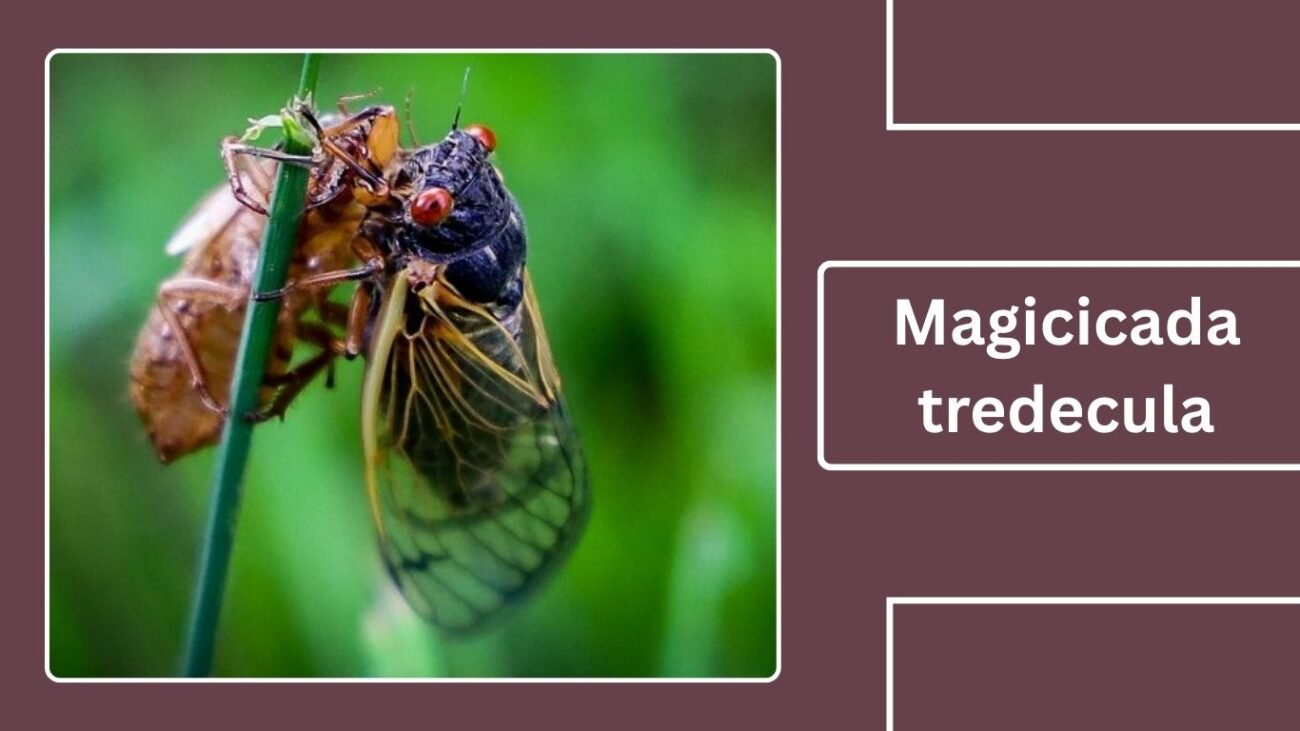
Magicicada tredecula is a 13-year periodical cicada species, related to M. septendecula but with a shorter life cycle. It is less abundant than M. tredecim or M. tredecassini and is often more localized in distribution. Its presence is usually noted in mixed broods of 13-year cicadas, where it contributes to the diversity of calls heard during emergence.
Identification
- Small to medium size (around 2–2.3 cm)
- Black body with orange wing veins
- Red eyes, occasionally darker in some populations
- More slender appearance than M. tredecim
- Male song is softer and shorter, resembling a brief buzz rather than a continuous drone
Habitat
This species is found in the southern and midwestern United States, in deciduous forests and mixed woodlands. Like other periodical cicadas, it depends on hardwood trees both for its underground nymph stage and for oviposition sites during adulthood.
Behavior
M. tredecula forms smaller chorus centers compared to the more numerous M. tredecim and M. tredecassini. Males sing individually or in scattered groups rather than in tightly synchronized choruses. Emergence occurs alongside other 13-year cicadas, and predator satiation still plays a role in their survival despite smaller numbers.
Diet
The nymphs feed on xylem sap from tree roots during their 13-year subterranean development. Adults feed little, if at all, occasionally drawing fluids from twigs, but their main role is reproduction.
Lifecycle
The lifecycle lasts 13 years underground, where nymphs grow slowly while feeding on tree roots. After emerging, they molt into adults, live for 4–6 weeks, and reproduce. Females lay eggs in slits cut into tree branches, and the new nymphs burrow into the soil to restart the lengthy cycle.
7. Magicicada neotredecim
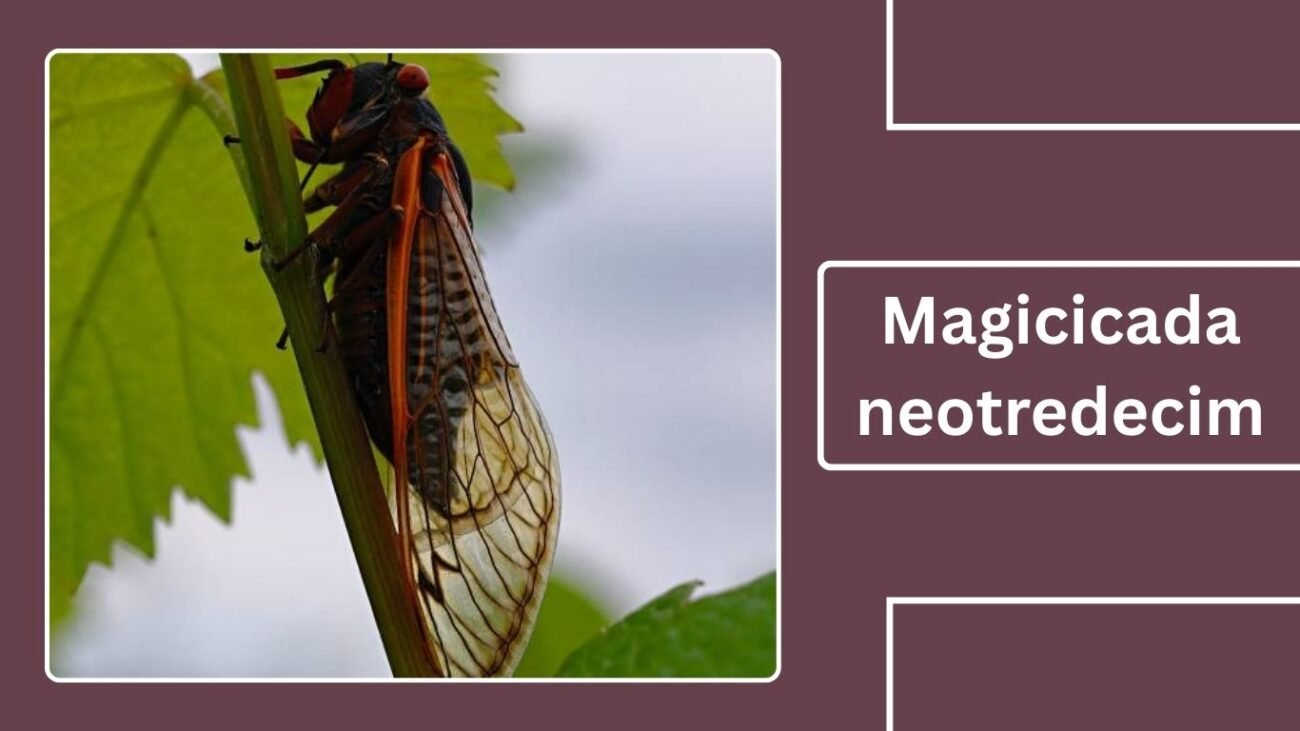
Magicicada neotredecim is another 13-year periodical cicada, closely related to M. tredecim. It was recognized as a distinct species relatively recently due to differences in its song patterns and genetics. This cicada is especially notable because its emergence often overlaps with M. tredecim, and the two can be distinguished primarily by their calls.
Identification
- Medium size (about 2.5–3.2 cm)
- Black body with orange wing veins
- Red eyes, typical of periodical cicadas
- Similar appearance to M. tredecim, making field identification difficult without song analysis
- Male call is a distinct high-pitched “weeeee” that rises in pitch, contrasting with M. tredecim’s lower-toned call
Habitat
Found mainly in the southern and midwestern United States, particularly where broods of 13-year cicadas occur. They favor deciduous forests and woodlands with dense populations of hardwood trees, providing both underground nourishment and egg-laying sites.
Behavior
Males form chorus centers and sing collectively to attract females. The distinct high-pitched call is critical in mate recognition and species separation, preventing hybridization with M. tredecim. Like all periodical cicadas, they rely on predator satiation during emergence, appearing in overwhelming numbers.
Diet
Nymphs feed underground for 13 years on xylem sap from tree roots. Adults feed minimally, sometimes on plant fluids from twigs, but their primary role is reproduction during their short above-ground phase.
Lifecycle
The lifecycle follows a 13-year pattern underground. After emerging, nymphs molt into adults, reproduce, and die within 4–6 weeks. Females cut slits into branches to lay eggs. Once hatched, the young nymphs fall to the soil, burrow underground, and continue the long developmental phase until the next emergence.
8. Tibicen linnei (Neotibicen linnei)
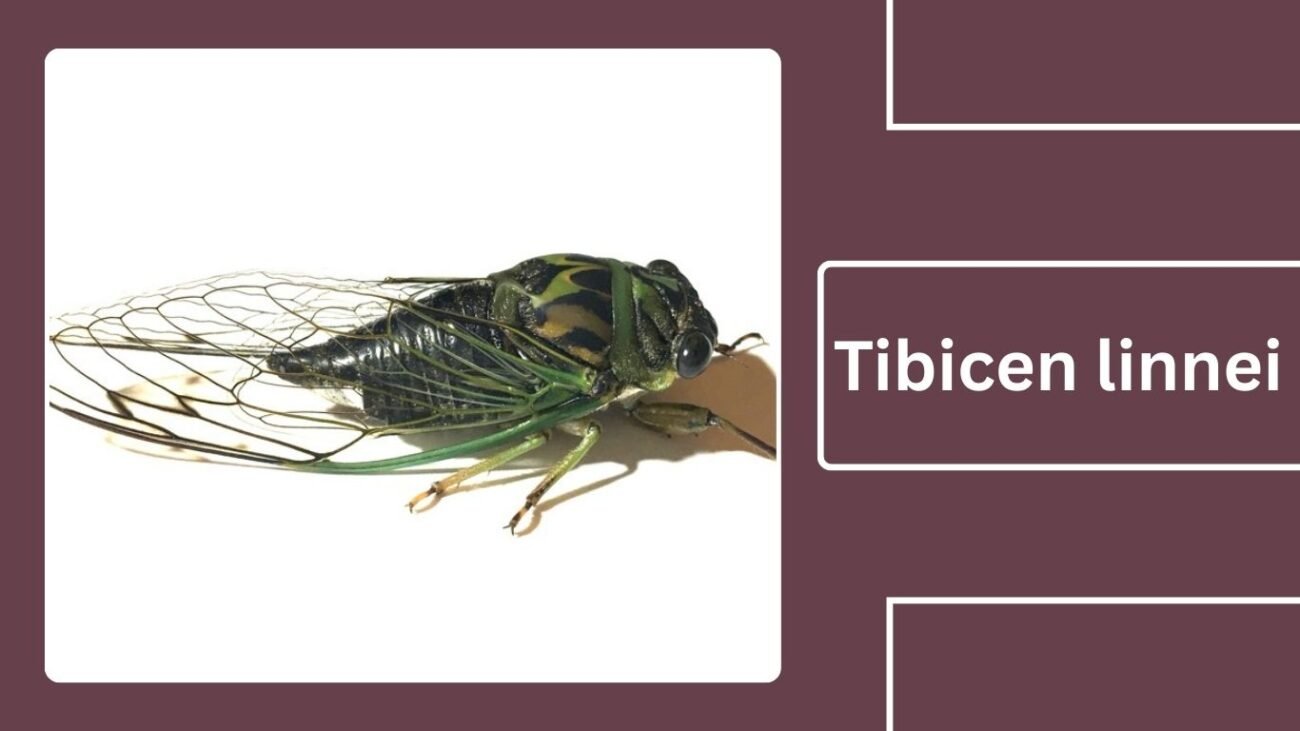
Neotibicen linnei, commonly called Linne’s cicada, is a widespread annual cicada species in North America. Unlike periodical cicadas, this species emerges every summer, filling the air with its loud buzzing calls. It is one of the more recognizable dog-day cicadas and plays an important role in the seasonal soundscape of late summer.
Identification
- Medium-to-large size (about 3–3.5 cm)
- Dark brown to black body with greenish markings on the thorax
- Broad, transparent wings with greenish veins
- Large, bulging eyes (greenish to brown)
- Male call is a rising, high-pitched buzzing sound, lasting about 15–20 seconds
Habitat
This cicada is found across much of the eastern and central United States. It prefers woodlands, groves, and suburban areas with hardwood trees. Adults are most commonly seen on tree trunks and branches during hot summer days.
Behavior
Males perch on trees and produce loud, buzzing calls to attract females. They are active during the hottest parts of the day, especially in the afternoon. Unlike periodical cicadas, their populations are not synchronized, so they appear in smaller but consistent numbers each year.
Diet
Nymphs live underground for 2–3 years, feeding on xylem sap from tree roots. Adults feed lightly on plant fluids but spend most of their short lifespan focused on reproduction.
Lifecycle
The lifecycle is shorter than periodical cicadas. Nymphs remain underground for a few years, then emerge in summer, molt into adults, and reproduce. Adults live for several weeks, during which females lay eggs in tree branches. The hatching nymphs drop to the soil and burrow underground to begin the next cycle.
9. Tibicen canicularis (Neotibicen canicularis)
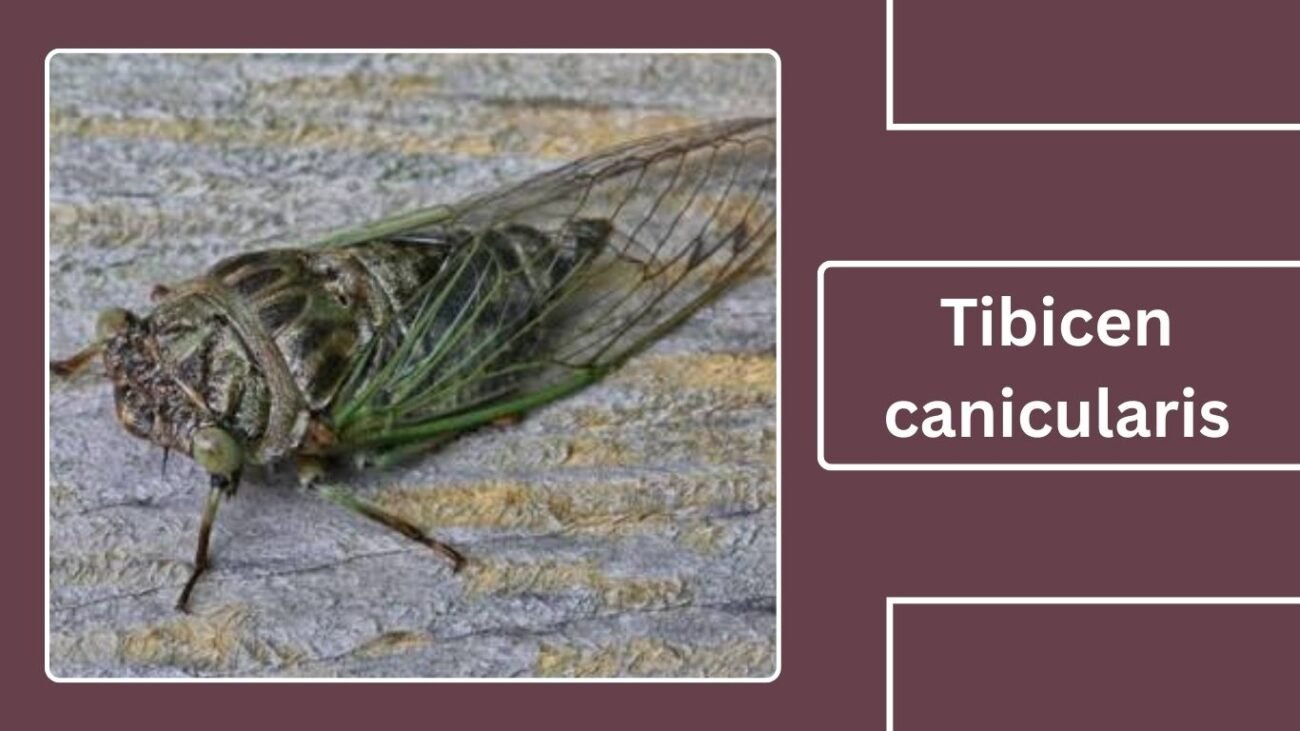
Neotibicen canicularis, commonly known as the dog-day cicada, is one of the most familiar cicadas in North America. Its name comes from its peak emergence during the “dog days of summer,” typically July and August. The species is well known for its high-pitched buzzing call, which often fades in and out like a whine.
Identification
- Medium size (about 2.5–3 cm long)
- Dark brown to black body with green and tan markings on the thorax
- Transparent wings with black and greenish veins
- Eyes usually dark brown or greenish
- Male call is a whining buzz that rises and falls, lasting 10–20 seconds
Habitat
This species ranges widely across the northern and eastern United States and southern Canada. It inhabits deciduous forests, woodlands, orchards, and suburban areas with large shade trees. They are often heard high in tree canopies on hot summer days.
Behavior
Males produce loud buzzing songs from treetops, especially in the afternoon and evening. The call is distinct and often associated with the peak heat of midsummer. Unlike periodical cicadas, N. canicularis populations are not synchronized, so they emerge every year in smaller, steady numbers.
Diet
Nymphs live underground for 2–3 years, feeding on xylem sap from tree roots. Adults may sip fluids from tree branches but primarily focus on mating and reproduction during their short above-ground phase.
Lifecycle
The lifecycle lasts about 2–3 years, although adults are present every summer due to overlapping generations. After emerging, nymphs climb tree trunks, molt into winged adults, and reproduce. Females deposit eggs in tree branches, and once hatched, the nymphs drop to the soil to continue the cycle underground.
10. Tibicen pruinosus (Neotibicen pruinosus)
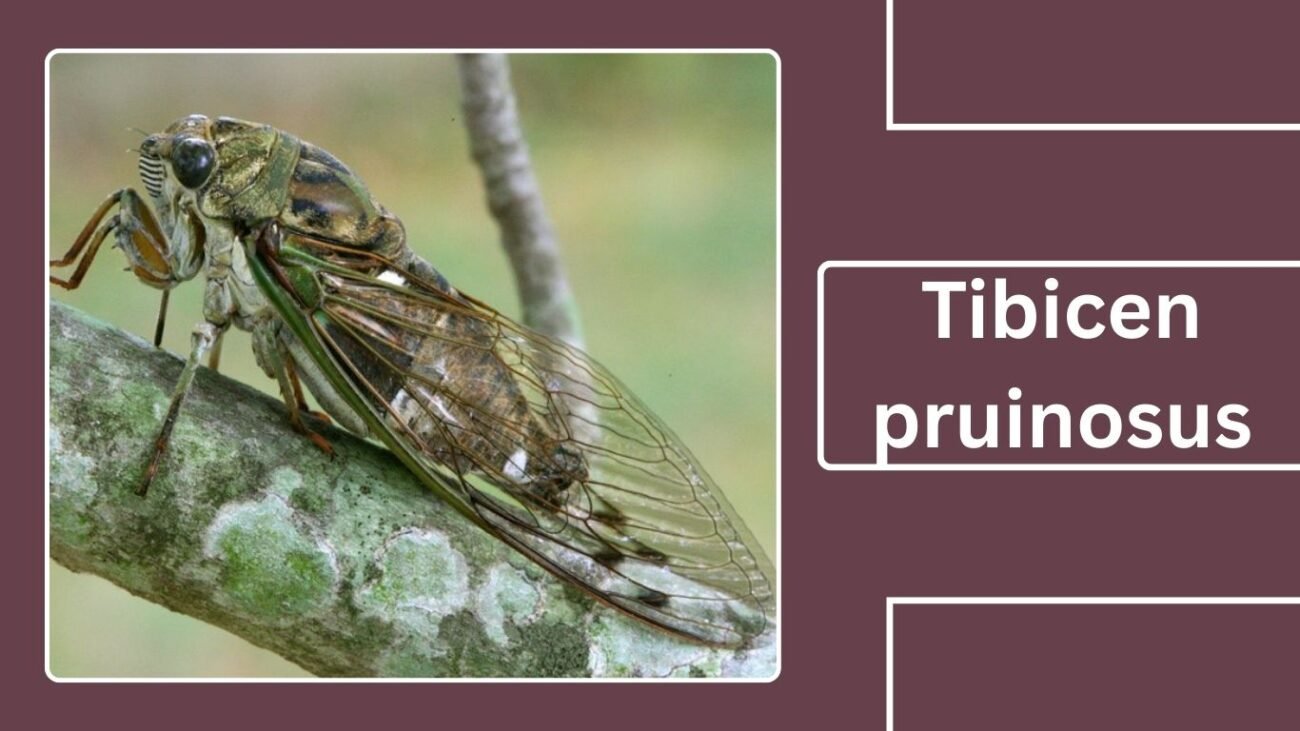
Neotibicen pruinosus, commonly called the scissor grinder cicada, is a widespread annual cicada species in North America. It gets its nickname from the male’s distinctive call, which resembles the continuous grinding sound of scissors being sharpened. This cicada is especially abundant in late summer and is often heard during hot afternoons and evenings.
Identification
- Medium-to-large size (about 3–3.6 cm long)
- Dark body with greenish markings on the thorax
- Abdomen often covered in a white, powdery coating (pruinose appearance)
- Transparent wings with dark veins
- Male call is a long, steady, rattling buzz that can last for up to a minute
Habitat
This species is found across the central and eastern United States, especially in woodlands, parks, and suburban areas. They prefer hardwood trees, where adults perch to sing and lay eggs.
Behavior
Males sing from high tree branches, producing a continuous grinding-like buzz that carries far. They are most active during hot afternoons and evenings. Adults are solitary but abundant, with overlapping generations that ensure yearly appearances.
Diet
Nymphs spend 2–3 years underground feeding on xylem sap from tree roots. Adults occasionally feed on plant fluids from twigs and branches but invest most of their energy in reproduction.
Lifecycle
The lifecycle lasts 2–3 years, but adults are present every summer due to staggered generations. After emerging, nymphs molt into winged adults, reproduce, and die within several weeks. Females insert eggs into small branches, and once the nymphs hatch, they drop to the ground and burrow into the soil to continue the cycle.
11. Tibicen tibicen (Neotibicen tibicen tibicen)
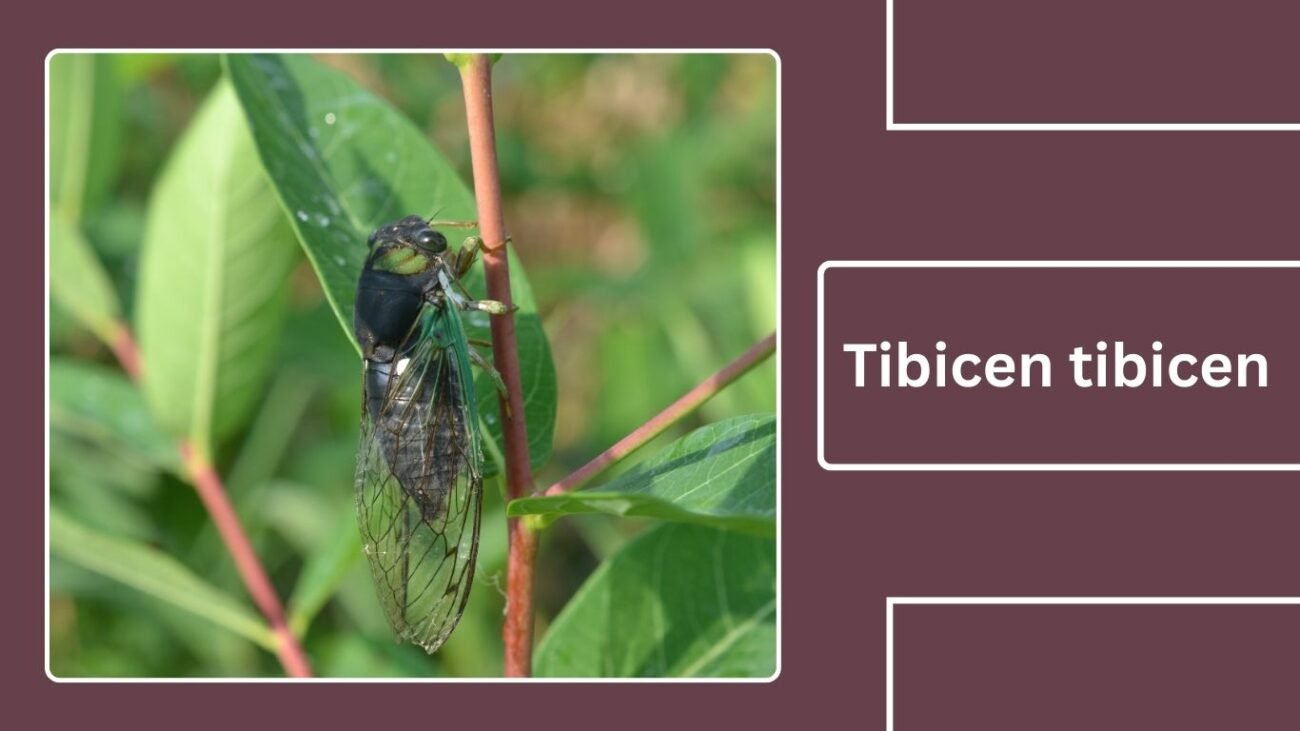
Neotibicen tibicen tibicen, commonly known as the swamp cicada, is a loud and distinctive annual cicada species found across much of the eastern United States. Unlike the periodical cicadas, it appears every summer and is especially associated with wetland habitats and lowland forests. Its deep, pulsating call can often be heard near rivers, ponds, and swampy areas.
Identification
- Large size (about 3.2–3.8 cm long)
- Dark blackish body with greenish and brown markings on the thorax
- Abdomen with a strong pruinose (white, powdery) coating
- Transparent wings with dark veins, often showing green edges
- Male call is a deep, pulsating buzz that rises and falls, lasting 10–15 seconds
Habitat
As its common name suggests, the swamp cicada favors wet, lowland habitats. It is found in swamps, riverbanks, floodplains, and moist forests across the eastern and southeastern United States. It can also occur in suburban areas with nearby wetlands.
Behavior
Males perch on trees, shrubs, or tall vegetation and sing loudly during hot summer days, especially in the afternoons. Their calls are territorial and are used to attract females. Unlike synchronized periodical cicadas, swamp cicadas appear annually with overlapping generations.
Diet
Nymphs feed underground for several years on xylem sap from tree roots. Adults may sip from twigs and branches but focus primarily on reproduction during their brief above-ground phase.
Lifecycle
The lifecycle lasts about 2–4 years underground, but adults emerge yearly due to staggered broods. After emerging, nymphs molt into winged adults, reproduce, and die within several weeks. Females deposit eggs into tree branches, and once hatched, the nymphs burrow underground to restart the cycle.
12. Tibicen lyricen (Neotibicen lyricen)
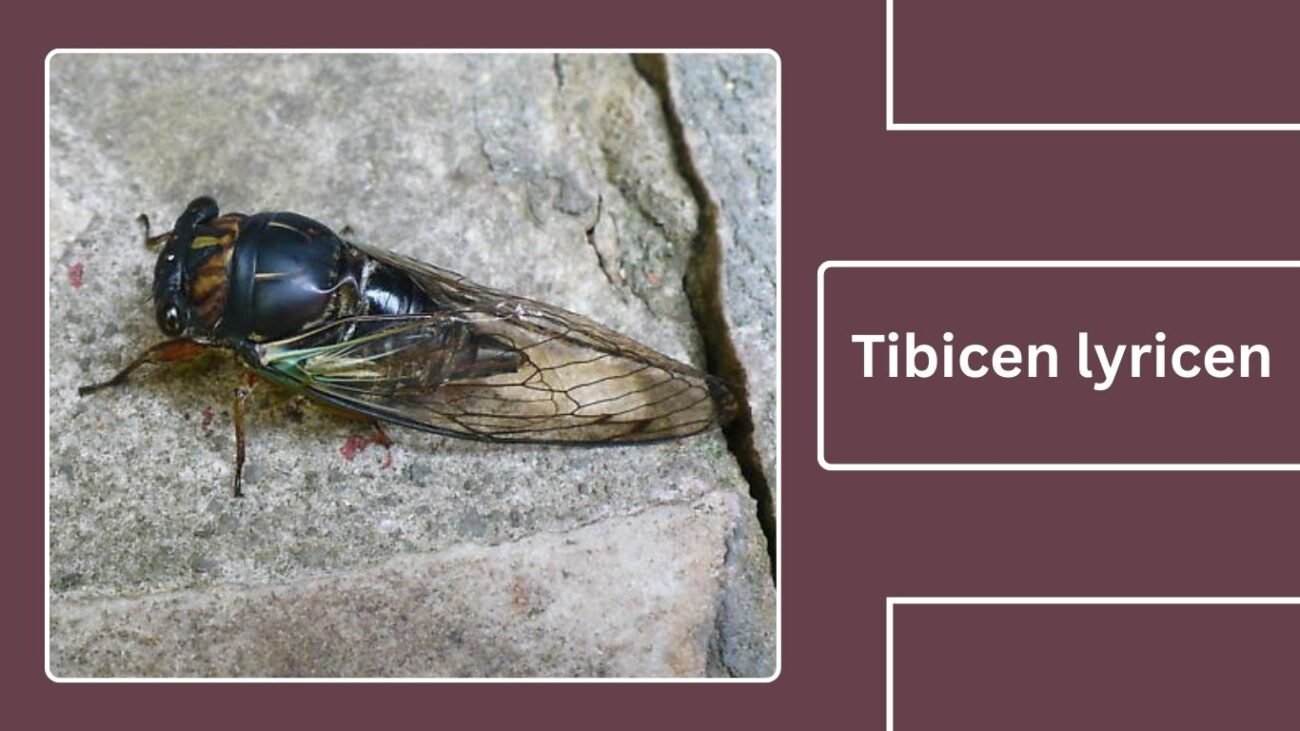
Neotibicen lyricen, commonly called the lyric cicada, is a large and striking annual cicada native to the eastern United States. Its common name comes from the musical quality of the male’s call, which has a rhythmic rise and fall. This species is often heard in mid to late summer, contributing to the seasonal chorus of dog-day cicadas.
Identification
- Large cicada, measuring about 3.5–4 cm in length
- Dark body with bold green and black markings on the thorax
- Abdomen often shiny black with light pruinose (powdery) patches
- Prominent, broad transparent wings with dark veins
- Male call is a strong, pulsing buzz with a rising and falling rhythm, lasting 15–20 seconds
Habitat
This species inhabits deciduous forests, woodlands, and suburban areas across the eastern United States. It is often associated with tall trees, including oaks and maples, where both nymphs and adults thrive.
Behavior
Males sing loudly from high perches on tree trunks or branches, especially during hot afternoons. Their calls are territorial and designed to attract females. Adults are strong fliers and often move between nearby trees. Unlike periodical cicadas, their populations emerge annually in overlapping generations.
Diet
Nymphs feed underground on the xylem sap of tree roots for several years. Adults occasionally feed on plant fluids from twigs and branches but focus mainly on reproduction during their brief lifespan.
Lifecycle
The lifecycle lasts 2–4 years underground, though adults are seen every summer due to staggered broods. After emerging, nymphs molt into winged adults, reproduce, and die within a few weeks. Females insert eggs into small tree branches, and once hatched, the nymphs burrow underground to begin the next cycle.
13. Tibicen davisi (Neotibicen davisi)
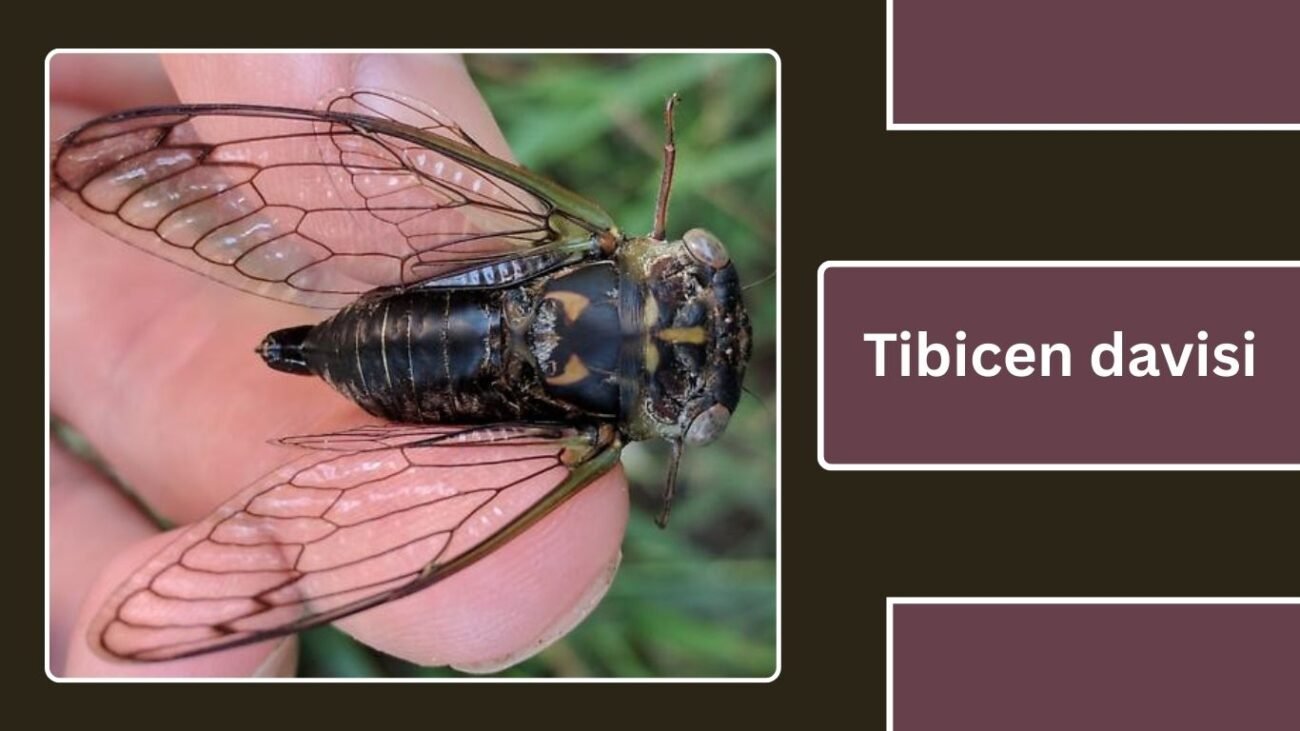
Neotibicen davisi, commonly known as Davis’s cicada, is a widespread annual cicada species in the southeastern United States. It is smaller than many other dog-day cicadas and is recognized by its distinct call, which is a continuous buzz with a rattling quality. This species is most abundant in midsummer, particularly in warm, open woodland areas.
Identification
- Medium-sized cicada (about 2.5–3 cm long)
- Dark body with green and brown markings on the thorax
- Abdomen often dark with light pruinose (powdery) patches
- Wings transparent with dark veins
- Male call is a rattling buzz, steady and mechanical, lasting 10–15 seconds
Habitat
This species is found across the southeastern and south-central United States. It favors pine forests, mixed hardwood stands, and suburban landscapes with scattered trees. It is more often associated with open, sunny environments than dense forests.
Behavior
Males sing persistently during hot afternoons and evenings from perches on trees. Their call is less musical than that of the lyric cicada but distinctively mechanical. Like other annual cicadas, populations are stable and not synchronized, emerging every year in overlapping generations.
Diet
Nymphs feed underground for 2–3 years on the xylem sap of tree roots. Adults feed sparingly on plant fluids but concentrate on reproduction during their short above-ground life.
Lifecycle
The lifecycle spans 2–3 years underground. Adults appear yearly in summer due to staggered generations. After emerging, nymphs molt into winged adults, reproduce, and die within several weeks. Females deposit eggs in tree branches, and the hatched nymphs burrow underground to begin the cycle again.
14. Tibicen similaris (Neotibicen similaris)
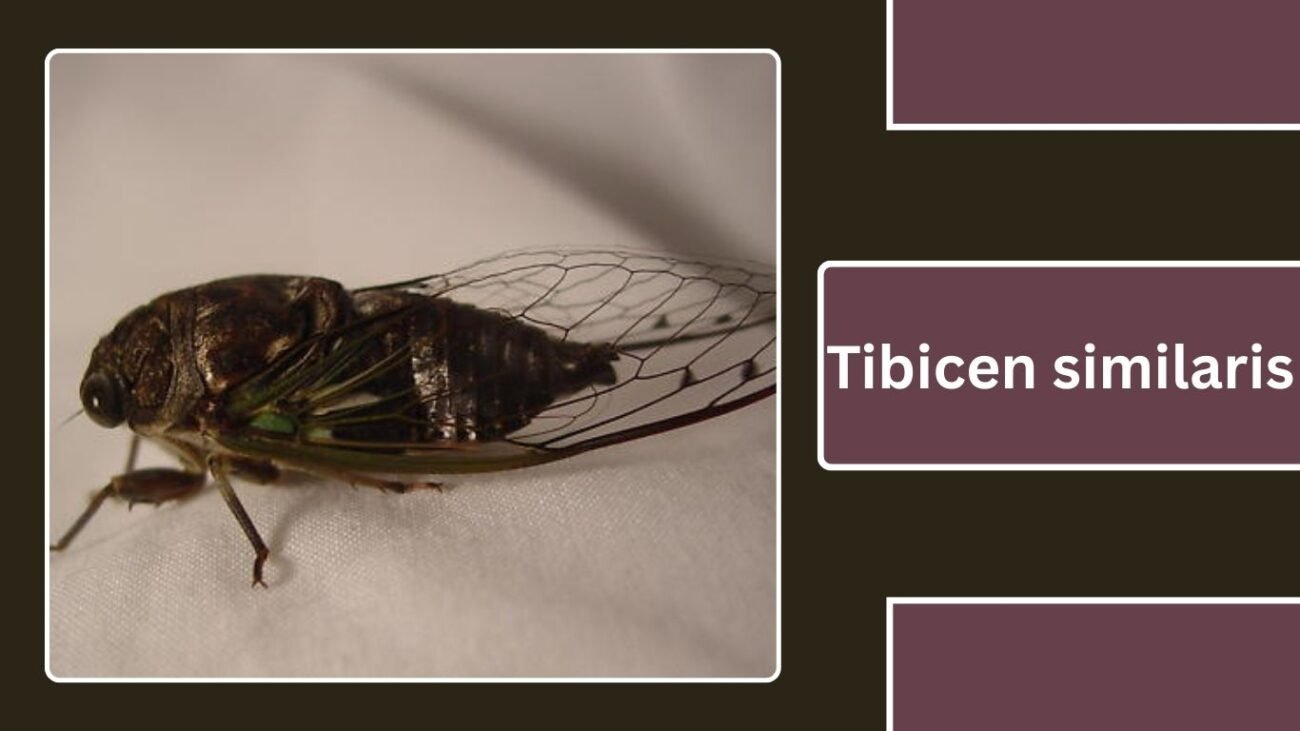
Neotibicen similaris, commonly called the similar cicada, is an annual cicada species native to the southeastern United States. It closely resembles other Neotibicen cicadas in appearance, which is why it was given the name “similaris.” Its distinctive, drawn-out call helps in distinguishing it from related species during the hot summer months.
Identification
- Medium-to-large size (about 3–3.5 cm long)
- Dark brown to black body with greenish markings on the thorax
- Abdomen dark with light pruinose (powdery) patches
- Transparent wings with dark veins and greenish bases
- Male call is a long, steady buzz that rises and falls, lasting 15–20 seconds, often resembling N. pruinosus but at a slightly higher pitch
Habitat
This cicada is found throughout the southeastern United States, particularly in pine forests, mixed hardwood stands, and rural landscapes. It is also encountered in suburban areas where tall shade trees are present.
Behavior
Males call from high perches on tree trunks or branches, especially during the heat of the afternoon and into the evening. Their songs are used both to attract females and to establish territories. Unlike periodical cicadas, N. similaris emerges every year in overlapping generations, ensuring consistent populations.
Diet
Nymphs feed underground for several years on the xylem sap of tree roots. Adults may sip fluids from tree branches but feed very little, as reproduction is their primary focus above ground.
Lifecycle
The lifecycle typically spans 2–3 years underground, though adults appear annually due to overlapping broods. After emerging, nymphs molt into adults, mate, and die within a few weeks. Females cut slits into branches to deposit eggs, and the hatched nymphs drop to the soil to restart the cycle.
15. Tibicen resonans (Neotibicen resonans)
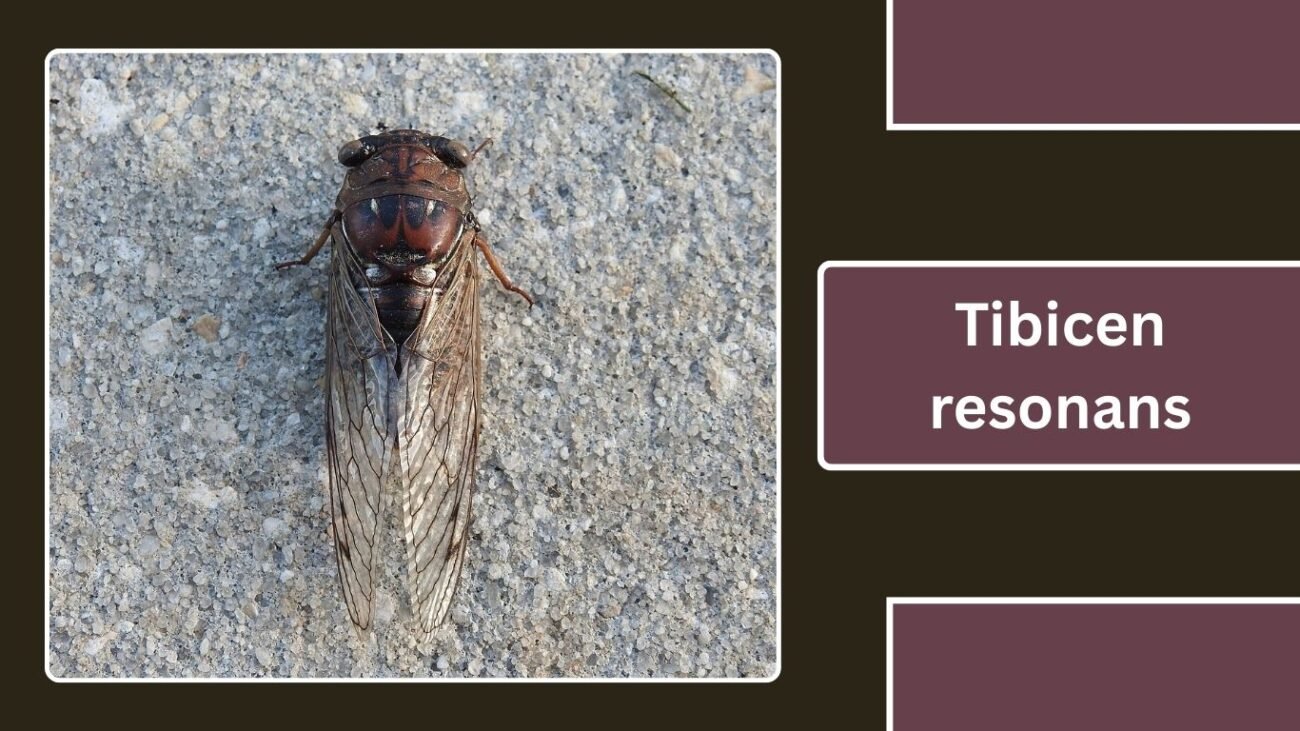
Neotibicen resonans, commonly known as the resonant cicada, is a large annual cicada species of the southeastern United States. It is famous for its loud, resonating call, which carries over long distances and is often heard during the peak of summer heat. This species is among the most powerful singers of the Neotibicen group.
Identification
- Large size (about 3.5–4 cm long)
- Dark blackish-brown body with greenish and tan markings on the thorax
- Abdomen robust, often with light pruinose (powdery) patches
- Transparent wings with dark veins and a slightly greenish base
- Male call is a deep, resonating buzz that can last 20–30 seconds, notable for its loud, vibrating quality
Habitat
This cicada is most common in the southeastern United States, particularly in states along the Gulf Coast. It prefers hardwood forests, pine-oak woodlands, and suburban areas with mature shade trees. Its loud song is often heard from treetops in both rural and urban landscapes.
Behavior
Males produce powerful, resonant calls from high perches in trees, especially during hot afternoons. The sound is territorial and attracts females from considerable distances. Adults are strong fliers and may move between trees frequently. Unlike periodical cicadas, N. resonans emerges annually in overlapping generations.
Diet
Nymphs remain underground for several years, feeding on xylem sap from tree roots. Adults feed sparingly on plant fluids from branches but devote their short lifespan above ground to reproduction.
Lifecycle
The lifecycle lasts about 2–4 years underground, though annual emergencies occur due to overlapping broods. After emerging, nymphs molt into winged adults, mate, and die within weeks. Females lay eggs in small tree branches, and the hatched nymphs drop to the ground to burrow into the soil, beginning the next cycle.
16. Tibicen auletes (Neotibicen auletes)
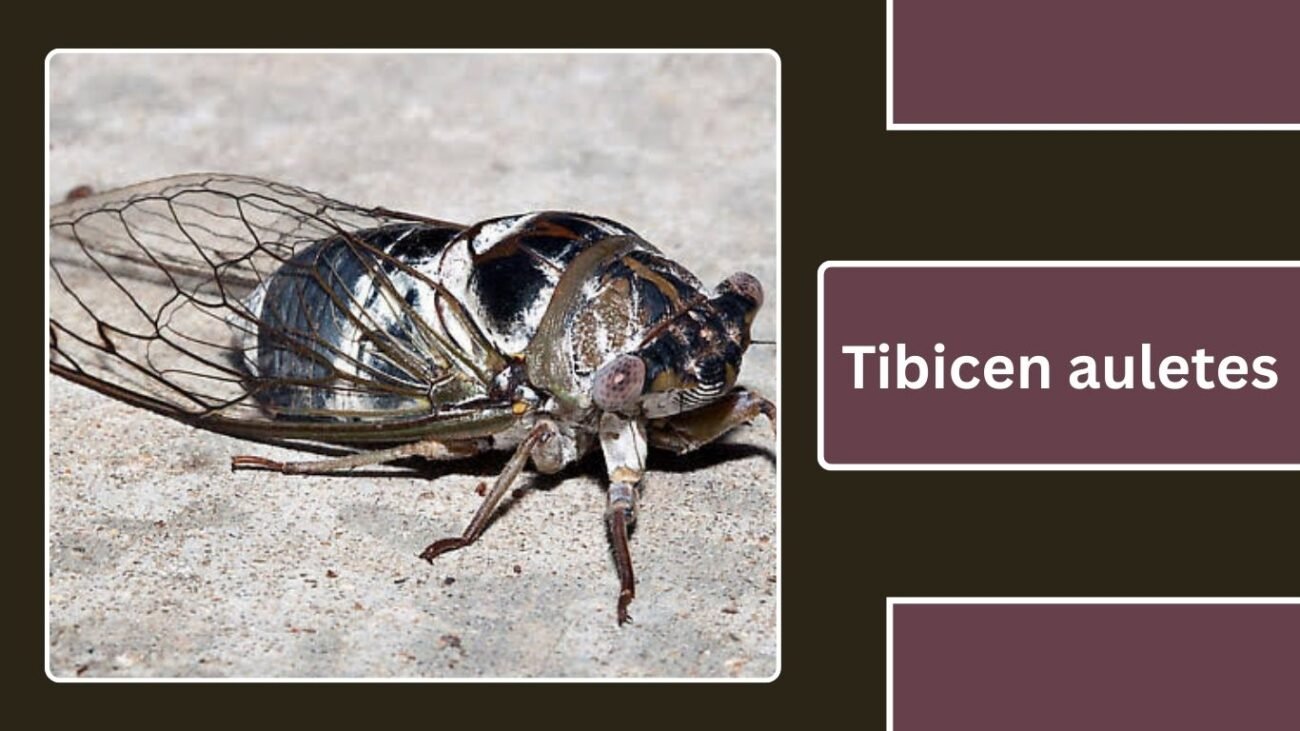
Neotibicen auletes, commonly called the northern dusk-singing cicada, is the largest cicada species in North America. It is best known for its powerful, rolling call that begins at dusk, when most other cicadas have quieted. This species’ song can be heard over great distances and is a defining sound of late summer evenings in its range.
Identification
- Very large size (4–5.5 cm long, with a wingspan up to 12 cm)
- Dark blackish-brown body with olive-green markings on the thorax
- Broad head with large, prominent eyes
- Abdomen thick and heavily pruinose (powdery white patches) in older individuals
- Male call is a deep, pulsating roar, often compared to a drumroll or the sound of a distant engine
Habitat
This cicada is distributed in the eastern and southeastern United States, particularly in sandy soils and coastal plain regions. It is often associated with oak trees and prefers forest edges, woodlands, and areas with mature hardwoods.
Behavior
Males are most active at dusk, singing loudly from tall oaks and other large trees. Their booming calls can carry for over half a mile, making them one of the loudest cicada species. Adults are strong fliers but tend to remain high in tree canopies. Unlike synchronized periodical cicadas, they appear every summer with overlapping generations.
Diet
Nymphs spend several years underground feeding on the xylem sap of oak tree roots. Adults sip plant fluids sparingly from twigs and branches but dedicate most of their time above ground to reproduction.
Lifecycle
The lifecycle lasts 3–5 years underground, though adults are present annually due to overlapping broods. Nymphs emerge in mid-to-late summer, molt into adults, and reproduce. Females cut slits into oak twigs to lay eggs, and after hatching, the young nymphs fall to the soil and burrow underground to restart the cycle.
17. Tettigades ulnaria
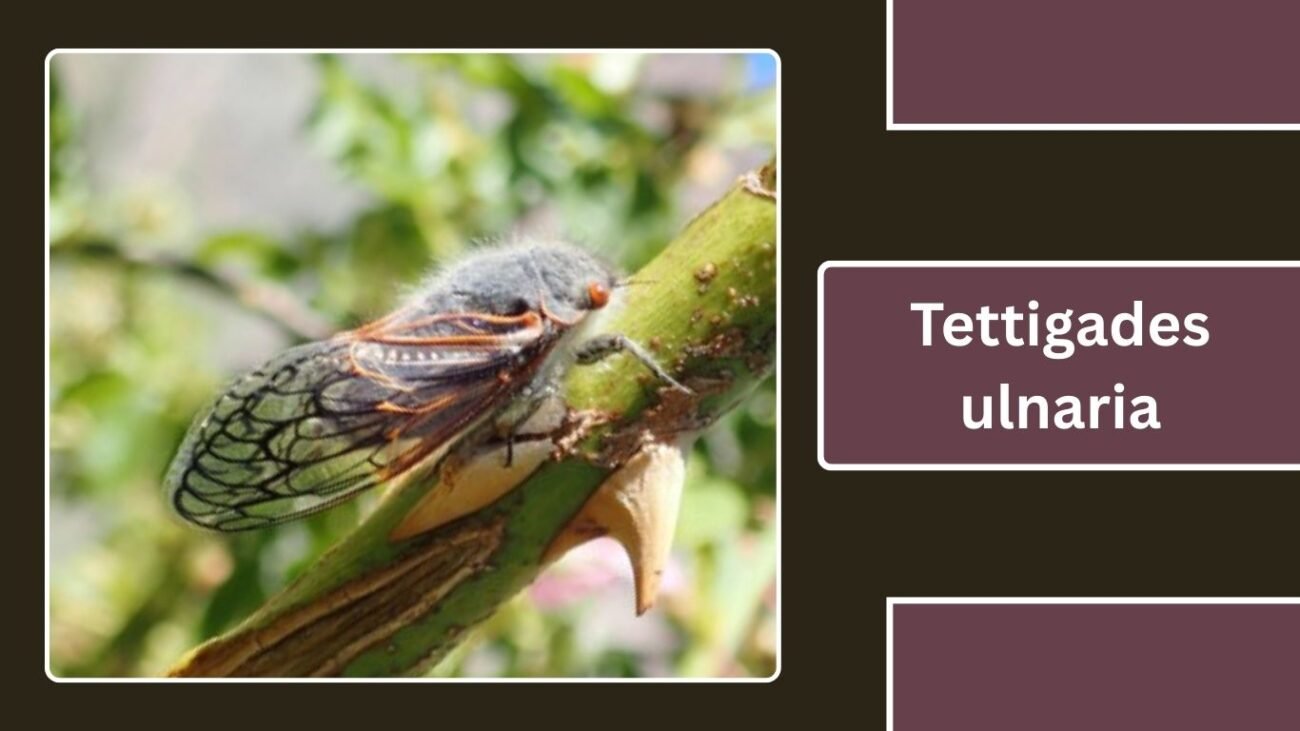
Tettigades ulnaria is a cicada species native to South America, particularly Chile and Argentina. Unlike the well-known North American cicadas of the Magicicada or Neotibicen groups, Tettigades species are less familiar but play an important ecological role in their native forests. They are active during the warmer months, contributing to the characteristic insect chorus of their habitats.
Identification
- Medium-sized cicada (about 2.5–3 cm long)
- Brown to grayish body with subtle dark markings
- Transparent wings with light veins, often held tent-like over the body
- Eyes generally dark, blending with the overall coloration
- Male call is a high-pitched buzz, shorter and less powerful than larger North American species
Habitat
This species is found in temperate and subtropical regions of Chile and Argentina. It inhabits shrublands, forest edges, and areas with native vegetation, often in drier climates compared to the more humid habitats of other cicadas.
Behavior
Males call during the day, especially in the hottest hours, to attract females. The sound is not as loud as that of larger cicadas, but it contributes to the overall chorus of insects in South American habitats. Adults are solitary and not found in massive emergencies like periodical cicadas.
Diet
Nymphs live underground for several years, feeding on xylem sap from the roots of shrubs and trees. Adults may sip fluids from plant stems and branches but devote most of their short lifespan above ground to reproduction.
Lifecycle
The lifecycle spans several years underground, though the exact timing varies by region. Adults emerge in summer, live for a few weeks, reproduce, and die. Females lay eggs in stems and branches, and when the eggs hatch, the young nymphs drop to the soil and burrow underground, beginning the cycle anew.
18. Diceroprocta apache
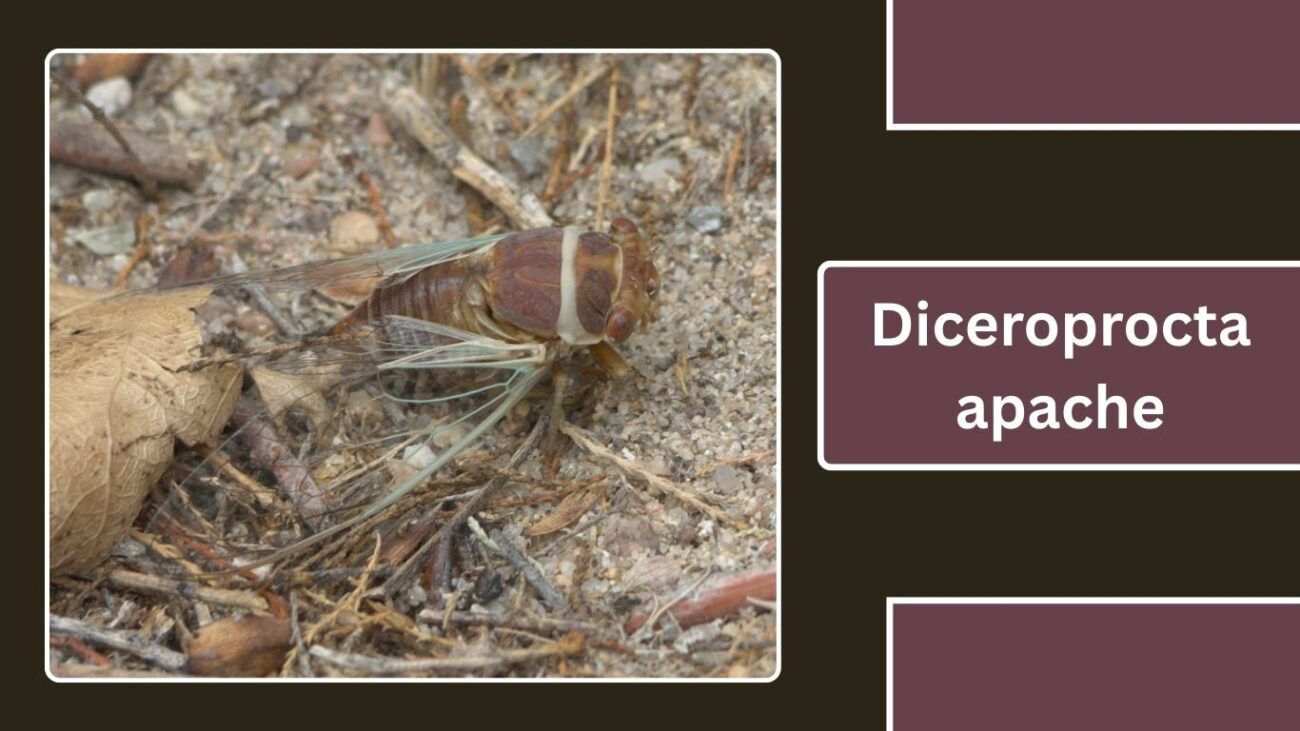
Diceroprocta apache, commonly known as the Apache cicada, is a distinctive annual cicada native to the southwestern United States and northern Mexico. It is especially notable for its striking black-and-white body markings and its loud, shrill call that dominates desert soundscapes during the hottest parts of summer.
Identification
- Medium-sized cicada (about 2.5–3 cm long)
- Black body with bold white or gray pruinose (powdery) markings
- Transparent wings with dark veins
- Eyes typically dark, standing out against the patterned body
- Male call is a sharp, shrill buzz lasting 10–15 seconds, often repeated in quick succession
Habitat
This species thrives in arid and semi-arid environments, including deserts, scrublands, and dry open woodlands of the American Southwest and northern Mexico. It is especially common in areas with mesquite, acacia, and other desert vegetation.
Behavior
Males sing persistently during the hottest hours of the day, often from shrubs and low trees. Their calls are territorial and attract females from nearby. Unlike periodical cicadas, Apache cicadas emerge annually, ensuring stable populations each summer.
Diet
Nymphs remain underground for several years, feeding on the xylem sap of roots from desert shrubs and small trees. Adults may sip fluids from twigs and branches but focus on mating during their short above-ground phase.
Lifecycle
The lifecycle lasts 2–4 years underground, but overlapping generations produce yearly emergencies. After emerging, nymphs molt into winged adults, reproduce, and die within a few weeks. Females lay eggs in plant stems, and the hatched nymphs burrow underground to restart the cycle.
19. Diceroprocta semicincta
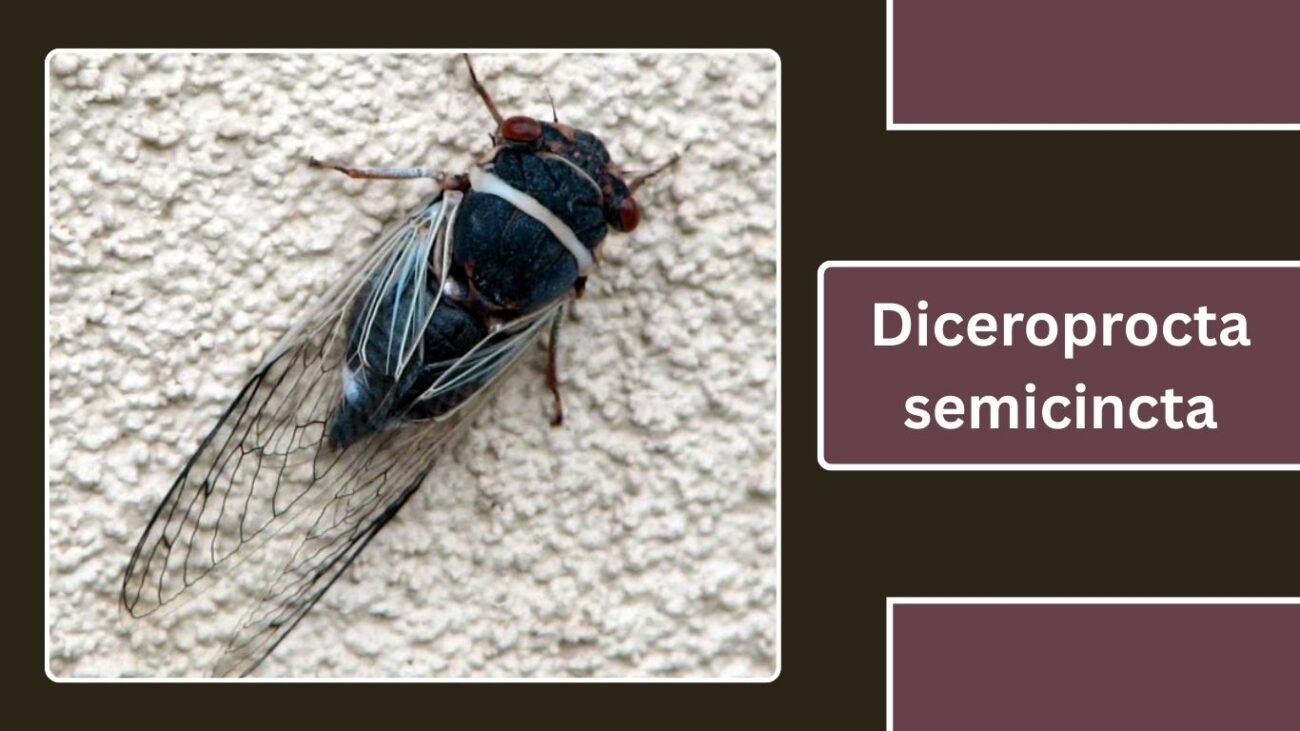
Diceroprocta semicincta is an annual cicada species native to the southwestern United States. It is less widely known than the Apache cicada (Diceroprocta apache) but is recognized for its buzzing calls that fill the summer air in desert and scrub habitats.
Identification
- Medium size (about 2.5–3 cm long)
- Dark brown to black body with lighter pruinose (powdery) markings on the abdomen
- Transparent wings with dark veins, often with a slight amber tint
- Eyes typically dark brown
- Male call is a steady, high-pitched buzz, shorter and less piercing than D. apache
Habitat
This species is found in arid and semi-arid regions of the southwestern U.S., including Arizona and New Mexico. It inhabits deserts, scrublands, and open woodlands, often associated with mesquite and other desert-adapted plants.
Behavior
Males sing during the hottest parts of the day from shrubs and trees, producing a continuous buzz to attract females. Unlike periodical cicadas, D. semicincta emerges annually, with overlapping broods ensuring its presence every summer.
Diet
Nymphs feed underground for several years on the xylem sap of tree and shrub roots. Adults may sip fluids from plant stems and branches but spend most of their short above-ground lifespan reproducing.
Lifecycle
The lifecycle lasts 2–4 years underground, though adults appear yearly due to overlapping generations. After emergence, nymphs molt into adults, reproduce, and die within weeks. Females lay eggs in twigs and stems, and the hatching nymphs burrow underground to begin the cycle anew.
20. Quesada gigas
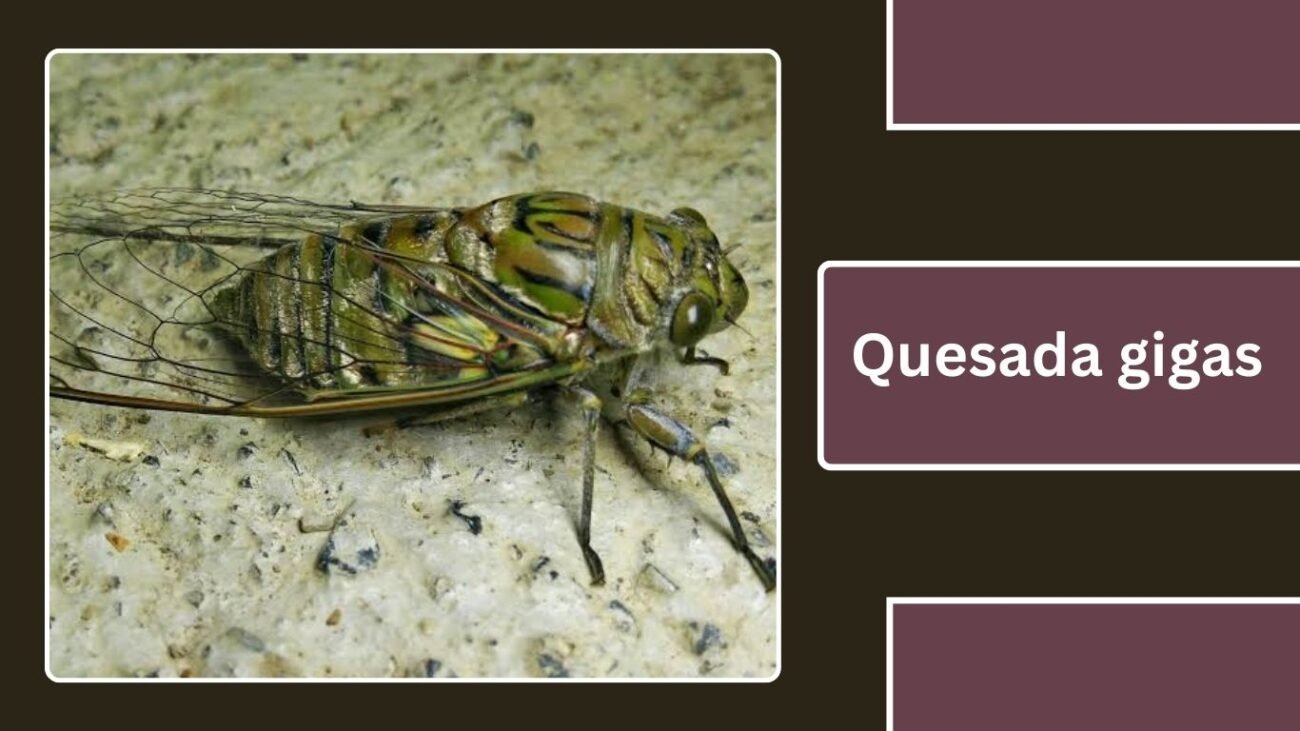
Quesada gigas, commonly known as the giant cicada, is the largest cicada species in the Americas. It is widespread from the southern United States through Central America and into South America. Its impressive size and powerful call make it one of the most iconic cicadas of tropical and subtropical regions.
Identification
- Very large size (up to 5–7 cm in length, wingspan over 15 cm)
- Dark brown to black body with mottled greenish or golden patterns
- Wings broad and transparent, with bold veins and sometimes darkened tips
- Eyes large and prominent, usually dark
- Male call is a loud, continuous, metallic buzz, among the strongest of all cicadas
Habitat
This species is found in tropical and subtropical regions across the Americas. It inhabits forests, woodlands, and even cultivated areas with large trees. In the United States, it is mainly restricted to southern Texas.
Behavior
Males sing from tall trees, especially in the heat of the day, producing one of the loudest insect calls in the world. Their song can carry for hundreds of meters through dense forests. Adults are strong fliers and often move between trees.
Diet
Nymphs live underground for several years, feeding on xylem sap from tree roots. Adults may feed lightly on plant fluids from twigs and branches but focus on reproduction.
Lifecycle
The lifecycle likely spans 3–5 years underground, although exact timing varies across its vast range. Adults emerge annually due to overlapping generations. After molting into adults, they reproduce and die within a few weeks. Females cut slits into branches to deposit eggs, and the hatching nymphs burrow into the soil to begin their long subterranean development.
21. Platypedia putnami
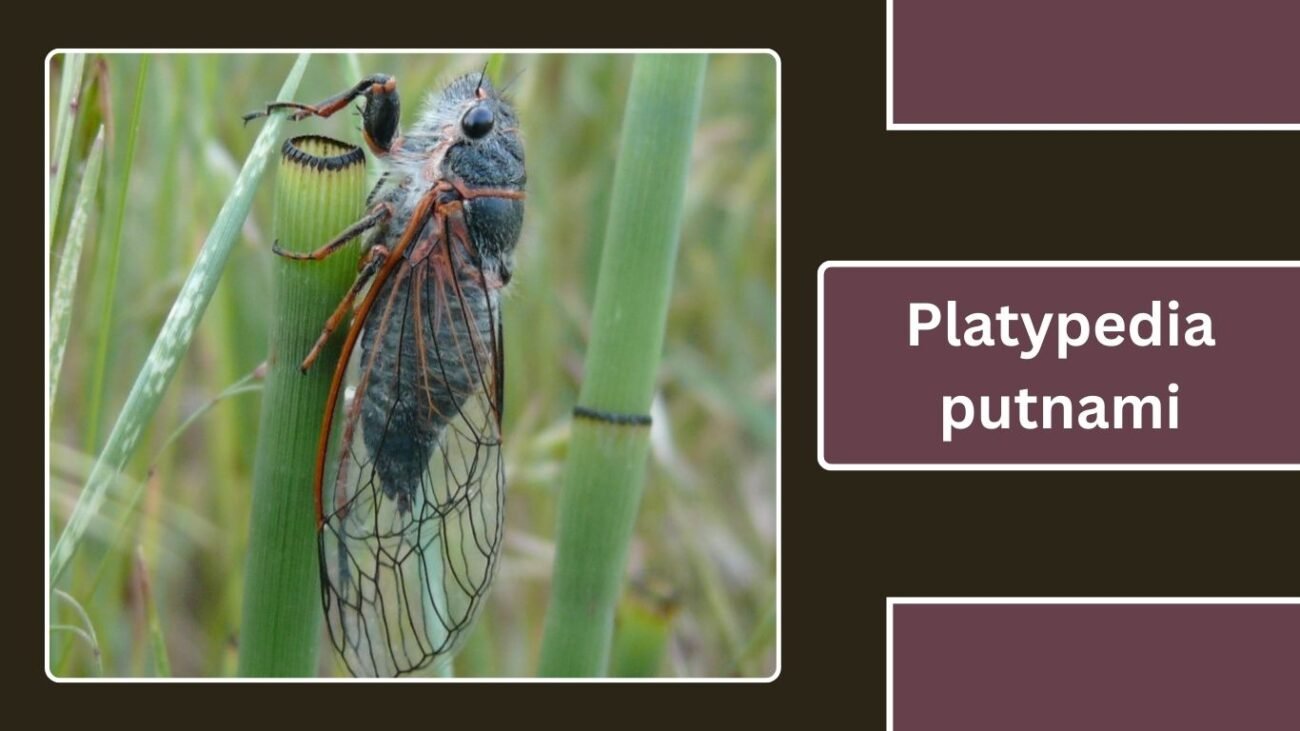
Platypedia putnami is a small cicada species native to western North America. Unlike many of the louder cicadas such as Neotibicen or Quesada gigas, this species produces a series of sharp, clicking sounds instead of long buzzing calls. Its subtle acoustic behavior makes it quite different from the better-known cicadas of eastern regions.
Identification
- Small size (about 1.5–2.5 cm long)
- Dark brown to black body, sometimes with lighter mottling
- Wings relatively short and clear with simple venation
- Eyes dark and somewhat prominent
- Male call is not a continuous buzz but a series of rapid clicking or ticking sounds
Habitat
This cicada is found in western North America, particularly in dry, mountainous, and rocky areas. It prefers shrublands, forest edges, and open woodlands where its cryptic coloration provides camouflage.
Behavior
Males produce clicking calls rather than loud buzzing, often from low shrubs or small trees. They are generally less conspicuous than other cicadas, both visually and acoustically. Adults are active in spring and early summer, earlier than many of the larger summer cicadas.
Diet
Nymphs live underground for several years, feeding on the xylem sap of shrub and tree roots. Adults may sip fluids from twigs but primarily dedicate their short above-ground time to reproduction.
Lifecycle
The lifecycle lasts several years underground, though the exact duration is not well documented. Adults emerge in spring to early summer, molt, reproduce, and die within a few weeks. Females deposit eggs in stems and branches, and after hatching, the nymphs burrow underground to restart the cycle.
22. Platypedia areolata
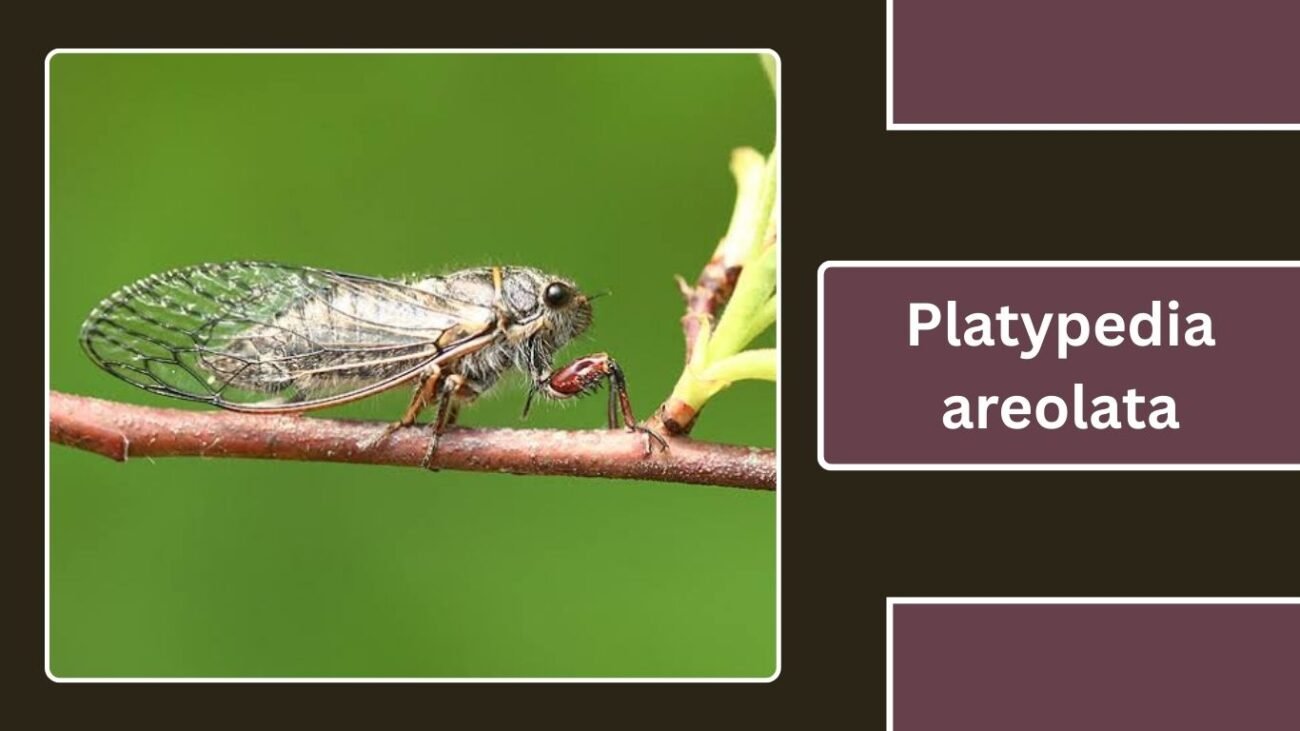
Platypedia areolata is a small cicada species native to western North America. Like its close relative Platypedia putnami, it produces clicking sounds rather than the loud buzzing typically associated with cicadas. This makes it one of the quieter and more inconspicuous cicada species.
Identification
- Small size (about 1.5–2.3 cm long)
- Dark brown to black body with fine mottling
- Transparent wings with simple venation and a slightly smoky tint
- Eyes dark, blending with the overall body color
- Male call consists of rapid, dry clicks or ticks, often repeated in short bursts
Habitat
This species inhabits the western United States, particularly in mountainous, dry, and rocky areas. It is commonly associated with shrublands, open pine forests, and canyon slopes where it blends into its surroundings.
Behavior
Males call from shrubs and low tree branches, producing clicking patterns that differ slightly from those of P. putnami. They are active earlier in the season than many larger cicadas, often emerging in late spring and early summer. Adults are solitary and not as abundant or noticeable as other cicadas.
Diet
Nymphs remain underground for several years, feeding on the xylem sap of shrub and tree roots. Adults occasionally feed on plant fluids but primarily invest their short lifespan above ground in reproduction.
Lifecycle
The lifecycle spans several years underground, though exact duration is less studied compared to larger cicadas. Adults emerge in late spring, molt, reproduce, and die within weeks. Females lay eggs in stems and branches, and the newly hatched nymphs burrow underground to begin the next cycle.
23. Clidophleps tenuipes
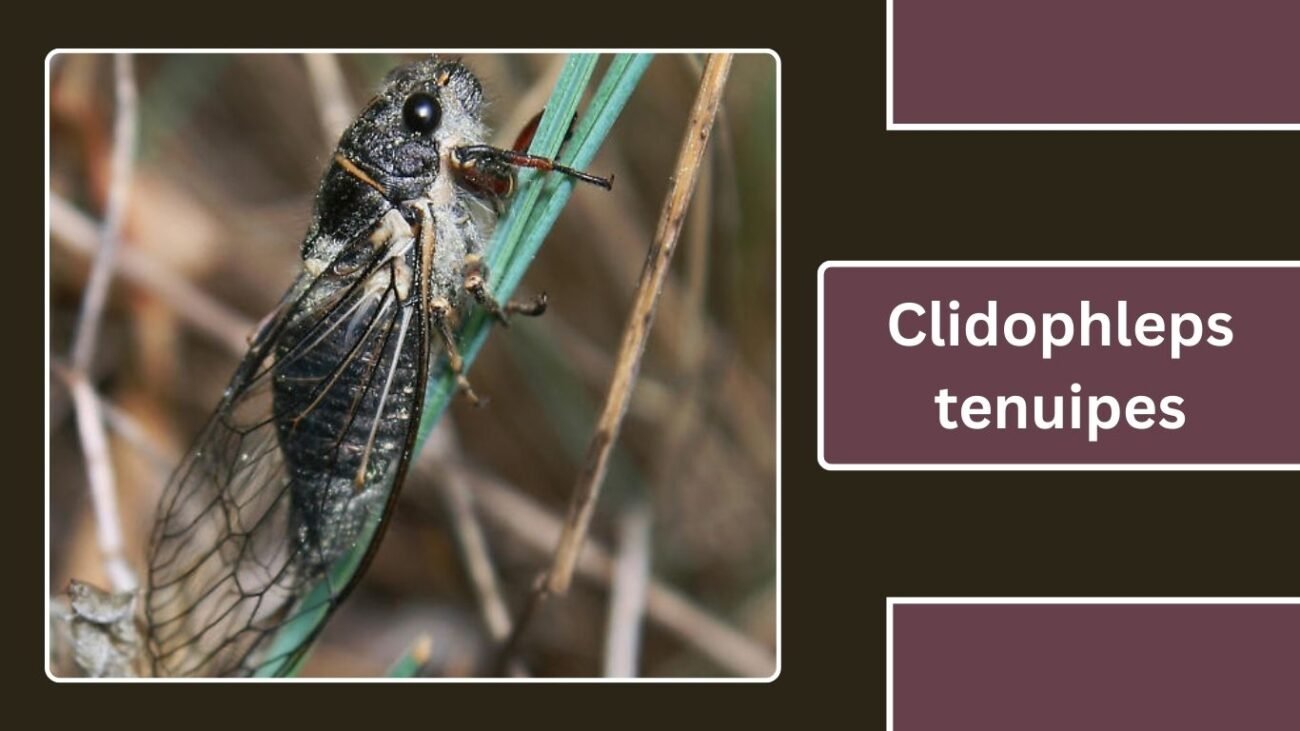
Clidophleps tenuipes is a lesser-known cicada species native to North America. Unlike the larger and louder Neotibicen cicadas, this species is smaller and produces a subtler song. It is found mostly in western and southwestern regions, where it inhabits shrublands and open woodlands.
Identification
- Small to medium size (about 2–2.5 cm long)
- Slender body, usually brownish to gray in color
- Transparent wings with relatively narrow venation and elongated shape
- Eyes moderately large and dark
- Male call is a high-pitched, dry buzz that is shorter and less powerful than larger cicadas
Habitat
This species inhabits dry, open habitats in the western United States. It is often associated with shrublands, canyon edges, and sparsely wooded areas where it can perch on small trees and bushes.
Behavior
Males sing from shrubs and low tree branches during the warmer parts of the day. Their calls are used to attract females but do not carry as far as those of larger cicadas. Adults are generally solitary and less noticeable, blending into their environments due to their muted coloration.
Diet
Nymphs spend several years underground, feeding on xylem sap from the roots of shrubs and small trees. Adults may feed lightly on plant fluids but are mainly focused on reproduction.
Lifecycle
The lifecycle lasts several years underground, though adults appear annually due to overlapping generations. After emergence, nymphs molt into adults, live for a few weeks, reproduce, and die. Females lay eggs in twigs and branches, and the hatched nymphs burrow underground to restart the cycle.
24. Okanagana rimosa
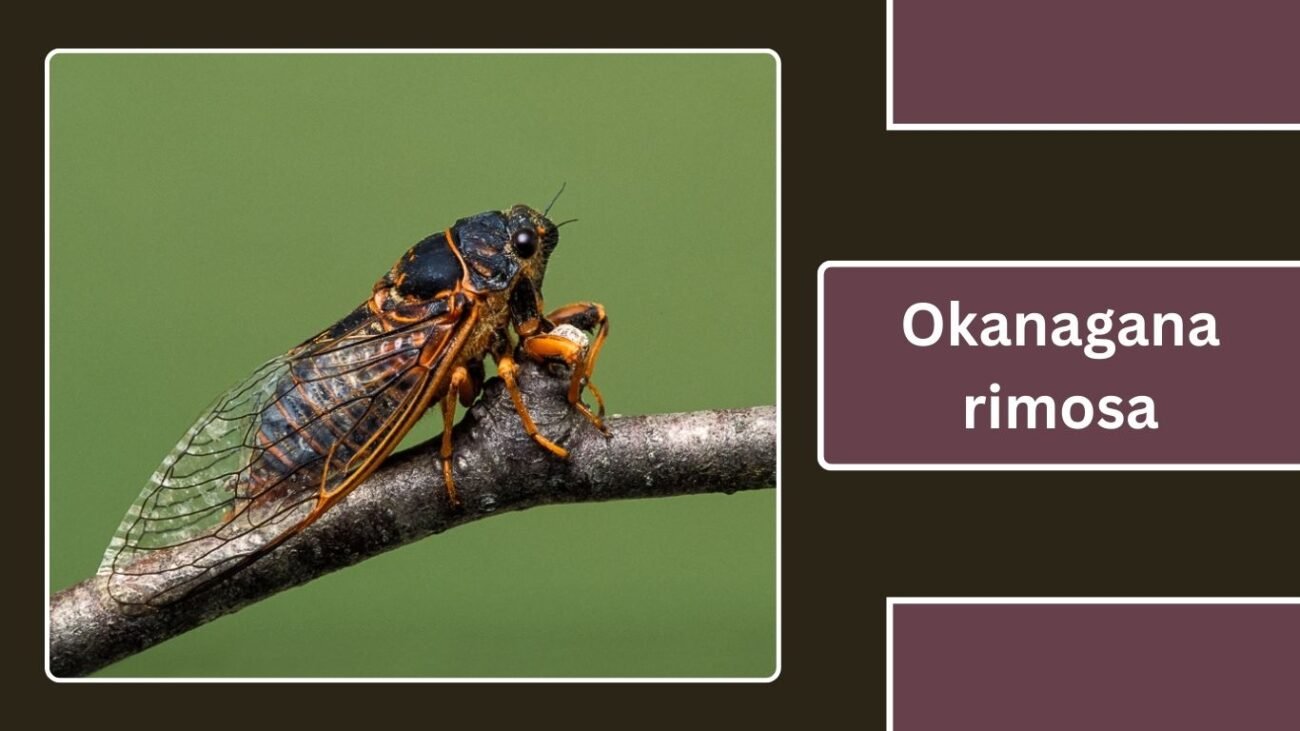
Okanagana rimosa is a cicada species native to northern North America, particularly Canada and the northern United States. It is one of the more commonly encountered cicadas in cooler regions, where cicada diversity is lower compared to the south. Its song is distinct, though softer than that of the larger Neotibicen species.
Identification
- Medium size (about 2.5–3 cm long)
- Black or dark brown body with orange or reddish markings on the thorax and abdomen
- Transparent wings with bold dark veins
- Eyes usually dark and somewhat prominent
- Male call is a high-pitched, buzzy trill, shorter and less powerful than dog-day cicadas
Habitat
This species inhabits northern deciduous and mixed forests, as well as forest edges and clearings. It prefers cooler climates and is commonly found in Canada and the northern U.S., especially around maple, birch, and other hardwoods.
Behavior
Males sing from trees and shrubs, producing short trills to attract females. Their calls are often heard in late spring to early summer, earlier than many other cicadas. Adults are less conspicuous than southern species, with smaller populations and more scattered distributions.
Diet
Nymphs feed underground on xylem sap from tree roots for several years. Adults feed sparingly on plant fluids but mainly devote their energy to reproduction.
Lifecycle
The lifecycle typically lasts 3–5 years underground. Adults emerge annually due to overlapping generations, though numbers may fluctuate. After emergence, nymphs molt into adults, reproduce, and die within weeks. Females insert eggs into small twigs, and the newly hatched nymphs drop to the soil to burrow underground.
25. Okanagodes gracilis
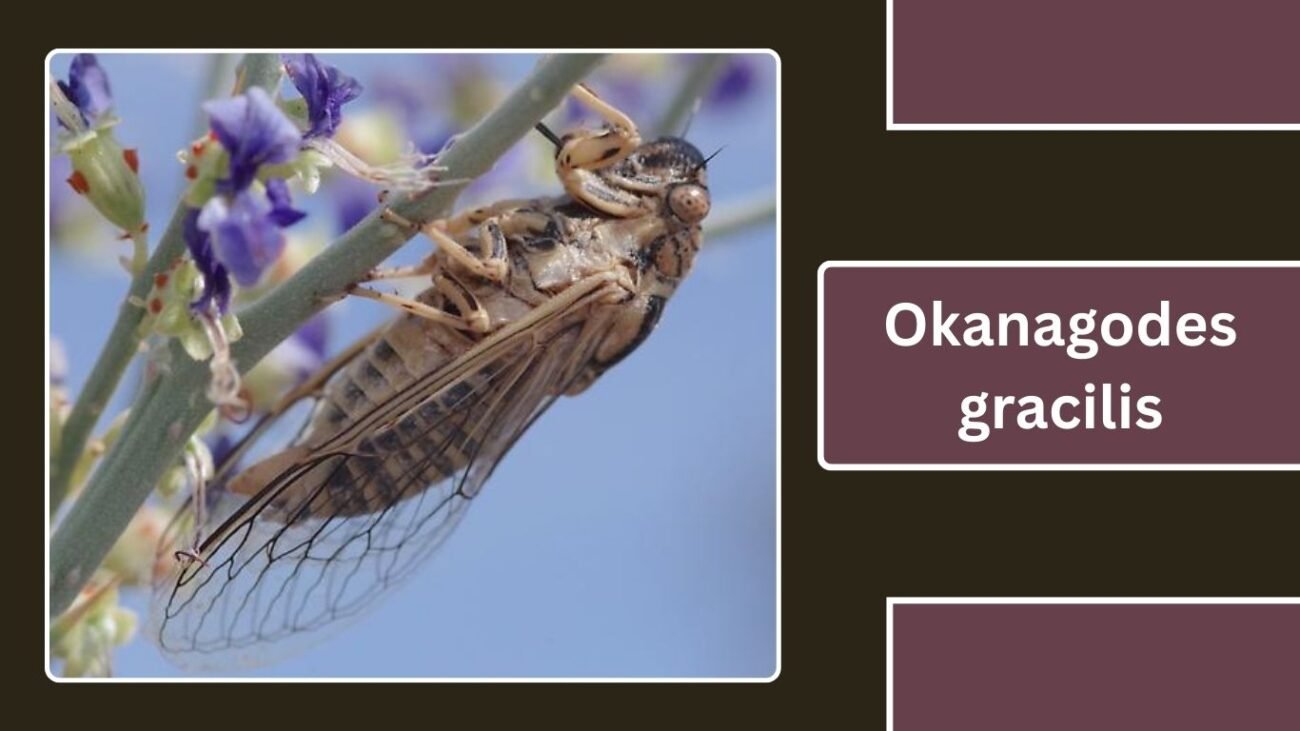
Okanagodes gracilis is a relatively small and less-studied cicada species native to parts of North America. It belongs to the Okanagodes genus, which contains fewer species compared to the larger and more familiar Neotibicen or Magicicada groups. Its subtle presence and quieter song make it one of the more inconspicuous cicadas in its range.
Identification
- Small size (about 1.5–2.2 cm long)
- Slender, elongated body, usually light brown to grayish in color
- Transparent wings with delicate venation, proportionally large compared to body size
- Eyes relatively large for its body, typically dark
- Male call is a faint, high-pitched buzz or ticking sound, not as strong as louder cicada species
Habitat
This species is found in drier regions of North America, particularly in open scrublands, prairies, and sparsely wooded areas. It often perches on low shrubs and grasses, where its coloration provides camouflage.
Behavior
Males sing in short bursts, producing high-pitched buzzing or ticking sounds that are less noticeable compared to the booming songs of larger cicadas. Adults are solitary and more localized, making encounters relatively rare.
Diet
Nymphs spend several years underground feeding on xylem sap from the roots of grasses, shrubs, and small trees. Adults feed sparingly on plant fluids, focusing instead on reproduction.
Lifecycle
The lifecycle lasts several years underground, though details are less well studied due to the species’ inconspicuous nature. Adults emerge annually in small numbers, live for a few weeks, reproduce, and die. Females lay eggs in stems and small branches, and the young nymphs burrow underground to begin the next cycle.