

Planthoppers are fascinating insects belonging to the order Hemiptera, known for their ability to mimic leaves and their strong jumping skills. Found across the globe, they play essential roles in ecosystems as plant feeders and prey for other animals. While most species are harmless, some can impact agriculture by weakening crops or transmitting plant diseases. This collection highlights 13 types of planthoppers, their identification, habitats, behaviors, and diets.
1. Acanalonia conica
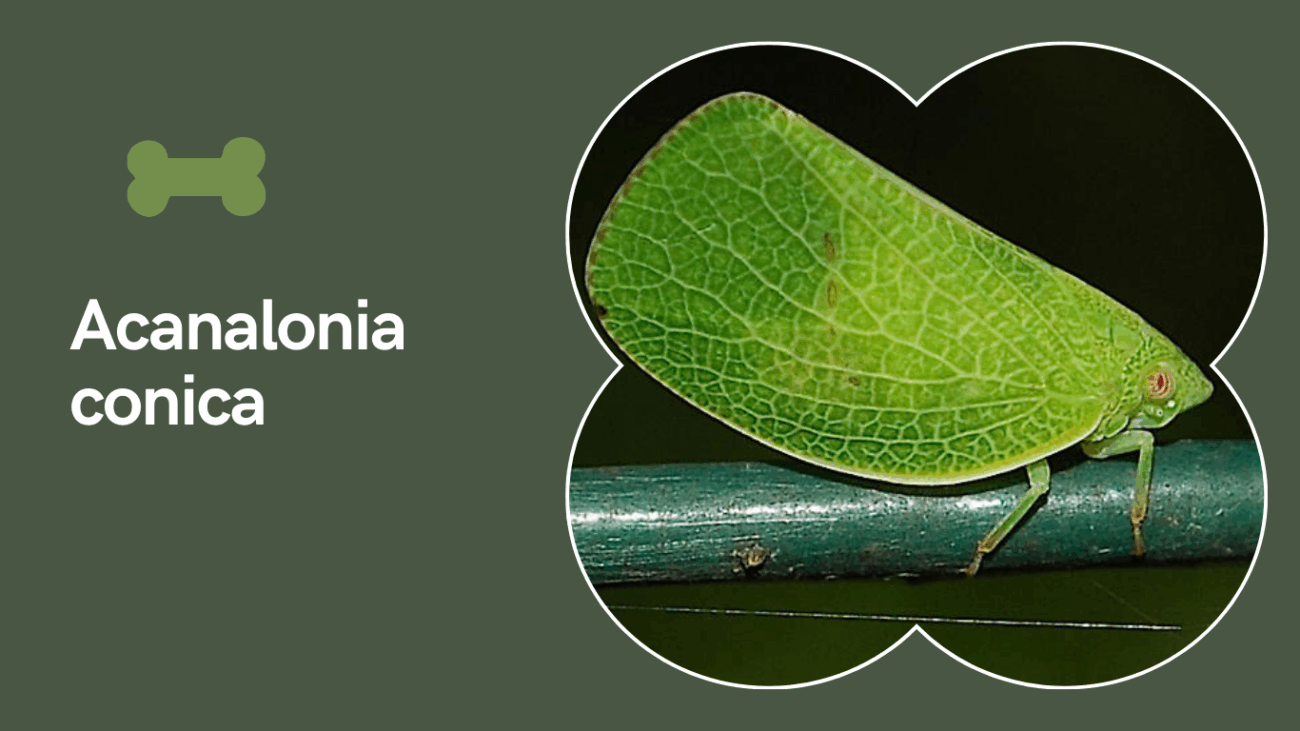
Acanalonia conica is a distinctive planthopper belonging to the family Acanaloniidae. Known for its wedge-shaped body and green coloration, this species is commonly found in North America. It plays a role in ecosystems as both a plant feeder and a food source for predators.
Identification
- Wedge-shaped, laterally compressed body.
- Bright green coloration with leaf-like wings.
- Adults measure about 8–10 mm in length.
- Triangular head with a sharp, pointed front.
Habitat
Acanalonia conica inhabits fields, gardens, woodlands, and areas with dense vegetation. It is often found resting on leaves and stems, where its green color provides camouflage against predators.
Behaviors
This planthopper exhibits strong jumping ability, using its hind legs to leap away from threats. It is also capable of short, fluttery flights. The species is primarily solitary, feeding quietly on plant sap while avoiding detection.
Diet
Acanalonia conica feeds on plant sap extracted from stems and leaves. Using its piercing-sucking mouthparts, it taps into vascular tissues of host plants. While not typically a major pest, heavy populations can weaken plants over time.
2. Flatormenis proxima
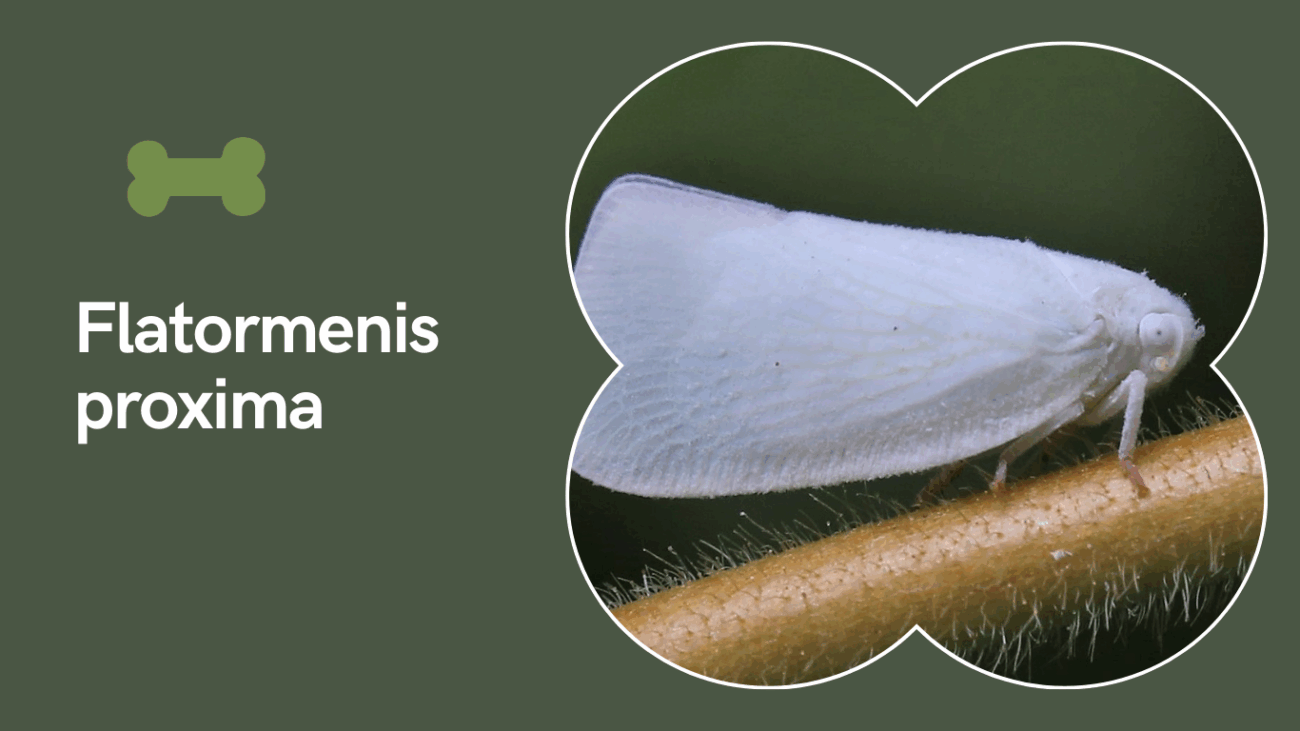
Flatormenis proxima, commonly called the planthopper of the Flatidae family, is recognized for its broad, flat wings and distinctive resting posture. It is widespread in North America and is often seen on trees and shrubs where it feeds on plant sap.
Identification
- Adults measure about 7–9 mm in length.
- Broad, triangular wings held vertically in a tent-like fashion.
- Wings are pale with fine venation and may have subtle spotting.
- Flattened body shape gives the insect a leaf-like appearance.
Habitat
Flatormenis proxima is commonly found in wooded areas, orchards, and gardens. It prefers habitats with abundant host plants such as hardwood trees and shrubs, where it can blend in with foliage.
Behaviors
This species is relatively sedentary, often remaining motionless on leaves or stems. When disturbed, it escapes quickly by hopping or fluttering away. It communicates through substrate vibrations, an important behavior during mating.
Diet
Flatormenis proxima feeds exclusively on plant sap, using its piercing-sucking mouthparts to extract fluids from vascular tissues. While it rarely causes significant damage, large populations may stress host plants and contribute to sooty mold development due to honeydew secretion.
3. Scolops sulcipes

Scolops sulcipes is a slender and sharp-featured planthopper from the family Dictyopharidae. It is easily recognized by its elongated head and streamlined body, which give it a distinctive appearance compared to other planthoppers.
Identification
- Body length ranges from 6–8 mm.
- Elongated, pointed head forming a noticeable “snout.”
- Wings are transparent to pale brown with fine venation.
- Slim body with long legs adapted for jumping.
Habitat
Scolops sulcipes inhabit grasslands, meadows, and agricultural fields. It is frequently associated with grasses and low-growing plants, where it feeds and hides among stems.
Behaviors
This species is agile and quick to leap when disturbed, making it difficult to capture. Like many planthoppers, it communicates through vibrations on plant surfaces, particularly during courtship. Its coloration and slender build help it blend well with grassy environments.
Diet
Scolops sulcipes feed primarily on the sap of grasses and herbaceous plants. By piercing plant tissues with its specialized mouthparts, it extracts nutrients, sometimes weakening its host when present in large numbers.
4. Acanalonia bivittata
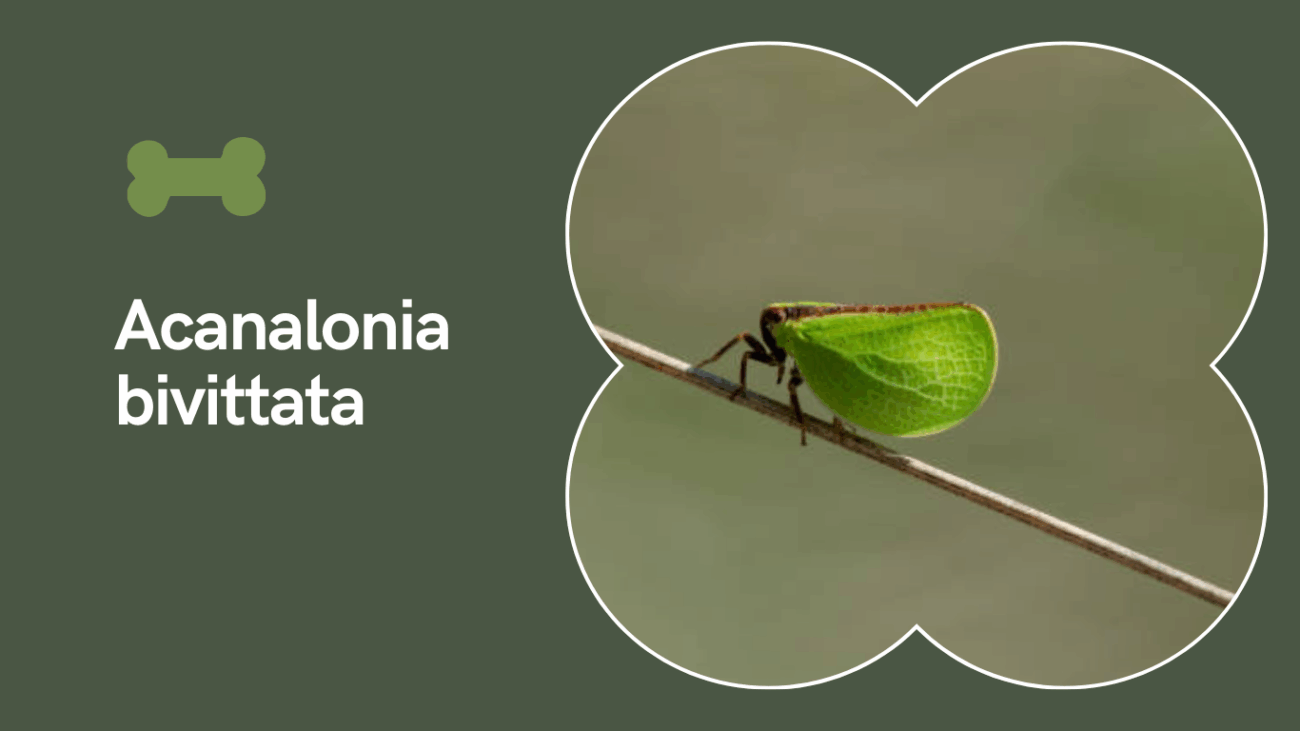
Acanalonia bivittata is a striking member of the Acanaloniidae family, distinguished by its colorful markings. It is native to parts of North America and is often seen in areas with lush vegetation. This species is notable for its wedge-shaped body and distinct stripes.
Identification
- Adults measure about 7–9 mm in length.
- Bright green body with two noticeable longitudinal white stripes on the wings.
- Wedge-shaped, leaf-like wings that provide camouflage.
- Triangular head with a pointed front.
Habitat
Acanalonia bivittata inhabits gardens, fields, and wooded edges where host plants are abundant. It is commonly found resting on broadleaf plants, where its coloration allows it to blend in seamlessly.
Behaviors
This planthopper is mostly solitary and relies heavily on its camouflage to avoid predators. It is capable of strong leaps when disturbed and occasionally uses short fluttery flights. Like other planthoppers, it communicates with mates through substrate-borne vibrations.
Diet
Acanalonia bivittata feeds on the sap of various plants, inserting its piercing-sucking mouthparts into leaves and stems. While generally not harmful in small numbers, larger populations may weaken host plants and produce honeydew that encourages mold growth.
5. Ormenoides venusta

Ormenoides venusta, commonly called the beautiful planthopper, belongs to the Flatidae family. It is one of the more eye-catching planthoppers, recognized for its delicate appearance and pale coloring. This species is often encountered in North America, especially in areas with dense vegetation.
Identification
- Adults measure about 6–8 mm in length.
- Wings are pale whitish or light green with fine venation.
- Forewings are broad and held roof-like over the body.
- The body is small and delicate, blending well with leaves.
Habitat
Ormenoides venusta thrives in gardens, orchards, and forest edges. It prefers shrubs, ornamental plants, and trees where it can feed and remain concealed. Its coloration helps it camouflage effectively against pale green foliage.
Behaviors
This species is relatively inconspicuous, often remaining still on the underside of leaves. When disturbed, it quickly hops or glides away. It produces honeydew while feeding, which can attract ants and sometimes lead to sooty mold on host plants.
Diet
Ormenoides venusta feed on the sap of shrubs, trees, and herbaceous plants. Using its piercing-sucking mouthparts, it extracts plant fluids to sustain itself. While not a serious pest, in high numbers it can cause stress to ornamental or agricultural plants.
6. Cedusa sp.

Cedusa is a diverse genus of planthoppers in the family Derbidae. These insects are small, often overlooked, and occur widely across the Americas. They are important in ecosystems as plant feeders and as prey for other insects and small animals.
Identification
- Adults are generally 4–6 mm long.
- Wings are transparent to smoky brown, held tent-like over the body.
- Body is slender, with varying markings depending on the species.
- Often features a pointed head, though less elongated than Dictyopharidae planthoppers.
Habitat
Cedusa species are found in forests, fields, and agricultural areas. They prefer habitats with a diversity of host plants, particularly grasses, shrubs, and trees. They are more common in warm, humid environments.
Behaviors
Cedusa planthoppers are secretive and typically hide on the undersides of leaves or among plant stems. They are capable of quick jumping to evade predators. Mating communication occurs through vibrations transmitted via plant surfaces.
Diet
Members of the genus Cedusa feed on plant sap, using their piercing-sucking mouthparts. They often target grasses and shrubs. While not usually a major agricultural pest, some species may carry plant pathogens, making them of potential concern.
7. Acanalonia servillei

Acanalonia servillei is a planthopper species in the family Acanaloniidae, closely related to other Acanalonia species. It is characterized by its wedge-shaped wings and subtle coloration, which allow it to camouflage effectively in leafy habitats.
Identification
- Adult size ranges from 7–9 mm.
- Wings are green and leaf-like, with a slightly translucent texture.
- Wedge-shaped body tapering toward the head.
- Head is triangular with a short, pointed front.
Habitat
Acanalonia servillei inhabits woodland edges, gardens, and areas with dense vegetation. It is typically found resting on broadleaf plants where its green coloration helps it blend seamlessly into its surroundings.
Behaviors
This species is solitary and relies heavily on camouflage to avoid predators. It is capable of quick, spring-like jumps to escape danger and may use short, weak flights. Courtship involves substrate-borne vibrations, as is common among planthoppers.
Diet
Acanalonia servillei feeds on plant sap, tapping into stems and leaves with its piercing-sucking mouthparts. While it is not known to cause serious agricultural damage, heavy populations may contribute to plant stress and honeydew buildup.
8. Metcalfa pruinosa (Citrus Flatid Planthopper)
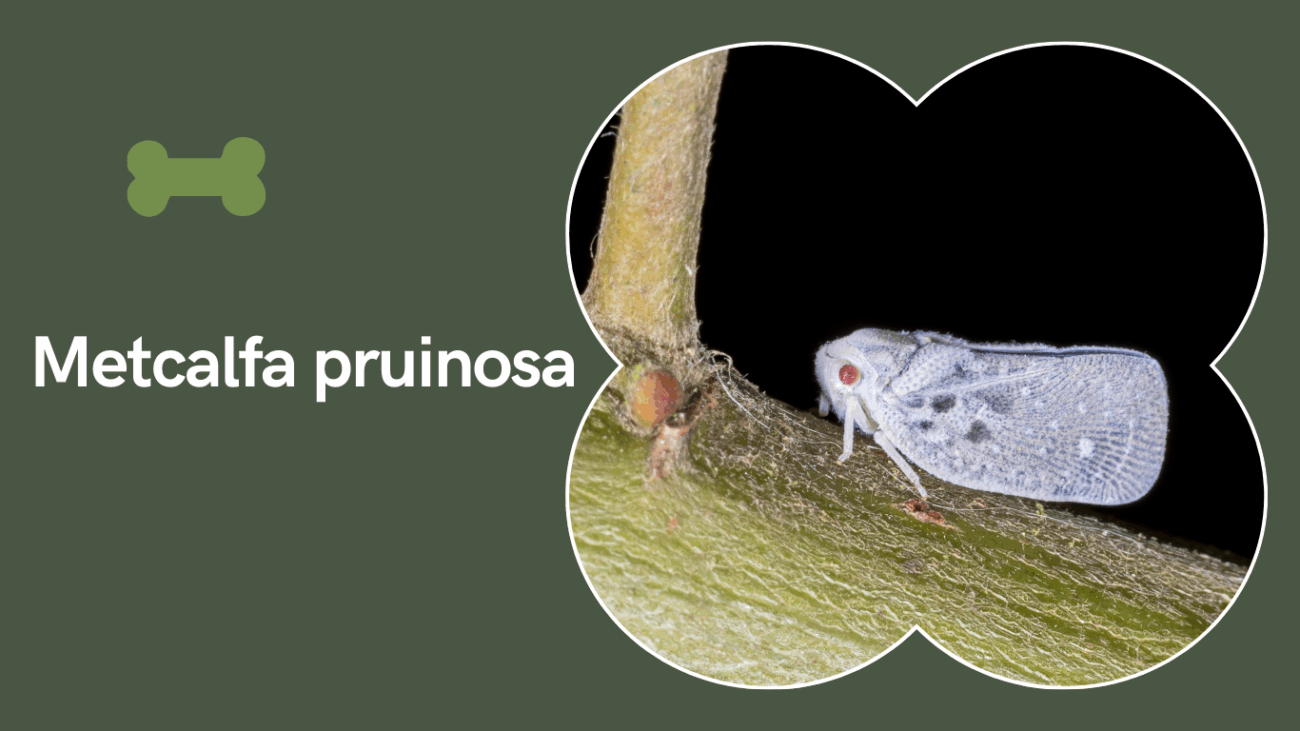
Metcalfa pruinosa, commonly called the citrus flatid planthopper, is a well-known invasive species originally from North America but now spread to Europe and Asia. It is easily identified by its powdery, wax-covered appearance and is considered an agricultural pest in many regions.
Identification
- Adults measure 5–8 mm in length.
- Wings are bluish-gray and covered with a whitish, waxy coating.
- Body flattened and wedge-shaped.
- Nymphs are white, wax-covered, and produce cottony secretions.
Habitat
Metcalfa pruinosa inhabits orchards, vineyards, gardens, and forest edges. It thrives in warm climates and can adapt to a wide range of host plants, making it highly invasive.
Behaviors
This species is highly mobile, capable of strong jumps and short flights. Nymphs produce waxy filaments for protection, which often give infested plants a fuzzy, cotton-like appearance. The adults and nymphs excrete honeydew, attracting ants and leading to sooty mold growth.
Diet
Metcalfa pruinosa feeds on plant sap from a wide range of host plants including citrus, grapes, ornamental trees, and shrubs. Its broad host range makes it a significant pest in agricultural systems, where it reduces plant vigor and spreads plant pathogens.
9. Otiocerus wolfii

Otiocerus wolfii is a distinctive planthopper belonging to the family Dictyopharidae. It is most notable for its elongated head structure, which resembles a snout, making it one of the more recognizable planthopper species in North America.
Identification
- Adult size ranges from 7–10 mm.
- Elongated, pointed head forming a prominent snout-like projection.
- Wings are translucent with a slight brownish or greenish hue.
- Slender body with long legs built for jumping.
Habitat
Otiocerus wolfii inhabits meadows, woodland edges, and grassy fields. It tends to prefer environments with tall grasses and herbaceous plants, where its body shape and coloration help it stay concealed.
Behaviors
This species is agile and highly alert, leaping away at the slightest disturbance. Its long head projection may play a role in camouflage or communication. Like other planthoppers, it communicates through plant-borne vibrations during courtship.
Diet
Otiocerus wolfii feeds primarily on plant sap, usually from grasses and herbaceous plants. By inserting its piercing-sucking mouthparts into stems and leaves, it extracts nutrients to survive. Although not considered a pest, large populations may weaken host plants.
10. Acanalonia lineata

Acanalonia lineata is a visually distinct species within the Acanaloniidae family, recognized by its body markings and leaf-like wings. Like other members of its genus, it is well camouflaged and usually goes unnoticed in its natural environment.
Identification
- Adults are about 7–9 mm long.
- Wings are green with one or more faint longitudinal lines running across them.
- Wedge-shaped body giving it a leaf-like appearance.
- Triangular head with a short, pointed tip.
Habitat
This species is typically found in gardens, forest edges, and shrublands. It prefers areas with a variety of broadleaf plants, where it can blend in with foliage and feed on sap.
Behaviors
Acanalonia lineata remains motionless for long periods, relying on its coloration for camouflage. When threatened, it leaps quickly into the air. Like other planthoppers, it produces vibrations to communicate, especially during mating.
Diet
The species feeds on plant sap, tapping into leaves and stems with its piercing-sucking mouthparts. While usually not a major pest, large populations may weaken plants and lead to honeydew buildup that fosters mold growth.
11. Acanalonia occidentalis
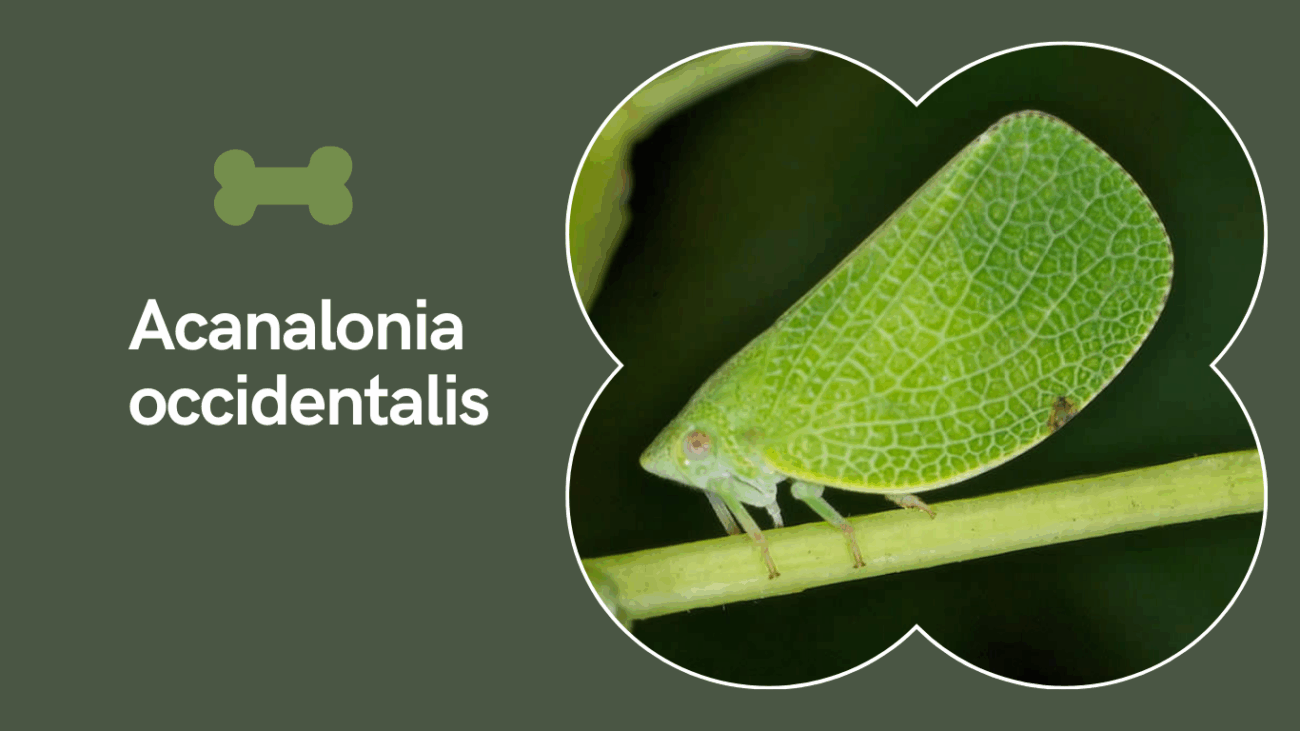
Acanalonia occidentalis is a western North American species of planthopper belonging to the family Acanaloniidae. It shares many features with its close relatives but is adapted to drier and more open habitats compared to other Acanalonia species.
Identification
- Adult length ranges from 7–9 mm.
- Green, wedge-shaped wings that mimic leaves.
- Wings may appear slightly translucent with fine venation.
- Head is triangular with a pointed tip.
Habitat
This species is primarily found in the western United States, particularly in grasslands, shrublands, and woodland margins. It prefers areas with abundant host plants but can tolerate relatively dry conditions compared to its eastern relatives.
Behaviors
Acanalonia occidentalis is generally solitary and camouflages against vegetation. When disturbed, it hops away quickly or uses short bursts of flight. Its communication relies on vibrations transmitted through plant stems, typical of planthoppers.
Diet
This species feeds on plant sap, targeting stems and leaves with its piercing-sucking mouthparts. While not considered a serious pest, heavy populations may reduce plant vigor and promote honeydew accumulation, which attracts ants and fosters mold growth.
12. Scolops angustatus

Scolops angustatus is a slender planthopper belonging to the Dictyopharidae family. It is closely related to Scolops sulcipes but is distinguished by its more elongated body and head. This species is native to North America and often found in grassy habitats.
Identification
- Adults typically measure 6–8 mm in length.
- Elongated, narrow body shape.
- Distinctive pointed head or “snout,” longer than in some related species.
- Wings are transparent to pale brown with fine venation.
Habitat
Scolops angustatus inhabits meadows, prairies, and grassy fields. It prefers environments rich in grasses and herbaceous plants, where it can feed and remain camouflaged among vegetation.
Behaviors
This species is quick and evasive, using powerful jumps to escape threats. Like many planthoppers, it communicates through substrate-borne vibrations, especially during mating. Its slim form and coloring help it blend seamlessly into grasslands.
Diet
Scolops angustatus feeds primarily on grasses and low-growing plants, using its piercing-sucking mouthparts to extract sap. While not typically a pest, in large numbers it can reduce host plant vigor by depleting nutrients.
13. Oliarus polyphemus

Oliarus polyphemus is a unique planthopper species in the family Cixiidae, native to the Hawaiian Islands. It is especially well known from lava tube ecosystems, where it has adapted to life in subterranean environments.
Identification
- Adults measure about 5–7 mm in length.
- Wings are translucent and lightly veined, held roof-like over the body.
- Body pale to light brown in color, blending with cave and soil environments.
- Nymphs are wingless and often covered in waxy filaments.
Habitat
Oliarus polyphemus inhabits volcanic habitats in Hawaii, particularly lava tubes and caves. These environments provide shelter and stable conditions, although host plants are usually located near cave entrances.
Behaviors
This species has adapted to cave-dwelling life, with some populations showing reduced eyesight. Nymphs are known to feed on roots protruding into lava tubes, while adults are more mobile and may move between subterranean and surface habitats.
Diet
The species feeds on plant sap, tapping into roots and stems with its piercing-sucking mouthparts. Nymphs often feed underground, while adults may feed above ground on various plants. Its role in fragile cave ecosystems makes it an important species for ecological study in Hawaii.


