Treehoppers are fascinating insects belonging to the family Membracidae, best known for their ornate pronotum shapes that mimic thorns, leaves, or plant debris. With their excellent camouflage and unique adaptations, these insects thrive across forests, gardens, and agricultural landscapes. In this guide, we’ll explore 15 different types of treehoppers, highlighting their identification, habitat, behavior, diet, and lifecycle to better understand these extraordinary plant-dwelling creatures.
1. Membracis mexicana

Membracis mexicana is a striking species of treehopper recognized for its ornate pronotum, which extends backward like a decorative shield. It is often found on host plants where it feeds on plant sap and blends into the foliage with its unique body shape.
Identification
- Distinctive elongated pronotum resembling a leaf or thorn.
- Brownish to greenish coloration that aids in camouflage.
- Small body size, typically around 8–12 mm long.
- Wings transparent with subtle venation patterns.
- Strong resemblance to plant parts, helping avoid predators.
Habitat
This species is commonly found in Mexico and other regions of Central America. It inhabits areas with abundant vegetation, often on shrubs and trees where it can feed on plant sap.
Behavior
Membracis mexicana uses camouflage as its primary defense mechanism. Like other treehoppers, it communicates through substrate vibrations and may form aggregations on host plants. Females often guard their eggs against predators.
Diet
Its diet consists mainly of plant sap, which it extracts using specialized piercing-sucking mouthparts. Excess sap is excreted as honeydew, which can attract ants that provide protection.
Lifecycle
The lifecycle begins with eggs deposited on host plants, guarded by the female. Nymphs emerge resembling miniature adults but without fully developed wings. They molt several times before reaching maturity, completing their development in weeks to months depending on environmental conditions.
2. Membracis foliata

Membracis foliata is another fascinating treehopper species known for its leaf-like pronotum, which provides excellent camouflage among foliage. Its name “foliata” reflects its resemblance to leaves, making it difficult for predators to detect.
Identification
- Pronotum shaped like a leaf, extending over the body.
- Green to brown coloration with leaf-like veins for mimicry.
- Small body, usually 10–14 mm in length.
- Transparent wings tucked beneath the pronotum.
- Mimics leaves so closely that it often blends seamlessly into the host plant.
Habitat
Membracis foliata is distributed across Central and South America, primarily in tropical and subtropical regions. It thrives in forested habitats, gardens, and agricultural areas with leafy host plants.
Behavior
This species relies heavily on mimicry for survival. Groups of adults and nymphs may be found clustered together on stems and leaves. Like other treehoppers, they communicate using vibrations transmitted through plants and may establish symbiotic relationships with ants.
Diet
The species feeds on plant sap by piercing stems with its needle-like mouthparts. The sap intake leads to honeydew secretion, which often attracts protective ants.
Lifecycle
Females lay eggs within plant tissue or on stems. They often exhibit maternal care by guarding their eggs and young. The nymphs pass through several developmental stages, gradually growing wings and the characteristic pronotum before reaching adulthood.
3. Membracis dorsata

Membracis dorsata is a visually distinct treehopper, easily recognized by the elevated dorsal extension of its pronotum. This extension gives it a horn-like appearance, helping it disguise itself among stems and thorns.
Identification
- Prominent pronotum raised high above the back.
- Coloration varies from brown to dark green, aiding camouflage.
- Body length typically ranges from 8–12 mm.
- Transparent wings rest beneath the enlarged pronotum.
- Thorn-like profile makes it difficult for predators to detect.
Habitat
This species inhabits tropical and subtropical regions of Central and South America. It favors shrubs and trees in forests, gardens, and agricultural landscapes where it can easily blend with thorns and stems.
Behavior
Membracis dorsata often forms small clusters on host plants. It relies on mimicry and stillness as its main defense, appearing like part of the plant structure. The species communicates with low-frequency vibrations and may benefit from ant protection in exchange for honeydew.
Diet
Its diet consists exclusively of plant sap. Using piercing-sucking mouthparts, it taps into the phloem of host plants, extracting sugary fluids. Excess sap is released as honeydew.
Lifecycle
Eggs are deposited on host plants, sometimes guarded by the female. Nymphs emerge resembling wingless adults with spiny bodies. After multiple molts, they develop the characteristic pronotum and wings, completing their life cycle within a few weeks to months.
4. Membracis lunata
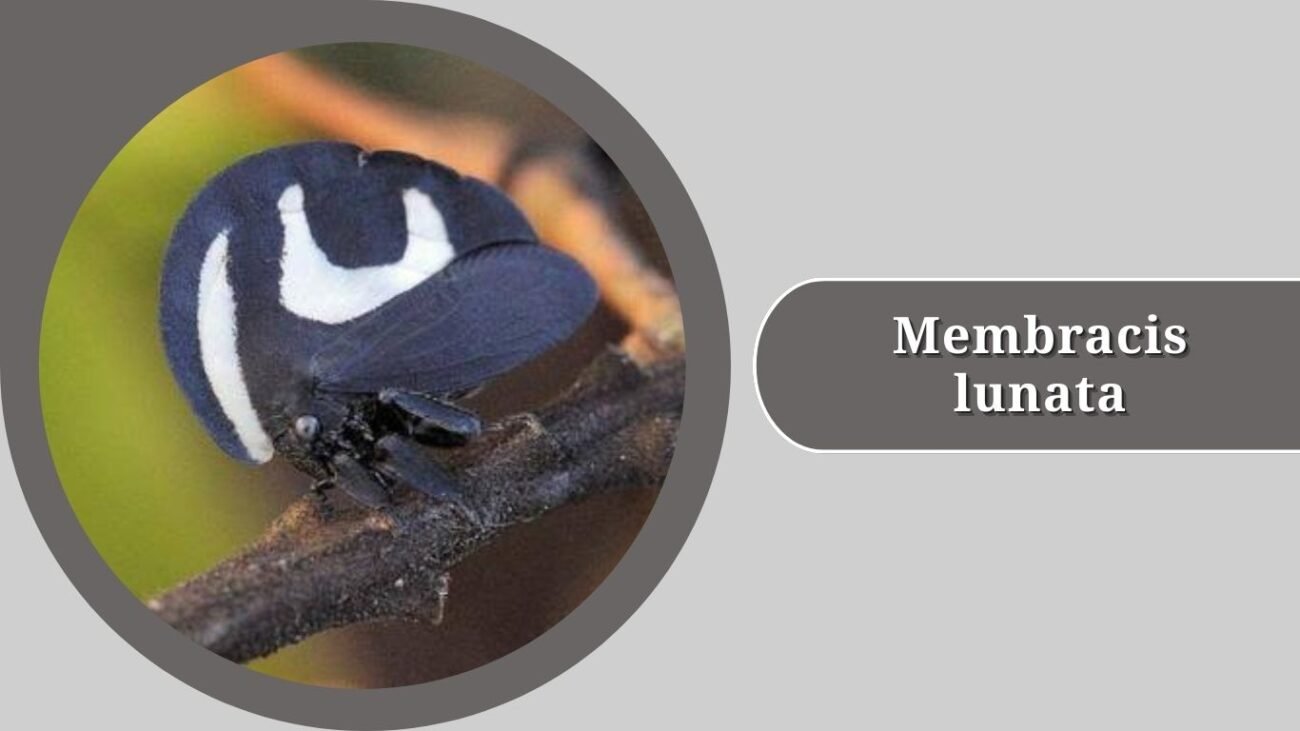
Membracis lunata is a treehopper species notable for the crescent-like curve of its pronotum, which gives it a distinctive silhouette. Its shape and coloration provide effective camouflage, helping it blend into twigs and plant structures.
Identification
- Pronotum curved into a crescent or arch shape.
- Coloration varies from brown to green, often with subtle markings.
- Small body size, around 9–13 mm long.
- Transparent wings folded beneath the pronotum.
- Profile resembles plant stems or curved thorns.
Habitat
This species is native to Central and South America, where it thrives in tropical and subtropical regions. It typically inhabits shrubs, trees, and agricultural plants with ample stems for camouflage.
Behavior
Membracis lunata commonly forms aggregations on host plants, where its crescent-like pronotum makes the group appear like plant growths. It relies on mimicry and stillness as primary defense mechanisms, and may be tended by ants attracted to its honeydew.
Diet
Like other treehoppers, it feeds on plant sap. It uses piercing-sucking mouthparts to extract phloem sap, which it processes and excretes as honeydew. This byproduct often fosters a protective relationship with nearby ants.
Lifecycle
Eggs are deposited within plant tissue by the female, who may guard them against threats. Nymphs emerge as wingless juveniles and pass through several molts, gradually developing wings and the crescent-shaped pronotum before reaching adulthood.
5. Bocydium globulare

Bocydium globulare is one of the most unusual and visually striking treehopper species. It is famous for its bizarre pronotum, which extends upward and outward into thin stalks tipped with spherical structures, giving it an alien-like appearance.
Identification
- Pronotum extended into multiple thin stalks with globular tips.
- Small body size, usually 7–10 mm long.
- Brown to dark coloration, contrasting with pale or translucent globes.
- Transparent wings folded beneath the elaborate pronotum.
- One of the most recognizable treehoppers due to its unusual shape.
Habitat
This species is found in tropical forests of South America, especially in regions with dense vegetation. It typically resides on small trees and shrubs where it can access sap.
Behavior
Bocydium globulare uses its strange appearance as a defense mechanism, confusing predators. Despite its alien-like look, it behaves similarly to other treehoppers—forming aggregations, remaining motionless to blend in, and communicating through plant-borne vibrations.
Diet
Its diet consists of phloem sap extracted from host plants. Using piercing-sucking mouthparts, it taps into stems and secretes honeydew, which may attract protective ants.
Lifecycle
Females lay eggs on host plants, often inserting them into stems. Nymphs hatch as wingless, spiny forms and molt several times, developing the iconic pronotal structures only at maturity. The full life cycle may span several weeks to months depending on conditions.
6. Bocydium vesiculatum

Bocydium vesiculatum is another remarkable member of the Bocydium genus, notable for its balloon-like extensions. These inflated, vesicle-shaped structures on its pronotum give it a peculiar appearance that confuses predators.
Identification
- Pronotum extended into stalks with inflated, vesicle-like ends.
- Small body, around 7–11 mm in length.
- Dark brown to black body coloration with translucent vesicles.
- Wings folded beneath the elaborate pronotum.
- Unique balloon-like ornamentation distinguishes it from related species.
Habitat
This species is native to tropical forests of South America. It thrives in dense vegetation where host plants provide both food and camouflage.
Behavior
Bocydium vesiculatum relies heavily on its odd structures for predator deterrence. Like other treehoppers, it tends to stay motionless, mimicking plant debris. It communicates with conspecifics through vibrational signals along plant stems.
Diet
It feeds on plant sap, using its piercing-sucking mouthparts to access phloem. The feeding process produces honeydew, which can attract protective ants.
Lifecycle
Females lay eggs on or inside host plant tissue. After hatching, nymphs go through several molts, gradually developing wings and pronotal extensions. The full lifecycle spans weeks to months, depending on environmental conditions.
7. Umbonia crassicornis

Umbonia crassicornis, commonly known as the thorn bug, is one of the most iconic treehoppers. Its large, thorn-like pronotum helps it resemble plant spines, making it extremely well-camouflaged against predators.
Identification
- Pronotum elongated into a sharp, thorn-like projection.
- Bright green to yellow-green coloration, sometimes with reddish markings.
- Body length ranges from 8–12 mm.
- Transparent wings rest beneath the pointed pronotum.
- Strong resemblance to thorns or plant spines.
Habitat
This species is found across the Americas, from South America up through Central America, Mexico, and into southern regions of the United States. It thrives in tropical and subtropical environments, especially in gardens, orchards, and wooded areas.
Behavior
Umbonia crassicornis is highly social compared to many treehoppers. Groups often cluster along stems of host plants, where their thorn-like appearance helps conceal them. They also exhibit maternal care, with females guarding eggs and nymphs. Vibrational communication plays a key role in group coordination and defense.
Diet
It feeds on phloem sap, tapping into stems with piercing-sucking mouthparts. The excess sugar is released as honeydew, which can attract ants that in turn protect the group.
Lifecycle
Females insert eggs into plant stems and remain nearby to protect them. Nymphs hatch as small, wingless forms resembling spiny bugs. They pass through multiple molts, gradually developing wings and the characteristic thorn-like pronotum before reaching adulthood.
8. Umbonia spinosa

Umbonia spinosa is a thorn-like treehopper species closely related to Umbonia crassicornis. It is recognized for its sharp, spine-shaped pronotum, which provides excellent camouflage against host plants with thorns or spines.
Identification
- Pronotum elongated into a sharp spine resembling a plant thorn.
- Typically green, brown, or yellow-green in coloration.
- Small body size, usually 8–12 mm long.
- Transparent wings folded neatly beneath the pronotum.
- Camouflage so effective it can be mistaken for part of the plant structure.
Habitat
This species is distributed across Central America, South America, and parts of the southern United States. It inhabits tropical and subtropical regions, especially in gardens, farmlands, and natural forests with thorny host plants.
Behavior
Umbonia spinosa often gathers in groups along stems, enhancing its camouflage by looking like clusters of thorns. Females are known to guard eggs and young, a rare trait among insects. The species communicates using plant-borne vibrations to coordinate group defense and interactions.
Diet
The diet consists of phloem sap from host plants. Using piercing-sucking mouthparts, it extracts plant fluids, later excreting honeydew. Ants are often attracted to this honeydew, offering protective benefits.
Lifecycle
Eggs are laid in slits cut into plant tissue by the female. She guards the eggs and emerging nymphs against predators. Nymphs molt several times, gradually developing wings and the spine-like pronotum that defines the species. The complete lifecycle may take several weeks to months.
9. Heteronotus vittatus

Heteronotus vittatus is a distinctive treehopper species known for its elongated and ornate pronotum, which extends backward and upward, giving it a dramatic, horned appearance. Its striking body shape helps it blend into stems and twigs, making it less noticeable to predators.
Identification
- Pronotum is long, arched, and horn-like, extending over the body.
- Brown, green, or mottled coloration that mimics plant bark or stems.
- Medium size, typically 9–14 mm in length.
- Wings transparent with subtle venation patterns.
- Overall appearance resembles plant debris or thorns.
Habitat
This species is distributed in tropical and subtropical regions of the Americas. It prefers forest edges, shrublands, and areas with dense host vegetation where it can camouflage effectively.
Behavior
Heteronotus vittatus often forms small groups along stems. Its horn-like pronotum provides protection by mimicking plant parts. Like many treehoppers, it produces vibrational signals along plant surfaces to communicate with others of its species. Females may show parental care, guarding eggs and nymphs.
Diet
It feeds on phloem sap extracted from host plants. Using its piercing-sucking mouthparts, it withdraws plant fluids and releases honeydew, which may attract ants for mutualistic protection.
Lifecycle
Females insert eggs into plant tissue, often along stems. Nymphs emerge as small, wingless versions of the adults and molt several times before reaching maturity. The iconic pronotal horn develops fully as they mature. The lifecycle duration varies depending on environmental factors.
10. Polyglypta costata

Polyglypta costata is a beautifully patterned treehopper distinguished by its ridged pronotum and ornate markings. Its sculptured body design provides camouflage, helping it resemble parts of its host plant.
Identification
- Pronotum ridged and sculptured, extending backward over the body.
- Brown, gray, or greenish coloration with intricate markings.
- Medium body size, about 8–12 mm in length.
- Transparent wings folded under the pronotum.
- Distinctive ridged pronotum sets it apart from many other treehoppers.
Habitat
This species occurs in the Americas, particularly in tropical and subtropical regions. It inhabits shrubs, small trees, and agricultural areas where sap-rich plants are abundant.
Behavior
Polyglypta costata often aggregates in small groups on stems and branches. Its ridged body and stillness make it resemble bark or plant debris, protecting it from predators. It communicates with vibrational signals transmitted through plants and may be associated with ants due to honeydew production.
Diet
The species feeds on plant phloem sap. By piercing stems with its specialized mouthparts, it extracts sugary fluids. The excess sap is excreted as honeydew, which attracts ants that may provide defensive benefits.
Lifecycle
Females lay eggs within plant tissue, often guarded against potential threats. Nymphs hatch as small, wingless insects and pass through several molts before developing wings and the distinctive pronotum ridges of the adult. The full lifecycle can range from weeks to a few months.
11. Enchenopa binotata

Enchenopa binotata, often referred to as the two-mark treehopper, is well known for its close association with specific host plants, particularly viburnum. It is also studied for its unique vibrational communication used in mating.
Identification
- Pronotum elongated backward into a pointed, spine-like extension.
- Brown to greenish coloration with two pale or whitish spots on the back (the “two marks”).
- Small to medium body size, typically 6–10 mm.
- Transparent wings folded flat beneath the pronotum.
- Slender, thorn-like profile makes it resemble plant spurs or stems.
Habitat
This species is native to North America, especially in the eastern United States. It thrives on viburnum and other host plants, commonly found in gardens, forest edges, and hedgerows.
Behavior
Enchenopa binotata is highly host-specific, often forming groups on particular plant species. It communicates extensively using plant-borne vibrations, especially during courtship. Females are selective, responding only to calls of males on their host plant.
Diet
Like other treehoppers, it feeds on phloem sap. Its piercing-sucking mouthparts extract sap from stems, producing honeydew that can attract ants and other insects.
Lifecycle
Females deposit eggs within plant stems, covering them with a frothy secretion that hardens for protection. Nymphs hatch in spring, develop through several molts, and mature into adults by summer. The cycle is closely tied to the seasonal growth of its host plants.
12. Cladonota apicalis

Cladonota apicalis is a striking treehopper species recognized for its elaborate pronotum, which often mimics thorns, twigs, or leaf fragments. Its unusual body shape and cryptic coloration make it highly effective at camouflage.
Identification
- Pronotum extends into irregular, thorn-like projections.
- Brown, gray, or green coloration resembling bark or plant debris.
- Medium body size, usually 8–12 mm.
- Wings transparent with subtle venation, hidden beneath the pronotum.
- Distinctly angular and rugged body outline compared to smoother species.
Habitat
This species is found in Central and South America, inhabiting tropical and subtropical forests. It prefers shrubs, small trees, and woody plants that provide surfaces for camouflage.
Behavior
Cladonota apicalis is a master of disguise, often remaining completely still to avoid detection. Groups may cluster on stems and branches, blending seamlessly into the plant’s structure. It communicates through vibrations transmitted along plant surfaces.
Diet
It feeds exclusively on plant phloem sap, extracted with piercing-sucking mouthparts. Excess sap is released as honeydew, which often attracts ants that help deter predators.
Lifecycle
Eggs are laid in plant stems, usually guarded by the female. Nymphs hatch as wingless forms with spiny bodies and pass through multiple molts before becoming fully developed adults with the species’ characteristic pronotum.
13. Ceresa taurina

Ceresa taurina is a distinctive treehopper species often referred to as the “bull-horned treehopper” due to its pronotum, which extends into two sharp, horn-like projections. This unusual shape provides effective camouflage and may also deter predators.
Identification
- Pronotum elongated into two forward-curving, horn-like projections.
- Green to brown coloration, sometimes mottled for camouflage.
- Medium-sized body, typically 8–12 mm long.
- Transparent wings folded flat beneath the pronotum.
- Strong resemblance to plant thorns or spurs.
Habitat
This species is distributed throughout North, Central, and South America. It thrives in forests, woodlands, gardens, and agricultural regions with abundant host plants.
Behavior
Ceresa taurina usually perches motionless on stems, where its horned pronotum helps it blend with plant spines. It may occur in small groups, and like many treehoppers, it communicates through substrate-borne vibrations.
Diet
Its diet consists of phloem sap, which it extracts using piercing-sucking mouthparts. The sap consumption results in honeydew production, which attracts ants that sometimes guard the insects.
Lifecycle
Females lay eggs in plant stems or leaf tissue, where they are somewhat protected. Nymphs hatch as wingless juveniles with developing spines and undergo several molts before maturing into adults with fully formed horns.
14. Telamona ampelopsidis

Telamona ampelopsidis is a treehopper species recognized for its ornate, crest-like pronotum that arches upward and backward. Its unique shape and coloration allow it to blend seamlessly with twigs, bark, and plant structures.
Identification
- Pronotum elevated into a tall, crest-like arch.
- Brown, gray, or greenish coloration with mottled patterns.
- Medium body size, around 9–13 mm in length.
- Transparent wings tucked beneath the pronotum.
- Rugged appearance resembling plant bark or galls.
Habitat
This species is native to North America, commonly found in the eastern United States. It inhabits forest edges, woodlands, and areas with woody shrubs and vines, especially near its preferred host plants.
Behavior
Telamona ampelopsidis tends to rest motionless along stems, relying on mimicry for defense. Its arched pronotum makes it appear like part of a twig or gall. It communicates with others through plant-borne vibrations and may occasionally aggregate with conspecifics.
Diet
The species feeds on phloem sap from woody plants and vines, particularly grapevines (Vitis spp.). It uses its piercing-sucking mouthparts to tap into stems and releases honeydew as a byproduct, which can attract ants.
Lifecycle
Females insert eggs into plant tissue, often in clusters. Nymphs emerge resembling miniature adults without wings and go through several molts before developing the distinctive arched pronotum and wings of the adult stage.
15. Smilia fasciata
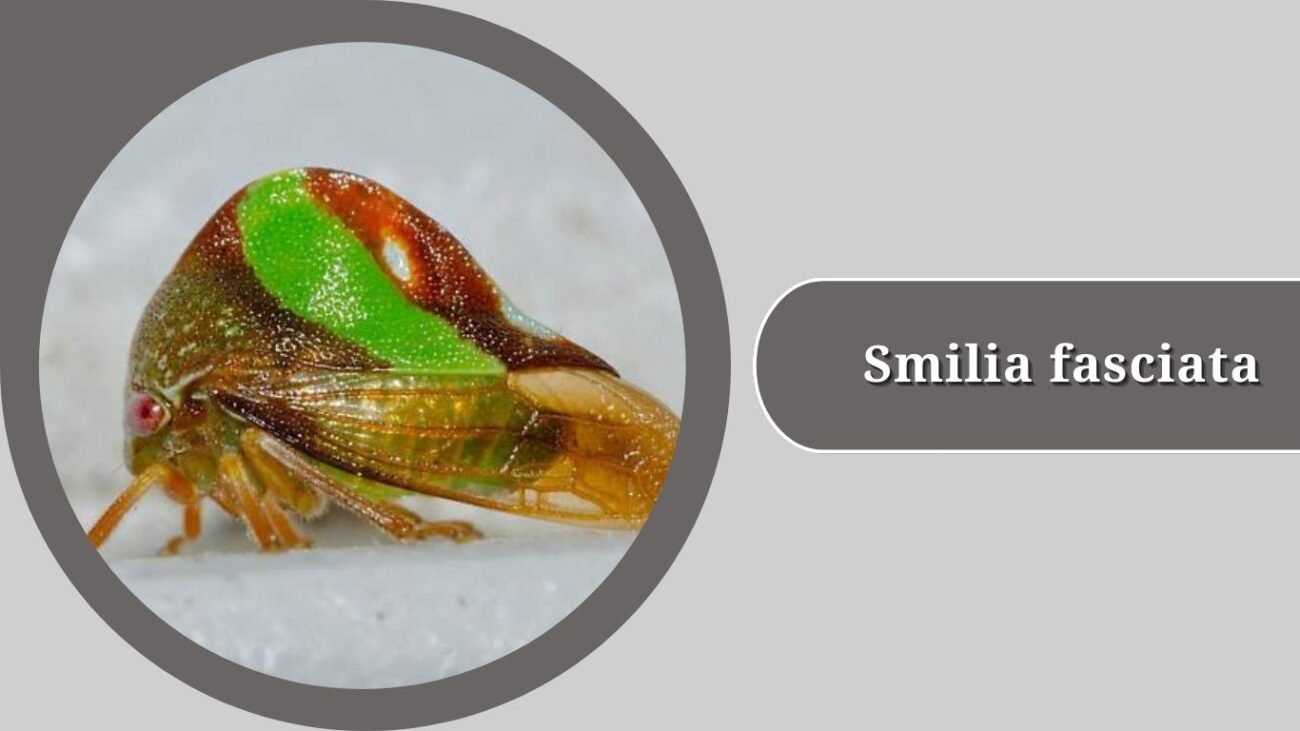
Smilia fasciata is a striking treehopper species easily recognized by the banded patterns across its body and wings. Its unique coloration and structure allow it to blend with stems, bark, and foliage, while also providing a measure of warning camouflage.
Identification
- Pronotum elevated and extended backward, forming a rugged crest.
- Distinctive banded (fasciated) markings across the body and wings.
- Brown, gray, or green base coloration with contrasting pale or dark stripes.
- Medium body size, usually 8–12 mm long.
- Transparent wings with visible banding when folded.
Habitat
This species is primarily found in North America, particularly in the eastern United States. It inhabits forests, woodlands, and shrubby areas where its host plants are abundant.
Behavior
Smilia fasciata is generally solitary or found in small clusters on stems and branches. Its banded markings and irregular pronotum provide camouflage against predators. Like other treehoppers, it communicates with conspecifics through substrate vibrations.
Diet
It feeds on plant phloem sap, extracted through piercing-sucking mouthparts. As with other treehoppers, the excess sap is excreted as honeydew, which can attract ants that sometimes act as protectors.
Lifecycle
Females deposit eggs within host plant tissue. After hatching, nymphs develop through several molts, gradually forming the characteristic banded patterns and crest-like pronotum of the adult. The full lifecycle typically follows seasonal plant growth cycles.