Among North America’s most striking birds, the bluebird and the blue jay often cause confusion due to their shared brilliant blue feathers. Yet, despite their color similarity, they are remarkably different in behavior, size, and song. Bluebirds are gentle, social insect-eaters, while Blue Jays are bold, intelligent, and fiercely territorial. This guide explores their identification, habits, nesting, diet, and symbolism to help birdwatchers easily distinguish between these two iconic species.
Understanding the Two Species
What Is a Bluebird?
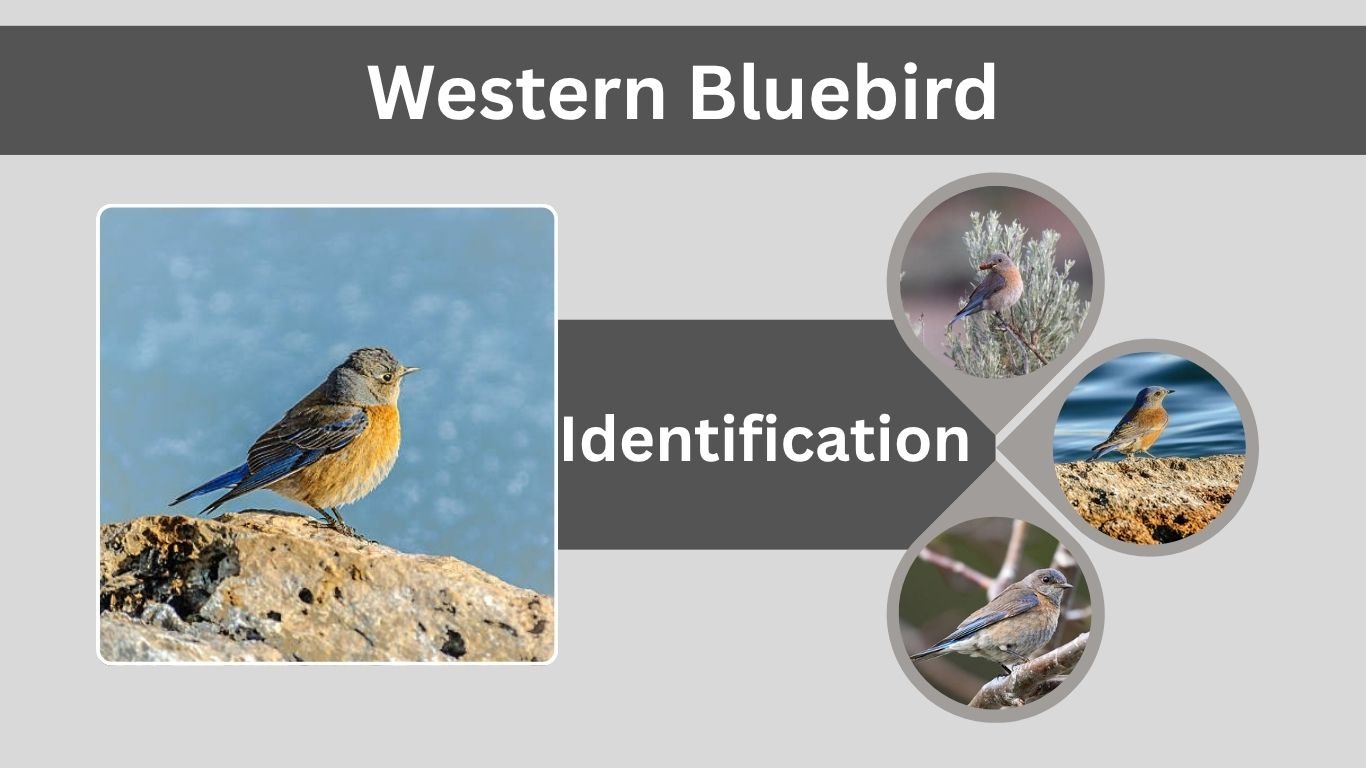
Bluebirds belong to the Turdidae family, which also includes robins. There are three primary types: the Eastern, Western, and Mountain Bluebird. Each features soft sky-blue plumage, a reddish-orange breast, and a calm, social demeanor. Bluebirds thrive in open fields, meadows, and rural areas, where they perch on fences or branches scanning for insects. Their peaceful nature and charming songs make them a favorite among backyard birders.
What Is a Blue Jay?
Blue Jays, members of the Corvidae family, are related to crows and magpies. They are larger, louder, and more intelligent than bluebirds. Characterized by their striking blue feathers, white chest, and distinctive crest, Blue Jays are bold and curious. Found throughout eastern and central North America, they are common in wooded areas, parks, and suburban backyards. Their adaptability and intelligence make them one of the most fascinating and misunderstood birds.
Appearance and Identification
| Feature | Bluebird | Blue Jay |
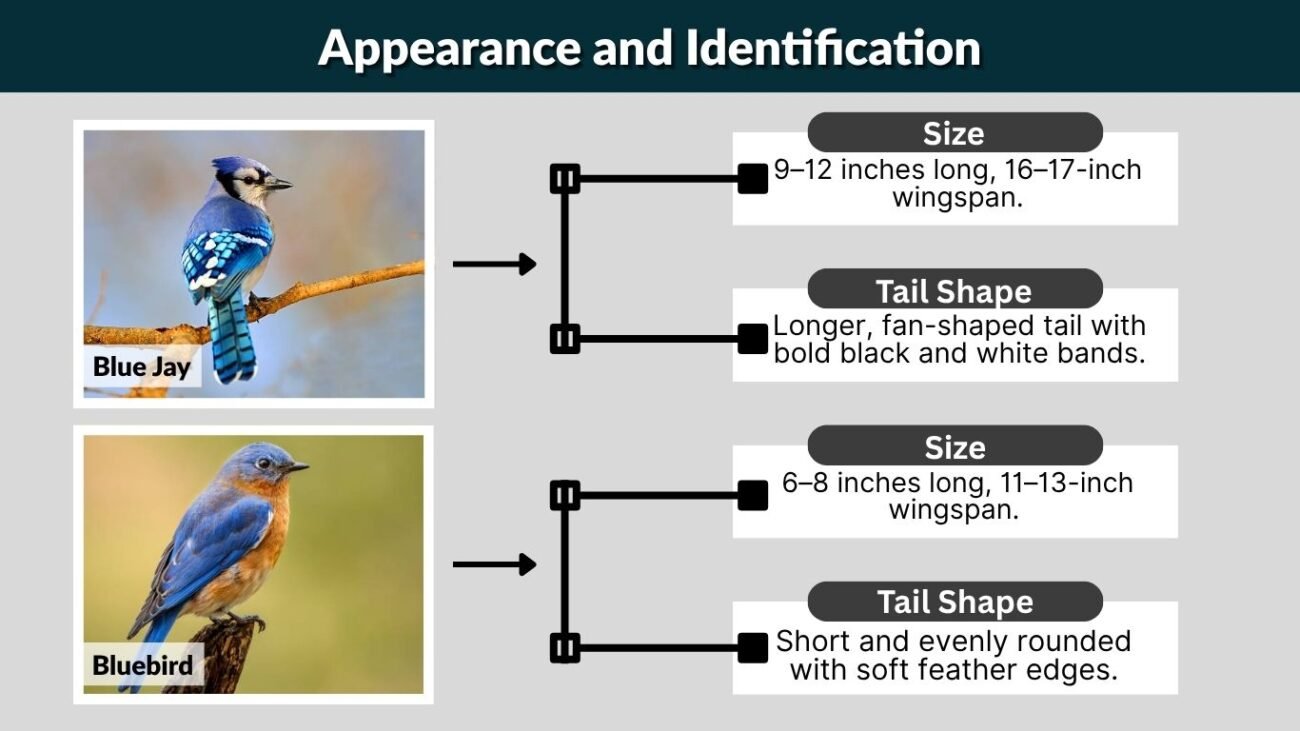
| Coloration | Soft sky-blue on the back and wings with a reddish-orange breast. The hue appears lighter and more pastel. | Bright royal-blue feathers with striking black and white markings on the wings and tail. Vivid and glossy appearance. |
| Crest | No crest — head is smooth and rounded. | Prominent blue crest that rises when the bird is alert or excited. |
| Facial Markings | Clean face with no black lines or patterns. | Distinct black “necklace” or collar and facial markings around the beak and throat. |
| Size | Smaller and more delicate — about 6–8 inches long, 11–13-inch wingspan. | Larger and bulkier — about 9–12 inches long, 16–17-inch wingspan. |
| Bill Type | Slender and pointed; perfect for catching insects. | Thick, strong, and slightly curved; ideal for cracking nuts and seeds. |
| Tail Shape | Short and evenly rounded with soft feather edges. | Longer, fan-shaped tail with bold black and white bands. |
| Feather Texture | Feathers appear matte and soft, giving a gentle glow in sunlight. | Feathers have a glossy, iridescent sheen that reflects deeper blue tones. |
| Sexual Dimorphism | Males are brighter than females, especially during breeding season. | Males and females look nearly identical; slight size difference only. |
| Flight Pattern | Gentle, undulating flight with short glides between wingbeats. | Strong, direct flight with powerful wing flaps and loud calls during flight. |
Behavior and Personality
Temperament Differences
Behaviorally, the two birds couldn’t be more different. Blue Jays are known for their loud, assertive nature. They are territorial, protective, and often dominate bird feeders or chase away smaller species. Their intelligence also plays into this — they can mimic hawk calls to scare off competitors and use teamwork when foraging or defending nests.
Bluebirds, on the other hand, are symbols of tranquility. They prefer peaceful coexistence and rarely display aggression unless protecting their young. Their behavior is calm and cooperative, often seen perching quietly while hunting for insects.
Intelligence and Social Habits
Blue Jays are among the smartest birds in North America. They exhibit problem-solving skills, tool use, and even caching behaviors — storing food like acorns for later. Their social structure involves complex communication, with family groups sometimes staying together for multiple seasons.
Bluebirds, while not as cognitively complex, display strong social bonds. They often nest in small family groups, and young bluebirds may assist their parents in feeding future broods. Their cooperative behavior contributes to their reputation as symbols of peace and happiness.
Habitat and Distribution
Bluebird Habitats
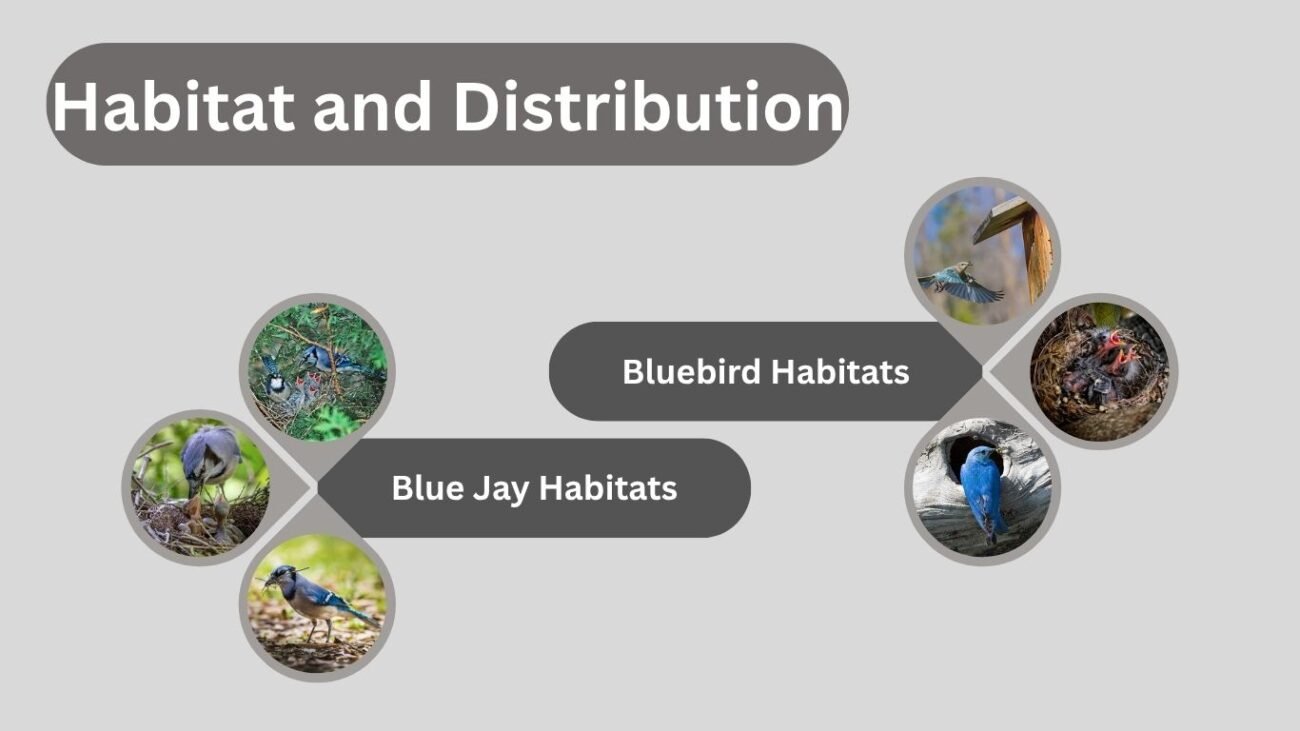
Bluebirds favor open habitats such as meadows, farmlands, and orchards. They are cavity nesters, often taking residence in abandoned woodpecker holes or man-made nest boxes. These birds are widespread across the United States — the Eastern Bluebird thrives east of the Rockies, the Western Bluebird inhabits the western states, and the Mountain Bluebird prefers higher elevations.
They avoid dense forests, preferring open areas where they can easily spot ground-dwelling insects. Bluebirds are year-round residents in some regions but may migrate south during harsh winters.
Blue Jay Habitats
Blue Jays, by contrast, prefer wooded and suburban environments. They are most abundant in the eastern and central U.S., though their range continues to expand westward. Their intelligence and adaptability allow them to thrive in both forests and cities.
They nest in trees and can quickly adjust to human presence, often visiting bird feeders and making loud calls from the canopy. Blue Jays’ strong survival instincts and food-storing behavior make them resilient throughout the year, even in colder climates.
Nesting and Breeding
Nest Location and Construction
Bluebirds and Blue Jays differ significantly in nesting preferences. Bluebirds build their nests in cavities or nest boxes, using grass, pine needles, and soft plant materials. Their nests are neat and simple, often lined delicately to protect their eggs.
Blue Jays, however, construct large, cup-shaped nests high in trees using twigs, bark, and mud. They are meticulous builders, working in pairs and fiercely defending their nesting sites from predators.
Eggs and Brooding
The eggs of bluebirds and blue jays are another area of distinction. Bluebird eggs are typically pale blue and smooth, though occasionally white. A typical clutch contains 4–6 eggs, incubated solely by the female for about two weeks. The male assists by providing food and guarding the nest.
Blue Jays, on the other hand, lay 3–6 eggs that are greenish-blue with brown speckles. Both parents take part in building the nest, incubating the eggs, and feeding the young. Jays are known for their fierce protection of their nests, often swooping at intruders — a behavior rarely seen in bluebirds.
Diet and Feeding Habits
What Bluebirds Eat
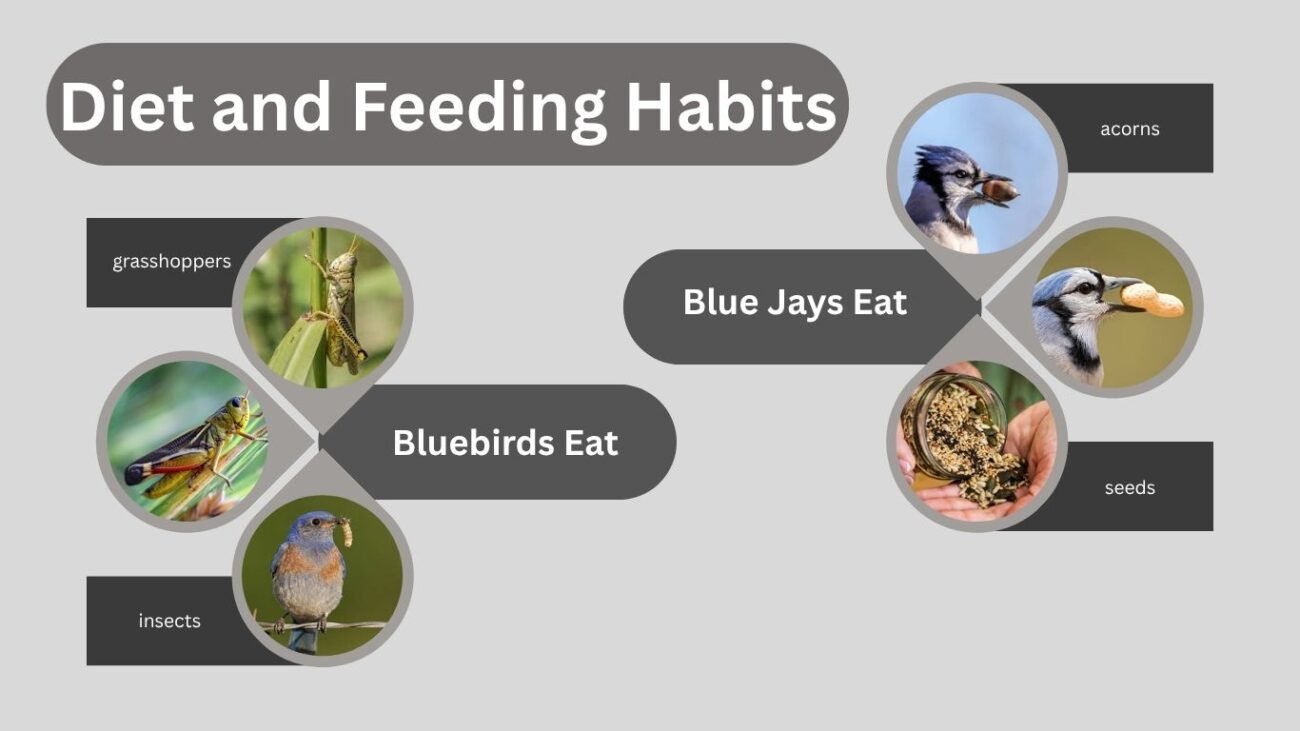
Bluebirds have an insect-rich diet. They primarily feed on beetles, grasshoppers, crickets, caterpillars, and spiders. During cooler months, when insects are scarce, they switch to fruits and berries such as dogwood, holly, and juniper.
At feeders, bluebirds love mealworms — both live and dried. Providing these in a shallow dish helps attract them, especially in spring and early summer. Since they prefer open areas, placing feeders away from dense shrubs or trees reduces the risk of predators.
What Blue Jays Eat
Blue Jays are opportunistic omnivores. Their diet includes acorns, nuts, seeds, grains, insects, and occasionally small vertebrates like frogs or baby birds. They are also known to raid nests for eggs, though this is not their primary food source.
Their intelligence shines in feeding behavior — Blue Jays can mimic predator sounds to scare off other birds and claim feeders. They also store food in hidden locations for later use, a survival skill that supports them through winter.
Attracting Each to Your Backyard
To attract bluebirds, provide mealworms, fresh water, and nesting boxes placed in open, quiet areas. Bluebirds prefer calm environments and avoid aggressive species.
For blue jays, offer peanuts, sunflower seeds, and suet cakes. They enjoy large, sturdy feeders and are more tolerant of noise and activity. Keeping separate feeding stations helps prevent conflicts between the two species.
Vocalization and Communication
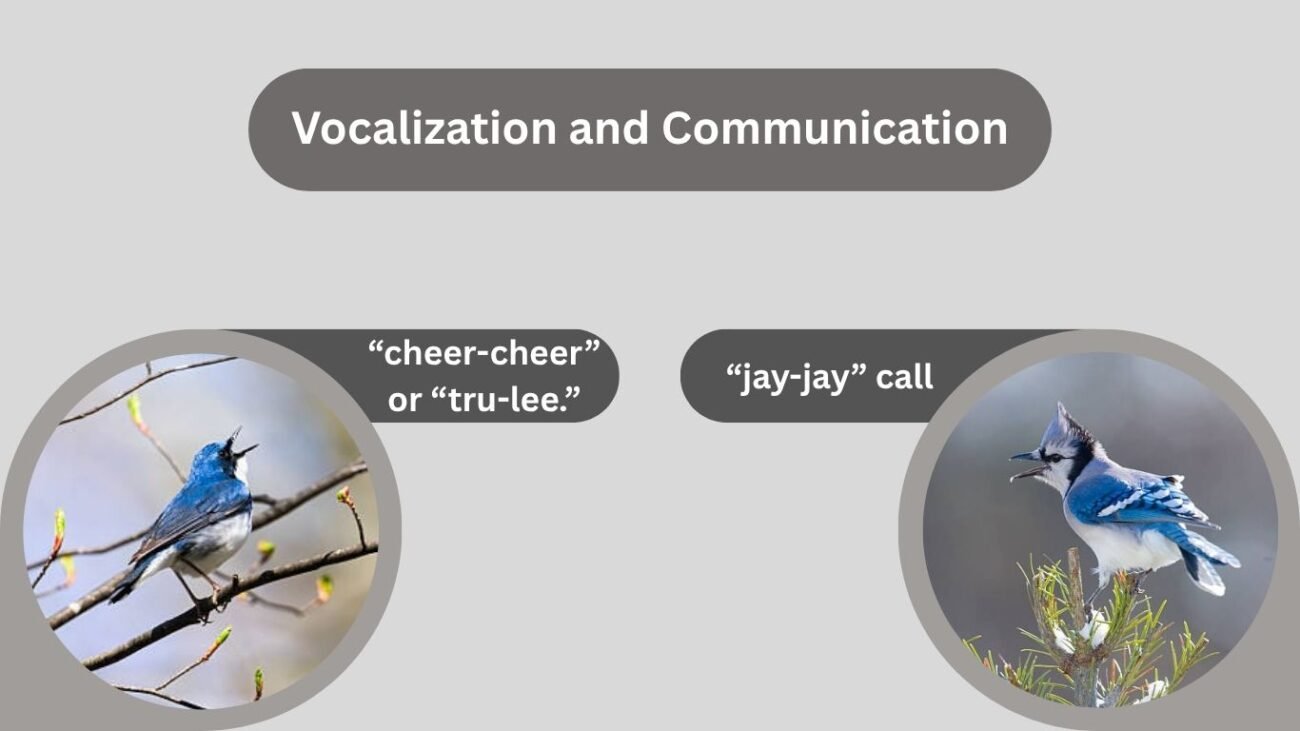
Blue Jay Calls
Blue Jay’s vocal range is surprisingly broad. Their most recognizable sound is the harsh “jay-jay” call, used to alert others of danger. However, Blue Jays can mimic the calls of hawks and other birds, which they use strategically to clear feeders or warn their flock.
They also have soft, musical notes for communicating with family members. Despite their reputation for being noisy, their complex communication reflects their intelligence and social organization.
Bluebird Songs
In contrast, bluebirds sing soft, flute-like notes, often described as “cheer-cheer” or “tru-lee.” Their songs are calm and melodic, symbolizing peace and optimism. Males sing to defend territory and attract mates, while both sexes use short calls to signal threats or coordinate feeding.
The bluebird’s gentle voice adds tranquility to open fields, making them one of the most beloved songbirds in North America.
Symbolism and Meaning
Bluebird Symbolism
Across cultures, the bluebird represents happiness, renewal, and the arrival of spring. Native American folklore often portrays it as a messenger of joy and good fortune. Its calm temperament and bright colors embody serenity and hope — qualities that have inspired countless poems and songs.
Blue Jay Symbolism
In contrast, the Blue Jay symbolizes intelligence, curiosity, and determination. Its assertive nature represents courage and persistence. Many cultures associate the Blue Jay with communication and protection, as it warns other creatures of nearby predators. While some see its loudness as arrogance, others view it as confidence and strength.
Ecological Importance
Both species play crucial roles in maintaining ecological balance.
- Blue Jays aid in forest regeneration by burying acorns and nuts, inadvertently planting new trees. They also control pest populations by consuming insects.
- Bluebirds help manage insect numbers, particularly beetles and grasshoppers, benefiting farmers and gardeners.
Their nesting and feeding behaviors support biodiversity and healthy ecosystems, proving that both species, despite their differences, are essential contributors to nature’s balance.
Key Takeaways
- Appearance: Blue Jays are larger with crests and bold markings, while Bluebirds are smaller with soft blue and orange plumage.
- Temperament: Blue Jays are loud, assertive, and highly intelligent; Bluebirds are gentle, quiet, and social.
- Habitat: Jays prefer forests and suburbs, while Bluebirds favor open meadows and fields.
- Diet: Jays are omnivorous and store food; Bluebirds mainly eat insects and berries.
- Symbolism: Bluebirds represent peace and joy, while Blue Jays symbolize confidence and intellect.
Both birds are beautiful and vital to the environment — understanding their differences enriches birdwatching experiences and fosters appreciation for nature’s diversity.
FAQs
Are Bluebirds and Blue Jays related?
No, they belong to completely different bird families. Bluebirds are thrushes in the Turdidae family, closely related to robins. Blue Jays are part of the Corvidae family, which includes crows and magpies. Their shared blue coloration is coincidental and results from feather structure, not genetics.
Can Bluebirds and Blue Jays live in the same area?
Yes. Both species can inhabit overlapping territories, particularly in suburban regions. However, Blue Jays are more dominant and may chase Bluebirds away from feeders or nesting boxes. Providing separate feeding zones helps reduce tension.
How can I tell a Bluebird from a Blue Jay at a distance?
Look for size and shape. Blue Jays are noticeably larger, have a crest on their head, and display bold black and white patterns on wings and tail. Bluebirds are smaller with a rounder body and a warm orange chest — and they lack a crest.
Do Blue Jays attack Bluebirds?
Occasionally. Blue Jays can be aggressive during nesting season and may defend food or territory from smaller birds. While they sometimes raid nests, such incidents are not common and often exaggerated. Most interactions are brief chases or displays.
Which bird is easier to attract to backyard feeders?
Blue Jays are more frequent visitors due to their boldness and adaptability. They enjoy peanuts, corn, and sunflower seeds. Bluebirds, being shyer, prefer mealworms and quiet nesting spots. With patience and the right setup, both can coexist in your yard.