










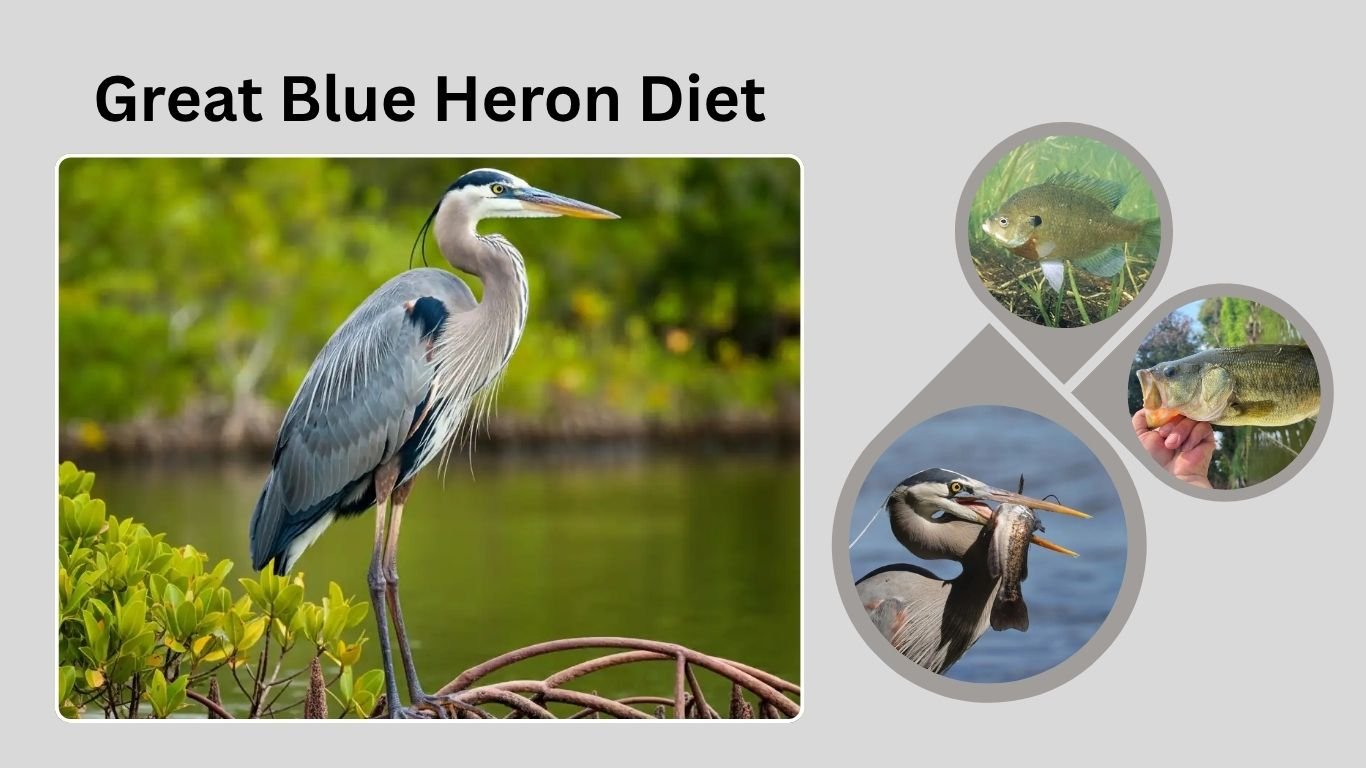
The great blue heron is one of North America’s most recognizable wading birds, admired for its grace, patience, and incredible hunting precision. Its diet is diverse and opportunistic, ranging from fish and frogs to rodents and reptiles. With a dagger-like bill and remarkable stillness, this bird captures a wide variety of prey across wetlands, lakes, and coastal waters, demonstrating both adaptability and predatory skill.
Identification
Species Profile
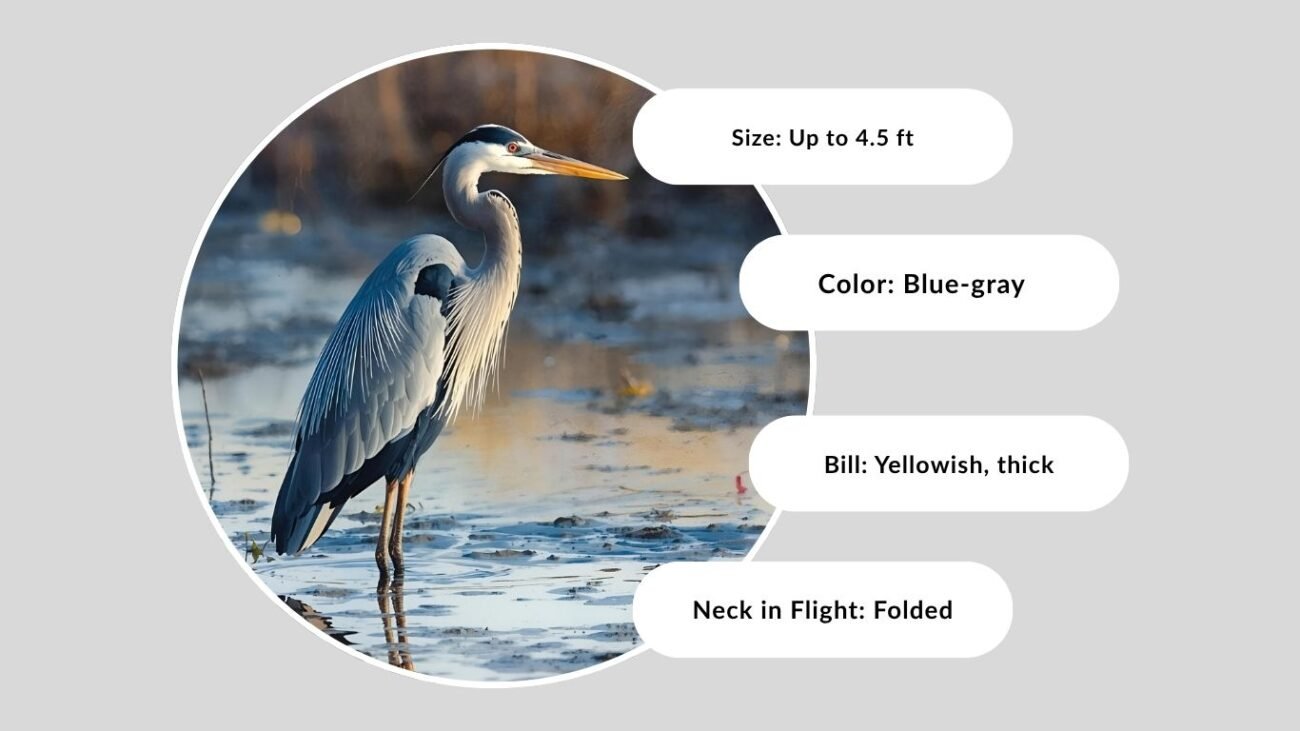
The great blue heron (Ardea herodias) thrives in freshwater and coastal environments throughout North America. Standing up to 4.5 feet tall with a wingspan exceeding six feet, this heron is built for stealth and endurance. Its long legs allow it to wade through shallow water, while its curved neck coils like a spring, ready to strike prey in an instant.
Feeding Adaptations
Every part of the heron’s body supports its feeding lifestyle. Its long, spear-like bill pierces or grasps slippery fish. The flexible “S”-shaped neck delivers lightning-fast strikes, while the bird’s large eyes detect even the slightest movement beneath the surface. These features make the great blue heron an exceptional and efficient hunter in both daylight and twilight hours.
Diet Overview
General Diet Composition
The great blue heron’s diet is almost entirely carnivorous. It feeds mostly on aquatic species, though it readily takes advantage of any prey small enough to swallow whole. Its food sources vary depending on region, season, and habitat type. A heron living near the coast may eat more crustaceans, while one in a forested pond may favor frogs and rodents.
Typical Food Categories
| Food Group | Common Examples | Feeding Notes |
| Fish | Bluegill, bass, bullhead, koi | Core diet year-round |
| Amphibians | Frogs, tadpoles | Abundant in summer |
| Reptiles | Snakes, turtles, baby alligators | Opportunistic and seasonal |
| Mammals | Mice, rats, gophers, rabbits | Common in winter or dry areas |
| Birds | Ducklings, nestlings | Infrequent but documented |
| Invertebrates | Crayfish, crustaceans, mussels | Found in marshes and tidal flats |
This variety shows how flexible and intelligent the heron’s feeding strategy is. It targets whichever prey is most available, adapting to both freshwater and saltwater environments.
Eating Habits
Feeding Behavior
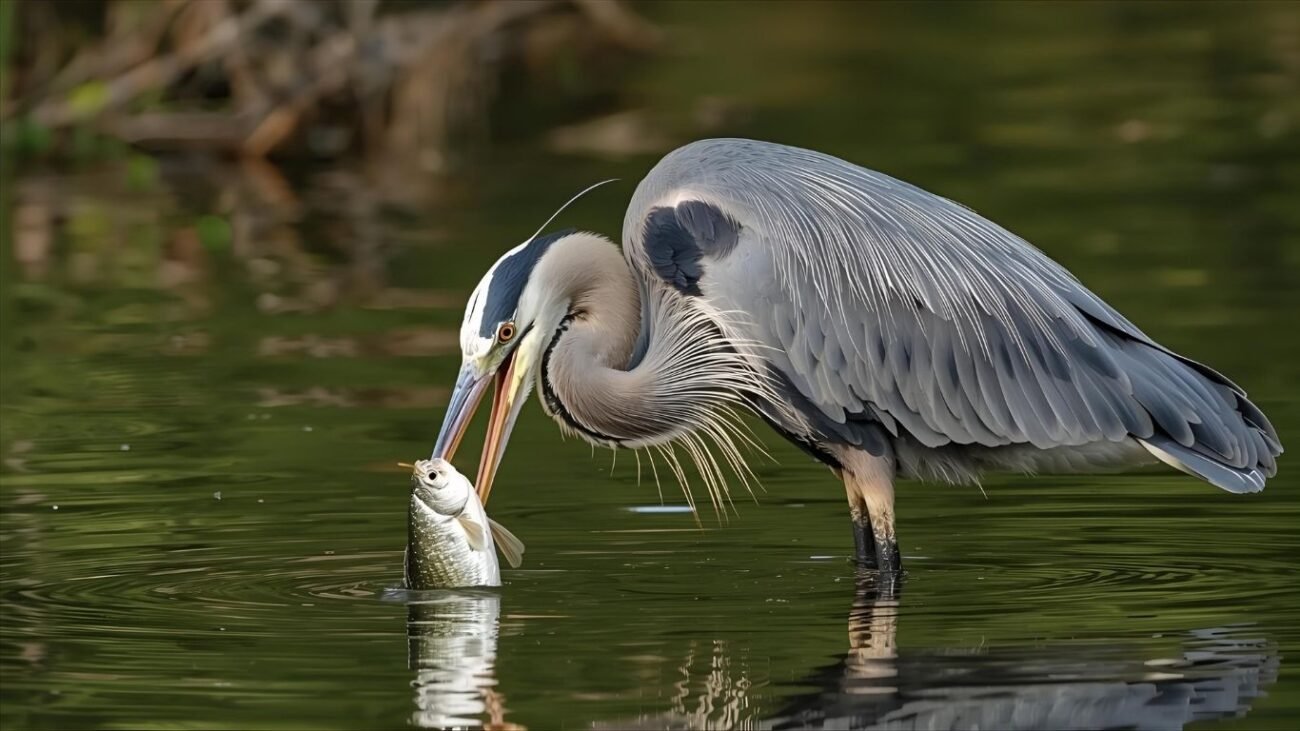
The great blue heron usually hunts alone, standing motionless in shallow water. Once a fish or frog comes within reach, the heron thrusts its bill forward in a split second, impaling or grabbing the prey. It often tosses the catch into the air to align it headfirst before swallowing. This prevents injury from spines or claws and ensures a smooth swallow.
Its slow, deliberate movements help it remain undetected. The heron’s bluish-gray plumage also provides natural camouflage, blending with water reflections and reeds. This stealth allows it to approach prey without alarming them — an essential advantage for survival.
Time and Method of Feeding
Great blue herons feed mostly during dawn and dusk, times when fish are active near the surface and visibility is still adequate. However, they can also hunt at night, especially under bright moonlight. Their keen vision and patience make them successful even in low light conditions.
When prey is scarce, they may travel to new areas, feed along shorelines, or explore flooded fields in search of small mammals or amphibians.
Seasonal Diet Changes
Summer Diet
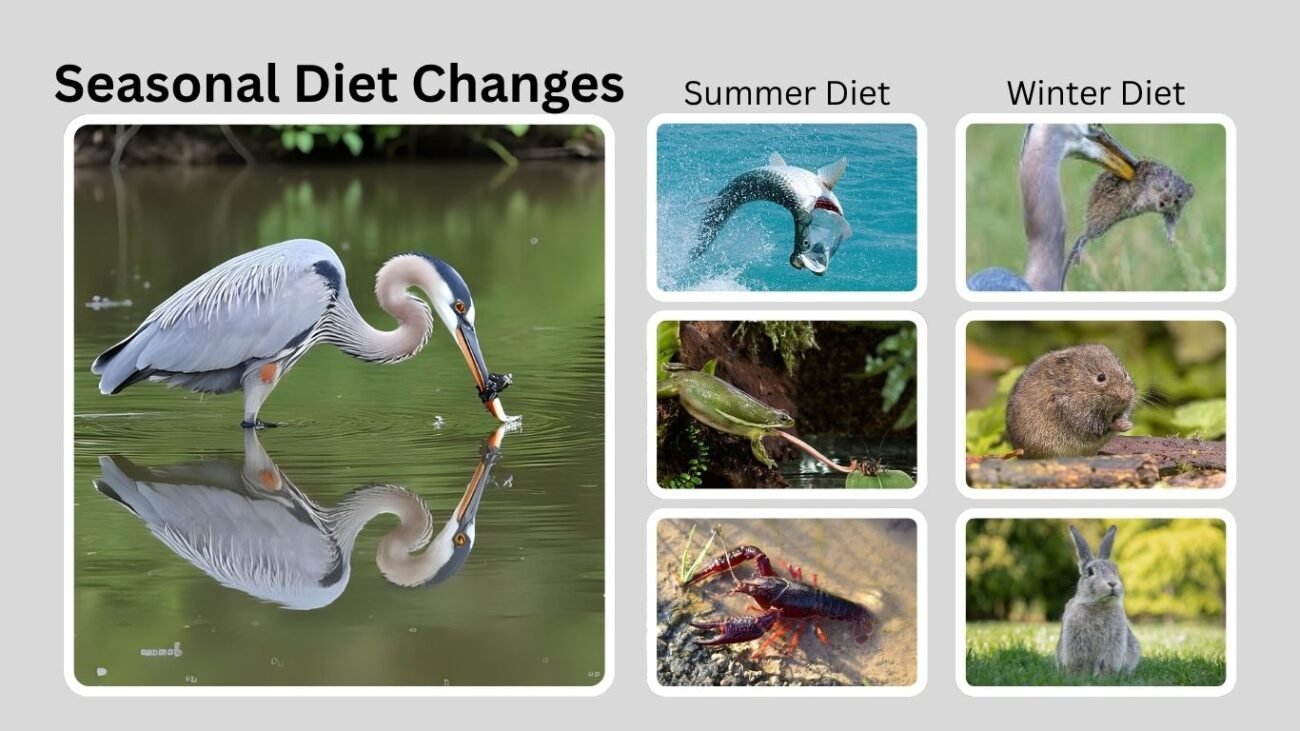
In summer, the heron’s diet is dominated by fish and aquatic invertebrates. Warm temperatures and shallow waters make catching fish, frogs, and crayfish easier. Tadpoles, small turtles, and young snakes are also frequent prey. During this season, the bird’s hunting success rate is high due to abundant food and long daylight hours.
Winter Diet
When temperatures drop and lakes freeze, the great blue heron shifts to a land-based diet. It begins feeding on small mammals such as mice, voles, and rabbits. Occasionally, it preys on birds like ducklings or songbirds when fish are inaccessible. This adaptability enables the species to remain year-round in many regions instead of migrating long distances.
Unique Eating Behavior
Large and Unusual Prey
While most of its meals are small, great blue herons are capable of consuming surprisingly large animals. Observations have recorded herons swallowing adult rats, rabbits, and even small alligators. These daring meals demonstrate the heron’s flexibility and risk-taking nature. However, such large prey can pose a danger — if swallowed incorrectly, the heron can choke or sustain internal injuries.
Predatory Strategy
A heron’s hunting technique combines stealth and explosive speed. It stands motionless for several minutes, then strikes with perfect timing. Using the element of surprise, it stabs or grasps prey with its sharp bill. Once captured, the heron dunks the prey into water to help lubricate swallowing, then tilts its head back to gulp it down whole. This method has evolved over millions of years, making the great blue heron one of the most successful wetland predators.
Fish Preferences
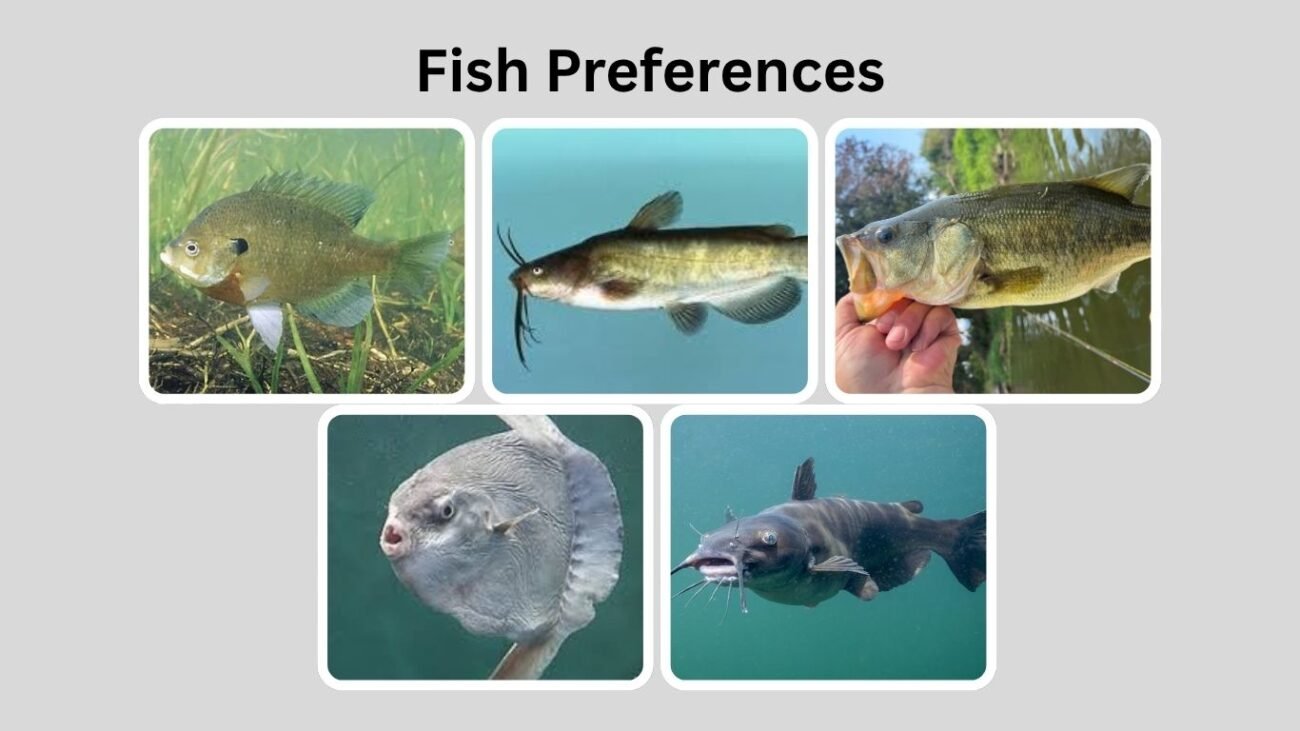
Common Fish Eaten
Fish form the foundation of the great blue heron’s diet. They prefer species that are easy to catch, swallow, and digest. Shallow-water dwellers like bluegill, bullhead, bass, catfish, and sunfish are the most frequent targets. In ornamental ponds, herons often hunt koi due to their visibility and slow swimming speed.
| Fish Type | Feeding Note |
| Bluegill | Common in ponds and lakes, a staple prey |
| Bullhead | Found in muddy bottoms, easy to catch |
| Bass | Consumed when young or small-sized |
| Catfish | Taken in rivers and wetlands |
| Koi | Often targeted in manmade ponds |
Feeding on Large Fish
The heron’s flexible throat and expandable esophagus allow it to swallow prey much larger than expected. If a fish exceeds its swallowing capacity, the heron may drop and reposition it multiple times. It always swallows headfirst to flatten fins and prevent injury. Occasionally, herons regurgitate indigestible parts such as bones or scales, forming compact pellets similar to owls.
Predators and Dietary Threats
Natural Predators
Despite being skilled hunters, great blue herons are not at the top of the food chain. Bald eagles, alligators, and large owls occasionally prey on adults. Raccoons, snakes, and crows are frequent nest raiders, feeding on heron eggs or young chicks. Colonies built in trees provide some protection, but ground nests are far more vulnerable.
Human Impact
Human activities significantly affect the heron’s feeding success. Wetland drainage, pollution, and shoreline development reduce fish populations and destroy feeding habitats. Additionally, discarded fishing lines and hooks can entangle herons, sometimes fatally. Pesticides that enter waterways indirectly poison their prey, leading to lower reproductive success. Protecting wetlands is essential for sustaining the species’ natural food web.
Feeding Ecology and Role in Ecosystem
Ecological Importance
The great blue heron plays a key role in maintaining ecological balance. By preying on fish, frogs, and insects, it helps regulate aquatic populations and prevent overgrowth. Its presence in a habitat often signals a healthy wetland ecosystem, as herons require clean water and abundant prey to thrive.
Adaptation to Environment
Herons exhibit remarkable flexibility in both diet and habitat. They can adapt to freshwater ponds, estuaries, salt marshes, and even urban waterways. This adaptability allows them to survive environmental fluctuations such as droughts or seasonal prey shortages. Their ability to exploit multiple food sources ensures survival in nearly every corner of North America.
Unusual Feeding Events
Heron vs. Alligator
One of the most fascinating feeding displays involves herons consuming juvenile alligators. Documented instances show the bird swallowing small gators whole after a brief struggle. Though rare, such predation highlights the heron’s daring nature. However, this behavior carries risk — adult alligators are known to attack herons that wander too close to nesting sites.
Rodents and Mammals
When aquatic prey is limited, herons turn to terrestrial hunting. Videos and field observations have captured herons swallowing rats, gophers, and rabbits. Their quick strikes and strong neck muscles allow them to subdue mammals effectively. This adaptability demonstrates that herons are not strictly water-dependent predators but opportunistic feeders capable of thriving in diverse environments.
Feeding Techniques and Behavior Patterns
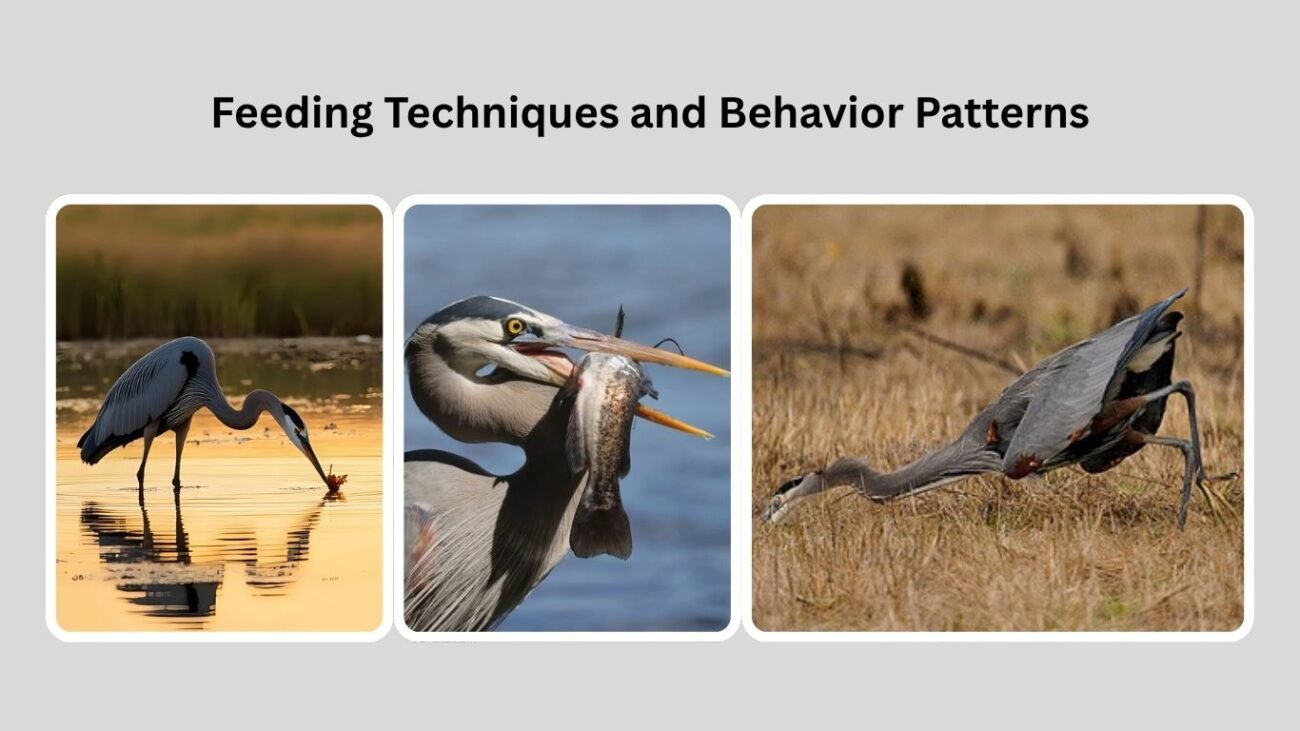
Still-Hunting
Herons often stand motionless for extended periods, letting prey move within striking distance. This “statue pose” reduces ripples and shadows, preventing detection by fish or amphibians. Once the opportunity arises, the heron thrusts its bill like a spear, delivering a precise and fatal blow.
Active Stalking
In deeper or flowing waters, the heron uses slow, deliberate steps, constantly scanning for movement. It lowers its head close to the surface, aligning the beak with the prey’s direction. A sudden lunge completes the hunt, followed by a quick gulp before the prey escapes.
Feeding Cooperation and Competition
While generally solitary feeders, herons may hunt near others when food is abundant. However, territorial disputes occur if one bird intrudes too closely. They defend feeding zones aggressively, ensuring enough prey for themselves and their offspring during breeding seasons.
Conservation and Feeding Challenges
Impact of Climate Change
Changing water levels and temperature fluctuations affect fish availability. Droughts can shrink wetlands, forcing herons to travel long distances in search of food. Rising sea levels also threaten coastal feeding grounds, reducing nesting success in some populations.
Human-Wildlife Interaction
In urban areas, herons have adapted to feeding in artificial ponds and reservoirs. While beneficial in some ways, this brings them into conflict with humans who maintain ornamental fish ponds. Deterrents and habitat protection initiatives help balance coexistence between herons and human communities.
FAQs
What do great blue herons primarily eat?
Their main diet consists of fish such as bluegill, bass, and catfish. They also eat frogs, snakes, small mammals, and crustaceans. Great blue herons adapt their feeding habits based on habitat and seasonal food availability.
How do great blue herons hunt their prey?
They rely on patience and stealth, standing still in shallow water until prey approaches. With a rapid strike from their long neck and sharp bill, they catch and swallow their meal whole, typically headfirst.
Can great blue herons eat large animals?
Yes. They can swallow surprisingly large prey such as rabbits, rats, or small alligators. Their expandable throat allows them to consume animals nearly half their body length, though such events are uncommon.
Do great blue herons change their diet during winter?
Absolutely. In cold months, when fish are less accessible, they switch to land prey like mice, voles, and small birds. This flexible diet helps them survive in frozen environments without migrating.
What predators threaten great blue herons?
Adult herons face threats from bald eagles, owls, and alligators. Eggs and chicks are more vulnerable, often eaten by raccoons and snakes. Human-related dangers, such as habitat loss, also pose serious challenges to their survival.


