











The Great White Heron is one of Florida’s most remarkable and mysterious birds. Often mistaken for the Great Egret or the white morph of the Great Blue Heron, it stands out with its striking white plumage and commanding size. Found primarily in the Florida Keys, this elegant bird plays an essential role in coastal ecosystems and remains a symbol of patience, grace, and resilience.
Overview of the Great White Heron

Description and Characteristics
The Great White Heron is a majestic, large wading bird with pure white feathers, a yellowish-orange bill, and pale blue-gray legs. It’s notably taller and heavier than the Great Egret, standing over four feet tall with a wingspan of up to seven feet. Its slow, deliberate movements and spear-like bill make it a master at catching fish in shallow waters.
Range and Distribution
This heron is primarily a resident of southern Florida, especially in the Florida Keys, Everglades, and nearby coastal mangroves. Unlike its close relatives, it doesn’t migrate far, preferring warm, tropical climates year-round. Rare sightings outside Florida are exceptional and typically involve displaced individuals during storms.
Habitat and Distribution
Preferred Habitats
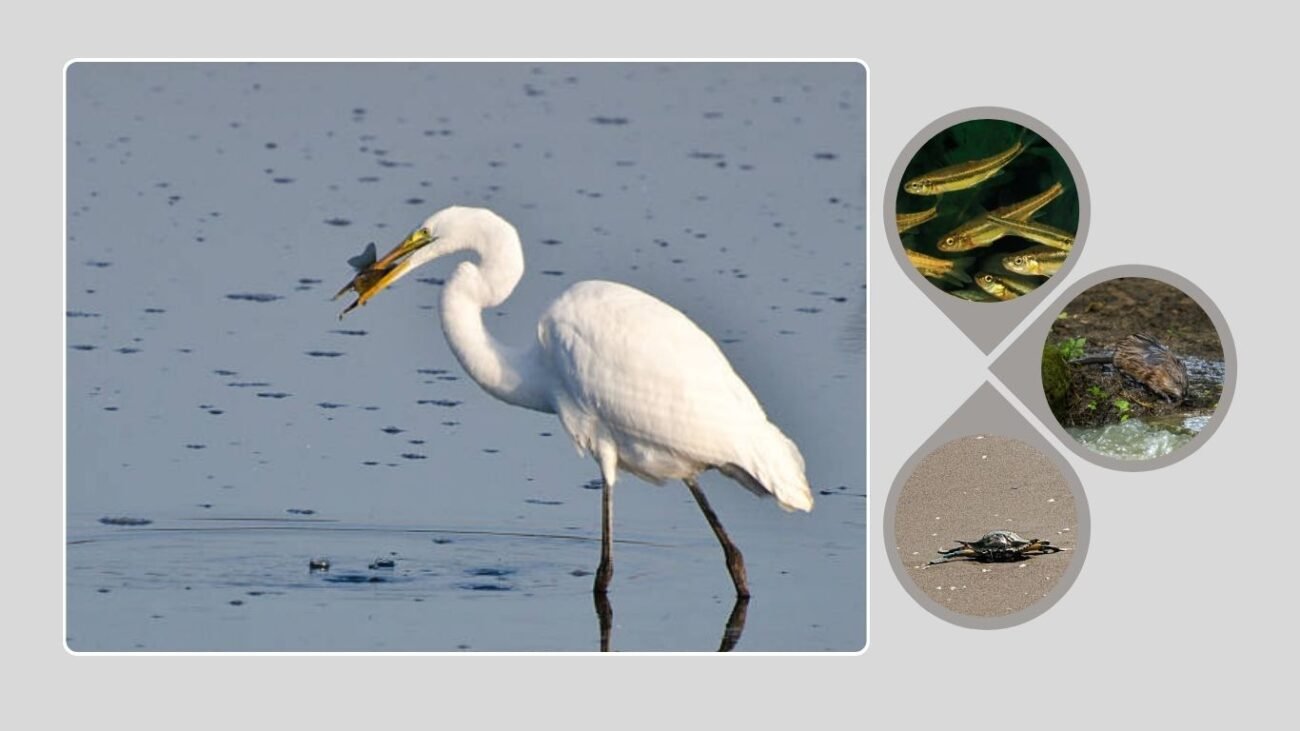
The Great White Heron thrives in shallow saltwater environments — coastal lagoons, tidal flats, and mangrove islands. Its long legs allow it to wade through deeper water than smaller egrets. These habitats provide a rich supply of fish, crabs, and small aquatic animals essential for its diet.
Range Map and Seasonal Presence
This species is largely non-migratory, found year-round across the Florida Keys. However, some may wander slightly northward during the breeding season. The Great White Heron’s limited range makes it especially vulnerable to habitat loss from coastal development and rising sea levels.
Great White Heron National Wildlife Refuge
Purpose and Protection
Established in 1938, the Great White Heron National Wildlife Refuge protects more than 375,000 acres of coastal habitat in the Florida Keys. Its primary goal is to safeguard nesting and feeding areas for this rare bird, which is considered a subspecies of the Great Blue Heron (Ardea herodias occidentalis).
Wildlife and Activities
Visitors to the refuge can enjoy birdwatching, kayaking, and eco-tours that showcase Florida’s coastal beauty. Alongside the Great White Heron, you’ll find pelicans, ospreys, and roseate spoonbills. Fishing is permitted in designated areas, but strict guidelines ensure minimal disruption to the heron’s natural behavior.
Identification and Appearance
Physical Traits
At first glance, the Great White Heron can be confused with the Great Egret due to its white plumage. However, its thicker bill, bulkier frame, and bluish-gray legs distinguish it easily. When flying, its slower wingbeat and broader wingspan further separate it from egrets.
Comparison with Great Blue Heron White Morph
A common question among birdwatchers is whether the Great White Heron is simply a color variation of the Great Blue Heron. While both belong to the same species complex, the Great White Heron is considered a distinct subspecies. Its white morph relative, found occasionally in mixed populations, is smaller and shows faint gray tinges in feathers — traits absent in the pure white Great White Heron.
Great White Heron vs Great Egret
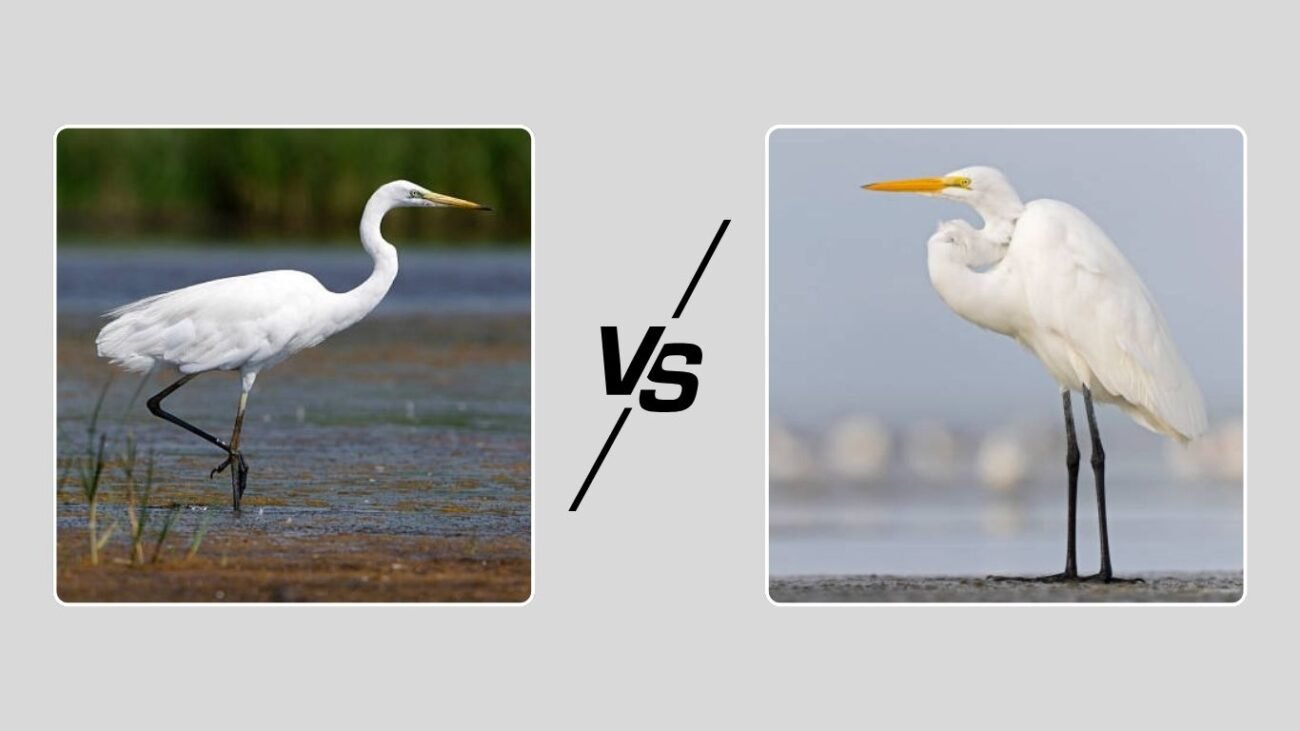
Visual Differences
| Feature | Great White Heron | Great Egret |
| Bill | Thick, yellow-orange | Long, slender, yellow |
| Legs | Pale gray to bluish | Jet black |
| Size | Up to 54 inches | Around 40 inches |
| Neck | Thicker and longer | Slimmer and more graceful |
Behavior and Habitat Contrast
While both species inhabit wetlands, the Great White Heron prefers saltwater coastlines, whereas the Great Egret thrives in freshwater marshes and ponds. Egrets are also more social, nesting in colonies, while Great White Herons are typically solitary hunters, using stealth and patience to ambush prey.
Other Species Comparisons
Great White Heron vs Snowy Egret
The Snowy Egret is much smaller, with striking black legs and bright yellow feet, features that make it easy to distinguish from the Great White Heron. Snowy Egrets are about half the heron’s size and are more active feeders, darting and stirring the water to catch small fish, while the Great White Heron prefers a still, patient approach.
Great White Heron vs Great White Egret
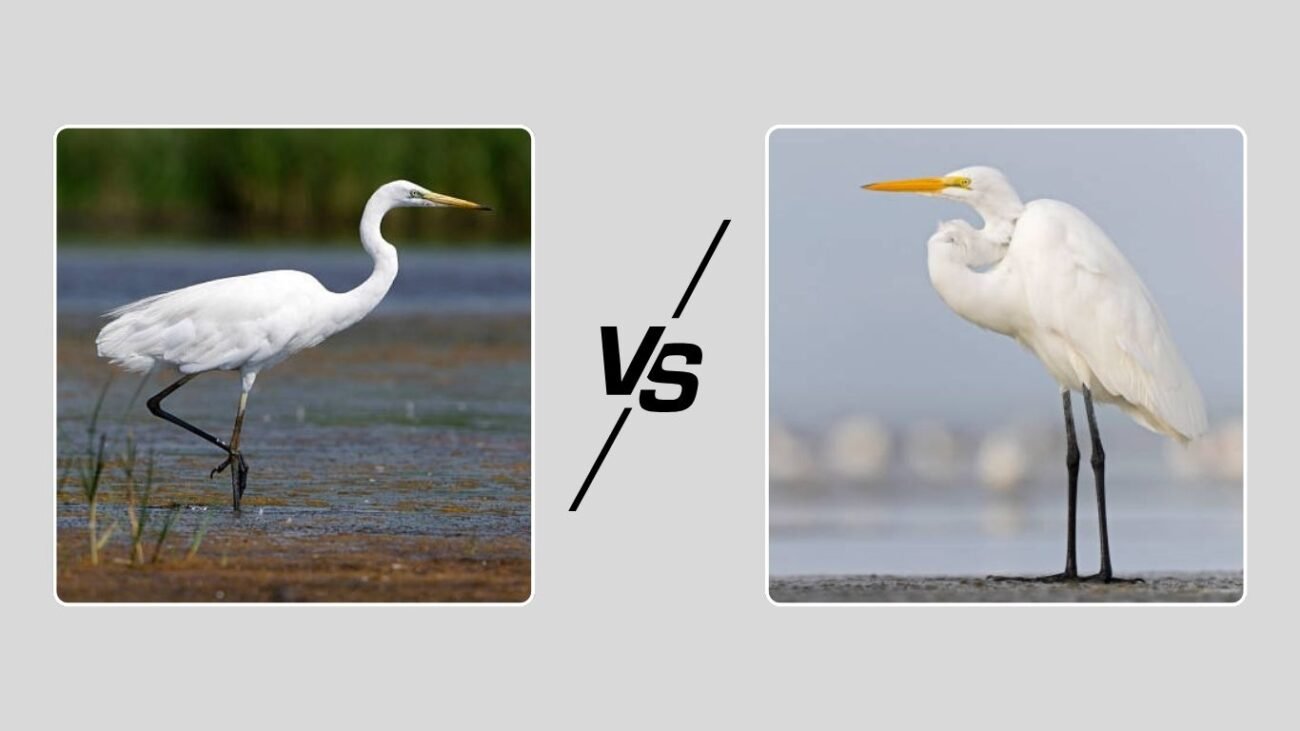
Although their names sound nearly identical, the Great White Egret and Great White Heron differ significantly. The heron is larger, heavier, and has a thicker, dagger-like bill suited for larger prey. The egret’s slim shape and delicate features reflect its preference for smaller aquatic insects and fish.
White Morph Great Blue Heron vs Great Egret
The white morph of the Great Blue Heron adds to the confusion. However, this morph retains certain blue-gray tones on the wingtips and shoulders. Birdwatchers often use leg and bill color to distinguish them — the Great Blue’s morph has lighter legs and a bulkier head profile, unlike the sleek egret.
Behavior and Ecology
Feeding and Nesting Habits

The Great White Heron’s diet consists primarily of fish, crustaceans, and amphibians. It hunts alone, standing motionless in shallow water before striking with lightning speed. During the breeding season, pairs build nests high in mangroves, using sticks and seaweed. The female typically lays three to four pale blue eggs, which both parents help incubate.
Migration and Movement
Unlike many heron species, the Great White Heron is largely non-migratory. It remains in South Florida year-round, adapting its feeding areas based on tides and weather conditions. However, young birds may disperse short distances after fledging, occasionally reaching mainland Florida or the Gulf Coast.
Symbolism and Meaning
Cultural Significance
Throughout history, white herons have symbolized purity, patience, and reflection. In Native American traditions, the heron represents calm observation and resilience. Its presence in wetlands serves as a reminder of balance and harmony within nature — qualities often lost in modern life.
Modern Interpretations
In modern symbolism, the Great White Heron embodies environmental awareness and conservation. Artists and photographers often portray it as a guardian of coastal ecosystems, a visual metaphor for the fragility of marine habitats and the need for stewardship of our natural world.
Audubon and Scientific Background
Scientific Classification
The Great White Heron (Ardea herodias occidentalis) is currently recognized as a subspecies of the Great Blue Heron, though some ornithologists argue it deserves full species status due to genetic and behavioral differences. This debate continues among experts, as ongoing studies analyze its unique range and breeding isolation in Florida.
Audubon’s Contribution
John James Audubon was one of the first naturalists to document the Great White Heron in detail. His stunning 1835 illustration captured its regal posture and elegance, helping to bring attention to its rarity. Audubon described the bird as “majestic and ghost-like,” reflecting his awe of its striking appearance.
Conservation Status
Threats and Challenges

The Great White Heron faces several environmental threats, including habitat loss, rising sea levels, and human disturbance. Coastal development reduces nesting areas, while pollutants and fishing lines endanger both adults and chicks. Because of its limited geographic range, even minor ecological disruptions can have lasting effects.
Protection Efforts
Conservation measures, including the creation of the Great White Heron National Wildlife Refuge, play a vital role in preserving this species. Public education, responsible ecotourism, and habitat restoration projects help sustain heron populations. Birdwatching regulations ensure that nesting sites remain undisturbed during critical breeding months.
Crossword and Public References
The Great White Heron occasionally appears in crosswords and bird trivia clues, underscoring its cultural recognition. These references help spark curiosity about the species and indirectly promote awareness about its conservation and identity.
FAQs
What is the difference between a Great White Heron and a Great Egret?
The Great White Heron is larger, with a thick bill and pale legs, while the Great Egret has black legs and a slimmer build. The heron also prefers saltwater habitats, whereas the egret typically lives in freshwater marshes and lakes.
Can Great Blue Herons be white?
Yes. Some Great Blue Herons display a white morph, but they differ slightly from the Great White Heron. The morph has gray-tinted feathers and different leg coloration, while the Great White Heron is entirely white with bluish-gray legs and a thicker bill.
Where can I see Great White Herons in Florida?
The best places to see them include the Florida Keys, Everglades National Park, and the Great White Heron National Wildlife Refuge. Early morning is ideal for sightings, as these birds are most active during low tides and calm weather.
Are Great White Herons endangered?
While not officially listed as endangered, they are considered a species of special concern due to their limited range and vulnerability to habitat loss. Ongoing conservation efforts aim to protect breeding sites and maintain healthy populations in South Florida.
Do Great White Herons migrate?
No, Great White Herons are primarily non-migratory. They stay year-round in warm coastal areas of Florida but may shift locally depending on food availability and weather patterns, especially during storms or high tides.


