










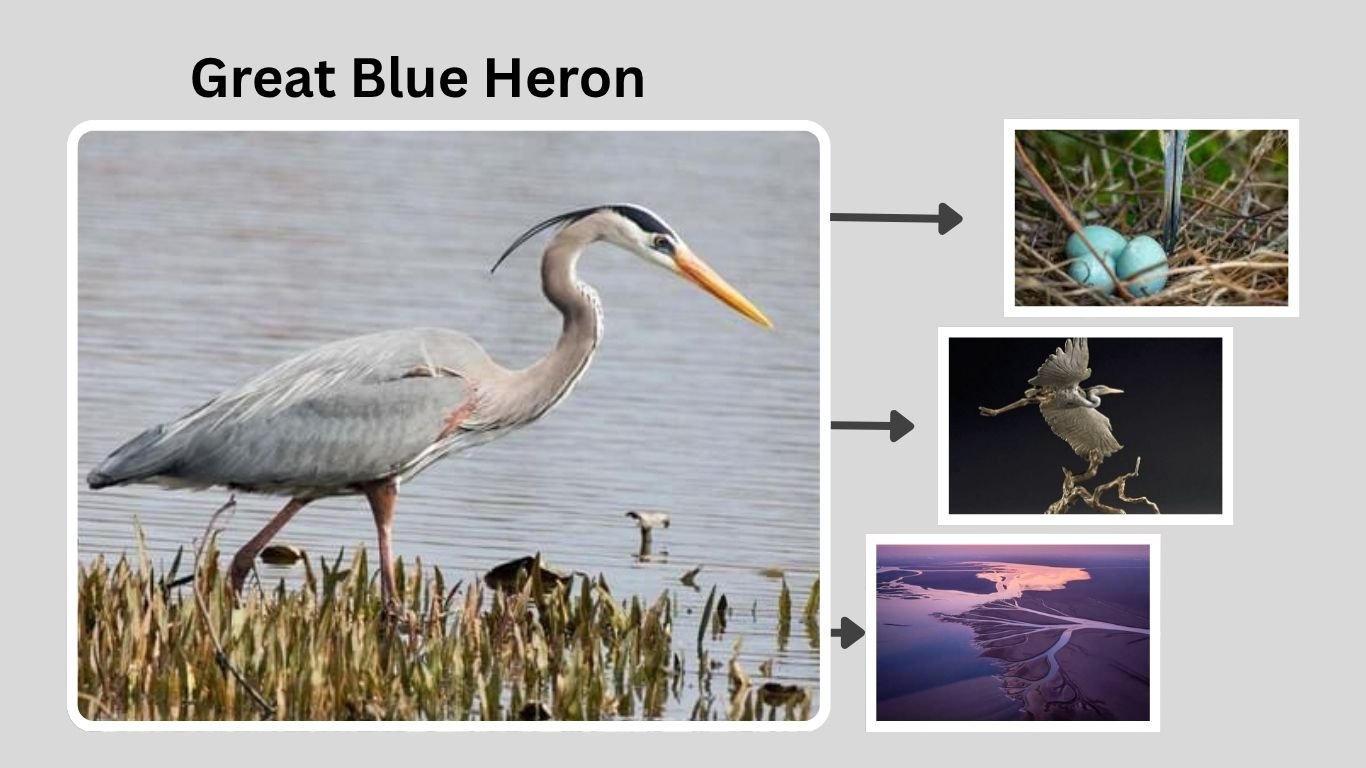
The Great Blue Heron is one of North America’s most majestic and recognizable waterbirds. Known for its tall stature, slow movements, and elegant flight, this bird embodies grace and patience. Whether seen gliding over wetlands or standing motionless in shallow waters, the Great Blue Heron captures the essence of nature’s calm precision. As both predator and symbol, it plays a vital ecological and cultural role across the continent.
Physical Identification

Appearance
The Great Blue Heron (Ardea herodias) is the largest heron species in North America. Adults can stand up to 4.5 feet tall, with a wingspan that stretches over 6 feet. Their bluish-gray plumage, long yellowish bill, and black head plumes make them easy to identify. The neck, often folded into an “S” shape during flight, adds to their distinctive silhouette. Males and females look similar, though males are slightly larger and may display longer head plumes during breeding season.
Juvenile vs. Adult Herons
Juvenile Great Blue Herons are duller in color, with brownish-gray feathers and without the striking black plumes seen in adults. Their bills are darker, and their overall appearance is less sleek. As they mature, they develop the classic blue-gray tone and sharp facial contrasts that define adults. Juveniles often appear more timid and clumsy while learning to hunt, but their skills improve rapidly through observation and instinct.
Birds Similar to the Great Blue Heron
Several wading birds resemble the Great Blue Heron, but key differences help in identification. The Sandhill Crane shares a similar height but has a red crown and different flight posture, with its neck extended rather than tucked. The Great Egret is smaller and entirely white, with a slender yellow bill and black legs. The Reddish Egret also shows similar feeding behavior but is much smaller and more colorful. The Great Blue Heron’s unique combination of size, slate-blue feathers, and folded neck makes it unmistakable.
| Feature | Great Blue Heron | Sandhill Crane | Great Egret |
| Color | Blue-gray | Gray with red crown | Pure white |
| Neck in Flight | Folded | Extended | Folded |
| Size | Up to 4.5 ft | Around 4 ft | Around 3.5 ft |
| Bill | Yellowish, thick | Shorter, pointed | Long and narrow |
Habitat and Distribution
Preferred Environments
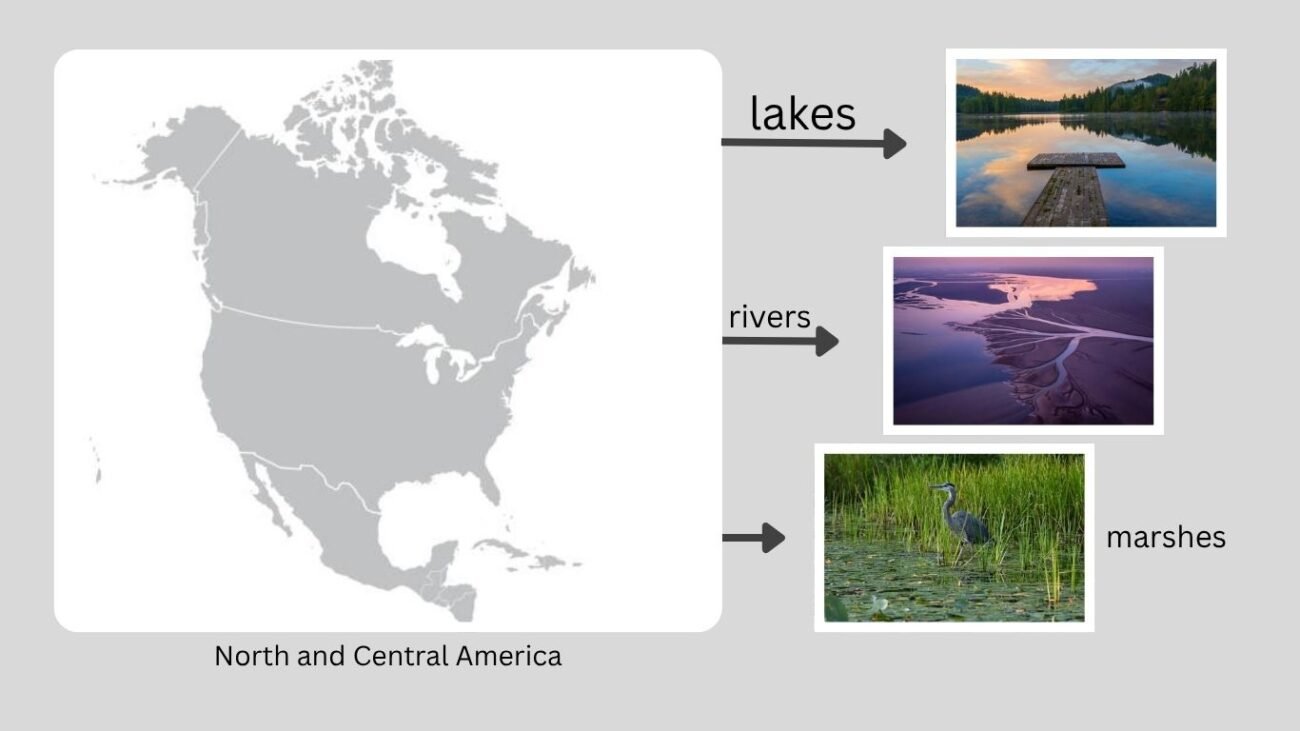
Great Blue Herons are found in a wide range of aquatic habitats including lakes, rivers, marshes, swamps, and coastal bays. They prefer shallow water areas where prey is abundant. Their long legs allow them to wade silently through the water, while their muted colors provide camouflage among reeds and grasses. They are especially common in wetlands rich in fish and amphibians, where they serve as indicators of environmental health.
Regional Populations
This species is distributed throughout North and Central America, from southern Canada to Mexico and the Caribbean. They are especially abundant in Florida, Texas, and the Pacific Northwest, where mild climates and rich wetlands provide ideal conditions year-round. In northern regions, populations are migratory, while herons in southern states often remain resident. Each population adapts to local climates, from the icy lakes of Canada to the mangroves of Florida.
Migration and Range
Great Blue Herons are partial migrants, meaning some travel long distances while others stay in one region. Northern herons migrate south as waters freeze, flying to warmer coastal areas or the southern U.S. They migrate alone or in small groups, typically traveling at night. Protected under the Migratory Bird Treaty Act, they are recognized as essential species that connect ecosystems across borders. In Canada, they are part of official Bird Conservation Regions (BCRs), emphasizing their importance in maintaining biodiversity.
Diet and Feeding Behavior
What Great Blue Herons Eat
Great Blue Herons are expert hunters with a diverse diet. Their primary food source is fish, but they also eat frogs, small reptiles, insects, and even small mammals. Occasionally, they consume smaller birds or nestlings, though this behavior is rare. Using their sharp bills like spears, they strike with lightning speed to catch prey. The heron’s long neck acts like a spring, allowing precise and powerful attacks.
Do They Eat Other Birds?
While their diet is mostly aquatic, Great Blue Herons have been observed eating small birds such as ducklings or fledglings of other species. This occurs when opportunities arise, especially in food-scarce environments. Though surprising to some, this behavior demonstrates their adaptability and opportunistic nature as top wetland predators. They play a key role in controlling fish and amphibian populations, maintaining ecological balance.
Breeding and Nesting
Courtship and Mating
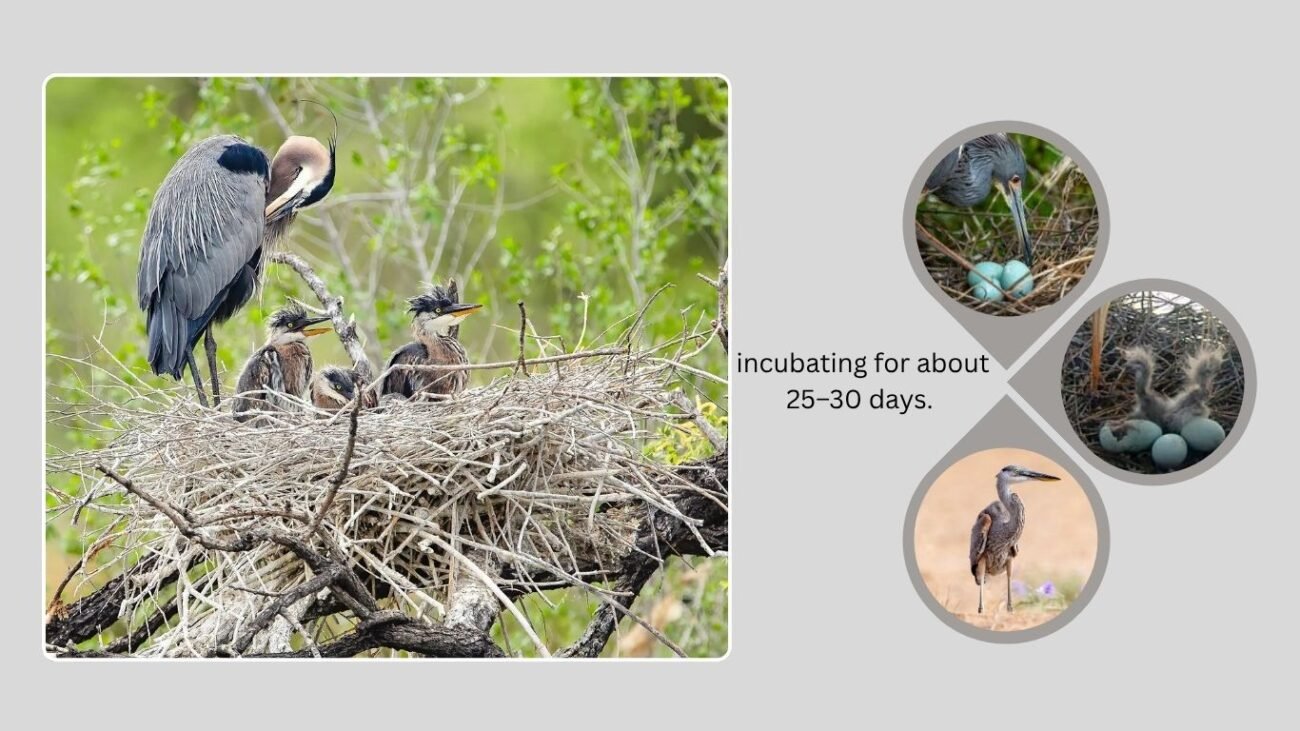
During early spring, male Great Blue Herons begin elaborate courtship displays to attract females. They extend their necks, fluff their plumes, and make clapping sounds with their bills. Once paired, the birds build large stick nests high in trees near water, often in colonies known as rookeries. These colonies may contain dozens of nests, creating a remarkable sight during breeding season. Pairs typically remain together for a single season but reunite if they return to the same nesting site.
Eggs and Young
The female usually lays 3 to 5 pale blue eggs, which both parents take turns incubating for about 25–30 days. Once hatched, the chicks rely entirely on their parents for warmth and food. The adults regurgitate partially digested prey to feed the nestlings. After 7 to 8 weeks, the young herons begin to test their wings and eventually leave the nest. Juveniles often remain nearby for several weeks, honing their hunting and flying skills.
Behavior and Sounds
Flight and Movement
The Great Blue Heron’s flight is one of the most graceful sights in nature. With deep, deliberate wingbeats and a tucked-in neck, it glides smoothly through the air, legs trailing behind. This distinct flight posture helps differentiate it from cranes, which fly with extended necks. While on the ground, the heron moves with calculated slowness, taking long, deliberate steps to avoid startling its prey. Despite its size, it can lift off effortlessly, using powerful wings to soar high above wetlands and coastlines.
Vocalizations and Calls
Though usually silent, Great Blue Herons emit a harsh, croaking “fraaank” call, especially when startled or in flight. During breeding season, they communicate with a variety of clucks, squawks, and guttural sounds to attract mates or defend territories. Their vocalizations are not melodic but serve essential communication purposes within colonies. On quiet mornings, their deep calls can be heard echoing across lakes and marshes, signaling both presence and dominance.
Vision and Hunting Skills
How They See Fish
The Great Blue Heron’s keen eyesight is one of its most valuable hunting tools. Positioned on the sides of the head, its eyes allow nearly 300 degrees of vision—ideal for spotting movement both above and below the water’s surface. Specialized photoreceptors enable it to see clearly in dim light, allowing it to hunt effectively at dawn, dusk, and even during moonlit nights. The heron’s long neck acts as a spring, striking with precise timing once prey is within range.
Hunting Technique
Herons are masters of patience. They often stand perfectly still for minutes, waiting for the slightest ripple that signals movement. Once prey is spotted, they strike in an instant, spearing or grabbing it before swallowing it whole. They are known to regurgitate indigestible parts such as bones or scales later. This methodical hunting behavior is a defining trait of their species and a key reason for their success in diverse habitats.
Cultural and Symbolic Meaning
Spiritual and Artistic Significance
Across cultures, the Great Blue Heron has long symbolized patience, independence, and wisdom. Native American tribes often viewed the heron as a spirit of self-reliance and good fortune, teaching the importance of persistence and focus. In Asian traditions, it represents balance, grace, and longevity. Artists and poets have also drawn inspiration from its solitude and beauty, using it as a symbol of calm reflection and harmony with nature.
In Art and Modern Culture
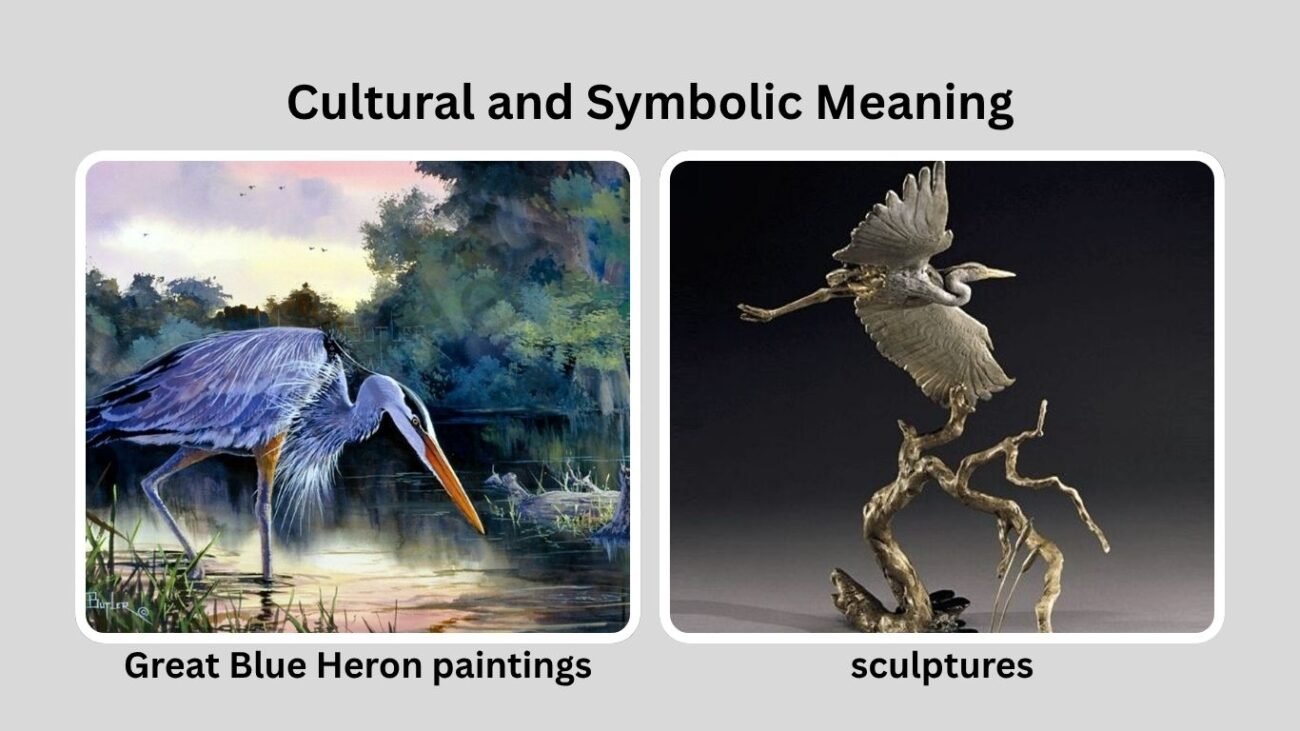
The heron frequently appears in paintings, sculptures, and photography. Its serene image, standing quietly in misty water, evokes tranquility and strength. It has also been featured in the Hallmark “Beauty of Birds” series, celebrating its elegance. Nature photographers often capture it in flight or hunting poses, highlighting its combination of power and stillness. The Great Blue Heron remains a muse for those who admire the quiet majesty of wildlife.
Conservation and Protection
Status and Legal Protection
The Great Blue Heron is currently classified as a species of Least Concern by the International Union for Conservation of Nature (IUCN). Despite occasional threats from habitat loss and pollution, its population remains stable across North America. In the United States, it is protected under the Migratory Bird Treaty Act, which prohibits harm, hunting, or nest disturbance. Canada also includes the heron in its list of Migratory Bird Conservation Regions (BCRs), underscoring its ecological importance.
Conservation Efforts
Organizations like Audubon, Cornell Lab of Ornithology, and various state wildlife agencies monitor heron populations through bird cams and field studies. Conservation efforts focus on protecting wetlands and maintaining clean waterways, essential for their feeding and nesting. Public awareness campaigns encourage responsible birdwatching—keeping distance from nesting colonies and minimizing human disturbance. Supporting wetland restoration and pollution control directly benefits heron habitats and other wildlife species.
FAQs
What kind of bird is a Great Blue Heron?
The Great Blue Heron (Ardea herodias) is a large wading bird belonging to the heron family, Ardeidae. Known for its long legs, sharp bill, and elegant stature, it thrives in wetlands and along shorelines across North and Central America. It is not a bird of prey but an expert fish hunter.
Where does the Great Blue Heron live?
These herons inhabit lakes, rivers, marshes, and coastal areas throughout North America. They are especially common in Florida, Texas, and the Pacific Northwest. In colder climates, they migrate south during winter, while those in warmer regions remain year-round.
What sound does a Great Blue Heron make?
Their signature call is a deep, hoarse “fraaank,” often heard when the bird is startled or flying. During breeding season, herons use various croaks, clucks, and squawks to communicate with mates or signal threats near their nesting sites.
Do Great Blue Herons migrate?
Yes, northern populations migrate south to escape freezing conditions, often traveling to the southern U.S., Mexico, or Central America. Southern populations, particularly in Florida and coastal regions, are non-migratory and stay near their habitats year-round.
Are Great Blue Herons protected birds?
Absolutely. Great Blue Herons are protected under the Migratory Bird Treaty Act in the U.S. and Canada. It is illegal to harm, capture, or disturb them or their nests. Conservation programs focus on preserving wetland ecosystems to ensure their continued survival.


