











Few sights in nature are as calming and awe-inspiring as a heron in flight. With slow, deliberate wingbeats, a long neck gracefully curved into an “S,” and legs extended elegantly behind, the heron glides through the sky like a living symbol of balance and grace.
Herons have captured human imagination for centuries — celebrated in art, mythology, and photography for their stillness and poise. Whether it’s a Great Blue Heron soaring over a lake or a White Heron gliding across coastal waters, the sight evokes peace and a sense of connection with the natural world.
In this article, we’ll explore how herons fly, their flight behaviors, unique species differences, and the deeper spiritual symbolism of seeing one of these majestic birds in motion.
The Science of Heron Flight

Can Herons Fly?
Yes — herons are powerful and elegant fliers. Despite their long legs and slender bodies, they are built perfectly for flight. Their wings are broad and rounded, giving them excellent lift and stability, while their light bone structure reduces overall weight.
A heron’s flight posture is distinctive: neck retracted into an S-shape, legs trailing behind, and broad wings moving slowly but powerfully. This sets them apart from cranes and storks, which fly with their necks outstretched.
Their average wingspan ranges from 3 to 6.5 feet, depending on the species. Larger birds, like the Great Blue Heron, have a wingspan nearly as wide as an eagle’s — yet move with an unhurried rhythm that makes their flight look effortless.
How Do Herons Fly?
Herons fly using a combination of strong wingbeats and gliding. They beat their wings 2–3 times per second, then glide briefly before the next stroke. This efficient motion helps them conserve energy over long distances.
Their flight muscles, especially the pectorals, are well-developed, giving them the power to lift off smoothly from land or water. When taking off, a heron bends slightly forward, spreads its wings wide, and pushes upward with its legs before gaining lift.
Unlike smaller birds that flap continuously, herons rely on steady, controlled movements — creating that slow, graceful appearance that birdwatchers love to photograph.
How Fast and High Do Herons Fly?
Herons are not fast fliers, but their endurance is impressive. They typically fly at speeds of 20 to 30 miles per hour (32–48 km/h) and can travel long distances during migration.
In terms of height, herons generally fly 100–500 feet above the ground, though some have been observed at much higher altitudes during migration. Their strong wings allow them to glide efficiently for miles at a time, often following coastlines, rivers, or marsh systems.
When flying low, herons skim just above the water’s surface — a behavior seen in species like the Little Blue Heron and Green Heron, which hunt as they travel.
Heron Flight Behavior and Patterns

Do Herons Fly Alone or in Groups?
Herons are typically solitary flyers. They hunt and travel alone, protecting their feeding territory fiercely. You’ll rarely see large flocks like those of geese or ducks.
However, there are exceptions. During migration seasons or when moving between rookeries and feeding sites, you might spot pairs or small groups of herons flying together. These groups are loose and irregular — not in the classic V-formation used by migratory birds such as cranes.
If you ever see two herons flying together, it often indicates a bonded pair traveling between feeding and nesting sites — a beautiful display of partnership in nature.
When and Where Do Herons Fly?
Herons are mostly diurnal (daytime) fliers, active from dawn through dusk. Early morning is a favorite time to see them flying low over misty wetlands or coastlines.
Some species, however, break this rule. The Black-Crowned and Yellow-Crowned Night Herons are nocturnal, often taking to the skies just before sunset. Their quiet, low-altitude flight makes them harder to spot — shadows gliding across mangroves or marshes.
Herons also fly between feeding areas, roosting trees, and nesting colonies several times a day. They may travel several miles between locations, especially during nesting season when food needs are high.
Do Herons Fly South for the Winter?
Yes — many northern herons migrate south for the winter. When freezing temperatures make lakes and rivers inaccessible, they move toward warmer coastal and tropical regions.
The Great Blue Heron, for example, breeds across much of North America but winters in Florida, the Gulf Coast, Mexico, and Central America.
In contrast, southern populations — such as those in Florida or the Caribbean — are non-migratory, staying year-round in the same wetland habitats.
Migration usually occurs alone or in pairs, not in organized flocks. These long journeys show the endurance of herons — able to travel thousands of miles guided by instinct and favorable winds.
Species Differences in Flight
Great Blue Heron Flying
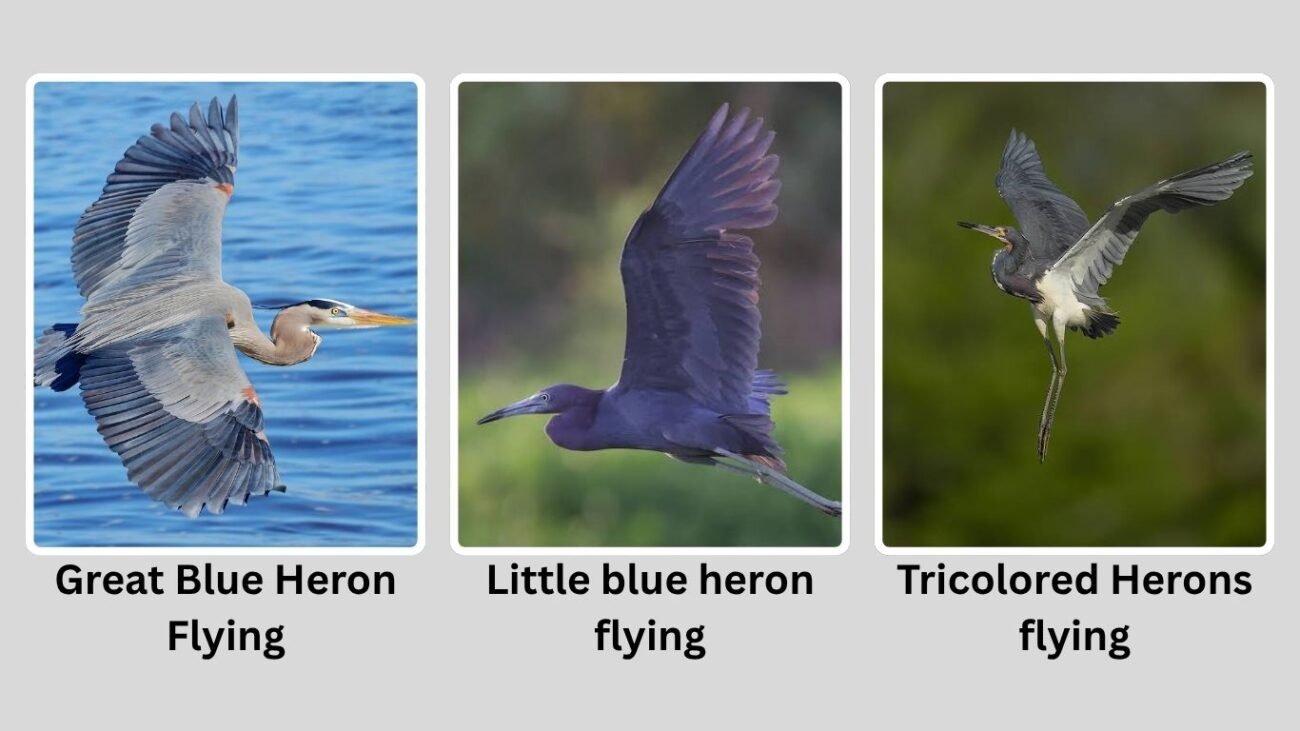
The Great Blue Heron is the most well-known heron species in North America. When flying, it’s instantly recognizable — long, slow wingbeats and a deep, rhythmic motion that makes it appear to glide effortlessly through the sky. With a wingspan of up to 6.5 feet (2 meters), it’s one of the largest flying birds you can commonly see near lakes, rivers, and coastal marshes.
Their flight is calm and steady. As they soar overhead, the deep blue-gray feathers shimmer in sunlight, and their slow wingbeats give the impression of serenity. Seeing a Great Blue Heron flying overhead is often described as a peaceful, almost meditative experience.
Little Blue and Green Herons
Smaller herons like the Little Blue Heron and Green Heron have quicker, more agile flight styles. The Little Blue Heron flies with fast wingbeats, staying close to the water’s surface. It often glides between feeding spots in wetlands or mangroves, occasionally perching on tree branches or reeds.
The Green Heron, on the other hand, is compact and bursts from cover with short, direct flights. It’s not a long-distance flyer — rather, it makes short hops from one perch to another while hunting. Despite its small size, its flight is strong and purposeful, showing surprising control in tight spaces.
Great White, Grey, and Tricolored Herons
The Great White Heron, found mainly in the Florida Keys, is a striking sight in the sky — large, pure white, and slow-moving. It’s a rare subspecies of the Great Blue Heron, and its all-white plumage stands out beautifully against tropical backdrops.
The Grey Heron, common in Europe and Asia, flies in a similar way but has a slightly lighter build. Its wingbeats are slower, and it often glides gracefully before landing on riverbanks or shallow waters.
The Tricolored Heron is smaller and more energetic. In flight, it shows a mix of blue-gray, white, and rust-colored feathers. Tricolored Herons are agile and fast, often darting between tidal pools and estuaries. Their flying style reflects their lively nature — quick turns, short glides, and sudden dives for fish.
Night Herons in Flight
The Black-Crowned Night Heron and Yellow-Crowned Night Heron are compact, thick-bodied birds that prefer the twilight hours. In flight, they appear stockier, with shorter wings and slower beats. They fly quietly, gliding over mangroves, wetlands, or tidal creeks.
Spotting one at dusk is special — the dark silhouette against the fading light creates a mysterious, almost ghostly image. Their silent, low flight has inspired countless myths and artistic depictions throughout history.
Spiritual and Symbolic Meaning of Herons in Flight
Seeing a Heron Flying Overhead
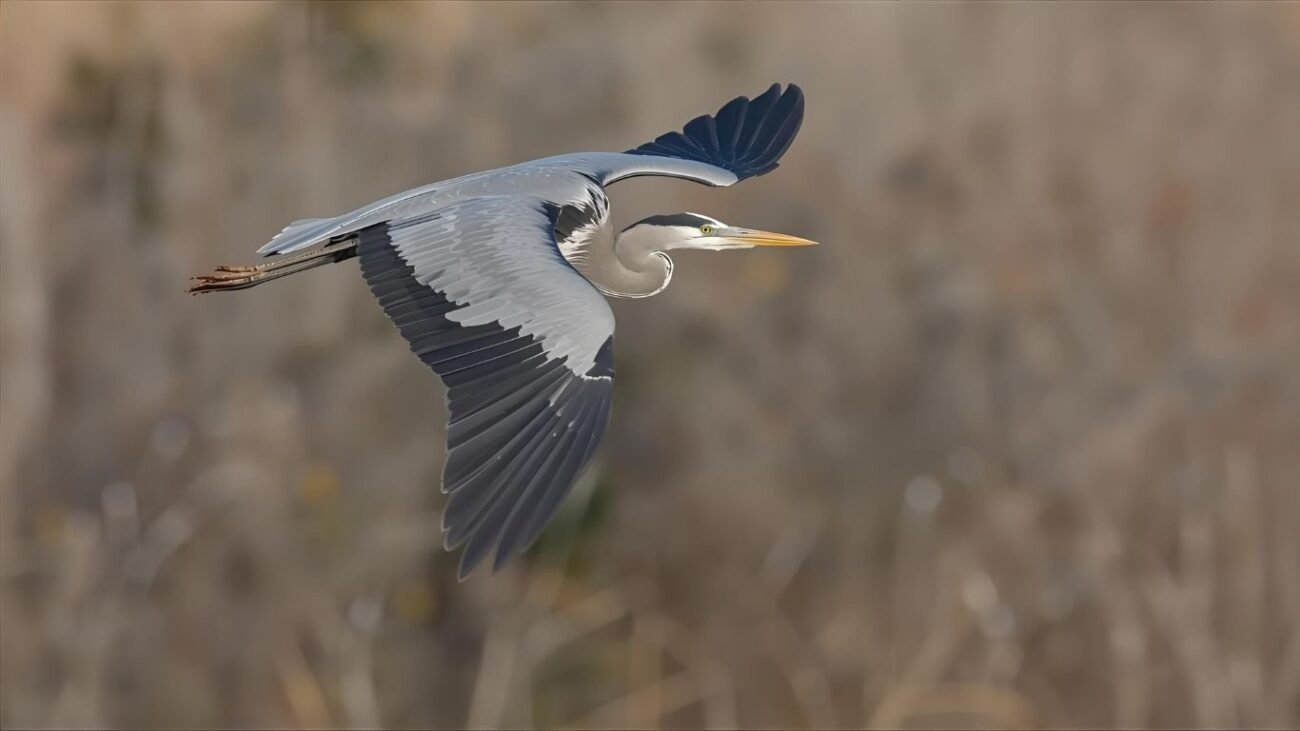
Across cultures, a heron in flight carries deep symbolic meaning. It often represents freedom, transition, and self-reliance. In many traditions, seeing a heron fly overhead is a message of moving forward gracefully, or rising above life’s challenges.
Because herons are solitary flyers, they symbolize independence and inner strength — the ability to travel one’s own path with patience and confidence. Their flight encourages us to stay calm and focused, even when life changes course.
Blue Heron Flying Meaning
The blue heron is one of the most spiritually significant birds in symbolism. A blue heron flying overhead is believed to represent wisdom, patience, and intuition. Its steady flight mirrors emotional balance and the power of introspection.
In Native American and Celtic traditions, the blue heron is a teacher of self-discovery — a reminder to trust your instincts and move at your own pace. Spiritually, it stands for grace under pressure and the courage to follow your intuition, even when others take different paths.
White Heron Flying Meaning
A white heron in flight is a symbol of purity, clarity, and peace. Because white represents light and spiritual awareness, seeing a white heron fly by is often seen as a sign of hope or divine guidance.
In many coastal cultures, a flying white heron is thought to bring good fortune or signal that calmness and resolution are coming after turmoil. It embodies the idea of renewal — letting go of the past and moving forward with serenity.
Two Herons Flying Together
When two herons fly together, it represents harmony, partnership, and balance. Spiritually, this can symbolize the strengthening of a bond — whether romantic, familial, or friendship-based.
In folklore, pairs of herons are believed to be messengers of unity and good luck. Their synchronized flight reflects trust and balance, teaching us that relationships thrive when both partners move in rhythm.
Herons in Art, Tattoos, and Culture
Flying Heron Tattoos
The flying heron tattoo is one of the most popular nature-inspired designs. It symbolizes freedom, transformation, and peace.
- Blue Heron Tattoos often represent wisdom, intuition, and spiritual growth.
- White Heron Tattoos signify renewal, hope, and purity.
Artists love the dynamic shape of a heron in flight — its curved neck and wide wings translate beautifully into minimalist, watercolor, or detailed tattoo styles.
Herons in Art and Design
From Japanese paintings to modern logos, herons have long symbolized serenity and strength. The flying heron silhouette is a common motif in art, reflecting calm motion and timeless beauty.
Painters and photographers often capture the moment of takeoff or mid-flight, emphasizing the bird’s power and grace. Flying heron drawings and paintings are used in home décor, fashion, and brand imagery to convey elegance and tranquility.
The Photographer’s View — Capturing a Flying Heron

For photographers, catching a heron in flight is both challenging and rewarding.
- Best time: early morning or late afternoon when lighting is soft.
- Tips: use a fast shutter speed (1/2000s or higher) and continuous autofocus to track the bird.
- Ideal locations: Everglades National Park, Blue Heron Bridge (Florida), mangrove coasts, and river estuaries.
The key is patience — herons often give a warning before taking flight: a crouch, a stretch of the neck, then an effortless rise.
Why We Admire Herons in Flight
There’s something poetic about watching a heron glide through the sky. Every wingbeat reflects calm focus and quiet determination. Herons seem to move through the world without hurry, yet always with purpose — a reminder of how beauty often lies in patience and control.
In many cultures, they’re symbols of grace under pressure, adaptability, and resilience — traits that inspire humans to navigate life’s waters with similar strength.


