










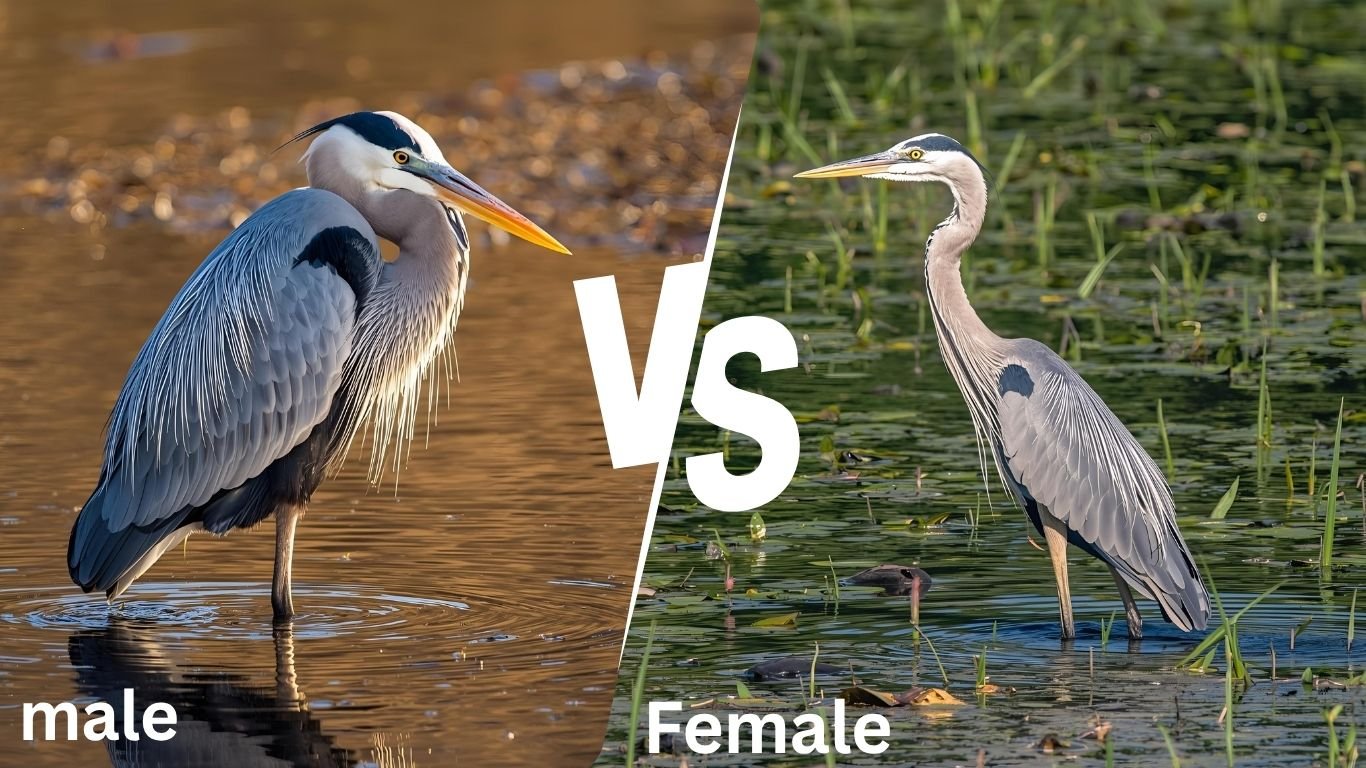
The great blue heron is one of North America’s most majestic wading birds, known for its towering frame, graceful flight, and patient hunting style. While male and female great blue herons appear nearly identical, subtle differences in size, behavior, and plumage can help observers tell them apart. Understanding these distinctions reveals fascinating insights into how the sexes cooperate, compete, and thrive during the nesting season.
Identification
Species Overview
The great blue heron (Ardea herodias) is a large heron found throughout North America, from Alaska to the Caribbean. Standing up to 4.5 feet tall with a wingspan reaching seven feet, it dominates its wetland habitats. Both males and females share similar plumage — a striking mix of slate gray, blue, and white with a dark stripe over the eye. Because they are sexually monomorphic, meaning both sexes look nearly the same, identification relies on careful observation of behavior and size.
General Appearance
At first glance, both sexes look identical: long-legged, long-necked, and sharp-billed. They both display elegant head plumes and a shaggy appearance on the chest during the breeding season. However, subtle clues become visible when the two stand side by side — males appear bulkier and slightly taller, while females are more slender and compact.
Physical Differences Between Male and Female Great Blue Herons
Size Comparison
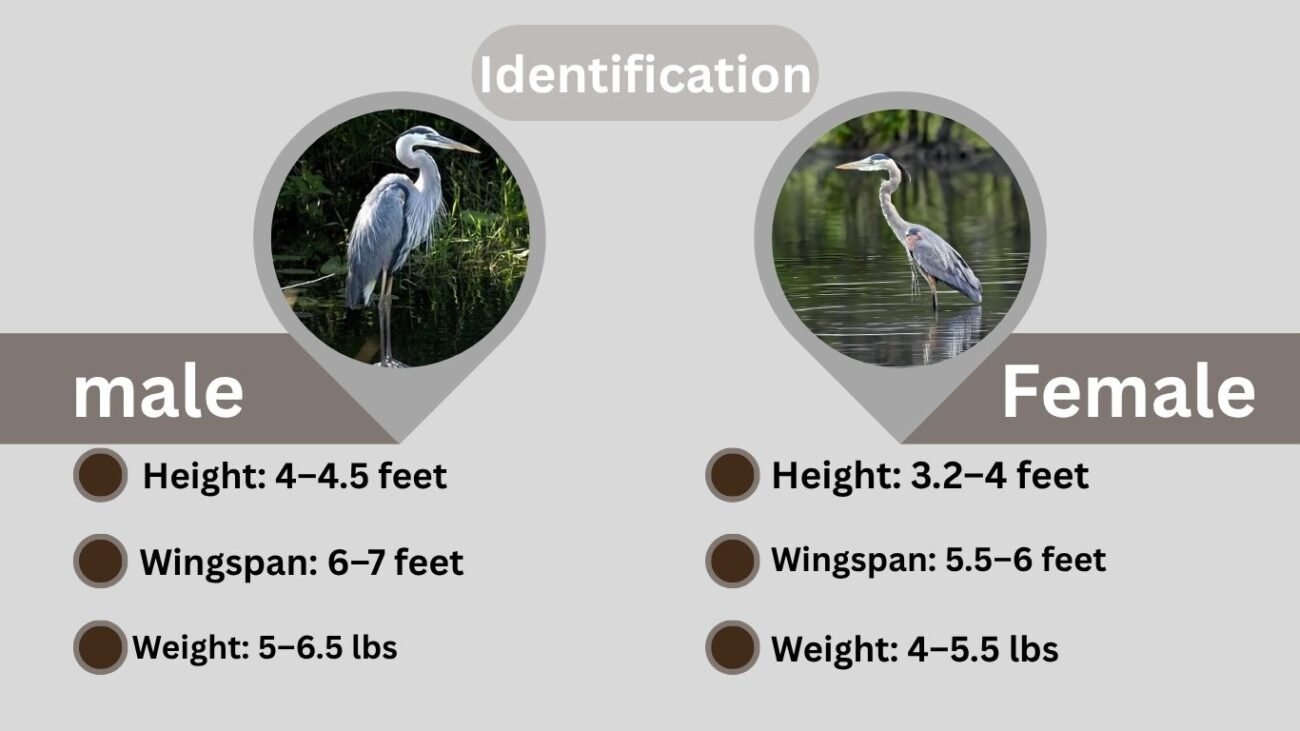
The most reliable way to distinguish between male and female herons is by size. Males are generally larger in every dimension, often weighing 10–20% more than females. The differences are subtle but consistent.
| Trait | Male | Female | Difference |
| Height | 4–4.5 feet | 3.2–4 feet | Males are taller |
| Wingspan | 6–7 feet | 5.5–6 feet | Males have broader wings |
| Weight | 5–6.5 lbs | 4–5.5 lbs | Males are heavier |
When viewed together, males stand with a more upright, confident posture, while females often appear more delicate and refined. This size difference gives males an advantage in defending nesting sites and performing dramatic courtship displays.
Plumage and Coloration
Both sexes wear similar plumage — a mix of gray-blue feathers with black shoulder patches and white accents. Yet, males tend to exhibit:
- Slightly longer decorative plumes on the head, back, and chest
- Deeper blue-gray tones during breeding season
- A more pronounced black stripe extending behind the eyes
Females’ plumage can appear lighter or softer, particularly around the neck, and their decorative plumes are usually shorter. These distinctions are easiest to see during the spring, when breeding colors peak.
Bill and Facial Features
The bill of the male is slightly longer and thicker than the female’s — an adaptation for both hunting and nest defense. During the breeding season, both sexes’ bills darken from yellow to orange or gray, but males often show a deeper hue. Females retain a slightly slimmer, more delicate facial structure overall.
Behavioral Differences
Courtship and Pair Bonding
Courtship is the stage when male and female behaviors become most distinct. Males arrive at the nesting colonies first to claim prime nesting sites. They perform aerial displays and stretch their necks in elegant gestures to attract females. These displays include bill snapping, stick presentations, and slow, deliberate wing movements.
Females approach cautiously, evaluating males based on display intensity and territory location. Once a female accepts a male’s courtship offering — often a twig — the pair begins bonding through mutual preening and synchronized movements. This ritual marks the start of their temporary monogamous partnership.
Territorial Defense
Males are far more aggressive when defending nesting territories. They patrol their chosen sites, extending wings, hissing, and jabbing with their sharp bills to deter rivals. Females, on the other hand, defend only the immediate area of the nest once eggs are laid. Their energy focuses more on nurturing and protection than outward aggression.
Vocalization Differences
Both male and female herons produce low, croaking calls, but there are tonal differences.
- Males’ calls are louder and more guttural, especially during courtship or when warning intruders.
- Females have softer, shorter calls, mainly used to communicate with mates or chicks.
These vocal differences are subtle yet become clear when observing breeding pairs in rookeries, where communication is constant and essential.
Role in Nesting and Incubation

Nest Building
During nest construction, males and females work together but with distinct roles. The male typically collects sticks, reeds, and twigs, delivering them to the female, who arranges them carefully into a sturdy structure. This teamwork strengthens their bond and prepares them for incubation duties.
Once the nest is complete, males often continue adding sticks throughout the breeding period to reinforce the structure. Females fine-tune the interior, lining it with softer materials such as grass, moss, or leaves for egg cushioning.
Incubation and Parenting Behavior
Incubation Duties
Once the nest is ready, the female begins laying her eggs—usually three to five pale blue eggs per clutch. Both the male and female take turns incubating for about 25 to 30 days, showing an exceptional level of cooperation. Typically, the male incubates during the day, allowing the female to rest and feed, while the female takes the night shift to maintain consistent warmth.
This shared responsibility ensures that the eggs are rarely left unguarded. Herons are highly attentive parents, turning the eggs frequently to promote even development and protect them from uneven temperatures. The coordinated care between both sexes is essential for the survival of their chicks, especially in large colonies where predators such as crows or raccoons are nearby.
Feeding and Chick Care
After hatching, both parents continue their teamwork. They feed the chicks by regurgitating partially digested food directly into their open mouths. Early feedings consist of small fish and amphibians, which gradually transition to larger prey as the chicks grow stronger.
Males usually venture farther from the nest, bringing in larger catches like frogs or snakes, while females stay close to provide more frequent smaller meals. This feeding rhythm ensures a steady supply of food for all nestlings.
As the chicks grow, both parents protect them from harsh weather and predators. Their vigilance and cooperation continue until the young herons fledge—typically around seven to eight weeks after hatching.
Breeding Season Behavior
Display and Color Changes
During the breeding season, sexual differences become most noticeable. Males develop richer coloration, longer plumes, and brighter eyes. Their bills often darken to an orange or grayish hue, while the facial skin becomes more vivid. Females display similar changes but in subtler shades.
Courtship displays intensify during this period. Males perform stretch displays, extending their necks, raising head plumes, and spreading wings to impress potential mates. These displays are accompanied by calls and stick-offering gestures — one of the most recognizable courtship rituals of great blue herons.
Pair Cooperation
Once bonded, the pair cooperates remarkably well. Their partnership is typically monogamous for the season, with both sharing equal duties. They guard the nest, take turns hunting, and work tirelessly to feed and protect their chicks. Despite forming new pairs in subsequent years, this temporary unity showcases a strong instinct for parental success.
How to Tell Male and Female Great Blue Herons Apart
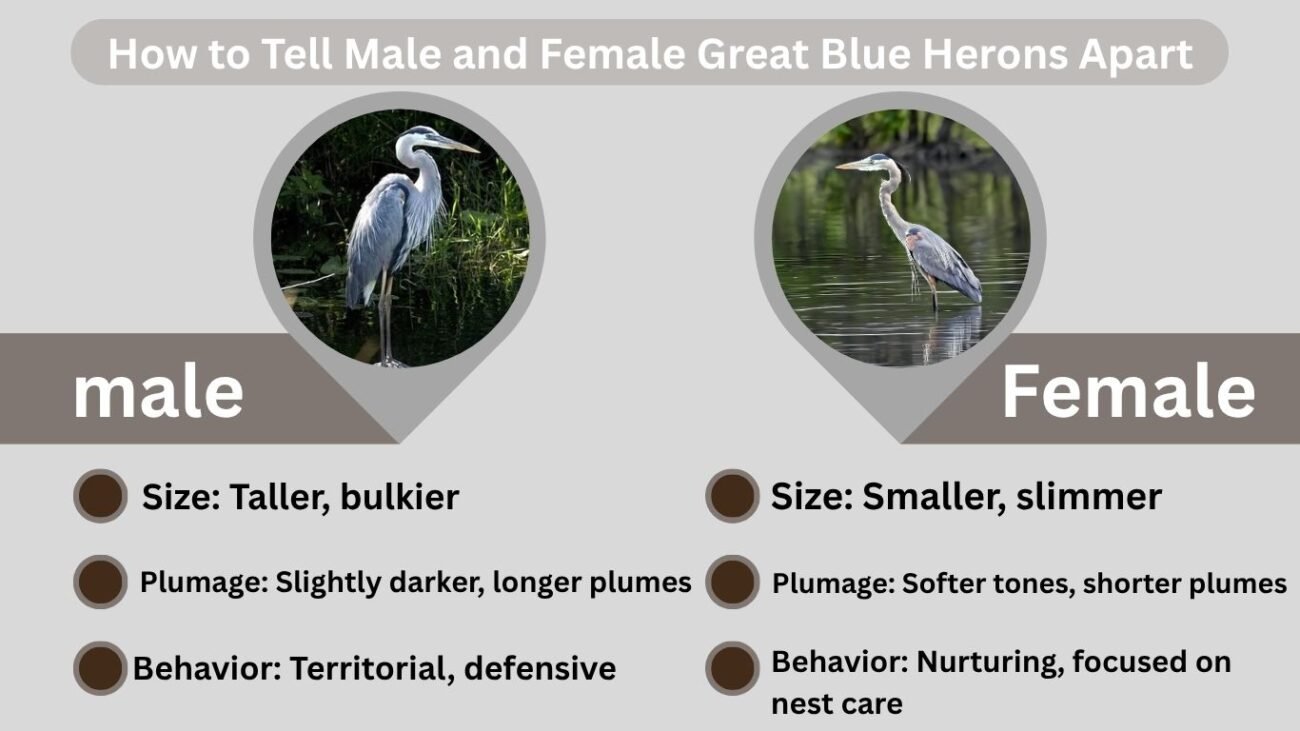
Key Identification Tips
| Feature | Male | Female |
| Size | Taller, bulkier | Smaller, slimmer |
| Plumage | Slightly darker, longer plumes | Softer tones, shorter plumes |
| Bill | Thicker and longer | Shorter, more delicate |
| Behavior | Territorial, defensive | Nurturing, focused on nest care |
| Calls | Deeper and louder | Softer and shorter |
While these differences are subtle, birdwatchers can often identify the sex of a heron by watching its behavior during nesting or by comparing individuals side by side. Size and behavior remain the most reliable clues.
Interesting Facts About Male and Female Herons
- Both sexes are nearly identical in color, making them one of the least dimorphic large bird species in North America.
- DNA testing or close behavioral observation during breeding is the only way to confirm sex with certainty.
- Male herons often return to nesting colonies earlier, establishing dominance before females arrive.
- Both parents share equal parental duties, a rare trait among large birds.
- Courtship displays often occur in the same nesting territories year after year, showing strong site fidelity.
FAQs
Do male and female great blue herons look different?
Not much — both share similar plumage, but males are slightly larger and have longer, darker plumes during the breeding season. Females appear smaller with paler necks and shorter ornamental feathers.
How can you tell a male great blue heron from a female?
The best clues are size and behavior. Males are taller and broader, often seen defending territories or performing elaborate courtship displays. Females are more slender and spend more time on the nest.
Do both male and female herons incubate eggs?
Yes. They share incubation equally — males typically incubate during the day, while females take over at night. This teamwork helps maintain constant warmth and protection for the eggs.
Are male herons more colorful than females?
Slightly. During the breeding season, males display richer shades of blue-gray, longer plumes, and brighter eyes. Outside the breeding period, both sexes look nearly identical.
Do male and female herons both care for chicks?
Absolutely. Both parents feed, protect, and shelter the chicks until they fledge. Males often bring larger prey, while females feed the young more frequently with smaller meals.


