











The green heron is a small yet remarkable wading bird admired for its intelligence, beauty, and stealth. Found across North and Central America, it is known for its striking greenish plumage, chestnut neck, and unique hunting behavior. Unlike larger herons, the green heron prefers hidden wetlands and quiet backwaters, where it hunts patiently—often using tools like bait to lure fish, a trait rarely seen in birds.
Identification
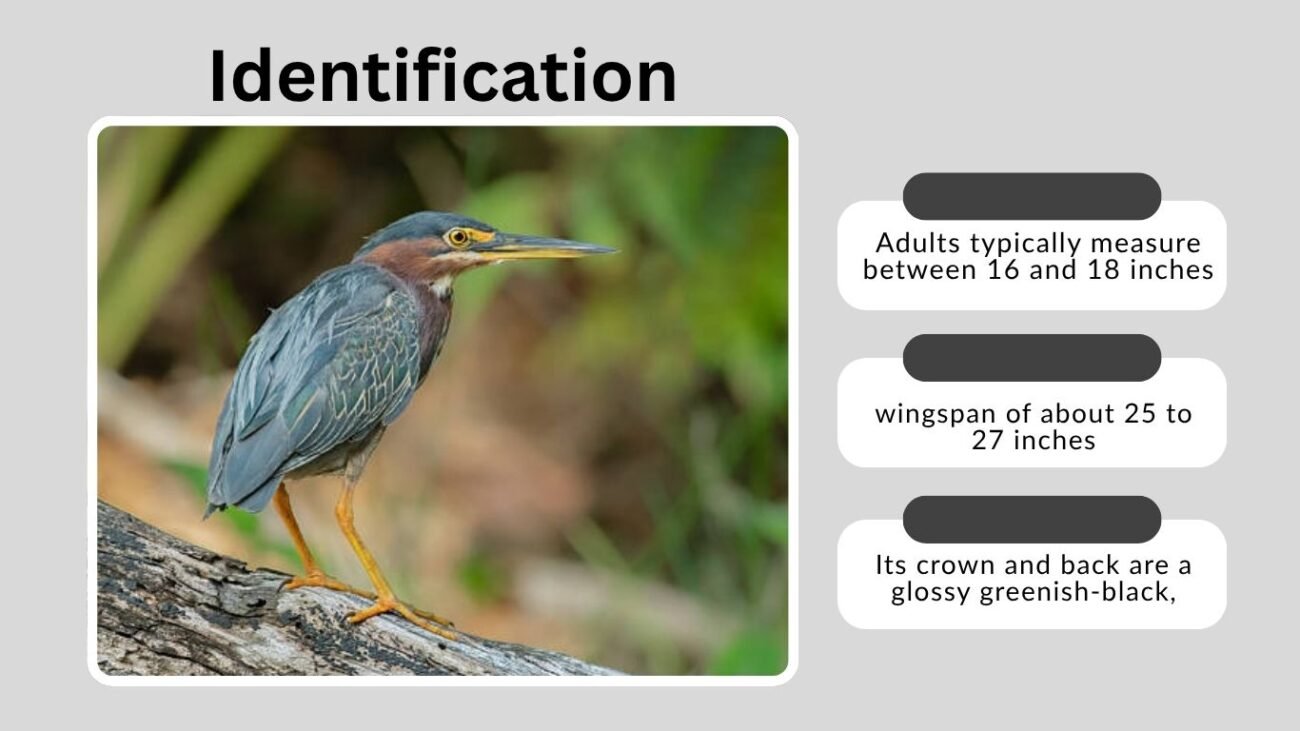
Species Overview
The green heron (Butorides virescens) belongs to the heron family Ardeidae. Often called the “little green heron” or “green-backed heron,” it’s one of the smallest herons in North America. Adults typically measure between 16 and 18 inches in height, with a wingspan of about 25 to 27 inches. Despite its modest size, it has a powerful presence thanks to its vivid coloration and sharp, deliberate movements.
Its range extends from southern Canada through the United States and into Central and northern South America. Many northern populations migrate south in winter, while tropical populations remain year-round.
Physical Description
The green heron displays a brilliant combination of colors that glisten under sunlight. Its crown and back are a glossy greenish-black, while the neck and chest are deep chestnut brown. The wings shimmer with blue-green tones, and the long, dagger-like bill is dark on top and yellow below. Its legs range from yellow to bright orange during the breeding season, and its eyes are strikingly yellow, enhancing its intense, focused gaze.
Male and Female Differences
Males and females look very similar, but close observers can spot slight distinctions. Males are a bit larger and have richer, darker tones, especially during breeding season when their plumage becomes more iridescent. Females tend to be smaller and paler, with less pronounced plumes. Outside the breeding season, these differences are almost impossible to notice.
Juvenile and Immature Appearance
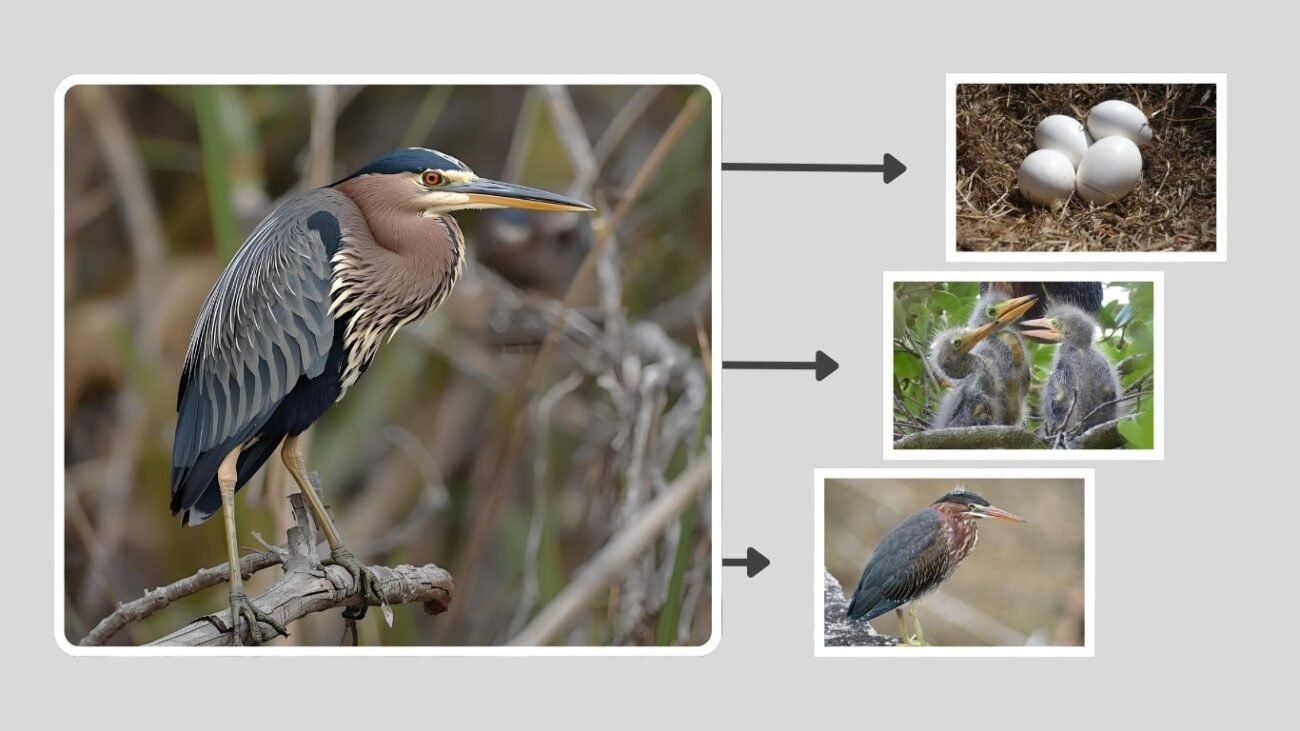
Young green herons, or juveniles, look quite different from adults. Their plumage is streaked brown and white, with a greenish-brown back and neck. The bill is more yellow, and their legs are duller. Juveniles can be mistaken for bitterns or night herons due to their muted coloring, but their smaller size and distinctive posture help set them apart.
Behavior
Feeding and Hunting
Green herons are patient, clever, and stealthy hunters. They primarily use ambush tactics, standing motionless on logs, branches, or the shoreline until prey comes within striking distance. With lightning speed, they extend their necks to spear small fish, frogs, or insects using their sharp bill.
What makes this bird exceptional is its tool use—a rare behavior among birds. Green herons have been observed dropping insects, feathers, or small objects onto the water’s surface to attract fish, then striking when a curious fish swims near. This behavior highlights the species’ intelligence and adaptability, setting it apart from most other wading birds.
Flight and Movement
Despite being a heron, the green heron’s flight pattern is quick and agile. It typically flies low over the water with rapid wingbeats and a tucked-in neck, creating a compact silhouette. When perched, it often hunches its body, making it look smaller and more discreet. This secretive posture allows it to blend seamlessly with branches and vegetation along the water’s edge.
Calls and Vocalizations
The green heron’s call is sharp and distinctive—a loud “skeow” or “kyow” often heard when it takes flight or feels threatened. During breeding, males produce deeper, raspier calls to attract females or ward off rivals. Juveniles emit softer “peep” sounds to communicate with parents. These vocalizations, though not musical, play a key role in territory defense and family coordination.
Habitat and Range
Preferred Habitat
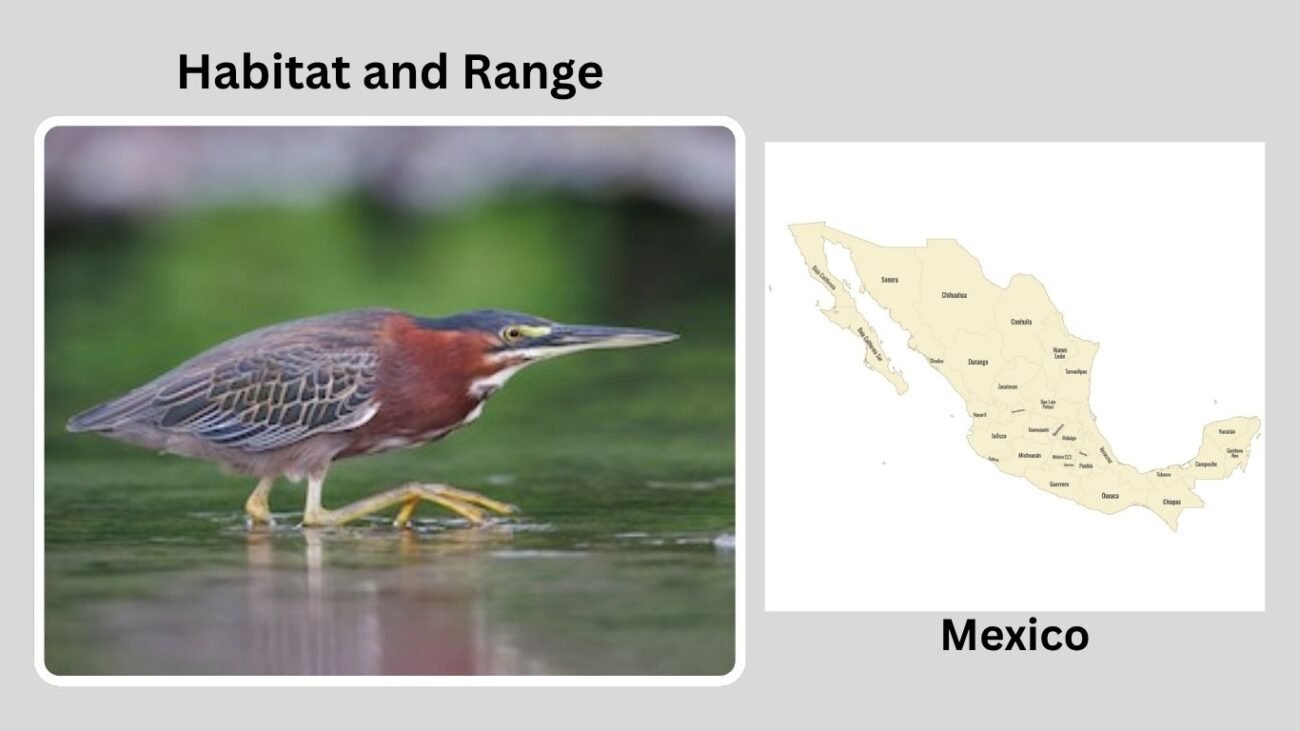
Green herons thrive in quiet, densely vegetated wetlands. They favor marshes, ponds, small lakes, mangroves, and slow-moving creeks where they can hide easily and hunt from low perches. They often stand motionless among reeds or on partially submerged logs, perfectly camouflaged by their earthy tones. Their preference for still water makes them common near rural wetlands and suburban ponds with heavy vegetation.
Geographic Range
This species is found throughout most of North America, extending into Mexico, Central America, and northern South America.
| Region | Presence |
| United States & Canada | Breeds from spring through summer |
| Mexico & Caribbean | Year-round residents |
| Central & South America | Wintering grounds for northern migrants |
Green herons are especially common in Florida, Texas, and the southeastern U.S., where wetlands provide ideal feeding and nesting habitats. During migration, they can be spotted as far north as southern Canada and as far south as Panama.
Diet and Feeding Habits
Main Diet
The green heron’s diet is as diverse as its habitat. It primarily eats small aquatic animals, but it’s known to seize any opportunity that presents itself.
| Food Type | Examples |
| Fish | Minnows, sunfish, small bass |
| Amphibians | Frogs, tadpoles |
| Insects | Dragonflies, grasshoppers, beetles |
| Crustaceans | Crayfish, small crabs, shrimp |
| Other Prey | Snails, small snakes, occasionally rodents |
This omnivorous adaptability makes the green heron a successful hunter in both freshwater and brackish environments.
Nesting and Reproduction
Nesting Sites
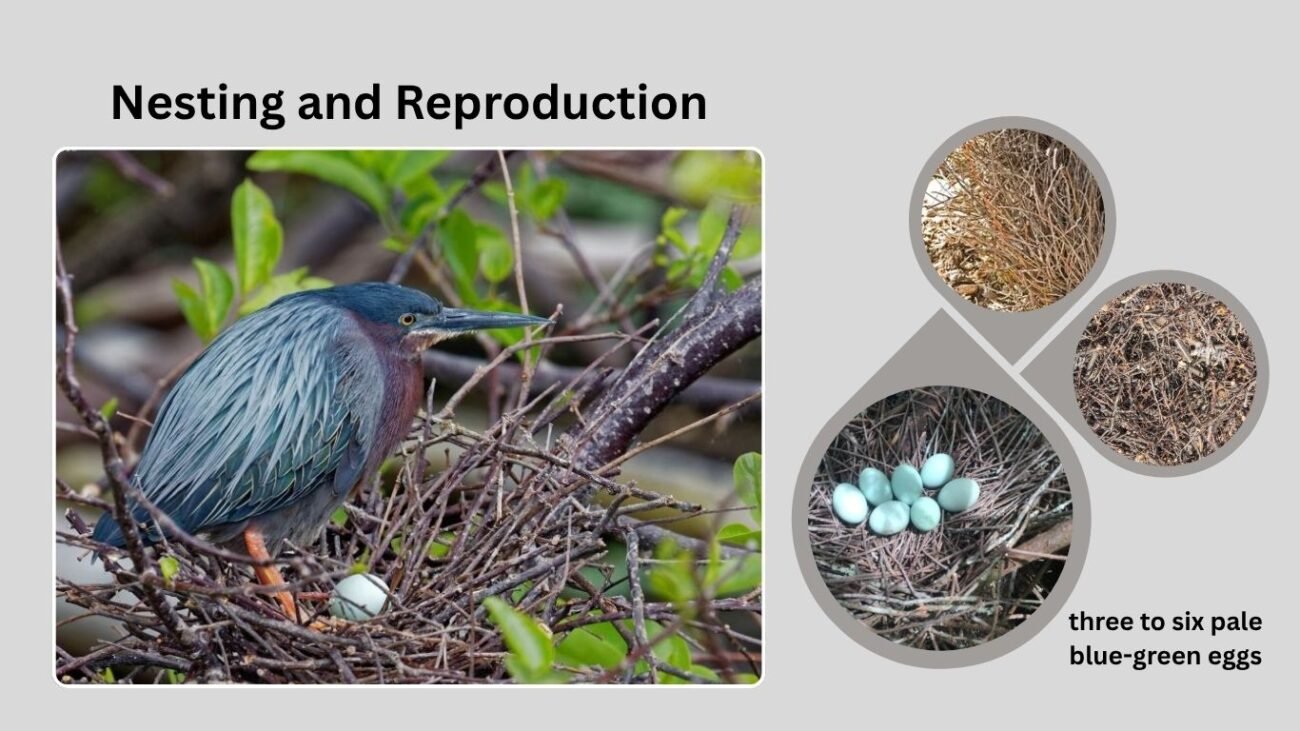
Green herons prefer quiet, hidden places to build their nests. These are usually located in shrubs, trees, or reed beds near water — sometimes just a few feet above the surface. They favor locations with dense foliage to conceal their nests from predators. In some urban areas, they have adapted to use bridges, docks, or manmade platforms as nesting sites.
They often nest alone or in small, loose colonies, unlike larger herons that gather in massive rookeries.
Nest Construction
Both parents take part in building the nest. The male gathers twigs and small branches, while the female arranges them carefully into a loose platform. The interior is lined with leaves or soft vegetation for comfort. Though simple in design, the nest is sturdy enough to hold the adult birds and their young. Green herons are known to reuse the same nesting sites yearly, often repairing and reinforcing old nests at the start of each breeding season.
Eggs and Incubation
The female lays three to six pale blue-green eggs, one every day or two. Both parents share incubation duties, which last about 19 to 21 days. During this time, one parent always stays with the eggs while the other hunts. The male generally incubates during the day, and the female takes over at night. This cooperative behavior ensures constant warmth and protection for the developing embryos.
Chick Development
When the chicks hatch, they are helpless and covered in soft down. Both parents feed them by regurgitating food into their open mouths. For the first few days, meals consist of small fish or insects, later shifting to larger prey as the chicks grow stronger. Within two to three weeks, the chicks begin to explore the edges of the nest, testing their wings and balance. They fledge around three weeks old but often remain nearby, still fed by their parents for several days after their first flight.
Comparisons and Similar Species
Green Heron vs Least Bittern
These two species are often confused because of their small size and secretive habits, but there are clear differences:
| Feature | Green Heron | Least Bittern |
| Size | 16–18 inches | 11–13 inches |
| Color | Dark green back, chestnut neck | Buff and brown tones |
| Behavior | Solitary hunter | Often hidden in reeds |
| Call | Loud “skeow” | Softer “coo-coo” notes |
| Habitat | Marshes, creeks, ponds | Dense cattail wetlands |
The green heron appears darker, sturdier, and more compact, while the least bittern is lighter and more reed-dwelling in behavior.
Green Heron vs Blue Heron
The great blue heron is much larger, standing over four feet tall compared to the green heron’s 16 inches. Blue herons prefer open wetlands and coastlines, whereas green herons inhabit shaded, enclosed areas. The green heron’s plumage shines with emerald hues, while the blue heron’s feathers are soft gray-blue. Despite the size difference, both share similar feeding and nesting patterns.
Breeding Plumage and Mating Behavior
Courtship Displays
During the breeding season, males transform visually and behaviorally. Their plumage becomes more iridescent, the chestnut on their neck deepens, and their legs turn a vivid orange. They perform elaborate displays to attract females, such as stretching their necks, raising their crests, and producing loud, rasping calls. One of their signature behaviors is offering a stick to the female — a gesture that often seals the pair bond.
Pair Cooperation
Once bonded, pairs remain monogamous for the season. Both partners share nesting duties equally, from building and incubating to feeding their young. Even after the chicks fledge, the parents stay near the nesting area, ensuring that their offspring are safe until they can hunt independently.
Regional Presence and Observation
Where to Find Green Herons
They can be seen across most of North America, with strong populations in Florida, the Gulf Coast, and the Great Lakes region. Birdwatchers often spot them perched silently on branches near ponds or hidden among cattails. In flight, they appear small and swift, with rapid wingbeats and a hunched posture.
Seasonal Movement
Northern populations migrate south for winter, traveling to Mexico, Central America, and the Caribbean. In warmer states, such as Florida and Texas, they remain year-round residents. During migration, they are most often seen at dawn or dusk near quiet water bodies.
Cultural and Symbolic Meaning
Symbolism
Across cultures, the green heron symbolizes patience, wisdom, and focus. Its slow, deliberate movements and ability to wait for the perfect moment to strike represent self-control and strategy.
In Native American traditions, the heron is seen as a symbol of adaptability, teaching that success comes through timing and observation. The green coloration is also associated with healing, growth, and harmony with nature.
Green Heron in Art and Tattoos
The green heron’s vivid colors and graceful form make it a favorite subject in art and tattoo design. It often symbolizes creativity, independence, and tranquility, representing those who move through life quietly but purposefully.
FAQs
What does a green heron look like?
The green heron has a dark green crown, chestnut neck, and gray-blue wings with a metallic green sheen. It’s small and stocky with a sharp bill and yellow eyes, making it easy to identify when seen up close.
Where do green herons live?
They inhabit wetlands, ponds, mangroves, and slow-moving streams throughout North and Central America. They prefer shaded, densely vegetated areas where they can hunt in solitude.
What do green herons eat?
Their diet includes small fish, frogs, insects, crustaceans, and snails. They are also known for using tools, such as dropping bait into the water, to lure fish closer.
Are green herons rare?
No, they are relatively common across their range, though their shy and secretive nature makes them difficult to spot. They are most active at dawn and dusk.
What does the green heron symbolize?
It represents patience, intelligence, and self-reliance. In many cultures, it’s seen as a reminder to act with precision and to wait for the right moment before making important moves.
gration for “green heron,” “little green heron,” and “green heron habitat”)?


