The Little Egret (Egretta garzetta) is a stunningly elegant white heron known for its slender build, black legs, and bright yellow feet. Commonly found across Europe, Africa, Asia, and Australia, this bird has adapted to both coastal and inland wetlands. With its graceful movements and skillful hunting style, the Little Egret has become a symbol of purity and balance in many cultures. Its adaptability and widespread distribution make it a thriving species in today’s diverse habitats.
Identification

Scientific Classification
The Little Egret belongs to the family Ardeidae, which includes herons, egrets, and bitterns. Its scientific name is Egretta garzetta, and it is commonly referred to as the Small White Heron or Lesser Egret. The name “egret” originates from the French word aigrette, meaning “plume” — a nod to its elegant breeding feathers.
- Scientific name: Egretta garzetta
- Family: Ardeidae
- Common names: Little Egret, Small White Heron, Lesser Egret
- IUCN status: Least Concern
Physical Description
The Little Egret is a medium-sized heron, measuring 55–65 centimeters (22–26 inches) in length, with a wingspan of 88–106 centimeters (34–42 inches). It typically weighs between 350–550 grams.
Its plumage is entirely white, with fine, ornamental plumes on the head, breast, and back during the breeding season. The bill is long, black, and pointed, designed for precision when spearing small fish or insects. The legs are black, contrasting beautifully with the yellow feet, which are among its most recognizable features.
The bird’s slender body, S-shaped neck, and graceful flight give it a refined appearance, whether it’s gliding over a marsh or stalking prey in shallow water.
Male, Female, and Juvenile Differences
Both males and females look alike, though males are slightly larger and may display longer plumes during breeding season. Juveniles lack the decorative feathers seen in adults and may have a duller bill and greyish feet. As they mature, the white plumage becomes more radiant, and the yellow feet develop their signature brightness.
Size and Comparison
The Little Egret is smaller than the Great Egret but larger than the Cattle Egret, making it a medium-sized species within the heron family. Its compact size allows it to move swiftly through shallow waters and dense reeds.
| Feature | Little Egret | Great Egret | Cattle Egret |
| Size | 55–65 cm | 85–100 cm | 45–52 cm |
| Bill Color | Black | Yellow | Yellow |
| Legs | Black | Black | Yellow or gray |
| Feet | Yellow | Black | Yellow |
| Habitat | Coastal lagoons, rivers | Deep wetlands | Fields, pastures |
Unlike the Great Egret, which prefers deep water, the Little Egret thrives in shallower habitats, allowing it to feed in both saltwater and freshwater ecosystems.
Habitat and Distribution
Global Range
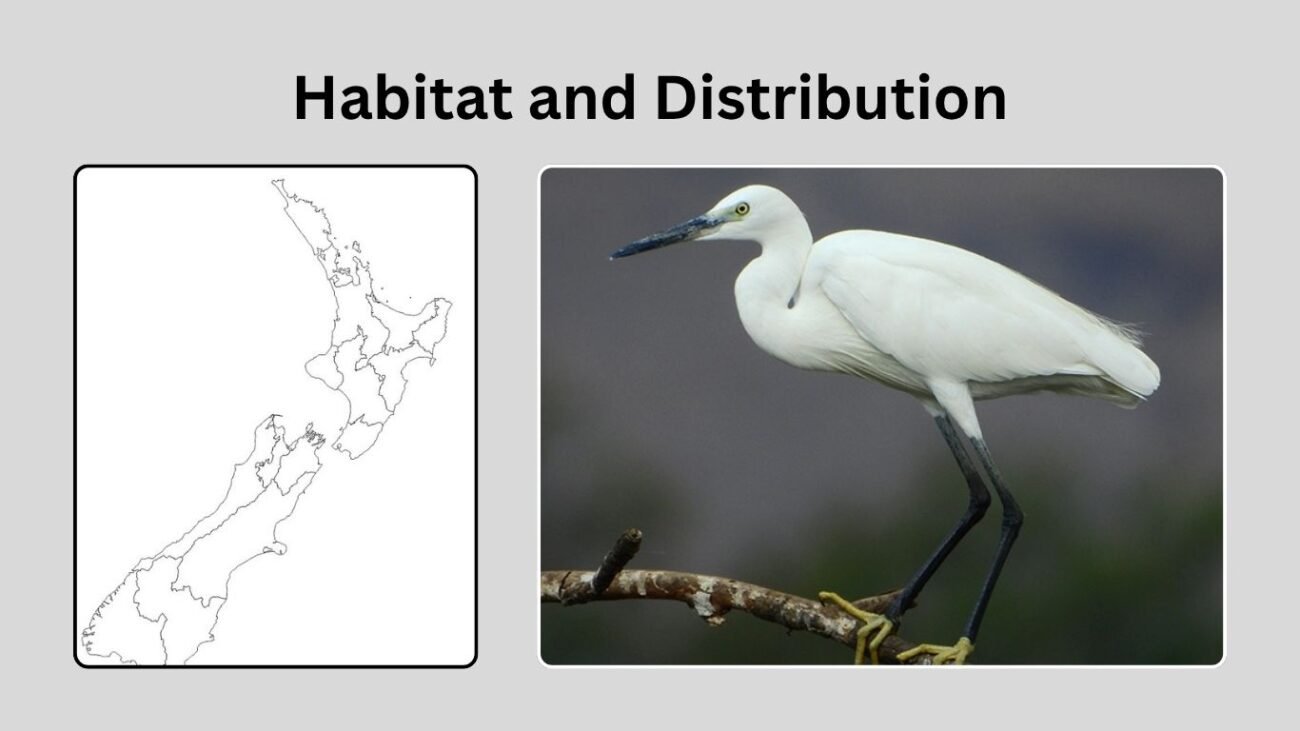
The Little Egret is one of the most widespread egrets, found across Europe, Africa, Asia, and Australia. It has also expanded into New Zealand and parts of the United Kingdom, where populations have become well-established in recent decades.
In Europe, it breeds in southern and western regions, particularly around the Mediterranean. In Asia, it is common from India and China to Japan and Indonesia. African populations inhabit wetlands across the continent, while Australian populations are widespread along coastal regions.
Preferred Environment
This species favors wetlands, coastal lagoons, estuaries, mangroves, riverbanks, and rice fields. It can thrive in both freshwater and brackish environments, adapting easily to seasonal changes in water levels.
The Little Egret is often seen wading in shallow waters, using its long legs and slender body to move gracefully through mudflats or reeds. During low tide, it can be observed foraging in tidal pools for fish and crustaceans.
It is also highly social, often nesting in colonies with other herons, ibises, and cormorants. These colonies are usually established in tall trees, reed beds, or small islands surrounded by water, offering protection from predators.
Behavior and Movement
Feeding Behavior
Unlike some larger, patient herons that wait motionlessly for prey, the Little Egret is an active and energetic hunter. It uses various techniques to locate food:
- Foot stirring: The bird moves one foot gently in the mud to disturb hiding fish or insects.
- Darting strikes: It moves quickly and spears prey with its sharp bill.
- Group feeding: Sometimes forages with other egrets, particularly during tidal movements when prey is abundant.
The egret’s agility and sharp eyesight make it a successful hunter in both daylight and twilight hours.
Flight Pattern
The Little Egret’s flight is smooth, steady, and elegant, with quick wingbeats and a retracted neck, typical of herons. It flies low over water and can travel long distances between feeding and nesting sites. During migration or colony movements, small flocks fly in loose, shallow V-formations.
Its slender body and bright white plumage make it a striking sight against the backdrop of blue skies or green wetlands.
Diet
Primary Diet
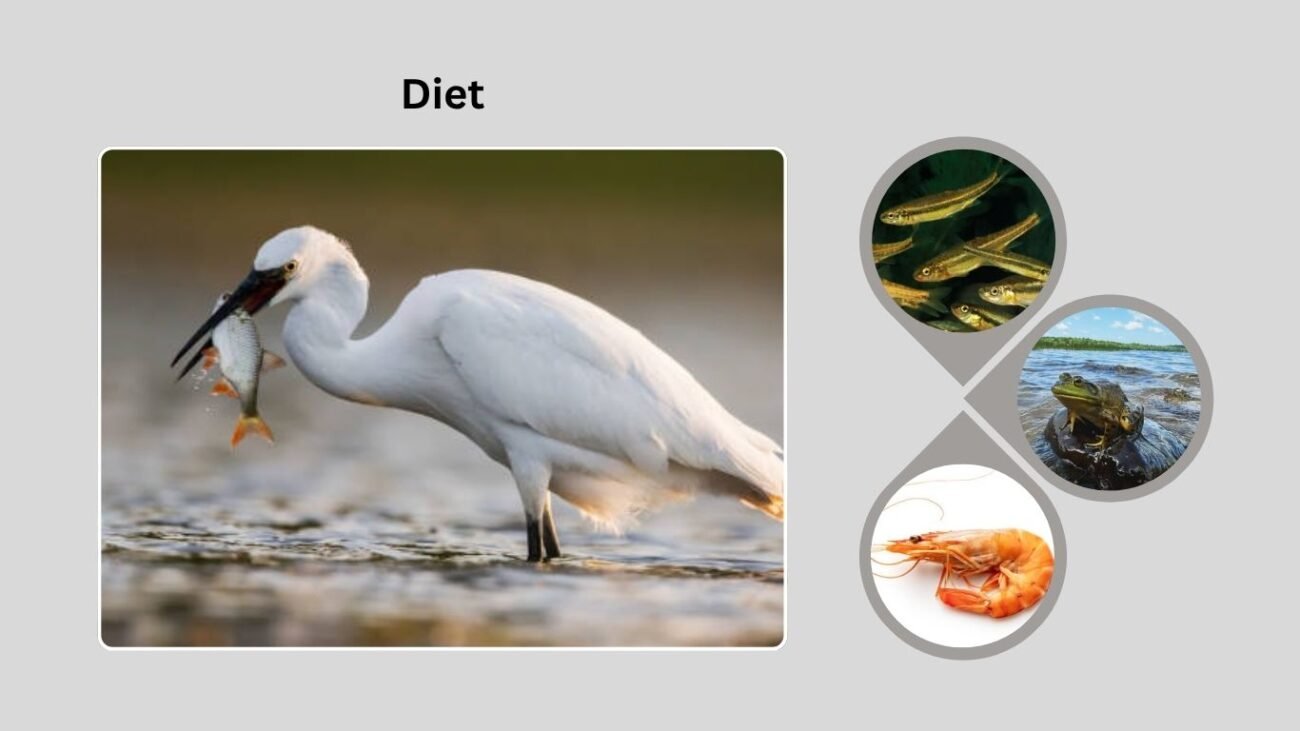
The Little Egret’s diet mainly consists of small fish, crustaceans, amphibians, and aquatic insects. It feeds opportunistically, adapting its diet to available prey in its environment.
Common prey includes:
- Small fish such as minnows and mudskippers
- Frogs and tadpoles
- Shrimp and crabs
- Aquatic insects and larvae
- Worms and snails
Hunting Techniques
This species relies on movement-based hunting, often using its yellow feet to stir up mud and flush prey into view. It may also chase fish in shallow water or stand motionless for short periods before striking.
Little Egrets are often seen feeding in groups, especially during low tide when prey density is higher. Cooperative feeding helps them corner fish and share productive feeding zones without direct conflict.
Breeding and Nesting
The Little Egret breeds in colonies, often alongside other waterbirds such as herons, ibises, and cormorants. These colonies, called heronries, are typically established in trees, reed beds, or islands near water, providing protection from ground predators. The species prefers to nest in locations surrounded by shallow wetlands that offer abundant food for adults and chicks.
Breeding Season
The breeding season varies by region but generally occurs during the spring and summer months, when food is plentiful. In tropical areas, it may coincide with the rainy season. Courtship displays begin with males performing aerial dances and presenting sticks to potential mates while showcasing their delicate white breeding plumes.
Nesting and Rearing
Both parents participate in building the nest — a platform of sticks and reeds lined with softer vegetation. The female lays three to five pale blue eggs, and incubation lasts around 21–25 days. Both parents share incubation duties and later feed the chicks by regurgitating small fish and insects.
The young fledge within five to six weeks, gaining independence shortly afterward. However, juveniles may remain near the nesting site for several months before dispersing.
Sound and Communication
The Little Egret is generally quiet and composed, especially when alone. However, during breeding season or in colonies, it becomes more vocal. Its calls include a range of raspy croaks, soft clucks, and short squawks. The most common sound is a harsh “krrr” or “graak”, used to signal alarm or defend territory.
During courtship, males produce softer, guttural calls accompanied by bill snapping and feather displays. At colonies, the noise of hundreds of individuals can create a constant chorus of croaks, especially during early morning and evening activity.
Chicks communicate with their parents through high-pitched begging calls, especially when being fed.
Regional Presence
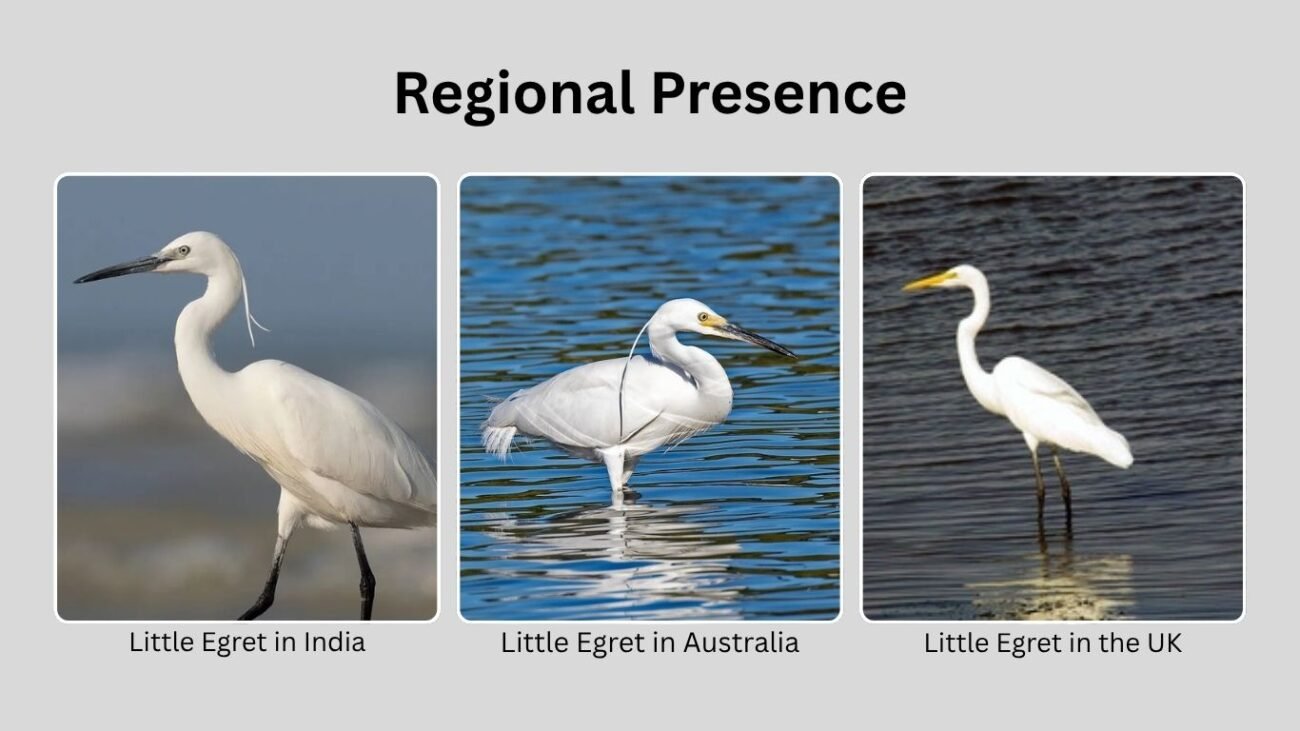
Little Egret in India
In India, the Little Egret is one of the most widespread herons. It inhabits rivers, ponds, mangroves, and rice paddies, often feeding near human settlements. Breeding occurs primarily during the monsoon season, when wetlands are full and prey is abundant. Large colonies can be seen in regions like Kerala, Tamil Nadu, Assam, and West Bengal.
Little Egret in the UK
The Little Egret was once a rare visitor to the United Kingdom, but conservation efforts and climate change have allowed it to establish permanent populations along southern and eastern coasts. Today, it breeds in Somerset, Dorset, and Norfolk, and sightings are becoming increasingly common further north. It is now a regular feature of British wetlands, symbolizing successful species recovery.
Little Egret in Australia
In Australia, the species is widely distributed along coasts, estuaries, and inland wetlands. It can often be seen in Queensland, New South Wales, and Western Australia, foraging alongside the Great Egret and Intermediate Egret. It is both a resident and nomadic bird, moving with rainfall patterns and water availability.
Conservation Status
The Little Egret is listed as Least Concern on the IUCN Red List, reflecting its wide range and stable population. Once threatened by feather hunting during the 19th century — when its delicate plumes were prized for fashion — the species has made a remarkable recovery thanks to legal protection and international conservation efforts.
Current Threats
Despite its stable status, the Little Egret faces challenges from:
- Habitat loss due to wetland drainage and urban development
- Water pollution from agricultural runoff
- Disturbance during breeding from human activities
- Climate change, affecting wetland cycles and food availability
Conservation organizations continue to monitor populations and promote the protection of key wetlands. Its adaptability to human-made habitats, such as fish farms and rice paddies, has also helped sustain its numbers.
Cultural and Ecological Importance
The Little Egret is admired for its elegance and poise, symbolizing purity, patience, and grace in many Asian and European cultures. In Chinese and Japanese art, it often appears as a representation of peace and natural harmony.
Ecologically, it plays a vital role in maintaining wetland balance. By feeding on small fish, insects, and amphibians, it helps regulate aquatic populations. Its nesting colonies also enrich local biodiversity, providing shelter for smaller birds and supporting microhabitats around water bodies.
The species’ growing presence in restored wetlands is considered a positive environmental indicator, reflecting successful conservation and improved habitat health.
FAQs
What is the scientific name of the Little Egret?
The scientific name of the Little Egret is Egretta garzetta. It is a member of the heron family Ardeidae and is closely related to other white egrets such as the Great Egret and the Snowy Egret.
How large is the Little Egret?
The Little Egret measures between 55–65 centimeters in length with a wingspan of up to 106 centimeters. It weighs about 400 grams and is smaller and more delicate than the Great Egret, easily recognized by its black bill and yellow feet.
What does the Little Egret eat?
Its diet includes small fish, shrimp, frogs, aquatic insects, and crustaceans. The bird uses its feet to stir the mud and flush prey before quickly striking with its pointed bill — an efficient feeding technique in shallow waters.
Where can the Little Egret be found?
It lives in wetlands, rivers, estuaries, and mangroves across Europe, Africa, Asia, and Australia. The species is now expanding its range into temperate regions like the UK and New Zealand, adapting well to man-made ponds and rice fields.
Why are the Little Egret’s feet yellow?
The bird’s bright yellow feet serve as visual lures to attract small fish and crustaceans while hunting. As it stirs the water with its feet, prey are drawn closer, allowing the egret to strike quickly with precision.