










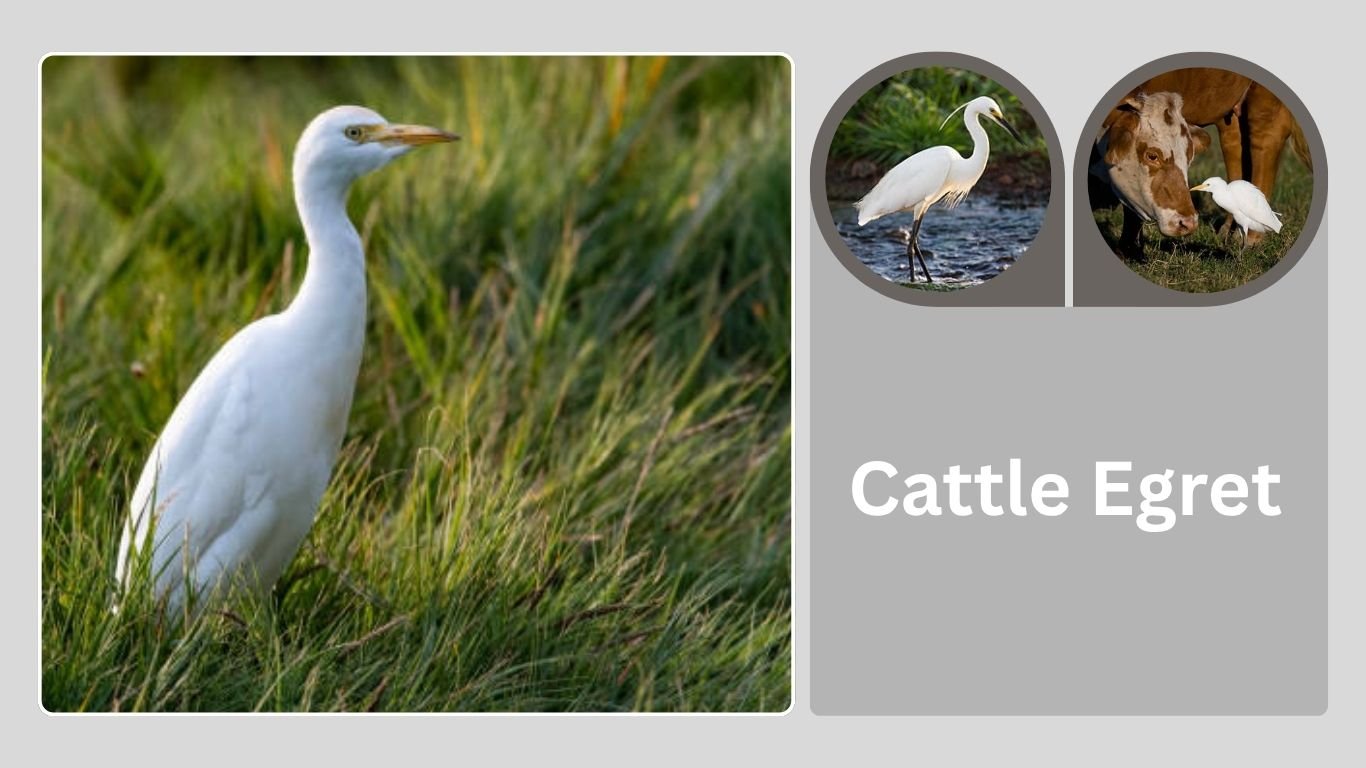
The Cattle Egret (Bubulcus ibis) is one of the most familiar and widespread members of the heron family, easily recognized by its habit of following cattle and other large animals. Native to Africa, it has successfully colonized much of the world, adapting to farmlands, grasslands, and even urban landscapes. Its fascinating relationship with grazing animals, distinctive flight, and seasonal plumage make it an iconic bird of open country environments.
Identification
Scientific Classification
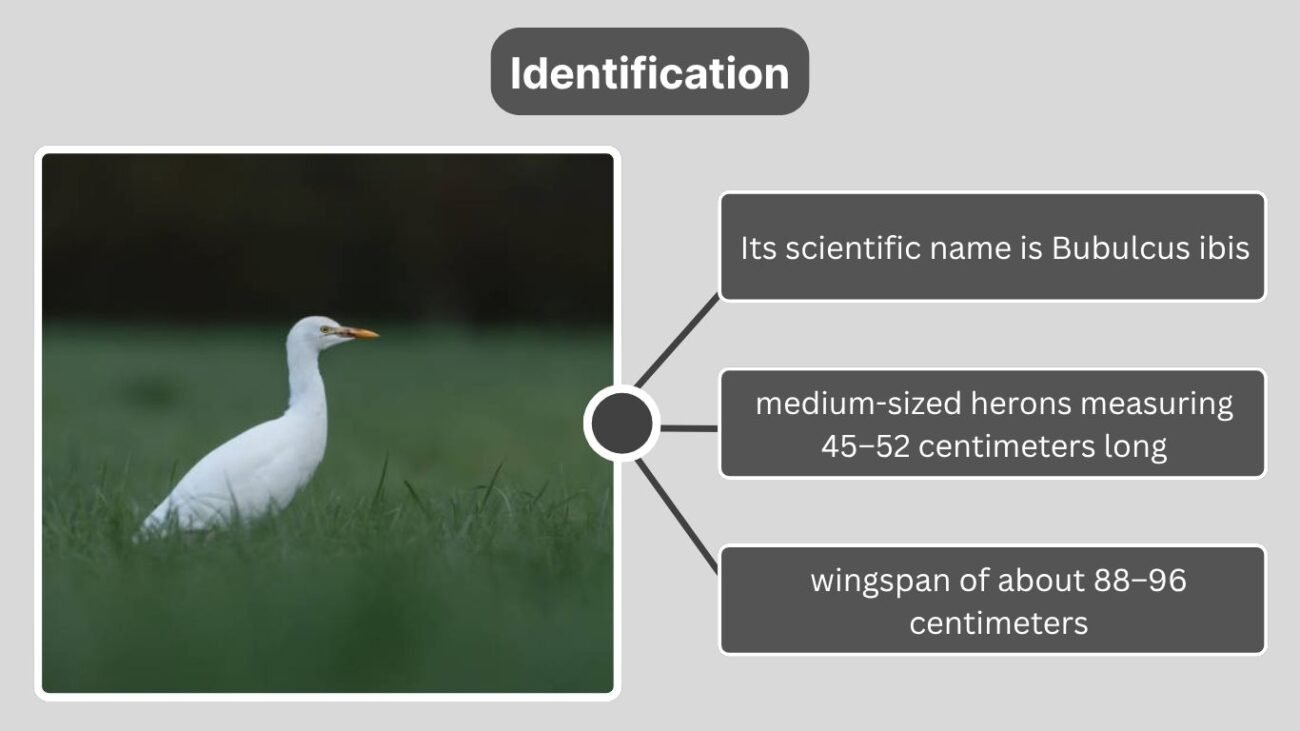
The Cattle Egret belongs to the family Ardeidae, which includes herons, egrets, and bitterns. Its scientific name is Bubulcus ibis — derived from Latin, meaning “cow heron.” Common names include Cow Egret, Buff-backed Egret, and Cattle Bird. It is pronounced Buh-buhl-kus eye-bis.
This species is divided into two primary subspecies:
- Western Cattle Egret (Bubulcus ibis ibis) – Found in Africa, Europe, and the Americas.
- Eastern Cattle Egret (Bubulcus ibis coromandus) – Common in Asia and Australia, with slightly larger size and brighter breeding colors.
Physical Description and Size
Cattle Egrets are medium-sized herons measuring 45–52 centimeters long with a wingspan of about 88–96 centimeters. They have a sturdy body, short neck, and a yellow bill that becomes orange during breeding season. Their plumage is generally white, but adults develop buff-orange patches on the crown, breast, and back during breeding periods.
Their short legs, compact shape, and upright posture distinguish them from other egrets. In flight, their wings appear broad and rounded, allowing for steady gliding and effortless maneuvering over fields and wetlands.
Male, Female, and Juvenile Differences
Males and females look similar, though males are slightly larger and more vivid in breeding plumage. Juveniles are entirely white with blackish legs and duller bills. As they mature, their bills turn yellow, and breeding plumage gradually develops.
Range and Distribution
Originally native to Africa, the Cattle Egret has undergone one of the most dramatic natural expansions of any bird species. Today, it is found on every continent except Antarctica. Its remarkable adaptability allows it to thrive in regions ranging from India and Southeast Asia to Australia, Europe, the UK, and Hawaii.
In India, the Cattle Egret is a common sight throughout the year, especially during the monsoon when insects abound. In Australia, it is primarily found along coastal and inland wetlands, particularly in the eastern and northern regions. In the UK, it is seen as a winter visitor, while in Hawaii, it was introduced in the mid-20th century and now flourishes across the islands.
The species’ global success is largely due to its ability to exploit agricultural and grazing landscapes. As livestock and farming expanded worldwide, the Cattle Egret followed, benefiting from new feeding opportunities.
Habitat and Environment
The Cattle Egret favors open landscapes such as grasslands, farmlands, marshes, and pastures. It thrives in wet and dry habitats alike, often foraging far from water sources — an unusual trait among herons. It frequently follows grazing animals such as cattle, buffalo, elephants, and horses, feeding on insects and small animals disturbed by their movements.
It also adapts well to human environments, including urban parks, golf courses, and even airport grasslands. At night, these birds gather in large communal roosts in trees or reed beds near water. These roosts can host hundreds or even thousands of individuals, producing a striking spectacle at dusk.
Behavior and Relationship with Cattle

Cattle and Cow Relationship
Perhaps the most iconic aspect of this species is its symbiotic relationship with cattle and other large animals. As cows graze, they stir up insects, frogs, and small reptiles. The Cattle Egret follows closely, catching prey disturbed by the animal’s movement.
This behavior benefits both species — the egret gains an easy source of food, while the cattle experience reduced irritation from parasites like ticks and flies. This relationship is an excellent example of mutualism in nature, where both species gain advantages.
Feeding Behavior
The Cattle Egret’s diet primarily consists of insects such as grasshoppers, locusts, flies, beetles, and crickets, along with frogs, worms, and small vertebrates. It uses a walk-and-wait technique, quickly stabbing its prey with a sharp bill.
In agricultural areas, they can often be seen following tractors and plows, which disturb soil and expose insects. Occasionally, they perch directly on the backs of cattle to pluck off insects or ticks. This adaptable feeding strategy has allowed them to flourish even in heavily cultivated regions.
Western and Eastern Cattle Egrets
While all Cattle Egrets share the same general appearance and behavior, ornithologists recognize two main subspecies:
- Western Cattle Egret (Bubulcus ibis ibis): Found in Africa, Europe, and the Americas. Smaller and paler, this subspecies tends to inhabit temperate regions.
- Eastern Cattle Egret (Bubulcus ibis coromandus): Found across Asia and Australia. It is slightly larger, with deeper orange-buff breeding plumage and longer ornamental feathers.
Both subspecies are now expanding their ranges and occasionally overlap, leading to hybrid populations in some regions.
Flight and Movement
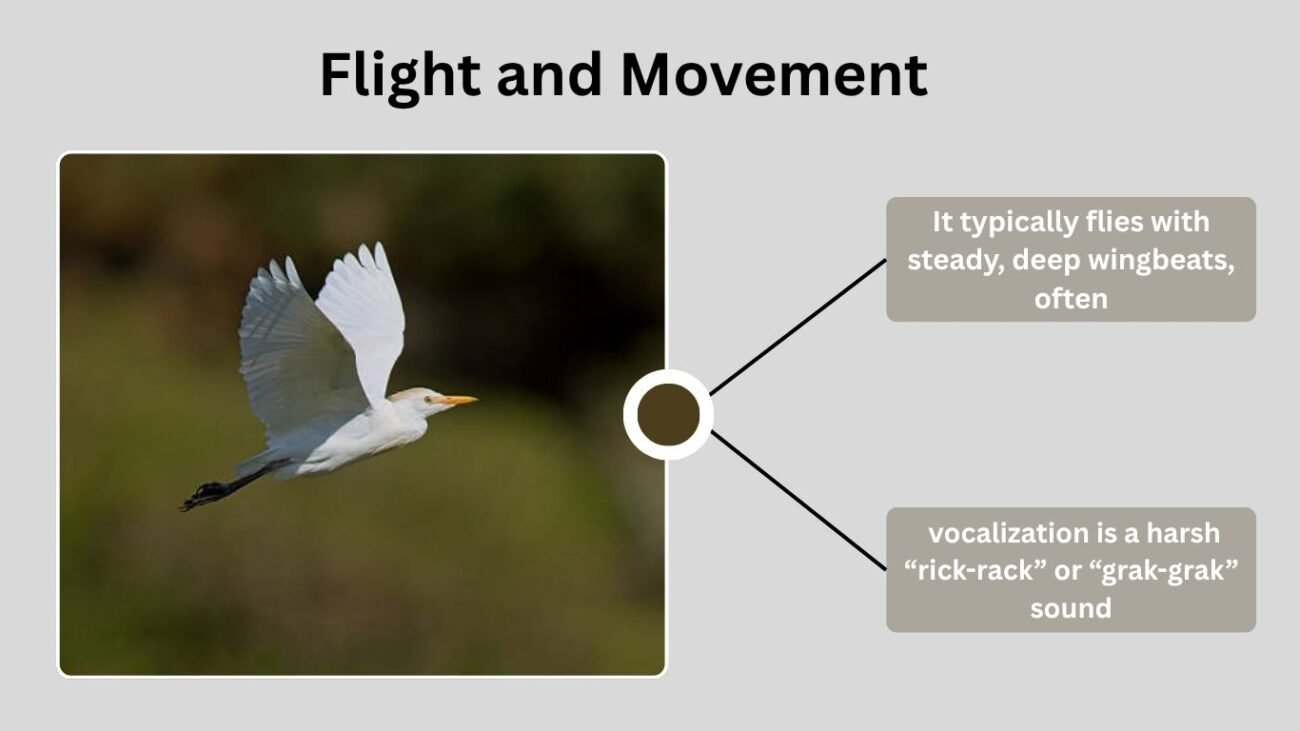
The Cattle Egret’s flight is smooth, low, and deliberate. It typically flies with steady, deep wingbeats, often gliding short distances before flapping again. The bird’s neck is retracted during flight, a key feature distinguishing herons and egrets from cranes, which fly with extended necks. These egrets frequently travel in small flocks, especially when heading toward roosting sites at sunset or following herds across open plains.
They are highly adaptable flyers and capable of long-distance migrations, particularly populations in temperate zones. Their broad wings and strong muscles allow them to cross oceans — one reason the species spread so rapidly from Africa to Asia, Australia, and the Americas in just a few centuries.
Sound and Communication
The Cattle Egret is not a loud bird, but it does produce a variety of rasping croaks and short grating calls, particularly during breeding or when alarmed. The most common vocalization is a harsh “rick-rack” or “grak-grak” sound, often heard in flight or at colony roosts. During courtship, males emit soft croaks to attract females and establish nesting territories.
Although relatively quiet in daily life, large roosting colonies can become quite noisy as hundreds of birds communicate during dusk, producing a chorus of croaks, squeals, and guttural calls.
Regional Presence
Cattle Egret in India
The Cattle Egret is a common and widespread resident throughout India. It thrives in farmlands, rice paddies, and grazing areas, often seen foraging alongside buffalo or oxen. Breeding occurs mainly during the monsoon season, when food is plentiful and wetlands are full. Colonies can number in the hundreds, nesting in trees near water bodies.
Cattle Egret in Australia
In Australia, the Eastern subspecies (Bubulcus ibis coromandus) dominates, found in tropical and subtropical regions. It inhabits wetlands, coastal plains, and cattle pastures, particularly in Queensland and New South Wales. These egrets migrate seasonally within the continent, following rainfall and food abundance. Large roosting flocks are a common evening sight near rivers and agricultural zones.
Cattle Egret in the UK
Once rare in the United Kingdom, the Cattle Egret has become increasingly common since the early 2000s. It now breeds in southern England, especially in wetlands and pasturelands of Somerset and Dorset. Many individuals arrive during winter from southern Europe, taking advantage of milder British climates.
Cattle Egret in Hawaii
Introduced to Hawaii in the 1950s to help control flies and insects in cattle pastures, the species has flourished across the islands. It is now a familiar sight in fields, golf courses, and near wetlands. The Cattle Egret’s presence here has proven ecologically significant, balancing insect populations and supporting agriculture.
Comparison With Other Egrets

| Feature | Cattle Egret | Little Egret | Great Egret |
| Size | Medium (45–52 cm) | Smaller (55–65 cm wingspan) | Large (85–100 cm) |
| Coloration | White, buff patches in breeding | White with black legs and bill | White, yellow bill, black legs |
| Habitat | Fields, pastures, farmlands | Rivers, lakes, and marshes | Large wetlands, lakes |
| Behavior | Follows cattle, feeds on insects | Hunts small fish and frogs | Wades in deep water |
| Range | Global, terrestrial | Eurasia and Africa | Worldwide tropical/subtropical |
The Cattle Egret is unique among its relatives for its land-based feeding habits, while others remain primarily aquatic. Its buff-colored breeding plumage also differentiates it visually during mating seasons.
Conservation and Ecological Importance
The Cattle Egret is classified as Least Concern by the IUCN Red List, thanks to its vast distribution and strong adaptability. Its close relationship with human agriculture has been both beneficial and protective — as farmland expanded, so did its range.
However, modern challenges such as pesticide exposure, wetland loss, and pollution can still pose localized threats. These chemicals reduce insect populations, indirectly affecting the egret’s food supply. Conservationists stress the need for sustainable farming practices that support both livestock and birdlife.
Ecologically, the species plays an essential role in pest control, feeding on insects that damage crops and irritate cattle. This natural partnership makes the Cattle Egret a valuable ally in maintaining healthy ecosystems and agricultural balance.
FAQs
What is the scientific name of the Cattle Egret?
The scientific name of the Cattle Egret is Bubulcus ibis. It belongs to the heron family (Ardeidae) and is often called the “cow heron” due to its close association with livestock across farmlands and open fields.
Why do Cattle Egrets follow cows?
Cattle Egrets follow cows to catch insects and small prey disturbed by their movements. This relationship benefits both species — the egrets find easy food, and the cattle enjoy fewer flies and parasites around them.
What sound does a Cattle Egret make?
The Cattle Egret makes low, grating croaks, often described as “rick-rack” or “grak-grak.” These calls are used during flight, at colonies, or in breeding displays. Large roosts produce a mix of croaks and growls, especially near dusk.
How is the Cattle Egret different from the Great Egret?
The Cattle Egret is smaller, with a stockier build and shorter neck. It’s typically found in pastures rather than wetlands. The Great Egret, in contrast, is much taller and primarily wades in deep water to hunt fish and amphibians.
Where is the Cattle Egret most commonly found?
The Cattle Egret is found worldwide, especially in tropical and temperate zones. It’s abundant in India, Africa, Australia, and the Americas, often spotted in fields, near cattle, or following plowing machinery in farmlands.


