











Graceful, tall, and endlessly patient, herons are among the most striking birds found across the globe. With their long necks, dagger-like bills, and elegant posture, these wading birds have adapted to nearly every kind of watery landscape imaginable.
From frozen northern lakes to tropical mangroves, herons thrive wherever shallow waters provide food. Their wide distribution and adaptability make them fascinating subjects for birdwatchers and ecologists alike.
In this article, we’ll explore where herons live, how their habitats differ by species, and how long these beautiful birds can survive in the wild.
Global Range and Distribution

Worldwide Presence
Herons have one of the broadest distributions of any bird family. They live on every continent except Antarctica, thriving in both tropical and temperate regions. You’ll find them along coastlines, riverbanks, swamps, marshes, lakes, and even city parks.
Species like the Great Blue Heron in North America, Grey Heron in Europe, and White Heron (Great Egret) in Asia and Oceania show how flexible these birds are when it comes to habitat. As long as water and food—fish, frogs, and aquatic insects—are available, herons can make a home.
Why Water Matters
Water is the center of a heron’s life. These birds rely on shallow water to stalk and catch prey. Lakes, rivers, marshes, and tidal flats all provide ideal hunting grounds.
They prefer quiet or slow-moving water, where prey is easier to spot. Even small ponds or irrigation canals can support herons if they have enough fish or amphibians. Because of their dependence on water, healthy wetland ecosystems are essential for heron survival.
Where Do Herons Live by Species
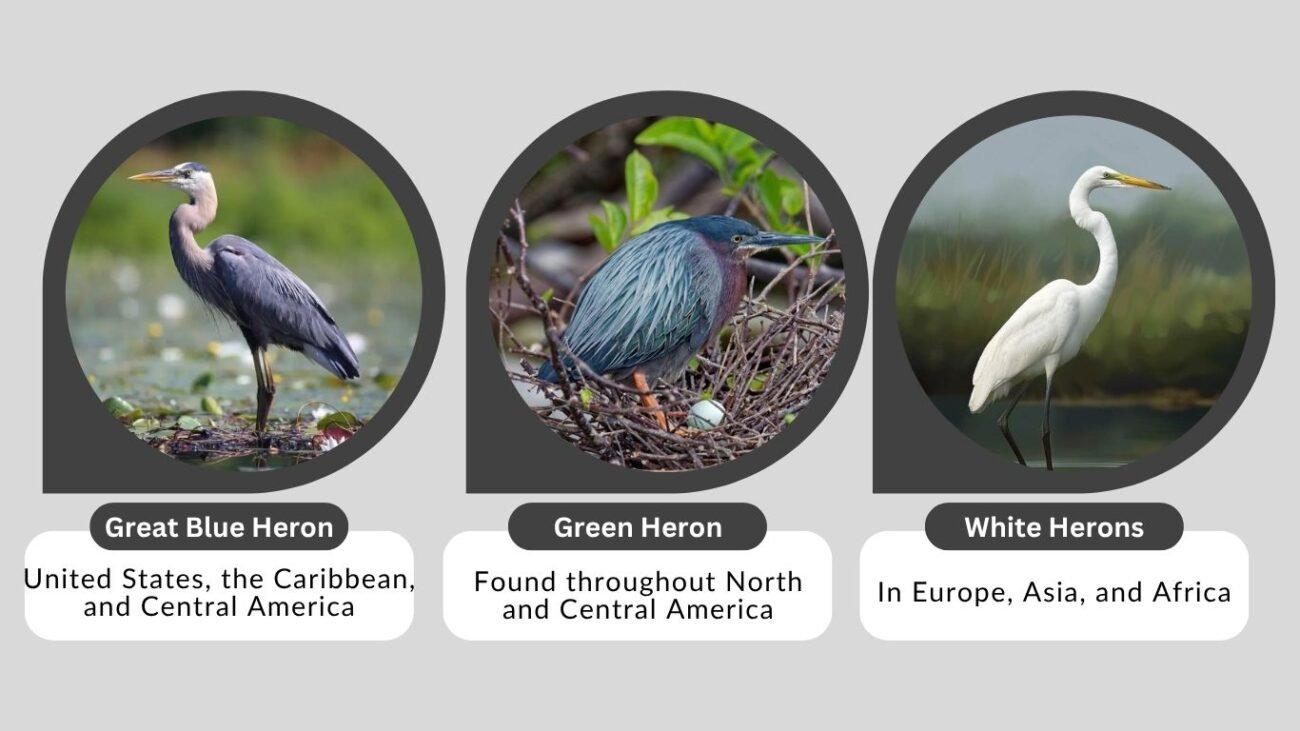
Great Blue Heron
The Great Blue Heron (Ardea herodias) is one of the most iconic and widespread herons in the Americas. It ranges from Alaska and Canada down through the United States, the Caribbean, and Central America.
This large heron prefers shallow freshwater and saltwater habitats such as rivers, lakes, marshes, estuaries, and coastal bays. It nests high in trees near water, forming colonies known as rookeries.
In colder regions, Great Blue Herons migrate south each winter to avoid frozen lakes and rivers, while southern populations remain year-round residents.
Blue Heron
Closely related to the Great Blue, the Blue Heron thrives in ponds, wetlands, and slow-moving rivers across much of North America. It is often seen standing motionless in shallow water, waiting patiently for fish or frogs to swim within reach.
Blue Herons have adapted well to suburban and urban environments, often living near parks, golf courses, and backyard ponds. As long as there is clean water and abundant food, these herons are remarkably tolerant of human presence.
Green Heron
The Green Heron (Butorides virescens) is smaller and more secretive than its larger relatives. Found throughout North and Central America, this bird prefers wooded streams, shaded ponds, and marshy edges with plenty of cover.
Unlike the tall, solitary Great Blue, the Green Heron often nests alone or in small family groups. Its adaptability extends to creative hunting—Green Herons are known to use tools, such as dropping insects or twigs onto the water to lure fish closer.
Black-Crowned and Yellow-Crowned Night Herons
These two species are masters of the twilight.
The Black-Crowned Night Heron and Yellow-Crowned Night Heron inhabit coastal swamps, mangroves, and tidal creeks. They rest during the day and hunt at night, feeding mainly on crabs, crayfish, and small fish.
Both species are found throughout North America, Africa, Asia, and tropical islands, adapting well to warm, humid regions. They usually nest in colonies, often alongside egrets and ibises, and prefer trees or mangroves that hang over the water.
Grey and White Herons
In Europe, Asia, and Africa, the Grey Heron (Ardea cinerea) fills the same ecological niche as the Great Blue Heron. It inhabits rivers, canals, wetlands, and even city ponds. In the United Kingdom, Grey Herons are so adaptable that they can be spotted in urban parks and fishing lakes.
The White Heron, often called the Great Egret, shares many of the same habitats but is found in warmer regions worldwide. Its striking white plumage and long neck make it a favorite among birdwatchers in Asia, Australia, and the Americas.
Both species thrive where water is clean and prey is abundant, proving just how successful the heron family is across ecosystems.
Typical Habitats of Herons

Freshwater Environments
Herons are most commonly found in freshwater wetlands—ponds, lakes, marshes, and rivers. These calm environments are rich in frogs, fish, and aquatic insects.
Great Blue and Green Herons both depend heavily on such habitats, where they can feed easily and find tall trees or shrubs for nesting. Freshwater wetlands also offer protection from large predators, making them ideal for raising chicks.
Saltwater and Coastal Regions
Some heron species, especially Night Herons and Egrets, prefer coastal areas. Estuaries, tidal flats, and mangrove forests provide a constant food supply, particularly crabs and small fish.
Coastal herons are excellent swimmers and can tolerate brackish water, moving inland only during storms or extreme tides. They play an important ecological role by helping control crustacean populations.
Urban and Suburban Habitats
In recent years, herons have increasingly adapted to urban landscapes. They are often seen around city lakes, park ponds, stormwater canals, and golf course lagoons.
A notable example is Florida’s Blue Heron Bridge, famous for its birdwatching opportunities. These adaptable birds demonstrate an impressive ability to coexist with humans—so long as the water remains clean and food is available.
Do Herons Live Alone or in Groups?
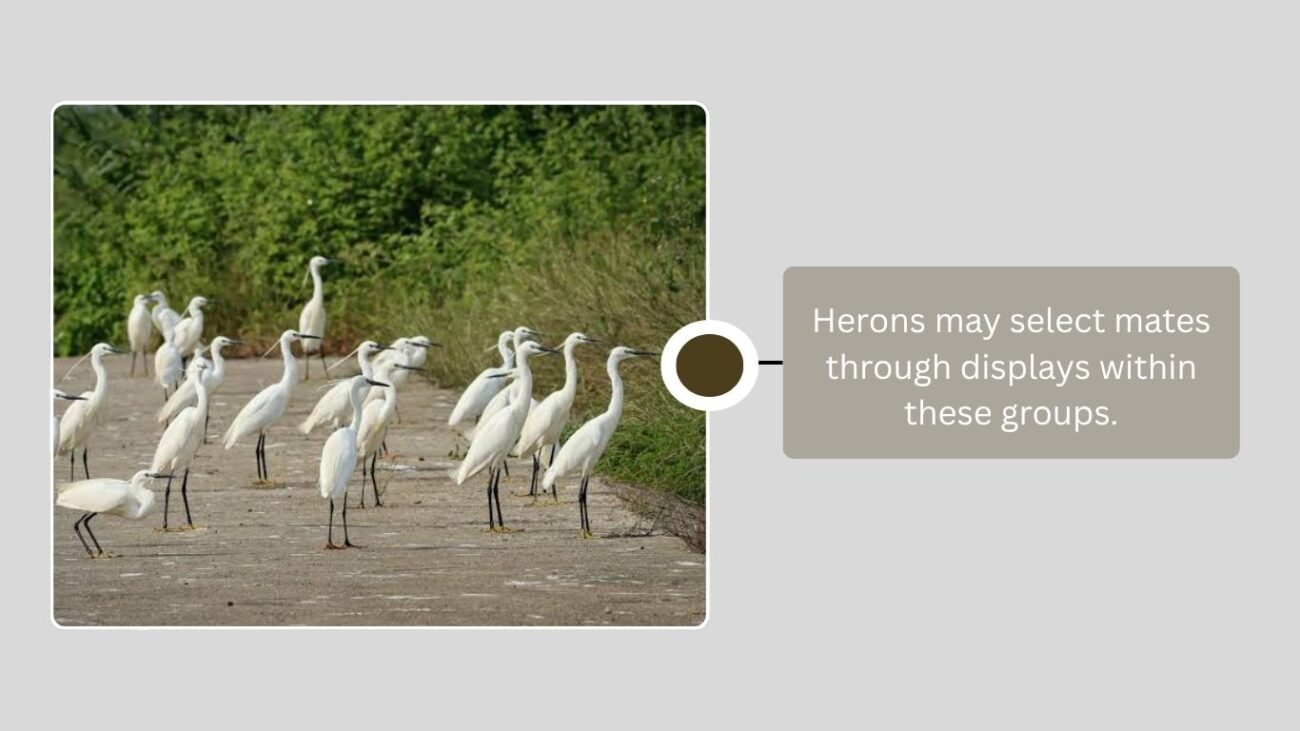
Herons are typically solitary hunters, often seen standing silently and alone in shallow water, waiting for prey. This solitary behavior helps them reduce competition and maintain control over their feeding territory. A single heron can patrol the same stretch of river or shoreline for months, returning daily to hunt.
However, their social habits change dramatically during the breeding season. From spring to early summer, herons become highly social nesters, gathering in large colonies called heronries or rookeries. These colonies can include dozens to hundreds of nests, sometimes shared with egrets, ibises, or cormorants.
Why Herons Form Colonies
- Protection: More birds mean more eyes to detect predators.
- Efficient breeding: Established colonies offer proven nesting sites.
- Social signals: Herons may select mates through displays within these groups.
Outside the nesting season, herons go back to being loners, spreading out over wetlands and coasts in search of food.
Heron Migration Patterns
Seasonal Movement
Most heron species are partial migrants, meaning only some populations migrate while others remain in place year-round. Northern herons move south when cold weather freezes their feeding grounds.
For example:
- Great Blue Herons from Canada and the northern U.S. migrate south to Florida, Mexico, and Central America.
- Grey Herons from northern Europe travel to southern Europe and Africa for the winter.
- Green Herons make shorter migrations, often moving just a few hundred miles to warmer areas.
Southern populations, where water never freezes, stay put all year.
Migration Routes
Herons follow consistent migration corridors along coastlines, river valleys, and wetlands. These areas provide safe resting and feeding spots during their long journeys.
In spring, herons return north to their breeding territories, often to the same colonies year after year. Some herons show remarkable site fidelity, nesting in the very same tree they used the previous season.
How Long Do Herons Live?
Average Lifespan
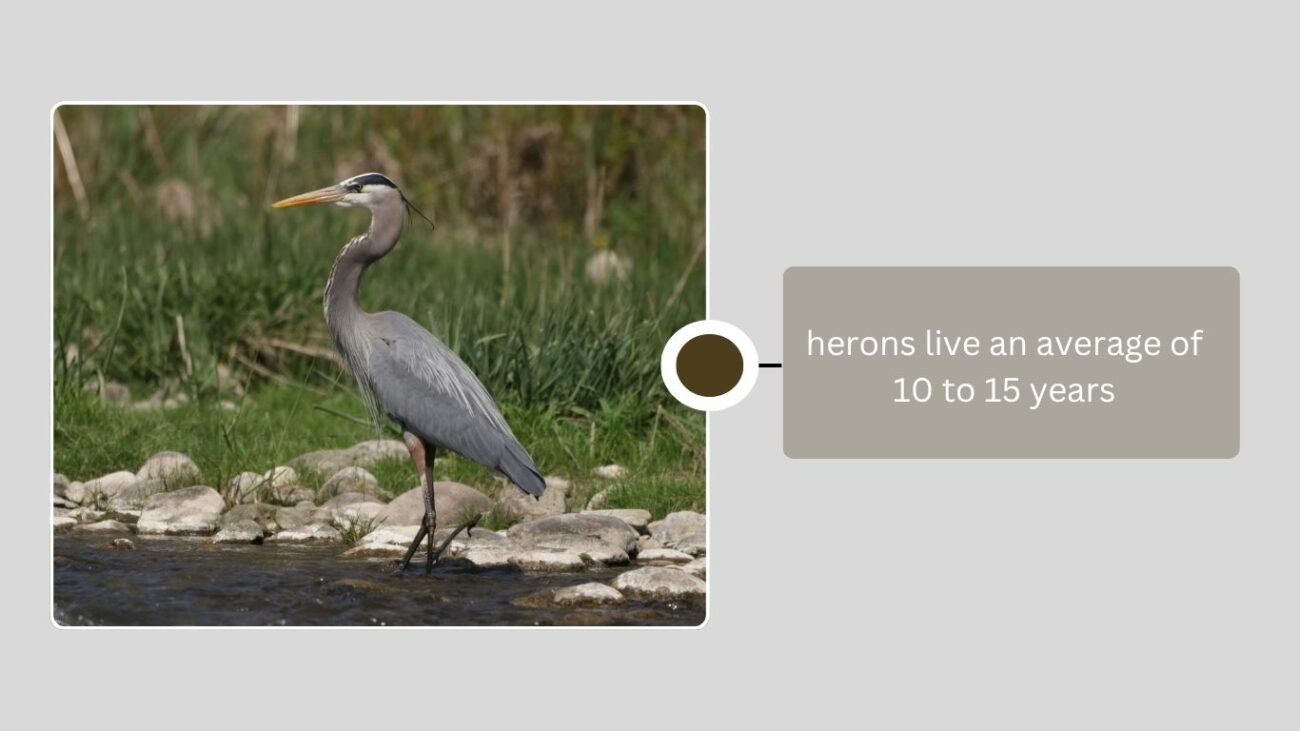
In the wild, herons live an average of 10 to 15 years, although some individuals can reach over 20 years in ideal conditions. Their lifespan varies by species, environment, and access to food.
The oldest recorded Great Blue Heron lived for 24 years, while captive herons—protected from predators—have been known to live slightly longer.
Lifespan by Species
| Species | Average Lifespan (Wild) | Maximum Recorded |
| Great Blue Heron | 15 years | 24 years |
| Green Heron | 8–10 years | 12 years |
| Grey Heron | 12–15 years | 23 years |
| Black-Crowned Night Heron | 10 years | 21 years |
| Yellow-Crowned Night Heron | 10–12 years | 16 years |
Factors Affecting Longevity
Several challenges impact how long herons live:
- Predation: Eggs and chicks are vulnerable to raccoons, snakes, and hawks.
- Habitat loss: Draining wetlands or developing shorelines reduces feeding grounds.
- Pollution: Contaminated fish and plastics can poison herons.
- Fishing hazards: Entanglement in lines or nets can cause injury or death.
- Human disturbance: Repeated nest disruption can lead to colony abandonment.
On the positive side, conservation measures—like protected wetlands and artificial nesting platforms—have improved heron survival in many regions.
Herons and Human Environments
Adapting to Modern Landscapes
As wetlands disappear, many herons have adapted surprisingly well to human-modified environments. They now frequent urban lakes, golf course ponds, stormwater canals, and resort marinas.
In some areas, these birds have become local icons. For example:
- Heron Live Hotel in Poland and similar waterfront resorts attract wild herons naturally.
- Blue Heron Bridge in Florida is famous among birdwatchers and photographers for its year-round heron sightings.
- Live streaming setups like the Great Blue Heron Nest Cam let people observe nesting and feeding behaviors without disturbance.
This coexistence shows how adaptable herons are—though they still depend on clean, undisturbed water to thrive.
Coexistence and Challenges
While herons tolerate human presence better than many bird species, they are sensitive during the breeding season. Human activities near colonies—such as boating, loud construction, or photography—can cause adults to abandon nests.
Key conservation practices include:
- Maintaining buffer zones around nesting sites.
- Preserving wetlands from urban encroachment.
- Educating communities about heron behavior and protection laws.
Eco-parks and protected heronries around the world demonstrate how humans and herons can coexist when balance and respect are prioritized.
Interesting Facts About Heron Habitats and Behavior
- Herons are found from sea level up to 3,000 meters in mountain lakes.
- Some rookeries contain nests that have been used for over 20 years.
- Herons can fly 25–30 miles a day between feeding and nesting sites.
- They are territorial hunters, returning to the same feeding spots every season.
- The Great Blue Heron is the largest heron in North America, standing over 4 feet tall with a wingspan of up to 6 feet.
These fascinating adaptations make herons a key indicator species—if herons thrive, it means their ecosystems are healthy and balanced.


