










Among the quiet wetlands and lakes of North America, the Blue Heron stands as one of nature’s most graceful and intelligent architects. With long legs, wide wings, and a piercing gaze, these birds are known not only for their beauty but also for their remarkable nesting behavior.
Each spring, Great Blue Herons and their relatives—Green, Night, and Grey Herons—gather in colonies high above the water to begin an extraordinary ritual of construction and care. Their nests, often massive and reused for years, symbolize patience and dedication in the bird world. Understanding how and where these herons build their nests reveals much about their life cycle, survival, and the delicate ecosystems they depend on.
Understanding Heron Nesting Behavior
Do Herons Build Nests?
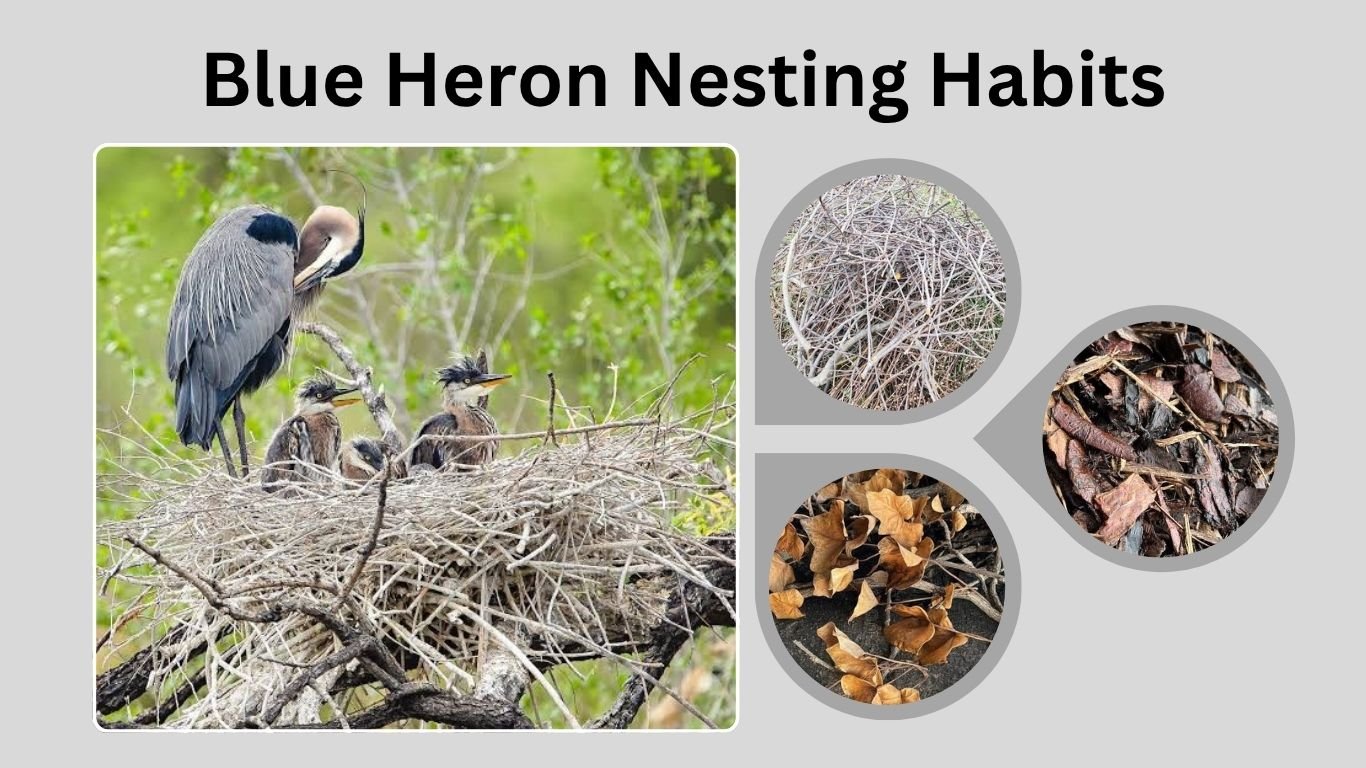
Yes, herons are highly skilled nest builders. Both the male and female participate in the construction process, showing a level of cooperation rare among many bird species. Nests are typically made of sticks, twigs, and moss, woven into a sturdy platform. Once complete, the pair may reuse the same nest year after year, adding new material each season until it becomes enormous—sometimes over four feet wide.
This yearly reuse not only saves effort but also strengthens family bonds and keeps the colony stable. The reused nests also serve as landmarks, guiding returning birds back to familiar rookeries each spring.
Typical Nest Locations
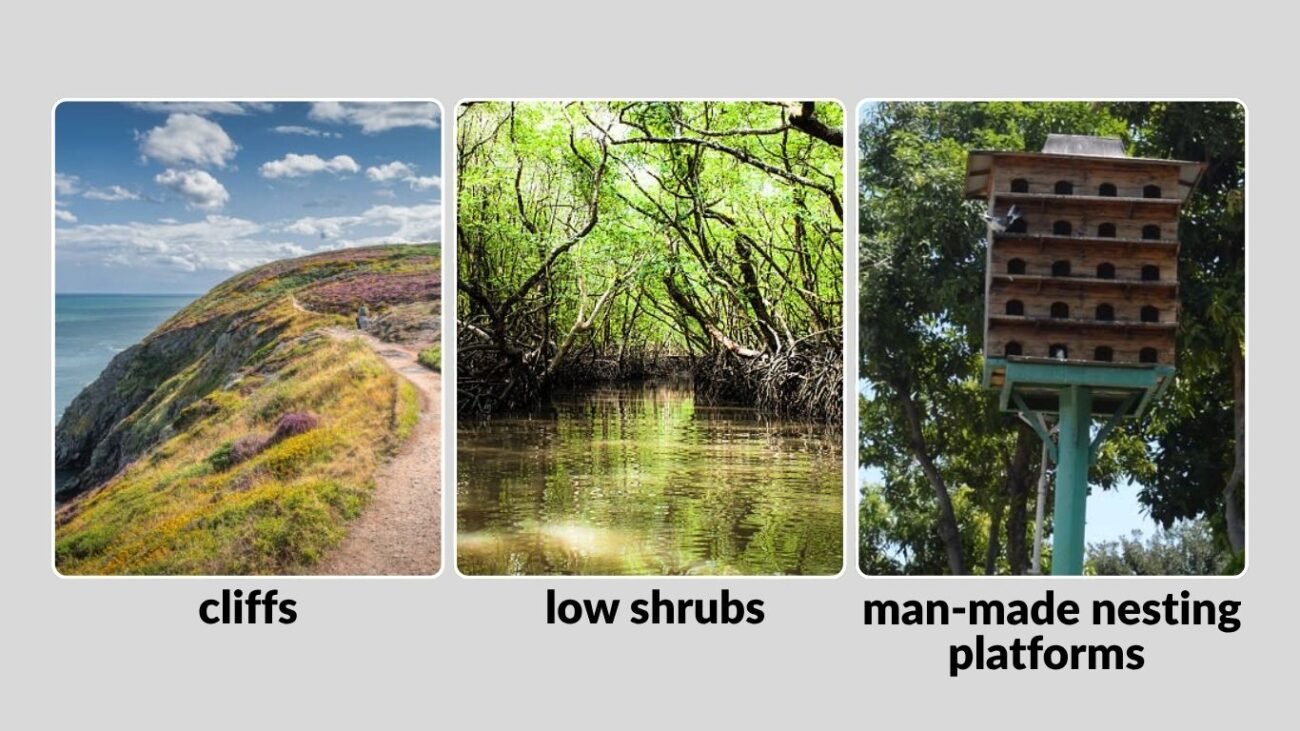
Herons choose nesting sites with care. Most species prefer tall trees near bodies of water such as lakes, ponds, rivers, or marshes—places where food is abundant and predators are few. Some species, especially those in treeless coastal regions, nest on cliffs, low shrubs, or even man-made nesting platforms designed by conservationists.
The location of a nest also reflects the heron’s personality: while Great Blue Herons prefer high, open trees with a commanding view, Green Herons often nest low and hidden among dense foliage. Regardless of height, safety and proximity to water are always top priorities.
Appearance and Structure of a Heron Nest
A typical heron nest appears as a large, flat platform made primarily of sticks, lined with softer materials like grass, moss, or reeds. From the ground, it looks like a tangled basket perched among branches, but it’s surprisingly solid.
- Size: 2 to 4 feet across (larger for Great Blues).
- Depth: Up to 2 feet deep, expanding yearly.
- Weight: Can exceed 100 pounds after several seasons of reuse.
From above, heron rookeries resemble clusters of natural treehouses, with dozens—or even hundreds—of these nests dotting the upper canopy.
Great Blue Heron Nesting Habits
Where Do Great Blue Herons Nest?
The Great Blue Heron (Ardea herodias) is North America’s largest and most widespread heron species, and it is famous for its colony nesting behavior. These colonies, known as heronries or rookeries, can contain anywhere from a handful to several hundred nests.
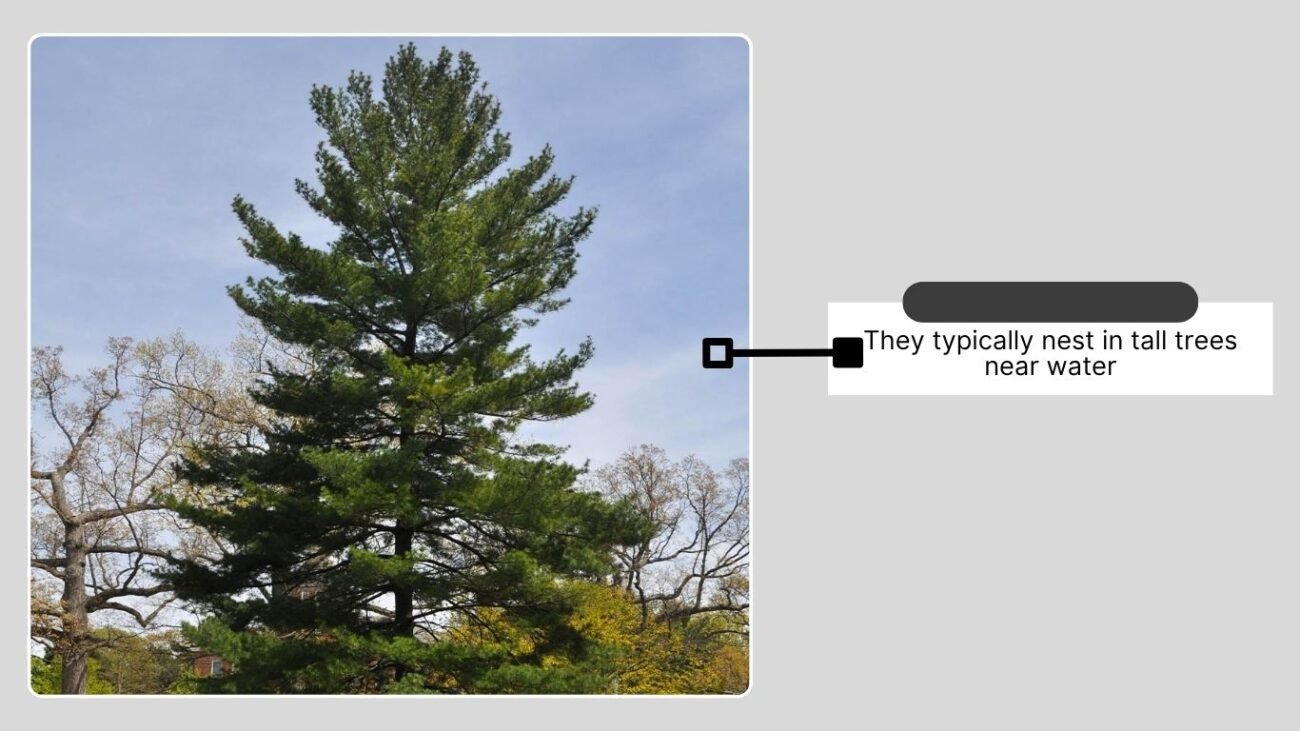
They typically nest in tall trees near water, such as cypress, pine, or oak. In regions where tall trees are scarce, they adapt by nesting on cliffs or even artificial towers built by wildlife organizations. The nesting sites are carefully chosen to provide easy access to fish-rich feeding grounds.
Great Blue Heron Nesting Season
Heron nesting season begins in early spring, usually from February to April depending on the climate. In warmer southern areas, herons may start earlier, while northern populations begin later as temperatures rise.
During courtship, males gather sticks and perform elaborate displays—stretching their necks, snapping their bills, and offering twigs to potential mates. Once paired, the two work together to finish the nest. Both parents share duties throughout the breeding season:
- Incubation: about 25–28 days.
- Feeding chicks: regurgitating fish and amphibians several times daily.
This teamwork ensures a high success rate for raising chicks in challenging wetland environments.
Great Blue Heron Nest Size and Design
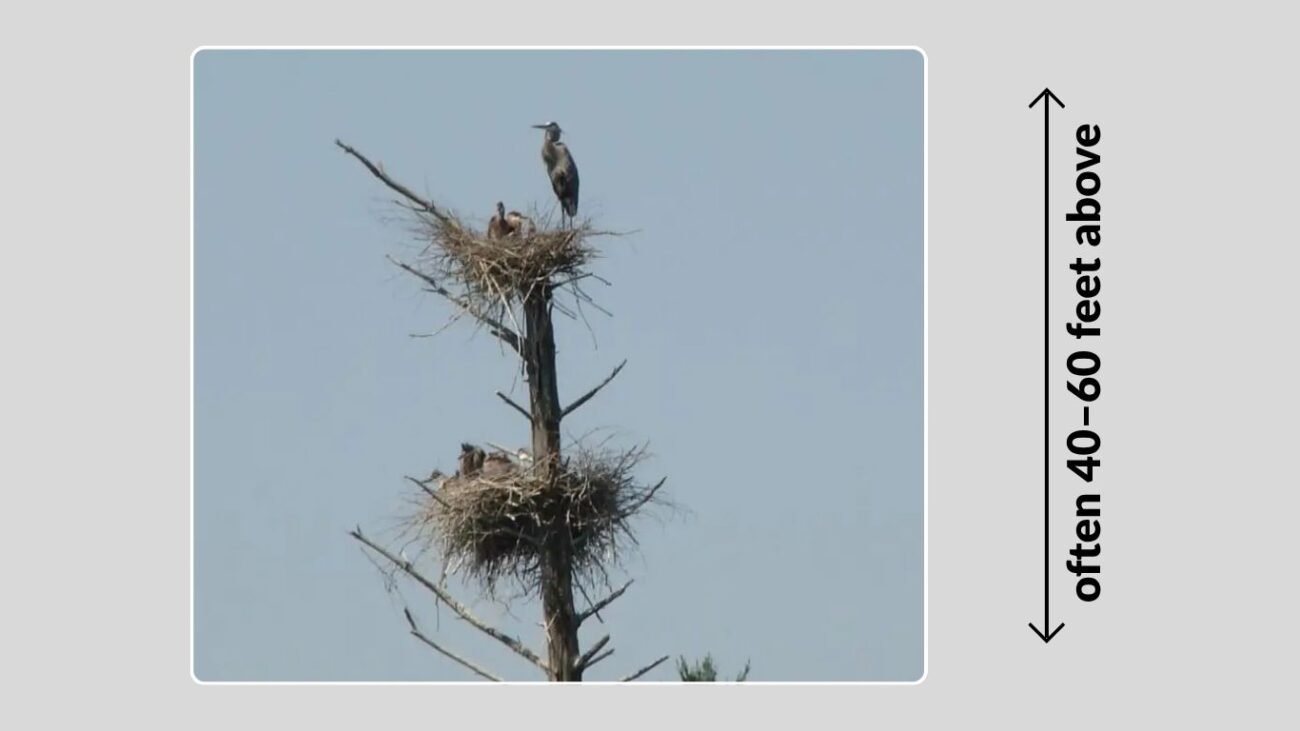
A Great Blue Heron’s nest is an architectural marvel among birds. The structure starts modestly—just a loose platform of sticks—but over years of reuse and reinforcement, it can grow enormous.
Typical measurements:
- Width: 3–4 feet across.
- Depth: 2–3 feet.
- Height: often 40–60 feet above ground in treetops.
Inside, the nest is lined with grass, moss, and occasionally feathers for insulation. These layers help protect delicate eggs from both wind and temperature changes. Because Great Blue Herons return to the same site annually, their nests can last decades if the trees remain intact.
Nesting Colonies (Rookeries)
Great Blue Herons rarely nest alone. They prefer the safety and social benefits of colonial nesting. Colonies—or “rookeries”—may include other heron species, as well as egrets or cormorants.
Nests in a rookery are often just a few feet apart, creating a bustling aerial neighborhood of activity. The constant noise of chicks begging for food and parents calling to one another fills the air. This group living provides safety: with dozens of watchful adults, predators like raccoons or hawks are less likely to succeed.
Blue Heron Nesting Behavior
Blue Heron Nesting Season
Blue Herons—particularly the Great Blue—begin nesting earlier in the south and later in northern areas.
- Southern regions: January to March.
- Northern regions: April to June.
Their timing coincides with the start of spring rains, which fill wetlands and bring an abundance of fish and frogs for feeding young.
Blue Heron Nesting Sites and Habitat
Blue Herons prefer quiet, undisturbed environments surrounded by water. Typical nesting habitats include:
- Forest edges bordering lakes or rivers.
- Swamp forests or isolated islands.
- Man-made nesting platforms built for heron conservation.
They usually choose trees between 20 and 60 feet tall, where the nests are protected from ground predators but remain close enough to water for easy feeding trips. In urban areas, they have even been known to nest in city parks or golf course ponds if the area is calm and food is plentiful.
Green and Night Heron Nesting
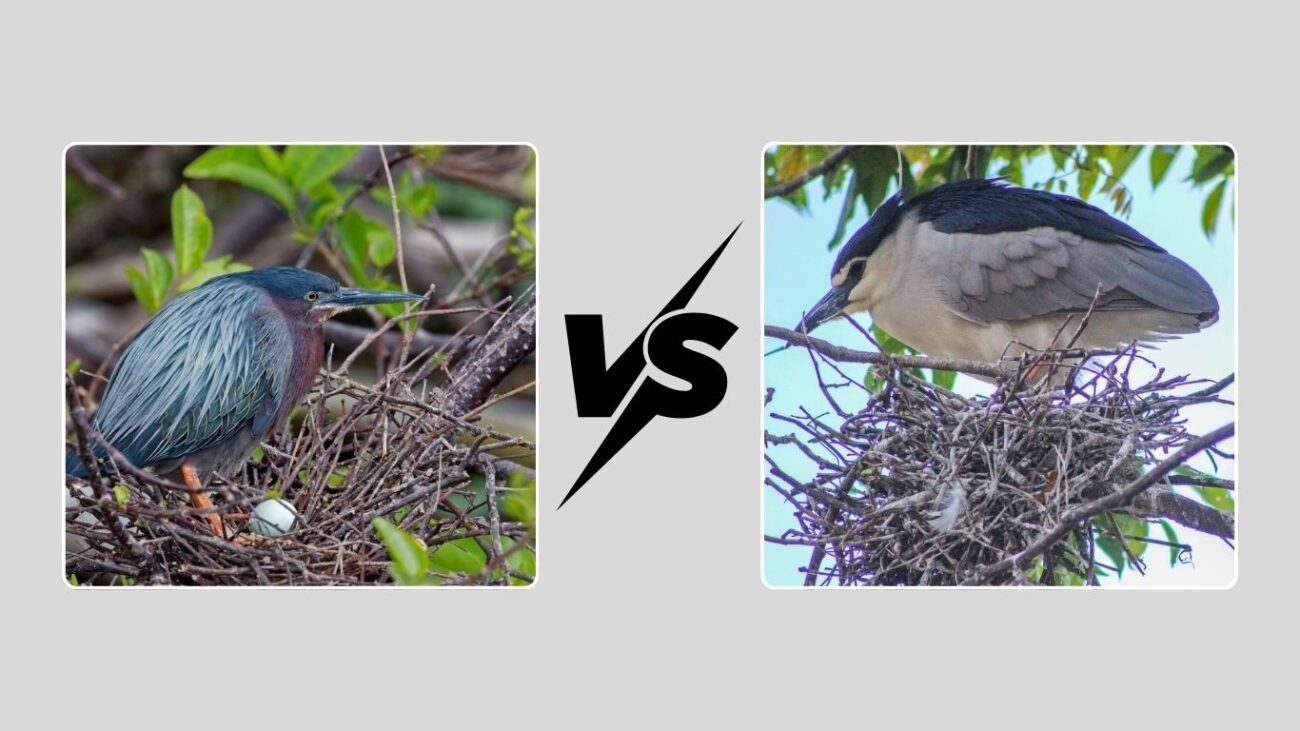
Green Heron Nesting
The Green Heron is much smaller than the Great Blue, but it’s equally dedicated to nesting. Unlike its larger cousin, the Green Heron often nests alone or in small groups, choosing quiet areas surrounded by dense vegetation.
Their nests are typically placed in shrubs, bushes, or low tree branches close to the water’s edge. These compact nests, usually 10–20 feet high, are made of small twigs and lined with fine grasses. The female lays 3–5 pale blue-green eggs, which both parents take turns incubating for about 20 days.
After hatching, both parents feed the chicks by regurgitating small fish and insects. Because Green Herons prefer seclusion, spotting an active nest in the wild is considered a special treat for birdwatchers.
Black-Crowned and Yellow-Crowned Night Herons
The Black-Crowned Night Heron and Yellow-Crowned Night Heron are more social. They build their nests in colonies, often alongside egrets and ibises. These nests are found in mangroves, swamp trees, and marshy woodlands, typically on branches that hang over water.
Their nests are smaller than those of Great Blues—about 1–2 feet wide—and made from twigs and reeds. Both species are nocturnal, meaning they build and feed mostly in the evening and early morning. The Yellow-Crowned Night Heron specializes in eating crabs and crayfish, so it always nests close to tidal creeks and coastal lagoons where these crustaceans thrive.
Grey Heron (European Counterpart)
The Grey Heron, common across the UK and Europe, shares many behaviors with the Great Blue Heron. It nests in tall trees along rivers and lakes, often forming large colonies called heronries. These nests can remain active for decades, handed down from one generation to the next.
Grey Heron nests are large and flat, made from sticks and lined with softer vegetation. Each spring, new layers are added, and over time the nests become massive structures—sometimes several feet across. When seen from below, a mature heronry can resemble a cluster of platforms high in the treetops.
Heron Nest Construction and Materials
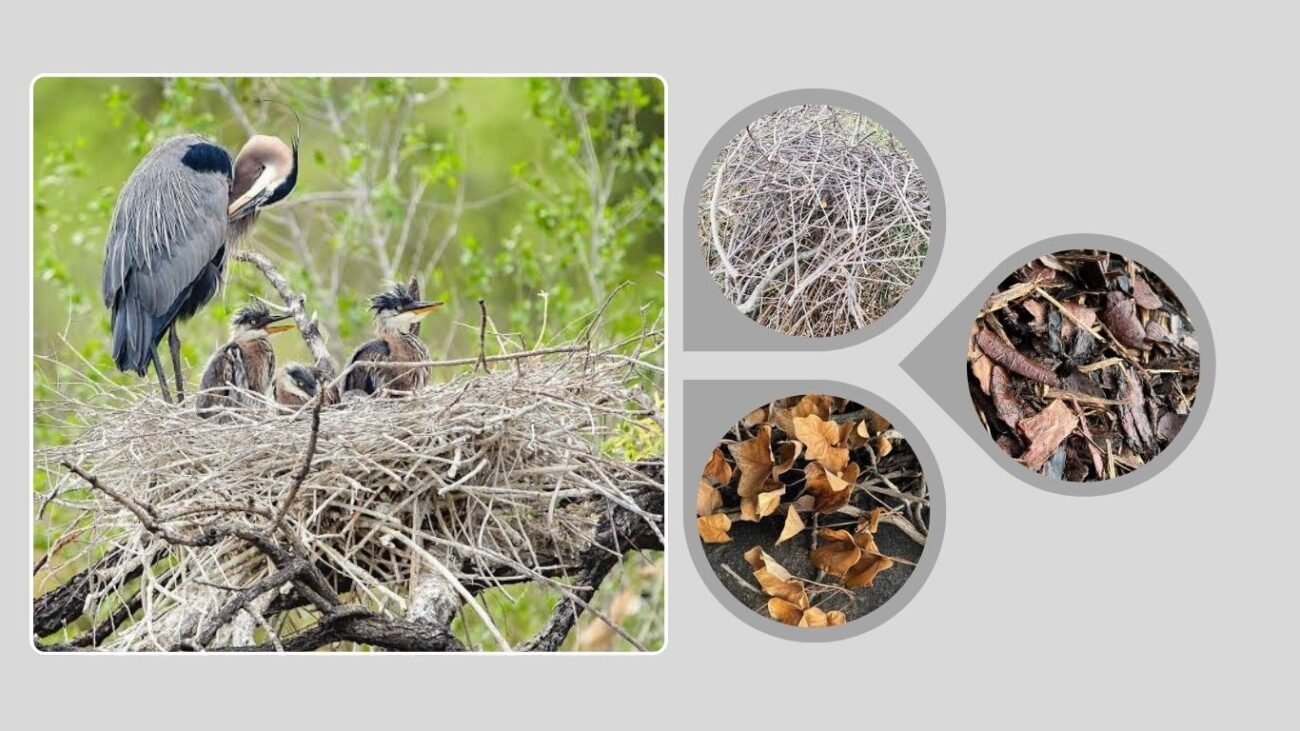
How Nests Are Built
Nest building begins shortly after courtship. Males select a site and bring sticks, twigs, and small branches to the female, who arranges them carefully. This partnership can last the entire season or several years.
Construction usually takes 3–7 days, depending on weather and material availability. Herons are meticulous builders—each stick is placed purposefully, and nests are often reinforced multiple times throughout the breeding season.
Maintenance and Reuse
Herons are thrifty nesters. They rarely abandon a well-built nest unless it becomes unsafe or the supporting tree falls. Instead, they reuse and repair old nests, adding new twigs and layers of grass each spring. Over time, these nests can grow so large that they appear to merge with the tree branches themselves.
Abandoned heron nests don’t go to waste either. They are frequently taken over by hawks, owls, or cormorants, showing how valuable these elevated platforms are in the bird community.
Nesting Colonies and Famous Sites
Large Heronries
Herons often choose to nest in colonies called rookeries. A single rookery can contain hundreds of nests, some belonging to multiple species. The noise from chicks and adults can be overwhelming, but this communal setting offers protection—many eyes to spot predators like raccoons or eagles.
Famous Nesting Areas
Across North America, several well-known heron nesting sites attract birdwatchers every spring:
- Heron’s Nest Nature Park (Florida & Maryland): Protected areas offering safe nesting for Great Blue Herons and Egrets.
- Akron, Ohio: Known for its thriving Great Blue Heron rookery visible near city parks.
- Savannah, Georgia (Heron’s Nest neighborhoods): Residential communities coexisting with nearby nesting colonies.
- Lake Worth, Florida: A key site for nesting herons, including the well-documented rookery near 9855 Heron’s Nest Ct.
Modern heron nest cams allow nature lovers to observe chicks hatching and parents feeding them in real time, promoting awareness and conservation of these colonies.
Nesting Season Cycle
Each heron species follows a similar breeding and nesting cycle.
- Courtship (Late Winter–Early Spring): Males perform elaborate displays, stretching their necks and clattering bills.
- Nest Building: Males bring materials; females weave them into shape.
- Egg Laying: 2–6 pale blue eggs per clutch.
- Incubation: Both parents take turns incubating for 25–28 days.
- Feeding: Parents regurgitate fish or frogs to feed the chicks.
- Fledging: After about 7–8 weeks, young herons take their first flight but often return to the nest for food for another week or two.
This synchronized cycle ensures that chicks hatch during peak food availability, increasing their chances of survival.
Heron Nest Appearance and Size
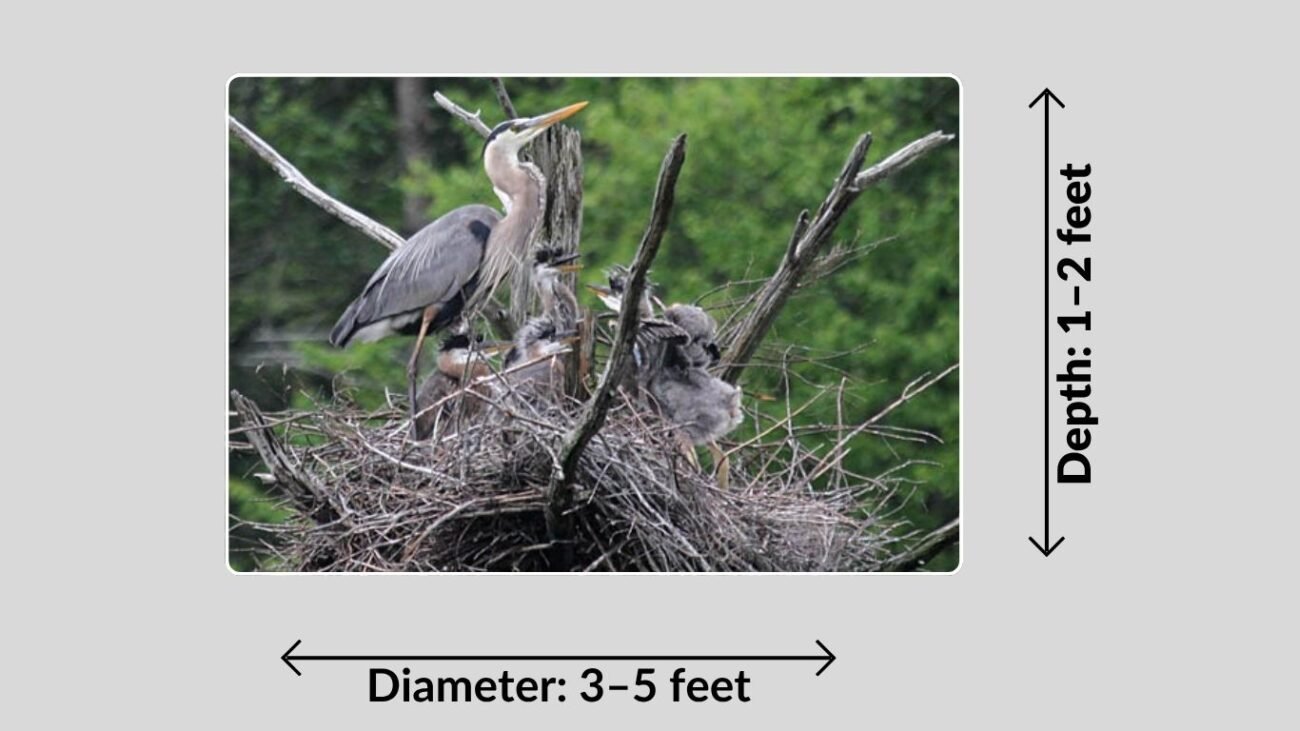
A Blue Heron nest is impressive to behold—large, rough-edged, and commanding in size. From afar, these nests look like piles of sticks wedged high among the branches, but up close they reveal careful craftsmanship.
- Diameter: 3–5 feet
- Depth: 1–2 feet
- Location: Typically 30–70 feet above ground
When heron colonies gather in leafless trees, the sight of dozens of these stick platforms silhouetted against the sky is unforgettable. Some nests are so large that they appear to form “villages” in the treetops—one of nature’s most majestic scenes.
Conservation and Protection
Threats to Nesting Sites
Despite their resilience, herons face several threats:
- Habitat destruction from logging, wetland draining, and development.
- Pollution of rivers and lakes that affects their food supply.
- Disturbance from boats, photographers, or noise can cause nest abandonment.
Conservation Efforts
Many organizations are working to protect heron nesting grounds. Efforts include:
- Establishing protected wetlands and bird sanctuaries.
- Installing nesting platforms in safe, elevated areas.
- Educating the public to respect nesting sites and breeding seasons.
Communities such as those around Heron’s Nest Nature Park and Heron’s Nest Savannah have successfully integrated wildlife protection with recreation, showing how humans and herons can coexist.
Interesting Facts About Heron Nests
- A Great Blue Heron nest can last over 10 years if maintained.
- Some rookeries have been active for decades with minimal disruption.
- Herons may fly miles each day between their nest and feeding site.
- Old nests often become homes for owls and other large birds.
- Chicks can eat up to four times per hour during growth peaks.


