











Hyenas are unique carnivores known for their adaptability, complex social structures, and diverse behaviors. Although often misunderstood, these remarkable animals include several species ranging from powerful predators to gentle insect specialists. Below is a clear, structured overview of the five major types of hyenas—each with distinct traits, habitats, and evolutionary histories.
1. Spotted Hyena
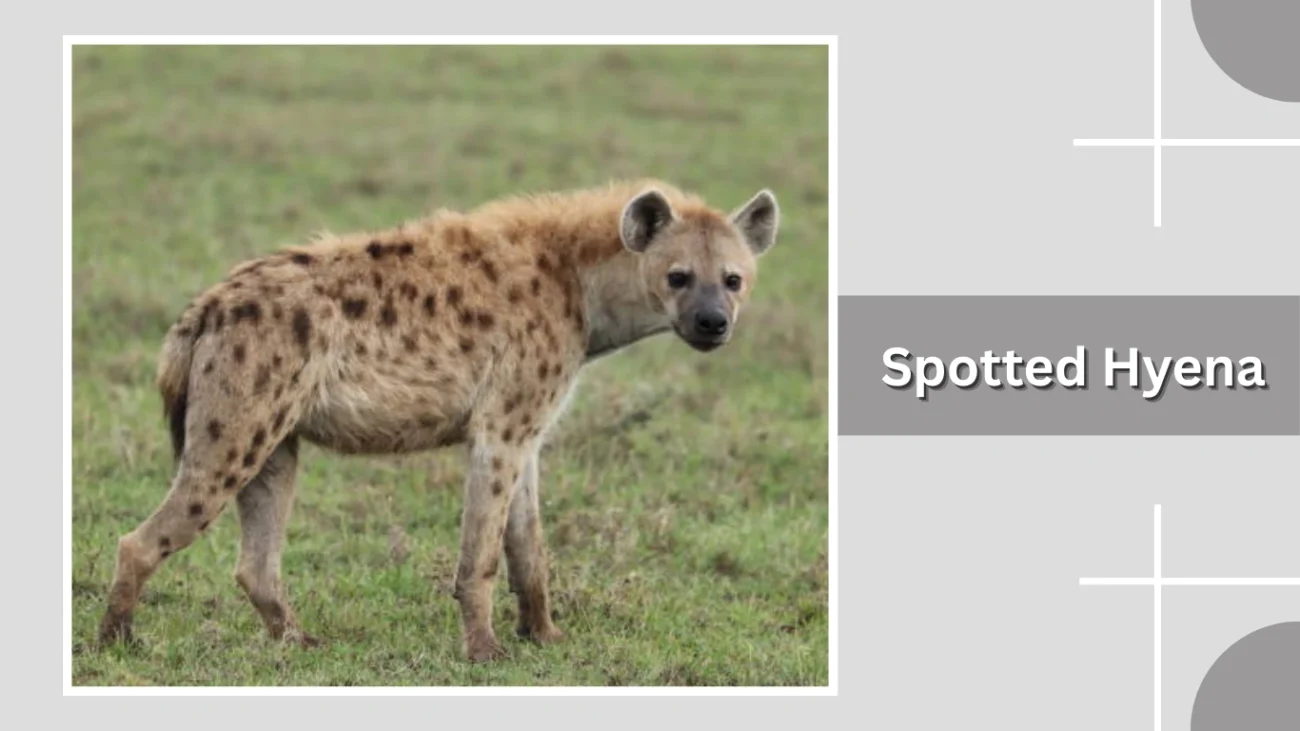
The Spotted Hyena is the largest and most social of all hyena species, known for its powerful build, complex clans, and distinctive laughing vocalizations. Found across much of sub-Saharan Africa, it is an apex predator and highly efficient scavenger with strong jaws and remarkable endurance.
Identification
- Coat is sandy, yellowish, or gray with dark spots
- Large head with rounded ears
- Sloping back due to taller front legs
- Thick neck and powerful jaws
- Tail black-tipped and bushy
Size & Physical Traits
Spotted hyenas are robust animals, typically standing 28–36 inches at the shoulder and weighing between 90–190 pounds. Females are noticeably larger and more dominant than males. Their bone-crushing bite force is among the strongest of any land predator, enabling them to consume carcasses completely, including bones.
Range & Habitat
This species lives across most of sub-Saharan Africa. They thrive in savannas, woodlands, semi-deserts, and even mountainous regions. Spotted hyenas prefer habitats with abundant large herbivores, allowing them to hunt or scavenge efficiently. Their ability to adapt lets them survive in both open plains and rugged terrain.
Behavior & Diet
Spotted hyenas live in matriarchal clans that can include over 80 members. They communicate through whoops, laughs, and scent marking. Highly skilled hunters, they often catch their own prey—such as wildebeest, zebra, and antelope—though they also scavenge. Their cooperative hunting style and endurance allow them to pursue prey over long distances.
2. Striped Hyena

The Striped Hyena is a shy, nocturnal scavenger known for its long mane, narrow muzzle, and distinctive dark stripes along its body and legs. Found across North and East Africa, the Middle East, and parts of India, it plays an important ecological role by cleaning up carrion and organic waste.
Identification
- Pale gray or sandy coat with bold vertical black stripes
- Large, rounded ears and narrow snout
- Prominent mane running from head to tail base
- Mane can stand erect to appear larger when threatened
- Bushy tail with dark tip
Size & Physical Traits
Striped hyenas are smaller than spotted hyenas, generally weighing between 49–121 pounds and standing about 24–32 inches at the shoulder. Their build is more slender, with long legs and a lighter frame. Their strong molars help crush bones, but overall they are less powerful than spotted hyenas. The erectable mane is a signature defensive feature used to intimidate rivals or predators.
Range & Habitat
This species has one of the widest ranges of any hyena, inhabiting North Africa, the Horn of Africa, the Arabian Peninsula, the Middle East, and extending into India. They prefer arid and semi-arid environments, rocky plains, dry forests, scrublands, and mountainous terrain. They often shelter in caves, crevices, or abandoned burrows.
Behavior & Diet
Striped hyenas are mostly solitary or found in small family groups. They are highly nocturnal, leaving their dens only after sunset. Their diet includes carrion, bones, fruits, small animals, and occasionally livestock carcasses. They rarely hunt large prey, instead relying on scavenging. Striped hyenas are quiet compared to spotted hyenas, communicating through subtle grunts, growls, and scent marking.
3. Brown Hyena

The Brown Hyena is a shaggy, long-haired scavenger native to southern Africa. Known for its dark, scruffy coat, pointed ears, and cream-colored neck ruff, it survives primarily by scavenging carcasses left by other predators. It is elusive, mostly nocturnal, and lives in small, tight-knit clans.
Identification
- Long, dark brown shaggy coat with lighter neck ruff
- Pointed, erect ears
- Striped legs with a bushy tail
- Sloping back with shorter hind legs
- Narrow face and strong jaws
Size & Physical Traits
Brown hyenas are medium-sized, weighing between 75–96 pounds and standing 28–31 inches at the shoulder. Their thick, coarse fur gives them a bulkier appearance than their actual size. Though not as powerful as spotted hyenas, they have strong teeth suited for scavenging and consuming tough leftovers. Their long coat helps insulate them in desert climates.
Range & Habitat
This species is found mainly in Namibia, Botswana, Zimbabwe, and parts of South Africa. Its preferred habitats include deserts, semi-desert scrublands, coastal dunes, and dry savannas. They are especially common in the Namib Desert, where they often travel long distances to locate food sources.
Behavior & Diet
Brown hyenas are nocturnal scavengers that typically forage alone but return to shared clan dens. Their diet is mostly carrion, supplemented with fruits, insects, and occasionally small animals. They depend heavily on kills made by lions, leopards, and cheetahs. Brown hyenas communicate through scent marking, quiet vocalizations, and social grooming within the clan.
4. Aardwolf
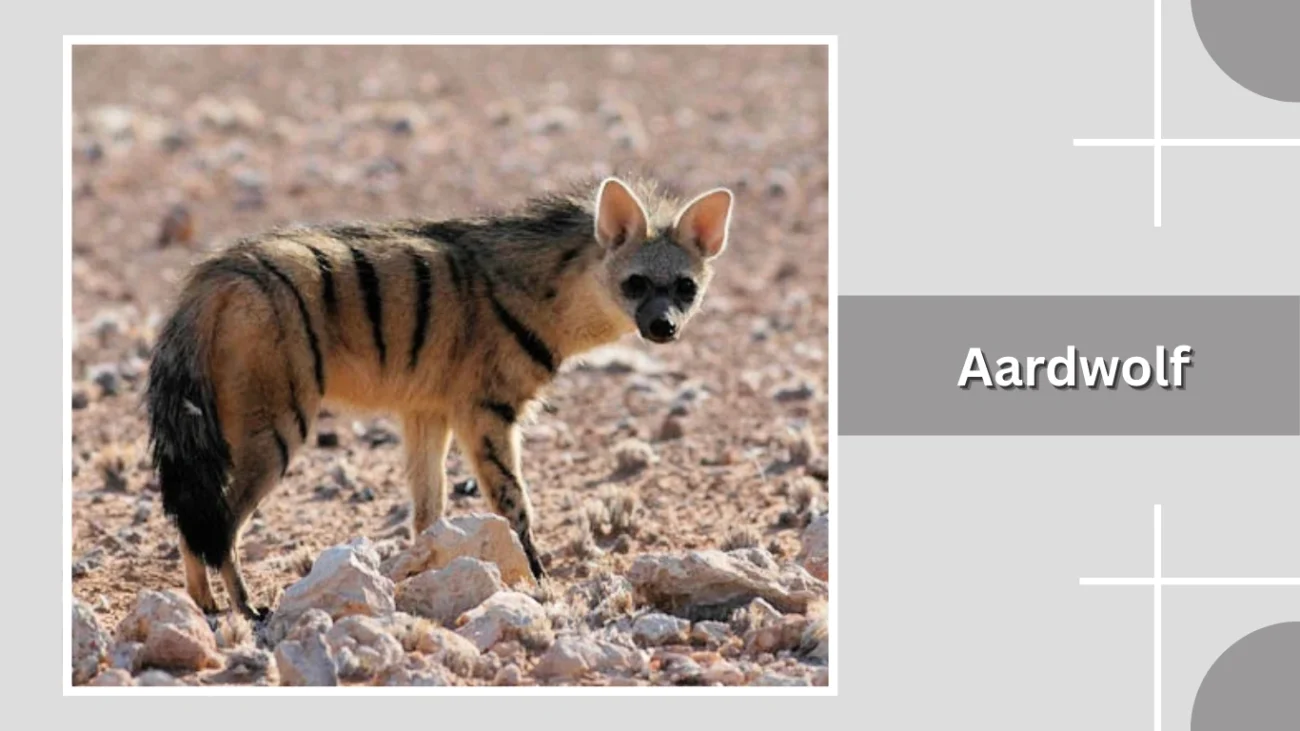
The Aardwolf is the smallest and most insect-specialized member of the hyena family. Unlike other hyenas, it does not hunt large prey or scavenge extensively. Instead, it feeds almost entirely on termites, using its long, sticky tongue to consume thousands in a single night. It is shy, nocturnal, and gentle in behavior.
Identification
- Light yellowish or sandy coat with bold black stripes
- Mane along the neck and back that can stand erect
- Slender muzzle with small, pointed ears
- Long, sticky tongue adapted for termite feeding
- Bushy tail with a dark tip
Size & Physical Traits
Aardwolves are small compared to other hyenas, weighing around 17–31 pounds and standing about 16–20 inches at the shoulder. They have delicate jaws and teeth because they do not crush bones. Their specialized molars are reduced, reflecting their insectivorous diet. Their large ears help detect termite activity during night foraging.
Range & Habitat
Aardwolves inhabit eastern and southern Africa, including Ethiopia, Kenya, Tanzania, Botswana, Namibia, and South Africa. They prefer dry grasslands, savannas, and open plains where termite mounds are abundant. They often use burrows—either self-dug or abandoned by other animals—for resting during the day.
Behavior & Diet
This species is strictly nocturnal and primarily solitary, except during the breeding season. A single aardwolf can consume up to 300,000 termites in a night, selectively feeding on specific species. They defend small territories through scent marking and raised-mane displays. Their gentle nature makes them the least aggressive of all hyenas.
5. Cave Hyena (Extinct)
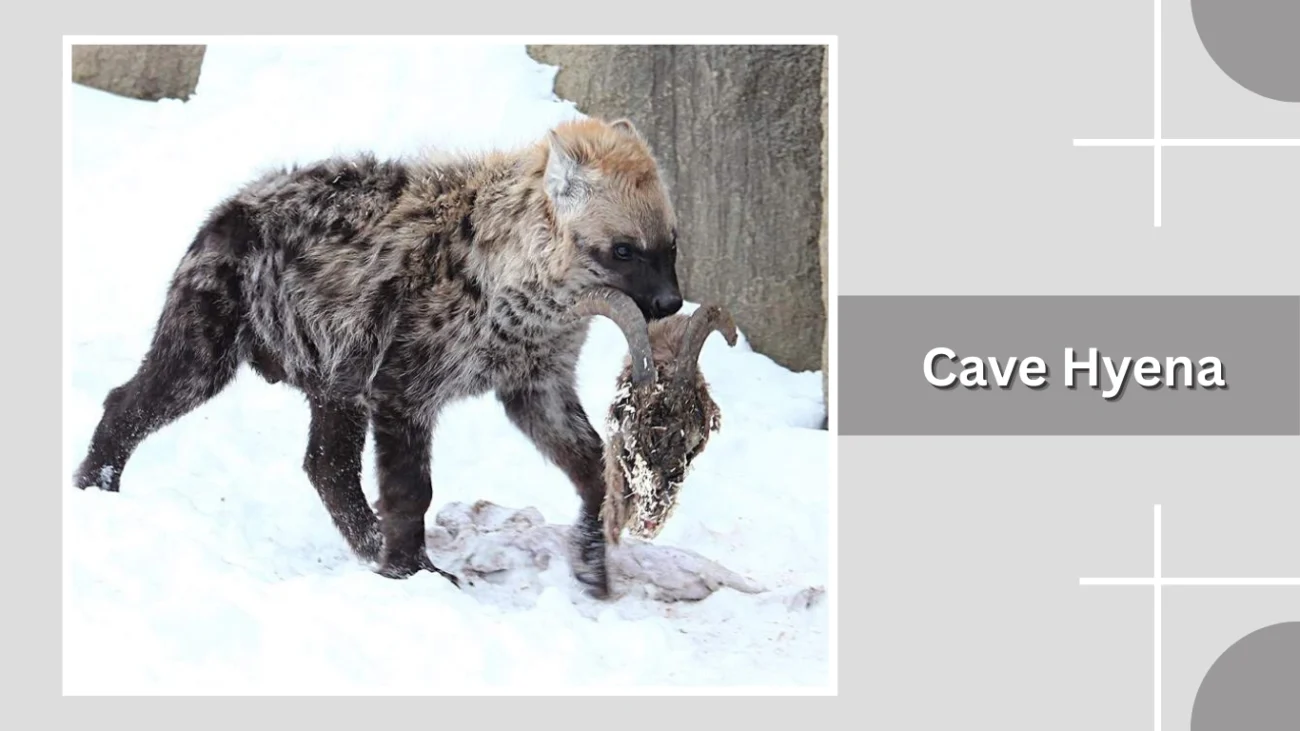
The Cave Hyena, also known as the Ice Age Spotted Hyena, was a powerful prehistoric subspecies that lived across Europe and Asia during the Pleistocene era. Larger and stockier than modern hyenas, it thrived in cold climates and was one of the dominant predators of Ice Age ecosystems before going extinct approximately 11,000 years ago.
Identification
- Robust body with thicker bones than modern hyenas
- Pale to yellowish coat with faint or dark spots
- Broad skull and extremely powerful jaws
- Slightly longer fur adapted to colder climates
- Large body size similar to—or bigger than—modern spotted hyenas
Size & Physical Traits
Cave hyenas were notably large, often exceeding the size of today’s spotted hyenas. They stood 30–38 inches at the shoulder and weighed between 175–225 pounds, with some individuals even larger. Their bones show adaptations for strength and endurance, enabling them to hunt megafauna and survive in harsh Pleistocene landscapes.
Range & Habitat
Their range covered much of Ice Age Europe and Asia, from Spain and France to Siberia and northern China. They lived in cold steppe environments, grasslands, tundra regions, and forested areas. The species is known for frequenting caves, which preserved their remains and gave them their common name.
Behavior & Diet
Cave hyenas lived in clans similar to modern spotted hyenas. They were apex predators and scavengers, feeding on mammoths, woolly rhinoceroses, horses, bison, and other Ice Age herbivores. Evidence from cave sites suggests coordinated hunting and long-term den usage. Their extinction is linked to climate change and the decline of large prey.
FAQs
1. Are hyenas more like cats or dogs?
Hyenas may look dog-like, but they are actually more closely related to cats. They belong to the suborder Feliformia, which also includes animals like lions, tigers, and mongooses. Their behavior and body structure, however, often resemble that of canines.
2. Which hyena species is the largest?
The Spotted Hyena is the largest living hyena species. Females are typically bigger than males and can weigh up to 190 pounds. Their powerful physiques and dominance behaviors make them top predators in their ecosystems.
3. Do hyenas really laugh?
Yes, especially Spotted Hyenas. Their “laugh” is a vocalization used for communication—often to signal excitement, social status, distress, or coordination within the clan. The pitch and pattern can convey different meanings.
4. Are hyenas dangerous to humans?
Hyenas generally avoid humans, but they can be dangerous if threatened or habituated to scavenging near people. Spotted Hyenas, being strong predators, pose the highest risk. Attacks are rare but possible in certain regions.
5. Why did the Cave Hyena go extinct?
The Cave Hyena disappeared around 11,000 years ago, likely due to climate warming after the last Ice Age and the decline of large prey species. Habitat changes and competition with early humans may have also contributed to their extinction.


