House sparrows may seem harmless at first, but when they begin nesting around homes, barns, or commercial buildings, they quickly turn into a persistent problem. These small birds reproduce rapidly, compete aggressively with native species, and often cause property damage through nesting and droppings. Many homeowners and farmers struggle to control sparrows without harming other birds or breaking wildlife laws. This guide explains how to get rid of sparrows safely, legally, and effectively using proven methods that focus on prevention, exclusion, and humane deterrence.
Identifying House Sparrows
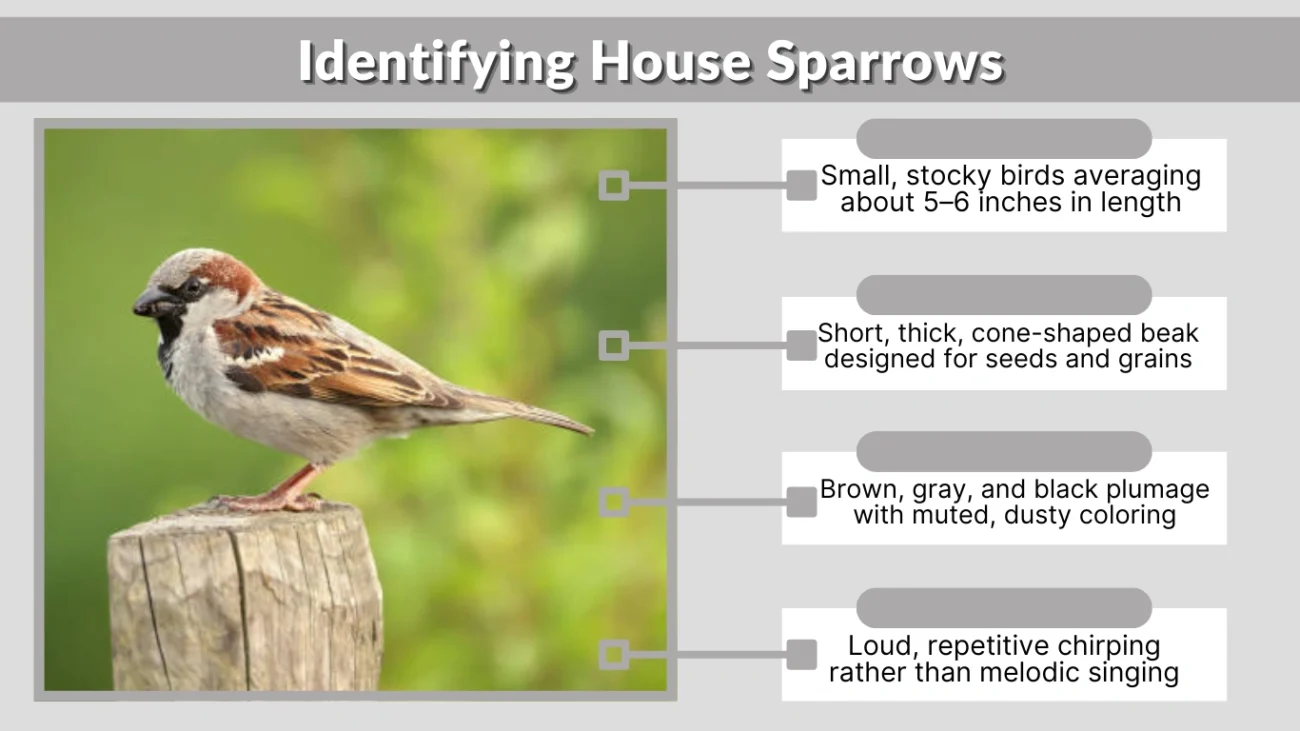
- Small, stocky birds averaging about 5–6 inches in length
- Short, thick, cone-shaped beak designed for seeds and grains
- Brown, gray, and black plumage with muted, dusty coloring
- Male house sparrows have a black throat “bib,” gray crown, and chestnut markings on the head
- Female house sparrows are plainer, light brown overall, with a pale stripe behind the eye
- Short tail and compact body compared to most native songbirds
- Loud, repetitive chirping rather than melodic singing
- Highly social birds often seen in groups or flocks
- Aggressive behavior toward other birds, especially around nesting sites
- Commonly nest in roof gaps, vents, eaves, barns, signs, and wall cavities
- Comfortable living close to humans in urban, suburban, and agricultural areas
Why Sparrows Are a Problem
House sparrows cause issues that go beyond simple annoyance. One of the most common problems is nesting damage. Sparrows build bulky nests using grass, feathers, paper, and debris, which can block vents, gutters, and drainage systems. In extreme cases, nests near exhaust vents or electrical fixtures can create fire hazards.
Sparrows are also highly territorial. They frequently attack and evict native birds such as bluebirds, swallows, and wrens, destroying eggs and chicks in the process. This aggressive behavior contributes to declining populations of protected native species.
Health and sanitation concerns are another issue. Sparrow droppings accumulate quickly around nesting and roosting sites, creating unpleasant odors and slippery surfaces. Nesting materials can harbor mites, lice, and bacteria, especially in enclosed areas like barns and attics. Because sparrows breed multiple times per year, small problems can escalate rapidly if left unaddressed.
Are You Allowed to Get Rid of Sparrows?
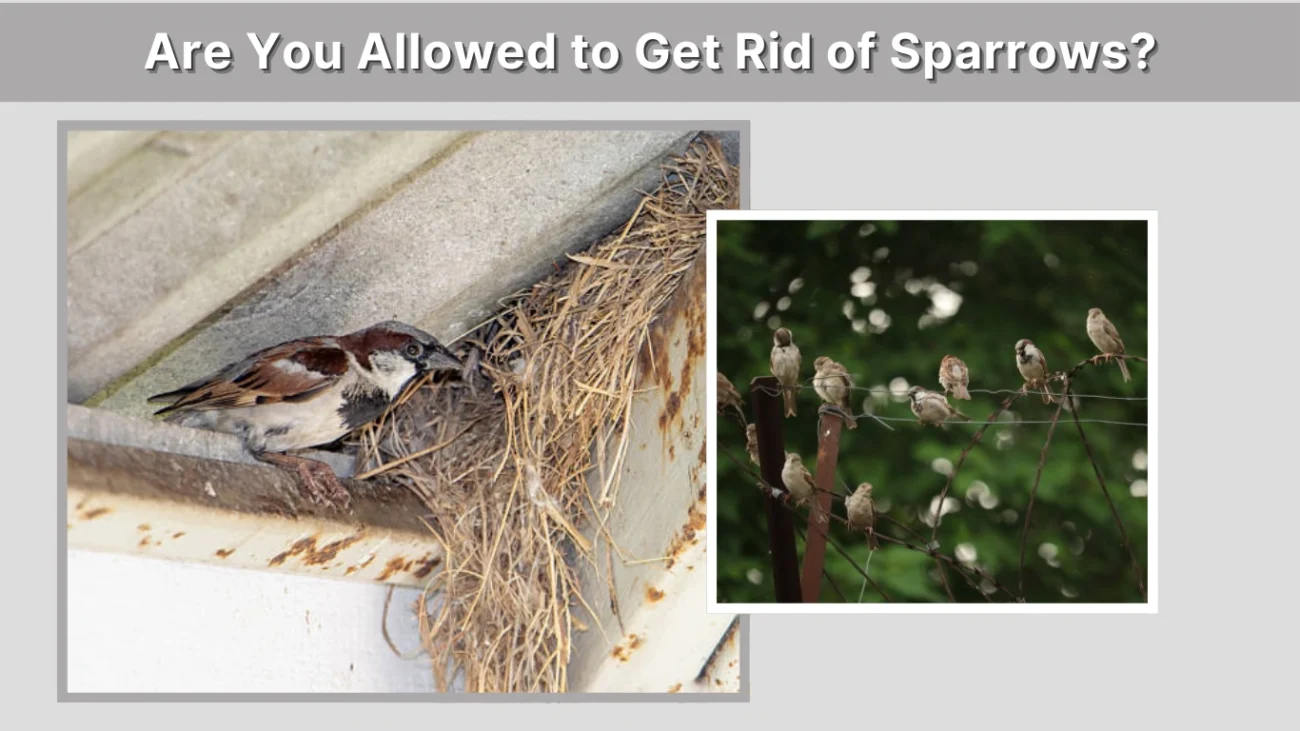
In many regions, house sparrows—also known as English sparrows—are classified as invasive species. In the United States, they are not protected under the Migratory Bird Treaty Act, which means control and removal are generally legal.
However, legality does not mean anything goes. Humane treatment laws still apply, and it is illegal to harm protected native birds or disturb their nests. This is why accurate identification is essential. Before implementing control measures, homeowners should also check local or regional regulations, as rules can vary by country or municipality.
The safest and most widely recommended approach is to focus on non-lethal methods such as exclusion, habitat modification, and deterrence.
How to Get Rid of Sparrows Naturally
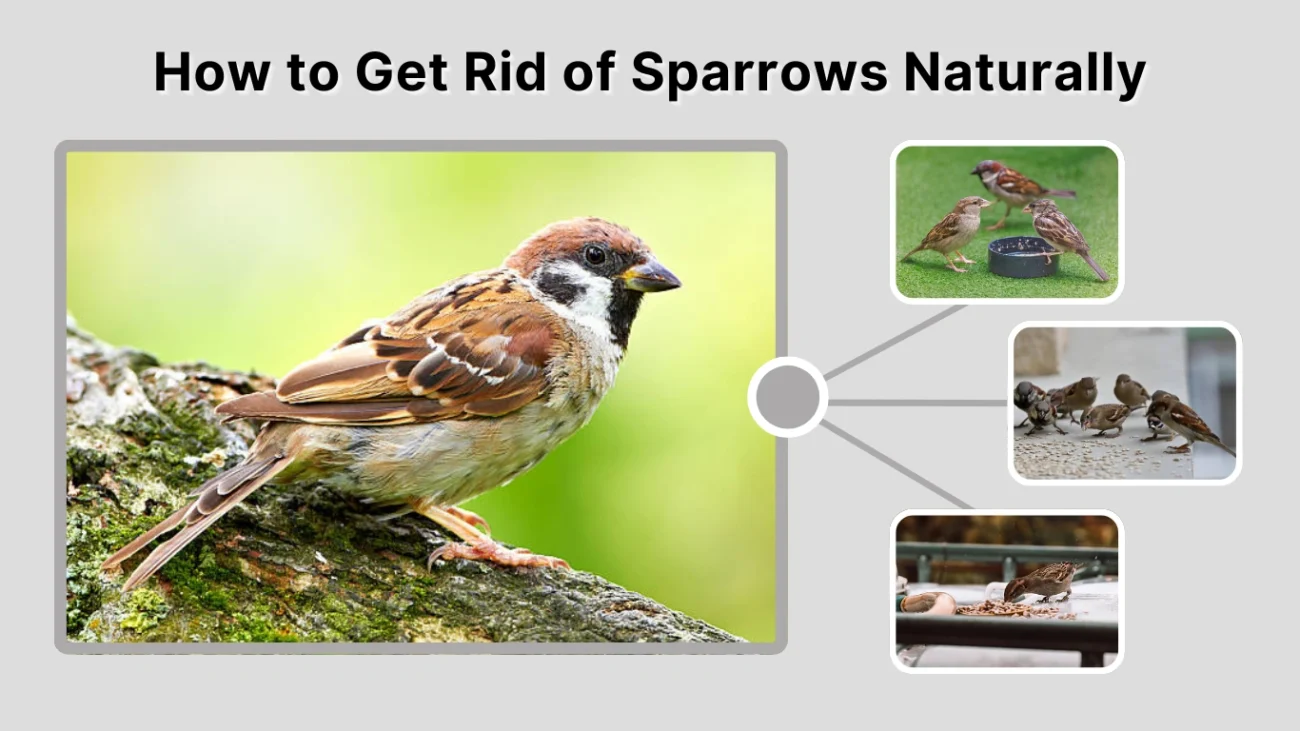
Natural and preventative methods are often the most effective long-term solution because they make areas less attractive to sparrows rather than attempting constant removal.
Habitat Modification
House sparrows stay where food, water, and shelter are easily available. Removing these resources can significantly reduce their presence.
Eliminate open food sources such as spilled grain, livestock feed, or uncovered trash. Bird feeders should be removed temporarily or replaced with sparrow-resistant designs. Water sources like shallow dishes or leaky faucets should be minimized near buildings.
Shelter reduction is equally important. Trim dense shrubs near structures and remove clutter that provides cover. Sparrows prefer locations where they can quickly retreat into hiding.
Nest Removal
Nest removal is an effective deterrent when done correctly. Sparrow nests should be removed as soon as they are discovered, especially during early construction stages. Repeated removal discourages birds from reusing the same site.
Timing matters. Removing nests early in the season prevents sparrows from establishing breeding territories. Always wear gloves and protective gear, as nests may contain parasites. After removal, seal the nesting cavity immediately to prevent rebuilding.
How to Get Rid of Sparrows Without Harming Other Birds
One of the biggest concerns homeowners have is eliminating sparrows without affecting beneficial or protected birds.
Species-Specific Deterrents
Visual deterrents such as reflective tape, spinning discs, and holographic objects can discourage sparrows when placed near nesting areas. These devices should be moved regularly to prevent birds from becoming accustomed to them.
Predator decoys can help temporarily, but they must be repositioned frequently to remain effective. Motion-activated deterrents are useful in targeted areas, such as entry points and ledges, without disrupting the wider environment.
Feeder and Yard Adjustments
If bird feeding is important, switch to feeders designed for clinging birds like finches while excluding sparrows. Place feeders away from buildings to draw desirable birds elsewhere while keeping sparrows from nesting near structures.
Getting Rid of Sparrows in Specific Locations
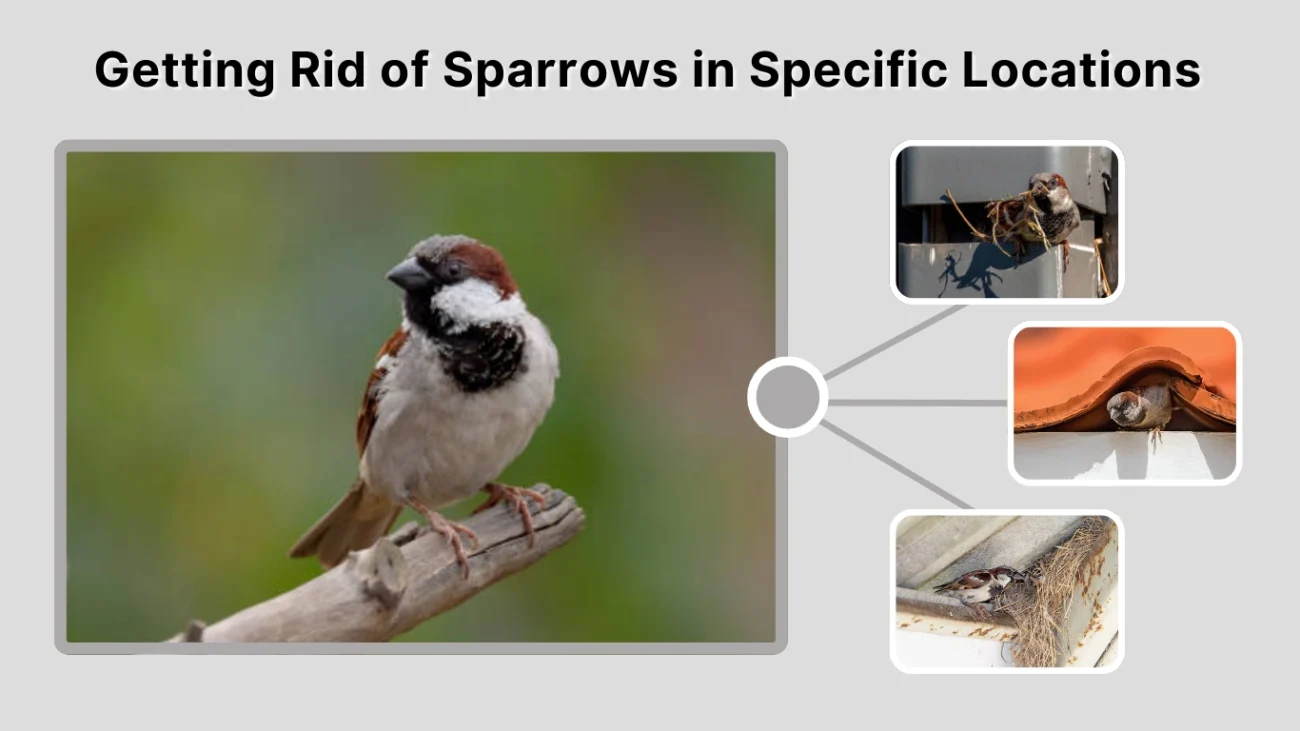
While general deterrents help, sparrow problems often persist in certain high-risk areas. Targeted solutions work best when tailored to the specific location where sparrows nest or roost.
How to Get Rid of Sparrows in a Barn
Barns provide everything sparrows need: shelter, food, and warmth. Grain spills and livestock feed are major attractants, so keeping feed in sealed containers is essential. Clean up excess grain daily to reduce food availability.
Sparrows often roost on rafters and ledges. Installing exclusion netting above feeding and animal areas prevents birds from accessing these spaces. Smooth surface covers or angled boards can also discourage roosting. Sealing gaps along roofing, siding, and beams prevents nesting before it starts.
How to Get Rid of Sparrows on a Porch or Roof
Porches and roofs are common nesting areas due to their protection from predators. Sparrows frequently build nests in eaves, vents, and roof gaps. Installing vent covers and sealing small openings eliminates access points.
Bird spikes placed on ledges, beams, and signs prevent sparrows from landing without causing harm. Sloped covers can also be effective on flat surfaces. Removing nests promptly and blocking the area immediately afterward is critical to prevent repeated nesting attempts.
How to Get Rid of Sparrows in Your Yard
In yards, sparrows are often drawn to ground feeding and dense vegetation. Reducing open feeding areas and trimming thick shrubs near buildings limits shelter and nesting opportunities.
Reflective deterrents placed near problem areas can help redirect sparrows away from patios, sheds, and fences. Adjusting feeder placement to areas farther from structures can allow desirable birds to feed while discouraging sparrows from lingering near buildings.
Do Sparrows Carry Diseases?
House sparrows can carry parasites such as mites and lice, which may spread to poultry, pets, or other birds. Their droppings can also harbor bacteria and fungi, particularly when allowed to accumulate in enclosed spaces like attics or barns.
Concerns about avian flu are common. While sparrows can carry avian diseases, transmission to humans is rare. The greater risk comes from prolonged exposure to droppings and nesting debris. Proper cleanup, ventilation, and protective gear greatly reduce any health risk.
Safe Cleanup Practices
Always wear gloves, a mask, and eye protection when removing nests or droppings. Lightly mist dry materials to prevent dust from becoming airborne. Dispose of debris in sealed bags and wash hands thoroughly after cleanup. Disinfect affected surfaces to reduce bacteria and odor.
Long-Term Sparrow Prevention Strategies
Long-term sparrow control depends on consistency. One-time solutions rarely work on their own. The most effective approach combines exclusion, habitat modification, and ongoing monitoring.
Inspect buildings at the start of each nesting season and repair small gaps before sparrows find them. Rotate deterrents periodically so birds do not become accustomed to them. Address food and water sources continuously, especially in agricultural settings.
Early intervention is key. Preventing sparrows from establishing nesting territories is far easier than removing an established population.
Common Mistakes to Avoid
Many sparrow problems persist due to avoidable mistakes. Ignoring early nesting signs allows birds to establish strong site loyalty. Using random or illegal control methods risks harming protected species and may lead to fines.
Another common mistake is relying on a single deterrent. Sparrows are highly adaptable and quickly learn to ignore static devices. A combination of strategies used consistently is far more effective.
FAQs
How do you get rid of sparrows permanently?
Permanent control requires removing food sources, sealing nesting sites, and using exclusion methods. Once sparrows can no longer access shelter or resources, they typically move elsewhere.
How do I get rid of sparrows without killing them?
Non-lethal methods such as nest removal, visual deterrents, habitat modification, and exclusion barriers are effective and humane when used consistently.
Why do sparrows keep coming back?
Sparrows return when food, water, and nesting sites remain available. Even a small unsealed gap can attract repeat nesting attempts.
Can sparrows damage buildings?
Yes. They can block vents, damage insulation, stain surfaces with droppings, and create fire hazards when nesting near exhaust systems.
Are house sparrows invasive?
House sparrows are considered invasive in many regions and aggressively displace native birds, which is why population control is legally permitted in many areas.