The white-crowned sparrow (Zonotrichia leucophrys) is a striking and familiar songbird across much of North America. Known for its bold black-and-white head pattern and clear whistled song, this sparrow is often spotted during migration in gardens, parks, and brushy areas. Although common, it is frequently confused with similar species such as the white-throated sparrow or even the house sparrow. Understanding its appearance, behavior, and seasonal movements makes identification much easier and reveals why the white-crowned sparrow is one of the most studied songbirds in the world.
What Is a White-crowned Sparrow?
The white-crowned sparrow is a medium-sized New World sparrow native to North America. Its scientific name, Zonotrichia leucophrys, refers to the bright white stripes on its crown. Unlike the invasive house sparrow, the white-crowned sparrow is a native species protected under the Migratory Bird Treaty Act.
This bird is especially well known to scientists because of its song-learning ability. Young birds learn their songs by listening to adults, and populations develop distinct regional dialects. Because of this, the white-crowned sparrow has played a major role in studies of bird behavior, communication, and learning.
White-crowned Sparrow Identification
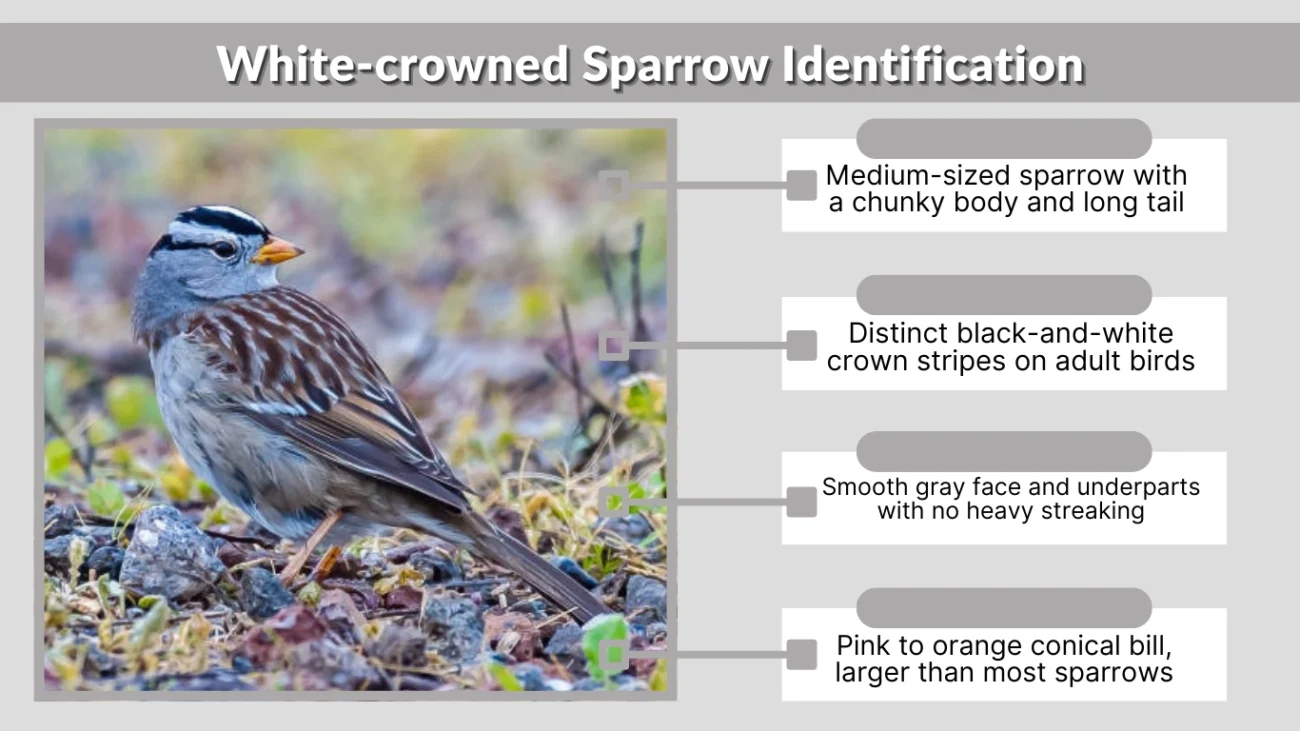
- Medium-sized sparrow with a chunky body and long tail
- Distinct black-and-white crown stripes on adult birds
- Juveniles show brown and tan crown stripes instead of black
- Smooth gray face and underparts with no heavy streaking
- Pink to orange conical bill, larger than most sparrows
- Yellow or white lores (between eye and bill), depending on subspecies
- Rounded wings with short, quick flights between shrubs
- Often seen hopping or scratching on the ground while foraging
Male vs Female White-crowned Sparrow
Male and female white-crowned sparrows look nearly identical, making visual sexing in the field extremely difficult. Both sexes share the same crown pattern, body coloration, and bill color.
Behavior offers the best clues. Males sing frequently during the breeding season to defend territory and attract mates, while females sing less often. Aside from these behavioral differences, size and plumage differences are subtle and usually not noticeable without close measurement.
Juvenile and Immature White-crowned Sparrows
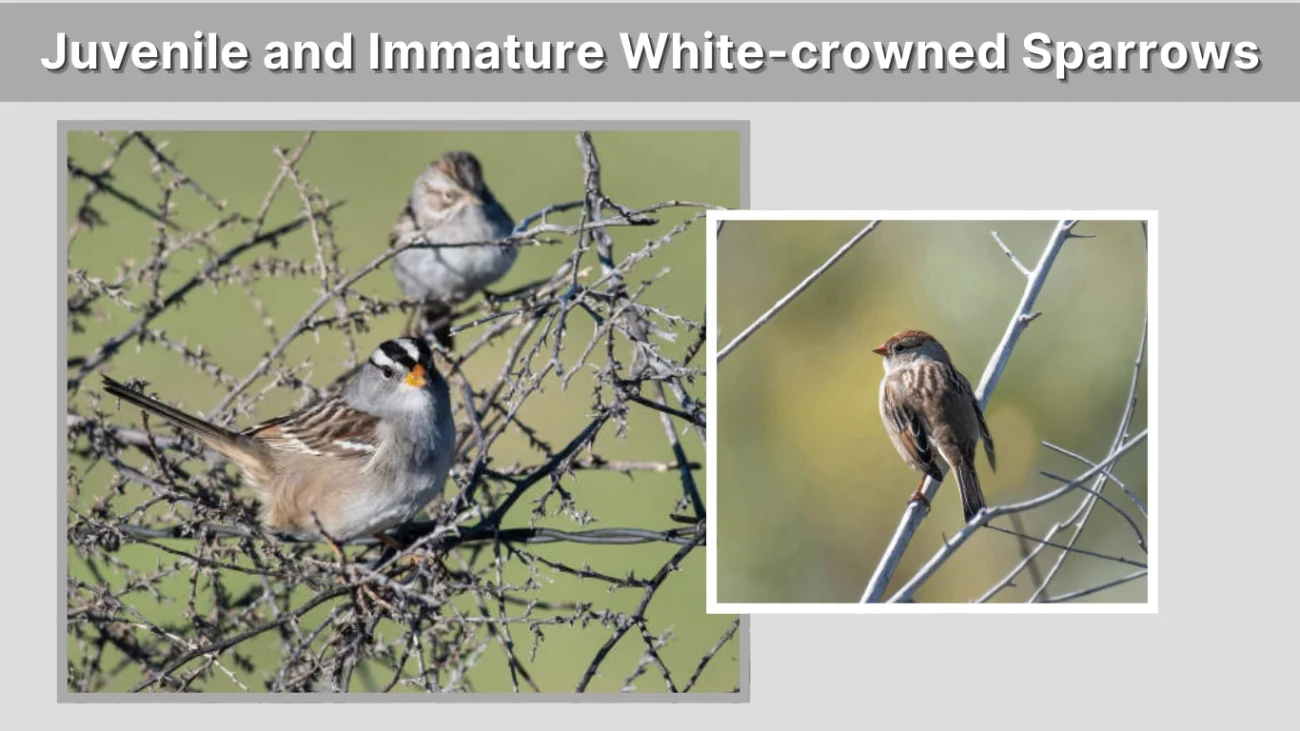
Juvenile white-crowned sparrows are commonly mistaken for other sparrow species. Instead of black-and-white stripes, young birds have warm brown and buff-colored crown stripes. Their overall appearance is softer and less contrasting than adults.
As juveniles mature, the crown pattern gradually changes, with darker stripes appearing over time. This transition period is one reason white-crowned sparrows are often misidentified during late summer and early fall.
White-crowned Sparrow Song and Call
Song Characteristics
The song of the white-crowned sparrow is one of its most distinctive traits. It usually begins with a series of clear, whistled notes followed by a buzzy or trilled ending. The song is slow, bright, and easy to hear, often delivered from an exposed perch.
Calls are softer and include short chirps and contact notes used to communicate within flocks.
Song Learning and Dialects
Unlike many birds that are born knowing their songs, white-crowned sparrows must learn them. Young males memorize songs from nearby adults during a critical learning period. This leads to regional dialects, where birds from different areas sing noticeably different versions of the same song.
These dialects have made the white-crowned sparrow a key species for studying how animals learn and transmit vocal behavior.
White-crowned Sparrow Behavior
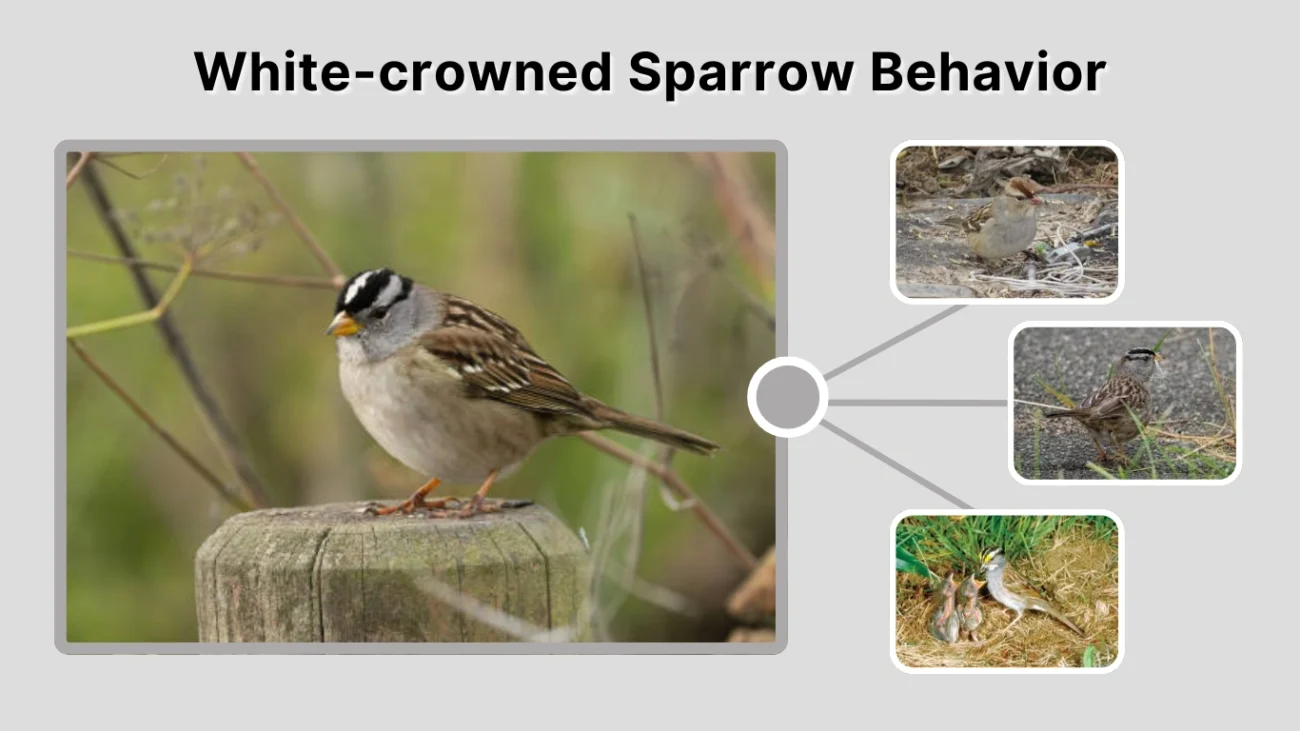
White-crowned sparrows are primarily ground foragers. They hop or walk while searching for food, often scratching leaf litter with both feet at once. Outside the breeding season, they form loose flocks, sometimes mixed with other sparrow species.
During the breeding season, males become territorial and actively defend nesting areas. Despite this, white-crowned sparrows are generally less aggressive than invasive species like the house sparrow.
Habitat
White-crowned sparrows prefer open or semi-open habitats with dense low vegetation. They are commonly found along woodland edges, brushy fields, hedgerows, and shrublands. During migration, they readily visit urban parks, gardens, and backyard feeding areas.
In the breeding season, many populations move to northern or high-elevation habitats, including tundra and alpine regions, where shrubs provide nesting cover.
Range and Distribution
The white-crowned sparrow has one of the broadest ranges of any North American sparrow. It breeds across much of northern Canada, Alaska, and parts of the northern and western United States. Some populations also nest at high elevations in mountainous regions farther south.
During migration, white-crowned sparrows can be seen across most of the continental United States. In winter, they move into the southern U.S., Mexico, and coastal regions where food is more readily available. Because of this wide seasonal movement, they are familiar birds to many people even though they do not stay in one place year-round.
Migration
Do White-crowned Sparrows Migrate?
Yes, most white-crowned sparrows are strongly migratory. They travel long distances between breeding and wintering grounds, often following similar routes each year. Migration allows them to take advantage of abundant summer resources in northern regions while avoiding harsh winter conditions.
Some subspecies, particularly those along the Pacific Coast, are partial migrants or remain in the same area year-round.
When Do White-crowned Sparrows Migrate?
Spring migration typically begins in March and continues through May. Fall migration occurs from September through November, with timing varying depending on latitude and subspecies. During these periods, white-crowned sparrows frequently appear at backyard feeders and in urban green spaces.
Nesting and Breeding
Nesting Habits
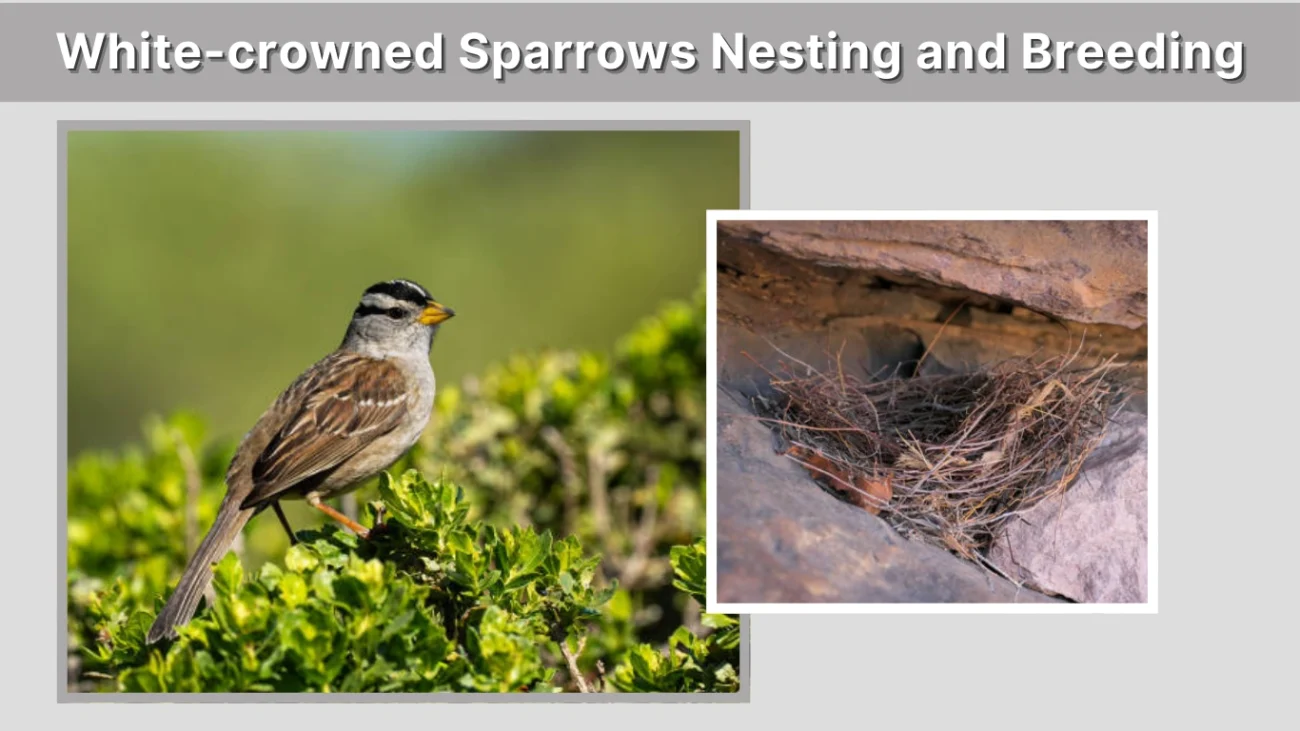
White-crowned sparrows usually place their nests on or near the ground. Nests are often hidden at the base of shrubs, grasses, or low bushes, providing protection from predators and harsh weather. The nest itself is a well-constructed cup made from grasses, bark strips, moss, and hair.
Eggs
The eggs of the white-crowned sparrow are pale blue-green or bluish with brown or reddish speckles. A typical clutch contains three to five eggs.
Breeding Cycle
The female incubates the eggs for about 12 to 14 days. After hatching, both parents help feed the nestlings. Young birds usually fledge about 9 to 11 days after hatching but remain dependent on their parents for a short time afterward.
What Do White-crowned Sparrows Eat?
Diet in the Wild
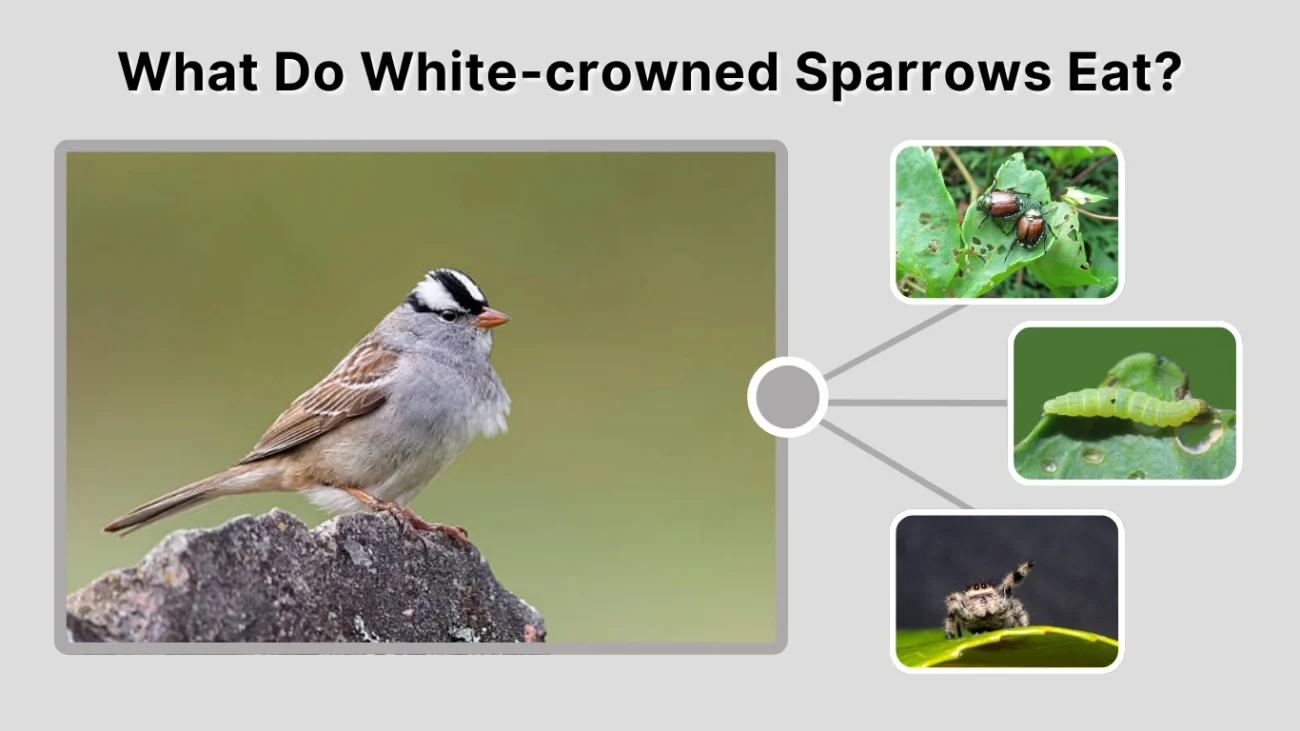
White-crowned sparrows eat a varied diet that changes with the seasons. Seeds and grains make up the bulk of their food, especially outside the breeding season. During spring and summer, insects such as beetles, caterpillars, and spiders become an important protein source for adults and growing chicks.
They also consume berries and other plant material when available.
Feeding Behavior
These sparrows feed primarily on the ground, hopping and scratching through leaf litter. During migration and winter, they may visit bird feeders, particularly those offering millet or cracked corn. Unlike more aggressive species, they tend to feed quietly and avoid confrontation.
Predators and Threats
White-crowned sparrows face predation from a variety of animals, including hawks, owls, snakes, and small mammals. Domestic cats pose a significant threat, especially in urban and suburban areas.
Habitat loss due to development and changes in land use can also impact populations. However, their wide range and adaptability have helped keep overall numbers stable.
Lifespan
The average lifespan of a white-crowned sparrow in the wild is about four to six years. Many individuals do not survive their first year, but those that do can live several years if conditions are favorable. Longevity depends on factors such as food availability, predation pressure, and weather.
White-crowned Sparrow vs White-throated Sparrow
White-crowned sparrows are often confused with white-throated sparrows. Both species have black-and-white head patterns, but key differences make identification easier. White-throated sparrows have a bright white throat patch and a yellow spot between the eye and bill, while white-crowned sparrows have plain gray throats.
Their songs also differ. The white-throated sparrow is known for its “Oh-sweet-Canada” song, while the white-crowned sparrow sings a series of clear whistles followed by a trill.
White-crowned Sparrow vs House Sparrow
Unlike the native white-crowned sparrow, the house sparrow is a non-native, invasive species. House sparrows are stockier, have shorter tails, and lack the bold crown stripes seen on white-crowned sparrows.
Behaviorally, white-crowned sparrows are generally peaceful and ground-oriented, while house sparrows are aggressive and closely tied to human structures.
Are White-crowned Sparrows Invasive or Rare?
White-crowned sparrows are neither invasive nor rare. They are native to North America and remain widespread with stable populations. They are protected by federal law, and harming them or their nests is illegal without proper permits.
FAQs
What do white-crowned sparrows eat?
White-crowned sparrows primarily eat seeds and grains, especially outside the breeding season. During spring and summer, they also consume insects such as beetles, caterpillars, and spiders, which provide important protein for adults and nestlings.
Do white-crowned sparrows migrate?
Yes, most white-crowned sparrows are migratory. They breed in northern regions of North America and migrate south for winter, typically traveling between March–May in spring and September–November in fall.
How can you tell a juvenile white-crowned sparrow?
Juvenile white-crowned sparrows lack the bold black-and-white crown of adults. Instead, they have brown and tan head stripes and a softer, less contrasting overall appearance.
Are white-crowned sparrows rare or invasive?
No, white-crowned sparrows are neither rare nor invasive. They are native to North America, have stable populations, and are protected under the Migratory Bird Treaty Act.
What is the difference between a white-crowned sparrow and a white-throated sparrow?
White-crowned sparrows have plain gray throats and bold crown stripes, while white-throated sparrows have a bright white throat patch and a distinctive yellow spot between the eye and bill.