










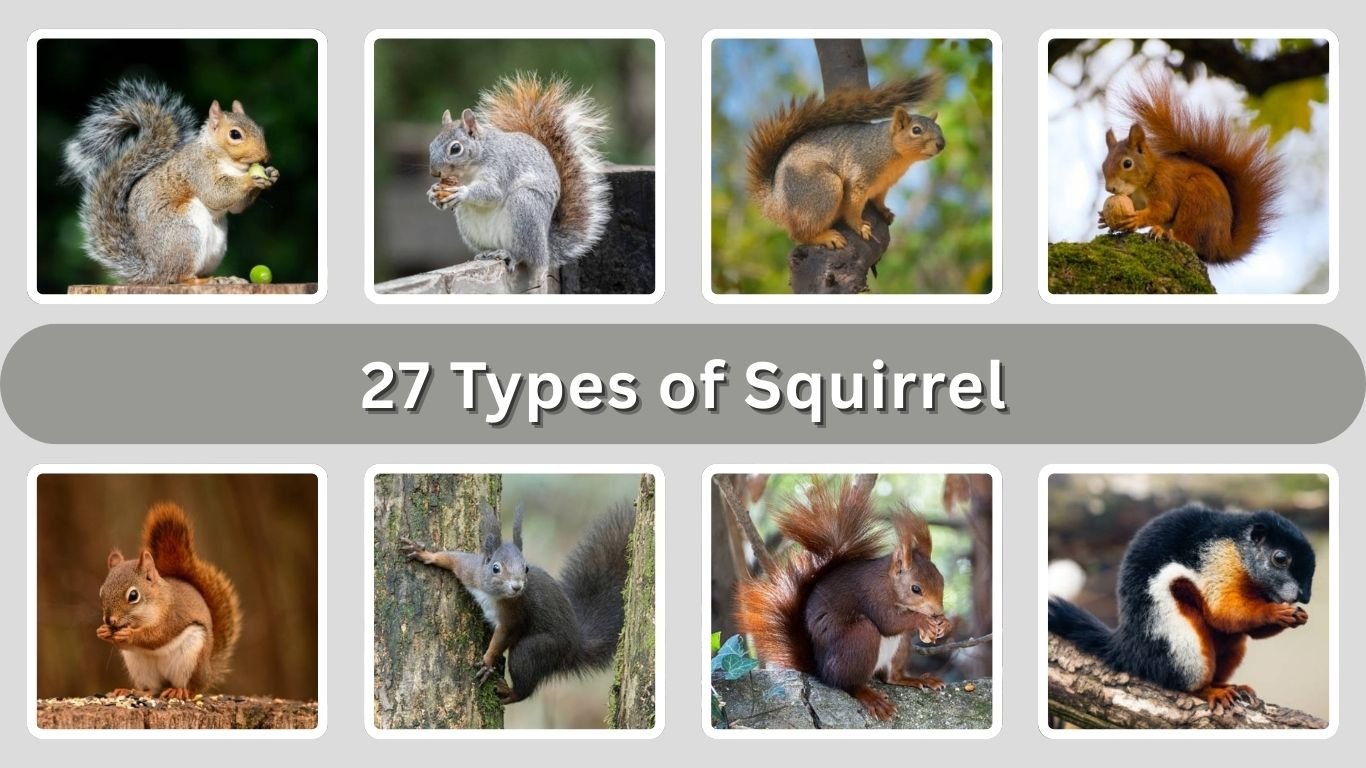
Squirrels are highly adaptable mammals found across forests, mountains, grasslands, and even busy cities. With over 280 recognized species worldwide, they range from tiny pygmy squirrels to large, colorful giant squirrels and cold-adapted ground squirrels. Known for their quick movements, sharp senses, and food-storing habits, squirrels play a major role in natural ecosystems. They help spread seeds, support forest regeneration, and serve as an important part of the food chain in many environments around the world.
1. Eastern Gray Squirrel (Sciurus carolinensis)
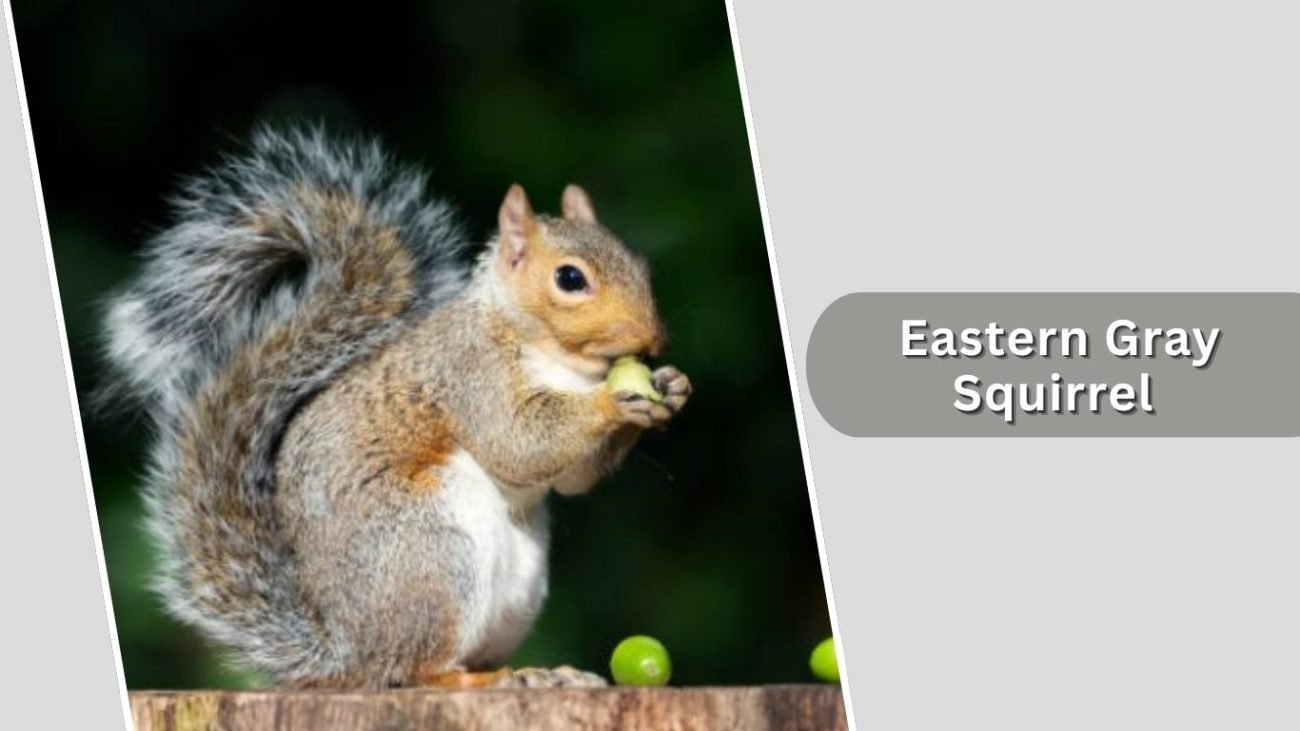
The Eastern gray squirrel is one of the most familiar squirrel species in the world, widely seen in forests, parks, and urban areas. Native to eastern North America, it is highly adaptable and intelligent, known for its tree-climbing ability, food-caching behavior, and bushy tail used for balance, warmth, and communication.
Identification
- Medium-sized tree squirrel with a body length of about 23–30 cm
- Fur is mostly gray with white or pale underparts
- Large, bushy tail often edged with white hairs
- Sharp curved claws for climbing and gripping bark
- Strong hind legs for jumping between branches
- Black, dark brown, or white color forms can also occur
Habitat
Eastern gray squirrels live mainly in deciduous and mixed forests, especially areas rich in oak, hickory, beech, and walnut trees. They are also extremely common in city parks, gardens, farmlands, and suburban neighborhoods. They prefer habitats with tall trees for nesting and open ground for foraging.
Behaviors
This species is active during the day, especially in early morning and late afternoon. Eastern gray squirrels are excellent climbers and jumpers, often seen running along branches or tree trunks. They build leafy nests called dreys or use tree cavities. Food caching is a major behavior, helping forests regenerate by spreading seeds.
Diet and lifecycle
Eastern gray squirrels are omnivores. Their diet mainly includes acorns, nuts, seeds, fruits, buds, and fungi, but they also eat insects, bird eggs, and occasionally small animals. Breeding usually occurs twice a year. Females give birth to 2–4 blind, hairless babies. Young squirrels begin exploring outside the nest at about 7–8 weeks and reach maturity within one year.
2. Western Gray Squirrel (Sciurus griseus)
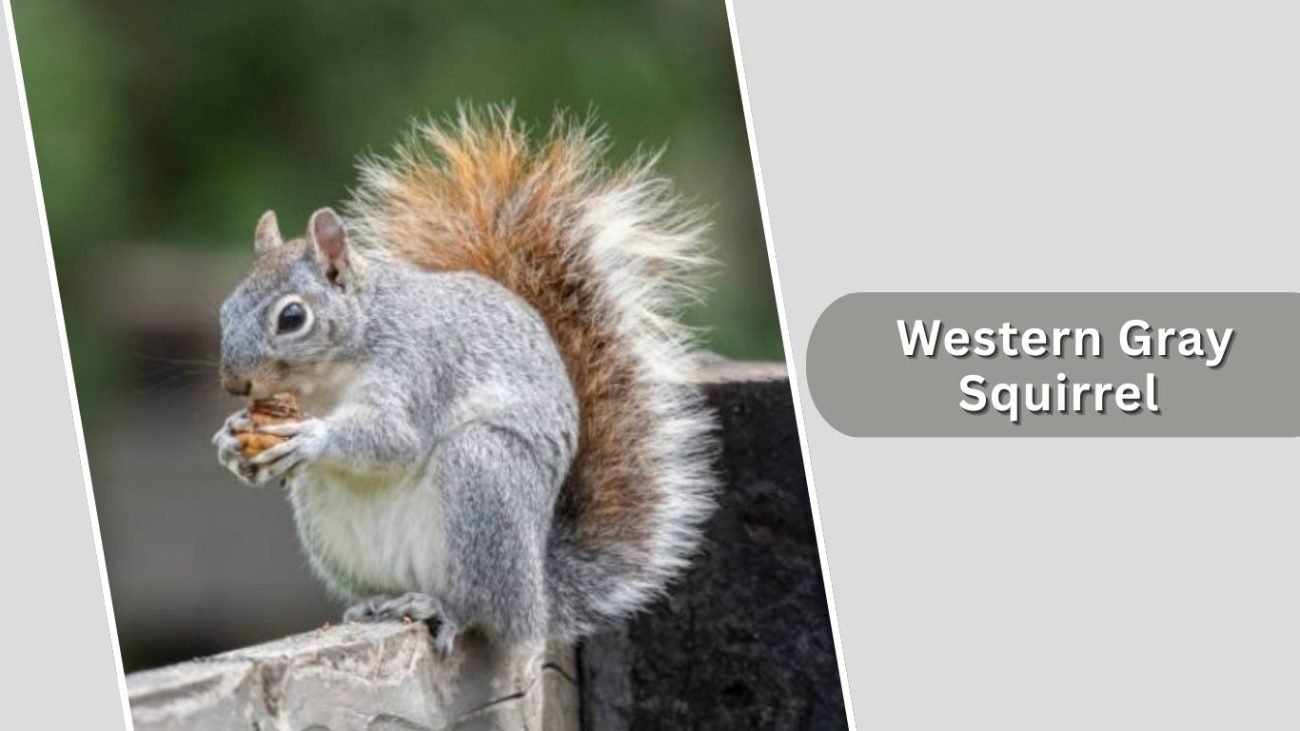
The Western gray squirrel is a large, elegant tree squirrel native to the western United States. It is known for its silver-gray fur, long fluffy tail, and strong association with oak and pine forests. Compared to many urban squirrels, this species is more shy and is usually found in quieter woodland habitats.
Identification
- Large tree squirrel with a body length of about 25–30 cm
- Fur is pale gray to silvery on the back, with white underparts
- Very long, thick, bushy tail with a frosted appearance
- Head appears broad with large, dark eyes
- Strong hind legs adapted for long leaps
- Sharp claws for climbing tall trees
Habitat
Western gray squirrels mainly live in oak woodlands, pine forests, and mixed conifer forests. They are especially common in areas with oak, ponderosa pine, and madrone trees. This species prefers dry, open forests with tall trees for nesting and plenty of nuts for food. Unlike eastern gray squirrels, they are less common in cities and large urban parks.
Behaviors
These squirrels are active during daylight hours, especially in the morning and late afternoon. They are excellent climbers and spend much of their time in trees, but they also forage on the ground. Western gray squirrels build large leaf nests or use hollow trees. They are cautious by nature and often freeze or hide when disturbed.
Diet and lifecycle
Their diet mainly consists of acorns, pine nuts, seeds, berries, fungi, and green plant material. They also eat buds and occasionally insects. Breeding usually occurs once or twice a year. Females give birth to 2–5 young after about a 44-day gestation period. The young are weaned around two months and become independent soon after, reaching maturity within their first year.
3. Fox Squirrel (Sciurus niger)
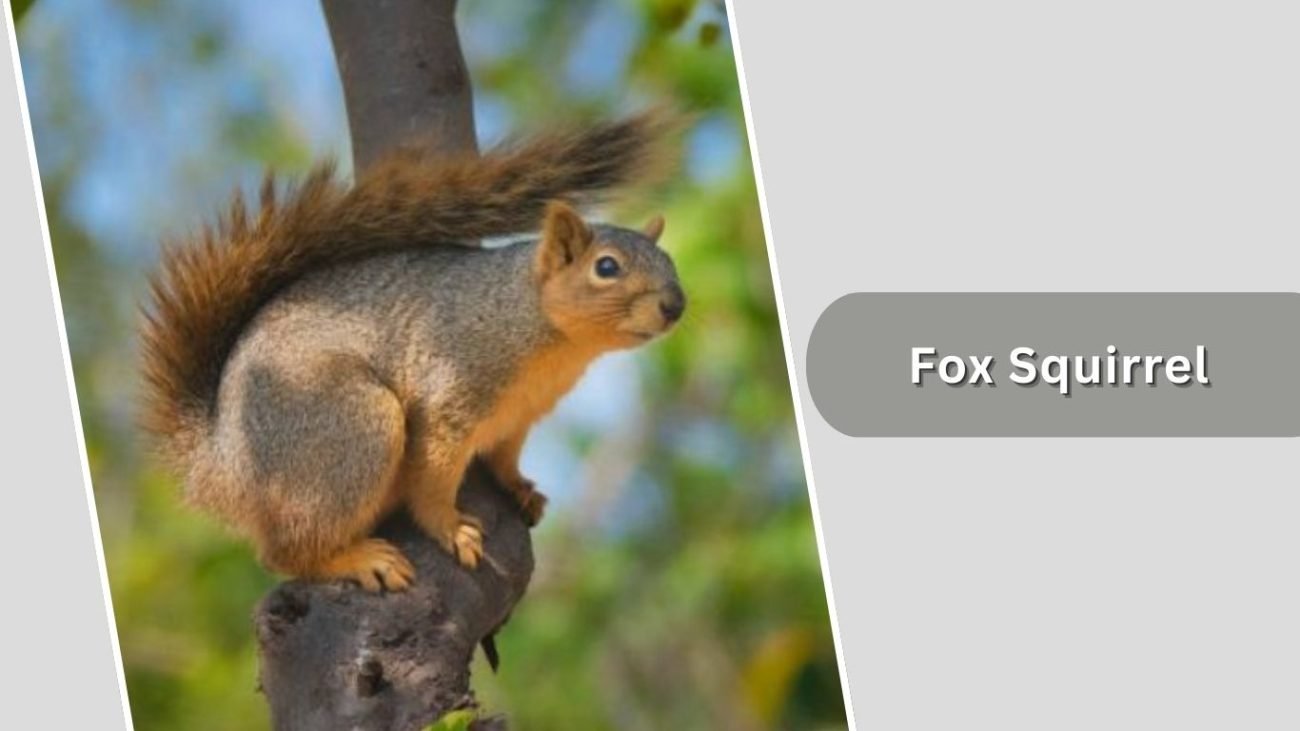
The fox squirrel is the largest tree squirrel native to North America and is well known for its bold behavior and variable fur colors. It is commonly seen in open woodlands, farmlands, and city parks. This species is highly adaptable and often thrives near human settlements.
Identification
- Very large tree squirrel with a body length of about 25–30 cm
- Fur color varies widely: reddish-brown, gray, black, or mixed patterns
- Underside usually yellowish, orange, or rusty
- Long, thick, bushy tail often darker toward the tip
- Strong, muscular body with powerful hind legs
- Large ears without prominent tufts
Habitat
Fox squirrels live in open forests, oak savannas, river bottoms, farmland edges, and urban parks. They prefer areas with scattered large trees rather than dense forests. This species adapts well to human environments and is often found in gardens, campuses, and suburban neighborhoods.
Behaviors
They are active during the day and spend time both in trees and on the ground. Fox squirrels are less nervous than many other squirrels and may allow closer human approach. They are skilled climbers but often forage on the ground for nuts and seeds. They build leaf nests or use tree cavities for shelter.
Diet and lifecycle
Fox squirrels mainly eat acorns, hickory nuts, walnuts, seeds, fruits, buds, and fungi. They also consume insects, bird eggs, and corn in agricultural areas. Breeding usually happens twice a year. Females give birth to 2–4 young after about 44 days. The young open their eyes around five weeks and become independent in about three months.
4. Red Squirrel (Sciurus vulgaris)
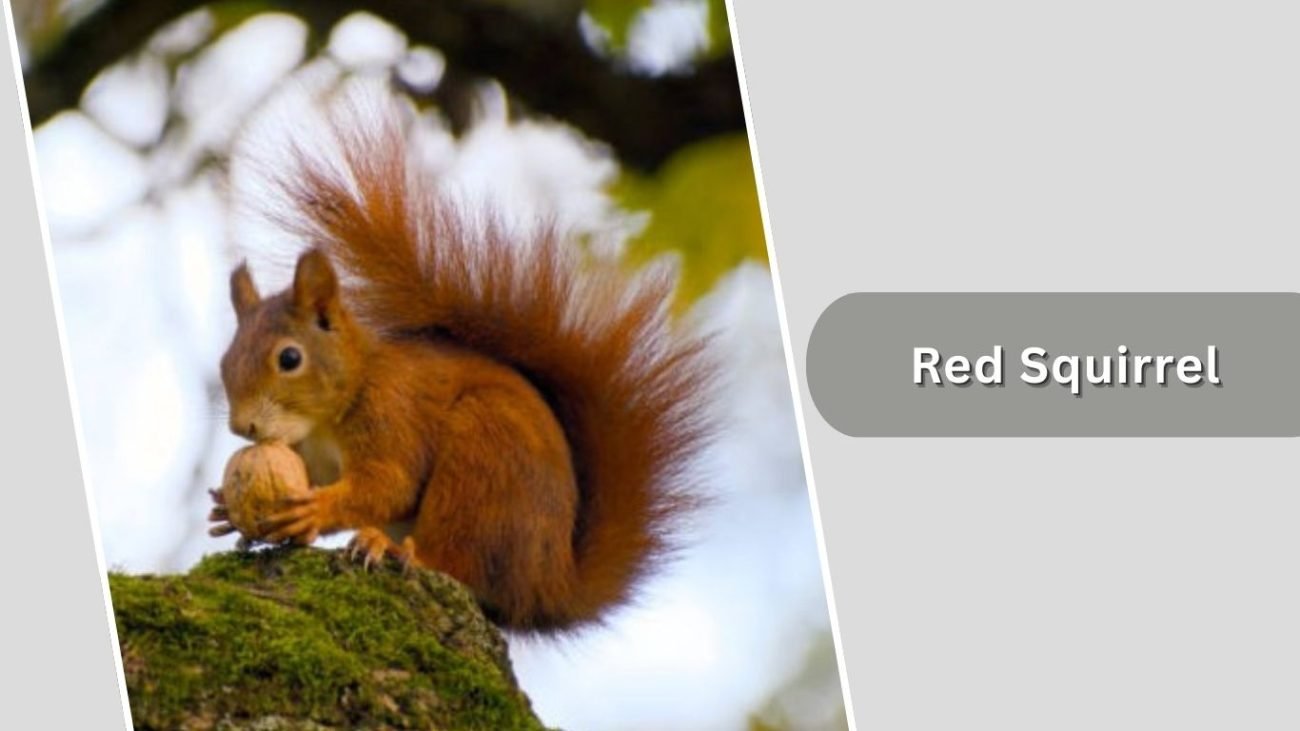
The red squirrel is a small, fast-moving tree squirrel native to Europe and parts of northern Asia. It is famous for its bright reddish coat, ear tufts, and energetic behavior. This species is highly agile and spends most of its life in trees, especially in conifer and mixed forests.
Identification
- Small to medium-sized squirrel with a slim body
- Fur usually reddish, chestnut, or rusty brown; can turn darker in winter
- White or cream-colored underside
- Long, bushy tail often matching body color
- Distinct ear tufts, especially visible in winter
- Sharp curved claws for climbing
Habitat
Red squirrels live mainly in coniferous forests, mixed woodlands, and mountain forests. They are strongly associated with pine, spruce, fir, and larch trees. They may also inhabit parks and large gardens near forests, but they prefer quieter, tree-rich environments.
Behaviors
This species is active during the day and is extremely agile in the treetops. Red squirrels are territorial and often defend food stores. They communicate using sharp calls and tail movements. They build spherical nests of twigs and moss, called dreys, or live in tree hollows.
Diet and lifecycle
Red squirrels feed mainly on pine seeds, spruce cones, nuts, berries, buds, and fungi. They also eat insects, bird eggs, and occasionally small vertebrates. Breeding usually occurs in late winter and summer. Females give birth to 2–5 young, which become independent after about 8–10 weeks.
5. American Red Squirrel (Tamiasciurus hudsonicus)
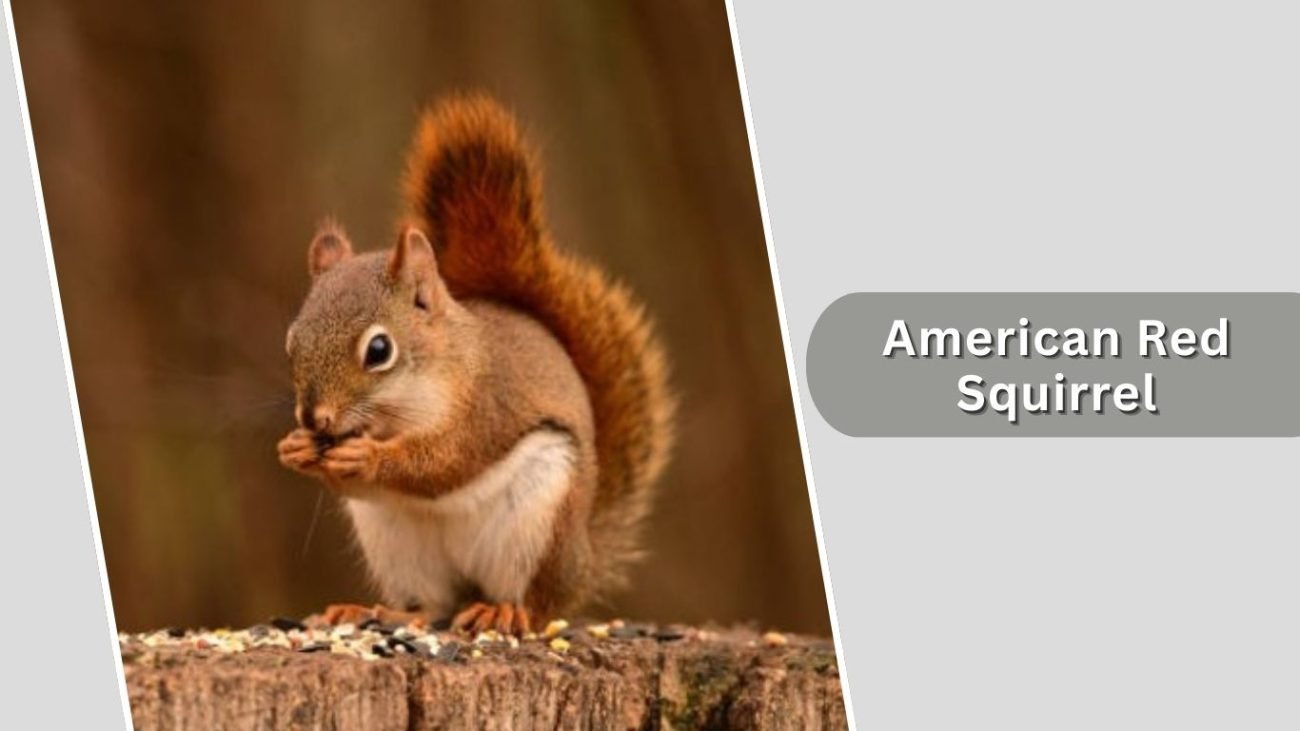
The American red squirrel is a small but highly energetic tree squirrel native to North America. It is well known for its loud, chattering calls and strong territorial behavior. This species is commonly seen in conifer forests, where it actively defends food stores called middens.
Identification
- Small, compact squirrel with a slender build
- Fur is reddish-brown on the back with grayish sides
- White or pale belly
- Distinct dark stripe along each side of the body
- Bushy tail often edged with black and white hairs
- Ear tufts sometimes visible, especially in winter
Habitat
American red squirrels mainly inhabit coniferous and mixed forests, especially spruce, pine, and fir woodlands. They are also found in mountain forests and wooded suburban areas. This species prefers habitats with dense tree cover and abundant cone-producing trees.
Behaviors
They are extremely active and vocal, often producing rapid chattering or scolding sounds. American red squirrels are strongly territorial and aggressively defend their feeding areas. They spend much of their time climbing trees, harvesting cones, and storing food in central piles known as middens.
Diet and lifecycle
Their diet consists mainly of seeds from pine and spruce cones, nuts, berries, buds, fungi, and occasionally insects and bird eggs. Breeding usually occurs once or twice a year. Females give birth to 3–5 young after about a 35-day gestation period. Young squirrels leave the nest at around seven weeks and mature within one year.
6. Eurasian Red Squirrel (Sciurus vulgaris)
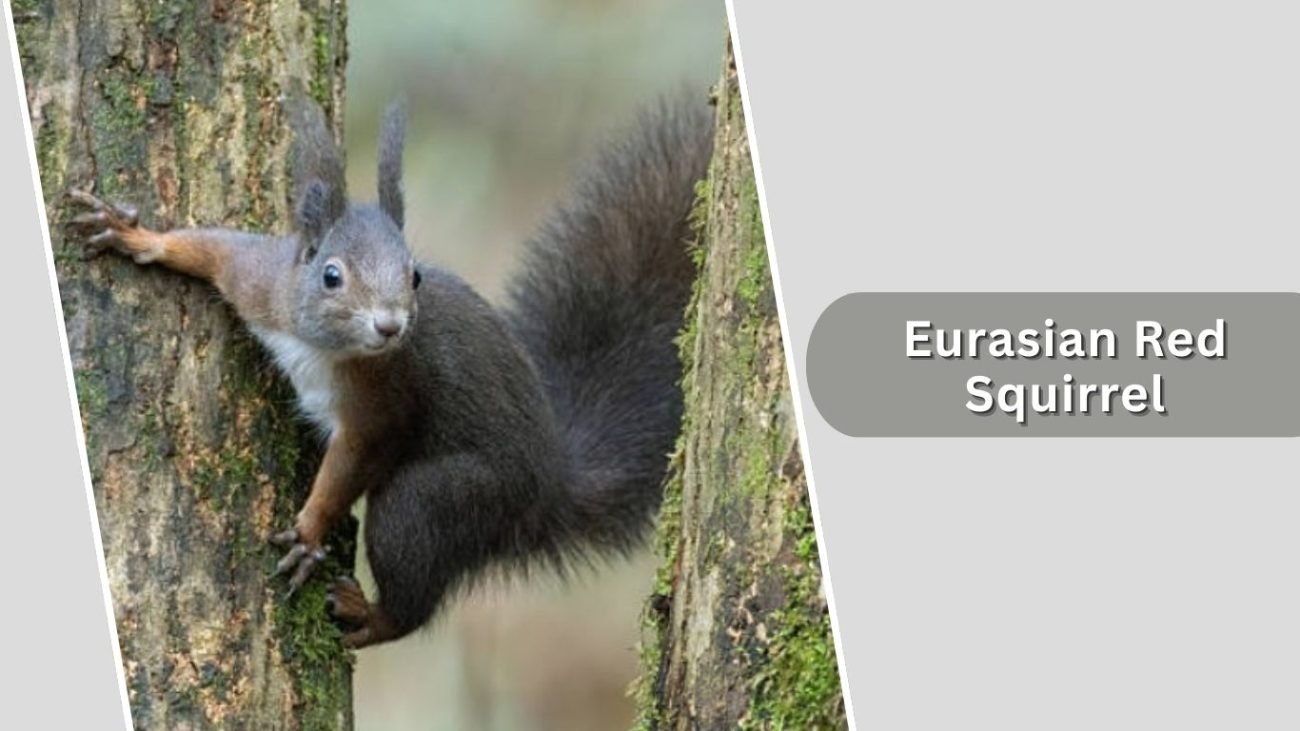
The Eurasian red squirrel is a widely distributed tree squirrel found across Europe and northern Asia. It is famous for its reddish coat, ear tufts, and agile movements in forest canopies. This species plays an important role in forest ecosystems by spreading seeds and fungal spores.
Identification
- Small to medium-sized squirrel with a slender body
- Fur color ranges from red and chestnut to dark brown or almost black
- White or cream-colored underside
- Long, bushy tail often the same color as the body
- Prominent ear tufts, especially in winter
- Sharp claws adapted for tree climbing
Habitat
Eurasian red squirrels live in coniferous forests, mixed woodlands, and mountain forests. They are especially common in pine, spruce, and fir habitats but also occupy deciduous forests with oak and beech trees. They sometimes live in large parks and forested urban areas.
Behaviors
They are active during the day and are excellent climbers and jumpers. Eurasian red squirrels are usually solitary and defend feeding territories. They communicate through vocal calls and tail signals. Nests are built high in trees using twigs, moss, and leaves.
Diet and lifecycle
Their diet mainly includes pine seeds, cones, nuts, berries, buds, fungi, and occasionally insects and bird eggs. Breeding can occur up to twice a year. Females typically give birth to 2–6 young. Juveniles begin exploring outside the nest after about seven weeks and become independent soon after.
7. Douglas Squirrel (Tamiasciurus douglasii)
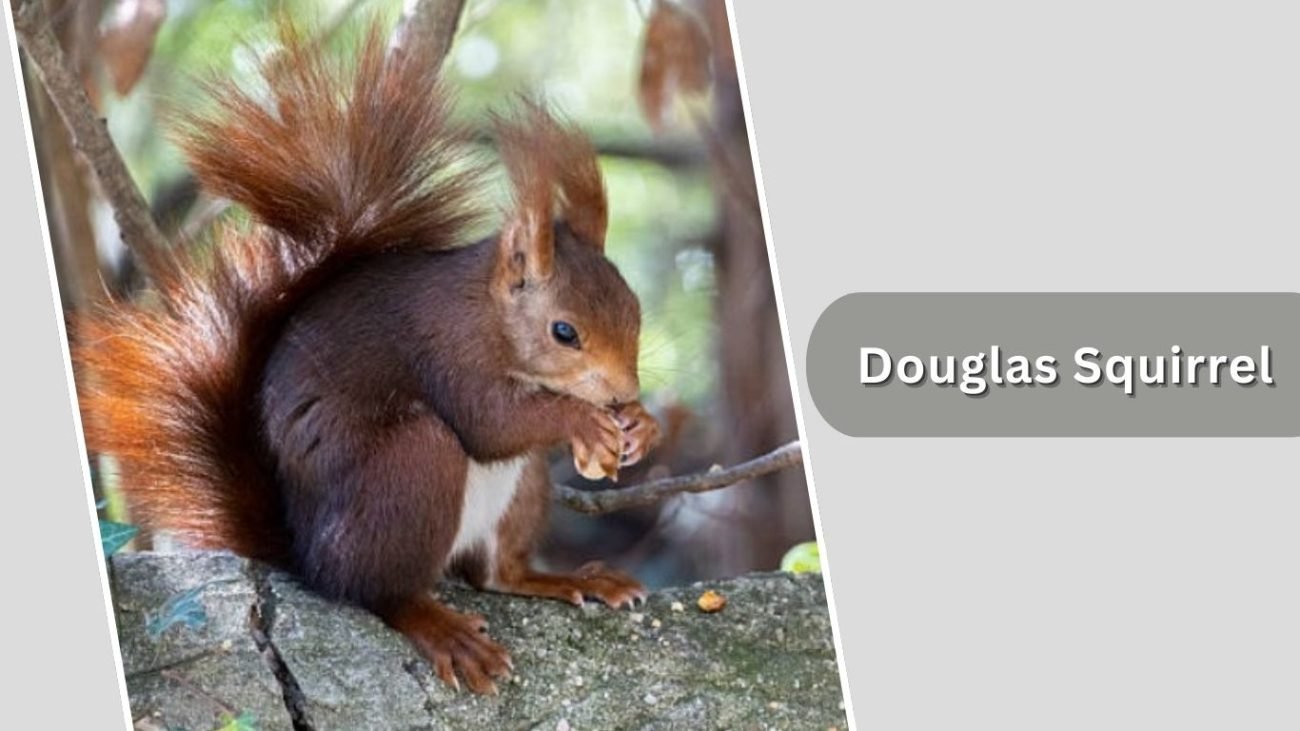
The Douglas squirrel, also known as the chickaree, is a small, highly active tree squirrel native to the Pacific Northwest of North America. It is well known for its sharp, rapid calls and fearless defense of food territories, especially in dense conifer forests.
Identification
- Small, slender-bodied tree squirrel
- Fur is dark brown to olive-brown on the back
- White or pale gray underside
- Distinct black stripe along each side
- Long, bushy tail with black and white edges
- Short ear tufts sometimes visible in winter
Habitat
Douglas squirrels mainly inhabit coniferous forests, especially those dominated by Douglas fir, spruce, and pine. They are also found in coastal forests, mountain woodlands, and occasionally in large parks near forested regions. Dense tree cover and cone-producing trees are essential to their habitat.
Behaviors
They are extremely vocal and territorial, often producing loud scolding calls. Douglas squirrels are fast, agile climbers and spend most of their time in trees. They aggressively defend cone caches and nesting areas. Nests are built in tree branches or inside hollow trunks.
Diet and lifecycle
Their diet consists mostly of conifer seeds, pine nuts, berries, buds, fungi, and occasionally insects and bird eggs. Breeding usually happens once or twice a year. Females give birth to 3–6 young after about a 35-day gestation. The young leave the nest at around seven weeks and reach maturity within their first year.
8. Southern Flying Squirrel (Glaucomys volans)
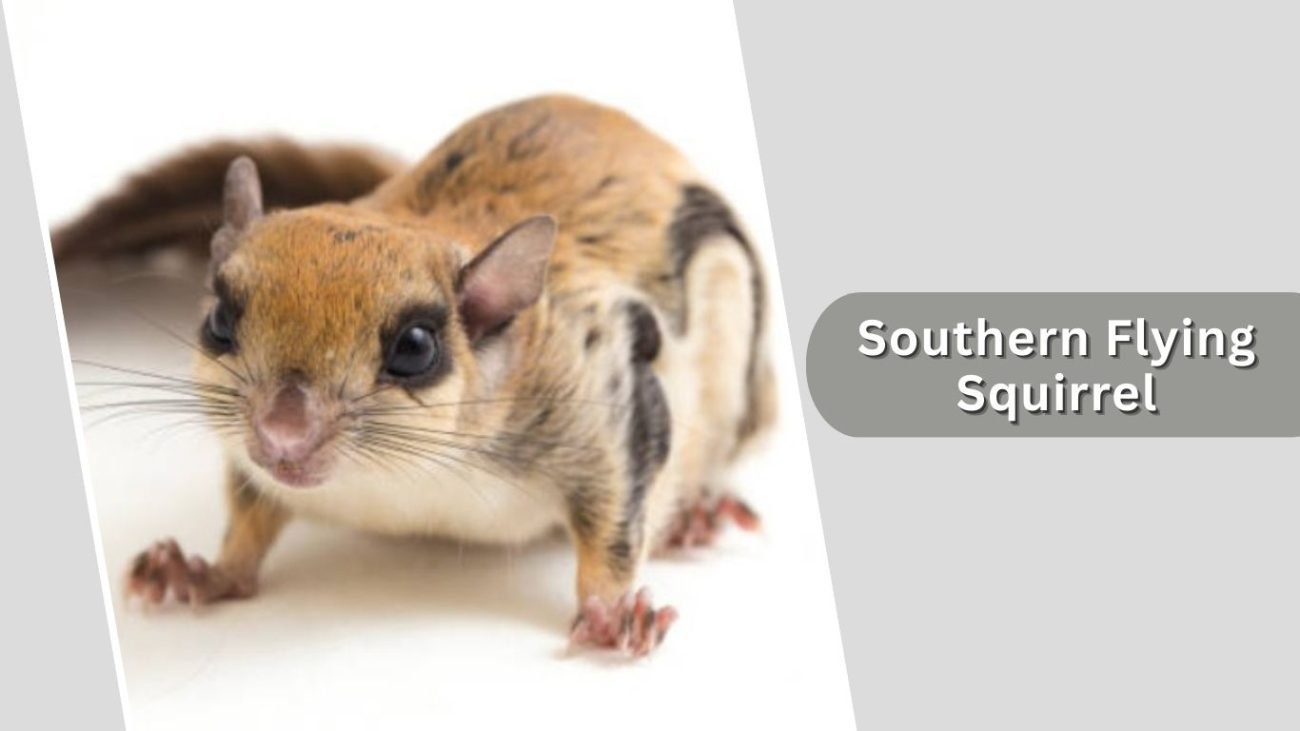
The southern flying squirrel is a small, nocturnal squirrel famous for its ability to glide between trees. Instead of true flight, it uses a skin membrane stretching from its wrists to ankles to sail through the air. It is commonly found in forests and wooded suburbs of eastern North America.
Identification
- Very small squirrel with a soft, slender body
- Gray to brown fur on the back, creamy white underside
- Large, dark eyes adapted for night vision
- Flat, bushy tail used for steering while gliding
- Loose skin membrane (patagium) connecting front and hind legs
- Rounded ears without tufts
Habitat
Southern flying squirrels live in deciduous and mixed forests, especially areas with oak, hickory, and beech trees. They often use tree cavities, old woodpecker holes, or nest boxes. This species also adapts well to orchards, wooded suburbs, and forest edges.
Behaviors
They are nocturnal and rarely seen during the day. Southern flying squirrels are social and may share nests, especially in cold weather. They glide from tree to tree to escape predators and reach food sources. Communication includes soft chirps and high-pitched calls.
Diet and lifecycle
Their diet includes nuts, acorns, seeds, fruits, berries, fungi, insects, bird eggs, and sometimes carrion. Breeding usually occurs once or twice a year. Females give birth to 2–7 young after about 40 days. The young begin gliding at around six weeks and become independent shortly afterward.
9. Northern Flying Squirrel (Glaucomys sabrinus)
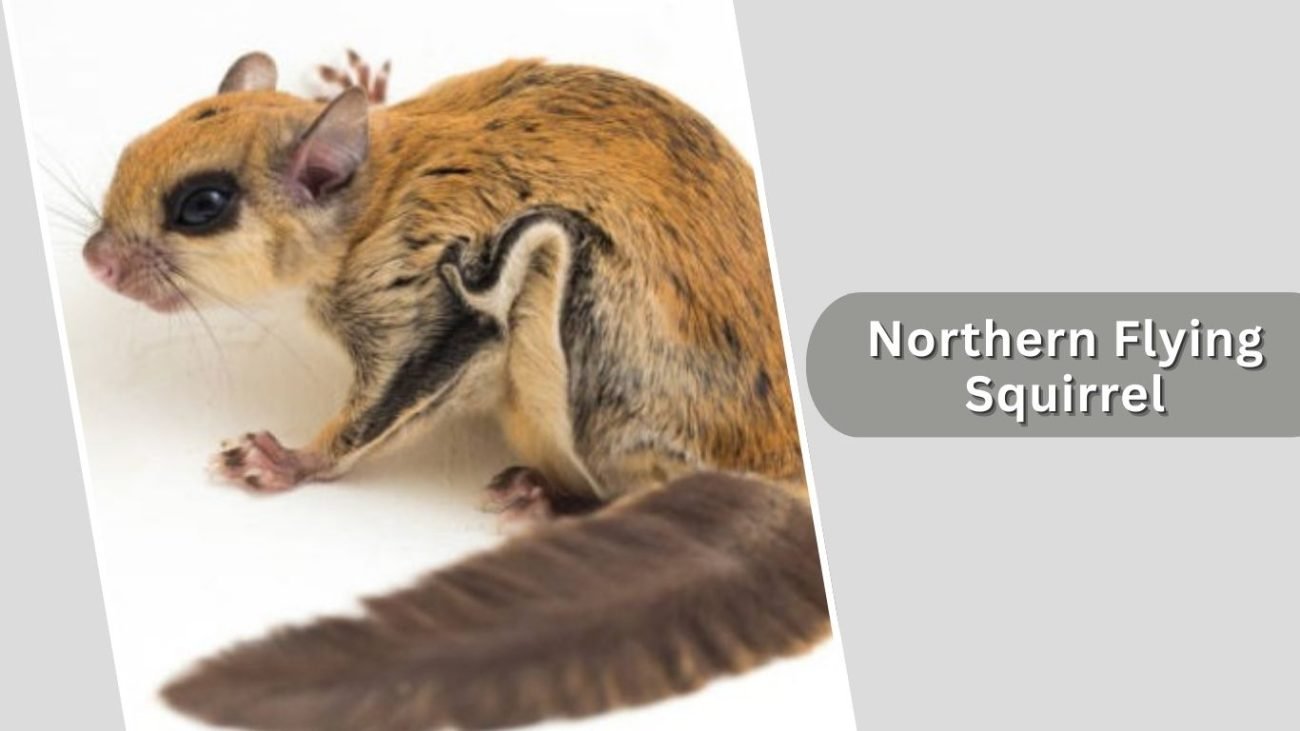
The northern flying squirrel is a nocturnal, tree-dwelling species found across northern North America and parts of the Rocky Mountains. It is slightly larger than the southern flying squirrel and plays an important ecological role by spreading underground fungi spores that help forest trees grow.
Identification
- Small to medium-sized flying squirrel
- Soft gray-brown fur on the back with a white belly
- Very large, dark eyes adapted for night activity
- Broad, flat tail used for steering while gliding
- Skin membrane (patagium) stretching between front and hind legs
- Rounded ears without tufts
Habitat
Northern flying squirrels live mainly in coniferous and mixed forests, especially spruce, fir, pine, and hemlock woodlands. They prefer mature forests with many hollow trees and fallen logs. This species is also found in cold mountain forests and northern boreal regions.
Behaviors
They are active at night and rarely seen during the day. Northern flying squirrels are excellent gliders and can travel long distances between trees. They often nest in tree cavities and may share nests in winter for warmth. They are quiet animals, communicating with soft squeaks and chirps.
Diet and lifecycle
Their diet mainly includes fungi (especially truffles), lichens, nuts, seeds, berries, insects, and bird eggs. They usually breed once a year. Females give birth to 2–4 young after about 37–40 days. Young squirrels begin gliding at around five to six weeks and become independent soon after.
10. Indian Giant Squirrel (Ratufa indica)
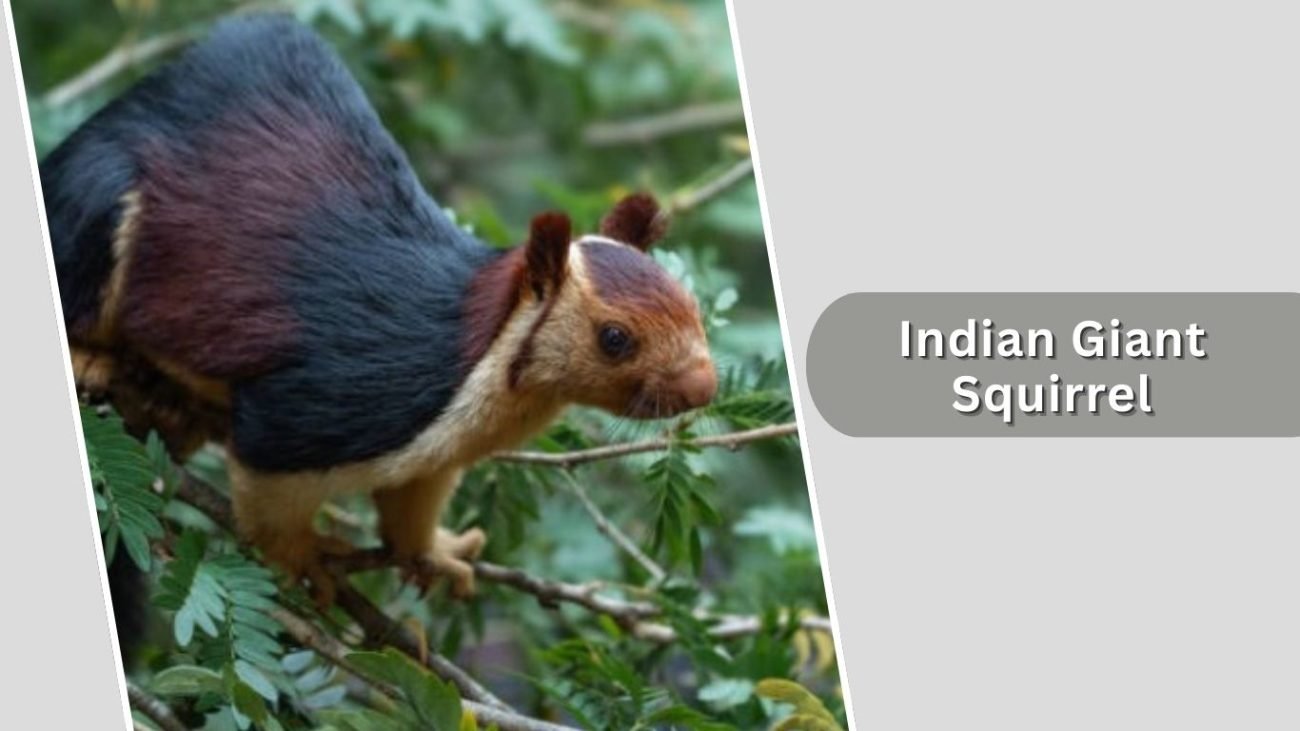
The Indian giant squirrel is one of the largest squirrel species in the world and is known for its striking multicolored fur. Native to India, it lives high in forest canopies and is rarely seen on the ground. Its impressive size and bright coloration make it one of the most visually remarkable squirrels.
Identification
- Very large tree squirrel, much bigger than most common squirrels
- Fur shows multiple colors such as dark brown, black, rust, cream, and maroon
- Long, thick, bushy tail often longer than the body
- Strong limbs with sharp curved claws
- Rounded ears without tufts
- Large, expressive eyes
Habitat
Indian giant squirrels inhabit tropical and subtropical forests, including deciduous, semi-evergreen, and evergreen forests. They are commonly found in tall forest canopies, especially in areas with teak, mango, fig, and jackfruit trees. This species avoids heavily urbanized areas and prefers dense, mature forests.
Behaviors
They are mostly diurnal and spend nearly all their time in trees. Indian giant squirrels are shy and cautious, often freezing or hiding when disturbed. They build large spherical nests high in tall trees. Their powerful leaps allow them to cross wide gaps between branches.
Diet and lifecycle
Their diet includes fruits, nuts, seeds, flowers, bark, and occasionally insects and bird eggs. Breeding can occur once or twice a year. Females usually give birth to 1–3 young. The young remain in the nest for several weeks and become independent after about two months.
11. Malabar Giant Squirrel (Ratufa indica maxima)
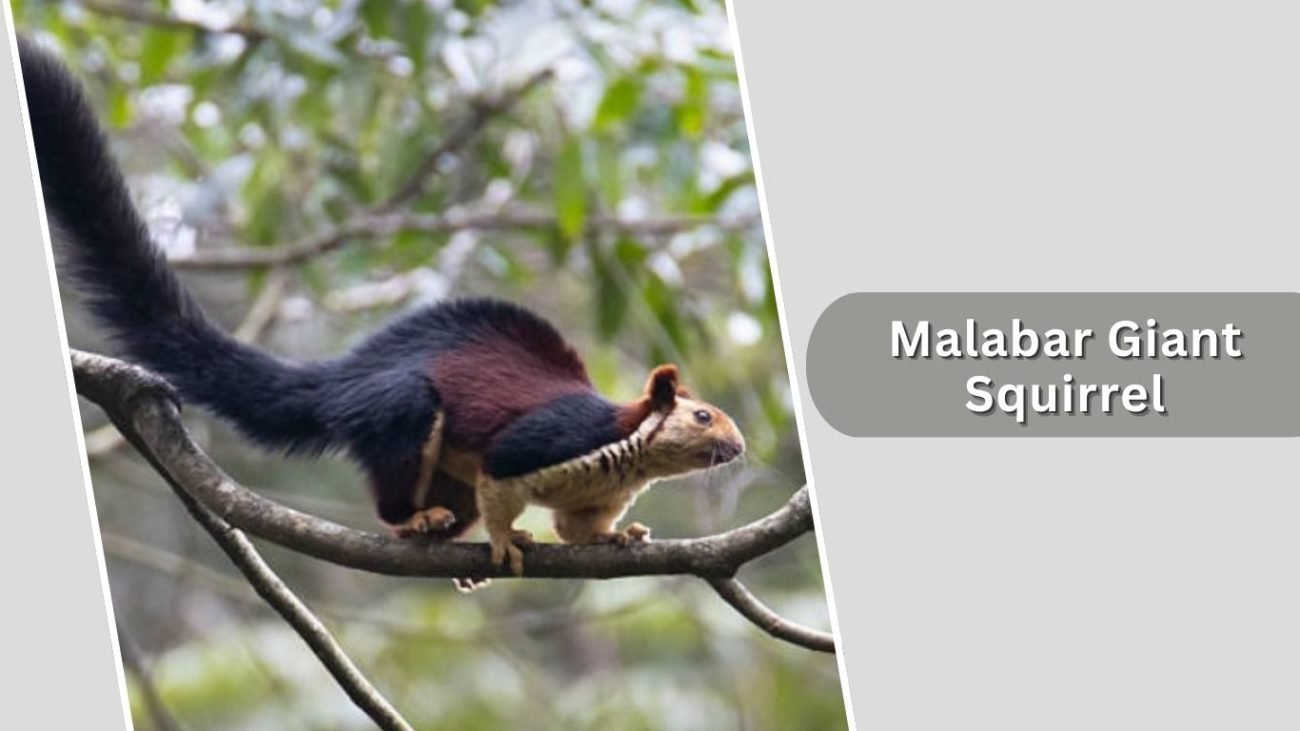
The Malabar giant squirrel is a colorful subspecies of the Indian giant squirrel and is famous for its vivid fur patterns. Found mainly in the Western Ghats of India, it is one of the largest tree squirrels and lives almost entirely in the forest canopy.
Identification
- Very large squirrel with a long, powerful body
- Bright multicolored fur, including deep red, maroon, black, cream, and brown
- Extremely long, bushy tail often longer than the body
- Strong hind legs adapted for long leaps
- Rounded ears without tufts
- Sharp claws for gripping bark and branches
Habitat
Malabar giant squirrels live in evergreen, semi-evergreen, and moist deciduous forests. They prefer tall, continuous forest canopies where they can move between trees without coming to the ground. This species is especially common in protected forests and wildlife reserves of southwestern India.
Behaviors
They are active during the day and are usually solitary. Malabar giant squirrels are excellent climbers and powerful jumpers. They build large, globe-shaped nests high in tall trees. When threatened, they often remain motionless or hide among dense leaves.
Diet and lifecycle
Their diet includes fruits, nuts, seeds, flowers, bark, and sometimes insects. Breeding generally occurs once a year. Females usually give birth to 1–2 young. The babies are born blind and hairless and stay in the nest for several weeks before slowly learning to climb and leap.
12. Prevost’s Squirrel (Callosciurus prevostii)
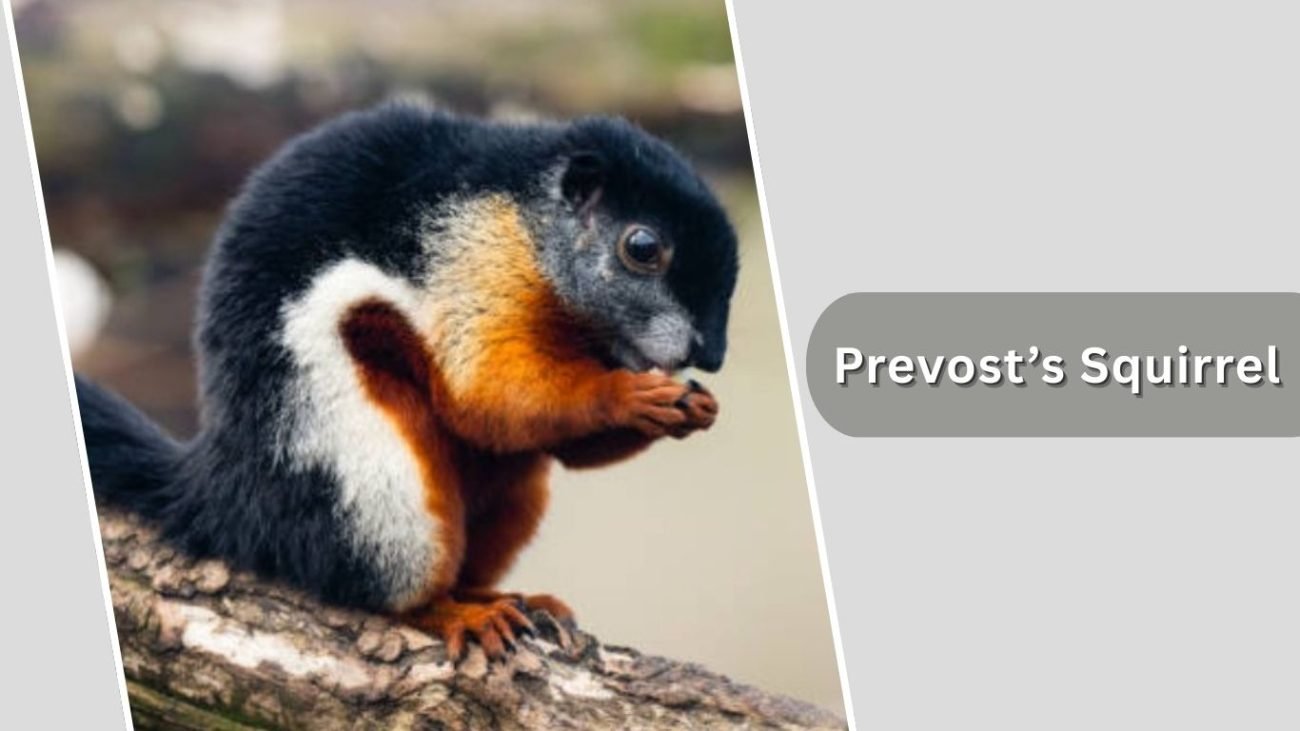
Prevost’s squirrel is a strikingly colorful tree squirrel native to Southeast Asia. It is easily recognized by its bold black back, bright red underside, and white side stripe. This fast-moving species lives high in tropical forest canopies and is rarely seen for long on the ground.
Identification
- Medium to large-sized tree squirrel
- Glossy black fur on the back with bright red or chestnut underparts
- Distinct white stripe separating the black and red areas
- Long, thick, bushy tail usually black
- Slender body with strong limbs
- Rounded ears without tufts
Habitat
Prevost’s squirrels inhabit tropical rainforests, secondary forests, plantations, and wooded lowland areas. They are commonly found in Malaysia, Indonesia, Thailand, and nearby regions. Dense tree cover is essential, as they rely on connected canopies for movement, feeding, and nesting.
Behaviors
They are active during the day and are extremely agile climbers. Prevost’s squirrels move quickly through branches and often freeze against tree trunks when alarmed. They are usually solitary or seen in pairs. Nests are built in tree hollows or among dense foliage.
Diet and lifecycle
Their diet mainly includes fruits, seeds, nuts, flowers, buds, and bark, along with occasional insects and bird eggs. Breeding can occur once or twice a year. Females typically give birth to 1–3 young, which stay in the nest for several weeks before becoming independent.
13. Variegated Squirrel (Sciurus variegatoides)
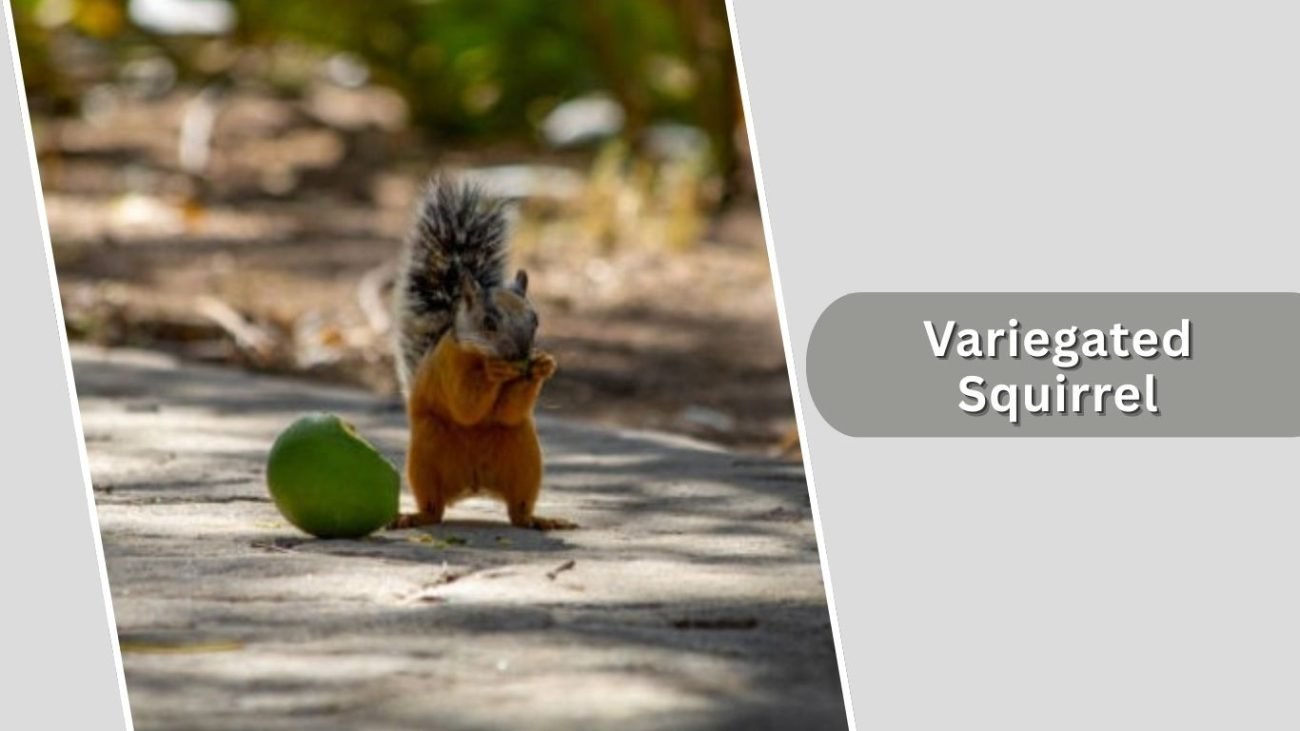
The variegated squirrel is a colorful and highly adaptable tree squirrel native to Central America and southern Mexico. It is known for its wide range of coat colors, which can include black, gray, brown, orange, and white. This species is commonly seen in forests, plantations, and even urban areas.
Identification
- Medium to large-sized tree squirrel
- Fur color varies greatly: black, gray, brown, orange, or mixed patterns
- Often has lighter patches on the face, neck, or sides
- Long, bushy tail sometimes with contrasting tips
- Strong hind legs for climbing and jumping
- Rounded ears without tufts
Habitat
Variegated squirrels live in tropical dry forests, rainforests, mangroves, plantations, and suburban areas. They are frequently found in coconut groves, orchards, and farmlands. This species adapts well to human-altered environments and is often seen near houses and gardens.
Behaviors
They are active during daylight hours and are bold, fast-moving climbers. Variegated squirrels often forage both in trees and on the ground. They are known to raid crops and fruit trees. Nests are built in tree cavities or leafy branch nests.
Diet and lifecycle
Their diet includes fruits, nuts, seeds, flowers, bark, crops, insects, and bird eggs. Breeding may occur several times a year in warm regions. Females usually give birth to 2–4 young. The young remain in the nest for about six to eight weeks before becoming independent.
14. Black Giant Squirrel (Ratufa bicolor)
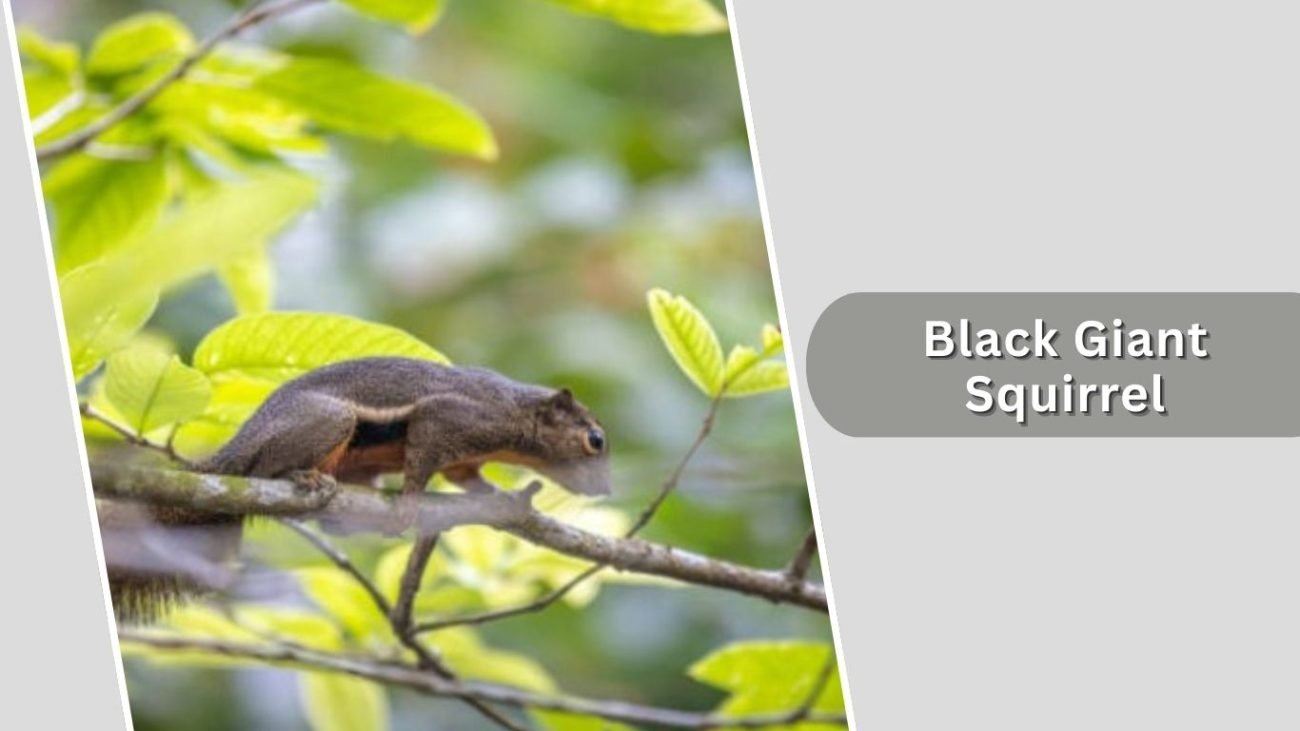
The black giant squirrel is one of the largest squirrel species in the world and is known for its dramatic black-and-cream coloration. Native to South and Southeast Asia, it lives high in forest canopies and is rarely seen on the ground.
Identification
- Very large, powerful tree squirrel
- Upper body black or very dark brown
- Underparts cream, yellowish, or pale orange
- Extremely long, thick, bushy tail
- Strong limbs with sharp claws
- Rounded ears without tufts
Habitat
Black giant squirrels inhabit tropical and subtropical forests, including evergreen, semi-evergreen, and mixed forests. They are found in India, Nepal, Bhutan, Myanmar, Thailand, Malaysia, and Indonesia. Tall, continuous forests with large fruiting trees are essential for their survival.
Behaviors
They are active during the day and spend most of their lives in trees. Black giant squirrels are shy and cautious, often freezing against tree trunks when threatened. They build large nests high in tall trees. Their powerful leaps allow them to move easily across wide canopy gaps.
Diet and lifecycle
Their diet includes fruits, nuts, seeds, shoots, bark, flowers, and occasionally insects and bird eggs. Breeding usually occurs once a year. Females generally give birth to 1–2 young. The young stay in the nest for several weeks and become independent after about two to three months.
15. Finlayson’s Squirrel (Callosciurus finlaysonii)
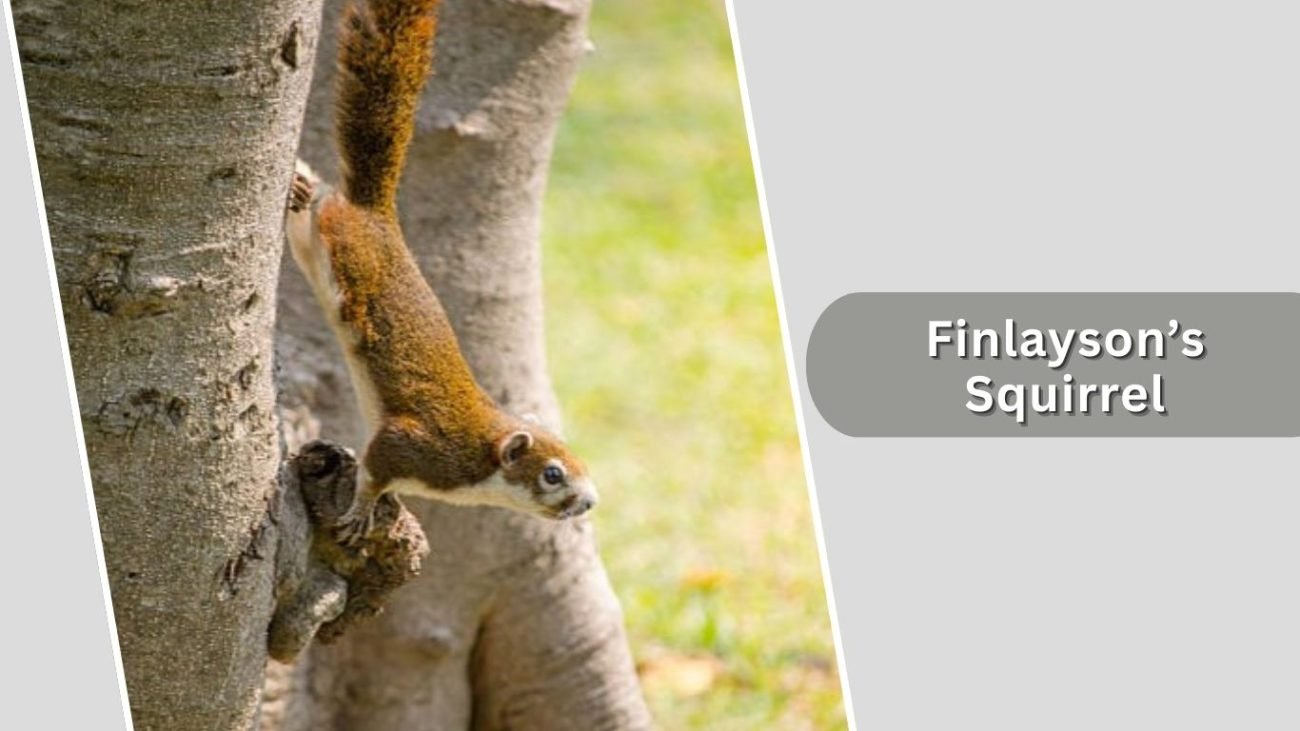
Finlayson’s squirrel is a highly variable and colorful tree squirrel native to Southeast Asia. It is famous for having many different color forms, ranging from pure white and black to red, orange, and mixed patterns. This adaptability makes it one of the most visually diverse squirrel species.
Identification
- Medium-sized tree squirrel
- Fur color extremely variable: white, black, gray, red, or mixed
- Slender body with long limbs
- Long, bushy tail often matching body color
- Rounded ears without tufts
- Sharp curved claws for climbing
Habitat
Finlayson’s squirrels inhabit tropical forests, secondary woodlands, plantations, city parks, and gardens. They are commonly found in Thailand, Cambodia, Laos, and surrounding regions. This species adapts well to human-modified landscapes and is often seen near homes and temples.
Behaviors
They are active during the day and are fast, agile climbers. Finlayson’s squirrels are often seen running along power lines and tree branches. They are usually solitary or live in pairs. Nests are built in tree hollows or leafy branch nests.
Diet and lifecycle
Their diet consists mainly of fruits, seeds, nuts, flowers, buds, bark, and cultivated crops, with occasional insects and bird eggs. Breeding may occur once or twice a year. Females usually give birth to 1–3 young, which become independent after about six to eight weeks.
16. Japanese Squirrel (Sciurus lis)
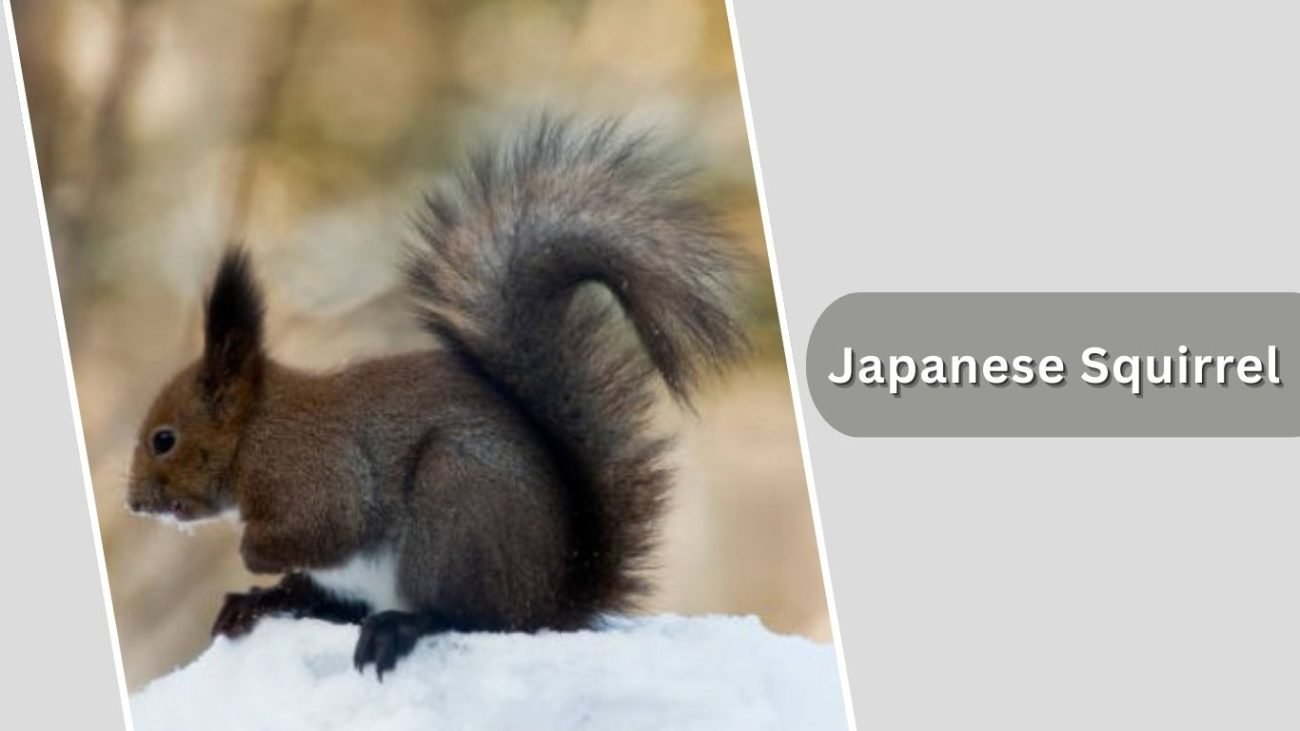
The Japanese squirrel is a medium-sized tree squirrel native to the forests of Japan. It is an agile canopy dweller known for its reddish-brown fur and long bushy tail. This species plays an important ecological role in seed dispersal within Japanese forest ecosystems.
Identification
- Medium-sized squirrel with a slender build
- Fur reddish-brown to gray-brown on the back
- Pale or whitish underside
- Long, bushy tail often darker than the body
- Small rounded ears without tufts
- Sharp claws adapted for climbing
Habitat
Japanese squirrels inhabit temperate forests, including broadleaf forests, mixed woodlands, and mountainous forest regions. They are commonly found in oak, chestnut, and beech forests. This species prefers natural forest habitats and is rarely abundant in heavily urbanized areas.
Behaviors
They are active during the day and spend much of their time in trees. Japanese squirrels are shy and alert, quickly fleeing when disturbed. They build leafy nests in tree branches or use hollow trunks. Their movements are quick and agile, allowing them to escape predators efficiently.
Diet and lifecycle
Their diet includes nuts, seeds, fruits, buds, bark, fungi, and occasionally insects and bird eggs. Breeding usually occurs once or twice a year. Females give birth to 2–4 young. Juveniles leave the nest after about seven weeks and reach maturity within their first year.
17. Korean Squirrel (Sciurus vulgaris coreae)
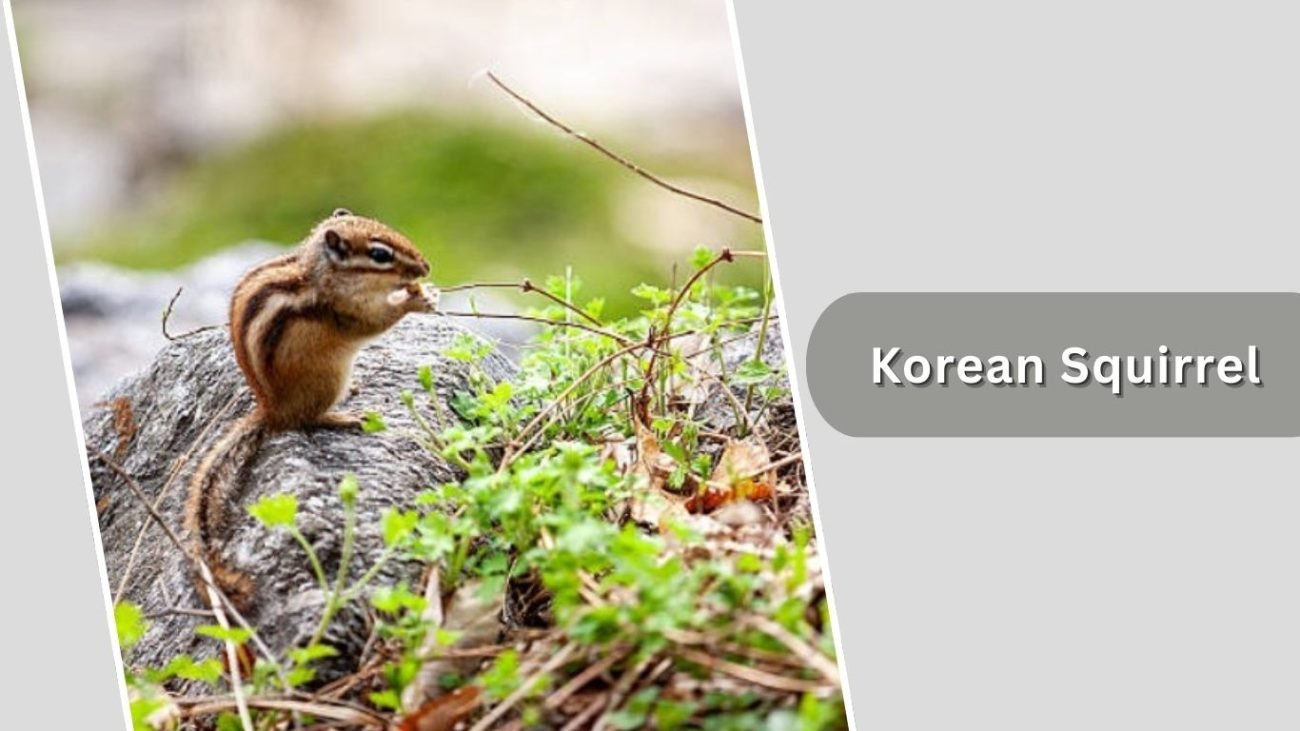
The Korean squirrel is a regional form of the Eurasian red squirrel found mainly on the Korean Peninsula and nearby parts of northeastern Asia. It closely resembles other red squirrels but is adapted to cooler forest environments and mountainous regions.
Identification
- Small to medium-sized tree squirrel
- Fur reddish-brown to dark brown, changing with seasons
- White or cream underside
- Long, bushy tail often edged with lighter hairs
- Small ear tufts sometimes visible in winter
- Slender body with sharp climbing claws
Habitat
Korean squirrels inhabit temperate forests, mountain woodlands, and mixed conifer–broadleaf forests. They are often found in pine, fir, oak, and birch forests. This species prefers cooler climates and forested hillsides with abundant nut-producing trees.
Behaviors
They are active during the day and are agile climbers. Korean squirrels are usually solitary and territorial. They store food in hidden caches and build spherical nests in tree branches or use natural hollows. Vocal calls are used to warn of danger and defend territories.
Diet and lifecycle
Their diet includes pine seeds, cones, nuts, fruits, buds, fungi, and occasional insects and bird eggs. Breeding usually occurs once or twice per year. Females give birth to 2–5 young. The young become independent after about two months and mature within their first year.
18. Siberian Flying Squirrel (Pteromys volans)
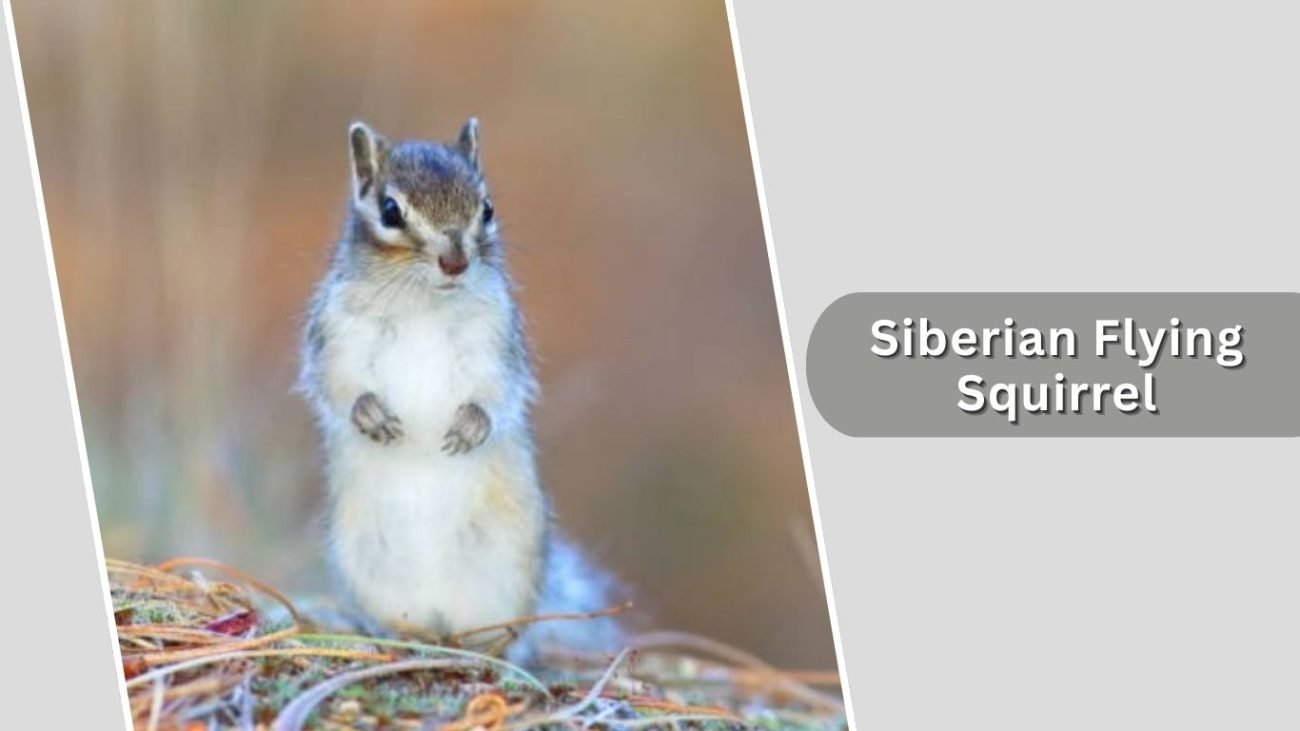
The Siberian flying squirrel is a nocturnal, gliding squirrel found across northern Europe and Asia. It is well known for its large dark eyes and the skin membrane that allows it to glide smoothly between trees. This rare and secretive species spends most of its life high in forest canopies.
Identification
- Small to medium-sized flying squirrel
- Soft gray or gray-brown fur on the back
- Pale gray or whitish underside
- Very large, dark eyes adapted for night vision
- Broad gliding membrane (patagium) between front and hind legs
- Long, flat, bushy tail used for steering
Habitat
Siberian flying squirrels inhabit mature coniferous and mixed forests, especially spruce, fir, pine, and birch woodlands. They prefer old forests with many hollow trees for nesting. This species is most common in cold, northern regions and mountain forests.
Behaviors
They are strictly nocturnal and rarely seen during the day. Siberian flying squirrels glide silently between trees to travel and escape predators. They nest in tree cavities, abandoned woodpecker holes, or nest boxes. They are generally quiet, solitary animals.
Diet and lifecycle
Their diet includes leaves, buds, seeds, catkins, berries, fungi, and occasionally insects and bird eggs. Breeding usually occurs once a year. Females give birth to 2–3 young after about 40 days. The young begin gliding after several weeks and become independent soon after.
19. Pallas’s Squirrel (Callosciurus erythraeus)
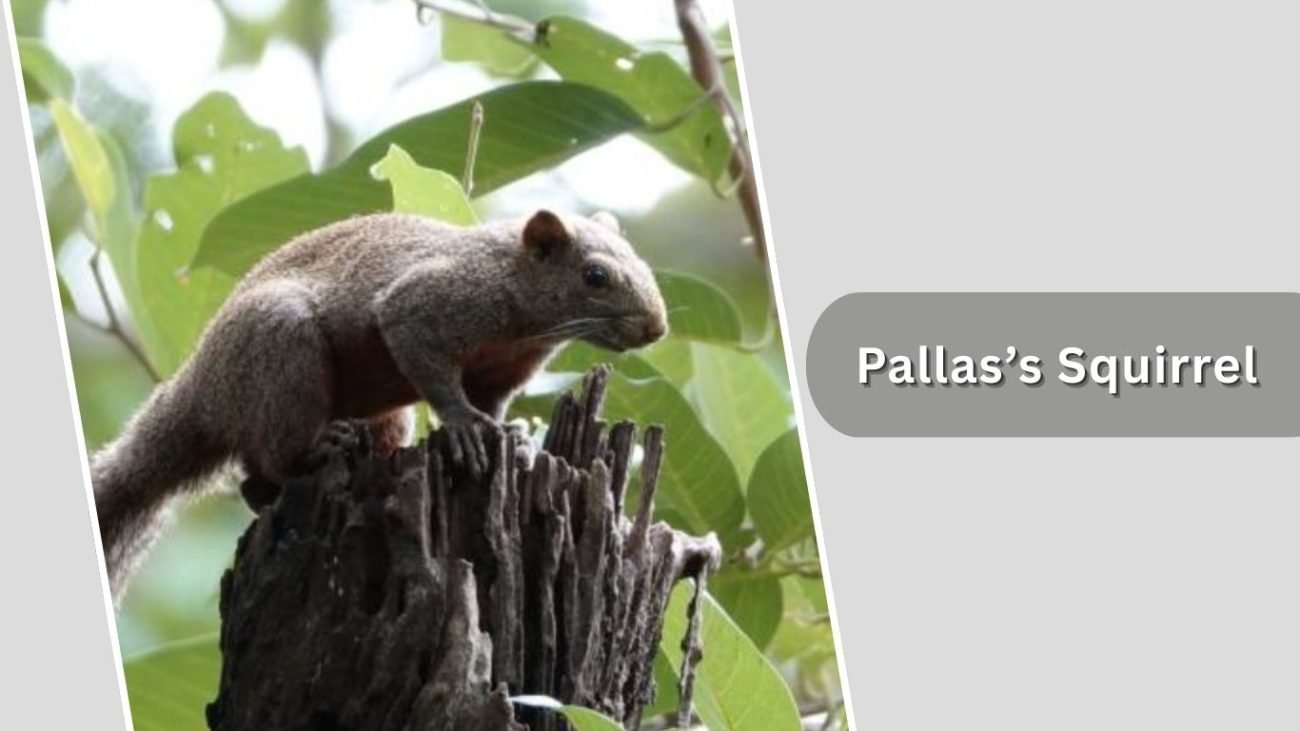
Pallas’s squirrel, also known as the red-bellied squirrel, is a fast-moving and adaptable tree squirrel native to South and Southeast Asia. It is well known for its reddish belly and wide range of color variations. In many regions, it thrives near farms, towns, and forest edges.
Identification
- Medium-sized tree squirrel
- Back fur ranges from gray-brown to dark olive
- Distinct reddish, orange, or chestnut underside
- Long, bushy tail often darker than the body
- Slender body with strong hind legs
- Rounded ears without tufts
Habitat
Pallas’s squirrels inhabit tropical and subtropical forests, bamboo groves, plantations, orchards, and urban parks. They are found in China, India, Nepal, Bhutan, Myanmar, Thailand, and nearby regions. This species easily adapts to disturbed and human-dominated landscapes.
Behaviors
They are active during daylight hours and move quickly through trees and shrubs. Pallas’s squirrels are alert and vocal, often giving sharp calls when alarmed. They usually live alone or in pairs. Nests are built in tree cavities or leafy branch nests.
Diet and lifecycle
Their diet includes fruits, seeds, nuts, flowers, buds, bark, cultivated crops, insects, and bird eggs. Breeding may occur once or twice a year. Females typically give birth to 2–4 young. Juveniles become independent after about six to eight weeks.
20. Himalayan Striped Squirrel (Tamiops macclellandii)
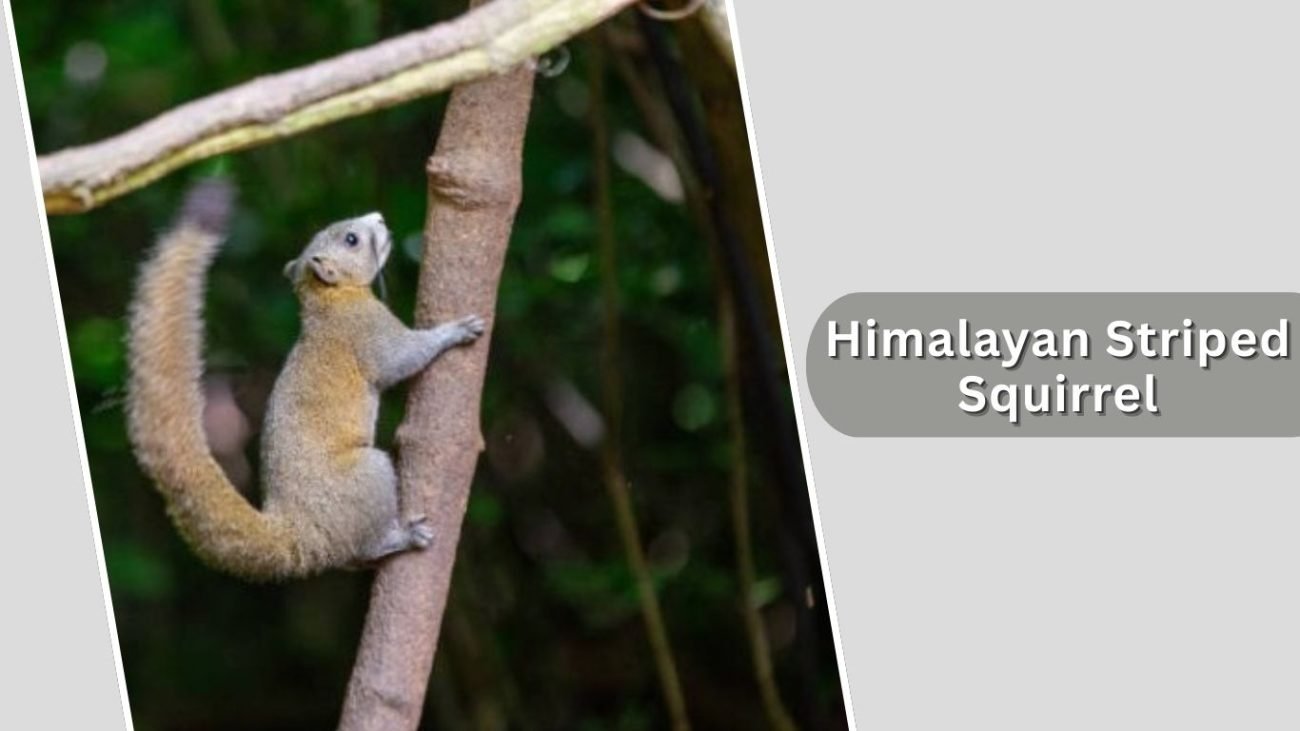
The Himalayan striped squirrel is a small, fast-moving tree squirrel native to the Himalayan region and parts of Southeast Asia. It is easily recognized by the pale stripes running along its back and sides. This energetic species is commonly seen darting along branches in forested hills.
Identification
- Small-sized tree squirrel with a slim body
- Brown to olive-brown fur on the back
- Several pale or whitish stripes along the back and sides
- Long, narrow, bushy tail
- Short rounded ears without tufts
- Sharp claws for climbing
Habitat
Himalayan striped squirrels live in subtropical and tropical forests, mountain woodlands, bamboo forests, and forest edges. They are commonly found in the Himalayan foothills, northeastern India, Nepal, Bhutan, southern China, and Southeast Asia. They prefer dense vegetation with plenty of shrubs and trees.
Behaviors
They are active during the day and are extremely quick and alert. Himalayan striped squirrels move rapidly through low and middle forest levels. They often forage among branches and shrubs. Nests are built in tree hollows or woven from leaves and placed in dense foliage.
Diet and lifecycle
Their diet includes seeds, fruits, nuts, berries, buds, bark, insects, and bird eggs. Breeding can occur once or twice a year. Females usually give birth to 2–5 young. The young leave the nest after several weeks and become independent soon after.
21. Palm Squirrel (Funambulus palmarum)
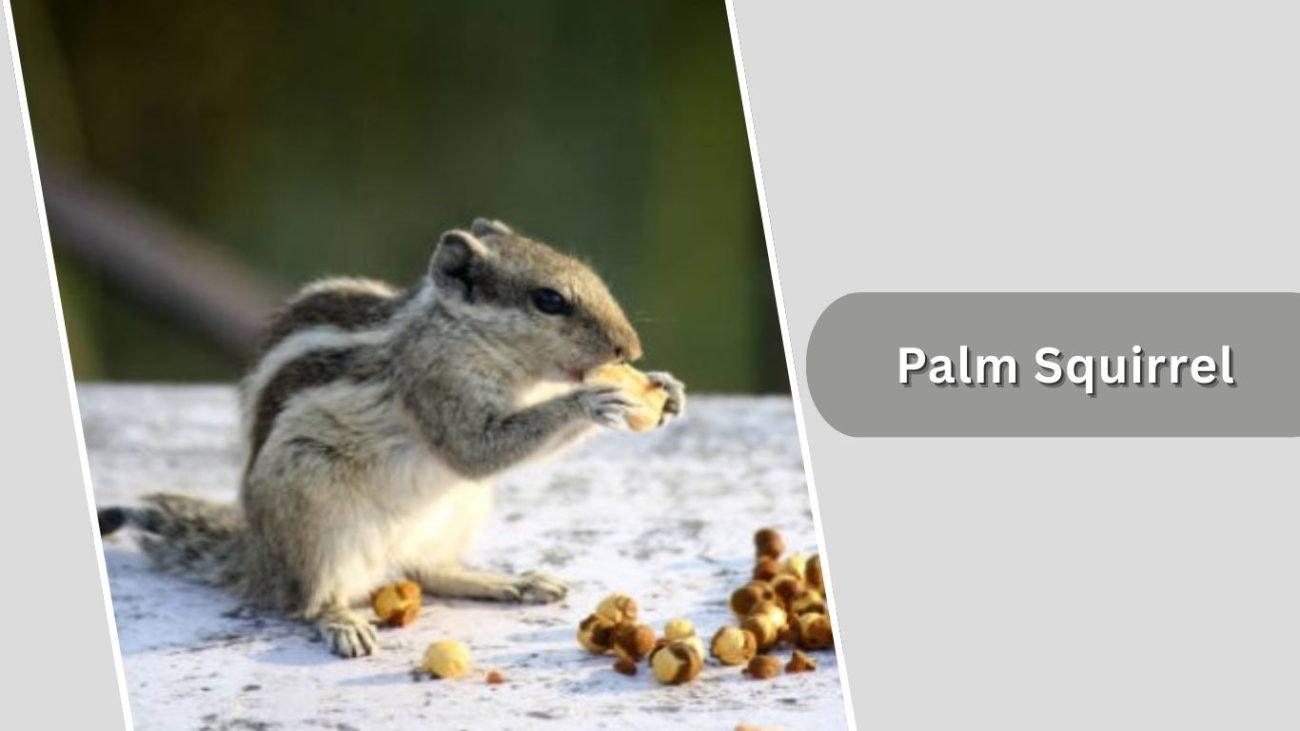
The palm squirrel, also known as the three-striped palm squirrel, is a small and familiar squirrel species widely found in India and Sri Lanka. It is well adapted to human environments and is commonly seen around homes, temples, gardens, and farmlands.
Identification
- Small, slender-bodied squirrel
- Brownish-gray fur with three distinct white stripes on the back
- Whitish or pale underside
- Long, thin, bushy tail
- Small rounded ears without tufts
- Sharp claws for climbing
Habitat
Palm squirrels inhabit open forests, coconut groves, orchards, farmlands, gardens, and urban areas. They are especially common in areas with palm trees and fruiting plants. This species thrives near human settlements and is often one of the most visible squirrels in towns and villages.
Behaviors
They are active during the day and are bold and energetic. Palm squirrels are often seen running along walls, trees, and rooftops. They communicate with sharp chirping calls and are quick to escape into holes or dense foliage when alarmed. Nests are built in tree hollows or roof spaces.
Diet and lifecycle
Their diet includes fruits, seeds, nuts, flowers, grains, insects, and human food scraps. Breeding can occur several times a year. Females usually give birth to 2–3 young. The babies develop quickly and become independent after about six weeks.
22. Five-striped Palm Squirrel (Funambulus pennantii)
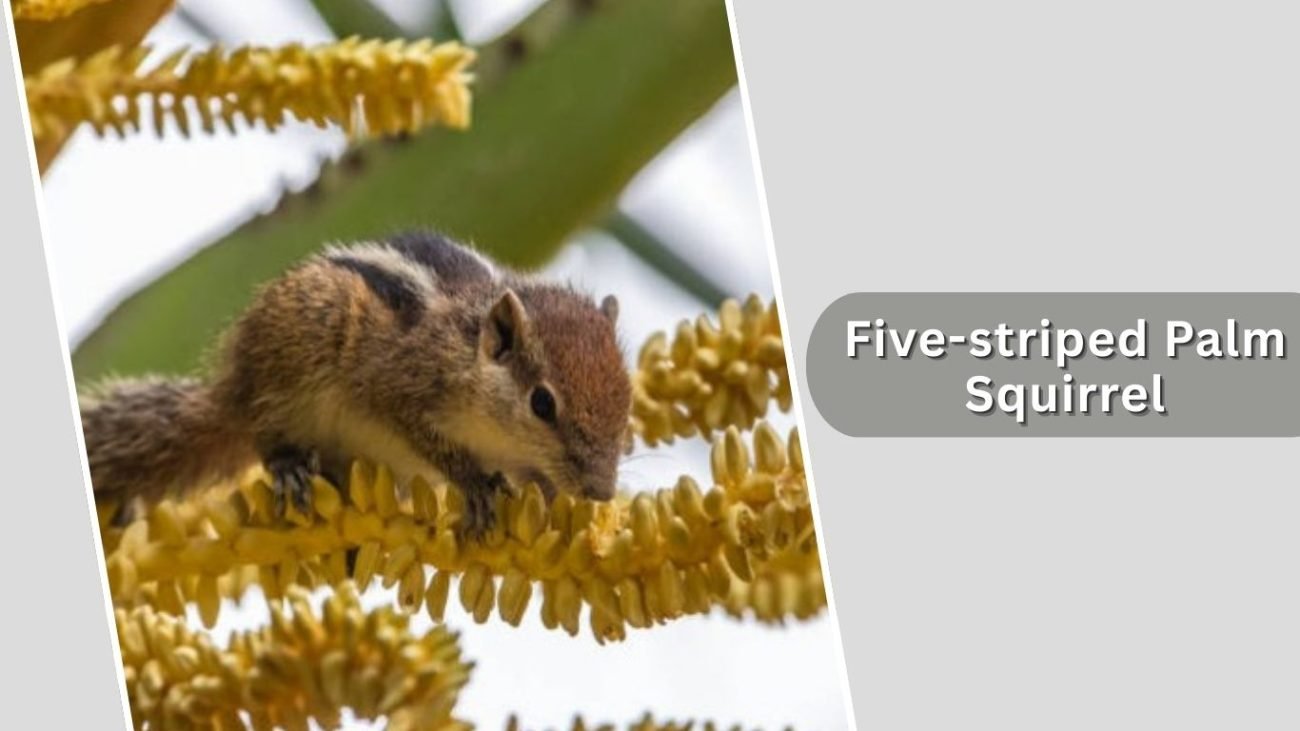
The five-striped palm squirrel is a small, active squirrel commonly found across the Indian subcontinent. It is well known for its bold behavior and close association with human habitats. This species is often seen in gardens, parks, farms, and even inside buildings.
Identification
- Small squirrel with a slender body
- Gray-brown fur with five distinct white stripes along the back and sides
- Whitish underside
- Long, narrow, bushy tail
- Small rounded ears without tufts
- Sharp claws for climbing
Habitat
Five-striped palm squirrels inhabit open forests, farmlands, orchards, city parks, and urban areas. They are extremely adaptable and often live close to humans. This species uses trees, walls, roofs, and holes in buildings for shelter and nesting.
Behaviors
They are active during the day and are very bold and curious. Five-striped palm squirrels frequently forage on the ground and in trees. They are known for their loud chirping calls and quick movements. Nests are built in tree hollows, wall crevices, or roof spaces.
Diet and lifecycle
Their diet includes grains, fruits, seeds, nuts, flowers, insects, bird eggs, and food scraps. Breeding can occur throughout much of the year. Females usually give birth to 2–4 young. The young open their eyes after about three weeks and become independent in roughly six to eight weeks.
23. African Pygmy Squirrel (Myosciurus pumilio)
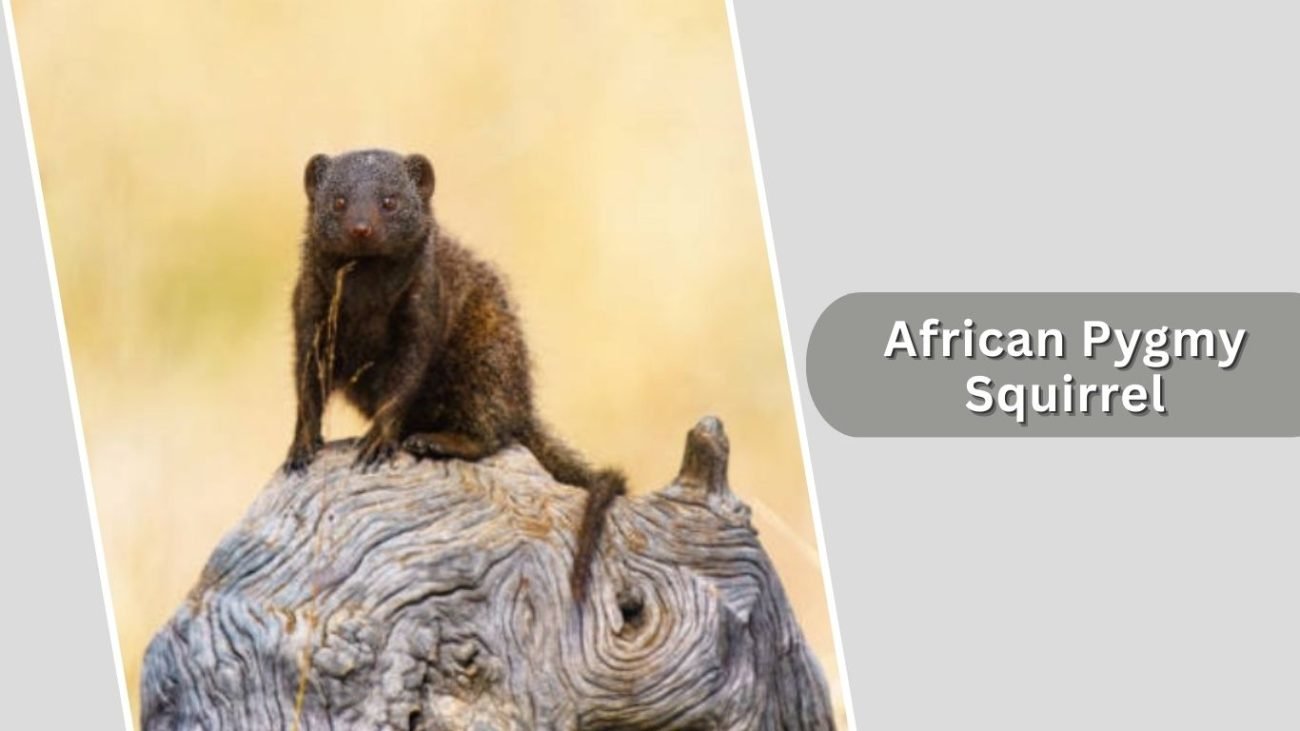
The African pygmy squirrel is the smallest squirrel species in the world. Native to the tropical rainforests of Central Africa, it resembles a tiny tree-dwelling mouse more than a typical squirrel. It lives high in trees and is rarely noticed due to its size and quiet behavior.
Identification
- World’s smallest squirrel species
- Very tiny, slender body with short limbs
- Olive-brown to gray fur on the back
- Pale or whitish underside
- Short, thin, lightly bushy tail
- Large eyes and sharp curved claws
Habitat
African pygmy squirrels live in tropical rainforests, especially lowland and swamp forests. They are strongly associated with oil palm trees and other fruiting palms, where they feed and nest. This species spends almost its entire life in the forest canopy.
Behaviors
They are active during the day and move quickly along branches and palm fronds. African pygmy squirrels are shy and difficult to observe. They usually live alone or in pairs. Nests are built in tree hollows or hidden among dense palm leaves.
Diet and lifecycle
Their diet mainly consists of palm fruits, seeds, sap, insects, and small invertebrates. Breeding is not well documented, but females are believed to give birth to 1–2 young. The young develop quickly and begin climbing soon after leaving the nest.
24. Least Pygmy Squirrel (Exilisciurus exilis)
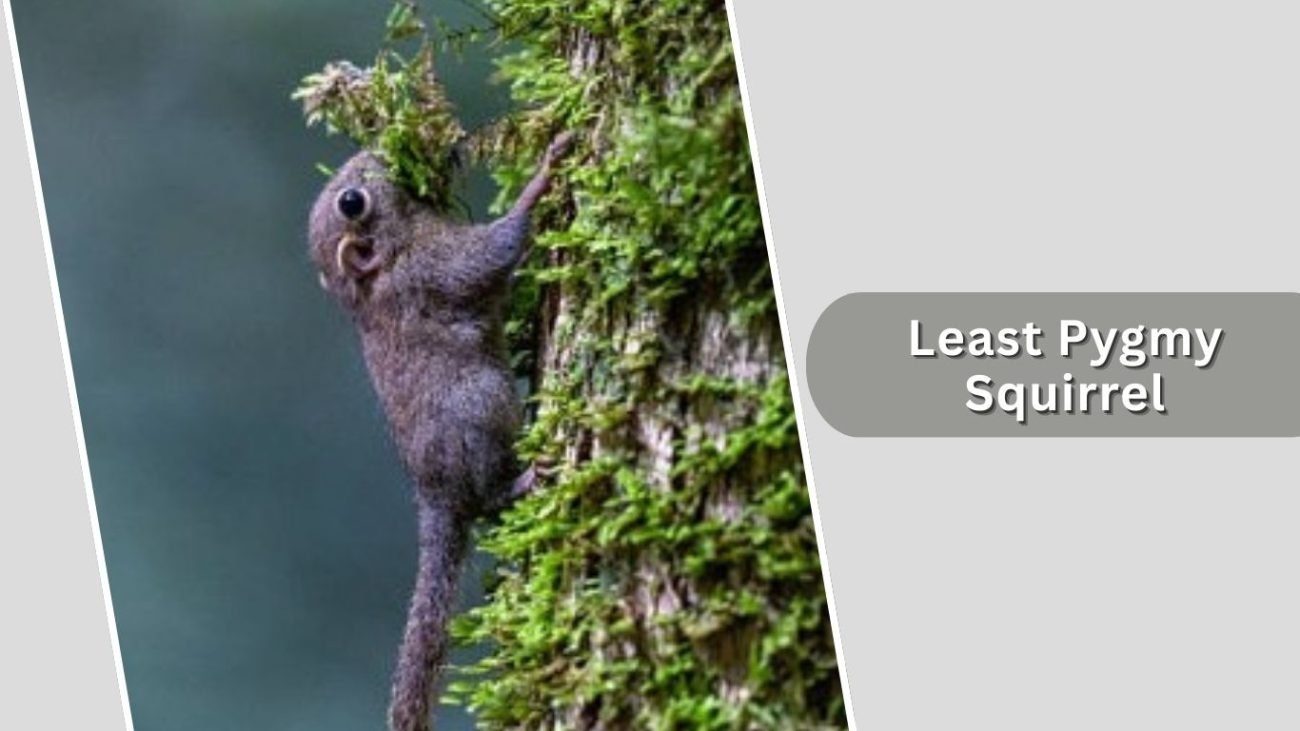
The least pygmy squirrel is one of the smallest squirrel species in Asia and is native to the rainforests of Borneo and nearby regions. Because of its tiny size and secretive nature, it is rarely seen, even in areas where it is fairly common.
Identification
- Extremely small squirrel with a very slender body
- Soft brown to reddish-brown fur on the back
- Pale gray or whitish underside
- Short, thin, lightly bushy tail
- Small rounded ears without tufts
- Very sharp claws adapted for gripping bark
Habitat
Least pygmy squirrels inhabit tropical lowland rainforests and hill forests. They are especially associated with dense, tall forests where they can move through fine branches and vines. This species spends most of its time high in the canopy and rarely comes to the ground.
Behaviors
They are active during the day and move very quickly along thin branches. Least pygmy squirrels are shy and quiet, making them difficult to observe. They are usually solitary. Nests are built in tree hollows or hidden in dense vegetation.
Diet and lifecycle
Their diet includes small fruits, seeds, buds, insects, and tree sap. Very little is known about their breeding habits, but females are believed to give birth to 1–2 young. The young mature rapidly and soon begin an independent, tree-dwelling life.
25. Mountain Ground Squirrel (Spermophilus musicus)
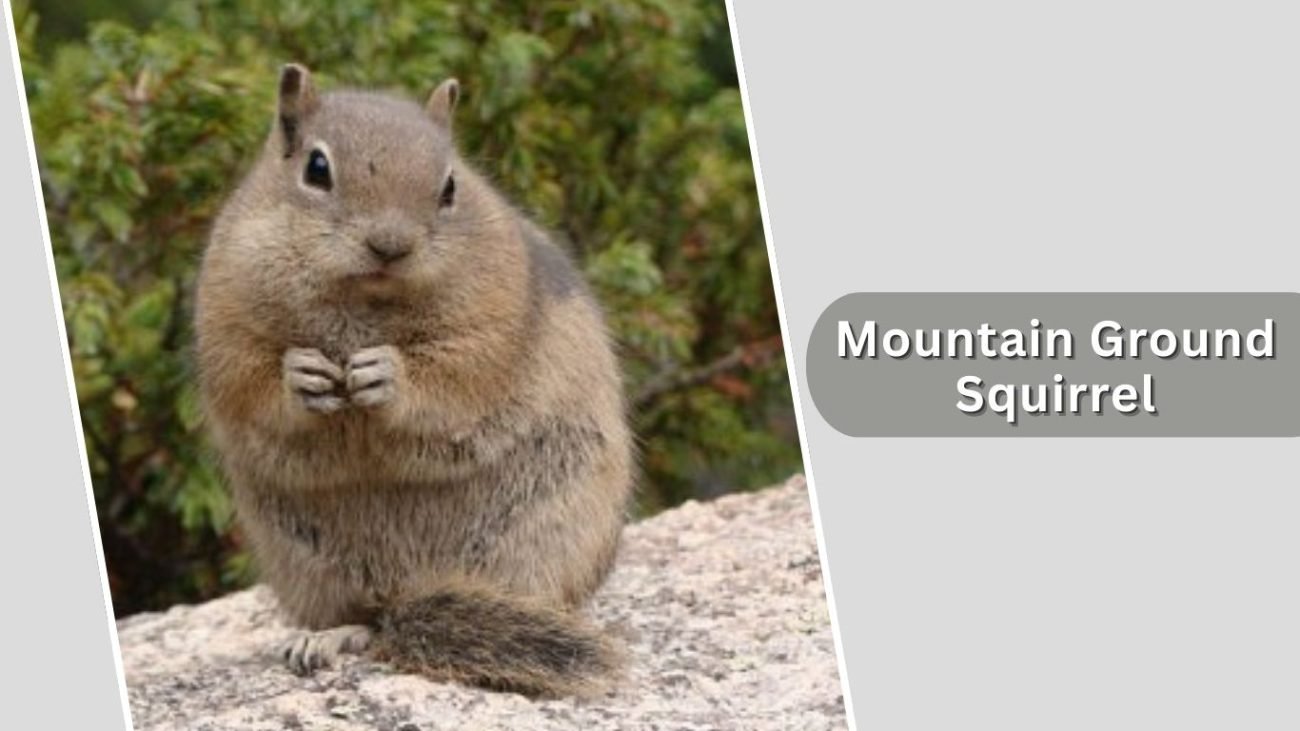
The mountain ground squirrel is a small ground-dwelling squirrel native to mountainous regions of western Central Asia. Unlike tree squirrels, it spends most of its life on the ground, living in burrows and open alpine landscapes. It is well adapted to cold climates and high elevations.
Identification
- Small to medium-sized ground squirrel
- Short, dense fur usually grayish-brown or sandy brown
- Pale or whitish underside
- Shorter, less bushy tail than tree squirrels
- Rounded ears, small and close to the head
- Strong front claws adapted for digging burrows
Habitat
Mountain ground squirrels inhabit alpine meadows, mountain steppes, rocky slopes, and high-elevation grasslands. They are commonly found in areas with loose soil suitable for burrowing. These habitats provide both underground shelter and open ground for feeding.
Behaviors
They are active during daylight and spend much time near their burrow entrances. Mountain ground squirrels are excellent diggers and create complex underground tunnel systems. They often stand upright to scan for predators. In colder regions, they hibernate for long periods.
Diet and lifecycle
Their diet mainly consists of grasses, seeds, roots, flowers, and other low vegetation. Breeding occurs shortly after emerging from hibernation. Females usually give birth to 3–7 young. The young grow quickly and begin leaving the burrow within a few weeks.
26. Arctic Ground Squirrel (Urocitellus parryii)
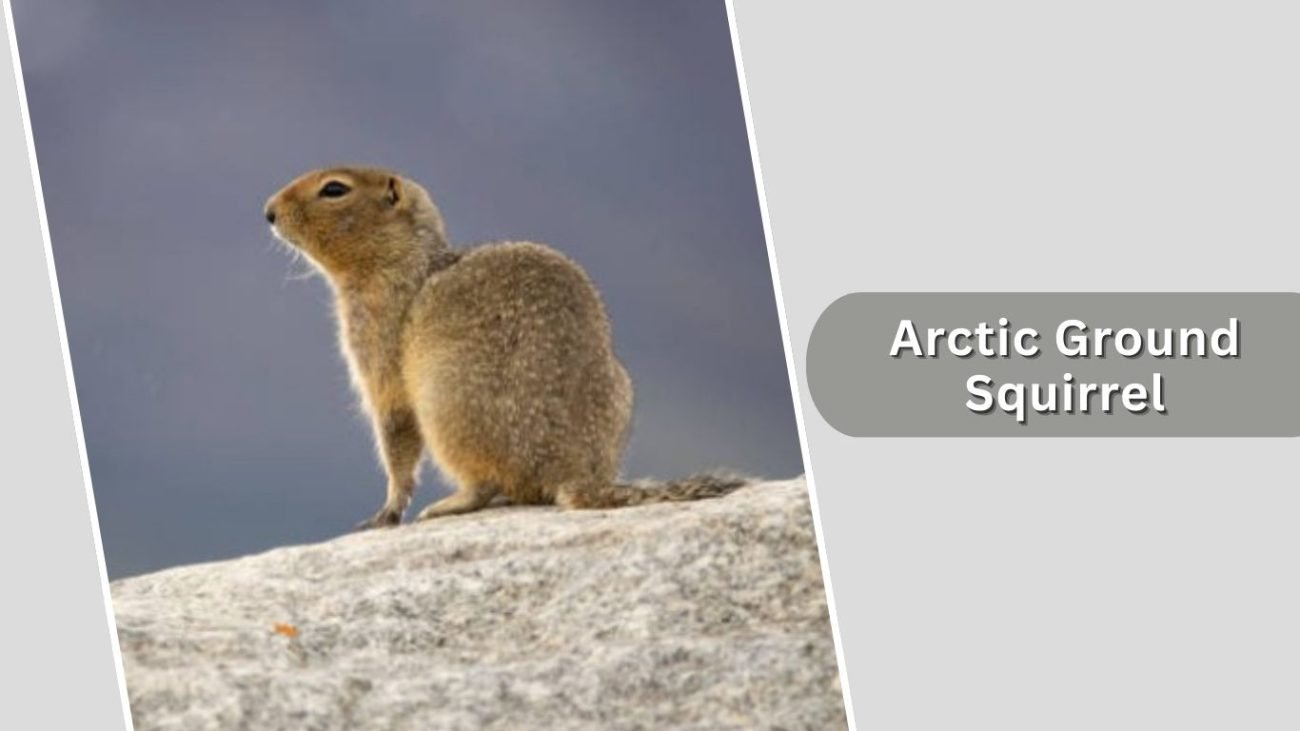
The Arctic ground squirrel is one of the northernmost-living mammals in the world. It is famous for surviving extreme cold and long winters through deep hibernation. This ground-dwelling squirrel is commonly seen standing upright in tundra and open landscapes.
Identification
- Medium-sized ground squirrel with a stocky body
- Fur brown to gray with white speckles
- Pale or yellowish underside
- Short, bushy tail compared to tree squirrels
- Small rounded ears
- Strong front claws adapted for digging
Habitat
Arctic ground squirrels live in tundra, alpine meadows, open forests, and grasslands across Alaska, northern Canada, and Siberia. They depend on well-drained soils where they can dig deep burrows to escape predators and extreme temperatures.
Behaviors
They are active during daylight in the short Arctic summer. Arctic ground squirrels are social and often live in loose colonies. They spend much time feeding, standing guard, and sunning. During winter, they enter deep hibernation, with body temperature dropping below freezing.
Diet and lifecycle
Their diet includes grasses, seeds, flowers, roots, berries, insects, and small animals. Breeding occurs soon after they emerge from hibernation. Females give birth to 5–10 young. The young grow rapidly during summer to prepare for their first long winter.
27. Barbary Ground Squirrel (Atlantoxerus getulus)
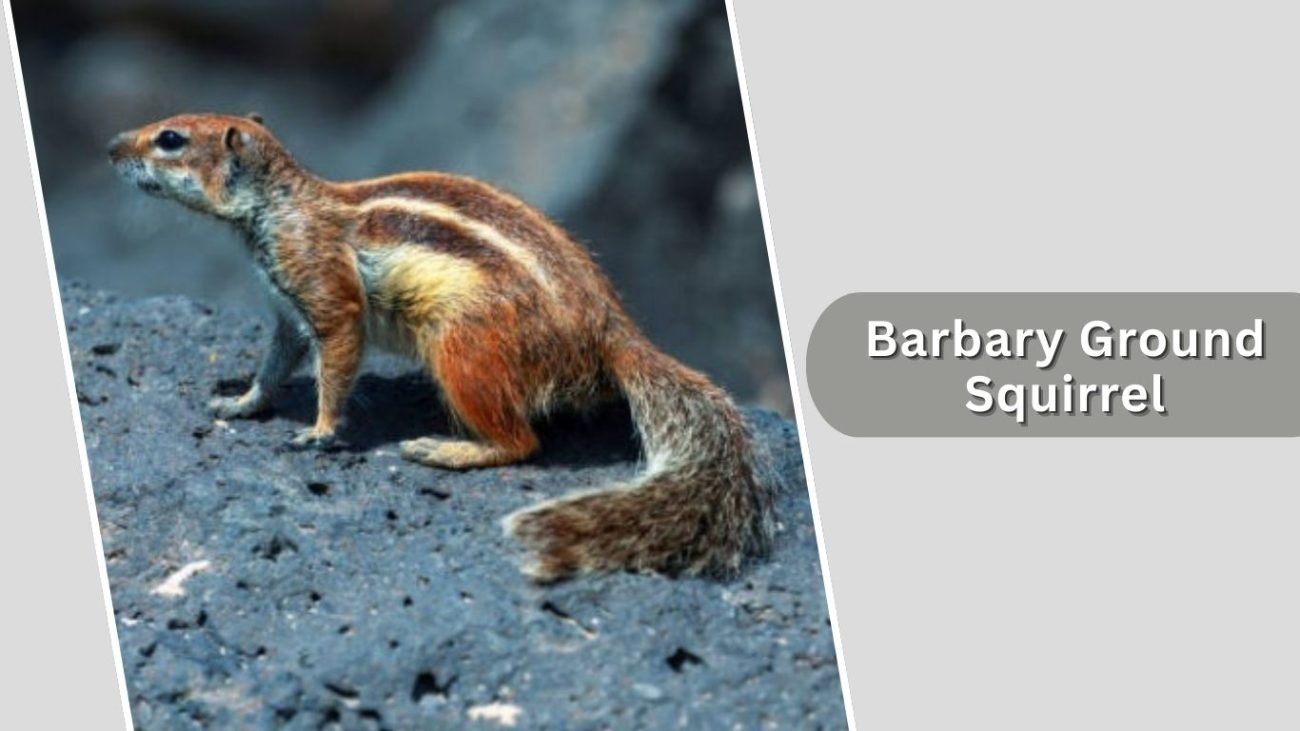
The Barbary ground squirrel is a small, lively ground squirrel native to North Africa and introduced to parts of Europe. It is well known for its upright sitting posture and social behavior in rocky, open habitats.
Identification
- Small to medium-sized ground squirrel
- Gray-brown fur with faint lighter stripes along the back
- Whitish underside
- Moderately bushy tail often carried upright
- Short rounded ears
- Strong digging claws
Habitat
Barbary ground squirrels live in rocky deserts, scrublands, dry forests, agricultural areas, and coastal regions. They are commonly found in Morocco, Algeria, and introduced populations in the Canary Islands. They prefer open ground with rocks and burrows for shelter.
Behaviors
They are active during the day and are highly social. Barbary ground squirrels often forage in groups and use alarm calls to warn of predators. They are fast runners and quickly retreat into burrows when threatened.
Diet and lifecycle
Their diet includes seeds, fruits, leaves, roots, insects, and cultivated crops. Breeding usually occurs once a year. Females give birth to 2–6 young. The young leave the burrow after several weeks and soon begin independent foraging.
FAQs
What is the main difference between tree squirrels, flying squirrels, and ground squirrels?
Tree squirrels live mainly in trees and use their tails for balance. Flying squirrels glide between trees using a skin membrane. Ground squirrels live mostly on land, dig burrows, and are adapted for open habitats like grasslands, deserts, and tundra regions.
Are squirrels found all over the world?
Squirrels are found on every continent except Antarctica and Australia. They are widely distributed across North America, South America, Europe, Africa, and Asia, living in forests, mountains, grasslands, deserts, and even cities, showing strong adaptability to many environments.
What do squirrels mostly eat in the wild?
Most squirrels are omnivores. They mainly eat nuts, seeds, fruits, buds, and fungi. Many species also consume insects, bird eggs, and small animals when available. Their food-caching behavior helps forests regenerate by spreading seeds.
How long do squirrels usually live?
In the wild, most squirrels live between 5 and 10 years, depending on species and environmental conditions. Predators, disease, and habitat loss reduce lifespan. In protected conditions or captivity, some squirrels can live over 15 years.
Why are squirrels important to ecosystems?
Squirrels play a major role in seed dispersal and forest regeneration. By burying nuts and seeds, many of which are never recovered, they help new trees grow. Some species also spread fungal spores that support healthy forest root systems.


