The black-and-white warbler is a small but striking songbird known for its bold striped plumage and unique behavior. Unlike most warblers, this bird creeps along tree trunks and branches much like a nuthatch, making it easy to spot for attentive birdwatchers. Found across North America during the breeding season and migrating to warmer regions in winter, the black-and-white warbler is a fascinating species with distinctive habits, diverse habitats, and an important role in forest ecosystems.
What is a Black-and-White Warbler?
Scientific Classification
The black-and-white warbler (Mniotilta varia) belongs to the Parulidae family, commonly known as the New World warblers. It is the only species in its genus, making it unique among its relatives. Like other warblers, it is a migratory songbird, traveling long distances between breeding and wintering grounds each year.
Physical Description
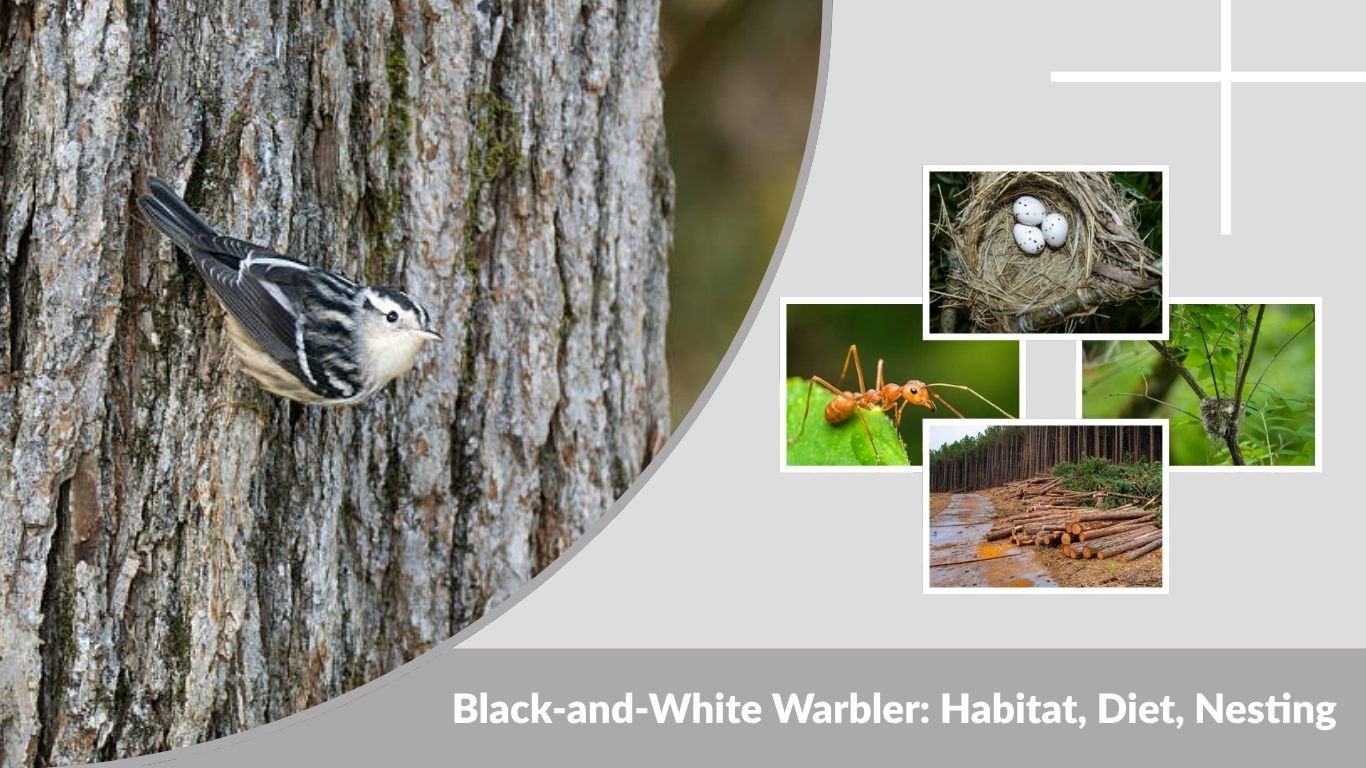
The black-and-white warbler is easily recognized by its bold black-and-white striped plumage, which resembles a zebra pattern. This distinctive coloring helps it blend into the bark of trees while foraging.
Adults are relatively small, measuring about 11–13 cm in length with a wingspan of around 18–22 cm. Males typically have more pronounced black streaks and darker markings, while females appear slightly duller with softer contrast. Their slender, slightly curved beaks are well adapted for picking insects from bark and crevices.
Black-and-White Warbler Identification
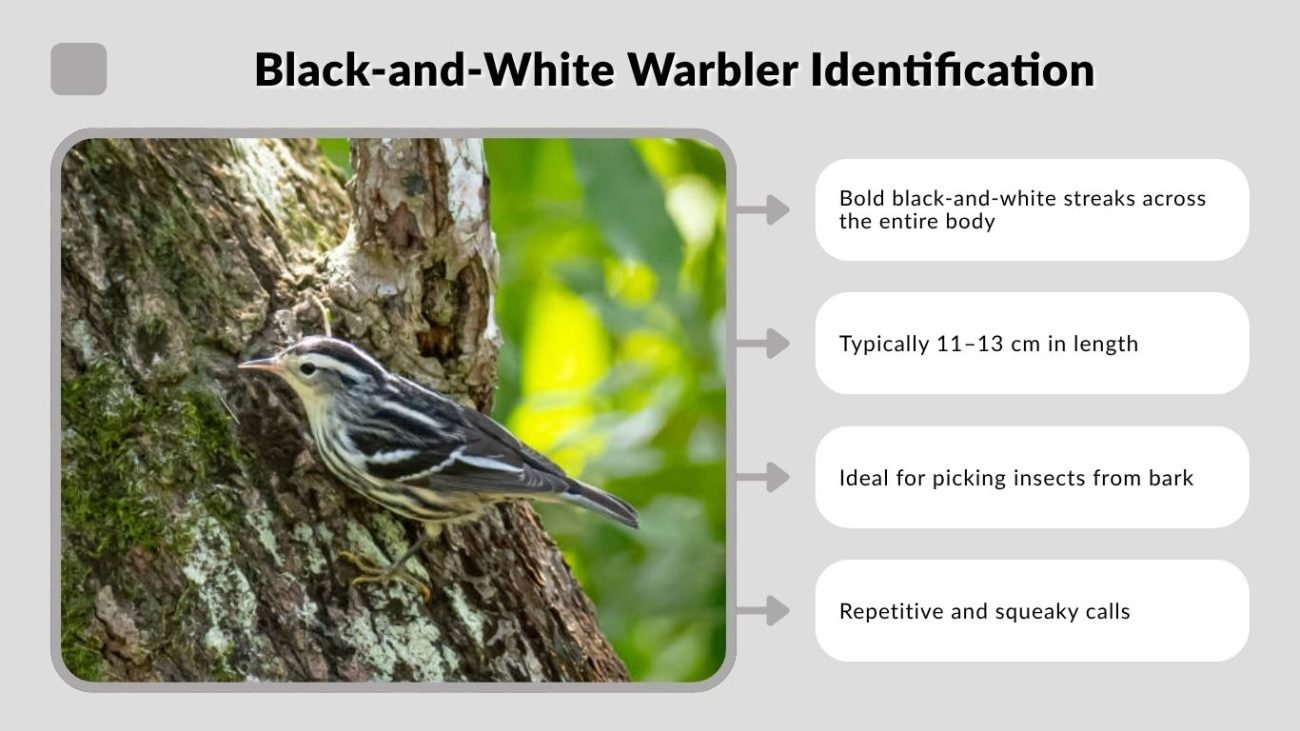
Identifying a black-and-white warbler is relatively easy once you know what to look for. This small songbird stands out due to its bold striped pattern and unusual behavior compared to other warblers. Its habit of creeping along tree bark, rather than hopping through leaves, makes it especially distinctive in the field.
Key Identification Features:
- Zebra-like stripes: Bold black-and-white streaks across the entire body
- Small size: Typically 11–13 cm in length
- Slender, slightly curved bill: Ideal for picking insects from bark
- Tree-climbing behavior: Moves along trunks and branches like a nuthatch
- Sharp, high-pitched song: Repetitive and squeaky calls
Male vs Female (Quick Differences):
- Male: Darker, more defined black markings
- Female: Slightly duller with softer contrast
Juvenile Traits:
- Less distinct striping
- More grayish or brownish tones
These features combined make the black-and-white warbler one of the easiest warblers to recognize, especially when observed in its natural forest habitat.
Black-and-White Warbler Habitat
Where Do They Live?
The black-and-white warbler primarily breeds in North America, including the United States and Canada. During the winter months, it migrates to Central America, the Caribbean, and northern parts of South America.
This seasonal movement makes it a common sight in different regions depending on the time of year.
Preferred Habitat Types
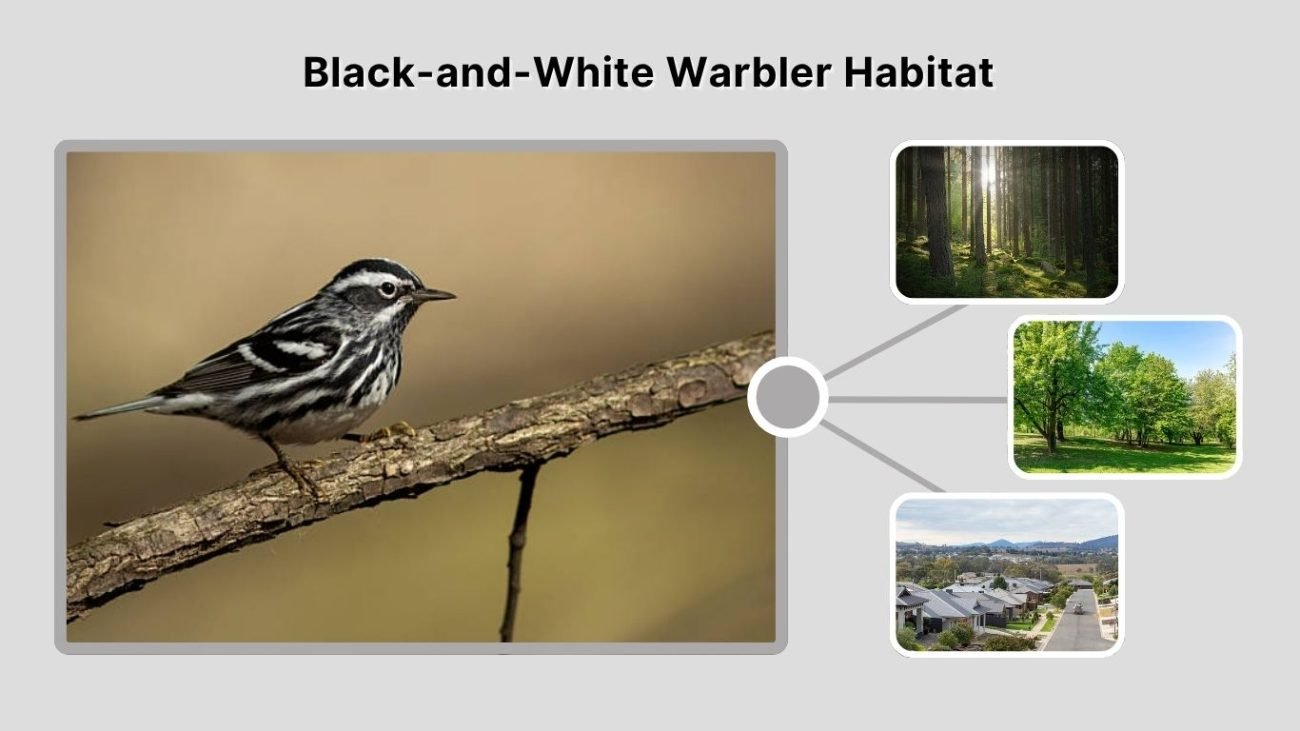
Black-and-white warblers prefer forested environments, especially deciduous and mixed forests. They are often found in mature woodlands with plenty of trees, which provide ideal surfaces for their unique foraging style.
They can also be seen in secondary growth forests, wooded parks, and sometimes even suburban areas with sufficient tree cover.
Migration Patterns
These birds are long-distance migrants and are among the earlier warblers to return to their breeding grounds in spring. In autumn, they travel south to warmer climates where food remains abundant.
Their migration routes vary, but many individuals follow established pathways through North America into tropical regions.
Black-and-White Warbler Diet
What Do They Eat?
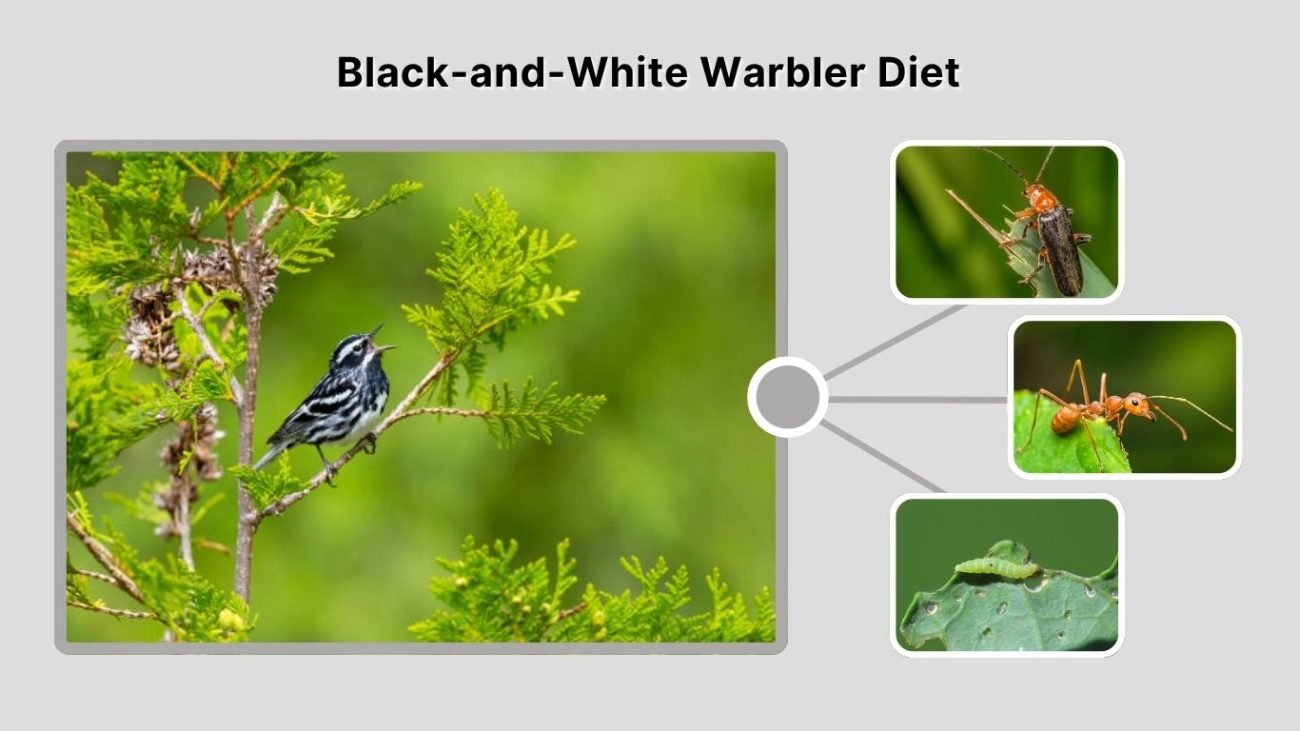
The black-and-white warbler is primarily insectivorous, meaning its diet consists mostly of insects and other small invertebrates. Common food items include beetles, ants, caterpillars, spiders, and larvae.
This diet plays a crucial role in controlling insect populations within forest ecosystems.
Unique Foraging Behavior
One of the most fascinating aspects of the black-and-white warbler is its feeding behavior. Instead of searching for food among leaves like most warblers, it creeps along tree bark, probing into crevices to find hidden insects.
This method of foraging allows it to access food sources that many other birds cannot reach, reducing competition and increasing its chances of survival.
Black-and-White Warbler Nest
Nest Location
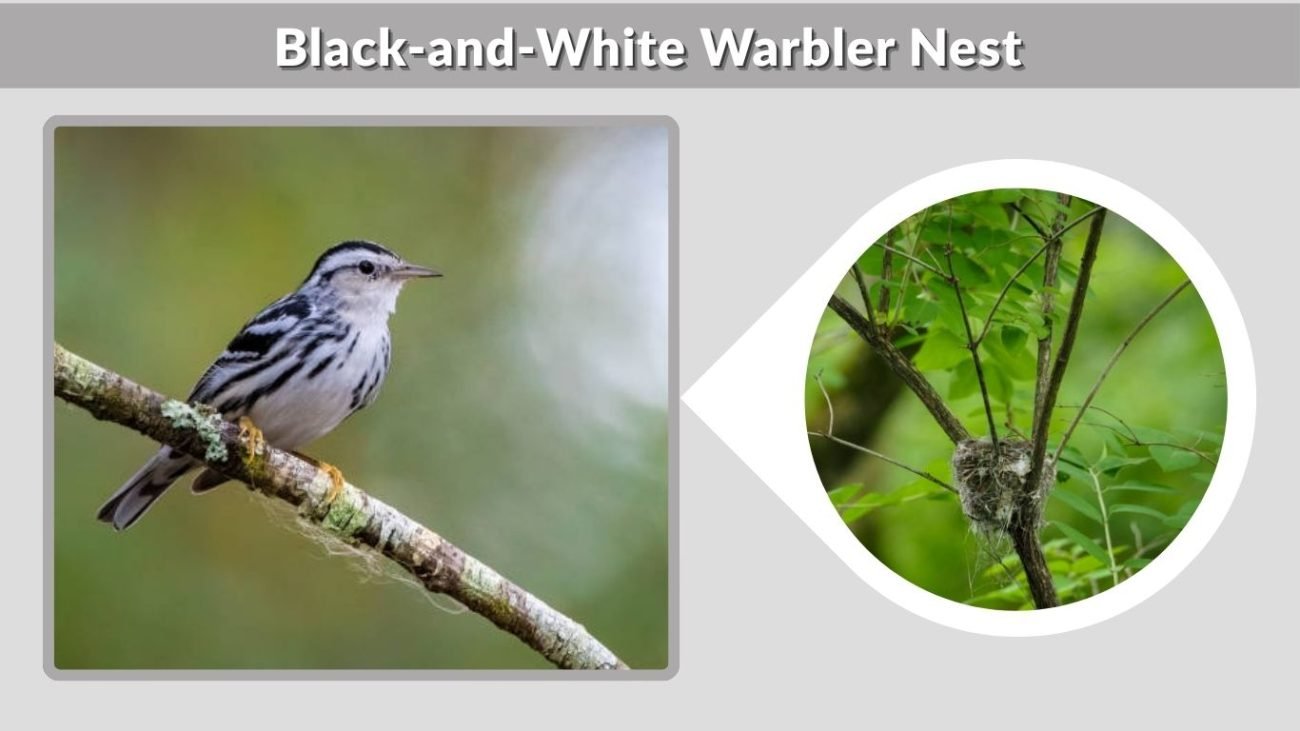
Black-and-white warblers typically build their nests on or very close to the ground, which is unusual for many songbirds. Nests are often hidden beneath leaf litter, at the base of trees, or tucked into roots, logs, or small shrubs. This concealed placement helps protect the nest from predators.
Nest Structure
The nest is a small, cup-shaped structure carefully constructed from leaves, bark strips, grasses, and pine needles. The interior is lined with softer materials such as fine grasses, hair, or plant fibers to provide insulation and comfort for the eggs and chicks.
The female is primarily responsible for building the nest, often choosing a well-hidden site to increase the chances of successful breeding.
Black-and-White Warbler Eggs
Egg Appearance
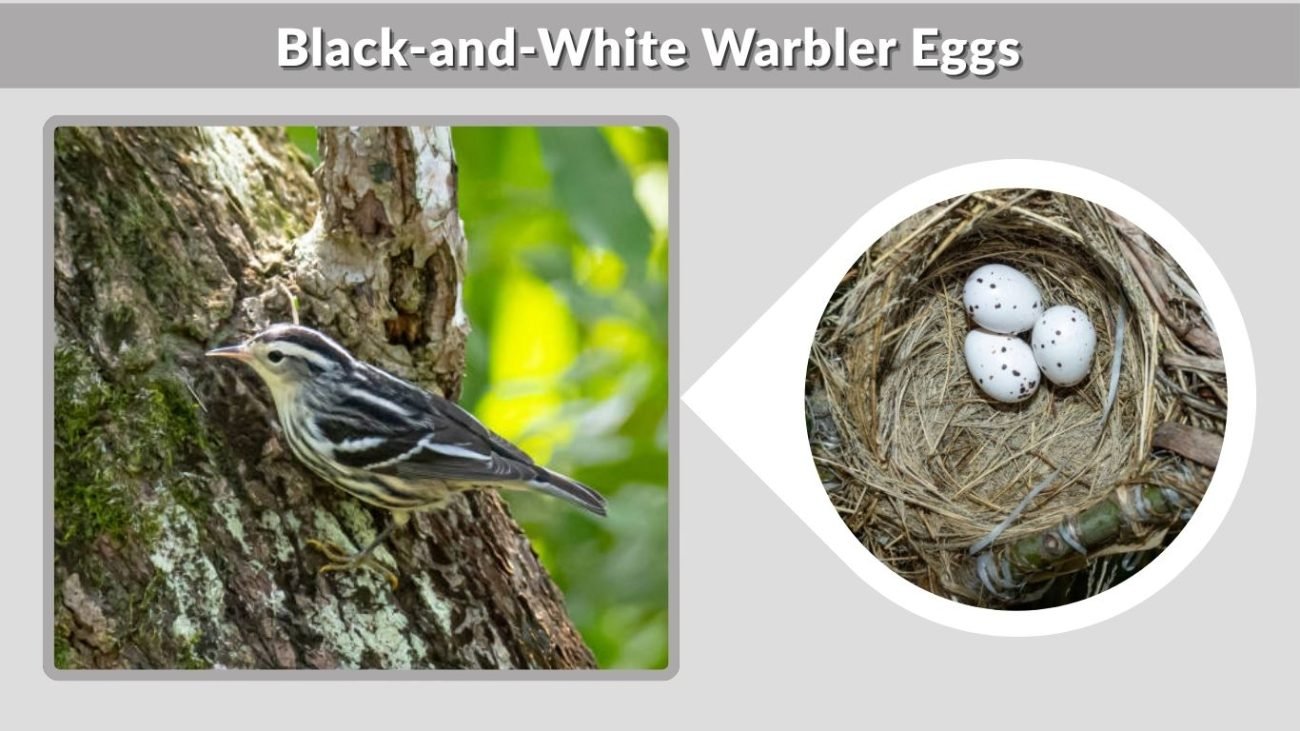
Black-and-white warbler eggs are usually white or creamy in color, decorated with small brown or purplish spots. These markings are often more concentrated at the wider end of the egg.
Clutch Size
A typical clutch consists of about 4 to 6 eggs. The number can vary slightly depending on environmental conditions and food availability.
Incubation Period
The incubation period generally lasts around 10 to 12 days. During this time, the female stays on the nest to keep the eggs warm, while the male may assist by bringing food.
Black-and-White Warbler Life Cycle
Life Cycle Stages
The life cycle of the black-and-white warbler follows the typical stages of many songbirds:
- Egg
- Chick (nestling)
- Fledgling
- Adult
Each stage plays a crucial role in the development and survival of the bird.
Growth and Development
After hatching, the chicks are helpless and rely entirely on their parents for food and protection. Both parents actively feed the young with insects, ensuring rapid growth.
Within about 8–12 days, the chicks develop enough feathers and strength to leave the nest. Even after fledging, they may remain dependent on their parents for a short period as they learn to forage independently.
Lifespan
In the wild, black-and-white warblers typically live around 6–10 years, although many do not survive their first year due to predation and environmental challenges.
Behavior and Adaptations
Tree-Climbing Behavior
One of the most distinctive behaviors of the black-and-white warbler is its ability to climb tree trunks and branches. This adaptation allows it to forage in a manner similar to nuthatches and woodpeckers, making it unique among warblers.
Its strong legs and sharp claws help it grip bark surfaces as it moves in various directions, including upside down.
Vocalizations
Black-and-white warblers produce high-pitched, repetitive songs that are often described as squeaky or thin. These songs are commonly heard during the breeding season and are used to attract mates and defend territory.
They also use softer calls to communicate with their mates and offspring.
Threats and Conservation Status
Population Trends
The black-and-white warbler is currently considered a species of “Least Concern,” with a relatively stable population across its range. Its wide distribution and adaptability contribute to its continued survival.
Threats
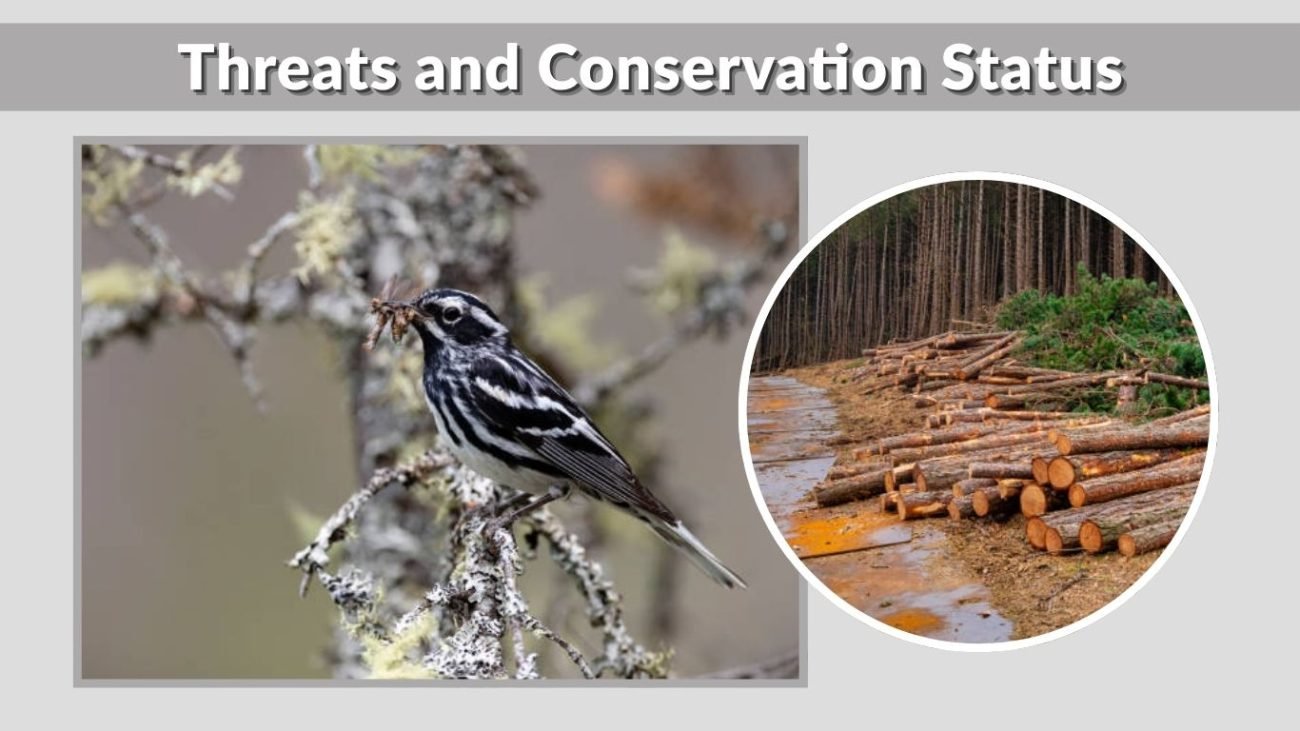
Despite its stable status, the species faces several challenges. Habitat loss due to deforestation and urban development can reduce suitable breeding areas. Climate change may also impact migration patterns and food availability.
Additionally, ground nesting makes them more vulnerable to predators such as snakes, mammals, and larger birds.
Interesting Facts About Black-and-White Warbler
- It is the only species in its genus (Mniotilta).
- Unlike most warblers, it climbs trees like a nuthatch.
- Its striped plumage provides excellent camouflage on tree bark.
- It is one of the earliest warblers to arrive in spring migration.
- It plays an important role in controlling insect populations.
FAQs
How rare is the black-and-white warbler?
It is not considered rare and is fairly common within its range, especially during migration seasons.
Why does it climb trees like a nuthatch?
This behavior helps it access insects hidden in bark, giving it a feeding advantage over other birds.
When can you see black-and-white warblers?
They are most commonly seen during spring and fall migration, as well as during the breeding season in North America.
Are black-and-white warblers friendly to humans?
They are generally shy and avoid close contact but can often be observed in wooded areas and parks.
Conclusion
The black-and-white warbler is a remarkable bird that stands out for both its appearance and behavior. With its bold striped plumage and unique tree-climbing habits, it offers a fascinating glimpse into the diversity of songbirds. Its adaptability, migratory nature, and ecological importance make it an essential part of forest ecosystems. Whether you’re a seasoned birdwatcher or a curious observer, spotting this distinctive warbler is always a rewarding experience.