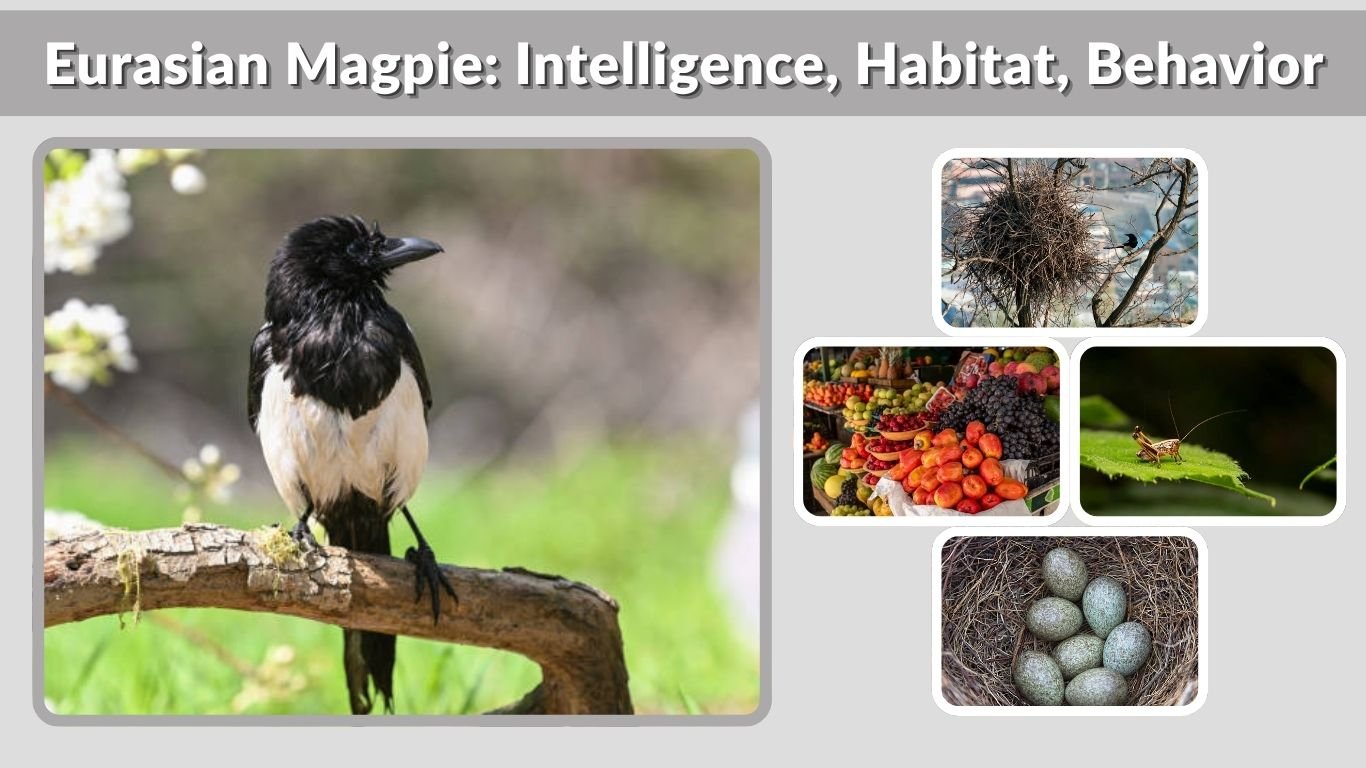
The Eurasian Magpie is one of the most recognizable and intelligent birds in the world. Known for its striking black-and-white plumage and shimmering tail, this bird belongs to the highly intelligent corvid family. Found across Europe, Asia, and parts of North Africa, the Eurasian magpie has fascinated scientists and bird enthusiasts alike due to its problem-solving abilities and complex behavior. From urban parks to rural landscapes, this adaptable species continues to thrive in diverse environments.
What is a Eurasian Magpie?
Scientific Classification
The Eurasian Magpie, scientifically known as Pica pica, is a member of the Corvidae family, which includes crows, ravens, and jays. Birds in this family are widely recognized for their intelligence, and the magpie is no exception. Its cognitive abilities often rival those of some mammals, making it a subject of extensive research.
Physical Appearance
One of the most striking features of the Eurasian magpie is its bold black-and-white coloration. The bird has a glossy black head, chest, and back, contrasted by bright white shoulders and belly. Its long tail, which can make up more than half of its body length, displays an iridescent sheen of blue and green when viewed in sunlight.
Adult magpies typically measure around 44–46 cm in length, with a wingspan of approximately 52–60 cm. Their strong beaks and sharp eyes give them a keen advantage when foraging or scanning their surroundings.
Habitat and Distribution
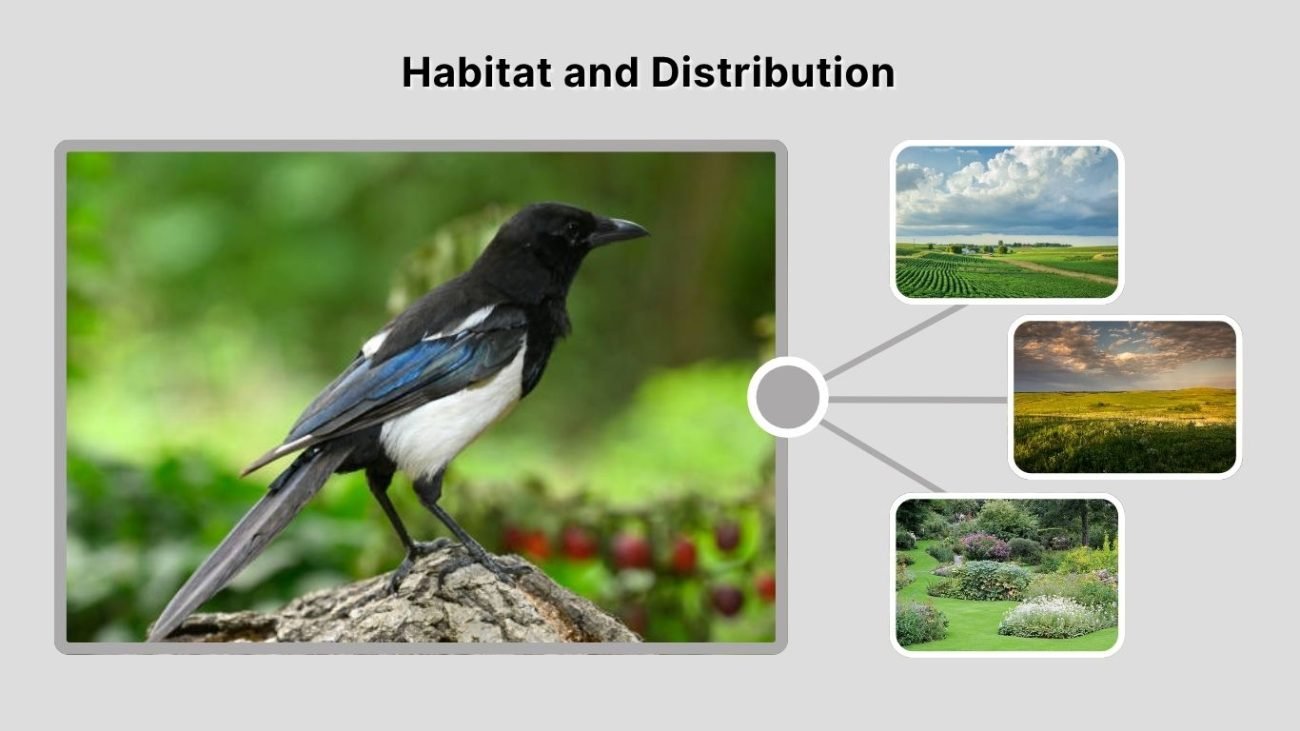
Where Do Eurasian Magpies Live?
The Eurasian magpie is widely distributed across Europe, large parts of Asia, and North Africa. It is one of the most adaptable bird species, capable of living in a variety of environments. Unlike many birds that avoid human presence, magpies often thrive in areas close to people.
Preferred Habitats
Eurasian magpies are commonly found in open woodlands, farmlands, grasslands, and even urban areas such as parks and gardens. They prefer habitats with scattered trees or shrubs, which provide both nesting sites and good visibility for spotting predators or food.
In cities, magpies have successfully adapted to human activity, often scavenging for food and using man-made structures as part of their environment.
Intelligence and Cognitive Abilities
Why Are Magpies So Smart?
Magpies are considered among the most intelligent birds due to their large brain-to-body ratio. This allows them to perform complex tasks, solve problems, and adapt quickly to changing environments. Studies have shown that they can learn from experience and even plan for future needs.
Self-Recognition in Mirrors
One of the most fascinating discoveries about Eurasian magpies is their ability to recognize themselves in mirrors. This rare trait is shared by only a few species, including humans, dolphins, and great apes. In experiments, magpies have been observed investigating marks placed on their bodies after seeing their reflection, indicating self-awareness.
Tool Use and Memory
Eurasian magpies are also known for their impressive memory and resourcefulness. They often store food in hidden locations, a behavior known as caching, and can remember these spots later. This ability helps them survive during times when food is scarce.
In addition, magpies can use simple tools and manipulate objects to access food, further demonstrating their advanced cognitive skills.
Diet and Feeding Behavior
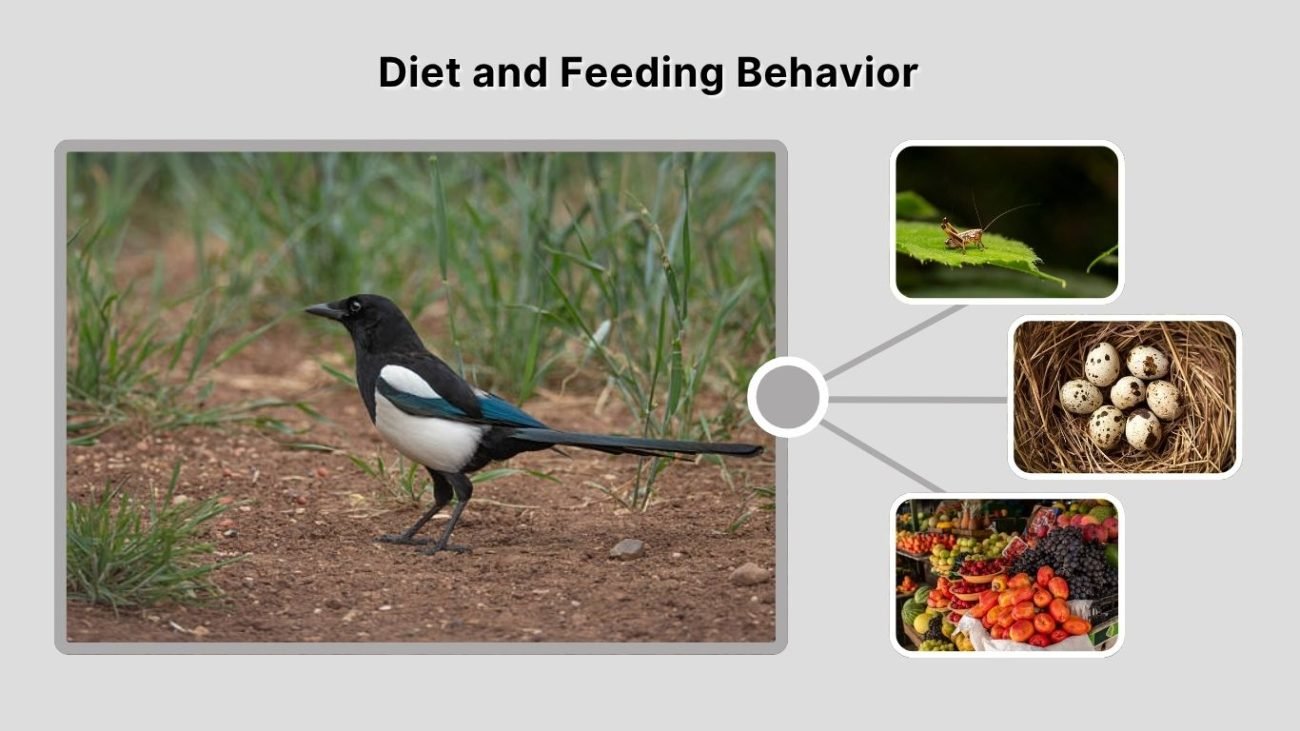
What Do Eurasian Magpies Eat?
The Eurasian magpie is an omnivorous bird, meaning it eats a wide variety of foods. Its diet includes insects, small mammals, bird eggs, fruits, seeds, and even carrion. This diverse diet allows the species to thrive in many different environments.
Scavenging Habits
Magpies are opportunistic feeders and are well known for their scavenging behavior. They often search for food scraps in urban areas or feed on roadkill in rural settings. Their adaptability in feeding habits is one of the key reasons for their widespread success.
They are also skilled hunters, capable of catching small animals and raiding nests for eggs or chicks when the opportunity arises.
Nesting and Reproduction
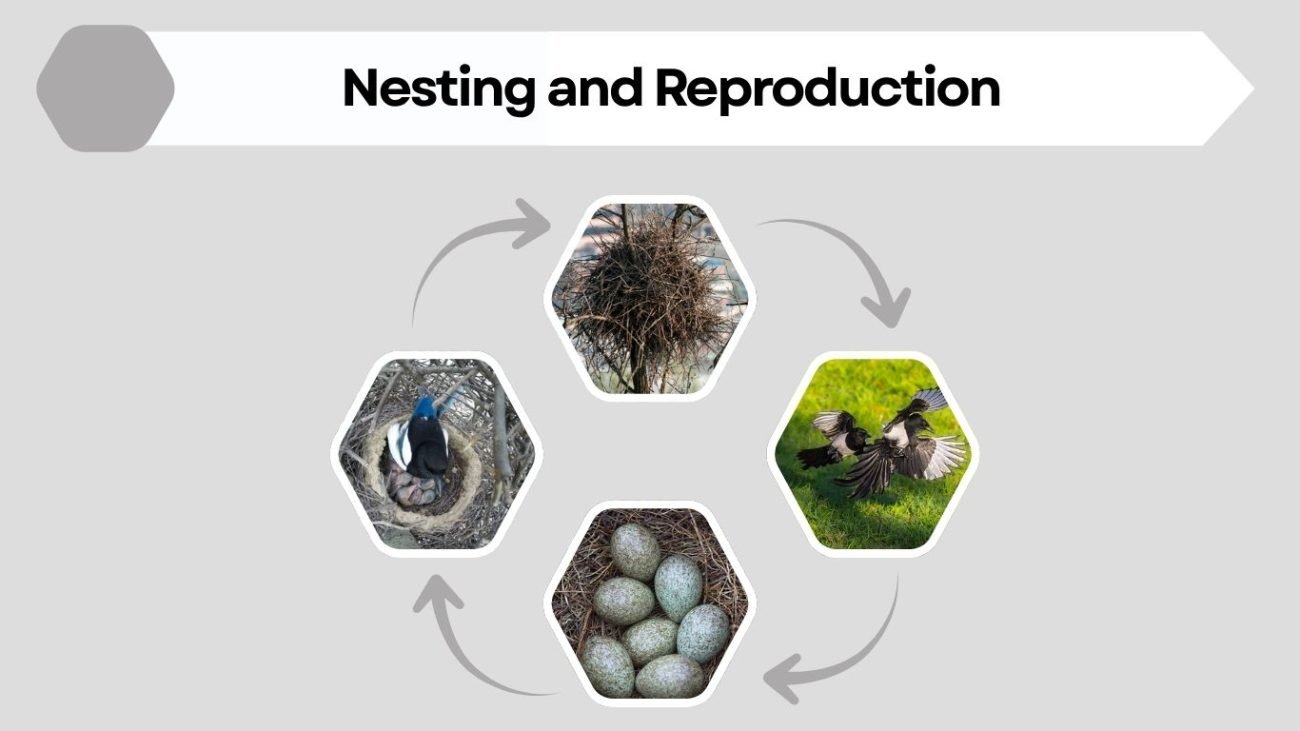
Nest Structure
Eurasian magpies are known for building large, complex nests that are easy to recognize. Their nests are typically dome-shaped structures made from sticks, twigs, and mud, often lined with softer materials like grass, hair, or feathers. These nests are usually built high in trees or tall shrubs, providing protection from predators.
The dome-like design, complete with a side entrance, helps shield eggs and chicks from harsh weather and potential threats.
Breeding Season
The breeding season for Eurasian magpies generally begins in early spring. During this time, pairs become highly territorial and actively defend their nesting area from intruders. Magpies are usually monogamous, often forming long-term pair bonds.
Courtship involves displays of calling, tail flicking, and chasing behaviors, which strengthen the bond between partners.
Egg Laying and Parenting
Female magpies typically lay between 5 to 8 eggs per clutch. The eggs are pale green or blue with brown speckles. Incubation lasts about 2–3 weeks and is mainly carried out by the female, while the male provides food.
After hatching, both parents share the responsibility of feeding and protecting the chicks. The young birds usually leave the nest after about 3–4 weeks but may remain dependent on their parents for some time.
Behavior and Social Structure
Social Behavior
Eurasian magpies are generally seen alone or in pairs, especially during the breeding season. However, outside of this period, they may gather in small groups. They are territorial birds and can be quite aggressive when defending their nesting area.
Despite this, magpies also display complex social interactions, including cooperation and communication within groups.
Communication
Magpies are highly vocal birds with a wide range of calls and sounds. Their most common call is a loud, chattering noise, but they can also produce softer sounds for close communication.
These vocalizations are used to warn of danger, attract mates, and maintain social bonds.
Interaction with Humans
One of the most well-known traits of Eurasian magpies is their curiosity, especially toward shiny objects. While the idea that they steal shiny items is somewhat exaggerated, they are naturally inquisitive and may investigate unfamiliar objects.
In urban environments, magpies have become accustomed to human presence and can often be seen foraging in gardens, parks, and streets.
Symbolism and Cultural Significance
Magpies in Folklore
Throughout history, magpies have held a prominent place in folklore and superstition. In many European cultures, they are associated with both good and bad luck. For example, a single magpie is often seen as a sign of misfortune, while seeing multiple magpies can symbolize joy or good news.
Cultural Interpretations
In contrast, some Asian cultures view magpies more positively. They are often seen as symbols of happiness, good fortune, and even love. In certain traditions, magpies are believed to bring messages or represent a connection between the earthly and spiritual worlds.
Threats and Conservation Status

Population Status
The Eurasian magpie is currently classified as a species of “Least Concern” by the International Union for Conservation of Nature (IUCN). Its wide distribution and adaptability have helped maintain stable population levels.
Threats
Despite its stable status, the Eurasian magpie does face some threats. Habitat loss due to urban expansion and agricultural changes can impact local populations. Additionally, conflicts with humans—particularly in farming areas—sometimes lead to control measures against magpies.
However, overall, the species remains resilient and continues to thrive in many parts of its range.
Interesting Facts About Eurasian Magpies
- Eurasian magpies are among the few animals capable of recognizing themselves in mirrors.
- They can mimic sounds, including human-made noises.
- Their intelligence is comparable to that of some primates.
- Magpies often remember food hiding spots for long periods.
- Their long tail helps them maintain balance during flight and movement.
FAQs
Are Eurasian magpies aggressive?
They can be territorial, especially during the breeding season, but they are not typically dangerous to humans.
Why are magpies associated with luck?
This belief comes from folklore, where different numbers of magpies seen together symbolize various outcomes, from bad luck to happiness.
Can magpies be kept as pets?
In many regions, it is illegal to keep wild magpies as pets. They are best observed in their natural habitat.
How long do magpies live?
In the wild, Eurasian magpies can live around 5–10 years, though some individuals may live longer under favorable conditions.
Conclusion
The Eurasian Magpie stands out as one of the most intelligent and adaptable birds in the natural world. With its striking appearance, complex behavior, and remarkable cognitive abilities, it continues to intrigue both scientists and bird lovers. Whether seen in a quiet woodland or a busy city park, this bird plays an important role in the ecosystem and cultural traditions alike, making it a truly fascinating species worth understanding and protecting.