The American woodcock (Scolopax minor) is a unique and fascinating bird known for its unusual appearance and behavior. Often called the “timberdoodle,” this small, ground-dwelling bird is commonly found in eastern North America. With its long bill, large eyes, and excellent camouflage, the American woodcock is perfectly adapted to life on the forest floor. It is especially famous for its dramatic courtship display, known as the “sky dance,” which makes it one of the most interesting birds to observe in the wild.
Physical Characteristics and Identification
The American woodcock has a distinctive look that sets it apart from most other birds. Its body shape, coloring, and behavior all help it blend into its environment and avoid predators.
Size and Appearance
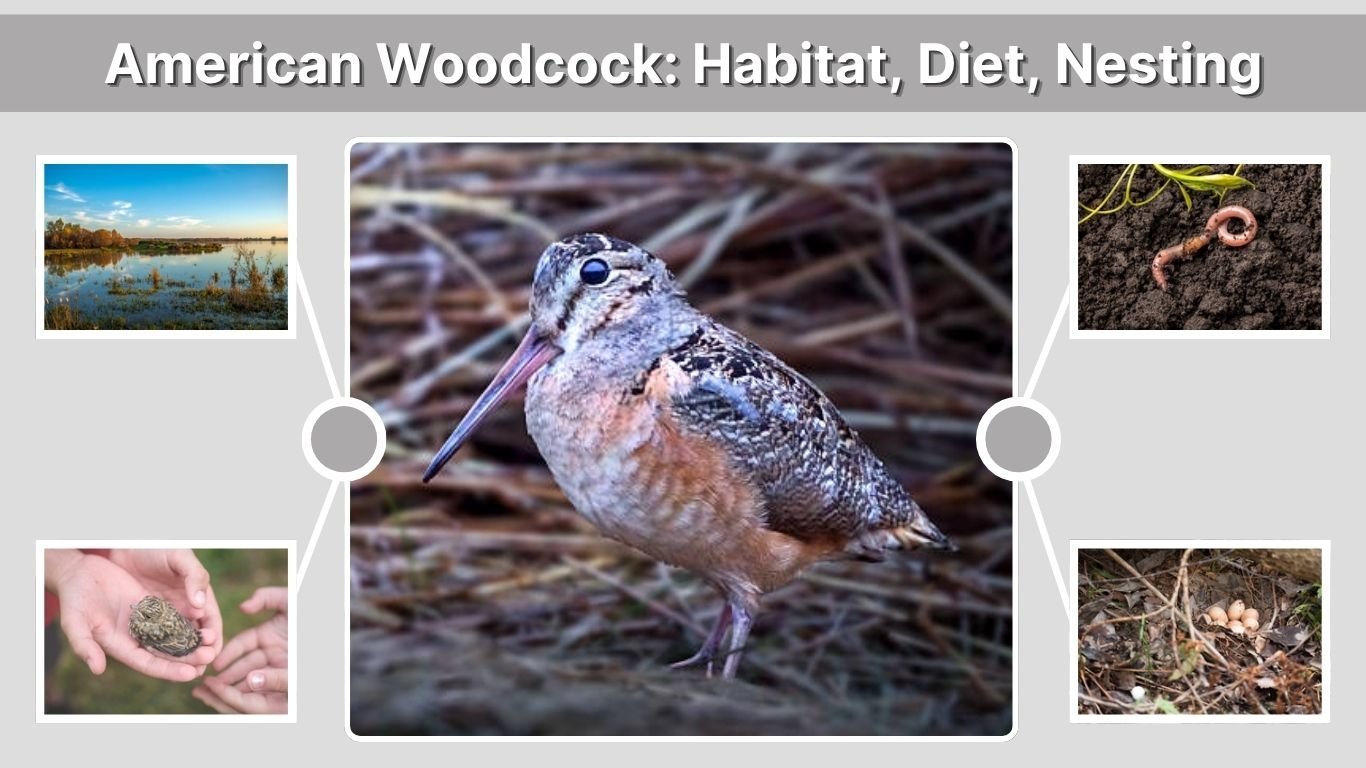
The American woodcock is a small, plump bird, measuring about 25–30 cm (10–12 inches) in length. It has a round body, short legs, and a short tail. Its feathers are mottled brown, gray, and black, providing excellent camouflage among leaves and forest debris.
Unique Features
One of the most notable features of the American woodcock is its long, flexible bill. This bill is specially adapted for probing into soft soil to find food. Another striking feature is its large eyes, which are positioned high and far back on the head. This unusual placement allows the bird to have a wide field of vision, helping it detect predators even while feeding.
Identification Tips
- Look for a plump, round body with short legs
- Notice the long straight bill used for probing soil
- Feathers appear camouflaged with leaf litter
- Often seen walking slowly with a bobbing motion
- Usually found on the forest floor rather than in trees
American Woodcock Habitat and Distribution
Geographic Range
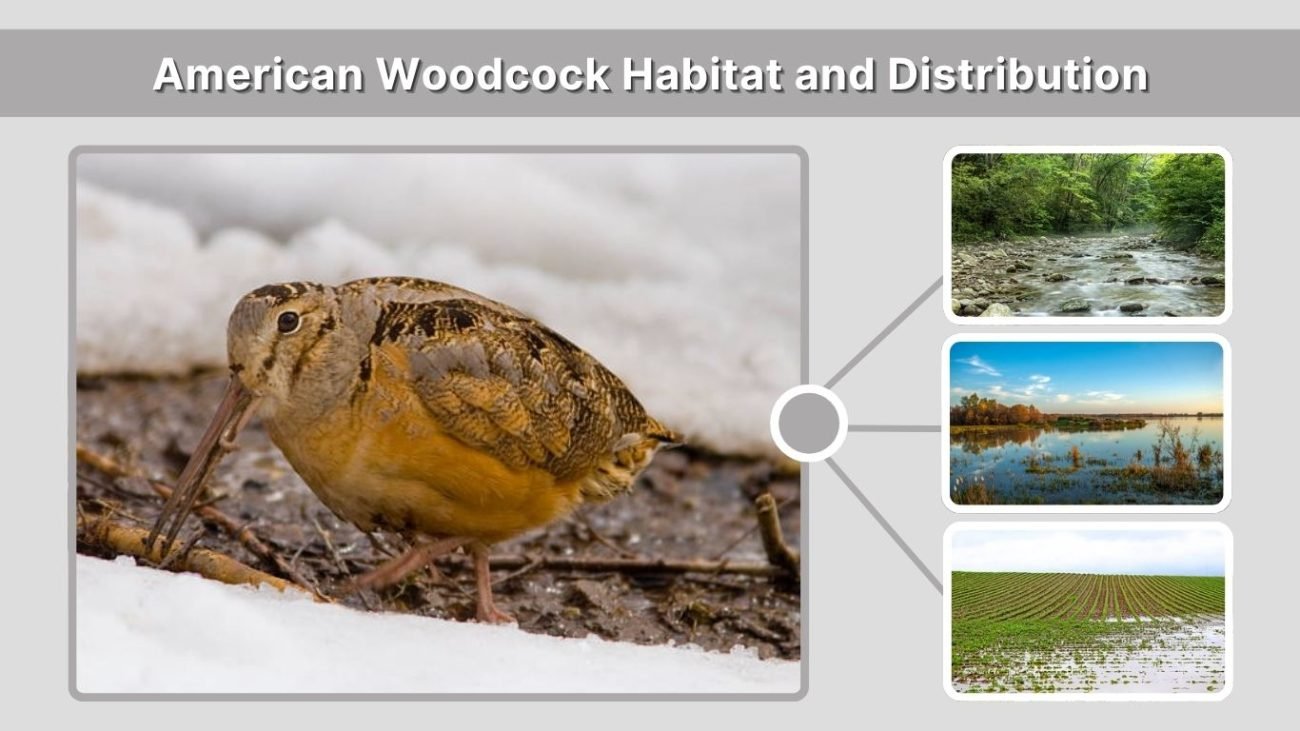
The American woodcock is found primarily in eastern North America. It breeds across the eastern United States and southern Canada, then migrates to the southeastern United States during the winter. Its range shifts with the seasons, depending on climate and food availability.
American Woodcock Habitat
This species prefers moist woodlands, young forests, and brushy areas. It is especially common in habitats with soft soil, which allows it to easily find food. Areas near streams, wetlands, or damp fields are ideal for the American woodcock. These environments provide both shelter and a steady supply of earthworms.
Seasonal Movements
The American woodcock is a migratory bird, although its movements are relatively short compared to other species. In colder months, it moves south to avoid frozen ground, which would make feeding difficult. During spring, it returns north to breed. These seasonal movements are closely tied to soil conditions and food availability.
Behavior and Unique Traits
The “Sky Dance” Display
One of the most remarkable behaviors of the American woodcock is its courtship display, often called the “sky dance.” At dusk or dawn, males perform a dramatic aerial display to attract females. They start by making buzzing calls on the ground, then fly upward in a spiral pattern before descending in a zigzag motion while producing chirping sounds. This performance is both visually and acoustically impressive.
Ground Behavior
The American woodcock spends most of its time on the ground, relying on its camouflage to stay hidden. When threatened, it may freeze in place, making it difficult to spot. Its slow, rocking or bobbing walk is another unique trait, which may help it detect prey underground or maintain balance.
Activity Patterns
This bird is most active during dawn and dusk, a behavior known as being crepuscular. During the day, it usually remains hidden in dense vegetation. Its secretive nature makes it less commonly seen, even in areas where it is relatively common.
American Woodcock Diet and Feeding Habits
Primary Diet
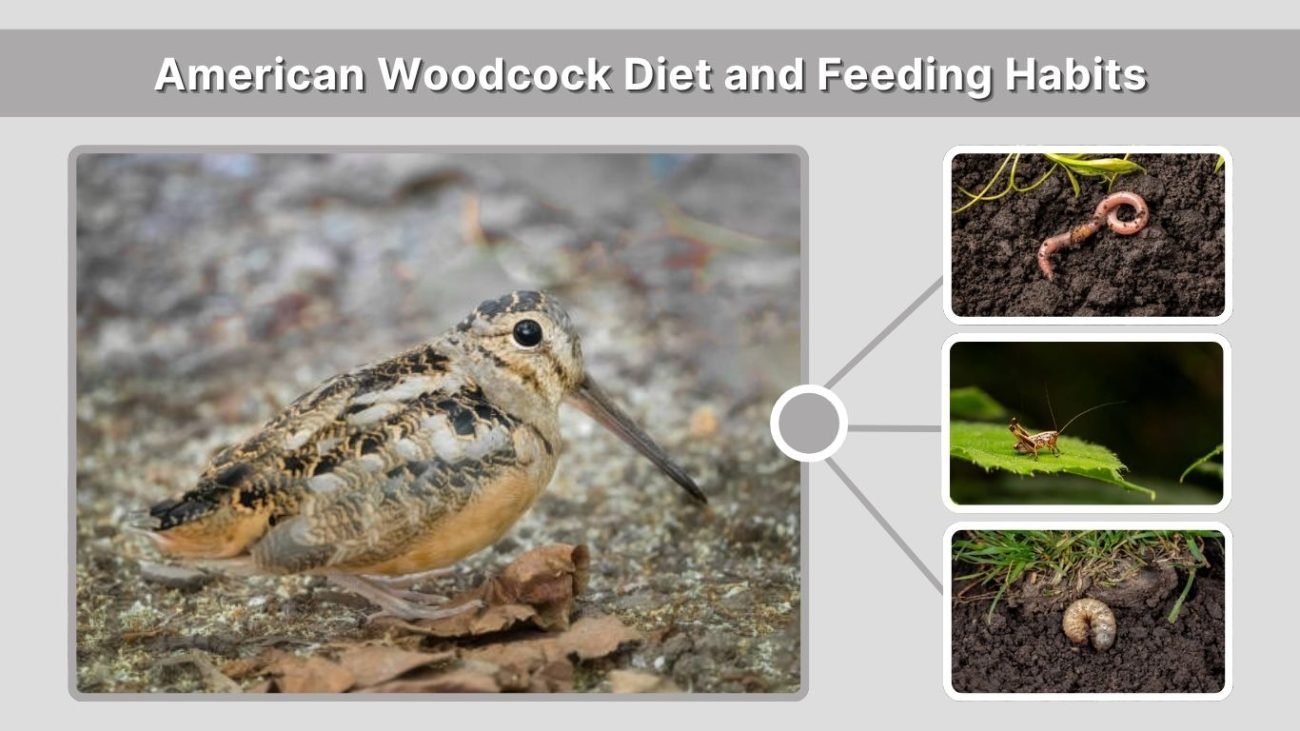
The American woodcock primarily feeds on earthworms, which make up the majority of its diet. These worms provide essential nutrients and are abundant in the moist soils where the bird lives.
Feeding Behavior
Using its long bill, the American woodcock probes into the soil to locate prey. The tip of its bill is highly sensitive, allowing it to detect movement underground. Once it finds a worm, it quickly pulls it out and eats it.
Seasonal Diet Changes
While earthworms are the main food source, the American woodcock may also eat insects, larvae, and other small invertebrates. During colder periods or in different habitats, this flexibility helps it survive when its preferred food is less available.
American Woodcock Nest, Eggs, and Baby
Nest Structure
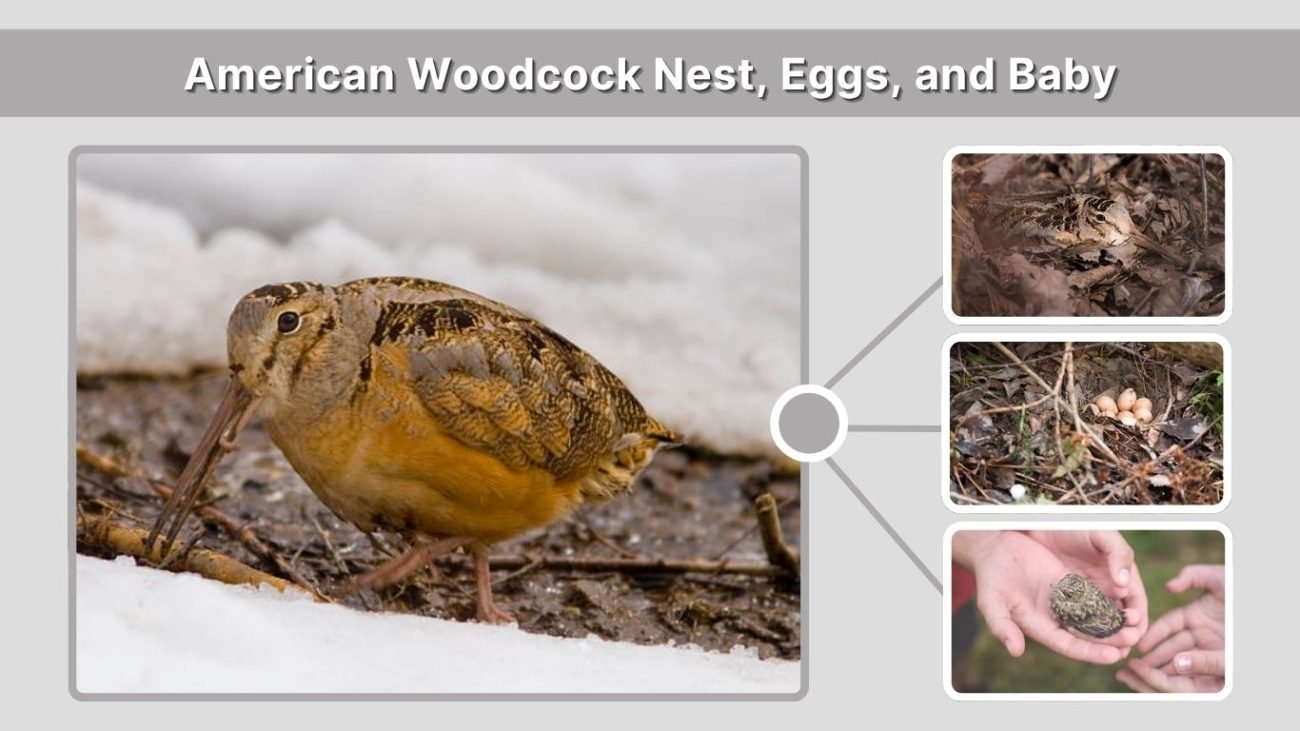
The American woodcock builds a very simple nest on the ground, usually in a shallow depression among leaves and forest debris. Unlike many birds, it does not construct an elaborate structure. Instead, it relies on natural camouflage to keep the nest hidden from predators. The surrounding leaf litter blends perfectly with the bird’s plumage, making the nest extremely difficult to detect.
American Woodcock Eggs
The female typically lays 3–5 eggs, which are light brown or buff-colored with darker spots. These markings help the eggs blend into the forest floor. Incubation lasts about 20–22 days and is carried out solely by the female. During this time, she remains well-camouflaged and still to avoid attracting attention.
American Woodcock Baby (Chicks)
American woodcock chicks are precocial, meaning they are relatively well-developed at birth. Shortly after hatching, they can leave the nest and begin following their mother. The female continues to protect and guide them, teaching them how to find food. The young birds grow quickly and become independent within a few weeks.
Conservation Status and Threats
Population Trends
The American woodcock is currently considered a species of conservation concern in some areas, with populations showing gradual declines. While it is still relatively widespread, changes in habitat have affected its numbers over time. Monitoring programs are in place to track population trends and support conservation efforts.
Major Threats
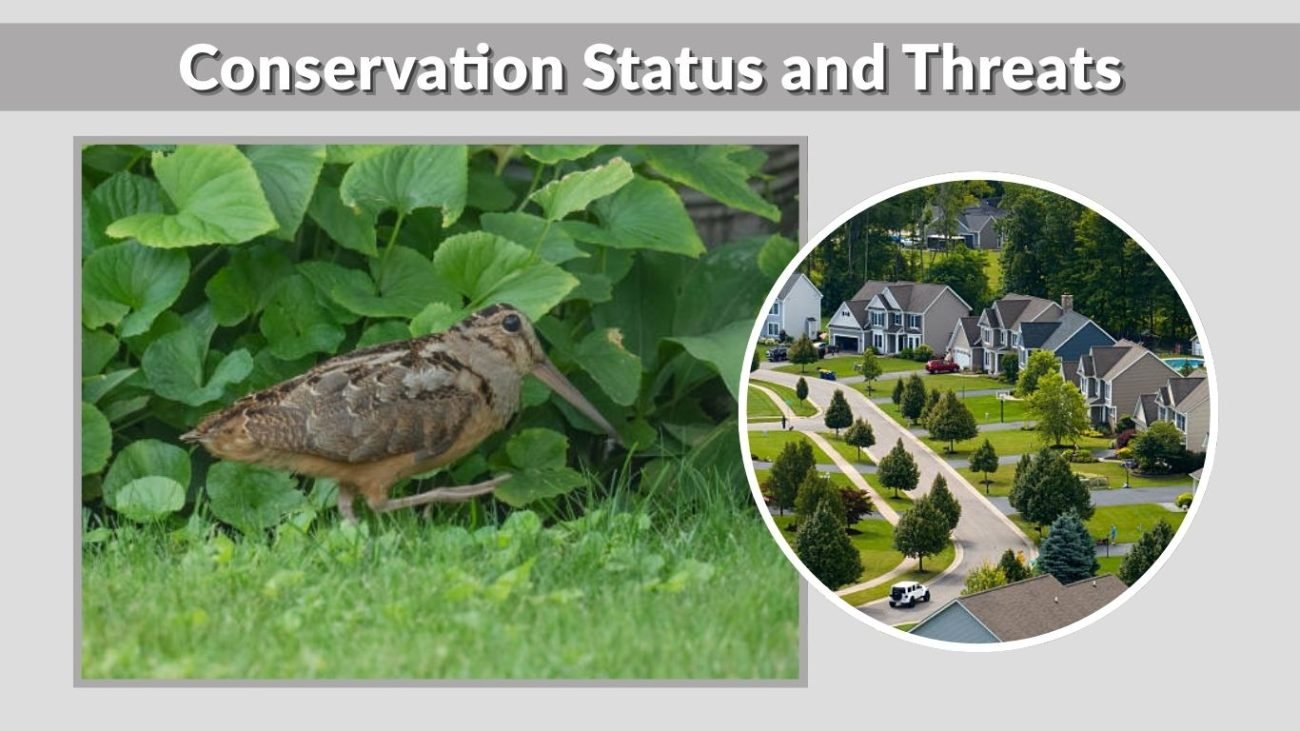
The primary threat to the American woodcock is habitat loss. As young forests and brushy areas are cleared or replaced by development, suitable environments become limited. Changes in land use, forestry practices, and urban expansion all contribute to this issue. Climate change may also impact soil conditions, affecting the availability of earthworms, which are essential to the bird’s diet.
Interesting American Woodcock Facts
- The American woodcock is often nicknamed the “timberdoodle.”
- Its eyes are positioned far back on its head, allowing nearly 360-degree vision.
- It performs a unique “sky dance” during courtship.
- Its bill is flexible and highly sensitive, helping it detect prey underground.
- It walks with a distinctive bobbing motion, unlike most birds.
FAQs
What does an American woodcock eat?
The American woodcock mainly eats earthworms, along with insects and larvae. It uses its long bill to probe into the soil to find food.
Where do American woodcock live?
They live in moist woodlands, young forests, and brushy areas in eastern North America, migrating south during winter.
What do American woodcock eggs look like?
The eggs are light brown or buff-colored with darker spots, which help them blend into the forest floor.
What is a baby American woodcock like?
Baby woodcocks are precocial, meaning they can move and follow their mother shortly after hatching. They quickly learn to find food and grow rapidly.
Why does the American woodcock perform a sky dance?
The sky dance is a courtship display used by males to attract females. It involves spiraling flights and unique sounds made during descent.
Conclusion
The American woodcock is a truly unique bird, known for its unusual appearance, fascinating behavior, and specialized feeding habits. From its simple ground nest to its dramatic sky dance, it offers a glimpse into the diversity of bird life in North America. Although it faces challenges from habitat loss and environmental changes, ongoing conservation efforts can help protect this remarkable species. By understanding its needs and supporting habitat preservation, we can ensure that the American woodcock continues to thrive in the wild.