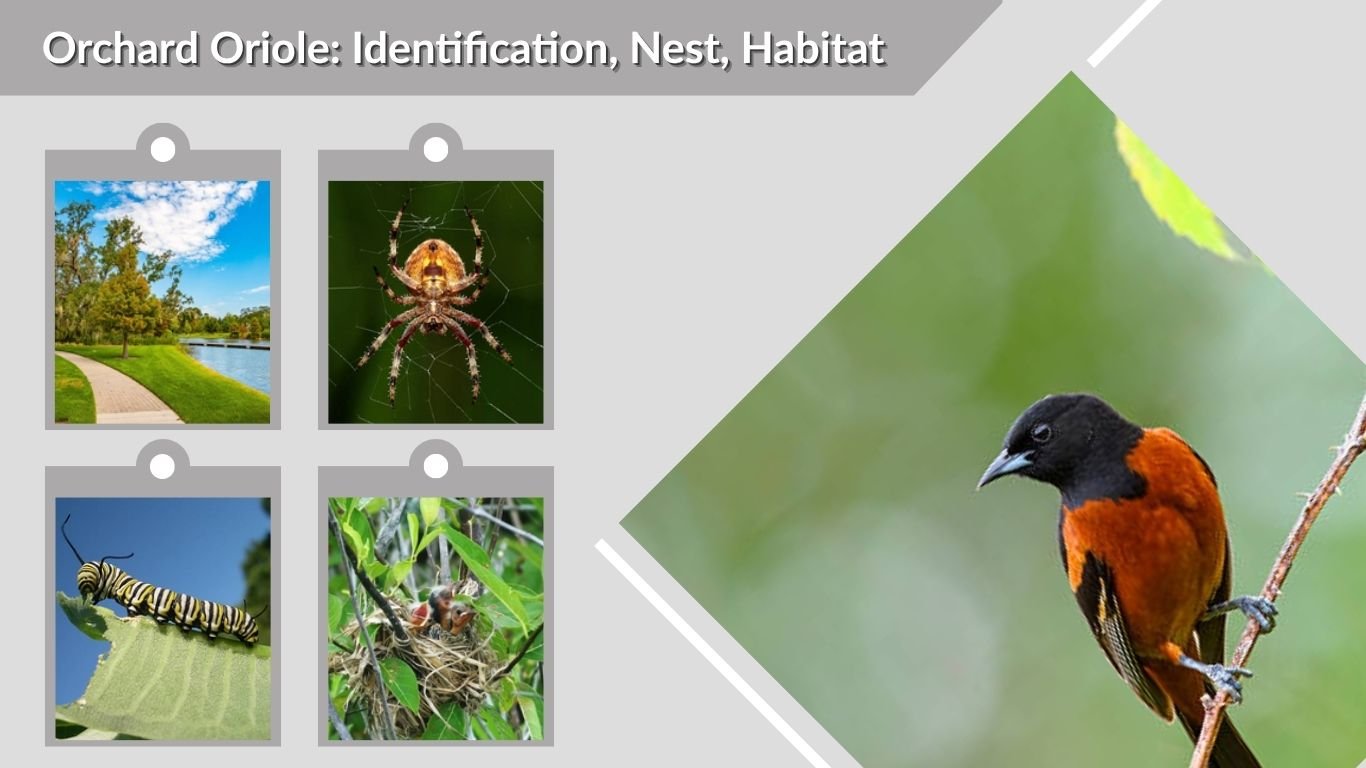
The orchard oriole (Icterus spurius) is the smallest oriole species in North America, known for its warm chestnut coloring and lively behavior. Commonly found in open woodlands, orchards, and suburban areas, this bird is both attractive and beneficial due to its insect-eating habits. Despite being less flashy than some other orioles, it has a unique charm and is often easier to spot once you know its key features. Its early migration and distinctive nesting style make it especially interesting to birdwatchers.
Orchard Oriole Identification
The orchard oriole is a slender, active songbird with noticeable differences between males and females. Its size, coloration, and behavior help distinguish it from other oriole species.
Size and Appearance
The orchard oriole is relatively small, measuring about 15–18 cm (6–7 inches) in length. It has a slim body, pointed bill, and a slightly rounded tail. Compared to other orioles, it appears more delicate and compact.
Male Orchard Oriole
Adult male orchard orioles are easy to recognize by their rich chestnut and black coloration. The head, back, and wings are black, while the underparts display a deep reddish-brown (chestnut) color. Younger males may appear more yellowish or greenish before developing their full adult colors, which can sometimes cause confusion during identification.
Female Orchard Oriole
Female orchard orioles have a much more subdued appearance. They are typically yellow-green with grayish wings and lack the bold contrast seen in males. This softer coloring helps them blend into their surroundings, especially when nesting.
Key Identification Tips
- Smaller and slimmer than most other orioles
- Adult males show chestnut and black coloration
- Females are yellow-green and less conspicuous
- Often seen moving actively among branches
Orchard Oriole Habitat and Distribution
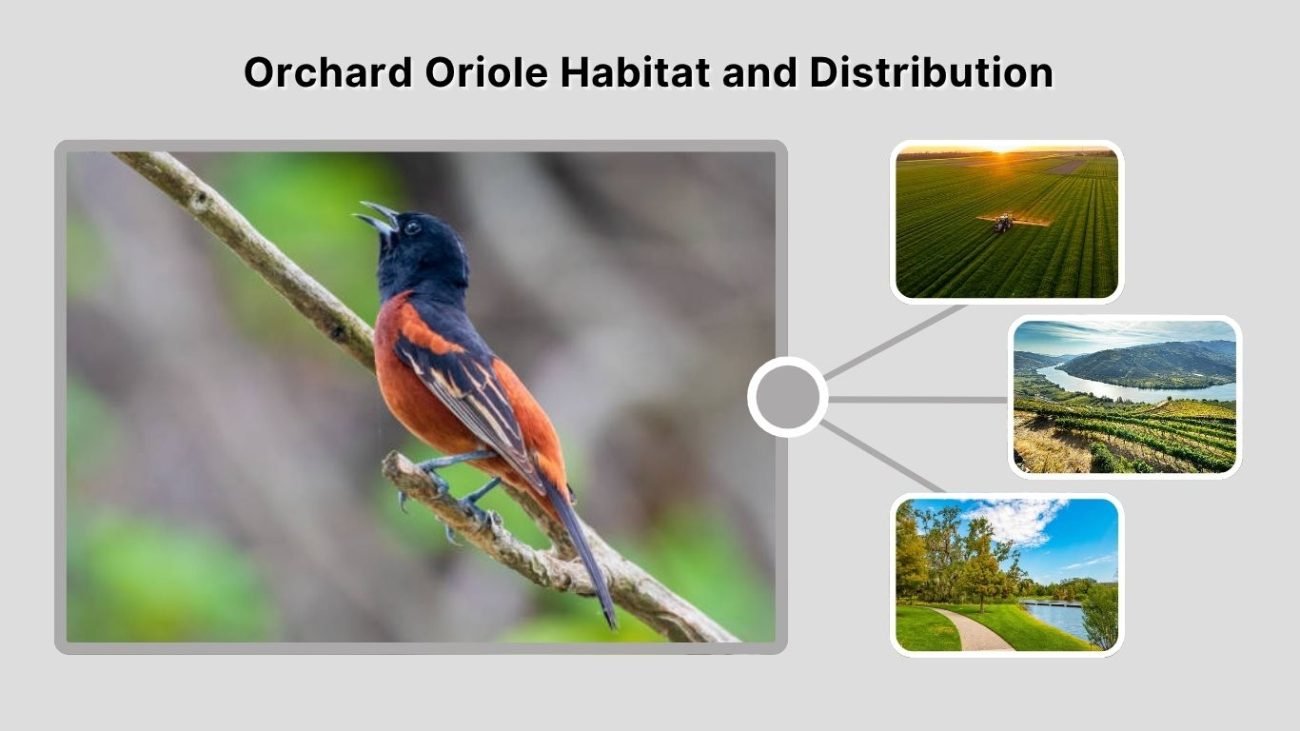
Geographic Range
The orchard oriole breeds across eastern and central North America, including parts of the United States and southern Canada. During the winter months, it migrates to Central America and northern South America. This long-distance migration makes it a seasonal visitor in many regions.
Orchard Oriole Habitat
As its name suggests, the orchard oriole prefers open habitats with scattered trees. It is commonly found in orchards, farmland, river edges, parks, and suburban areas. It favors environments where trees are not too dense, allowing easy movement and access to food.
Seasonal Migration
The orchard oriole is known for its early migration pattern. It arrives on breeding grounds in spring and often leaves earlier than many other songbirds, sometimes by mid to late summer. This early departure helps it avoid seasonal changes and ensures access to food in its wintering range.
Orchard Oriole Nest and Nesting Behavior
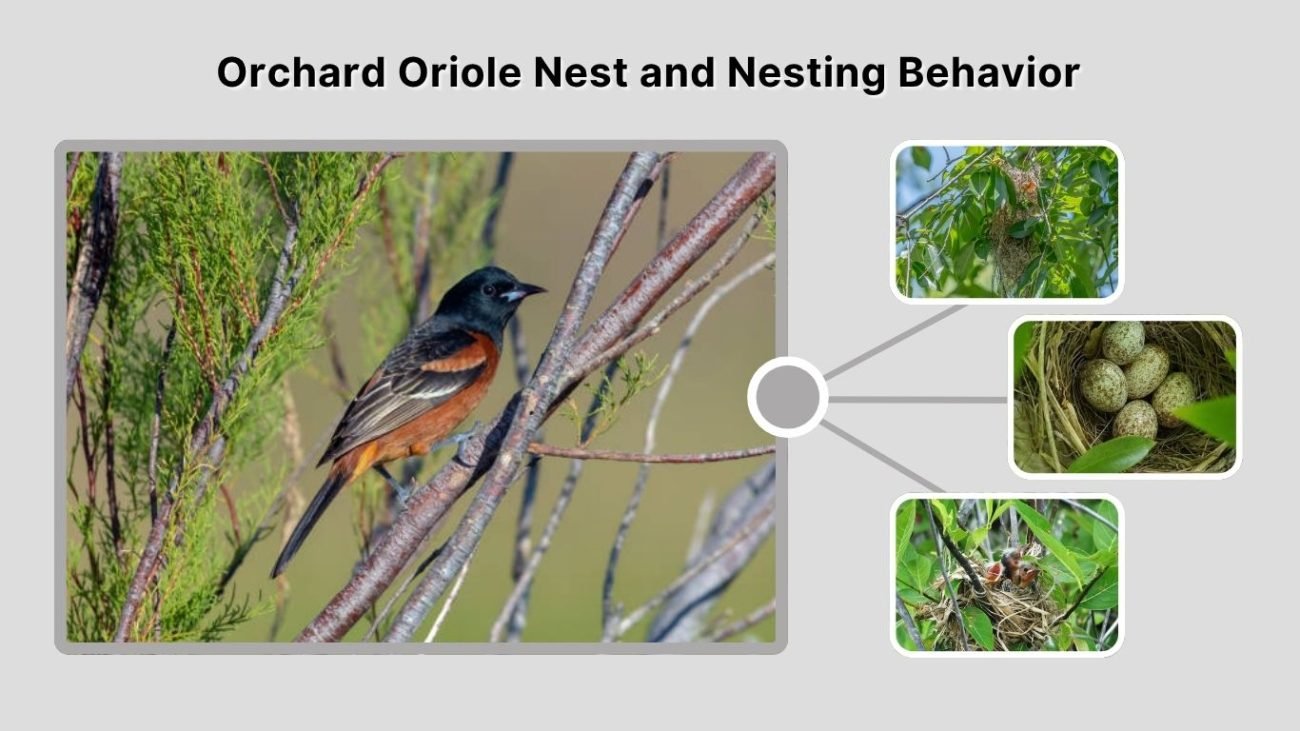
Nest Structure
One of the most fascinating features of the orchard oriole is its nest. It builds a hanging, pouch-like nest that is carefully woven from grasses, plant fibers, and other flexible materials. The nest is strong yet lightweight, allowing it to sway with the wind without breaking.
Nest Location
The nest is typically suspended from the outer branches of trees, often hidden among leaves for protection. It is usually placed several feet above the ground, making it less accessible to predators. This strategic placement helps increase the chances of successful breeding.
Eggs and Breeding
The female lays around 3–6 eggs, which are pale with small markings. She is mainly responsible for incubation, while the male may help defend the territory. After hatching, both parents feed the chicks until they are ready to leave the nest.
Orchard Oriole vs Baltimore Oriole
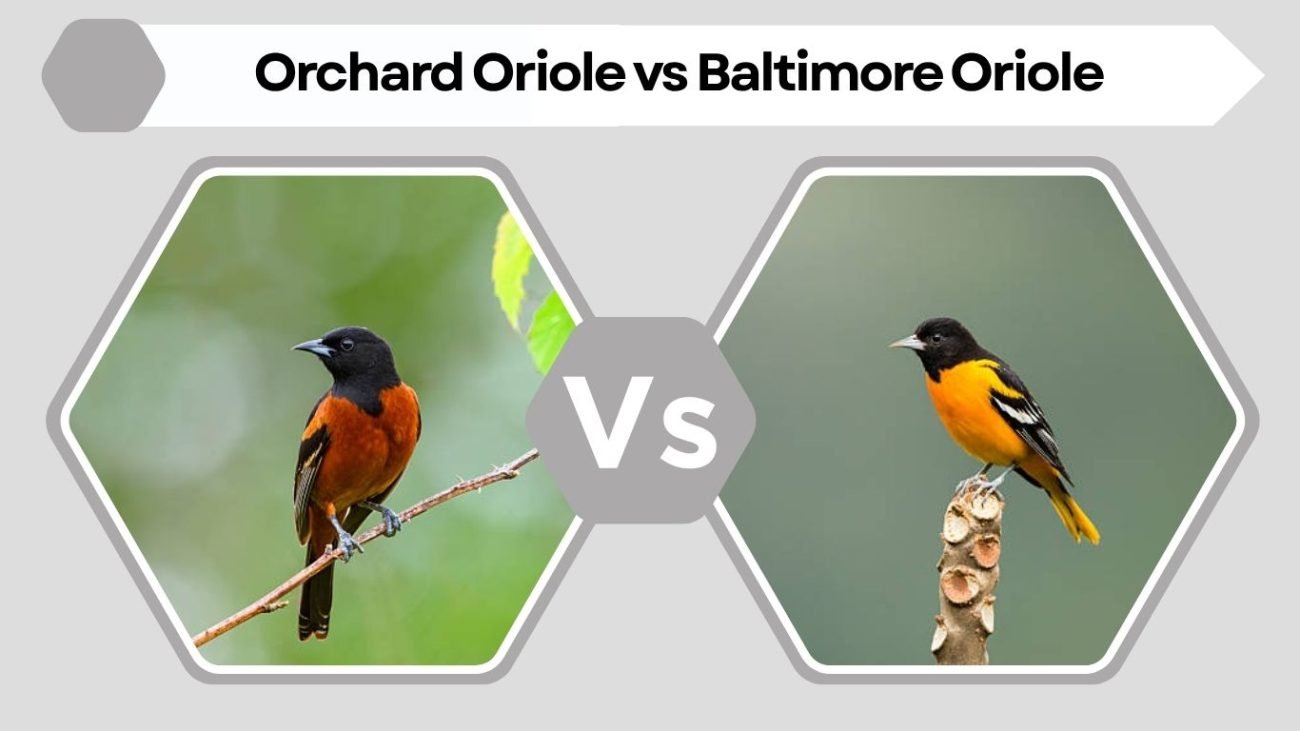
Size Differences
The orchard oriole is noticeably smaller than the Baltimore oriole. Its slimmer body and shorter length make it appear more delicate in comparison.
Color Differences
Color is one of the easiest ways to tell these two species apart. Orchard orioles have chestnut and black coloration, while Baltimore orioles display bright orange and black. Females also differ, with orchard orioles appearing more yellow-green and Baltimore orioles showing brighter tones.
Behavior Differences
While both species share similar habitats, orchard orioles are more commonly found in open areas like orchards and farmland. Baltimore orioles tend to prefer larger trees and more wooded environments. Their songs and calls also differ slightly, providing another clue for identification.
Orchard Oriole Diet and Feeding Habits
Primary Diet
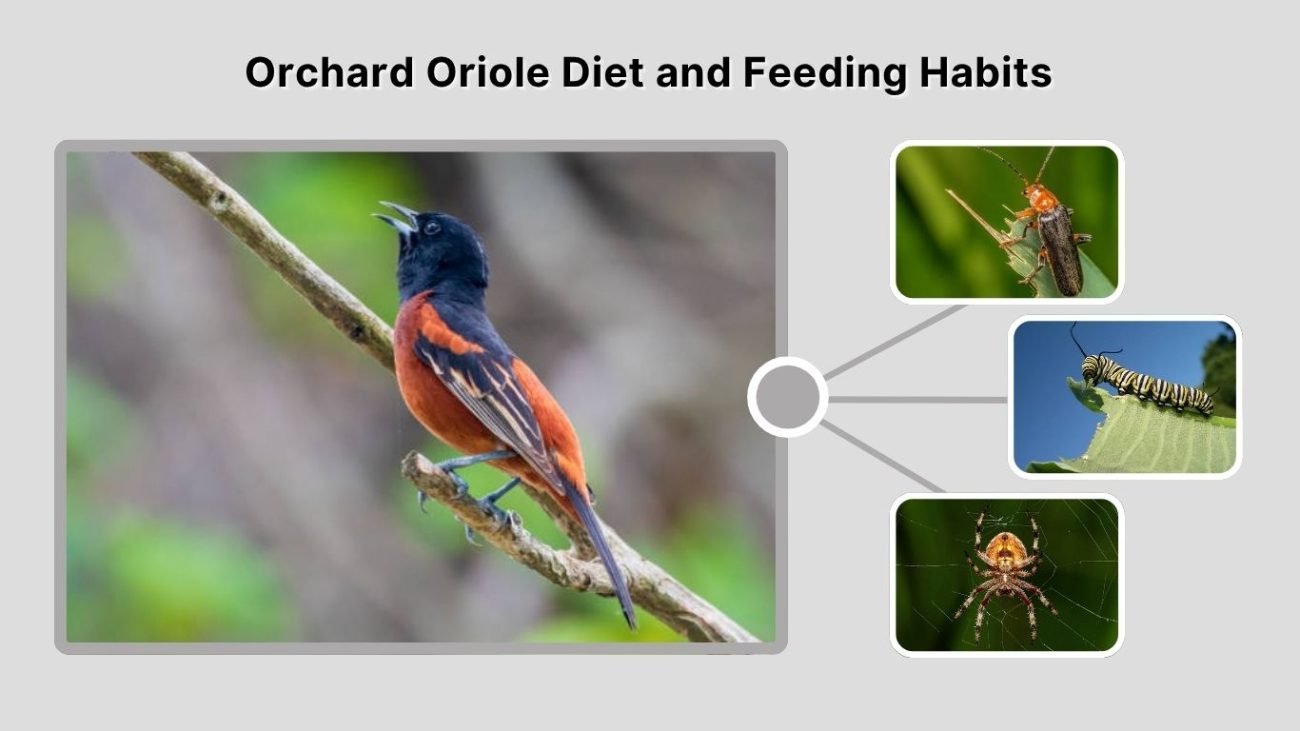
The orchard oriole feeds mainly on insects, making it a beneficial bird for controlling pests. Common prey includes beetles, caterpillars, and spiders. These protein-rich foods are especially important during the breeding season when feeding young chicks.
Feeding Behavior
Orchard orioles are active foragers and are often seen moving quickly through trees and shrubs in search of food. They may pick insects from leaves or catch them in mid-air. In addition to insects, they also feed on nectar and fruits, especially during warmer months.
Seasonal Diet Changes
Their diet changes throughout the year depending on availability. During the breeding season, insects dominate their diet, while in migration and winter, they consume more fruits, berries, and nectar. This adaptability helps them survive in different environments.
Behavior and Unique Traits
Song and Calls
The orchard oriole has a fast, musical song that is often described as a series of whistling notes. Although not as loud as the Baltimore oriole, its song is pleasant and can be heard during the breeding season. Males sing to attract mates and establish territory.
Social Behavior
During the breeding season, orchard orioles are territorial and may defend their nesting area from other birds. Outside of breeding, they can be more social and may join mixed flocks while migrating.
Activity Patterns
These birds are highly active and agile, constantly moving through trees in search of food. Their quick movements and slender build make them well adapted to life in open woodlands and orchards.
Conservation Status and Threats
Population Trends
The orchard oriole is generally considered a species of least concern, with stable populations across much of its range. However, like many migratory birds, it depends on multiple habitats throughout the year, making it sensitive to environmental changes.
Major Threats
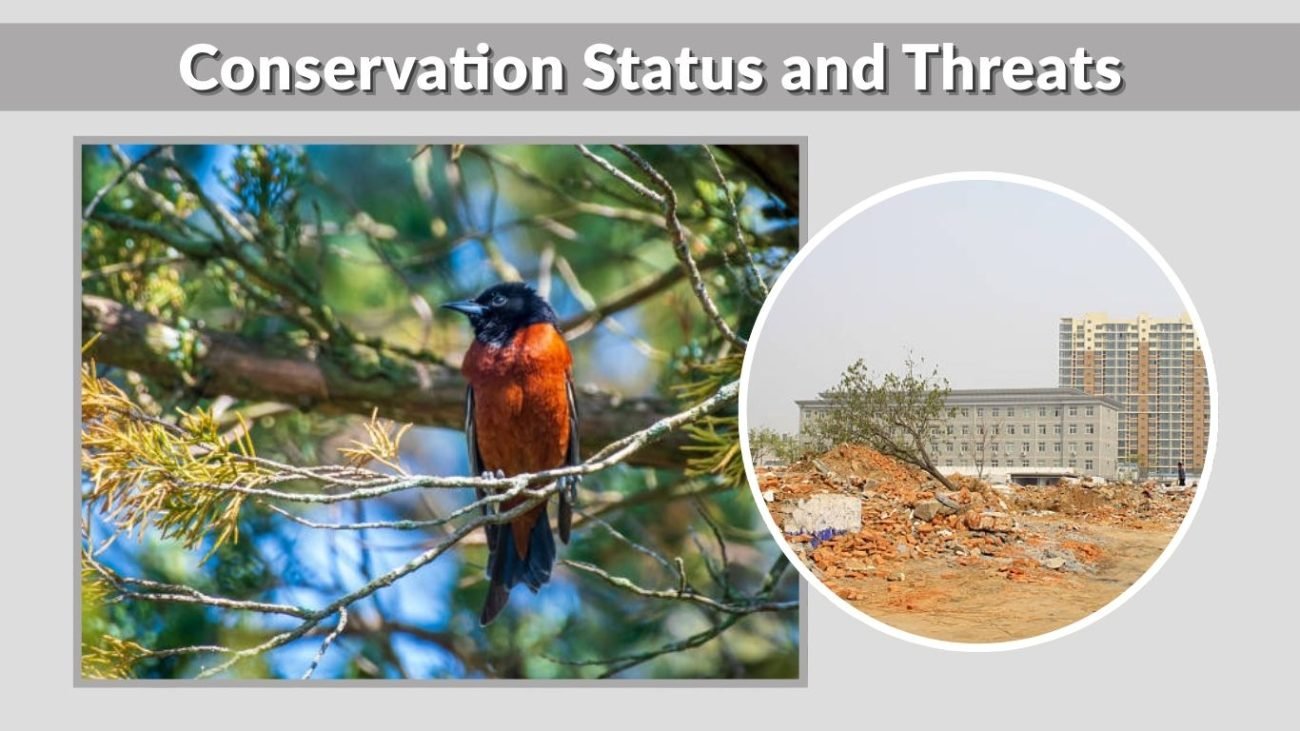
Habitat loss due to urban development and agricultural expansion can reduce available nesting and feeding areas. Climate change may also affect migration timing and food availability. Additionally, pesticide use can reduce insect populations, which are a key food source.
Interesting Orchard Oriole Facts
- The orchard oriole is the smallest oriole species in North America.
- Its hanging nest is carefully woven and resembles a small pouch.
- Young males may look similar to females before developing their chestnut coloring.
- It migrates earlier than many other songbirds, often leaving breeding grounds by mid-summer.
FAQs
What does an orchard oriole nest look like?
The nest is a hanging, pouch-shaped structure made from grasses and plant fibers. It is usually suspended from tree branches and hidden among leaves.
How can you identify an orchard oriole?
You can identify it by its small size and coloration. Males are chestnut and black, while females are yellow-green. It is also more slender than other oriole species.
Where do orchard orioles live?
They live in open woodlands, orchards, parks, and river edges across North America during the breeding season, and migrate to Central and South America in winter.
What is the difference between orchards and Baltimore orioles?
The orchard oriole is smaller and has chestnut coloring, while the Baltimore oriole is larger with bright orange plumage. Their habitats and songs also differ slightly.
Conclusion
The orchard oriole is a small but fascinating bird known for its unique nesting behavior, subtle beauty, and active lifestyle. From its carefully woven hanging nest to its early migration patterns, it offers many interesting traits for birdwatchers to observe. While its population remains stable, protecting its natural habitats is important for its continued survival. By learning more about the orchard oriole and supporting conservation efforts, we can help ensure that this charming bird continues to thrive in the wild.