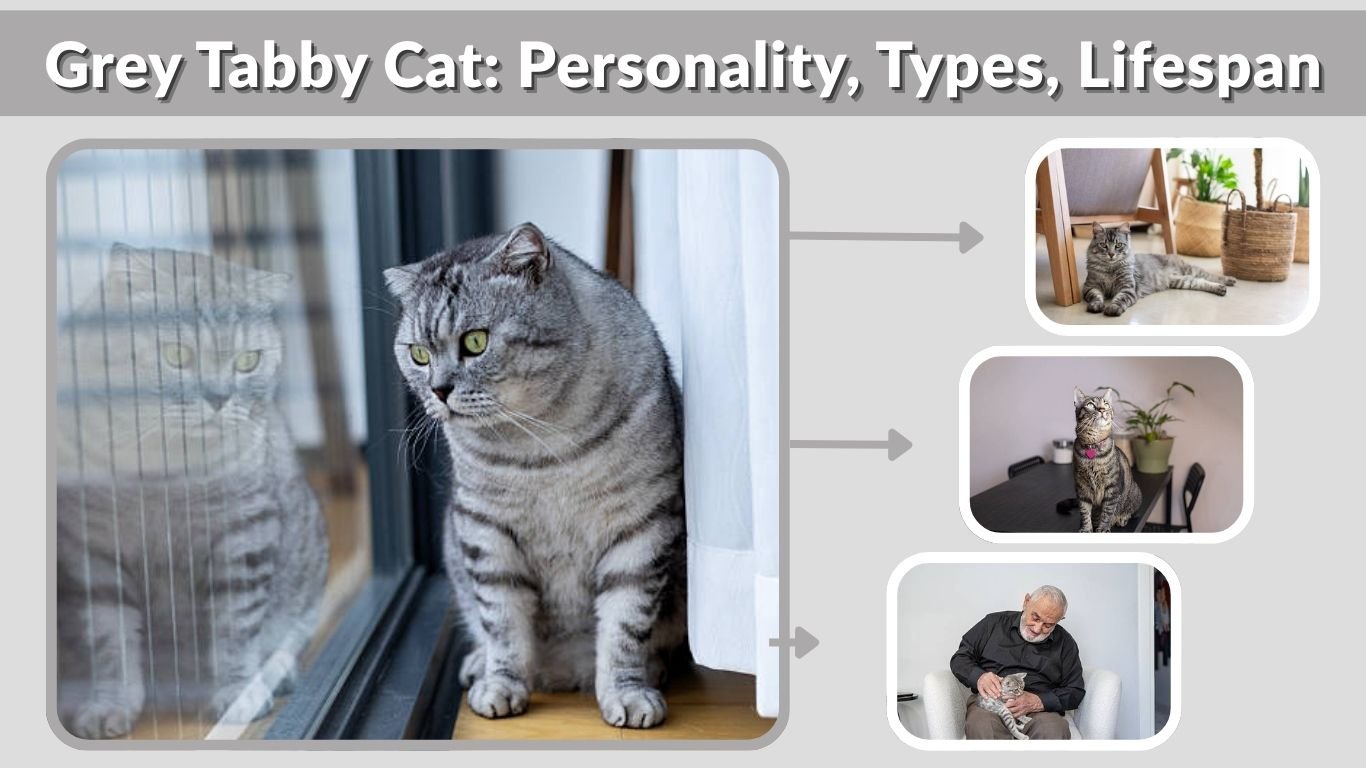
Grey tabby cats are among the most common and recognizable cats in the world. Their soft grey coats combined with unique striped or swirled patterns give them a classic and elegant appearance. Whether you see one as a pet or on the street, their look is instantly familiar.
Despite their popularity, many people don’t fully understand what a grey tabby cat actually is. It is not a specific breed but a coat pattern that appears in many different types of cats. From personality to lifespan, grey tabbies share many traits that make them excellent companions.
What Is a Grey Tabby Cat?
A grey tabby cat is defined by its coat pattern rather than its breed. The term “tabby” refers to a set of patterns that include stripes, swirls, or spots. The grey color can range from light silver tones to darker charcoal shades.
One of the key features of any tabby cat is the distinct “M” marking on the forehead. This marking is present in all tabby cats and helps identify the pattern easily.
Grey tabby cats are often seen in domestic shorthair and longhair cats, but they can also appear in many pure breeds. Because of this, their size, coat length, and personality can vary widely.
What makes them special is their combination of neutral coloring and striking patterns, which gives them a balanced and appealing look.
Grey Tabby Cat Appearance & Types
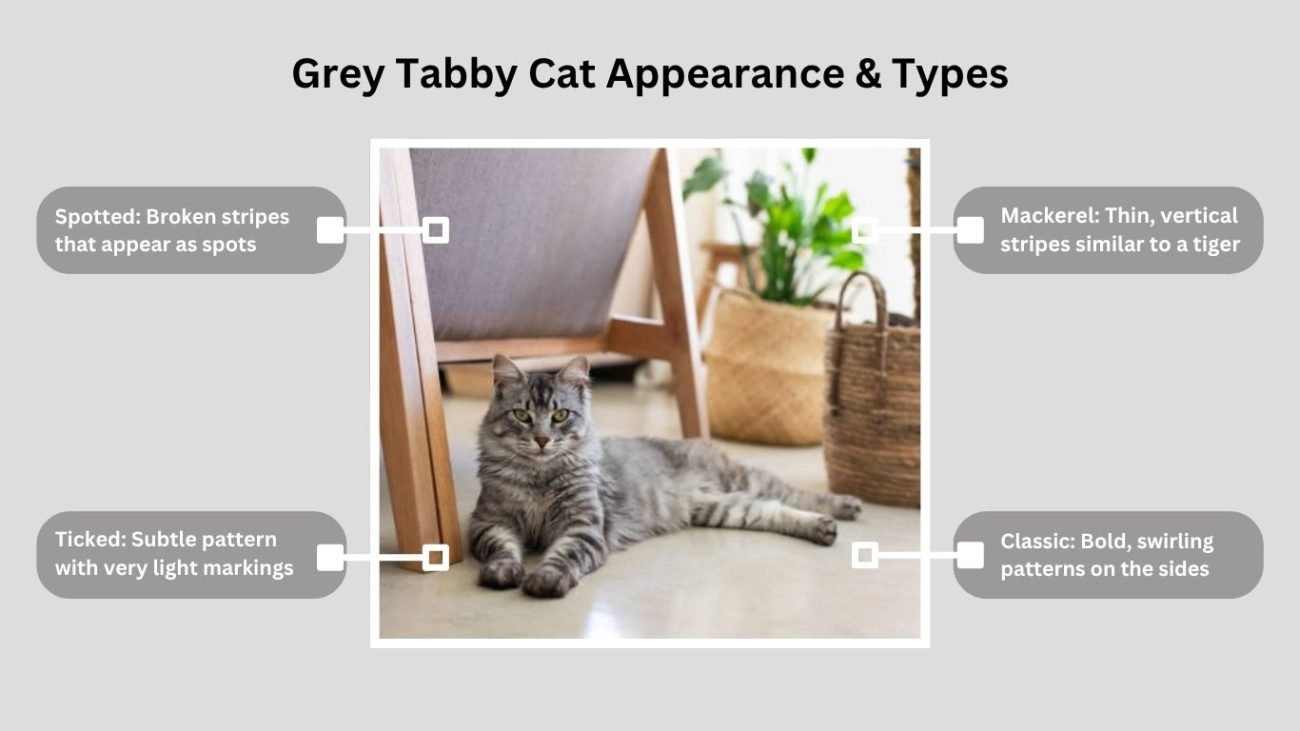
Grey tabby cats are known for their wide variety of patterns and shades. Even though they share a common base color, no two grey tabbies look exactly the same.
Coat Patterns
There are several main tabby patterns that can appear in grey cats:
- Mackerel: Thin, vertical stripes similar to a tiger
- Classic: Bold, swirling patterns on the sides
- Spotted: Broken stripes that appear as spots
- Ticked: Subtle pattern with very light markings
Each pattern creates a different visual style while keeping the same grey base color.
Color Variations
Grey tabby cats come in many shades and combinations. Some have a light silver or bluish-grey coat, while others appear darker and more intense.
Common variations include grey mixed with other colors, such as white or black. For example, a grey tabby may have a white chest, paws, or face, adding contrast to its appearance.
These color differences make grey tabby cats highly diverse while still maintaining their recognizable look.
Coat Length & Texture
The coat of a grey tabby cat can vary depending on its genetics and breed. Some cats have a short, smooth coat that is easy to maintain, while others have a longer, fluffier coat that requires more grooming.
Long-haired grey tabbies often appear more voluminous, while short-haired ones have a sleek and neat appearance. Regardless of coat type, the tabby pattern remains visible.
Grey Tabby Cat Personality & Behavior
Grey tabby cats are often described as balanced and adaptable companions. While personality varies from cat to cat, many grey tabbies share common behavioral traits.
They are typically calm and friendly, making them suitable for both individuals and families. At the same time, they maintain a level of independence that allows them to be comfortable on their own.
Common personality traits include:
- Friendly and easygoing nature
- Curious and observant behavior
- Playful but not overly hyper
- Adaptable to different living environments
These traits make grey tabby cats a great choice for both new and experienced pet owners.
Male vs Female Grey Tabby Cats
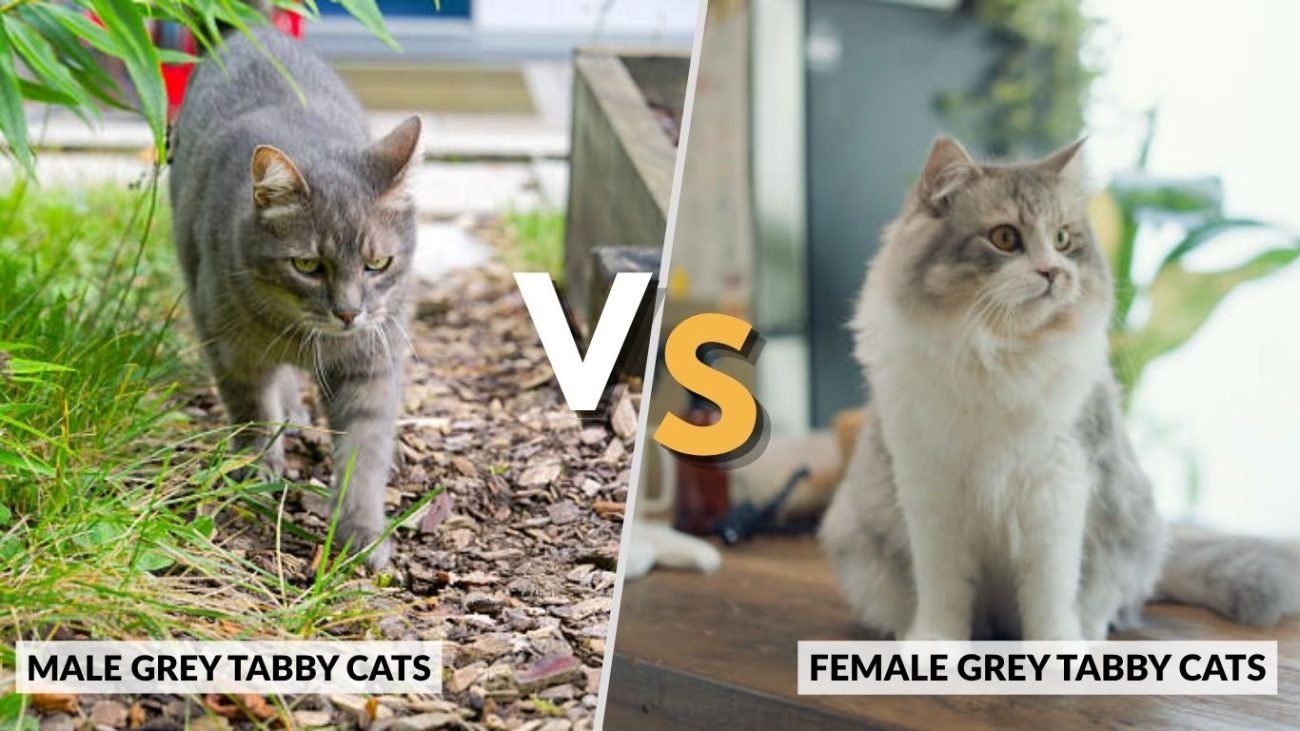
Unlike orange tabby cats, grey tabbies do not show a strong gender imbalance. Both male and female grey tabby cats are equally common.
In general, there are only minor physical differences between males and females. Male cats may be slightly larger, while females can be a bit smaller, but these differences are not always noticeable.
| Feature | Male Grey Tabby | Female Grey Tabby |
| Frequency | Common | Common |
| Size | Slightly larger | Slightly smaller |
| Behavior | Similar | Similar |
Personality differences are usually not based on gender. Instead, factors like upbringing, environment, and socialization play a much bigger role in shaping how a cat behaves.
Breeds That Can Have Grey Tabby Pattern
Grey tabby is not a breed but a coat pattern that appears in many different cat breeds. This is why grey tabby cats can vary widely in size, fur length, and overall appearance.
Some of the most common breeds that can have a grey tabby pattern include:
- Maine Coon
- American Shorthair
- British Shorthair
- Siberian
- Domestic Shorthair
Each of these breeds has its own characteristics, but they can all display the same grey tabby markings.
Because of this variety, two grey tabby cats may look completely different even though they share the same pattern.
Grey Tabby Cat Lifespan & Health
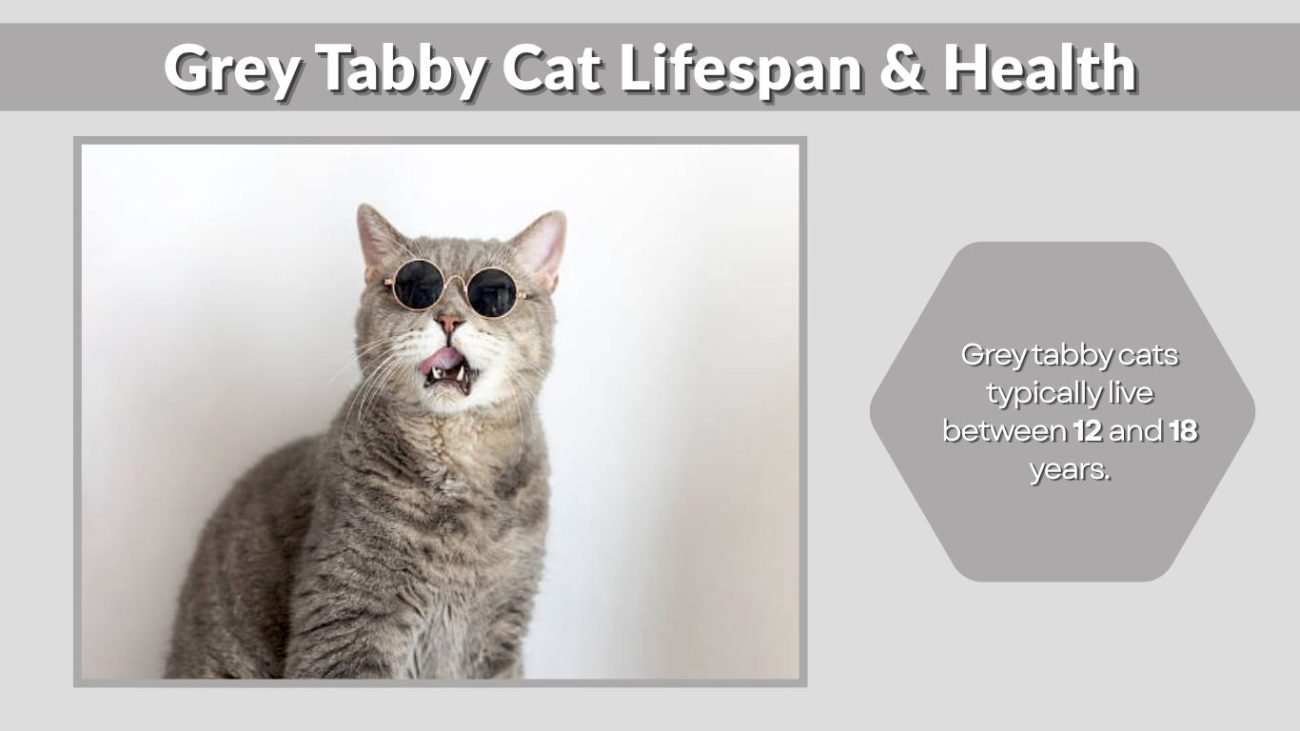
Grey tabby cats typically live between 12 and 18 years, depending on their lifestyle and level of care. Like other cats, their lifespan is influenced by factors such as diet, environment, and regular veterinary attention.
Indoor grey tabby cats generally live longer than outdoor ones. This is because they are protected from common risks like traffic accidents, predators, and exposure to diseases. Providing a safe indoor environment can significantly improve their quality of life.
Some key factors that affect their lifespan include:
- Proper nutrition with balanced food
- Regular veterinary checkups
- Exercise and mental stimulation
- Clean and safe living environment
Grey tabbies are not prone to specific health issues because of their color or pattern. However, they can develop common feline problems such as obesity, dental disease, or infections if not properly cared for.
Maintaining a healthy routine is essential to ensure they live a long and active life.
Grey Tabby Kittens: Growth & Care

Grey tabby kittens are playful, energetic, and full of curiosity. From an early age, they enjoy exploring their surroundings and interacting with people and objects.
Their tabby patterns may appear faint at birth but become more defined as they grow. You may also notice changes in their coat shade as they develop.
Taking care of a kitten requires attention to several important factors:
- Provide a warm and safe space
- Feed high-quality kitten food
- Encourage gentle social interaction
- Schedule regular health checkups
Early care plays a major role in shaping their behavior and overall health. Well-socialized kittens are more likely to grow into friendly and confident adult cats.
Cost, Buying & Adoption
If you are planning to bring a grey tabby cat into your home, understanding the cost and options available is important.
Buying a Grey Tabby Cat
The price of a grey tabby cat can vary depending on factors such as breed, age, and breeder reputation. Cats from specific breeds like Maine Coon or British Shorthair may cost more than mixed-breed cats.
Kittens are usually more expensive than adult cats, especially if they come with vaccinations and health records.
Adoption Options
Adoption is often a more affordable and responsible option. Many grey tabby cats are available in shelters and rescue organizations.
Benefits of adoption include:
- Lower cost compared to buying
- Opportunity to help a homeless animal
- Cats are often already vaccinated
Adopting a cat can be both rewarding and meaningful, as it gives an animal a second chance at a better life.
Grey Tabby Cat Names Ideas
Choosing a name for your grey tabby cat can be a fun process. Their color and personality often inspire unique and creative names.
Here are a few ideas to consider:
- Smokey
- Shadow
- Luna
- Ash
- Storm
You can also choose names based on your cat’s personality, behavior, or appearance. The best name is one that feels natural and easy to call.
Fun Facts About Grey Tabby Cats
Grey tabby cats have several interesting characteristics that make them even more appealing.
- Every tabby pattern is unique, like a fingerprint
- The “M” marking on the forehead is a common feature
- Grey tabbies are among the most common cats worldwide
- Their coat patterns help them blend into natural environments
These fun facts highlight why grey tabby cats are both fascinating and popular.
FAQs
Are grey tabby cats a breed?
No, grey tabby cats are not a breed. The term refers to a coat pattern that can appear in many different breeds. This is why grey tabbies can vary in size, coat length, and overall appearance.
What is the personality of a grey tabby cat?
Grey tabby cats are generally friendly, calm, and adaptable. They often enjoy human interaction but can also be independent. Their personality depends more on their upbringing and environment than their color.
How long do grey tabby cats live?
Most grey tabby cats live between 12 and 18 years. Their lifespan depends on factors such as diet, healthcare, and whether they live indoors or outdoors.
Are grey tabby cats rare?
No, grey tabby cats are very common. They are one of the most frequently seen cat patterns and can be found all over the world.