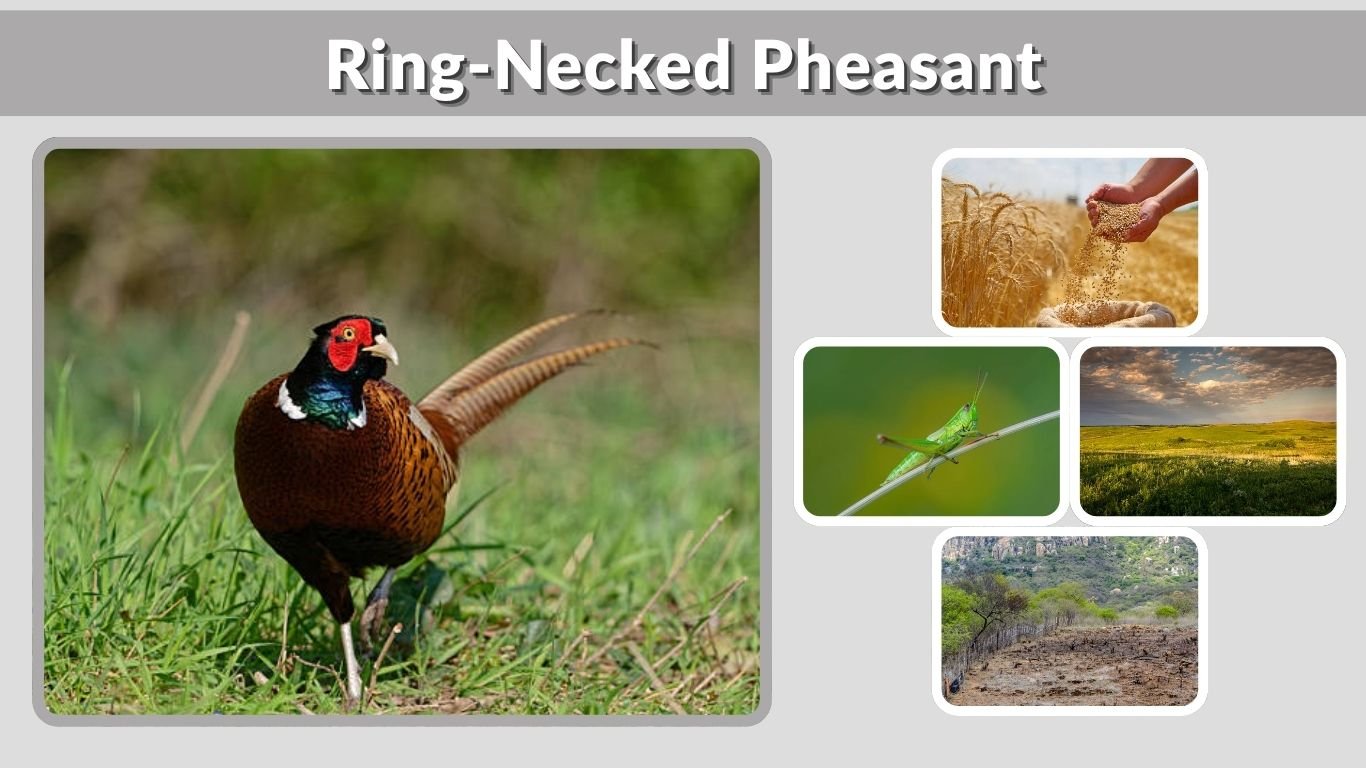
The ring-necked pheasant (Phasianus colchicus) is one of the most recognizable and widely distributed game birds in the world. Known for its striking colors and long tail, this bird is especially popular in North America and Europe, despite being native to Asia. Males are vibrant and eye-catching, while females are more camouflaged for protection. This guide covers how to identify ring-necked pheasants, where they live, what they eat, and how they behave in the wild.
What Is a Ring-Necked Pheasant?
The ring-necked pheasant is a large, ground-dwelling bird originally from Asia, particularly China and surrounding regions. It has been introduced to many parts of the world, especially for hunting purposes. Today, it thrives in grasslands and farmland across North America and Europe. Its adaptability and strong survival instincts have helped it establish stable populations in these new environments.
Identification Guide: Male vs Female Ring-Necked Pheasant
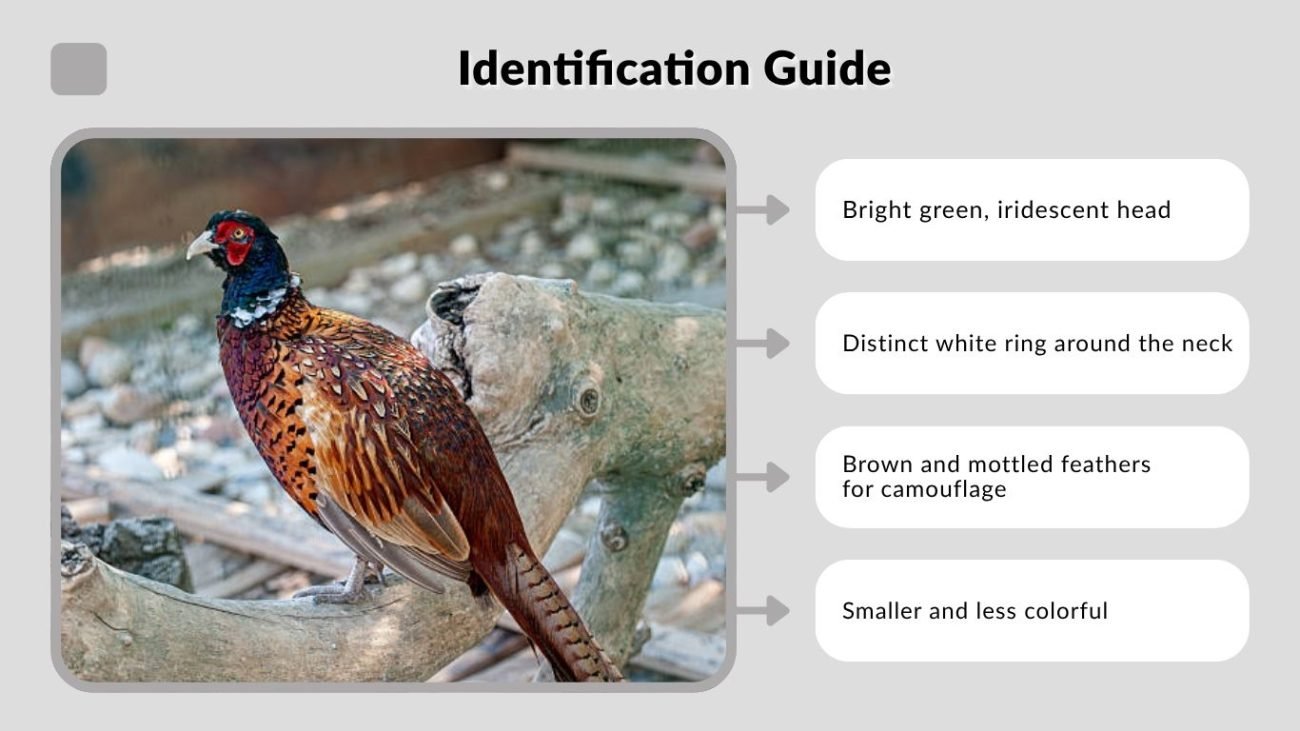
This section helps you quickly distinguish between male and female pheasants, which look very different from each other.
Male Ring-Necked Pheasant
- Bright green, iridescent head
- Distinct white ring around the neck
- Red facial skin (wattles)
- Long, colorful tail with barred patterns
Female Ring-Necked Pheasant
- Brown and mottled feathers for camouflage
- Smaller and less colorful
- Shorter tail
- Blends easily into grass and fields
Ring-Necked Pheasant Habitat and Range
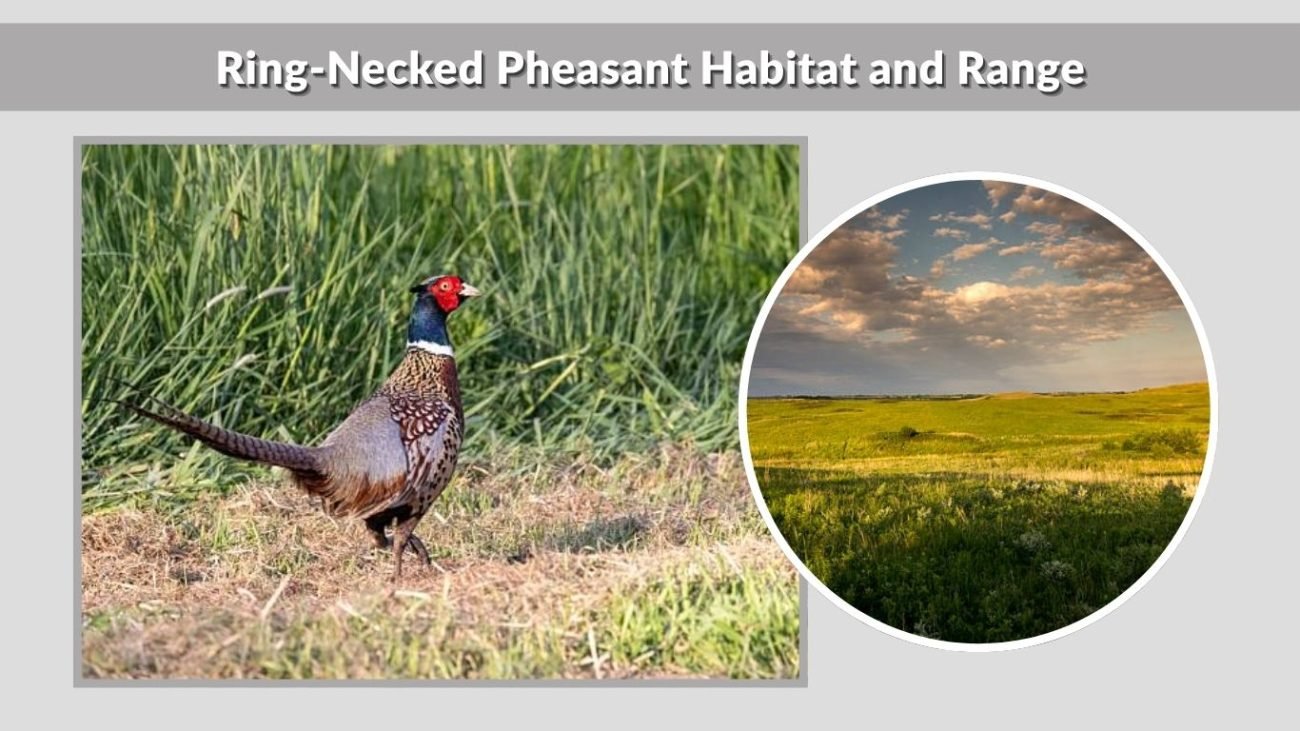
The ring-necked pheasant is highly adaptable and can survive in a variety of environments. Its ability to live in both wild and agricultural landscapes has contributed to its widespread distribution. It prefers open areas with enough cover for nesting and protection from predators, making farmland and grasslands ideal habitats.
Ring-Necked Pheasant Diet
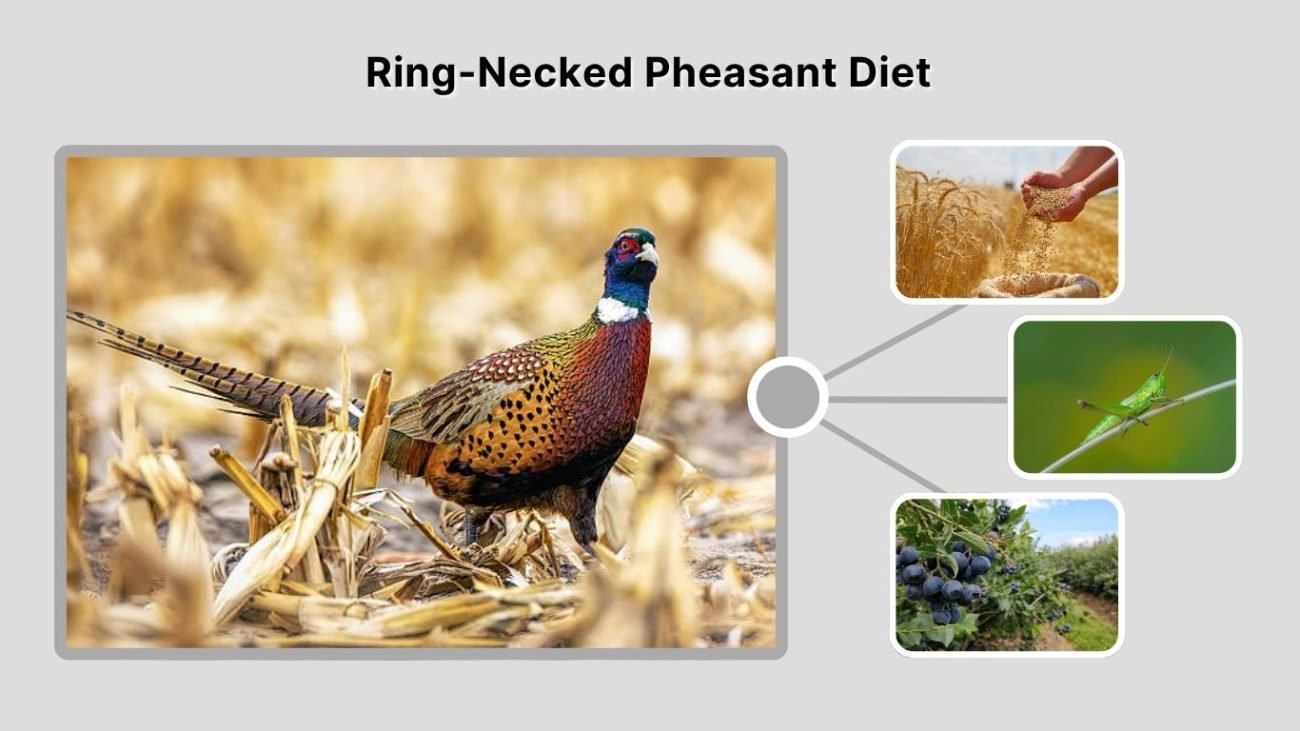
Understanding the diet of ring-necked pheasants helps explain their behavior and habitat preferences. They are opportunistic feeders and consume a wide range of foods depending on the season.
Main Food Sources
- Seeds and grains such as corn and wheat
- Insects like beetles and grasshoppers
- Fruits, berries, and green plants
Feeding Behavior
- Primarily ground feeders
- Active during early morning and late afternoon
- Diet shifts seasonally based on availability
Ring-Necked Pheasant Sounds and Calls
The ring-necked pheasant is known for its loud and distinctive call, often described as a sharp crowing sound. This call is usually followed by rapid wing flapping, creating a sudden burst of noise. Males use this vocalization during the breeding season to attract females and establish territory. The sound is most commonly heard at dawn and dusk, especially in open countryside.
Breeding and Nesting Behavior
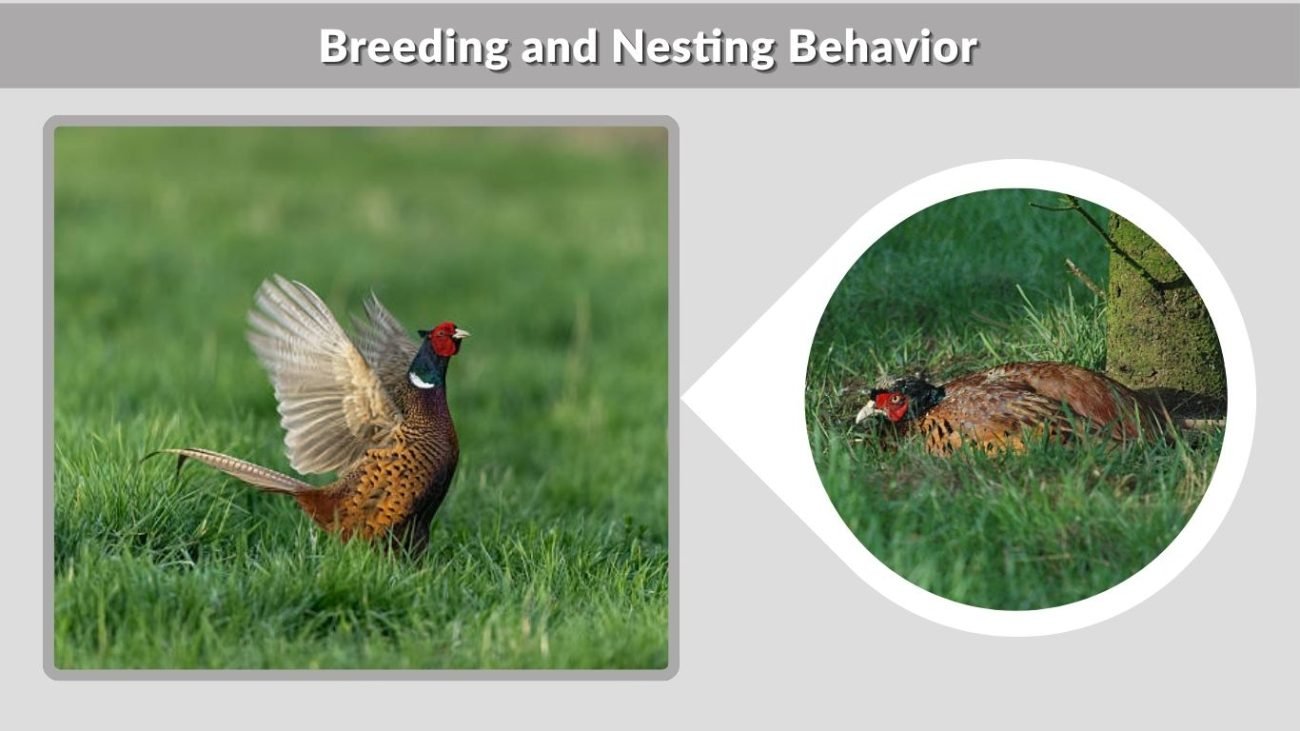
The breeding habits of the ring-necked pheasant are closely tied to seasonal changes and habitat conditions. Females take the lead in nesting and raising chicks, using their camouflage to protect eggs from predators.
Nest Construction
- Built on the ground in tall grass
- Hidden carefully to avoid detection
- Made with grass and leaves
Eggs and Chicks
- Typically 8 to 15 eggs per clutch
- Incubation lasts about 23 days
- Chicks can walk and feed shortly after hatching
Ring-Necked Pheasant Lifespan and Predators
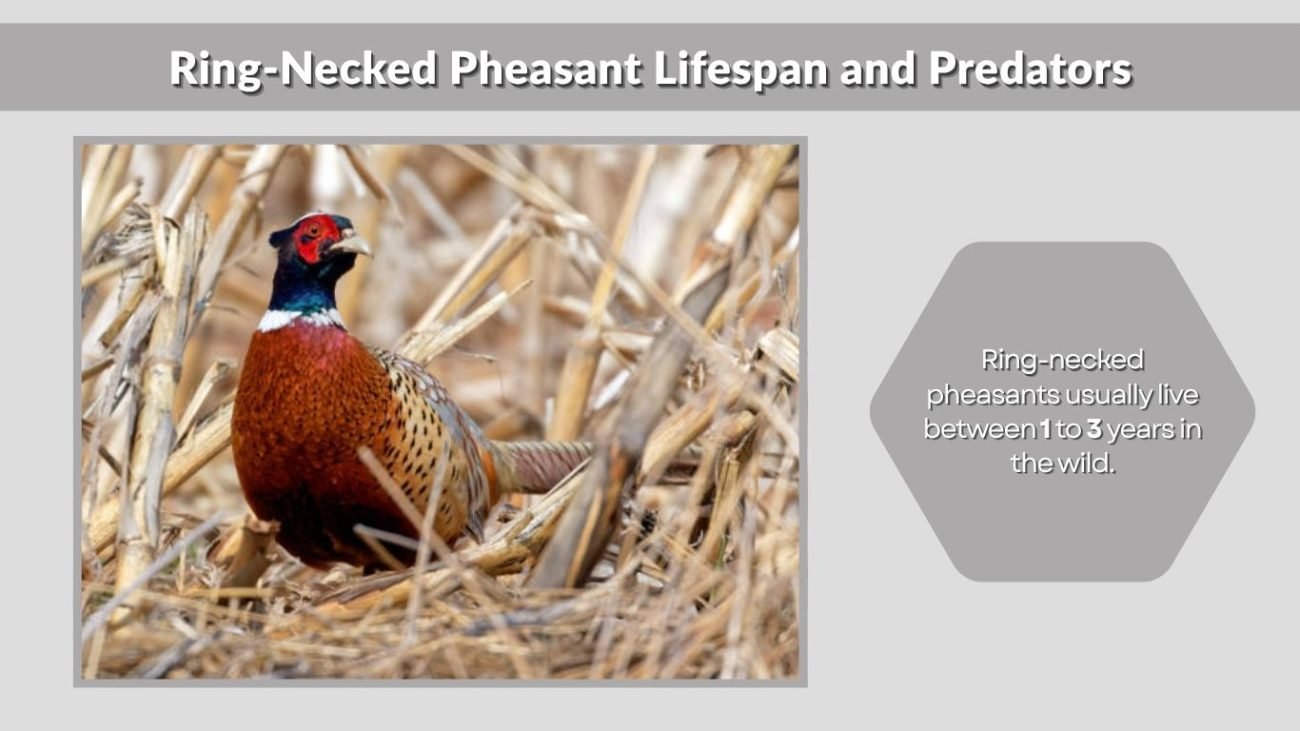
Ring-necked pheasants usually live between 1 to 3 years in the wild, although some may survive longer in protected environments. Their relatively short lifespan is due to high predation and environmental risks. Common predators include foxes, hawks, raccoons, and domestic animals. Despite these challenges, their high reproduction rate helps maintain stable populations.
Ring-Necked Pheasant in Flight
Although they spend most of their time on the ground, ring-necked pheasants are capable of powerful, short-distance flight. When startled, they burst into the air with rapid wing beats and loud noise. Their flight is fast but usually brief, as they prefer to run and hide rather than stay airborne for long periods.
Are Ring-Necked Pheasants Native or Invasive
The ring-necked pheasant is native to Asia, particularly regions of China and surrounding areas. It was introduced to North America and Europe for hunting and has since established stable populations. In most areas, it is considered a naturalized species rather than invasive, as it generally does not disrupt ecosystems significantly.
Ring-Necked Pheasant Hunting and Importance
The ring-necked pheasant is one of the most popular game birds, especially in the United States. It plays an important role in rural economies through hunting tourism and conservation programs. Managed hunting helps control populations and supports habitat preservation, making it both an economic and ecological asset in many regions.
Raising Ring-Necked Pheasants
This section explains how ring-necked pheasants are raised in controlled environments for farming, conservation, or hunting purposes. Their adaptability makes them suitable for breeding in captivity with proper care and management.
Breeding and Care
- Require secure enclosures with shelter
- Need a balanced diet of grains and protein
- Protection from stress and predators is essential
Eggs and Chicks for Sale
- Hatching eggs are commonly sold in poultry markets
- Day-old chicks are widely available
- Popular among game bird breeders and farmers
Ring-Necked Pheasant Color Variations
Ring-necked pheasants display a range of color variations due to genetics and selective breeding. While the classic male has a green head and white neck ring, other variations include darker melanistic forms and lighter buff-colored birds. These differences are often seen in captive populations and add to their visual diversity.
Interesting Facts About Ring-Necked Pheasants
This section highlights some unique and engaging facts about this colorful bird, helping readers better understand its behavior and characteristics.
Quick Facts
- Males are highly territorial during breeding season
- Can run faster than many predators over short distances
- Prefer running to flying when escaping danger
- Known for explosive, noisy takeoff
Conservation Status
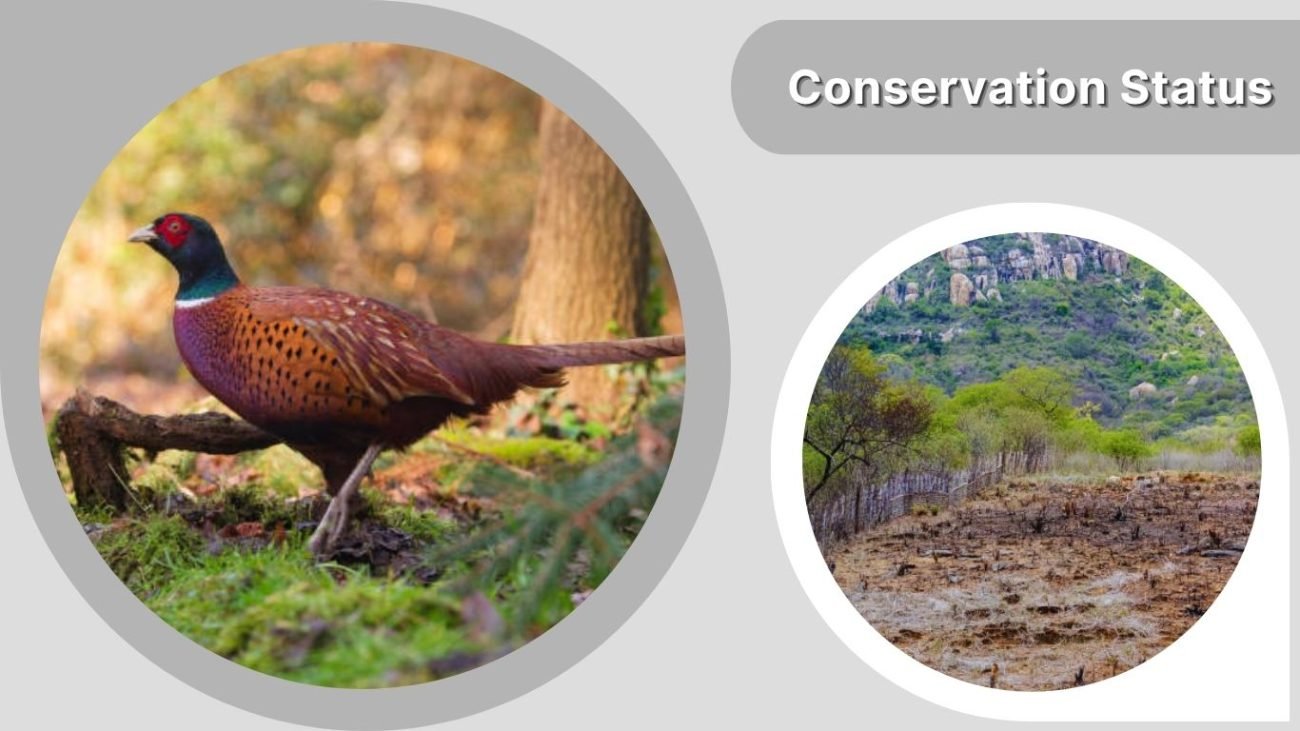
The ring-necked pheasant is not considered endangered globally, but some local populations have declined due to habitat loss and agricultural changes. Conservation efforts focus on preserving grasslands and improving nesting habitats. In many regions, wildlife programs actively support pheasant populations through habitat management and controlled breeding.
FAQs
What does a ring-necked pheasant sound like?
The male ring-necked pheasant makes a loud, sharp crowing call often followed by rapid wing flapping. This sound is most common during the breeding season when males are attracting females and defending their territory.
What do ring-necked pheasants eat?
Ring-necked pheasants eat a varied diet that includes seeds, grains, insects, and plant material. Their diet changes with the seasons, with more insects consumed in warmer months for protein.
Are ring-necked pheasants native to North America?
No, ring-necked pheasants are native to Asia. They were introduced to North America for hunting purposes and have since established stable, self-sustaining populations.
How can you tell a male from a female ring-necked pheasant?
Males are brightly colored with a green head, white neck ring, and long tail, while females are brown and camouflaged. Females are also slightly smaller and less visually striking than males.
How long do ring-necked pheasants live?
In the wild, ring-necked pheasants typically live around 1 to 3 years due to predators and environmental challenges. Some may live longer in protected or managed environments.