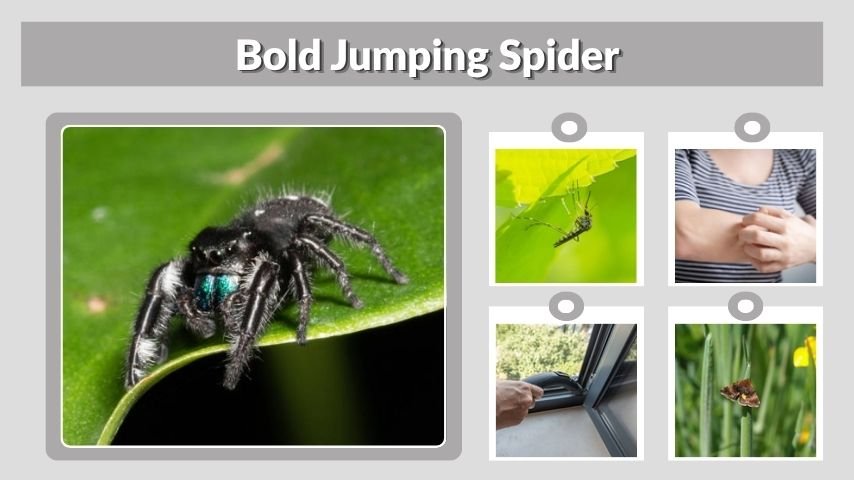
The bold jumping spider is one of the most recognizable jumping spiders in North America. Known for its compact black body, white or orange spots, large eyes, and shiny green or blue mouthparts, this spider often catches attention on windows, walls, fences, gardens, and porches. Although its sudden jumps can surprise people, the bold jumping spider is usually harmless, helpful, and fascinating to observe.
What Is a Bold Jumping Spider?
The bold jumping spider, also called the bold jumper spider or daring jumping spider, is scientifically known as Phidippus audax. It belongs to the jumping spider family, Salticidae. These spiders are active hunters rather than web-trapping spiders. They use strong eyesight to locate prey, slowly stalk it, and then leap forward to capture it.
The word “bold” fits this spider well because it often turns toward movement instead of immediately running away. This curious behavior makes many people think the spider is watching them. In reality, it is using its excellent vision to understand its surroundings.
Why People Search for Bold Jumping Spiders
Most keyword searches around this spider are informational. People want to know what it is, whether it bites, how big it gets, how to identify males and females, and whether it can be kept as a pet. A smaller group of keywords, such as “bold jumping spider for sale,” “bold jumping spider pet,” and “bold jumping spider price,” show buying or pet-care intent.
Bold Jumping Spider Keyword Analysis
The keyword list shows that “bold jumping spider” is the dominant parent keyword, followed by “bold jumper spider.” Other high-value topics include size, male vs female differences, bite concerns, pet care, lifespan, and comparisons with regal jumping spiders.
| Keyword Cluster | Example Keywords | Search Intent |
|---|---|---|
| Main topic | bold jumping spider, bold jumper spider | Identify and learn facts |
| Safety | bold jumping spider bite, poisonous, venomous, dangerous | Understand bite risk |
| Size | bold jumping spider size, size chart, full grown | Learn growth and body length |
| Sexing | male vs female bold jumping spider, female bold jumping spider | Compare male and female traits |
| Pet care | bold jumping spider care, enclosure, diet, pet | Learn how to keep one |
| Comparison | regal vs bold jumping spider, bold vs regal | Tell similar species apart |
| Life cycle | eggs, egg sac, juvenile, sling, lifespan | Understand growth and reproduction |
| Location | Texas, California, Ohio, Michigan, Oregon | Confirm local presence |
This article targets the main keyword while naturally covering these supporting search terms.
How to Identify a Bold Jumping Spider
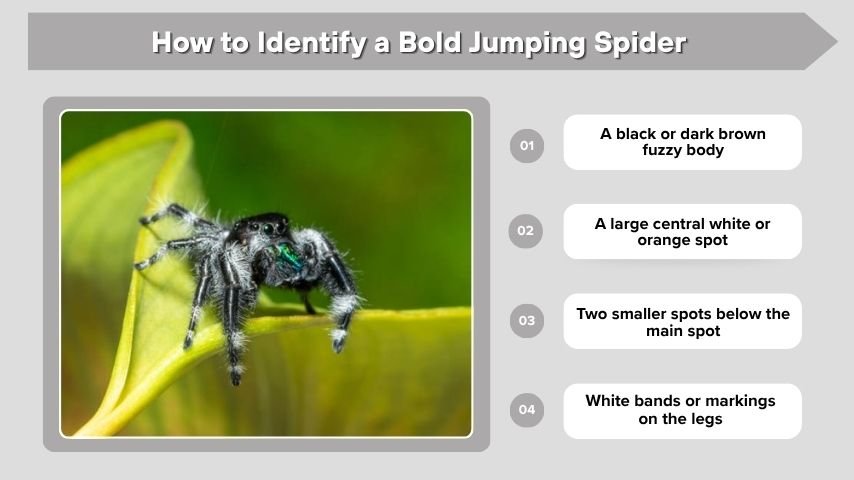
A bold jumping spider is usually easy to recognize once you know its main features. It often has a dark body with bright markings and a compact, fuzzy shape. The eyes are large and forward-facing, giving it a curious expression.
Common Identification Features
A bold jumping spider may have:
- A black or dark brown fuzzy body
- White, cream, orange, or red spots on the abdomen
- A large central white or orange spot
- Two smaller spots below the main spot
- White bands or markings on the legs
- Metallic green, blue, or teal mouthparts
- A compact body with strong front legs
- Quick stop-and-go movement
- Short, controlled jumps
The shiny green or blue “fangs” are one of the most noticeable features. These are actually chelicerae, which are mouthparts near the fangs. They can look bright green, blue, teal, or purple depending on light and angle.
Bold Jumping Spider White Dot
Many people search for “bold jumping spider white dot” because this marking is common. Adult bold jumpers often have a pale spot on the abdomen. In many spiders, this spot is white, but in younger individuals it may be orange or reddish.
This is why a person might describe the same type of spider as a black spider with a red dot, orange dot, or white dot, depending on the spider’s age and color variation.
Bold Jumping Spider Size
The bold jumping spider is small but sturdy. Its compact shape can make it look larger than it really is, especially when it raises its front legs or turns toward movement.
Adult bold jumping spiders are usually only a few millimeters long in body length. Females are generally larger and heavier-bodied than males. Males tend to be slimmer, with more noticeable front legs and more striking face markings.
Full Grown Bold Jumping Spider
A full grown bold jumping spider is still much smaller than many common house spiders. However, it may look bold because of its thick body, fuzzy texture, and high-contrast markings.
A juvenile bold jumping spider, also called a sling in the pet hobby, is much smaller. Juveniles may show orange or reddish spots that become paler as they mature.
Male vs Female Bold Jumping Spider
“Bold jumping spider male vs female” is one of the strongest keyword topics. This makes sense because pet keepers and spider enthusiasts often want to know whether they have a male or female spider.
Female Bold Jumping Spider
A female bold jumping spider is usually larger, rounder, and heavier-bodied. Her abdomen may look fuller, especially if she is well-fed or carrying eggs. Females may also live longer than males in captivity.
Female markings can vary. Some have clear white spots, while others may show cream or orange tones. Their legs may appear shorter and less dramatic than a male’s front legs.
Male Bold Jumping Spider
A male bold jumping spider is usually smaller and slimmer. Males often have longer-looking front legs and may appear more active, especially when searching for females. Their metallic green or blue chelicerae can be very noticeable.
Males may also display more movement, waving, or courtship behavior. However, exact sexing can be difficult for beginners without clear photos or mature features.
Bold Jumping Spider Bite
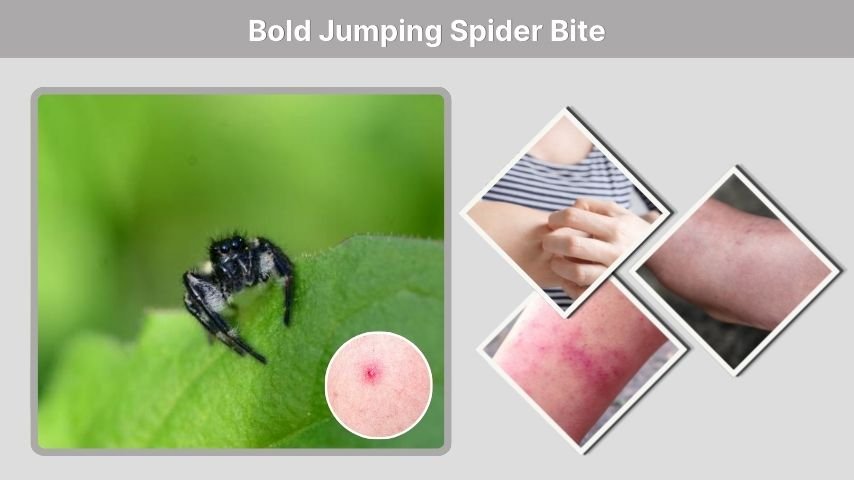
A bold jumping spider can bite, but bites are uncommon. These spiders are not aggressive toward humans. Most bites happen when the spider is trapped against skin, squeezed, or handled roughly.
What Does a Bold Jumping Spider Bite Feel Like?
A bite may feel like a tiny pinch or sting. Symptoms are usually mild and local, similar to a minor insect bite.
Possible symptoms include:
- Mild pain
- Redness
- Slight swelling
- Itching
- Tenderness
- A small raised bump
Most mild reactions improve with simple care. Wash the area with soap and water, apply a cold compress, and avoid scratching.
When to Seek Medical Help
Get medical advice if the bite area becomes more painful, spreads, forms an open wound, or does not improve. Seek urgent help if you experience trouble breathing, facial swelling, dizziness, fever, vomiting, or signs of a serious allergic reaction.
Many skin irritations are mistaken for spider bites, so worsening symptoms should not be ignored.
Is the Bold Jumping Spider Poisonous or Venomous?
The bold jumping spider is venomous in the technical sense because it uses venom to subdue small prey. However, it is not considered dangerous to humans. The word “poisonous” is often used in searches, but “venomous” is more accurate. Poisonous means harmful if touched or eaten, while venomous means the animal injects venom through a bite.
A bold jumper’s venom is meant for tiny insects, not people. For most humans, a bite is rare and usually mild.
Bold Jumping Spider Habitat and Range
Bold jumping spiders are widely found in North America. They are common in many U.S. states, which explains searches such as “bold jumping spider Texas,” “bold jumping spider California,” “bold jumping spider Oregon,” “bold jumping spider Ohio,” “bold jumping spider Michigan,” and “bold jumping spider Colorado.”
Common Outdoor Locations
You may see bold jumping spiders on:
- Garden plants
- Fences
- Tree bark
- Deck railings
- Porch posts
- Exterior walls
- Patio furniture
- Around outdoor lights
They prefer areas where they can hunt small insects during the day.
Common Indoor Locations
Inside homes, bold jumping spiders may appear near windows, doors, garages, basements, or indoor plants. They usually wander inside by accident while hunting prey.
A single bold jumper indoors does not usually mean there is an infestation. It may simply be following small flies, gnats, or other insects.
Bold Jumping Spider Diet
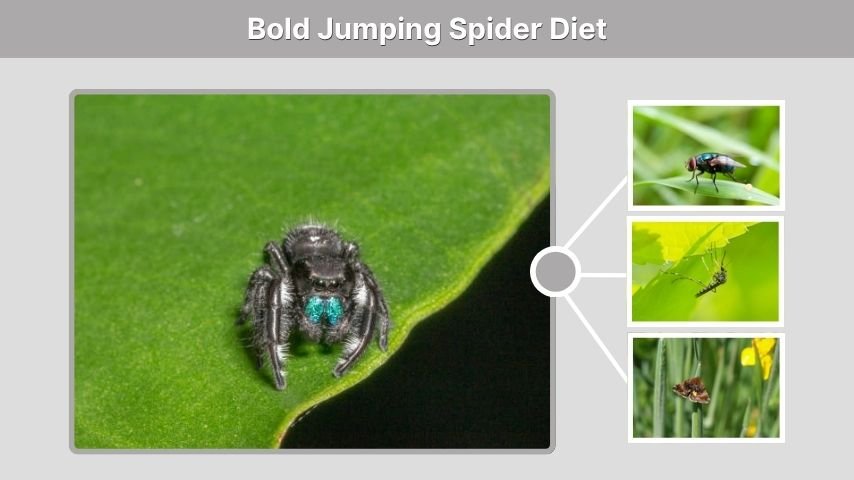
Bold jumping spiders are carnivorous hunters. They eat small insects and other tiny arthropods. Unlike spiders that wait in webs, they actively stalk their prey.
What Do Bold Jumping Spiders Eat?
Their diet may include:
- Flies
- Gnats
- Mosquitoes
- Small moths
- Aphids
- Small crickets
- Fruit flies
- Other tiny insects
In captivity, pet owners often feed appropriately sized fruit flies, small crickets, or other safe feeder insects. Prey should not be too large, because large insects can injure a small spider.
Bold Jumping Spider Web
Bold jumping spiders do make silk, but they do not build big prey-catching webs. Instead, they use silk for safety lines, resting shelters, egg sacs, and molting retreats.
You may see a small silk retreat in a corner, leaf fold, plant stem, or enclosure. This is normal behavior. A bold jumper may rest inside the retreat at night or hide there during molting.
Bold Jumping Spider Life Cycle
The bold jumping spider life cycle includes eggs, spiderlings, juveniles, and adults. Females create egg sacs in protected silk retreats. After the eggs hatch, tiny spiderlings eventually disperse and begin hunting very small prey.
Juvenile Bold Jumping Spider
A juvenile bold jumping spider is smaller and may have orange or reddish markings. As it grows, it molts several times. Each molt allows the spider to increase in size.
During premolt, a juvenile may stop eating and hide in its silk retreat. This is normal. It should not be disturbed until the molt is complete and the body hardens.
Bold Jumping Spider Lifespan
The lifespan of a bold jumping spider depends on sex, environment, food, temperature, and care. In general, females often live longer than males. Pet spiders may live longer when kept in safe, stable conditions with proper food and hydration.
Bold Jumping Spider Care
Bold jumping spiders are sometimes kept as pets because they are small, active, and visually interesting. However, they still need proper care. They are delicate animals and should not be treated like toys.
Basic Enclosure Needs
A bold jumping spider enclosure should be secure, ventilated, and escape-proof. It should have enough space for climbing, hiding, and making silk retreats. Since jumping spiders are active hunters, vertical space is useful.
A simple setup may include:
- A small ventilated enclosure
- Twigs, bark, or artificial plants for climbing
- A hiding area near the top
- Light misting for water droplets
- Safe feeder insects
- No sharp decorations
- No loose prey left inside too long
Avoid soaking the enclosure. Good ventilation is important because stagnant moisture can cause problems.
Is a Bold Jumping Spider a Good Pet?
A bold jumping spider can be a good pet for people who enjoy observing small animals. It is not a cuddly pet and should be handled carefully, if at all. Many keepers prefer to watch rather than handle.
Captive-bred spiders are usually better choices than wild-caught spiders. Wild spiders may be stressed, old, injured, or carrying parasites.
Bold Jumping Spider for Sale
The keyword “bold jumping spider for sale” shows transactional intent. People interested in buying one should be careful. Not every online listing is responsible or beginner-friendly.
Before buying, check:
- Whether the spider is captive-bred
- The spider’s approximate age
- Whether it is male or female
- Feeding history
- Shipping conditions
- Seller reputation
- Local rules or restrictions
Avoid buying a spider only because it looks cute or colorful. Learn the care requirements first.
Regal vs Bold Jumping Spider
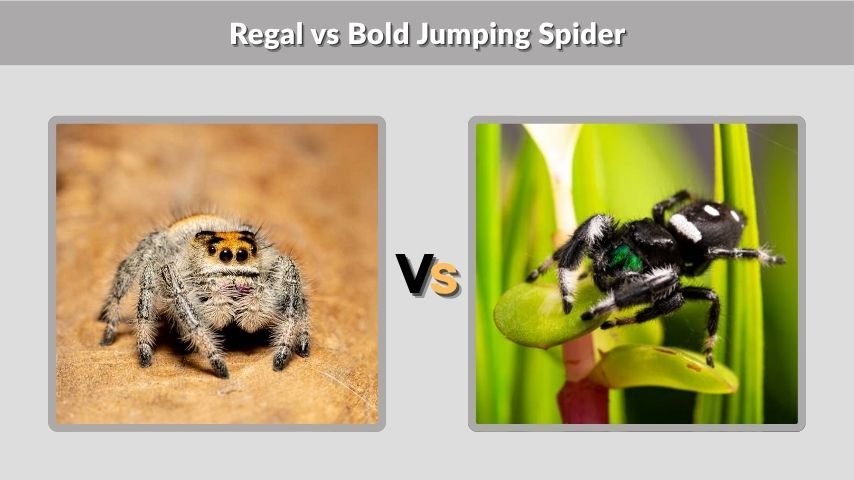
Regal jumping spiders and bold jumping spiders can look similar, especially because both may have dark bodies, pale spots, and colorful chelicerae. This explains searches like “regal vs bold jumping spider” and “bold vs regal jumping spider.”
Key Differences
Bold jumping spiders are often widespread across North America and commonly found around homes and fields. Regal jumping spiders are especially associated with the southeastern United States and are very popular in the pet hobby.
Regal jumping spiders are often larger and may show more color variety, especially in females. Bold jumping spiders often have a black body with white or orange spots and metallic green or blue mouthparts.
For exact identification, compare the abdominal pattern, location, size, and clear close-up photos.
What to Do If You Find a Bold Jumping Spider
If you find a bold jumping spider in your home, you usually do not need to kill it. It is likely hunting small insects and is not a serious threat.
Safe Removal Steps
To move it outside:
- Place a cup gently over the spider
- Slide paper underneath
- Carry it outside carefully
- Release it near plants or a sheltered area
- Avoid squeezing or handling it directly
This protects both you and the spider.
How to Prevent Bold Jumping Spiders Indoors
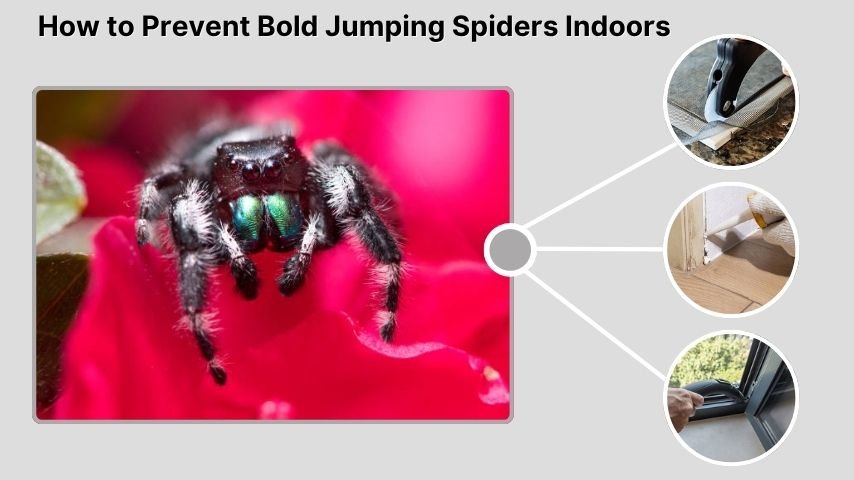
If you prefer keeping spiders outside, focus on sealing entry points and reducing insects.
Helpful prevention steps include:
- Repair damaged window screens
- Seal gaps around doors and windows
- Reduce small flies and gnats indoors
- Keep porch lights off when not needed
- Vacuum windowsills and corners
- Move dense plants away from exterior walls
- Check plants before bringing them inside
Chemical treatment is usually unnecessary for occasional sightings.
FAQs
Are bold jumping spiders poisonous?
Bold jumping spiders are not considered poisonous or dangerous to humans. They are technically venomous because they use venom on small prey, but bites are rare and usually mild. Most bold jumpers avoid people and only bite if trapped or handled roughly.
What does a bold jumping spider bite look like?
A bold jumping spider bite may look like a small red bump with mild swelling, itching, or tenderness. It can resemble a mosquito bite or other minor insect bite. If symptoms worsen, spread, or become painful, seek medical advice.
How big does a bold jumping spider get?
A bold jumping spider stays small, even when fully grown. Females are usually larger and rounder than males, while males are often slimmer with more noticeable front legs. Juveniles are much smaller and may show orange or reddish spots before maturing.
How can you tell a male from a female bold jumping spider?
Female bold jumping spiders are usually larger with rounder abdomens. Males are often smaller, slimmer, and may have longer-looking front legs. Mature males can appear more active and may show courtship behavior. Clear close-up photos help with identification.
Can you keep a bold jumping spider as a pet?
Yes, some people keep bold jumping spiders as pets. They need a small secure enclosure, ventilation, climbing surfaces, light misting, and appropriately sized live prey. Captive-bred spiders are better than wild-caught ones, especially for beginners.