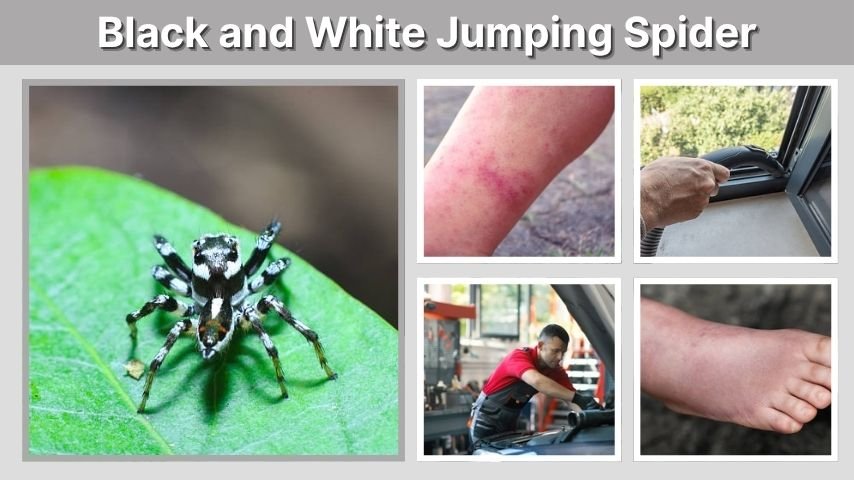
A black and white jumping spider is one of the most commonly noticed spiders around homes, gardens, fences, and windowsills. Its bold color pattern, large eyes, quick movements, and sudden jumps often make people wonder if it is dangerous. In most cases, a black and white jumping spider is harmless, beneficial, and easy to recognize once you know what features to look for.
What Is a Black and White Jumping Spider?
A black and white jumping spider is usually a small, compact spider from the jumping spider family, Salticidae. These spiders are known for their excellent eyesight, active hunting style, and short, controlled jumps. They do not build large webs to catch prey. Instead, they stalk insects and leap when they are close enough.
The phrase “black and white jumping spider” does not always refer to one exact species. Many jumping spiders have black bodies with white dots, white spots, white stripes, or pale leg markings. However, one of the most common matches is the bold jumping spider, also known as the bold jumper or daring jumping spider.
This spider is often black with white markings on the abdomen and legs. Some individuals also have shiny green or blue mouthparts, which many people describe as “green fangs” or “blue fangs.”
Keyword Analysis
The keyword list shows that most searchers are trying to identify a spider they saw. The highest-volume keywords include “black and white jumping spider,” “white black jumping spider,” and “black white jumping spider.” These all have the same basic intent: users want to know what the spider is and whether it is dangerous.
| Keyword Cluster | Example Keywords | Main Search Intent |
|---|---|---|
| Main identification | black and white jumping spider, white black jumping spider | Identify the spider |
| White markings | black jumping spider with white dot, white spots, white dots | Match visible body patterns |
| Fang color | black and white jumping spider with green fangs, blue fangs | Confirm bold jumper features |
| Size terms | small black and white jumping spider, tiny black and white jumping spider | Check if the spider is normal or young |
| Safety concern | black and white jumping spider poisonous, poisonous white spot on back | Understand bite risk |
| Location terms | black and white jumping spider Texas | Identify local species |
Because the keyword intent is informational, the article should focus on identification, appearance, safety, bite risk, and what to do if one is found indoors.
How to Identify a Black and White Jumping Spider
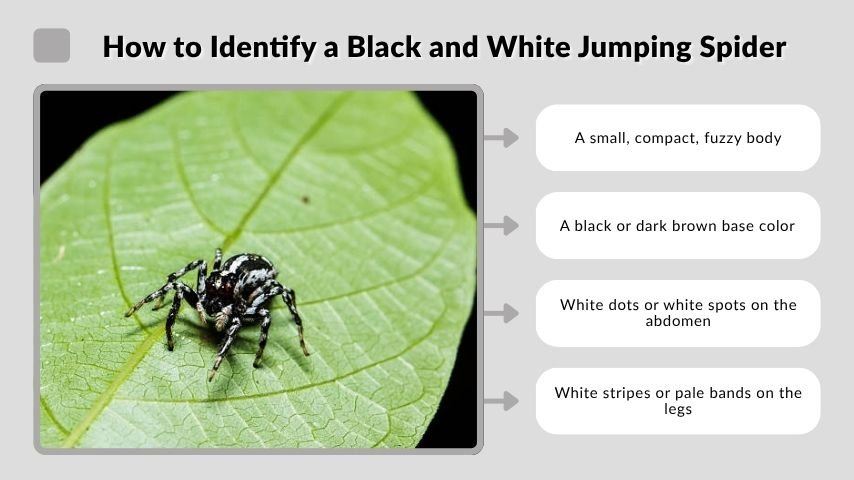
The easiest way to identify a black and white jumping spider is to look at its body shape, eye pattern, movement, and markings. Jumping spiders have a distinctive appearance compared with many common house spiders.
Common Identification Features
A black and white jumping spider may have:
- A small, compact, fuzzy body
- A black or dark brown base color
- White dots or white spots on the abdomen
- White stripes or pale bands on the legs
- Large front-facing eyes
- Short, strong legs
- Quick stop-and-go movement
- Sudden short jumps
- Shiny green or blue mouthparts in some species
The large front eyes are one of the biggest clues. Jumping spiders often turn toward movement, which can make them look like they are staring at you. This behavior is normal and does not mean the spider is preparing to attack.
Black Jumping Spider With White Dot
A black jumping spider with a white dot is often a bold jumping spider. This spider commonly has a central pale spot on the abdomen. Depending on age and individual variation, the spot may appear white, cream, orange, or reddish.
Younger bold jumping spiders may have orange markings that become white as they mature. This is why one person may describe the same type of spider as black and orange, while another calls it black and white.
Black Jumping Spider With White Spots
A black jumping spider with white spots may have one large spot and two smaller spots on the abdomen. It may also have white markings on the legs or sides of the body. This spotted pattern is one of the most familiar looks associated with bold jumping spiders.
White spots do not automatically mean the spider is dangerous. In jumping spiders, these markings are usually just natural coloration.
Black and White Striped Jumping Spider
Some searchers describe the spider as a black and white striped jumping spider. This may refer to white leg bands, pale side markings, or stripes on the abdomen. Several jumping spider species can appear striped, especially from a distance.
To confirm whether it is a jumping spider, look for the compact body, large front eyes, and active daytime hunting behavior.
Black and White Jumping Spider With Green Fangs
One of the most searched features is a black and white jumping spider with green fangs. In many cases, the spider is not showing true “fangs” in the way people imagine. The bright green or blue parts are usually the chelicerae, which are mouthparts near the fangs.
The bold jumping spider is well known for metallic green or blue chelicerae. These shiny mouthparts can look dramatic, especially on a black spider with white spots. However, this feature does not mean the spider is especially dangerous.
Why Are the Fangs Green or Blue?
The green or blue color is caused by iridescence. It reflects light and may appear different depending on the angle. In some spiders, the mouthparts look emerald green. In others, they may look blue, teal, or purple.
This is why people search for both “black and white jumping spider with green fangs” and “black and white jumping spider with blue fangs.” They are often describing the same general feature.
Is a Black and White Jumping Spider Poisonous?
A black and white jumping spider is not considered dangerous to humans. Like most spiders, jumping spiders have venom, but they use it to subdue small insects, not to harm people. The better word is usually venomous, not poisonous. Poisonous means harmful if eaten or touched, while venomous means the animal can inject venom through a bite.
Jumping spiders can bite, but they rarely do unless they are trapped, squeezed, or handled roughly. Most people who see one in the home do not need to worry.
Are They Aggressive?
Black and white jumping spiders are not aggressive toward humans. They may look bold because they turn to face movement, raise their front legs, or jump suddenly. But this behavior is usually defensive, curious, or related to hunting.
Most will try to escape if disturbed.
Black and White Jumping Spider Bite
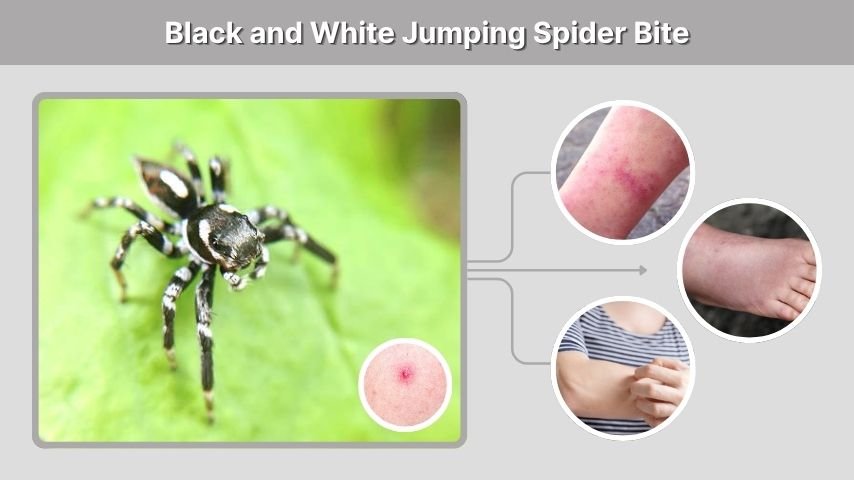
A black and white jumping spider bite is uncommon. If it happens, symptoms are usually mild and local. A bite may feel like a small pinch or sting, followed by minor redness or itching.
Possible Bite Symptoms
A mild jumping spider bite may cause:
- Slight pain
- Redness
- Mild swelling
- Itching
- Tenderness
- A small raised bump
These symptoms can look similar to a mosquito bite, ant bite, or other minor insect bite. It is also common for skin irritation to be mistaken for a spider bite, especially if no spider was seen biting.
What to Do After a Bite
If you think a jumping spider bit you, wash the area with soap and water. Apply a cold compress to reduce swelling and avoid scratching the bite. Most mild reactions improve with basic care.
Seek medical advice if symptoms worsen, spread, become very painful, or do not improve. Get urgent help if you have trouble breathing, dizziness, swelling of the face or throat, fever, or signs of a serious allergic reaction.
Where Black and White Jumping Spiders Are Found
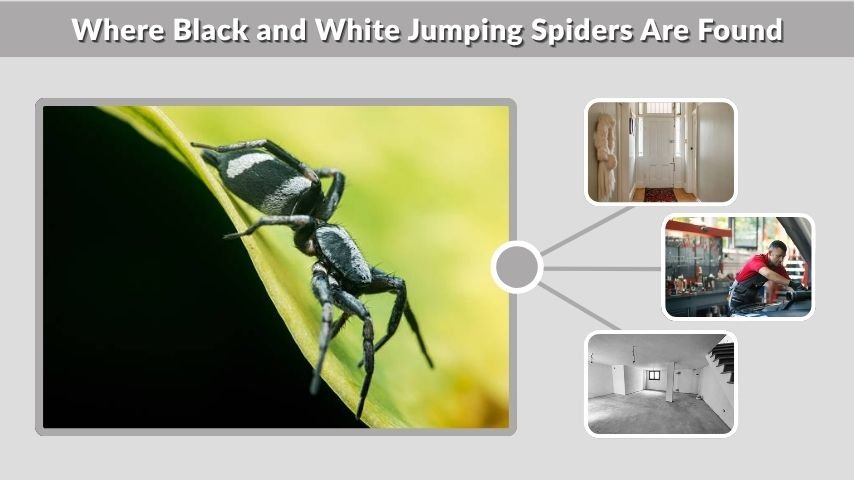
Black and white jumping spiders are often seen in sunny areas where small insects are available. They are active hunters, so they may appear wherever prey is easy to find.
Common Indoor Locations
Inside the home, they may be found near:
- Windowsills
- Door frames
- Walls
- Ceilings
- Garages
- Basements
- Sunrooms
- Indoor plants
- Areas with small flies or gnats
They often enter homes by accident while hunting. A single spider indoors usually does not mean there is an infestation.
Common Outdoor Locations
Outdoors, black and white jumping spiders may live on:
- Fences
- Deck rails
- Porch posts
- Garden plants
- Tree bark
- Exterior walls
- Patio furniture
- Around outdoor lights
They are more likely to be seen during the day than at night because jumping spiders rely heavily on vision when hunting.
Black and White Jumping Spider in Texas
The keyword “black and white jumping spider Texas” shows that many people want local identification. Texas has many jumping spiders, and bold jumping spiders are commonly found in many parts of North America. A black spider with white spots and metallic green or blue mouthparts in Texas may very well be a bold jumper, but exact identification depends on a clear photo and location.
In Texas, these spiders may be seen on fences, brick walls, gardens, porches, and around windows. They are usually beneficial because they feed on small insects.
Black and White Jumping Spider vs Wolf Spider
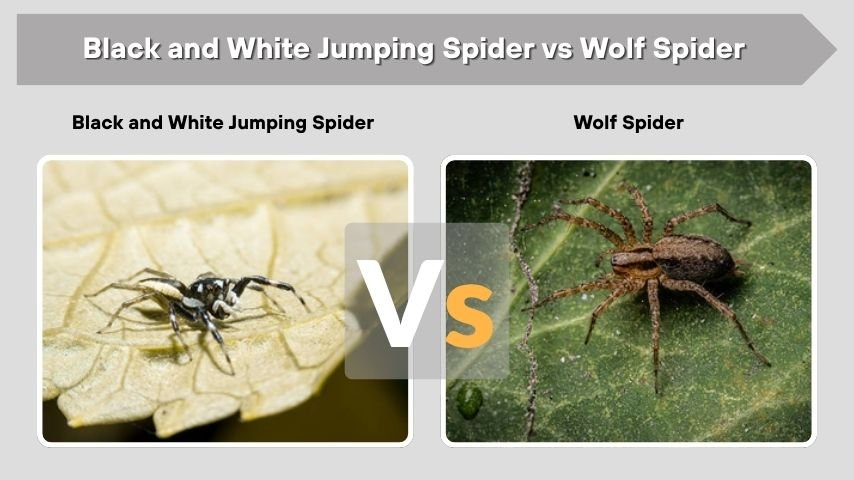
Some search terms include confusion between jumping spiders and wolf spiders. A black and white jumping spider and a wolf spider can both move quickly, but they are not the same.
Jumping spiders are usually smaller, more compact, and have large forward-facing eyes. They make short, controlled jumps and are often active during the day. Wolf spiders are generally larger, longer-legged, and more ground-dwelling. They run after prey rather than making the same precise jumps.
If the spider is small, compact, black with white spots, and turns to look at movement, it is more likely to be a jumping spider.
Why Black and White Jumping Spiders Come Indoors
A black and white jumping spider may enter your home while searching for insects, warmth, shelter, or light. They are not usually trying to nest indoors in large numbers.
Common Reasons They Appear Inside
They may come indoors because:
- Small insects are near windows
- Porch lights attract prey
- Screens or door seals have gaps
- Plants were brought inside
- The spider wandered in by accident
- Weather outside became too hot, cold, or dry
Seeing one or two is usually not a serious problem. Frequent sightings may mean there are many small insects around the home.
What to Do If You Find One
If you find a black and white jumping spider indoors, you can leave it alone or move it outside. These spiders are beneficial predators and do not usually require pest control.
Safe Removal Steps
To remove the spider safely:
- Place a cup or jar over it
- Slide a piece of paper underneath
- Carry it outside carefully
- Release it near plants, a fence, or a sheltered area
- Avoid squeezing or handling it directly
This method protects both you and the spider.
How to Prevent Them Indoors
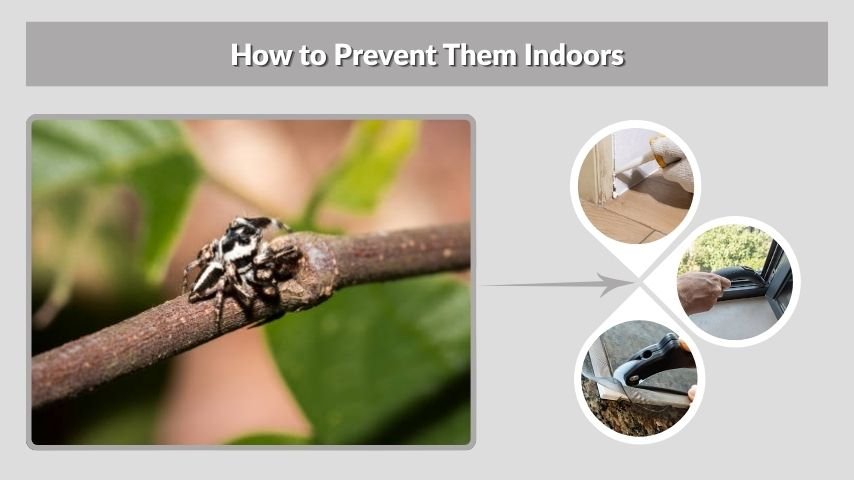
If you do not want jumping spiders inside, focus on sealing entry points and reducing insects. Since jumping spiders hunt prey, fewer insects usually means fewer spiders.
Prevention Tips
You can reduce sightings by:
- Repairing damaged window screens
- Sealing cracks around doors and windows
- Keeping porch lights off when not needed
- Vacuuming windowsills and corners
- Reducing indoor gnats and flies
- Moving thick plants away from exterior walls
- Checking outdoor items before bringing them inside
Chemical treatment is usually unnecessary for an occasional jumping spider.
Should You Kill a Black and White Jumping Spider?
In most cases, you should not need to kill a black and white jumping spider. These spiders help control small insects and are not considered a major threat to people or pets. If the spider bothers you, relocation is usually the better choice.
However, if you cannot identify a spider and are worried it may be a medically significant species, avoid touching it. Use a container for removal or contact a pest professional for identification.
FAQs
Are black and white jumping spiders poisonous?
Black and white jumping spiders are not considered poisonous or dangerous to humans. They do have venom for catching small insects, but bites are rare and usually mild. Most will run, jump away, or hide rather than bite a person.
What is a black jumping spider with white spots?
A black jumping spider with white spots is often a bold jumping spider, especially if it has a compact fuzzy body and shiny green or blue mouthparts. The white spots are normal markings and may appear on the abdomen, legs, or sides.
Do black and white jumping spiders bite?
Yes, they can bite, but bites are uncommon. A bite usually happens when the spider is trapped against skin or handled roughly. Most bites cause minor redness, swelling, itching, or tenderness and can be treated like a mild bug bite.
Why does my black and white jumping spider have green fangs?
The green or blue “fangs” are usually shiny mouthparts called chelicerae. Bold jumping spiders often have metallic green, blue, or teal chelicerae. This color is normal and does not mean the spider is unusually dangerous.
What should I do with a black and white jumping spider in my house?
You can leave it alone or gently move it outside with a cup and paper. It is likely hunting small insects and is not a serious threat. If you see many spiders, check for gaps around windows and reduce small insects indoors.