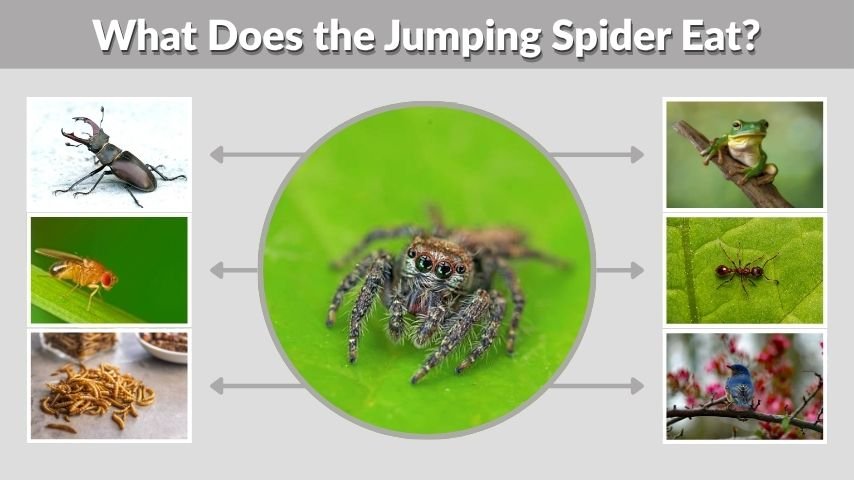
Jumping spiders are tiny hunters with big eyes, quick reflexes, and a surprising appetite for small insects. Instead of building webs to trap prey, they stalk, leap, and grab food with precision. Whether you found one in your house or keep one as a pet, understanding what jumping spiders eat helps explain their behavior, feeding habits, and why they are useful natural pest controllers.
What Does a Jumping Spider Eat?
Jumping spiders mainly eat small insects and other tiny arthropods. In the wild, their diet depends on what they can catch in their habitat. A jumping spider in a garden may eat flies, mosquitoes, moths, ants, and small beetles. A jumping spider in a house may hunt gnats, fruit flies, small flies, or other indoor pests.
Unlike web-building spiders, jumping spiders actively hunt. They use excellent vision to spot prey, slowly move closer, attach a silk safety line, then leap onto the target.
Jumping Spider Diet at a Glance
| Food Type | Do Jumping Spiders Eat It? | Notes |
|---|---|---|
| Flies | Yes | One of their most common foods |
| Mosquitoes | Yes | Small enough for many species |
| Crickets | Yes | Often used for pet jumping spiders |
| Mealworms | Yes | Best offered in suitable sizes |
| Ants | Sometimes | Some ants can bite or spray acid |
| Other spiders | Yes | Some species hunt spiders |
| Ladybugs | Usually not ideal | Hard-bodied and may taste bad |
| Rollie pollies | Rarely | Not a preferred food |
| Spider mites | Sometimes | Very tiny prey, mainly for small spiders |
| Bees/wasps | Risky | Can sting or injure the spider |
20 Common Foods Jumping Spiders Eat
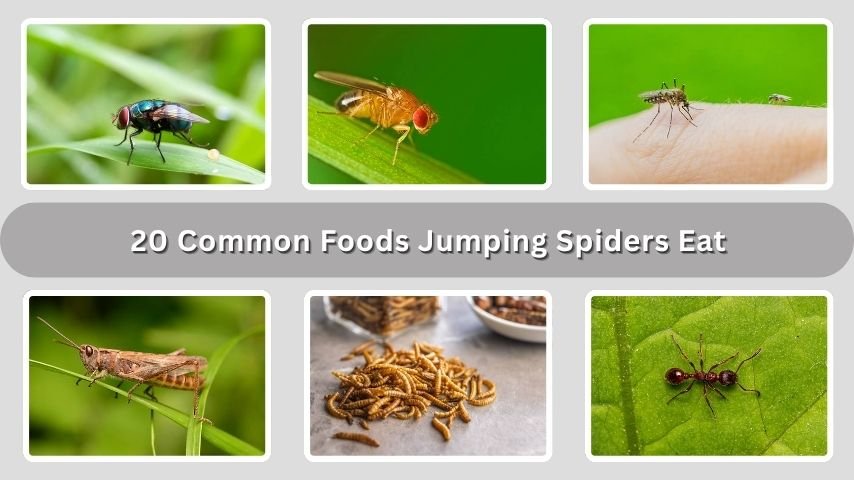
Jumping spiders are opportunistic hunters. They usually choose prey that is small enough to overpower and safe enough to handle. Below are 20 common foods they may eat in nature or captivity.
1. Flies
Flies are one of the most common foods for jumping spiders. Houseflies, bottle flies, and smaller flies are active, visible, and full of movement, which attracts a jumping spider’s attention. Many pet keepers also use flies because they encourage natural hunting behavior.
2. Fruit Flies
Fruit flies are ideal for baby jumping spiders and very small species. They are tiny, soft-bodied, and easy to catch. Flightless fruit flies are especially useful for captive spiderlings because they cannot escape as easily.
3. Mosquitoes
Jumping spiders can eat mosquitoes when they catch them. A small jumping spider may hunt mosquitoes near windows, porch lights, plants, or damp areas. While they will not eliminate a mosquito problem, they do help reduce tiny flying insects.
4. Gnats
Gnats are another common food, especially for small jumping spiders found indoors. Fungus gnats around houseplants can attract spiders because they are easy prey. A spider near a plant may be hunting these tiny flies.
5. Crickets
Crickets are often used as feeder insects for pet jumping spiders. They are nutritious and active, but size matters. A cricket that is too large can injure a spider. For safety, use small crickets and remove uneaten ones from the enclosure.
6. Mealworms
Mealworms are a popular food for captive jumping spiders. They are easy to buy and store, but they should be offered carefully. A large mealworm can bite or stress a small spider. Many keepers crush the head slightly or supervise feeding.
7. Waxworms
Waxworms are soft, fatty larvae that some jumping spiders accept readily. They can be useful for a spider that needs a meal, but they should not be the only food because they are high in fat. Variety is better.
8. Moths
Small moths are natural prey for many jumping spiders. A young bold jumping spider or other medium-sized species may eat a moth if it is small enough. Large moths can be too strong or dusty, so pet spiders should only be offered safe-sized prey.
9. Small Beetles
Jumping spiders may eat small beetles, but hard shells can make beetles harder to handle. Soft-bodied or freshly molted beetles are easier prey. Large beetles are not recommended for pet jumping spiders because they can fight back.
10. Ants
Some jumping spiders eat ants, but ants are risky prey. Many ants bite, sting, swarm, or spray defensive chemicals. Ant-mimic jumping spiders may specialize in ant-like behavior, but most pet jumping spiders should not be fed ants unless the keeper knows the species is safe.
11. Aphids
Aphids are tiny plant pests that small jumping spiders may eat. In gardens, young spiders may hunt aphids on leaves and stems. Aphids are soft-bodied, making them easy prey for small spiderlings.
12. Spider Mites
Jumping spiders may eat spider mites, but mites are extremely small. Very tiny jumping spiders or spiderlings are more likely to feed on them than larger adults. A jumping spider will not be a complete spider mite control method, but it may eat some.
13. Small Caterpillars
Some jumping spiders eat small caterpillars. Soft-bodied caterpillars are easier to bite than hard insects. However, hairy or toxic caterpillars can be dangerous, so they are not ideal feeder prey for pet spiders.
14. Leafhoppers
Leafhoppers are quick plant-feeding insects that jumping spiders may catch on leaves, stems, or garden plants. Their jumping movement may help trigger a spider’s hunting response.
15. Small Roaches
Small roaches, such as tiny nymphs, can become food for larger jumping spiders. They should be clean, captive-bred feeders if used for pets. Wild roaches may carry pesticides, parasites, or bacteria.
16. Earwigs
A jumping spider may eat a small earwig, but this is not always safe. Earwigs have pincers and can fight back. A large earwig should not be offered to a pet jumping spider.
17. Other Spiders
Jumping spiders sometimes eat other spiders. Some species are skilled spider hunters and may attack web-building spiders. This is part of why people search for “jumping spider eats black widow” or “jumping spider eats brown recluse.” While some jumping spiders can prey on other spiders, it is not something to rely on for pest control.
18. Small Bees
A jumping spider may catch a small bee, especially outdoors near flowers. However, bees can sting and injure the spider. Bees should not be used as feeder insects for pet jumping spiders.
19. Small Wasps
Some jumping spiders can catch tiny wasps, but wasps are risky prey. A wasp may sting or harm the spider. In the wild, jumping spiders decide whether to attack, but in captivity, safer feeder insects are better.
20. Tiny Grasshoppers
Small grasshoppers or nymphs may be eaten by larger jumping spiders. They move quickly and can trigger hunting behavior. Large grasshoppers are too strong and should not be offered to small spiders.
How Does a Jumping Spider Eat?
Jumping spiders do not chew food like humans. After catching prey, they bite it and inject venom to subdue it. They also release digestive fluids that break down the prey’s tissues. Then the spider sucks up the liquefied nutrients.
This feeding method is common among spiders. After the meal, the leftover prey body may look dry or hollow. A jumping spider may hold onto its food for several minutes or even longer, depending on prey size.
How Long Does a Jumping Spider Take to Eat?
A jumping spider may take anywhere from a few minutes to several hours to finish eating. Small prey, like a fruit fly, may be eaten quickly. Larger prey, like a cricket or mealworm, can take much longer.
Feeding time depends on:
- Size of the spider
- Size of the prey
- Hunger level
- Temperature
- Age and condition of the spider
- Whether the spider is close to molting
If a spider drops prey after a short time, it may be full, stressed, or uninterested.
How Often Should a Jumping Spider Eat?
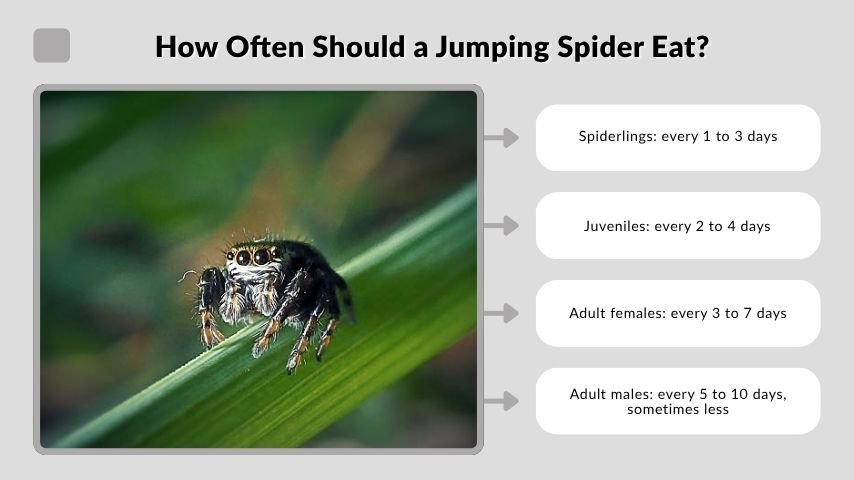
Wild jumping spiders eat whenever they can catch prey. Pet jumping spiders usually do well with a feeding schedule based on age and body condition. Younger spiders eat more often because they are growing. Adults may eat less frequently.
Feeding Schedule for Pet Jumping Spiders
A general feeding guide:
- Spiderlings: every 1 to 3 days
- Juveniles: every 2 to 4 days
- Adult females: every 3 to 7 days
- Adult males: every 5 to 10 days, sometimes less
- Older spiders: smaller meals less often
The abdomen is a useful guide. If the abdomen looks very small or shrunken, the spider may need food or water. If it looks round and full, wait before feeding again.
Why Is My Jumping Spider Not Eating?
A jumping spider not eating is common and not always a problem. Pet owners often worry when a spider refuses food, but there are several normal reasons this happens.
Jumping spiders may stop eating before molting, after molting, during stress, in old age, or when temperatures are not ideal. Adult males may also eat less because they focus more on searching for mates than feeding.
Common Reasons a Jumping Spider Won’t Eat
Your jumping spider may refuse food because:
- It is preparing to molt
- It recently molted and its fangs are still soft
- The prey is too large
- The spider is stressed in a new enclosure
- The enclosure is too cold
- The spider is dehydrated
- It is already full
- It is old or near the end of its life
- The feeder insect is not moving enough
- The spider is scared of the prey
A new jumping spider may not eat right away. Give it time to settle, provide water droplets, and offer appropriately sized prey.
Jumping Spider Not Eating After Molt
A jumping spider should not eat immediately after molting. After a molt, its body and fangs are soft. Feeding too soon can injure the spider, especially if the prey bites back.
Wait until the spider has hardened before offering food. For small spiderlings, this may take a few days. For larger juveniles or adults, waiting about 5 to 7 days is often safer.
How to Get a Jumping Spider to Eat
If your jumping spider will not eat, try adjusting the feeding approach before panicking.
Helpful steps include:
- Offer smaller prey
- Try a different feeder, such as flies instead of mealworms
- Remove prey that scares the spider
- Mist lightly so the spider can drink
- Feed during the day when the spider is active
- Make sure the enclosure is warm enough
- Avoid disturbing the spider too often
- Wait if it may be premolt or postmolt
Never leave dangerous prey like crickets or mealworms unattended with a spider that is not eating.
What Eats a Jumping Spider?
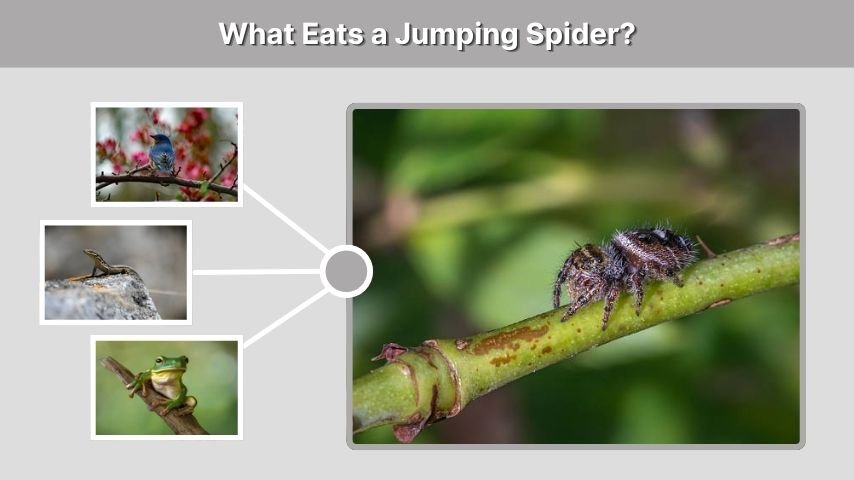
Jumping spiders are hunters, but they are also prey for many animals. Their small size makes them vulnerable to birds, lizards, frogs, wasps, larger spiders, and some insects.
Predators vary by habitat. A jumping spider in a garden may be eaten by birds or praying mantises. One in a forest may be hunted by larger spiders or reptiles. Their jumping ability, sharp vision, camouflage, and silk safety line help them escape danger.
Common Jumping Spider Predators
Animals that may eat jumping spiders include:
- Birds
- Lizards
- Frogs
- Wasps
- Praying mantises
- Larger spiders
- Centipedes
- Small mammals
This predator-prey role makes jumping spiders part of a larger food web. They help control insects, but they also feed other animals.
Foods to Avoid for Pet Jumping Spiders
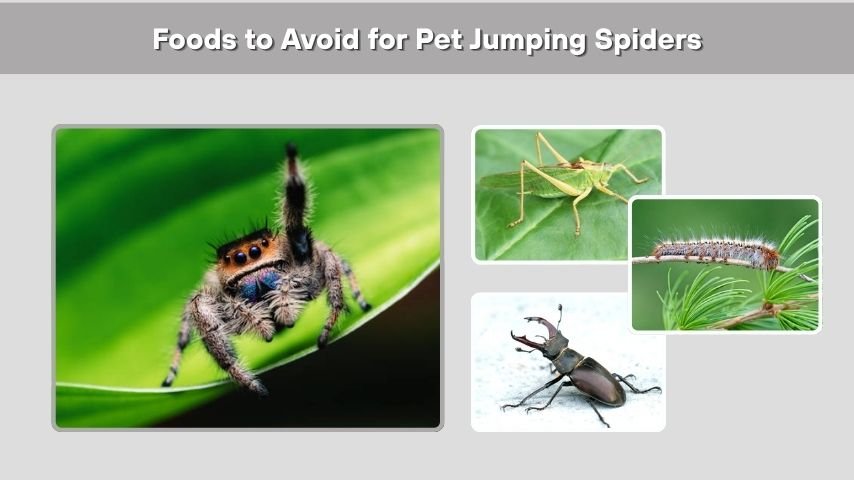
Not everything a jumping spider can eat is safe in captivity. Wild insects may contain pesticides or parasites. Large prey can injure the spider. Some insects are too hard, too aggressive, or chemically defended.
Avoid feeding:
- Wild-caught insects from sprayed areas
- Large crickets
- Large mealworms
- Fire ants
- Bees or wasps
- Stink bugs
- Ladybugs
- Large beetles
- Hairy caterpillars
- Rollie pollies as a main food
Safer feeder choices include fruit flies for spiderlings, small flies, small crickets, small roaches, and properly sized mealworms.
FAQs
What does a jumping spider eat?
A jumping spider eats small insects and other tiny arthropods. Common foods include flies, mosquitoes, gnats, fruit flies, crickets, mealworms, moths, aphids, and sometimes other spiders. In the wild, they eat whatever suitable prey they can safely catch.
Do jumping spiders eat ants?
Some jumping spiders eat ants, but ants can be risky prey. Many ants bite, sting, swarm, or release defensive chemicals. Wild jumping spiders may choose ants in nature, but ants are usually not the safest feeder option for pet jumping spiders.
How often should a jumping spider eat?
Spiderlings may eat every 1 to 3 days, while juveniles may eat every 2 to 4 days. Adult females often eat every 3 to 7 days, and adult males may eat less often. Body condition matters more than a strict schedule.
Why won’t my jumping spider eat?
A jumping spider may stop eating before a molt, after a molt, when stressed, when dehydrated, or if the prey is too large. Adult males and older spiders may also eat less. Offer smaller prey, provide water, and avoid disturbing the spider too often.
How long can a jumping spider go without eating?
A healthy adult jumping spider can sometimes go days or even weeks without eating, especially if it has a full abdomen. Spiderlings need food more often. Water is more urgent than food, so always provide safe moisture through light misting or droplets.