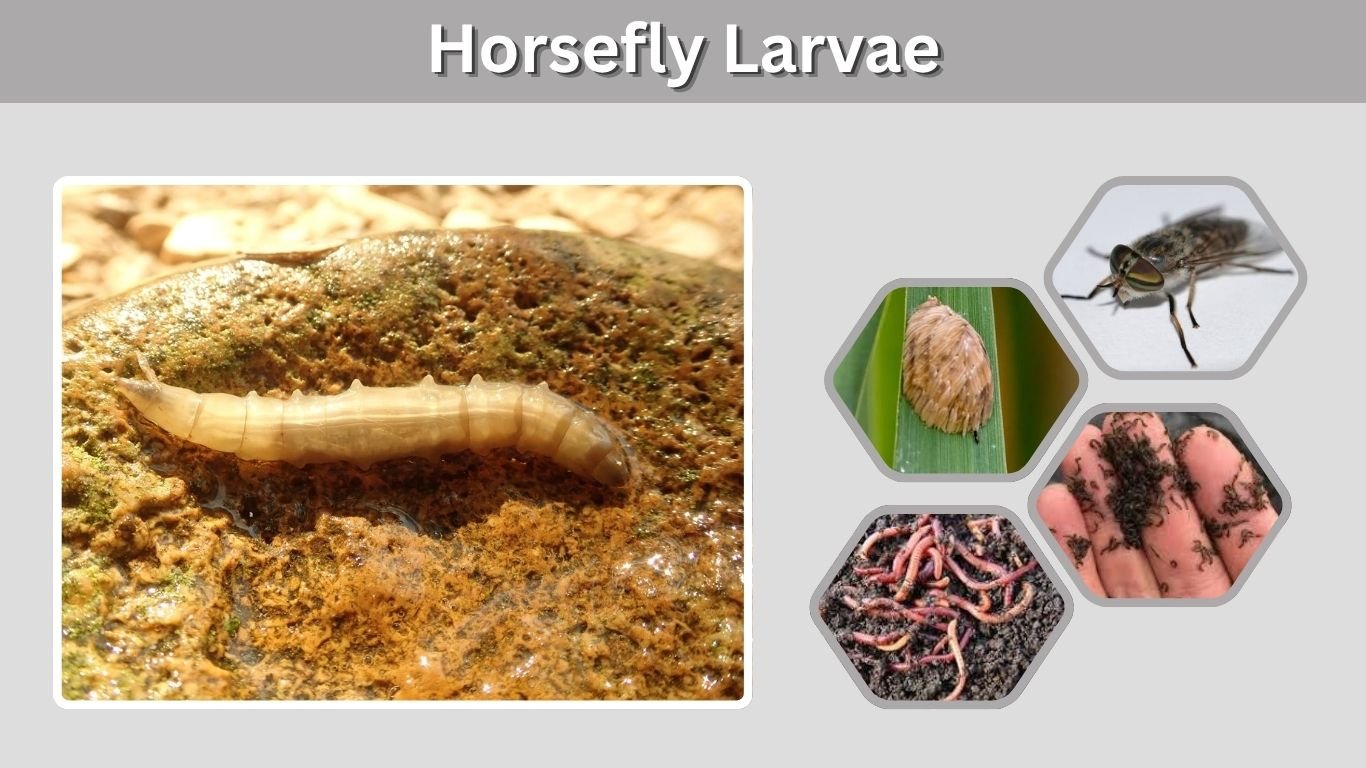
Horsefly larvae are the immature, worm-like stage of horseflies in the family Tabanidae. Unlike adult female horseflies, which drink blood, the larvae usually live in water, mud, wet soil, or decaying vegetation and hunt small animals. They do not normally develop on horses, livestock, squirrels, or people. Larvae discovered beneath an animal’s skin are more likely to be botfly larvae rather than horsefly larvae.
What Are Horsefly Larvae?
Horseflies undergo complete metamorphosis, passing through four stages: egg, larva, pupa, and adult. The larval stage occurs after the egg hatches and before the insect forms a pupa.
Horsefly larvae are free-living predators rather than parasites. Most develop in freshwater wetlands, pond margins, stream banks, marshes, seepage areas, or waterlogged soil. A few species can survive in moist woodland soil or decomposing wood.
| Feature | Description |
| Insect family | Tabanidae |
| Body shape | Long, segmented, and tapered |
| Typical color | Cream, whitish, tan, brown, or greenish |
| Legs | No true legs |
| Primary habitat | Water, mud, and moist soil |
| Diet | Worms, insect larvae, and other small animals |
| Larval duration | Commonly one to three years |
| Next stage | Pupa |
| Dangerous to animals | Not normally parasitic |
What Do Horsefly Larvae Look Like?
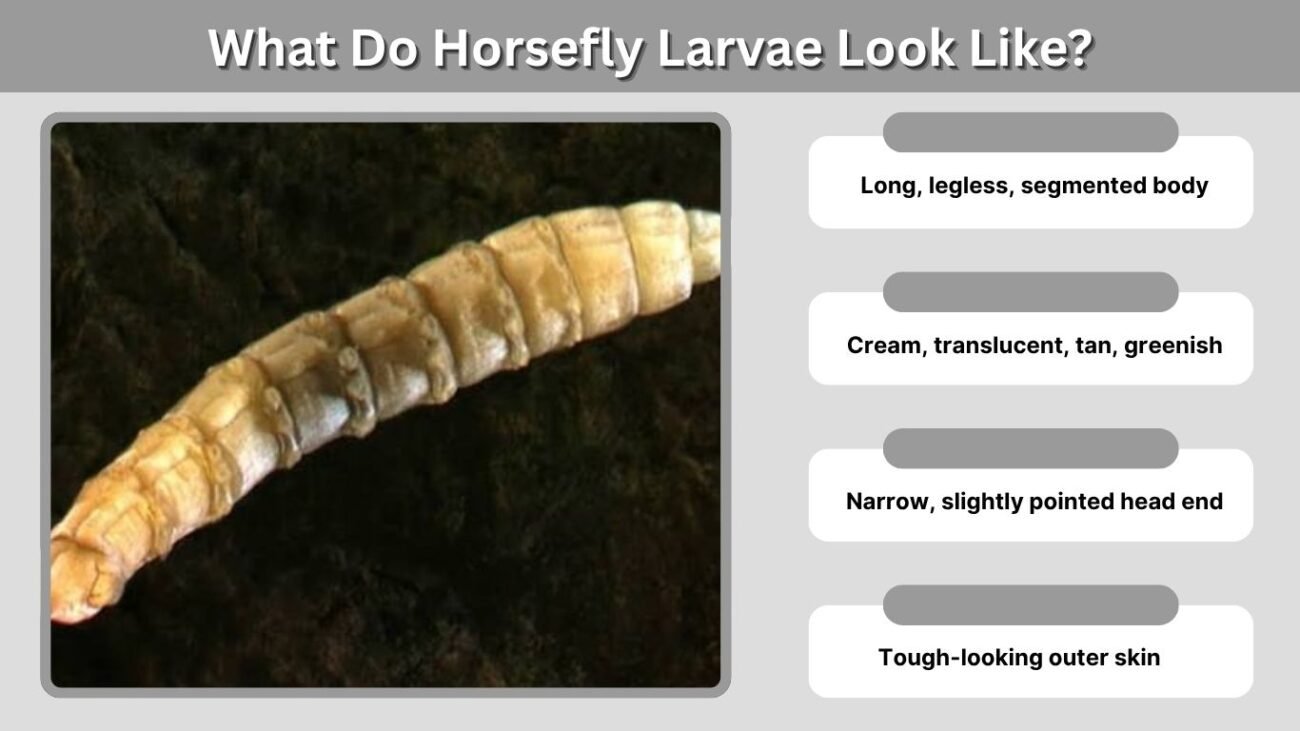
Horsefly larvae resemble large, tough-bodied maggots. They are generally cylindrical but taper toward both ends. Their clearly divided body segments may be surrounded by raised bands or small fleshy projections that help them move through mud and wet debris.
Identification Features
- Long, legless, segmented body
- Cream, translucent, tan, greenish, or brown coloring
- Dark rings around the segments in some species
- Narrow, slightly pointed head end
- Tapered rear end with a short breathing structure
- Tough-looking outer skin
- Slow crawling or twisting movement
- Frequently found in mud, wet soil, or underwater debris
The larva breathes through a structure at the rear of its body. Its mouthparts are positioned at the narrower front end and are adapted for capturing and tearing prey.
Larval size varies considerably among species and developmental stages. Young larvae can be very small, while mature larvae of large horsefly species may be several centimetres long.
Black Horsefly Larvae
The black horsefly, Tabanus atratus, is a large North American species. Despite the adult’s dark appearance, its larva is generally pale cream, tan, or brownish rather than solid black.
The term “black horsefly larva” usually refers to the immature stage of this species, not a completely black worm. Color alone cannot confirm its identity because many tabanid larvae look similar. Microscopic details and knowledge of the habitat may be required for species-level identification.
Where Do Horsefly Larvae Live?
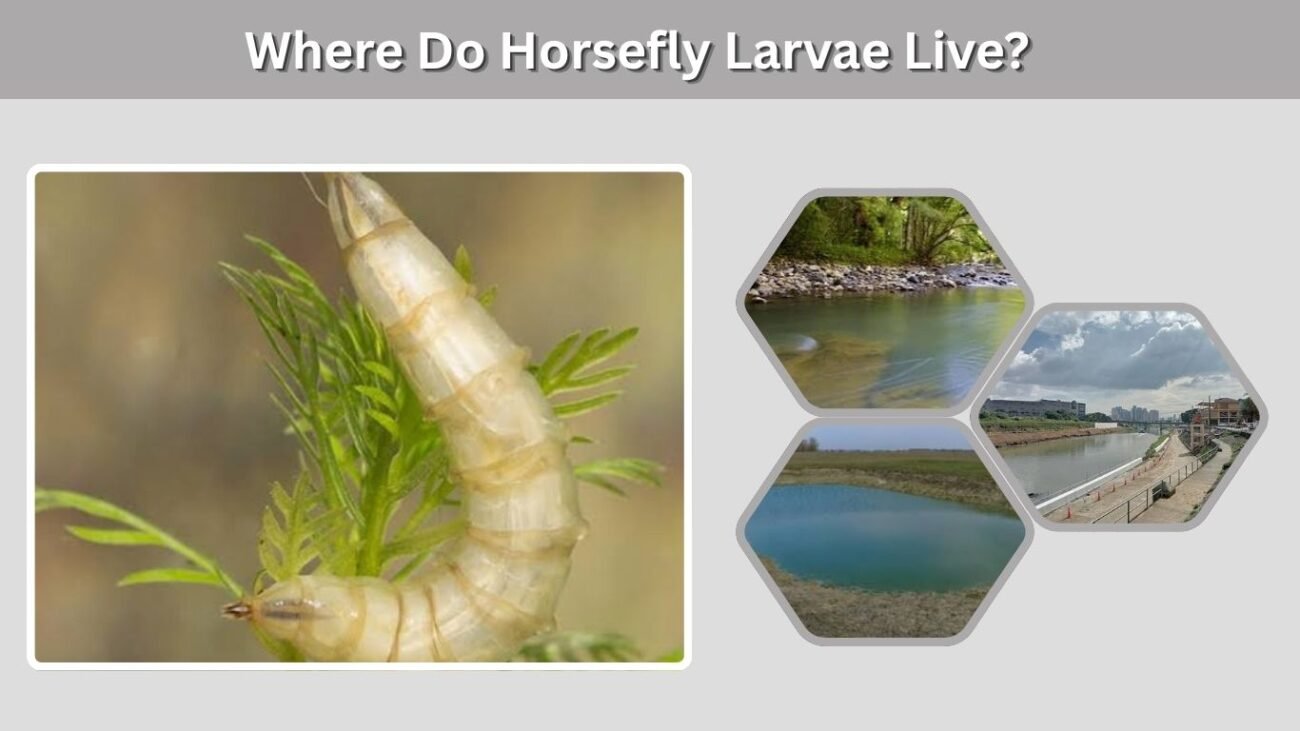
Most horsefly larvae need consistently moist surroundings. Female horseflies commonly place egg masses on leaves, stems, rocks, or other objects above water or wet ground. After hatching, the young larvae fall into the water, mud, or damp substrate below.
Common habitats include:
- Pond edges
- Marshes and swamps
- Slow streams
- Riverbanks
- Wet meadows
- Drainage ditches
- Muddy lake margins
- Salt marshes
- Moist woodland soil
- Decomposing wet wood
Some species are fully aquatic, while others are semi-aquatic and remain in saturated soil beside the water.
Are Horsefly Larvae Benthic?
Many horsefly larvae can be described as benthic, meaning they live on or within the bottom material of an aquatic habitat. They may burrow through sediment, mud, leaf litter, or decaying plants at the bottom of ponds and wetlands.
However, not every horsefly larva is strictly benthic. Certain species develop in moist terrestrial soil, wet forest litter, or decomposing wood rather than permanently underwater.
Horsefly Larvae in a Pond
Finding a horsefly larva in a natural pond is not unusual. The larva may remain hidden among submerged leaves, plant roots, algae, or bottom sediment.
Although it is a predator, one larva is unlikely to cause noticeable damage to an established wildlife pond. It may even contribute to the aquatic food web by consuming worms and other invertebrates while providing food for fish, frogs, birds, and larger aquatic predators.
What Do Horsefly Larvae Eat?
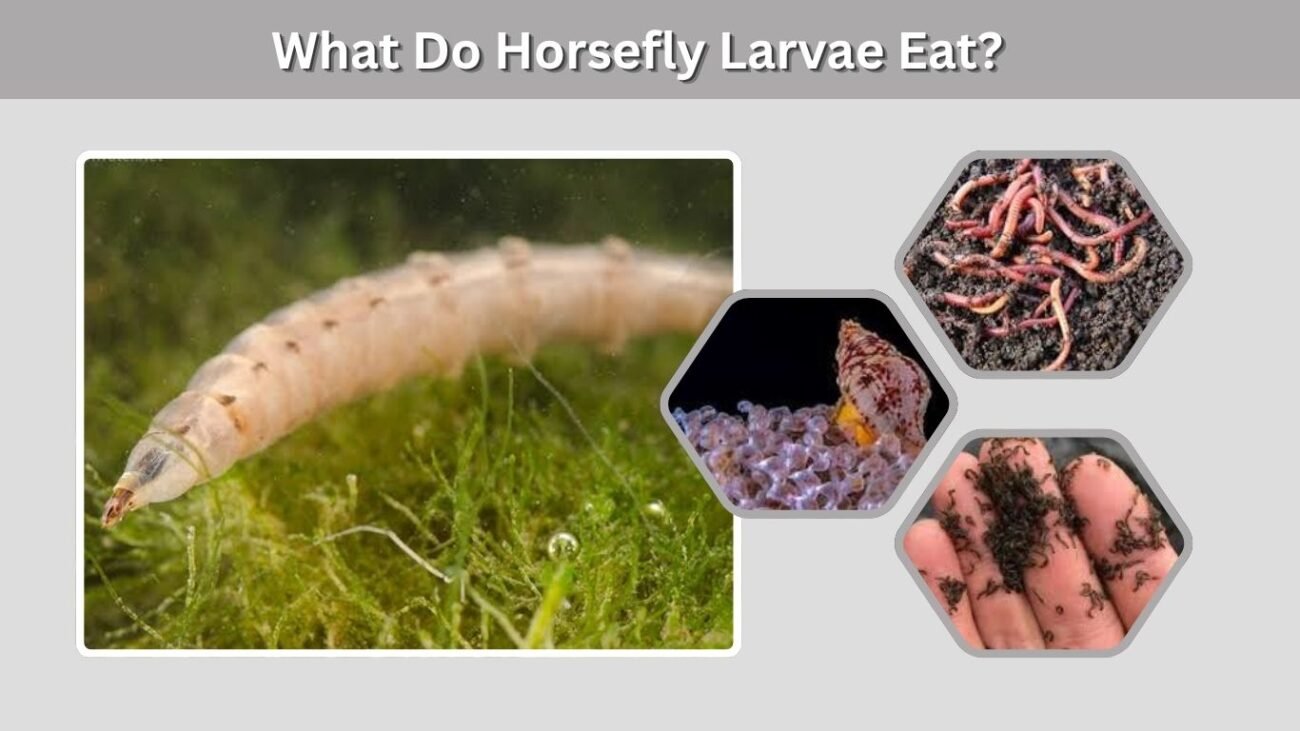
Horsefly larvae are mainly predators. They use strong mouthparts to seize small animals living in water or wet soil.
Their prey may include:
- Aquatic insect larvae
- Midge larvae
- Small fly larvae
- Worms
- Snails
- Tiny crustaceans
- Other horsefly larvae
- Tadpoles and very small amphibians
- Small fish in the case of exceptionally large larvae
Cannibalism can occur when horsefly larvae encounter smaller members of their own family. Larvae of some large species can overpower tadpoles, small frogs, or minnows.
They do not need blood to grow. Blood-feeding is associated with adult females, which obtain protein for egg production. Adult males mainly consume nectar and other plant sugars.
Do Horsefly Larvae Bite?
Horsefly larvae do not search for people or livestock to obtain blood. However, they are predators with strong mouthparts and may deliver a painful defensive pinch when handled carelessly.
Avoid picking up an unidentified aquatic larva with bare fingers. Use a small net, spoon, forceps, or container when moving one. A larval bite is different from the cutting, blood-feeding bite delivered by an adult female horsefly.
Do Horsefly Larvae Live on Animals?
True horsefly larvae do not normally live inside or beneath the skin of animals. They are free-living insects found in aquatic or damp environments.
A large maggot found in a lump on a squirrel, rabbit, rodent, pet, or livestock animal is more likely to be a botfly larva. Rodent botflies in the genus Cuterebra develop beneath the skin and create swollen openings called warbles. Tree-squirrel botfly larvae generally remain in the host for several weeks before emerging and pupating in the soil.
Horse botflies are another separate group. Their eggs are deposited on horses, and their larvae develop internally after being swallowed. They are not the same insects as biting horseflies in the family Tabanidae.
Do not squeeze or pull an unidentified larva from an animal’s skin. Incorrect removal can injure the animal or leave part of the larva in the wound. A veterinarian or licensed wildlife rehabilitator should examine it.
Horsefly Larva Life Cycle
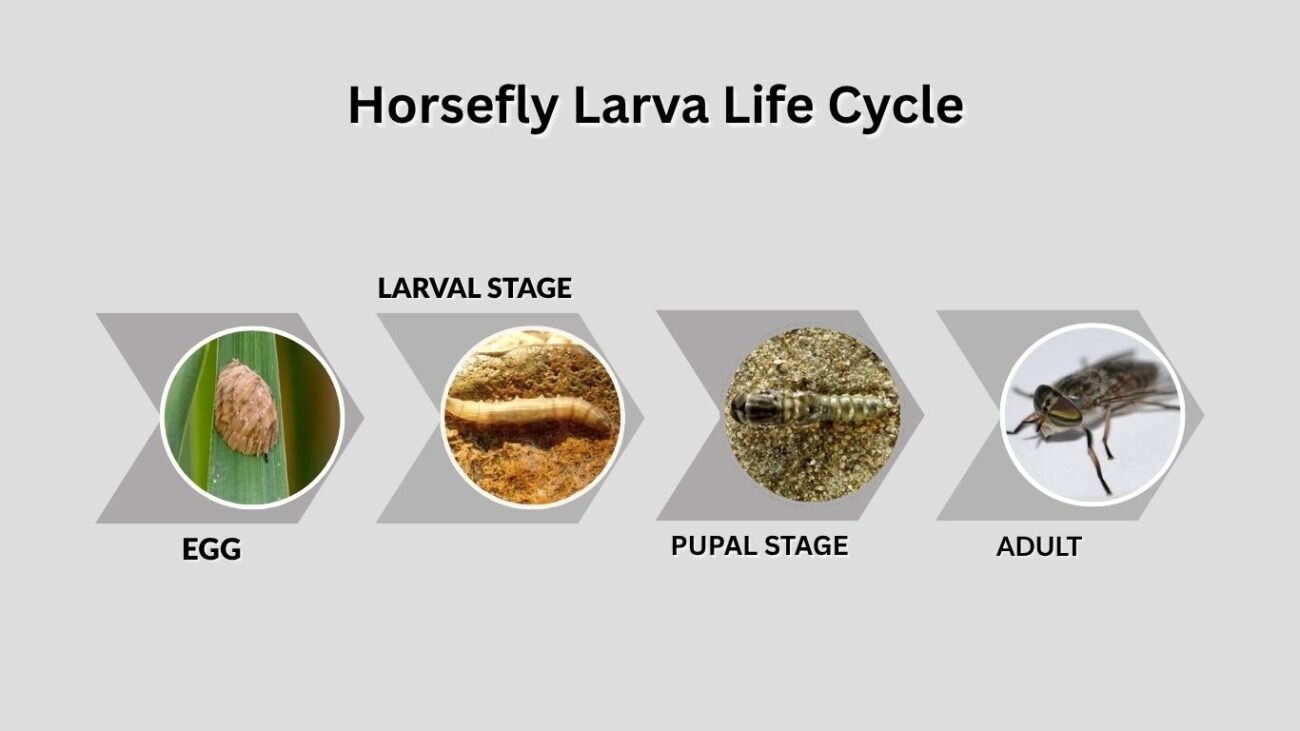
The time required to complete the life cycle depends on the species, climate, temperature, moisture, and food supply.
Egg Stage
A female deposits batches of eggs on vegetation or objects positioned above water or saturated ground. One batch may contain dozens or hundreds of eggs. After hatching, the larvae drop into the suitable habitat beneath them.
Larval Stage
The larvae burrow into mud, sediment, or wet soil and grow through several molts. This is normally the longest part of the life cycle and may continue for one to three years in larger species.
Pupal Stage
When fully developed, a larva usually moves from saturated mud into a somewhat drier area. It forms a pupa in the upper soil, where its adult structures develop.
Adult Stage
The mature horsefly breaks out of the pupal case and reaches the surface. Adults mate, and females eventually seek a blood meal before producing eggs. The adult stage is comparatively brief; University of Florida guidance reports an adult lifespan of roughly 30–60 days for the tabanids discussed.
How to Remove Horsefly Larvae
Large-scale treatment of horsefly breeding sites is usually impractical. Larvae are widely dispersed through mud, marshes, and environmentally sensitive wetlands, making chemical treatment both ineffective and potentially damaging.
For a small artificial pond or container:
- Remove individual larvae with a fine aquarium net or forceps.
- Clear excessive decomposing leaves and organic debris.
- Repair leaks or drainage problems that create unnecessary stagnant mud.
- Avoid applying household insecticides, bleach, fuel, or other chemicals to water.
- Use adult horsefly traps when biting adults are the main problem.
Natural ponds and wetlands should generally be left untreated. Managing adult flies with traps, protective clothing, animal shelters, and approved repellents is safer than attempting to poison aquatic larvae.
FAQs
Can horsefly larvae bite horses?
They do not climb onto horses to feed on blood. A larva may pinch if directly handled or pressed against the skin, but adult female horseflies are responsible for the familiar painful blood-feeding bites.
Are horsefly larvae parasites?
No. Horsefly larvae are normally free-living predators. Maggots developing under an animal’s skin or inside its body are more likely to be botflies, screwworms, or another parasitic fly.
What happens when a horsefly larva matures?
It leaves its wet larval habitat, moves into relatively drier soil, and becomes a pupa. After completing development inside the pupal case, it emerges as a winged adult horsefly.
Should I remove horsefly larvae from my pond?
Removal is usually unnecessary in a natural wildlife pond. In a small ornamental pond or aquarium, individual larvae can be removed manually when there is concern about tadpoles, small fish, or other aquatic animals.
Do horsefly larvae drink blood?
No. The larvae prey on worms, insect larvae, and other small animals. Only adult female horseflies take blood meals, generally to obtain nutrients needed for egg development.